
New Year’s Eve & Inherent Vice

6a00d83451cb7469e201b8d2cb70a2970c-800wi

Because Phantom Thread was one of my favorites of 2017 and I've not written about it yet, here's my piece on Inherent Vice, first published at the New Beverly. If you know me, you know I love this one more than I could contain in one piece…

“If there is something comforting – religious, if you want – about paranoia, there is still also anti-paranoia, where nothing is connected to anything, a condition not many of us can bear for long.” – Gravity’s Rainbow, Thomas Pynchon

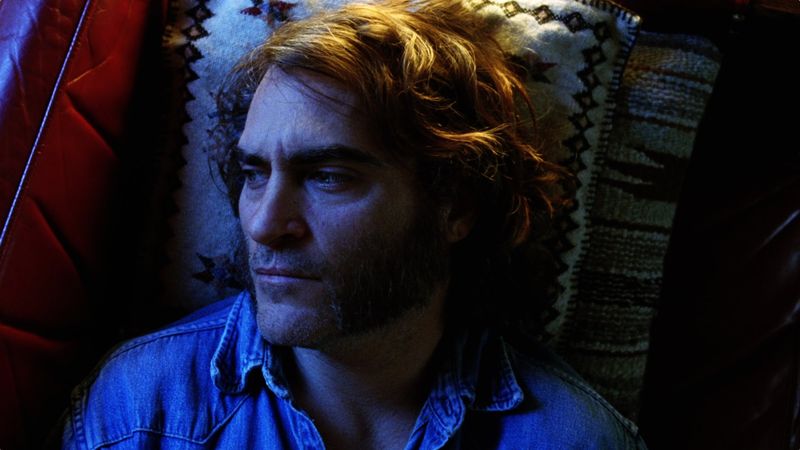
Obfuscation is a balm. Paranoia or conspiracy or lamenting the tangled reasons and non-reasons and imagined reasons for the end of a relationship, thinking of the past, of ghosts – often these types of rabbit holes are comforting. As long as they don’t become sink holes. And often all can intertwine in a rambling interior narrative of connections and “what if?” thinking that busies your mind from what you’re frequently avoiding – pain. Wistful memories are a lot more soothing, even if they make you sad. In Paul Thomas Anderson’s Inherent Vice, hippie, stoner, romantic PI, Doc Sportello (Joaquin Phoenix) listens when his ex walks back into his life, and bringing a labyrinthian mystery, says, “It isn’t what you’re thinking, Doc.” He answers, “Don’t worry, thinking comes later.” It does, and sooner rather than later – thinking that becomes muddied and strange and absurd and hilarious and ominous and beautiful and ugly and, what does this mean?

6a00d83451cb7469e201b7c94127a3970b-800wi

You can get overwhelmed by these complexities. You can also be exhilarated by them, the recognizable insanity (and it is recognizable, even bafflement is recognizable) of it all. Inherent Vice seeps into your soul, like the Neil Young songs and that faraway boat Doc and his maritime lawyer, the lovable Sauncho Smilax (Benicio Del Toro), are always looking at or that almost inexplicably mournful opening shot of Gordita Beach – that gap between beach pads – the light, the colors, the music (shot by Robert Elswit). Why is this is so heartachingly beautiful? The movie doesn’t so much require multiple viewings, it seduces you to revisit it, again and again, pulling you in far enough, while remaining just enough out of reach. You feel as if you need it. There are those who yearn to untangle the plot, but for me, among the many riches of watching Inherent Vice is searching to find something; something elusive, something you attempt to hold on to. But you know you’re not going to find it exactly because the movie works on an emotional current unlike any other I’ve ever seen. It’s like the first time I heard Love’s “Forever Changes” (and then listened to it over and over again), that masterful merging of haunting beauty, darkness, mystery, romanticism, crafted by a Los Angeles band who challenged any idea that the sunny Southern Californian 1967 Summer of Love was something every hippie bought into. As writer Andrew Hultkrans said of lead singer Arthur Lee: “Arthur Lee was one member of the ’60s counterculture who didn’t buy flower-power wholesale, who intuitively understood that letting the sunshine in wouldn’t instantly vaporize the world’s (or his own) dark stuff.

By the 1970 of Inherent Vice (adapted from Thomas Pynchon’s 2009 novel), characters seem attuned to the “dark stuff” – they’re already feeling coarsened to the new decade, weaving together once heroin-addled saxophone players turned COINTELPRO informants with dental syndicates of drug cartels and Nixon and Reagan and . . . a hippie movement picked up by the establishment to exploit for monetary reasons or reasons more nefarious than that. It’s haunting and humorous, and Anderson strikes the perfect surrealistic duality/mind-melding balance (if “balance” is the right word) between the two opposing forces that are now merging into a deadened, dreamlike reality. Like secretly tortured Lt. Det. Christian F. “Bigfoot” Bjornsen (Josh Brolin)/sometimes Adam-12 TV extra and ad pitchman puts on an afro wig and hippie beads and talks youth jargon from Doc’s TV: “Hey man, I don’t want you paying rent. Rent’s a hassle. I want to see you in your own pad. The Channel View Estates, Artesia’s newest and grooviest housing development. No buzz-kill credit checks. No minimum down payments. That’s not your bag. But check this out: fully equipped kitchen with automatic self-cleaning oven and breakfast nook. Out of sight. Attached one car and available two car garage and best of all, a view of the Dominguez Flood Control Channel that can only be described in two words: Right On!” Doc freaks out a little when, in a minor hallucination, Bigfoot leans into the ad and addresses Doc personally: “What’s up, Doc?” How far away are they from each other, really? Doc could go crazy wading through all of these correlations.

The trick (this is not really advice, just obvious common sense for the paranoid and the melancholic) is to ride out those thoughts and densely packed connections so it doesn’t choke you; like when you’re so suspicious you don’t leave the house, checking the blinds for imaginary intruders, wondering if your pot has been laced with PCP. Doc does smoke PCP, on accident, via an Aryan Brotherhood heavy (“Acid invites you through a door. PCP opens the door, shoves you through, slams it behind you and locks it.”), but he fights through the horrible high, valiantly and violently (it’s one of the picture’s many stunning scenes – watching hippie Doc utilize a firearm with an intensity and know-how and fear we’ve not seen on his face yet). And if that does happen, even without the PCP – paranoia that makes you feel as if your brain has disconnected from your body like a balloon floating off to the ocean – hopefully you can get up the next day and think about it; find reason for your freak-out. You know Doc could. Maybe that panic attack was a result of heightened sensitivity and almost extra sensory perception of something about to unfold? Some warning, whatever that is, that hasn’t found its way to you brain yet? The way dogs can sense earthquakes before everyone else does and hide under cars.

6a00d83451cb7469e201b7c94127d2970b-800wi

This isn’t a bad trait for a P.I., in spite of how humorous and a bit absurd the stoned gumshoe seems when set against the gimlet-drinking Philip Marlowe of the past. (Many have compared this picture to Robert Altman’s The Long Goodbye and Joel and Ethan Coen’s The Big Lebowski, and that’s apt, and Anderson discussed a host of influences, from Police Squad! to Neil Young’s Journey Through the Past to Alex Cox’s Repo Man to Quentin Tarantino’s Jackie Brown to Alfred Hitchcock’s North By Northwest, but, truly, this movie exists in its own universe) Pynchon (and the movie, too, which sticks closely to the novel with some deviations and additions, also Joanna Newsom’s Sortilège becoming a Jiminy Cricket-like narrator) calls that kind of intuition, when you sense something from your nervousness, “Doper’s ESP” (I feel like Thomas Pynchon has had more than a few illuminating anxiety attacks). Weaving throughout the various areas of Los Angeles and its sunshine suffused with an ominous undertow of darkness and corruption, Doc bumbles around on his own stoner wavelength – he’s good at his job in the way he works it. Partly, because he’s game, intrigued by various characters, surprised at times, and yet, low key. Madness doesn’t perturb him for too long, this is the sea the fish swim in, and he’s got a case to solve. Doc, who in spite of the slapstick humor and stoner indolence, is not dumb or too baked to be productive, he’s actually quite clever, and – this is key to the movie’s richness – he’s a guy who actually cares about people.

6a00d83451cb7469e201bb09e44bb7970d-800wi

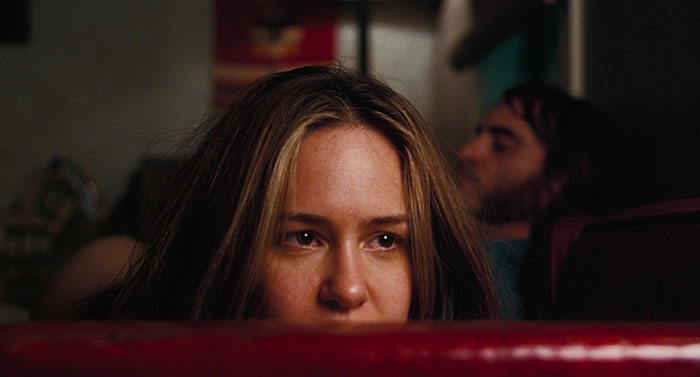
Doc is given opportunity to make spinning, divergent connections regarding his ex, Shasta Fay Hepworth (Katherine Waterston), that night she sways into his little Gordita Beach pad (serving for Pynchon’s Manhattan Beach). She’s looking beautiful but “flatland,” looking like she swore she’d never look. She’s also dragged in a dramatic entanglement and, now, a new case for Doc. In her own way, she’s back with him, but then, as they say separately, twice in the film, “of course not.” This relationship will grow ever poignant as we watch Doc remember Shasta in lyrical sequences, and we see that at its center, this is a movie about a doomed relationship. So, all of the theories, dark operations, conspiracies and period-detail gloom mix in with Doc’s sentiment and sadness towards Shasta. They divert him, and yet, they make him closer to her.

6a00d83451cb7469e201b8d2cb70d8970c-800wi

Shasta reveals that her new boyfriend, bigwig real estate developer Mickey Wolfmann (a sublime Eric Roberts), is in danger, and she’s in a position to be complicit. Mickey’s wife and her lover/spiritual coach are conspiring to throw Mickey into a loony bin, hoping Shasta will aid in their plan; get him when he’s vulnerable. She doesn’t want to. Soon enough, both Mickey and Shasta go missing. Doc’s now on it more than ever. His ex-old lady is missing, causing frequent moments of fear and lamentations, and, in his own tripped-out headspace, a quality that’s both mellow and on edge. He’s stoned but he’s alert (not all potheads are useless, this is about as stupid as people thinking they suffer Reefer Madness manias). But he does get lost in the maze a few times. In a part of Pynchon’s novel I love (which reflects the movie), circular questioning finds Doc wondering about Shasta and the web of intrigue. It riddles Doc as he smokes out with his old partner (not a character in the picture) Fritz Drybeam:

"That Mickey, known to be a generous Reagan contributor, might be active in some anti-Communist crusade came as no big surprise. But how deeply was Shasta involved? Who had arranged for her passage out of the country aboard the Golden Fang? Was it Mickey? Was it somebody else paying her off for her services in putting the snatch on Mickey? What could she have gotten into so heavy-duty that the only way out was to help set up the man she was supposed to be in love with? Bummer, man. Bumm. Er.

"Assuming she even wanted out. Maybe she really wanted to remain in whatever it was, and Mickey stood in the way of that, or maybe Shasta was seeing Sloane’s boyfriend Riggs on the side, and maybe Sloane found out and was trying to get revenge by setting Shasta up for Mickey’s murder, or maybe Mickey was jealous of Riggs and tried to have him iced only the plan misfired and whoever had contracted to do the deed showed up and by accident killed Mickey, or maybe it was on purpose because the so-far-unknown hitperson really wanted to run off with Sloane. . . .”

6a00d83451cb7469e201b8d2cb70e6970c-800wi

Doc comes to the only conclusion these obsessive kinds of thought processes yield: He exclaims: “Gahhh!” Yes, he’s really, really high. In the novel Fritz informs him that PIs should stay away from drugs. All of  “‘em alternate universes just make the job that much more complicated,” he says. Doc argues that Sherlock Holmes was a good PI and he did a lot of cocaine, so, not true. His friend tells him Sherlock Holmes wasn’t a real guy. Doc disagrees: “No, he’s real. He lives at this real address in London. Well, maybe not anymore, it was years ago, he has to be dead by now.” Freak-out over. Digressions can really calm a person down.

6a00d83451cb7469e201b7c941281e970b-800wi

And the picture’s digressions (for there are many, wonderfully so) present a collection of characters whom Doc encounters with confusion, suspicion, fear, lust, fondness, empathy . . . so many various expressions. These disparate personalities, oddball, touching, sexy, terrifying or merely baffling, serve the detective story well, but they also add texture and depth to both the movie and to Doc. Part of Inherent Vice’s power is watching a brilliant Phoenix’s sensitive and mischievous face observing a person. His expressive blue eyes really study people, even when he’s supremely stoned. From Jade (a charming Hong Chau), who’s like the Joan Blondell of the movie; to prim-but-not-so-prim, kind-of girlfriend Deputy D.A. Penny Kimball (Reese Witherspoon); to his brief scene with Roberts’ Mickey in which Doc (and the audience) take in this man’s haunted face, moving from a weird “Hello little hippie” sweetness to expressing, nearly every poignantly tragic moment in the movie with just a few powerful close-ups of his face (my god, it’s lovely to see Eric Roberts on screen like that); to the way Doc kindly listens and nods as Hope Harligen (Jena Malone) describes her seedy meet-cute with her missing husband, Coy (Owen Wilson), handing Doc a graphic photo of their baby, which makes him quickly, hilariously, yell aloud, and then swiftly compose himself.

6a00d83451cb7469e201b8d2cb7105970c-800wi

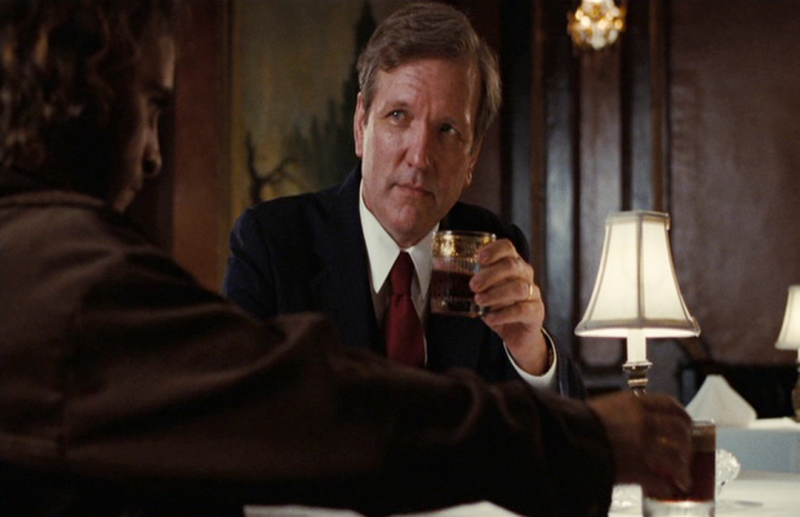
Another remarkably mixed mood moment is Doc’s dinner with Crocker Fenway (Martin Donovan), the wealthy, sneering snob who rewards Doc for saving his teenage daughter from demented dentist, Rudy Blatnoyd (Martin Short coming off like Austin Powers’ degenerate uncle and a touch of Phil Spector). Doc, dressed his best (that turquoise necklace) listens to Fenway detailing, with horror, the transgressions his daughter endured, and not all because of sex, but because of Blatnoyd’s tackiness (“The wallpaper. The lamps” – if you’ve ever wondered how a person could perfectly describe disdain for lamps, Donovan will quell your curiosity). Doc’s attempting to be both nice and tough, but Fenway insults him. The various expressions flickering on Doc’s face makes you feel for him in general (you feel for Doc a lot in this movie), but also feel (and this is without condescension) proud when he sticks up for himself: “I may not be as well connected, and for sure not as much into revenge as you folks are. But if you jive with me, my man. I say to you . . .” and he makes a click click sound. I love that sound he makes. It’s disarmingly touching.

6a00d83451cb7469e201bb09e44bf3970d-800wi

Doc’s relationship with Shasta is like a simultaneous love and ghost story. Often she appears like an idealized dream, the way we frequently remember those we pine for, forgetting the bad timesA flashback of the two running through the rain to Neil Young’s “Journey Through the Past” is so overwhelming romantic and stirring that it feels personal, like even personal to the viewer (who hasn’t had this kind of idyllic memory come to them before? Who wouldn’t want to return right back to that perfect feeling?). Things become, perhaps, real (in a still dreamy sense) in a powerful extended scene in which Doc has angry/emotional sexual encounter with Shasta. She sits naked detailing what Mickey made her do – is she taunting him? Expressing sadness and trauma? Is she getting off on it? It could be all things, and not because she’s a “femme fatale” or a bad person, or merely fucking with him, it’s much more nuanced than that. And so is Doc’s response. This scene’s been deemed controversial by some, a male fantasy even, but that takes away all of its complexity and rawness, for both Doc and Shasta. It’s an extraordinarily thorny moment, between two people who really know one another. It’s supposed to be discomforting and sad and emotionally honest. You’re supposed to think about it. It also shows that their relationship is more complicated than his idealizations.

6a00d83451cb7469e201b7c9412854970b-800wi

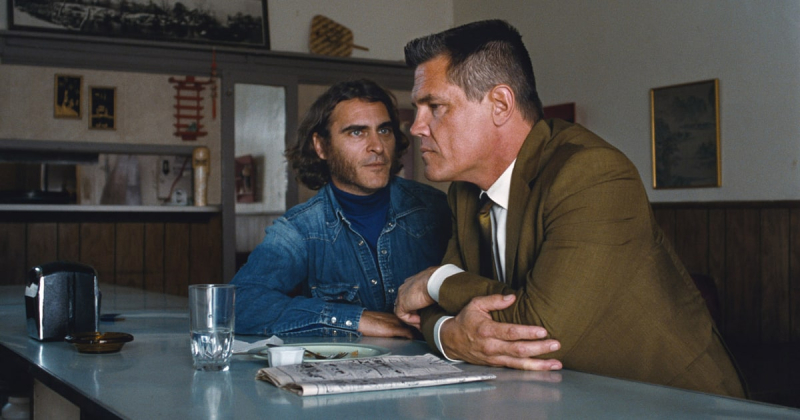
A separate essay could detail the relationship between Doc and the hilariously severe, incredibly damaged Bigfoot (“Like a bad luck planet in today’s horoscope, here’s the old, hippie-hating mad dog himself . . . SAG member, John Wayne walk, flat top of Flintstones proportion, and that little evil shit twinkle in his eye that says, civil rights violations.”) The interplay between Phoenix and Brolin (who is extraordinary) is so exquisitely timed, from big moments to seemingly throwaway lines (nothing is throwaway here), that their connection takes on a plaintive depth that builds and builds until, you are taken aback by how moved you are (and you really start to like Bigfoot). When Doc realizes that his nemesis and, in a strange way, his ally, is mourning the death of his partner (who he was probably in love with) Bigfoot’s actions attain a more dejectedly distressed meaning. His anger and chocolate covered banana sucking and yearning for respect shows a man who is on the edge of, likely, a complete nervous breakdown. The man who berates Doc constantly and who stomps on him (literally), and who puffs up his chest and yells “Molto Pan-a-cake-o!” is, in fact, the saddest character in the movie. By the time he eats a plate of marijuana, lamenting that Doc’s not come around after the case is closed, tears stream down Doc’s face. You’re stunned by what Bigfoot’s doing, and then, my god, are you moved. Doc asks: “Are you OK, brother?”  Bigfoot answers: “I’m not your brother.” Ever empathetic Doc replies: “Yeah, but you could use a keeper.

6a00d83451cb7469e201bb09e44c01970d-800wi

These characters will have more rabbit holes to dive down, but the case is over, and rather than rejoice, there’s a sadness that ends the picture with a  . . . what now? As Sortilège narrates: “Yet there is no avoiding time, the sea of time, the sea of memory and forgetfulness, the years of promise, gone and unrecoverable, of the land almost allowed to claim its better destiny, only to have the claim jumped by evildoers known all too well, and taken instead and held hostage to the future we must live in now forever.” That’s why we like to whirl with endless conspiracies because, well, they often never end. 

The one bit of closure has a poignantly heroic Doc saving Coy and dropping him off to his wife. But while you’re happy for Coy, the camera lingers on Doc’s bittersweet, forlorn face sitting in his car as Jonny Greenwood’s gorgeously melancholic score underlines the emotion. Nothing is wrapped up for him. Even when he’s driving off with Shasta, nothing is for certain. Who knows what’s in store? Who knows if it’s really even happening? Should we attempt to figure it out? “Of course not.”

6a00d83451cb7469e201b7c9412861970b-800wi


Merry Christmas: It’s a Wonderful Life

6a00d83451cb7469e201b8d2ca0c15970c-800wi

From my piece originally published at the New Beverly

Mr. Emil Gower: I owe everything to George Bailey. Help him, dear Father.Giuseppe Martini: Joseph, Jesus and Mary. Help my friend, Mr. Bailey.

Ma Bailey: Help my son, George, tonight.

Bert: He never thinks about himself, God, that’s why he’s in trouble.

Ernie Bishop: George is a good guy. Give him a break, God. Mary: I love him, dear Lord. Watch over him tonight.

Janie Bailey: Please, God, something’s the matter with Daddy. Zuzu Bailey: Please bring Daddy back.

“Get me! I’m giving out wings!” – Nick, the bartender

ScreenShot6518

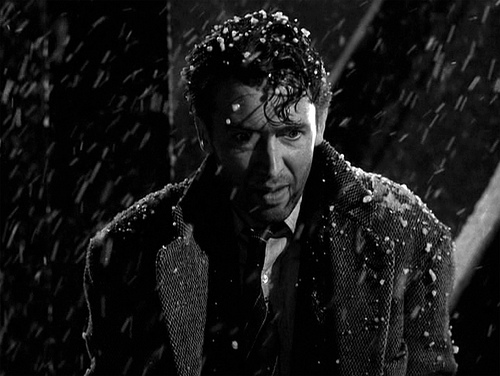
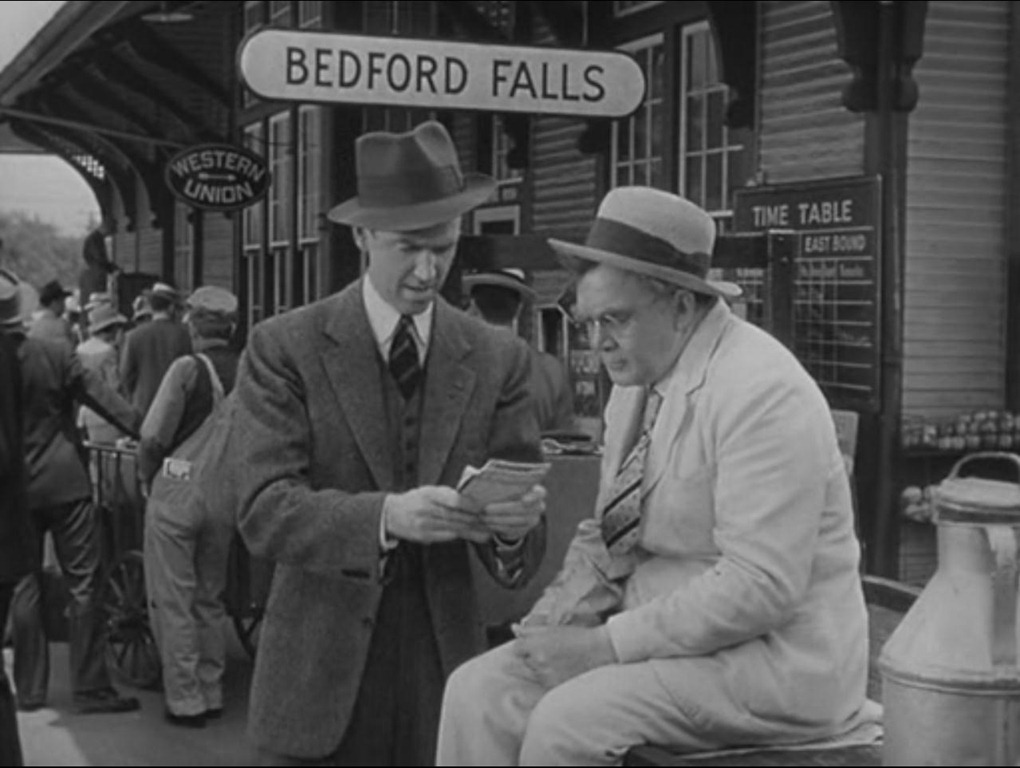
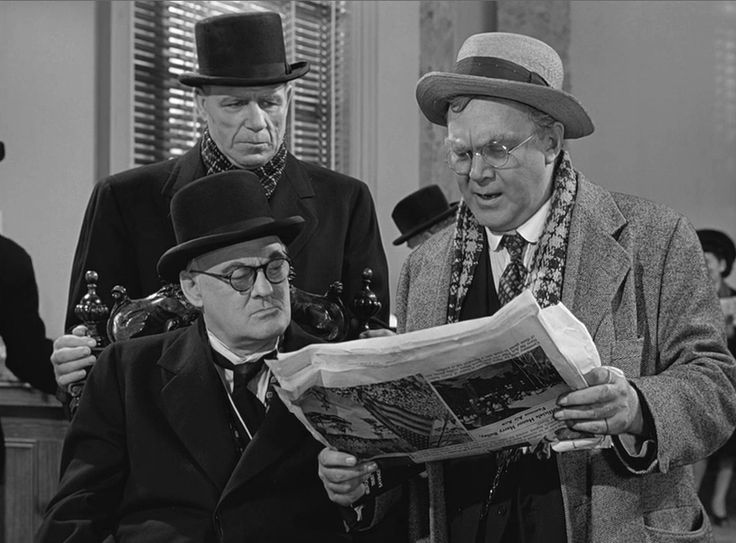
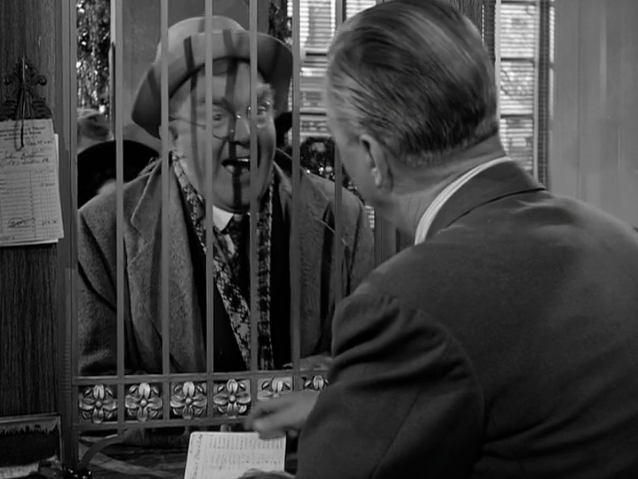
It’s a wonderful nightmare – and the nightmare starts rolling downhill and snowballing, not only by James Stewart’s suffering George Bailey, but by Thomas Mitchell’s sweet, absent minded, animal-loving Uncle Billy. Think of his scene – when he can’t find the money. Jesus, imagine being Uncle Billy? On that fateful Christmas Eve in Frank Capra’s It’s a Wonderful Life, it’s Uncle Billy who louses everything up by his innocent mistake – losing the deposit money to Lionel Barrymore’s rotten Mr. Potter, who then steals it. Cheerfully filling out the 8,000-dollar deposit slip in the bank, he notices Mr. Potter wheeled in by one of his henchman, and bids him a somewhat disingenuous hello. He’s not happy to see him. No one is happy to see that greedy, no-feeling blight on this community. Nevertheless, Uncle Billy, greets him, and grabs Potter’s newspaper – bragging about George’s brother winning the Congressional Medal of Honor, “written right there in print. “You just can’t keep those Bailey Boys down,” he says with pride and gloating glee. Mr. Potter doesn’t give a rat’s ass (or secretly, he does) and snarls about that “slacker” George Bailey (I always think of the Senior Lebowski in this moment, even if George Bailey is nothing like the Dude – “The bums lost!”). Uncle Billy folds the deposit money into the newspaper and hands it back to Potter: He continues to exult for the Baileys with a smirk, messing with Mr. Potter. He’s having a good time shoving this in Mr. Potter’s face! He’s being cocky, even. But… don’t go too far Uncle Billy, for, let me repeat myself – he hands over the money to Mr. Potter – something one fears so much that one might go crazy thinking such fear actually formed itself and happened.

6a00d83451cb7469e201b7c93fb879970b-800wi

So evidently Uncle Billy isn’t allowed to just slightly gloat in this Wonderful Life universe – he can’t even walk away from a party without crashing into something and falling down – he’s a lovably disorganized, slightly kooky guy until he’s not so lovable – at least not to George Bailey anymore. So, every time I see Uncle Billy smile and fold that newspaper with the money inside and just hand it over to Mr. Potter I nearly scream. I scream thinking of myself, too. That moment of recognition in yourself – the nightmarish thought of committing some kind of easy blunder that results in consequences so dire, that you wish you’d never left the house that morning. Or that week, for that matter. The “what if?” spiral that leads to catastrophizing – a “what if?” that will become a grim alternate reality for George Bailey, when one wishes that, one not only never stepped out of the house, but never stepped outside for a week. In Bailey’s case, he wished he had never stepped into life

Picture-22

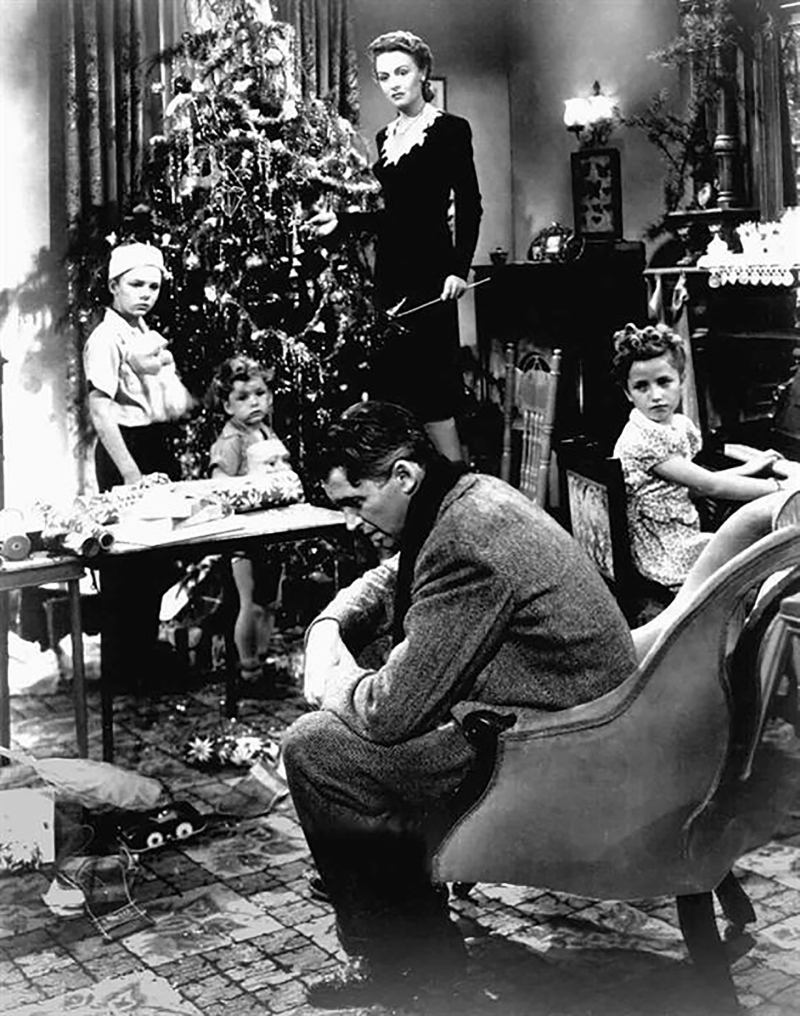
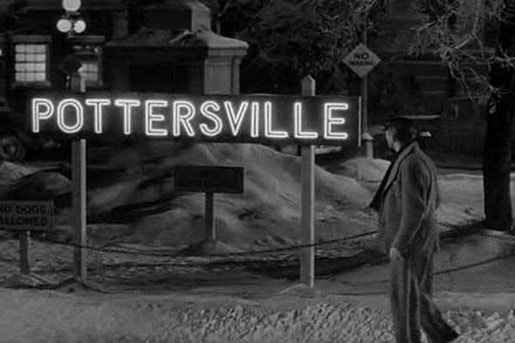
I realize there would be no movie if Uncle Billy didn’t hand that 8,000 dollars over to evil Mr. Potter and I’ve seen it enough to anticipate the moment, but it’s still horrifying to watch – knowing that Christmas Eve-happy Uncle Billy will soon turn to sinking-dread Uncle Billy. And then, that panic, that anger, that suicidal ideation infecting George Bailey, who has been storing up dread and regret and running away fantasies for years. Bailey will lose it, turn on his family, get punched in a bar, crash a car, run through the snow to jump off a bridge only to be saved by Henry Travers’ lovable second-class guardian angel, Clarence. He’s shown what Bedford Falls would have really been like had George had never been born. It would be Pottersville – a seedy, mean (admittedly, more interesting) rough town, controlled by Mr. Potter; and a place where no one knows George. No one knows him? He yells at friendly faces desperately in this “Twilight Zone” journey – and George goes crazier. Clarence is sending him over the edge faster than jumping off that bridge – and he’s waking George up as if the cold water below jolted him alive. It’s like George fell asleep after crashing that car, and fell into this nightmare – this Dickensian Christmas ghost story about a man who was never there.

6a00d83451cb7469e201b7c93fb887970b-800wi

But before that descent into madness, Uncle Billy informs George of the loss, and you can feel both of these men unraveling, just vibrating from the screen. They rush outside, retracing Uncle Billy’s steps through Bedford Falls, “Did you buy anything?” George demands, and I wince for Uncle Billy franticly thinking. Who hasn’t been there? Who hasn’t been in Uncle Billy’s place? They wind up in Uncle Billy’s study with an enraged, panic-stricken George hollering at what is now a totally broken man. Uncle Billy is weeping.

George: Maybe-Maybe! I don’t want any maybe. We’ve got to find that money!

Uncle Billy: I’m no good to you, George. I…

George: Uncle Billy, do you… Listen to me. Do you have any secret place hiding place?

Uncle Billy: I’ve gone over the whole house, even in rooms that have been locked ever since I lost Laura.

George: Listen to me, listen to me! Think! Think!

Uncle Billy: I can’t think anymore, George. I can’t think anymore. It hurts…

George: Where’s that money, you silly, stupid old fool?! Where’s that money? Do you realize what this means? It means bankruptcy and scandal, and prison! That’s what it means. One of us is going to jail! Well, it’s not gonna be me.

Itsawonderfullife1946.0207

“Rooms that have been locked ever since I lost Laura?” “It hurts?” Someone has not been having such a wonderful life, and it’s not George Bailey. Uncle Billy is a widower who lives with multiple animals – among others, a monkey, a dog, a raven (Jimmy, who would appear in all of Capra’s movies after You Can’t Take It with You) and a cute little squirrel who sweetly crawls up Billy’s arm for comfort when he’s sitting at his desk, sobbing. Mitchell’s mixture of gentleness and, at this point, deep, heartfelt loss, not just of the money, but of his wife, is both bracing and moving. It’s the moment you truly realize Uncle Billy has his own demons and maybe Bedford Falls is all he’s got – never mind how George feels stymied all the time. Or, rather, maybe Uncle Billy would like to get the hell out of there too. We don’t know. It’s not all about George Bailey.

When Uncle Billy says, “It hurts.” I’m sure it does. You realize this man’s been living in sadness with furry friends for … we’re not sure how long. (Nothing wrong in living with lots of animals – it may have kept Uncle Billy sane, in fact, it’s just others who find him eccentric) And now he’s sent his nephew spiraling into madness and despair, and feels he’s destroyed everything. My God, the guilt. And, remember, this is the second time Uncle Billy has fucked up. How did Uncle Billy not attempt suicide that night? Where were the angels watching over Uncle Billy? He has loving pets – perhaps, that was comforting enough. Perhaps. The horror movie begins.

6a00d83451cb7469e201b8d2ca0c71970c-800wi

And I mean it gets really scary at this point – full-blown level ten panic attack. George is going to have to take the fall for Uncle Billy, which is respectable of him, and seems to be his continual helpful duty (and submerged dread) in the town, but watching him yell at vulnerable Billy – it’s so violent. Stewart is so tall and overpowering and nearly deranged and Mitchell looks so small and sunken in this moment. The two play off of each other perfectly –  and you are worried for both of them. Stewart expresses his manic anger brilliantly and with such visceral emotion – the pained face, that flop of sweaty hair on his forehead, his distinct voice, so folksy and charming before, now twisting into an almost warbling howl, unlike anything anyone’s really heard. No one sounds like James Stewart in the first place, but when he’s enraged, he doesn’t even sound of this earth.

6a00d83451cb7469e201b7c93fb900970b-800wi

Capra understood his capacity for the swooning mental breakdown in Mr. Smith Goes to Washington, as if decency will make a man go nearly insane (you see this in Mr. Deeds Goes to Town as well), but he dug into something much thornier and angrier here – and a mysterious darkness lurking under all of that wholesomeness. The darkness later tapped into via Anthony Mann and, of course, Alfred Hitchcock, who saw the obsession, madness, kinkiness and repressed anger within the All-American movie star.

Donna-Reed-Jimmy-Stewart-Its-A-Wonderful-Life-1946

But this All-American “wholesomeness,” not just in Stewart, but in the very idea of anything purely “All-American” and wholesome, specifically, is full of complexity, mystery, much of which is not wholesome. Obviously the All-American contains darkness, madness, rot or horror – we’ve experienced it, we’ve seen it, we’ve read it (read writers like Hawthorne, Melville, Poe and more … Horace McCoy, William Lindsay Gresham … the list goes on). Wholesome? Is that even possible? No one is that good or that innocent and never have been. People are angry and obsessed and repressed. And what is more All-American than repressed anger boiling to the surface? Of being spitting mad and calcified that the so-called American Dream didn’t work out for you? And never mind the American Dream (so many Americans have different dreams – many just dream to survive), just that one (George) is stuck in what others might consider the dream – a beautiful, charming wife, lovely children, a gorgeous old rambling house, a good job. Young (and older) George Bailey wanted to do things, go places – be his own man. He didn’t want to stay in Bedford Falls, he didn’t want to take over his father’s business. He could have made money and enjoyed a posh life, or he could have rambled and walked into a seedy situation, like John Garfield in The Postman Always Rings Twice.

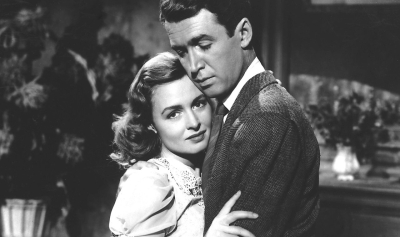
So, he’s sacrificed, become a pillar of the community, has a great love with Mary (a sublime Donna Reed) and he appears happy – but that lingering “what if I had done this, what if I had lived there?” flickers across his face, sometimes clearly, sometimes in just a flash of his eyes. Sometimes when he looks at Gloria Grahame’s Violet. But with the money missing, that “what if?” has now exploded into the catastrophic. And hurled at Uncle Billy who is wishing a lot of things were different too. And soon, again, George wishes he were never born.

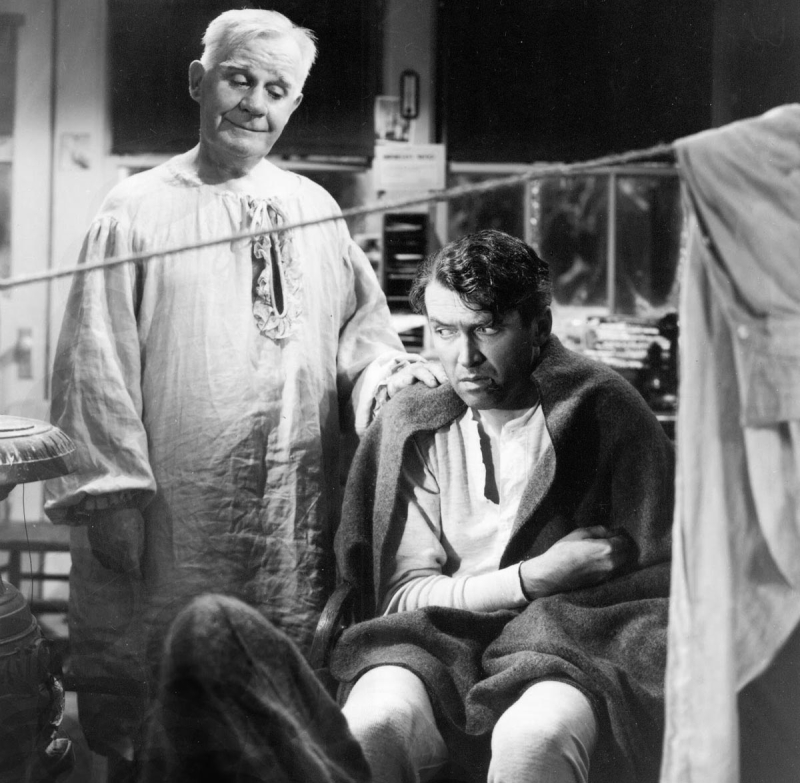
But if that had been the case, he wouldn’t have stopped his old boss, the broken-down pharmacist Mr. Gower (H.B. Warner, a Capra favorite, and Jesus Christ in Cecil B. Demille’s The King of Kings) from accidentally poisoning a customer. Another dark, layered confrontation in which an accident could have led to death – and George has to do something about it. In a few scenes, we learn a lot about one man’s misery and a young, scared but caring George’s reaction to it. Here, however, it is George who is on the other end of wrathful sadness, batted around and hollered at like Uncle Billy. Sensitive young George notices an open telegram on view – that Mr. Gower’s son has died from influenza – and that a grief-stricken Mr. Gower is drunk. Mr. Gower is so intoxicated that he’s mistakenly mixed a prescription with poison –  cyanide. It’s for an emergency delivery and George, noticing the grave error, isn’t sure what to do. He seeks the advice of his father, who is getting a nasty ear-full from Mr. Potter. Mr. Potter is deeply insulting, calling George’s father a failure: “Are you running a business or a charity ward?” It’s a traumatizing thing for a kid to see. And he’s standing there, holding poison.

Yt-2-of-14-2m-10s

A shaken George returns to Mr. Gower with the prescription and is … yelled at. It’s the first scene of violence in the movie – Gower lunges at George, slapping his bad ear (he lost his hearing from saving his younger brother in a sledding accident), and poor George is trying to collect himself while crying: “Don’t hurt my sore ear again … Don’t hurt my sore ear again!” 

When Mr. Gower realizes this kid has just saved another’s life, and him from ruin – the look on Warner’s haggard face is so mournful, full of such a powerful, sinking self-recognition that when he embraces George – it’s one of the most moving moments in the entire picture. As George (so beautifully played by Bobby Anderson) backs away, Mr. Gower holds him. Both are crying: “I won’t ever tell anyone!” George cries. “I know what you’re feeling. I won’t tell a soul. Hope to die, I won’t.”

6a00d83451cb7469e201bb09e2ced2970d-800wi

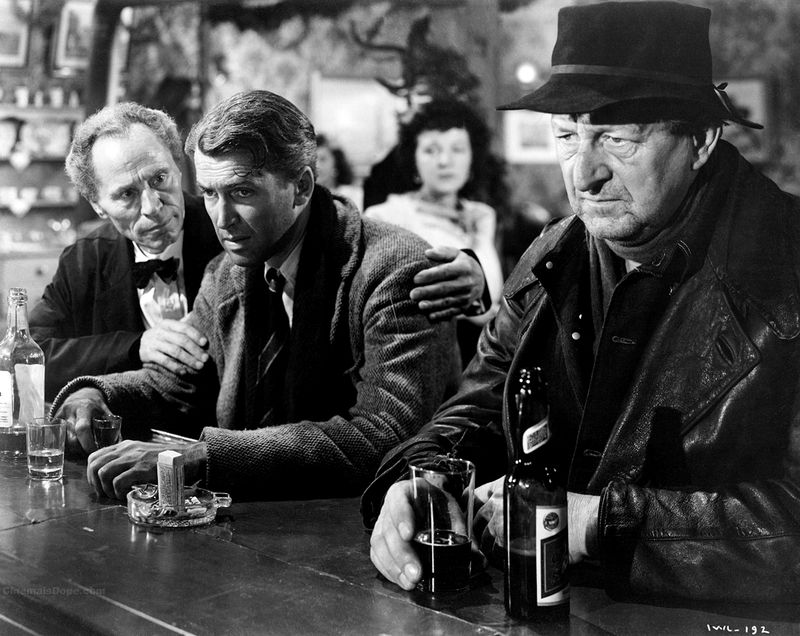
And he never did. Hope to die. To die, not to have never been born, as he wishes. But Clarence gives grown-up George a strong sample of his later wish, because had he never been born, he would have never been known. And George learns he doesn’t want that either. Not just because the alternate reality Pottersville is a noir-soaked sin city without him (and frankly, I prefer Nick’s bar over Martini’s, save for the cruelty, but it looks more fun, and with the boogie woogie piano player Meade Lux Lewis at the keys), but because no one knows who in the hell George is. And, worse, if they do, they might view him as insane.

6a00d83451cb7469e201b8d2ca0c6a970c-800wi

There are people who go through life like this, alive, with no one knowing who they are or giving a damn to find out. Invisible people. Or outsiders people cross the street to avoid. And this idea reveals itself when a wrecked vagrant walks into Nick’s and it turns out to be Mr. Gower – drunk and vulnerable and beaten down by life. Nick (Sheldon Leonard), tells that “rummy” to get out and humiliates the man by spraying Gower’s face with seltzer water – he’s a pariah. George is horrified, yelling for his old boss and friend. But Gower did twenty years for poisoning a kid (aha) and if never-been-born-George knows him, then, according to Nick, he must be a sicko “jailbird” too. Quickly, in Pottersville, George has gone from a nobody no one knows to a creep, possibly a criminal and certainly crazy – aligned with Gower and Uncle Billy, whom George’s mother (Beulah Bondi) informs him is in an insane asylum. I am not surprised Billy has been placed in an insane asylum. He lost his business – probably when someone trusted him with a large sum of cash and that “old fool” left it all in an umbrella in a cab – something of the sort.  Poor Uncle Billy.

24ce74ce430843dde1429365daad9cdc--wonderful-life-classic-movies

There is more of the down-and-out in Pottersville – chiefly, Mary, who becomes a dowdy librarian had George never been born, which would almost be a laugh (she’s still lovely to me, and at least she has a good job and reads books – she’s not as desperate and tragic as Grahame’s flirtatious Violet) – but it’s more saddening that George sees that she is now an invisible person, that, she like him, has vanished, that she’s never experienced love, that she’s never met him. And she has no idea who he is (The movie was apparently personal to Capra –  he could relate to the fear of being forgotten, unseen – returning from World War II, making this picture, which was not a flop, but not the success he wished it to be. It received mixed reviews, but the bad reviews hurt him.)

In fact, Mary may be quite an interesting, intelligent woman a person would love to talk to, just as she was in Bedford Falls, but Pottersville doesn’t seem to care. She’s not … what? Pretty enough? It’s absurd but the world is mean. Seeing her quickly walking from the library makes George even crazier, and he starts yelling and grabbing at her like a maniac, and she screams and screams for help, and he is desperate for her to see who he is and he’s probably going to get arrested for accosting a woman and … when is the nightmare going to end.

6a00d83451cb7469e201b7c93fb8d1970b-800wi

It’ll end – and George Bailey will be running through Bedford Falls wishing every person and thing a manic Merry Christmas. “Merry Christmas, movie house! Merry Christmas, Emporium! Merry Christmas, you wonderful old Building and Loan!!” He even wishes Mr. Potter a Merry Christmas. After the dark night of the soul, he appreciates quaint Bedford Falls. The famous finale will happen – the family reunited and all of the town’s generosity pouring into the Bailey home, saving George from the slammer, and we cry for such giving, and it’s beautifully crafted and magically shot by cinematographer Joseph Walker (snow is so hauntingly beautiful in this movie – gentle and gorgeous and then, at times, foreboding), but the darkness of the picture lingers. And it’s a darkness that we felt even before Pottersville – all of those scenes of nice people cracking up.

6a00d83451cb7469e201bb09e2cef3970d-800wi

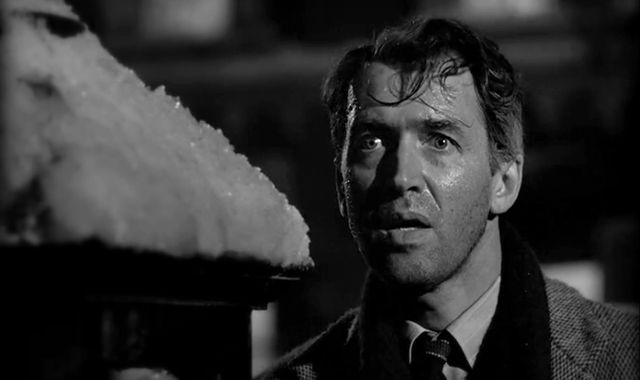
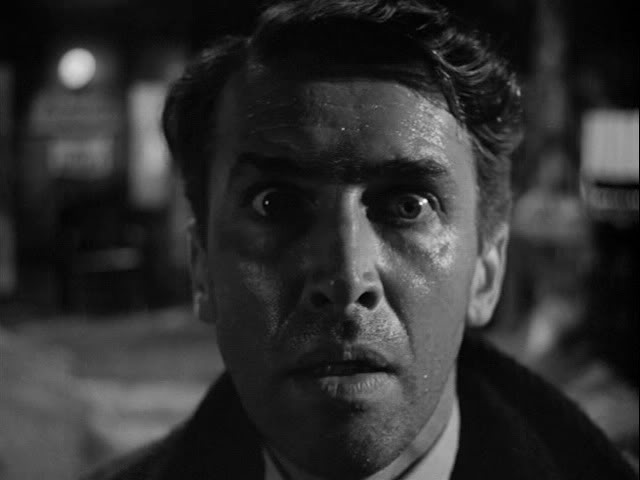
As corny as some have thought this movie was or is, and as old-fashioned as it may have seemed to some critics who, at the time, much preferred William Wyler’s masterpiece, The Best Years of Our Lives, it’s too dreamlike and strange, too uniquely told, too, in fact, scary, to seem antiquated and purely sentimental to me. And it’s sometimes unhinged – melodramatic isn’t the right word – unhinged seems more appropriate, and to the point of feeling unexpected jolts even if we’ve seen the picture a hundred times. When Stewart is standing outside his mother’s boarding house in Pottersville, and the film goes so close on his face, eyes wide and terrified, he looks right at us for a second. I honestly don’t know what to think at that moment. I certainly feel for him, but I also marvel at how intense and bold the filmmaking is here. I’m waiting for a quivering theremin wobble and a bat to bite the head off a rat – a la The Lost Weekend – like Bailey’s suffering delirium tremens. But of course, he’s not – he’s not hallucinating. He has simply switched realities, which is much more terrifying.

6a00d83451cb7469e201b7c93fb8dc970b-800wi

This may seem odd, but when I watch It’s a Wonderful Life, I often think of Hitchcock’s small-towners in Shadow of a Doubt (also co-starring Henry Travers), wherein Teresa Wright is like young George Bailey – she wants so much more out of life, and she thinks she’s made of different stuff than the others. She doesn’t yearn for anything like her parent’s life and laments that her mother works “like a dog” – hoping a miracle will come to lift her up. And then a miracle does come – but that miracle isn’t an angel – it’s her charming, sociopathic Uncle Charlie (Joseph Cotten). James Stewart will have the angel on his shoulder, Teresa Wright gets the devil. Both appreciate their lives after their dark rites of passage in which, to quote Uncle Charlie, “the world is a foul sty.” She’s not going to forget Uncle Charlie. George is not going to forget Clarence and his nightmare of Pottersville. But how often will he think of it? Will it be too painful? Will he become a bit more like Uncle Billy? Not disorganized, not crowding his house with critters, but avoiding any revisit to the horror. Like Uncle Billy said: “I can’t think anymore, George. I can’t think anymore. It hurts.” Merry Christmas, Bedford Falls.

Jolly Old Saint Nick & Nora Charles

6a00d83451cb7469e201b8d2c7cfa0970c-800wi

From my piece published at the New Beverly.

Reporter: Say listen, is he working on a case?
Nora Charles: Yes, yes!
Reporter: What case?
Nora Charles: A case of scotch. Pitch in and help him.

Nick Charles likes to drink. Nick Charles likes to drink a lot – copious amounts of alcohol – one glass emptied in one hand, the other reaching for another with an elegance and panache that’s as graceful as a tipsy, never fully drunk dancer. Indeed, he compares the mixing of drinks to dance, breaking it down to a bartender: “The important thing is the rhythm. Always have rhythm in your shaking. Now a Manhattan you shake to fox-trot time, a Bronx to two-step time, a dry martini you always shake to waltz time.

Annex - Powell  William (Thin Man Goes Home  The)_02

In his lush waltz time (or maybe a fox-trot), he’s gulping his wife’s drink down before passing her the empty glass, to which she takes with amusement. She, as in Nora Charles, drinks too, with merriment and style and with routine like Nick, and she also consumes liberally, almost as much or as much as her husband. It’s not too hard to keep track of who drinks the most as it would appear to be Nick, though he may just be seen onscreen imbibing with exceptional volume. I have no idea how much Nora’s putting away during her walks with Asta, their pet terrier. Anyway, it doesn’t really matter – they both drink enough and with such brio, that Who’s Afraid of Virginia Woolf’s George and Martha, had they been around, would raise their glasses to them as kindred dipsomaniacal spirits. But George and Martha, as intelligent and as morbidly funny and as mean and finally, as poignant as they are, could never contend with Nick and Nora Charles.

Nick and Nora would roll their eyes and throw down a wicked bon mot over their “Hey, swampy” insults – for they’re never sloppy or mean or ugly about their drinking – and think of the bemused looks they’d give one another around George and Martha’s “truth or illusion.” (I am imagining Nick and Nora in George and Martha’s academic abode, sitting on that couch, laughing when George busts out that umbrella gun, and then wanting to leave because they’d rather drink in their sterling, silvery apartment, crawl into their silk night clothes and order in a “flock of sandwiches,” and then drink more).

6a00d83451cb7469e201bb09e08dd1970d-800wi

So, George and Martha could never “get” them as guests. You can’t get people who are that shimmering and witty while drinking – a happily married couple and who aren’t shocked by profuse alcohol consumption. Maybe they should be frightened those two could represent their future but… let’s not spoil things here, and, they’re not thinking of that. Nick and Nora, a real team, are in love and live life entirely the way they want to – they’ve created a world of their own that’s sophisticated and mischievous and intelligent and funny and full of adventure, and, yes, beautiful clothes. And the correct intoxicants. And crime, buffered by their glittering bubble. As such, they appear to be one of the most positive and positively happy couples in filmdom. A marriage of equals. And two playful quick-witted lovebirds who, as I’ve stated numerous times here, drink a lot.

6a00d83451cb7469e201bb09e08d29970d-800wi

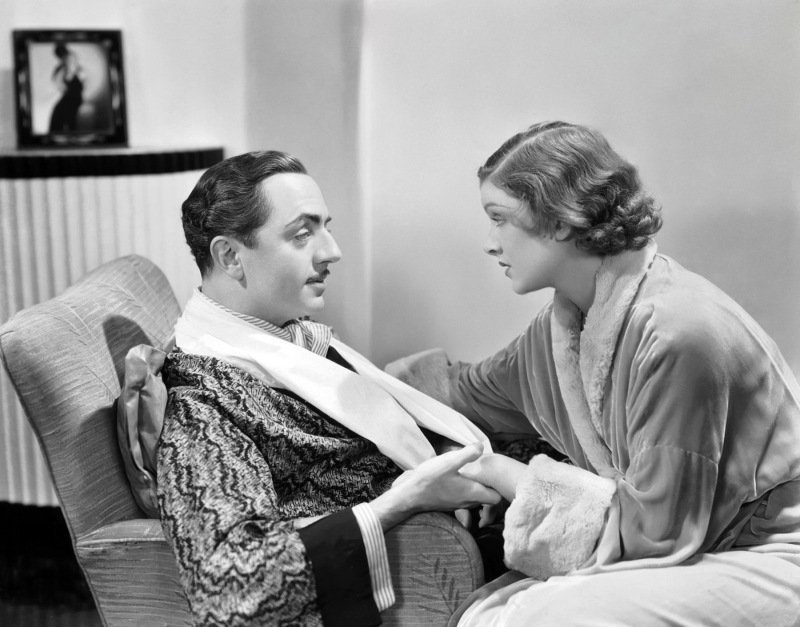
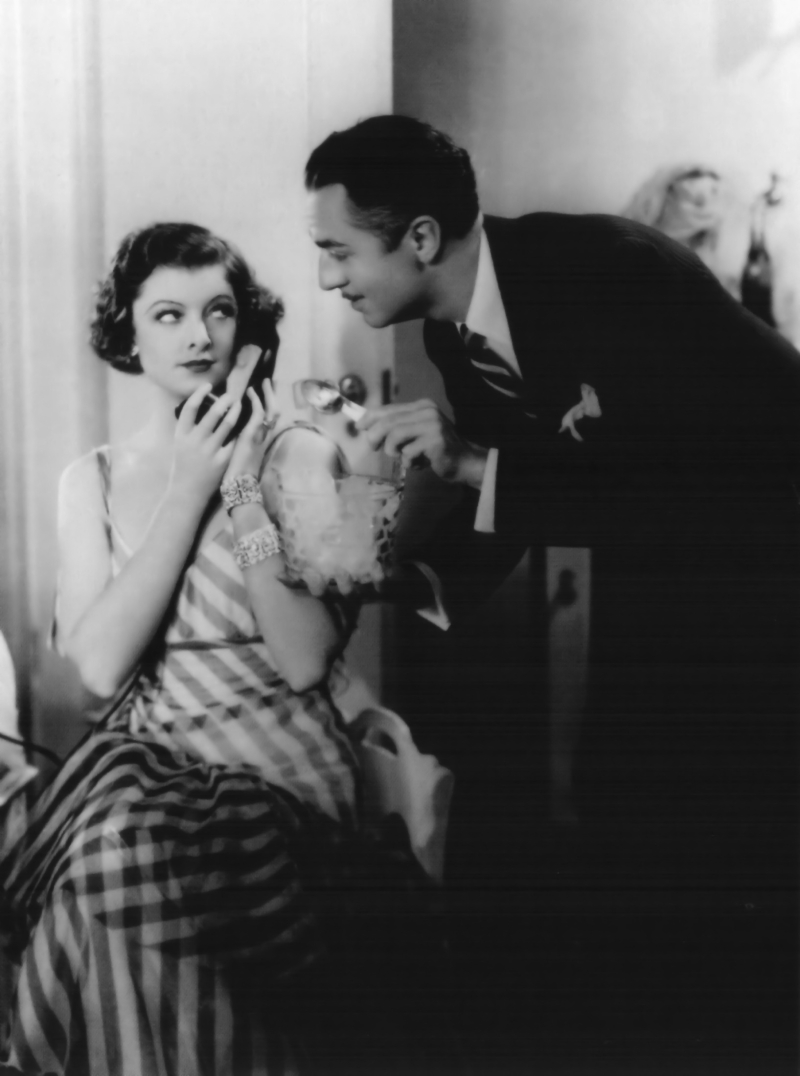
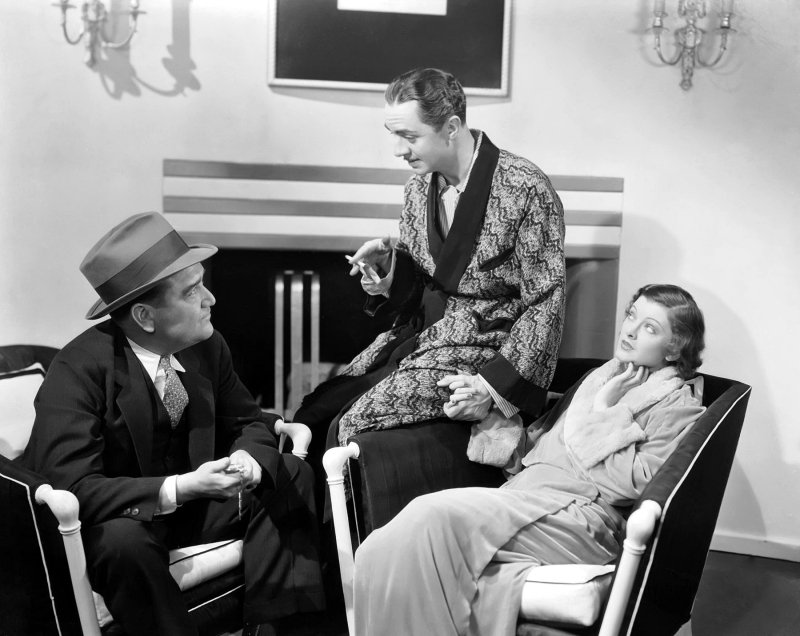
This glamorous twosome are William Powell as Nick and Myrna Loy as Nora, in W.S. Van Dyke’s The Thin Man, an exceptional merging of mystery and seminal screwball and modern marital allure, adapted from the popular Dashiell Hammett novel (his last), who also drank (in an understatement). It’s said that Hammett’s relationship with playwright Lillian Hellman was the inspiration to create these heavy drinking characters, and likely so, but The Thin Man is a much more idealized version of the Hammett-Hellman union and the drinking. Screenwriters Albert Hackett and Frances Goodrich were a married couple, and they lightened up the darker edges of the novel, and perhaps their own marriage played a part (wouldn’t we all want to be Nick and Nora Charles?). Still, as Hellman wrote of Hammett in the New Yorker, after his death: “For years we made jokes about the day I would write about him. In the early years, I would say, ‘Tell me more about the girl in San Francisco. The silly one who lived across the hall in Pine Street.’ And he would laugh and say, ‘She lived across the hall in Pine Street and was silly.’ ‘Tell more than that. How much did you like her, and—?’ He would yawn: ‘Finish your drink and go to sleep.’” Nick would tell Nora the same, except he’d “gallantly” finish her drink for her.

6a00d83451cb7469e201b7c93d7b3e970b-800wi

We first meet Nick at a bar talking fox trots and waltzes when it comes to creating cocktails – he’s only slightly slurred in his speech, not quite lit and immediately charming as William Powell always is. (The word charming seems almost needless when you simply read his name – if you know William Powell you already know he is.) He comes face-to-face with a young woman, not his wife whom we’ve not met yet. Gasp! No, no, it’s nothing like that and Nora wouldn’t bat an eye anyway. She trusts her husband or she’s perfectly fine with a flirt. One life to live and all that. Also, he’s a little tipsy. This woman is lovely Dorothy Wynant (Maureen O’Sullivan), who remembers Nick back when he was a full time employed detective, back when she was a little girl: “You used to fascinate me, a real live detective. You told me the most wonderful stories. Were they true?” He answers, “Probably not.” Nick once worked on a case for her father (the titular “thin man” which sounds so ominous), and now he’s gone missing. She’s worried, he was supposed to be around for her upcoming wedding, it’s nearing Christmas and… she has a strange family. 

The Thin Man Gilbert Creepy Elevator

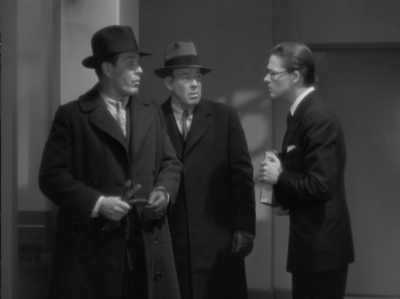
Dorothy’s father, Clyde Wynant (Edward Ellis) who is sweet to her but not so lovable in real life (or at least he chooses shifty romantic interests) is divorced from her somewhat ridiculous mother, Mimi (Minna Gombell) and is in a rocky relationship with his two-timing secretary, Julia (Natalie Moorhead), who keeps company with some shady-looking so-and-sos. Naturally there are problems, and both ex-wife and girlfriend are concerned about his money which raises suspicion. Meanwhile, Mimi has re-married some deviously handsome fellow named Chris (Cesar Romero) who doesn’t work and is sensitive to his idle pointed out (“You’ve hurt his feelings!” Mimi exclaims), and her son, the Leopold and Loeb-looking Gilbert (William Henry) is a strange kid who likes to spy on people, listen in on phone calls (when accused of eavesdropping, he says, “Of course. What’s an extension for?”), digging into the gory details of true crime and then, the more dramatic parts of Freudianism – the Oedipus Complex and a mother fixation, of which he states he has. (OK, so he’s not that weird – not by today’s standards anyway.) This is the family Nick and Nora will get dragged into, somewhat (no one can really drag these two anywhere), after the retired detective decides to take on the case and digs in deeper after Julia is murdered. Now the father is not only missing but the prime suspect as well.

6a00d83451cb7469e201bb09e08d61970d-800wi

This all happening around the flurry of Christmas parties and cocktails and drunk friends calling their mothers and strange men showing up at the door in the middle of the night, Nick and Nora contend with a family so screwy that no one in it needs to drink to appear under the influence. In the novel Gilbert is experimenting with harder drugs like morphine and curious about cocaine (“that’s to supposed to sharpen the brain, isn’t it?” he asks) and though there’s not a mention of that in the movie, you can imagine quite a few of these characters snorting or injecting something illicit as they bounce around the rooms. But Nick and Nora just drink – and with unflappable tolerance. After all, the 21st Amendment to the Constitution was passed the year before in 1933, thus ending national Prohibition, so, drink away! Of course, Nick and Nora always drank as everyone did under Prohibition, but never mind that, celebrate! Celebrate more. And have another. Have six, and order five more as Nora does when she is finally introduced in the picture.

Myrna-loy-style-the-thin-man-e1317197757324

And what an introduction –  she comes into the bar with Asta (Skippy) in tow, arms full of Christmas presents, and falls flat on her face. Elegant, gorgeous Myrna Loy takes a tumble and manages to be elegant and gorgeous about it. And funny, with a timing and wit all her own. She also walks in on her husband’s impromptu meeting with his pretty potential new client, Dorothy, and is amused by the possible job. You see, these two don’t need to work since, as Nick jokes to his wealthy wife, “I’m too busy seeing you don’t Iose the money I married you for.” But Nora is up for the thrill and for the seedier amusements of life (“Oh, Nicky, I love you because you know such lovely people.” she says with loving sarcasm) and she wants to help out poor Dorothy. Eventually Nick will relent and, as the complicated case continues on, Nick and Nora never abate with their merry lives, throwing one hell of a Christmas party in a beautifully shot and timed sequence that proves how well they can handle their liquor – everyone else singing “Oh Christmas Tree” are soused out of their minds.

But there’s Nick and Nora, floating around the rooms, wise cracking, ordering food, drinking (of course), taking in Dorothy and then Mimi and then even Gilbert who starts confusing drunks by using the term sexagenarian (“A sexagenarian? But we can’t put that in the paper.”) Nick escorts Gilbert out easily and amusingly, by grabbing his hat and walking towards the door as Gilbert exclaims: “Hey, that’s my hat!” To which Nick says, “Come and get it, while it’s hot.” Why this is both so funny and so graceful is almost mysterious in its simplicity, effortless but not effortless. It’s just as Roger Ebert said of Powell: “William Powell is to dialogue as Fred Astaire is to dance. His delivery is so droll and insinuating, so knowing and innocent at the same time, that it hardly matters what he’s saying.” Well, it does matter, particularly in the later My Man Godfrey where Powell says, “The only difference between a derelict and a man is a job.” I entirely understand Ebert’s point. Much of the joy is merely listening to Powell, which makes all of the sequels to The Thin Man and, particularly, the Lux Radio Theater versions, so enjoyable and such an art form, and one nearly lost.

6a00d83451cb7469e201b7c93d7b84970b-800wi

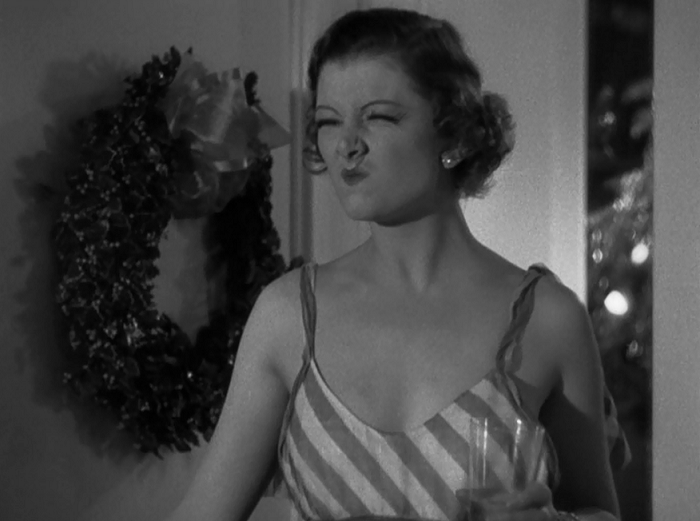
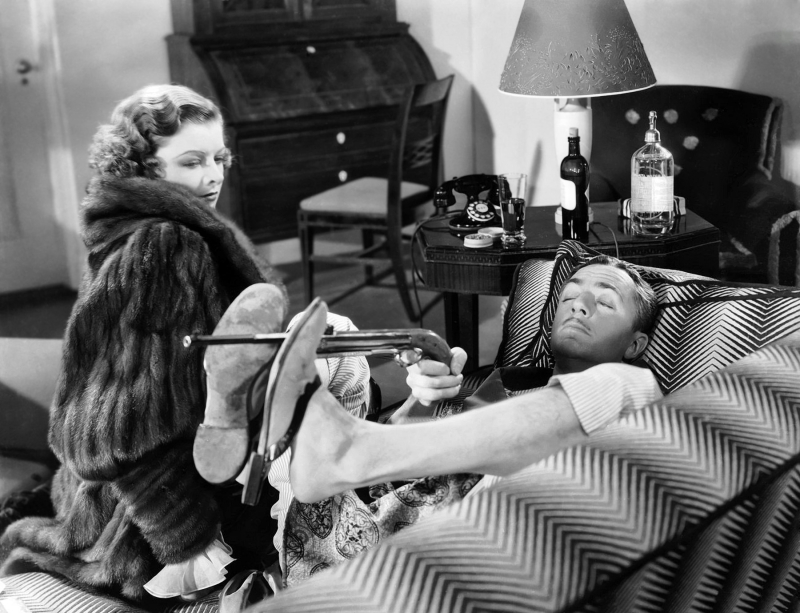
Myrna Loy also makes it look all so easy. Loy hadn’t been this funny yet, and had often been cast as the “exotic” or the vamp, which she is not here, but she is most certainly not the opposite – “normal” long-suffering wife, arms akimbo waiting for her hubby to finish his latest shenanigan. She’s right there with him – joking, sleuthing, drinking. Loy had previously starred with Powell in Van Dyke’s Manhattan Melodrama (their first of fourteen films together – six being the Thin Man pictures) and their chemistry was so perfect, so natural, like two people who finish each other’s sentences, that many fans thought they were a couple in real life. Loy is crisp and sweet, elegant and goofy and bemused, never annoyed – quick to make a playful sour face or sit patiently on Christmas morning (in her new fur coat, no less – their lounging clothes are spectacular here) as Nick horses around with his present – a B.B. gun – he’s lying on the couch and taking shots at the Christmas balls on the tree. You know, every day Christmas morning things. “You act as though it were the only Christmas present you ever had,” she wryly observes. It’s a lovely, almost subversive little moment of their lives together – these two adults who’ve bonded, not by children (unless you count Asta), but by fun that verges on the precipice of irresponsibility. But who are they responsible to? Each other. And are they letting each other down? Not a chance.

6a00d83451cb7469e201bb09e08dad970d-800wi

The Thin Man (remarkably shot in around two weeks) is a wickedly fun, sexy, intelligent intoxicant. You get something of a contact high watching the dazzling, slightly anarchic Nick and Nora imbibe, tossing off their good-natured barbs with such elegant ease. And the picture remains a still-modern depiction of what is, let’s face it, an aspirational marriage. A daring merging of darker crime elements with screwball comedy (decomposing bodies as dinner repartee), the picture was something of a risk, and one that paid off. As detailed in Roger Bryant’s “William Powell: The Life and Films,” Samuel Marx, then the head of Metro-Goldwyn-Mayer’s story department said: “I’d bought this sprightly detective story for fourteen thousand dollars, and we had no idea whether this kind of comedy would go. It had two unprecedented elements… they were having fun with murder, and they were a married couple who acted with total sophistication… The matrimonial combination… even that was a risk, because in those days you got married at the end of the movie, not at the beginning. Marriage wasn’t supposed to be fun.” Nowadays, it would be the drinking that wasn’t supposed to be fun. With The Thin Man you get both. And most especially, you get Nick and Nora Charles – tipsy and witty and living in a world of their own making. A world’s that’s crazy anyway, so why the hell not live it the way you can? As Nora says at their doozy of an Agatha Christie-like, suspect filled dinner party: “Waiter, will you serve the nuts? I mean, will you serve the guests the nuts?”

Questions Arose: His Kind of Woman

6a00d83451cb7469e201bb09df7fdd970d-800wi
From my piece published at the New Beverly.

“Questions arose. Like, what in the fuck was going on here, basically.” – Thomas Pynchon, Inherent Vice

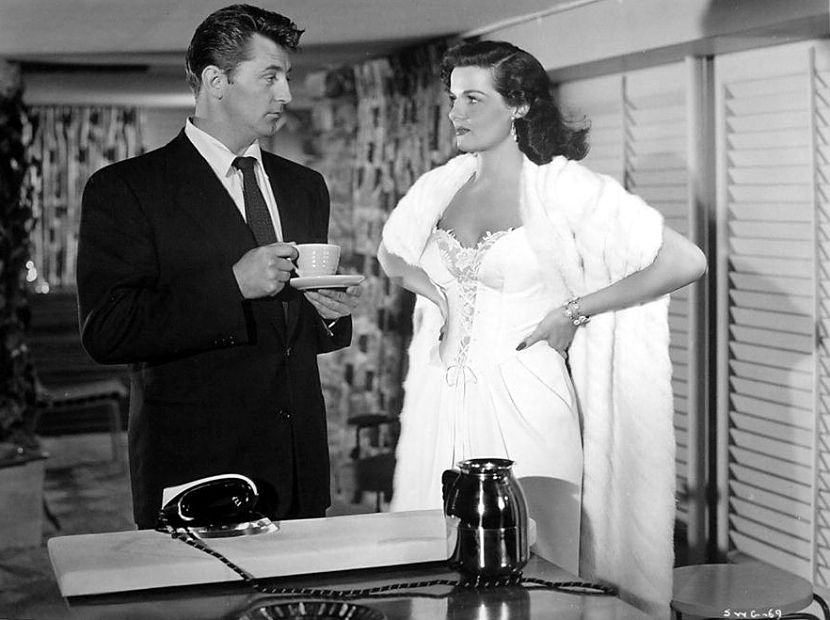
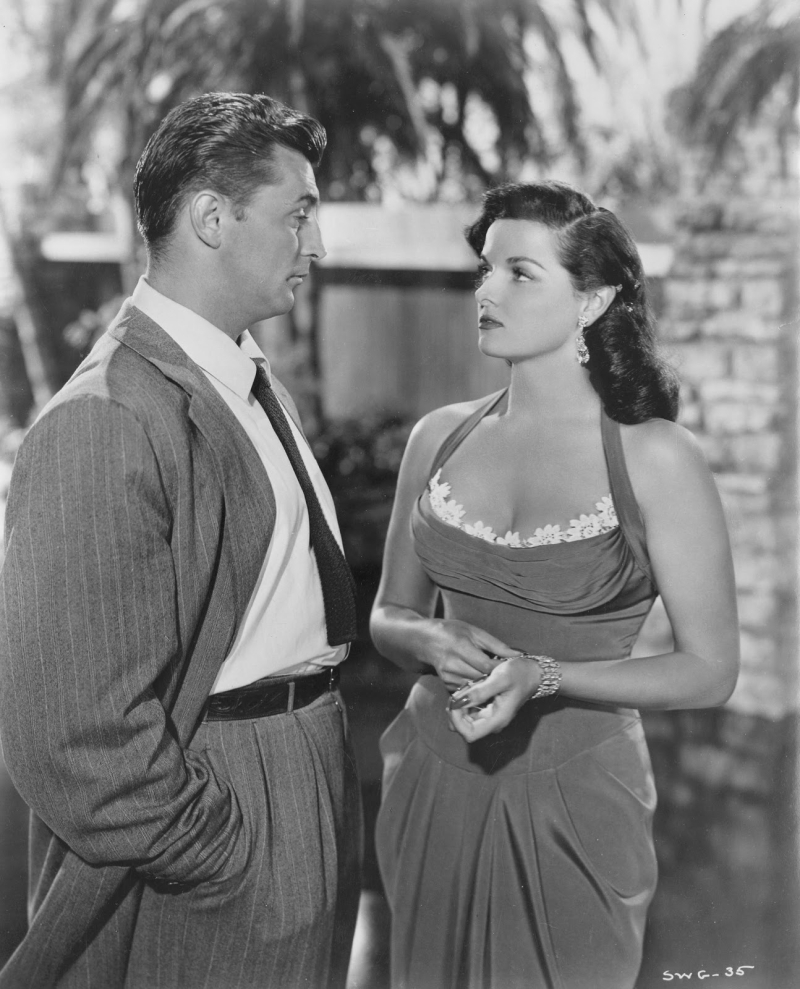
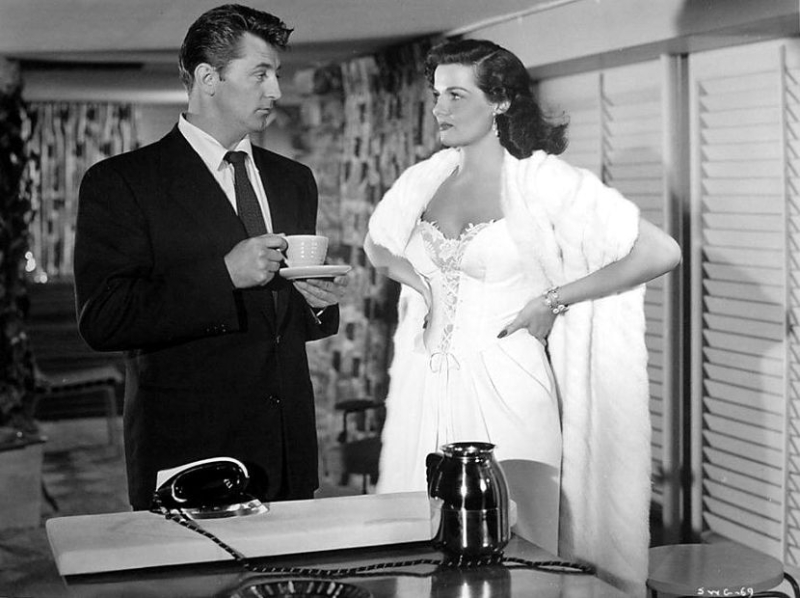
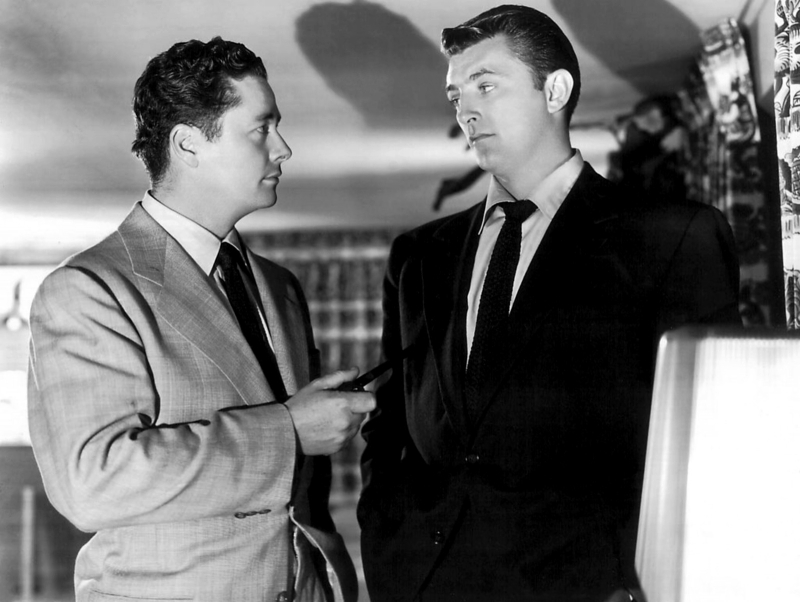
I love watching Robert Mitchum amble around His Kind of Woman with that particular walk of his, navigating this schizophrenic maze of a movie like it’s a typical day in the life of … Bob Mitchum: Light up a reefer, what’s Jim Backus up to? What the hell does Charles McGraw want? Millionaire but probably not a millionaire Jane Russell is wooing that actor Vincent Price playing an actor. Fine, fine. We’re all friends. Or enemies. Who knows? Guess I’ll mingle.
6a00d83451cb7469e201b7c93c72cd970b-800wi

Mitchum never lights up a reefer in the movie, he doesn’t even drink (he has milk in one scene, orders ginger ale in another) but you can imagine it happening off camera. And, again, he does saunter with his special kind of physical cool – that walk he found baffling for being so “interesting” to people. His response to that? “Hell, I’m just trying to hold my gut in.” Well, this movie isn’t trying to hold its gut in, and if it ever had any intention to, it abandoned that mission and went on a manic munchie binge, unbuckled its belt, and let it all out. And then took another hit. His Kind of Woman might not have been made to be a movie with marijuana in mind (though Mitchum was busted for it in 1948 – did two months’ time and was released in 1949) but this is a pot-smoker’s movie, a stoner noir with a knotty plot and loads of characters doing weird shit – characters who seem, not just stoned, but who make you feel stoned once you settle into the thing.

This is a movie where our lead actor hangs around for nearly an hour before he really figures out just “what in the fuck was going on here, basically.” He’s in a John Farrow movie, a Richard Fleischer movie, a Vincent Price movie, a Howard Hughes movie, and a Howard Hughes movie that, off-screen, is obsessing over the details like the eccentric billionaire instructing an assistant on how to properly open a can of peaches.
6a00d83451cb7469e20263e85fa48a200d-800wi

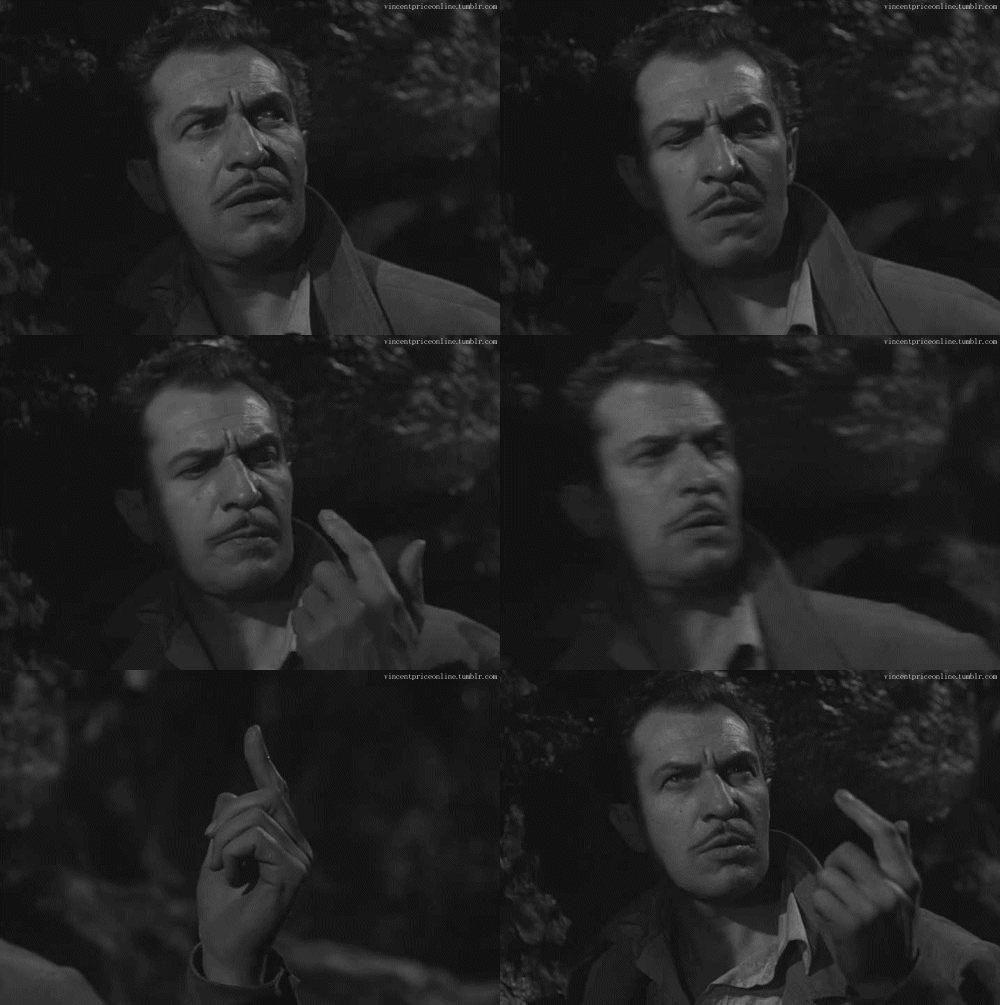
When I quote Pynchon, it’s not just a joke, this feels like Pynchon, a world Doc Sportello would stumble upon, putting the pieces together with his Doper’s ESP because, sure. What does this all mean? There’s the German writer Martin Krafft (John Mylong), always in dark sunglasses who plays chess with himself but is actually a plastic surgeon for Raymond Burr’s moody mobster Nick Ferraro. Mamie Van Doren, not as Mamie Van Doren but it doesn’t really matter, shows up for a second. I mentioned Jim Backus. He’s a creepy investment broker named Myron Winton who is trying to gamble away a recently married young couple’s money, presumably to take off with the bride. Nice try, Backus. No dice. A bravura Vincent Price is a crazed actor named Mark Cardigan and not just a crazed actor in the usual sense but a game-hunting crazed married actor having an affair with Jane Russell and one who will become so amped up with adventure and bloodlust that he really starts shooting bad guys, announcing things like, “I must rid all the seas of pirates!” He’s so intoxicated with what he’s doing that he literally shoves Jane Russell in a closet – she may be pretty but she can’t help him and worse, she’s a scene stealer.

6a00d83451cb7469e201b7c93c71fb970b-800wi
This is a movie where Mitchum irons his money. When he runs out of money he irons his pants.

Money-ironer Mitchum is gambler Dan Milner (he has such a normal name), who has just been sprung from a month in jail and, with little prospects, accepts a shady deal. It’s $50,000 to head out to Mexico, presumably for a year, no idea why. Well, why not? He needs the money because he owes money, naturally. He does not appear to have much else going on other than that he’s Robert Mitchum. He’s flown away and meets beautiful, supposed rich girl, Lenore Brent (Russell) in a Mexican cantina while awaiting his next plane, where she charmingly sings “Five Little Miles from San Berdoo” and insists only on champagne. They wind up in the same plane together and off to the same impressive, crazy-ass resort – a play land for cops, gangsters, actors, German novelist plastic surgeons, Jim Backus, I’ve already said this … And then the movie really gets to ambling around, with Mitchum’s Dan trying to figure out what is what and who is who and who to trust inside this surrealistic alternate universe.

6a00d83451cb7469e201bb09df7fe2970d-800wi

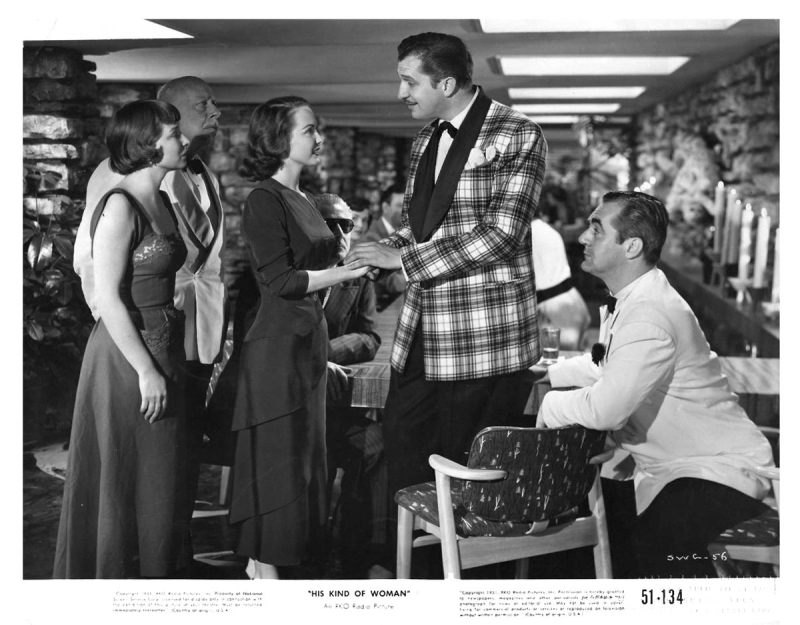
He meets almost all of the aforementioned people (and more) at a gorgeously constructed Mexican resort called Morro’s Lodge, an enormous, modern tropical retreat – a set built for the movie that really could be a resort.  The sharp modern angles amidst all the lushness and curvaceous philodendron leaves add to the film’s surreal atmosphere — it was even created with its own beach. The rooms have low ceilings (or maybe they just seem lower when Mitchum’s standing in them) and everything looks gorgeously off — like a place you’d love to hang out at but a place that could drive you crazy. A glorious hideaway with a fake beach. Since we’re going to spend a lot of time in this glorious hideaway, John Farrow (with cinematographer Harry J. Wild) showcases the lodge in a stunning, dreamy single take that floats through the place in all its clean-lined glory, bustling with guests, until it lands on Mitchum. He enters with that walk of his, looking sharp. But… dig this place. He both fits in and doesn’t fit in. Kind of like everyone else here.
6a00d83451cb7469e201b7c93c721b970b-800wi

As mentioned, Price’s crazy Mark Cardigan is enjoying the lodge, hunting, and having a romance with Russell’s Lenore who is, guess what? She’s not actually rich and is gold-digging Cardigan, but she’s still likable and never presented as the fatale, which is a refreshing aspect to the story. She’s using him? So what? He’s using her. And she’s amusing about it. And Milner likes her – a lot – their chemistry (also seen in another Mitchum/Russell/Hughes RKO picture with two directors – Macao) is so sexy and witty, with banter so sharp but good-natured, that you absolutely buy Mitchum having no problem being pals with a woman he’s sexually attracted to. (Friends in real life, this adds to their buddy allure). And they both stay friends with Cardigan who is … well, he’s narcissistic and nuts, and maybe even dangerous, if you step in a boat with him. Since Price was quite fond of both Russell and Mitchum, we buy all of this too. Who else are they going to hang with out there? On top of this, Cardigan is having the most actorly mid-life crisis breakdown you’ve ever seen, and it’s just too entertaining for both the audience and perhaps Milner to not take it all in.
Tumblr_ns2xtbpuoy1uxfu8ao1_500

Cardigan takes over everything – and the movie shifts with him, pushing this tonally strange noir over the edge into pure comedy, or a feverish satire, mixed with an extended, sadistic almost homoerotic beating served to Mitchum on Ferraro’s yacht. That beating is quite something – Mitchum shirtless and suffering and injected – and it goes on and on and on while Price’s Cardigan is out to save him, donning a cape, manning a boat, quoting Shakespeare and all. Mixing comic relief with this kind of brutality is almost bracing – one minute we’re howling over Vincent Price hamming it up to high heaven, the next we’re wincing at poor Mitchum, looking Saint Sebastian-like, as he’s going to pass out from pain.

But before all that pain – before Milner learns why’ll he’ll endure this kind of pain, there’s Charles McGraw as the heavy, Thompson, who needs to be mentioned because he’s just kind of wafting around the edges of this movie. He’s mixed in with Krafft and Ferraro, but Dan doesn’t understand the extent of this until a maybe drunk guy (Tim Holt) lands his plane at the resort (this is a Howard Hughes movie, after all) and fills him in. That guy tells him he’s an undercover agent for the Immigration and Naturalization Service, because, of course. And then Milner learns the truth – bad guy Raymond Burr wants his face. He needs to get back into Italy undercover as Milner, and I guess it’s not so hard to attach Robert Mitchum’s face to Raymond Burr’s body. At this point you may feel like you’re dreaming, and not just because of the plot, it’s just the overall vibe and spirit of the movie. You follow along with the loony path of Cardigan – who, in an almost meta performance, takes this whole thing AS a movie he’s starring in. Even quipping about the movies in a near death moment.

Milner: I’m too young to die. How about you?

Cardigan: Too well-known.

Milner: Well, if you do get killed, I’ll make sure you get a first-rate funeral in Hollywood, at Grauman’s Chinese Theatre.

Cardigan: I’ve already had it. My last picture died there.

6a00d83451cb7469e201bb09df8007970d-800wi

And Milner almost dies. That beating – it is vicious and kinky by 1951 standards, and extra strange because producer Howard Hughes wanted more of it. The production and post-production dragged on when John Farrow was excused by Hughes, and replaced by Richard Fleischer, who added scenes and re-shot scenes, including the beating and more (more!) Vincent Price – a great decision if you dig how loony this picture turns out to be. (And you should – Price is fantastic.) He also cut the original actor playing Ferraro and cast Raymond Burr, with Fleischer re-shooting all of his scenes. Lee Server’s excellent biography on Mitchum, “Baby, I Don’t Care,” has an amusing, absorbing rundown of this exhausting production, particularly regarding Hughes’ constant tinkering, and how Mitchum eventually soured, and turned to extra drinking. From Server’s book, actor Tony Caruso said of the beating scene, “Hughes was sending all these messages, ‘Do this, do that. Have Caruso hit him harder. Hit him in the gut. I want to see his fist go in deep’ – all that kind of crap.” And then there’s this instance of Hughes’ obsessiveness, which seemed to seep into the bizarreness of the film itself. Via Server:

“Of all the newly invented material, Hughes had become most excited by the scene in which an ex-Nazi plastic surgeon offers to dispose of the Mitchum character with an injection of an experimental drug. Hughes declared that he would write the dialogue for this scene himself, and to Fleischer’s amazement Hughes not only wrote it but sent along an acetate recording of himself speaking the German doctor’s lines in a high-pitched TexaBavarian accent.”

6a00d83451cb7469e201b7c93c723d970b-800wi

Wow. Talking experimental drugs in a “TexaBavarian” accent. Perhaps Hughes should have cast himself as the doctor with the dark glasses – or at least dubbed in his voice to make this movie even extra gloriously topsy-turvy. You’d think the actors might look nervous, even, at times, besieged on screen, given how long this production went on, but they don’t. None of them. When in Rome? And Mitchum glides through this groovy quagmire with his cool and hunky grace intact, nary a trace of effort – surviving Raymond Burr, surviving that Nazi doctor, surviving Howard Hughes. I’m blurring the work of Howard Hughes into the story like he’s an actual character in the picture – but the more you learn about the production, the more you feel like Hughes is one – hiding out in one of those rooms at Morro’s Lodge, worrying about more than the door handles. His Kind of Woman was His Kind of Movie – and for all sorts of strange, stoned reasons – it works. I exult in its cracked, inebriated wonder. As Cardigan says, “This place is dangerous. The time right deadly. The drinks are on me, my bucko!”
A Rose and Her Thorn: Rabid

6a00d83451cb7469e201b8d2c2c6ff970c-800wi
From my piece published at the New Beverly.

“One is not totally in control of making one’s metaphor when making a movie. You find that it seems right, and you’re not necessarily able to articulate why it is right. Certainly the premise of Rabid is outrageous on a certain level… Now, there was a time when I was making this movie where I said to my producers, ‘This makes no sense at all. This cannot work …’  He convinced me. He said, ‘No, it’s really got something. The imagery is really powerful and it will work….’ What people saw it as was a kind of metaphor for AIDS, later on, or for the spreading of various viruses, whether they were talking about the spreading of the virus of Cronenberg filmmaking, I’m not sure, maybe somebody’s going to propose that. But in terms of your own personal interpretation and whether or not the film strikes you as scary or ridiculous, well, I’ll leave it up to you.” – David Cronenberg

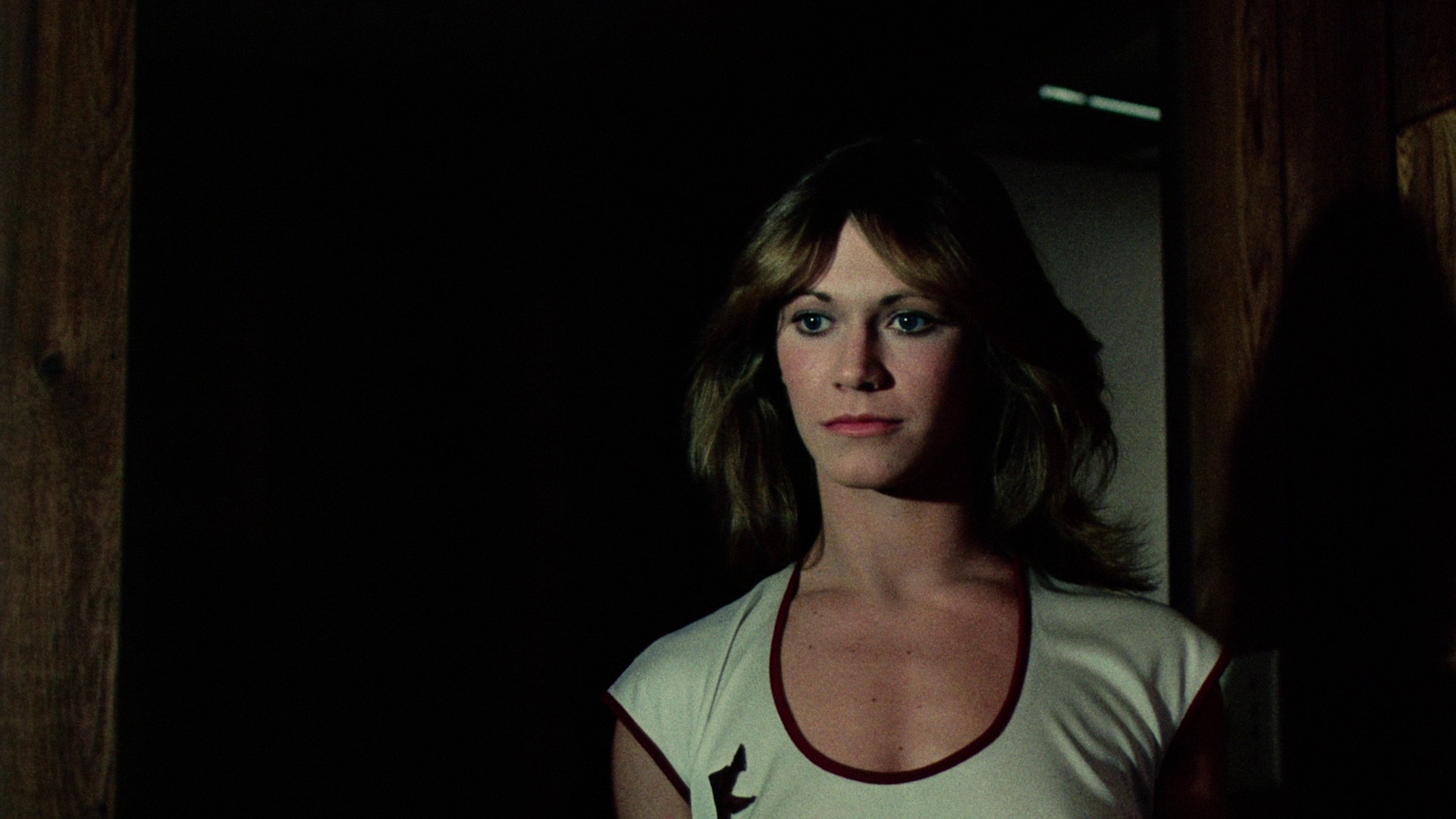
Marilyn-chambers-rabid

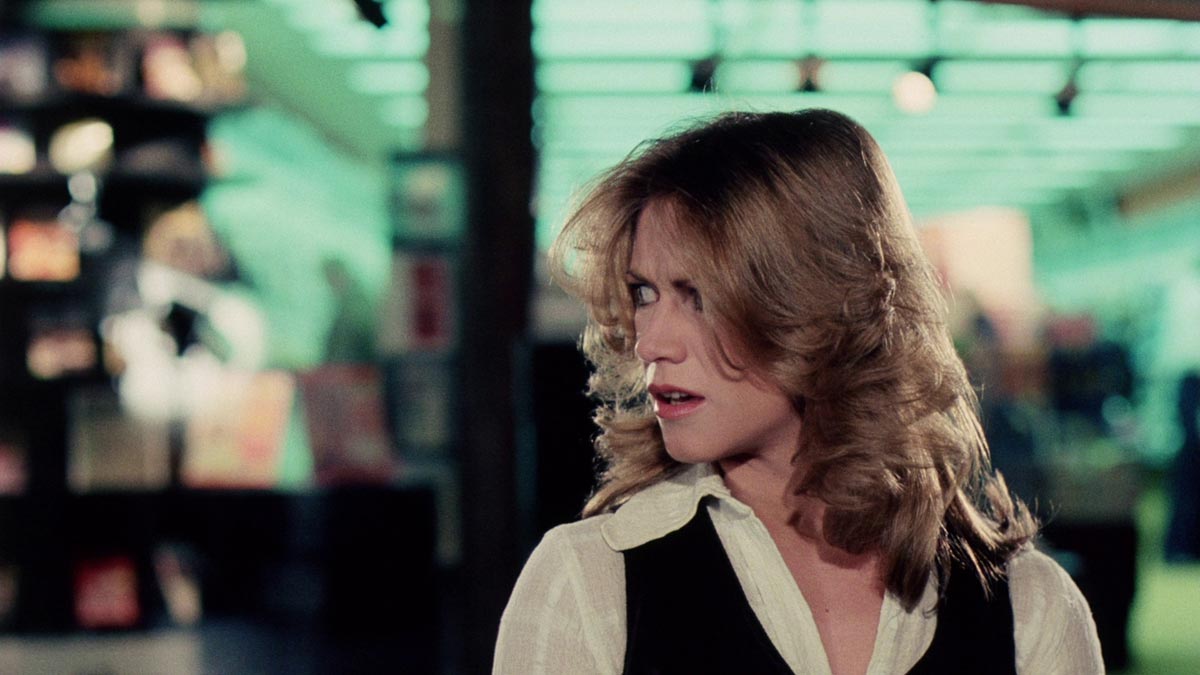
There’s a scene near the end of David Cronenberg’s Rabid in which beautiful, rabid Rose is revealed to her boyfriend, Hart. She’s just sucked the blood from her best friend who will join the epidemic of foaming-mouth zombies, suffering a new strain of rabies that is engulfing Montreal in panic and destruction. Hart’s been searching for his love – poor injured Rose (he crashed his motorcycle with her riding on back, nearly killing her) – after she’s had emergency skin grafting surgery to save her life. She’s stuck in an institute of rich plastic surgery patients, one man is snootily revolted that her bloodied body is brought in for others to witness (ugh!), but her life is saved.

But she takes off – mayhem has ensued.

6a00d83451cb7469e201bb09db8d9a970d-800wi

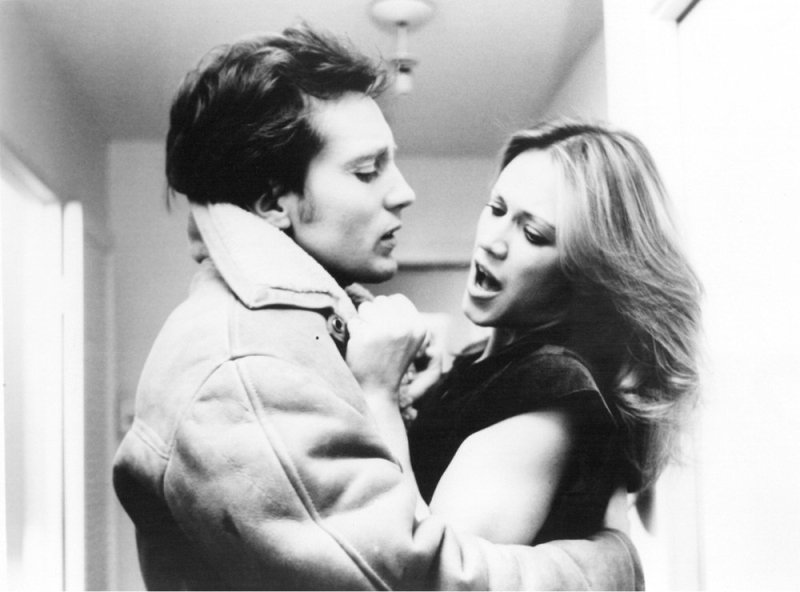
What on earth is going on? Well, then Hart sees her – on the floor of her friend’s apartment, Rose’s sharp, recently acquired phallus retracting back into the vaginal orifice that has manifested from her armpit after experimental surgery – surgery she didn’t ask for. And from that plastic surgery center –  it was the closest place to tend to her. Rose was not getting work done (I feel I must point that out because we know how those stories can spin, and I feel protective of Rose). Something about this injured girl next door entering this center feels both comic and exceedingly sad. They didn’t mess with her face, but we know this new, powerful mutation is present – we’ve been following Rose throughout this ordeal – and we are fascinated. Her mixture of terror, warmth and sexual intensity is alarming and, at times, heartbreaking. She’s strong and vulnerable and she can’t seem to reconcile the two – never mind the new power that’s unleashed. We see the men look at her and wonder what she wonders. But we also understand. She has a strange, startling power and she uses it. Repressed down, under that pretty face and welcoming smile, she’s most likely deeply angry. She also feels guilty about being so angry.

Bd319c0032d4ae84065b00e5eb6d6f3f

So, when Hart sees what she’s done to her friend, she looks at Hart with a penetrating mixture of deep shame and desperate self-defense. “It’s not my fault,” she nearly whispers as he stares at her in shock. Montreal, now descending into a terrifying virus, a madness, citizens infected with a zombie disease that will probably spread throughout the world, Hart figures out it was she who started it and turns on her. (Shades of the woman in the diner in Alfred Hitchcock’s The Birds – screaming at Melanie Daniels: “I think you’re evil! Evil!”) He states: “It’s you. It’s been you all along.” She asks, anxiously, “What are you talking about?” He becomes irate: “You carry the plague! You’ve killed hundreds of people!”

6a00d83451cb7469e201b8d2c2c6b3970c-800wi

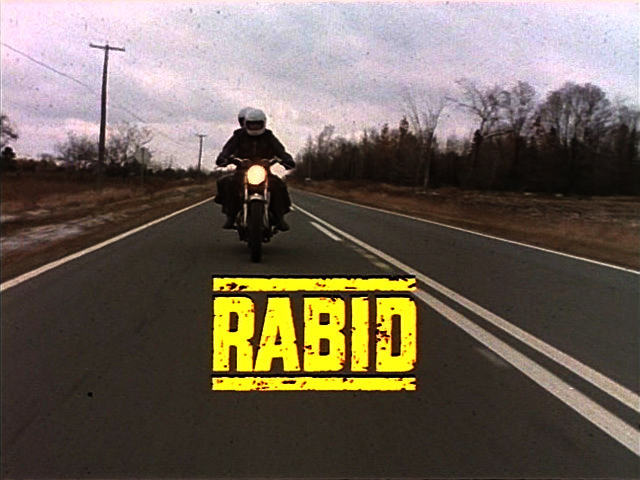
This is when my heart sinks for poor Rose (played by a liltingly affecting, at times poetic Marilyn Chambers) and I think David Cronenberg’s does as well. When she protests with such sadness: “I’m still me! I’m still Rose!” I think, oh, Rose, you are still you! With the same heart, the need for warmth, and your completely understandable fear and rage that many of us (particularly women) understand. When Rose cries to her doctor in an earlier scene, wailing, I’m hideous, doctor! I’m crazy and I’m a monster!” we feel her anguish and self- loathing – that terror of destruction, that people hate you and that you deserve it (even when she doesn’t). It’s all played out with such primal urgency and it’s hard to articulate because Rabid is not a morality tale, it feels more like a dark fairy tale. Even her name – Rose – conjuring up duality is reminiscent of sleeping princesses and Anne Sexton poems. It opens so idyllically – Rose goes for a romantic motorcycle ride, two lovely people in love in leather on a nice day, and then …  she wakes up “hideous.” And after doing so, having no control over a narrative that will turn her into an Eve, a Lilith, a vampire and a woman with both a vagina and a sharp, scary dick – something a man cannot compete with. Hart yells: “You’re not Rose!"
Throughout its running time, Rabid works on such a primitive and lyrically allegorical level that we move along with it – curious and horrified and titillated to see where it will go. It’s funny and sad and absurd and a little bit of a turn on, too –  which seems strange. But maybe not. Cronenberg does not judge.

6a00d83451cb7469e201b8d2c2c6ba970c-800wi

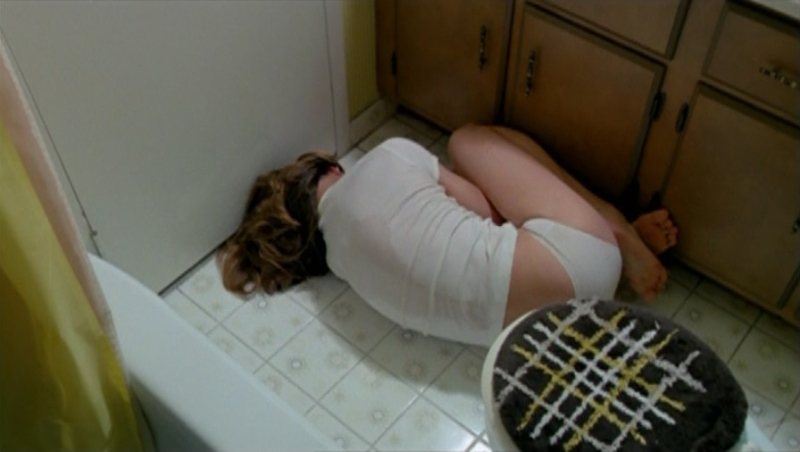
But, back to this moment with Hart (played by the uniquely pretty, almost feminine Frank Moore), at this moment, the movie shifts into a penetratingly potent metaphor of blame, of guilt, of anger, of disgust. A lover’s quarrel filled with the internalized hatred of the body. And this is something women often feel – they sometimes feel disgusting and worry about it – and in particular, they (we) feel disgusting to men. We have stomachs that swell with water retention and we curl on bathroom floors with cramps painful enough to make us vomit. We have fibroids. We have cysts. We have cysts with hair and bones and teeth. We have blood coming out of our  …“wherever.” It’s nature, it’s unfair anyone would judge or not trust a woman for bleeding but the idea that bleeding is weakness persists. As Rose declares that she needs blood to subsist, it’s upsetting and she’s scared, but it’s strong too. Blood is a source of strength. And also, anger. Rose then screams: “It’s YOUR FAULT!"

6a00d83451cb7469e201b8d2c2c6c0970c-800wi

When I first saw this movie, I thought she might kill Hart, perhaps accidentally. I thought he wouldn’t understand her, or at least not even try. (No one really understands each other here, and that’s another intriguing aspect to Rabid) But in a beautifully tender moment, Hart turns off the anger and feels awful for her. He did get into that crash on the motorcycle and he did harm her. But it’s not his fault either. Really, nothing is anyone’s fault in Rabid, one of the reasons Cronenberg is always so complex. His films are often so emotionally messy, and bodily messy, tapping into very recognizable and mythic feelings of repression, of a loss of control, of psycho sexual urges, of mutations, of agency … positive and negative. In many of Cronenberg’s films, there is blood coming from the … wherever (see The Brood). And he’s comfortable with it, fascinated by the duality of women. But he knows others are not, or at least scared of women, which makes Rose’s boyfriend a kind soul: “There’s got to be a way we can fix this,” he says, attempting to soothe her. How moving. He’s walked in on his bloodsucking vaginal phallus girlfriend (!) and eventually sees her as Rose again. But there’s no way to fix it and she screams and runs and he falls down the stairs. She does not penetrate him for his blood, because she, I presume, loves him. She’ll make the sacrifice by the end. It’s terribly sad.

Rabid-4

It seems odd to say that Rabid is a beautiful film, but in so many ways, it is. From the shots of Chambers in her fur coat, walking the streets at night, to her scurrying through the countryside, from even her bizarre orifice, it’s filled with haunting imagery. There are theories one can ascribe to it, some morbidly funny, some political, some virus-related, but, to me, it rolls along to its own rhythm, with you to make of it what you will – Cronenberg’s as messy as a period and as unexpected as a hormonal surge.

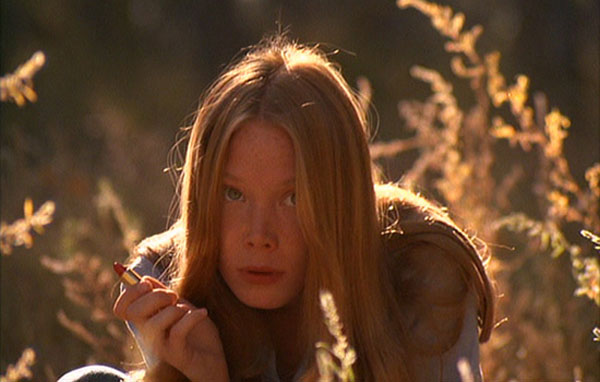
Sissy Spacek was the first choice to play Rose, but, as much as I revere Spacek, I’m glad Marilyn Chambers was cast. She’s so wonderful to take in, to think about,  so empathetic and so powerfully mysterious. She’s lovable and scary. The once-Ivory Snow soap box girl turned porn star (Behind the Green Door, Resurrection of Eve) has a blonde beauty that’s so fresh and simple (she was known for not looking like what one would expect a porn actress to look like) yet she is so exceedingly sexy in her unadorned way. Cronenberg does not feel like he’s exploiting her – she’s so natural, from the simplicity of her white panties, to the way her breasts look. Particularly when they’re on display as she’s shivering with cold and needing a hug – a moment I find tremendously moving even if she rams her razor phallus into the man who nervously hugs her. Chambers’ Rose has a face that is hard to read and, so, open to possibilities. The kind of face that reflects back something to others, or whatever men and women project onto her. She either looks back at you – you get her – or you’re baffled by her. 

I love a scene in which Rose sucks the blood from a cow. It’s the most gorgeously fairy tale sequence in the movie, beautifully shot in the darkly blue-tinted sky as she walks along on a rainy night. She arrives at a farmhouse and like a sweet princess, is attracted to the warmth and fur of the cow (lying down). She tenderly pets the creature, projecting a multitude of emotions – kindness, innocence, a need to touch, to feel this breathing creature, she then feeds on the cow’s blood. And then she vomits. When the farmer catches her, he does what many men want to do to her – fuck her – and so she feeds on his blood. I suppose we’re to root for her here but I really wish she could have napped, silently, for just a little while, with that cow. Poor Rose.

6a00d83451cb7469e201b8d2c2c6ea970c-800wi

Thinking of Rose, and the poignancy of Chambers’ performance, I thought of some obvious analogies – of Ann Brontë writing, “But he that dares not grasp the thorn, should never crave the rose.” At the end of Rabid I recalled “Mrs Dalloway” by Virginia Woolf: “’Roses, she thought sardonically, All trash, m’dear.’” Rose is not that, of course, but she knows no one will ever see her the same and is terrified by what Hart has told her.  And so she locks herself in a room with an infected man and waits… It’s a test, but she essentially allows herself to die. And, literally, at the end, she is dumped in the trash as an anonymous Rose, workers ditching her body unaware she could be the cure. Not all, trash m’dear.

Kill Or Be Killed: The Hitch-Hiker

6a00d83451cb7469e201bb09daadbc970d-800wi

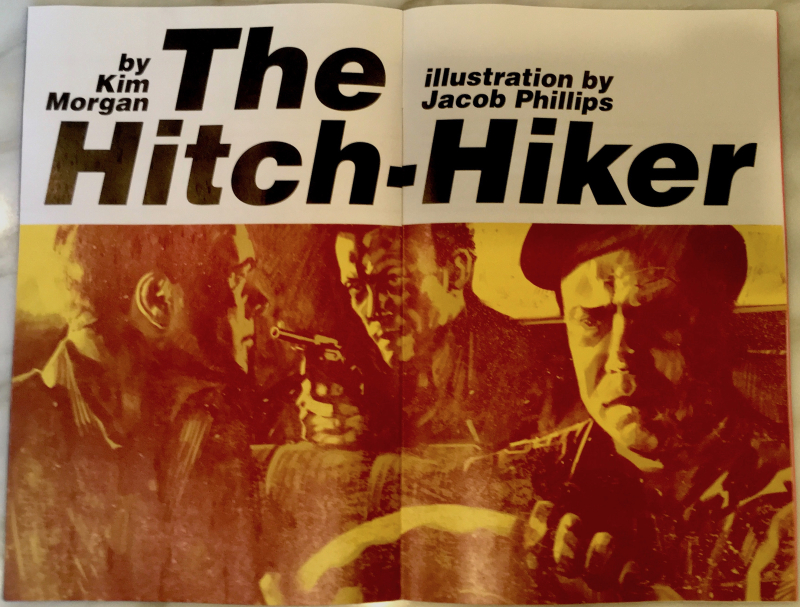
Ed Brubaker's newest Kill Or Be Killed comes out November 29. My newest piece covers the brutal, beautifully crafted Ida Lupino film, The Hitch-Hiker, starring Edmond O'Brien, Frank Lovejoy and William Talman. The film was based on spree killer Billy Cook, who had a deformed eye & "HARD LUCK" tattooed on his fingers. When arrested he said, "I hate everybody's guts." Order here. And here's just a tiny bit of my piece:

“This is the true story of a man and a gun and a car. The gun belonged to the man. The car might have been yours or that young couple across the aisle. What you will see in the next seventy minutes could have happened to you. For the facts are actual.”

6a00d83451cb7469e201b8d2c1e86a970c-800wi

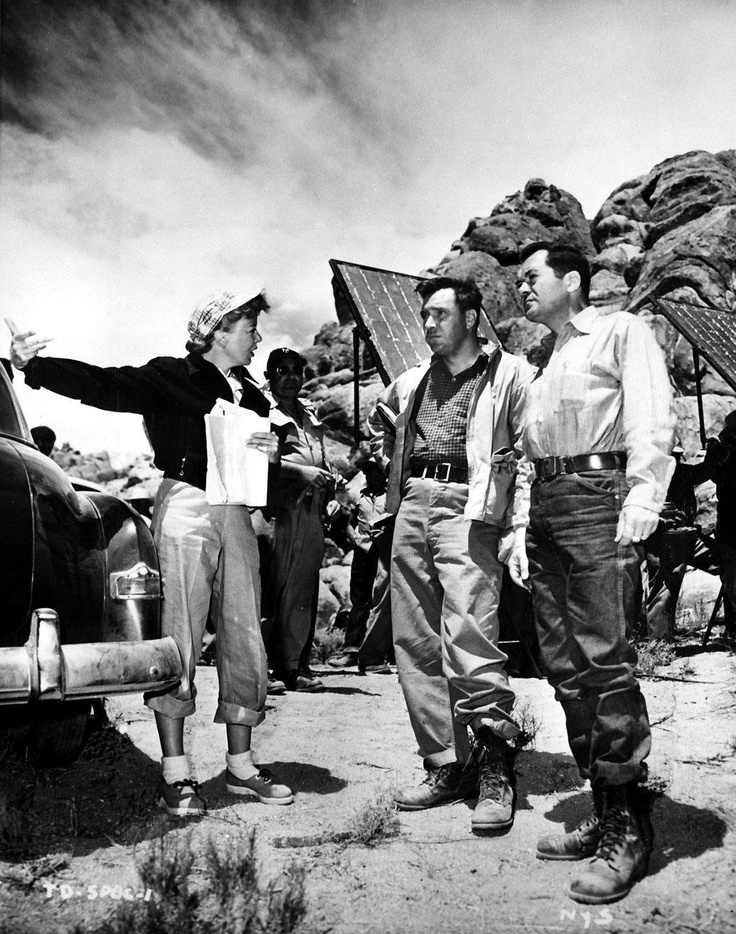
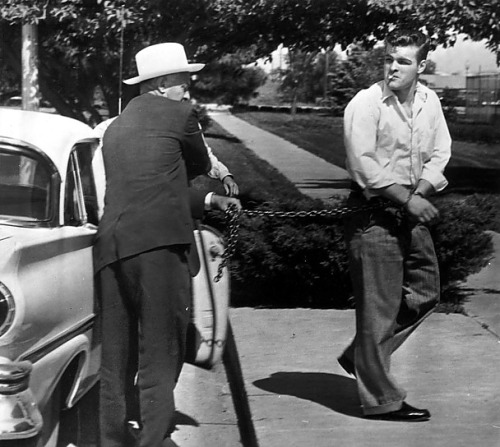
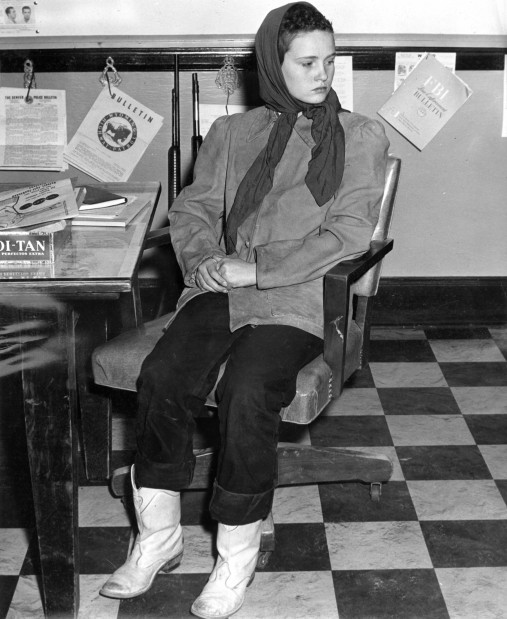
Sometime in 1951 or 1952, actress, film director and movie star Ida Lupino walked into San Quentin and met a multiple murderer. The murderer was spree killer Billy Cook, a young man who had killed six people in the span of 22 days by road and by car, posing as a hitchhiker, holding hostage and/or doing away with a nice mechanic (whom Cook spared), an entire family, and a deputy sheriff. He killed a dog too…

As detailed in “The Making of The Hitch-Hiker,” Lupino said:

“I was allowed to see Billy Cook briefly for safety issues. I found San Quentin to be cold, dark and a very scary place inside. In fact, I was told by Collie (Collier Young) not to go; it was not safe. I needed a release from Billy Cook to do our film about him. My company, Filmakers, paid $3,000.00 to his attorney for exclusive rights to his story. I found Billy to be cold and aloof. I was afraid of him. Billy Cook had ‘Hard Luck’ tattooed on the fingers of his left hand and a deformed right eyelid that would never close completely. I could not wait to get the hell out of San Quentin…”

Again, to read my essay and the comic, order here.

6a00d83451cb7469e201b7c93799b6970b-800wi

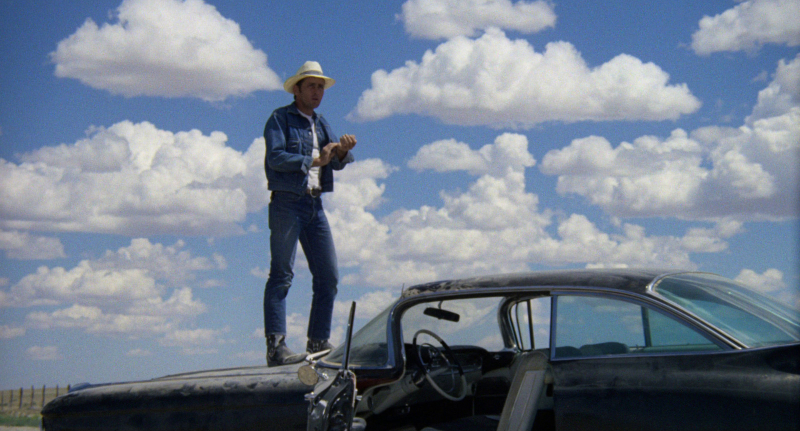
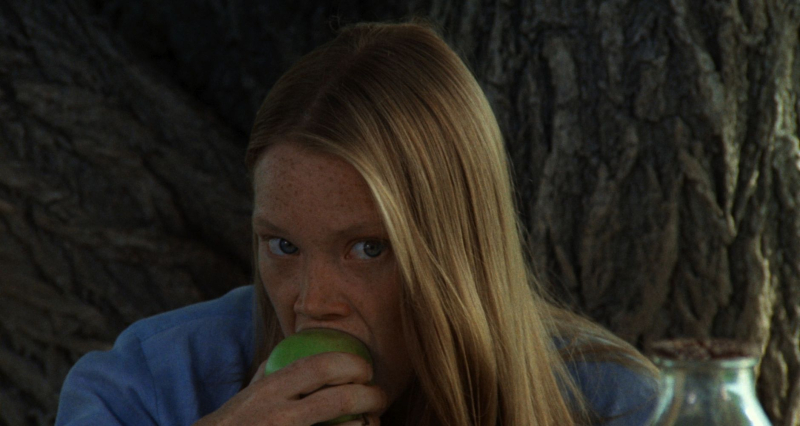
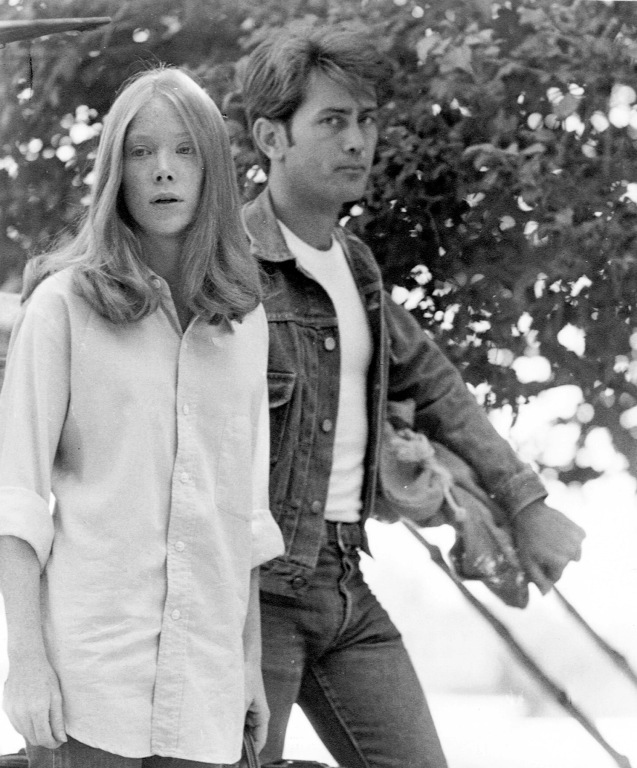
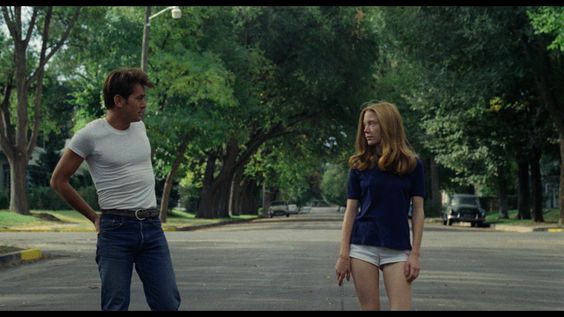
Love (and Memory) Is Strange: Badlands

6a00d83451cb7469e201b7c9375a17970b-800wi
From my piece on Badlands, published at the New Beverly.

“Where would I be this very moment if Kit had never met me? Or killed anybody? This very moment. If my Mom had never met my Dad? If she’d of never died? And what’s the man I’ll marry going to look like? What’s he doing right this minute? Is he thinking about me now, by some coincidence, even though he doesn’t know me? Does it show on his face?"

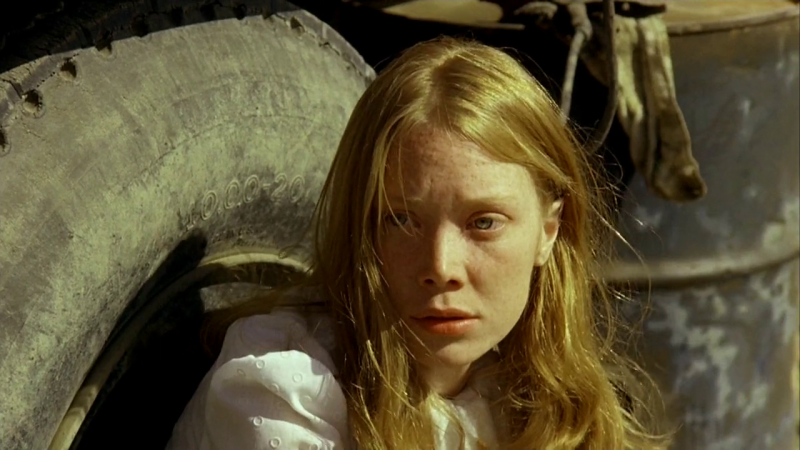
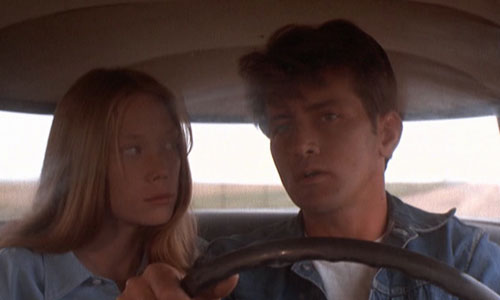
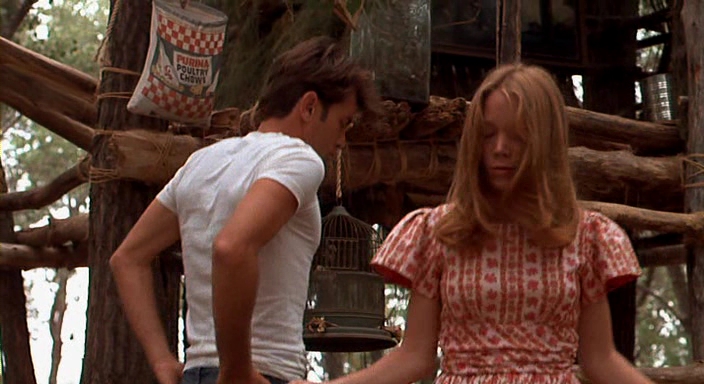
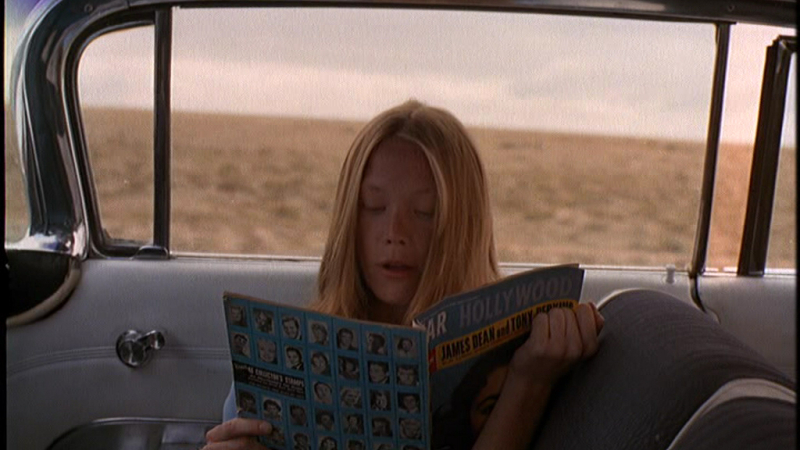
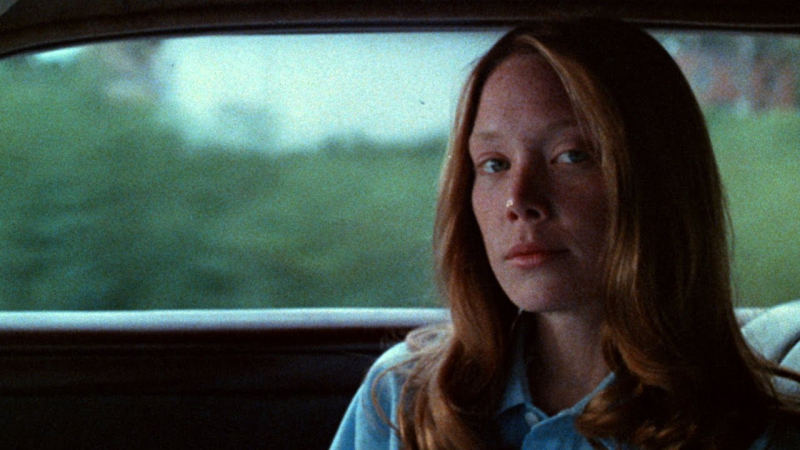
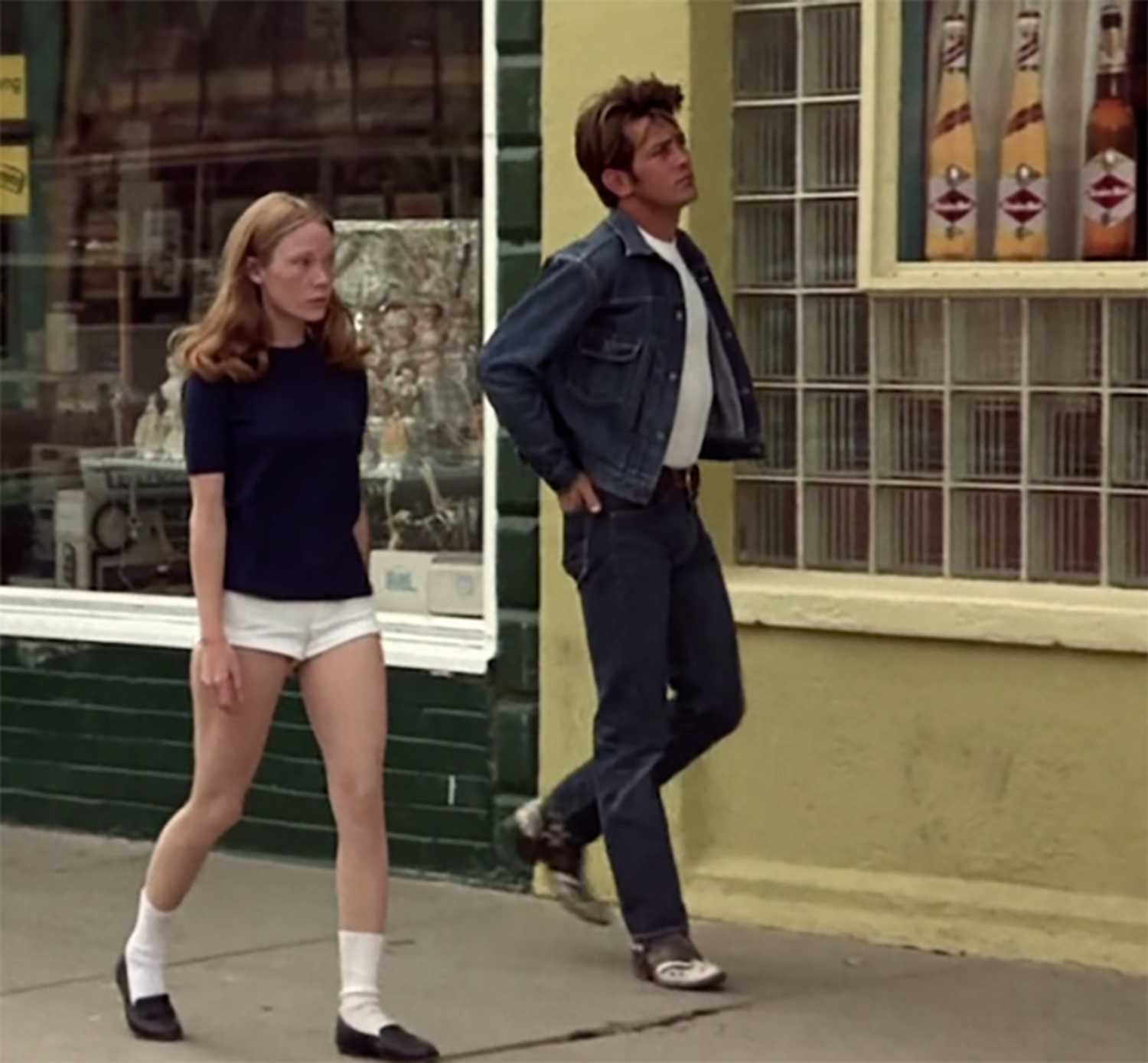
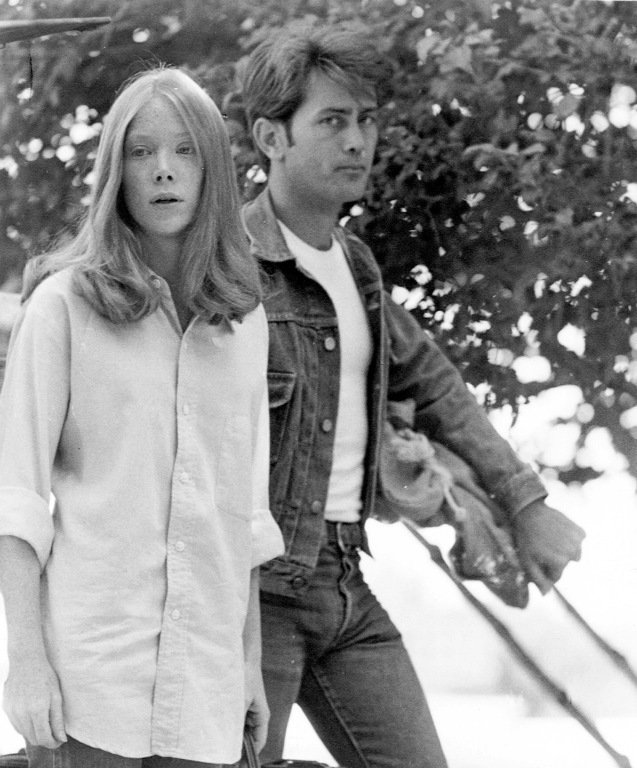
I saw Badlands on TV when I was in middle school. At least I think I saw it. I was 13. I remember scenes, or I remember the memory of seeing scenes, because I had been staying home from school for a week, sick, only I wasn’t sick, I was delirious. I was having an awful few months and I hadn’t been sleeping. My insomnia and nerves were so terrible that I was walking around in a dazed, somnambulant state and watching movies would get my mind off whatever was troubling me. I liked wandering around outside but I was too tired so I would curl up on the couch and sleep in the day, eyes opening and closing to the TV and to movies, images melding into daytime and into dreams. Badlands feels swirled in my own dreams, younger and older, but during those bad months, I wasn’t dreaming much.

Badlands_(3)_720_405_80

I didn’t know why I couldn’t sleep and it frightened me. I didn’t like being inside my own head, sinking into my thoughts. Movies were a way to mix up my mind, glazing my brain from things I didn’t want to think about and buoying my spirits. Often my own thoughts and the images I was watching would merge – this is my life – and if you’re tired enough (or maybe crazy, and lack of sleep can make you crazy), you are in a movie. That’s why Badlands felt (or feels) a part of that beautiful, disturbing escape, an escape from thinking my raw thoughts too much. It’s like the frames of Badlands were snapshots I had taken in my own mind. But of course those were Terrence Malick’s snapshots. He handed them over to me, and to everyone else haunted by the picture. Badlands is a powerful thing.

6a00d83451cb7469e201b8d2c1a736970c-800wi

And thoughts are so powerful when you’re young. They start to really expand and flower when you’re 12 or 13; your brain is still growing. Those thoughts can seem strange, exciting and wonderful, but sometimes disturbing – adolescence makes you jump to different places, feel new sensations, and experience a darkness that makes you wonder if the odd stuff coming to you are just impressions running through your mind, or if you actually think that way. Your curiosity is like the girl in Badlands – Sissy Spacek’s Holly looking through the pictures in her dad’s stereopticon and wondering about what could have happened had her circumstances been different. What her future would become. And you lay awake and worry – worry how Holly was worried about tossing her sick catfish into the yard. Was that a terrible thing to do? You think of living in different cities, you think of running away, meeting a boy, you think of driving off in your parent’s car in the middle of the night. I tried that – driving the car before I knew how to. I backed it into a large pine tree

Badlands-2

Those thoughts and that car and that pine tree make me think of watching Badlands. But this is all a fevered memory and my recall may be wrong. Maybe I’m imprinting a future impression on the past and how I saw Badlands because I know I watched Badlands in full, in a conscious state, when I was a little older, when it became a favorite movie. But the first viewing – maybe that’s like a memory the way you look at a photograph of yourself as a kid and wonder if you really do remember that trip to the beach.  You’re gathering information based on a picture you’ve looked at numerous times. Would you remember anything if you didn’t have that picture? Martin Sheen’s Kit and Spacek’s Holly were pictures, music and voices I heard, I think, in and out of consciousness on that couch. Kit’s good-looking, charming, sometimes a little dumb, casually cold-blooded “character” (he really wants to be a character) and Holly’s strange, ethereal beauty, her questionable lack of concern for others’ deaths (we know Kit doesn’t mind) save for her catfish and briefly, her own dad (played by Warren Oates), and her flowery narration are firmly planted in my mind. It’s real to me and yet, totally fantastical to me. Kit and Holly’s own mythmaking rolls into my own movie mythmaking and even a few events in my young life.

6a00d83451cb7469e201b7c9375a30970b-800wi

But did I see this? I’m sure I’d heard of Charlie Starkweather and Caril Ann Fugate, the real life lovers the picture was inspired from. During two deadly winter months from 1957-58, 19-year-old Starkweather murdered eleven people in the states of Nebraska and Wyoming with his 14-year-old girlfriend Caril in tow. Was she a captive, an accomplice or caught up in a crazy romantic delusion? He was put to death, she was given life (she served 17 years). Reporters, the public and mostly teens were fascinated by this duo and this boy who reminded them more of a nihilistic James Dean than a boogeyman, though he certainly scared a lot of people. The couple is as mythically American as Bonnie and Clyde, only more terrifying and senseless, killing and stealing cars and grabbing items from houses in the late 1950’s.  They weren’t modern day Robin Hoods robbing banks during the depression; they were rebels without a cause taken to the extreme of teenage rebellion and alienation. But like Bonnie and Clyde, they looked good. As such, they were made for the movies

6a00d83451cb7469e201b8d2c1a758970c-800wi

Even Charlie’s name, Starkweather, conjures up a cinematic image, a temperature, a chill. Leaving their imprint on popular culture from Bruce Springsteen to The Sadist to a Naked City episode, “A Case Study of Two Savages,” starring Rip Torn and Tuesday Weld, the dark romance of the leather-clad bad boy stuck – it’s something kids gravitate towards, and even with Starkweather’s brutal murders (including a baby), he’s glamorized – kids often glide over the horrifying, focusing on the They Live By Night lovers-on-the-run allure (which could have inspired Starkweather, the second Nicholas Ray movie he may have crafted himself on next to Rebel Without a Cause). Uniquely, however, save for their loveliness, Malick’s Badlands doesn’t glamorize the pair, not in the usual way, even as rapturously beautiful as the picture is. The killers are softened, yes, but their murders, though awful, are less heinous, and their disconnect towards death is merged with the heart-aching beauty and the wonder of nature. You’re not sure if you feel for them, if you feel for how lost and delusional they are, or if you feel for the idyllic world they’re hoping for – the stunning world Malick is placing around them. Because we hope and hoped for that world too, we even ache for it.

Badlands

That ache is what feels layered inside me. It’s wrapped up in a powerful memory. So did I see it at 13? It doesn’t matter – I feel like I saw Warren Oates painting that big sign with all of those big fat clouds in the blue sky, I feel like I remember him shooting Holly’s dog, I feel like I remember Kit running through that SwissFamily Robinson-like fort and sleeping under that Maxfield Parrish painting swiped from the dad’s house, I feel like I remember the two dancing to “Love is Strange,” Holly barefoot, Kit in boots, and I feel like I remember Holly sitting in the car with Kit reading that movie magazine: “Rumor: Frank Sinatra and Rita Hayworth are in love. Fact: True. But not with each other

I’ve now seen Malick’s first film, a masterpiece, so many times that it’s permanently embedded in my brain and it twists inside my grey matter with images and impressions from countless viewings, including my own unreliable recollection at 13. The movie is so special, so enchanted, so truly transcendent that it clings to your very soul, a palimpsest on the brain. If that sounds hyperbolic, so be it. But the moment I hear Carl Orff’s “Gassenhauer” in the movie, or anywhere, I get goosebumps. Sometimes I want to cry. The way it starts out quietly, delicately, and then builds and builds, the drums moving towards that crescendo, it feels like the most dramatic music box a little girl ever opened – timorous innocence becoming stronger and more confident. Faded adolescent memories come to me in brighter detail, full of hope and promise and sadness and those first feelings of falling in love. And then, growing up and realizing that person isn’t what you built them up to be in your fevered adolescent brain (or your adult brain). You, yourself, are an unreliable narrator, just as Holly is in Badlands.

6a00d83451cb7469e201bb09da6d2a970d-800wi

Part of Malick’s brilliance lies in the way the picture is narrated by Spacek’s little 15-year-old girl who, at times, seems both younger than her years and older – a girl who, from the outset, is estranged from her father (“He tried to act cheerful, but he could never be consoled by the little stranger he found in his house,” she narrates). Her dad (Oates, so weirdly beautiful here, both fearsome father and broken-hearted widower who kept his wedding cake in the freezer for ten years) forbids her to see the local bad boy, 25-year-old Kit, a garbage collector who is fired from his job and who puffs himself up in a world that doesn’t give a shit about him. He’s a cool young man, gorgeous in his 1950’s blue jeans, but he doesn’t seem to fool others with his big talk. He can fool a teenager, however. Holly recalls he “was handsomer than anybody I’d ever met. He looked just like James Dean.” That would be quite something for a shy girl who believes she lacks personality, a girl simply twirling her baton in those white shorts on the lawn. And then this boy comes along, changing her fate forever. She likes that he appreciates her mind, and not just sex.

6a00d83451cb7469e201bb09da6d3c970d-800wi

They fall in love, they bond on a deeper level. Only, we never really see them discuss deeper ideas about life, we just get glimpses of their worldview on the periphery of events – like when Holly feels guilty for throwing out that sick catfish. She confides in Kit who tells her he does stuff like this too, and that some of his behavior would be considered strange. We then watch him stand on a dead cow in the feedlot.  A catfish in the yard isn’t so weird; it’s something a confused teenager would do if she were fearful of witnessing death.  Maybe she has good reasons to fear death – her mother died, her father shoots her dog dead for seeing Kit behind his back, and what if she died a virgin? She doesn’t want to die. Kit seems less concerned about death. He just wants to be somebody. He wants to leave a mark. And he does. He’s finally given some respect and certainly celebrity when he’s caught. And in the end, chained up and chatting up the authorities, throwing out keepsakes to the law so they’ll remember him, he seems, finally, even happy.

Roadtrip4

We don’t know how much of Holly’s sometimes florid recollections are a true representation of how she feels; about the brutal events on their crime spree. Though I do believe her reveries – I believe them in terms of how she wants to feel at the time, or how she wants to remember them at the time. But her romantic notions turn into tedium and annoyance towards Kit, even a wish he’d die. The rush of teen love is always dramatic, and so when Holly says: “In the stench and slime of the feedlot, he’d remember how I looked the night before, how I ran my hand through his hair and traced the outline of his lips with my fingertip. He wanted to die with me, and I dreamed of being lost forever in his arms.” You don’t doubt her. But you also watch their scenes together and observe them talk about banal things, like garbage on the street, or a tree falling in the water; Kit records a series of bromides on the Dictaphone when they take a break holed up in the rich man’s house they’re holding hostage.  Holly seems joyful and attracted but sometimes, disappointed and irritated. When they finally have sex she asks: “Is that all there is to it? Gosh, what was everybody talking about?” Kit answers, “Don’t ask me.”

The stench and slime of the feedlot seems how Kit views the world outside of Holly – and he craves glamour and respect. He likes to leave markers with rocks, or bury personal items either for the purpose of returning to (which won’t happen) or for others to discover. Holly intones: “He said that nobody else would know where we’d put them, and that we’d come back someday, maybe, and they’d still be sitting here, just the same, but we’d be different. And if we never got back, well, somebody might dig them up a thousand years from now and wouldn’t they wonder!” Wouldn’t they. The need to feel, not only alive, but for others to know that you were alive, runs throughout the movie – Kit and Holly creating their own pictures and movies through both romance and heinous acts. Kit knows it will mean something and as he speeds from the law near the end, he fixes the rearview mirror to look at himself. It’s got to at least look good. 

6a00d83451cb7469e201bb09da870a970d-800wi
Creating an idyllic world is an escape from the junk of life; a need to transcend regular existence, so taking in the picture’s glory of nature, we feel like we could always escape day-to-day banalities if we tried. Holly observes nature, loving the “cooing of the doves and the hum of dragonflies… the air made it always seem lonesome and like everybody’s dead and gone.” Kit wants more; he’s searching for some fabled kingdom. As Holly narrates: “We took off at sunset, on a line toward the mountains of Saskatchewan, for Kit a magical land beyond the reach of the law.” That magical land is . . . where? It’s either everywhere, in moments, if you really appreciate nature, or, in Kit’s case, in his death, when he’ll be so mythologized that songs will be written and movies will be made about him. Malick understands this eternal desire. Not to be famous, but to be remembered, not to remain specks of dust in such an enormous world.

6a00d83451cb7469e201b8d2c1a7d7970c-800wi

The movie pulls you in different directions, the way those thoughts that riddle your sleep do when you’re young. The road, the music, the period detail that’s more timeless than stuck in an era; more a dark fairy tale rather than a 1950’s story, the rapturous American landscape and bittersweet romance led by characters who could almost be viewed as ciphers, and yet, they’re not. Their remoteness is not so distant that you can’t feel for them, in spite of yourself. They’re even quite funny, in an understated way. Because Sheen and Spacek are so perfectly cast and they play their characters so inscrutably innocent, and yet, so blasé and scary, not one scene between them rings obvious or absurdly psycho; like they’re yearning to tell us something or reaching out to us for help. After watching a man bleed to death, a heartbreaking scene, Holly narrates:

6a00d83451cb7469e201b8d2c1a7ea970c-800wi

“At this moment, I didn’t feel shame or fear, but just kind of blah, like when you’re sitting there and all the water’s run out of the bathtub.” Malick doesn’t moralize or explain and even Holly’s voiceovers inform very little about the depth of their problems. But you see the bloom fall off the rose: “We had our bad moments, like any couple. Kit accused me of only being along for the ride, while at times I wished he’d fall in the river and drown, so I could watch.”

6a00d83451cb7469e201bb09da6d70970d-800wi

Malick’s debut is one of the most extraordinary first films in all of cinema – he was working an alchemy and a genius that felt otherworldly (something he’d continue in subsequent pictures, Badlands remains my favorite). The film, as I’ve made obvious here, became an obsession for me. Its poetic understanding of the intense, alienated teen; their extreme impulses, but also their mystery and banality, how that understanding is wrapped in our own mythos, moves me in mysterious ways.

81859f26c88c221da1bd4099681bac57

One of my favorite moments is during Kit and Holly’s long drive through the Great Plains, where their isolation matches the spare landscape – the enormous sky and almost unsettlingly magnificent sunsets. Amidst all of this cinematic gorgeousness, their long and bloody road trip is turning. Holly is weary and wary of living out of the car. They live like animals, she thinks, and she’s becoming wiser as she pictures her ill-fated future with Kit. But, then, there’s that moment, that sublimely beautiful moment: In the black of night, with only the car lights illuminating the darkness, they dance to Nat King Cole’s “A Blossom Fell” from the tinny car radio. Holly may not even be enjoying this moment, but we are as we watch them together. Kit says, “Boy, if I could sing a song like that, I mean, if I could sing a song about the way I feel right now, it’d be a hit.”

6a00d83451cb7469e201bb09da6d82970d-800wi

Badlands affected me and still affects me and continues to give me chills. And it runs through my mind almost as my own memory, tapping into something primal and wistful and musical – that youthful feeling of the new, influential and forbidden. And then losing that feeling. Badlands haunted me in my sleepless half-awake young self, and I’ll stick to that evocation even if I’m not sure of the exact age. My own memories with the movie and the memories and images of the movie itself, what Malick was meditating on, echo what Carson McCullers wrote about wistfulness; things we long for but can never really attain: “We are torn between nostalgia for the familiar and an urge for the foreign and strange. As often as not, we are homesick most for the places we have never known.”

Her Shadow Between Us: Rebecca

6a00d83451cb7469e201b8d2c19d6a970c-800wi

From my piece published at the New Beverly.

“Her shadow between us all the time,” he said. “Her damned shadow keeping us from one another. How could I hold you like this, my darling, my little love, with the fear always in my heart that this would happen? I remembered her eyes as she looked at me before she died. I remembered that slow treacherous smile. She knew this would happen even then. She knew she would win in the end.” – Rebecca, Daphne du Maurier

Rebecca-3

There’s a scene in Alfred Hitchcock’s Rebecca that I find startling not for being scary or cruel or moodily mysterious, but for being so disarmingly matter of fact. We’ve heard different takes on the intimidatingly beautiful, now dead, Rebecca de Winter, the black-haired goddess with gorgeous taste in décor, lingerie, bedding and those three things every man and woman yearn for: “breeding, brains and beauty,” that her almost unearthly perfection is constantly uttered with a kind of hypnotized rapture. And with that rapture there is hatred, seething hatred – chiefly from her widower husband, Maxim de Winter (played by Laurence Olivier) – who sees this goddess as a gorgon, pure evil, and the destructor of not only his marriage, but his manhood, his very sense of self inside his own home – the grand estate called “Manderley.” Everything Rebecca touched left an imprint, people, pets, objects, clothing, writing desks, windows, even the sea couldn’t sweep her away, and she haunts every corner of the estate just as she haunts the minds of those who knew her. Maxim’s obsession is so deep that he’s infected his second wife (played by Joan Fontaine) with Rebecca-mania, and she, or rather, “I” (as she’s referred to in the movie and in the Daphne du Maurier’s 1938 novel), can’t move an inch without a reminder of the past beauty. We naturally feel for “I,” a lost young woman plucked away from her vulgar dowager employer by the wealthy, mysterious Maxim, (“I’m asking you to marry me, you little fool” he snips, with little charm) and is soon swallowed up by his house and the various obsessives around him, chiefly the looming housekeeper Mrs. Danvers.

The second Mrs. de Winter (an often heartbreaking woman) is yearning to be loved by her cruel, often smug husband, and to escape the shadow of the ever-present Rebecca. She’s an orphan, insecure and frightened, and she’s grateful for a home, but can she have any sort of her own space within it? Can she start out anew with her husband? Well, no, she cannot. How can one escape the past and create a future when even one’s napkins are embroidered with the previous Mrs. de Winter’s omnipresent “R”? 

6a00d83451cb7469e201bb09da62a6970d-800wi

But back to that stirring moment – when the movie is removed from Rebecca’s satiny, sensual bedroom (Judith Anderson’s impressively weird, hateful but clearly lovelorn Mrs. Danvers makes you love Rebecca, and you can practically feel the silk of her nightgown and nun-sewn undergarments) and into a more down-to-earth, clinical setting – a doctor’s office. There sits the doctor who diagnosed Rebecca (and who revealed to her that she had cancer, a very human condition) discussing his past patient without agenda, without romance. Indeed, he remembered her as beautiful and powerful, but he also says something about her that’s affirmative and almost simple, not in a trance as the others – that she was “wonderful.” He says: “I remember her standing here holding out her hand for the photograph. ‘I want to know the truth,’ she said. ‘I don’t want soft words and a bedside manner. If I’m for it, you can tell me right away.’ I knew she was not the type to accept a lie. She’d asked for the truth, so I let her have it. She thanked me and I never saw her again, so I assumed that …”  He will be interrupted by those present, but continues his assessment of Rebecca, directing his take of this woman to her embittered husband. Something about how resolute the doctor turns and says to Maxim: “Your wife was a wonderful woman, Mr. de Winter.”

6a00d83451cb7469e201bb09da62ae970d-800wi

It’s almost as if he’s saying, stop complaining, you moody bore. Wonderful is a term Maxim would never have used about Rebecca, as in excellent, great, marvelous, exceptional in an interesting way. Who knows what the doctor had heard from Rebecca about her marriage, perhaps nothing in regards to how her husband viewed her, but for all of Rebecca’s dreadfulness howled by Maxim to the second Mrs. de Winter (“It wouldn’t make for sanity, would it, living with the devil?”), perhaps she was actually as the doctor stated: strong, not one to be lied to and wonderful. But Maxim doesn’t want you to think that. The initial response when watching the movie (and reading du Maurier’s novel) is that Rebecca was living a lie, hiding a horrid secret, charming on the surface, but a horror to be married to. Listen to Maxim wail about her:

Grand-Staircase-at-Manderley-in-Rebecca“Well, I went there with Rebecca on our honeymoon. That was where I found out about her. Four days after we were married. She stood there laughing, her black hair blowing in the wind, and told me all about herself. Everything. Things I’ll never tell a living soul. I wanted to kill her … ‘I’ll make a bargain with you,’ she said. ”You’d look rather foolish trying to divorce me now after four days of marriage, ‘so I’ll play the part of a devoted wife, mistress of your precious Manderley ‘I’ll make it the most famous showplace in England, if you like, ”and people will visit us and envy us… ‘and say we’re the luckiest, happiest couple in the country. What a grand joke it will be! What a triumph!’ I should never have accepted her dirty bargain, but I did. I was younger then and tremendously conscious of the family honor."

Well, what does that say about him? He’s certainly a resentful coward. And what on earth was Rebecca hiding about herself that only he knew? Affairs? With men and women? Drugs? Debauchery? What? This is destructive to a marriage and scandalous then and now, but, my goodness Mr. de Winter, calm down.  Everyone has their own take on Rebecca, and I’m always intrigued by the doctor’s summation – he’s speaking of this fabled woman as a person with a multi-faceted humanity, even a vulnerability for that moment, when she was faced with her own mortality. Did her strength near death come from knowing she’d haunt not only Manderley but the hearts and minds of seemingly every person she encountered? Was she that calculated and knowing? Did she know she’d never be forgotten? Did she know she’d even achieve a mythic power in death? Or did she merely want to die as she lived her life – on her own terms? Was she all of these things? If so, why does that make her evil? Even if she strayed? It doesn’t appear that Maxim was the most loving husband in the first place, and was consumed by appearance, that damn Manderley (you’re almost glad when the place burns down, though it’ll never erase Rebecca since the story is being told after the fact). But, who are we to believe?

6a00d83451cb7469e201bb09da62a2970d-800wi

No one, I feel, which makes the story so powerful and unforgettable. I find myself filling in the blanks or re-writing others opinions of this fascinating woman, wondering what their view of her says about them, not just the woman.  She is the central character – ever present in the negative spaces – without a voice. A character whose narrative is being written by various friends, lovers, admirers, obsessives. It’s an utterly bewitching way to tell a story and craft a character – in Hitchcock’s movie and in Daphne du Maurier’s novel – a ghost so alive that she makes the others seem like specters without her. Even objects, shot so potently and at times, fervent, fetishistic (watch how Mrs. Danvers famously caresses Rebecca’s underwear), vibrate with the mark of Rebecca. The second Mrs. de Winter breaks a china cupid, walking through the house with enormous doors, terrified to touch such totemic things. She is so scared to tell anyone about breaking it that she hides the pieces in the back of Rebecca’s old desk. Later, a big fuss is made of this tiny mistake and a servant is almost fired when Mrs. Danvers spots the cupid missing. Such drama! Such closely-watched luxury! Maybe the second Mrs. de Winter subconsciously broke the ornament on purpose, and who could blame her? It is, after all, cupid, and cupid seems destined to die in this dysfunctional marriage.

Rebecca1AK

There is so much to consider when writing about Rebecca – the film’s backstory with Selznick (this was Hitchcock’s first American film, and he and Hitchcock did not see eye-to-eye, in fact, Hitchcock didn’t think the film was fully his); the brilliant source novel by du Maurier, and du Maurier herself (a married woman who had female lovers but blanched at the term lesbian: “… by God and by Christ if anyone should call that sort of love by that unattractive word that begins with ‘L,’ I’d tear their guts out,” she wrote a lover); the feverish chronicling of two doomed marriages; the image construction of Hitchcock; the gothic power and mood (indeed by its first words uttered: “Last night, I dreamt I went to Manderley again.”) But I’m thinking of the film’s great big question mark – who was Rebecca, really? We’re wondering as much as poor Joan Fontaine, who is so unsure of herself, so used to being addressed in such dismissive terms, that the beautiful actress makes herself not mousy, but drained by the force of Rebecca’s memory. She’s struggling to not just be equal to Rebecca, but to be even seen as a full-fledged woman (Maxim seems more comforted by their age difference and that she remain a big-eyed child). Looking at how women’s power and agency is such a terrifying force to (mostly) men in Rebecca, there are times I feel Rebecca’s fortitude is a continued rebellion – she’s howling from the grave, full of mischief and madness. She’s still upsetting the status quo.

6a00d83451cb7469e201b7c9375088970b-800wi

Also interesting is that two, really, troubled people – Oliver’s Maxim and Anderson’s Mrs. Danvers (“Danny,” as she’s known to Rebecca, which gives her a more down-home other life we don’t know anything about) – are in their way dueling to own the narrative of Rebecca. One, Danny, keeps her atop the pedestal of perfection, and the other, Maxim, knocked her off after four days of marriage. How could anyone live up to such expectations? I’m more inclined towards cousin, cad and obvious lover, Mr. Favell (played deliciously by George Sanders), who witnessed Rebecca untamed, but then, who can trust him either? Olivier plays Maxim with such a combination of doomed suffering and selfish, spoiled intractability that he’s generally unlikable in the right way throughout the movie, and save for looking as a young Olivier looks (pretty) and for a few moments of his charm (his honeymoon footage with Fontaine’s second Mrs. de Winter is sweet), he’s not anyone we’re hoping Fontaine winds up with. The story has been compared to Jane Eyre, and it shares similarities except that we are not yearning for Maxim and his young bride to make it, as we are Jane and Rochester (no matter how insane). There is little romance here, and instead a vehement meditation on love and obsession over one extraordinary woman. Again, who is Rebecca? Thinking of Marlene Dietrich in Touch of Evil, “she was some kind of woman. But, what does it matter what you say about people?”

The Artistry of a Nightmare: Tobe Hooper’s The Texas Chainsaw Massacre

6a00d83451cb7469e201b8d2b9d91e970c-800wi

Happy Halloween! From my piece at the New Beverly

“The film which you are about to see is an account of the tragedy which befell a group of five youths, in particular Sally Hardesty and her invalid brother, Franklin. It is all the more tragic in that they were young. But, had they lived very, very long lives, they could not have expected nor would they have wished to see as much of the mad and macabre as they were to see that day. For them, an idyllic summer afternoon drive became a nightmare. The events of that day were to lead to the discovery of one of the most bizarre crimes in the annals of American history, The Texas Chain Saw Massacre.” 

6a00d83451cb7469e201b7c92f6d93970b-800wi

Sally running in the night. She is screaming and running, her white pants and long, golden hair gleaming in a darkness lit only by the moon. We’re watching her as she keeps running and running and running and screaming and screaming and screaming as a large man pursues, close behind. He’s wearing a skin mask and wielding a chainsaw that seems extra loud and extra horrifying – the ghastly saw sound that’s transformed from the regular use of limbing and bucking and felling trees, and is now a tool for cutting through skin and bone. Sally has witnessed just that – the cutting through skin and bone – from the hands and instrument of this terrifying creature/person/animal/thing chasing behind when her complaining wheelchair-bound brother, Franklin, was sliced right in front of her eyes. This thing, whom we will later learn is named “Leatherface” is, in fact, a human being, which is somehow scarier than any kind of mythological monster chasing poor Sally. And he chases and chases and chases – he is seemingly never going to stop. His bloodthirsty need to cut and kill is amped up and swelled with sick adrenaline just as her fight or flight mechanism has kicked in to ultimate breathless survival. She could win a triathlon with this kind of endurance, and she runs and dodges and cuts through brush and bramble with her legs and arms and face, not concerned with being scraped by the nature around her.

Rs-234432-MBDTECH_EC016_H

There is something seemingly unnatural (though entirely comprised of skin and meat and flesh, save for the chainsaw) close behind, and the outside night and landscape envelope around her. It’s both claustrophobic and agoraphobic. When there is everywhere to run, where is there to hide? Even the dark night can’t obscure heart-breaking Sally, she’s almost shining in it, and her fear is so visceral and real and such a wide-awake nightmare, that your thoughts race with her thoughts. You even feel her vision, focusing your gaze ahead along with her as she hopes and screamingly prays to run towards any kind of safety – a house, a person, a car, anything – her running echoing the inner hell of a level-ten panic attack blurring your side vision, but fixing on what is in front of you. She can’t see what’s in front of her except desperate possible freedom, and then she spies that house and clamors her way in. But that’s no freedom – there’s a half alive old man and a Mrs. Bates-like corpse sitting next to him – and she’ll jump through a window and resume back to the running and screaming and running and screaming through brush and bramble and on to another “safety” that isn’t a safety at all.

No safety. Ever. You are not passive as you are watching this. And no matter how many times you take in this long sequence (or, rather, I – I will speak for myself, I can’t account for others, though I sense many would agree), you never feel unaffected by this dreadful pursuit. Relentless isn’t an adequate word to describe this sequence; there should be another term for it, something mirroring the trauma we can feel in our bones. It’s true. We can almost smell her fear, we can feel Leatherface’s breath, his blade, even his hands that aren’t even free, he’s holding a chainsaw, and we sense him grabbing her hair (even if he doesn’t) as it flies behind Sally like a long, dreadful scarf.

6a00d83451cb7469e201b7c92f6d9f970b-800wi

That vicious, unforgettable pursuit from the late, great Tobe Hooper’s landmark masterpiece, The Texas Chain Saw Massacre, so powerfully acted by Marilyn Burns and Gunnar Hansen (and by the entire cast throughout the movie), is both horrifying and distressingly emotional. It is also strangely beautiful in its nightmare vision, real and unreal – you are down on the ground with the trauma, running alongside it – and you can’t process any of this until later, when the images float in your head, usually at night when you are attempting to sleep. (Dear lord, these kinds of things can happen.How close have I been to a family of lunatics?) Hooper’s low budget work of incredible ingenuity is filled with beautiful craft and stunning visions that never take cues from a standard playbook of horror – they appear and sound and move to the poetry of a director (and editors, J. Larry Caroll and Sallye Richardson, and cinematographer, Daniel Pearl) who is considering the stench and the heat as well as the skin and the bones and the muddy mental tones, both terrifying and comic – sometimes all at once. And then there’s that scary idea that things seemingly solid and All-American – family and meat – have twisted and rotted to the point of gleeful sociopathy.

Texas-chainsaw-3

Certainly, this has been expressed or known before (nowhere is ever innocent), but there is a special quality to The Texas Chainsaw Massacre that feels like an assault, and certainly at the time, like nothing anyone had ever seen. You practically feel the movie spilling out of Hooper’s head, as artfully planned and written (by Hooper and Kim Henkel) as it was. The reality of a dangerous, absolutely not innocent world (Vietnam, post Manson-family fear still resonating in the culture, Manson-family-like hitchers, whatever the hell is in our meat) is amped up into a horror movie that feels almost like a documentary-fantasia. As told in a 1986 L.M. Kit Carson essay in Film Comment, Hooper talked about the movies in his head:

“I can remember my first 6mm lens-shot looking up out of the crib at the shadows dancing on the ceiling. At the same time, I was learning to talk, I was learning to see everything in camera coverage: wide shots, close-ups, etc. I didn’t exactly know I did this until I was about 20: one evening outside San Francisco I was watching the Pacific Ocean from a Cliffside—suddenly the Panavision aperture in my head widened and went away. And I realized that all those damn years I’d been shooting movies, with and without a camera.”

6a00d83451cb7469e201b8d2b9d961970c-800wi

You absolutely get that Hooper’s been shooting pictures in his head, and may even worry about him a little. From the low angle shot of Teri McMinn’s Pam walking from the swing; to the wide shot of the demented hitchhiker, Edwin Neal (incredible here, he’s so needy-creepy, but you almost feel sorry for him), kicked out of the bus and flailing his arms, practically dancing some kind of pagan invocation (that moment always, always sticks with me); to Hansen’s Leatherface exploding out of the sliding metal door with such a shock and such perfect timing that it never fails to surprise; to the opening credit sequence (that magnesium flash sound); to the brilliant set piece at the family dinner table, where everyone involved (Burns, Neal, Hansen, Jim Siedow, John Dugan) were actually losing it from shooting in the heat and with extreme exhaustion and whatever else was going on (read this fascinating piece from Texas Monthly all about the shoot), the picture is visually stunning and sui generis. You are dropped into a sort of fairy tale – Little Red Riding Hood meets the Big Bad Wolf’s weird-ass family or Hansel and Gretel pick up the Ed Gein’s long lost brother – and further understand that those Grimm tales resonate because they were produced and imagined from the horrors and fears of real life. With that, the picture became its own kind of fable – not warning tale, for it never works that kind of obviousness – but a lore that soaks into the collective consciousness almost as if it actually happened. Indeed, the opening narration, intoned by a serious John Larroquette, makes it seem as it did. Spawning sequels and even a bad remake along with countless essays and academic study and late-night screenings and discussion and controversy, it’s a movie that is watched endlessly but never softens with age. It never de-sensitives, even as the violence is relatively bloodless.

6a00d83451cb7469e201b8d2b9d965970c-800wi

And I think that’s a positive within all of the mayhem presented within – we should be sensitive to violence, we should be disturbed by what is depicted in the film. Further, we should know or, rather, accept, that some things cannot be explained – life is scary and dark and it makes little sense at times. Life is also, like the film, darkly humorous. In the picture, the humor comes in a way that makes you catch yourself. You are almost laughing or you are laughing, and, not out of delight, but out of some blacker place, or maybe for relief, a relief that doesn’t really come. Kind of like how those nice, twangy country songs on the van’s radio don’t help soften things either – my favorite is “Fool for a Blonde” by Roger Bartlett & Friends, a song poor Sally will likely think of differently once this is all done. With all of this swirling together and with the images and sound design, the film’s humor is blurred with the horror in a curious way – it’s unsettling and mysterious. I think of when these Texan teenagers take a little break from their road trip, and that old man is seen yammering on – an old guy no one really pays attention to (except us) – but they should. He says: “Things happen here about, they don’t tell about. I see things. You see, they say that it’s just an old man talking. You laugh at an old man, it’s them that laughs and knows better.”

6a00d83451cb7469e201b7c92f6dac970b-800wi

Indeed. And laughing with the film feels dangerous because the film itself does – every corner of the thing. How many movies still feel threatening after all these years? Movies that you think about on long road trips through isolated areas or movies that come to you, giving you a chill when you encounter a strange person at a lonely gas station? Would you ever dare pick up a hitchhiker (which seems scarier now since few thumb rides anymore)? This is a movie you dream about, or thought you dreamt – those awful chase dreams – running and screaming on endless loops in the dark night as poor Sally does. Often you can’t scream in those dreams, and you want to. In The Texas Chain Saw Massacre, Sally’s screams – from her long run fleeing Leatherface, to the demented experience at the family dinner table – are not freeing or even helpful.

6a00d83451cb7469e201bb09d2959c970d-800wi

They are choked with desperation and, finally, exhaustion. And we are exhausted right along with her. Thank God she has the strength to bust out of that house, saving herself, and, as a result, is saved by that trucker, the one light in the darkness. Smiling (or some version of horror-smiling) and covered in blood in the back of the truck, nearly embracing her potential freedom (please, don’t let the truck stall or the driver turn into an evil monster, we think), Sally is finally, finally, getting the hell out of this nightmare. It’s a beautiful and poignant scene: it’s that one moment of hope for the world and almost happiness. Almost.

Kill Or Be Killed 13: Joseph Losey’s M

6a00d83451cb7469e201b7c92bb7e2970b-800wi

Out now! My next essay for Ed Brubaker's Kill Or Be Killed: Joseph Losey's underseen, and that overused term (but in this case, apt), underrated "M." Order here.

Here's a preview:

The opening shot of Joseph Losey’s M finds our murderous leading man, a tortured creature who will end the picture dragged, desperately dragged and in a heap, down on the ground – ascending. It’s 1950 (the movie was released in 1951) and this perverse jumble of psychotic nerves hops on Angels Flight looking almost like an anonymous regular person. Almost. Somehow (and this is a credit to Losey, cinematographer Ernest Laszlo and actor David Wayne) we immediately know that he is not. Not regular. But not in any kind of obvious way. Walking out of the dark Los Angeles downtown night, clad in suit and fedora, upward he goes on the cable railway, watching the city below, his face obscured from the camera (we only see his back), his perversions mysterious to those on board – except to us. We know this man is not like the others even before we see the newspaper headline blazing, “Child Killer Sought,” as the title credit “M” is superimposed over the paper. It’s a powerful introduction – creepy, enigmatic, beautiful, seedy, even dangerous just in terms of height (does he want to jump off?) –  all eerie, inky darkness and menacing light below. It mirrors the unstable duality of this character – a devil on Angels Flight. Here is a man who yearns to rise above his corrupt desires but, every time, he painfully falls down, down, down into his sick, sick, sick soul. And he does so right away.

6a00d83451cb7469e201bb09ced9a6970d-800wi