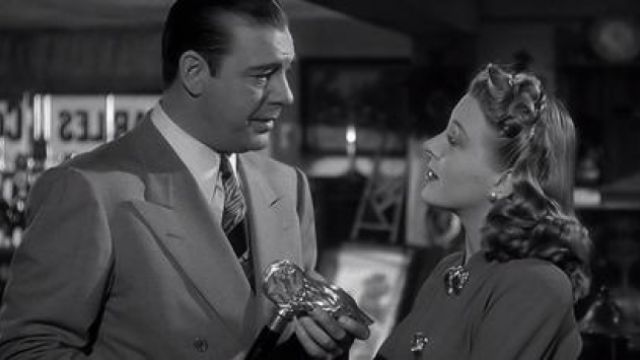
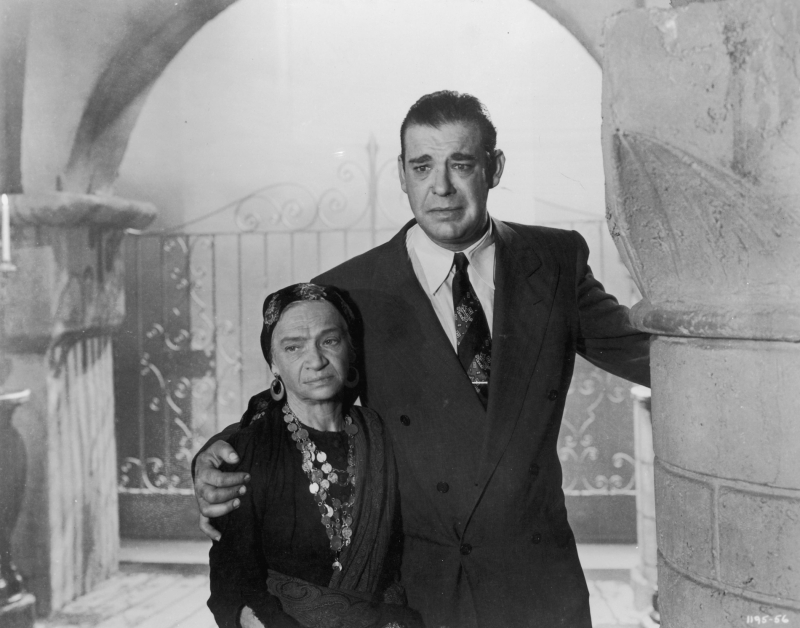
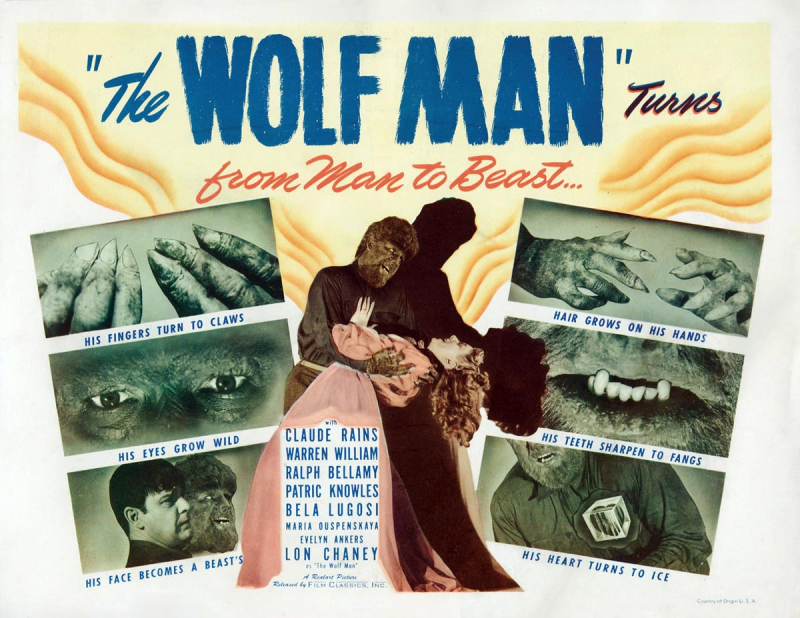
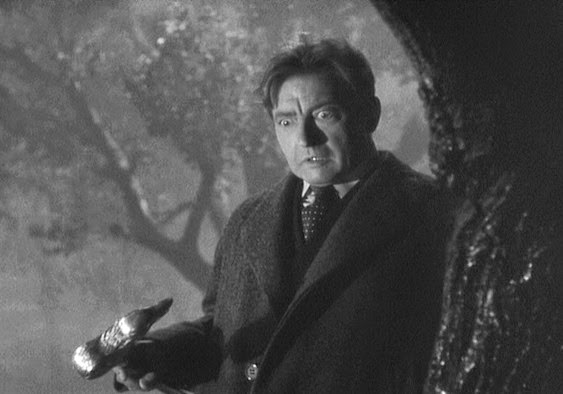
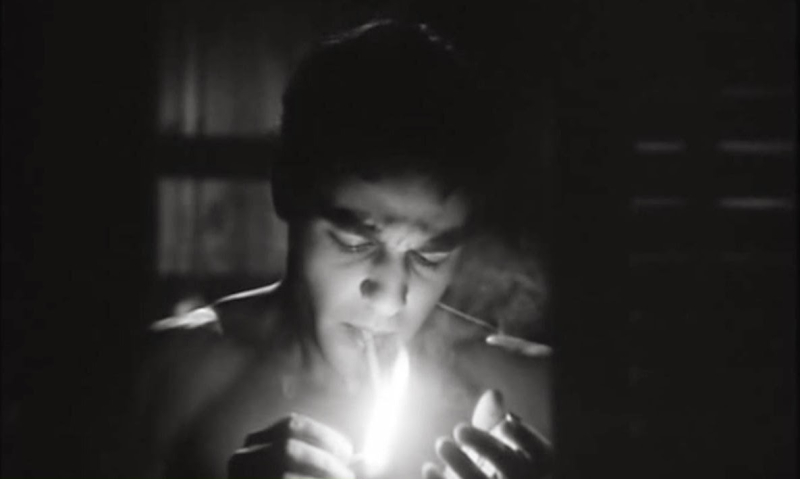
Love (and Memory) Is Strange: Badlands

6a00d83451cb7469e201b7c9375a17970b-800wi
From my piece on Badlands, published at the New Beverly.

“Where would I be this very moment if Kit had never met me? Or killed anybody? This very moment. If my Mom had never met my Dad? If she’d of never died? And what’s the man I’ll marry going to look like? What’s he doing right this minute? Is he thinking about me now, by some coincidence, even though he doesn’t know me? Does it show on his face?"

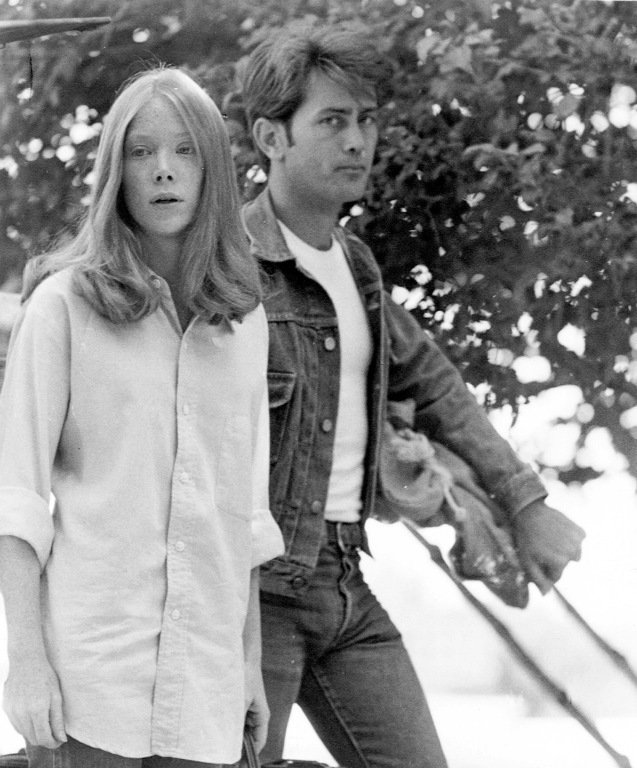
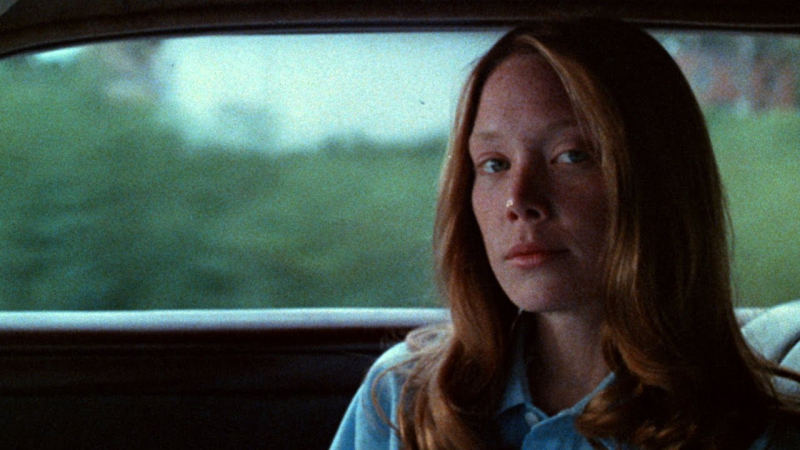
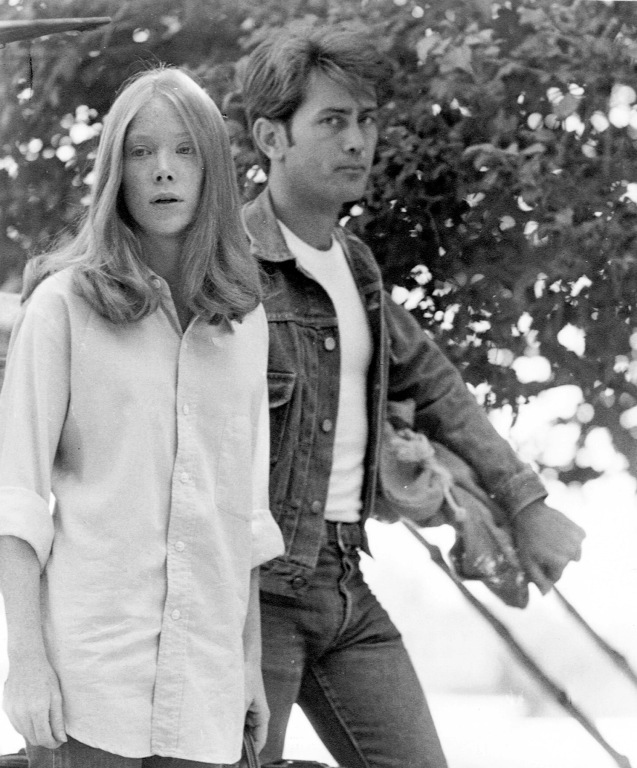
I saw Badlands on TV when I was in middle school. At least I think I saw it. I was 13. I remember scenes, or I remember the memory of seeing scenes, because I had been staying home from school for a week, sick, only I wasn’t sick, I was delirious. I was having an awful few months and I hadn’t been sleeping. My insomnia and nerves were so terrible that I was walking around in a dazed, somnambulant state and watching movies would get my mind off whatever was troubling me. I liked wandering around outside but I was too tired so I would curl up on the couch and sleep in the day, eyes opening and closing to the TV and to movies, images melding into daytime and into dreams. Badlands feels swirled in my own dreams, younger and older, but during those bad months, I wasn’t dreaming much.

Badlands_(3)_720_405_80

I didn’t know why I couldn’t sleep and it frightened me. I didn’t like being inside my own head, sinking into my thoughts. Movies were a way to mix up my mind, glazing my brain from things I didn’t want to think about and buoying my spirits. Often my own thoughts and the images I was watching would merge – this is my life – and if you’re tired enough (or maybe crazy, and lack of sleep can make you crazy), you are in a movie. That’s why Badlands felt (or feels) a part of that beautiful, disturbing escape, an escape from thinking my raw thoughts too much. It’s like the frames of Badlands were snapshots I had taken in my own mind. But of course those were Terrence Malick’s snapshots. He handed them over to me, and to everyone else haunted by the picture. Badlands is a powerful thing.

6a00d83451cb7469e201b8d2c1a736970c-800wi

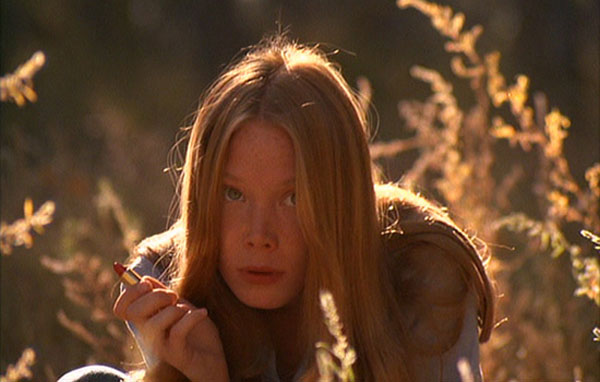
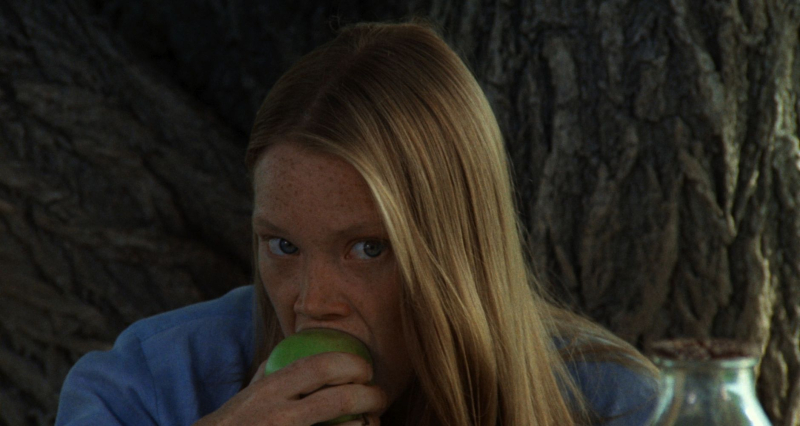
And thoughts are so powerful when you’re young. They start to really expand and flower when you’re 12 or 13; your brain is still growing. Those thoughts can seem strange, exciting and wonderful, but sometimes disturbing – adolescence makes you jump to different places, feel new sensations, and experience a darkness that makes you wonder if the odd stuff coming to you are just impressions running through your mind, or if you actually think that way. Your curiosity is like the girl in Badlands – Sissy Spacek’s Holly looking through the pictures in her dad’s stereopticon and wondering about what could have happened had her circumstances been different. What her future would become. And you lay awake and worry – worry how Holly was worried about tossing her sick catfish into the yard. Was that a terrible thing to do? You think of living in different cities, you think of running away, meeting a boy, you think of driving off in your parent’s car in the middle of the night. I tried that – driving the car before I knew how to. I backed it into a large pine tree

Badlands-2

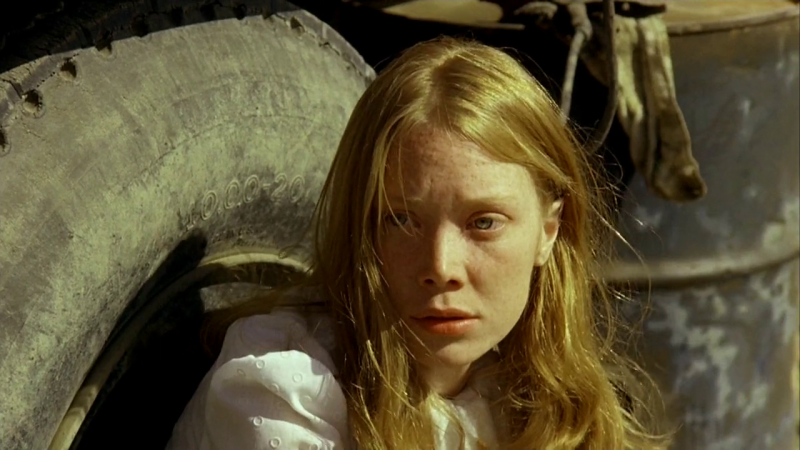
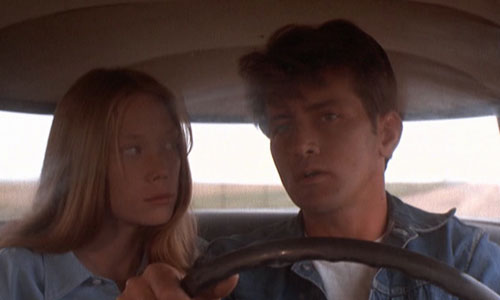
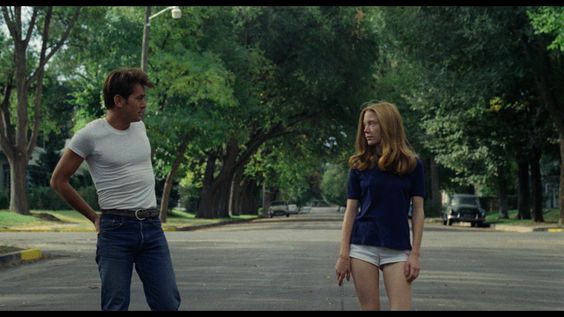
Those thoughts and that car and that pine tree make me think of watching Badlands. But this is all a fevered memory and my recall may be wrong. Maybe I’m imprinting a future impression on the past and how I saw Badlands because I know I watched Badlands in full, in a conscious state, when I was a little older, when it became a favorite movie. But the first viewing – maybe that’s like a memory the way you look at a photograph of yourself as a kid and wonder if you really do remember that trip to the beach.  You’re gathering information based on a picture you’ve looked at numerous times. Would you remember anything if you didn’t have that picture? Martin Sheen’s Kit and Spacek’s Holly were pictures, music and voices I heard, I think, in and out of consciousness on that couch. Kit’s good-looking, charming, sometimes a little dumb, casually cold-blooded “character” (he really wants to be a character) and Holly’s strange, ethereal beauty, her questionable lack of concern for others’ deaths (we know Kit doesn’t mind) save for her catfish and briefly, her own dad (played by Warren Oates), and her flowery narration are firmly planted in my mind. It’s real to me and yet, totally fantastical to me. Kit and Holly’s own mythmaking rolls into my own movie mythmaking and even a few events in my young life.

6a00d83451cb7469e201b7c9375a30970b-800wi

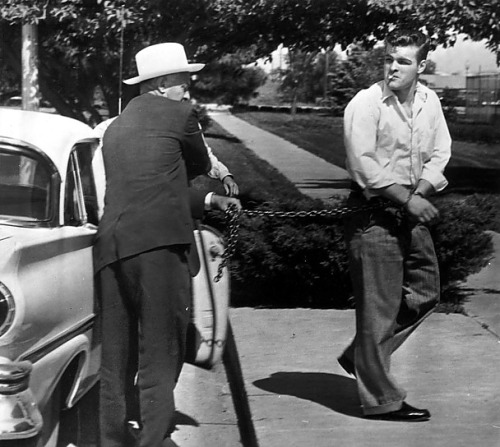
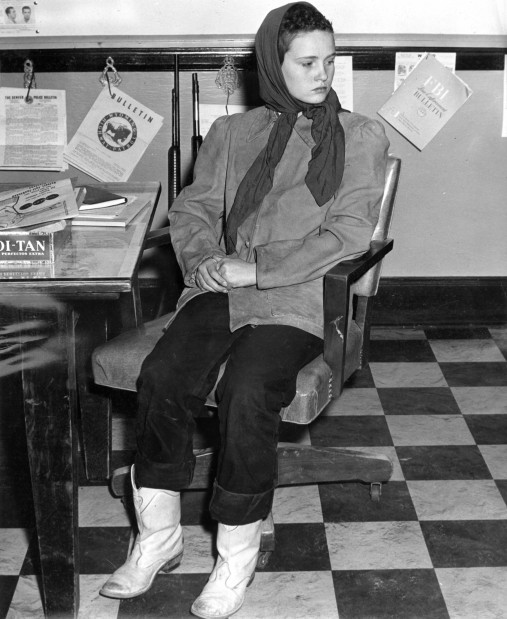
But did I see this? I’m sure I’d heard of Charlie Starkweather and Caril Ann Fugate, the real life lovers the picture was inspired from. During two deadly winter months from 1957-58, 19-year-old Starkweather murdered eleven people in the states of Nebraska and Wyoming with his 14-year-old girlfriend Caril in tow. Was she a captive, an accomplice or caught up in a crazy romantic delusion? He was put to death, she was given life (she served 17 years). Reporters, the public and mostly teens were fascinated by this duo and this boy who reminded them more of a nihilistic James Dean than a boogeyman, though he certainly scared a lot of people. The couple is as mythically American as Bonnie and Clyde, only more terrifying and senseless, killing and stealing cars and grabbing items from houses in the late 1950’s.  They weren’t modern day Robin Hoods robbing banks during the depression; they were rebels without a cause taken to the extreme of teenage rebellion and alienation. But like Bonnie and Clyde, they looked good. As such, they were made for the movies

6a00d83451cb7469e201b8d2c1a758970c-800wi

Even Charlie’s name, Starkweather, conjures up a cinematic image, a temperature, a chill. Leaving their imprint on popular culture from Bruce Springsteen to The Sadist to a Naked City episode, “A Case Study of Two Savages,” starring Rip Torn and Tuesday Weld, the dark romance of the leather-clad bad boy stuck – it’s something kids gravitate towards, and even with Starkweather’s brutal murders (including a baby), he’s glamorized – kids often glide over the horrifying, focusing on the They Live By Night lovers-on-the-run allure (which could have inspired Starkweather, the second Nicholas Ray movie he may have crafted himself on next to Rebel Without a Cause). Uniquely, however, save for their loveliness, Malick’s Badlands doesn’t glamorize the pair, not in the usual way, even as rapturously beautiful as the picture is. The killers are softened, yes, but their murders, though awful, are less heinous, and their disconnect towards death is merged with the heart-aching beauty and the wonder of nature. You’re not sure if you feel for them, if you feel for how lost and delusional they are, or if you feel for the idyllic world they’re hoping for – the stunning world Malick is placing around them. Because we hope and hoped for that world too, we even ache for it.

Badlands

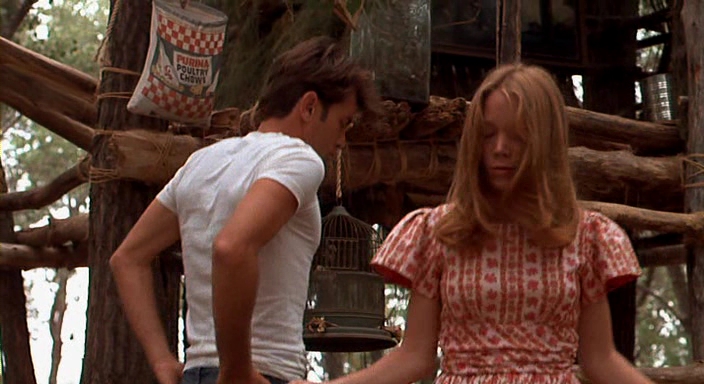
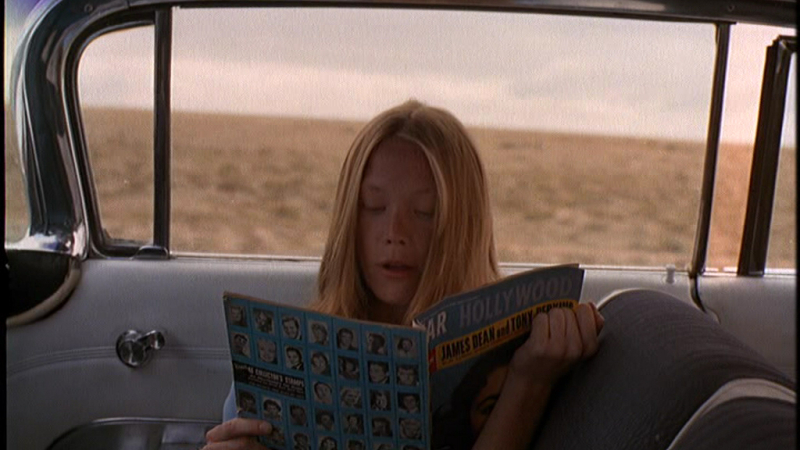
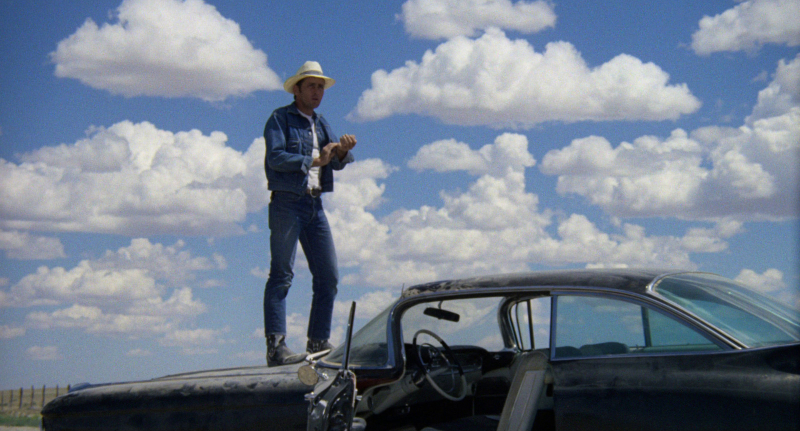
That ache is what feels layered inside me. It’s wrapped up in a powerful memory. So did I see it at 13? It doesn’t matter – I feel like I saw Warren Oates painting that big sign with all of those big fat clouds in the blue sky, I feel like I remember him shooting Holly’s dog, I feel like I remember Kit running through that SwissFamily Robinson-like fort and sleeping under that Maxfield Parrish painting swiped from the dad’s house, I feel like I remember the two dancing to “Love is Strange,” Holly barefoot, Kit in boots, and I feel like I remember Holly sitting in the car with Kit reading that movie magazine: “Rumor: Frank Sinatra and Rita Hayworth are in love. Fact: True. But not with each other

I’ve now seen Malick’s first film, a masterpiece, so many times that it’s permanently embedded in my brain and it twists inside my grey matter with images and impressions from countless viewings, including my own unreliable recollection at 13. The movie is so special, so enchanted, so truly transcendent that it clings to your very soul, a palimpsest on the brain. If that sounds hyperbolic, so be it. But the moment I hear Carl Orff’s “Gassenhauer” in the movie, or anywhere, I get goosebumps. Sometimes I want to cry. The way it starts out quietly, delicately, and then builds and builds, the drums moving towards that crescendo, it feels like the most dramatic music box a little girl ever opened – timorous innocence becoming stronger and more confident. Faded adolescent memories come to me in brighter detail, full of hope and promise and sadness and those first feelings of falling in love. And then, growing up and realizing that person isn’t what you built them up to be in your fevered adolescent brain (or your adult brain). You, yourself, are an unreliable narrator, just as Holly is in Badlands.

6a00d83451cb7469e201bb09da6d2a970d-800wi

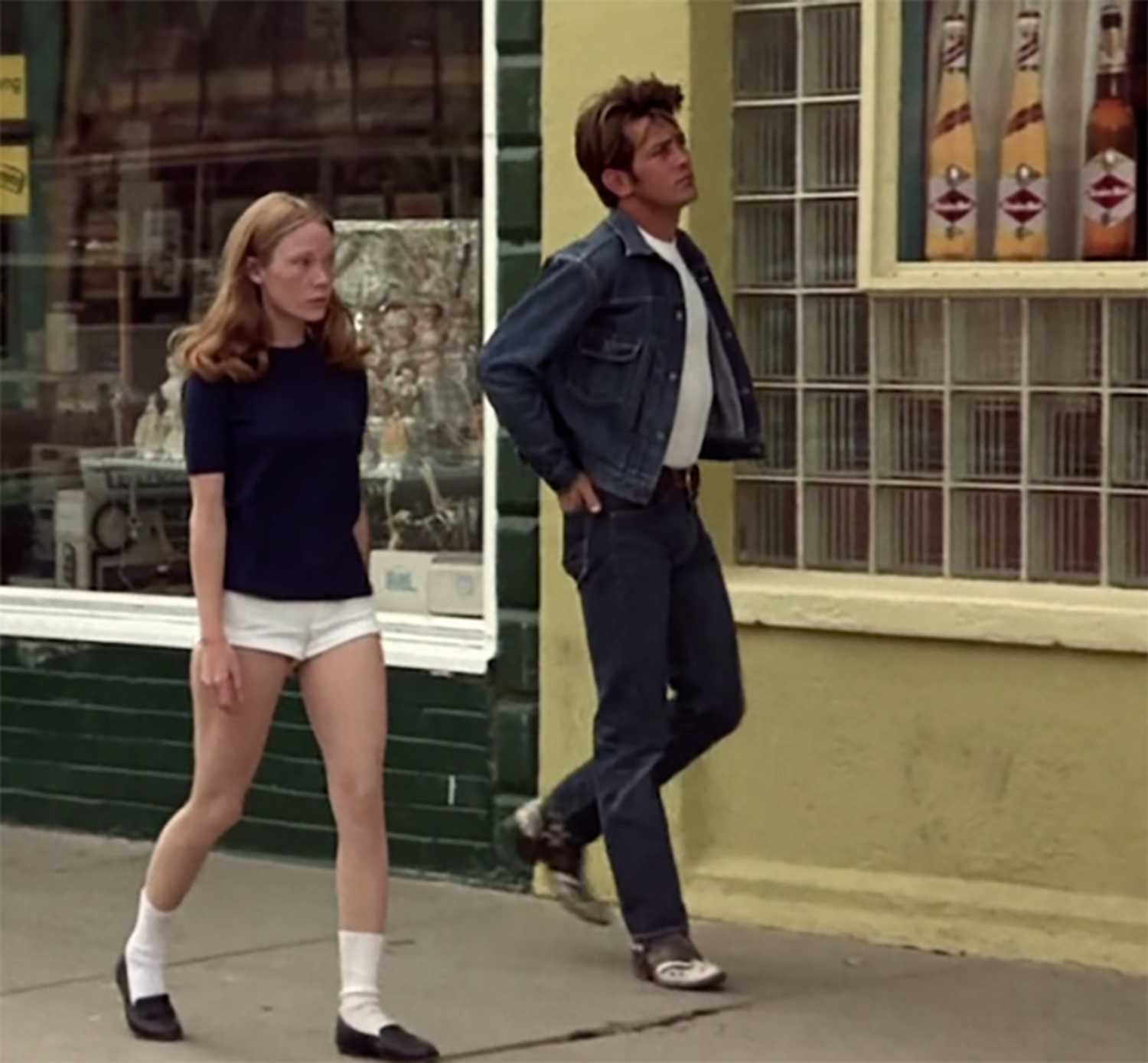
Part of Malick’s brilliance lies in the way the picture is narrated by Spacek’s little 15-year-old girl who, at times, seems both younger than her years and older – a girl who, from the outset, is estranged from her father (“He tried to act cheerful, but he could never be consoled by the little stranger he found in his house,” she narrates). Her dad (Oates, so weirdly beautiful here, both fearsome father and broken-hearted widower who kept his wedding cake in the freezer for ten years) forbids her to see the local bad boy, 25-year-old Kit, a garbage collector who is fired from his job and who puffs himself up in a world that doesn’t give a shit about him. He’s a cool young man, gorgeous in his 1950’s blue jeans, but he doesn’t seem to fool others with his big talk. He can fool a teenager, however. Holly recalls he “was handsomer than anybody I’d ever met. He looked just like James Dean.” That would be quite something for a shy girl who believes she lacks personality, a girl simply twirling her baton in those white shorts on the lawn. And then this boy comes along, changing her fate forever. She likes that he appreciates her mind, and not just sex.

6a00d83451cb7469e201bb09da6d3c970d-800wi

They fall in love, they bond on a deeper level. Only, we never really see them discuss deeper ideas about life, we just get glimpses of their worldview on the periphery of events – like when Holly feels guilty for throwing out that sick catfish. She confides in Kit who tells her he does stuff like this too, and that some of his behavior would be considered strange. We then watch him stand on a dead cow in the feedlot.  A catfish in the yard isn’t so weird; it’s something a confused teenager would do if she were fearful of witnessing death.  Maybe she has good reasons to fear death – her mother died, her father shoots her dog dead for seeing Kit behind his back, and what if she died a virgin? She doesn’t want to die. Kit seems less concerned about death. He just wants to be somebody. He wants to leave a mark. And he does. He’s finally given some respect and certainly celebrity when he’s caught. And in the end, chained up and chatting up the authorities, throwing out keepsakes to the law so they’ll remember him, he seems, finally, even happy.

Roadtrip4

We don’t know how much of Holly’s sometimes florid recollections are a true representation of how she feels; about the brutal events on their crime spree. Though I do believe her reveries – I believe them in terms of how she wants to feel at the time, or how she wants to remember them at the time. But her romantic notions turn into tedium and annoyance towards Kit, even a wish he’d die. The rush of teen love is always dramatic, and so when Holly says: “In the stench and slime of the feedlot, he’d remember how I looked the night before, how I ran my hand through his hair and traced the outline of his lips with my fingertip. He wanted to die with me, and I dreamed of being lost forever in his arms.” You don’t doubt her. But you also watch their scenes together and observe them talk about banal things, like garbage on the street, or a tree falling in the water; Kit records a series of bromides on the Dictaphone when they take a break holed up in the rich man’s house they’re holding hostage.  Holly seems joyful and attracted but sometimes, disappointed and irritated. When they finally have sex she asks: “Is that all there is to it? Gosh, what was everybody talking about?” Kit answers, “Don’t ask me.”

The stench and slime of the feedlot seems how Kit views the world outside of Holly – and he craves glamour and respect. He likes to leave markers with rocks, or bury personal items either for the purpose of returning to (which won’t happen) or for others to discover. Holly intones: “He said that nobody else would know where we’d put them, and that we’d come back someday, maybe, and they’d still be sitting here, just the same, but we’d be different. And if we never got back, well, somebody might dig them up a thousand years from now and wouldn’t they wonder!” Wouldn’t they. The need to feel, not only alive, but for others to know that you were alive, runs throughout the movie – Kit and Holly creating their own pictures and movies through both romance and heinous acts. Kit knows it will mean something and as he speeds from the law near the end, he fixes the rearview mirror to look at himself. It’s got to at least look good. 

6a00d83451cb7469e201bb09da870a970d-800wi
Creating an idyllic world is an escape from the junk of life; a need to transcend regular existence, so taking in the picture’s glory of nature, we feel like we could always escape day-to-day banalities if we tried. Holly observes nature, loving the “cooing of the doves and the hum of dragonflies… the air made it always seem lonesome and like everybody’s dead and gone.” Kit wants more; he’s searching for some fabled kingdom. As Holly narrates: “We took off at sunset, on a line toward the mountains of Saskatchewan, for Kit a magical land beyond the reach of the law.” That magical land is . . . where? It’s either everywhere, in moments, if you really appreciate nature, or, in Kit’s case, in his death, when he’ll be so mythologized that songs will be written and movies will be made about him. Malick understands this eternal desire. Not to be famous, but to be remembered, not to remain specks of dust in such an enormous world.

6a00d83451cb7469e201b8d2c1a7d7970c-800wi

The movie pulls you in different directions, the way those thoughts that riddle your sleep do when you’re young. The road, the music, the period detail that’s more timeless than stuck in an era; more a dark fairy tale rather than a 1950’s story, the rapturous American landscape and bittersweet romance led by characters who could almost be viewed as ciphers, and yet, they’re not. Their remoteness is not so distant that you can’t feel for them, in spite of yourself. They’re even quite funny, in an understated way. Because Sheen and Spacek are so perfectly cast and they play their characters so inscrutably innocent, and yet, so blasé and scary, not one scene between them rings obvious or absurdly psycho; like they’re yearning to tell us something or reaching out to us for help. After watching a man bleed to death, a heartbreaking scene, Holly narrates:

6a00d83451cb7469e201b8d2c1a7ea970c-800wi

“At this moment, I didn’t feel shame or fear, but just kind of blah, like when you’re sitting there and all the water’s run out of the bathtub.” Malick doesn’t moralize or explain and even Holly’s voiceovers inform very little about the depth of their problems. But you see the bloom fall off the rose: “We had our bad moments, like any couple. Kit accused me of only being along for the ride, while at times I wished he’d fall in the river and drown, so I could watch.”

6a00d83451cb7469e201bb09da6d70970d-800wi

Malick’s debut is one of the most extraordinary first films in all of cinema – he was working an alchemy and a genius that felt otherworldly (something he’d continue in subsequent pictures, Badlands remains my favorite). The film, as I’ve made obvious here, became an obsession for me. Its poetic understanding of the intense, alienated teen; their extreme impulses, but also their mystery and banality, how that understanding is wrapped in our own mythos, moves me in mysterious ways.

81859f26c88c221da1bd4099681bac57

One of my favorite moments is during Kit and Holly’s long drive through the Great Plains, where their isolation matches the spare landscape – the enormous sky and almost unsettlingly magnificent sunsets. Amidst all of this cinematic gorgeousness, their long and bloody road trip is turning. Holly is weary and wary of living out of the car. They live like animals, she thinks, and she’s becoming wiser as she pictures her ill-fated future with Kit. But, then, there’s that moment, that sublimely beautiful moment: In the black of night, with only the car lights illuminating the darkness, they dance to Nat King Cole’s “A Blossom Fell” from the tinny car radio. Holly may not even be enjoying this moment, but we are as we watch them together. Kit says, “Boy, if I could sing a song like that, I mean, if I could sing a song about the way I feel right now, it’d be a hit.”

6a00d83451cb7469e201bb09da6d82970d-800wi

Badlands affected me and still affects me and continues to give me chills. And it runs through my mind almost as my own memory, tapping into something primal and wistful and musical – that youthful feeling of the new, influential and forbidden. And then losing that feeling. Badlands haunted me in my sleepless half-awake young self, and I’ll stick to that evocation even if I’m not sure of the exact age. My own memories with the movie and the memories and images of the movie itself, what Malick was meditating on, echo what Carson McCullers wrote about wistfulness; things we long for but can never really attain: “We are torn between nostalgia for the familiar and an urge for the foreign and strange. As often as not, we are homesick most for the places we have never known.”

Her Shadow Between Us: Rebecca

6a00d83451cb7469e201b8d2c19d6a970c-800wi

From my piece published at the New Beverly.

“Her shadow between us all the time,” he said. “Her damned shadow keeping us from one another. How could I hold you like this, my darling, my little love, with the fear always in my heart that this would happen? I remembered her eyes as she looked at me before she died. I remembered that slow treacherous smile. She knew this would happen even then. She knew she would win in the end.” – Rebecca, Daphne du Maurier

Rebecca-3

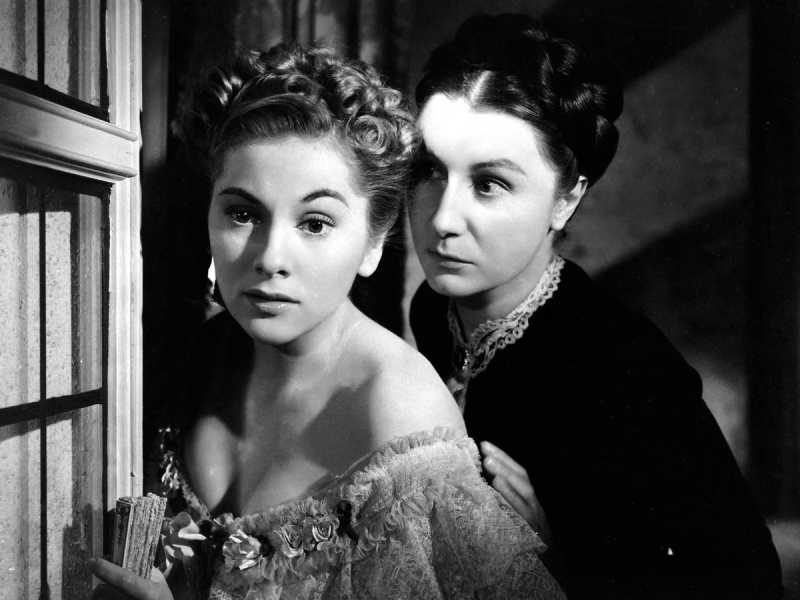
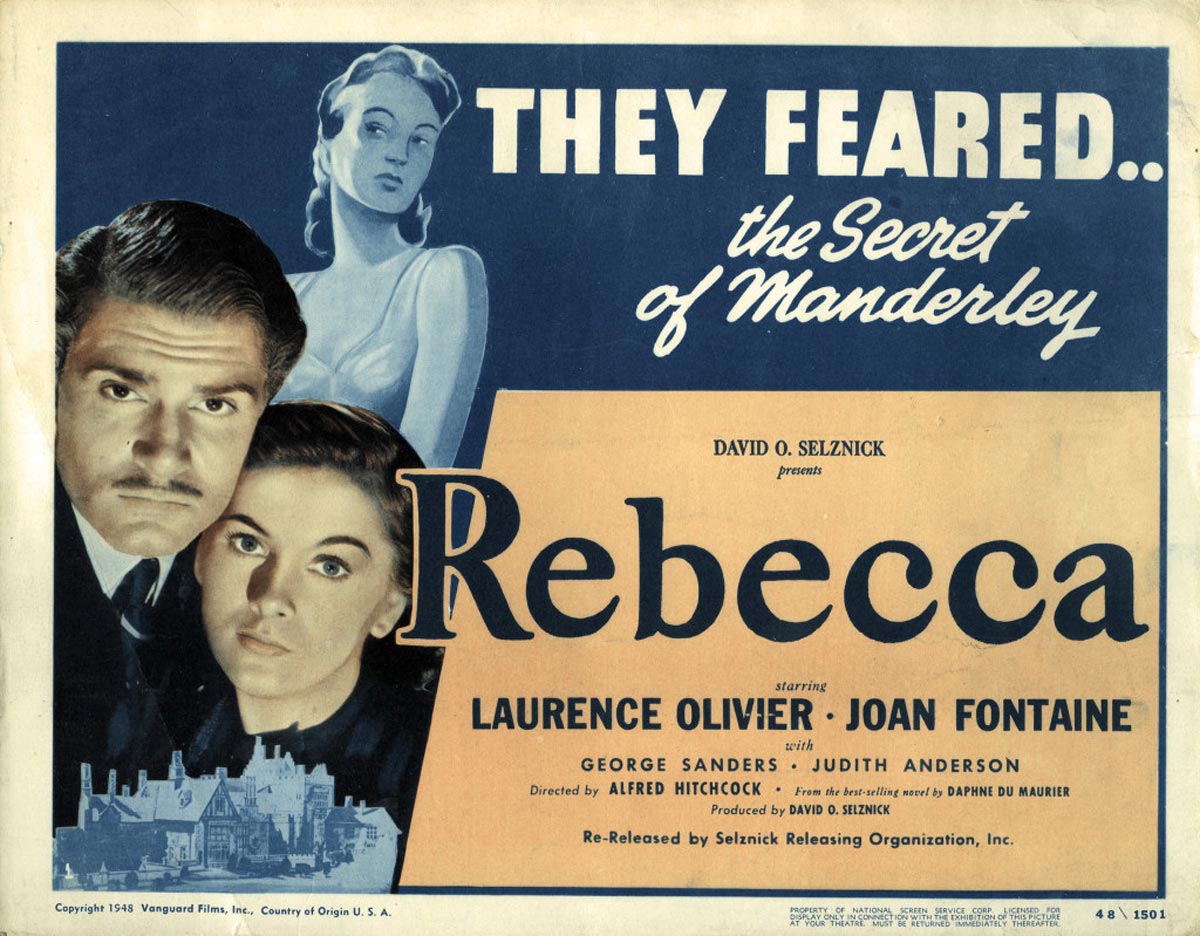
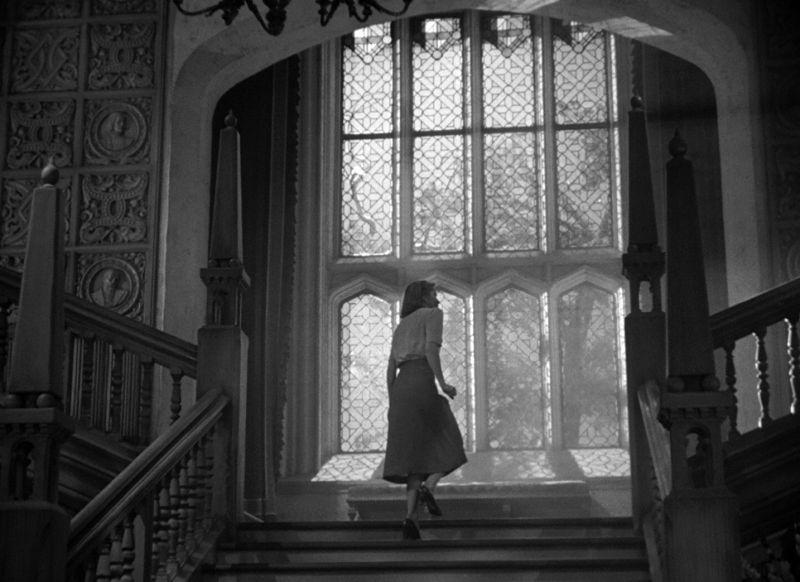
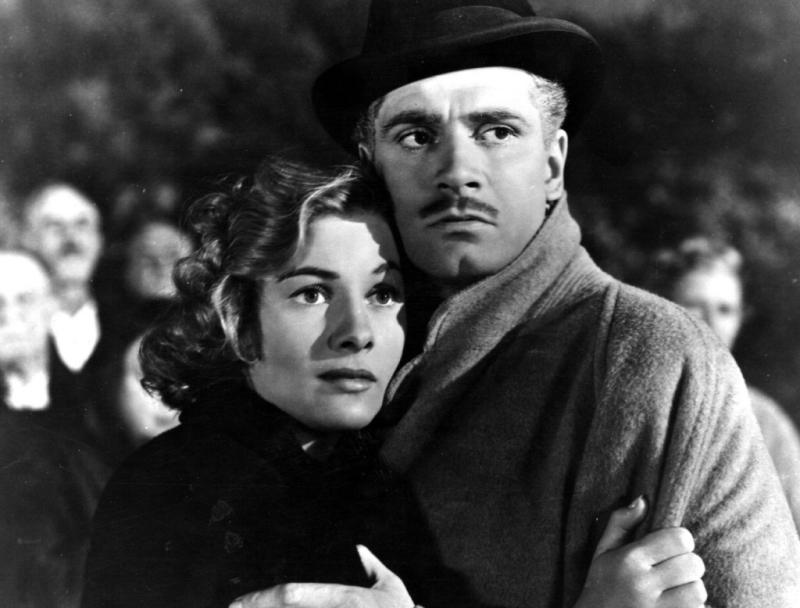
There’s a scene in Alfred Hitchcock’s Rebecca that I find startling not for being scary or cruel or moodily mysterious, but for being so disarmingly matter of fact. We’ve heard different takes on the intimidatingly beautiful, now dead, Rebecca de Winter, the black-haired goddess with gorgeous taste in décor, lingerie, bedding and those three things every man and woman yearn for: “breeding, brains and beauty,” that her almost unearthly perfection is constantly uttered with a kind of hypnotized rapture. And with that rapture there is hatred, seething hatred – chiefly from her widower husband, Maxim de Winter (played by Laurence Olivier) – who sees this goddess as a gorgon, pure evil, and the destructor of not only his marriage, but his manhood, his very sense of self inside his own home – the grand estate called “Manderley.” Everything Rebecca touched left an imprint, people, pets, objects, clothing, writing desks, windows, even the sea couldn’t sweep her away, and she haunts every corner of the estate just as she haunts the minds of those who knew her. Maxim’s obsession is so deep that he’s infected his second wife (played by Joan Fontaine) with Rebecca-mania, and she, or rather, “I” (as she’s referred to in the movie and in the Daphne du Maurier’s 1938 novel), can’t move an inch without a reminder of the past beauty. We naturally feel for “I,” a lost young woman plucked away from her vulgar dowager employer by the wealthy, mysterious Maxim, (“I’m asking you to marry me, you little fool” he snips, with little charm) and is soon swallowed up by his house and the various obsessives around him, chiefly the looming housekeeper Mrs. Danvers.

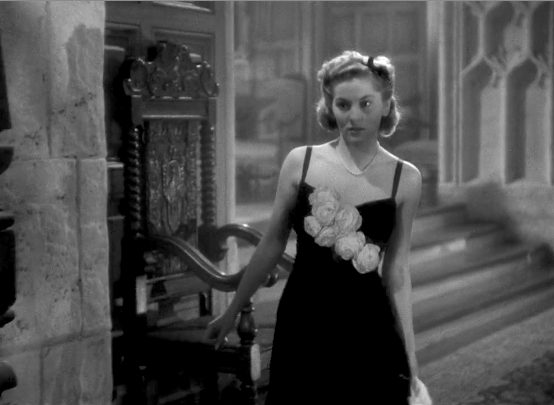
The second Mrs. de Winter (an often heartbreaking woman) is yearning to be loved by her cruel, often smug husband, and to escape the shadow of the ever-present Rebecca. She’s an orphan, insecure and frightened, and she’s grateful for a home, but can she have any sort of her own space within it? Can she start out anew with her husband? Well, no, she cannot. How can one escape the past and create a future when even one’s napkins are embroidered with the previous Mrs. de Winter’s omnipresent “R”? 

6a00d83451cb7469e201bb09da62a6970d-800wi

But back to that stirring moment – when the movie is removed from Rebecca’s satiny, sensual bedroom (Judith Anderson’s impressively weird, hateful but clearly lovelorn Mrs. Danvers makes you love Rebecca, and you can practically feel the silk of her nightgown and nun-sewn undergarments) and into a more down-to-earth, clinical setting – a doctor’s office. There sits the doctor who diagnosed Rebecca (and who revealed to her that she had cancer, a very human condition) discussing his past patient without agenda, without romance. Indeed, he remembered her as beautiful and powerful, but he also says something about her that’s affirmative and almost simple, not in a trance as the others – that she was “wonderful.” He says: “I remember her standing here holding out her hand for the photograph. ‘I want to know the truth,’ she said. ‘I don’t want soft words and a bedside manner. If I’m for it, you can tell me right away.’ I knew she was not the type to accept a lie. She’d asked for the truth, so I let her have it. She thanked me and I never saw her again, so I assumed that …”  He will be interrupted by those present, but continues his assessment of Rebecca, directing his take of this woman to her embittered husband. Something about how resolute the doctor turns and says to Maxim: “Your wife was a wonderful woman, Mr. de Winter.”

6a00d83451cb7469e201bb09da62ae970d-800wi

It’s almost as if he’s saying, stop complaining, you moody bore. Wonderful is a term Maxim would never have used about Rebecca, as in excellent, great, marvelous, exceptional in an interesting way. Who knows what the doctor had heard from Rebecca about her marriage, perhaps nothing in regards to how her husband viewed her, but for all of Rebecca’s dreadfulness howled by Maxim to the second Mrs. de Winter (“It wouldn’t make for sanity, would it, living with the devil?”), perhaps she was actually as the doctor stated: strong, not one to be lied to and wonderful. But Maxim doesn’t want you to think that. The initial response when watching the movie (and reading du Maurier’s novel) is that Rebecca was living a lie, hiding a horrid secret, charming on the surface, but a horror to be married to. Listen to Maxim wail about her:

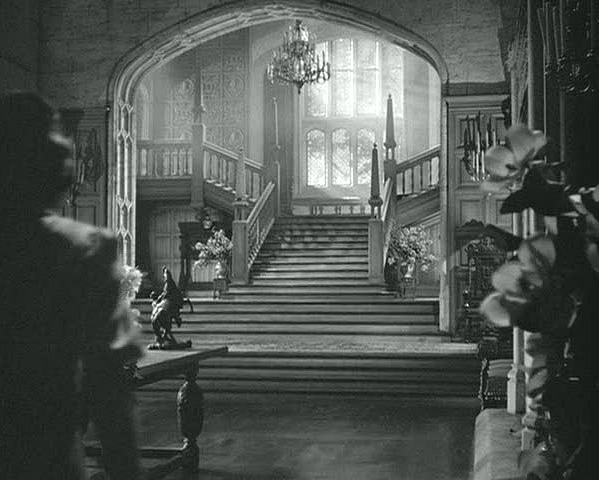
Grand-Staircase-at-Manderley-in-Rebecca“Well, I went there with Rebecca on our honeymoon. That was where I found out about her. Four days after we were married. She stood there laughing, her black hair blowing in the wind, and told me all about herself. Everything. Things I’ll never tell a living soul. I wanted to kill her … ‘I’ll make a bargain with you,’ she said. ”You’d look rather foolish trying to divorce me now after four days of marriage, ‘so I’ll play the part of a devoted wife, mistress of your precious Manderley ‘I’ll make it the most famous showplace in England, if you like, ”and people will visit us and envy us… ‘and say we’re the luckiest, happiest couple in the country. What a grand joke it will be! What a triumph!’ I should never have accepted her dirty bargain, but I did. I was younger then and tremendously conscious of the family honor."

Well, what does that say about him? He’s certainly a resentful coward. And what on earth was Rebecca hiding about herself that only he knew? Affairs? With men and women? Drugs? Debauchery? What? This is destructive to a marriage and scandalous then and now, but, my goodness Mr. de Winter, calm down.  Everyone has their own take on Rebecca, and I’m always intrigued by the doctor’s summation – he’s speaking of this fabled woman as a person with a multi-faceted humanity, even a vulnerability for that moment, when she was faced with her own mortality. Did her strength near death come from knowing she’d haunt not only Manderley but the hearts and minds of seemingly every person she encountered? Was she that calculated and knowing? Did she know she’d never be forgotten? Did she know she’d even achieve a mythic power in death? Or did she merely want to die as she lived her life – on her own terms? Was she all of these things? If so, why does that make her evil? Even if she strayed? It doesn’t appear that Maxim was the most loving husband in the first place, and was consumed by appearance, that damn Manderley (you’re almost glad when the place burns down, though it’ll never erase Rebecca since the story is being told after the fact). But, who are we to believe?

6a00d83451cb7469e201bb09da62a2970d-800wi

No one, I feel, which makes the story so powerful and unforgettable. I find myself filling in the blanks or re-writing others opinions of this fascinating woman, wondering what their view of her says about them, not just the woman.  She is the central character – ever present in the negative spaces – without a voice. A character whose narrative is being written by various friends, lovers, admirers, obsessives. It’s an utterly bewitching way to tell a story and craft a character – in Hitchcock’s movie and in Daphne du Maurier’s novel – a ghost so alive that she makes the others seem like specters without her. Even objects, shot so potently and at times, fervent, fetishistic (watch how Mrs. Danvers famously caresses Rebecca’s underwear), vibrate with the mark of Rebecca. The second Mrs. de Winter breaks a china cupid, walking through the house with enormous doors, terrified to touch such totemic things. She is so scared to tell anyone about breaking it that she hides the pieces in the back of Rebecca’s old desk. Later, a big fuss is made of this tiny mistake and a servant is almost fired when Mrs. Danvers spots the cupid missing. Such drama! Such closely-watched luxury! Maybe the second Mrs. de Winter subconsciously broke the ornament on purpose, and who could blame her? It is, after all, cupid, and cupid seems destined to die in this dysfunctional marriage.

Rebecca1AK

There is so much to consider when writing about Rebecca – the film’s backstory with Selznick (this was Hitchcock’s first American film, and he and Hitchcock did not see eye-to-eye, in fact, Hitchcock didn’t think the film was fully his); the brilliant source novel by du Maurier, and du Maurier herself (a married woman who had female lovers but blanched at the term lesbian: “… by God and by Christ if anyone should call that sort of love by that unattractive word that begins with ‘L,’ I’d tear their guts out,” she wrote a lover); the feverish chronicling of two doomed marriages; the image construction of Hitchcock; the gothic power and mood (indeed by its first words uttered: “Last night, I dreamt I went to Manderley again.”) But I’m thinking of the film’s great big question mark – who was Rebecca, really? We’re wondering as much as poor Joan Fontaine, who is so unsure of herself, so used to being addressed in such dismissive terms, that the beautiful actress makes herself not mousy, but drained by the force of Rebecca’s memory. She’s struggling to not just be equal to Rebecca, but to be even seen as a full-fledged woman (Maxim seems more comforted by their age difference and that she remain a big-eyed child). Looking at how women’s power and agency is such a terrifying force to (mostly) men in Rebecca, there are times I feel Rebecca’s fortitude is a continued rebellion – she’s howling from the grave, full of mischief and madness. She’s still upsetting the status quo.

6a00d83451cb7469e201b7c9375088970b-800wi

Also interesting is that two, really, troubled people – Oliver’s Maxim and Anderson’s Mrs. Danvers (“Danny,” as she’s known to Rebecca, which gives her a more down-home other life we don’t know anything about) – are in their way dueling to own the narrative of Rebecca. One, Danny, keeps her atop the pedestal of perfection, and the other, Maxim, knocked her off after four days of marriage. How could anyone live up to such expectations? I’m more inclined towards cousin, cad and obvious lover, Mr. Favell (played deliciously by George Sanders), who witnessed Rebecca untamed, but then, who can trust him either? Olivier plays Maxim with such a combination of doomed suffering and selfish, spoiled intractability that he’s generally unlikable in the right way throughout the movie, and save for looking as a young Olivier looks (pretty) and for a few moments of his charm (his honeymoon footage with Fontaine’s second Mrs. de Winter is sweet), he’s not anyone we’re hoping Fontaine winds up with. The story has been compared to Jane Eyre, and it shares similarities except that we are not yearning for Maxim and his young bride to make it, as we are Jane and Rochester (no matter how insane). There is little romance here, and instead a vehement meditation on love and obsession over one extraordinary woman. Again, who is Rebecca? Thinking of Marlene Dietrich in Touch of Evil, “she was some kind of woman. But, what does it matter what you say about people?”

The Artistry of a Nightmare: Tobe Hooper’s The Texas Chainsaw Massacre

6a00d83451cb7469e201b8d2b9d91e970c-800wi

Happy Halloween! From my piece at the New Beverly

“The film which you are about to see is an account of the tragedy which befell a group of five youths, in particular Sally Hardesty and her invalid brother, Franklin. It is all the more tragic in that they were young. But, had they lived very, very long lives, they could not have expected nor would they have wished to see as much of the mad and macabre as they were to see that day. For them, an idyllic summer afternoon drive became a nightmare. The events of that day were to lead to the discovery of one of the most bizarre crimes in the annals of American history, The Texas Chain Saw Massacre.” 

6a00d83451cb7469e201b7c92f6d93970b-800wi

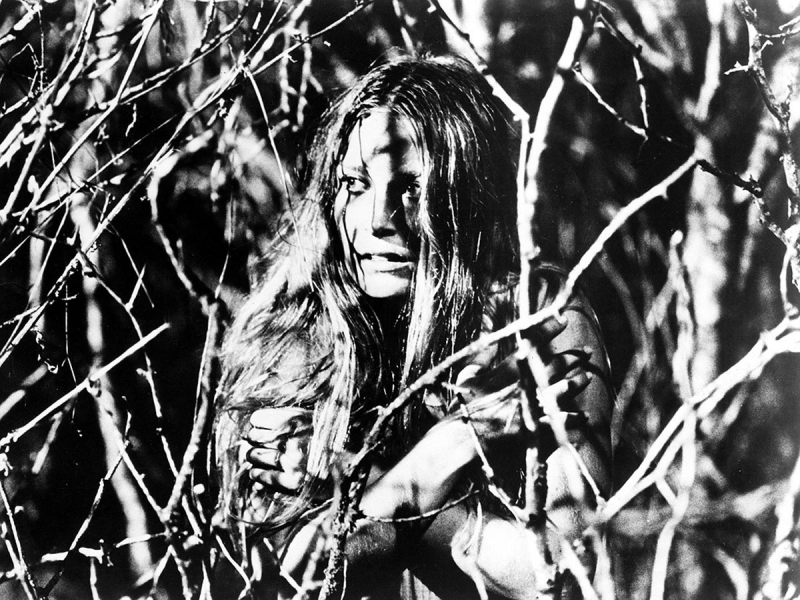
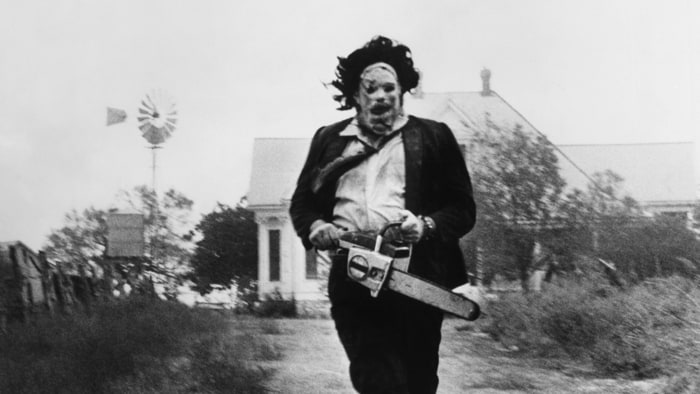
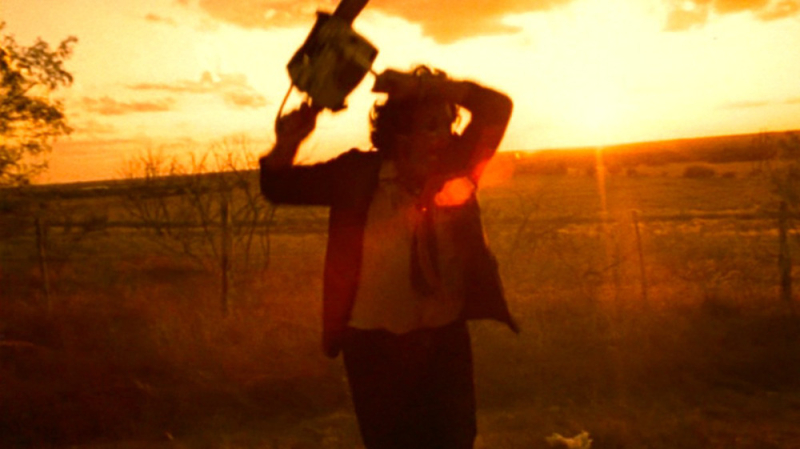
Sally running in the night. She is screaming and running, her white pants and long, golden hair gleaming in a darkness lit only by the moon. We’re watching her as she keeps running and running and running and screaming and screaming and screaming as a large man pursues, close behind. He’s wearing a skin mask and wielding a chainsaw that seems extra loud and extra horrifying – the ghastly saw sound that’s transformed from the regular use of limbing and bucking and felling trees, and is now a tool for cutting through skin and bone. Sally has witnessed just that – the cutting through skin and bone – from the hands and instrument of this terrifying creature/person/animal/thing chasing behind when her complaining wheelchair-bound brother, Franklin, was sliced right in front of her eyes. This thing, whom we will later learn is named “Leatherface” is, in fact, a human being, which is somehow scarier than any kind of mythological monster chasing poor Sally. And he chases and chases and chases – he is seemingly never going to stop. His bloodthirsty need to cut and kill is amped up and swelled with sick adrenaline just as her fight or flight mechanism has kicked in to ultimate breathless survival. She could win a triathlon with this kind of endurance, and she runs and dodges and cuts through brush and bramble with her legs and arms and face, not concerned with being scraped by the nature around her.

Rs-234432-MBDTECH_EC016_H

There is something seemingly unnatural (though entirely comprised of skin and meat and flesh, save for the chainsaw) close behind, and the outside night and landscape envelope around her. It’s both claustrophobic and agoraphobic. When there is everywhere to run, where is there to hide? Even the dark night can’t obscure heart-breaking Sally, she’s almost shining in it, and her fear is so visceral and real and such a wide-awake nightmare, that your thoughts race with her thoughts. You even feel her vision, focusing your gaze ahead along with her as she hopes and screamingly prays to run towards any kind of safety – a house, a person, a car, anything – her running echoing the inner hell of a level-ten panic attack blurring your side vision, but fixing on what is in front of you. She can’t see what’s in front of her except desperate possible freedom, and then she spies that house and clamors her way in. But that’s no freedom – there’s a half alive old man and a Mrs. Bates-like corpse sitting next to him – and she’ll jump through a window and resume back to the running and screaming and running and screaming through brush and bramble and on to another “safety” that isn’t a safety at all.

No safety. Ever. You are not passive as you are watching this. And no matter how many times you take in this long sequence (or, rather, I – I will speak for myself, I can’t account for others, though I sense many would agree), you never feel unaffected by this dreadful pursuit. Relentless isn’t an adequate word to describe this sequence; there should be another term for it, something mirroring the trauma we can feel in our bones. It’s true. We can almost smell her fear, we can feel Leatherface’s breath, his blade, even his hands that aren’t even free, he’s holding a chainsaw, and we sense him grabbing her hair (even if he doesn’t) as it flies behind Sally like a long, dreadful scarf.

6a00d83451cb7469e201b7c92f6d9f970b-800wi

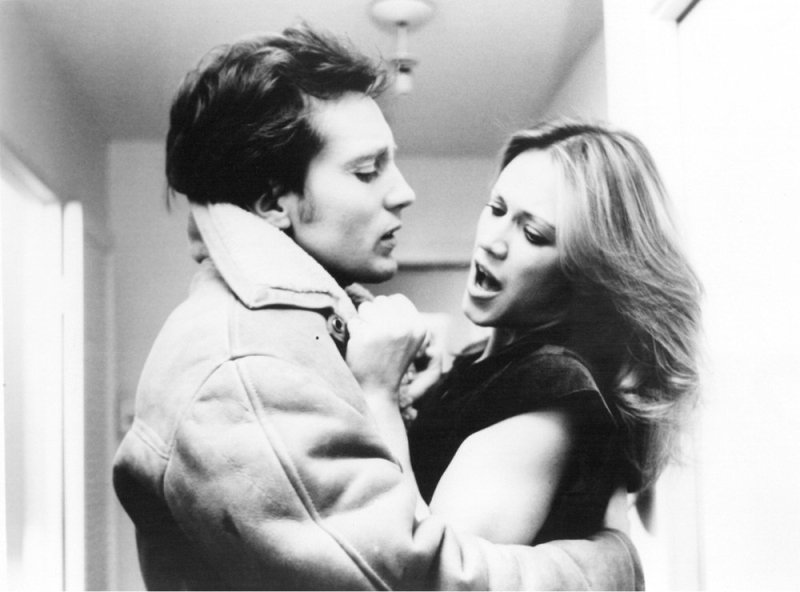
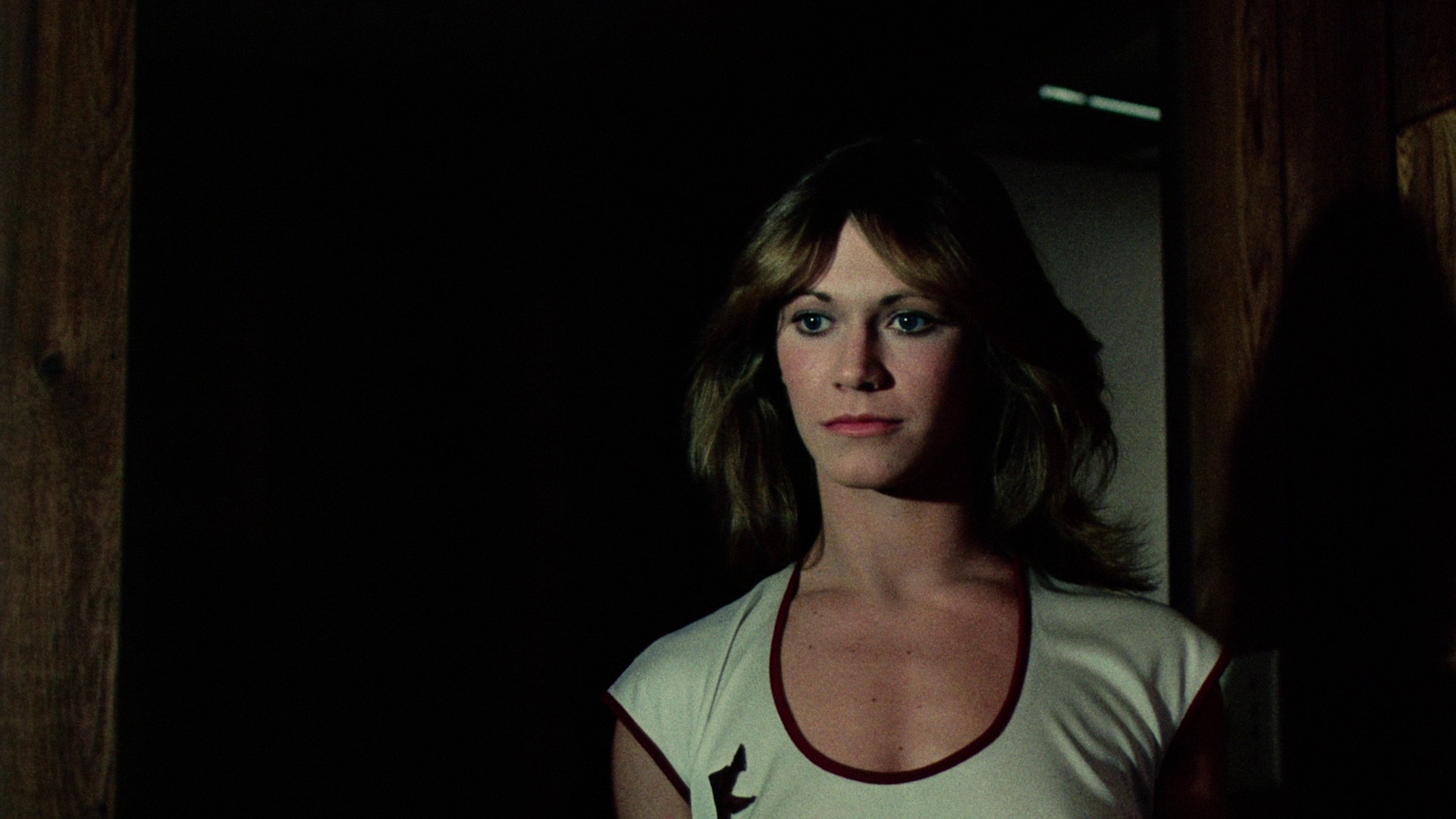
That vicious, unforgettable pursuit from the late, great Tobe Hooper’s landmark masterpiece, The Texas Chain Saw Massacre, so powerfully acted by Marilyn Burns and Gunnar Hansen (and by the entire cast throughout the movie), is both horrifying and distressingly emotional. It is also strangely beautiful in its nightmare vision, real and unreal – you are down on the ground with the trauma, running alongside it – and you can’t process any of this until later, when the images float in your head, usually at night when you are attempting to sleep. (Dear lord, these kinds of things can happen.How close have I been to a family of lunatics?) Hooper’s low budget work of incredible ingenuity is filled with beautiful craft and stunning visions that never take cues from a standard playbook of horror – they appear and sound and move to the poetry of a director (and editors, J. Larry Caroll and Sallye Richardson, and cinematographer, Daniel Pearl) who is considering the stench and the heat as well as the skin and the bones and the muddy mental tones, both terrifying and comic – sometimes all at once. And then there’s that scary idea that things seemingly solid and All-American – family and meat – have twisted and rotted to the point of gleeful sociopathy.

Texas-chainsaw-3

Certainly, this has been expressed or known before (nowhere is ever innocent), but there is a special quality to The Texas Chainsaw Massacre that feels like an assault, and certainly at the time, like nothing anyone had ever seen. You practically feel the movie spilling out of Hooper’s head, as artfully planned and written (by Hooper and Kim Henkel) as it was. The reality of a dangerous, absolutely not innocent world (Vietnam, post Manson-family fear still resonating in the culture, Manson-family-like hitchers, whatever the hell is in our meat) is amped up into a horror movie that feels almost like a documentary-fantasia. As told in a 1986 L.M. Kit Carson essay in Film Comment, Hooper talked about the movies in his head:

“I can remember my first 6mm lens-shot looking up out of the crib at the shadows dancing on the ceiling. At the same time, I was learning to talk, I was learning to see everything in camera coverage: wide shots, close-ups, etc. I didn’t exactly know I did this until I was about 20: one evening outside San Francisco I was watching the Pacific Ocean from a Cliffside—suddenly the Panavision aperture in my head widened and went away. And I realized that all those damn years I’d been shooting movies, with and without a camera.”

6a00d83451cb7469e201b8d2b9d961970c-800wi

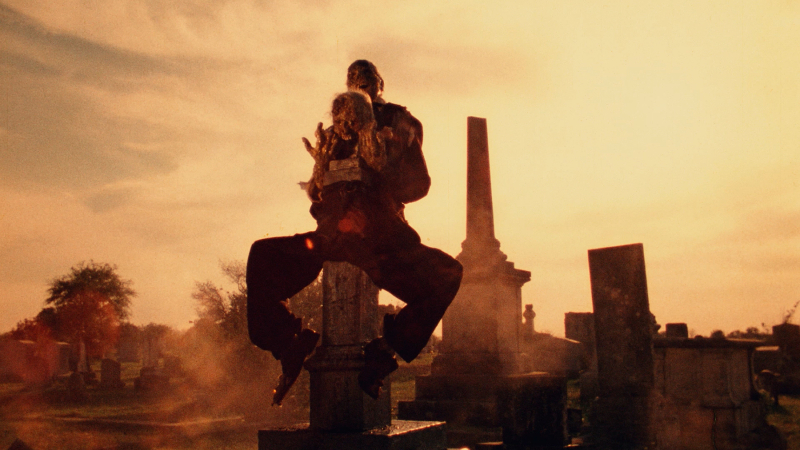
You absolutely get that Hooper’s been shooting pictures in his head, and may even worry about him a little. From the low angle shot of Teri McMinn’s Pam walking from the swing; to the wide shot of the demented hitchhiker, Edwin Neal (incredible here, he’s so needy-creepy, but you almost feel sorry for him), kicked out of the bus and flailing his arms, practically dancing some kind of pagan invocation (that moment always, always sticks with me); to Hansen’s Leatherface exploding out of the sliding metal door with such a shock and such perfect timing that it never fails to surprise; to the opening credit sequence (that magnesium flash sound); to the brilliant set piece at the family dinner table, where everyone involved (Burns, Neal, Hansen, Jim Siedow, John Dugan) were actually losing it from shooting in the heat and with extreme exhaustion and whatever else was going on (read this fascinating piece from Texas Monthly all about the shoot), the picture is visually stunning and sui generis. You are dropped into a sort of fairy tale – Little Red Riding Hood meets the Big Bad Wolf’s weird-ass family or Hansel and Gretel pick up the Ed Gein’s long lost brother – and further understand that those Grimm tales resonate because they were produced and imagined from the horrors and fears of real life. With that, the picture became its own kind of fable – not warning tale, for it never works that kind of obviousness – but a lore that soaks into the collective consciousness almost as if it actually happened. Indeed, the opening narration, intoned by a serious John Larroquette, makes it seem as it did. Spawning sequels and even a bad remake along with countless essays and academic study and late-night screenings and discussion and controversy, it’s a movie that is watched endlessly but never softens with age. It never de-sensitives, even as the violence is relatively bloodless.

6a00d83451cb7469e201b8d2b9d965970c-800wi

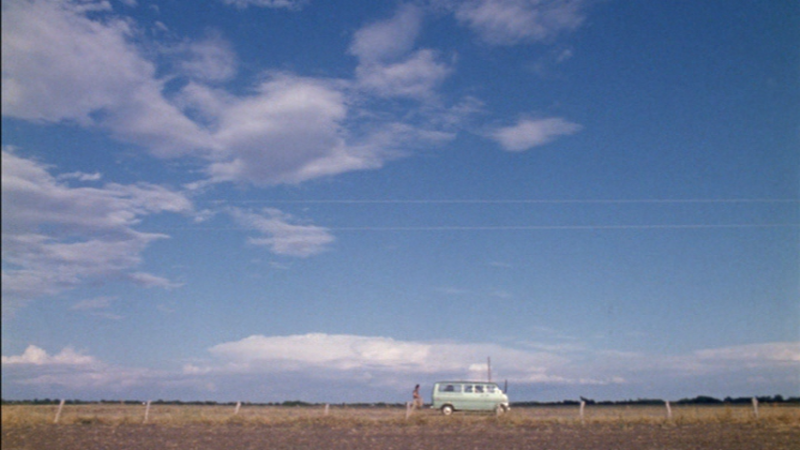
And I think that’s a positive within all of the mayhem presented within – we should be sensitive to violence, we should be disturbed by what is depicted in the film. Further, we should know or, rather, accept, that some things cannot be explained – life is scary and dark and it makes little sense at times. Life is also, like the film, darkly humorous. In the picture, the humor comes in a way that makes you catch yourself. You are almost laughing or you are laughing, and, not out of delight, but out of some blacker place, or maybe for relief, a relief that doesn’t really come. Kind of like how those nice, twangy country songs on the van’s radio don’t help soften things either – my favorite is “Fool for a Blonde” by Roger Bartlett & Friends, a song poor Sally will likely think of differently once this is all done. With all of this swirling together and with the images and sound design, the film’s humor is blurred with the horror in a curious way – it’s unsettling and mysterious. I think of when these Texan teenagers take a little break from their road trip, and that old man is seen yammering on – an old guy no one really pays attention to (except us) – but they should. He says: “Things happen here about, they don’t tell about. I see things. You see, they say that it’s just an old man talking. You laugh at an old man, it’s them that laughs and knows better.”

6a00d83451cb7469e201b7c92f6dac970b-800wi

Indeed. And laughing with the film feels dangerous because the film itself does – every corner of the thing. How many movies still feel threatening after all these years? Movies that you think about on long road trips through isolated areas or movies that come to you, giving you a chill when you encounter a strange person at a lonely gas station? Would you ever dare pick up a hitchhiker (which seems scarier now since few thumb rides anymore)? This is a movie you dream about, or thought you dreamt – those awful chase dreams – running and screaming on endless loops in the dark night as poor Sally does. Often you can’t scream in those dreams, and you want to. In The Texas Chain Saw Massacre, Sally’s screams – from her long run fleeing Leatherface, to the demented experience at the family dinner table – are not freeing or even helpful.

6a00d83451cb7469e201bb09d2959c970d-800wi

They are choked with desperation and, finally, exhaustion. And we are exhausted right along with her. Thank God she has the strength to bust out of that house, saving herself, and, as a result, is saved by that trucker, the one light in the darkness. Smiling (or some version of horror-smiling) and covered in blood in the back of the truck, nearly embracing her potential freedom (please, don’t let the truck stall or the driver turn into an evil monster, we think), Sally is finally, finally, getting the hell out of this nightmare. It’s a beautiful and poignant scene: it’s that one moment of hope for the world and almost happiness. Almost.

Kill Or Be Killed 13: Joseph Losey’s M

6a00d83451cb7469e201b7c92bb7e2970b-800wi

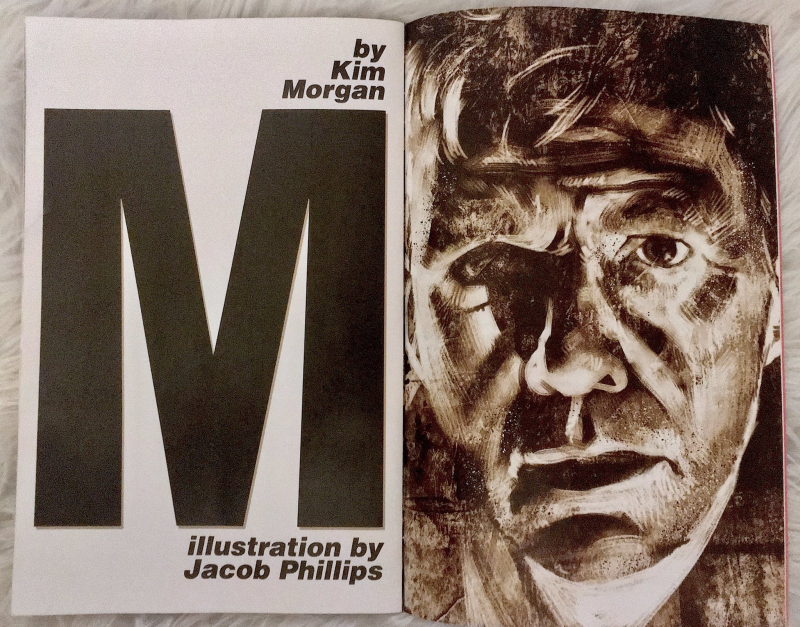
Out now! My next essay for Ed Brubaker's Kill Or Be Killed: Joseph Losey's underseen, and that overused term (but in this case, apt), underrated "M." Order here.

Here's a preview:

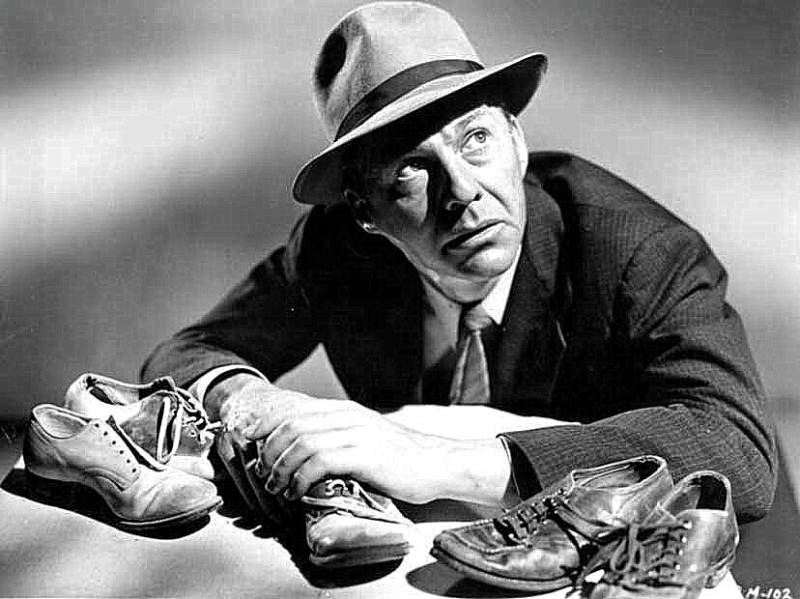
The opening shot of Joseph Losey’s M finds our murderous leading man, a tortured creature who will end the picture dragged, desperately dragged and in a heap, down on the ground – ascending. It’s 1950 (the movie was released in 1951) and this perverse jumble of psychotic nerves hops on Angels Flight looking almost like an anonymous regular person. Almost. Somehow (and this is a credit to Losey, cinematographer Ernest Laszlo and actor David Wayne) we immediately know that he is not. Not regular. But not in any kind of obvious way. Walking out of the dark Los Angeles downtown night, clad in suit and fedora, upward he goes on the cable railway, watching the city below, his face obscured from the camera (we only see his back), his perversions mysterious to those on board – except to us. We know this man is not like the others even before we see the newspaper headline blazing, “Child Killer Sought,” as the title credit “M” is superimposed over the paper. It’s a powerful introduction – creepy, enigmatic, beautiful, seedy, even dangerous just in terms of height (does he want to jump off?) –  all eerie, inky darkness and menacing light below. It mirrors the unstable duality of this character – a devil on Angels Flight. Here is a man who yearns to rise above his corrupt desires but, every time, he painfully falls down, down, down into his sick, sick, sick soul. And he does so right away.

6a00d83451cb7469e201bb09ced9a6970d-800wi

A Family Tragedy: The Wolf Man

6a00d83451cb7469e201b7c92bb5e1970b-800wi

Even a man who is pure in heart, and says his prayers by night; May become a wolf when the wolfbane blooms and the autumn moon is bright.

Lon Chaney Jr. does not look like the son of Claude Rains. Not only does he not look like Rains physically, with his tall stature and everyman awkwardness, but with his voice, his sometimes-lumbering carriage, his lack of suaveness and his sad, lost eyes that seem to be perpetually looking for a father figure, or a lover, or a soft bunny rabbit to hold –  anything to sooth what haunts this man underneath his “normal” exterior. Something is missing within him, and we’re not sure what, but in Chaney Jr.’s best performances, that lost boy quality makes him immensely moving (watch Lewis Milestone’s Of Mice and Men). And, so, in George Waggner’s The Wolf Man, Chaney Jr.’s genetic disparity with elegant Rains works – it immediately sets up a distinction with a dad he left (fled from?) eighteen years earlier for reasons we’re not entirely certain of, and it makes us sympathetic to both him and his father – a father who is quietly grieving the loss of his older son. The Claude Rains dad (Sir John Talbot) clearly loves the Chaney Jr. son (the very average-Joe-named Larry), even if his son is, perhaps, the black sheep of the family, the outcast, and the father has a feeling why his son took off all of those years ago: sibling rivalry. Perhaps he’s right. Perhaps not? We don’t know. It takes the death of Larry’s brother (who looks exactly like Larry) to make him return with the idea to run the estate. Is that the only reason? Did he really miss his father? Why on earth was he gone for nearly 20 years? Is there something wrong … with him?

Wolf man 12

In the movie’s opening scene between Larry and Sir John, father discusses his living son’s estrangement frankly, something that could seem obvious; to be spelling it out so succinctly, but is instead, refreshing in its simultaneous directness and mystery. Sir John dives right into the possible wedge between them and wishes it would cease, but it’s from Sir John’s viewpoint, and we never learn what Larry might have endured. Perhaps the home life was awful. Perhaps his brother was a terrible person.  As Sir John pokes at a fire in his grand, Welsh estate with the dead older son, John Jr.’s, portrait hanging ominously above, Larry sits down and listens to the psychological musings of his father. Rains talks with him, not angrily, just directly, and it’s a nicely realized moment:

Sir John: You know, Larry, there’s developed what amounts to a tradition about the Talbot sons. The elder, next in line of succession and so forth is considered in everything. The younger, frequently resents the position in which he’s found and leaves home, just as you did.

Larry: Yes, but I’m here now.

Sir John: Fortunately. But isn’t it a sad commentary on our relationship that it took a hunting accident and your brother’s death to bring you?

6a00d83451cb7469e201bb09ced804970d-800wi

Reading this could almost sound passive-aggressive, but it’s not. Rains’ crispness and warmth is merely telling his son the way he sees things, that he’s thought about this, and that he takes the blame too. In terms of his child-rearing and what has been expected of the sons, Sir John continues:

Sir John: The whole tradition is the Talbot’s be the stick necked un-demonstrative type. Frequently this has been carried to very unhappy extremes.

Larry: Don’t I know that…

Curious. What does Larry know so well that he utters this immediately? That the unhappy extremes resulted in him leaving for eighteen years? Just that? That he was competing with his brother and that was too much for him so he needed to set himself apart from the family (that is the obvious answer). But to the film’s credit (and Curt Siodmak’s wonderful script), there’s more here for us to ponder, for instance, is there something darker and more dramatic going on in this family? In Larry himself? In his father? Those uncertainties hang over the picture with an enigmatic question mark, and are never solved, making the character’s actions and unlucky predicaments intriguing all the way through – even in more staid moments. The picture is filled with a foggy, dreamlike beauty (and creepiness, shot by cinematographer Joseph Valentine), that reflects the dreamy beauty and creepiness of Larry and Sir John, their questionable family history and maybe even their minds. The loveliness and horror of the environment mirror what Sir John discusses about the duality of man, and, perhaps, how Larry’s been submerging baser, wolf instincts into a foggy underworld – before he even becomes a werewolf.

7830

Putting aside the folklore turned into the literal lycanthropy, Larry is already revealing wolfy aspects to his personality – which are quite normal. Only with Larry, this seems a bit off. Look how he tries to pick up pretty Gwen Conliffe (Evelyn Ankers), for instance. He’s pushy, slightly immature and a little creepy. He watched her through a telescope and fixated on her earrings (moon earrings), which he brings up to her as a supposedly charming thing to do –  being a Peeping Tom. In the early 1940’s this might pass as normal flirting for men (spying), even if women were made uncomfortable by it, but with Chaney Jr., it plays in the movie like a clunky pass. We’re almost cringing. She’s not sure about him not only because she has other suitors, but because… he’s this weird guy trying to be normal. You already know he’s not going to get the girl. And, yet, he’s sympathetic, lovable (she feels he is, too, and is indeed, drawn to him), and even tragic at that point. As her boyfriend (Frank Andrews) says later after meeting him: “There’s something very tragic about that man and I’m sure that nothing but harm will come to you through him.

6a00d83451cb7469e201b7c92bb628970b-800wi

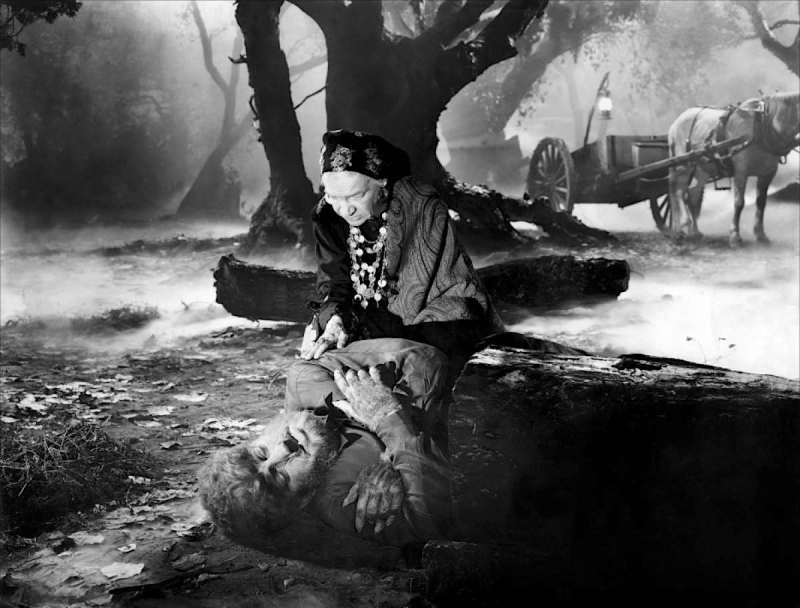
Those themes of marked tragedy and duality are also carried over into the fascinating gypsy characters, fortune teller Maleva (Maria Ouspenskaya) and her son Bela (Bela Lugosi), who in so many ways merge with the family Talbot – Sir John and Maleva. Both have afflicted sons with dual natures they cannot control (and conditions that are not their fault), both have quite a few thoughts about it, and both sons will die. Sir John believes in science, god and psychology; he believes men can be so influenced by superstitious folklore, and that a normal individual can imagine himself so strongly that he thinks he’s becoming a monster. Maleva believes in the folklore, for she has seen it first-hand, but her acceptance and directness, and also the protection of her son (which leads to an attempt to protect Larry – as much as she can), mirrors Sir John. The toney Welsh family and the traveling gypsies are not too far removed – they are individuals and they are unique. They stick out. You get a sense many in the town suspects something about the Talbots in a negative way (cursed?), and in the gossipy townsfolk’s busy-body averageness, they talk about it. When Larry does in fact turn into the Wolf Man and wreaks havoc at night, some are quick to “know” – to know something; that they suspected murder within this family in the first place. And without proof. One woman sneers: “Very strange there were no murders before Larry Talbot arrived… I know what I know. You should have seen the way he looked at me in Conliffe’s shop. Like a wild animal. With murder in his eyes.”

Wolf-man7

When Larry pushes himself on a date with Gwen and, accidentally, with her friend, Jenny (Fay Helm), he skulks out at night to meet her as she leaves work – essentially crashing the girl’s night out. Kind of a drag. But they all go along, seemingly happily. The threesome venture out to Maleva and her son, Bela, for the thrill of fortune telling, but as Bela is clearly suffering, Jenny is soon killed by him. Bravely, Larry attacks Bela, whom he sees as a wolf, but he sadly cannot save Jenny. To Larry he has killed an animal who has bitten him, and that is that. Not so. In a portentous moment, he’s already heard about the werewolf curse and bought the wolf cane from Gwen’s antique story (this wolfish flirtation sets Larry right on the road to becoming a Wolf Man, with Gwen explaining the curse, little does she know at that point), and bludgeons the wolf with the silver-tipped cane. Things get complicated when Colonel Paul Montford (Ralph Bellamy) and other’s investigating see that he’s actually killed a man, poor, tortured Bela, instead. Dr. Lloyd (Warren William – this is a terrific cast) suspects he might be crazy. It’s not a ridiculous thing to suspect. Sir John expresses anger over the idea that Larry should be locked up, and in an enlightened way, believes men are murky creatures, expressing this thought frequently. Larry will soon be turning into a werewolf at night, something that is making him terrified and crazed (who can blame him?) and he expresses his horrible fear to his father. Sir John’s answer would be reassuring if Larry wasn’t literally growing hair all over his body (beautifully created, by Jack Pierce), but one can understand Sir John’s thoughts. He says:

6a00d83451cb7469e201b8d2b621a9970c-800wi
“Larry, to some people life is very simple. They decide that this is good, that is bad, this is wrong, that’s right. There’s no right and wrong, no good and bad. No shadings in grey. All blacks and whites … Now, others of us find that good, bad, right, wrong, are many-sided, complex things. We try to see every side. But the more we see, the less sure we are. Now you ask me if I believe a man can become a wolf. Well, if you mean he can take on the physical characteristics of an animal, no. It’s fantastic. However, I do believe that most anything can happen to a man in his own mind.”

Indeed, they can. And, so, even as we watch Larry turn into a werewolf, we can imagine that he is, in fact, losing his senses. That this is all some horrific fantasia – as if he’s a wolfish drug addict, waking up with animal prints in his room, passed out in his clothes, not sure what he did the night before but feeling immense guilt over it. As his father said, “It’s a legend. You’ll find something like it in the folklore of nearly every nation. The scientific name for it is lycanthropia. It’s a variety of schizophrenia.” You half believe Sir John, even as you know you are watching The Wolf Man (a movie crafted from mythology, but a story all its own – there was no source novel for this one, it was Siodmak’s creation). With insanity and surreality in mind, the sequence of Larry’s first transformation and subsequent attack is hallucinatory, stressful and weirdly lovely. He rushes home and begins removing his clothes –  bursting, a literal fever dream. He then sits in a chair and it is there when we see his transformation beginning, but, not with his face as we might expect (a la Dr. Jekyll and Mr. Hyde, as this story resembles), instead, we see his legs and feet changing: they are slowly covered with hair. Larry is visibly distraught by the freaky body conversion – he’s caught some new sickness brought on by the werewolf curse (but perhaps brought on by his mind), and he’s losing his mind. We feel for him. As we look at his two feet on the floor grow hairier and hairier, Larry then stands up and, in a touch that is strangely beautiful and even vulnerable, we watch Larry walking on his tip toes.

The-Wolf-Man-Feet

The picture transitions to just show Larry’s feet and lower legs again, now out of his room, and walking on those tip toes in the foggy forest. His careful movements are intriguing –  he is walking almost gingerly, like on eggshells, and these movements are a touching thing to behold. Even as the Wolf Man there is something sad and careful about Larry. As the camera moves up, we see Larry in his full transformation – hunched over, face full of hair and wolf-ishness, he wanders through the miasma looking for, what? Seeing him peer from around a tree and growl, he’s both scary and something from a dream – he’s even gorgeous in this man-animal creation. The fog and the studio crafted woods are not at all real, nor should they, adding a sense of illusory mystification to Larry’s state. When he attacks the grave-digger, we’re sorry for both poor fellows.

6a00d83451cb7469e201b8d2b621c1970c-800wi

And on it goes, more and more Larry is suffering and panicking and trying his hardest to tell his father to help him –  that this werewolf curse is real. What’s so interesting about this 1941 story is that we can’t fault Rains’ Sir John for his comfort towards Larry – a person would think they were crazy, even if they know the affliction is real, and it’s good that someone tells them they can cure themselves at home. That could be what one wants to hear. And why would Rains believe this mythology? It’s hard to find blame in this film – there are no bad guys. So in an unintended ultimate family showdown, perhaps manifested from resentment or guilt or hatred, whatever that mysterious question mark is hanging there between father and son, and which reigns so powerful over this movie, Sir John will wind up killing his son. On accident. A sort of hunting accident, as he believes Larry to be an animal, like how his previous son died. And he’ll enact exactly what his younger son did (kill a wolf that turned out to be a man) and with his son’s own cane. From son to father.

6a00d83451cb7469e201b7c92bb68f970b-800wi

The Wolf Man, in the end, is not really a terrifying movie, it’s a family tragedy, superbly acted by Chaney Jr. and Rains, and a movie that is, in the end, terribly sad. With Rains realizing he’s killed his own son, Maleva’s poetic mediation becomes all the more moving: “The way you walked was thorny, though no fault of your own, but as the rain enters the soil, the river enters the sea, so tears run to a predestined end. Now you will have peace for eternity.”

From my piece for the New Beverly.

Kill Or Be Killed: Who Killed Teddy Bear

6a00d83451cb7469e201b7c92806ce970b-800wi

Ed Brubaker's newest Kill Or Be Killed is still out. I wrote a piece digging into Joseph Cates' strangely beautiful, disturbing, "Who Killed Teddy Bear?" featuring a brilliant, daring Sal Mineo. Pick it up or order here: https://imagecomics.com/comics/releases/kill-or-be-killed-12

“I played a telephone freak, and we were having this hassle with the censors. In some of the shots while I was on the phone they wanted to sorta suggest that I was masturbating, but I couldn’t be naked. So I was just wearing jockey shorts. It turned out that was the first American film where a man wore jockey shorts on-screen.” – Sal Mineo “I was a lesbian owner of a disco who fell in love with Juliet Prowse and got strangled on Ninety-third Street and East End Avenue with a silk stocking by Sal Mineo. Jesus, who’s not going to play that part?” – Elaine Stritch

6a00d83451cb7469e201bb09cb2663970d-800wi-1

Joseph Cates’ Who Killed Teddy Bear? is a movie that lives in its own kind of sickly stunning, neon-blinking 1965 New York City nightfall – a terrifying and terrified world that’s drawn towards deviancy while desperately running from it. A world that punishes perverts via men who become so obsessed with punishing perverts, that they become perverts themselves; and perhaps even more demented than the nutjobs they bust. A world that observes the beauty of the pursued, but relishes, indeed pants over the beauty of the pursuer, focusing very specifically on the physicality of the depraved. And that’s a depraved Sal Mineo, which is really something quite unique and disquietly beautiful here…

Read more in that issue here.

A Scarf: The Panic In Needle Park

6a00d83451cb7469e201b7c9280642970b-800wi

Helen: I don’t like to wake up alone.

Bobby: I don’t want you to. But it happens sometimes.

The smallest thing can change a life forever. In the case of Jerry Schatzberg’s The Panic in Needle Park, it’s a scarf. A thoughtful moment in which one stranger gives a shit about another, and just for a mere few seconds, the stranger’s scarf warms the young woman who lies shivering on a bed, bleeding, in full view of her insensitive boyfriend. It’s a much-appreciated gesture of kindness after this woman has sat cold and in pain on a grim subway ride after having an abortion. There’s something extra sad about a woman taking a subway back, alone, from such a procedure (no one came with her? Did she want to be by herself?) and writers John Gregory Dunne and Joan Didion well understand this (think of Maria’s trip to the abortionist in Didion’s Play It As It Lays, the novel and in Frank Perry’s movie). We don’t know what’s happened to this woman when we first see her in that tube, but that she looks troubled and in pain, emotionally and physically, as she hangs on to the pole. She’s grateful just to sit down once the crowded passengers exit to the next stop and she catches her breath, looking not just sad but . . . this is my life right now. That kind of a look. It’s not a long scene, but it opens the film – a solitary woman likely thinking of her bloody, gunky insides that could have held a baby, whether she wanted the baby or not, and wondering how she’s going to get through this, as she speeds along surrounded by glass and metal and plastic, full of people thinking of their own lives.

6a00d83451cb7469e201b8d2b26ce7970c-800wi

The scarf is a bonding, romantic moment for a lonely person, she can feel a part of him as she nestles it close to her face. Lonely people need each other – that’s a given – but according to many theories, lonely people, when given the opportunity, feel they need drugs, and more and more drugs. Johann Hari, who wrote “Chasing the Scream: The First and the Last Days on the War on Drugs,” wrote about such studies, citing Professor Peter Cohen who argued that “human beings have a deep need to bond and form connections. It’s how we get our satisfaction. If we can’t connect with each other, we will connect with anything we can find – the whirr of a roulette wheel or the prick of a syringe. He says we should stop talking about ‘addiction’ altogether, and instead call it ‘bonding.’ A heroin addict has bonded with heroin because she couldn’t bond as fully with anything else. So the opposite of addiction is not sobriety. It is human connection.
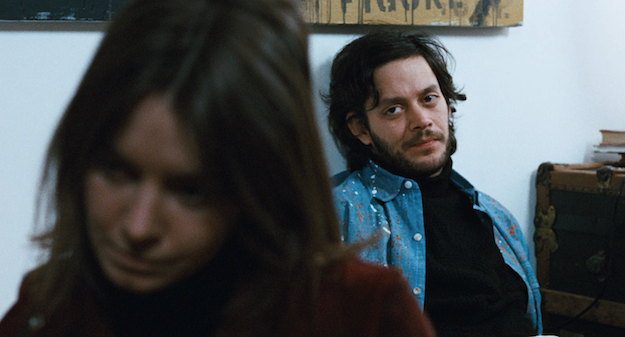
1468647557_2

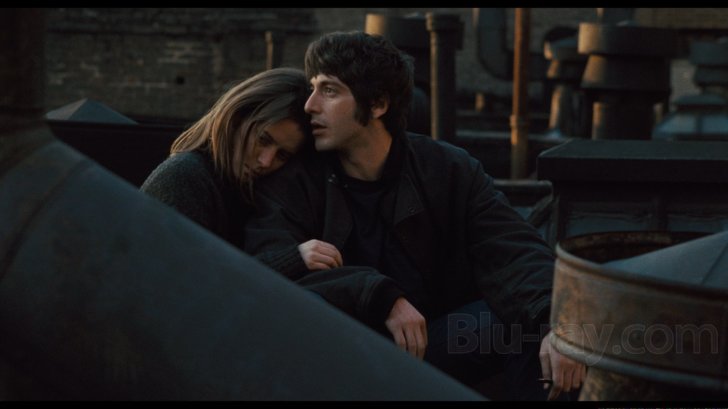
That young woman on the subway, Helen (Kitty Winn), will become connected to the young man with the scarf, Bobby (Al Pacino), pulled in by his sweetness and charm, his streetwise beauty, his bad boy strut that’s overcompensating a bit – he needs to seem tougher and cooler than he is – and eventually she’ll be seduced by the heroin that’s keeping him together.  The drug will rule everything in their lives, where they live, how they work, who they’re friends with, and the effects of the drug, that warmth that spreads through you and cradles you into narcotic consolation, must be there. You feel adrift and alone enough, the overwhelming hug of heroin becomes more important than your boyfriend’s hugs – and if your boyfriend is doing it too, he understands the persistent need – he needs it too. So finding your drugs and fixing each other makes you the Bonnie and Clyde of junk, bonded, together until the end, you think. Until the stuff makes you rat the other one out.
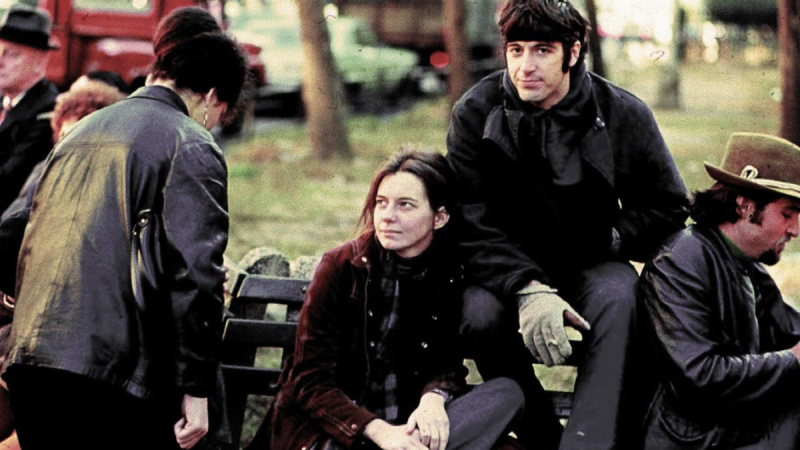
6a00d83451cb7469e201b8d2b26d01970c-800wi
Bobby not only gives Helen his scarf, he visits her in the hospital (“I come for my scarf” he says sweetly, not at all coming for his scarf but to see this “terrific looking chick” again). The bleeding has become so bad that she checks herself in and she lies in bed thinking of her next move. Fort Wayne, Indiana she tells Bobby, that’s where her family lives. Presumably, she’s at the end of her rope in New York City, dating an artist (a memorable Raul Julia in a small role) and hobbling to the emergency room by herself. But Bobby’s outside the place waiting for her (sometimes that means nearly everything if someone is simply waiting for you) so when she walks out of the hospital and sees him there that is . . . it.  She’s fallen for the guy. The Panic in Needle Park is, after all, a love story, and the beginning of Helen and Bobby is poignantly romantic, the sincerity of how Bobby (the way he looks at her with his beautiful brown eyes) feels towards pretty Helen who looks like a “nice” girl (the idea of what that means anyway), the quiet, artistic girl everyone probably had a crush on in high school. Helen’s a little more complicated than that stereotype, just as Bobby’s not merely the bad boy, he’s not just a nice guy either, and the performances by Winn and Pacino get that – they are everyday people and addicts and they are absolutely compelling to watch

Panic-2-590x320

Schatzberg’s gritty, documentary-style picture, his second movie (shot with cinematographer Adam Holender, who also shot Midnight Cowboy), doesn’t flinch from the needles in arms, crying babies rolling on seedy mattresses and wiped-out junkies, of all ages, passing out on park benches or mumbling about election years causing the panic of product (“What election?” “I don’t know man, some election.”) Schatzberg had done a lot of living himself at that point, an acclaimed photographer of fashion, street and portraiture (he famously shot Bob Dylan’s cover of “Blonde on Blonde”), the man had snapped everyone from Edie Sedgwick to Andre De Toth to the Rolling Stones to Phil Ochs to LaVern Baker and more. His first film, the striking, experimental character study about a troubled ex-model, Puzzle of a Downfall Child, was based on a model he knew and starred an actress he also knew quite well, and shot beautifully (an excellent Faye Dunaway). With Panic, the director showcases his talent for street photography and filming faces and (as I stated in my piece on his third filmScarecrow), he loves Pacino (this was Pacino’s first starring role, and it’s brilliant). Pacino’s gum smacking, his expressive face, his charm that’s sometimes dumb and sometimes tender, his anger, his guile, his doped-out stupors – it’s all expressed in a performance that’s both touching and maddening. And likable. You get why Helen is drawn to him. And you get why he’s drawn to Helen. Winn, wonderfully understated and a little shy, has those faraway eyes that evoke, simultaneously, a fresh start and some kind of terrible past. They both look like people you might know.
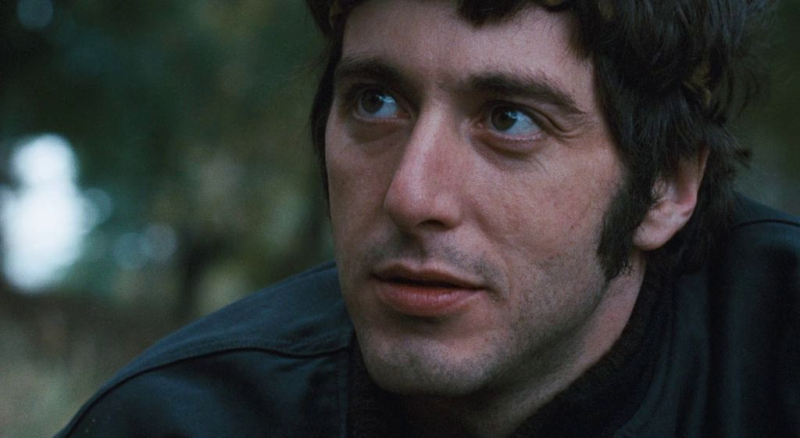
6a00d83451cb7469e201b7c92806a2970b-800wi

In an interview with Dazed, Schatzberg was asked about the picture’s unflinching realism. He said: “At that time in New York in the 70s, you could see people shooting up in the alleyways. Joan Didion and John Dunne adapted the book ‘Panic in Needle Park’ for the screenplay [by James Mills]. Needle Park was Sherman Square, at Broadway and West 70th, and it was popular because it was where young white addicts could get drugs without going to Harlem. Keith (Richards) was funny – I knew the Stones, I’d photographed them a lot, once dressed as women – and they were in Cannes when I was there with Panic in 1971. Keith said to me, ‘Hey, are you on the hard stuff?’ pointing to his arm, and I said ‘No.’ He said, ‘Then how come you can make a film like that?"
Panic_in_needle_park

Schatzberg made it by observing other addicts (with Pacino), and probably from people he’d met shooting and running clubs, and, as a great photographer, simply looking at life around him. He shot it in Sherman Square (called Needle Park) where the film’s junkie family congregates, going on about their own dramas and stories, present and past, telling, often, banal stories or talking nonchalantly about things that would shock others with horror. The lifestyle and this family start catching up with the couple and Bobby’s burglar brother, Hank (an incredible, creepily handsome, lizard-looking Richard Bright) wants Bobby to work with him after Bobby intends to marry Helen (this is after she starts shooting up, I guess Bobby thinks this makes it official). Helen tries to work at a diner (she’s useless, she can’t get hot chocolate and jelly donuts right) and she walks off the job. A lot happens – Bobby ODs and almost dies, he gets arrested, he starts handling distribution (a big deal to him), Helen sleeps with Hank (she tells Bobby later who really wishes she’d kept that information to herself), and Helen hooks. As all of this is happening they’re under the eye of a Narcotics Detective, Hotch (Alan Vint), who keeps telling Helen that all junkies will eventually rat each other out and he encourages her to rat out Bobby. Hotch always seems to be there, not just to bust them, but to puncture the romance, the whole idea of together, forever – in dope sickness and in health.
6a00d83451cb7469e201bb09cb25fd970d-800wi

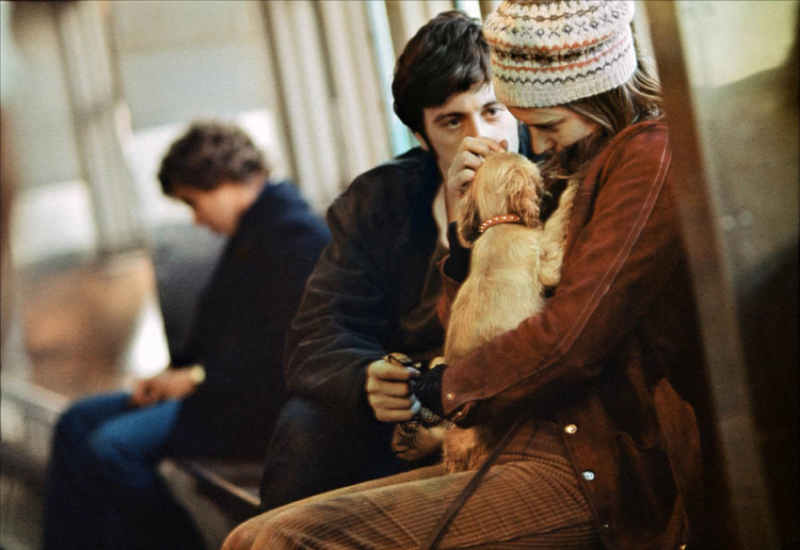
After a lot of hell, and with future hell ahead of them, they buy a puppy, and you know that poor puppy isn’t going to have a normal family life, or a long life for that matter. Roger Ebert, who lauded the movie, didn’t like the puppy bit at all and wished the film had axed it. I’m not sure why, other than it’s a heartbreaking interlude on a ferry where, yes, after Bobby and Helen fix in the bathroom, the puppy jumps off the boat and drowns. Helen cracks and who can blame her? It’s certainly obvious Helen wants that puppy for something innocent and warm to hug, another form of family, another creature to stave off loneliness, a thing to care for when she can barely take care of herself, but that obviousness is because this kind of bad decision-making based on emotion, that need to simply hold something sweet, happens all the time. If not a baby, a puppy. And you can almost hear another junkie telling the story, as if this scene was shot in flashback – the saga of the short life of the puppy, an anecdote rambled on about before nodding off on a park bench. I thought of the cat in Trainspotting, a much more elaborate story, but another bad decision: the cat bought for the girlfriend who rejects it and then the poor guy stays in his apartment with HIV, alone, not taking care of that kitty. He winds up dying from the cat – toxoplasmosis. The difference, and perhaps, unexpected tragedy being that the young man doesn’t even die from an overdose – his condition worsens, brought down by the sweet little kitty.

6a00d83451cb7469e201b7c9280696970b-800wi

But the unexpected ending of The Panic in Needle Park is that both Bobby and Helen live. You’re practically waiting for one of them to slip permanently into the abyss and, for a brief moment before expiring, feeling what one of the characters calls the greatest of all highs – death.  But they don’t. And that feels strangely more depressing. Most likely the two are just going to continue on with the same routine. There’s no kind of closure. Helen has ratted out Bobby who winds up in the slammer but in the end, she’s there for him, whether for love or for desperation or for just not wanting to be alone. Or for all of those reasons.  So, there’s Helen waiting for him, the only person to greet him. Almost like romantic, sweet Bobby was waiting for poor Helen when she was released from the hospital, after he visited her playfully looking for that scarf, only now they know each other, there’s no romance in this reunion. Maybe that will dissolve once they shoot up again and they’ll feel good for a while. But for now, Bobby simply says, “Well?” Helen walks along with him. Well, she’s not alone.

From my piece published at The New Beverly
Kill Or Be Killed: Born to Kill

6a00d83451cb7469e201b8d29f4f95970c-800wi

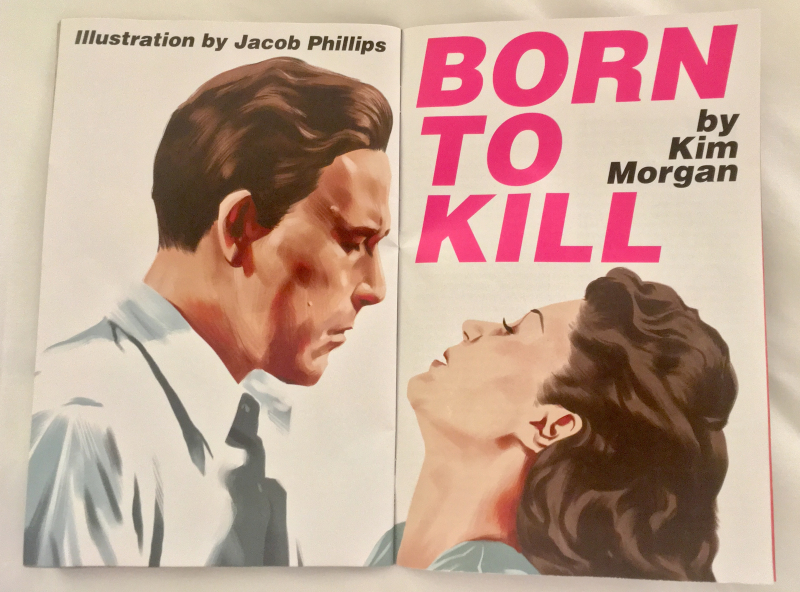
Baby they were born to kill … My essay on Robert Wise's "Born to Kill" starring Lawrence Tierney & Claire Trevor as supreme equals: two fiendish, ferocious creatures. Read it in Ed Brubaker's newest Kill or Be Killed — out now! Order here: Here's a preview:

Between man, woman and movies, you can discover fair practice, of course, but can you find it with such hard- boiled honesty? Not often enough. So enter that brilliant bastard Lawrence Tierney and cool, cool Claire Trevor in Robert Wise's uncompromising, savage noir, Born to Kill to present such a romantically rotten pair with such strangely satisfying equitability. We’ve heard of the femme fatale time and time again – to the point that it almost bores me. Those sweet faced destroyers of dupes. Even the sweet-faced smart dupes who know what they’re in for but don’t care – their lust overrides all. The characters don’t bore me, mind you, it’s just their easy categorization. Many femme fatales are struggling – they suffer with dreams men have, that the world is there for the taking. But the world is not there for the taking, and not always for men either, but to dream of such a thing? That’s abnormal in “normal” society – and I think that pisses them off. Why must they be one of the … normals?

Smile Though Your Heart Is Breaking…

6a00d83451cb7469e201b7c914e933970b-800wi

One of the most memorable moments during filming had nothing to do with the movie, but it also had everything to do with the movie. There was a rumor that President Nixon was going to resign. [On that night] we stopped filming. We were onstage at the auditorium and we wheeled in a TV. Everyone watched it and there was a profound silence. It wasn’t a time for cheering. But there was a feeling that we were really doing something, in fact, that was about what this country had gone through.” – Michael Ritchie on his movie Smile

There’s a scene in Michael Ritchie’s satire Smile that fills me with such unexpected emotion, such sympathy, that it stays with me all the way until the end of the movie. It involves Bruce Dern playing a “good” guy – or a guy who prides himself on being a “good” guy in that way people who think they’re good often do. You know, the kind who boast about “helping others,” and encourages everyone else to do the same, and you wonder, do you? Do you really help others? The kind of people you usually don’t trust if you’re a cynic and nod your head while they offer you endless bromides of encouragement. His name is Big Bob Freelander and he’s a successful RV salesman in the town of Santa Rosa California. His son (Eric Shea), naturally, goes by Little Bob. He’s also the lead judge of a national beauty pageant called The Young American Miss, an event that descends on his town every year and something he takes quite seriously. When he’s handed a gold name tag to honor his top judge status (all other judges get silver) he is genuinely proud of this distinction. His profession, the pageant, his name, his values, the décor of his home – these are things that in many comedies, would constitute for a bullseye painted on Big Bob’s back. “Mock me.” But Ritchie (with writer Jerry Belson) isn’t interested in easily demeaning this very American man with his very hopeful American ideals (who, in fact, is trying to help his friend), even as Ritchie’s gently ribbing everything surrounding this man’s life. Instead, he finds it quietly heartbreaking.

Dernsmile

The scene I mentioned involves his best friend, Andy (Nicholas Pryor) who has spent most of the movie in a dipsomaniacal state, disgusted with his life, sick of the town, sick of his wife, Brenda (Barbara Feldon) and hateful of the beauty show. He isn’t buying any of the banalities dished out to him or his suburban existence where, as the camera catches in a perfect shot, a freezer full of TV dinners. He’s not really down with tradition, like creepy rituals involving a chicken (just watch the film), and most especially his wife’s obsession with the beauty contest. Since his wife is the pageant’s crisp, professional Executive Director, this is extra vexing, as his entire life, one he does not want, is centered on this spangled entertainment. And, he makes trophies for a living, if that’s not driving his depression home any further. He’s in the middle of an existential breakdown and he’s turning 35 – that time you start humming along with Peggy Lee’s “Is That All There Is?” with zero irony.

6a00d83451cb7469e201b8d29f3597970c-800wi

Andy is an intriguing character because, in many ways, we’re supposed to relate to him most – we can see why he’s going crazy in this town, we can see why he can barely stand his wife who won’t sleep with him (we can also see why she’s not turned on by a guy who is wasted all the time). He’s the town drunk screaming for us all – what is wrong with you people? But, Smile is not that easy. It’s not using Andy as simply all-knowing shorthand, digging into the banalities of everyone else’s secretly sad lives. What makes him or us so better? Filled with such human characters – from the various judges to the personalities of the teenagers competing in the pageant, to the horny little boys trying to sneak a look at the girls, Smile studies people within this milieu with a kind of documentary detail that humanizes even the most overt assholes. The picture has been compared to both Robert Altman’s masterpiece Nashville and to Christopher Guest’s great Waiting for Guffman, but it’s less ambitious than Nashville, and a lot nicer and deeper than Guffman. It’s also something that feels distinctly Ritchie – the Ritchie of Prime CutThe Candidate and The Bad News Bears – movies that are alternately funny and pessimistic, joyously profane (like The Bad News Bears) while being brutal, adult and smart.  You feel that Ritchie gets these people – and he did – he once judged a beauty pageant himself.

6a00d83451cb7469e201b7c914e908970b-800wi

But back to Andy and that scene. Near the end of the movie, Andy’s had it, his wife has had it with his drunken self-pity, and he threatens to kill himself  – he’s gonna blow his brains out, possibly ruining the fine carpet in their well-maintained home. He shoves the gun in his mouth but Brenda’s contempt causes him to change his mind – he shoots her instead. She isn’t injured badly, and she’s not going to make a thing about it because this should be kept out of the papers! But Andy is placed in a jail cell and he’s talking to Big Bob about his predicament. Bob counsels him:

Bob: Andy it’s very simple. All it takes is a drop more perseverance. A drop more optimism and a drop more energy. Simple.

Andy: Hey. Hey wait a minute. I’ve heard that before.

Bob: Heard what before?

Andy: That drip-drop crap. Brenda read that to me.  That’s right out of the Young American Miss Program.

Bob: A good philosophy is good philosophy and I don’t happen to be a snob about where I get it from. And I can tell you one other thing, as your best friend talking to you right now. Quit wallowing around in all this self-indulgent, self-pity and get out there and start helping others.

Andy: Bob. I’ve finally figured out what you are. You know what you are? A goddamn Young American Miss.

135469b

This is the part of the movie where you might think: exactly. Andy has called out Big Bob. In a meaner, easier picture, we might think, good for Andy. Not with Smile. Instead, I felt for Bob. Not only because Andy hurt his feelings, but also because he made him think a bit more (not a bad thing) and sometimes people just don’t want to think, they’d rather escape in their glittering duties – and Dern shows that so beautifully. Bob suddenly turns very inward – we see Dern flinch and without saying a word, he just has this look on his face – of sadness, of emasculation, of offense. But mostly he just takes in what his friend has said, and you can see it got to him. Dern is so excellently layered in this movie, so suddenly afflicted by this conversation, that for the rest of the film he seems troubled and disbelieving of himself. In a previous, beautiful scene, he talks about a time before he was married, when he was nearly set up on a date with Elizabeth Taylor – it’s something he’s wistful about, a kind of glamour he’d never reach, a woman he’d never have (and, in a nice scene, he does talk to his wife about taking a vacation), but it’s not pathetic or silly, it’s just one of those bittersweet moments of a guy living a rather mundane life. So hearing Andy compare Bob to a pageant princess is one of those quietly devastating moments that, when watched in a certain kind of mood, will take you aback and make you think about much of Bob’s attempts to stave off … sadness. And you catch yourself a little, suddenly surprised by how moved you are by Bob. As Pauline Kael said of Dern’s character: “Big Bob speaks in homilies that express exactly how he feels. He’s a donkey, but he doesn’t have a mean bone in his body.”

6a00d83451cb7469e201b7c914e973970b-800wi

The entire movie plays with your emotions like this – laughing at the comedic aspects of the flesh show (there’s a not funny, disturbing aspect of this in Richie’s terrific Prime Cut when he lingers on livestock and women), while feeling an undertow of sadness regarding these women’s hopes and dreams. You’re smiling while a girl warbles “Delta Dawn” and then honks her saxophone for her talent portion of the contest and you laugh as another instructs the audience how to pack a suitcase (I happen to think that’s a perfectly acceptable talent). But then you feel for a contestant trying to get through a question and answer session in which she’s told to be herself, but of course, that’s not what’s she’s being told at all. And you sense her stress. You are exhausted by Miss Salinas, Maria Gonzales (Maria O’Brien), who uses her Mexican-American heritage to get a leg up in every situation, and then you see how really shitty the girls are towards her. So what if she’s always making guacamole? What the hell is wrong with that? Joan Prather as Robin is the contestant we follow most closely (she’s Miss Antelope Valley), since she seems to mirror how we feel – ambivalent about it all, serving more as the audience’s eyes than drunken Andy’s. She also rooms with Miss Anaheim, Doria (Annette O’Toole), the teenage veteran who offers advice to Robin, like, say, how having a dead father (as Robin does) could help her in the competition. I love that these two really do become something like friends, and that Doria’s not painted as the pageant hungry villainess; she’s just trying to get through life like everyone else. Doria figures if boys can get scholarships for sports, why can’t women be prized for their charm and beauty? Robin, a little more philosophical and, likely, more political, wonders why boys should get scholarships for sports in the first place

Young American Miss 1975  Smile

The pageant scenes are filled with amusing, acerbic observations (and young actresses like Melanie Griffith and Coleen Camp), chiefly with the star choreographer played by real life dancer and choreographer Michael Kidd who brings a wonderfully tough, often comically dyspeptic presence – too sophisticated for the town, his Broadway and movie career in the rearview mirror, he’s doing this just for the money. He’s perfectly fine not getting along with the harried, annoying pageant official (Geoffrey Lewis), and he’s late on the job all of the time. So what. He’s also nicer than we think – the hotshot hard-ass dance guy actually cares more about the girls than Lewis’s character does.

6a00d83451cb7469e201b8d29f3621970c-800wi

Ritchie (with cinematographer Conrad Hall) captures so many details  – the TV dinners, the lodges, the caged mechanical bird in Bob’s house, the portrait in Brenda’s home (of herself) and in an especially well-crafted scene, the nude polaroid that slowly reveals itself while Bob’s son, Little Bob, swears he didn’t take that kind of a photo. Of course he did. That photo also ends the movie in a telling detail – the nudie the kid is busted for and sent to a psychiatrist over, adorns a police officer’s car visor. The cop casually eats a Twinkie and takes a peek at the topless young woman – what’s more creepily All-American than munching on junk food and leering at teenagers from a position of power? And it’s not a surprise, really, that the cop would have the photo, after all, in a sad moment, Bob tries to bond with the servicemen rolling the flag when the pageant is over. Good American that he is, Bob informs them that he too served in the First Infantry Division: “We held the Chosin Reservoir,” Bob says. They ignore Bob’s affiliation and history and brush him off, remarking crassly to each other: “Boy did you see the knockers on Miss Imperial County.

6a00d83451cb7469e201b8d29f363e970c-800wi

Smile contains numerous scenes that are either as obvious as the cops and the military (so much for the red, white and blue), or potently understated with small, telling details saying so much about how these 1975-era characters (1974 when the film was shot) contend with suburbia and the outside world. Current events are at the periphery of these character's concerns and lives (abortion in brought up in one scene), and yet this a very 1970s film – you can sense the era’s creeping cynicism working into this town and hanging over it like a pall. As Nat King Cole brilliantly sings “Smile” (composed by Charlie Chaplin, lyrics by John Turner and Geoffrey Parsons) opening and closing the film, the song could initially seem ironic – if you’re not paying attention to the words or the great man singing them. No, the song “Smile” is direct and to the heart, and becomes so touching it’s almost too much to bear: “Smile though your heart is aching/Smile even though it’s breaking/When there are clouds in the sky, you’ll get by/If you smile through your fear and sorrow/ Smile and maybe tomorrow/You’ll see the sun come shining through for you…” Dear lord. Nat King Cole is right. What else is one supposed to do? You can’t stay drunk all day. Well, you can, but, as Big Bob says, “A good philosophy is good philosophy and I don’t happen to be a snob about where I get it from.”


Originally published at the New Beverly

Kill Or Be Killed # 10: Big House U.S.A.

6a00d83451cb7469e201b8d29df367970c-800wi
Pick it up! Issue #10 of Ed Brubaker's Kill Or Be Killed is out. In this one, I ponder Ralph Meeker and Ralph Meeker in Big House, U.S.A. (with art by Jacob Phillips). Here's a preview

You don’t want to run into Ralph Meeker in the woods. Not if you’re a kid. Not if you have asthma. Not if you’re rich. Now, that’s a real specific set of requirements, and this is regarding just one movie (the one I’m writing about, Howard W. Koch’s Big House, U.S.A.), but when cast as captor, Meeker could be so powerfully feral, so cunning and so caddishly sexual (and in some cases, so touchingly vulnerable), that his effect is immediate. Oh god, who is this handsome devil? This is wrong. I don’t know? Is this wrong? On the adult, female side of it, see the Meeker-holding-women-captive stories like Something Wild with Carroll Baker, Jeopardy with Barbara Stanwyck and The Fuzzy Pink Nightgown with Jane Russell.  These pictures all have varied endings, happy or curious or god knows what will happen, but all show Meeker getting away with his transgressions.

6a00d83451cb7469e201b8d29df346970c-800wi

In the masterpiece, Something Wild, he’s much more sensitive and complicated, romantic and creepy, seriously inappropriate and seriously damaged (Meeker was a brilliant actor who really wasn’t cast enough to showcase his range, a shame), but in The Fuzzy Pink Nightgown, he’s just flat-out the romantic lead, even as a kidnapper. And in Jeopardy  . . . we truly wonder if Stanwyck would go off with him at the end, just for a second, even as he’s made her life a living hell by kidnapping her and cruising through Mexico as she’s desperately trying to save her husband. “I’ll do anything for my husband, anything!” she says, deep emphasis on anything. But in all three movies, he really does wind up helping these women from their direct threats (he saves one from killing herself, he saves another’s husband, and he saves Jane Russell from a cynical movie studio-controlled life devoid of true love, something like that). And yet, in all movies, even a comedy, a final, unsettlingly erotic feeling lingers – a subversive kind of desire has been unleashed, a dangerous desire. You could see offense in these pictures, but Meeker is so intriguing and provokes such mysterious, unexpected feelings, that you find yourself pondering your own desires while watching him. It’s this kind of specific Meeker-style cad-provocation that makes him something of a genius. No wonder he was the perfect, and in my book, the only Mike Hammer. He helped a woman at the beginning of that movie too (Kiss Me Deadly) – and then the whole fucking world blew up.

But in Big House, U.S.A. (1955) Meeker helps a kid – and his transgression is one of those cinematic taboos that dares as much as Michael Haneke did with Funny Games 42 years later: Are we gonna kill the kid? After all this poor child has gone through? Are we really gonna kill the kid? Yes, we’re gonna kill the kid.  Sorry, audience. This isn’t a nice movie. This isn’t a nice world.

6a00d83451cb7469e201b7c913aa3c970b-800wi

Read it all via ordering a copy here.