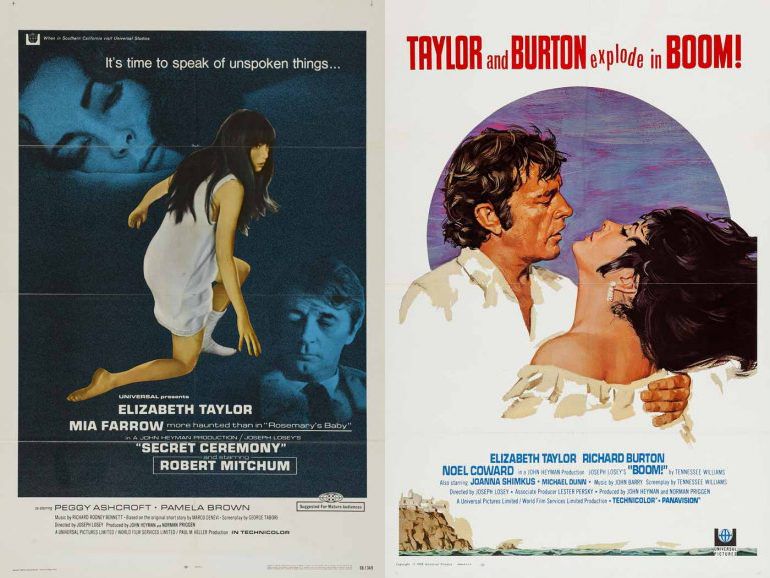
Liz & Losey: Boom! & Secret Ceremony

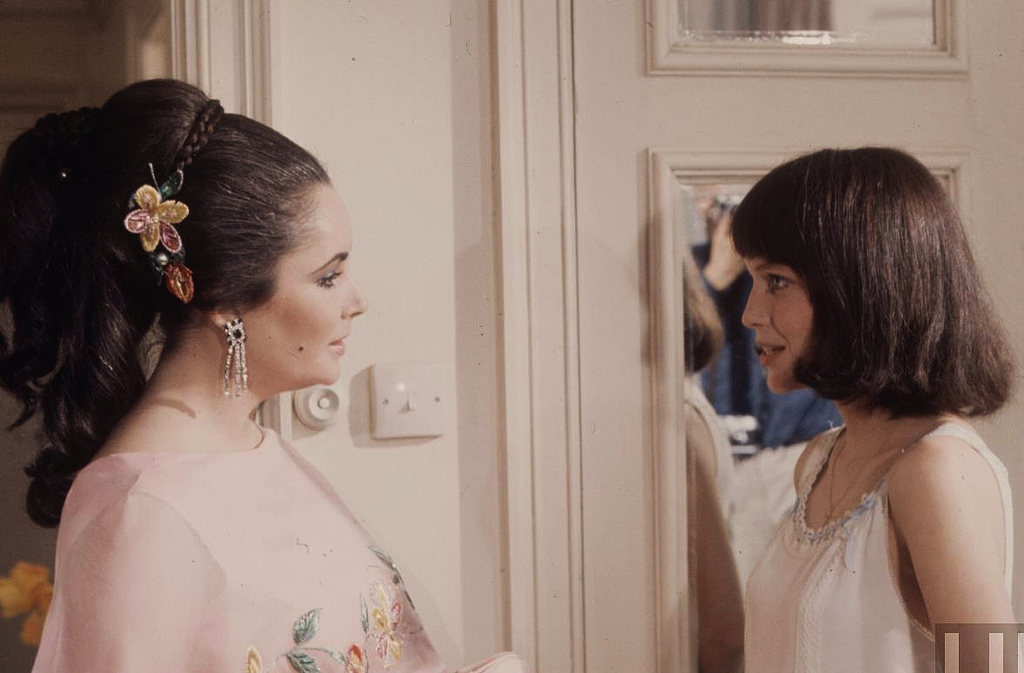
Liz-and-dick-corbis-1968-on-the-set-of-boom-1

“So enough of films. This was prompted by my excitement about ‘XYZ’ [that it] will be a ‘big one’ for E [Elizabeth Taylor]. By talk of distinction and by talk of Oscars. I know she is brilliant in the film and I know the film is good but I thought almost as highly of ‘Boom!’ and that went BOOM.” – Richard Burton, ‘The Richard Burton Diaries’”

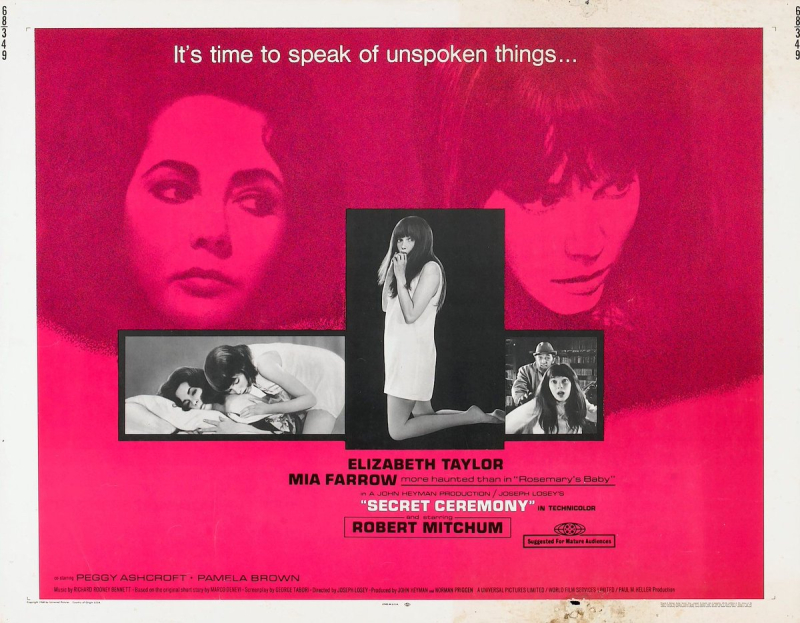
Liz and Losey. The dreams the two must have had. At least in 1967, 1968. Not in the aspirational sense (though they, actress Elizabeth Taylor and director Joseph Losey, had those of course – aspirations) but in the sleeping-hallucinatory-fanciful sense. The living of one’s life half as fantasia, half in reality. Not insanity, not entirely on a cloud – but in dreams – and, yet, dreams that are… honest, sometimes even brutal. To them. Asleep in bed dreams, drugged out in the hospital dreams, wide-awake dreams, drunken dreams, dreams inspired by decadent décor, jewels, headdresses, caftans, elaborate abodes, hallucinatory dialogue, trays of food, hair, wigs, makeup, mirrors, witches (of Capri), wild-eyed child/women/Mia Farrow, samurai swords, the sea, the sounds of the sea. The sound of … Boom! Their dreams – I am just speculating and creating my own fantasy and we won’t ever really know. A Secret Ceremony, indeed.

With their two films released in 1968 – Boom! and Secret Ceremony – I, again, can’t help but wonder about Taylor and Losey’s dreams. Not, just, what were they thinking (as some might ask – for both films are often met with such bafflement or derision or, of course, mystified love – money was part of it, if you do ask, as was art, which both movies aspire to and succeed at – I don’t care how bad some think either are – I love these films) – but what were they dreaming while conjuring these movies?

6a00d83451cb7469e20240a4ec9beb200d-800wi

These grand, decadent, perverse, and very lonely stories about lonely women living in big lonely homes facing loss and grief and trauma and inebriation and possible insanity and death. Losey had great success with Pinter, but in Boom! (based on the play The Milk Train Doesn’t Stop Here Anymore by Tennessee Williams) and Secret Ceremony (adapted from the story by the Argentine writer Marco Denevi, by screenwriter George Tabori), I thought, via esteemed film historian and author Foster Hirsch, of Pirandello, (Hirsch discussed Secret Ceremony as such, writing, “In its Pirandellian oppositions between appearance and reality, the story palpitates with fashionable modernist themes, but the parade of intellectual motifs has less substance than show…. Losey at his most pretentious.”). I wonder what Pirandello would think of these films? As Pirandello said:

“I think that life is a very sad piece of buffoonery; because we have in ourselves, without being able to know why, wherefore or whence, the need to deceive ourselves constantly by creating a reality (one for each and never the same for all), which from time to time is discovered to be vain and illusory . . . My art is full of bitter compassion for all those who deceive themselves, but this compassion cannot fail to be followed by the ferocious derision of destiny, which condemns man to deception.”

There is a “bitter compassion” to these films, a creating of a reality that may be illusory, by way of Losey and Taylor. Not an easy compassion, not a sweet understanding – a simultaneous delusion and honesty (it’s possible – and these two manage it – and it’s too odd to be merely pretentious, I think, or I don’t mind that either films could be considered pretentious – I’m still working this out). With that, there is a raw vulgarity within the pictures that is, indeed, brave – especially on the part of Elizabeth Taylor who is unafraid of appearing unlikable. Or unrelatable (oh, stars, they are just like us!). And, yet, she hollers, she moans, she even, in Secret Ceremony, belches. It’s a unique mixture of glamour and uncouthness that still feels refreshing (have I seen any other beautiful movie star act like this? And in such a natural, not trying-to-be-gross-or-funny way? To my mind, no).

4

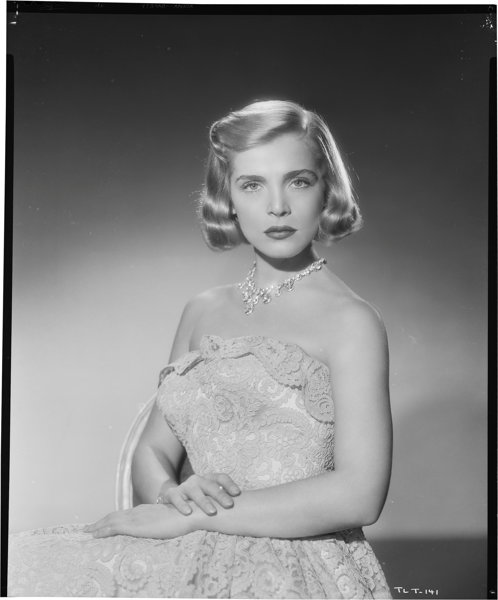
Still a movie star in the late 1960s, always a hot news item (she and Richard Burton stalked by paparazzi, still, post-Cleopatra), but an actress allowing audiences to see something darker inside that decadence, sadder, meaner, hilarious too, and to some, fading (though she’s gorgeous – critics were sometimes cruelly remarking about her weight creeping up on her – she looks staggeringly beautiful in both films). She is glamorous times ten, and yet, profoundly human.

Taylor, even if she didn’t write either movie, knew the jabs against her, and seemingly took them on – even on film. At one point in Secret Ceremony Robert Mitchum’s terrible Albert (Mitchum is a scary force – mightily creepy here), calls her something bovine: “You don’t look like my late wife at all,” he says, “She was well-bred and rather frail… you look more like a cow… Oh, no offense,” he continues, “I’m very fond of cows.” And then he moos. How awful. We shudder on behalf of her character, sitting on a picnic blanket in her brightly patterned dress enduring this (and much more when Mitchum’s character really let’s go with his repulsive talk), and we shudder on behalf of Taylor. And then we applaud her for taking that line in stride. And she often did. She would poke fun of herself in real life too – or at least comment on how people seem so stupidly obsessed with her weight. As Peter Travers wrote of Taylor, when she passed away in 2011:

“Nearly two decades ago, I enjoyed lunch with Taylor at a Manhattan restaurant where the stares of accompanying diners would have thrown a tower of lesser strength. ‘They just want to see how fat I’ve gotten,’ laughed Taylor, lifting one untoned bare arm for all to see. Taylor howled at their shocked reaction.”

My god, how can you not love her?

Boom_taylor-518x641

But it must have hurt at times. This meanness towards her figure, as if, “How dare this beautiful woman pack on a few pounds! How dare she!” It did concern her health-wise (later on in her life she discussed her loneliness and weight gain with Elizabeth Takes Off, though she was worried about more than just her weight: ”’I was almost 50 when for the first time in my life I lost my sense of self-worth,’ she writes of her ‘gluttonous rampage.’ She was lonely and bored; she felt that her husband, John W. Warner, a Republican Senator from Virginia, didn’t need her.”) But you still hear that kind of “How dare she!” Again, I love that she howled at people staring. How dare they!

But back to Mitchum and that mean moo – it’s nothing like Noël Coward’s Witch of Capri in Boom! who calls for Taylor’s Sissy Goforth with a friendly, though bizarre birdlike “Yoo-Hooo-hoo!” and she answers back the same. (In real life Coward adored Taylor, more on that later), but both movies like to hear men emit animal-like sounds – it’s off-putting and nasty in Mitchum’s character’s case and sweet and then obnoxious in Coward’s (when his character is plastered – you can see why Taylor’s character begins to grow tired of him) and… it’s quite … something.

Well, the movies are, for lack of better words … quite something.

Boom! is often referred to as terrible, or so terrible it’s wonderful, or as John Waters (who famously loves it and has shown it around the world) said to me in an interview for Sight & Sound: “It’s so great and then so awful. So that means it’s perfect, really.” It is perfect, really. Whenever I watch it, I think of it being made in a different way and I think… no. It has to be THIS. So, yes, perfect.

Secret Ceremony offers more weird, gloomy perplexity to viewers over the sumptuous spectacle of Boom! (which provides more joy, in spite of its heroine dying) but it was also often considered a misfire too (particularly in the States at the time – a double dose of bombs via Liz & Losey). Though many take Secret Ceremony much more seriously than Boom! and consider it either an excellent Losey film, or at least a very interesting one, worthy of study and discussion (Indicator came out with a Blu-ray giving the film the respect it deserves), it’s still a curio to viewers. At the time, however, some did value the picture. Renata Adler said positive things. She wrote in the New York Times:

6a00d83451cb7469e20240a4ec9c09200d-800wi

‘[‘Secret Ceremony’ is] Joseph Losey’s best film in years—incomparably better than ‘Accident.’ The opulent, lacquered decadence works well this time, with Mia Farrow as a rich, mad orphan, whose mother Elizabeth Taylor pretends to be and, in effect, becomes. Robert Mitchum is good as Miss Farrow’s stepfather, in a relationship as violent and complicated as relationships in movies like ‘Accident’ and ‘Reflections in a Golden Eye’ tend to be. The lines are spoken so slowly, with such long pauses in between (it is as though a speech guidance drama class were reciting immortal iambic pentameters) that one thinks for a time that all this affectation is going to be unbearable. But there is something not at all arbitrary and far-out at the heart this time, with people – essentially confidence men – drawn into the frank needs of the insane, until their confidence roles become a personal truth about them.”

30399126242

Wisconsin-born Losey, who directed, among other excellent pictures, The Boy with Green HairThe ProwlerThe Big NightMThe CriminalAccident, The Go-BetweenEvaThese Are the DamnedThe Servant, and more, was blacklisted around the time his incredible, powerful remake of Fritz Lang’s M was released. HUAC target Losey would leave the country instead of naming names for that ghastly, career-destroying committee. He moved to Europe and become one of the more interesting, daring, and unique filmmakers of the 1960s (there are a lot of informative, deep-dive studies on Losey – essays, books – Tom Milne’s Losey on Losey is a great, earlier one – published in 1967 – as is James Palmer and Michael Riley’s The Films of Joseph Losey, published in 1993, to name a few). The great Losey is a fascinating director to dig into – and I include Boom! and Secret Ceremony – most certainly as something to really dig into – and both, like all of his work, even his flawed work, exceptionally interesting.

In fact, Boom! and Secret Ceremony are, to me – I can’t use the word bad. And I won’t – because I don’t think either are bad. Many would likely agree with me regarding Secret Ceremony but would draw the line with Boom! – even if they love it – but in the case of Boom! I feel like it’s too otherworldly, too its own unique creature to be bad or terrible or the worst. And often well-written. Good seems too simple a word but… it’s not just good, it’s grand.

Both pictures are unforgettable. Eminently watchable. Weirdly wonderful.

And in many cases, touching and thoughtful. By the end of both movies, I find myself moved. For Taylor’s character and her pain and injections and rejection of death (even chucking that X-ray machine off the cliff – did I get that right? An X-ray machine? Whatever it is, she doesn’t want to see that – I get that), for poor, traumatized Mia Farrow’s character and those rows of pills she will swallow only to call out to her mama (who isn’t Taylor but has finally become, here, her sole protector, her real mother), for Richard Burton’s Angel of Death dropping of the ring in the glass and thrusting it into the ocean (it’s a beautiful moment). And then I extend being moved to the real-life characters behind the camera – to Tennessee Williams and to Joseph Losey for making these movies in the first place.

As I read in David Caute’s Joseph Losey: A Revenge on Life, Losey, feeling defensive and hurt, wrote to Tennessee Williams of Boom!“I’m appalled for all of us, but particularly for you, by the scurrilous, ignorant and personalized reviews which I’ve seen … I am struck by the fact that the ‘critics’ seem determined to destroy successes and idols that they have built up – namely the Burtons, you and me.”

Fa2b788746327b89bad669f646cb66ed

Those who find Boom! dreadful likely see this as Losey not taking responsibility and just lashing out at critics – they don’t get it! – that kind of response. And I can see that point because it’s a hard movie to get. Williams liked the movie and considered it the best adaptation of his work (hey, are we going to argue with Tennessee Williams on this?) Of this, John Waters said: “And Tennessee Williams did say … that it was the best movie ever made from his work, and I think maybe I, and Tennessee are the only people who agree with it…”

And yet, watching Boom!, to basically live in its odd tone and intent, to drink in the scenery and costumes, and to watch and listen to Taylor and Burton, I do wonder how they (the filmmakers) would consider the cult-embracing of the picture now (Williams died in 1983, Losey in 1984, Burton in 1984). There are plenty of people who maybe don’t get it (and many who probably do – or in their own way) but they love it regardless. Taylor, for one, heard about the love.

Film critic and author Alonso Duralde, an earlier champion of Boom! (we must thank our champions who are instrumental in spreading the word and finding these movies, helping them to get properly released, so Boom! fans, thank Mr. Duralde) tracked down a print and showed it at the USA Film Festival in 1995 in Dallas, Texas (Duralde was artistic director for five years there). He had John Waters introduce the picture (what a night that must have been). Duralde said in his fascinating featurette on the Boom! Blu-ray release (from Shout Select – which also features commentary by Waters) that Elizabeth Taylor was actually in town that night – at a department store promoting her perfume (!). They tried to get her to come but, to no avail. However, according to Duralde, she was asked about the showing, and said something like: “I hope they had a good laugh.” Oh, Ms. Taylor.

3191947386_a3b5973c7a_o

In an interview with Vice, John Waters said that he met Elizabeth Taylor once and told her how much he loved Boom! Waters continued:

“…And she got real mad and shouted, ‘That’s a terrible movie!’ And I said ‘It isn’t! I love that movie! I tour with it at festivals!’ Then she realized I was serious. Because it is a great movie. I feel like if you don’t agree with that I hate you. If you don’t like ‘Boom!’ I could never be your friend. Right now, I live by the water and every time I see a wave hit a rock, I shout, ‘Boom!’ like Richard Burton.”

The full quote of Burton from the picture is: “Boom. The shock of each moment of still being alive.” Well, it’s not a bad line, I don’t think. He says “Boom” again – and Taylor says it back to him at one point (of course, this seems so underscored since it became the title of the picture). In her character’s case, there is a shock, perhaps, of still being alive, and, I suppose, a strange celebration of still being alive, so why not make something of this whenever you can? Why not say “Boom?”

While making Boom! Richard Burton wrote in his diaries:

“E [Elizabeth Taylor] and N. [Noël] Coward are madly in love with each other, particularly he with her. He thinks her most beautiful which she is, and a magnificent actress which she also is. We all saw rushes [of ‘Boom!’] and some assemblage last night. It looks perverse and interesting. I think we are due for another success particularly E. I was worried about her being too young but it doesn’t seem to matter at all.”

BOOM_UNDER-TEXT2050

Boom! was, at first, not a movie to star Elizabeth Taylor or Richard Burton. Taylor’s character, Flora “Sissy” Goforth, the millionaire multiple widower ruling over her elaborate, gorgeous, guarded compound on an isolated island in Italy was much older, and dying – around 75-years-old in fact. Taylor was 35-years-old, and though she’s still playing a dying woman, she looked healthy. But what does that mean? Looking healthy? She is so convincing in the movie that she doesn’t sound healthy, so no matter of how she looks. And, Taylor, in real life, had been near death a few times before this. She nearly died of pneumonia during Cleopatra. I also recall a photo of her with Burton – around 1973 – being wheeled in a fur coat (I am not making light of this – the woman was often ill – and likely needed a nice wrap).

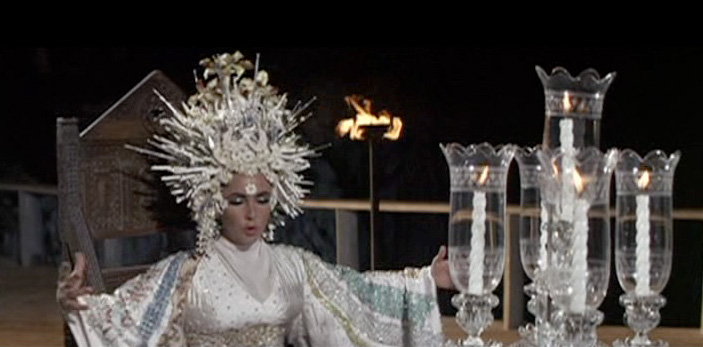
Anyway, as Burton said, her age doesn’t matter at all since the movie works on a symbolic/surrealist/artistic level, and this is how one looks (or rather, how Elizabeth Taylor looks) and dresses when one is sick. I sure would if I could – in gowns designed by Tiziani of Rome – with help by Karl Lagerfeld. It is not a surprise then, that the picture is also a fascination for those in the fashion world. As Amy Spindler wrote (in 2001) of Boom! for the New York Times Magazine:

C82a2a6a00070015ed65e24d68f65408
“The film was all André Leon Talley, the Vogue editor, wanted for Christmas. Anna Sui and Marc Jacobs had told him about it while dining at Mr. Chow’s. Cathy Horyn, the New York Times fashion critic, tracked him down a copy. Anne Fahey, the public relations director of Chanel, also helped join in the search… Let’s call it free-associative filmmaking. It’s all Mediterranean-Gehry architecture accented with key pieces of the era, like the Arco lamp by Achille and Pier Giacomo Castiglioni. And there are hints of Calder and Chagall and even Easter Island sculptures — although ‘Boom!’ was filmed in Sardinia. And while the Roman couture Taylor wears certainly looks like her own by Valentino (the huge rock on her finger and the Shih Tzu running around look like her own, as well), it is credited to an atelier called Tiziani of Rome. Talley called a few days ago to say that while he was expounding on the virtues of ‘Boom!’ to Karl Lagerfeld, the designer said he had a hand in the costume designs. He was working for Tiziani at the time. Alexandre of Paris did Taylor’s hair. Bulgari supplied her jewels.”

32f4c517f1c71be0d5594795223f6b67

There are many reasons to admire Boom! but the very idea of an inspired André Leon Talley talking to Karl Lagerfeld to discuss the picture and then Lagerfeld just dropping an, “Oh, yes, I helped design the costumes” (I imagine this dropped very casually – I have no idea – I just like thinking it this way)… and after seeing those fantastic costumes… how can you dismiss such a movie? I mean, on design alone, it’s worth watching.

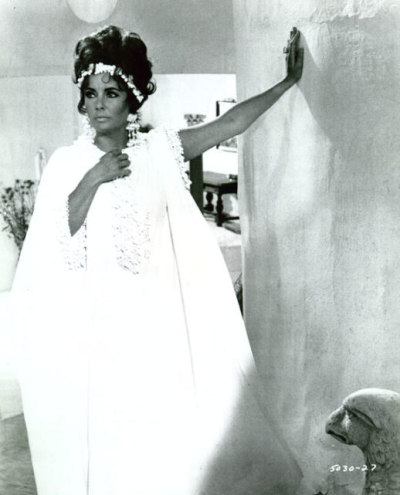
So, Taylor – fine. Great. She’s perfect. Cast correctly – never mind her age. Who else could wear that Kabuki-inspired costume and elaborate headdress with such ease? She even removes it – likely annoyed by its weight – and even that seems like, “Sure, place that thing anywhere. Tiziani and Lagerfeld can make another one.” She didn’t say that, but that just occurs to me…many things do when I watch Boom!

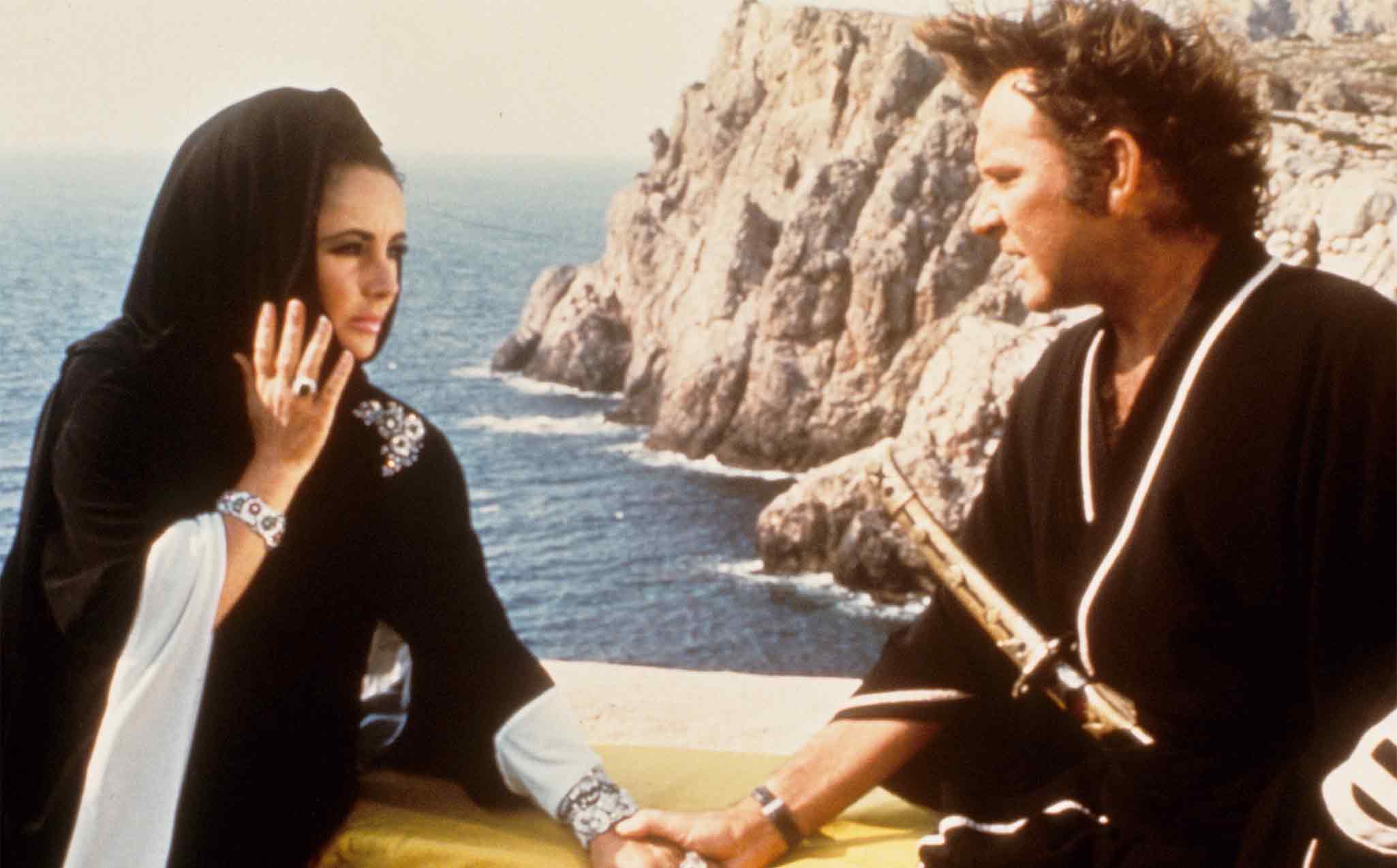
And then there’s Burton’s character – poet Chris Flanders/The Angel of Death who was younger in the play than Burton (Burton was 42 at this point – not old, but older than Taylor – obviously this had to just work differently). Burton’s voice is brought up in the movie – his voice as a seductive force. And it is. Watching him saunter around Sissy’s property in the samurai robe and carrying a samurai sword (the outfit belonged to one of Sissy’s dead husbands – and is sent down to his quarters after dogs nearly rip him to shreds) should feel ridiculous, and it is, I think, a bit on purpose. But it becomes as natural as her extravagant attire. Also he appears to like wearing that outfit – for, presumably, the way it compliments his strides, the way it looks cool in the air, the way he looks rather handsome in it, and for the sword, surely an easy indicator of Freudian phallic armament, or an instrument of divine justice, like an arch-angel. Perhaps some viewers wish he were the younger stud, but I find his handsome, world-weariness befitting in this dreamscape. He’s seductive, he’s compelling, he certainly never appears bored. And he and Taylor – they do have chemistry – even when she’s yelling at him. Especially when she’s yelling at him.

6a00d83451cb7469e2025d9b370899200c-800wi

Tennessee Williams, who had put on the play twice – first in 1963 with Hermione Baddeley and Paul Roebling, then in 1964 with Tallulah Bankhead and Tab Hunter (both times the play didn’t fare well, receiving mostly bad reviews), was thinking, for film, more of Simone Signoret and Sean Connery. Losey, later, wanted Ingrid Bergman and James Fox. According to Sam Kashner’s and Nancy Schoenberger Furious LoveElizabeth Taylor, Richard Burton, and the Marriage of the Century: “Bergman had turned down the role as too vulgar (‘I can’t say the word ‘bugger’ without blushing,” she’d told the director).” Another who famously turned down a part was Katharine Hepburn for “The Witch of Capri” (the part was originally written for and played by a woman) – Hepburn was reportedly insulted by the offer. In a bolder choice of casting, Noël Coward was offered the part and agreed (according to Caute’s Losey biography, Dirk Bogarde was asked first and said, “No, thank you!”), and the gender of the character changed.

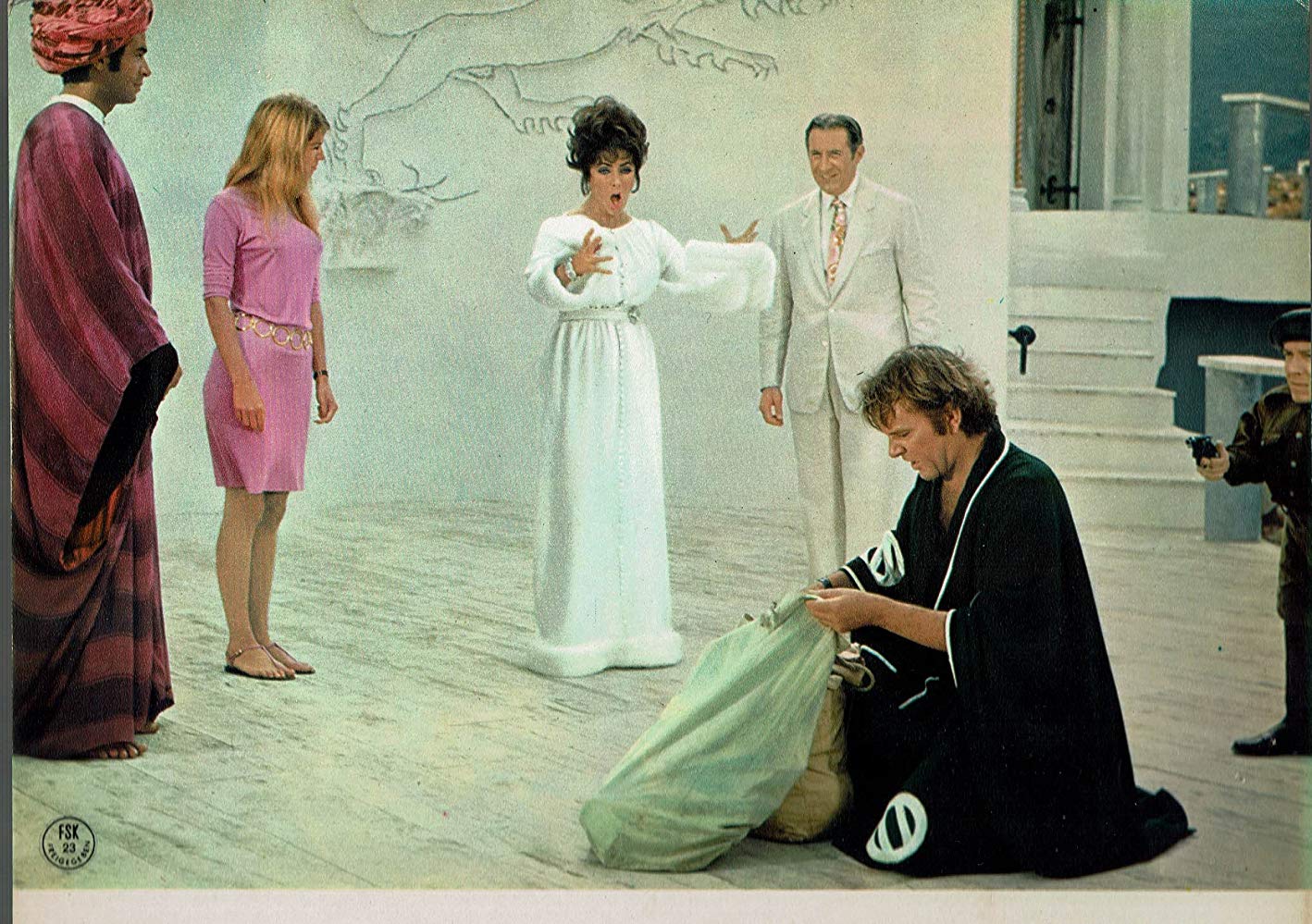
And so, went the shoot, which is a story in itself… and then the story. How to describe? Flora “Sissy” Goforth (Taylor) is, as stated, a dying multiple widow/millionaire recluse, who has, rather symbolically, taken refuge on an island of her own. She’s living there, like a mythic, capricious creature with a coterie of servants tending to her, both visible and almost invisible. Her head of security is Rudi, a little person with a gun (played by Michael Dunn), and she recites her memoirs to her secretary, Miss Black (Joanna Shimkus), or “Blackie,” as Sissy calls her. It is upon this island that a dark stranger/poet arrives, or rather, trespasses, invades – both seductive and aloof (and hungry – it takes quite some time for Sissy to order him some food – she instead, drinks a lot. And takes pills. And yells for injections). This man that might be death itself, as indicated by his nickname “The Angel of Death” (Coward’s Witch of Capri fills Sissy in on the grim details of the women this Chris Flanders has visited before her).

MV5BYmQ1NTM3YWQtMmUzNS00ZWI3LWExZTYtMTRlNjkxZjQzNGMyXkEyXkFqcGdeQXVyMTcyNDI0Ng@@._V1_SX1418_CR0 0 1418 999_AL_

What follows is a game of seduction and finality, a stylized game of wit, caprice and carnality as Burton talks much, and in his way, coaxes Taylor into accepting the possibility of death. She has been pushing it away -who wants to think of that – and would like death on her own terms (who wouldn’t) – and is generally in a foul mood as she recollects her past. Well, she’s not feeling well. She hollers at her doctor, her servants and Blackie – she hollers at the sky. One of the most incredible moments comes when Sissy orders her morning needs:

“Now tell them to bring the table over here, so I can put my chair in the shadow when I want it in the shadow. My skin’s too delicate to be in the sun for more than half-hour intervals. Now tell them what I want put on the table: a cold bottle of mineral water, suntan lotion, cigarettes, codeine tab, a bucket of ice, a glass, a bottle of brandy, my newspapers. The Paris Trib, The Rome Daily American, The Financial Times, The Wall Street Journal, The Daily Express.” 

This provokes laughter for being so … demanding of course, and then for being delivered with such unhinged anger and brashness on Sissy’s part. It continues when she notices the mobile Burton’s poet has made (Sissy has yet to meet him – he’s down in the guest quarters) and asks Blackie, “What’s that goddamned thing?” When Blackie informs her it’s a mobile to give to Sissy, she says to her, “Does he seem like some kind of a nut case to you?” (I think that’s a very good question, frankly.) It continues on with Sissy: “Help me up, will you? The sun’s making me dizzy. Oh… God damn, you… broke the skin with my ring!”

9964792245_89f6ea01b0_z

I mean, everything, everything is wrong and annoying to Sissy. But people do act like this – I guess seeing it on screen and with such poetry – it’s wonderfully discombobulating.

Sissy is walking back into the house/compound and demands, “Bring a telex report out to me.” She then bumps into a servant with a tray and furious, yells the movie’s most famous insult: “Shit on your mother!”

(Try not yelling that after seeing this movie. Try. You won’t be able to resist.)

Sissy continues damning the world with: “God damn it, I’ll sign myself into a criminal institution!”

When she finally meets up with Burton’s Chris – the power play between the earthly and the eternal, the perishable and the sublime, is enacted by all characters in hyperbolic and, occasionally, moving ways. Burton’s Angel of Death (whom we are constantly befuddled by – is he evil? He’s not good, necessarily. What the hell is he?) takes from Goforth what one might presume to be her earthly vanity and power – he removes/steals her jewels. He speaks a beautiful, succinct parable – perhaps one of the best monologues in the film – and tosses her diamond-studded gems to the everlasting tide and the crashing waves below: Boom!

There’s so much to discuss and discover with Boom! (the wonderful music is one – by John Barry), the gorgeous cinematography by Douglas Slocombe, the costumes (as stated earlier), and the dialogue – both overwrought and weirdly beautiful- but also, funny. There’s an exchange between Chris and Sissy that I just think had to be funny. As Chris, with that gorgeous Burton theatrical lilt, recites Samuel Taylor Coleridge: “In Xanadu did Kubla Khan, a stately pleasure-dome decree. Where Alph, the sacred river, ran through caverns measureless to man down to a sunless sea.” Taylor’s Sissy simply exclaims, befuddled or perhaps making fun of him, her voice rising:

“WhaaAAAT?”

I think many understand that question. But to some of us – in a glorious way – we want to figure out, at least some, not entirely, some of that … “WhaaAAAT?” Which brings us over and over again to Boom!

Thinking they had something interesting on their hands (they did!) and a possible hit (alas, not a hit – at all), Elizabeth Taylor thought it would be good to work with Losey again. From Caute’s Losey biography:

“Late in 1967, while in Rome dubbing ‘Boom!’, Losey was with the Burtons in the Grand Hotel when Elizabeth Taylor remarked (it is said), ‘Why don’t we do something again?’ No more inclined than Winnie the Pooh to remove his head from the honey pot, Losey remembered a script by George Tabori originally written for, and turned down by, Ingrid Bergman. For Losey and his flamboyant designer Richard Macdonald, ‘Secret Ceremony’ was to be the second décor-riot of the ‘time of the Burtons.’ [Producer] John Heyman’s role was to raise the money and assemble the cast: ‘I was the shoehorn,’ he says. Universal put up the cash – several months before ‘Boom!’ hit the rocks.”

That Taylor was intrigued by such challenging, strange material – and that she used her star power to, essentially, help Losey get these odd movies made is to her credit – so the Boom! / Secret Ceremony double dose of 1968 makes that year in movies most intriguing to me. It should be appreciated.

0a7a2f958d48d5e10b3d09b89d5fc941

The great award-winning screenwriter, director, producer and ultimate cineaste Larry Karaszewski (he of the classic Ed WoodMan on the MoonThe People vs. Larry FlyntBig Eyes and one of this year’s best movies – Dolemite is My Name) has discussed his appreciation for Secret Ceremony on Trailers from Hell. I love how he describes this period of Taylor, who was, at one point, the most famous woman on the planet – both as a movie star and as a tabloid queen, thanks to her infamous marriage to Eddie Fisher (who was before married to Debbie Reynolds), winning an Oscar for Butterfield 8 and then dumping Fisher for her highly publicized affair with Burton on the set of the grandly expensive Cleopatra (a whole other story – and one I wrote about, in part, in regards to Walter Wanger’s (with Joe Hyams) My Life with Cleopatra: The Making of a Hollywood Classic for the Los Angeles Review of Books), and their marriage. And then, acting opposite Burton, she won her second Oscar (for Who’s Afraid of Virginia Woolf? in which she is indeed brilliant) – she’s a movie star, a serious actress and a source of never-ending public fascination. But as Karaszewski says:

“… And, bam! Something changed, and she never quite made another good movie again. She became some sort of alcoholic celebrity monster, so famous that she couldn’t really play normal, and the pictures she chose to appear in are some of the oddest movies ever made. They’re almost their own genre – weird and depressing …” 

He cites Secret Ceremony, the trailer and movie he digs into, as one of them.

6a00d83451cb7469e20240a5113202200b-800wi

And he’s right – it’s a depressing movie. Much sadder, and in many ways, much darker than Boom! If Boom! has sunlight and sea and Richard Burton’s lulling voice to carry you to death, Secret Ceremony has grey skies, construction sites and sad public buses (terrific cinematography by Gerry Fisher), a sick-o, somewhat terrifying Robert Mitchum (who is fantastic here), and sad Mia Farrow hollering, in death, alone in a house for any kind of mother she will ever have. Though Sissy must face death in Boom!, she’s at least able to breathe in the air, gaze at the ocean, be mindful of a cliff without balustrade: “I’m frankly scared of a cliff without a balustrade…” (after Boom! that has become a forever favorite word for me – balustrade). In Secret Ceremony, Taylor’s character is left on a sad little bed by the end, reciting a fable.

But there is glamour here, on the part of Taylor, as her costumes are splendid, and seem to grow more beautiful and intriguing as the movie goes on. The controversial Camille Paglia discussed Secret Ceremony in Penthouse, in 1992, and she highlights just how powerful a screen presence Taylor was:

“One of the most spectacular moments of my movie-going career occurred in college as I watched Joseph Losey’s bizarre ‘Secret Ceremony’ (1968). Halfway through the film, inexplicably and without warning, Elizabeth Taylor in a violet velvet suit and turban suddenly walks across the screen in front of a wall of sea-green tiles. It is an overcast London day; the steel-grey light makes the violet and green iridescent. This is Elizabeth Taylor at her most vibrant, mysterious and alluring at the peak of her mature fleshy glamour. I happened to be sitting with a male friend, one of the gay aesthetes who had such a profound impact on my imagination. We both cried out at the same time, alarming other theatregoers. This vivid silent tableau is, for me, one of the classic scenes in the history of cinema.”

6a00d83451cb7469e20240a4ec9c98200d-800wi

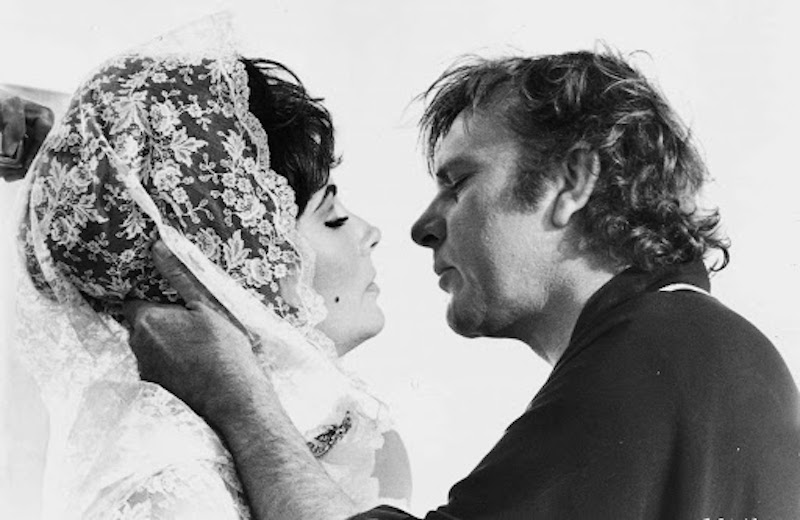
And there are parallels between the two movies. In keeping with Losey’s idea of edifices acting as surrogates for the human mind, in Secret Ceremony, two women are thrown together by fate into a striking, decadent mansion in London (another house as character as in Boom! – another stranger entering the house and undergoing power plays). One, Leonora (Elizabeth Taylor), first clad in black, is a religious lady, but a lady of the night who has lost a daughter and seems to be repulsed by the brutality of men – probably for good reason. Watching her remove a long blonde wig at the beginning of the picture and vigorously washing her face in the mirror seems to speak of an alternate reality – or a role playing – she’s furiously scrubbing away – at that moment. The other one, Cenci (a wild-eyed Mia Farrow – cast right before Rosemary’s Baby was released and a huge hit –  according to Caute’s biography, Losey, as yet, had only seen her on Peyton Place) is a daughter who has lost a mother and roams aimlessly, at the mercy of scavengers. She, with her long black hair (the long dark hair to Leonora’s long blonde wig from the beginning) spies Leonora on the city bus, Leonora’s dark hair wrapped up in a black scarf and … she just thinks … that’s her mother. Her dead mother. Both women wear black – and watching Farrow’s Cenci follow Taylor’s Leonora is haunting – as if the two are going to merge at one point – there’s already mirroring going on here and the movie holds our interest, right away.

Cenci is a stunted child – her age defined in her twenties but enacted as if she was prepubescent. Farrow is quite good enacting trauma here – sexual trauma – and her scenes that are deemed possibly seductive with Taylor could be read in myriad ways – lovingly needing a mother, needing maternal touch, acting out her own abuse, or childlike, confused – or all of it. She is certainly not well; she is certainly traumatized – her problems are deep. At one point she feigns pregnancy with a stuffed thing under her dresses.

Both Cenci and her mother’s fortune seem entirely unguarded and vulnerable, which really underscores the power of this movie – just how vulnerable both Cenci and Leonora are – in their grief, in their station in life, and in their dealing with predators. And the automatons Cenci plays with – seen so often in the picture – are characters themselves – sometimes tinkling with music box tunes, sometimes simulating movement, but not truly alive. As if these have been the only friends Cenci has ever had. The only things she can trust.

MV5BMzkxYmMzMmMtNzg4Ny00NzU3LWEzNTEtMjI0N2ZhNDc3MDA3XkEyXkFqcGdeQXVyMjUyNDk2ODc@._V1_

And, so, a psychodrama starts to develop between Cenci and Leonora who is a facsimile of her dead mother – and, in many ways, Cenci herself. What’s so moving, is, after Leonora enters the grand home (and of course helps herself to Cenci’s deceased mother’s fabulous clothes and a gorgeous white fur coat), bit by bit she grows protective of this woman/child and projects so much upon the young, odd woman, as if by saving her, she can save herself, and regain the grace lost with the death of her daughter. The vulgar, dirty world, which encircles the mansion (in real life Debenham House, a fabulous convolution of architectural styles in West Kensington), invades the power play between the women – an ambiguous role-playing ceremony that tries imposture as a way to reach real healing. You play my mother; I play your daughter… maybe we can save each other?

But even more darkness descends with Albert (Cenci’s stepfather, played by Mitchum), who insinuates himself, perversely with his flowers – and then in an abusive, invading manner – becoming the catalyst for tragedy. There’s also Cenci’s two vermin-like antiquarian aunts who scavenge routinely the diminishing splendor of the desolate mansion—it’s touching when Leonora sticks up for Cenci to these women – women who seem to laugh off the perversions of Albert, as if Cenci should know better. Leonora says, aghast: “But Cenci’s still a child!” One aunt says, “Cenci a child?” And the other states that Cenci is 22-years-old. Old enough they are saying. Never mind this is her stepfather taking advantage of a damaged young woman. Leonora says, “Well, she’ll always be a baby to me.” And then one aunt says, rather ominously, “Crazy people never look their age.”

6a00d83451cb7469e20240a4ec9ca7200d-800wi

Cenci has gone crazy – from grief and abuse by the hands of Albert, who has been violating Cenci for – we don’t even know how long – and from who knows what else. Leonora yells at Albert: “You dirty bastard! You raped her!” He then laughs, “I couldn’t rape a randy elephant. I’m much too tentative. I need encouragement. And I loved her. I always loved her…I make her feel like a woman. What do you make her feel like? A retarded zombie?” Defiant, she says “I tried to protect her from…” Albert cuts her off, calling her a “mysterious bitch,” and, again, a “cow” and tells her to leave Cenci … with him. Leonora wants to continue protecting her (quite understandably). Later that night, however, Leonora forcefully pulls the fake baby out of Cenci’s clothes – and Cenci, upset, will order her out. “Why are you wearing my mother’s clothes?” Cenci asks. ‘Get out.”

A-Joseph-Losey-Secret-Ceremony-Elizabeth-Taylor-PDVD_008

The world and its dark desires prove too much for Cenci’s fragile mind, and she – in a complex scene (lining up pills, treating a visiting Leonora like a servant until she, in dying breath is calling for her again, as a mother – only it’s too late) – commits suicide.

And then… in a startling moment – Leonora – grieving another daughter – will kill Albert in a bizarre, but beautifully offhand manner. You don’t expect it. But the revenge is not so sweet – you get the feeling Leonora will never be the same (well, what is the same to her?), that she’ll never be “healed,” and yet, she may endure. In the final scene, she recites out loud a fable (about the two little mice who fell into a bucket of milk) – and, I suppose, she’s holding on to the merits of resilience and will. But she almost seems to be talking in her sleep.

The ending works wonderfully because, truly, watching this movie feels like a dream one had. A nightmare. And even describing it – I had to search – am I right? Am I remembering this correctly? I could very well not be.

Again, it’s a sad movie, and it’s worth noting that making the movie was hard on Taylor – she was in physical pain. As discussed in Kashner and Schoenberger’s Furious Love:

“Halfway through filming [‘Secret Ceremony’], Elizabeth could no longer work through her constant visceral pain. After a series of tests, Elizabeth was admitted to a London hospital for a hysterectomy. ‘Elizabeth had her uterus removed on Sunday morning. The operation began at 9:30 and ended at 1:00,’ Burton wrote in his diary, marking some of the most awful days of his life… ‘There was nothing before,’ he wrote when she was finally out of danger and recovering at home, ‘no shame inflicted or received, no injustice done to me, no disappointment professional or private that I could not think away…But this is the first time where I’ve seen a loved one in screaming agony for two days, hallucinated by drugs, sometimes knowing who I was and sometimes not, a virago one minute, an angel the next, and felt completely helpless.”

Secret Ceremony was released to mostly bad reviews (as stated, Renata Adler was kind, as was The Guardian) – still, Taylor, again, to her credit, continued to take on challenging roles, bizarre roles, and do so glamorously, even if critics began taking her apart – her acting, her looks – she was still her own creature, and, as Karaszewski astutely said, making movies that were something like their own genre.

6a00d83451cb7469e20240a4ec9cb6200d-800wi

As Walter Wanger wrote of Taylor in My Life with Cleopatra, “It is not a far stretch of the imagination to compare Elizabeth with Cleopatra. She has the intelligence and temperament of the Egyptian Queen — and she has the honesty and directness that characterize all big people.”

As I wrote of her in regard to Wanger’s observation – in Boom! and, I will add now, in Secret Ceremony, Taylor showed us the dark side of excess, the desperation of love, and the disillusionment of lust and she is … fantastic. It is real, it is a dream. Liz & Losey – we don’t know their dreams but with these two pictures, here is the “the honesty and directness that characterize all big people.”

Originally published at the New Beverly.

Criminal: Nightfall


EN2rswFVAAAyt9y


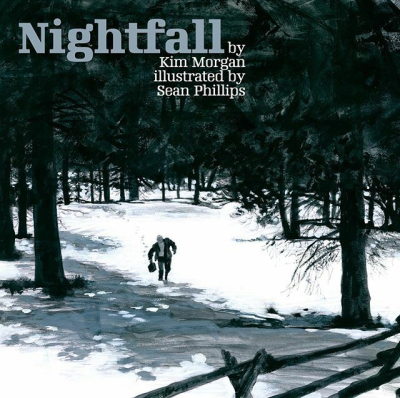
Out now. Ed Brubaker's CRIMINAL #12 — I write about Jacques Tourneur's masterful Nightfall starring Aldo Ray, Brian Keith, Anne Bancroft & Rudy Bond.


This is one of my favorite illustrations by Sean Phillips.


Check it out here.

Have a Violent Saturday Christmas

6a00d83451cb7469e20240a4ac4f9d200c-800wi-1

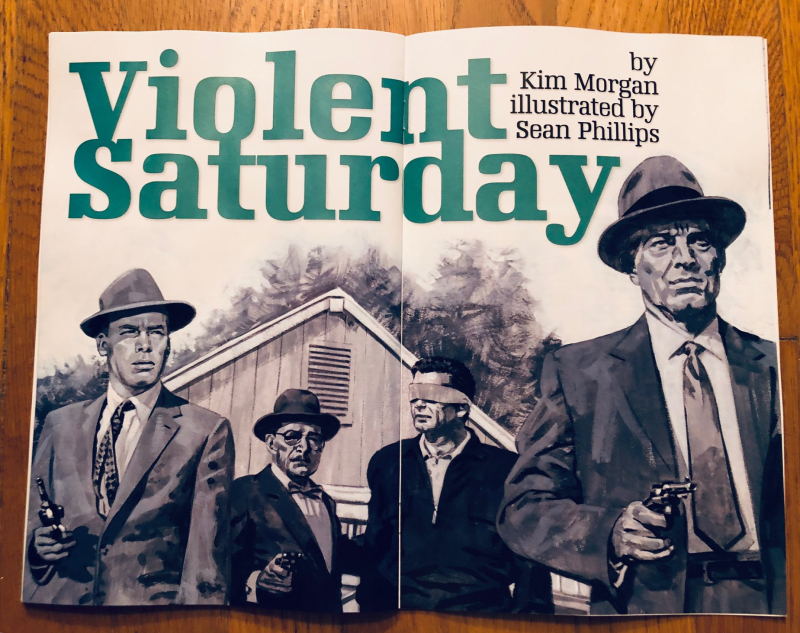
Coming soon, Dec. 25 — Ed Brubaker's CRIMINAL # 11 featuring my essay on Richard Fleischer's incredible Violent Saturday.

Happy Violent Saturday Christmas! Order here

A snippet from my piece:

As this film shows, being a lot of things is, as Shelley said, normal and human. The picture is both wonderfully melodramatic in the very best way and powerfully down and dirty violent – bizarre, darkly funny at times, and then bitingly real as only our sometimes bizarre, darkly funny lives can be. The robbery feels real, but it also works in a metaphorical manner. A nightmare. But a nightmare some people don’t wake up from. And one that lingers on Boyd’s mind with almost nihilistic reflection. The grief-stricken Boyd spits, “It’s so stupid and pointless to be alive in the morning and dead in the afternoon.” Pray for a peaceful Sunday. Or never pray again.

Merry Christmas!

6a00d83451cb7469e20240a4d57469200d-800wi

Criminal: The Threat

6a00d83451cb7469e20240a4a2f5eb200c-800wi-1

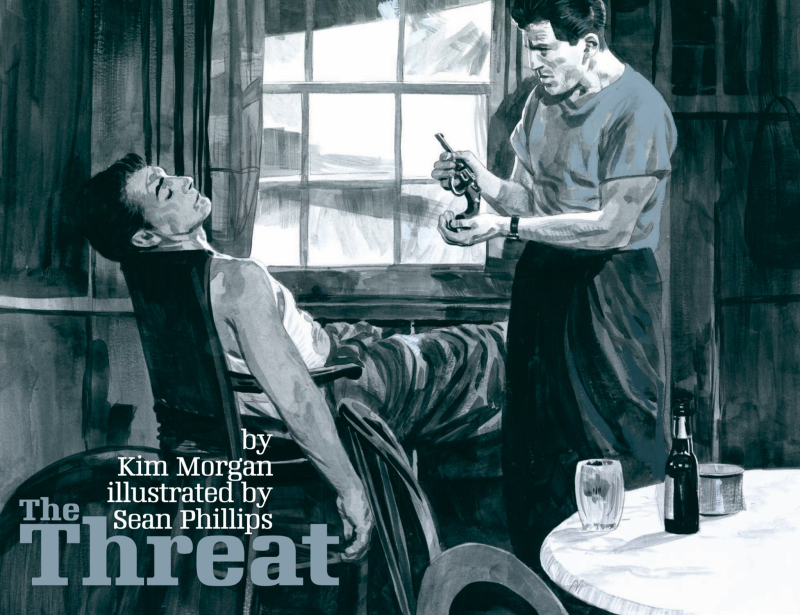
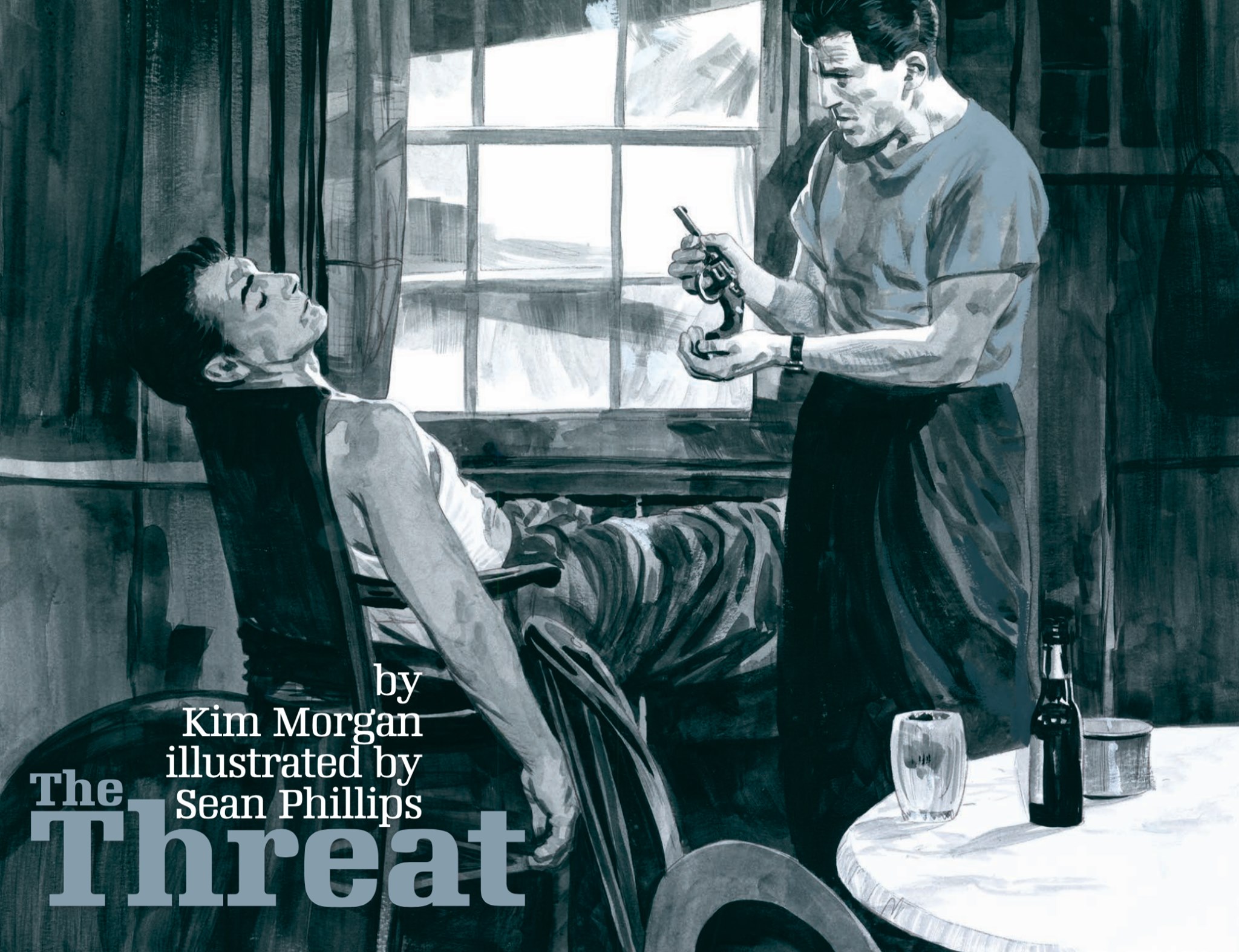
Look for Ed Brubaker's newest CRIMINAL in which I write about Felix E. Feist's The Threat starring the great Charles McGraw, who, as Red is so intense, so naturally frightening that everyone around him look like mice circling an enormous cat – one who will casually swipe his paw and lay any one of them flat — and easily dead. As enormous cats do.

You'll also never forget how McGraw sits in and utilizes a chair…

Out now — came out Nov. 27 — order!

Interviewing Tarantino: Once Upon a Time

6a00d83451cb7469e20240a496ac5b200c-800wi

From my New Beverly & Sight & Sound interview:

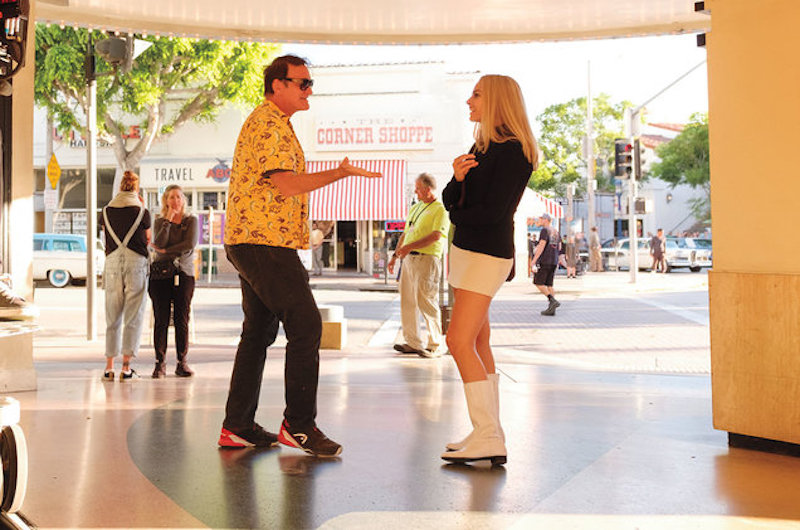
In Quentin Tarantino’s Once Upon a Time… in Hollywood, we are watching Los Angeles: a Los Angeles of 1969 that actually happened, a Los Angeles of 1969 that could have happened, and a mythical Los Angeles – a vision of the city and of Hollywood that we might dream about, or a part of our memory that is real.

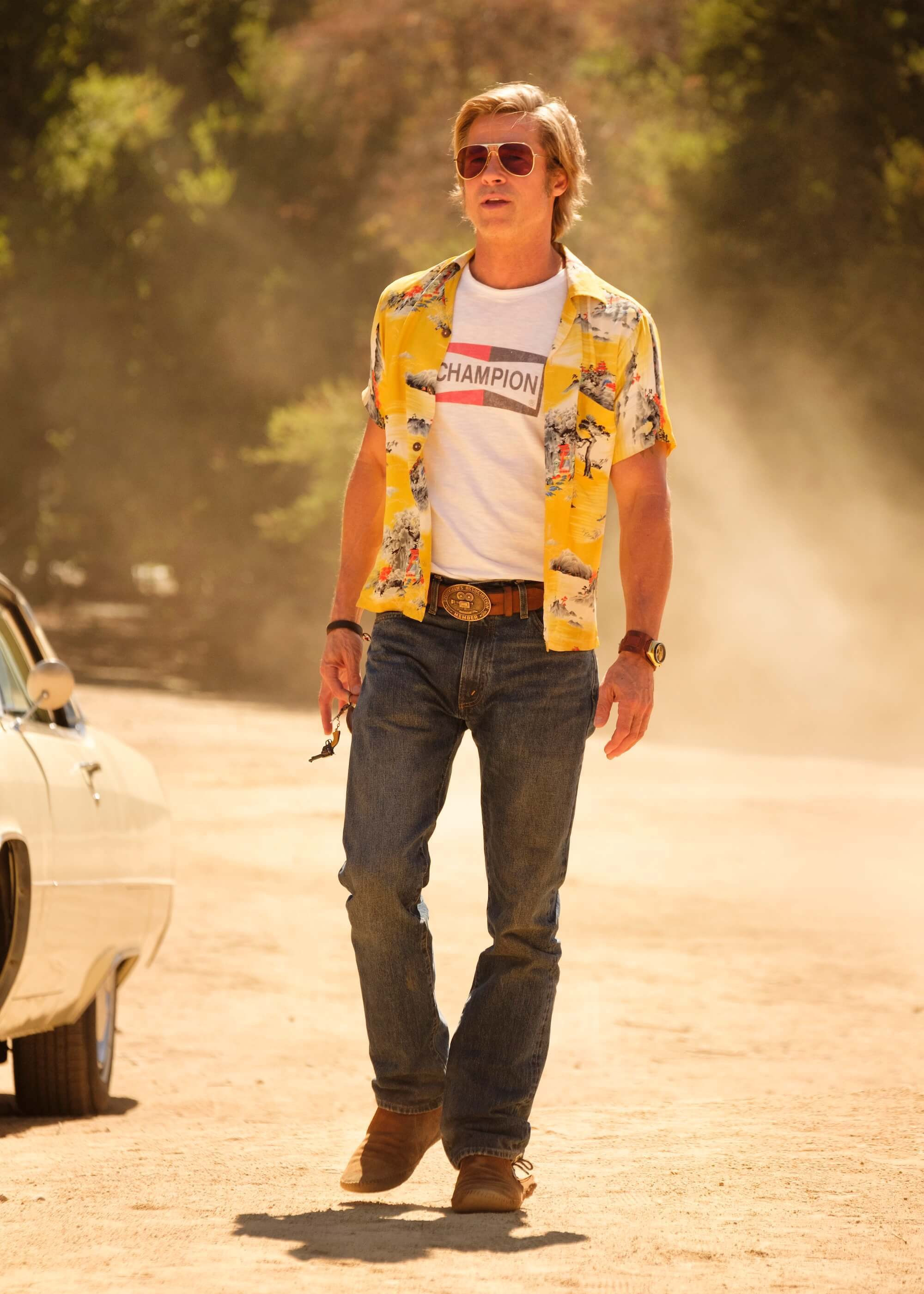
A memory that still lives within this city. And in this city, if you live here long enough or if you grew up here like Quentin Tarantino did, the visual effect – the way the geography of the town spreads out, and the way we drive through it, the way we look up at the signs, the marquees, the movie posters – often makes reality and dreams merge together, it melds in our mind. Some days it feels normal and other days, not so normal. It makes you wonder about Los Angeles, or Hollywood, rather, and what that means to different people – and not just people in Hollywood, because there’s so much more to this city than Hollywood. But we’re talking Once Upon a Time… in Hollywood. So, from watching movies about the city, to being in the city while watching movies about the city, and seeing movies all around you – like Cliff Booth (Brad Pitt) driving to his trailer right next to the Van Nuys Drive-In, or the real life Jay Sebring living in Jean Harlow’s house for a time (where Paul Bern killed himself), to walking past a specific old house or apartment where a movie may have been shot or a person may have lived – history, ghosts, movies, real life… It’s both in the now and it’s a memory floating around you.

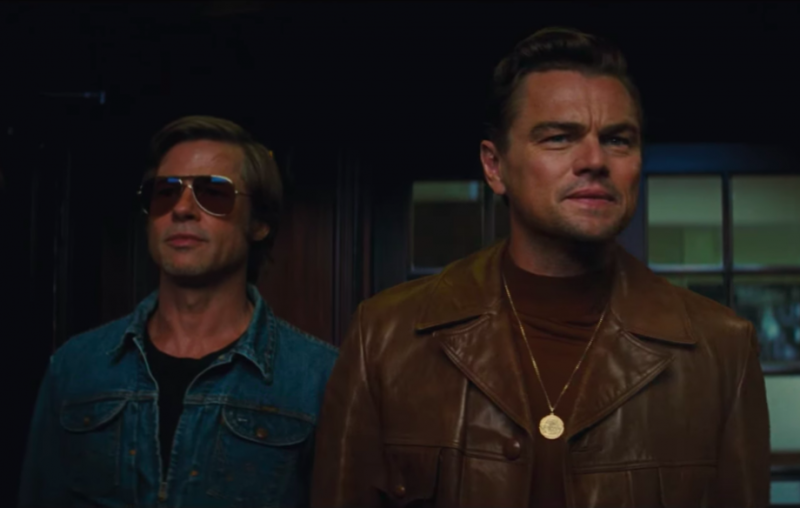
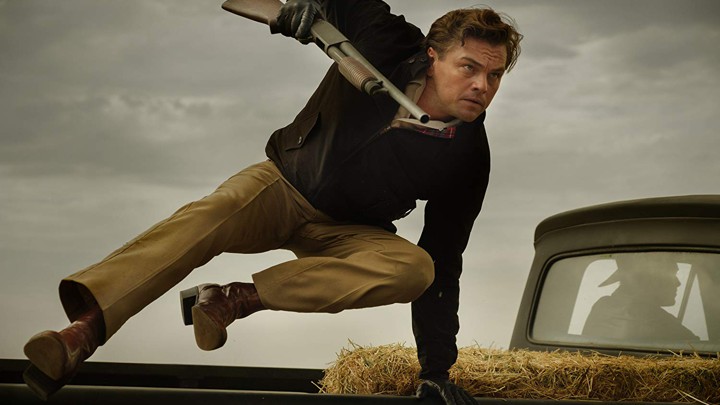
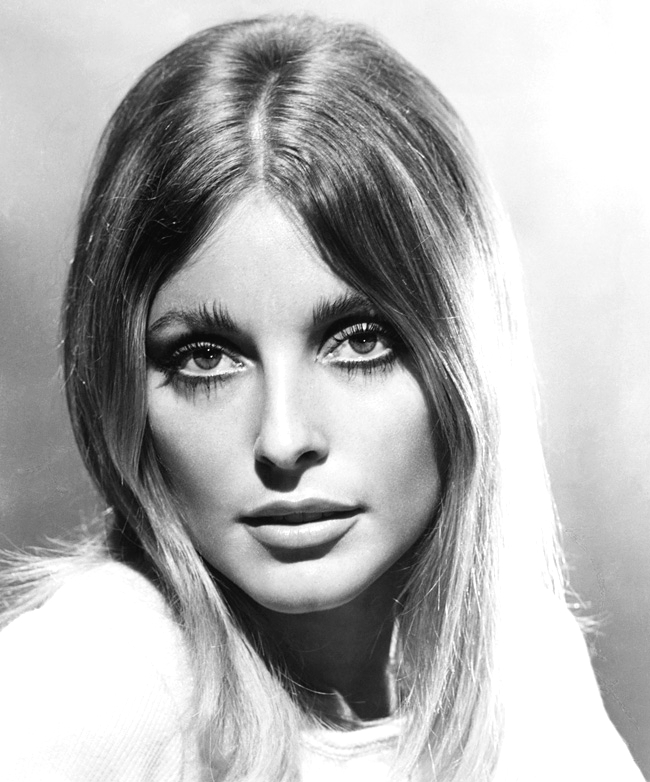
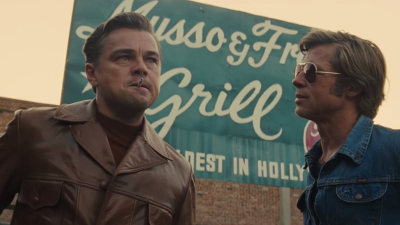
Here, it’s Hollywood, 1969, where ageing, ex-Bounty Law star Rick Dalton (Leonardo DiCaprio), insecure about his future, worrying he’s a wash-up (“It’s official, old buddy, I’m a has-been.”), and wondering about the emerging, younger talents and wunderkinds of the film world – like the neighbors he discovers living next door to him on Cielo Drive: Sharon Tate (Margot Robbie) and Roman Polanski (Rafal Zawierucha). Rick is a heavy drinker, an alcoholic, with enough drunk-driving offenses that his closest friend and confidant, his stunt double, tough but charming Cliff Booth – a man with a mysterious past, shrouded in darkness – has to drive him everywhere. That can be a big deal in Los Angeles – when someone else has to drive you everywhere.
6a00d83451cb7469e20240a481acc7200c-800wi

And so here we follow Rick and Cliff and Sharon. We follow them as they talk, drive, work, run errands and, by the end, a hell of a lot more. They are living their lives. There’s Sharon, driving around, seeing friends and watching one of her movies, in one of the picture’s most beautiful and charming scenes. As Tarantino said, “When Sharon’s on screen we need to slow everything the fuck down. Just slow the whole damn thing down and just hang out with her… it’s about behavior; it’s about what people in Los Angeles do.”

And that leads up to that tragic, horrifying August night in 1969…

The result is a poignant, elegiac Tarantino masterpiece – one of memory and history and myth and darkness and humor and sadness and mystery and tragedy and love. And that brilliant, incredible ending… it leaves one breathless, and then by its final moment – many of us are moved to tears.
6a00d83451cb7469e20240a4bfe322200d-800wi

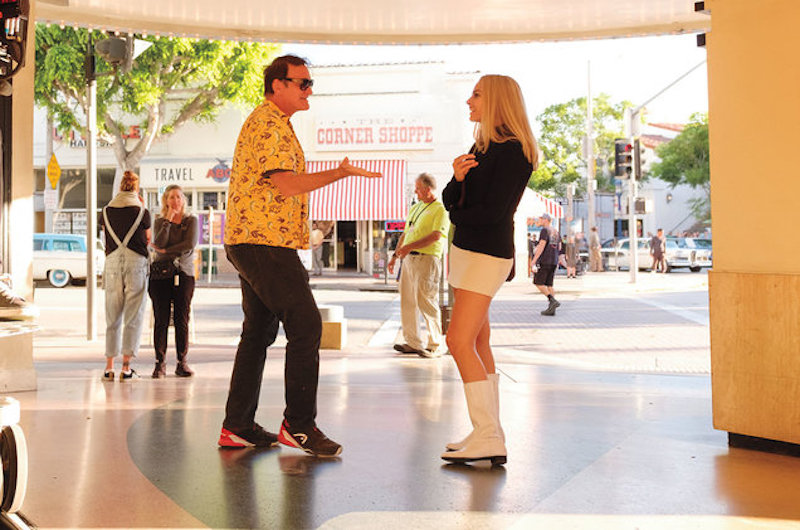
Tarantino met me at his house in Los Angeles, and we talked at length about many things. Parts of this interview are excerpted from my September Sight & Sound cover story on Tarantino (pick up, or order digitally that issue, and read more of that interview – we talk about the genesis of the movie, Tarantino’s writing process, Sharon Tate and more here). As said, our discussion went on far longer, and so I’ve added more of it here, for the New Beverly – still condensed and edited (because the interview was even longer!). We talked about Los Angeles, about movies, about music, about Ralph Meeker and Vince Edwards and Toni Basil, about Sharon Tate’s talent, specifically in The Wrecking Crew which Robbie as Tate watches in a movie theater, (Tarantino said: “Sharon does her pratfall, our audience in the theatre laughs. So, I love that Sharon’s getting a laugh. The real Sharon Tate gets a laugh…”), and about the movies he watched in preparation for Once Upon a Time… in Hollywood and, of course, about the film itself, his ninth. And a whole lot more.

This is a movie you can’t stop thinking about. This is a movie that you want to see over and over (read my long deep dive into this movie here). And reading this interview now, which was conducted in June, before the movie opened (so we couldn’t talk spoilers, and I omitted discussion that veered there – specifically the bravura ending set-piece), there’s even more I now want to talk to Tarantino about – more questions. With that, I’ll go see the movie, which I’ve already watched numerous times, again…

6a00d83451cb7469e20240a4bfe527200d-800wi

Kim Morgan: In your film, there’s the myth-like idea of LA and the geographical idea of LA, and you’ve merged them together beautifully: all of those gorgeous shots of Cliff driving – everyone drives a lot, of course, this is Los Angeles, except for Rick Dalton [who has too many drunk driving incidents]. And the way you’ve recreated 1969 LA, the movie posters, the radio channels in the car, looking out at all that – it’s mythical and real.

Quentin Tarantino: I gotta tell you something. We can get actual photos of what Sunset Boulevard looked like in 1969 or what Riverside Drive looked like, or Magnolia, we can do that. And we did it. But the jumping-off point was going to be my memory – as a six-year old sitting in the passenger seat of my stepfather’s Karmann Ghia. And even that shot, that kind of looks up at Cliff as he drives by the Earl Scheib, and all those signs, that’s pretty much my perspective, being a little kid…
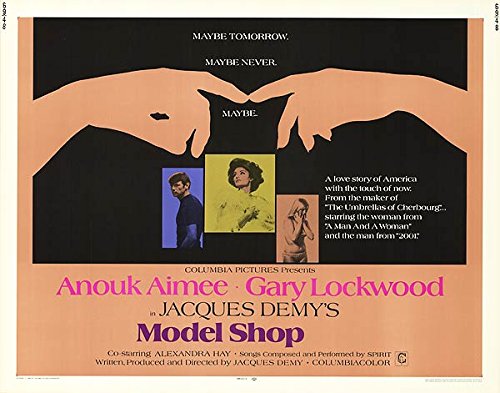
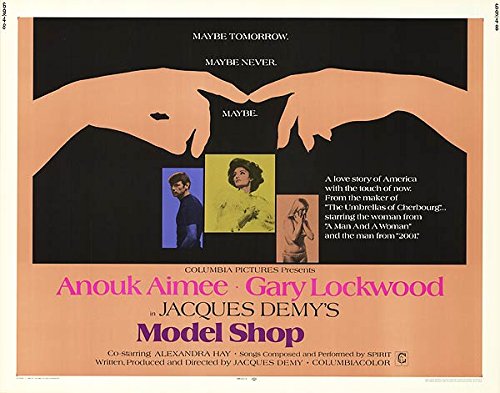
6a00d83451cb7469e20240a47008b8200c-800wiKM: We’ve talked a lot before about Jacques Demy’s Model Shop – I think he would have loved this film.

QT: Yeah. “The Umbrellas of Van Nuys”; “The Young Girls of Toluca Lake” (laughs). Again, that’s an aspect of a memory piece because I remember what it was like. But, also as a little kid – and probably now too, but especially as a little kid – you see what you want to see. You throw the things you don’t care about out of focus and you throw sharp focus on the things you care about – so… I’m looking out the window and see Los Angeles out in front of me and I’m being more selective about what I’m looking at as opposed to Demy in Model Shop. So, it’s the movie billboards and it’s the soda pop billboards. I’m not seeing the Geritol billboard, but the Hollywood Wax Museum with the Clark Gable picture. And so, in doing a memory piece, I create that landscape.

KM: So, who is Rick Dalton based on?

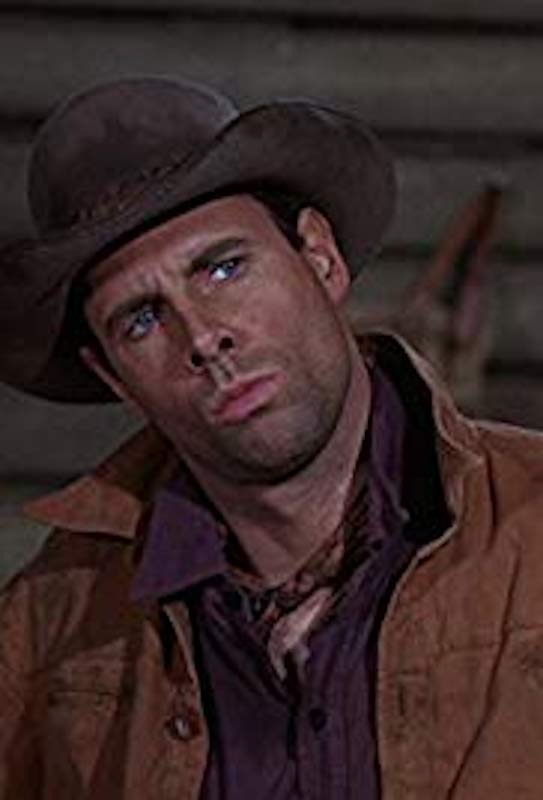
QT: I like talking about these guys. George Maharis, Ty Hardin, Vince Edwards, Edd Byrnes, and Fabian a little bit, and Tab Hunter a little bit too… So that sets [Rick Dalton] up, he’s not of this generation, he’s not a New Hollywood type of actor – you don’t see him fitting in with Peter Fonda or Jack Nicholson or Donald Sutherland or Elliott Gould or any of these guys. Those are the actors of the time.

KM: Which directors do you think Rick Dalton would have worked with?

6a00d83451cb7469e20240a4bfe3cc200d-800wi
QT
: He would have worked with guys like Paul Wendkos… If he was lucky, he would have worked with Phil Karlson, Leslie Martinson, people like that. One of the things about the actors of that era [and Rick Dalton], like I said, they were status-conscious, so they would love to be in a Burt Kennedy western. Not because they think Burt Kennedy is the greatest director in the world, but because he makes movies for Warner Brothers. And 20th Century Fox… If Rick were offered an AIP [American International Pictures] movie, [he] wouldn’t do it: “Well, of course, I’m not going to work for AIP. That’s where the losers work. That’s for fucking Ray Milland. That’s for fading stars like Milland and slumming stars, like Bette Davis, and phony non stars like Vincent Price and Fabian.”
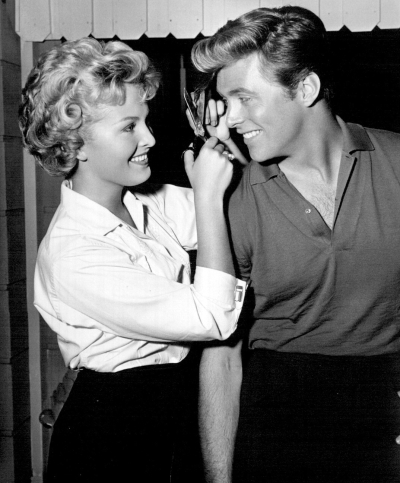
Marianne-Gaba-with-Edd-Byrnes-from-TV-show-77-Sunset-Strip.-Gaba-was-a-guest-star-on-the-show-and-requested-a-lock-of-22Kookies22-hair-to-which-Byrnes-obliged-January-1960KM: And his career could have been different had he worked with AIP or something like that…

QT: In that chapter I wrote on [the book about] Rick’s career, “The Man Who Would Be McQueen”, I actually have that in that version, and I did it in a scene with Marvin. OK, Rick’s contract is over with Universal and now he’s a free agent and having to fend for himself. In that prose, I’d written that he did get one offer for a movie after the Universal contract was over. The movie offered was John Cassavetes’ role in Devil’s Angels, which was Roger Corman’s follow-up to The Wild Angels. And he turned it down: “I’m not gonna work with Corman. I’m not gonna work with AIP. That’s junk.” These TV guys were taught: if you’re gonna be a TV star, you have to be likable. But so, he’s using old-world rules. So those are all reasons that Rick would have said no, but the reality is, that that would have given Rick everything he wanted if he had done it. It would have been his one, along with “The 14 Fists of McCluskey” – his one genuine hit. This wouldn’t have been a movie that is stuck with the other movies in the early part of the 60s. It was zeitgeisty. This was a movie that actually young people would have went to see.

KM: Yeah. And he would meet people like Jack Nicholson, he would have met Bruce Dern [who plays ranch owner George Spahn in the film] …

QT: Absolutely! And, I had it, that actually AIP was really into the idea. So, if he had done Devil’s Angels, they probably would have plugged him into like, three other biker movies that they had on deck… He would have been a young people’s actor. But through his class consciousness, he threw it all away and wonders why he’s standing on the outside of a cultural shift.

KM: And … Rick Dalton is in his late 30s in 1969, he’s getting older, but even Nicholson and Bruce Dern, though younger than Rick, and a different generation, they were in their early thirties by 1969…they had already worked for a while, and on TV, and worked in AIP films…

QT: No, but you’re right though – Nicholson – Bruce told me that he and Jack killed themselves trying to get on western shows. And I mean, guesting on them… The Virginian is on for nine years – Doug McClure and James Drury stayed there, but then the rest of the cast like rotates every four years…. They wanted to get on a series… Like Nicholson would have loved to have been on The Virginian in its sixth season. Bruce said, at that time, we wanted Robert Fuller’s career (laughs): “We wanted to be on our version of Laramie we wanted to join Wagon Train in their color years.” (laughs) Bruce Dern actually did get on a show – he and Warren Oates were Jack Lord’s sidekick on the show, Stoney Burke … and Bruce Dern said “Oh, it’s one of the worst jobs I have had!” And I asked, “Why?” and he said, “Well, I’m on it for like two fucking years and every week it just boils down to a reaction shot of me watching Jack Lord – the biggest prick in the business – riding a bucking bronco and yelling “You got it Stoney! Ride ’em Stoney!” (laughs) “That was like, my part!”
MV5BZTcwZGQyYTEtM2ZiNC00ZDA1LTg5ZTYtMGI3ZTczNWMxN2Y5XkEyXkFqcGdeQXVyNTM3MDMyMDQ@._V1_UY268_CR87 0 182 268_AL_KM: Bruce Dern has such a long, wide-ranging career and worked with guys like Rick. He must have had a lot of stories.

QT: He [played] such interesting bad guys on these western shows, like his characters in the stuff he did in ’64 or ’65 or ’66 could be a main character in a 70s western. Like he did a Big Valley episode where it’s him and Lee Majors doing a lot of stuff together and he’s a bounty hunter, but his whole thing was to dress like a priest, so if you’re his bounty, he approaches you on a horse, with a collar and the black frock and the bible, and he asks to have some beans at your little campfire and you say yes because he’s a priest, and then he shoots you dead. (Laughs) That’s his modus operandi. That’s a fucking great character…. Bruce Dern, all those guys: Robert Blake, Burt Reynolds… they remember every episodic television director they ever worked with, Bruce better than all of them. If you name an episode and the director, Bruce will tell you a little story about that guy…

KM: Well, that was smart, considering who some of those guys were who were directing episodic television, like Sam Peckinpah…

QT: Well, actually, of that whole group that I call the post-60s anti-authority auteurs, a lot of them came from television. He’s the only one whose television work represents his feature work. I mean, like the only one. Mark Rydell can direct a really good episode of Gunsmoke and Michael Ritchie can direct a really good episode of The Big Valley, but they don’t necessarily look like [Ritchie’s 1972 film] The Candidate. But Peckinpah’s stuff, even the scripts he wrote that he didn’t even direct, have a Peckinpah feel – the way I think there’s a Corbucci West – suggest a Peckinpah West. That even in his random episodes that he wrote for Gunsmoke – it’s right there.

KM: And then Dern must have had some thoughts about 1969 in particular…

QT: Yeah, he had a huge memory because one of the weird dichotomies going on was everybody, [Dern’s] whole circle, is blowing up and becoming superstars, and he’s still stuck doing this episodic television stuff and doing this B-movie stuff and playing western scoundrels in these other movies, while Peter Fonda and Jack Nicholson and Dennis Hopper are starting to run the damn town. So, look at it in perspective – so, in 1970 Jack Nicholson does Five Easy Pieces, directs Drive, He Said, and then is brought into On a Clear Day You Can See Forever to bring youth appeal to the movie. That year Bruce Dern guested on a Land of the Giants and starred in The Incredible 2-Headed Transplant. (Laughs) He also gives the best performance in Drive, He Said, but all that had to be hard for him. But it all changed the next year. The next year he does The Cowboys and Silent Running.

KM: How much did you work with Burt Reynolds before he sadly passed away? He must have been great to talk to.
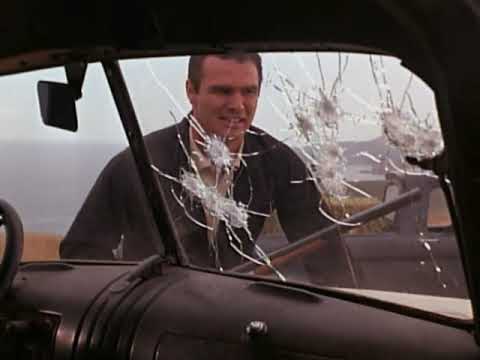
HqdefaultQT: When I was getting to know him, I was really taking advantage of that: I’ve got Burt Reynolds to talk to, and he understands the politics of this movie, of where Rick’s coming from. So, I’ve spent my whole life hearing Burt Reynolds tell stories on talk shows, so our time spent together was him telling Burt Reynolds stories, and me telling Burt Reynolds stories. And I was just trying to ask him everything I could. What did he think about Sergio Corbucci? What did he think about Raquel Welch? What did he think about Jim Brown? And so, we’re doing this script reading and we have a break in the middle, and Burt was pretty fucked up in terms of his mobility: when he sits down in the chair, he’s gonna be in the chair for a while. And so I’d get up, and walk around, he’d be at the end of the table, and I’d sort of get down on my haunches and start talking to him, and every time I’d see him, I’m thinking, “Who am I gonna bring up this time?” I’m gonna ask him about William Witney. And I gotta set this up a little bit. Now, he only worked with William Witney three times. Three episodes of “Riverboat” in the 50s – that’s it. Now, I’m expecting him – I’m gonna bring this up and he’s not going to remember. So, I ask him, “I wanna ask you a question about the show you did, Riverboat. And he says, “Oh boy.” And I say, “Look you probably don’t remember who he is, you only worked with him three times, but you worked with a director named William Witney. Do you remember him?” [Reynolds says,] “Of course I do.” One of the perfect Burt Reynolds line reads. [I say,] “Oh. You do! Wow. Great. Well, I think he’s terrific. I mean, I think he’s one of the most underrated action directors that there ever was, and especially westerns.” [Burt says,] “I agree. You’re very true. William Witney was under the belief that there was no scene that had ever been written that couldn’t be improved by a fistfight. And that’s kind of the way the guy would direct. You’d be standing there doing a scene, and he would be like, ‘Cut. Cut. Cut. You guys are putting me to sleep. Here’s what I want to happen. You say this, you say that, you say this, you say that, now you get mad at him and you punch him. And now you’re mad at him, so you punch him back. And now we have a scene!” (Laughs) I can’t guarantee, but I can practically guarantee that nobody has brought up William Witney’s name to Burt in 55 years, and I bring it up. Not only does he remember the guy, he has perfect Burt Reynolds stories – ready to go, as if he’d been telling these anecdotes for years because they were funny. He has a perfect description, and they are all funny and they all have a punchline to them. Those are not ready-to-go-to stories. He just pulled it out of his head from 50 years ago. It was just a masterful moment. And it is like, “This is the most charming man who maybe ever lived.” …

6a00d83451cb7469e20240a4bfe342200d-800wi

KM: Speaking of Witney [Rick has a William Witney The Golden Stallion poster hanging in his house] …though I’ve seen some things, I feel like Witney, who you love, is still not really discussed enough, not that I’ve seen anyway, but I’m sure I’ve missed something…

QT: Well, people have given me some things – like Films in Review, in the 1970s – had a piece on him that was really cool. And somebody sent me a Cahiers du Cinéma article… but they were talking about random things… It was kind of funny because I went to a big event in France and Bertrand Tavernier spoke about me at the event and he said, “Quentin is a film fan and a film scholar. And I am a film fan and a film scholar. And we have similar tastes and similar obsessions and interests. However, I have one thing over Tarantino that he will never have! I have it and I’m very proud that I have this over him. I have met William Witney! And he will never meet William Witney!” (laughs) I met William Witney’s son…

KM: William Witney lived a long time – he died in 2002 if I’m not mistaken…

QT: When I first did my piece on him… he was still alive. But he was a little out of it…

KM: That is nice that he got to probably know that, that he was able to see your appreciation…

QT: Yes, they said that. He can’t talk, but his family has passed on to him my admiration… [But] he was so unknown that he wasn’t even included in the Oscar Farewells.

KM: As for Rick Dalton – who do you see in the future, who he could have worked with…
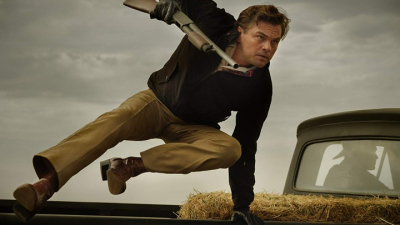
Lead_720_405QT: We did that thing – the alternative careers Rick could have. He could have had the George Maharis career – which is basically, he’s always Rick Dalton, he’s a name, but he goes into the 70s, and he continues on as guest spots. He’s on The Streets of San Francisco, he’s on Cade’s County, he’s on Shaft, he’s on Cannon he’s on Barnaby Jones – those kinds of shows. Shows that didn’t survive that long – a show like Chase – things like that. And doing the random TV movie whenever it would come up SST: Disaster in the Sky, I can see him in that. Now, oddly enough, it’s interesting because in the George Maharis version of a career is, one of the roles in a late 60s movie that you can imagine – I mean one of the roles you can imagine him in is The Great Escape, or you can imagine him in a great “masculine” adventure from ‘64 or ‘65 or ‘66 – whether it be a war film or a detective movie or a cop movie or a western. But, a new Hollywood movie, that he could have been in, one that he could have been cast in, and a role that he could have been good in, is as Rosemary’s husband, the Guy Woodhouse role in [Roman Polanski’s] Rosemary’s Baby – [the role] that John Cassavetes plays. And, I mean, I actually don’t think Roman [Polanski] would have cottoned to Rick. I think Roman would have been immediately suspicious of a guy like Rick…

KM: Interesting… Well, he did reportedly have problems with John Cassavetes too …

QT: And he had problems with McQueen…He hated McQueen. He talks about it in his book… and McQueen didn’t like him. When they, Roman and Sharon [in the movie] show up at the Playboy Mansion, and Sharon runs up to Steve, Roman didn’t like it, but Steve was one of her big friends when she moved out here, so he had to put up with it. But the first thing McQueen does is he picks her up and spin her around … so that’s the kind of dynamic they have. But having said that though, while I don’t think Roman would have cottoned to Rick all that much, if he had met Rick especially, and Rick could have come in and read for Guy, I think he would have thought Rick is very much like this guy. And I actually think Polanski would have thought that was good casting. And it would have been good casting. Now, the interesting thing is, if Rick actually had George Maharis’ later career in the 70s, that would have included Rick playing that role eventually, because in the mid-70s there was the TV movie Look What’s Happened to Rosemary’s Baby, starring Patty Duke, who was actually considered for the role, in the original movie. In [Look What’s Happened to Rosemary’s Baby] she [Duke] played Rosemary, and George Maharis played Guy Woodhouse. But then if you also look at Edd Byrnes. His Italian western career is, more or less, what I modeled Rick’s career on – his Italian spaghetti western career. [And] when he came back it was like he wasn’t even famous anymore… His name didn’t mean anything. He’s just like a regular working actor now. And so, he continued to work in episodic television and things, but he wasn’t like George Maharis or Vic Morrow guesting on your show, he’s just Edd Byrnes, another actor. And it was pretty degrading frankly. But then that changed when he was put in Grease, because his whole persona was brought up again, and you have the whole aspect of mothers taking their daughters to take Travolta, and saying, “Well my Travolta in my day was that guy.” And then that actually made him famous again. And so, then he continued to do episodic television shows, but now he’s Edd Byrnes again, so now he had the cache. He had a big up-spike in popularity. So those are those careers.

KM: We were also talking about Vince Edwards before…

1962 VINCE EDWARDS

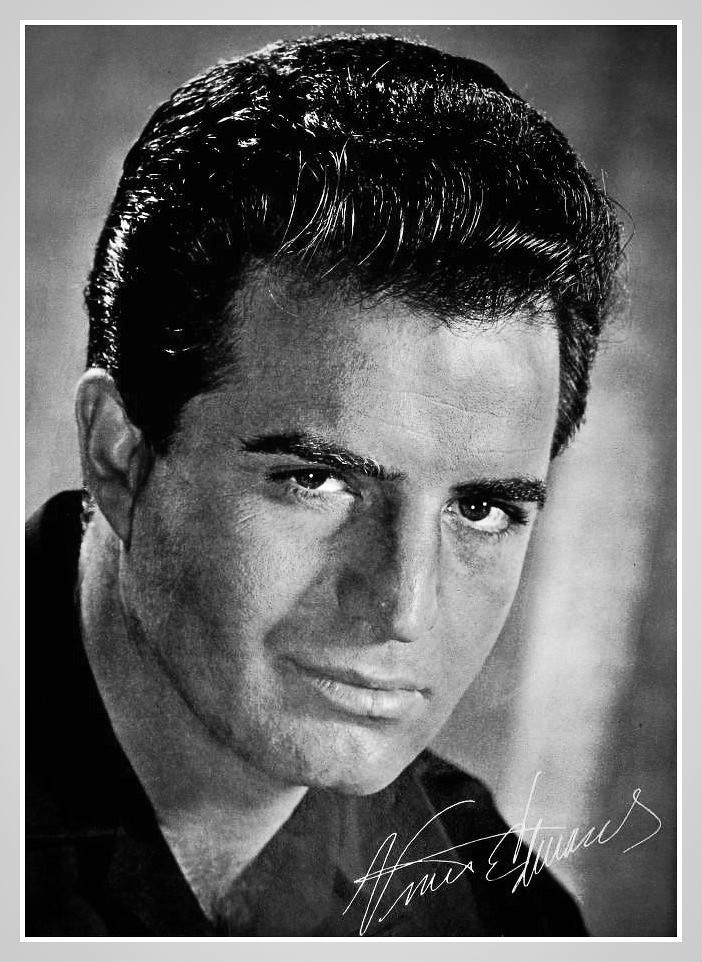
QT: Vince Edwards, on the other hand, never did really guest on other people’s stuff after he became big, into the 70s, but he had his own series, for a while called Matt Lincoln but it didn’t quite last. But big guest stars and ABC, they put a lot behind it. But – Vince Edwards – like Vic Morrow, like a lot of these guys who were big-time guest stars on shows and starred in some really good TV movies in the 70s. And would appear in a couple of exploitation things at the same time and then kinda got – what happened to a lot of these guys – the later career. From a lot of these more 50s leading men was the later television career – where in the late 70s, you’d see them get in another series, but on that series, they wouldn’t be the lead, [and] it would usually be a cop show, and some young cop, whatever the deal is, the star, and they’re [the older actors] are their boss. The guy who sends them on their mission. Or who reprimands them when they cross the line. And actually, Vince Edwards had a show like that with David Cassidy… David Cassidy is an undercover cop and he’s sending him on missions. But that’s similar to Jack Kelly being Christie Love’s boss on Get Christie Love! or Earl Holliman being Angie Dickinson’s boss on Police Woman. Vic Morrow was on the show B.A.D. Cats which starts a Dukes of Hazzard kind of thing… Of all of those [guys], I would actually think the Earl Holliman character in “Police Woman” would probably be the best fit for Rick. And then you have somebody like Ty Hardin who, in the early 70s, who went off to Australia to do a show called Riptide and it was a very successful show. But as far as America was concerned, it was like he just disappeared – the show never got syndicated. But that happened to a lot of [those] guys. Robert Vaughn went to England and did the show The Protectors. So, someone would do, like, a weird German show, and they’d be a superstar in Germany, but no one knows what happened to them out here. But now, all that… that keeps Rick in the box he’s in and he never kind of broke out of that. But there is another world where, another alternative version, in post 70s kinds of thing…

KM: What’s that?

QT: I think Rick and Tom Laughlin were friends, and so they did some things together, so I can actually see Tom Laughlin casting Rick in the Kenneth Tobey role, the sheriff, in Billy Jack and that would be a big role, in a movie that was a smash hit, very zeitgeisty, very hippie-ish movie, that young people would have seen. And I can see Rick doing a good job in that role.

KM: He really would have…

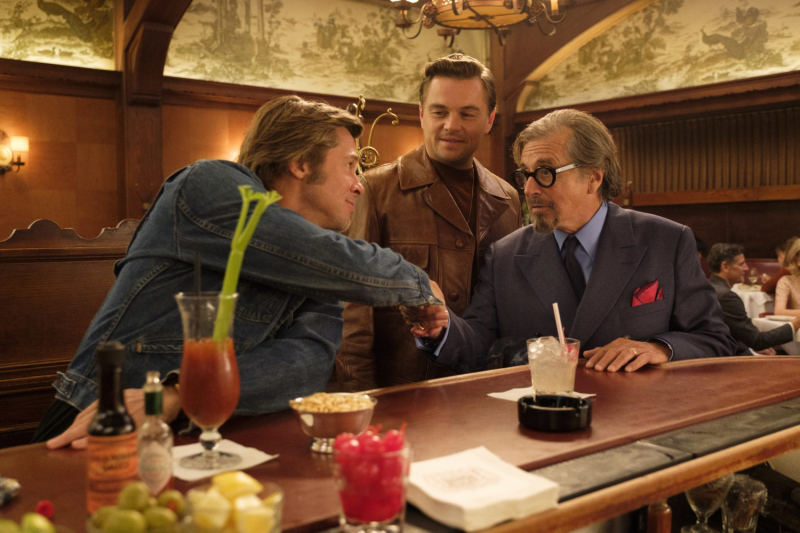
6a00d83451cb7469e20240a4aaf48a200d-400wiQT: But there is also something else – that suggests I think there’s a suggestion that something else could have happened for Rick – a better future for Rick. But I wouldn’t want to say what the future is for Rick. I would want the audience to come up with it on their own. Because if I say what that future is then that becomes the future. I’d rather use these other examples. But here’s the thing – when Rick meets Marvin [played by Al Pacino] at Musso & Frank, I don’t think Marvin says it out loud, but it’s gotten across that the culture has changed, and he’s on the outs. You know, it’s 1969, and Rick still wears the pompadour. He puts pomade in his hair … even Edd Byrnes didn’t wear a pompadour anymore. He was famous for doing a hair spray commercial where he said “I used to be Kookie … the dry look is where it’s at baby!” So, that sets him up, he’s not of this generation, he’s not a New Hollywood type of actor – you don’t see him fitting in with Peter Fonda or Jack Nicholson or Donald Sutherland or Elliott Gould or any of these guys. Those are the actors of the time. But, I think when Sam Wanamaker the director of “Lancer” puts the mustache on him and puts the longer-haired wig on him, and the hipper jacket, I think Rick has never seen himself that way … Rick has kept one hairstyle his entire career… he’s had one look his entire career … even when he goes off to do the spaghetti westerns, the outfits you see him in seem a little flyer that the stuff he wore on television… So, I think you see that he could be a 70s actor, he could be a New Hollywood actor and the performance that he ends up giving in his last “Lancer” scene that we see, that suggests more that type of actor…

KM: Yes. And Trudi [played by Julia Butters] is impressed – she says it’s the greatest acting she’s ever seen…

QT: Yes. And he’s playing a real sadistic bad guy. Not just a standard-issue bad guy of the week. He’s actually playing almost like he’s a Hells Angels gang. And all of those rustler guys with him are his gang mates… But I like the fact that with that long hair and that mustache and the cooler more zeitgeisty jacket, is this could be the guy he could be …

KM: What was with critics not liking what was called, well, a derogatory term then, spaghetti westerns? How could they not see the beauty and innovation when they watched those movies? The music? It baffles me to this day. Even Rick Dalton didn’t want to make them…

QT: Look, the answer, when it comes to Rick, when it comes to a lot of the Hollywood actors out there at the time who grew up on American westerns and doing TV westerns, and even the critics, that, at the time, grew up with American westerns, it was a combination of a generational divide that they couldn’t see it. And, a healthy, healthy dose of xenophobia. A healthy, healthy dose. It was like, “We’re Americans! We make westerns. This Italian’s doing this? It’s just fucking ridiculous. It’s fucking ridiculous that Italians would try to do westerns. This is our thing. Fuck those guys they don’t know what they’re doing – it’s crap.” And generationally they couldn’t understand it, they couldn’t see the innovation, they just couldn’t see it. But just xenophobically they rejected it on general principle. But that wasn’t even new, the Italian westerns are the later generational biggest examples, but I mean, like, guys in Rick’s era, they were pissed that Dean Martin’s in Rio Bravo. (imitates voice) “Eh, that fucking spaghetti bender in fucking Rio Bravo, what the fuck is that about? Get that guy out of here.” That’s just how they talked, it’s how they thought…

KM: And you love all those [different] eras of westerns…You embrace classic westerns, you love William Witney as we talked about, and then Howard Hawks’ Rio Bravo and obviously revisionist westerns…

QT: You know, Burt Reynolds [was] dining out, through the 70s making fun of Navajo Joe on talk shows.

KM: I love Navajo Joe!

QTNavajo Joe is great! It’s great!

KM: Yeah, he did make fun of it…

Navajo-Joe1QT: He was constantly making fun of it. “Oh, I’m wearing a Natalie Wood wig.” And he would describe on talk shows the post synchronization aspect where everyone was speaking their own language … His joke used to be (imitating Burt Reynold’s voice), “Navajo Joe, a movie so bad they walked out on it on airplanes.” (laughs)

KM: Yes. Ha.

QT: Even when I got on the phone with him, I was like, “OK, I got a bone to pick with you, you’ve talked shit about Navajo Joe forever and you’re wrong.” [He asks], “What movie?” [I say], “Navajo Joe.” [Burt says], “You can’t like that movie!” “[I say], “Yes, of course I like that movie, it’s fantastic and Sergio Corbucci is like one of the great western directors of all time.” [And Burt says], “Well I didn’t say I didn’t like Sergio! Sergio was great!” (laughs)

KM: And in spite of what some critics think, Rick and Cliff are not based on Burt Reynolds and Hal Needham.

QT: They wish they had those guys’ careers.

KM: And so, what about Cliff? Is Cliff a composite of anyone?

QT: That’s a really good question. Cliff is based on two things – it’s when I worked with an actor, I can’t say his name, who had once had a long-time stunt double. And we really didn’t have anything for that stunt double to do. But there was one thing he could do and so the actor would ask, “Can my guy do that? I haven’t bugged you about him because there haven’t been many things for him to do, but that’s something he could do, and if I could throw my guy that thing, that would be really great.” [I say,] “Yeah, sure, OK, bring your guy in.” And so, this guy shows up and it’s like they’ve been working together for a long, long, long, long time. But you could tell, OK, this is the end. Because everyone’s gotten older. And it was also interesting, because I tend to talk to stunt guys like they’re actors, because that’s how I like to talk to people who are in my costumes, and I learned really quick that this guy, who was a great guy, he’s not here working for me, he’s working for the actor. And so, he did one of his stunts and I asked, “Hey, are you OK?” And he said, “Yeah, I’m fine, fine.” [I ask,] “Are you happy with it?” [And the stunt guy says,] “If he’s happy with it, I’m happy with it.” And I thought that’s an interesting dynamic. I thought, if I ever do a movie about Hollywood, that would be an interesting way in because I don’t think I’ve ever seen that before. But then another actor I worked with mentioned a stunt guy. And this guy was like the closest equivalent to Stuntman Mike [played by Kurt Russell in Death Proof], and although he isn’t like Stuntman Mike, he’s a notorious guy. And he was never a big stunt guy, he was never a stunt coordinator, but he’s done enough to be legit, and people know who he is. But there were three things about this guy that were absolutely indestructible. He could not be hurt. He could do nine stair falls that would put some of the greatest athletes you’ve ever seen in the hospital after one, and he could do it nine times in a row. Two, he scared everybody. Men who pride themselves on not being intimidated by other men were intimidated by this guy because he was just dangerous. If he wanted to kill you, he could have, and he was just a little off enough. And the third is, he killed his wife on a boat and got away with it.

Ouatih-cbprev-main1KM: Cliff also has a real likability and charm about him…

QT: But I think this guy did too. But [Cliff] he knows how dangerous he is, so he’s clamping down on the monster that’s inside of him and he’s actually quite Zen about the whole thing. But that monster is always there.

KM: Yes. And also Cliff seems like he’s a little calmer in his way… or so we think, he’s certainly mysterious …

QT: He’s more than that, I think that’s one of the things that’s actually very funny about the twosome is by comparison, Rick has everything and he’s completely unsatisfied, and by comparison Rick has a great life, but he can’t see it. He keeps getting in his own way. All of his anxieties and dilemmas are of his own making to one degree or another. Where Cliff is Zen. Cliff … knows he could be in jail for the rest of his life, so anything that happens to him, and if he’s not in jail, is all great…

KM: And what made you return to LA with this movie? It doesn’t feel like a nostalgia piece – did you feel a deeper understanding or something else you wanted to say?

QT: No, I didn’t want it to feel nostalgic… I came up with those characters… I did like the idea of taking on the industry I did spend the last 30 years in, but doing it from a more historical perspective.

KM: I’m thinking of how Leone was mythologizing our west, and of course the “Once Upon a Time,” the fairy tale quality – you are doing it too, but you also live here, and there is a haunted quality to all of this. And Los Angeles still feels that way – not just driving up to Cielo Drive, but going past houses and places here. Like the real Jay Sebring [played by Emile Hirsch] who lived in Jean Harlow’s old house [the Harlow/Bern house where Harlow lived with husband Bern] where Paul Bern killed himself and where Sharon Tate visited and lived with him for a while, and Tate thought it was haunted…

QT: Yeah. Not only that, we shot there. We had a whole big scene there but we ended up cutting it out… But when Jay is working out with Bruce Lee, that’s at Jay’s old house – the Jean Harlow house – with the faces, carved into the wood…

KM: You only use the one scene of Manson [played by Damon Herriman] himself, and he’s coming up to Tate’s house and I was thinking about the 60s in Los Angeles, specifically, not the 60s or counterculture in New York or in San Francisco, which was a different vibe, I’m thinking. And before Manson and through the 60s – you hear it in two masterpieces, The Beach Boys’ “Pet Sounds,” you hear it in Love’s “Forever Changes” – that there’s some kind of darker feeling because of the sunshine in LA – there’s this sort of beautiful but crazy element of chemical imbalance of the sun and the darkness in this city…And you really feel it in this movie…

1_MansonQT: More than in San Francisco which is so compact, and more than in Manhattan, which is so compact or Greenwich Village which is so compact, the hippie culture [in LA] started having a more effect like Nomadic tribes…because everything is spread out, and it’s easier to have a commune out here. And people were like, “Oh, so-and-so are away for the summer” and so they just take over their guest house… And people not literally having addresses. People just moving from this couch and this situation to that couch and that situation…

KM: I think driving is so cinematic and there’s so many connections made via car in your movie – and, as we talked about this with Model Shop, that Jacques Demy totally got this…

QT: What better way to get Los Angeles across? If we were in New York and I was staying in Greenwich Village, you might take a subway there, you might even walk there to do the interview. Here, you drove! (laughs)

KM: A lot of things can happen along that drive!

QT: Exactly (laughs)

KM: So, I really got the interconnections that happen – when Rick first sees Sharon Tate and Roman Polanski, in person, it’s from his car. And the first time Cliff sees Manson girl, Pussycat [Margaret Qualley], it’s from the car. And then when Sharon Tate picks up the hitchhiker (I love this whole scene and sequence), and it shows the generosity and sweetness of her…

6a00d83451cb7469e20240a496adc1200c-800wi

QT: It also shows that she’s down with the new culture. And it also shows how ubiquitous hitchhiking was back then. I mean, people just did it. They just did it. It was the way.

KM: In that incredibly creepy Spahn Ranch part of the picture, I like that you’re showing how all of the Manson members are hanging out at that ranch, watching TV. It’s like they’ve spent the day watching TV…

QT: Oddly enough, that was something that had deeper levels in it because the thing is, Charlie [Manson] didn’t let watch them TV…

KM: Oh, and so he’s gone in that moment…

QT: Yeah, he’s gone. So, when he was gone, they’re watching TV. [And] everyone was jealous of Squeaky because she was always up at the house, so she had TV watching privileges. So literally in my conception is that, well, Charlie’s gone so she has them all come up and watch It’s Happening – watching a youthful music show. But if Charlie was there, they would not be all up in there. But even the concept of everyone always has a TV on, everyone always has a radio on. It’s going on constantly. And that’s how I remember it.

KM: And that is threaded throughout the film, which I love. You hear the radio DJs, you hear the music, you see the TV shows, you see the movie marquees all around them…Movies and mythology are all around you, and yet there, in terms of what their lives are, the reality around Rick and Cliff… They’re outsiders in some way, in the insiders’ world…

QT: The insiders who have become outsiders.

KM: And I love that Cliff lives right next to the drive-in (and that gorgeous shot) – movies all around… I also thought, wow that would be great!

QT: That’s the One from the Heart section of the movie (laughs) where everything is operatic and slightly larger than life… but I love that about it. That’s the part that Jacques Demy could have done… (laughs)

KM: There’s so much to say about the music in this film…

QT: One of the best recycling of scores in this movie that I’m really proud of is, there’s this great theme and it’s only used in one scene in Lamont Johnson’s terrific western Cattle Annie and Little Britches, it’s got this great music bit when the Doolin-Dalton gang actually enter the town for the first time and I thought, I wanna use that bit in this movie. And so my music supervisor Mary Ramos, she’s magnificent, she just finds all this stuff but she couldn’t find anything for that… and all I had, I don’t think it’s ever been out on DVD, I just had not only an old videocassette of it, like a Good Times videocassette of it, which means it was done in the six-hour mode… and so I took my audio from the cassette and there’s even talking during some of the musical sequence and my musical editor had to cut it out and he did – he did a good job with it. And so, we kind of made it work for one sequence. But then Mary my music supervisor talked to the composer of it and he said, “Look I don’t have any masters or anything – of any of the things we recorded, but I wrote the piece. I know the piece. Would you like me to do an acoustic version on the guitar and I’ll send it to you?” (claps hands) “Fuck yeah!” So, he just did his own acoustic version with a guitar, put it on file, send it to us. That’s the music we use when Tex Watson rides up to confront Cliff.

KM: That’s a great moment… So, what else about the music… you choose pretty much everything – right?

Beyond_current_mediumQT: Yeah, for the most part, yeah. It was actually interesting because for like five years, I thought about the music… and for instance, an idea I had three years ago, I had a couple different tapes that I’d made that I’d listen to for years as I’d do this movie, this will be the soundtrack. And just to give you an example… I want the movie to be extremely realistic, but the “Once Upon a Time…” suggests that it’s taking place in a vaguely alternative universe. Not that I wanna make a big deal about that, but it is. And I think, when you think, “Once Upon a Time,” that is part of the implication. So, I didn’t want to do anything super big – but I wanted to have little tiny touches, of, “Oh, OK, if you’re hip enough, you got it.” And one of the things that I thought would be kind of cool is …one of my absolutely favorite imaginary bands is The Carrie Nations from Russ Meyer’s Beyond the Valley of the Dolls. And so, I thought it would be kind of cool at some point that they’re driving around and “Look on Up from the Bottom” plays, and the announcer says, “OK, that’s the Carrie Nations, those girls are just tearing it up!” And so, if you’re hip enough to catch it, you’re thinking, the Carrie Nations weren’t a real band, so ultimately this isn’t real… (laughs) If this exists in a universe where the Carrie Nations are real; the Partridge Family are real…

KM: But the Partridge Family kind of are real!

QT: They kind of were! (laughs) Everything was real except Danny Bonaduce’s bass playing (laughs). So, I had that idea but then I also had the idea to have the KHJ, to have most of the music to come out of KHJ. And so, I got about 14 hours of KHJ shows, and literally, the research people came to me and gave me all of this stuff and it’s fantastic. And no radio station or TV station of that era kept anything. So, anything that I’m listening to – these 14 hours, how you got it, oh, somebody in 1968 or 1969 had their tape recorder turned on “The Real Don Steele Show,” and they hit play record and recorded it for an hour.

KM: And that’s what you got? That’s pretty amazing…

QT: And, it’s also kind of interesting because we put a song from my tapes in the movie, and then we’d get the master for it, and we’d realize that our version of it was way slower…because we were going off whoever’s batteries were in [there] from 1969 in that tape recorder. And so, it all sounds fine, but it goes at a slightly slower rotation. And I go, “Well, we have to use that version, because that’s what we cut everything to. We can’t use this other version. And actually, some of them were so different because we’ll get a stereo version but KHJ did it in Mono. So, you get the masters of some of this stuff and it’s not right, it’s just a different song. [And] we gotta make this work. But once I got used to hearing 14 different hours -of hearing KHJ – and kind of making my own version of it, I realized that, if it’s coming from the radio, it has to be the real KHJ show. So, any songs I had in mind of putting in the movie, at least coming from the radio, unless I can find it in those 14 hours, I’m not including it. It just became this integrity thing. And a couple ideas I had, if it’s not coming from the radio I can use. For instance, that song I play when Cliff is walking the gauntlet of the Spahn Ranch and they’re all “Get out of here man, get fucking lost…” that’s actually from the soundtrack from the Roger Corman movie Gas-s-s-s – a great song, I’ve always liked that song, I like that movie too. But one of the things that was interesting to me in listening to the KHJ recordings was the fact that KHJ had a sound, the way the 80s KROQ had a sound, and then other radio stations tried to buy that sound, they tried to take that format and do it in other cities. It was the same thing with KHJ. And it was even kind of interesting the way KHJ would print up their Top 40 or something, and they were so into what they were doing themselves, that their Top 40 wasn’t just exactly based on Billboard. It was a mixture of Billboard, it was a mixture of what people called up and would request, it was a mixture of what the DJs liked, and just a mixture of what they thought was good for the KHJ sound… So, fuck Billboard, we’ll do a little bit of them, but we’ve got our own dynamic, we have our own algorithms that we’re going to use. And, so, I’m listening to them, and you know, I’ve been buying record albums since I was a little boy, and I’ve got a pretty good record collection. And, so, you know, you buy a Box Tops album – Rhino came out in the 80s with “The Box Tops Greatest Hits” and there’s “The Letter” and “Cry Like a Baby.” Is there anything else? Well, yeah, there was. I think I knew this before, but until I listened to the KHJ tapes, I never had it that clear of, yes, The Box Tops definitely had “The Letter” and “Cry Like a Baby” – those were the hits that went national; they were hits everywhere. But, The Box Top’s version of Dylan’s “I Shall Be Released,” “Sweet Cream Ladies,” “Choo-Choo Train,” “Neon Rainbow” – they’re all really good songs and they were played on KHJ. And they did OK on KHJ, they just didn’t break national. And I realized there’s a whole lot of songs like that. You know, like the Buchanan Brothers’ “Son of a Lovin’ Man” – it didn’t go national, but it did really well in Los Angeles and probably a few other markets. And so that was the case. A lot of songs did well, but they only did well in those markets… The whole trick was to have it go national so it was playing on every radio station in America and some of them didn’t breakthrough, but they were perfect examples of the KHJ sound.

KM: So, like the Bob Seger System’s “Ramblin’ Gamblin’ Man”… I have never heard that song in a movie and I love that song…
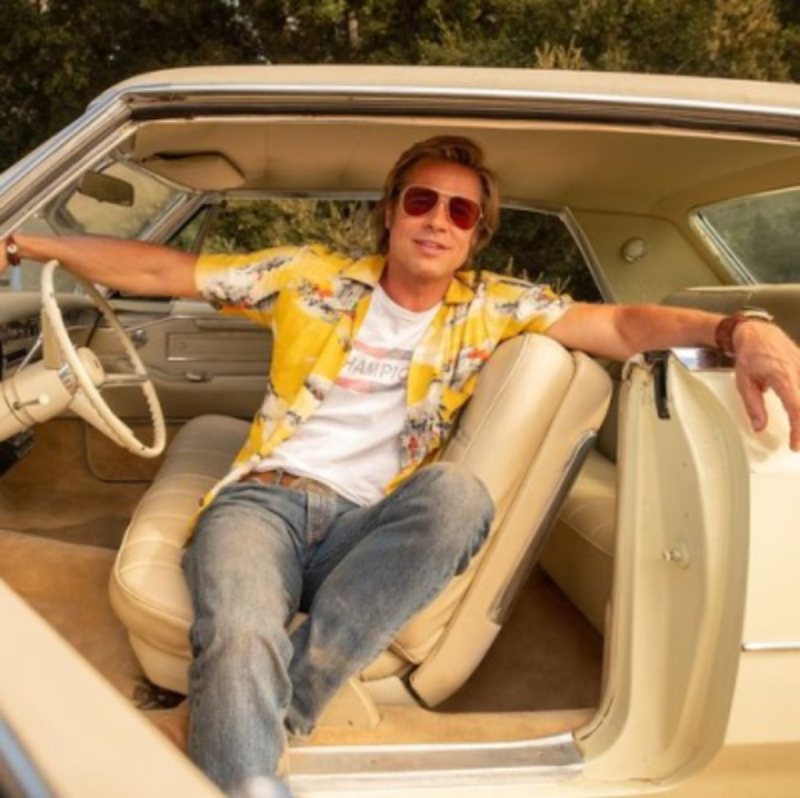
6a00d83451cb7469e20263e944a8ef200b

QT: I had a friend in Detroit say “I never even knew that that song ever played outside of Detroit!” (laughs)… I wanted to play [The Box Tops’] “Sweet Cream Ladies” so much but the only place that I figured it could work – but it’s just too obvious – is when the Manson girls walk in front of their windshield. OK, but I might as well be playing “Baby Elephant Walk” at that point – I don’t like songs being on the money.

KM: It was really moving when you played “Out of Time” by the Stones (outside of the radio songs)… because it just fit perfectly and so beautifully in so many ways – and the gorgeous moment of all the signs lighting up, all that, how that makes one tearful) …

QT: It fits perfectly and it’s terrific. I was a little worried it was too on the money though. I really don’t like on the money…

KM: But it’s just too perfect – and very touching, it’s incredibly moving…

QT: Well, I think why I think it works is… maybe it seems a little on the money in the Rick section and you think that’s what it’s going to be, talking of Rick coming back home, but then when it cuts to Sharon and the lyrics still apply, then it starts becoming heartbreaking. So much that I even questioned using it…

KM: Which movies did you show the cast to prepare?

Sharon_Tate_Valley_of_the_Dolls_1967QT: We watched Valley of the Dolls to see Sharon, but the three movies more or less trying to show Los Angeles at that time [were] Alex in WonderlandPlay It as It Lays and Bob & Carol & Ted & Alice.

KM: I thought of Hal Ashby’s Shampoo a lot in this picture – all of the different characters converging together in Beverly Hills (counterculture and squares) – a hairdresser who just wants his own shop, the woman he loves, Julie Christie, marrying Jack Warden…

QT: It takes place [around] the same year. If I was going to show one more movie it would have been that one [Shampoo] – it’s one of my favorite movies… The image of Los Angeles is George [Warren Beatty] in his Jim Morrison shirt riding his motorcycle right where the Sunset Strip starts, just like when I think of the other George, Gary Lockwood, making that turn off on Sunset Plaza…

KM: Though it’s not necessarily like your movie, but for some reason I was just going to bring up the [Bob Rafelson directed Monkees] movie, Head 

QT: There’s a connection with me and Head. Toni Basil choreographed my musical sequences! I think one of the best choreographed sequences of all time is her and Davy Jones’ number together….

KM: When he sings the Harry Nilsson song, “Daddy’s Song” …

QT: Yeah, yeah… it’s one of my favorite musical moments in any movie…

KM: She’s in Easy Rider too, so there’s another connection, 1969, Rick Dalton screaming “Hey Dennis Hopper!” at Tex Watson…

QT: Yeah, that’s another connection … I always loved it when Toni Basil would show up in movies. She’s the one who kills Bruce Davison in Mother, Jugs & Speed. [But] if I were doing the top 50 movies of 1969, I would not think twice at all about putting Head in the top five movies of 1969. It would have been unfathomable for a critic of that day to put Head in the top five movies, it just wouldn’t have happened! They just don’t think like that! And, now, how can you not think like that?! It’s obviously one of the most inventive movies ever made…

KM: Were there any writers who were an influence?

QT: Joan Didion. I actually think people who are fans of Joan Didion are going to respond to this movie. It’s my LA but it’s not too far removed from Didion’s LA – the biggest difference is I think I’m more affectionate towards it than she is. I’m self-aggrandizing myself, and don’t take this too seriously, but one of the things that I actually thought was kind of neat that’s been out there is, I love the Frank Perry version of [Didion’s novel] Play It as It Lays, but somebody who wanted to do it was Sam Peckinpah, and then the studio wasn’t really into him doing it. To me, there is a small aspect of this that might be as close to the Sam Peckinpah Play It as It Lays as we’re gonna get.

KM: What else did you discuss with DiCaprio for preparation?

QT: The thing is, Leo’s around ten years younger than me or Brad. Me and Brad are around the same age. Leo didn’t grow up watching The Rifleman or anything like that, so those kinds of shows were all brand new to him. So, I watched a bunch of Wanted: Dead or Alive [starring Steve McQueen] so I could cherry-pick the episodes [for Leo] because it was the closest to Rick Dalton’s Bounty Law. I sent them over to him, and he watched all six or seven of them, and he likes Steve McQueen more on Wanted: Dead or Alive than some of the movies he’s done. But the guy and the episode he went nuts over – and you’re gonna get a kick out of this – is the Wanted: Dead or Alive with Ralph Meeker and James Coburn. So, we’re talking about it, and literally, his eyes light up and he’s like, “Who the fuck was that guy?” And I go, “That’s Ralph Meeker.” [DiCaprio says,] “He was fucking amazing! Can I play that guy?” [I say,] Well, it’s not exactly the right idea but I love Ralph Meeker, so feel free. If you think you’re Ralph Meeker, then be Ralph Meeker.” It’s actually one of the proudest things of this entire movie that I have made Leonardo DiCaprio this huge Ralph Meeker fan. He’d already seen Paths of Glory, so he watches it again, and then he watches The Naked Spur and Kiss Me Deadly and I think I gave him Glory Alley and I sent him The St. Valentine’s Day Massacre. And then he comes back to me and he goes, “I’ve been studying Meeker in these movies.”

KM: Oh my god, I love this!
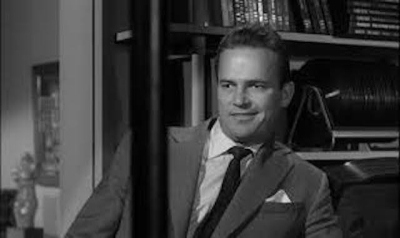
ImagesQT: I was just as tickled as you are; I didn’t expect this to happen. And he goes, “I realized one of the things that Meeker does that makes him so powerful and he does it in all of his scenes in The St. Valentine’s Day Massacre…” and I’m like, “Well, what are you talking about?” Leo says, “He doesn’t blink. When he’s having a confrontation, which is almost every scene that he has in The St. Valentine’s Day Massacre, he just doesn’t blink. And there’s really only one way to do that. You just have to work on the muscles of your eyes and everything and it takes control and it’s a hard thing to do. But he’s learned how to do it – Meeker. And people aren’t going to notice it, but it has this power to it. So, we go do the movie and then I go to Leo and say, “Guess who does a full-on Meeker in this movie?” He goes, “Who?” [I say,] “Dakota Fanning [as Manson Family member Lynette ‘Squeaky’ Fromme].” In the scene behind the screen she doesn’t blink. It’s a full-on Meeker. And, she knows: “If I blink, I lose the scene.” And over the years she’s worked on it so she can control her eyes and she can lock it in for the course of a scene. And it has the same power it has with Meeker in The St. Valentine’s Day Massacre. And she’s the most formidable character Cliff comes across. She’s like a concrete pillar on the other side of that screen door (laughs). And when she acquiesces, it’s kind of sinister, because she had won the stare-off.

KM: And Brad Pitt?

QT: Now, Brad Pitt, he grew up like me, he has a lot of the same references. So one of the things Brad is really responding to is a lot of the guys are the guys that Brad Pitt’s father dug. He loved that Burt Reynolds was in the movie, because his dad loved Burt Reynolds. He was so fucking happy. And it was written in the script – I didn’t throw it in later – that Cliff was a Mannix fan. He goes, “My dad was such a fan of Mannix. He watched Mannix every week.” And so the fact that Mannix was Cliff’s go-to guy [felt right to him], and even in the scene when Cliff makes his macaroni and cheese to the Mannix theme – now it’s just a Cliff theme. But also, [Brad and I] had a really interesting discussion about how when we were little kids – like seven and nine – we really loved the 70s western show Alias Smith and Jones – we watched it every week. And I don’t think I’d ever had this conversation before and I don’t think he’d ever had this conversation before – and then we started talking about when Pete Duel [who played Hannibal Heyes/‘Joshua Smith’ in the show] killed himself and we both realized that that was when we learned about suicide for the first time.
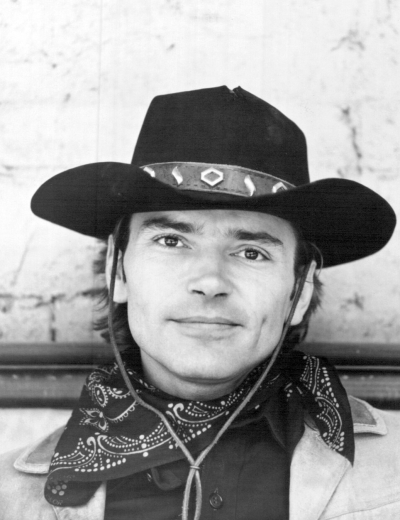
Pete_Duel_1971KM: Wow.

QT: That one of our favorite actors on our favorite shows committed suicide during the run, and that was when we first contemplated what that meant. And I’m sure in both cases, as I talked to my stepfather, and he talked to his dad, the conversation went something like, “Well, well, what happened to Hannibal Heyes? “Uh, well, he committed suicide.” “What’s suicide?” “Well, it’s when you kill yourself.” “You kill yourself? Why did he kill himself?” “Well, I don’t know Quentin, I guess he was depressed.” “What does he got to be depressed about? He’s fucking Hannibal Heyes! He has it made.” (Laughs) I started doing some research into it. When he killed himself it was a weird thing: he had a drinking problem and, according to his brother, he had mood swings, and nothing in particular happened that day – he had worked that day – and nothing, in particular, had happened that night, and he was lying in bed with his girlfriend and got up and excused himself and an hour later shot himself. And we realized, he was probably undiagnosed bipolar and self-medicating for his mood swings, and the mood swing got the better of him that night. Well, I told that to Leo and he thought that would be a great thing for Rick. That, you know, in the script, Rick wasn’t quite the alcoholic that he is in the movie. He was a heavy drinker, he drank at night, but he drank to loosen up. In my original script, he wasn’t showing up for work with a horrible hangover from drinking by himself. The character already had mood swings, so that was in the material, and he was already a drinker, so that was in the material – but when we got this bipolar idea this gave him a reason to do everything, and it gave him a reason for his anxiety, and it gave Leo something to actually play. And so that became a really exciting discovery for us, and it all led from that conversation Brad and I had about Alias Smith and Jones.

6a00d83451cb7469e20240a4bfe37e200d-800wi

KM: The movie is gorgeous, mysterious, the way it moves… Was there anything technical you did with this movie that was more challenging or different for you – you maintain your own style but you seem to always be challenging yourself in each one…

QT: That’s a good question. Me and [cinematographer] Bob Richardson, have been starting from Inglourious Basterds on, we’ve been, and we even get a big leap from Inglourious Basterds to Django, we started operating more and more and more on the crane… we used the crane like, a lot more. It looks better than a dolly, it’s smoother, and we worked the crew up enough that they’re used to doing it, so it’s not a thing. They’re just used to Bob being on the crane. And [so] we started doing everything on the crane from that point on – things that don’t need a crane. It’s not always about rising and falling, it’s going parallel, but a real smooth parallel. So, we’ve been operating on it more and more and more. And we were really operating a lot on the crane on Hateful Eight, even when we were just inside the cabin, but that’s its own thing. Here, almost everything was shot on the crane. And I think there’s a fluidity to the camerawork that suggests that, that’s kind of called for in the movie … and I think it’s also kind of the marriage of me and Bob visually just finding [a] true sweet spot by movie five. It’s very visually sophisticated, but in a way that doesn’t call attention to itself either. It has a classical cinema [feel]. We’re trying to be like Ophuls (laughs). Most people don’t even realize that the Bruce Lee [scene] is one shot. Until he crashes into the car – it’s one shot. From the opening of his line to the crash in the car, it’s all one take.

KM: I love this line – When Mike Moh as Bruce Lee says to Cliff, something like, “You’re kinda pretty for a stunt guy.” It’s a direct line, and so something that would be said to a stunt guy who looks like he could also be a movie star.

QT: OK, I gotta tell you, that was a suggestion. I did not come up with that. Burt Reynolds read the script, and he knows a lot of stunt guys. And Burt said, “So Brad Pitt is playing the stunt guy?” And I said, “Yeah.” And Burt says, “You gotta have somebody say, ‘You’re kinda pretty for a stunt guy.” (Laughs) And the thing is, Brad doesn’t like making his looks a thing in a movie, but he couldn’t say no to that because it was Burt Reynolds’ line! And watching Brad grin and bear it is really great. Because he doesn’t really dig it. (Laughs) But the fact that Burt Reynolds came up with it – he can’t say shit!

Criminal: Gunman’s Walk

6a00d83451cb7469e20240a4bfe22e200d-800wi

Out now! My piece in Ed Brubaker's latest Criminal. I dig into Phil Karlson's fantastic Gunman's Wal(1958).

A sample of my piece:

Phil Karlson, who directed some superb tough-as-nails noirs (99 River Street, Kansas City Confidential and The Phenix City Story) – working from writers Hardman and Nugent – seems to wonder – why in hell do these people have to be so violent? Does it solve anything? This is a film questioning authority; looking at how we blindly believe in institutions – one of them being “manhood,” domination, the way one moves through the world (do you walk with a gun?). And Karlson gives Van Heflin, James Darren and Tab Hunter plenty to explore here – these are fascinating character studies, both deeply human and symbolic.

Heflin’s Lee – god knows what he did to his sons and god knows why he is so obsessed with Ed. What is going on there? There’s an inverse to Martin Ritt's Hud here – Heflin’s character puts up with so much regarding Ed, irritated by his gentler son, Davy, while Melvyn Douglas’ righteousness clashes with his bad-boy son (whom Douglas does not love – which messes up his son – that dad has got to account for that too).

You get the feeling that Heflin’s Lee would get along well with the cynicism and corruption of Paul Newnan’s Hud. But would Hud hate him too? Probably. But to Heflin and Hunter’s immense credit and their brilliant performances (this is one of Hunter’s greatest roles) – we, the audience, don’t hate them. We can’t. We get that they are damaged men – and that there is something about the world, something about what is expected of masculinity, that can twist these two men and turn them crazy. The resulting movie is heartbreaking …

Read the entire piece in Criminal — order here

Criminal: Ladybug Ladybug

6a00d83451cb7469e20240a4aebf48200d-800wi

How quickly the veneer of childhood innocence, of safety, can be shattered. The look of uncertainty and sadness on Mrs. Forbes’ face as she walks through an empty schoolroom, picking up the tiny chairs, organizing the miniature pots and pans on the play stove, placing a tiny man and woman together, staring out the window adorned with paper children, is so beautifully realized, so mysterious, so sincere…  Characters are trapped in the Perrys’ films, literally, in refrigerators, or swimming pools, or in marriages and affairs giving no profound satisfaction or release. Burt Lancaster banging on the door of his empty house, as if he’s trying to break through to another consciousness or world (one he’ll never reach) while revealing how lonely and empty he feels, is a refrain in the Perrys’ work. Here, he and Eleanor are working more overtly within a trapped landscape… 

My next piece for Ed Brubaker's CRIMINAL — on Frank & Eleanor Perry's haunting, beautiful, powerful and still timely, Ladybug Ladybug — I love Sean's art here. Look for it Sept. 25.

Once Upon a Time … in Hollywood

6a00d83451cb7469e20263ec1644d5200c-800wi
“And the seasons they go round and round. And the painted ponies go up and down. We’re captive on the carousel of time. We can’t return, we can only look behind from where we came. And go round and round and round in the circle game…”

A moment can sneak up on you… and break your heart. And in Quentin Tarantino’s elegiac Once Upon a Time … in Hollywood, there are obvious reasons to feel such things – you know history, something tragic and terrifying is going to happen, or could happen, but throughout the film you also feel something mysterious that you can’t quite place, and that feeling seems both universal and personal – regional, too – this vibe, both dark and light – that pours over Los Angeles like a promise or a threat. A light that can be both warm or blinding. And when it’s dark here – a dark night in Los Angeles – especially up in the silent canyons – often gorgeous – but winding and a little scary and enigmatic. It can feel like something Raymond Chandler wrote, “The streets were dark with something more than night.”

There are some things that movies and music can pull out of you. Things deeply embedded – what you grew up with – songs you listened to and fell for after digging through your parent’s LPs. Stories you heard, movies and TV you loved or were baffled by or haunted by, whether you lived with them at the time or found them later: they are imprinted in your brain, and flow out of you at unexpected moments – making you reflective or happy or freaked out or yearning. And it’s not just nostalgia – it’s something else. It’s wistful, at times, but also not something you’d necessarily want to return to. It’s too complicated and thorny. I don’t know what the word is – or even if a word in English exists for it…

And then, there’s the beauty of light and night. And the danger there too – danger that sometimes felt interwoven in those songs and TV and movies – mythic but real in your imagination. Emotionally honest to you – which can feel as real as a lived memory.

In Once Upon a Time, moments feel beautiful and happy and funny and disturbing and cathartic and sorrowful. And they make you yearn for … what? Not just a happy ending but something that’s hard to articulate. The Mamas and the Papas sing something akin to this, written by a rather ominous figure, the “Wolf King of L.A.,” John Phillips: “To feel these changes happening in me, but not to notice till I feel it…”

Once-upon-a-time-in-hollywood_0

So, a moment that night in August, 1969, Once Upon a Time … Jay Sebring smiles at Sharon Tate. He places the needle on the record in her room – the Paul Revere and the Raiders album she was listening to earlier that year (and sweetly mocking Jay for dancing to: “Are you afraid I’m going to tell Jim Morrison you were dancing to Paul Revere and the Raiders? What? Are they not cool enough for you?”) is on display. But it’s not Paul Revere and the Raiders Jay puts on – it’s The Mamas and the Papas’ “Twelve Thirty (Young Girls Are Coming to the Canyon).” It’s a night of The Mamas and the Papas, it seems, as their good friend and houseguest Abigail Folger had just played the piano and sang “Straight Shooter” to her friends – a lovely little moment: “Don’t get me mad, don’t tell no lie. Don’t make me sad, don’t pass me by. Baby are you holding, holding anything but me? Because I’m a real straight shooter, if you know what I mean.”

Jay looks at Sharon – a moment – a quick moment – and we don’t see Tate smile back or look pleased or sad or overheated (as we saw her before) on one of the hottest days of the year (Tarantino poignantly keeps Sharon off screen from now on and until the last shot of the film. A subtle but powerful decision).

But we see Sebring look at her, lovingly, he looks like he feels this is the perfect song to play for Sharon, which is mysterious, perhaps, but it’s such a beautiful song. So pro Los Angeles. So wanting to be trusting. And, yet, so doleful and sung in a minor key and … is this really a happy song?  We feel that care and sweetness as the song he chose begins playing. The lush harmonies of John Phillips, Cass Elliot, Michelle Phillips and Denny Doherty: “I used to live in New York City. Everything there was dark and dirty. Outside my window was a steeple. With a clock that always said twelve thirty…”

And then, from Jay looking at Sharon, we cut to stuntman Cliff Booth walking his beloved Brandy, his female pit bull, a languorous walk while he’s trying an acid-laced cigarette for the first time. He’s wearing white jeans and white jean jacket, it glows in the night as he strolls Cielo Drive, up in the hills of Los Angeles. It’s a gorgeous shot, man and dog on the road, and we wonder how Cliff will handle that drug trip and then we see … that car. That old busted up loud car passing him – heading in the opposite direction – with Tex Watson, Susan Atkins, Linda Kasabian, and Patricia Krenwinkel chugging up Cielo. The volume of the song hauntingly rising: “Young girls are coming to the canyon. And in the mornings, I can see them walking. I can no longer keep my blinds drawn. And I can’t keep myself from talking.”

It’s such a powerful sequence that it goes beyond its own history and burrows into my soul and gives me chills. It’s also, on Tarantino’s part, a moment of brilliance and a tremendously skilled choice – it visually and narratively bisects reality, sending us into the veritable “Once upon a time…” and you feel it. We are now heading into “What could’ve been…”

It was upon reflecting after the movie, when that scene continued to haunt me, that I understood and pieced together technically, how powerful Tarantino’s cinematic phrasing was (and Robert Richardson’s cinematography). And then what follows… Tarantino could have done numerous things after Watson, Atkins, Krenwinkel and Kasabian (played by Austin Butler, Mikey Madison, Madisen Beaty and Maya Hawke) drive to that street – he could’ve intercut the two homes, thus diminishing and making the whole third act pejorative, or he could’ve “thwarted” the Tate home invasion halfway – but what he does is so intelligent, so precise, so well thought out, that it’s no surprise audiences respond so strongly – and not just for the reasons one might initially think.

6a00d83451cb7469e20240a482b95e200c-400wi

That man, Cliff Booth (Brad Pitt), out walking Brandy, is a long-time stunt double and best friend to actor Rick Dalton (Leonardo DiCaprio) – and he’s hanging out at his buddy’s house for a sort of farewell, for a “good old fashioned drunk.” But more on that later. These two are not as “in” with Hollywood as they used to be, but they have a camaraderie that feels very Hollywood, very mythic and old-school-cool – and Pitt and DiCaprio are such charismatic movie stars you feel like you’re watching a new kind of Newman and Redford on screen. The moment you even see their shoes emerge from Rick’s car -cigarettes spilling on the pavement – you see Rick’s boots and Cliff’s moccasins – it feels instantly iconic. And then they walk into Musso & Frank – Cliff in his denim, Rick in his brown leather jacket – it’s just a pleasure to see these faces together. And as the picture moves along, their close friendship will become immensely touching.

Rick lives on Cielo Drive – up in those beautiful winding roads – and he’s a proud “solid Los Angeles citizen” – a homeowner – something “Eddie O’ Brien” advised him about – to always own. Rick’s a famous actor – most famous for his starring role as Jake Cahill on the western show “Bounty Law” – a sort of variation of the “Wanted: Dead or Alive” western that starred Steve McQueen. But McQueen’s star ascended – Rick’s did not – and he’s now feeling miserable for himself – all those guest spots on TV shows playing villains, feeling less in demand, feeling, as he movingly sobs while reading and describing a western novel to the talented child actor on set, about a character named Easy Breezy, “a little more useless.”

Ca-times.brightspotcdn-1

In Tarantino’s movie, Rick’s new neighbors are a recently married couple, but not just any couple – Sharon Tate (Margot Robbie) and Roman Polanski (Rafal Zawierucha) – a beautiful young actress, her future unfolding before her, and the wunderkind director of Rosemary’s Baby – one of the hottest new filmmakers around. After Rick gets teary-emotional in the parking lot of Musso & Frank (“Let’s face it, I’m a has-been old buddy,” he says to Cliff) – after a confidence shaking meeting with Al Pacino’s character, agent Marvin Schwarz, who upsets him into a near breakdown, Cliff drives Rick (Rick, an alcoholic, has too many DUIs to drive himself) in his big Cadillac to his house while Rick throws a fit in the car. We hear a report of Sirhan Sirhan on the news in the car radio and the Vietnam War and here’s Rick – kicking the seats and cursing hippies (the new blood – the new Hollywood competition). There are larger problems out there and Rick is having a tantrum over his career – I think this is intentional –  a bit like the way Hal Ashby’s characters (scripted by Robert Towne and Warren Beatty) in Shampoo wander around Los Angeles during the day of the election, 1968, news all around them, worrying about themselves (though Shampoo is directly dealing with the election night). A character, partly inspired by Jay Sebring via hair stylist George (the character was based on different people), played by Beatty, wants to open up a hair salon. Shampoo (released in 1975) was also a period piece, and it also felt a dread descending … As I wrote in my New Beverly piece on Shampoo:

“… the world was already dark under all of that California sunshine, and bleaker because of all that sun – you can’t possibly live up to the Los Angeles dream because it is a dream. So, when George wants to marry Jackie at the end (who knows if it would ever work out? But it’s a genuinely heartfelt, romantic proclamation. And that’s something), it’s heartbreaking:

George: I’m a fuck-up, but I’ll take care of you. I’ll make you happy. What do you think?

Jackie: It’s too late.

George: We’re not dead yet. That’s the only thing that’s too late…”

So what are the dreams of these characters? Can one, namely Rick, just appreciate how far he’s gotten already? No. There needs to be more. And that’s not to criticize Rick – it’s part of what makes him tick, probably part of why he’s a good actor, he does want to do better, to do more. But it’s seriously fucking up his moods to the point of self-destruction. But when Cliff and Rick pull up to Rick’s house – Rick spies his neighbors in their vintage MG convertible – it’s Tate and Polanski. It’s the first time he’s actually seen them and he suddenly feels hopeful. He’s possibly “one pool party away” from a better role, a better future. The cheerful mood doesn’t last too long – Rick clearly has more problems beyond his career – chiefly a drinking problem and a likely mood disorder. But he seems slightly OK for that night, drinking and floating in his pool and learning his lines, preparing for the next day, while his neighbors speed off to the Playboy Mansion, Sharon happily (and charmingly) meeting up with friends, including Michelle Phillips (Rebecca Rittenhouse) and Mama Cass (Rachel Redleaf) to dance together.

It is here that Steve McQueen (Damian Lewis) breaks down the relationship between Jay Sebring (Emile Hirsch) – whom she also partners up with at the Mansion – while watching Sharon dance, Polanski and Sebring boogieing nearby. McQueen, talking to Connie Stevens (Dreama Walker) gossips that Jay, an ex of Sharon, who has remained close to her (so close that Polanski has accepted their friendship and is also friends with Jay) and is just waiting for Roman to fuck up – and when he does, Jay’s going to be there for Sharon. When Stevens responds that Sharon sure has a type – something like short talented men who look like 12-year-old boys – Steve opines, “Yeah, I never stood a chance.”

It’s an amusing moment, watching McQueen lament about not getting the girl, but it’s also another smart choice on Tarantino’s part. People were gossiping about Sharon and Roman and Jay, and had Tarantino put obvious words in Sharon or Jay’s mouths, he would have possibly cheapened that touching bond. It could have read insulting. Instead, the actors show it – hanging out at the house together listening to records, Jay checking on Sharon, saying domestic terms of endearment to one another like “honey,” the way Jay answers the door when Charles Manson (Damon Herriman) drops by (not knowing who the hell he is but wanting him out regardless – “Who’s this shaggy asshole?”). Another astute decision – to barely show Manson. As good as the actor Herriman is, people leaving the theater are not going to be lingering on Manson so much (who has been talking forever – he died in 2017 and he still seems like he’s talking), they’ll remember and feel the darkness he wrought, but they’ll be remembering or be thinking about or discovering Sharon Tate a lot more. The real-life victim is no longer defined as just a victim.

When Manson drops by, that’s the same day Cliff, a war veteran, not getting work as a stuntman anymore, not because he’s not able (as he leaps up to the roof, you can see he’s certainly agile) but because of his mysterious past (he may or may not have killed his wife and gotten away with it – we never find out). As amiable as he is, some people don’t “dig” the vibe he brings on set – and as we see in flashback, he was fired from “The Green Hornet” doubling for Rick, and tussling too hard with the great Bruce Lee (an excellent Mike Moh). This moment and the on-screen depiction of Lee has been discussed with some understandable controversy, but it shows that Cliff is an incredibly skillful fighter (though there really is no victor at the end – it’s cut short by Zoë Bell’s Janet) and that he also plays a bit dirty in this moment – he chucks Bruce Lee into a car – he deserves to be thrown off set for that. “Fair enough” Cliff mutters to himself over the memory. He’d like more stunt work than he’s getting, but he’s right now more of a gofer, and is up on Rick’s roof, fixing the antenna. It’s essentially day two of the movie as the film is split into three days-in-the-life, with flashbacks of Cliff’s past and Rick’s career sojourn to Italy to make spaghetti westerns – but the picture, moving along with its characters being very human – follows Rick, Cliff and Sharon during those days.

Ca-times.brightspotcdn

We’ve already seen Rick’s previous night – gorgeously speeding his blue Karmann Ghia through Hollywood and beyond, the AM radio blasting various songs (Tarantino uses the real radio station KHJ, and the DJs and advertisements almost like a kind of narrator – everyone has the station blasting from their cars) including The Bob Seger System’s “Ramblin’ Gamblin’ Man” as Cliff takes the Exit 68/ Panorama City, and ends up in his trailer with an oil rig out front (homage to Jacques Demy’s great Model Shop?) I felt Model Shop quite a bit in this movie – the walking around Los Angeles, and especially all of the driving – something that’s so integral to LA, not just by getting from one place to another, but in how we connect – friends, couples, driving solo, picking up hitchhikers – and Tarantino’s fondness for Los Angeles, as Gary Lockwood’s character feels as well (and Jacques Demy). The driving also reminded me of Maria in Joan Didion’s Los Angeles-based Play It as It Lays, Maria who is always driving, even imagines driving:

She had only the faintest ugly memory of what had brought BZ and Helene together, and to erase it from her mind she fixed her imagination on a needle dripping sodium pentathol into her arm and began counting backward from one hundred. When that failed, she imagined herself driving, conceived audacious lane changes, strategic shifts of gear, the Hollywood to the San Bernardino and straight on out, past Barstow, past Baker, driving straight on into the hard white empty core of the world. She slept and did not dream.”

Cliff lives right next to the Van Nuys Drive-In (we take in a beautiful shot floating over the cowboy mural-sign and to the automobiles watching the movie) and we see, on the marquee, a double feature of Lady in Cement and Pretty Poison (starring Tuesday Weld, star of Frank Perry’s adaptation of Play It as It Lays – also, naturally, a movie with lots of driving). And, again, we see cars, all those cars – another way of looking – out of our windshields – cars in Hollywood and Los Angeles and driving – they are almost extensions of our own bodies. Avatars of our status and of ourselves. And Cliff, when not working for Rick, drives around a lot – in his car and in Rick’s car.

It’s moving to see Cliff’s austere life compared to Rick’s – feeding Brandy her Wolf’s Tooth dog food (and getting some foreshadowing about how well trained she is – “click click”), making some mac n’ cheese and settling down to watch “Mannix.” The drive-in movie is blaring outside, Robert Goulet is on TV singing “MacArthur Park” when Cliff walks in (entertainment for Brandy while Cliff is out? Or a lonelier existence?)

Cliff may not be as much a part of Hollywood as he used to be, he may live in Van Nuys, but music and storytelling are still all around him, even in his humble dwelling – you can hear the movies as he parks his car out front. You notice his albums. His food is off-the shelf, his comic books are not well-known titles, his Anne Francis poster was maybe a magazine pullout, and he’s got TV Guides lying around (and a gun) … The cliché would be to make well-trained Cliff’s place sparse or perfectly ordered in its simplicity – but he’s something of a slob – which manages to humanize and even deepen him even more. Cliff would like to (as he does) warmly greet Brandy, hang out, and watch TV. Relax. But, then, thinking of Cliff getting older and doing the same seems a bit sad. Is he truly satisfied with this life? We don’t know – making him more compelling. But as we see him here – he’s this mac ‘n cheese fueled killing machine. And he likes to watch “Mannix.”

Cliff is a likable character – Pitt plays him effortlessly cool and, in many ways, admirable. But Pitt (making it look all so easy – it’s not) also gives Cliff enough shading to sense something more damaged and darker going on under that agreeable exterior. His austere way of living is perhaps a way to contain something combustible. As Tarantino told me in my Sight & Sound interview with him, “[Cliff] knows how dangerous he is, so he’s clamping down on the monster that’s inside of him and he’s actually quite Zen about the whole thing. But that monster is always there.” You feel that – ever so subtly.

So back to Cliff on the roof, taking off his shirt, revealing his scars (and what great shape he’s in), and while up there, noticing Sharon listening to music from her bedroom window and, then, that “shaggy asshole” driving up the road in a Twinkies truck (which Manson really did drive – there’s something both disturbing and poisonously perfect watching Manson emerge from a truck promising many a kid’s favorite snack cake/junk food). Cliff watches for a moment, but keeps on working. He’s not a snoop, and he’s got a task to accomplish.

Sharon may have started her day with a creepy visitor, but the rest of that day is a joyful one (beautifully realized by Robbie). And this is one reason why the “day in the life” interlude with her is so moving and special: Tuned to Buffy Sainte-Marie’s beautiful rendition of Joni Mitchell’s “The Circle Game” (“Yesterday a child came out to wonder. Caught a dragonfly inside a jar. Fearful when the sky was full of thunder. And tearful at the falling of a star…”  the lyrics actually make me teary thinking about Robbie’s Sharon dreamily driving, and I now associate this song with Sharon Tate), we follow her as she enjoys driving, picks up a hitchhiker (Sharon has no issue with hippies, it seems), laughs with her and hugs her goodbye, wishing her luck. Without dialogue you see these two women connecting and they just seem so… free.

Margot-robbie-as-sharon-tate-1565861133

And then Sharon goes about her day, happily. Tarantino doesn’t show her hustling, networking or at Bel-Air brunches, she’s not even meeting a friend, she’s just relaxing on a day with herself. Walking around Westwood Village, she drops into a bookshop (Clu Gulager assisting her) to pick up a first edition of “Tess of the D’Urbervilles,” a book she has already read and is gifting to Polanski (in real life Tate did love Thomas Hardy’s novel and told Polanski to read it – and that she thought it would make a great movie – and of course he did make Tess, dedicating it to Sharon). And then after passing by a theater a few times – she decides to drop in on her own movie, The Wrecking Crew, starring Dean Martin, showing at the Bruin. Throughout the movie you feel people are looking at Tate, talking about her, but here she is watching herself (and no one in the dark of the theater sees her – she even explains to the theater employees she’s one of the stars when they don’t recognize her), and she movingly enjoys the audience's reactions to her comic performance. It all seems so casual, this drop-in, and she knows this is a goofy comedy (but Sharon Tate in interviews said she wanted to do more comedies – and she received some nice notices from her performance in The Wrecking Crew) and probably a nice memory. While watching, she has a sweet flashback of training with Bruce Lee – and in the theater, she re-enacts them a little, proud of her moves. Making this scene even more poignant is Tarantino respecting Tate’s memory by showing the actual Sharon Tate scenes on screen – and we see what a charming comedic actress she was (she had more range than given credit for – I also find her supremely touching in Valley of the Dolls). It’s a lovely, blissful moment, and, in this, we have already forgotten about the visitor earlier that day.

6a00d83451cb7469e20240a4d09a73200b-800wi

We see the various days of all three characters – we hang out with them, we watch them work, experience their demons, we watch them walk, we watch them drive around. And the driving, again, is so beautiful – Tarantino’s period detail is perfection, a time machine that makes us swoon a little. It’s hard not too if you want to go see The Night They Raided Minsky’s right on Hollywood Blvd. or Pretty Poison at the Drive-In – this isn’t simple nostalgia, this is just … I would like to see those movies on the big screen, and it’s exciting when we can. (A great case for revival houses and Tarantino’s theater itself, the New Beverly, which gets a nod as the “dirty movie theater” down the street from El Coyote).

On this day, we watch Rick work on a western TV show while Cliff enters into something of a real western – Spahn Ranch. Rick is dropped off on set by Cliff to film an episode of “Lancer,” directed by Sam Wanamaker (a terrific Nicholas Hammond), and Rick, hungover, looking worse for wear, hacks and spits towards his makeup trailer, already showing insecurity and worry about how he’s going to do.

It is here he meets the talented Trudi (a tremendous Julia Butters) who is reading a biography on Walt Disney. As writer Dan Leo pointed out, Tarantino likes to see characters in his movies reading. Here, it’s Trudi fascinated by her Disney bio, Tate buying a copy of Thomas Hardy’s “Tess,” Abigail Folger (Samantha Robinson) reading (what I recall seeing)  “Madame Bovary,” and Rick reading the western story about Easy Breezy – getting choked up over how much Easy Breezy’s life is resembling his own.

In the course of the shooting day, Rick, decked out with a big mustache (“Zapata!”) and a fringed jacket (to look more hippie-ish – but as Wanamaker reassures more of a Hells Angels type hippie (“Vroom! Vroom!”), acting opposite James Stacy (Timothy Olyphant), Rick will succumb twice to his hazy memory, forgetting some lines and breaking down because of it. When Rick blows a gasket in his trailer, hollering at himself for being an embarrassment, an alcoholic, a loser, making fun of his own stutter (DiCaprio creates a slight stutter as Rick Dalton and it comes out in nervous moments, however, never when he’s acting – it’s subtle and beautifully played by DiCaprio, and like Pitt making it look easy, this isn’t easy to do either) – this scene is extraordinary (DiCaprio’s entire day on the set is some of the actor’s greatest work ever on screen). And, knowing a bit of the backstory about how DiCaprio came to that character – scarily sad. When DiCaprio threatens to himself, in the mirror, that he’ll blow his brains out, he’s not entirely expressing just a bout of self-pitying melodrama. As Tarantino told me in our Sight & Sound interview, some of this character was inspired by Pete Duel from “Alias Smith and Jones” (a favorite show for young Tarantino and Brad Pitt, back in the day), an actor, who, in 1971, shot himself, dead.

But Rick does overcome his trailer breakdown with true craft and emotional commitment – he uses his anger, his self-hatred, his dangerous mood-swing and he fuels it into menace. Delivering a threatening scene with Trudi (and featuring a terrific Luke Perry playing the character Wayne Maunder), Rick earns the significant praise of not just Sam Wanamaker (“Give me evil sexy Hamlet”!), but also Trudi. Rick is impressed by Trudi, a formidable and intense new breed of actor (she prefers to be called actor instead of actress and doesn’t like cutesy terms like “pumpkin-puss”), she’s focused but sensitive, and after watching him deliver this stellar scene, she deems his craft “the best” she’s ever seen.

6a00d83451cb7469e20240a4aaf3cd200d-800wi

Rick, all bloodshot-blue-eyed and worn-looking but still handsome as hell, tears up to her whispered declaration in a moving closeup. He is a talented actor – so what if he’s guesting on TV – and I love that Tarantino reveals how much Rick still has to offer – and the kind of incredible performance you could very well catch on a TV show back in the day, or in re-runs or syndication as a kid – and never forget. It’s also important that Trudi, the up and comer, validates him, the past. Trudi, much like Sharon Tate, represents the promise of renewal and faith – the future – what is to come. The surprise over Trudi but, then, warmth and respect coming from Rick towards her is another lovely addition to this incredibly complex, layered film.

But Rick is still guesting on TV and Tarantino shows the Hollywood divide between TV and movie royalty. Not that there should be necessarily – but that there is, or was. The Polanskis may be next door to Rick, and Rick hopes they’ll meet, but he seems almost intimidated by his neighbors. After all, he’s doing villain spots on TV now  – and though he’s an old pro, and he was a star with “Bounty Law” (which people do remember, even, and not surprisingly, Tex Watson, who gleefully talks about his childhood “Bounty Law” lunchbox in one creepy star-struck scene) – it’s a big deal to be in people’s living rooms every night – critical snobbery or no snobbery, you’ve made an impact.

But Rick’s not feeling confident. He feels left out, washed up – passé… Which is why I think, in part, Rick is hollering about hippies. The counterculture represents the changing business, one he’s not feeling a part of – even if he thinks he may not want to be a part of it (the counterculture anyway), it bothers him. When Tex Watson and crew loudly drive up to his house, Rick, whipping up margaritas while Cliff is out walking Brandy (DiCaprio is hilarious here – stumbling in his robe, swilling from his margarita pitcher, muttering to himself “property taxes up the butt!”), peeks out of the blinds and exclaims, pissed, “It’s a bunch of goddamn fucking hippies.” (This moment cracks me up every time) When he comes out to yell at them about their shitty car and muffler and that this is a private road and they need to back it, Rick hollers at Tex “Hey! Dennis Hopper!” Easy Rider probably wasn’t Rick’s cup of tea (or whiskey sour) … but then, he’s probably been re-thinking this kind of thing, furious, because Easy Rider was a game-changer.
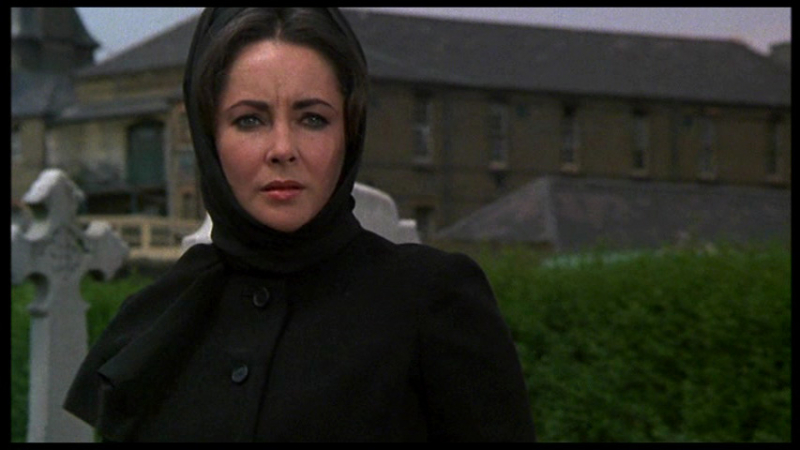
Tarantino underlines the gulf between the Polanskis and Rick in several ways – visually he does it with a beautiful crane move (a kind of god’s point of view that is peppered throughout the film almost as a visual commentary) that goes from Rick, floating in his pool, alone, memorizing his lines for “Lancer” and over the rooftop and hedges and all the way to the Polanski’s driveway as they prepare to leave for the crowded scene of stars and luxury at the Playboy Mansion.

Tarantino then reaffirms this divide via the Pacino meeting, which is essentially a reprimand to Rick for having precipitated his “downfall” of sorts. Movies are movies – even if the movie is an Italian western (which, factually was a successful, but frowned-upon, subgenre – absurd that it was looked down on when you see the innovation and beauty and craft in so many – chiefly Sergio Leone). Tarantino shows, however, how omnipresent TV is – at the Spahn Ranch, at the bar frequented by Pacino, greeting Cliff at home, on at Rick’s household when Cliff and Rick watch his “The F.B.I.” episode (also a sweet moment – at least Rick’s still got a sense of humor and a sense of pride in his work – Cliff, best buddy that he is, is there to cheer him up and cheer him on). Voytek Frykowski (Costa Ronin) watches a late show – and thinks how much better American TV is than Polish TV.

The showtimes of most any popular program existed in the vernacular: everybody knew when everything was “on” and they ruled their days, dinners and mornings by it. Even the Manson Family (minus Charlie), you see them sprawled out watching TV while Charlie is out, and that Squeaky and George Spahn have their planned TV watching time together. Squeaky doesn’t like it when George falls asleep.

And speaking of George Spahn – of particular interest on this second day-in-the-life is Cliff’s excursion to Spahn Ranch. Cliff, who unlike Rick, doesn’t seem to be too bent out of shape about hippies, in general (Cliff kind of lives closer to something like that, or at least a beach bum kind of life – his trailer, crashing at Rick’s house when he’s away, and probably sleeping on his couch a few nights when they’ve had too much to drink. Cliff is also curious about that acid cigarette he bought off the hippie girl. Rick is not. His “booze don’t need no buddy”). Cliff picks up Pussycat (Margaret Qualley) a young hippie woman he has crossed paths with and admired before (from his car – always his car). There is a clear attraction but even when he agrees to drive her out of town, Cliff turns down her sexual advance. This young woman is clearly a minor, and we get that Cliff has some sense of decency (Pussycat even seems taken aback by it – the fact that he even asked her age is a shock to her – no one else does – as in other dudes who pick her up and take advantage). But, also, Cliff doesn’t want to go to jail for “poontang” – so this is a mixture of morals and jailhouse wisdom.

Once-upon-a-time-in-hollywood-image-7

Upon arrival at the Spahn Ranch (more echoes of the ruinous past) where he often shot “Bounty Law” with Rick – his worry is not for his own safety, even in light of the many spectral signs and omens – all of these creepy Manson-hippies (these don’t appear to be peace-loving hippies, but those who, with this family and their leader, will, later, make others paranoid, unfairly of nice, peace-loving hippies). He is concerned for the well-being of old George Spahn (Bruce Dern, taking over for his friend,  Burt Reynolds, who sadly, passed away before shooting begun), whom, after getting a terrible vibe off this place, he’s now definitely going to check on. This place does not look right.

Cliff is now in a real-life Western (the shots of Tex riding his horse to check out Cliff are gorgeous – but it’s Tex Watson, so here comes the proverbial black hat…) Cliff walks down the main street, heading towards the dilapidated cabin like a Hawaiian-shirted Gary Cooper and goes into the lair of the wolf. The ensuing scene between him and Squeaky Fromme (Dakota Fanning) is remarkably tense and precisely laid out and staged, Fanning radiating unblinking menace in a stare down (she’s incredible here). It’s a face-off with Cliff and all that divides them is a flimsy door with a mosquito screen and a flimsy hook-lock. But, make no mistake, it’s a Rubicon for Cliff. And a beautiful way to show how principled he is. Whatever his ethos may be – he gains access into the cabin – and walks through that terrifying messy little house, observing a rat caught in a glue trap and Squeaky watching TV – there’s calm to Cliff but a palpable horror present. This scene is one of Tarantino’s best suspense set-pieces ever because so much is implied and so many tenuous lines are almost crossed. We can sense the menace that lies under the chirpy smiles of Pussycat and the sunbathed hills of yore.

It also sets up what will come later – when Cliff remembers Tex, and is diminishing him (“You were riding a horsey!” Cliff, high as a kite, chides). When Cliff is trying to recall his name, Tex says, gun pointed at Cliff, “I’m the devil and I’m here to do the devil’s business.” To which Cliff says, hilariously, “Nah, it was something dumber than that…” Watching Brad Pitt as Cliff Booth make fun of Tex Watson as a stupid clown, well it’s pretty damn satisfying.

But, again, that comes later. When Cliff leaves the ranch, and then goes to pick up Rick after his day on “Lancer,” and Sharon leaves the Bruin after watching “The Wrecking Crew” – we hear Jose Feliciano’s poignant version of “California Dreamin’” and we feel something so bittersweet and almost indefinable – a day winding down. We even see James Stacy leave the set on his motorcycle and, knowing what happened to Stacy a few years later, you feel a pang of sadness. We know something is coming in the next act… we don’t know what that will be. And even if we’ve seen the movie more than once and do know what’s coming, we still feel this portent of something – both gentle and heartbreaking.

A brief interlude is dedicated to Rick and Cliff in Italy – this the prelude to the darkness descending in the third act. From frame one, Tarantino and his production team, have managed to create some of the most convincing reproductions of the period cinema and TV. Everything in the Hollywood moments of the picture looks authentic and sounds authentic and feels spot-on: the lines, the haircuts, the fabrics, the movie posters, the billboards, the interiors, re-creating the streets as they were – but also in the Italian interlude, the promotional materials, the editing, cinematography and staging of the scenes is absolutely immaculate: the choice of lenses, the pushing of the film material, the editing patterns. This interlude – importantly – provides only temporary relief for Rick (new haircut, 15 pounds heavier) and returns him home to resume life, again, not as successful as he’d like to be. He’s now married to a beautiful Italian actress Francesca Capucci (a memorable Lorenza Izzo), but he’s overspent and needs to buy a condo in Toluca Lake. And… sigh… he can’t afford Cliff anymore – signaling the end of Rick and Cliff’s partnership. They are both uncertain of the future.

And now we get to the fork in the road… the night starting on August 8, 1969 and going into early morning of the 9th. It is at this point, that the audience is expertly guided into the fairy tale, in which we see Cliff (the ablest character to confront the “family”) walking down with Brandy as the car rolls uphill, muffler rumbling. Those in the car encounter margarita-swilling Rick, back up their car, drive down Cielo Drive and then… walk back up (a scared Kasabian taking off in the car, which she never did). But they don’t walk up to Tate’s house, they walk up to Rick Dalton’s. To, in a way, Jake Cahill’s.

At this point, Tarantino makes another significant decision: As we’ve seen – Cliff rarely makes sudden moves – he waits – he waits in the car, waits in the golf cart, sits on the hood of a car, waits for the Manson member, Clem (James Landry Hébert) to change his tire (after Clem slashes it and Cliff bloodies his face – then, Cliff certainly moves) etc. So, when Cliff moves, if he moves, he makes it count. He seems to live by this rule so strongly, that he instructs Brandy not to move and not to whine. The dog being almost an extension of himself (“click click”). Cliff’s affable and he loves hanging with his best buddy Rick Dalton, helping Rick – a friendship, a brotherhood that’s almost like a marriage – but there’s something deeper and darker about Cliff that Pitt gives us in glimpses – there’s something even about his stillness that connotes both ease and anger – and Pitt presents this so skillfully, it’s truly something to behold.

And then … the would-be killers break in, perfectly and scarily synched to Vanilla Fudge’s psychedelic, hard-edged version of “You Keep Me Hangin’ On” (Cliff’s song of choice while high). It’s baffling, even amusingly unreal to Cliff at first (Tex says to him, “I’m as real as a donut, motherfucker”). Once Cliff recognizes that the threat is real (no matter how much he makes fun of them), his violence is unleashed in the much-discussed (and brilliant) final confrontation/set piece. Powerful in this moment is how the picture leads towards this peak (all the way through – expertly orchestrated by Tarantino and editor Fred Raskin) – and yet we’re still knocked out, surprised, even, not at all knowing how this showdown is going to play out. The crisscrossing of destinies, the varying fortunes of careers and the bond of friendship form an inexorable knot – one that underlines how quickly, how irreversibly destinies can be altered within a matter of minutes. And then the “click, click” to Brandy. Another powerful element is tonal (and this shocks and offends some people). To me, the tone of the violence, has to be this fevered, this fantastical, this “high.” Yes, Cliff smoking that laced cigarette has some bearing on this (there’s also some discussion out there about that cigarette. One thought – that Cliff thinks it’s LSD but is, instead, DMT or PCP, which would be more intense. In this universe, it would not be a stretch that Cliff just calls all hallucinatory drugs acid) but even without the drug high, the violence itself is almost hallucinatory.

The overzealous dispatching of the one member of the family that actually stabbed him (a knife Cliff, presumably – and this is how I saw it – can’t pull out of his side or he might bleed to death – did she hit an artery?) shows that he’s efficient, and yes, full of accumulated rage. Again, as Tarantino said of Cliff “that monster is always there.” Well, here is the monster. And putting aside the over-the-top insanity of this sequence, in “realistic” terms – this may be how a stunt man (Cliff anyway, I am not saying all), a rumored wife murderer (we don’t know for sure if he did it – but he’s considered dangerous), who has previously escaped a chain gang (he says so when first meeting Tex, though he could be, as one reader thinks, talking about stunt work in movies or TV. I didn’t hear it that way and thought this more mysterious Cliff lore, so, print the legend), a guy who has seen combat, and a guy who realizes this violent trio are probably taking advantage of his old friend, George Spahn, and who are now in Rick’s house, intent to murder Cliff, Rick and a terrified Francesca (who gets a punch in) – again, this may be how he’d handle such an invasion. He’d for sure take them all on.

6a00d83451cb7469e20240a4aaf43c200d-400wi

It’s a vicious, outlandish murderous takedown. That is for damn sure. But for the final “Once upon a time…” to truly stick its landing, anything more “realistic” would be not only insufficient but a betrayal – a trade of “factual violence” for “factual violence” – and that would feel cheap. What you are given instead is insane and huge and involves an actual flame thrower via Rick. It’s cathartic – (think of the spectacle of violence in something like the far bloodier Titus Andronicus) – particularly when we think of what happened in real life to the Tate household next door – even if Cliff doesn’t know that was the original intent, and the killers, in Tarantino’s revision, change course. And with catharsis, in this fairy tale, in this dream, the collective Wicked Witch (all three here – Watson, Atkins and Krenwinkel) will melt with almost surreal extravagance. But, in that movie, Dorothy will wake up at the end.

But the Once Upon a Time characters don’t wake up from that cathartic dream after the violence, and that is what makes the ending so heartbreakingly moving. Police and emergency vehicles now gone, (Cliff carried away in the ambulance “and awwaay we go,” a la Jackie Gleason; Rick knocking on the window and saying lovingly: “You’re a good friend” and Cliff replying with a supremely cool and moving: “I try”), Jay Sebring calls out to Rick from his gate (a wonderful moment between the actors). Everyone in the Tate household has lived, everyone sent to slay them dies. And those gates – the one that “shaggy asshole” managed to walk through while open earlier that year – appear like some kind of doorway to paradise on that now finally quiet night. The gates of the future seem to open for Rick, the has-been. Sharon is heard on the intercom, a sort of voice coming from heaven – and she opens the gates.

Then we hear the lilting, melancholic, dreamy (and very appropriate) notes of Maurice Jarre’s “Miss Lily Langtry” music from John Huston’s “The Life and Times of Judge Roy Bean” and Rick walks through. It is so powerful – it’s hard to describe – as I cited earlier it goes beyond anything obvious here. This may be one of the most moving scenes Tarantino has ever filmed. No, to me, right now, it is the most moving scene he’s ever filmed – and his most poignant, personal movie. A love letter to Hollywood, both real and mythic, and an ode to what could have been, and yet, not simple nostalgia. I don’t think Tarantino is simply trying to “save” us from the darkness that ended the 1960s.

We know it’s a dream – that final god’s view crane that defined their divide, now shows Rick crossing through the gates, everyone greeting him excitedly – we know that never happened.

Extreme violence was shown preceding this ending, but it didn’t flatten anything for me; it didn’t take me out of the movie. Instead, I felt in a dream, and yet I knew it was a dream. Knowing once the lights went up, I’d, in a sense, awaken. This fantasia, seeing all of the living in that overhead shot, I did not feel de-sensitized, I felt re-sensitized. Growing up hearing about these murders my whole life, seeing that “shaggy asshole” on TV talking too many times – I was always sad when I’d read or hear about the victims, see pictures or footage or films of them, but this time, I was besides myself. Once Upon a Time… in one movie… these people lived. And then the song ends. I know it’s a song, but losing yourself in music – it’s one of the great pleasures of life, even if it makes you cry, even if you know some songs aren’t always the way real life goes. But the feelings sure are real, and that yearning sure is real. This is a Tarantino masterpiece. So I want to take that needle, place it on the vinyl, and play that epic song once again.

Originally published at the New Beverly.


Criminal: Rumble Fish

6a00d83451cb7469e20240a4a27a63200d-800wi

Hours are like diamonds, don't let them waste

Time waits for no one; no favors has he

Time waits for no one, and he won't wait for me – The Rolling Stones

Time. Once you hit the teen mark in life – what a beautiful horrible time that is. Dreamy and crazy and banal and violent – in action or in mind – melodramatic and real and hormonally addled. In the case of Rusty James – sometimes not so smart, but oftentimes intensely poetic – in movement, in words, in the way you look at your surroundings – be it your drunken dad’s apartment, your girlfriend’s intelligent beautiful face, your older brother’s odd, sad, sleepwalking swagger, and listening to that older brother even if you don’t understand half of what he says. And then there’s those brightly colored rumble fish in the pet store… they need to be free. And they have very little time.

Francis Ford Coppola’s Rumble Fish presents and ponders these dreamlike feelings of teen-hood as an expressionistic mood piece – a reverie that feels of this world and out of this world but so rooted in an emotional truth that the picture, at times, feels Shakespearean.

The start of my piece on Francis Ford Coppola's masterful, beautiful "Rumble Fish" — in Ed Brubaker's next Criminal — read the rest in the newest issue –  look for it today.

Sight & Sound: My Talk With Tarantino

6a00d83451cb7469e20240a4c72ab8200b-800wi

Out now! The Newest Sight & Sound with my interview with Quentin Tarantino. Quentin and I dig into a lot. You do not know just how thrilled I was about our Ralph Meeker discussion and DiCaprio’s discovery of him, among other things…

"Across an effusive nine-page interview with Kim Morgan, Tarantino unpacks the alternative history he invented for his star creation, shares the deep-Hollywood tales he gleaned from Bruce Dern and the late Burt Reynolds, and explains how both DiCaprio’s discovery of Ralph Meeker and Brad Pitt’s father’s love of TV westerns fed into DiCaprio’s characterization."

Buy a digital copy or look for on US newsstands….