One Magical Maggie May Moment

828fffd585cecd25ff5394c804bf8cf3
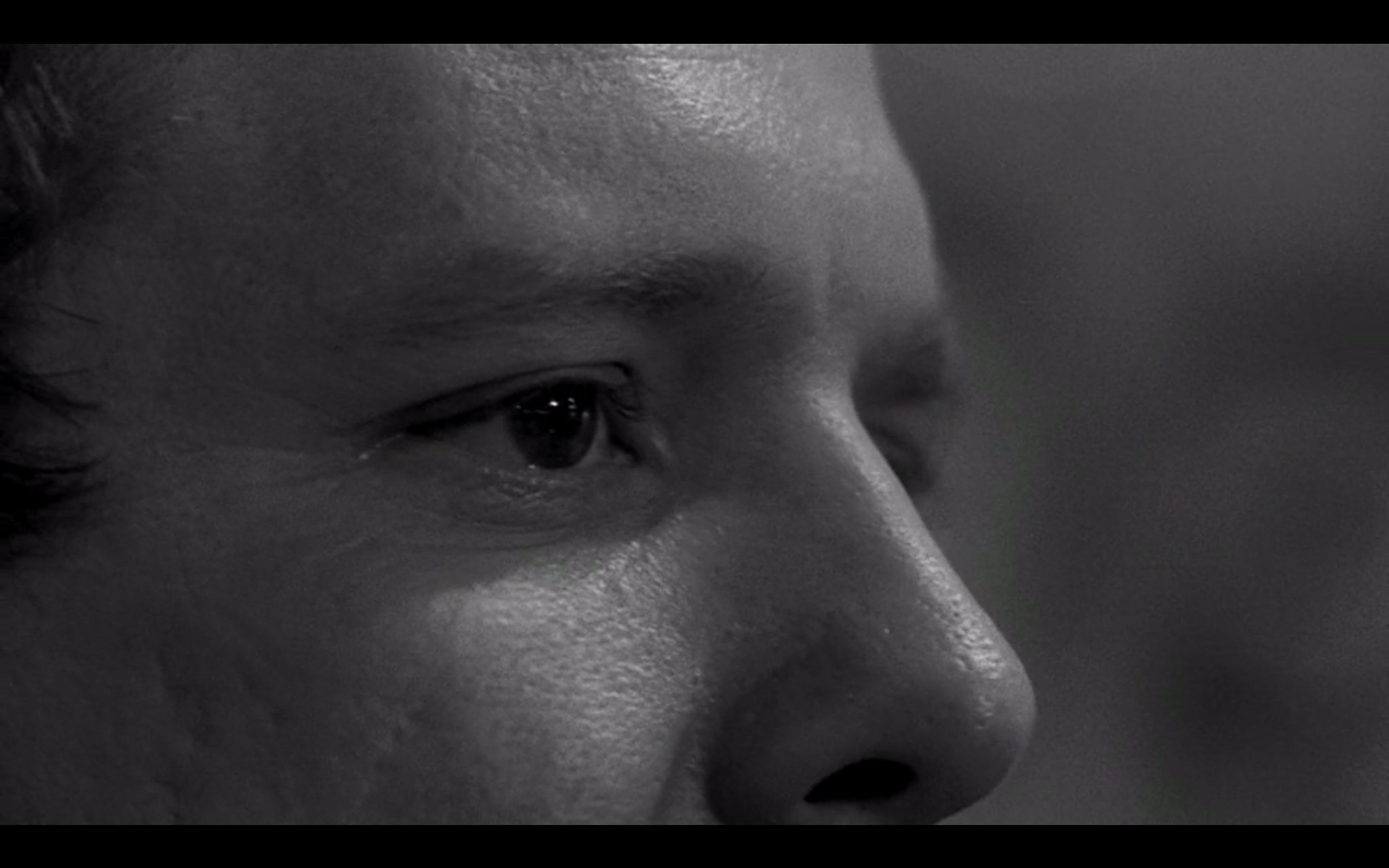
There's a moment in Heath Ledger's far too short, sometimes brilliant film career that makes me so filled with wistful emotion, that no matter how many times I watch it, I'm still taken aback by its deceptively simple power. It's his final scene in Catherine Hardwicke's great, beautiful, moving Lords of Dogtown, a far too under-discussed picture featuring one of Ledger's most poignant performances.

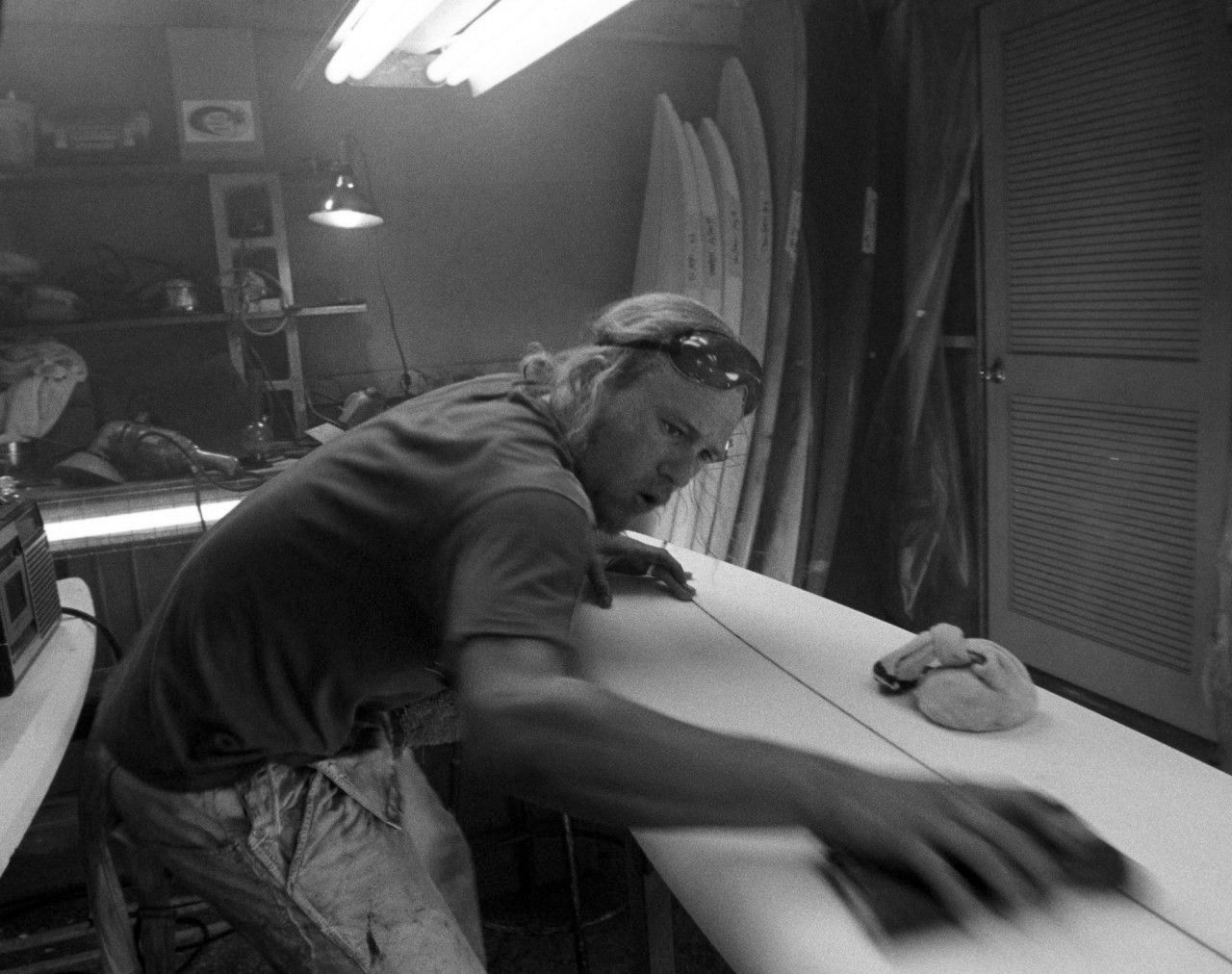
As Skip Engblom, the crusty, aging uncle/father figure to the kids of Team Zephyr, young Ledger played beyond his years with quirky effortlessness. As in most of his performances, Ledger imbued what could have been a one-note aging stoner dude with sympathy and soul, dignifying Skip with a disarming, surprisingly heart-wrenching end note: Sanding a surfboard in the back of what was once his kingdom, in what could have been an easy, here's-where-he's-at-now scene. Instead, Ledger fills us with a compelling mixture of sadness and a glimmer of hope that Skip will at least survive this life OK. After his boss orders him to finish a surfboard for some kid, the past lord dutifully, but bitterly, complies. Glumly sitting down, Skip slowly perks up to the lovely opening of Rod Stewart's "Maggie May." Pounding to that infectious double drum beat preceding Stewart's passionate "Wake up, Maggie, I think I got something to say to you," Skip, in a flash of understated joy and release, turns up the radio and sings along. I love that Hardwicke gave us this moment — such a smart scene, so wonderfully directed. She understood why it was important to see this. 

Sublime Ledger is so in the moment and so naturally bittersweet that in mere seconds, he makes one remember just how much those little things in life can affect you — those times or sensations that either make you crash hard or for one wonderful, ephemeral moment, lift you higher. And then you sit down. Take a drink. And you're back in your reality. 

Phil Karlson’s Gunman’s Walk

EEDTMVdVAAI0f8O
A brief look at Phil Karlson's Gunman's Walk…

“Look, times don’t change in this country where you breed a man soft… without any spirit in him. A man’s like a horse. If you don’t buck the first time you put a saddle on him, he ain’t worth having, you know that!”— Lee Hackett (Van Heflin)

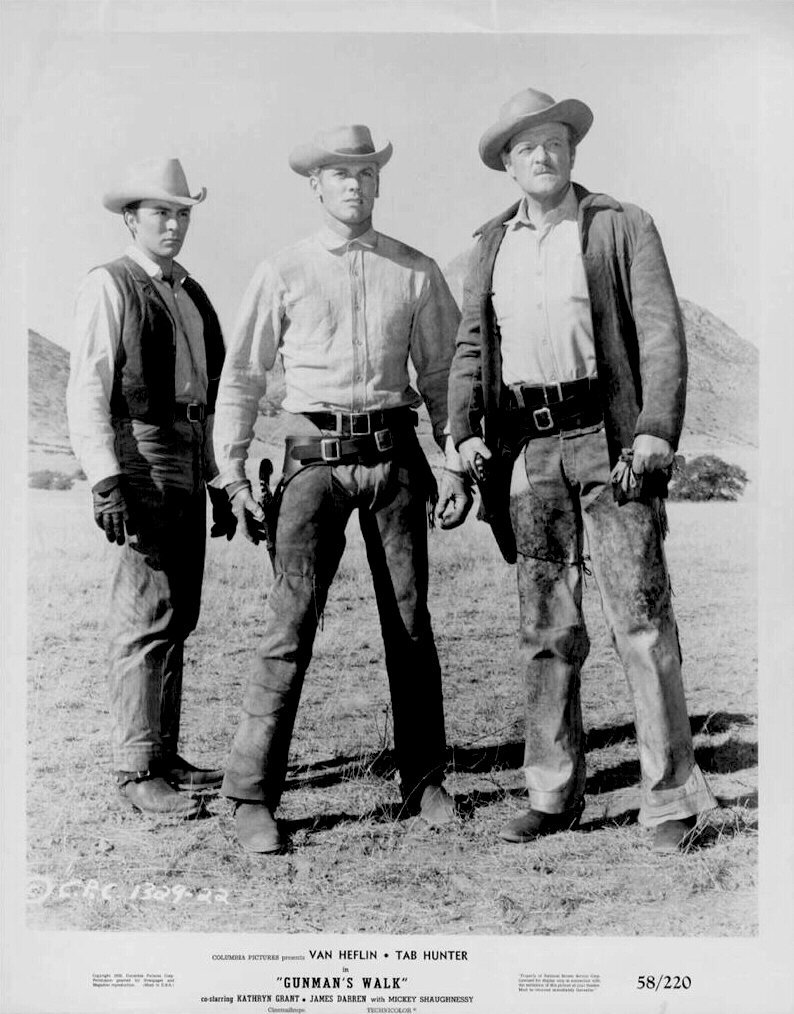
In Phil Karlson’s Gunman ‘s Walk – you wonder how hard old rancher Lee Hackett (Van Heflin) handled his sons. Sure, he probably belted them – he even makes causal reference of it to one of the boys when they return home after a journey on their horses. But anything to do with beatings are mostly said with a laugh. That’s just how things were done back then and the boys are tough and grown up now and why would they question any such thing? Why would they question anything their father espouses? Their father knows all. All.

Physical punishment for kids is awful — but that's not what is entirely wrong in this family dynamic — or so far we know. What else? What else did Lee instill or pummel into these boys that made them come out the way they did? (There’s no mother around – we assume Lee is a widower). And why did they come out so differently? 

One, the younger son, Davy (James Darren), is a sensitive sort – in later years (this liberal-minded western came out in 1958 – written by written by Ric Hardman, screenplay by Frank S. Nugent) Davy might be considered a proto-hippie – a peacenik. He doesn’t care much for competition, he’s calm and thoughtful, and he’s not woefully insulted if he’s not the best shot with a gun. He, in fact, doesn’t even like wearing his gun – he sees no use for it save for shooting a horse that’s sick or maybe ridding a threatening rattle snake. So why does he have to wear his holster and gun around town? People think it’s outmoded and, frankly, silly. They stare, he says. His disappointed dad, Lee (both sons call their father “Lee” and not dad), says let ‘em stare. That’s how the Hackett’s built this town, that’s how they kept reign, that’s how it was and how it should stay. Intimidating. To Lee, guns are good, goddammit. You gotta stride around with that gun – it gives you that extra … potency. 

Lee – this is a man who is fearful of getting older, fearful of limpness. Guns are frequently discussed as such (and perhaps too easily at times), but in Gunman’s Walk, yes indeed, the gun really does seem to represent the phallus. In Lee’s eyes – you’re not going to walk the same without one.

With that, Davy weakly shoots some bottles his dad sets up to see how rusty his son has gotten, and we wonder if the son is missing on purpose – if he’s just so sick of this gun business. Is Lee embarrassed of him (is his son gay?). I don’t think Lee suspects this of Davy, but there’s an insinuation that he’s not a real man, which the movie makes sure we never think. Davy, in fact, is more his own person. And he’s a loving young man – he’s not going to poison his dad with too much resentment – nor his older brother. But after we meet that older brother, we wonder how he came out so sweet.

Download
That older brother, Ed (a fantastic Tab Hunter) is the ace shot. He
likes wearing his gun. He practices his moves in the mirror – something Davy makes gentle fun of him over. Ed seems to enjoy scaring people, and really, he wants to scare his dad. He wants to beat his dad – beat him in every game that father has thrown at him. He’s tall and blonde and handsome and he makes passes at girls (too roughly) and he never seems happy. Never. Even when he’s singing in a saloon, drunk: “So many nights for havin' fun/ So many fights I haven't won/ There's not enough notches on my gun/ I'm a runaway/I'm a runaway…” he seems out of control, not joyful. Vaguely sociopathic. But there’s something sad inside this “bad seed” – something his dad planted. He could snap at any minute. He does. Quite a few times. He's mad at the world but he’s mostly mad at his father.

When Ed rides up to the ranch with his brother, he lets another man brush down his horse. Lee is angry and says:

“Listen son, you let a man do things for you, things you should be doing yourself, and sooner or later he’s gonna get the idea that he’s a better man than you are. Now you remember that.”

A better man. No one should be or even think so. Well, except Lee. Lee is better than everyone, including his sons. Ed, as we see from the get go, is deeply resentful of this. Even hateful. When his dad is setting up a can to shoot – Ed shoots it right out of Lee’s hand, and when Lee’s back is turned. He could have killed his father. Lee is furious. And then … he lets it go. He just lets it go. He laughs a big, somewhat charming, somewhat overcompensating laugh that we’ll see a lot in this movie. Ah, boys will be boys.

In a later, beautifully directed scene, we see Lee at a saloon with his buddies, whooping it up, laughing his amiable/slightly sinister Van Heflin laugh, and Ed sits grim faced, staring at his father’s reflection in the saloon mirror. He then shoots that reflection. It’s a dramatic gesture and should be a warning to Lee – but Lee takes it in stride. Or does he? That reflection is what Ed will later call the “shadow” – he is a shadow compared to his father – and in a way, he is shooting himself too (after all, Lee likes to look in mirrors – there’s another doleful moment in a mirror in the picture). Ed hates Lee but he must love him too. Lee loves Ed – he “loves” him so much that he hires someone to lie when Lee “accidentally” shoves a half-Native American cowboy (Bert Convy) off a cliff on a cattle drive. Ed is after a beautiful white mare and that cowboy got in the way – something (the beautiful white mare stands stark and haunting in this movie— behold a pale horse – Ed is chasing death).

Things just build and build after this. Davy falls in love with Cecily "Clee" Chouard (Kathryn Grant), a half-French, half-Sioux whom both his racist brother and father refer contemptuously to as a “half-breed.” She’s the sister of the dead cowboy and Davy starts siding with the family more than his own… This is unacceptable to Lee. Not a surprise.

And Ed is just going crazier –the more he runs rampant in town, acts his own unhinged way, the angrier at his father he becomes. And himself. This is a young man who hates himself. That he’s a shadow. In the end the shadow must be killed – by the father – it’s a shocking and disarmingly moving ending and makes Gunman’s Walk something of a masterpiece. 

Karlson, who directed some of the great, tough-as-nails noirs (99 River Street, Kansas City Confidential and The Phenix City Story) wonders why in hell do these people have to be so violent. Does it solve anything? This is a director questioning authority; looking at how we blindly believe in institutions – one of them being “manhood,” domination. And he gives Heflin, Darren and Hunter plenty to explore here – these are fascinating character studies, both deeply human and symbolic. Gunman_s_Walk-276247508-large
Heflin’s Lee – god knows what he did to his sons and god knows why he is so obsessed with Ed. What is going on there? There’s an inverse to Martin Ritt's Hud here – Heflin’s character puts up with so much with Ed, irritated by his gentler son, while Melvyn Douglas’ righteousness clashes with his bad boy son (whom Douglas does not love – which messes up his son – he’s got to account for that). You get the feeling that Heflin’s Lee would get along well with Hud the cynicism and corruption of Paul Newnan’s Hud. But would Hud hate him too? Probably. 

But to Heflin and Hunter’s immense credit and their brilliant performances (this is one of Hunter’s greatest roles) – we, the audience, don’t hate them. We can’t. We get that they are damaged men – and that there is something about the world, something about what is expected of masculinity, that can twist these two men and turn them crazy. The resulting movie is heartbreaking – Lee is rendered powerless – and that makes him, to the viewer, in some ways, more powerful. More open. More of a human being. And some powerful men were affected by this. 

2354-3
One of those powerful men was the fearsome (and hated by many) Columbia studio head, Harry Cohn. According to Karlson (in an interview with Todd McCarthy and Richard Thompson), Cohn was moved beyond his own comfortable measure. Said Karlson:

“There was no tougher man in the whole world, and I had the pleasure of seeing this man sit in a projection room, with Freddie Kohlmar and myself, crying at Gunman's Walk. At the end of that picture, he was literally crying. Harry Cohn crying! Freddie Kohlmar got up; he was so embarrassed he walked out… Then I started to get out and he stopped me, Harry Cohn, and he said, ‘Wait a minute.’ He now bawled out the projectionist for turning the lights on, because nobody turns any lights on unless he gives the order, presses the button. He was so moved by that picture because he had two sons and this was a story about a father and two sons. He identified completely with that motion picture and he said to me, ‘You're going to be the biggest director in this business and I'm going to make sure you are.’” 

“Wouldn't you know, that's the last picture he was ever associated with. 

“He went to Phoenix, Arizona, and died.”

From my piece in Ed Brubaker's Criminal

Mikey & Nicky & May

EW96VELWsAAXAwT
Mikey
: You call me “The Echo,” and you tell everybody that I have to say everything twice because I got a tunnel in my head. The second time is the echo.

Nicky: Listen, Mikey, everybody says everything. I mean, what’s the difference? I was kidding. Don’t you ever kid?

Mikey: You make me out a joke to Resnick. Just like you made me out a joke to that girl.

Nicky: Mikey, you’re wrong.

Mikey: And I’d do anything for you. Anything. And unless you’re sick or in trouble, you don’t even know I’m alive.


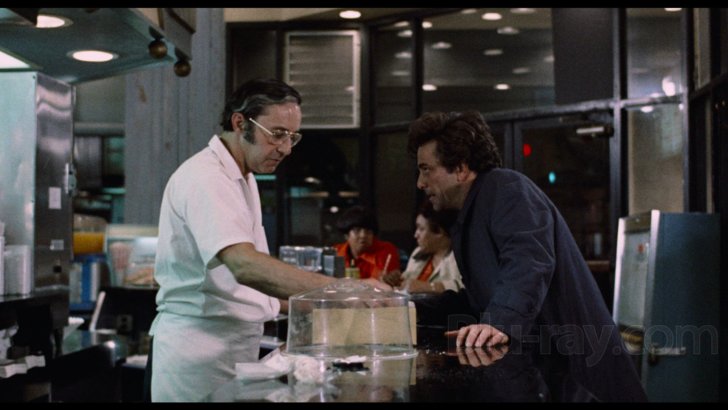
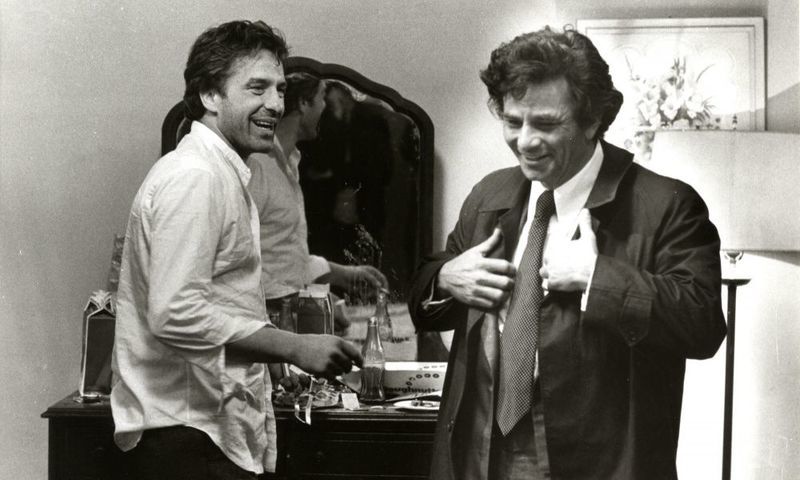
At the beginning of Elaine May’s third, brilliant picture, Mikey and Nicky, John Cassavetes’ Nicky is holed up in a seedy motel room in Philadelphia, terrified and desperate. He’s in the midst of a nervous breakdown and looks like he’s been up for days with his messy, bed-head hair, handsome, haggard face and wrinkled white dress shirt sticking to his thin frame in an angst-filled, ulcer-ridden sweat. He’s stooped on a dingy bed and staring nervously rat-eyed at the dirty, chain-locked door, hoping no one busts through. He’s got a gun. Of course, he’s got a gun. This place is the kind of fleabag hovel where people shoot through filthy locked doors or bribe front desk clerks who’ll look the other way when an offender blasts through those grungy openings and commits whatever bit of unpleasantness that happens on the other side.

The joint is haunted with the lives of those who hide in the rooms, sitting on bed-bugged blankets full of dope and desperate dreams. Nicky isn’t dreaming, his life is a wide-awake-nightmare. But he does have hope – he hopes to stay alive.

He’s got a good reason to be scared – he’s heard there’s a contract out on him. He calls the buddy he’s known since childhood, Mikey (Peter Falk), and begs for help. Nicky knows Mikey’s going to come up, even if Nicky throws down a towel and nearly knocks Mikey with a bottle. You feel for him. Mickey reassures him, spending the entire movie with his pal. Mikey’s an old friend and Nicky can trust him.

Oh… hold on. Can he? Is he on the level? When you eventually learn that Mikey is not – and you don’t catch this right away – but once you realize that the hitman (played by Ned Beatty) on Nicky’s trail is being aided along by Mikey, you start to piece together that this friend isn’t the one Nicky should have called. You’re on Nicky’s side. You think. But keep watching. No, you’re on both of their sides because what kind of hell are these men trapped within? What kind of life is this? Is Mikey really going to deceive Nicky? Is Nicky maybe a sociopath? Well, nothing is easy in this movie, and certainly nothing as easy as being on one person’s side.

As the night wears on and these two talk, fight, hit each other and reveal more and more about themselves and, to May and her actors’ immense credit, your emotions shift all over the place. Whatever alliances you had, whatever charm you’ve felt from these two guys, all that has been dragged around and sullied, dirtied up like that door in Nicky’s dumpy motel room.

Mikeynickyblu00001

And May shoots it that way, never allowing a glamorous moment to enter the frame (even with gorgeous, through stripped-down cinematography by Bernie Abramson, Lucien Ballard and Victor J. Kemper), even with these two troubled, charismatic men who have their own kind of coarse glamour – you never forget they are often just real crumbs. She throws you in with these characters; you laugh, you’re nervous, you’re even scared about what on earth will happen next, and thus, crafts a film that’s really not one to fit any kind of genre. I guess it’s a dark buddy comedy? Whatever. It doesn’t need to fit a genre – it’s an Elaine May picture.

It’s tactile. Even the betrayal (you feel this in all of May’s pictures – relationships are fraught with them) feels like you can touch it, and you sense the long night go on and on. You can feel the sweat on their faces. You can practically smell the bars they’re drinking in. And yet, you don’t want to get out of this movie, you don’t want to unlock the door and make a run for it. You like (if that is the right word for it) being stuck with these two small-timers, you’re fascinated and drawn to them, and you wonder where this is all going to end … who is going to make it through the night?

Being stuck with these guys – that is the genius of writer-director May, and her actors Cassavetes and Falk. In one night, in the ghostly urban environ of Philadelphia (a decidedly less romantic place than New York City or Chicago or Los Angeles, or at least May shoots it that way – and it looks gloriously grungy), we tag along with two guys who talk in junky beat-up bars and on city buses or in the streets and we are enlivened, anxious, depressed, disturbed and empathetic. By trusting the chemistry and brilliant interplay between Cassavetes and Falk, May not only shows her subjects as flawed, violent, vulnerable, selfish, guilt-ridden and manipulative men carrying around decades of resentment (as many friends do) but men who are always on the precipice of violence – emotional or literal – and violence ready to do them or someone else in. You feel for them at times, but you also feel jangly and uncomfortable watching them – you are waiting for a shoe or two or three to drop. Maybe on Falk’s head.

There’s nothing noble about these guys, just real. When they stop off at Nicky’s mistress’ apartment, Nicky spouts some hollow “I love you” line so he can be intimate with her (though it doesn’t seem very intimate) on the floor, while Mikey’s hunched over in her depressing kitchen, waiting for them to finish, and for his turn. When Mikey’s rebuffed, he smacks her. It’s a startling, sad moment – May is not going to give these guys and their toxic behavior too many breaks here. Soon after, Mikey accuses Nicky of setting the scene up to embarrass him; to hurt his male ego. Nicky says something that claims she’s a little crazy and that she needs to be coddled with sweet talk before the act… Nicky says a lot of stuff. It’s all over the place and scary and sad and you’re right there on the street with them. And it’s superbly staged.

Headerphoto1763211What the director and actors are doing here – it’s what people call a “high wire act,” and the artists walk it bravely. And it is, at times, astonishing. Too bad many in 1976 didn’t think much of this movie, as far as I know, or even saw it. It came and went in theaters – not given a chance even to be seen enough by audiences – I have to think many audience members who actually saw the movie could have loved it. The picture is absolutely masterful – a movie that now stands as perhaps one of the most underrated works of the 1970s. (I was thrilled to see Criterion had released a fine edition of the film this year).

This was, I believe, considered a darker turn for May (who started out in the theater and then co-created her pioneering comedy act with Mike Nichols), and who, prior to this, had directed the brilliant comedies A New Leaf, starring Walter Matthau (which she wrote), and The Heartbreak Kid (screenplay by Neil Simon). Though it’s not like those two films were light comedies. Not in the least. She cast herself as the romantic lead ready to be knocked off by Matthau in A New Leaf, and then, in The Heartbreak Kid, she cast her own daughter (Jeannie Berlin) ready to be cut out by her selfish husband (played by Charles Grodin), after one glimpse of Cybill Shepherd on the beach during their doomed Miami Beach honeymoon.

The darkness of those two films (mixed with the bittersweet – your heart breaks for Berlin and the egg salad sandwich on her face, and for the cold break-up she must endure; you fall in love with May’s heiress/ impassioned botany professor), and Mikey and Nicky is distinctly Elaine May (even with Simon writing The Heartbreak Kid, adapted from the Bruce Jay Friedman story). May looks at this crazy world, these relationships we find ourselves in (or create), our betrayals, and the institutions we march through with a jaundiced yet utterly human eye. And it’s funny. But painful. Lovable and utterly horrible. The ending of The Heartbreak Kid is one of the most depressing endings of any “romantic comedy” I’ve ever seen. Like Mikey and Nicky, I am not even sure who I feel sorry for – Grodin’s selfishness and now likely realization of the life he’s going to lead? The first time I saw the end I was just stunned and thought – god, what has this delusional man done? And what a dreadful family. What a pitiful, lost man. And then the movie closes with Grodin quietly humming The Carpenters’ “Close to You” … is he thinking of his time in the car with his ex-wife, Berlin, happily singing the same song together?

ImagesMay always nails these kind of details with such power and layered meaning. In A New Leaf, there are many moments to discuss, but here’s one I find comic genius: May holding her teacup – that extended moment with the teacup. And the carpet.

When she first meets Matthau who has set his predatory eyes on her as a mousy thing, an easy target – May, sitting at that fancy get-together with that quivering teacup and spilling liquid on that woman’s stupid carpet (you know the scene if you’ve seen the picture), is one, among many moments in which May dissects a detail, whether small, like crumbs rolling off of her dress, or her arm hole/head hole (or large details, like Matthau’s Henry losing all of his money) and, in that, shows us how relationships are messy – quite literally with the tea and the crumbs dribbling all over us. And, maybe, just maybe, Matthau secretly likes that about her (unlike Grodin who is annoyed by everything Berlin does). But we don’t know. It should be easier to know such things but people are prickly and cranky and mean. (I certainly do love that about her in A New Leaf, crumbs and all, but I’m watching a movie).

At the end of the teacup moment, Matthau defends May’s Henrietta about the tea, and it means something to her, even if he’s play-acting (maybe secretly he’s not?). And so, with this, we don’t even know when people actually care, even as we cheer when he tells off at that snooty woman for berating May’s tea sipping and slipping: “Madam, I have seen many examples of perversion in my time but your erotic obsession with your carpet is probably the most grotesque and certainly the most boring I have ever encountered.” Maybe he’s truly sticking up for Henrietta, maybe he just enjoys hollering at the snooty hostess.

In Mikey and Nicky – the sequence that begins with the watch – you see the apologies, the pleas of it’s only a joke, and then the violence erupting. Because people are either full of shit or sincere – we can’t always tell – and that is maddening. In all of her work, May ponders this quandary between men and women and men and men – it doesn’t matter if it’s romantic or platonic – that fractured humanity is all there. And, sometimes, all we can do is nervously laugh.

17992_4
Mikey and Nicky
 carries a notorious production history that’s been discussed, sometimes more than the movie itself (and, sadly, used against May). In short, May went over budget, reportedly shot more film than Gone with the Wind and, at one point, was said to have hidden reels somewhere in Connecticut. Before that, May also dealt with studio difficulties with A New LeafA New Leaf was even darker and more extended in its original cut, supposedly sheared at the behest of Robert Evans at Paramount, which upset May enough to sue (unsuccessfully) and attempt to remove her name from the film. Either considered too long or too bleak or both, it was cut (and that footage has never been found) leaving a happier ending, however happy you take the conclusion of the picture (Henry almost really does kill her – the last minute change of heart, based on a fern isn’t the strongest indication he’s forever a new man). It’s a testament to May’s genius that the film could work either way.

After Mikey and Nicky, she didn’t direct another film until her vastly underrated, notoriously maligned, but hilarious and smart, at times brilliant Ishtar (starring Warren Beatty and Dustin Hoffman, written by May) came out in 1987. To discuss Ishtar (also about the relationship of two men) requires a separate essay (here’s a great one from the New Beverly by Garret Mathany), but I will say – I am glad this movie found a cult and is finally not just loved and respected by more viewers and critics than before, but now actually, seen. And this line, uttered by Beatty to a suicidal Hoffman: “Hey, it takes a lot of nerve to have nothing at your age. Don’t you understand that? Yeah, most guys would be ashamed, but you’ve got the guts to just say, ‘The hell with it.’ You say that you’d rather have nothing than settle for less. Understand?” It always makes me laugh and moves my heart, simultaneously.

As Charles Grodin said later about the film (to the Wall Street Journal):

Why should the public be concerned what the budget of a movie is? Coca-Cola financed the movie. It’s not as if Coca-Cola was going to give that money to the people of America rather than spend it. People are very reflexive. You can just say a name and people will laugh or chuckle or snicker or whatever they do. But if all the people who were snickering had seen ‘Ishtar,’ it would’ve been a big hit.”

Indeed. It sure would have.

2023_ishtar
The absence of May as a director is something much discussed – and much missed (though she is a successful, Oscar-nominated screenwriter and a still working actress – she recently has been nominated for a Tony for her performance in Kenneth Lonergan’s The Waverly Gallery, and in 2016 she directed for television a tribute to Mike Nichols, “American Masters: Mike Nichols”). But the yearning one feels to have some more films directed by Elaine May, brings up questions – and questions relating to sexism in the film industry. Is May not allowed to be exacting or idiosyncratic or whatever she has been called? Male filmmakers are certainly entitled to be just that. Was she punished for Ishtar? A movie that suffered not only bad box office but undeserved, absolutely outsized ridicule (which still baffles me) – that is going to hurt a director. But she should be allowed a failure (in terms of box office) – especially one as actually great as Ishtar.

And she should be judged on the quality, originality, and brilliance of her four directed pictures (which she is, by the plenty of critics and other filmmakers who revere her). It’s a hard business, but from what I’ve read and heard, May does not suffer fools. She’s tough. She’s respected and loved. And four films this excellent – that’s impressive (I can think of filmmakers with much longer resumes and bigger hits who don’t hold a candle to May. Many of us can).

So that tough world of Mikey and Nicky – I was told by an actor/director recently who worked with her, praising her – that was not altogether foreign to her. And that she was damn tough herself. I don’t know if Richard Burton was terrified of her (That he’d fall in love? That she’d outwit him?) when I read this quote from him, it’s stuck with me: “Elaine was too formidable, one of the most intelligent, beautiful, and witty women I had ever met. I hoped I would never see her again.”

God, we always want to see Elaine May again. In anything. In Woody Allen’s Small Time Crooks (she is the best thing about the film), in later interviews with Mike Nichols, in an AFI tribute to Warren Beatty where she gives a perfectly timed, hilarious and loving speech to Beatty. On the stage.

Content_mikey-image
Back to the film I’m discussing – Mikey and Nicky ends as you might expect it to and yet, it feels totally surprising – this rush of emotion you feel as Nicky bangs on Mikey’s much nicer door – nicer than the one in his crappy motel room. He’s yelling in misery: “Mikey, you son of a bitch! You bastard! You bastard! Mikey!” His life is nearly over and damn, you really feel it. You believe it. You believe every second of this movie.

A line uttered earlier by Mikey is now, not so much funny as more awfully prophetic, circling back to desperate Nicky screaming at his door: “It’s very hard to talk to a dead person. I have nothing in common.” Maybe Mikey’s telling himself that at this anguished moment. Maybe not.

May isn’t going to end this movie easy. While grooving on the very human rhythms of Cassavetes and Falk, May shows their explosions of violence, and sometimes allows it to play as darkly humorous, at least for a moment, until you’re taken aback and saddened by the needlessness of it all. It’s painful and poignant and challenging and funny and finally, heartbreaking. It’s one of Elaine May’s greatest movies. But, then, to me, she doesn’t have a bad one.

From my piece at the New Beverly

You’re on Your Own: Blood Simple

Blood-Simple
Blood Simple
is a lonely movie. The movie sweats, cries and bleeds loneliness. The road the two lovers, Ray (John Getz) and Abby (Frances McDormand) drive down at night, opening the film, is lonely. Never mind that they are together and about to consummate their union in a hotel room – it’s a lonely road – as remote as Hank Williams’ “Lost Highway,” as friendless as Tom Neal hitching a ride in Edgar G. Ulmer’s down and dirty Detour. And the hotel doesn’t feel so uniting either – lonely cars rushing past, casting shadows on the wood-paneled walls and dingy white sheets. Is it romantic? Not really. The bar that the cuckolded, perpetually fuming Marty, Abby’s husband (Dan Hedaya), owns and runs is lonely – he seems to live in the back of that place, and only at night, feet up on the tables in the neon-bathed blackness, sweating and stressing, talking to a sleazo PI with contempt. When he attempts, miserably, to woo a pretty patron at the bar, she amusingly tells him to get lost (“Now that I’ve communicated, why don’t you leave?”). No one wants this man. And he knows it. It’s a lonely old world – and we even begin to feel sorry for him, even though we really shouldn’t (he’s going to ask the PI to off his cheating wife and her lover, a bartender he employs).

14060_1
And then there’s the constant Four Tops song that nearly bursts out of the bar juke-box in bracing moments – “It’s the Same Old Song”— something that could work to ironic effect (and perhaps does to some viewers) but a tune that serenades the movie with its abandoned refrain: “Now, it's the same old song, but with a different meaning since you been gone…” That could be Marty’s song, or any of the characters, really, as their fates feel like the repetitions of the tune via the repetition of their mistakes, mistakes that make them even lonelier. The same but different. It’s no surprise that M. Emmet Walsh’s Private Detective Loren Visser opens the film with this voice-over, saying of the film’s setting, the lone star state of Texas: “Down here, you’re on your own.”

Blood-simple-5
Not that the movie takes the character’s loneliness and murderous predicaments with solemn seriousness – it certainly doesn’t – but it doesn’t mock them or the noir genre either. Lifting our spirits (honestly, the movie’s sheer ingenuity and voice is spirit-lifting, if that is the right way to put it), there is something morbidly funny about how awful this all becomes, in part, because there is something morbidly funny about how many noir twists turn out. Here it’s Marty’s murderous plans double-crossed by Visser, and then characters not knowing what is truly going on or who did what or who is who – it even ends with Visser’s laugh when Abby mistakes him for Ray, Visser deliciously uttering mock-politely as he lies bleeding in the bathroom: “If I see him, I'll sure give him the message.” (That’s all I will say about the plot if you haven’t seen the movie, just watch). It’s this offbeat, mordant, but very human humor mixed with startling bursts of violence and striking, singular style (Barry Sonnenfeld as cinematographer – his first narrative feature film) that makes this 1984 neo-noir directed, written and produced by Joel and Ethan Coen (their first movie) still feel so refreshingly alive. Yes, alive, even as almost everyone in this movie is likely gonna die soon (I won’t say who). As some 1980s and 1990s neo-noirs show their age, or feel too soaked in their own style for the sake of style, Blood Simple remains timeless.

Blood_simple_2_coen
The title is taken from Dashiell Hammett’s “Red Harvest”: “This damned burg's getting me. If I don't get away soon I'll be going blood-simple like the natives.” But as frequently stated, the picture is very much inspired by James M. Cain (whom the Coen’s revere – as they’re quoted via Ronald Bergan’s informative “The Coen Brothers”: “We’ve always thought that up at Low Library at Columbia University, where the names are chiseled up there above the columns of stone—Aristotle, Herodotus, Virgil—that the fourth one should be Cain.” Bergan says they’re being hyperbolic and he’s probably right but I am not so sure…)

As Bergan states, however, the picture isn’t as sexy as Cain, and he’s right. And this is to the film’s benefit – it’s not trying too hard to be hot, it’s not doling out a bunch of now clichés aping pulp and noirs that were very sexy (as Cain could be), that make a few neo-noirs of the 80’s and 90’s now feel a bit forced at times. Decisions were made here that were smart – the “femme fatale” doesn’t come sashaying into an office gussied up or speaking in sexy low tones, rather, she looks like a normal but very pretty woman (on that though: I revere the sexy sashaying femme fatale but it must be done with ease and real charisma — some actresses are brilliant at it). There are no “let’s be noir” saxophone or saxophone-like moments (I might just imagine this happens in other neo-noirs so forgive me) and instead the music, by Carter Burwell (his first, marking a long future collaboration with the Coen’s), is melancholic and haunting. Even the constant sound of the ceiling fan and the neon-bathed bar go beyond just the style and remarks more on the film’s sad beauty, tension, and mood – it is suffocating over sensual. And the final shootout is visually bravura, scary and wonderfully bizarre. And even funny. The filmmakers respect the genre (and continued working within it or in movies that contained an element of it  –  among them – Miller’s Crossing, Barton Fink, Fargo, The Man Who Wasn’t There, and No Country For Old Men which brought them back to Texas) but also see how inherently funny and absurd it can become. And without slipping into parody, which, in one early interview, Joel Coen makes a point to clarify: “We never looked at it as a parody though, from our point of view we were always attempting to do sort of a fairly straight-forward thriller, we just wanted it to be as humorous as possible.”   

Unnamed

There is indeed something humorous about how much these lonely characters will endure and then, something truly exciting about how much they try (and fuck up). Walsh (who is brilliant here – all suited up with that cowboy hat, shit-eating grin, and driving that VW bug) says something that is both resilient and gross, and also hilarious. And also a weirdly beautiful literary line – hard-boiled and Southern Gothic: “Give me a call whenever you wanna cut off my head. I can always crawl around without it.” In an effectively disgusting way, Walsh’s Visser becomes the least lonely character in the movie. Even if he may die, with those fantastic lines he utters, and that laugh, he will leave something – a memorable trail of slime. That’s not nothing.

From my piece in Ed Brubaker's Criminal

Happy Birthday Tuesday Weld: Pretty Poison

1_UqKJzRA82i9a0xBaT6g3aw
“What a week. I met you on Monday, fell in love with you on Tuesday, Wednesday I was unfaithful, Thursday we killed a guy together. How about that for a crazy week, Sue Ann?”

There’s a scene in Noel Black’s 1968 Pretty Poison that’s so unnerving and memorable, it still makes a viewer feel off balance today. Tuesday Weld’s beautiful 17-year-old high school majorette named Sue Ann Stepanek has just bashed some poor night watchman on the side of the head – twice – and he lies on the ground, bleeding, near dead. She and her new boyfriend, disturbed but sensitive Dennis Pitt (Anthony Perkins), have been mucking around at the chemical plant he has been working for (and was fired from) on one of their dates/clandestine “missions.” Dennis is loosening a chute that dumps chemical waste into the town’s water supply and at the same time, filling Sue Ann’s head with lies that he’s a spy for the CIA – she’s excited to help him. She’s really excited.

She loves the intrigue and the mischief, and she loves to rebel. She loathes her mother (when her mother slapped her earlier that night, Sue Ann slapped her right back) and she’s not keen on rules (save for Dennis’s “classified” commands she delights in). And she is her own person. That is for sure. She is, indeed, her own kind of person.

But as Dennis is messing with the chute, the night factory guard, Sam (whom Dennis seems to like), catches him. Dennis stares back terrified – for good reason – he’s recently been released from a mental institution. He’s a man (presumably in his 20s, or early 20s – Perkins was 35 at the time) with a record, a past arsonist who accidentally set his aunt – and her home – on fire (he was 15 then). He’s got a parole officer, Morton Azenauer (John Randolph), who is kind and patient with him. But Dennis – playing around with these spy games with this young woman – and now a nice old man’s got his skull bashed with a monkey wrench? He’s got a lot to be scared of.

DownloadSue Ann, on the other hand, does not seem to be scared of anything. In the universe of Pretty Poison, with its tree-lined, white-picket-fenced setting (the film was shot in Great Barrington, Massachusetts) this might seem surprising, that is, if a person were to apply the common standards of how society thinks of young women (and how they likely do in this town). She’s a remarkably beautiful girl with lovely hair (I always think of Nick Cave singing about blonde teenage murderess, Lottie, from “The Curse of Millhaven” – “My hair is yellow and I’m always a-combing, la la-la-la, la la-la-lie. Mama often told me that we all got to die!”). She’s a straight-A student with a bright future ahead of her. So, she, out there at night with her disturbed boyfriend who has led her into this bad scene – she should worry for her future. She should bemoan over why he dragged her into this. But she doesn’t. And she thinks fast. She calmly, deliberately, brains old Sam, blood oozing all over his face. She seems a little proud of herself too. Like she just solved a relatively hard algebra equation.

Sue Ann: I hit him twice. You see he started to go down and then I bopped him on the side of the head. Oh … he sure is bleeding, isn’t he?

Dennis: Yeah…

Sue Ann: The C.I.A. does cover this kind of stuff, doesn’t it? Hmm?

Dennis: Uh … Yeah … sometimes

Sue Ann: Well, what should we do? (Dennis pulls Sue Ann to him to hug her) You’re sweating.

Dennis: You’re cool.

You’re cool. As in her skin temperature. As in her soul. As in he still loves her. It’s all spinning out of control for Dennis, who thought he was in control with her. So… there she goes… Without asking or alerting the freaked-out Dennis, Sue Ann, with all of her sociopathic common sense and know-how, takes the night watchman’s gun out of his pocket (she’ll save that for later), and pushes the dying man’s body into the water. He’s now almost good and dead. And then she sits on his back. To make sure. To drown him.

Dcda28da8a3eb6c526430cc4a2ce7e9a
This is when the movie, which has already placed us into the unsettling world of Dennis and his problems, his possible craziness, and Sue Ann’s beautiful strangeness (though, before this moment, we didn’t realize just how fucking weird she is), I think, knows it’s perverse. In the black of night, her yellow hair glowing, her pink cardigan and blue and white plaid dress almost sparkling, she sits on top of the dead man’s back, her bare legs splashing in the water – with just a hint of … something, an erotic suggestion. A hint, which is smart because it would seem cheap and exploitative if it were anything else. The hint makes the viewer feel almost as if you imagined it. (We didn’t because later in the film, in a moment of disturbance, Dennis will flash to this same shot, freaked out.) When she’s done drowning the man, she sensibly tells Dennis: “He was dead, Dennis. The chute’s right over him. When it falls down in the morning, they’ll figure that’s what killed him.”

We see her sitting on this poor dead man, smiling, calm. When she makes her way back up to Dennis, she looks down at the body and says smiling, happy: “God, what a night.” When she and Dennis are back in the car after she’s sat in the water on top of the man she just murdered, Sue Ann then pounces on Dennis. She’s excited with blood lust. She wants to make it.

Pretty Poison was Black’s first and best feature (though his Jennifer on My Mind is such a tonally crazy picture, that I’d recommend it for those curious about contending with dead, heroin OD’ed girlfriends; Cover Me Babe is also seriously flawed, yet fascinating. His short, Skaterdater won the Palm D’or at Cannes and was nominated for an Academy Award for best short film in 1966). It has a dark, deadpan wit, scripted by Lorenzo Semple Jr. (the Batman series, The Parallax ViewThe Drowning PoolThree Days of the Condor) and gorgeous, at times, experimental cinematography by David Quaid (The Swimmer). I love how green the picture looks – so lush and pretty – quaint, but with so much existential dread and angst and dysfunction all around. David Lynch might love this movie.

The daylight exteriors of Sue Ann driving a baby blue convertible, Dennis sitting at the hot dog stand talking about murder, Sue Ann in a green dress looking very pretty as she watches, with binoculars, the night watchman’s body being dragged from the water – the light of the picture makes its dark humor all the more unsettling. The danger and ubiquity of poison all around us – both external and internal rot. Another great moment: The gun Sue Ann stole off of the dead night watchman she murdered – we see it again in her teenage room with flowered wallpaper and a framed picture of ballerinas – it’s in a drawer containing a blue curler, bobby pins, pink beads and other teeny things – a darkly humorous tableau of pretty girly normalcy and female rage. She will shoot her mother, four times, with it – a squinting, focused, intent look on her face and with a twisted smile – tongue protruding from her lips like both a kid and a seasoned pro. And then, everything back to relative calm, considering the circumstances, Sue Ann planning how to get rid of the body (though Azenauer will call soon after and Dennis knows he’s going to eventually be blamed for this). I actually thought Sue Ann might eat the breakfast her mother just made for her (she asked for pancakes) directly after killing her. Instead, she wants to have sex with Dennis, whom she says she wants to marry and run off to Mexico with. She’d been packing her bags and picking out dresses to wear before her mother came home. As her mother lies there dead on the staircase, Sue Ann sits on the bed and hugs Dennis, asking: “What do people do as soon as they’re married?”

Tuesday+weld+and+anthony+perkins+in+pretty+poison
Dennis is (was) an arsonist, and since he accidentally killed his aunt as a teenager, he’s served many years away – and knows a thing or two about trauma. He nervously settles into this new town (his boss is an asshole), and he thinks he’s too smart for his job. His parole officer, Azenauer, agrees about his intelligence – but to stop with the crazy, or play-acting crazy, the jokes, and especially the fantasy. Azenauer warns him at the very beginning of the picture: “Believe me, Dennis, you’re going out into a very real and tough world. It’s got no place at all for fantasies.”

And then… a fantasy emerges. In a dizzying sequence, Dennis spies the beautiful Sue Ann Stepanek, first as a drum majorette, and then at a hot dog stand (as we’ll see later, a lot goes down at that hot dog stand). When they first take a drive in her car, she lies and says she’s 18 – but he knows better. OK, she’s in high school and almost 18, she says. He will fall for her – trying to play it cool at first, trying to take control with his games (fantasies), but when he sees her murderous glee, he realizes he’s not driving this relationship anymore. Nevertheless, he can’t leave her.

Dennis continues this routine of both trying to not play by the rules, while also, actually trying to listen to his parole officer. He’s clearly got some unresolved anger and fear going on, and he needs to feel more significant than he actually is. One reason why an impressionable teenage girl would be a target for him. And he really should not be up to this kind of predation. No, she should not.

He’s a broken man, and it’s often quite sad. In an incredible scene, both heartbreaking and then, darkly funny (because of Weld’s brilliant, perfectly timed response ), Perkins’s Dennis reveals to Sue Ann what happened all those years ago with this aunt:

Dennis: I didn’t know she was in the house. I swear I didn’t. See, I’d been playing with some girl next door. Playing doctor or something. Her name was Ursula. And my aunt caught us. [Crying] It wasn’t bad. It wasn’t bad. My aunt beat me with a pile of sticks. So, I took that pile of sticks into the cellar, and I set fire to them, Sue Ann. But I thought my aunt was out. Oh, that poor fool. She sneaked back into the house after she told me she was going out. I guess she hoped to catch me committing lascivious carriage or something, but I didn’t know it, Sue Ann, I didn’t know she was in the house. You see? You see…

Sue Ann: [Smiling] You’re all sweaty when you were the one with experience in killing people.

Dennis: [Sobbing and slightly laughing] Oh, God. Sue Ann. You say such crazy things. Maybe that’s why I love you.

Sue Ann: Cross your heart? Cross your heart?

960_pretty_poison_04_blu-ray__blu-ray_
Perkins is so impressive in Pretty Poison – funny and creepy and vulnerable and a bit heart-breaking by the end. It’s a fascinating performance – he’s not really crazy, he’s almost play-acting a paranoid schizophrenic (he listens to radio shows in Russian, and, as said, comes on to Sue Ann through boastful lies about his work with the CIA.), so his actions just leave a question mark, in an intriguing way. As director Black said to writer, Perkins’s biographer, Ronald Bergan in 1994: “He had enormous charm and intelligence, the very qualities I wanted to come through in the role he would be playing. I was looking for the young Tony of Friendly Persuasion and Fear Strikes Out, not Psycho, although commentators naturally made the comparison between Norman Bates and the character in Pretty Poison.”

He’s not really like Norman Bates, though there’s a sex-death dysfunction he’s grown up with. But it’s as if he has no other way but to act crazy because that’s what everyone expects of him. But why pretend all this? Because no one ever believed him before? And fantasies aren’t always a bad thing, even if Azenauer  warns him against them. But this world – Azenauer is right – it doesn’t like those indulging in fantasy so much. As Noel Black said (in a Los Angeles Times story), Perkins’s Dennis is “a Walter Mitty type who comes up against a teeny-bopper Lady Macbeth.”

The act “works” to a certain extent because Sue Ann, likely bored out of her skull from typical boys who’ve romanced her, taken her to dumb dances and copped feels in cars, and who is also clearly damaged herself (her home life is unstable, her mother, doing what she wants, fine, but not necessarily protective, more just repressive to her daughter) is drawn to Dennis. Sue Ann sleeps with the twitchy mystery man (the first guy she’s “made it” with, though, when she brings up a sailor in a photo who creepily looks a lot older than she is, she might be lying – and we wonder if that was something unpleasant for her) and she also falls in love with him.

960_pretty_poison_03_blu-ray__blu-ray_
Or so she says. We are never sure if she really had any feelings for him. We get the sense that she could have planned a trap this whole time. That she knew, from the very beginning, that he was lying. Or, if she started to catch wind of his lies or got bored, she flipped the switch. The easy read on Sue Ann is that she’s a stone-cold psycho, a bad seed, but she’s also a damaged, enraged young woman with a power and a magnetism all of her own. There’s surely a reason she’s got anger. Yes, she’s mad at her mother, but Dennis becoming her new boyfriend so quickly, thinking he can manipulate her and mold her to what he wants (which will backfire on him in major way – obviously), even if she says she’s in love and wants to run away with him and all that, his attempt to trick her – this probably, deep down, really pisses her off.

Pretty Poison is also tapping into the gorgeous off-center appeal of Weld, while testing our crush on Thalia from Dobie Gillis. She holds so much more – some kind of secret – a joke or a specific knowledge, maybe arcane knowledge, that only she knew but was keeping it to herself. You just try to find out what it is. (Watch other wonderful, complex Weld performances: Soldier in the RainPlay It as It LaysWho’ll Stop the RainLooking for Mr. GoodbarOnce Upon a Time in AmericaThief, and more) Those mysterious eyes, sometimes placid sometimes excited, her curiosity, vulnerability and strength, and beauty mixed with her intelligence and, in Pretty Poison, fascinating wickedness.

Weld was (and still is) cool. You completely get why Sam Shepard, after seeing her on a talk show wrote in “Motel Chronicles:” “Tuesday Weld appeared in bare feet and a full shirt and the interviewer (I think it was David Susskind) spent the whole time putting her down for having bare feet on his show and how this was a strong indication of her neurotic immaturity and need for attention. I fell in love with Tuesday Weld on that show. I thought she was the Marlon Brando of women.”

960_pretty_poison_X06_blu-ray__blu-ray_
She does have that Marlon Brando cool and complexity – but she is a woman and to be the Marlon Brando of women in the 1960s, and particularly the late 50s and early 60s when she was a young woman and in teeny-bopper roles, probably wasn’t always easy (it’s not always easy at any age). And Weld wouldn’t come off as canned, the well trained good little girl. Nor did she appear to be trying too hard, in spite of what David Susskind apparently thought: “Look how crazy I am.” She had been through some heavy shit in her life – between her mother (if you attempt to read it – the strange, questionable “Daughter Dearest” tell-all “If It’s Tuesday….. I Must Be DEAD!” written by Samuel Veta who states that Weld’s mother, Aileen (Yosene) Ker Weld, gave her “blessing” and “narrated” and “supervised” the book, and that “much was taken from her [Ker Weld’s] daily diaries” before Ker Weld died seems only indicative of dysfunction Tuesday Weld must deal with, even beyond her mother – that this was even put out there by Veta), her relationships, her past struggles with alcohol and depression (she had discussed this in earlier interviews – she has for a long time now, remained very private), and her apparent need for freedom – this wasn’t a woman who was just playing a “bad girl.” And she wasn’t just a bad girl; she was going through turmoil.  She also had a rebellious spirit. She likely still does.

Actress Carol Lynley (Blue Denim, Bunny Lake is Missing), went to school with young Tuesday Weld and Sandra Dee – they were her friends. But as she told Dodd Darin in his book “Dream Lovers: The Magnificent Shattered Lives of Bobby Darin and Sandra Dee,”  Weld and Dee (a talented actress who also knew darkness and suffered many traumas herself – this could be an entire essay on its own) were very different. Dee and Weld couldn’t really gel as friends. Lynley said: “Mary [Dee’s mother] and Sandy were very much the same type of woman…. They both had full skirts and coiffed hair, and my best friend, Tuesday, and I didn’t get this at all. Tuesday had a switchblade knife when she was ten, to give you some kind of idea.”

By the time of Pretty Poison, Weld had already been presented by the press (and sometimes by herself) as a notorious Lolita figure (even though she was in her 20s by the time of Pretty Poison). George Axelrod’s Lord Love a Duck had toyed with this in a surprisingly transgressive cashmere orgasm scene involving her laughing-lunatic incest-ready father, Max Showalter (a gloriously insane moment). She’d even turned down Stanley Kubrick’s Lolita saying of her choice, “I didn’t have to play it. I was Lolita.”

Famously Weld turned down many roles, including Bonnie and ClydeBob & Carol & Ted & AliceRosemary’s Baby, and more). As she said in a New York Times interview with Guy Flatley, “I may be self-destructive, but I like taking chances with movies. I like challenges, and I also like the particular position I’ve been in all these years, with people wanting to save me from the awful films I’ve been in. I’m happy being a legend. I think the Tuesday Weld cult is a very nice thing.”

She also said in that same interview, “Do I have hard feelings toward my mother? I hate my mother!”

960_pretty_poison_02_blu-ray__blu-ray_
Many critics loved Pretty Poison (including Pauline Kael), but the movie made the studio nervous – it was just too strange – and it didn’t do well. Stranger than Arthur Penn’s Bonnie and Clyde a year before (which Pretty Poison is often compared to). Though Pretty Poison does contain an anti-establishment bent, it doesn’t have the same kind of romance. Bonnie and Clyde came together as equals in many ways, and we could not help but fall for them, their glamour, their mythology, and we wound up rooting for them, no matter what. Pretty Poison more resembles a slight inverse of Terrence Malick’s later Badlands with Weld becoming Martin Sheen (though Weld and Perkins are less romantic, cagier, even as their chemistry is strangely perfect, just as it was later – as damaged friends in Frank Perry’s Play It as It Lays, a movie I love and wrote about here – they are magnificent, brilliant together). Weld’s Sue Ann is a little more of a Peggy Cummins in Joseph H. Lewis’s masterful Gun Crazy – she takes over – but, still, there’s no one quite like Sue Ann Stepanek. Last year, J. Hoberman wrote a terrific piece about both Pretty Poison and Gun Crazy, writing, “It’s no surprise that Gun Crazy, like Pretty Poison, attained cult status in the late 1960s when it was said that violence was as American as cherry pie.”

You see this cheery, and, as Hoberman said, “cherry pie,” craziness as Sue Ann, after she killed the night watchman, amped up on adrenaline and excitement, is all over Dennis in her cute blue convertible. But, scary for the couple, two police officers shine a light on them. What’s going on in here? She never seems terribly frightened, which makes her seem all the more dangerous. But she’s, again, taking over.

The police don’t like this guy with this young woman in the car at night and question them. So, Sue Ann drives home on her own (Sue Ann is always doing the driving) while Dennis sits in the back of a police car, downcast. What a night indeed. She’s taking them to her mother’s house – to make the police make sure it’s all OK. Mrs. Stepanek (a terrific, harsh Beverly Garland), who likes to entertain men in her house (which, as said, could be fine – Sue Ann hates it, so we wonder what kind of things she’s has had to put up with, what might stoke her anger), assures the police it’s OK.

But Mrs. Stepanek doesn’t like Dennis and didn’t like Dennis from the get-go. But she clearly doesn’t want the cops sniffing around her house or any extra trouble in her life. She also wants to take care of getting Dennis out of Sue Ann’s life, herself. “You’re one lucky kid, buster,” the cop says, annoyed they can’t bust him on anything. The cop continues, “If I were you, I’d get down on my knees to this woman.” It’s a morbidly amusing moment because, once the police leave, Mrs. Stepanek calls Sue Ann a “dumb little slut.” She looks at Dennis, and after revealing to him that she knows he had fibbed to her earlier, she snarls, “Well, what’s the matter? Don’t you have any nice lies already?” You can’t bullshit this woman. She then demands that he get out. He walks out in the night, and looks back at the house, observing the forms of Sue Ann and her mother near the door. He hears Mrs. Stepanek yell, “Why, you tramp!” She slaps Sue Ann. What does Sue Ann do? Sue Ann laughs.

It all starts rolling down and down and down after that. Almost as if Dennis knows he’s done for, but he’s just going with the dreaded flow – the flow that will land him back in the slammer.

So now Dennis is debris- flotsam – trailing in the wake of Sue Ann’s ship. After killing the guard, and showing rage for her mother, Sue Ann amps up the carnage by shooting mom, point blank, and killing her with glee. This is all too much for Dennis (he cowers in the bathroom), but he loves Sue Ann and agrees to dump the mother’s body. He doesn’t though – he goes to a payphone and calls the police, on himself.  He already knows he is doomed.

And he is right: Sue Ann is picked up and blames it all on him – easily – her lies come without a flinch, as if she’s convinced herself they’re true within minutes.

960_pretty_poison_01_blu-ray__blu-ray_
But we see in Perkins’s emotional look at Weld – his pained but loving eyes – that Dennis still loves her, even while watching her lie, and he tells her just that as he’s carted away. In some ways it speaks to what the picture satirizes: a predatory man taking on a teenage girl, and his predation turns on him. She’s so far advanced, so much angrier than he is, and she’s likely had to shove it in her whole life, that the idea of this malleable innocent is shattered. But, more pointedly, the movie doesn’t attack Sue Ann for her lack of cliched innocence (and I think – good for her), while it shows empathy for Dennis, but it’s not endorsing him either. He’s indulging in fantasy and that cracks wide open. We wonder if he’ll create a whole fantasy life about Sue Ann when he’s locked away – one in which he’s important again.

And, yet, Dennis also seems to love Sue Ann even more for her darkness – even as he is horrified. She’s clever, her mind constantly working; she’s one step ahead (again, part of Weld’s appeal as an actress: that intelligent, darker interior, her beguiling surprises, she’s so much more and we see that instantly, even before she speaks). But how does he feel about himself loving her so much? There’s a reason why, in a fit of Raskolnikovian guilt and dread, Dennis later flashes back to that image of her splashing in the water on the dead man’s back – he’s terrified and probably a little turned on, and he probably feels guilty for being turned on. That wasn’t fantasy, that moment, that was real.

Unnamed
In some ways, Weld’s Sue Ann isn’t just pretty poison, she’s what lies underneath America’s heartland – the fantasy, to bring that up again – where pretty, blonde high school girls are supposed to be “good” but were not, are not, and should not have to be.

Sue Ann could be read as a reflection of the late 1960s “good” girl turning towards the counter-culture – the good girl going wild or giving the finger to the system. But there’s also direct, real female anger here, thanks to Weld’s performance, who fearlessly, mercurially, plays Sue Ann without trying to make her likable. She gets the humor, and she gets the rage, the madness -sometimes flowing within these emotions in a single scene – and she gets how people are much more terrified by a young woman acting this way. Norman Bates famously said, “We all go a little mad sometimes.” Sue Ann would agree, shrug, laugh – and then clean up the blood before taking her history exam.

How about that for a crazy week, Sue Ann?

Originally published at the New Beverly

Lizabeth Scott & Too Late For Tears

Lf

A somewhat short riff on Too Late for Tears… 

“I let you in because, well, housewives can get awfully bored sometimes…”

“What is it, Jane? I just don’t understand you.” So asks Arthur Kennedy’s upright husband to Lizabeth Scott’s kinked, cryptic wife in Byron Haskin’s Too Late for Tears, a movie as much about one woman suffering her own private hell (infernal boredom with the late 1940’s bonds of traditional marriage, a disgust with patronizing rich people) as it is about a coveted bag of loot. And of course, murder – murder enacted by this “femme fatale” who hides her new furs in the place her husband wouldn’t look and she likely loathes – the kitchen. (He, in fact, finds them and confronts her, and this is where I wonder if he spends more time in the kitchen than she does – which makes me like him more) But she’s not hiding her luxury pieces because she bought them with just his money. The money, in many ways, is her money. Money that quite literally dropped into her lap (dropped into the back seat of her car). Money he is nervous about. Money he didn’t earn. Money she wants to keep. Money that, for her, means freedom from convention. Money means security and fun. For her. He views it with understandable apprehension. He states: “I just don’t understand you,” and you ask yourself if he ever did.

Unnamed-1

The movie opens with Kennedy’s Alan and Scott’s Jane driving to a swanky get together one evening in Los Angeles. Jane, cool and beautiful and at times otherworldly in that distinct and timeless Lizabeth Scott way (she’s both dreamy-eyed and steely, rough voiced and soft, vulnerable and determinedly self-sufficient, smart as hell and spacey), objects to attending. Why? She’s says why. And she's pretty honest about it.

Jane: I… I tried to tell you before we left home. I… I just don't like being patronized, that's all. I… I don't think I can take another evening of it.

Alan: Patronized? Oh, sweetheart, Ralph is one of the nicest guys I…

Jane: You know it isn't Ralph. It's his diamond-studded wife, looking down her nose at me like… like her big ugly house up there looks down on Hollywood. Please. I'm just not going. Slow down and find a place to turn.

Alan: Oh, Jane, you're crazy. Alice likes you.

Jane: Please, Alan. I mean it. I'm just not going.

They don’t go to that "patronizing" party because at that very moment, as Jane physically attempts to get him to turn the car around, a bag of loot is thrown into the back of their car by a mysterious sender. God? The devil? Whoever it is — of all the good luck. And bad luck. When Jane discovers their devil-god-given bounty, she takes charge in a way that befuddles her husband and delights the viewer (we can’t help it  — Scott makes her such a strange pleasure). Alan never saw this side of her before? He knows her financial frustrations, but what the hell does he think his wife does all day while he’s at work? Stare at recipes of meatloaf? Gleefully chat with his sister who lives next door? It’s not that you don’t feel for Alan, you do (and especially up to the point where she does him in – in one of those little boats in Westlake Park). And as Alan watches Jane becoming more and more obsessive, you start sensing a fatalism in him too. Not just because of her, but because of what he’s supposed to mean as a man— and as a provider. Or, perhaps, what he’s supposed to mean as a good person. Alan wants to report the money to the police, and Jane wants to keep it. So, when the two return home, managing to get past the real recipients and the cops, they empty out the estimated 100 thousand on the bed. Alan is concerned. Jane is practically orgasmic with all of that green luxuriating on the sheets. Surely, to her, this is a more exciting action than anything she’s ever seen or done on that mattress.

1bb6a5e9c9ad4b29b840853ba8e1e2e1

And then Dan Duryea shows up… Not right then but a few days later. Duryea’s Danny walks into Jane’s apartment and starts asking far too many questions — but she maintains her cool. He takes in lovely Jane and as he gets to know her (or thinks he gets to know her) and begins gathering information that her husband may be cluelessly unaware of – that this lady is crooked, perhaps evil (maybe discontent?). Danny likes it. It gets him going. But Too Late for Tears (written by Roy Huggins from his serialized Saturday Evening Post novel) doesn’t cook up some rote hot-to-trot attraction between them. Never do we think Jane ever gets off on the bad boy sexuality of Danny, instead, she senses something else in him – weakness, depression, that’s he’s not as much the bad boy as he looks. And he’s not. Danny may come in all Duryea sleazy-cool, rolling his menacing words like a verbal cocked eyebrow, but you wind up feeling heartbroken for him thanks to Duryea’s vulnerable, moving performance. He’s two-bit, desperate, he drinks too much and he’s messed up even before he met Jane. He’s not even that great of a crook. We watch him unravel as he’s bettered by Jane time and again until he collapses, poisoned by her in his crummy little apartment. His female neighbor, maybe sometimes lover (we wonder – she seems to care more about him than anyone else does), doesn’t even assume foul play as the cops question her.  She exclaims: “He killed himself. Oh, God have mercy on him."  She cries. He didn’t kill himself, but in the fatalistic world of Too Late for Tears, he kind of did.

Unnamed
Which leads us back to Jane. She’s high tailed it to Mexico. I haven’t even mentioned the annoying man following her (played by Don DeFore – the most unlikable “good” guy and no one you care about) who knows her even deeper secret (that she murdered her first husband before Alan). I like to block that guy out because, honestly, you are, at this point, rooting for Jane.  Maybe you're not supposed to, but I think the movie actually knows this, in spite of how bad she is. How many women, especially when this film was released (1949) yearned to run away from home with 100K? And today, the viewer is asking similar questions – wouldn’t we be tempted by dirty money thrown into our car? At least for a second? Jane is murderous, yes, and we take a moment to lament when Alan and especially sad Danny are disposed of, but the remarkable Lizabeth Scott is such an intriguing presence, so diabolical, yet so dazed, so elusive, but so understandably disgruntled – a woman whom men want to mold as either the perfect wife or the perfect femme fatale (Danny coos: “Don't ever change, tiger. I don't think I'd like you with a heart.”) – that we cheer for her to smash all of those male preconceptions she's been saddled with. She’s all herself and she’s all she’s got. And so, in spite of her evil deeds, we want her to make it in Mexico. Seeing her in a nice hotel, in her elegant gown, gorgeous and in charge, with a new gentleman on her arm (she declines any nighttime offer – there is a suitcase of money upstairs after all), we think, for a moment, “Jane has made it! She made it!” We know she's going to eventually suffer for it, so we give ourselves that moment to allow Jane her freedom, even if she's done such terrible things. 

Toolate4

The picture swirls into a mad melodramatic dreamscape that, to me, becomes a kind of allegory of one housewife’s single-minded attempt to bust out of the binding expectations placed on her. I once compared the picture’s ending to Stanley Kubrick’s The Killing, in which another damn suitcase aids in the protagonist’s downfall. But Sterling Hayden, watching his money fly all over the tarmac, looks at it and says “Eh, what’s the difference?” Scott, instead, trips over her’s and tumbles off the hotel room terrace. It’s shocking and yet graceful.  She’s not watching the green fly away with the fatalistic acceptance of Hayden – no – she goes down together with it. She goes down with what she loves. At least she went down with that. And even in death, she creates a gorgeous tableau: clad in an evening gown, smashed on the cement, but looking like an angel, there is all of that money, her money, falling around her like snow. What’s the difference? She’s not getting married again, that’s for sure.

From my piece in Ed Brubaker's Kill or Be Killed

Always Try: Jacques Demy’s Model Shop

D9S6QXyXUAEg3Ra
Originally published at The New Beverly

“He rushed out and rented a white convertible, and he’d drive around L.A. He’d call and say, ‘It’s a dream here!’” – Agnès Varda on her husband Jacques Demy in Los Angeles

In Jacques Demy’s Model Shop, George Matthews (Gary Lockwood), a 26-year-old unemployed architect, drives. It’s 1968 in Los Angeles (1969 when the movie was released), and he drives and drives and drives – the movie loves to watch him drive (and some of us love to watch him drive) – he drives all through the city – at day, at night. He listens to classical music, rock, and the news on his car radio, mostly about the Vietnam War. Sometimes he drives silent, only the traffic sounds and the wind in his ears. Sitting at the wheel of his vintage M.G. convertible (on the verge of being repossessed) he’s both running away from and towards … something. Some injurious future – he would like to avoid what he views as possible soul-crushing employment or even death (the draft is hanging over him) – and he would like to experience something fulfilling and new, exciting – love? Creation? Keep driving.

The driving matches his mental state, which is not aimless exactly (though his live-in aspiring actress girlfriend played by Alexandra Hay would probably disagree – she is not happy with him at the beginning of the film and their relationship, understandably, is falling apart). But all of this driving is maybe more like searching, wondering what the hell is going to happen, and at the end, as he says himself, trying. And so, he drives. And within this movie that occurs in 24 hours of this young man’s life – he seems to be driving through half of it. This driving is his mental state, and this is Los Angeles. He is full of undefined longing. As Joan Didion wrote, “A good part of any day in Los Angeles is spent driving, alone, through streets devoid of meaning to the driver, which is one reason the place exhilarates some people, and floods others with an amorphous unease.”

You get the feeling George is filled with both – exhilaration in bursts (when the geography of the place inspires him) and an amorphous unease – there are young men and women and bright lights and music and sun all around him, but there’s darkness clinging to every inch of it all. Attraction – a beautiful, dream-like woman in white driving a long white convertible – lulls him out of his torpor. She stands stark and elegant and somewhat a bit out of time and place, but there’s something sad about her – you feel it instantly. Does George as well? You get a sense he does, which makes him more intrigued, more magnetized. George, then, reflects more how Didion continued on her thought:  “There is about these hours spent in transit a seductive unconnectedness.”

Yes, there is that. The seductive. The unconnected. But one reason these hours at the wheel of the automobile are so seductive is the yearning to connect the unconnected. There is something about driving in Los Angeles, driving anywhere in the city, that is formless, yet full of stories – stories within nooks and crannies of shuttered movie theaters or old restaurants or old Hollywood haunts and houses and apartments and hopping club venues. Ghosts haunt the city. That can be unsettling and wonderful and sometimes both at the same time.

But also – the others – the passengers and drivers in the other cars: their stories, their stares, and their own loneliness. Some days it seems it’s a city of, mostly, single passenger cars. It’s often a gorgeous, fascinating city. But there are days where it feels – taking in the sunshine and breathing in the air – chemically off – as in your brain chemicals. I can’t quite put my finger on what it is exactly – those certain days that feel strange yet beautiful, light and dark, but listening to L.A.-made music by the band Love (especially 1967’s “Forever Changes”) or the Beach Boys’ 1966’s “Pet Sounds,” sweeps me into that state of haunted beauty, darkness within sunshine, the enigmatic nature of it, the complexity.

Cine-modelshop-2

And so, the woman in white, almost spectral at first, carries a lot more with her than he (he being George) or the viewer might have anticipated – she has a past. And for anyone familiar with Demy, her presence is deepened by her backstory – here in the movie and here in Demy’s work – which seem to swirl together in a personal, tender reverie. With much of Demy, we feel a bittersweet heartache, connections made by chance and often, love that was not returned and, of course, waiting. Driving is a lot of waiting. Making movies is a lot of waiting too.

And sometimes – making movies – you don’t get the person you yearned for – in this case, it was Harrison Ford instead of Gary Lockwood (I think Lockwood is really good here). Columbia didn’t see it and felt Lockwood (after his role in Stanley Kubrick’s 2001), was more suitable. The movie didn’t do well regardless – and has become either a curio or something of a cult film for either Demy-philes, or those simply intrigued by taking in late 1960s Los Angeles – because you see so much of it, you feel its vibe, and you wish a lot of it was still around. But how different this movie might have been received or regarded with Ford? And what to think of Demy’s possible career in Hollywood? Or Ford’s alternate one? One might assume it would have been different. And would Demy have made his superb Donkey Skin?  We’ll never know. And, so, Harrison Ford is even imprinted on the movie, if you know the backstory to it. As Ford tells it in Agnès Varda’s documentary The World of Jacques Demy, he spent time location scouting with Demy, and he and the director did indeed go to a model shop (on Santa Monica Blvd – the exterior painted DayGlo). According to Ford, Demy recreated the interior quite accurately, as you saw it (but, I’m going to assume, with Demy’s visual flair and added color), and he talked about the long narrow corridor they walked down to meet their model – it was painted black. And that they were both shy.

So, here’s Lola (Anouk Aimée) working at such a place. A French woman in Los Angeles, she doesn’t have her work visa, and can only find employment at one of those model shops – a place where men pay by the quarter half hour or half-hour to take pictures of women scantily clad or, obviously, nude (or maybe more if the price is right). So close and yet, so far-distanced by a machine-possessed only in image, a lens and, in a way, defining the only way Demy could capture and enshrine a mysterious and perhaps confusing kind of love at first sight – via his own camera.

Lola_2
Lola carries a whole past with her, of course, everyone does, but she also carries an entire Demy movie. Two movies, in fact (three if you want to count where her brooding paramour of 1961 ends up – Cherbourg). The foundational movie is, quite appropriately, Lola, Demy’s sublime first picture released in 1961, starring Aimée as Lola, in which Lola worked singing and dancing at a cabaret in Nantes, France, hoping for her great love (and father to her seven-year-old son) to return.

It’s richly rewarding to find all of the inter-connectivity in Demy’s work, so much that you dig for it throughout his movies, afraid you might have missed one reference, one recurring character (and indeed, I may have). It puts you, the viewer, right in his mindset, wondering and longing to assemble what is an intimate fresco of memories or dreams. In Lola, Aimée is much cheerier and more smiling and girlish, while harboring the sadness of waiting for Michel (Jacques Harden). There are imprints of both Michel and young Lola in Aimée’s Lola of Model Shop – she wears a similar white sheath dress, out with a man smitten, here it’s George (in Lola, it’s Roland, played by Marc Michel, who will then fall for Deneuve’s heartbroken and waiting-for-another, Geneviève in Umbrellas of Cherbourg). And then there’s the white convertible she drives. Her beloved Michel opens Lola looking very American in all white clothing including a white Stetson hat and driving a long white convertible Cadillac through Nantes while Lola is not yet aware, he has returned. At the end of Lola, the two reunite and drive off together in that long white Cadillac as lovelorn Roland, sadly walks to a different future.

But as we’ll learn near the end of Model Shop, Lola and Michel will not make it. They will divorce. He’ll fall for another – a gambler in Las Vegas named Jackie Demaistre – from Demy’s second film, Bay of Angels, in which Jackie is played by a tough, but sad-eyed, vulnerable bottled blonde Jeanne Moreau. She, too, is a mother (divorced), going through life at a roulette wheel. Jackie plays with chance, perhaps as a way to control it. In Demy’s universe, chance influences so much of our lives.

BAY-OF-ANGELS12050
In something like chance, George spies Lola at, of all perfect places within this movie, a parking lot. He’s managed to drive off the repo man for the time being – but only if he can secure 100 dollars to pay off his car loan. He asks a friend who works as a parking attendant for some dough – the friend declines, nicely, since George already owes him money. But there he sees Lola, and follows her (some might view this as creepy), and driving on Sunset he turns to drive up a hill, and finds Lola driving to one of those swanky residences up in the hills – Lola is off to a mysterious meeting or appointment of some kind. She knocks and enters this house. We never know who it is or why or what is happening inside. George sits in his car and then gets out, taking in the view, the sprawling geography of Los Angeles looking beautiful and lonely but full of possibility. He drives away. He picks up a hitchhiker (she rolls a joint – rather expertly as the grass impossibly doesn’t fly out all over the place – and hands it to George for the ride). He deposits her down on Sunset. She walks away – and this being a Demy movie, we almost wonder if she’ll return in some way – she doesn’t. He drives to another friend’s place – the house where the band Spirit practice and live (another imprint of the real invading movie life – this is the actual band who also provide the atmospheric soundtrack for the movie – the gorgeous, melancholic opening tune “Fog” will really stick with you).

These guys are excited about their new record – they have a purpose George doesn’t seem to have, not immediately anyway – and so, here, we see, not burned-out hippies, but men actually creating and achieving. (We wonder what might be in a few more years – the 1970s are upon all of these characters) George sits with Spirit’s lead singer, Jay Ferguson, as he plays a new song on the piano. There’s something really lovely about this moment – watching George listen, and the look on Lockwood’s face is unsmiling but thoughtful – if you really look at him during this scene, you really feel for him. Jay says, “I haven’t got the words down yet. But I know what I want them to do. I’d like them to be sort of a personal testimony: the insanity of this world. I don’t know. It’s really far out. But, if I could just get it down, like it is in my head.” (A relatable creative desire if there ever was one). Jay asks George what he’s up to; if he’s still at his old job. George says he couldn’t take it anymore; it was wasting him and he tells him he’s broke. He asks (he says he feels weird about it) for 100 bucks. Jay generously gives it to him, smiling and telling him not to worry about it because everything is “going great for us” – his band. Jay is really sweet. It’s touching. Jay asks what he’s up to, what’s next for him:

15167915738_99bae7a65f_b

“I don’t know. I’m not gonna give up architecture really want to create something. I just can’t seem to wait out the 15 or 20 years it takes to establish your reputation and then for what? To design service stations and luxury motels? (laughs) I keep going around in circles I guess, trying to find out what the choices are, wasting a lot of time. Like this morning (laughs) – I did an incredible thing. I was in my car and I started to follow this …  uh nothing. It’s not very interesting.”

Jay presses that it is interesting and to tell him. George says:

“I was driving down Sunset, and I turned on one of those roads that leads up into the hills – and I stopped at this place that overlooks the whole city it was fantastic. I suddenly felt exhilarated. I was really moved by the geometry of the place; it’s conception, its baroque harmony. It’s a fabulous city. And to think some people claim it’s an ugly city when it’s really pure poetry, it just kills me. I wanted to build something right then, create something. You know what I mean?”

There is the exhilaration Didion spoke of – and George, rather poignantly, opening up to his friend about it. He really loves the city – he’s not cynical or hardened or beaten down by it yet. He’s not felt the deep darkness via the terrors of 1969 Los Angeles yet (chiefly, Manson), but there’s a lingering dread nonetheless. I suppose some found this scene (as well as others), corny or earnest, or “too European,” but I find it moving, particularly in that George (via Demy) is sticking up for Los Angeles. Already at this point, Los Angeles was a city people professed to hate, smudged with smog and a hollow Hollywood dream (of course there is so much more to Los Angeles than Hollywood – if people and certainly cynical visitors would actually drive around more, and take in neighborhoods – they might understand the city’s history and multi-cultural population). This persists – this tired Alvy Singer thought, that Los Angeles’s only “cultural advantage is that you can turn right on a red light…” Not true – about the cultural advantage, the right on red is valid and damn crucial if you’ve ever spent time driving in this place.

In the excellent, essential essay-film Los Angeles Plays Itself, Thom Andersen discusses Model Shop and says he took issue with it when he was younger, not for its love of Los Angeles, but for its limited terrain. But, apparently, with time, he came to find the film moving. As he stated, “Jacques Demy loved Los Angeles as only a tourist can, or maybe I should say, as only a French tourist can. I resented Model Shop when it came out because it was a West Side movie. Its vision of the city didn’t extend east of Vine Street. But now I can appreciate an early poignant Los Angeles, a city. It’s totally incoherent, but if you live here, you have to be moved.” As I’ve said, it is moving. And if you don’t live here, you can be moved as well.

344581

Demy relocated to Los Angeles in the late 1960s for a time – and he really got into the place. With the success of his third movie, The Umbrellas of Cherbourg, nominated for a Best Foreign Language Film Oscar (also nominated for four other Oscars – Best Song, Best Original Score, Best Scoring – Adaptation or Treatment and Best Screenplay), Columbia Pictures called, and Demy took it. (Before Model Shop, he had also directed another sublime musical,  The Young Girls of Rochefort, released in 1967 – nominated for an Academy Award for Best Scoring of a Musical Picture) And so, he, with his wife, the brilliant filmmaker Agnès Varda (Model Shop should also be viewed with Varda’s impressive work made in Los Angeles – among them, 1967’s Uncle Yanco, 1968’s Black Panthers, 1969’s LIONS LOVE (…AND LIES), 1981’s Mur Murs), they found inspiration all over the place – fell hard for it. And like Lockwood’s George, they would drive.

As Varda said, “We had a convertible car. We were playing the game. Then I would drive. I would take Pico and go from the ocean to downtown. I would do Sunset Boulevard that turns a lot. I would do all the streets – Venice Boulevard, etc. I was impressed, absolutely impressed.” Demy spoke of driving as well, and how driving in Los Angeles was in and of itself cinematic: “I learned the city by driving – from one end of Sunset to the other, down Western all the way to Long Beach. L.A. has the perfect proportions for film. It fits the frame perfectly.”

Title_model_shop_blu-ray
You see this in Model Shop’s opening shot – set next to George’s Venice Beach home (with an oil rig out front) – Demy films a majestic crane pull back on a camera car as Spirit’s “Fog” plays, and we take in the location and atmosphere of Venice, riding along smoothly with the camera. It’s already automobilized, and it serves a vehicular connection to the opening shots of Lola and Bay of Angels. With Bay of Angels (one can’t help but think, now, as we watch Model Shop, of the City of Angels) the camera executes a vertiginous, virtuoso pull back from Jeanne Moreau walking the boardwalk in Nice, Michel Legrand’s music soaring until we no longer see her, and the city flies by. In Lola, a white Cadillac drives into the frame, a man in white gets out of the car and looks at the sea. He jumps back in, and the camera does a similar crane pullback (albeit much shorter) as Beethoven’s Seventh Symphony plays. With Lola, we see the man in white actually driving the car, and the camera is then mounted on the back, we follow the Stetson-hatted man, eyeing his view. All three movies seem to be taking in surroundings via car (in Lola, most directly), and with music, and it’s so beautiful; so, stirring. Demy’s oblique visual rhyming between the three movies deepens the poignancy. He loved camera movement and music and Max Ophuls (Lola is dedicated to the great Ophuls), and he used all of this love in such a personal way. There is such coveting and longing and missing in the cinema of Demy, making vehicles a perfect encapsulation of this notion – cars and people are in some ways, to use the time-worn Longfellow phrase, ships that pass in the night, only there’s much more connection than we may have thought.

George drives back up to that swanky house in the hills and, this time boldly rings the doorbell.  He asks about the woman who was there earlier, this morning, and the response from inside is – there was no woman here: “nobody came.” As if George saw a ghost. He leaves. He drives again, this time stopping to get a hamburger. By coincidence, he sees the woman in white walking down the street – he leaves his hamburger behind and follows her. She walks into the model shop, and he follows. Inside it’s all red velvet wallpaper with pink curtains and violet paint, black and white photos of models on the wall. A blonde woman in a mini skirt and black boots sits on the couch, watching the T.V., barely noticing him. She nicely hands him a photo album – he can pick his girl – and he comes across Lola. He picks her. It’s a bit creepy and sad and all too easy – you feel for Lola and how vulnerable she is. You wonder if he thinks the same, but he’s stone-faced, probably out of nerves, like young Harrison Ford and Jacques Demy before him. He gets the lowdown – you rent the girl 20 dollars for a half hour, 12 dollars for 15 minutes, six exposures of film, camera and film included. He picks 12 dollars (he just borrowed 100 bucks; you are very aware of George’s relationship with dough right now). A guy older than George in a suit and loose tie comes out with his camera, turning it in after his session. He looks more like the type you’d imagine would haunt this kind of place in 1968 – a guy more of the 1950s, an Irving Klaw enthusiast. The place is never presented as sordid, but certainly detached, and not exactly George’s scene. Demy neither romanticizes the place nor insults it or the women there – it’s just work. And when George is alone in the room with Lola, the exchange is realistically awkward, even a bit lifeless.

He doesn’t really attempt to talk to her, he doesn’t really act like a man who is smitten, he seems sour, disappointed even, but he takes all six photos, Lola posing however she likes because he doesn’t care what she does. It’s all very chaste, Lola mostly wrapping herself in her fluffy robe. It feels off seeing either of them in this place – George is more at home in his car and Lola seems like she should be anywhere else, dancing, smiling, not just posing – if we’ve already seen Demy’s Lola, we are wondering about where she lives, where her son is, if she’s happy. What happened to Michel? If we haven’t seen Lola we just find it even more mysterious. When George is down to his last shot, the conversation goes:

Lola:  You have only one left. If you want me to do anything…

George: I like what I’ve got.

Lola: You don’t seem particularly interested in photography.

George: I’m not. I’m more interested in you. Besides, I don’t think the guys who come here give a damn for the art of photography, do they?

Lola: I don’t judge the customers. It’s not my concern.

George: It’s kind of degrading work, isn’t it? Why do you do it?

Lola: To make my living… But I don’t like this word, “degrading.” After all, I don’t know what YOU do, to make your living.

George: Me? Nothing, right now.

Lola: Then you don’t run the risk of degrading yourself by working.

George: You’re French.

Lola: As you can hear.

George: I followed you this morning.

Lola: Yes, I know… Good-bye.

George: Good-bye.

AnotherCountry_ModelShop_02-1600x900-c-default
Good-bye. And that is that. He doesn’t reach out to her, doesn’t ask for her number, more about her life, nothing. Part of this seems like a good idea – he shouldn’t bother this woman – he shouldn’t walk in and ask aloud if what she does is degrading. But he’ll learn and he’ll think more. George seems slightly surprised by his actions, albeit in a low key way. Demy shows George leave, driving again, taking the film to the designated place on Selma Ave. He drives to extend his car payments (he needs to pay by that night, or his car will be taken away the next morning). He drives more and then winds up at his friend’s alternative newspaper, where they offer him some work. (His friends are so damn nice) “I got the draft hanging over my head, makes it kind of tough to plan anything,” George says. The men discuss the draft, their status within it, and the Vietnam War, and you think anything “heavy” that is said in this picture, well, it’s understandable with this kind of worry darkening these young men, who are trying to smile and laugh it off as much as they can. But not all of them can. And then George calls home, borrows money from his mother (whom he clearly loves) and learns from his dad (whom he clearly does not relate to) what has been hanging over him – that his draft notice has come.

Will George see Lola again? Indeed, he will, as he ventures back to the model shop and finally asks her out. One of the reasons? One he says, anyway? They both share a love for Los Angeles. Lola says she is leaving, anxious to return to France, but admits she will miss the city, that she loves Los Angeles. George says, “Well, that’s surprising, you know, most people hate it. Well, now, there’s two of us that like it. And that’s a good enough reason to get on out and have a drink, isn’t it? When the two meet in the parking lot, their cars vertical to one another, they share some of their life story. How old they are (or around how old they are), what they’re up to, what they came from, and what they are, or are not looking forward to. George, the dismal draft, and Lola (stage name – her real name is Cecile, she tells him), she yearns to see her son whom she’s not seen in two years. He’s about 14 now. It’s a beautiful scene, all the more affecting that that they open up via car – it jives beautifully with Demy’s vehicular lyricism, and we wonder if they would have only opened up while sitting behind the wheels of their convertibles. It shows how cars are not necessarily disconnecting; there’s a feeling of protection that makes one feel safe to utter things they may not have said. So much so that George tells Lola that he loves her.

“You’re very nice. And what you say is very moving. But you don’t know me at all,” a very sweet but tentative Lola says. She wisely understands that he just needs someone – perhaps it’s not just her. He becomes defensive, particularly about the kind of life she lives (she sees this as insulting – it is), but boy, does he not get how much more Lola knows about life and love than he does. But by the time the movie closes, I think he will get it. And he’ll, actually, truly, love her as a person, not as something he needs.

George and Lola will go to Lola’s place and talk more. Here, Aimée is absolutely lovely and heart-rending, showing George pictures of her past (pictures straight out of the movie Lola) – of her ex-husband, Michel, of her former lover, a sailor (also from Lola) whom she intended to catch up with in Chicago, but found out he died in Vietnam. You spy Roland in a photo, but she says nothing of him, but you also see a French magazine with Catherine Deneuve on the cover – Roland’s future. She talks about Michel leaving her for Bay of Angels’ Jackie and how depressed she was. How she has given up on love. It’s such a beautiful performance, and with the imprints of Demy, his movies and Aimee’s Lola (“Lola in L.A.” Varda called in in The World of Jacques Demy) deepening this woman who works at something so simply called a “model shop.” You never know who you might drive up next to in a parking lot in Los Angeles, and George has just found a woman of multitudes. They spend the night together, and George gives her his last bit of dough to help pay for her trip to France. When he returns home, his girlfriend is leaving him (all for the best – even if she is supposedly going to sell out, you don’t not feel for her either) and he’s hoping to see Lola one more time. He calls up her place but her roommate informs him she’s already left. George (and Lockwood especially) is really poignant at this moment. Lola may have given up on love, but she does not believe in giving up on trying, and that really sticks with George. He says to her roommate:

“I just wanted to tell her that I loved her. I just wanted her to know that I wanted to try to begin again. You know what I mean? That I was, I just wanted her to know that I was going to try. Yeah, it sounds stupid, doesn’t it. But, I can, you know. I mean, I personally can. Always try, you know. Yeah, always try. Yeah, always try.”

960_model_shop_12_blu-ray_

Much of Demy’s work is concerned with similar thematic elements: the near misses of love, the aching, longing nature of our solitude and the casual destruction of our destiny by the arbitrary intervention of a superstructure: morals, conventions or the military draft to fight a war that feels alien or downright wrong to us. He seems to really believe in love, or the hope of love or the transforming, musical exaltations of love (and pain), and he believes in trying. Driving forward? Perhaps, within the steel and glass, rolling alongside us in a busy, deceitfully sunny freeway is the very soul that could redeem us from this world and ourselves.

At the end of Model Shop, you see outside of George’s house – his car is, finally, being towed away. And we wonder what George will do now – regarding the draft, regarding his wheels. He takes his freedom very seriously and he loves to drive…  What now? We’re not sure. But we do hope he will drive, again, with his own car, wherever he wants to go. And that he will, indeed, try …. “Yeah, always try.”

From my New Beverly piece.

My Criterion Essay on Jean Arthur

MV5BZGZlY2U2MWEtYWUyYS00ZTY0LWIzMDEtOTQ2N2M2ZDQ5M2JiXkEyXkFqcGdeQXVyMTk2MzI2Ng@@._V1_

"She was a nonconformist too . . . a believer in her own intuition. Intuition, that’s what Joan’s voices were. She never killed anybody. She just wanted everybody to go home and mind their own business.” — Jean Arthur on Joan of Arc

Up now! My Criterion essay on one of my favorite actresses — the complex, charming, beautiful, funny, serious and seriously smart iconoclastic, Jean Arthur — a fascinating actress and woman of duality and depth — for Criterion's Jean Arthur series currently playing on their Channel

Screen Shot 2020-05-04 at 1.35.20 PM

Read my essay here:

Sinatra in a Small Town: Suddenly

Suddenly-14

Originally published at The New Beverly

Suddenly is a sleepy little 1950s town that’s a stand-in for any kind of sleepy little 1950s town in the U.S.A.  Not much happens in Suddenly, to the point where residents seem a little bored with life, enough to feel either half-awake or, combustible.

Like any town populated with humans, there’s an underlying threat – often from within themselves: Lust, violence, madness – you feel it creeping – the shadow around the corner on those sunny Anytown, U.S.A. streets. Nothing can be so wholesome and so golly-gee and so clean. Nothing ever is. A little boy wants a cap gun, a sheriff wants love from the little boy’s attractive widowed mother, the widow doesn’t seem to want any of it. That’s pretty normal, but when the widow, still bereft over her husband, who died in the Korean War (hence, her understandable hatred of guns and violence and war movies and men taking up her personal space in the market), denies the sheriff – presumably, a man she’s dating – he states dramatically and rather morbidly: “You’re digging a big black pit and shoving us all down into it.”

When a motorist passes through Suddenly, he asks a police officer about the town’s unique name. He inquires: “Suddenly, what?” as if words need to follow. The police officer, chirpy and wise-cracking enough, tells the man that the town’s name is a “hangover from the old days.” The town once offered excitement – even illicit, violent excitement – and the cop seems a little proud of that. The officer continues: “That’s the way things used to happen here – suddenly. Road agents, gambler, gunfighters …  Things happen so slow now the town council is figuring to change the name to Gradually.”

That exchange happened before we meet the widow, the boy and the sheriff and it’s clearly a portent of things to come in this movie, called Suddenly – things that come not so gradually when a skinny, blue-eyed psycho enters the picture. I wonder if David Lynch saw this movie, what with the corny jokes and the small-town wholesomeness, evil lurking right around the corner. The police officer appears, perhaps, bored with the town, but the sheriff is fixated on the possibility of violence; of dark forces, and how one must combat them. (I kept waiting for the sheriff to utter something Twin Peaks’ Sheriff Harry S. Truman would say: “There’s a sort of evil out there. Something very, very strange in these old woods. Call it what you want. A darkness, a presence. It takes many forms but… it’s been out there for as long as anyone can remember and we’ve always been here to fight it.”)

724dc4001bacc0d3300a793074e8b87d

The sheriff is Tod Shaw (the great Sterling Hayden – likable and commanding, and just a little wonderfully off, he often appears to know more than what he’s letting on, or grappling with things far more existential than we may realize), whose feelings for widowed Ellen Benson (Nancy Gates) are laid out there for God and everyone to see. He simply tells her he’s in love with her. He’s also gone way too far by buying her son, Pidge (Kim Charney), a cap pistol, entirely against her wishes. He’s attempting to push his views on her about boys growing into men and understanding when violence is necessary, when he may need to defend himself, that kind of thing. “You can’t wrap the boy in cellophane.” He urges. A pacifist, she’s not buying any of this, but Tod persists: “When a house is on fire everybody has to help put it out. Because the next time it might be your house!” These officers of the law are practically willing what will happen.

Suddenly-12

What will happen, and, soon, is the aforementioned skinny blue-eyed psycho showing up in his impeccable fedora with his thugs, posing as the FBI. It’s a big day in Suddenly among those who know – the President of the United States is riding through on train, stopping off to take a car to his destination – a fishing vacation. Ellen and her father, retired secret service agent, “Pop” Benson (James Gleason) are busy in their house, arguing about how to raise Pidge (Pop thinks she’s overprotective and lectures her, morbidly: “There’s cruelty and hatred and tyranny in the world. You can’t make believe they aren’t there. And Pidge has got to learn what is the law and what isn’t the law so he can defend it.”). Another typical day in the Benson house – working on the broken television set and arguing about Pidge’s exposure to the vicious, malevolent world (side note: the television set will become an instrument of violence). And now, this is the second man in Ellen’s life to practically summon the fedora-wearing psycho, John Baron (Frank Sinatra) to invade their home and prove their point.

The Benson house is situated in a place with a terrific vantage point to see the president disembark from the train, and we’ll soon learn that Baron has been hired to assassinate the president (For whom? He doesn’t know and he doesn’t care, he just cares about money. He also enjoys killing). And, so, things get really dark, really fast. After Tod happily drops in with Dan Carney (Willis Bouchey), who is leading the secret service team deployed in Suddenly (Carney used to work with Pop – he wants to say hello), Baron breaks his cover and kills Carney. He injures Tod’s arm and threatens to murder Pidge. He then takes everyone hostage. At this point, well, I think Pidge has now had his exposure to violence. Tod? Pop? Is that enough for you?

But it’s not going to stop there.

Suddenly_(1954)

Directed by Lewis Allen, Suddenly is a tense and claustrophobic, and sometimes strange experience (and sometimes questionable – there’s a lot to wonder why Baron wouldn’t just kill everyone right away but, apparently, he enjoys an audience) with a crazy-eyed, grinning Frank Sinatra taking over the movie. It’s a powerful, enthralling performance, one of Sinatra’s best (he really should have played more villains), in which the character’s Napoleon complex insecurities (and bad upbringing – his parents were both drunks) are on full display, weakening him with his need to talk. Creeps like him often need to talk and brag and undo themselves and Hayden’s sheriff smells it the moment Sinatra starts gabbing. Unlike other domestic hostage movies, such as The Desperate Hours or He Ran All the Way, in which Humphrey Bogart has his own kind of appeal and John Garfield is attractive and downright sympathetic, there’s nothing attractive about this guy (aside from Sinatra just looking cool and beautifully tailored), and, even with his hard childhood, there’s very little that’s sympathetic either.

Allen knew that Sinatra would be the center of this picture, not the leading man, but the star, and he lights him and shoots him (alongside cinematographer Charles G. Clarke) with great care – all others staged to revolve around him. It’s an intriguing stylization, both real and dreamlike – Sinatra, much smaller and slighter than Sterling Hayden (which isn’t hard – Hayden was 6’5”), appears, at times, diminutive, all mad dog bark, but he’s got bite. Even if Hayden looks like he could just casually swipe one paw and bump him across the room, Sinatra remains threatening.

Suddenly-15

Sinatra also steps up to the camera- right up to the lens, in fact – nearly looking into it – an unsettling, confessional act, almost breaking the fourth wall – it’s stagey but captivating almost as if he’s trying to take it the viewer hostage too (“It’s Frank’s world, we just live in it,” indeed). His nerviness, his suit, his hat (which he takes off maybe only once in the film – when he first enters the house, and then never removes) places a certain style, an big-city menace to the Norman Rockwell-esque America held hostage here – his very presence making the picture more cinematic.

Around this time, movie director Allen was starting with his long career directing television (“Bonanza,” “The Rifleman,” “Route 66,” “Perry Mason,” “Mission: Impossible,” “The Detectives” and many, many more, though he was still making movies, A Bullet for Joey, IllegalAnother Time, Another Place and Whirlpool followed Suddenly), and you can see how well-suited he is for the medium. You also see his clear filmic talent and his staging skills, which he acquired in the theater – the place he started from (Suddenly feels adapted from a play even if it wasn’t). Englishman Allen transitioned into movies in the early 1940s, and in 1944 and he directed his first feature film, which is largely considered his greatest film and one of the greatest of the genre – the beautifully crafted and genuinely scary ghost story, The Uninvited. He made some comedies, but his strength, from what I’ve seen, was in suspense and melodrama.

Two of his best pictures, for me, next to The Uninvited, are the blazing technicolor film noir, Desert Fury, starring Burt Lancaster, Lizabeth Scott and Mary Astor, and So Evil My Love, a gaslight noir featuring a wicked Ray Milland. Another dark, interesting picture is Appointment with Danger, starring Alan Ladd as a cynical U.S. Postal Inspector who spits misanthropic lines to a nun he’s protecting with almost comedic affect (“When a cop dies they don’t list it as heart failure, it’s a charley horse of the chest,” he says). Whatever drove the director (when discussing his career in a 1997 interview he said, “That was the way of the studios. You took whatever they gave you … From the time I came to Hollywood, I was never out of a job. The William Morris office treated me as one of their pet directors, and there was always a job for me. When they couldn’t get a movie for me, they got TV.”) he excelled in stories featuring seriously dysfunctional relationships, creating a tense, sometimes gorgeously atmospheric setting and getting some fine performances out of actors.

The aesthetics of Suddenly aren’t immediately evident – it could be described as nice-looking and workmanlike – but there are many compositions that are striking – any time Sinatra frames the window or just stands in the middle of the set – actors orbiting around him – the leanness of his scarred face.  Remarkable.

Suddenly falls in the more hard-boiled realm of Appointment with Danger or one of Allen’s later, lean and mean The Rifleman episodes, but it has traces of gaslight noir, even if unintentional, as the men here are all incredibly manipulative towards Ellen (the poor woman hears enough about understanding violence from the sheriff and her pop, and even Sinatra, who at one point, dares her to shoot him with his gun – knowing she won’t… until she has to).

I don’t think that Allen bought the artificial gee-willikers attitude of the town, making the darkness presented here fascinating in terms of Eisenhower America. Though people discussed such things in the 50s and some movies discussed gun violence (like George Stevens’ Shane), the characters are having the kind of arguments one would hear more openly in the 1960s – about pacifism and duty towards your country. That kind of talk makes Ellen, in this world, a traitor, possibly even a communist.  Pop admonishes her peace talk so much that he says her deceased husband would be “ashamed” of her. Jesus, Pop. Ease up.

But of course, the movie ends with a confirmation of everything the men are telling Ellen: That violence is indeed sometimes necessary, even inevitable in life. OK, got it.

Suddenly-11

However, this is where Sinatra’s WWII psycho war veteran – who states that he loves to kill people and that the war gave him that opportunity – acts as a counterbalance. A natural born murderer who, in one discussion with Hayden (who also served), weighs in on how it’s legal to murder for your country, but not in civilian life.  Sinatra’s character presents an either intentional or accidental rebuke to the necessity of violence; the acceptance of it.  A man who is drunk on violence, who feels like a god with a gun, who has set up a high-powered sniper rifle to kill the president (Is he possibly working for the communists? The movie never says but you feel red scare paranoia laced within all of this).

There’s no telling that her heroism hasn’t traumatized her for life. Still. It’s not only Ellen that saves everyone, it is Pidge pulling a toy gun switch with the gun Pop has hidden in his drawer (everyone’s so used to that cap gun that Sinatra doesn’t notice) – and that will turn the tables on the villain too. The comfort of 1950s Americana – mom, the television set and the normalcy of a toy gun – that’s what brings down the attempted assassination of the president.

Since the movie will, later, be viewed with a likely apocryphal story attached – that Sinatra, so upset by the assassination of his friend John F. Kennedy, had this picture withdrawn after he learned Lee Harvey Oswald watched the movie before he killed the president (Sinatra also starred in another plot to assassinate the president – John Frankenheimer’s The Manchurian Candidate) – it carries a darkness with it that the filmmakers and stars could not have foreseen, even if none of this is likely true.

By the end, order is apparently restored: Ellen is softer on Sheriff Tod (they kiss and promise to go to Church), Tod is less frustrated over Ellen and little Pidge will surely get more of his way regarding toy weaponry. Well OK. After all that horror. So … is this a happy ending? I’m sure it’s supposed to be, and if you are pro-gun, you may love that Ellen has supposedly seen the wrongs of her anti-gun ways (I don’t love that – I want Ellen to keep fighting for her beliefs – she’s admirable up against all of these men hollering at her). But nevertheless, the entertaining movie sticks with you and makes you think, even beyond its more direct message. Is there something more ambiguous here? I wonder. And, so, after a massive body count, answering the near invocations of the men around her, the town seems to have earned its name back.

Funny name for a town, says a motorist, prompting  Sterling Hayden to answer: "Oh, I don’t know about that."

Marriage: Dorothy Arzner’s Craig’s Wife

6a00d83451cb7469e2025d9b4a6b7d200c-400wi

“I did not want an actress the audience loved. They would hate me for making her Mrs. Craig. Rosalind Russell was a bit player at M-G-M, brilliant, clipped, and unknown to movie audiences. She was what I wanted.” – Dorothy Arzner (in a 1974 interview with Karyn Kay and Gerald Peary)

Harriet Craig’s vase. It’s such an obvious object, both literally and symbolically in Dorothy Arzner’s Craig’s Wife (1936) – but a powerful object and one that we look at time and time again, waiting for that precious, terrible thing to be shattered on the floor. Knowing it will.

That dark, rather mysterious vase is beautiful – so large and precious that it needs to be positioned oh so deliberately, in just the right spot for proper viewing pleasure. That vase is status, of course (How expensive was that vase? Is it a museum-worthy antique?), but it’s also something Harriet needs to touch and feel, seemingly on a daily basis. There is some passion connected to that vase as OCD as she is about it. And that vase seems both totemic and vulnerable, seductive and terrifying. That vase is Mr. and Mrs. Craig’s marriage, yes, of course. But, as you go along with the picture and get to know this marriage and these two individuals, you don’t see it as any kind of tragedy that the thing will break – for either Mr. or Mrs. Craig.

Smash it.

Indeed, the film opens with that vase as housekeeper Mrs. Harold (Jane Darwell) exclaims, in horror, to the other, younger housekeeper, Mazie (Nydia Westman), never to touch the thing: “She’d about lose her mind if she ever thought you laid a finger on it!” scolds Mrs. Harold. She continues: “Never forget! This room is the holy of holies!” She’s being both serious and overly dramatic for comedic effect, since Mrs. Craig is not there (one can imagine what would happen if Mrs. Craig had heard the very likable Mrs. Harold’s tone). But without introducing Mrs. Craig, herself, first, we are introduced to her living room: all classical symmetry and color-control. A little joyless (it doesn’t have to be) but, lovely.

Indeed, Director Arzner shows us that holy room in all of its shimmery glory – the living room becoming a museum hall with that enormous vase on the mantel, a chandelier, a grand piano and a satin chaise lounge in the middle of the room (I think of both a fainting couch and a psychiatrist’s office when I see this piece of furniture – almost as a performative fuck you via Mrs. Craig – there will be no fainting or psychoanalyzing going on in this house – that is not until the end when she really needs to collapse on the thing). There’s also a table and a nice set of chairs likely no one sits at, and statues and busts and candles and other beautiful objects, collected, displayed like one arranges and mounts taxidermy. This is not a critique – this is Harriet’s work of art.

It’s a gorgeous living room, if you could call it a living room, no one seems to live there, however, they do argue a lot in it – feel fear in it – whisper in it…

But her home – it’s Harriet Craig’s pride, dammit. A representation of herself. Presented as uninviting and rather remote and maybe even horrifying to some, but not to Harriet. In her home, she rules – she likes to talk to people in that living room, she holds court there, often while looking in the mirror, right where that beautiful vase is. Double beauty and control reflected, and the danger of everything cracking, all in one shot. As said, this is her art piece, her expression – even she herself is her own creation and she fits in all glamorous and stately with her beautiful pieces. The film’s sets were designed – uncredited – by William Haines (a past MGM star who was ousted from the profession in 1934 for bravely not denying his homosexuality – he became a successful interior designer, working with his life partner Jimmie Shields) and his work here is gorgeous. He understands both the beauty and the remoteness needed to be expressed, but it’s not tacky, it’s both ornate and spare – a paradox. I don’t begrudge Harriet’s obsession with this space because it’s so aesthetically impressive. Honestly, you either love this room, or hate it. I love it. Even if it could be viewed as her mausoleum.

6a00d83451cb7469e2025d9b4a6b8b200c-800wi

Harriet Craig (Rosalind Russell) is married to her very sweet, wealthy husband, Walter Craig (John Boles) and has clearly made the “perfect” home for herself. Underscore herself. We don’t see Harriet right away – we see Walter with his down to earth Aunt, Ellen Austen (Alma Kruger), eating dinner together, seemingly enjoying the night, and a night away from Harriet, who is visiting her sick sister and niece in Albany. At least Aunt Ellen is enjoying Harriet being away. She doesn’t like her. 

Walter, who is very likable and who loves Harriet dearly, probably misses her a little, but is off – giddily – to play poker with his friend, Fergus Passmore (Thomas Mitchell), an activity he rarely does anymore because, well, obviously… Harriet. We wouldn’t suspect anything too controlling about this at first – lots of married couples slow down their social lives independent of their spouse – but that vase has already told us what kind of woman Harriet Craig is. And now we’re already worried about Walter and that poker game.

But the movie kicks things to a different level of intrigue, and concern, as another wife is presented, in some ways, quite the opposite of Harriet (or maybe very much the same, if Harriet didn’t care so much about social norms), who is eager to leave her husband with his poker-playing pals. Walter heads on over to Fergus’s house, and rather than meeting up with a fun-loving Fergus, ready for the game, he sees a tense, angry man, already pissed off that other friends aren’t coming over – what’s wrong with all of these men? We are all, of course, wondering – wives? Do these no-fun wives make them stay in? (Oh, it’s always the wives, right? That’s so unfair, really…) But then the film shows us this – that Fergus is despairing over his wife, Adelaide (Kathleen Burke), who is all gussied up and beautiful – on her way for a night out in town – and does not care about the possible male shenanigans about to happen. Fergus is upset that she’s, well, acting more as a man would.

Fergus, begs her to stay in. He leans over her, looking all sweaty and desperate, as she primps in the mirror (Arzner uses mirror shots many times in this picture to great effect) – pleading for her to stick around. Why? We have our suspicions that will be soon confirmed (another friend spies her with another man). She leaves, of course, and Fergus isn’t just upset, he’s disturbingly upset – a twitching mess. “Run on back to your boyfriend, dear,” she says, as she leaves to meet “Emily” at the theater.

Already, you feel the combustion of this marriage – something is going to break, and soon. And already you see there is something dangerous and creepy about Fergus. This is a terrible marriage and the way Thomas Mitchell powerfully shows how on edge he is – you don’t immediately think it’s all his wife’s fault, even if the knee-jerk reaction would be to think that she’s dishonorable or, a worse word someone else might use. So, what happens when the wife comes home? A violent end.

6a00d83451cb7469e2025d9b4a6b95200c-800wi

If you’ve seen many Dorothy Arzner pictures in which marriage is a central plot, you’ve seen a lot of problems within the institution. For the matter of space, I will not mention all of them made by the pioneering female filmmaker (whose impressive career spanned silent films in the late 1920s, all the way to talkies in the 1940s. She started out typing scripts, became a writer and also an expert, innovative editor, working side-by-side with director James Cruze. She then moved on to directing pictures starring Esther Ralston, Clara Bow, Ruth Chatterton, Claudette Colbert, Katharine Hepburn, Joan Crawford, Russell, Lucille Ball, and more.  She was the first woman to join the DGA, and she later worked in theater, taught film and directed Pepsi commercials for friend Joan Crawford. Read more about Arzner at the  Women’s Pioneer Films Project – you’ll be glad you did).

Here, I am focusing on Craig’s Wife (which showed during this, then, New Beverly triple feature of marital, well, marital hell — that I was writing about here), but I must speak more of hell, chiefly,  the aptly titled, Merrily We Go to Hell (one of Arzner’s best pictures) – I thought of this one because this is the kind of marriage Harriet Craig could not even fathomMerrily We Go to Hell (1932) features charming, drunken cheater Fredric March marrying wealthy and sweet Sylvia Sidney (who loves him) only to put her through the wringer with all of his problems and dalliances. She decides to try out a “modern marriage” complete with affairs.

6a00d83451cb7469e20240a4ffba69200d-800wi

That’s not always a bad idea, but that’s not for everyone, and, in the end, not really for her. (God bless her for trying though). By the end of the picture, she loses a baby and he, apart from her (he goes through a lot of changes himself – financially as well), feels terrible about everything and in spite of her father’s protestations – busts into her room to reconcile – they’re going to make it work, he hopes. March says, quite convincingly and movingly, that he loves her, and she says to him, with sweetness, “Oh, Jerry, my baby.” And then pats his cheek and says again, “my baby.” He’s the baby she’ll have to look after now, even if he’s gotten his shit together, supposedly. She still loves him but will that work? We’re not so sure. This couple has broken many vases, so to speak.

MV5BYmE3ZWUxOTAtZGU2Zi00MTA3LWI3MzUtYTE5M2JhYTIwMDk0XkEyXkFqcGdeQXVyMTcyODY2NDQ@._V1_
In the 1930 Sarah and Son (playing in a triple feature  with Craig’s Wife and Honor Among Lovers – what a night  of bad marriages!), poor Ruth Chatterton’s awful husband  (Fuller Mellish Jr.), actually ditches her and sells their child  to a rich couple, and Chatterton (who is fantastic) spends  the movie trying to find the little boy (March also serves as  love interest here – a better man than the horrible  husband  who, in a complex, moving scene, dies in a military hospital). And in Honor Among Lovers (1931), Claudette Colbert does not take up with her rich boss, Fredric March (again), who professes his feelings for her (and they do have chemistry), but then fires her for marrying another man (pretty bad behavior but he will make up for it as the movie goes on – to the point of literally taking a bullet).

In Honor, that “other guy” (played by Monroe Owsley) who maybe on the surface for Colbert (for, like, a second, to me) seems OK, turns into a cheating thief, a guy who even lies and rats out his own innocent wife –  he is ten times worse than March’s Merrily We Go to Hell louse. At least Merrily’s March is actually charming and repentant. There is no appeal with the guy Colbert marries. She made a mistake because … life is complicated that way. (On that note – March did tremendous work with Arzner – he also starred in The Wild Party opposite Clara Bow – seek out all of his movies directed by Arzner.)

MV5BMWU2YTIxOWYtNmFmNS00NGUyLWE1YjktOWU5ZjFkNDZiYTA5XkEyXkFqcGdeQXVyMTcyODY2NDQ@._V1_

But these movies have somewhat nicer endings. In Merrily, the marriage might be saved, and in Sarah and Son, Chatterton (who is constantly punished throughout this movie – life is such a struggle and we root for her in every moment) will be reunited with her son in an incredibly dramatic manner (by water) and find love with lawyer, March. In the elegant Honor Among Lovers, Colbert ends the relationship (finally – you spend the movie almost in disbelief how devoted she is to such a jerk), going off on a sea cruise with her old boss, March, who never stopped loving her. See, if you find the “right” person, or if you finally do the right thing, a good relationship just might work, or at least be possible – these movies could be saying. However, I don’t think these resolutions, as presented by Arzner, are all that easy. Will these relationships end in good marriages? Should marriage always be the end-game? Arzner is complex with these issues – male/female relationships are not always stabilizing, obviously, and they may not always be the answer either, even if you’re off on a sea cruise with March.

But then comes, Craig’s Wife – Arzner’s full of presage and inexorability.

In Craig’s Wife, Harriet Craig already knows how de-stabilizing marriage and relationships can be. She has vowed – willed herself – to always keep the upper hand: To always maintain control. She knows that people marry for love, sure, but what kind of torment could that lead to? She doesn’t want to be Merrily’s Sylvia Sidney, despairing over March, who can’t even show up to their engagement party on time, or sober. She sure as hell doesn’t want to be anywhere within the vicinity of Ruth Chatterton in Sarah and Son, with a husband so abusive he actually steals their baby. And no way is she going to allow her husband to lose all of their money – as in Honor Among Lovers. For god’s sake, no one is allowed to even touch her vase. When a man delivers a trunk and drags it, scratching the impeccable flooring, she seems about ready to kill him (to be fair – I was cringing when the guy was scraping the floor with the trunk, as many others would). So, no way is she going to even allow one iota of disorder. Even the roses her sweet neighbor, the widow Mrs. Frazier (a lovely, charming Billie Burke) brings over, are removed. How dare the maid place them in the living/showroom without asking? And besides, petals will drop all over the place. Unacceptable.

I mean, obviously, “lighten up, Harriet,” we think. Well, that’s not Harriet’s way. She’s made herself pretty and tough. We do see that her husband – he is a good man – he is worthy of love, and we grow to care about him; we do want him to finally stand up for himself. But why did he marry her? He didn’t see any of this coming? His Aunt sure did.

And yet, while the movie could present Harriet as a near-monster, this horrible, castrating wife, there’s a human being in there too, and Arzner (and clearly Russell) wants us to see this. As manipulative as she can be, there is feeling inside Harriet, a woman with a troubled past and genuine fears about surviving as a female in such an un-equal, male-rigged world. Though her husband is a loving person, what Harriet might really crave is the love and warmth of female friendship (not that a man can’t be a part of that, again Walter here is good-hearted – but her family of sister and niece offer an interesting dynamic here).

When she leaves her sick sister’s bed, early, the scene is incredibly sad (This is your sister, Harriet. She’s suffering.) Harriet doesn’t like suffering, however, of any kind.  She doesn’t like to see it. She avoids chaos and the unexpected. She saw her mother suffer through life; she saw that her father cheated on her. Saw him “mortgaging her house for another woman.” And she saw that her mother died of a “broken heart.” Harriet has hardened herself, and you understand. That is not going to happen to her. No broken hearts. Not for a man.

6a00d83451cb7469e20240a5247a73200b-800wi

When traveling by train back from visiting her sister, Harriet breaks down her marital philosophy to her rather shocked niece, Ethel (Dorothy Wilson) who, one senses, Harriet is molding and manipulating, or at least giving some hardened advice to. Ethel is discussing her fiancée and how much she loves him, and here’s how the conversation goes:

Harriet: Does it ever occur to you Ethel, that love, as you describe it, this feeling you have for this boy, is a liability in marriage?

Ethel: Good heavens, Harriet, what a terrible thing to say! You married Uncle Walter because you loved him, didn’t you?

Harriet: Not with any romantic illusions dear. I saw to it that my marriage was a way towards emancipation for me. I had no private fortune, no special training, so the only road to independence for me was through the man I married. I married to be independent.

Ethel: Well, you don’t mean independent of your husband, too?

Harriet: [Primping her hair in small compact mirror] Independent of everybody.

Craig’s Wife was adapted (by Mary McCall Jr.) from the 1925 Pulitzer Prize-winning play by George Kelly (Grace Kelly’s uncle) and, according to what I’ve read (chiefly, Judith Mayne’s indispensable biography/critical study, “Directed by Dorothy Arzner” which helped me greatly while researching this piece), Mayne felt that Arzner and Mcall Jr.’s version tweaked the play’s tone towards a more critical take on society rather than just a damnation of Harriet. From Mayne:

“In the play, Harriet is a one-note failure, a woman doomed to a life of bitter loneliness, just like the widowed Mrs. Frazier across the way. Again, Mrs. Frazier represents Harriet’s one last chance for human community, and the film reads less as an indictment of a willful woman than as a critique of the culture in which so few choices are available to a woman like Harriet.”

“So few choices” for sure. As I said, Harriet has seen her mother rely on a bad husband and then, die. Harriet’s exchange with her niece about independence in the movie (I’ve read Kelly’s play and Harriet does discuss independence in the play as well – in a much lengthier, materialistic manner) – it is shrewd, it is cold, but not as simply villainous as one might think. Not if you think about it further. Biographer Mayne felt Arzner’s film wasn’t taking a shot at early feminism: “In Kelly’s play, Harriet’s argument for marriage as a business contract and a home as capital is presented as a caricature of feminism, whereas no such intimation is made in Arzner’s film.”

I agree with Mayne in many aspects when it comes to the film because as you may think you’re about to watch a movie about a controlling monster, and you do feel yourself wishing Harriet would soften a bit (I wish she had more friends, at least!), you also understand the tough world she came from – even if she’s not romantic at all, and in terms of control, seriously overdoing it. And, while a fearful force, and at times, a horrifying one, the brilliant, beautiful Russell is domineering, yes, she’s quick and mean, but even charmingly acerbic at times – you come near liking her in moments. Her “fuck you” laugh as she leaves a room is both unsettling and fascinating.

But this woman Harriet Craig would probably be hard to like, outside of your fascination; she’s intriguing as hell (it really depends on how the actress reads much of these lines, too, her facial expressions, that kind of thing – and Russell is so impressively complex here). We don’t have to like her, however. But we’ll see by the end, that this is a sad, lonely, woman, deep down, and she’s perhaps not as cruel as she seems. She at least doesn’t need to be so cruel, she doesn’t need to be so controlling, as unfair as the world was to her mother. This, she may learn.

But to say Harriet is lonely – she’s not just lonely because her husband leaves her – that will likely wind up a relief for everyone. You don’t get the sense that either one is going to run back into each other’s arms and apologize, or promise to make changes. She seems so lonely, rather, when her sister dies. That is when Harriet completely loses it and collapses on that chaise lounge in that beautiful, pristine living room, in tears. The beautiful room is useful, you see.

Craigswife5

In Arzner films, female relationships can be complex, very real, vital, and in Craig’s Wife, we witness what I feel could be a joyous companionship happening between two characters (this is in the play as well). Later in the movie, when everyone is sick of Harriet, when they can’t stand living there or working with her and are departing (either by being fired or of their own accord, her niece takes off too), beloved housekeeper Mrs. Harold decides to go on a trip around the world with Aunt Ellen. Mrs. Harold is done enduring Mrs. Craig (she’s especially upset after Harriet fires Mazie) and Aunt Ellen has made it known that she not only dislikes Harriet, but is quite unhappy stuck in this gorgeous house. That two unattached women, of different classes, who are now running off together, could be read a couple of ways – romantic or platonic – and in either case, it’s a wonderful moment when Mrs. Harold tells Harriet her plan.

Harriet: Where are you going with Ms. Austen? I didn’t know she planned to keep house.

Mrs. Harold: She don’t. We’re going to the Ritz Carlton Hotel in New York and then we’re going all around the world as soon as she can get the tickets.

Yes. I love that these women are going to travel the world. Talk about independence.

There’s another moment that really stands out in Craig’s Wife. When Mitchell’s Fergus is under obvious suspicion that he murdered his wife before killing himself – the police are sniffing around the Craig household. Harriet presses Walter to not get involved – what would people think? Walter was there that night, quite innocently, witnessing Fergus’s erratic behavior, and he’d like to discuss. But Harriet doesn’t even care about guilt or innocence, she only cares how their social standing could be affected by any sort of scandal. Walter, honorably, argues with her and we get why this would be the breaking point in their marriage. The movie is placed within a short time frame in the life of Harriet Craig so Walter must move from adoring husband to a man who sees the light, pretty quickly. The murder, though quite a dramatic plot device, works. He’s been keeping a lot bottled up, but a close friend’s fatal, violence-ending marriage would obviously, be the thing to shake one up – in every aspect of his life.

6a00d83451cb7469e2025d9b4a6c25200c-800wi

Later on, when Harriet and Walter read in the paper that, indeed, Fergus’s gun shot the bullets, Walter says something that I wasn’t expecting in a movie involving two negative marital situations – really, two negative wives. He, in a way, argues for Fergus’s philandering wife, Adelaide, rather than damn her as just a harlot or femme fatale (and, from what I remember, this is not explicitly stated in the play on behalf of Adelaide – not in this way). As Harriet reads the paper:

Harriet: Oh, so the bullets were from his gun. Murder and suicide. Well, if anyone ever had a good reason for doing a thing like that it was Fergus Passmore.

Walter: You think so?

Harriet:  You know yourself how that woman behaved.

Walter: Yes, I know a lot about Adelaide. She fell in love with Fergus. Something went wrong, he failed her. She couldn’t love him anymore so she fell for another man.

Harriet: Does that seem right to you?

Walter: No, it doesn’t seem right. But I think I can understand it. There was one thing about Adelaide, she wrecked herself and Fergus because she loved somebody.

“She wrecked herself and Fergus because she loved somebody.” That’s quite an open-minded thing for Walter to say in a film of 1936. You don’t get the sense that he agrees she had it coming; that she should have merely respected her twitching, angry out of control husband. No, as a humanist, he understands her. She needed to love and to be loved in return (as the song goes). And so, does he. As much as we will feel for Harriet by the end, we feel something for Walter as well. Arzner does not oversimplify this.

But back to the vase.

It is at this point when Harriet learns that Walter is the one who smashed her beloved vase. (We know he did, we saw it, and it’s his big defiant act, also a bit terrifying) Fergus, it’s said, murdered his wife and took his own life with him. Walter, rather, murders that vase, leaves the broken pieces for Harriet to see, and then escapes the home and her, in hopes to find, one day, presumably, love. He also leaves Harriet with what she seems to love most – the house.

1b6b663b1997a4cd7c101e2734413045

So, Harriet has the house – and she can re-adjust the busts on the mantel (we see her do this) as she likely, plans which new vase she’ll purchase and proudly showcase again. But … now Harriet realizes that she does need someone or at least something, but not necessarily her husband. What? And then … she receives a telegram about her sister’s death, she is despondent. She needed her sister. Obviously. She needed to have expressed more love for her. Overcome with grief, trembling with the telegram, her widowed neighbor, Mrs. Frazier (Burke) enters the house again, and with roses. We could read this is as tragedy – Harriet is now all alone with only the widow next door.

We can only imagine what Harriet is thinking as she takes in her surroundings, letting the tragedy and loneliness sink in. She tells Mrs. Frazier her sister has died and that she, Harriet, should have done more. Mrs. Frazier, full of empathy, expresses her sorrow and asks her if there is anything she can do. Harriet is in shock – and says to herself, “I’m all alone in the house now.” Burke’s Mrs. Frazier has now slowly backed away, she is literally walking backwards from Harriet (it’s an incredible moment) full of sadness and really, fear, like … what do I do with this woman? Presumably, Mrs. Frazier wants to give Harriet her space, but it reads deeper than that – and she also looks a little horrified by Harriet’s absolute. truth and raw feeling. Harriet continues, “I’m all alone here so if you wouldn’t mind, I …” And then Harriet turns to look. But Mrs. Frazier is gone.

When Mrs. Frazier leaves – again, this plays more heartbreaking than Harriet’s husband exiting the house. That needed to happen. But Mrs. Frazier with her roses? We don’t want her to leave.

Russell is so magnificent; we are almost leaning in to observe her actions. Will she be defiant? Will she be stoic? Or will she let her emotions flow? In a brilliant moment of pantomime, Harriet rushes to the door, Mrs. Frazier’s roses cradled in her arms – and she sees the door shut. And then Harriet’s hand – it reaches out to … Mrs. Frazier, yes. But her hand is reaching out … to many things. In gorgeous silent moments, the camera fixed on Russell, her house, her living room, her anguished face filled with tears, Harriet is, again, reaching out. Her heart, her hand, her eyes… to the deceased sister, she can no longer touch, to the woman she could possibly be friends with. To that living room that now frightens her as she cowers next to it in the frame – afraid to enter it. It’s an extraordinarily moving ending where, in spite of everything, we hope that Harriet will weather this. We hope she’ll enjoy her living room again – that gorgeous Harriet space. A place where, perhaps, in the future, Mrs. Frazier might actually drop in to actually sit at the table and… talk.

It’s fascinating to watch Craig’s Wife today – and wonder how much Arzner, perhaps, rooted for Harriet – for all women, indeed. The movie had also been made in 1928 (directed by William C. deMille and starring Irene Rich and Warner Baxter) – that picture is now, alas, lost. The movie would be remade again as Harriet Craig in 1950, directing by Vincent Sherman and starring Arzner collaborator Joan Crawford (The Bride Wore Red) and Wendell Corey. For many years, I found the Sherman/Crawford version as equally as great as the Arzner/Russell version (maybe even more focused – and Crawford is superb), but watching Craig’s Wife again, I think there’s a bit more complexity to Arzner’s version. (That being said, watch Harriet Craig as a follow-up to Craig’s Wife if you’ve not done so because Crawford is excellent). Crawford’s take is perhaps better known since that era seems more the time to take on the perfect 50s housewife. And then of course, for better or for worse, the movie has been, through biography and gossip, intertwined with Crawford’s actual personality/persona. To some, it may even feel like a horror movie. But, by the end, I feel for her Harriet as well, as much as she terrifies, even reminds me of people I’ve met in my life.

Craigswife9

But Russell is so commanding, so smart, so stylish, so sly and strong,  that when she is slumped, in tears, when she is allowing such feeling to overwhelm her, you are gobsmacked by her emotion. As stated (and through multiple viewings), I feel obsessive, scary control and then, empathy for Joan in moments of Harriet Craig because Crawford possessed such tremendous vulnerability. But Russell knocks you for a loop at the end – you are not prepared to be that moved by her in the film’s final moments. It’s a tremendous performance.

Playwright Kelly did indeed write Harriet to collapse in tears at the end, the widow does come by, but Harriet does not reach out to her when the door closes. Instead, a very sad Harriet “steps up to the door and clicks the latch.” Harriet’s not happy, but I’m not sure if Arzner’s ending is what he had in mind (and I’m not sure if he ever saw the final picture). As Arzner told Karyn Kay and Gerald Peary in an interview later in her life:

“George Kelly had nothing to do with making the picture. I did try to be as faithful to his play as possible, except that I made it from a different point of view. I imagined Mr. Craig was dominated somewhat by his mother and therefore fell in love with a woman stronger than he. I thought Mr. Craig should be down on his knees because Mrs. Craig made a man of him. When I told Kelly this, he rose to his six-foot height, and said, ‘That is not my play. Walter Craig was a sweet guy and Mrs. Craig was an SOB.’ He left. That was the only contact I had with Kelly.”

We’re glad he wrote such a fascinating character, of course, to be adapted and played on-screen by three actresses who captivated (Rich, Russell and Crawford). And we’re glad that Arzner and McCall Jr. crafted a powerful, complicated picture, with Russel as star, and one that makes you think about love, marriage, independence, and yes, the meaning of such a beautiful vase.

If we feel for Harriet here, we only hope that Mrs. Frazier will come back. Could they become friends? Relationships – romantic or friendship – are never easy. And surely not with Harriet. But perhaps Mrs. Frazier’s roses can fill Harriet’s beautiful new vase of the future? The two women can look at each other in the mirror (and smile)? And maybe even plan for something to do either together, or on their own – supportive, but without each other. “Independent,” as Harriet stated earlier. Is that too much to hope for?

Originally published at The New Beverly