New Year’s Eve & The Thing

26841028_10155824022245792_491392292554707887_o
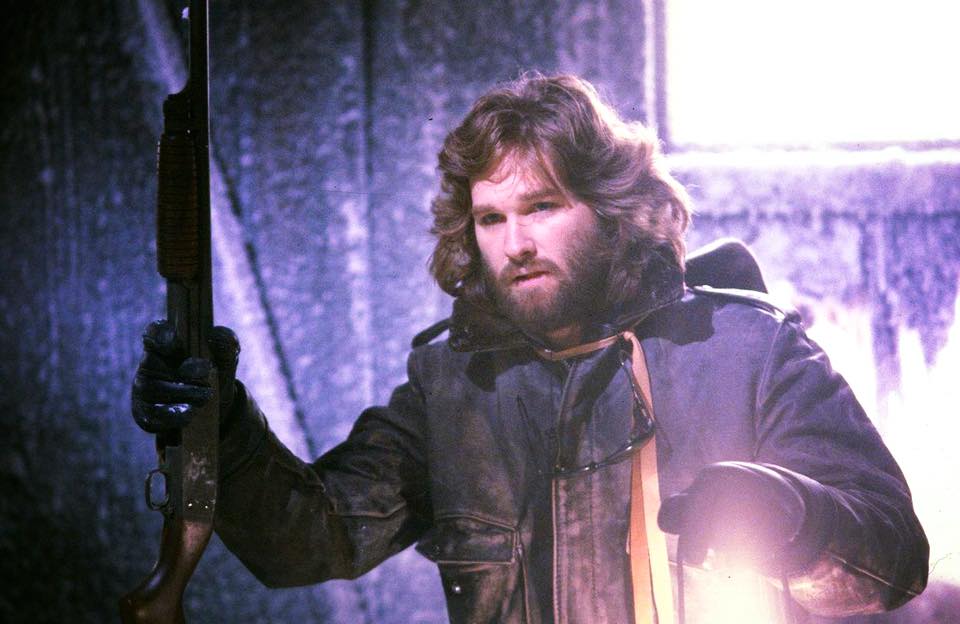
“I know I’m human. And if you were all these things, then you’d just attack me right now, so some of you are still human. This thing doesn’t want to show itself, it wants to hide inside an imitation. It’ll fight if it has to, but it’s vulnerable out in the open. If it takes us over, then it has no more enemies, nobody left to kill it. And then it’s won.” – MacReady (Kurt Russell)

There are many scenes in John Carpenter’s masterpiece The Thing that make me feel, not just scared, but a chill deep in my heart – intensifying the icy environs these unfortunate men are surrounded by; permeating the picture with unexplainable horror and an all-consuming paranoia. A paranoia these men don’t want to feel for one another. Anxiety, distrust, death. But there’s one early, chilling scene that could have played it quite simple – it’s a character reading from notes. You’ve watched scenes like this in movies before and either, they explain too much and you listen to the necessary information, with a yes, yes, I get it, or they’re merely easy exposition. This is what is happening, audience, they say. But the way Carpenter times the reading, and the way he shoots it, in such an enclosed space, the cold whirring outside, and the way the actors react to each other, one alarmed and warning, the other annoyed, tired and then … concerned, it’s both powerfully scary and, really, extraordinarily sad. Dear god, what are these men going to do?

The-thing-5
It’s when R.J. MacReady (a magnificent Kurt Russell) sits in the Bombardier Skidozer outside with Fuchs (Joel Polis), after their chief scientist Blair (Wilford Brimley) has gone crazy and locked himself in his room. “There’s something wrong with Blair,” sensitive Fuchs tells an already exasperated MacReady who didn’t want to have this private discussion in the first place. The Skidozer seems the only place they can talk privately away from the outpost – the cold raging outside of them while the men deal with a body in their Antarctica research station (which will already become a doubled-up terror on top of this scene). Fuchs continues, “He’s locked himself in his room and he won’t answer the door. So I took one of his notebooks from the lab . . .” MacReady looks over at him with a slightly annoyed, “Yeah?” Fuchs reads from Blair’s notes: “It could have imitated a million life forms on a million planets. It could change into any one of them at any time. Now it wants life forms on earth …” MacReady cuts him off, “It’s getting cold in here Fuchs, and I haven’t slept in two days.” He’s both not wanting to hear this shit and not prepared to hear this shit. But Fuchs persists, “Wait a minute, Mac, wait a minute.” He reads: “It needs to be alone and within close proximity with a life form to be absorbed. The chameleon strikes in the dark …” O.K., at this point, and when I first saw the movie, that scared the hell out of me – that this destructive, all-consuming force needed to be near you, that it was a chameleon, that it sat in wait to strike, and that it comes for you in the dark. This is one of the things you fear as a child, as you close your eyes and hope nothing is hiding under your bed. It’s also the dread of whatever you might fear in a person you don’t trust, or, even more terrifying, what you don’t trust in yourself. It’s anxiety personified.

MacReady_and_ClarkBut MacReady grows further annoyed, “So is Blair cracking up, or what?” he asks. Fuchs then reads with insistence: “There is still cellular activity in these burned remains. They’re not dead yet.” MacReady’s face is leaned to one side looking at Fuchs, Fuchs looking back at him, seriously. MacReady says nothing and yet, he’s saying everything as he looks over – Russell is subtly revelatory and multidimensional in his horror here – he’s fearful, he’s also just beginning to think. The camera, perfectly, shoots the men from outside the Skidozer, further showing how small they are amidst this unrelenting force, this powerful tool will become a useless vehicle – it’s merely a meeting area at this point. And with this, Carpenter lets those words sink in: “They’re not dead yet.” Cut to Windows (Thomas G. Waites), shockingly walking in on a consumed body in the corner, snakelike tendrils wrapping around the thing – what on earth is this creature? “They’re not dead yet.” No, they’re not. And as the movie goes on, we learn they are never going to stop.

It’s that unstoppable dread filmed with beauty and horror (gorgeously shot by cinematographer Dean Cundey – Ennio Morricone’s score is commanding as well) and deliberate pace that makes The Thing so artfully, potently scary and, by the end, both effective and poignant. That this group of isolated men working at this research station in all of their varied positions and personalities (I’ve read some complaints there’s little to distinguish these men and I’ve never understood this critique – you grow to like and care about all of these very distinct guys) are forced into a position of distrust due to this alien, assimilating creature is part of the tragedy. Watching men who work, drink, quip, and lead a rather lonely existence all shoved together out there at that outpost having to turn brother-against-brother while attempting to save themselves or take charge (which MacReady does) ratchets up the intensity, but it also adds depth and nuance to their predicament. The picture never addresses anything obviously, and intriguingly, allegorical ideas abound in The Thing – the idea of being taken over by an ideology, a wave of panic, disease – it’s all there. My fear while watching the movie is the horror of one’s own self, of never-ending anxiety, and how that kind of inner panic might look like when turned inside out.

20993038_10155442726725792_2021625437010260455_n
This is where the brilliant tension mixed with the gore, effects and creature designs (by Rob Bottin) work in perfect, terrifying unison. You’re stressed and maybe even horrified as each new set piece occurs (and each one is beautifully conceived), wondering what on earth the next thing will look like. That the monster is not one unified creature but rather a shape-shifting horror we can never quite place (at one point I stared at a thing like disgusting stalks of vegetables, snakes, teeth, intestines and eyes) that it becomes some kind of personification of the horror inside a person. When we say we feel all “twisted inside” or we can’t breathe from panic or our hands feel like jelly – the most horrifying dread someone like Raskolnikov ever pictured emanating from him. Kafka’s anxious nightmare – you can’t even escape anxiety when stationed in Antarctica and worse WHEN STATIONED IN ANTARCTICA – claustrophobia and snow-capped agoraphobia mixed together. I even thought of Edvard Munch’s “The Scream” when observing these creatures, a painting stimulated by intense anxiety and distress in his life. As he wrote of the work’s inspiration:

“I was walking along the road with two friends – the sun was setting – suddenly the sky turned blood red – I paused, feeling exhausted, and leaned on the fence – there was blood and tongues of fire above the blue-black fjord and the city – my friends walked on, and I stood there trembling with anxiety – and I sensed an infinite scream passing through nature.”

What would Munch make of The Thing?

138701569_10158693933025792_1168106690939997013_n
The picture was adapted by Bill Lancaster from John W. Campbell, Jr.’s novella “Who Goes There?” (Also loosely adapted by Howard Hawks for The Thing from Another World) and it’s a fantastical setup that well understands the insanity and panic of the horror. (Carpenter was also inspired by H.P. Lovecraft — The Thing is considered the first part of his “Apocalypse Trilogy,” rounded out by Prince of Darkness and In the Mouth of Madness). Indeed, Carpenter understands the shock and terror so well here that characters stand in near-breathless disbelief and disgust, and, at times, in a darkly comic stupor. Carpenter (and the terrific actors) never make any of these men unaware of how simultaneously terrifying and surreal this all is – there is never a stupid, overly clever quip, or an easily brave move, or a perfectly heroic moment (though there are brave and heroic moments in that these men don’t all run away or, into walls in an insane panic).  These men are surviving the best way they can and the humor and humanity come out organically from their predicament. When Norris (Charles Hallahan) turns into that demented spider-like head-creature-thing (I have no other way to describe it) and Palmer says: “You’ve got to be fucking kidding…” it supremely funny because, we are all thinking the same damn thing. And when, near the end of the film’s brilliant centerpiece – the blood test – Gary (Donald Moffat) yells: “I’d rather not spend the rest of the winter TIED TO THIS FUCKING COUCH!” it’s such a simple and honest, yet hilarious thing to holler after everything that has just occurred, that it works as a kind of relief.  Sadly, he won’t be tied to that fucking couch – he’ll eventually be dead.

The-thing-7
Which leads to the picture’s enigmatic, and in my mind, elegiac, even beautiful ending. Childs (a wonderful Keith David) and MacReady are the last men standing – one of them could be infected. What do they do? Kill each other? No. Turns out, they’ll just have to trust each other – they’ll have to wait and see. That’s damn touching, and, depending on what kind of person you are (I’ll put aside other theories) this could be read as hope for man while hopelessness abounds – a choosing to trust and maybe even love when you’ve got god knows how many days or seconds left to your life, over violence and doubt. As the tagline of the film said – “Man is the Warmest Place to Hide” – that’s true for the soul-sucking creature, yes. But for a human being, warmth and faith are more comforting than leaving your friend out in the cold.

originally published at the New Beverly

Wintergreen: Electra Glide in Blue

Electra-glide-1
“Loneliness can kill you deader than a .357 Magnum.”

As John Wintergreen, the diminutive motorcycle cop of Electra Glide in Blue, Robert Blake reveals dueling forces of masculine assurance and short man insecurity with such kindhearted peculiarity, you feel both charmed and embarrassed for him. It’s familiar and, yet, curious – off – there’s something different about this guy. And strangely, it feels different because he seems a nice person.  Imagine that? A nice person. Cop. A moral person. It’s almost, oddly, creepy. But it’s lovable and disarming and a little threatening in that specific way that only Robert Blake, the actor, exudes. I can’t imagine anyone else in this role.

Images-1
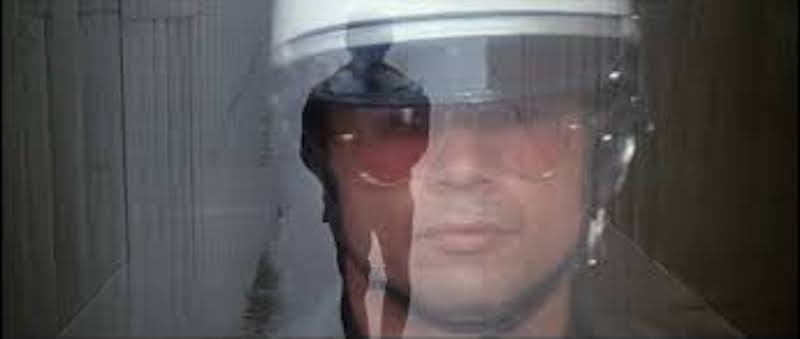
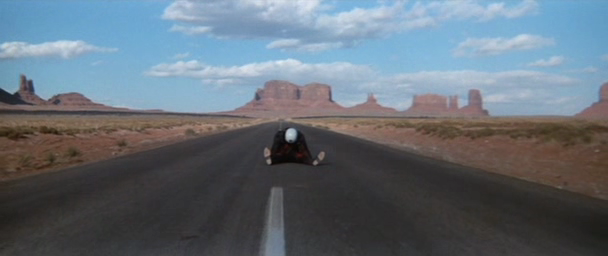
Wintergreen is ambitious but he also seems a little lonely, a little sad, frequently sweet, and at times, perceptive when he sees through bullshit. Knowing how tough the world is out there, he also seems, in moments, a little stupid. And all of this is gonna hurt him in the end. Not just because he’s too nice of a cop, but that seems too obvious a reading for this beautifully made, wonderfully idiosyncratic picture (by one-time director James William Guercio). Instead, he just feels doomed.  You look at him riding around the expansive, gorgeous John Ford-Monument Valley and you think… eventually he will fade into this landscape, or he’ll wander the place on his motorcycle, writing up speeding tickets until he’s turned to dust. You feel this before the picture’s unforgettable ending and he feels it – he worries about it. What kind of life is this? How will he leave his mark? As a speck on the landscape hassling motorists, saddled up on two wheels next to his goofy jerk-off partner? He wants to use his brain, to be respected. He also wants to be a big man, he wants to be something like a famous person, he wants to wear the right getup, that big hat, and that fancy suit – he wants to stand out. In the end, he both stands out and fades into the landscape, violently in death – but in a simultaneously ignoble and gorgeous way. Fragility and misunderstanding and cruelty and death in one six-minute reverse tracking shot that’s so moving and so gorgeous, he becomes one with the blacktop and the sky. It’s not the way Wintergreen would want to go, and it is indeed tragic, but it’s one of the most beautiful moments in 1970s cinema – a shot to watch and ponder, your emotions and thoughts moving to mysterious places. Electra Glide in Blue is a picture about the ugliness of human nature, but the beauty of it too, expressively and aesthetically – right down to the glory of Robert Blake’s pint-sized body, zipped up in his motorcycle gear, chomping gun, walking in those boots in the heat, the leather rubbing up against itself – that delicious sound of leather. You can practically hear Lou Reed singing, “shiny, shiny, shiny boots of leather…”

Electra-glide-4

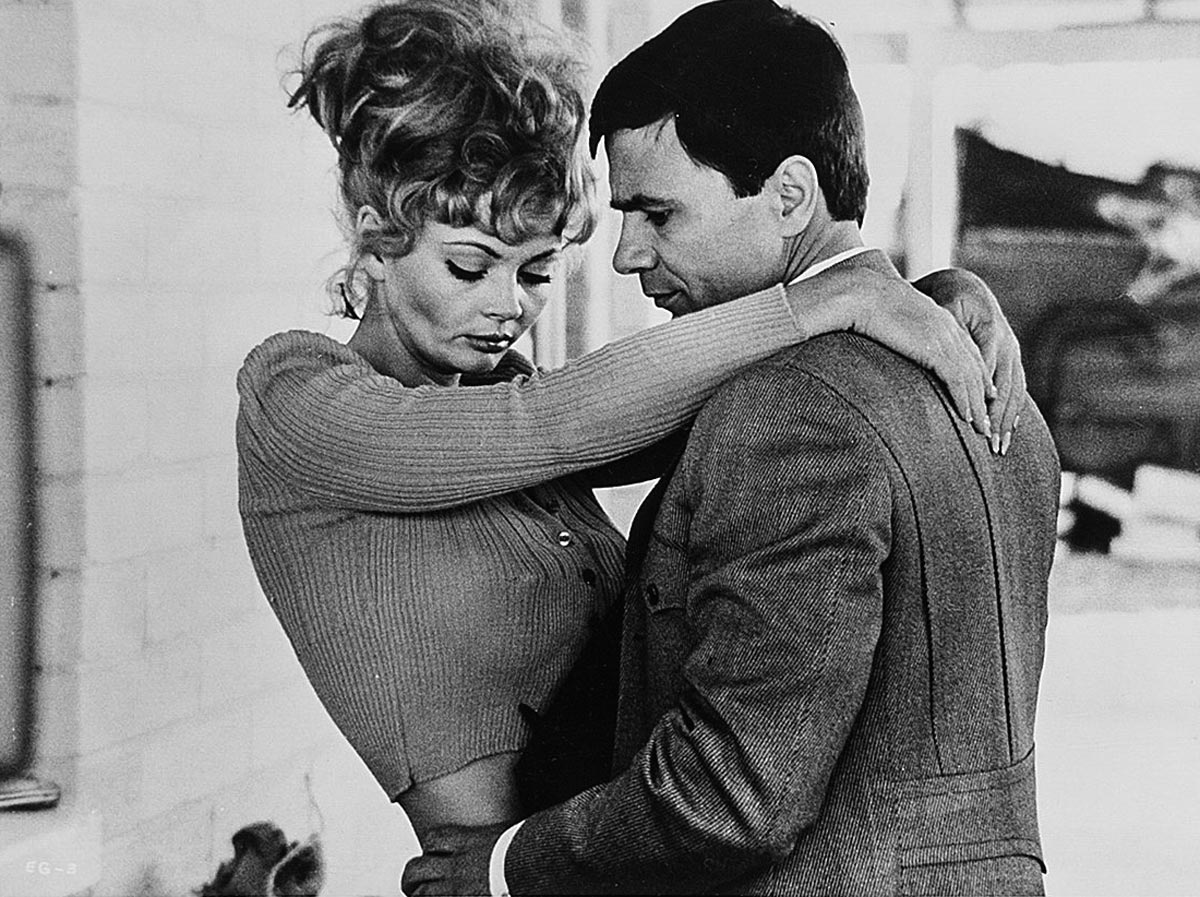
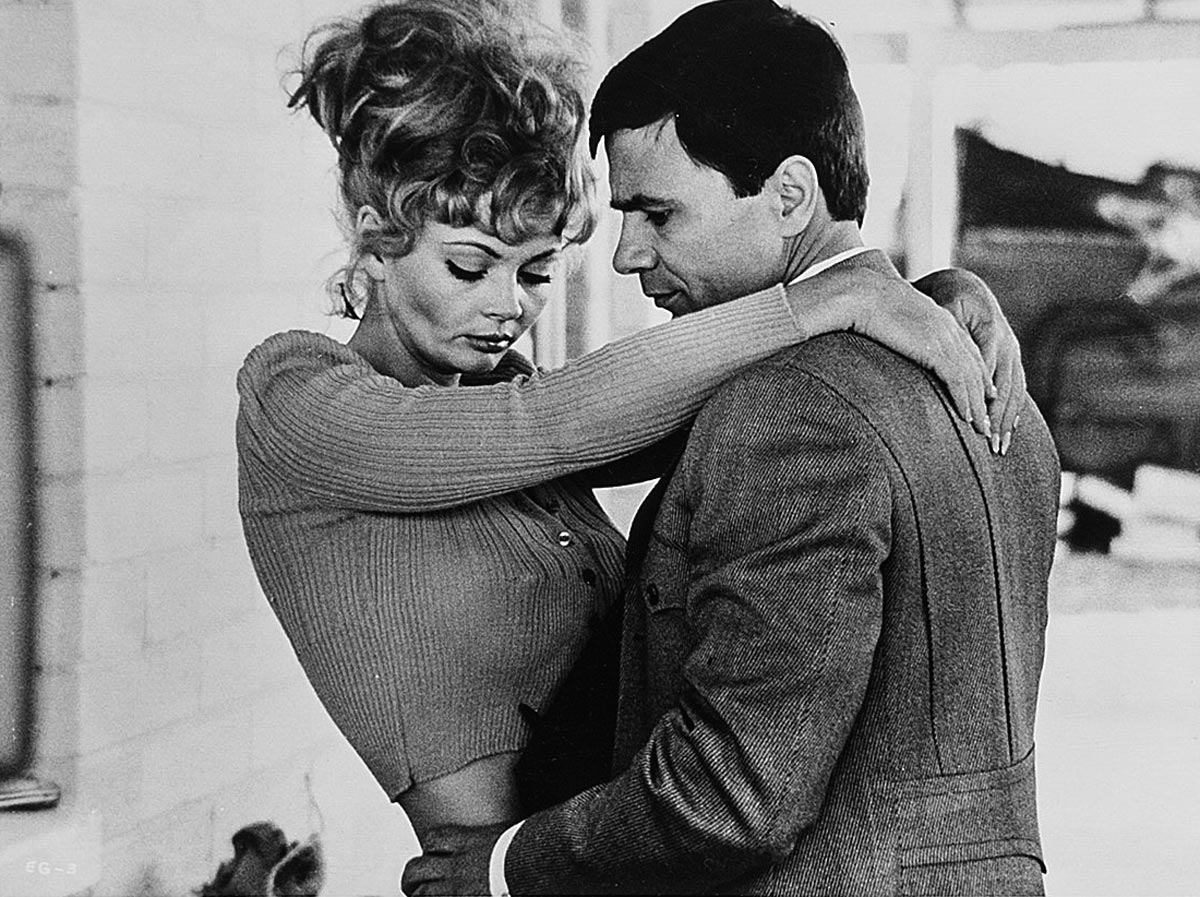
And Blake (however you feel about him personally — I am speaking of him in this movie and others) has his own kind of beauty and eccentricity (watch his Perry Smith from In Cold Blood and take in his stirring soulfulness as a child actor, as well as other roles, BustingBaretta oh dear lord, Lost Highway). He can play the tough guy as terrifying, or as a touching act of overcompensation. In Electra Glide in Blue, he’s a tender macho man who uses his stature as a sort of characteristic attraction, a selling point – he tells the pretty ladies about it right away and compares himself to Alan Ladd. As Wintergreen, his introductory scene is all sex and strength. He’s satisfying a woman named Jolene (Jeannine Riley) and she is clearly happy about it. The camera moves to shots of his body – the image lingers on his back while he works out in his underwear. Already in the process of some serious masculine validation, by her and by the camera, he’s all muscled-up; barely breaking a sweat as he performs the pull-ups he likely does every day (or every time he steps into his little abode). He’s proven to be a wonder in the sack and, ever virile, he’s ready to go at it again. No rest for “Big John” (as she calls him). It’s a lot of showboating and swagger and Robert Blake burying his face in a woman’s breasts (he calls them his “Valley of the Dolls”). I watch this and think, this should play so silly, but instead it seems intriguingly amused, self-conscious on purpose, and poignant. Right away one feels Wintergreen needs that validation – it’s not merely the strutting display of a cool ladies' man – it feels deeper than that, thanks to both Blake’s offbeat charm and guilelessness and Conrad Hall’s inimitable, often sexy cinematography that uses Blake’s short stature as part of the picture’s visual style. Electra Glide in Blue is indeed a movie about cops, about the clash between 1970s counterculture with the cop culture, but it has also been called everything from fascist (I'm open to argument — but I don't think it is) to the anti-Easy Rider (it’s not that either – not really, even when we see Wintergreen target practicing on a poster of Easy Rider). When I watch it, I’m struck by how much it observes masculinity – in all of its toxic, loving, sexual, fetishistic, and friendless manifestations – and how much being emasculated or alone can break one down. And how it can break one down within a close-knit corrupt cop culture — that doesn't jibe with independent thinkers like Wintergreen. So, Blake’s Wintergreen — this is a lonely man.

Electra-glide-5

One very desperate, lonely creature is played by Elisha Cook, Jr. (the king of the emasculated, the double-crossed, the patsy, the recklessly overcompensating), as Crazy Willie, a loony old man, hysterically scuttling through the Arizona heat like a bug about to be smashed. Crazy Willie informs patrolman Wintergreen and his partner Zipper (Billy “Green” Bush) of his friend’s death – a suicide. When Wintergreen observes the scene of this dead hermit – his detective skills kick in and he views this not as a guy who offends himself, but as a homicide. He’s adamant about it and maybe a little too overexcited. He’s at first scoffed at – just a dumb patrolman who should stick to his bike and shut up — but the big man, Detective Harve Poole (a fantastic Mitchell Ryan), agrees with Wintergreen’s original supposition. In an amusing scene in which the coroner (Royal Dano) leans over the body, pulling out a .22 bullet from a skull, a cigarette dangling from his mouth (ashes likely dropping into body cavities – eh, he’s dead), an investigation begins. Money is missing from the victim too – $5,000 – who stole it? This could all be left as is, and you sense cases like this often are, but Poole gets on top of it, really, it seems, to fuck with hippies. But Wintergreen doesn’t know this at first – he’s just thrilled he’s been transported to homicide to ride along and observe Poole. And he gets to wear that hat.

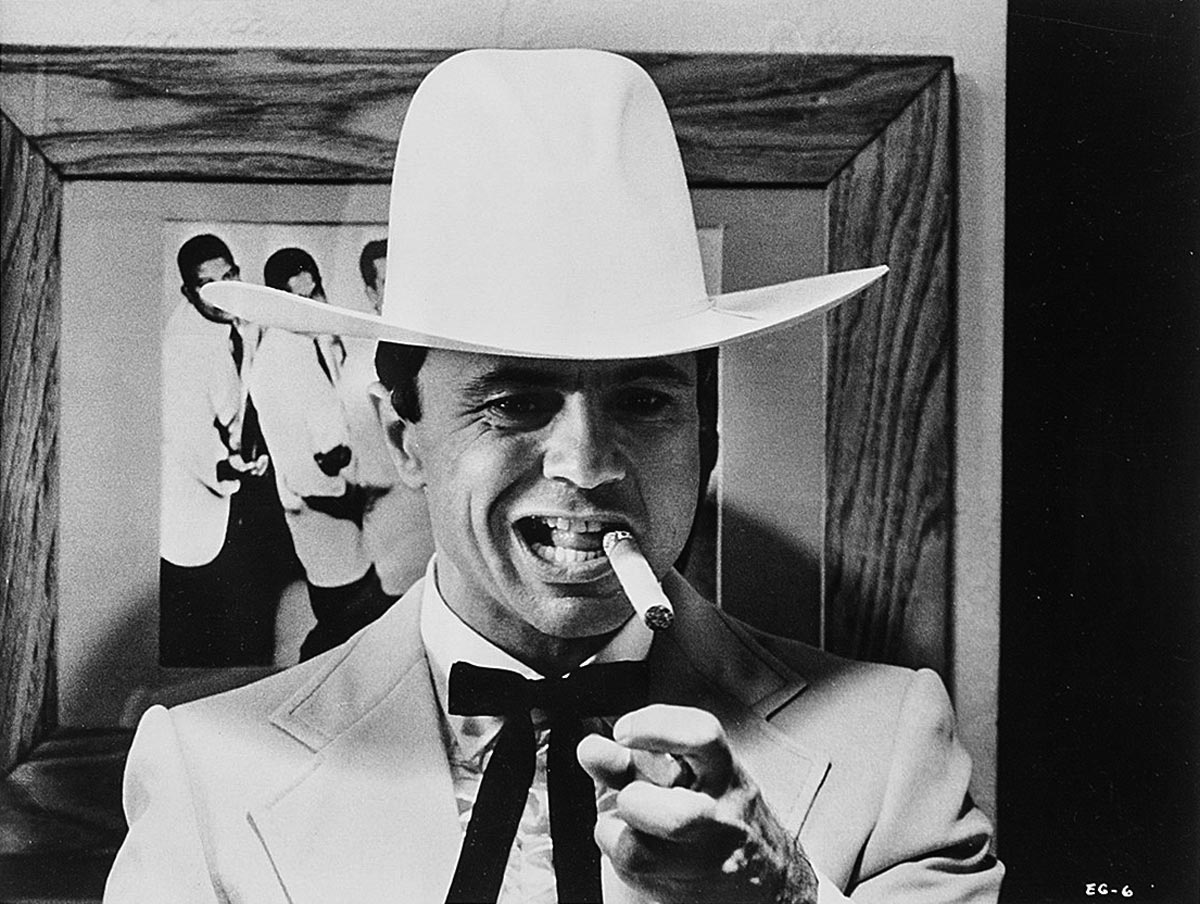
That hat. This makes for another standout moment involving attire, mirroring the picture’s credit sequence, which soaks in close-ups and freezes on Blake’s almost fetishistic dressing in leather. We see that beautiful ruffled white shirt laid out on Blake’s bed – Doo Wop music playing in his little house as he dance-dresses into his new important clothes. The ruffled shirt seems a bit much, but Wintergreen clearly loves the flair, and who can blame him? No shame in looking good while using your mind. He puts on his hat, and his head bobs to the music, and places a cigar in his mouth. He’s smiling, so happy that his life means something as defined by these clothes. It’s joyful and ridiculous – poking fun at the male peacocking, but knowing everyone does shit like this. It ends with Robert Blake walking out into the hot night, realizing he’s forgotten to put on his pants. Amused with himself, he dances back inside. It’s a lovely, cool/uncool moment. And endearingly embarrassing.

Electra-glide-6

But Wintergreen knows this job is about more than his clothes –though he’s not quite prepared with just how awful Poole is. Harassing hippies, without care if they’re innocent, Wintergreen can’t stomach the treatment – he feels more akin to the outsiders (we learn earlier that Wintergreen is also a Vietnam vet) and he observes Poole’s methods with concern and disgust. Why anyone at the time of this picture’s release thought it was pro-cop, I have no idea. Even if it’s pro-good cop (and just the one), that doesn’t mean much of anything either in this film’s existential universe — up against that kind of system. Being a "good" cop is met with no rewards, nothing, it even seems a bit idiotic, at least in terms of having any kind of a fulfilling life. When you see how Wintergreen’s giggling, numbskull partner Zipper lives (and cracks up), lazing about reading books for a paycheck and then stealing the missing $5,000 to buy a new bike, he just seems insane. Not happy. Is anyone happy in this movie? Crazy Willy is upset his hermit friend was mingling and working with younger people – left out of his friend’s affection and perhaps… love? Everyone else is grimly getting by while Wintergreen’s squareness is so square, he’s actually the most rebellious. It’s not a movie where tough guys gleefully hate hippies, even if, by film's end, two hippies turn vile but… human beings can be vile. The movie does not play as an indictment on the longhaired – it’s more meditative and mysterious than that, more randomly absurd.

What makes sense (it’s not right, it just makes sense considering how important potency is in this picture – two legs straddling a bike, big hats over long hair on men and, of course, girls) is what really gets to Poole, what really breaks up his partnership with Wintergreen: a woman. And his sexual prowess. It all returns back to Wintergreen’s introductory scene and those “Valley of the Dolls.” Jolene.

Electra-glide-3
Poole wants to introduce Wintergreen to his sexy lady friend – Jolene – the hot number who works in the town’s popular watering hole. But Jolene is more than just a piece of ass – and the picture (scripted by Robert Boris from a story by Boris and Rupert Hitzig) – nicely gives her a big moment in which she proves as much. She also seems to hate Poole, whom she is indeed sleeping with. But as Poole learns (and as we know), she’s also sleeping with Wintergreen. Jolene unleashes not just her rage at Poole, but her anger that all of her dreams as a dancer, of making it in Hollywood or making it anywhere, are done for, and here she is tending bar. She lost a husband because she wanted a career (imagine!) and now she’s stuck. Enflamed with her sexual power over these guys with guns, she can abuse this man (and perhaps, men) by … emasculating him. She’s nasty and sad and sympathetic all at once with Jeannine Riley giving her moment tremendous humanity, even if she’s overacting a bit. She seems like she would really act up this moment – in real life – this bar, with just the two men present after closing time, is her stage. She reveals that she’s not only just fucking Wintergreen, but that he’s better at it than Poole. Far better at it. She shames Poole so much that the two lawmen just sit there awkwardly, stone-faced. And when Poole finally, nearly hits her – she laughs in his face. Wintergreen sits knowingly, understanding it’s over. He’s not rising in the ranks.

44155020
Given the way Robert Blake (the real man) writes about this movie, he’s as disenchanted with so-called bullshit artists and something small (in this case, the picture) not succeeding, as much as Wintergreen is about his position in the police force and the corruption therein. The movie comes with interesting, troubled production history and suffered an overhyped release (the publicity of the film was just too much – both mirroring and opposing the film’s study of masculine overcompensation: “An American Movie by a New Director. James William Guercio” the ads blared – the original New York Times review is as snarky as something from a Gawker column). But whatever happened in terms of the making of the film, Electra Glide in Blue is an extraordinary picture, both of and out of its time, and shot, unlike any movie I’ve ever seen. A merging of a John Ford western – the endless vistas and loneliness of Monument Valley with the personal, at times, kinky details and close-ups of faces, guns, meat, black leather, breasts and Stetsons – it feels old school and experimentally modern. And Robert Blake, a weird kind of square is the perfect protagonist for this kind of vision. All leather-clad and Blake-speak, he’s almost a hipster – he’s something, that’s for sure. But he’s by the book, a square, and yet, anti-authority when authority is proven corrupt, which it seems to always be. He walks through these frames with such a potent combination of vulnerability and morality, and with such weird style, aided by the brilliance of Hall (who had also worked with Blake, exquisitely, in In Cold Blood), that both of them seemingly know they’re breaking rules of expectations. They’re terrifically in unison here. But Blake was heartbroken about the movie. In his autobiography, he devotes an entire chapter, not-so-subtly called, “Electra Glide in Bullshit,” in which he doesn’t hold back with his contempt for Guercio, citing much more directorial credit to Hall and himself. And he ends the chapter like the dying Wintergreen on the road. This is Robert Blake (think what you want) but this shit is personal And lonely: “And as for the character, I played… I love you and goodbye for now. And so long, sweet little film, I’ll see you on the other side.”

originally published at the New Beverly

Quentin at the Castro

314968993_10158704264061809_751515842401379434_n
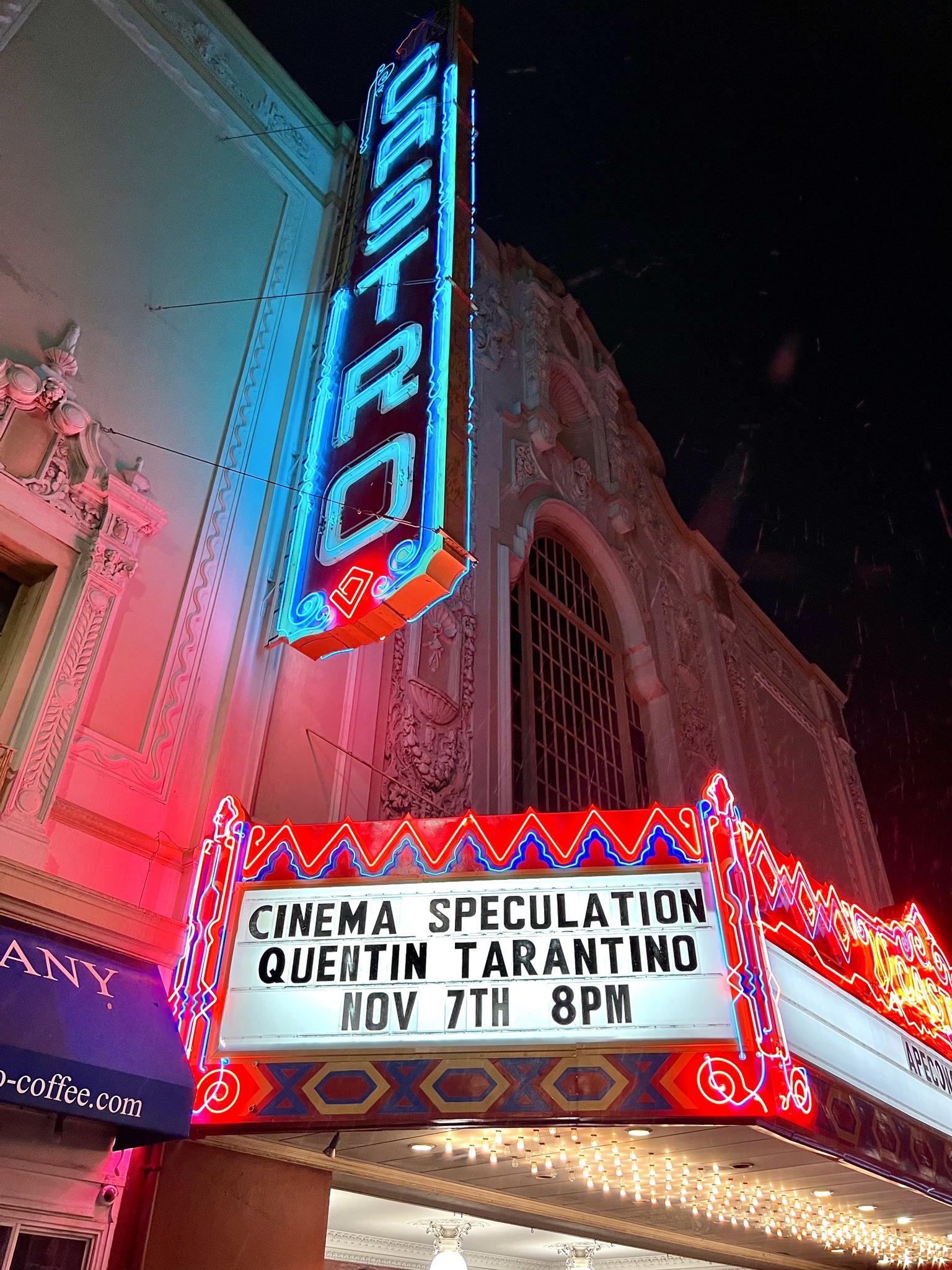
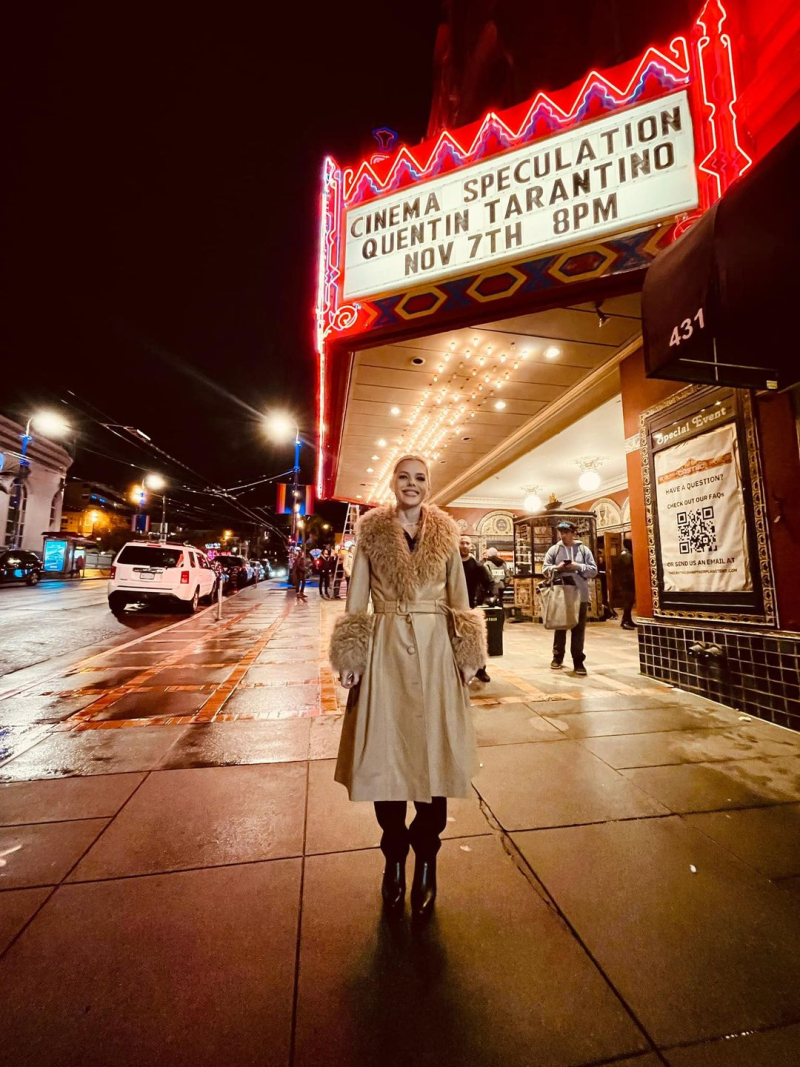
It was a joy discussing movies with Quentin Tarantino on stage at the Castro Theatre this last Monday — about his newest book, Cinema Speculation.  Quentin and I discussed (of course) movies, actors, directors, and more, from his book — and it was free-form and bounced all over in a beautiful way — he dug in deep. It was a wonderfully immersive,  cinephile-heavy evening at a beautiful historic theatre, The Castro. Thanks so much, Quentin and The Castro.

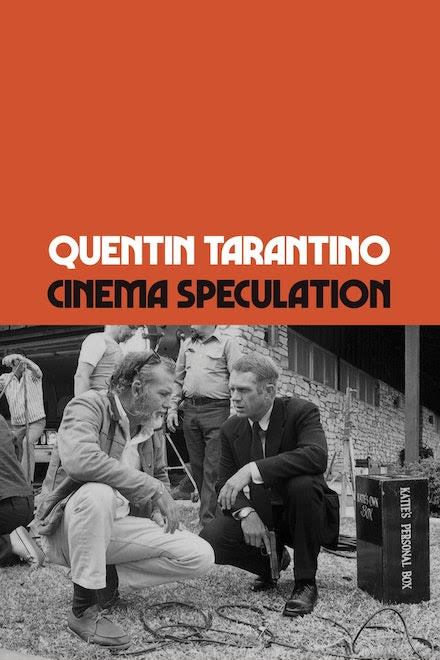
And read Tarantino's Cinema Speculation — a fascinating book — rigorous film study, memoir, insider knowledge, stories, and of course, cinema speculations. And more. It's so smart and unique — and so entertaining to read. An essential film book–  a one-of-a-kind with the distinctive voice and opinions of Tarantino. I'll write more but for now, thanks again for the talk, Quentin, and to those who made it out there.

314965444_10159975560675792_865345472911816781_n-1

top photo courtesy Castro Theatre 

Talking with QT: Cinema Speculation

311152650_10159891537605792_4489622777220751894_n

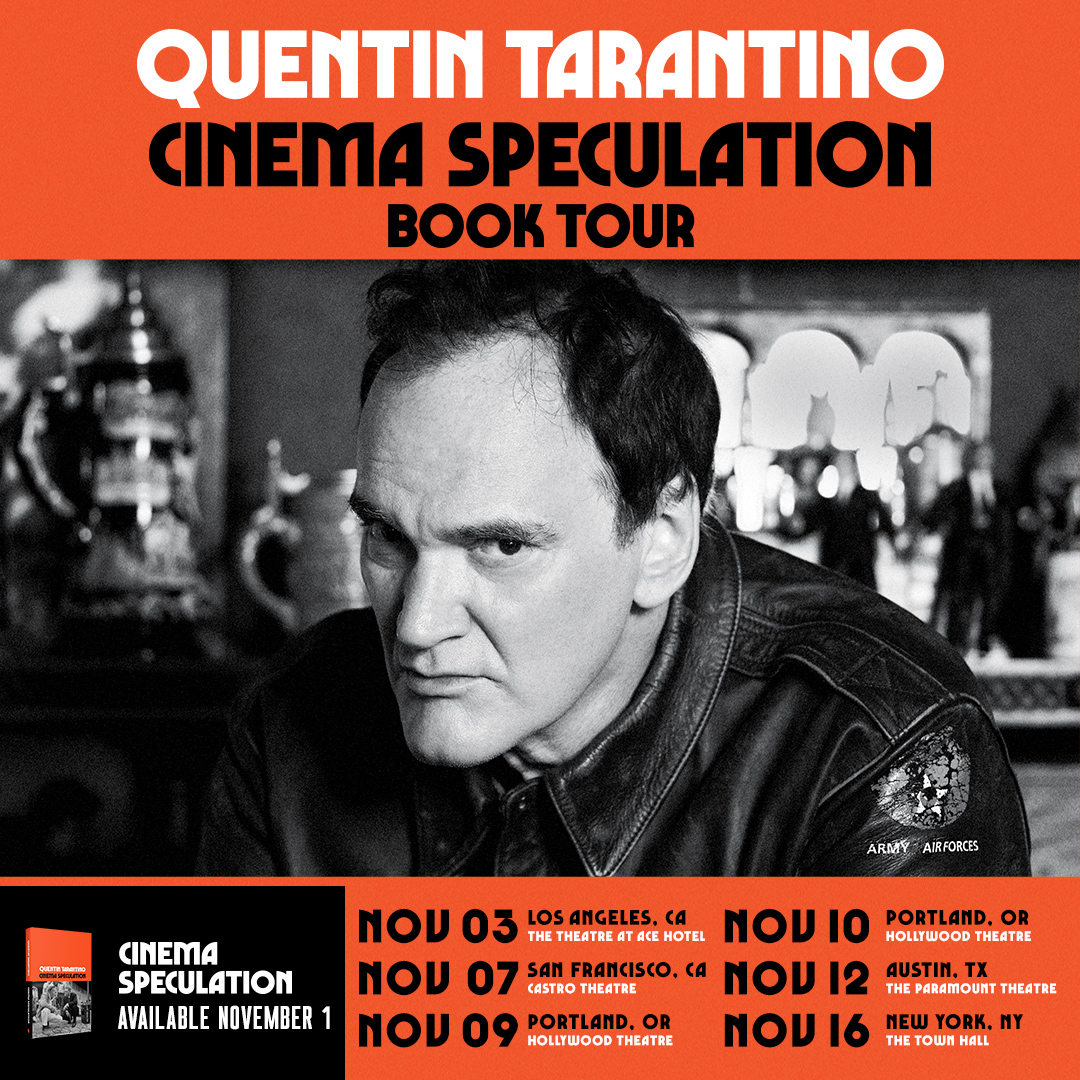
Quentin Tarantino will soon be on a multi-city tour for his new book, Cinema Speculation and I will be discussing it with him on stage at the Castro Theatre in San Francisco on November 7.

The book will be available November 1 and each ticket purchased includes a copy of the book so check it out!

Buy tickets for San Francisco here

Unnamed

Falling in Love Again: Woman on the Run

131216
Norman Foster’s sublime, complex Woman on the Run asks – those marital bonds: What does it do to people? Or, rather, how do people perceive them? And, more specifically, how do women? And for women living in 1950? In San Francisco. In a small apartment. With no kids. And her husband’s pet dog. (Good for her, I say — she is not doing what is expected of her).

But here, we see, this is a marriage where perhaps the couple is invisible to one another. They have lost their way. They sleepwalk through the motions — maybe dreaming of another life, floating in some marital netherworld they never anticipated.

Womanontherun1950.21633

We see this through steely, smart Eleanor (a wonderful Ann Sheridan), who, when the cops come to question her (her husband has bolted from the scene of a crime and they are suspicious as to why — was he involved?), she walks around her small kitchen and coolly reveals rows of dog food cans. She doesn’t cook much, obviously, and she makes that fact known, almost as a matter of sardonic pride. She’s no Donna Reed type. She also doesn’t see her husband much. He does his own thing (he’s a painter – she shows his work to the detectives, praising some of it), and she does her own thing. It’s quite a modern arrangement, really. It would seem that, in 1950, this was not the norm in movies, especially when the woman will not become an easy “femme fatale”  — a bitch out to destroy her poor husband. Nothing is unrecognizable in the movie  – people, and relationships, are complex. Humans are human. And odd. And frustrating.

MV5BMTBlYzI3NDAtMzhlMi00YmRjLWE2YTMtOGIyYTdiNGY2NWM5XkEyXkFqcGdeQXVyMjI4MjA5MzA@._V1_When cynical, seen-it-all Eleanor (could she even be described as a housewife?), is asked to describe her missing husband to suspicious detectives, she answers: “I haven’t been able to for a long time.”

It’s an unusual, intriguing set-up. After Eleanor’s husband, Frank (Ross Elliott) witnesses a murder, he immediately goes missing. Why? Who cares about the cops, we wonder why? And most importantly, Eleanor wonders why. So, it is not the cops (who try to find him) but Eleanor who winds up the one doing arduous detective work to track down Frank. As said, when you first meet her, she seems to barely care he’s gone. He’s always gone, it seems, and their marriage is so damaged, she’s hardened into grim acceptance. That’s just how it is. Still, she’s no rat (see, she does care about marital bonds –thou shall not rat your husband seems implicit – or maybe that’s just me). But then she isn’t even sure what she would be ratting out – she has no idea what is going on. And then she learns that Frank needs life-saving heart medicine – she didn’t know this about him either.  This concerns her and so she teams up with a reporter (Dennis O’Keefe) and scours San Francisco (the film utilizes striking and nicely lived-in locations in the city) to find her missing heart-afflicted husband. It can’t be purely medical that she’s out to restore his heart.

Tumblr_555d82b512f3c1e03ae1ccd7d91e8272_25e7f9bc_1280
You’d think the title — Woman on the Run, a film noir (though it feels a lot more than that – it goes beyond genre) would simply be about a woman fleeing – and as described earlier, fleeing a bad marriage. But it isn’t really about that – this is a woman who is, essentially, fleeing from the nosey, rather sexist interrogations of police detectives who bugging her husband and judging her for her unconventional life. Frank’s the one who has fled, but, now, she is fleeing to figure out what in the hell is going on and where in the hell he is, and, really who is she? She’s fleeing from her own mental prison and it’s a fascinating beautiful thing to watch – and in in the end, incredibly romantic. With style, beautiful grit, and hard-boiled empathy, Woman on the Run dissects the sacred union without any artifice. It’s a tough movie, but damn if you’re not enormously moved by the end.

With that, the picture upends expectations of the cynical wife in this noir landscape – as she searches for him, and talks to locals at bars and various areas in San Francisco, she starts learning how much her husband actually loves her. How much he brought her up to others. She was on his mind. And she starts feeling things again. She starts understanding him more.

Baroquely beautiful, absolutely brimming with style, and even surrealistic at times, Foster’s Woman on the Run still feels firmly grounded in reality. The director’s mentoring and work with Orson Welles (Foster collaborated with Welles on It’s All True and directed Journey Into Fear) is felt throughout (with help by DP Hal Mohr). And marriage is the focal point (with a script by Alan Campbell, who had recently divorced Dorothy Parker, the two got back together after this picture was made, another curiosity). 

Film_womanontherun

Sheridan (the “Oomph girl!” – a moniker she detested. She once said: “Oomph" is what a fat man says when he leans over to tie his shoelace in a telephone booth.”) gives one of her greatest, perhaps her greatest performance here: Tough, but vulnerable, jaundiced but sophisticated, she’s able to light up when she really starts to see that her marriage has been muddled by a dreary fog. And they both (she and her husband) let it happen. It’s powerful and disarmingly moving that the picture’s finale occurs on what’s often representational of love: a rollercoaster (up and down and up and down and a lot of screaming and laughing and fear) and Sheridan is so moved to finally see her husband, that she screams his name with fear and love. It’s a beautiful moment.


What’s intriguing about Woman on the Run is that the picture isn’t trying to wag its finger at Sheridan for being such a hard-boiled cynic – a “bad” wife.” She’s presented with empathy and complexity and it’s not all her fault things have stagnated in her marriage. It’s not all her husband’s fault either. They both need to work on things. But this is about the “woman on the run” – Sheridan – and she needs to find her life and resuscitate her marriage, so, after she finds herself running from the police, she eventually will find herself running from the reporter (who reveals his true, evil intentions later in the movie). She can’t trust anyone. Really, she can only trust the one she was so dismissive about from the start – her husband.  

Tumblr_c620c4eca99f4ee60ef214f2458010c4_871e6d6f_1280
Sheridan plays a woman who appears to have a hard heart tamped down by disappointment and marital atrophy – but as the movie reveals, she is full of love and understanding once she really opens herself up again. Marriage is viewed through a dreamy, demented landscape here, but it’s part of the institution’s tumultuous journey. A key moment in Woman on the Run occurs when, before Frank flees, he’s asked by an inspector if he’s married. His answer: “In a way.” Yes, in a way. But by the end of the movie, what that really means, romantically, is, it’s their way.

Sugar Torch: Samuel Fuller at Columbia

67873864_10157195387020792_8652659758974631936_n

From my August 2018 Sight & Sound piece:

Sugar Torch is running – someone wants her dead. It’s terrifying and visceral and, in the end, very sad.

Sugar’s plight opens Samuel Fuller’s The Crimson Kimono and immediately grabs us. Like a pulpy headline or a Weegee photograph, we are drawn in by a stimulating blend of blatancy and mystery – when something is so in your face that you’re knocked off balance, perplexed but enthralled. We just watched Sugar, the tall blonde gyrating on stage, smiling and winking with a kind of paroxysmal madness, shaking it in a downtown Los Angeles Burlesque House. Her dancing is aggressively sexy and bizarre – we hear but never see the audience. She looks to be performing for darkness, or maybe in a hallucination. The dance is brief, told through jump cuts, making it all the more surreal. She ends her performance, walks back to her dressing room and … gunshot. It then becomes verité – Sugar runs outside clad in her shimmy costume, desperately scared and screaming, quite the sight running down a populated L.A. street at night. The poor woman runs right into traffic and is shot down, collapsing dead between two cars. It’s fast and it’s sad. It’s quintessential Fuller.

“Motion as emotion.” That’s how Martin Scorsese described Fuller’s films in his introduction to Fuller’s fantastic autobiography, A Third Face, and Sugar Torch is certainly that.  Scorsese wrote, “When you respond to a Fuller film, what you're responding to is cinema at its essence. Motion as emotion. Fuller's pictures move convulsively, violently. Just like life when it's being lived with genuine passion.”

It’s a beautiful, perfect description of Fuller, and something we feel and see either writ large, or in glimpses within this box set of Fuller’s films with Columbia – there’s something remarkable even in the pictures he wrote but didn’t direct, and pictures the American maverick wasn’t too happy about when placed in the studio and director’s hands.

RSQf2JtPlt1EQbfZpbUqtGh6LEoR0f_original

Fuller loved the pulse and rigor of writing – he started out as a 17-year-old crime reporter, tapping out pieces for the New York Evening Graphic, merging real life with sensationalism but always after the truth, words jumping from the page to create their own visual poetry. And he understood people in all of their drama, vulnerability and complexity. When he was working the Upper West Side, he’d phone stories in to his editor from a friendly brothel, where he’d gotten to know the women so well that he didn’t feel any urges toward them – they became friends, people he respected (something he revels with his female characters in many of his films). He listened and observed and surely took notes. At a young age, he defended the marginalized while standing in the thick of a good yarn, something that never left him. When he enlisted in the Army during WW II (and the wartime service that would inform one of his great works – The Big Red One) he wrote that, “fighting-didn't really give me a hard-on. What kept going through my brain was that I had a helluva opportunity to cover the biggest crime story of the century, and nothing was going to stop me from being an eyewitness.”

This Blu-ray set allows us a fascinating look at Fuller’s early beginnings as a screenwriter and, one would suspect, a look at some of the films that, when altered, prompted him to tackle directing himself and made him fiercely independent.

Sam Fuller It Happened in Hollywood 2

Fuller was a writer among four (with Ethel Hill, Harvey Fergusson and Myles Connolly) in the earliest picture in this set, Harry Lachman’s It Happened in Hollywood (1937). Somewhat Reminiscent of A Star is Born (they were released the same year) or Singin’ in the Rain, the story finds a Tom Mix-fashioned cowboy star (played by Richard Dix) struggling to make the transition from silent pictures to talkies. It’s an endearing movie, and often quite smart, and Dix is likable (along with Fay Wray), but we wonder how much further Fuller would have taken this story had he written it himself.

Adventureinsahara_01

You wonder the same of D. Ross Lederman’s Adventure in Sahara (1938) the least notable among this set (screenplay by Maxwell Shane from Fuller’s story), but a relatively entertaining and quick (clocked right at an hour) adventure yarn. It’s a revenge tale set in the French Foreign Legion that features a good story and some lovely cinematography by Franz Plane, but moves along without much bite – you strain to find Fuller in this one. It does, however, come with an amusing real-life story: Fuller made the treatment up, on the fly, as he pitched to Columbia, borrowing from Victor Hugo and Mutiny on the Bounty. As Fuller wrote, “See, studio heads back then may have grown up selling furs instead of reading French literature, but they loved a good story. So, thank you, Monsieur Hugo, for saving my ass with your wonderful novel Ninety-Three.”

MV5BNjhiMjcxZjQtMjVhNy00NjUzLWJiNTItMWIzNjg3ZjkzNWU4XkEyXkFqcGdeQXVyNjkzMDE0Mzg@._V1_

It’s easy to discern how Fuller’s own experience must have informed the Power of the Press and the film, directed by Lew Landers and written by Robert Hardy Andrews (from a story by Fuller) has some keen musings about media, isolationism and patriotism, but it’s ultimately disappointing, particularly for such a potentially compelling story. We spend a lot of the time hoping (and perhaps we shouldn’t be hoping) for the picture to explode into full-on Fuller, but, alas, it never does. It’s worth viewing for the story and the actors, however (a principled Guy Kibbee and a villainous Otto Kruger stand out), even if it’s a bit too much speechifying. His next effort would prove to be far more interesting even if not perfect, and in the end, vexing for Fuller.

Directed by Douglas Sirk and written by Fuller, Shockproof is a well-cast, finely modulated thriller/melodrama that’s absolutely gorgeous to look at. The story is of Griff Marat, a parole officer (played with passion by Cornel Wilde) inexorably falling in love with his parolee charge, Jenny Marsh (Wilde’s real-life wife Patricia Knight) and losing everything he once held dear as they become first, lovers and then, wanted fugitives. The combination of Fuller’s and Sirk’s sensibilities does mesh in an intriguingly odd way and, is at times, beautiful and powerful (a scene where a parole-breaker jumps to his death rather than risking imprisonment is potently horrifying), and the film exhibits enough visual style to hold the improbable melodrama at its core. Griff’s household, though sweet, is in a way, a variation of the suffocating cells Jenny has spent years in:  all steep expressionist angles and multi-level Victorian woodwork — there is no escape from institutionalization. Marriage or jail appear to be two forms of doom hanging over her head.

Shockproof

After the shooting of Jenny’s lover – Harry Wesson, played skillfully by John Baragrev (he manages to make Harry both repellent and suave, cheap and elegant) “The Lovers,” as the tabloid press calls them (also the original title of Fuller’s screenplay), head down the Mexico way, but are ensnared by the authorities. The film is moving straight for an American tragedy and its visual invention keeps up but, then, the tone abruptly changes, and everything is neatly wrapped into an unconvincing happy ending. The tampering of this film (the ending was written by National Velvet’s Helen Deutsch) left both Sirk and Fuller disappointed and was likely a decisive factor in Fuller’s decision to eventually helm and produce his films himself.

Scandal-sheet

Even though he didn’t write the screenplay, Scandal Sheet (directed by Phil Karlson — who directed the terrific, tough-as-nails Kansas City Confidential, 99 River Street, and The Phenix City Story), is truer to Fuller’s spirit and voice. Not a surprise since it’s adapted from Fuller’s best-selling 1944 novel, The Dark Page (with screenwriters Eugene Ling, James Poe, and Ted Sherdeman). An intense, at times, touching, well-engineered thriller the story looks at a ruthless tabloid editor Mark Chapman (played with mean, barking zeal by Broderick Crawford) who murders his long-estranged wife (Rosemary DeCamp) and has to stay one step ahead of his two ace reporters (played by Donna Reed and John Derek). The film is full of Fullerisms, mostly hollered by Crawford, and not only does it chastise the circulation-chasing tabloid press and unscrupulous investigative techniques, but it also populates the film with skid row characters, Lonely Hearts meet-ups, and assorted urban lowlifes. Chief amongst them is a moving ex-reporter — down on his luck, played with vulnerable integrity by Henry O’Neill. Derek seems uncomfortable at first, and green on screen, but his character grows on you – he’s not all that he’s puffing himself up to be and his lightweight qualities next to Crawford and Reed start to make sense. But the film rests on Crawford’s tense shoulders— all of his inner turmoil and ambivalence sweating out of him.  He loves Derek’s character like a son and seems compulsively spellbound by the increasing circulation that his own tragedy brings him – even if it means chronicling his own destruction.

Pic3

And now back to Sugar Torch (played by Gloria Pall). She’s an important side-player (and one who doesn’t live long) to one of Fuller’s most innovative and daring films, The Crimson Kimono (which Fuller produced, wrote, and directed) but her awful death, though pulpy and loud, presages the quieter troubles and passions the other characters will experience within themselves. After Sugar is murdered, the film cuts right to a close-up of detective Joe (James Shigeta) – the Japanese-American cop who will, with his partner, best friend, and war buddy, Charlie (Glenn Corbett), crack the case of Sugar and a sad love triangle. And then, become involved in a triangle of his own: he falls for Joe’s love, Chris, and she falls for him.

MV5BY2I0MWIwZGEtMTQ0OC00MDJjLWJmMDgtNjEwN2Y1NzliZmU2XkEyXkFqcGdeQXVyMjUyNDk2ODc@._V1_

A rare picture for its time, it examines the struggles of an interracial relationship and Joe’s concerns about how he is perceived in a racist world. And then, how he must come to terms with his friendship to Charlie. Interestingly, Charlie is not shown as intolerant, and though hurt, he handles Joe and Chris’s relationship with maturity. Fuller fought for this more agreeable depiction of Charlie – the studio felt that Chris needed a reason to leave him other than her love for Joe. Fuller felt, no way. Presumably, that would read as insulting to Chris’s attraction to Joe. Chris loves Joe – they have more chemistry and more in common and more of a connection – she doesn’t need a reason to leave beyond that. It’s a complicated, touching approach – modern for its time.

And its modern approach is helped by the Los Angeles Little Tokyo locations – those Fuller stylistics – close-ups that make us almost taste a person’s sweat, and those impressive long takes – including one rather complicated single-shot scene showing Charlie and Joe waking up in their shared apartment that is so naturalistic in style and acting, that we absolutely believe these guys are buddies. The movie feels real.

115560-576a
And that reality spilled into the filmmaking process as well. After shooting the extremely dangerous Sugar-running-opening, Fuller reflected later about how no one on the street (these were reportedly not paid extras, but real people) gave a damn about this poor woman. In The Third Face Fuller wrote of watching that scene with head of Columbia, Sam Briskin: “When I looked at the rushes with Sam Briskin, we realized that nobody, not even a passing sailor or a homeless drunk-was paying any attention to the big, scantily clad gal running along that downtown street. Nobody gave a damn. ‘What the hell's wrong with this country?’ asked Briskin.”

What the hell is wrong with this country could be asked of Underworld U.S.A. (or what the hell is wrong with everyone?) – a movie where the good guys and the bad guys are all bad. Who knows? The picture showcases some of his most beautifully designed and staged shots while it digs deep into violence and revenge. Fuller’s visual invention and edgy violence feel almost avant-garde here. The morally complex story of retribution showcases many of Fuller’s trademarks: An older woman that knows the ways of the world (think Thelma Ritter in Pick Up on South Street), a woman (named Cuddles – so touchingly played by Dolores Dorn) who would be considered a tramp but is given real pathos and depth (think Constance Towers in The Naked Kiss), a protagonist taking the path of crime to transit into a moral awakening, criminals hiding within the respectability of institutions, stainless steel pulp dialogue and gripping, at times, disturbing violence.

Merlin_137005884_4fd43c26-a1c0-4084-9d98-3684d141bdb3-superJumbo
The film is built around a remarkable Cliff Robertson as Tolly Devlin, whose face is perpetually twisted, his eyes darkened with wrath. He’s got a reason – as a kid (played with impressive aplomb and perfect mimicry by David Kent) he is scarred for life the night he witnesses the deadly beating of his father in a dank alley. Earlier that night in a dispute over a pickpocketed wallet, Tolly had received an injury over his right eye and that scar remains on the adult Tolly, God’s lonely avenger. He will track and terminate each of the killers even if, as shown in a concise, elliptical sequence, it means pursuing increasing prison time. That’s in order to reach one of the murderers, imprisoned in a maximum-security facility.

And so you watch this scarred kid and, then, young man, just keeping going and going and going … Tolly will infiltrate the crime syndicate, playing a dangerous game in which he uses the criminals and the chief of police with the same ruthlessness.

The violence in the film pushed the limits of censorship at the time and Fuller had to make compromises to tone the movie down, and yet it is still hard-hitting. An example: in an impeccably choreographed scene, an All-American-looking contract killer (constantly wearing shades) played to creepy-cool perfection by Richard Rust, runs over the young daughter of a snitch (the shot of her dead returns in a newspaper photo). Fuller uses every resource to deliver the impact of this killing – setting up the unmerciful forces that Tolly will face if found out.

MV5BM2RmYjdkYzEtOWNmYy00YWZiLTgwNzUtYmNkNzc5Yjk3ZjM4XkEyXkFqcGdeQXVyNjc1NTYyMjg@._V1_FMjpg_UX1000_
One of the simplest, most beautiful shots in the film also showcases Tolly walking relentlessly on a mission to end it all, to do the right thing. The camera leads him on, staying ahead of him, in a beautiful, dynamic shot as he faces off the crime boss at a pool where he does business (Fuller liked the idea of these guys spending their time in clean places – he wanted you to practically smell the chlorine). In a bout of fiscal probity, Fuller will powerfully reuse the same rig (likely a crane) to deliver Tully’s final steps out of the place, wounded and faltering, this time, his back to us. Fuller also uses beautifully designed transitions and ellipsis to chronicle the passage of time and its fluid nature in a spare 99 minutes – it works perfectly. At its core, this resource, resolute syntax also makes the decades between Tolly’s youth and his adult age, blurry, fluid, as if hatred has made time irrelevant.

And the film ends on a most symbolic image: Tolly, now dead, acquiescing, but incapable of letting go, dies with a clenched fist. His fist isn’t just about violence, it represents his emotional fight as well, which recalls Fuller discussing in an interview how he preferred “emotional violence.”

As the great man said, “You don’t have to be violent with your fist, a voice can do it as well. One word can cut the hell out of your heart.”

Originally published in August 2018 at Sight & Sound Magazine

Thank you Christine Cinéma!

290571989_10159729532015792_5009895239725611875_n
Many thanks to everyone at Christine Cinéma Club
 the great audiences & the eminent Olivier Père for moderating every night of our series.

Guillermo and I had a marvelous time at our favorite theater in Paris! A cinephile's paradise. We hope to do it again soon!
 
Merci!
 
FWlJ1DyXoAEekzC

Paris Film Series

291057407_3268130046841664_2466204844837689674_n-2
June 29-July 2 Guillermo & I will be presenting and discussing films at one of our favorite theaters in Paris — Christine Cinema — three movies that, in one way or another, informed our Nightmare Alley. Here are the movies:

Michelangelo Antonioni's Il Grido

290362426_10159717003100792_4903663163719492251_n

Alfred Hitchcock's Strangers on a Train 

290430833_10159717003180792_3099737826824141622_n

Otto Preminger's Fallen Angel

290512372_10159717003065792_2771965157346081986_n

The last night we will present Nightmare Alley


291498450_10159722534025792_604513521250058469_n-1

More information here: https://pariscinemaclub.com/news/guillermo-del-toro-2/