Martin Landau: The Eyes Had It And More

6a00d83451cb7469e201b8d29dcd5e970c-800wi

An excerpt from my essay on the great Martin Landau for Sight & Sound Magazine… 

There are actors who have beautiful eyes, dramatic eyes, fantastically soulful eyes, and then there are actors who have eyes that burn with such multifarious fires that you somehow both know exactly what those eyes are saying and yet have no idea. Eyes that reveal and eyes that hold secrets. Those eyes could be tricking you: they could be harbouring depths of misery, sleepless nights of guilt, yearning or sadness, or they could be sleeping soundly, comfortable with their icy, sociopathic treachery.

In his best roles, that’s what Martin Landau possessed: a kind of fearful complexity that played relatable, mysterious, intimidating, emotional, scary and vulnerable – often all at once. When Landau expressed a splintered psyche, he was both chilling and sympathetic, and in some cases he challenged our presumption – making us recognise darker aspects within ourselves. For an actor, that kind of complexity is much harder than it looks. But for Landau – a man who came from the Actors Studio and who took his craft seriously – this kind of well-honed but unforced understanding of human behaviour (both externally and internally) was important. Don’t show it all. Real people hide. As he said in 2010:

“People do not necessarily reveal what is going on – only bad actors do. Bad actors try to cry, and good actors try not to. Bad actors try to laugh, and good actors try not to. Only bad actors play drunk – good actors play drunks playing sober! They don’t want everyone in the room to know they’re drunk, and if you’ve ever seen a drunk pick up a glass to his mouth at a bar, it’s the most studied, controlled thing you’d ever see, as opposed to the sloppy kinds of drunks you see played everywhere. There’s a real amount of bad acting around that is considered good acting, and I see at the Actors Studio every week stuff that far excels what I see on Broadway or television or film."

Read the entire piece here. And RIP, Mr. Landau.


Sofia Coppola’s The Beguiled

6a00d83451cb7469e201b8d28cfaa5970c-800wi

"I found him in the woods. Miss Harriet had given me permission to hunt for mushrooms as long as I promised not to go beyond the old Indian trail, which is just before the woods begin to slope down to the creek. Well all that land belongs to the Farnsworths but they never have used it for anything, I guess, which is fine with me. I prefer to have places like the woods kept just the way they are. Anyway, on that afternoon – during the first week of May it was – I didn’t find very many mushrooms, but I did find him.” – Thomas Cullinan, The Beguiled
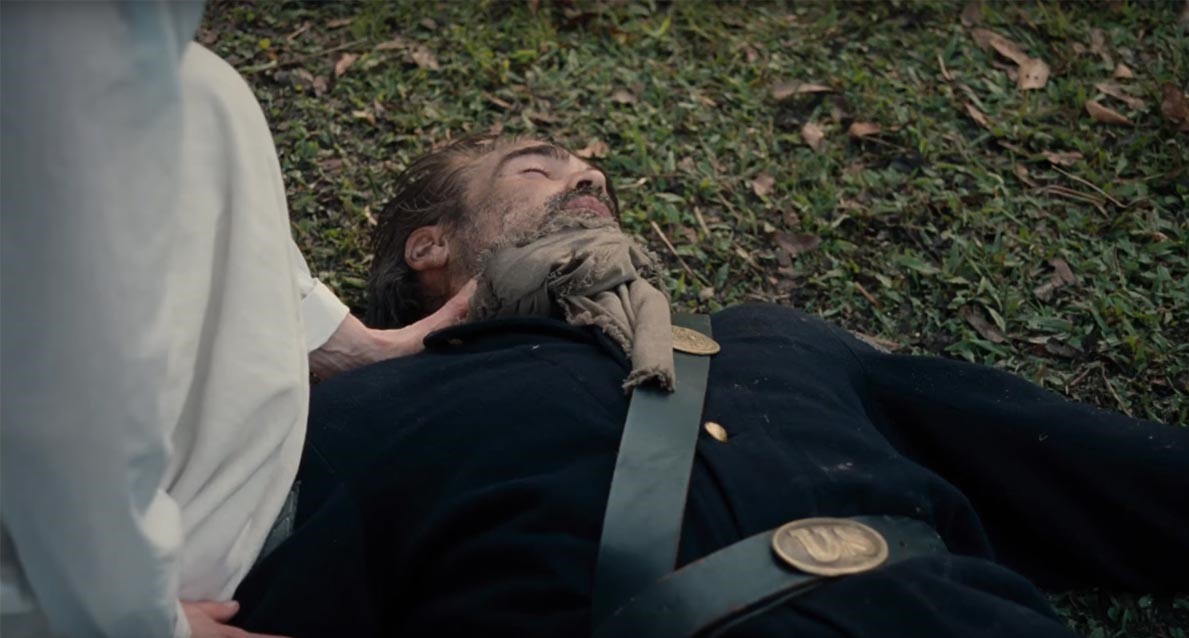
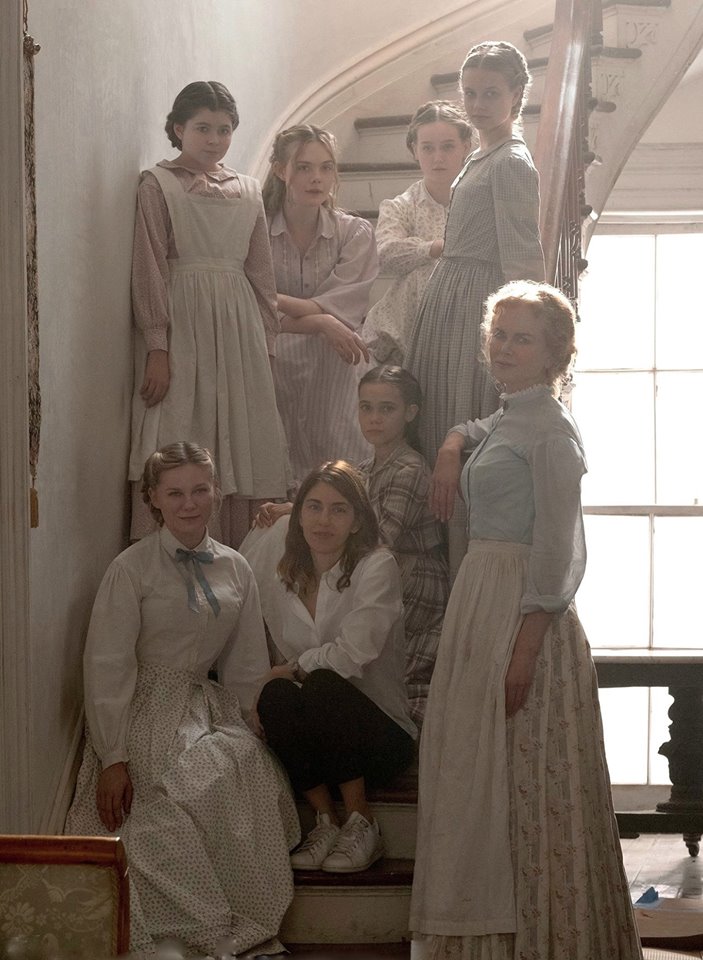
At the beginning of Sofia Coppola’s The Beguiled, a girl picks mushrooms in the woods, happily humming to herself, grabbing the curious little fungi that peek out at you from above ground. Mushrooms are strange creations in nature – pretty and fleshy and always unique, they seem to just sit there innocently after they burst forth from the earth – but if you pick the wrong one (or the right one, depending on your intent) and eat the little thing, you could fall down a psychedelic rabbit hole filled with pleasurably mind expanding or terrifying (or both) sensations. Or, you could die. Their potential toxicity makes mushrooms a bit exciting and even dangerously alluring since, if you were of the mind to do so, you could use those strangely shaped buttons to deceive a person. Or mess with their life. Eat this side of the mushroom to grow larger, or the other side to grow smaller, says the caterpillar to Alice.While collecting the delectables, she stumbles across a mysterious man, and one who is deemed the enemy, all bloody and wounded and dirty, almost entangled with the trees and bramble and soil. It’s a beautifully poetic moment – simultaneously ominous and fairy-tale-like – and Coppola shoots it with a kind of intoxicating, frightening excitement. You needn’t know anything of this girl or her secluded life among only woman to feel the particular power of this scene. This is not just a man, this is an upset to order, positive or negative. Nature, sex, morality – it can be unruly and tough to untangle, no matter how hard you try to control it in yourself or others. And love? Good luck. As Katherine Mansfield wrote: “If only one could tell true love from false love as one can tell mushrooms from toadstools.”
6a00d83451cb7469e201b8d28cf99a970c-800wi

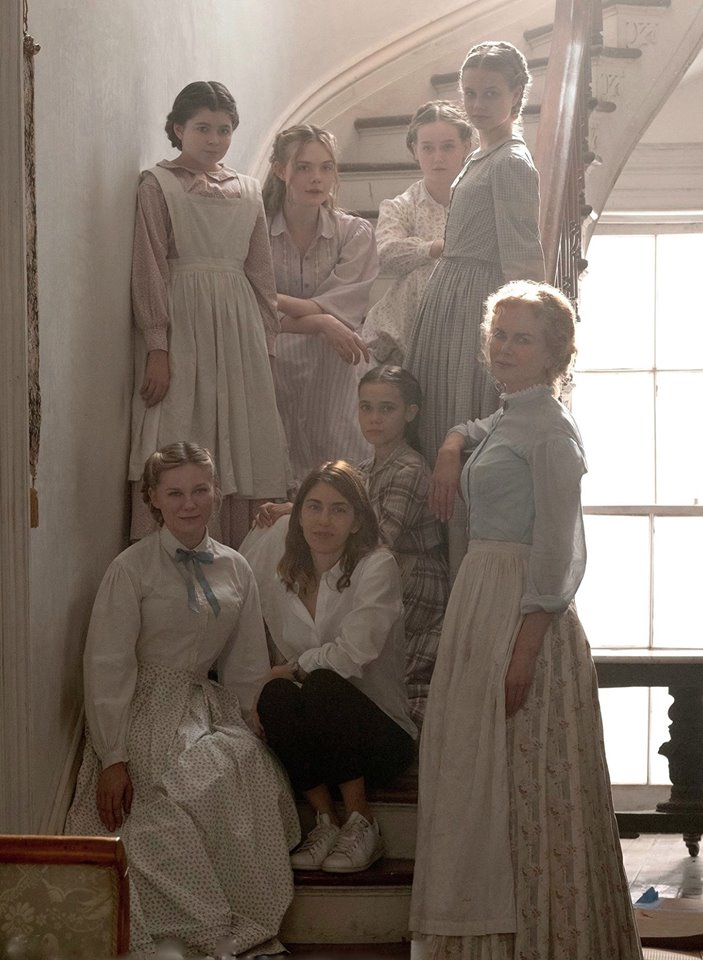
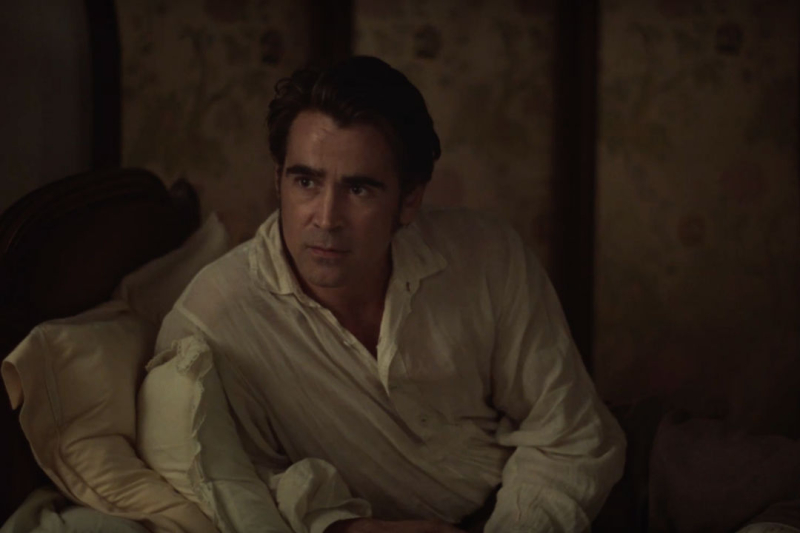
The time is during the thick of the American Civil War, and the place is rural Virginia, dangerous territory for the man who is near-death, deeply wounded – Union Army Corporal John McBurney (Colin Farrell).  This man has deserted the battlefield (and admits it later, knowing he’ll be perceived a coward, but honesty seems a clever calculation), after he sold himself to the Army (and for $300). Selling himself more than suggests this man has done quite a few things to simply survive, and in that way, he’s sympathetic. But no one is so easy to read in Coppola’s hypnotic, eerie, at times swooningly erotic Southern gothic, an adaptation of Thomas Cullinan 1966 novel (first made into the excellent 1971 Don Siegel picture starring Clint Eastwood and Geraldine Page). Wisely, and refreshingly, Coppola allows us to decipher how we feel about these people with mood, style, stolen glances, and movement, often very slow – even open wounds are something to ponder as they’re sewn up and busted open (like bodices), as is the melodrama that is, in brief, stark moments, vociferous and at other times, quiet and gorgeously muted. It’s a brilliant fever dream in Coppola’s hands – rooted in the messy emotions of desire, the interpersonal games we play, our longing for at least a break from loneliness and fear, and not necessarily through physical independence, but for a kind of psychic freedom.

The-beguiled-2

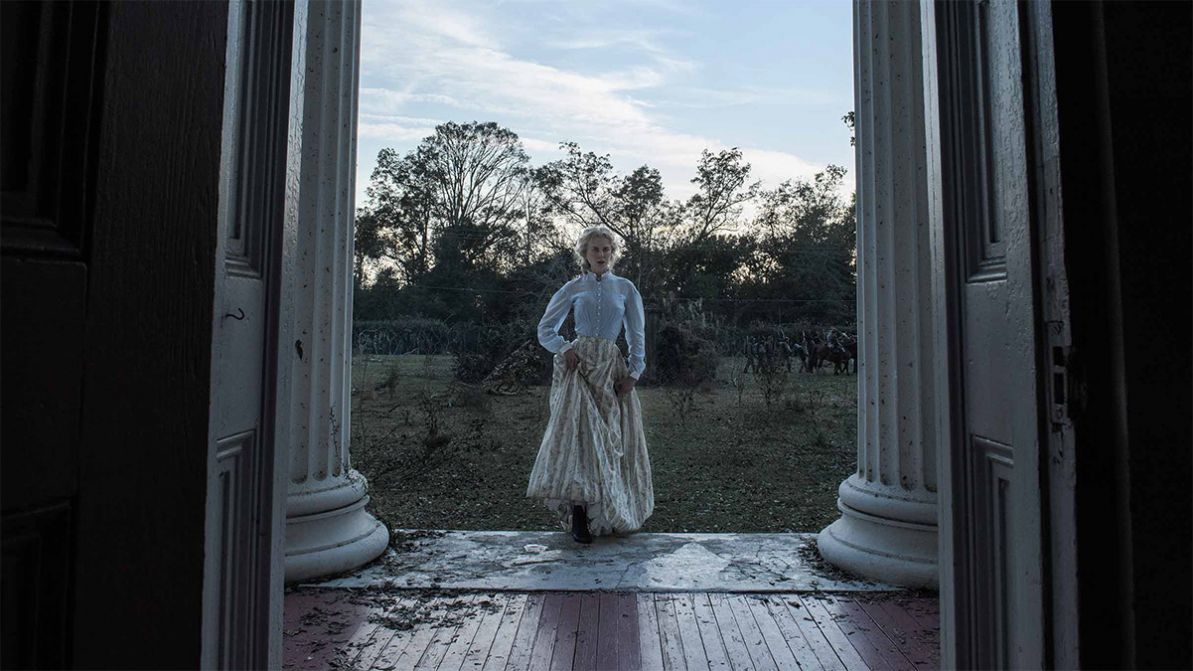
Wonder and fear begin the picture – as McBurney is begging for help, and from a little girl one would think is merely skipping through the forest. She’s an easy target and his only hope. But don’t underestimate little girls who pick mushrooms. That girl is ever-curious pre-teen Amy (Oona Lawrence), who, after her initial shock, empathizes with the bleeding man and assists the soldier, no matter what side he is on (a “blue belly”), nearly dragging him with all of her little girl strength back to where she lives – The Miss Martha Farnsworth Seminary for Young Ladies. The house is a large, rambling plantation with white columns and overgrown foliage, a place once stately but still beautiful – like the man, it seems to be intertwining with nature. There are no men and their female slave who had once lived there has taken off as well. These are women and girls alone, cloistered, even, with their own unique personalities and opinions of one another, not all good. They’re trapped, but they’re also self-sufficient, and all seven of them help each other to keep up the grounds as best as they can, cook, do laundry, while continuing their schooling (only inside the house), conduct music recitals and lessons in good Southern manners. You can feel the war raging around their shaky sanctuary – canon fire can be heard in the distance so much that it sounds as expected as the weather. It also punctuates the powder keg of emotions these women have been stifling inside of themselves.

6a00d83451cb7469e201b7c902bd13970b-800wi

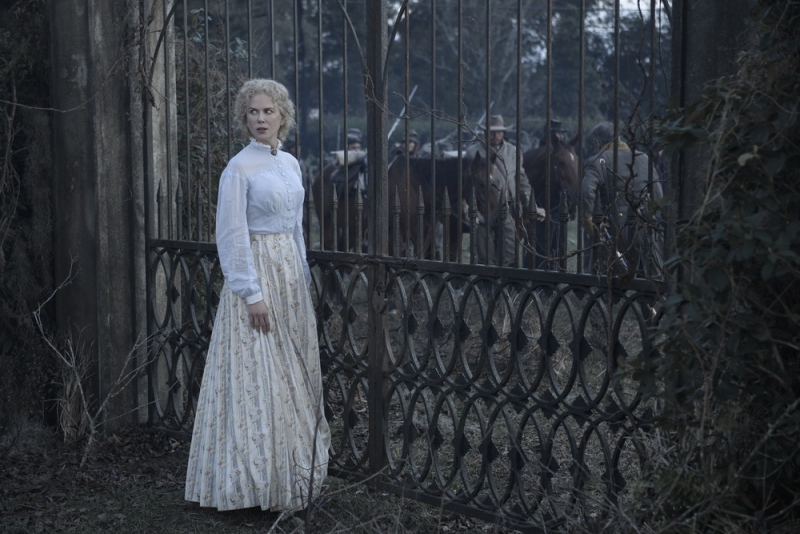
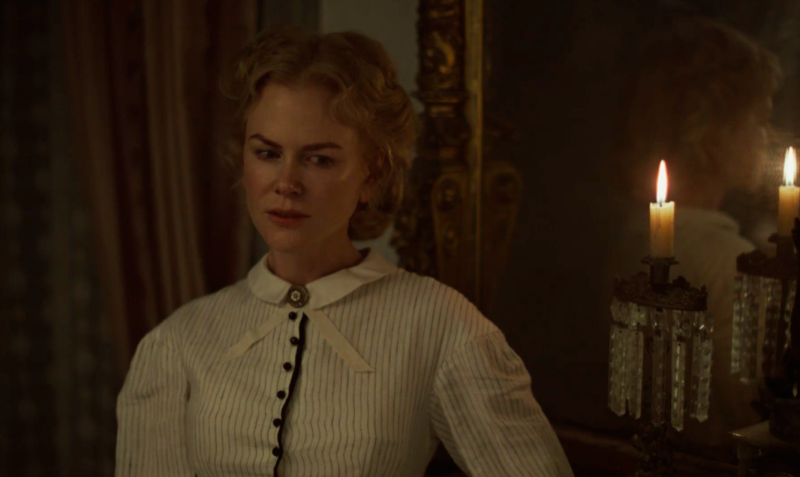
With the approval of the strict, intelligent and subtly scary matriarch (scary, so far, in that she is the one who wields all of the power), Miss Martha Farnsworth (Nicole Kidman), McBurney is dragged in and tended to. His arrival is reasoned as the good Christian thing to do, but we already sense other motivations, one being the curiosity and excitement of this exceedingly handsome, clearly charismatic intruder/guest. Martha sews his wound (it’s a strangely lovely scene – matter of fact more than maternal) and in one of the film’s most erotic moments, she carefully bathes him while he lies in bed at her mercy. Watching Martha rub down his chest and nearing his pelvis, her usual flintiness now clouded with allowed intimacy and the thrilling act of looking at this man’s body (something she’s not done in quite some time) is intriguing – Kidman’s inner emotions are not only sexy but oddly tense and fascinating to observe. They’re even a little sad. She must repress.

6a00d83451cb7469e201b8d28cf9e9970c-800wi

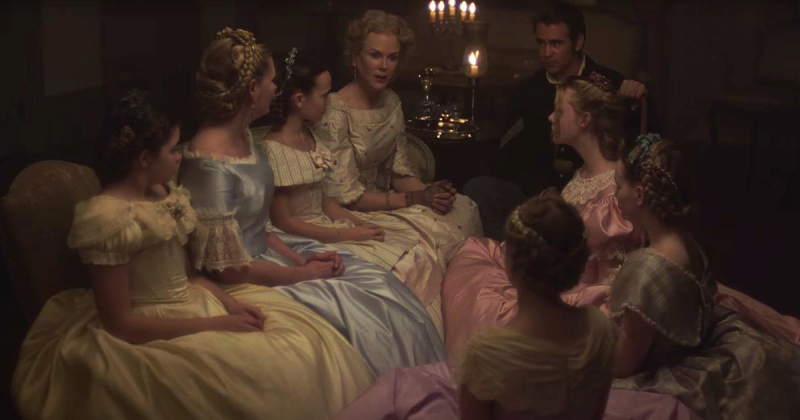
When McBurney is more ambulatory and able to talk (and flirt, Farrell does so with charm and sensitivity, it’s easy to see why the women take a shine), he’s clearly caught the idea that manipulation will keep him alive. It’s not predatory, necessarily; after all he’s helpless to his injury and to the fact that he could be turned over to confederate soldiers. He works Amy as the one he likes best (she saved him, so why wouldn’t she believe it? And why wouldn’t we for that matter?) but sets his adoring (or manipulative) eyes on Edwina (Kirsten Dunst), the teacher whom he sizes up as different (this pleases her – everyone wants to be the special one). Edwina is a delicate beauty but her vague desolation and lonesomeness seem to have made her sag a bit, like she’s slumping through this stifling mansion one day after the other, life is just passing her by. Dunst portrays this with a complicated mixture of world-weariness (of a world she misses) and dreamy ennui. But McBurney’s attention makes her sparkle, causes her to dress a little prettier, wear certain pieces of jewelry and think about attraction – and those around her start to notice.  But then, all of the females have been energized by the visitor and start to adorn themselves, pay him room visits and flirt, chiefly Elle Fanning’s teenage Alicia, whom some could consider a tempestuous brat, but … have you ever been a bored, teenage girl? She’s curious and basking in her youthful force because, that’s what living and learning is about. Many girls would act just as she does. And many can be really powerfully good at it.

The-beguiled-3-1250x703

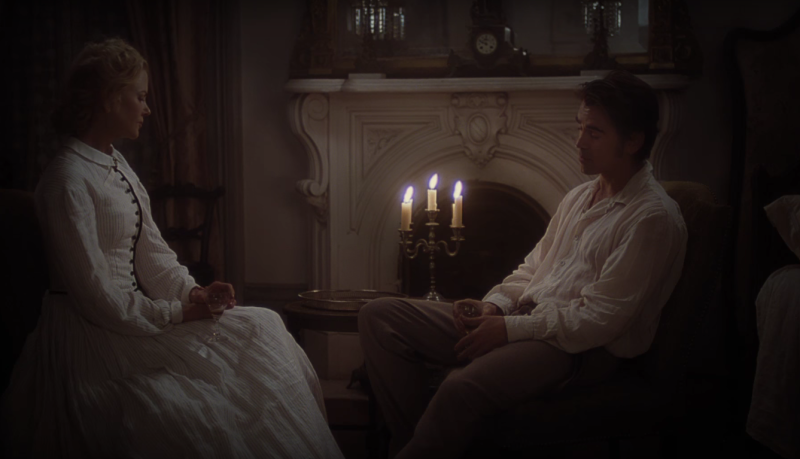
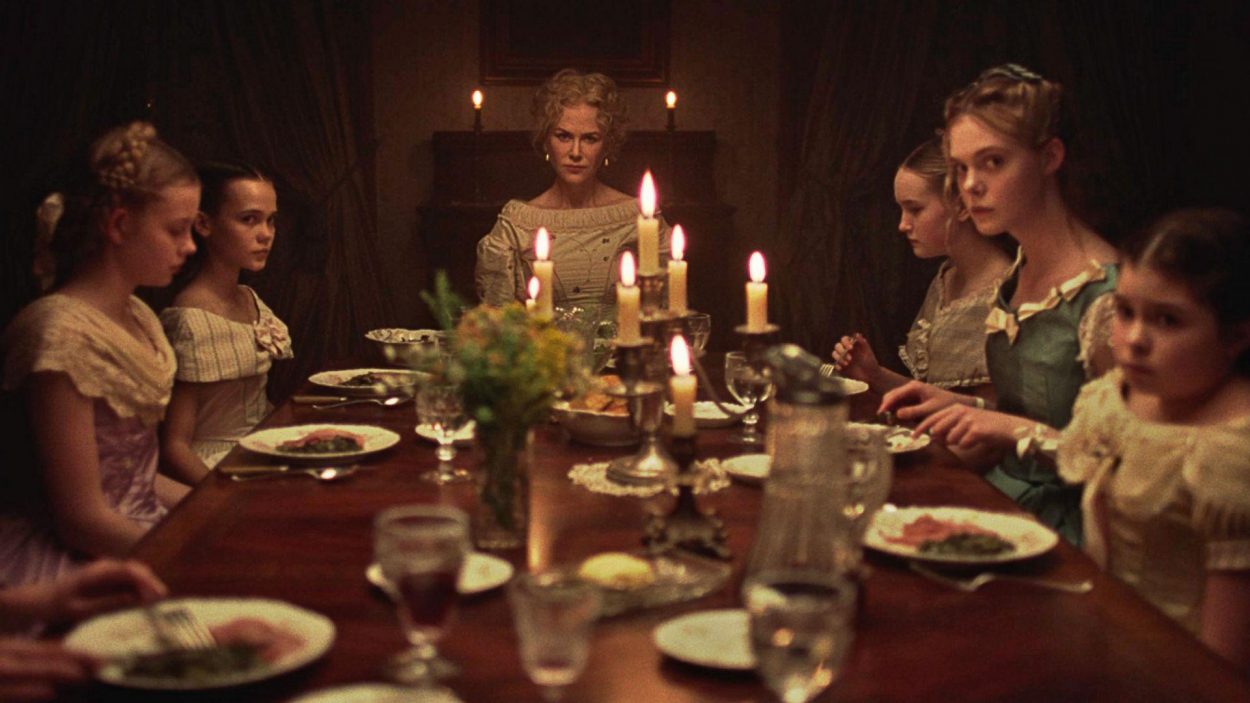
Once McBurney is sitting at candlelight dinners with the females dressed so fetchingly, watching their recitals and with his leg healing nicely, helping out on the grounds, the women begin to compete more openly (there’s a humorous scene about all of those involved with the creation of a pie he likes – and making sure McBurney knows who contributed what to that pie). Farrell sits pleased as the charming, delighted wolf – he knows he’s got them under his spell – and is able to start playing them. This is also when things begin to get extra-thorny and sinister, for all involved. Shot with a gossamer beauty (by Philippe Le Sourd), where warm, candlelit interiors are picturesque and slightly scary; where the outside world has a smoky, gauzy pastoral beauty but feels dangerous (it is dangerous), The Beguiled is positioned inside an alternate universe that’s not too far removed from the reality of the time. From the women’s dresses, to the moss on the trees, to Farrell’s wounds, these are photographed with totemic import – these things mean something to all involved.

6a00d83451cb7469e201b7c902bd52970b-800wi

And Coppola never heightens any of this meaning or drama toward the ridiculous, even as disastrous and spectacular as it all gets: lust and spurned lust causing a push-down-the-staircase rage, literal, re-opened wounds (this is not a movie about healing), and then, a loss of something quite important to a man (or anyone, but it seems more symbolic here, in understatement), with Martha demanding, “Bring me the anatomy book!” I loved the slow burn of the picture how, even with characters acting with such dubious intent, Coppola refuses to simply demonize either side of the gender divide. When McBurney professes his love to Edwina, you feel the danger in this statement, and worry for her, but you are just waiting for this outburst of passion. God, even if it’s a lie. Let Edwina feel something. And Farrell is so compelling, so convincing, you believe it, for a moment, and you don’t fault him for such machinations. He’s got to save himself too, and he’s using his masculine wiles the way femme fatales stereotypically do. Coppola positions the movie from the female’s point of view, yes, but it’s inherently humanistic and emotionally honest. It’s also droll and witty. She’s not afraid to be funny and recognize the humor of this predicament, and how awful we all can be. We recognize how far some will go, men and women, within this trapped, highly symbolic milieu.  The Beguiled isn’t really asking us to take sides – it’s allowing us to figure that out for ourselves – or take no sides. Why do sides need to be taken?

1487369508_focusfeatures_thebeguiled_sofiacoppola_colinfarrell_nicolekidman_kirstendunst_ellefanning_unit_1-1194x671

Returning to the fairy tale aspect of Beguiled, I feel this in all of Coppola’s superb, stunning pictures, distinctly her own – the fracture and heart of the fairy tale (The Virgin Suicides and Marie Antoinette especially, but even the castle of the Chateau Marmont in Somewhere or the kids breaking into the fantasy life they’re not a part of in The Bling Ring). Like many girls (and boys), when I read fairy tales, particularly about princesses, I didn’t really think too long about the happy endings (unless they were weird and complicated, like when you read the real Brother’s Grimm) or the morals of the stories – I was instead intrigued by their ideas and images, often of isolation and imprisonment: a woman put to sleep in a glass casket for being too fair, or Rapunzel shuttered away in a tower. These locked-up woman who terrify, yes, jealous women, but more than that, they terrify because they possess a kind of dominance that must be stopped (Maid Maleen is another example – she was locked away for disobeying her father, shades of The Virgin Suicides).

When I re-read these stories as an adult, I think of how much these themes permeate the real lives of women. I think, in more current examples, of brilliant women who lived creative, later secluded existences, far too close to their mothers – elusive Dare Wright, Big Edie and Little Edie Beale. They are fascinating and full of questions. Who can blame them for being either scared of the outside world or wanting, really, nothing to do with it (and we don’t really don’t know what they wanted)? Dare Wright worked through her obsessions via ingenious pictures of dolls and bears. The Beales became mythic.

6a00d83451cb7469e201b8d28cfa8e970c-800wi

The women of The Beguiled feel mythic too. They may be bored and stifled in that house, but will they ever leave? They certainly adored men, and fell in love with men, but even as they desire, and in the case of Edwina, desire to run away, it’s not surprising they should feel, at first, fear, and then such extreme betrayal and distrust of a man – and finally decree revenge. If they’ve internalized society’s (and particularly during this time period) moralizing of the sexual female, that’s terribly sad, but the ending, both horrific and tragic, is simultaneously haunting and darkly droll. Coppola’s last shot is a twisting of the fairy tale heroine; only, it’s a man, wrapped and supine. There will be no princess to kiss him awake.

From my piece published at the New Beverly.

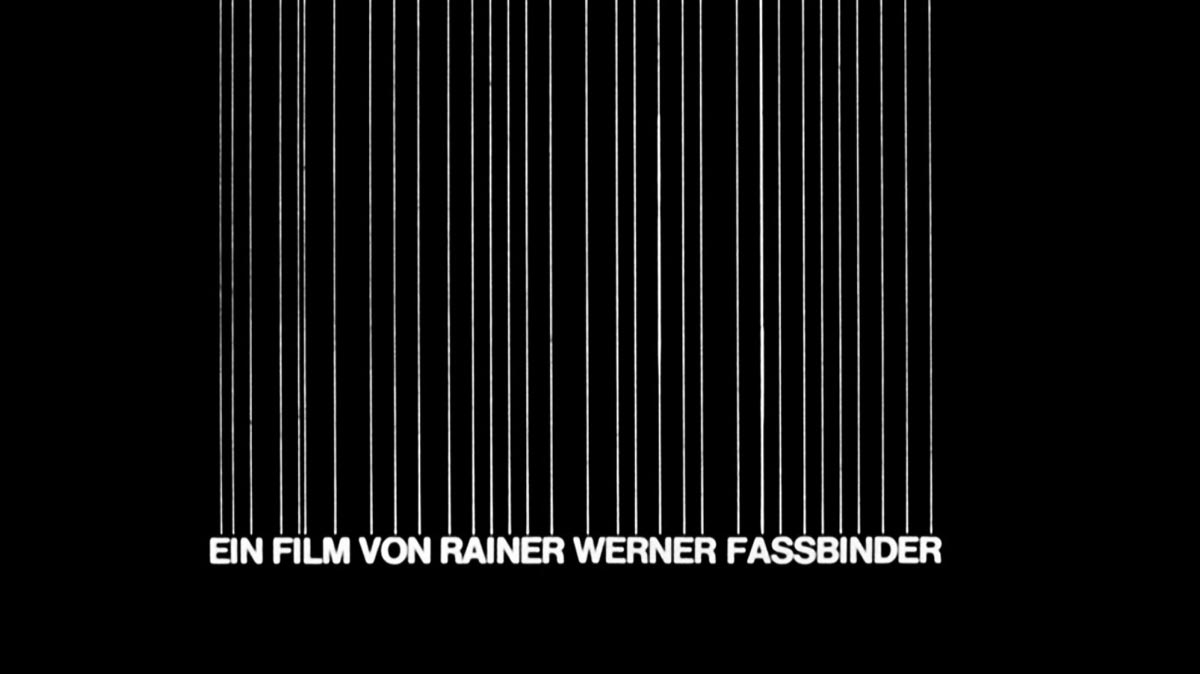
The Mirrors of Fassbinder: World on a Wire

6a00d83451cb7469e201b7c902141c970b-800wi

"There is a very beautiful story named World on a Wire. It talks about a world where you can create projections of people with a computer. And this brings about the question to what degree we are all merely projections, because according to this thought model; the projections are equal to reality. Maybe another, larger body has created us as a thought model? We are looking at an old philosophical model that produces a certain horror. With this movie I have attempted to work as perfectly and orderly as possible, using all available technical means.”  – Rainer Werner Fassbinder

World-on-a-wire-1

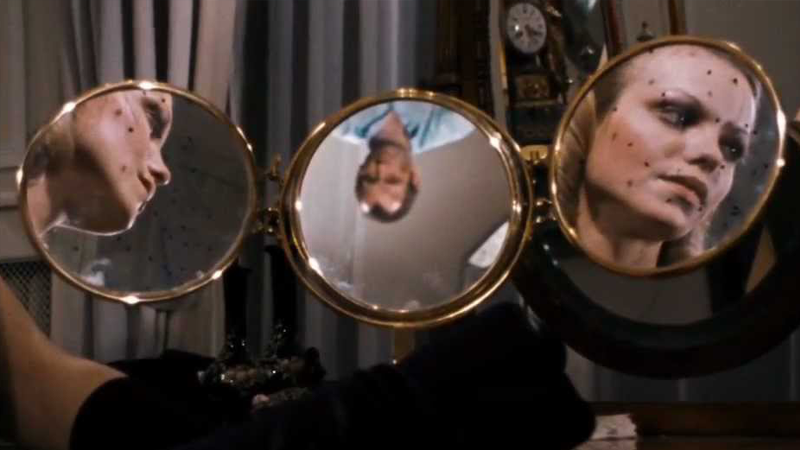
In Douglas Sirk’s All That Heaven Allows, Jane Wyman, lonely, separated from her “inappropriate” lover Rock Hudson, sits at a Christmas gathering, heartbroken and unhappy with her life. Her daughter, finally realizing her mother actually loves the soulful, younger gardener (finally?), feels for her mother, while her imperious, smug son settles on the couch and blithely talks of both going to Europe and selling the house. Her house. He makes a point to say “one person” doesn’t need such a big house with the word “one” stabbing Wyman right in her heart. The kids will be gone, and the widow is now looking at a life truly alone – love be damned. She breaks down and says to her daughter: “The whole thing’s been so pointless.” And then … her son presents mother with her Christmas present. It’s a television set. A man enters carrying the unit and “sells” her on this box of entertainment, this replacement human being. Wyman looks into the unplugged screen, despairing and even a bit frightened (this is her future?) and sees her reflection. The man proclaims: “All you have to do is turn that dial and you have all the company you want, right there on the screen. Drama, comedy, life’s parade at your fingertips.”

6a00d83451cb7469e201b7c9021395970b-800wi

Shot from the perspective of Wyman’s distressed reflection in the television screen, we see her visage trapped in a frame, peering at herself and the prospective imitation of life, unplugged but waiting, like the horrifying company a solitary pill-popping Ellen Burstyn will keep in Darren Aronofsky’s Requiem for a Dream. The expectation of sinking into the void of replacement reality to human life is not only one of the most heartbreaking moments within Sirk’s oeuvre, it’s one of the most horrifying as well. It’s also, intriguingly, an early disavowal of the alienating aspects of technology, Sirk using his famous replication mirror shots to emphasize the fear of simulated existence. Once that TV is turned on, her disturbed replicant face will be blurred by life’s “parade,” and she will likely succumb to its numbing, anesthetizing comfort.  We never do see that TV turned on and based on the film’s ending, we assume Wyman will shove it out the door like Craig T. Nelson in Poltergeist. But with World on a Wire, I feel like Sirk disciple, young Rainier Werner Fassbinder, sneaked into that gorgeous Alexander Golitzen-designed room when no one was looking, plugged that life-sucker in, and turned the nob to “on” – and with a hard click.

Maxresdefault

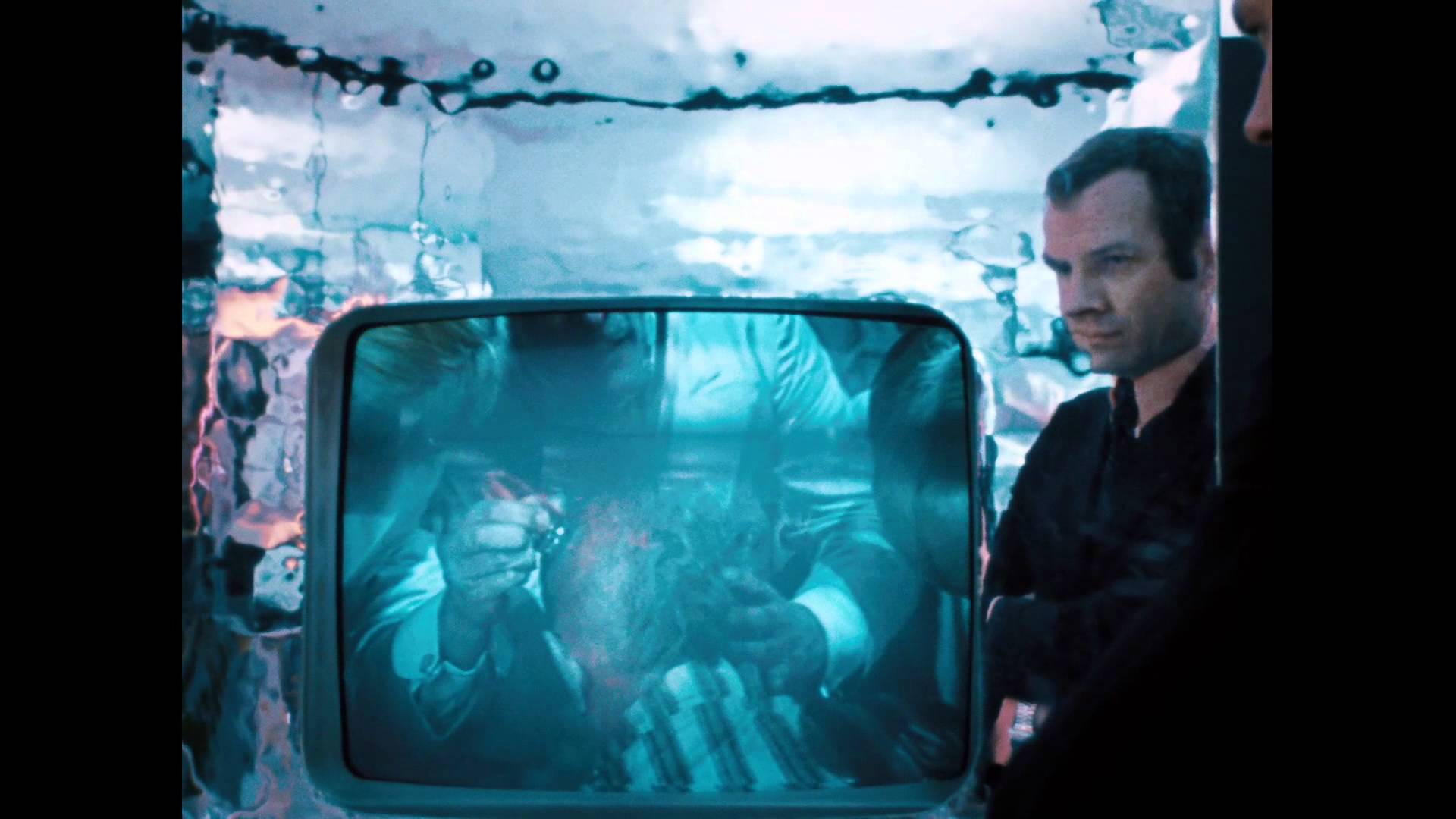
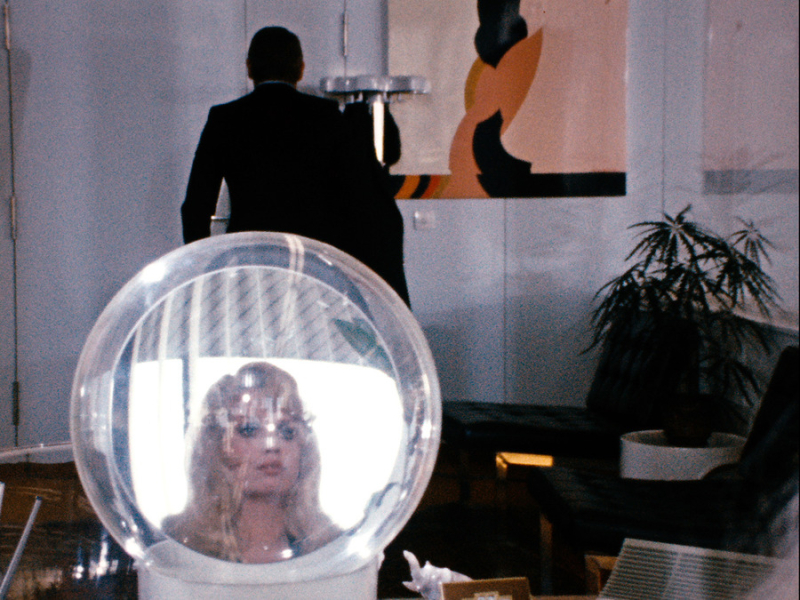
With that fantasy click, Fassbinder wasn’t just thinking science fiction when he made his one and only sci-fi epic, World on a Wire, he was likely, in part anyway, thinking of Sirk. Fassbinder and Sirk are often thematically and stylistically linked by critics, World on a Wire is no exception (and Fassbinder, serious devotee and student that he was, discussed Sirk himself). Jane Wyman could be inadvertently gazing towards another kind of future when thinking of the Fassbinder’s mirror shots – World on a Wire is a movie so crammed with mirrors and reflections, that the picture takes Sirk’s idea of a mirror’s view of a warped or opposite reality, and transplants its ophthalmic impersonations into science fiction; and most specifically, and fittingly, into a movie about virtual reality. Replacement humans. Fassbinder works with science fiction ingeniously, layering his prescient story and characters with themes many of his other picture’s explore — power dynamics in relationships, identity, societal perceptions, how we observe from inside a film as characters and outside of a film as voyeurs, how we style our lives, and how we inhabit the style around us.

6a00d83451cb7469e201b8d28c3d79970c-800wi

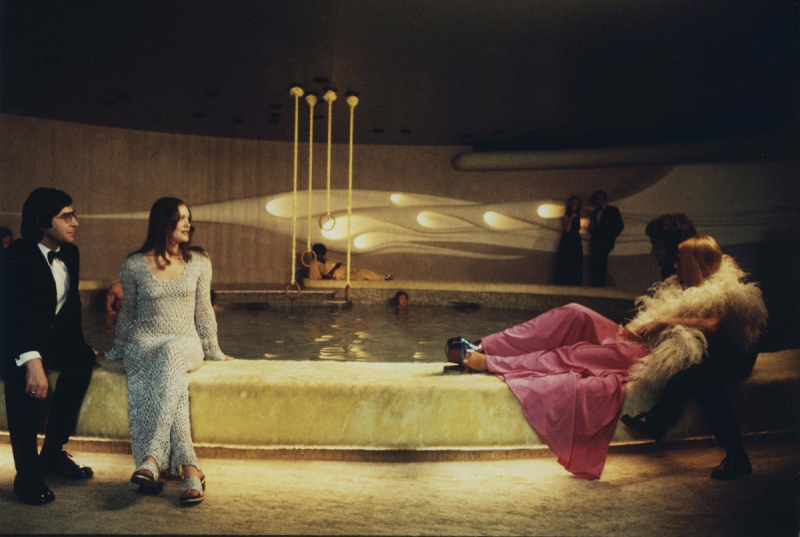
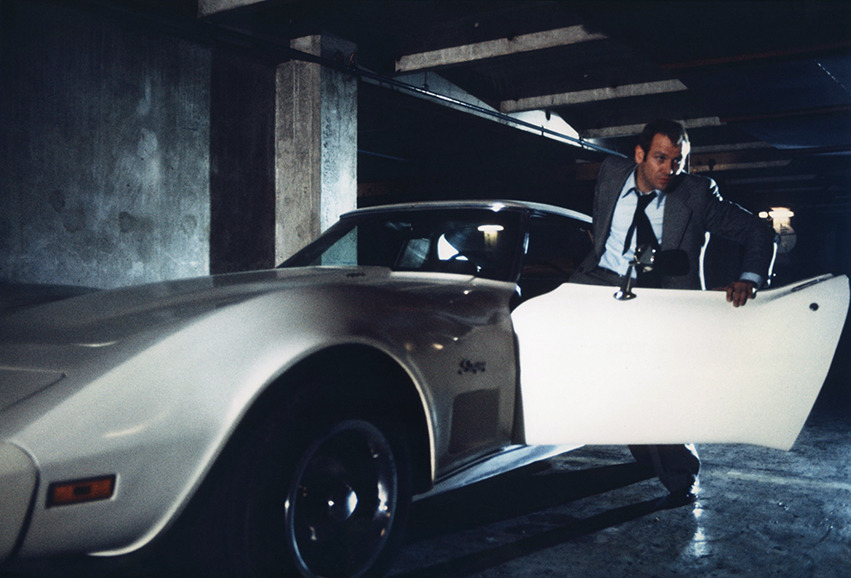
And, again, style. This picture is mad with style – as chic as Petra von Kant’s designs and her artfully crafted bedroom/set, it often looks like a work of installation art, in which characters at pool parties stand like mannequins or float like ghosts, shimmering blue water lighting faces, gleaming plastic surfaces, white statuary adorning 70s sci-fi/mid century modern rooms with pops of color from telephones, TV screens looking back at us, and of course, mirrors everywhere, sometimes as many as three or more in one shot. Women traipse around sexily, listlessly in gowns for day attire, men don fedoras and sharply tailored suits, our hero drives a white corvette, looking more like a noir hero or a suave super spy than his job title – technical director of the Institute for Cybernetics and Futurology.

6a00d83451cb7469e201b8d28c3d83970c-800wi

That hero is played by Klaus Löwitsch – handsome and charming, with a wry expression and a unique, subtle sense of humor – he’s a 70’s-styled noir protagonist (he’s been compared to Bogart, but I find him more of a cross between Dana Andrews and Ralph Meeker). Fassbinder uses Löwitsch’s physicality to wonderful effect here, even having the actor dive out of a cabin before it explodes (which is highly amusing). Or making him climb, simian like, over a wired fence (also amusing.) Much in this movie is satirical or strangely humorous while telling its story sincerely and chillingly, and in ways that bend what we perceive as homage or dead serious – it’s everything at once. We see Kubrick (2001), we see Godard (Alphaville, and with its star, Eddie Constantine, making an appearance), we see simulated Marlene Dietrich (twice, via Ingrid Caven, and once acting out the famous death in Josef von Sternberg’s Dishonored) and, as I said, we see Sirk. But this is a Fassbinder picture through and through.

World-on-a-wire-7

Largely unseen in the United States until 2010 after a dazzling digital restoration by the Rainer Werner Fassbinder Foundation, World on a Wire originally aired, not in theaters, but on German television in 1973 as a two-part tele-movie. And this is most certainly a TV movie made by Fassbinder – art directed like crazy (by Kurt Raab, who also acts in the movie), gorgeous 16mm, the film is shot by Fassbinder regular, cinematographer Michael Ballhaus, with such artful meticulousness, the camera moves and zooms and follows extended takes with fluid grace; the movie alternately waltzes and lurches in this gorgeous dystopian delirium. It’s weirdly hypnotic, and uncomfortably soothing, if those sensations can be possibly felt simultaneously. With World on Wire, they are.

6a00d83451cb7469e201b7c9021402970b-800wi

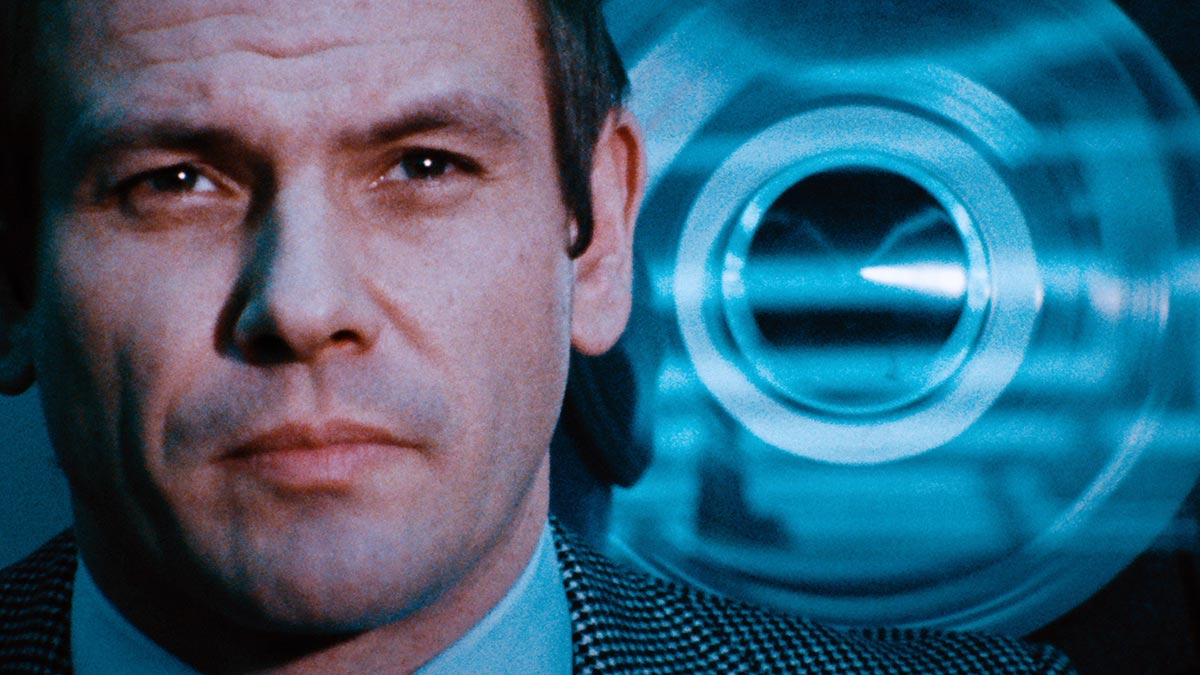
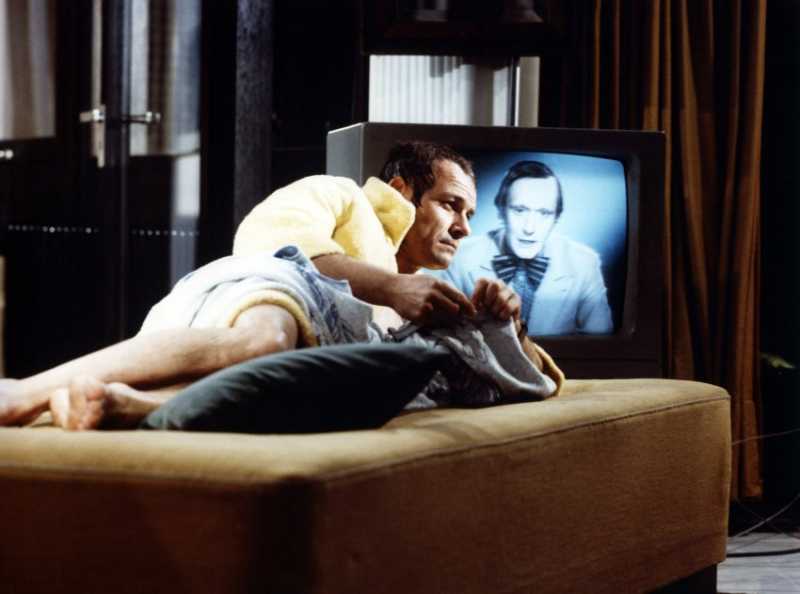
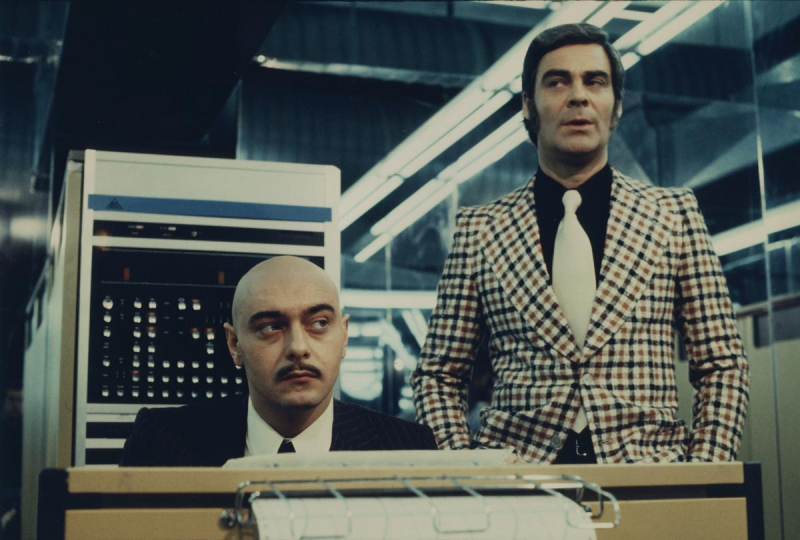
Adapted from the 1964 novel “Simulacron-3,” the three and a half hour series features Löwitsch as a scientist, Dr. Fred Stiller, who takes over for a mysteriously deceased Professor Volmer (Adrian Hoven) as the Institute director to a simulation program featuring over 9,000 “identity units.” The simulated humans live in the world unaware of their mirrored existence, playing humans, thinking they’re human and going about their business in what they perceive as one world – actually it’s split world, or existing in a hierarchy of real and perception – a top world and a bottom world. Stiller has already inherited a position under mysterious circumstances, but his existence becomes even more warped, stranger and sinister: mysterious disappearances, glitches in the identity units, corporate corruption and control, perceived madness on the part of Stiller, his terrifying, mind-bleeding headaches, assassination attempts, he’s even accused of two murders he didn’t commit. Stiller spends a good portion of the film’s third act fleeing, searching for an important contact to make sense of this real world and the simulated one. And he keeps running. He runs so much that he nearly gives up – once when the men with the white jackets (two extraordinarily creepy looking actors) come to capture him, he slowly dresses, and after enough time, jumps out of his room, exhausted (observing him barely make it out due to his own fatigue is disturbing and humorous). And another time when Vollmer’s daughter, Eva (an intriguingly somnambulant Mascha Rabben), pulls a gun on him; she hands it to him to reassure Stiller, and so he slowly aims it towards his head, distraught, but also as if he’s trying it out. It’s an act. With that, it’s played like how we’re watching someone think about the idea of this chunk of metal to their head, how it could blow out their brains, but … that’s too real? It’s not just as much as Stiller’s will to live that he thinks twice about it, but that it’s too much of a life or death choice, and within his own control. He does not pull the trigger.

6a00d83451cb7469e201bb09a524da970d-800wi

That Fassbinder was exploring the virtual world, and before The Matrix, Blade Runner, Tron, Videodrome, eXistenZ and other later pictures (Philip K. Dick was writing about these ideas early on) is another fascinating corner of the young, absurdly prolific genius’s mind. His interests and imagination were boundless (I’m not going to list all of the films he made before dying at age 37, but there were 40 features, not counting TV, shorts and plays) and so the idea of looking at reality through an alternate reality likely merged with the filmmaking process itself. Fassbinder was 27 when he made this series, and in a year that would produce three other works: Nina Helmer, Martha and Ali: Fear Eats the Soul. He assembled many of his recurring actors: Löwitsch, Barbara Valenin, Raab, Margit Carstensen, Ulli Lommel, etc., mixed with older German actors and interesting cameos – one from Rainer Langhans, which struck me as curious. Famous for being a member of Kommune 1, Langhans is almost known in rock lore for dosing Fleetwood Mac’s Peter Green during an infamous Munich trip that would reportedly warp Green’s mind and send him into madness. That Fassbinder chose Peter Green’s popular, soothing beautifully trippy  1969 Fleetwood Mac instrumental “Albatross” to not only fade out the first and second part of the series but to also score Stiller fleeing in his car, seems a intriguing coincidence, or perhaps he knew the story (maybe Langhams told him about it – I feel like Fassbinder would know this particular detail).

1512_015_Current_large

Whatever the case, life, lore, Fassbinder’s methods of madness with actors, his real life chaos and precision, it all swirls together perfectly in Fassbinder’s mind-bending fantasia. (Fassbinder also had excellent taste in music, and all of the music in World on a Wire is used effectively, often unexpectedly or referentially, from Strauss’s “The Blue Danube,” to Anton Karas’ The Third Man score, to Marlene Dietrich’s “The Boys in the Backroom,” to Elvis Presley’s “Trouble,” and Gottfried Hüngsberg score is effectively portentous.)

Alongside the prophetic ideas presented, the music, the look, the acting, the framing of shots, the inventive, stylized mise-en-scene – everything here – World on a Wire does not feel dated – even the old school synthesizer special effect sound punctuating a dramatic moment (or moments that aren’t dramatic – Fassbinder uses the resonance at times seemingly randomly) feels ironic and, yet, post irony. It’s funny and creepy, a B-movie effect and, yet, unsettling, as if just a sound can summon cinematic memories of childhood. Space aliens and flying saucers hovering overhead and the fears of being abducted or probed, which is not just a childhood fear.

6a00d83451cb7469e201b8d28c3db5970c-800wi

And, again, there are all of those Sirkian mirrors, reflecting another version of ourselves, a simulated reality that’s intermingled into our own perception so much that we don’t realize how bent that perception actually is.  The word “delete” is used in World on a Wire, the act of ridding a simulation, which struck me as entirely of the now. We delete social media accounts, comments and people, as entire relationships are conducted solely via computer; relationships that often seem as real and as messy as physical connections. Meanwhile, we frequently feel lonelier and more depressed as we scroll newsfeeds, observe other people’s lives while observing our own selves as presented online, real or not so real. Or what does that mean anyway? It becomes confusing. We are constantly plugged in but recurrently physically disconnected (Oliver Assayas also explores this in his brilliant Personal Shopper), and we find ourselves even questioning how much we would even exist without our curated online life.

Sirk said: “The mirror is the imitation of life. What is interesting about a mirror is that it does not show yourself as you are; it shows you your own opposite.” Presumably, like simulated humans, Sirk meant that we don’t know we’re seeing an opposite of ourselves, and that is either terrifying to consider, or another mysterious facet of our unfathomable selves. Does the idea of a splintered psyche have to be considered in an entirely negative light? I’m not sure, not in every instance, but that those shards of differences are crouching inside, that is unsettling, something that would blow our minds on a bad Peter Green-style acid trip. Who are you? Go away! (The Doors of Perception sometimes shut behind you.)

6a00d83451cb7469e201bb09a5252f970d-800wi

The Jane Wyman television “Who are you” reflection, trapped in a screen, is especially disconcerting to consider when thinking of today. And her heartbreak of losing love and her own sense of identity; her freedom to live as she desires, brings us to the disquiet and alarmingly calming dreamscapes of World on a Wire. As I dreamed up earlier, Fassbinder turned that TV set on, and then in, a fit of All That Heaven Allows anger in Ali: Fear Eats the Soul, sits next to the character who kicks that TV set in the face. But by that point the television is an ubiquitous fixture in a living room, not a strange new world. After all, World on a Wire was made for TV. So, there’s another level of projections to consider, beyond the tube. You’re staring into it now. You can probably see your reflection in the glass. “Life’s parade at your fingertips.”

From my piece published at the New Beverly

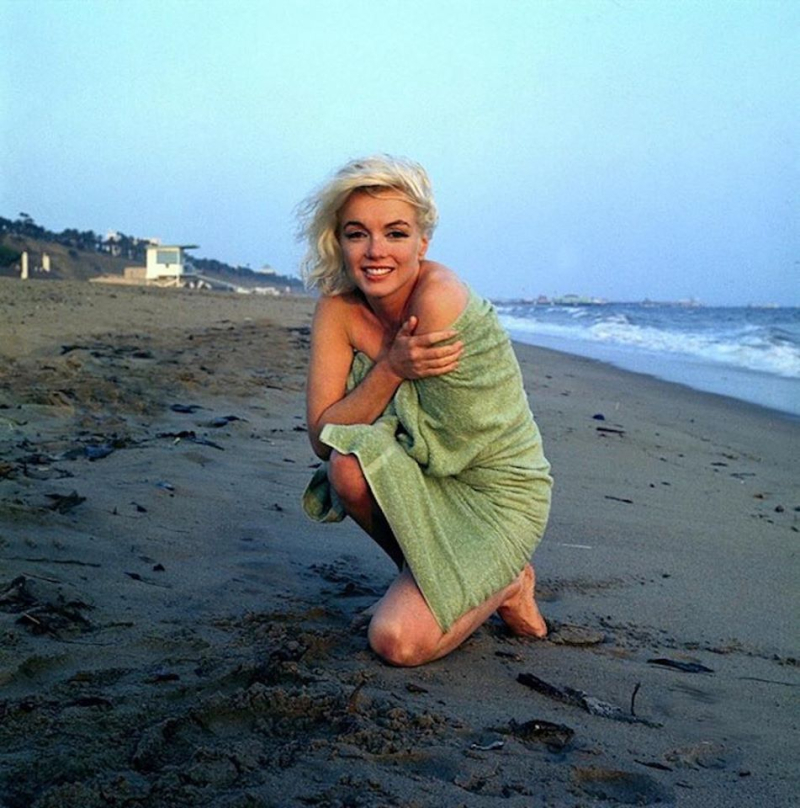
June 1: Happy Birthday Marilyn Monroe


6a00d83451cb7469e201b8d288533c970c-800wi-1

From a letter Thomas Pynchon wrote to his former Cornell friend and roommate, writer Jules Siegel, in the early 1960s — Siegel published a portion of the letter in a 1965 issue of Cavalier magazine. He wrote that, "Pynchon, hiding out from the world in Mexico City, wrote on blue-line graph paper to a suicidal writer friend":

"When Marilyn Monroe got out of the game, I wrote something like, 'Southern California's special horror notwithstanding, if the world offered nothing, nowhere to support or make bearable whatever her private grief was, then it is that world, and not she, that is at fault.'

"I wrote that in the first few shook-up minutes after hearing the bulletin sandwiched in between Don and Phil Everly and surrounded by all manner of whoops and whistles coming out of an audio signal generator, like you are apt to hear on the provincial radio these days. But I don't think I'd take those words back.

"The world is at fault, not because it is inherently good or bad or anything but what it is, but because it doesn't prepare us in anything but body to get along with.

"Our souls it leaves to whatever obsolescences, bigotries, theories of education workable and un, parental wisdom or lack of it, happen to get in its more or less Brownian (your phrase) pilgrimage between the cord-cutting ceremony and the time they slide you down the chute into the oven, while the guy on the Wurlitzer plays Aba Daba Honeymoon because you had once told somebody it was the nadir of all American expression; only they didn't know what nadir meant but it must be good because of the vehemence with which you expressed yourself."

Blue Windows Behind The Stars: Hardcore

6a00d83451cb7469e201b7c8fdf04d970b-800wi

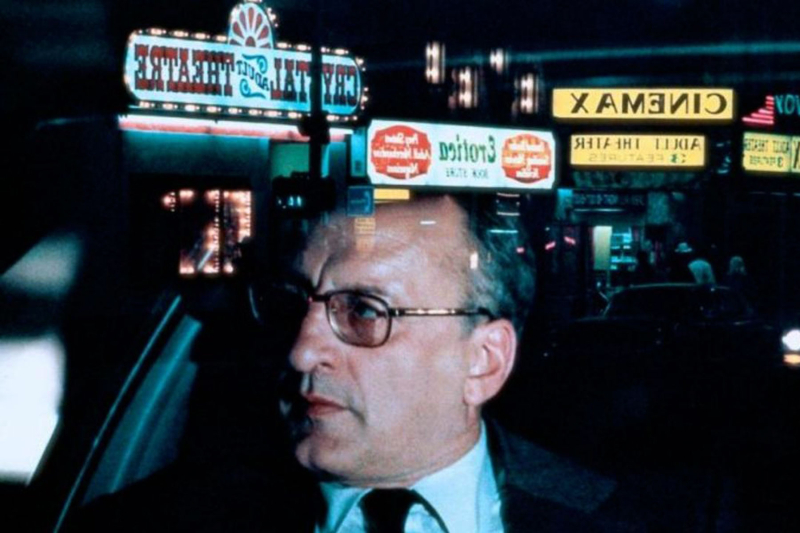
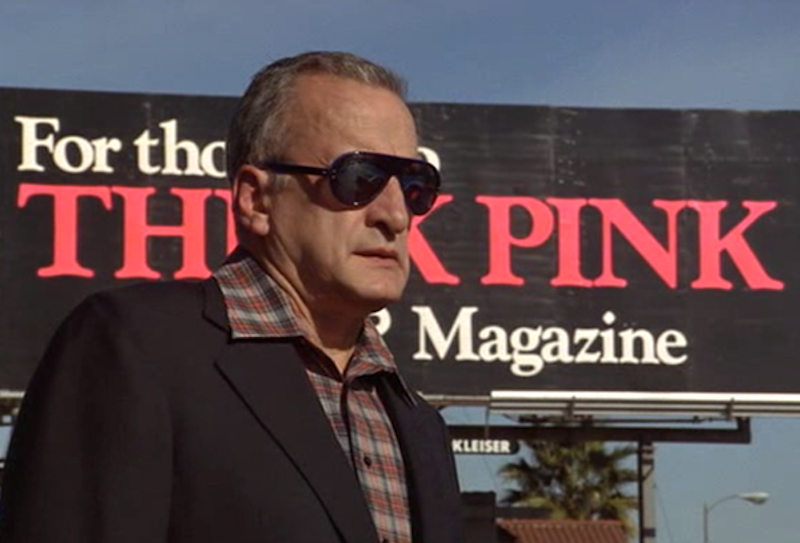
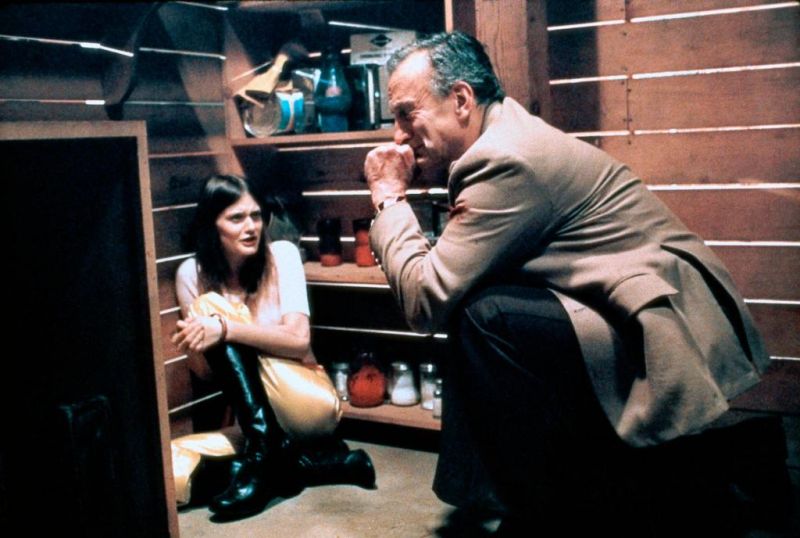
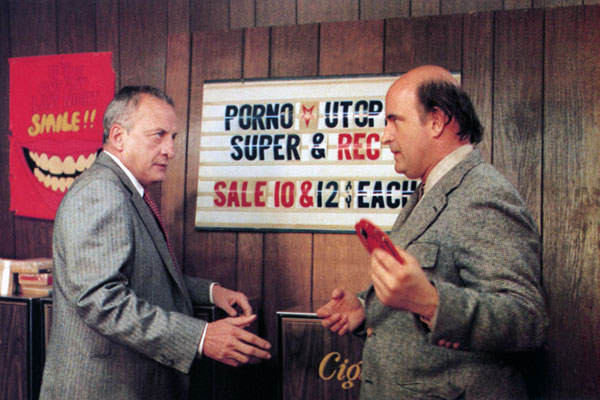
Near the end of Paul Schrader’s Hardcore, an incandescently angry George C. Scott busts through thin, pasteboard walls with such focus and furious dedication that it looks like the kind of perverse, surrealistic nightmare that a wrathful Christian would have. It’s also strangely beautiful. He’s in the House of Bondage and Scott’s Calvinist Jake Van Dorn is chasing after a tight-jeaned, feathered-haired pornographer named Tod (Gary Rand Graham). The younger man breaks open the walls first with Jake raging and rampaging behind him, tumbling into spaces, pre or post-coitus. As Tod pushes his youthful, fit body through each wall, the older and bigger Jake bashes on along right after him, smashing through every partition and decimating the private sex rooms in this supposedly sturdy bondage lair. Jake tumbles into the rooms awash in the glow of each space’s different colored lights – green to blue to red – and this has to annoy him. He’s already proven in an earlier scene back in Grand Rapids, Michigan, before he descended into red light hell searching for his runaway daughter, that he’s particular about colors. He cleverly and with an obsessive need for control manipulates his female display designer out of a certain shade of blue: “Don’t you think it’s a little too bright?” he asks, rhetorically. When she asks if he wants her to tone it down, he pulls reverse psychology on her and suggests a big stripe across the back wall. “No, that would be much too overpowering,” she says. He agrees with what he already agrees with. He asks what shade of blue it is – “Pavonine” she answers. Pavonine? Pavonine is  a shade resembling a peacock. We now understand why he’s so put off by this hue. Or maybe he secretly loves it. That peacock blue has got to go.

Cscotthardcore

So here is Jake pursuing Tod, a cock of the walk himself, after taking in excessive plumage during his underworld journey – more than he’s seen in his lifetime, including his own daughter in a hardcore 8mm porno called “Slave of Love.” Jake’s busting through walls so intensely we’re worried the entire structure will crash down on him. He can’t lose the chase. Though we almost fear watching what will happen to the man on the other end of Jake’s ire, no matter how sleazy and shitty that man is, we want Jake to catch up to him and knock him around. Because . . . he’s gotten this far. We’re yearning for his brutal release and the movie knows we yearn for this. This space, this delicately walled space hosting all kinds of pleasure and pain, serves those seeking bondage, humiliation, fear – things that require a safe word. Watching fury-filled Jake crash through each wall makes you wonder how many customers would be aroused by this spectacle. Or would that safe word be screamed out the moment a client saw Jake’s furious, pulsating face? We’ve already seen the biblically named dungeon doms, Faith, Hope and Charity, panic and scream in their black lingerie.

6a00d83451cb7469e201b8d28826fa970c-800wi

Fittingly, when Jake and Tod spill out onto the San Francisco street and into the outside real world – punching and rolling down a hilled sidewalk with garbage flying everywhere – Jack Nitzsche’s mind-bending, brilliant score is drowned by the sounds of celluloid flickering through a projector. The other times we’ve heard that sound (that I can recall) are first when Jake is tortured through his daughter’s porn film, enduring a father’s worst nightmare in that privately rented theater – famously and heartbreakingly yelling, “Turn it off. Turn it off. Turn it off!” The next time is when he watches the black & white snuff film starring his little girl’s boyfriend, the villainous Ratan (Marc Alaimo), in which a young woman is killed. On the street, the sound spikes the picture without a film showing, an interesting auditory decision. Is Jake so possessed by what he’s seen that he’s now hearing projectors in his head? Or are we so absorbed in this violence that the flickering sounds natural? Am I actually hearing this? Have I lost my mind? Jake finally forces Tod to submit by bashing his face into a pole.

6a00e5523026f58834010536bdc111970c-800wi

It’s a powerfully concentrated, vivid sequence that intertwines myriad issues Scott’s God-fearing, distraught daddy is wrestling with, sometimes literally, as he shoves, shakes, punches and stomps his way around the porno world. If he’s not a physical man when it comes to sex, he’s presumably got no problem (enough to stop anyway) about expressing his body through violence, unleashing his wrath when the blood hits his brain. If his blood is hitting anywhere else, he shuts that shit down and sublimates carnality through brutality, its own kind of intercourse. The wrath of God is holy and justified. Rarely is a human’s wrath holy (justified is another question), but Jake fixes his fury on sinners like a divine power, impatient to wait for God. Romans 12:19: “Beloved, never avenge yourselves, but leave it to the wrath of God, for it is written, ‘Vengeance is mine, I will repay, says the Lord.’’ Jake snarls: “I’m not gonna let this Tod slip through my hands! Now where is he?” The vulnerable young porn actress and booth girl, Niki (a wonderful Season Hubley) who is helping him, the one who just ditched her pimp and is latching onto Jake with a veneer of streetwise toughness, responds with worry: “But then you’ll forget about me!” His answer is brutal – he smacks Niki across the face and holds a clenched fist over her while grabbing her by the throat – and on a bed. He then kisses her on the forehead and reassures her. Why some critics think it unrealistic that Jake isn’t tempted by sex within this milieu shows that, perhaps, they don’t understand how drunk on violence this guy really is and how intimate that brutality feels. Jake’s spraying his anger all over the fucking place.

6a00d83451cb7469e201b7c8fdf0ba970b-800wi

In fact, the Midwestern Christian square, who really isn’t square at all, is nearly becoming Niki’s new pimp (based on their power dynamic) and seems on the precipice of violence overflowing into sexual pleasure. But not quite yet. He’s about to find his daughter and he’ll leave Niki behind. And so, maybe he’ll close that box. Or not. But, now, there are too many colors in this red-light-land, ones alien to the snow-covered Calvinist world he came from, colors he cannot control, and his rage bursts not merely for those harming his daughter, but for those he’s likely harmed him before his descent. Maybe himself? Where is this violence coming from beyond his fixed fury of finding his girl? Why did his wife leave him? Why does his daughter hate him enough to take off with, not just a pornographer, but a guy who makes snuff films? It’s an extraordinary story and works like some paranoid fever dream and, yet, thanks to Scott and Hubley (and Peter Boyle and Dick Sargent) it feels rooted in an odd, familiar reality. We feel like we know or have known a few of these people.

But how well do we know Jake? He’s a complicated mystery and both Scott and Schrader intelligently keep him that way. Even as he discusses his ideology via the five points of Calvinism, he harbors some deep deep muck inside. There’s a lot more to Jake (and intuitive Niki figures this out – that his wife didn’t die, as he said she did, she instead bailed on him). And so, his violence, his discretion and his faith in this faithless world are fascinating and almost exotic when compared to his current surroundings. Explaining those points a.k.a TULIP (“T, for total depravity  . . .” etc.) he’s strangely charming – he smiles and delights in his faith, but he’s unwavering and strong; he’s even attractive as this unusual, virile Calvinist and perhaps attractive to Niki, sexually or paternally – or both. Only in his last scene do we hear him apologize and confess culpability to his daughter’s fleeing and we’re not even sure how we feel about that.

2317061 1ebr0NNurHg7pyGaqTGvKFi1mYu8tK50F3X2zZsiWwC5vlLma+InCuf+WGyZGONpFG54BcGDKzs2m9EcdXUIwQ==

What helps make the film so unforgettable is how much we wrestle with our feelings – ethical, sexual, religious if we’re religious or not and, just, how we feel about our hero. We don’t buy their happy ending (and Schrader himself wanted a different ending – his original found the daughter dying in a car accident unrelated to the porn world, a terrifically downbeat ending that can’t even blame pornography on her death). And yet, we don’t have to buy it. I feel like it works even with the weird, tacked on ending because questions linger as father and daughter walk back to their car, ready to return to downhome Grand Rapids. Like The Searchers’ Ethan Edwards (it’s no secret this film was inspired by Ford’s classic), he’s likely going to wander through his life lonely and broken. There’s no way he’ll return from this experience normal and she won’t either (Kristin, played by Ilah Davis) and he wasn’t normal to begin with. Whatever normal means.

6a00d83451cb7469e201b7c8fdf0a8970b-800wi

We see glimpses of his lonely “normalcy” at the beginning of the picture during which Jake spends Christmas with his Calvinist friends and family. He has his daughter there but no wife and he seems like he’s been keeping it together for . . . how long? We don’t know. There’s something sad about this man. These scenes leading up to his daughter running off (or being kidnapped) during a church trip to California are fascinating, subtly funny and poignant. Schrader (who based this on his own background in Calvinism and his father, and set the movie in his own hometown, Grand Rapids) is taking their faith seriously; he’s not mocking it. When Jake and his brother-in-law, Wes (Sargent) hire Boyle’s boastful sleazy private detective, Mast, their innocence or, perhaps, lack of connection to the world he comes from is disarmingly touching – they sit with him nervously, hoping he tracks down the teenage girl and your heart breaks a little that they even have to be there. When Jake has taken matters into his own hands, going in deep to locate his daughter, Wes comes to see him in a divey Los Angeles motel, seriously concerned. A stony Jake hugs him and tells him to leave him alone. The furtiveness of Wes, and that Jake knows he cares about him is moving and sweet and unexpected – a balm he cannot handle. He’s got to stay, well, hard.

18948351.jpg-r_640_600-b_1_D6D6D6-f_jpg-q_x-xxyxx

When Wes re-hires Mast (Jake fired him in a humorous scene in which Mast was caught indulging with a young woman: “Get out!” Jake orders. Mast protests: “But this is my apartment!”), you again feel for Wes. Even if you’re not anti-pornography (and I’m not, but one can see the complexity of one’s own feelings towards the life and what it can do to people), you want poor Wes to get the hell out of that damn place and go back home. Some people aren’t made for this. Fueled by righteous anger and something probably he even can’t even figure out, Jake, in his own way, is. You’re not sure while watching Jake fake-audition actors, disguised in a wig and moustache, clad in swinger-looking clothes and a gold chain, you can’t help but laugh at how much he’s trying to fit in. “I’m sorry Mr. Blaque, I’m sure you’re very good” he says professionally and kindly to an African-American actor (Hal Williams) who is yelling at him for being a racist, and not appreciating his penis size or his credentials. When the boy comes in who starred in his daughter’s porno and Jake has to play-act the interested producer (this is how he’ll track her down), the smug, slouchy kid spits out vile words about Jake’s daughter, fueling his rage to a terrifying degree. He beats the shit out of him. You’re not sure if he killed the kid until Mast later tells him he ruined his face. Within that scene, Mast (who calls him “Pilgrim,” a John Wayne and biblical nod) says he cares about his health and his daughter’s. You actually believe that while also feeling that Mast is a sleazebag loser. This movie drags your emotions and all over the place, like George C. Scott has you by the hair and won’t let go.

6a00d83451cb7469e201b7c8fdf0f1970b-800wi

It often makes you sad, too. As dark and as violent as Hardcore is, as occasionally, irreverently funny, and as dreamlike those pasteboard walls are, it swirls around in your head with mixed emotions that lead to an effective emptiness. A key scene that always gets to me is when Jake drives through the Los Angeles red light district, with its dens of sin, strip clubs and sex shops flickering past him, eying his face in the rearview mirror like Schrader’s other “God’s lonely man,” Travis Bickle. Women in short-shorts strut the street and Jake seems, not repulsed, but focused towards his destination. Who knows what he’s really thinking. Nitzsche’s score blasts a warped, creepily gorgeous rock composition as Jake pulls up to a store and parks. When he walks into the shop, Crosby, Stills, Nash & Young’s “Helpless” is playing (I can’t help but wonder if Carrie Snodgress saw this and had a moment, given her dramatic involvement with Nitzsche and Young). Neil Young sensitively, plaintively sings: “Blue, blue windows behind the stars/Yellow moon on the rise/Big birds flying across the sky/Throwing shadows on our eyes/Leave us Helpless, helpless, helpless, helpless …” as Jake wanders through the store. It could seem too on-the-nose (Jake’s not getting any help at this moment), but the song paints a mournfully deep picture of loneliness.

It’s the last thing you’d want to hear perusing a porn shop on a solitary night, whether you were finding your daughter or not, and it speaks not to the moral dilemma of pornography, but to how lonely it can feel. For women and for men.  With all of its questions of faith and men and women and sex and violence and running away and the differing confinements we run from and to, the movie can overcome you with poignant moments of vulnerability and sadness. Of feeling trapped. Watching this “Helpless” scene again (I’ve watched this scene countless times for some curious reason), I thought of Niki, and not Jake’s daughter, in an amusing moment, bitterly complaining to Jake that he at least has the power of faith to comfort him: “So I guess we’re both fucked, huh? But at least you get to go to heaven. I don’t get shit.” I always laugh when she says that, but by the end of the movie it just seems so heartbreaking – for both of them.

From my piece published at the New Beverly

Fool For Love: Reservoir Dogs at 25

6a00d83451cb7469e201b7c8fdca78970b-800wi
Out of sight in the night out of sight in the day
Lookin’ back on the track gonna do it my way
Lookin’ back
Lookin’ for some happiness
But there is only loneliness to find
Jump to the left, turn to the right
Lookin’ upstairs, lookin’ behind

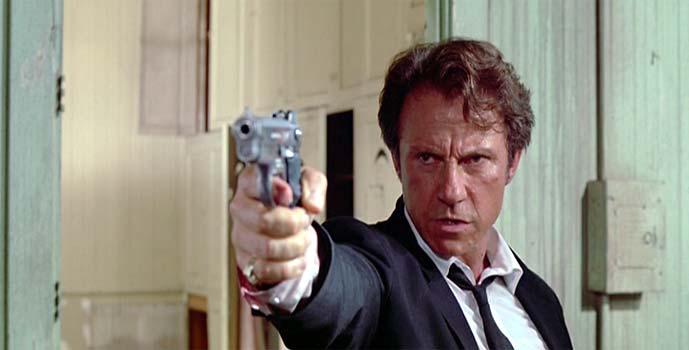
He’s committed? In Quentin Tarantino’s Reservoir Dogs, Mr. Orange rifles through a tray of change, finds a gold band among the nickels and dimes and pennies, and slides it on his finger. It’s a wedding band and he’s honoring (or pretend-honoring) the off-screen wife or off-screen ex-wife or off-screen dead wife or the fake wife we never see. It’s a curious moment that, in one aspect, reveals just how vulnerable this guy is. Or, is he solely a liar, a great actor? He’s all of those things, but then many people are. He’s now shoved one of his guns in his boot holster and the other in his coat pocket, knowing those are the two things that serve as the real protection. But the wedding ring is some kind of superstitious gesture of defense – it represents trust, loyalty, commitment. And yet, there it is, floating in a pile of nearly worthless loose change, as valuable as about 67 cents.

6a00d83451cb7469e201b7c8fdca0c970b-800wi

As Mr. Orange is readying himself to meet Mr. White and Nice Guy Eddie waiting in the car below, he’s listening to Sandy Rogers’ liltingly lovely, country-sad song “Fool For Love,” a song about a guy who falls one too many times for romance until he (what I take from the song anyway) dies. A hopeless romantic and also a sucker. Before Mr. Orange exits his little apartment, he looks in the mirror and reassures himself: “You’re not gonna get hurt. You’re fuckin’ Baretta. They believe every fuckin’ word ’cause you’re super cool.” This is something the other person wearing a ring should be telling him, but she’s not there. He’s alone. Maybe he wants to be.

Reservoir-dogs-12

It’s a touching, funny and mysterious moment that fits right into the film’s themes – trust and loyalty. Trust is of course important in heist pictures, but whenever I watch Reservoir Dogs, I question the idea of loyalty and trust so much, that I wonder if it even matters in this weird fucking world. On the one human hand, of course it does – unless you exist solely as a lone wolf, insisting on abiding by your own rules, screw sentiment and favors and sticking by someone to the very end, you can’t really get through life without trusting a few people. And you certainly can’t team up and commit a crime without trust. Criminal partnerships require more trust than marriage. But, on the other hand, the rightfully suspicious, trembling hand, trust is often a huge risk, especially when you don’t know someone, really, at all, and if a certain kind of bonding between you and your new friend/crook has come about after a short, starry-eyed courtship. You should be wary. You have to listen to your gut instinct: “Will this person have my back when the shit comes down?” If you think “yes” much too soon, you’re Mr. White, a seasoned criminal who should have known better. And yet, for reasons one can only deduce as a need, an identification, a kind of brotherly love, he falls for young Mr. Orange, the seductive actor/cop. He really likes this guy. And Mr. Orange might like him too, though he’s not above swearing on his mother’s very soul that he’s not a liar, when he really is (but what do those kind of solemn declarations mean anyway? About as much as that wedding ring in the change pile).

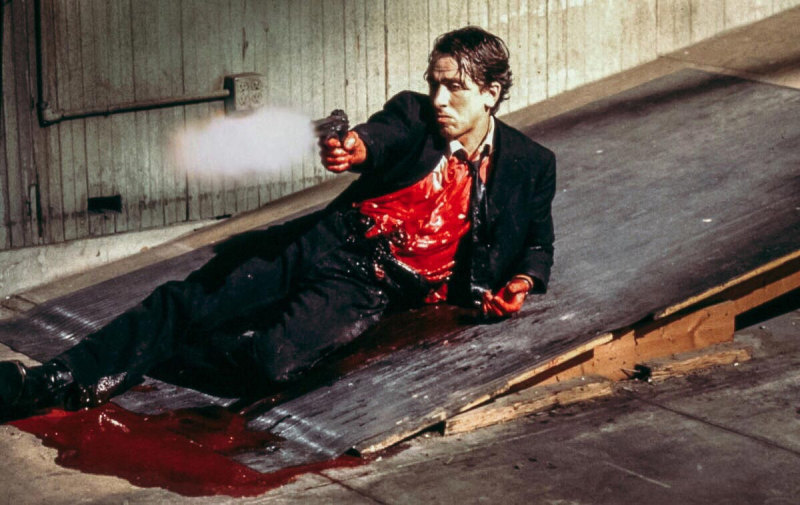
Nevertheless, maybe after too many hard, lonely years, Mr. White wants to trust someone. Maybe he’s tired of looking in the mirror and reassuring himself that he’s “super cool.” So taking that leap of faith, that sense of instinct (or ignoring it), it seems no surprise that, of all places, Mr. Orange is shot right in the gut. A transference of Mr. White’s trust, bleeding all over the upholstery, a blood-soaked emblem of how muddy and confused trust and loyalty actually are. Maybe had Orange not been a rat, these two could have made it as associates, friends? I’m not sure about that as I’m not sure about Mr. Orange. Blood is thicker than water they say, but these guys aren’t family. But how do you make a family anyway? As we’ll learn, Mr. Blonde is likely more family and trustworthy than any of these fellas. Mr. Blonde put in the time, he made sacrifices for another; he did more than a lover might commit to. He’s also a psychopath.

6a00d83451cb7469e201b8d28800c2970c-800wi

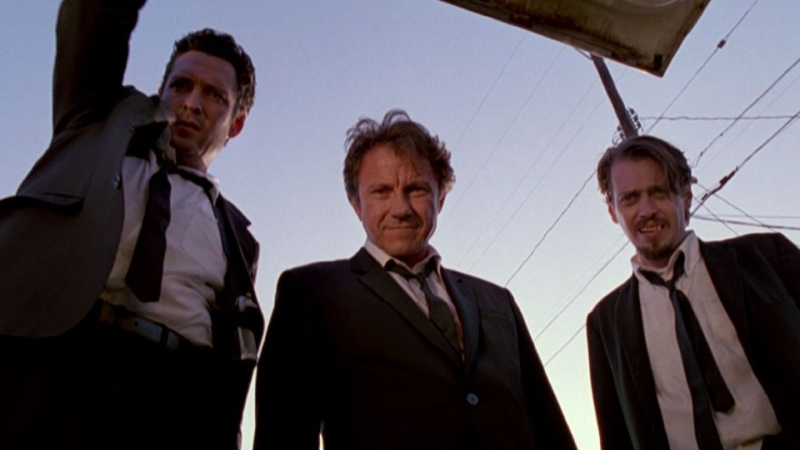
There are many reasons why, after 25 years, Tarantino’s quintessence-of-cool, game-changing debut Reservoir Dogs, not only holds up beautifully but also timelessly (there’s nothing dated about this picture) – one of the reasons is … depth. Feeling. Something many of the Tarantino imitators who followed did not possess. They just tried to copy the cool, never the real blood and guts spilling all over the place. Tim Roth’s Mr. Orange is bleeding his guts out, not just for the dark beauty of all that red (and, cinematically speaking, it is startlingly beautiful, soaking into his white shirt and black suit) but for the emotional reaction it provokes in Harvey Keitel’s Mr. White. As he defends his Orange alliance to understandably rattled Mr. Pink (Steve Buscemi), White protests: “I mean, the man was dyin’ in my arms. What the fuck was I supposed to do? Tell him I’m sorry? I can’t give out that fuckin’ information? It’s against the rules? I don’t trust you enough?” (My inner voice: Yes! You don’t trust him enough!) But, and I don’t know how many of us have held bleeding criminals in our arms after a jewel heist gone to hell, but metaphorically speaking, aren’t most of us Mr. White at one time or another in our lives? If we’ve lived at all and endured some experiences with friends or lovers and have any kind of a heart, yes we are. Jesus. Mr. Pink – the non-tipper – he is right. He’s right if you want to survive: “You’re acting like a first year fucking thief! I’m acting like a professional!”

Reservoir-dogs-mr-white-L-1ucUpI

Why is Mr. White acting like that? All of these shifting, murky feelings, questions of alliance and damaged relationships benefit from the movie’s non-linear structure, where we have to adjust ourselves and pay close attention to each man, and, of course, the crime and the betrayal itself – that of a jewel heist gone horribly awry. The precision and planning is now a total mess, as these things often go down (see numerous heist pictures but, chiefly, Stanley Kubrick’s The Killing, an inspiration to Reservoir Dogs, where, by the end, a goddamn cheap suitcase ruins Sterling Hayden’s life). These guys spend most of the movie in a warehouse, flipping out, nervously planning, turning against each other, torturing, bleeding, and by film end, facing each other down in a now-famous Mexican stand-off, loyalties stressed, tested and seriously fucked.

6a00d83451cb7469e201b8d2880103970c-800wi

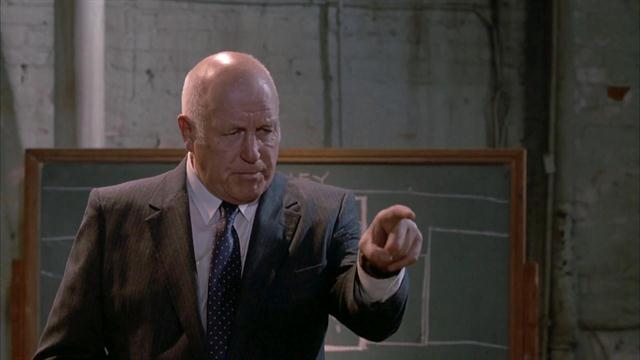
Boss Joe Cabot (Lawrence Tierney) who, with his son, Nice Guy Eddie (Chris Penn), assemble these six strangers for the job with Joe choosing their names: Mr. White, Mr. Orange (an undercover cop), Mr. Pink, Mr. Brown (Quentin Tarantino), Mr. Blue (Edward Bunker) and Mr. Blonde (Michael Madsen), whom Joe and Eddie already know. Mr. Blonde (real name, Vic Vega) served time in the Big House and didn’t rat old man Cabot out. That’s a big deal, and it should be. He’s also someone who appears the most cool and self-assured, charming, in the beginning, laughing along at Mr. Brown’s theory of Madonna’s “Like a Virgin,” an amusing moment of casual conversation and banter that belies a deeper relevance (is Mr. White going to be touched/fucked for the very first time?), and someone everyone trusts. That he turns into an ear-cutting lunatic who surprises the others with his bloodlust during the robbery (the robbery is entirely off-screen, a genius move on Tarantino’s part) is an unsettling surprise – when you first see the movie. The ear slicing is now so famous you almost wish you could watch it again, for the very first time. Like a virgin.

Reservoir-dogs-funniest-scenes

Psycho Mr. Blonde is an important center when testing the character’s bonding and their trust, but also in testing our own alliances and identification. We have sympathy for Mr. White, we love that both noir icon (Born to Kill, The Devil Thumbs a Ride) and real life troublemaker, the numerously arrested Lawrence Tierney and the real hard timer, writer and actor Eddie Bunker show up, and we revel in the varied personalities on display chattering their Tarantino parlance, but Mr. Blonde is the guy all of us want to be. He’s the sexiest: That handsome mug, the old school, understated 50’s leading man charm, the one who brings up Lee Marvin, the amused menace, he even dances. Our attraction to Mr. Blonde (and don’t just say it’s me, it’s not) is one reason the ear-slicing scene is so disturbing to viewers even if we don’t even see Mr. Blonde cut off the tied-up cop’s ear. The camera pans away, but it’s so intense we feel like we’re seeing the coolest cat in the movie commit the most needlessly brutal act. And with laid back Stealers Wheel playing right along, Mr. Blonde cheerfully moving around the room, the hippest guy in the crew is now a monster. For once we feel sorry for the cop (we often don’t in movies like this) while also feeling complicit because, well, we’re enjoying this viciousness a little bit (or a lot). The scene is so brilliantly staged, that when Mr. Blonde goes out to fetch the gasoline (I love how the song continues playing as he re-enters the warehouse, alerting the audience that it is on the radio), we’re thinking … is he going to do it? Is he going to actually set this poor guy on fire? And then Mr. Orange shoots him.

It’s a powerful moment when Mr. Orange kills Mr. Blonde, like the hero exiting the movie too soon, even if Mr. Blonde is not the hero (who is here?). It leaves a necessary empty feeling that surprises me, still, with my consistent reaction. I ask myself, “Am I the only one who doesn’t like that Mr. Blonde is gone?” And, yet, at the same time, I’m not begrudging Mr. Orange for shooting him. I’m also certain I’m actually not the only one who feels this way and so, again, we (I’ll say “we”), we don’t know how to feel about all of these guys. It’s a wonderfully complicated set of sensations, the way the picture is shot (cinematography by Andrzej Sekula) and edited (by Sally Menke), settling you in with these fellas, listening to their hard-boiled slang mixed with pop culture patois and the discussion of regular stuff (“Did you forget your French fries to go with the soda?”) – we find ourselves comfortable with these men. Even Lawrence Tierney, who is easily one of the scariest actors ever to exist on screen, and, if you talk to anyone who had actually met him, off-screen as well. (Come to Los Angeles. You’ll meet about five people in one month). The actors are so superb, their diverse charm and faces and individual éclat so charismatic, that we enjoy hanging out with them even when they’re terrifying. And we like all of these men. We certainly love watching them.

6a00d83451cb7469e201b7c8fdca90970b-800wi

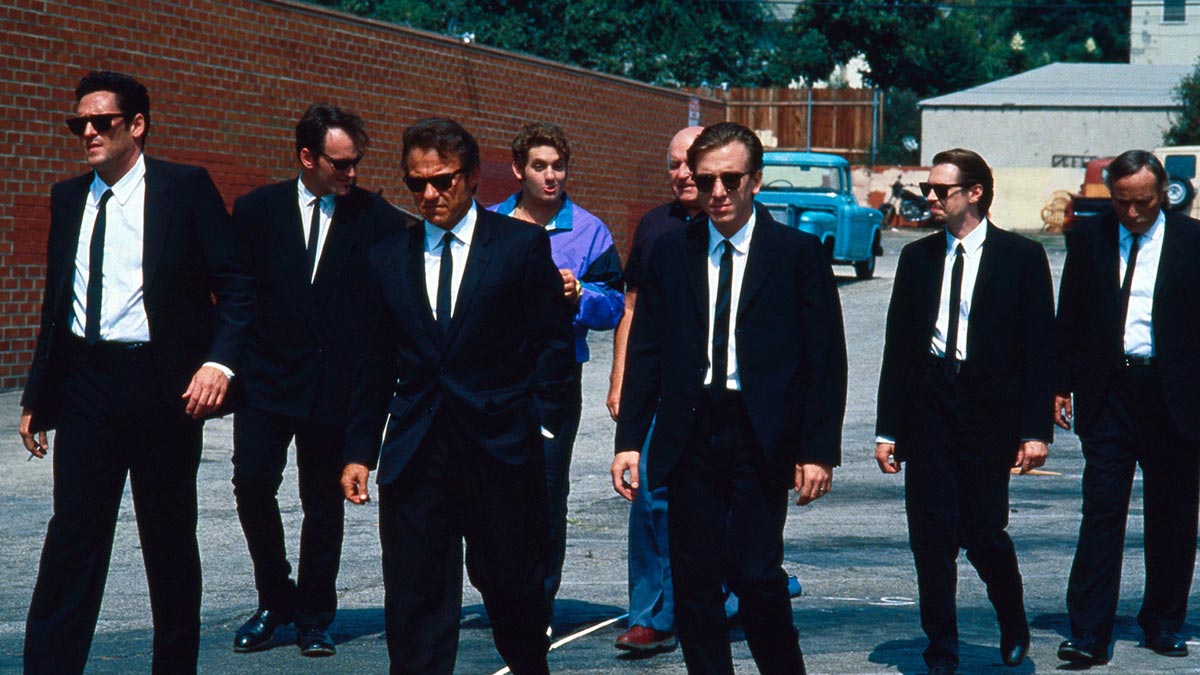
The joy of watching them is immediate, but most striking when taking in the famous credit sequence tuned to the George Baker Selection’s “Little Green Bag.” Announced by Steven Wright’s stoner-intoning, deadpan D.J. (K-Billy’s “Super Sounds of the 70’s” weekend”), I still get a rush of strange happiness looking at these men walking in slow motion in their black suits and sunglasses (with Penn and Tierney in regular clothes, an aesthetically pleasing choice, setting them apart). Tarantino (one of the best cinematic juke-boxes in movies) could have been on the nose and chosen songs that might “match” these black-suited hoods (however anyone is matched) but the ‘70s sounds moving along with these men in black suits and skinny ties (recalling Hong Kong cinema and the French New Wave) was/is the simultaneously perfect and unexpected touch. Part of the music’s power is proving that nearly everyone, even psychopaths, have a fondness for “Stuck in the Middle with You” when it pops up on the radio, making this alternate universe of criminals living right down on earth with us. It both glamorizes and grounds them.

Reservoir-dogs-06

And that Tarantino makes a point to create a D.J. choosing these songs, rather than simply scoring the movie with pop tunes, gives these guys the lucky weekend of the perfect playlist, like they just stumbled into their own exceptional soundtrack. And this furthers the picture’s timelessness and postmodernism (or, as some have called it, “post-post modernism”), where nostalgia is not necessarily nostalgia. History is embedded in a timeless world, a world that’s a veritable mix tape of past eras, styles, genres, stories and classic tracks – tracks we actually like, not just for the sake of wistfulness (though that’s there too). It might take some characters back to an earlier time (as when “The Night the Lights Went Out in Georgia” is discussed), but like classic literature or movies, enough time has passed that these songs are almost part of our DNA. And certainly the Reservoir Dogs soundtrack, at 25 years now, is for fans, woven into our own life. Some of us even might get emotional about it. 6a00d83451cb7469e201b7c8fdcaa1970b-800wi

Which brings me back to the strikingly sensitive, emotional Mr. White, holding onto Mr. Orange with such moving devotion. What are the constants in life? Our favorite books, songs and movies? Yes. They rarely let us down. But people? That’s a whole other messy, bloody area as we see with that instinct (or lack of) that Mr. White had for Mr. Orange. He’s shattered by the end.  Did he even listen to his gut? Or did he just read it wrong? Mr. White says to the grievously wounded Mr. Orange: “The gut is the most painful area a guy can get shot in. But it takes a long time to die from it.” But he’s also, touchingly and tragically, talking about himself. As Mr. Pink mocks, “I’m sure it was a beautiful scene.” It was. And 25 years later it still is.

From my piece for the New Beverly.

Blonde Venus, Blonde Genius

6a00d83451cb7469e201b8d286cf1c970c-800wi

“I wish I was someone else. Then I could stay with you here, forever.”

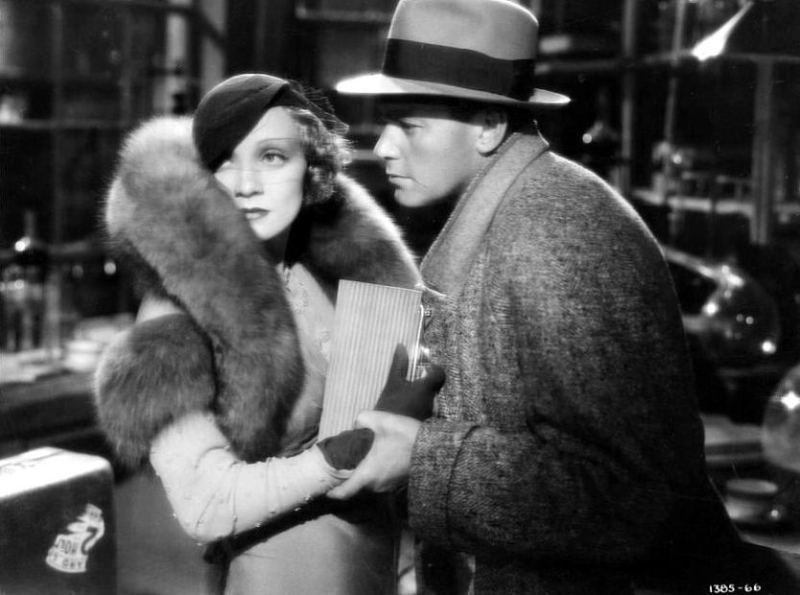
Radiation poisoning. That’s what Blonde Venus’s Herbert Marshall catches while submerged in work, hunched over beakers and microscopes and boiling cauldrons of early 1930s chemicals, toiling to manage a respectable middle class to poor life six years after he contracted that other near-incurable illness: love. Since marriage and scientific occupation, he’s grown increasingly toxic, so much that he’s going to die. Those in his life must make sacrifices to ensure his survival, specifically his radiant, loving wife who will also toil and suffer and risk infection. But she will be punished. He will be cured, medically speaking. Mentally, he’s a disaster.

Blonde-Venus-1-620x400

Radiation poisoning isn’t discussed in detail in Josef von Sternberg’s picture, just that Marshall knows he has it and that treatment is lengthy and expensive; requiring an overseas trip and time away from his family. But when researching the effects, I learned that if left untreated, extreme doses are fatal, leading to neurovascular symptoms in the brain. One such symptom is an altered level of consciousness with disturbances sounding almost pleasant – levels of arousal are rendered abnormal and sufferers often find themselves in a stuporous state; the afflicted can fall into a coma. I also learned that extreme levels of beta particles cause higher levels of radiation. Extreme levels of beta particles? Oh, no, men don’t want that. Beta. That could lead to … cuckolding. Nothing is presented so literally in the picture, beta particles and obtundation and ionizing and such, but a patriarchal pollutant spreads all over this fever dream, shoving its heroine (and that heroine, an iridescent Marlene Dietrich) towards punishment, heartbreak and squalor. Radiation poisoning is one thing, but cheating is quite another, no matter if it saves Herbert Marshall’s life. Society agrees. And, so, in Dietrich’s Blonde Venus world, most men now seem radioactive. She must run and hide; go underground, go undercover so it doesn’t catch up with her.

6a00d83451cb7469e201b8d286cecb970c-800wi

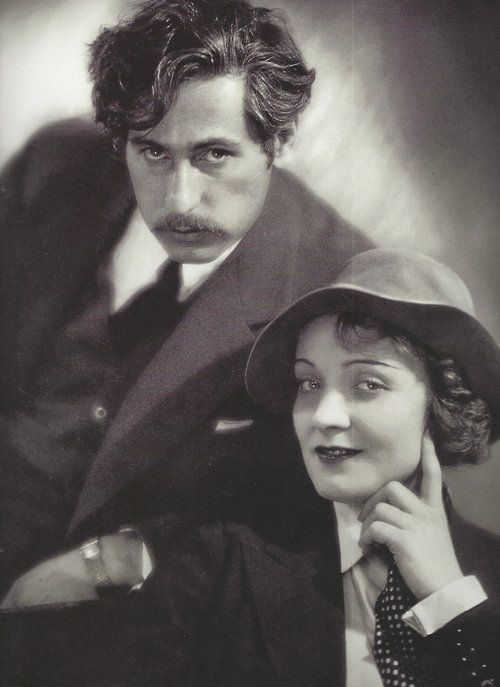
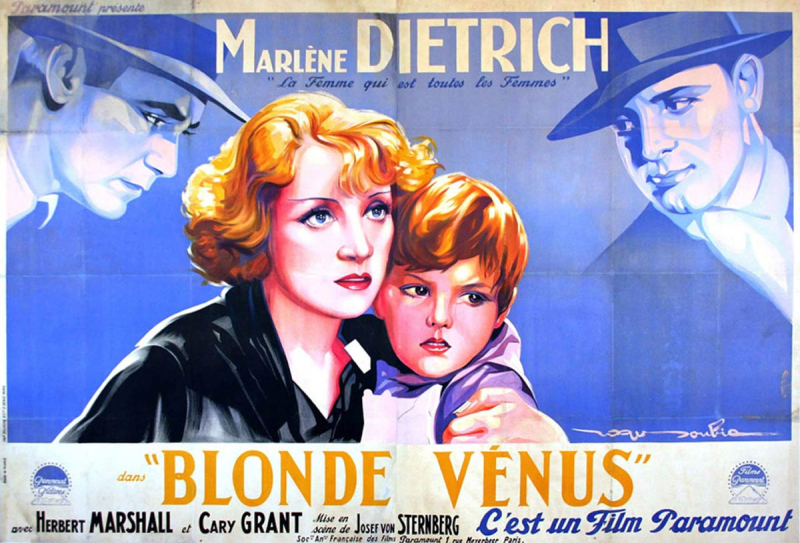
Blonde Venus was the fifth picture out of the seven Dietrich made with her artistic partner, the besotted/bullying genius von Sternberg and it’s largely considered inferior to others (some masterpieces) like The Blue Angel, Morocco, Dishonored, Shanghai Express, The Scarlett Empress and The Devil is a Woman. I’ve read descriptions like “dreary,” “maudlin,” “melodramatic,” “slack,” and while I understand some issues (chiefly, that the original script was altered three times to satisfy the censoring MPPDA – in previous drafts Dietrich embraced her affair and prostitution, in another she loved both her husband and her lover), I revere the picture, regardless. But even Sternberg didn’t like it, not surprising given the finger-wagging headache attached to the production (the film was co-written by Jules Furthman and S. K. Lauren). In fact, he claims he barely remembered the “opus” though, considering how reportedly personal the film’s subject matter is (even if modified), I don’t believe him for one second. Perhaps he wanted to forget it. Nevertheless, this is how he described the dreamy picture in his autobiography, “Fun In A Chinese Laundry”:

Von-sternberg-dietrich

“I became more and more partial to fancy as I proceeded to make a fifth film with my fair lady in another vehicle deemed unworthy of her superb talents. One writer stated it thus: ‘It is as if the Delphic Oracle had stepped down from her pedestal to give her opinion of the weather.’ This film was Blonde Venus, also based on a story of mine written swiftly to provide something other than the sob stories that were being submitted. There is little to be said of this film, except that I tried to leave the company before making it. But Miss Dietrich also left, refusing to work with anyone else, but I was forced to return, as we were both under contract. I remember this opus very vaguely, but recalled some of it years later while driving through France with a charming companion, who, in a moment of confidence, after we had stopped in Rouen for goose and Beaujolais, leaned toward me to say, ‘You know, it took me five years to understand what you said to me when I worked in your film.’ This was Cary Grant, whom I had rescued from the status as one of Mae West’s foils to launch him on his stellar career. After all, five years is not too long a time to understand what someone else is trying to impart.”

Five years is about the same length of time Helen Faraday (Dietrich) has been married to physicist Edward ‘Ned’ (Marshall), whom she met in a most pre-code scintillating way – skinny-dipping. The picture opens in Germany with the hallucinatory image (shot by the brilliant Bert Glennon) of Dietrich swimming in the raw with a bevy of water beauties while science-minded Ned and students tramp through nature, stumbling across this lovely tableau, not so science-minded anymore. Ned and company peep, Helen tells them to go away, he asks her out, and then he soon learns she’s a cabaret singer. Naturally, he’s smitten. She’s Marlene Dietrich. But things change over those years, a fact underscored in an almost humorous transition shot from past lovely legs swaying in a pond, to hausfrau Helen bathing her beloved child, Johnny (Dickie Moore), splashing in the bathtub. She’s now a regular mom (as regular as she could ever look), tending to domestic child rearing while her husband is informing a doctor about his dreaded overdose of radium. She married for love, clearly. Ned’s not a wealthy man and he can’t afford his $1,500 cure, necessitating his wife return to the stage to earn money for him. He’s torn-up about it and hates seeing his strong, stunning wife out there working. He also feels diminished as a man. At this point you feel sorry for Ned (as elegantly-voiced as Herbert Marshall is, he seems rather dull next to his luminous wife) but you still want to reach into the movie and shake him – she loves you for heaven’s sake!And her powerful allure is why he fell in love with her in the first place. But that Helen seems forever ago and once made his, Helen must (in many a man’s eyes), be tamed. And this is 1932. Married women of physicists generally did not return to cabaret singing.

6a00d83451cb7469e201bb099faed7970d-800wi

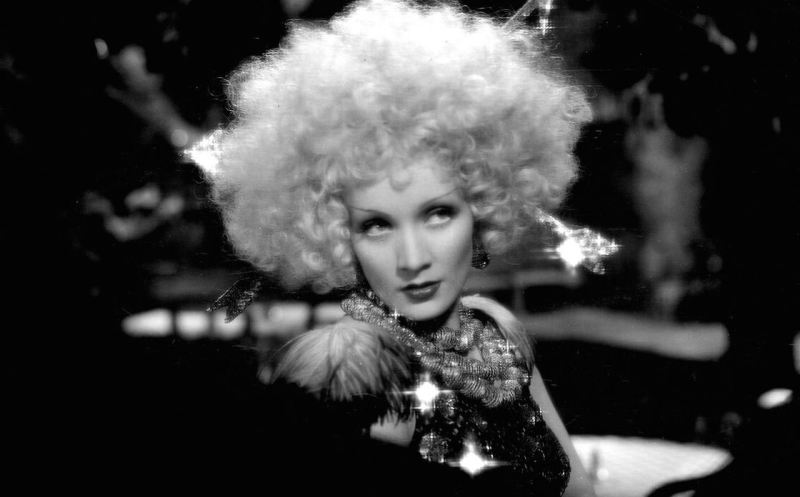
She’s given the once over with an agent and a club owner: “Let me see your legs.” She pulls up her skirt and asks, “Is that enough?” His answer: “For the time being.” The burly owner (Robert Emmett O’Connor) anoints her as Blonde Venus. But this Venus does not emerge from the half shell. Not to be trite or expected or surpassed in surrealistic stylishness, Marlene Venus emerges from a… gorilla costume. It’s the movie’s most gorgeously strange moment of highly suggestive erotic exoticism – Marlene removing her gorilla head, her blonde-haloed face glowing (perfectly) in von Sternberg’s baroque frames (and her knowledge of lighting as well), she then grabs a golden Afro wig, places it on her head and sings “Hot Voodoo.” Describing this moment requires two words you don’t often see together often enough but should: blonde genius.

6a00d83451cb7469e201b7c8fc9309970b-800wi

I’d follow a cave man right into his cave.
That beat gives me a wicked sensation
My conscious wants to take a vacation!
Got voodoo, head to toes,
Hot voodoo, burn my clothes…

I want to start dancing, just wearing a smile.
Hot voodoo, I’m aflame,
I’m really not to blame,
That African tempo is meaner than mean.
Hot voodoo make me brave!

I want to misbehave
I’m beginning to feel like an African queen
Those drums bring up the heaven inside me
I need some great big angel to guide me

Hot voodoo, makes me wild
Oh, fireman, save this child
I going to blazes
I want to be bad!

Does she want to be bad? The movie does not think she is bad, but that she is human. And so when the absurdly handsome, wealthy playboy Nick Townsend (Cary Grant… Cary Grant, for emphasis), falls for her and writes her a check for $300, she takes it. That is enough money for Ned to leave for treatment, but while he’s out of the country, successfully sucking the radium out of his body (however they do it), she moves in with Nick (with a happy Johnny in tow). She becomes a kept woman able to pay for her husband’s medical expenses while genuinely enjoying herself with a benefactor who does not look like Charles Coburn – he looks like Cary Grant. We forgive her. And she might be in love with him. He’s in love with her, but since her husband’s returning, she must do the right thing and stay with Ned. Nick leaves the country to properly forget about her. A lot happens to her after he leaves. Of course he won’t forget about her.

6a00d83451cb7469e201bb099faee9970d-800wi

Here’s the first start of her journey into blonde-dishonor: Ned comes home before Helen is back, cured, worried, wondering where his wife is. She’s honest and admits the affair. She’s honest. He doesn’t take it well and, at this point, Ned becomes a dark figure of rage. He’s even constantly shot with a shadow over his face, the brim of his hat low, his visage so menacing that his cuckolded anger has turned to a physical manifestation of black bile. (Even Steve McQueen took it better after Ali MacGraw slept with Ben Johnson to help him out, her husband, in Sam Peckinpah’s The Getaway – he smacked her a few times but he stayed with her) He brands her a whore and threatens to take Johnny from her. So she runs away with Johnny. And in a series of lovely to sad sequences, Helen and Johnny survive on the lam, Helen eventually resorting to tricks. In one especially potent scene, a sleazy, cigar-chomping restaurant owner works out a deal with Helen who has no money to pay for dinner (she offers to do dishes). He says, lasciviously: “You gonna wash my dishes? Go back and see the cook.” We know what happens next.

6a00d83451cb7469e201bb099faf09970d-800wi

Time and emotional exhaustion run out for Helen when a detective (Sidney Toler) catches up with her and Johnny, living in an artfully created dump with chickens roaming around (a shot of Marlene with a pigeon on her shoulder is so beautiful you almost can’t believe how beautiful it is). She can’t stand Johnny to live this life anymore and agrees to return him to Ned, which is heartbreaking in its sensibility. Why must life be like this? Why must her husband torture her so? In an ardently acted scene, Helen sits silent, head down as Ned picks up Johnny. We think for a moment, perhaps Ned will be kind to Helen. No. He gives her another piece of his mind, and pays her back the $1,500. He considers it filthy. Helen later gets drunk, stumbling around in degradation, and hands that $1,500 to a broken down suicidal woman in a flophouse. It’s the act of a generous woman and the act of a masochistic woman. Helen knows that old woman can’t make as much on her back, but Helen can. And will. And as she does, she scratches her way back up, becoming the toast of Paris. Through gritty determination and a hardening of her heart, she’s a sensation, singing in white tux and top hat, the transformation complete. She is in control of her life, finally. Dressed androgynously, she saunters around her dressing room in charge. No man will rule her life again. And love? Never. She’s not catching that illness again. Not even for her son.

BlondeVenus27

Well, no not so fast. She can’t cure her love for her son. There’s no radiation-like treatment that can ever scrub out the pain in one’s heart – forget her toxic husband. It’s her son. She agrees to marry millionaire Nick who takes her back to New York to see Johnny one more time. A surly Ned finally allows her visit after Nick insults his pride with money. But that’s why – he shamed him. And then … that ending. In which once radioactive, beta-afflicted Ned softens to the bonding of his wife and son. Is this where the movie becomes silly? That she gives it all up to live happily ever after with a man who has been a tyrant ever since her one indiscretion? I don’t think so. But this is what many don’t buy, as if one needs to “buy” such complex emotions. But here are the questions: Why would she stay with Ned? Why should we be happy she stays with Ned when she has Cary Grant? Why does Ned change his mind? My answer in the form of a question: Has anyone been in a complicated, guilt-ridden, toxic relationship?  Because not only do I find the ending touching (for the love of her son, and Dickie Moore is fantastic, never cloying or cutesy or affected), I find it sad and not at all unrealistic (whatever realism means). Who knows if Ned and Helen will be happy? Ned has taken everyone down with his sickness, extreme beta to extreme alpha – he’s toxic beyond radiation, but he, too, is human. Perhaps there is hope for him? Perhaps not. The future could be grim.

6a00d83451cb7469e201b8d286cf3d970c-800wi

To me, the picture works poetically, an allegory, an exquisite, concentrated reverie of suffering womanhood – what one must endure to remain free and sexual, artistic and loving, and a loving mother. But also a tough woman with no child, a woman who dons a top hat and playfully caresses chorines. Dietrich and von Sternberg’s Helen represents all types of woman in one woman – women do live with such various sides to themselves. And society doesn’t want this full woman (and yet, so many truly do, they’re just to afraid to accept her). This is a woman who, at one point said, “I wish I could be someone else.” And then she became, not someone else, but different versions of female representation: Vixen, wife, mother, whore, self-destructor, self-reliant. She’s also an artist, which her husband will likely never understand (Sternberg did). But perhaps, with all of this history, this full-fledged woman with a profound past, with talent and maternal love, it will take Ned and Helen another five to six years of marriage to sort through this. And either stay or go. As Sternberg said: “Five years is not too long a time to understand what someone else is trying to impart.”

Originally published at the New Beverly

Kill Or Be Killed # 9: Mikey and Nicky

6a00d83451cb7469e201b8d282caa4970c-800wi

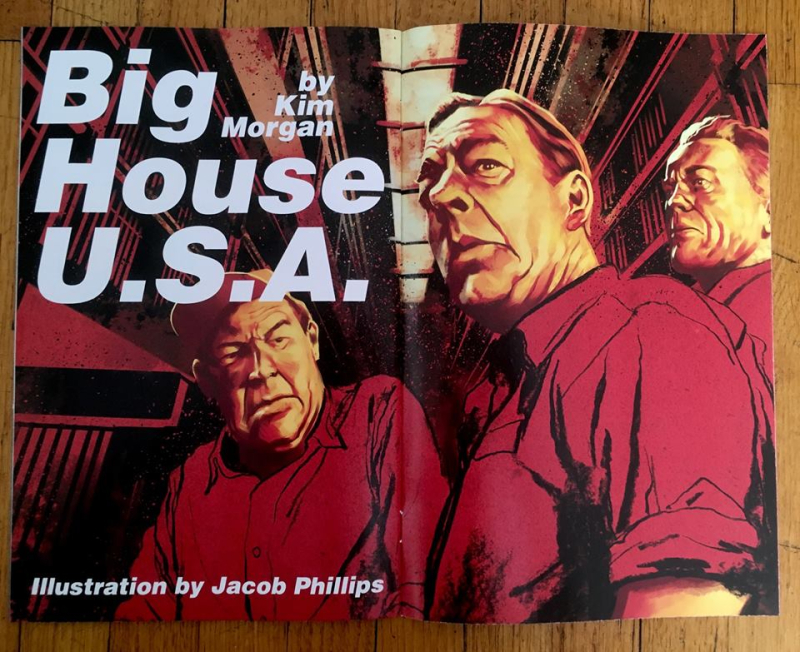
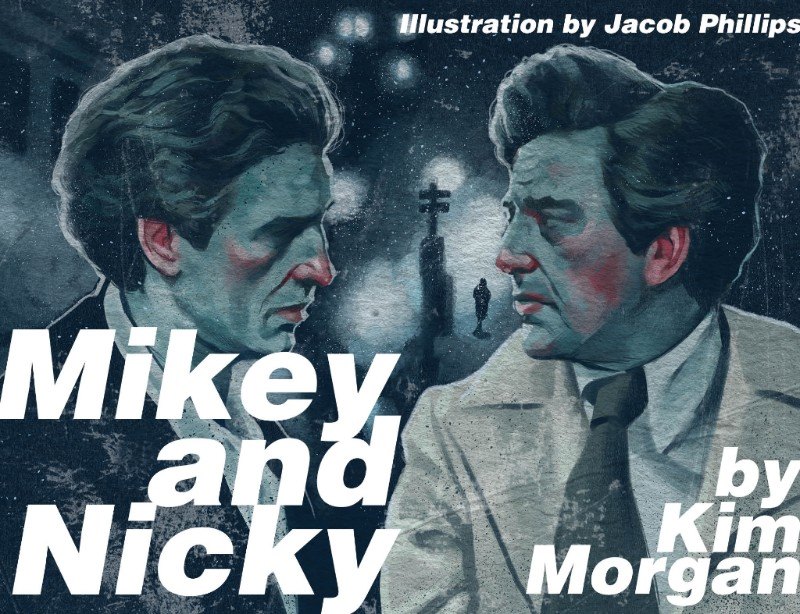
Heads up — issue #9 of Ed Brubaker's Kill Or Be Killed is coming out May 31. In this one, I dig into a favorite, Elaine May's Mikey and Nicky (with art by Jacob Phillips).

One graph from my piece:

As the evening wears on and these two talk, fight, hit each other and smack a troubled, sensitive woman, the friends reveal more and more about themselves and your emotions shift all over the place. Whatever alliances you had, whatever charm you’ve felt from these two guys, all that has been dragged around and sullied, dirtied up like that door in Nicky’s dumpy motel room. And May shoots it that way, never allowing a glamorous moment to enter the frame. You can practically smell the bars they’re drinking in. And yet, you don’t want to get out of this movie, you don’t want to unlock the door and make a run for it. You like being stuck with these two small-timers, you’re fascinated and drawn to hem, and you wonder where this is all gonna end … who is going to make it through the night?

Pre-order soon here

My Favorite Demme: Something Wild

6a00d83451cb7469e201b7c8f20f79970b-800wi
Jonathan Demme has passed away. To honor his life and his musical, deeply humanistic films, in love with the odd and the beautiful, and the oddly beautiful, the art of everyday people who aren't so everyday, and the depth and complications of love —  I'm posting my New Beverly piece on one of the great films of the 1980's — Something Wild. Rest in peace, Jonathan Demme.

“I’m glad to see you finally made it to the suburbs, bitch!”

Love can be traumatizing. It’s also exciting, unsure, bizarre, freeing and imprisoning (at times, somehow, simultaneously), and when it starts – that delicate, vulnerable starting point – there are messy shifts in mood that mirror a kind of mental illness. It might even be a mental illness, an abnormal interruption of serotonin levels causing mania, anxiety, depression and obsessive compulsive behavior. Of course that sounds more troublingly clinical than romantic, and people really don’t like viewing themselves as mentally unstable lunatics while in the throes of lovesickness (this is the socially acceptable sickness, one tells oneself), but if you read British clinical psychologist Frank Tallis (who wrote an entire book about it), you might be convinced of its psychopathology: “Love seems to have the power to destabilize people emotionally. Particularly in vulnerable individuals, it can be very difficult to cope… Some people are referred to me because of an admission to depression or anxiety disorder, but in fact, once we’d explored issues around their problems, it was clear they were just in love.”

6a00d83451cb7469e201b7c8f20f06970b-800wi

With that kind of dysfunctional amore in mind (isn’t it always at least a bit dysfunctional?), Jonathan Demme’s moody, transgressive, genre-bending, weirdly romantic (and unromantic) Something Wild isn’t such a strange hybrid. For a love story, it mirrors what often happens when people do fall for another – it’s destabilizing and terrifying. A movie that upsets some viewers with its stark shift in tone – from winsome, sexy, romantic comedy to violent, obsessive thriller – it stares directly in the faces of its male protagonists – one, a dorky stuffed shirt type, the other, a charming, murderous criminal, and wonders if they are at all so very different. And in an especially powerful scene utilizing the Demme close-up, it wonders if anyone is at all so very different.

Something-wild-1-1

This question, through shifts of persona and the crazy act of falling in and reclaiming love, makes the character’s desire to embark on a quest, whether it be a journey through the past (to quote Neil Young), a new identity or the liberating adventure of a road trip, all the more poignant and unsettling. And relatable. It begins when the buttoned-up, newly appointed vice president of a Wall Street firm, Charles Driggs (Jeff Daniels) commits a sneaky criminal act for his own personal thrill – he pockets a check in a Manhattan diner and walks out without paying. Spying him is the pretty Pandora’s Box of a woman, appropriately named Lulu (Melanie Griffith) sporting a Louise-Brooks-bobbed wig and African jewelry – this is not the type typically drawn to Charles. The dark-haired stranger follows him outside and confronts his “closet” rebelliousness of which he protests – he made a mistake! He’s already lying. Once he learns that she doesn’t work there and that she doesn’t actually care that he lifted his lunch (she’s, in fact, turned on by it), she offers to drive him to work. Work doesn’t happen. Instead she takes him to a seedy motel room in Jersey where they have handcuffed sex to the tune of Fabulous Five’s “Ooh! Waah!” Natural to all uptight men confronted with the free-spirited, screwy dame going after what she wants (in movies), he’s reticent at first, but succumbs, which isn’t that tough.  After all, sex is involved and Demme does not shy away from showing the eroticism of this encounter, allowing Lulu to enjoy herself and take control. You also sense something more problematic going on with this woman. Maybe she has a drinking problem? What is she evading?

6a00d83451cb7469e201bb09952d06970d-800wi

She has other aims too – thinking Charlie (he’s now anointed Charlie) is a square (but rebellious enough to ditch a check), and a decent-looking, upstanding fellow, she convinces him to join her on a road trip to her Pennsylvanian hometown. It’s her ten-year high school reunion and she needs a fake husband to tag along. She also needs to show him off to her sweet mother, Peaches, who, in a charmingly affectionate scene, tells Charlie she knows Lulu (now going by her real name, Audrey) is pretending. She says nothing to Audrey about it; Peaches accepts her daughter’s impersonation of a “normal life” likely touched by the need to please her mama. This is the first tonal shift in the picture and another alteration  (or doubling) of what men desire – going from the fantasy of the erotic, madcap siren to the toned-down, sweet, high school vision – the lovely woman, the kind Charlie could take home to his mother.  From the so-called whore to the proverbial Madonna, she cleans up well. But why on earth this woman cares about her high school reunion shifts her to a place decidedly more squaresville than the viewer originally imagined. She saunters into the ballooned, name-tag wearing event as nearly an all-American girl, albeit the wild one – the blonde hair, the pretty white dress, the white shoes.  But even before the dark force of romance past shows up, there’s an edge to this presentation, enough where, you can almost hear the song Demme used so powerfully in a film he hadn’t made yet, The Silence of the Lambs – Tom Petty’s wistful, mysteriously spectral “American Girl.” Here it’s The Feelies (fantastic) singing the mournful, menacing “Loveless Love,” and the guy remembering that girl thinking, “there was a little more to life somewhere else,” turns out to be Ray Liotta.

Something-wild-3

This is when the movie is akin to Bringing Up Baby as interrupted by Born to Kill, with an obsessed, jealous Lawrence Tierney pistol-whipping Cary Grant and kidnapping Katharine Hepburn. Can you imagine that? Demme did. The kooky, sexy girl isn’t so much charmingly incorrigible any more, and she instead brings with her menacing, abusive baggage. There’s now a reason why she’s drinking so much. And being the estranged wife of a criminal, she might even be complicit with this psycho (what did they do together in the good old days?). And yet, Liotta’s Ray, all blue-eyed and charming with his rough trade handsomeness, freshly sprung from prison, isn’t immediately a threat to Charlie. Charlie likes him, in fact. Charlie’s so stupidly loved-up at this moment, he’s both naïve and not paying attention; he’s not even paying attention to Audrey’s nervousness, so self-absorbed he is while indulging this new love-struck feeling. He’s also caught up in the masculine energy of Ray.

Through Demme’s direction (and his brilliant cinematographer, Tak Fujimoto), Ray’s entrance is something to behold – the camera moving in on Liotta’s smiling, ominous face, we know this guy is chaos. We’re also positively struck by Liotta’s charisma – it hits the viewer so much that they feel a dark thrill, even a kind of love at first sight. Liotta is scarily sexy in this movie and Demme knows it, aptly understanding that being drawn in by Ray is going to become something more complicated than merely rooting against a stock villain. We even feel for Ray at times, in spite of how inexcusable his actions are. After all, he’s in love too. Even worse, he’s still in love, and she doesn’t love him anymore. Thinking back to love as mental illness, that might make you crazy. Add prison time to unrequited emotions, and you’ll be even more incurably “romantic.”

6a00d83451cb7469e201b7c8f20f90970b-800wi

Intelligently allowing Ray to partially take over the picture, Demme (and screenwriter E. Max Frye) raise the stakes, making us question how we feel about this smiling jailbird. He’s so fit and so focused and so fucking damaged. And yet, he’s appealing. When Demme has Ray turn so shockingly violent (it’s not cute) he becomes some kind of nightmare delirium of jealousy and fear – namely Charlie’s. As if, when a woman talks about her most recent ex, the bad boy ex, and her new boyfriend wonders, worried, what their relationship was like. How will he measure up? In this movie, that guy appears, not only taking her away, but also taking her away with charm, brutality and mockery. Ray tests Charlie’s masculinity so much, but with such a powerful combination of desperation and violent angst, that the viewer, and perhaps Ray, questions what being typically masculine means in the first place (a question Demme studies in other films, and directly after this one with Matthew Modine’s heroic, but quirky straight arrow F.B.I. agent in Married to the Mob).

6a00d83451cb7469e201bb09952da1970d-800wi

And yet, Charlie takes to him. You understand why. He feels stimulated being around the animal magnetism of Ray. At first. And then, again, the story shifts, the mood gets darker, and boy meets girl becomes boy meets boy, transforming into two boys pursuing one girl, albeit with different means. Or are they so different? They’re both, in a fashion, and in their own kind of feverish love, chasing/casing Lulu. Charlie is, of course, saving her, and from obvious threat, but what is he releasing her from, really? And does she have much choice in the matter? Does she even really love Charlie?

Lulu WScreen Something Wild

Perhaps it wouldn’t have gone so terribly awry had Audrey done something she shouldn’t have to do and simply told Ray she still loved him – as in, lied – but he seems like the one person she can’t lie to. Charlie’s fibbing about his wife and kids (revealed via Ray) and that lie pisses off Audrey enough that she resigns herself to Ray’s entrapment. The kinky S&M she brought to Charlie is no longer role-playing, it’s real, and the veneer of Charlie’s normalcy and of Lulu’s uninhibited allure is fully lifted (when rewatching the picture, we’re observed it slowly revealing itself from the beginning, however). How we present ourselves when falling in love, what we want that other person to see (and notsee) and often, what we choose to ignore, undergoes a transformation here, with Charlie and Lulu gazing at each other in the exposing bare light bulb glow of Ray. Gee, is this movie any fun? Yes, it is.

What’s so wonderful about the picture (among other things) is that while skating on the edge of a potentially joyless thriller, it never becomes one, even as it upsets you.  It’s still fun and, importantly, it’s still moving. In Demme’s view of this particular corner of America, there’s life and joy bursting out of every frame. With the picture’s music (49 songs) providing such a singular, superb soundtrack to these lives, people serve not just as scenery but as distinct individuals, sometimes poignant, sometimes musical. Among many stand-out, small performances, there’s a group of rappers outside of a gas station market, an inquisitive girl checking in on Charlie as he sits in his car, and a lovely moment in which Charlie engages with a clerk named Nelson (Steve Scales) who helps him pick out attire from the tacky tourist gear. It’s delightful, how long Demme allows this scene to go on and how much he, Daniels and Scales underplay what could have been a rote “wacky” incident. Charlie is changing in the store (appropriately in a “Virginia Is For Lovers” tee shirt) and Nelson is not at all perturbed by this, instead he’s encouraging, even casually life affirming. When Charlie asks Nelson if he should buy new glasses (he’s wearing Lulu’s colorful kiddie-looking specs) Nelson says, “Nah, keep ’em. You’re beautiful.” The world is not such a shitty place after all.

Within that strange, disarming world, cameos like John Sayles as a motorcycle cop, Demme favorite Charles Napier as an angry cook and John Waters as a used car salesmen fit right into the environment without any kind of showy strain. I especially love a small moment when, after Charlie has rescued Audrey from Ray, Ray sits angrily by a diner window trying to figure out what to do. An extra passes by outside, saluting him with a little wave.  Just a little wave. It’s a humorous and endearing punctuation mark. Soon after, in that same window, a young woman Ray’s already flirted with at a gift shop, cheerily taps on the glass, and seeing his way out, Ray exclaims “Oh, thank you lord!’” He kisses the window and then manically laughs to himself. You kind of love Ray at that moment – just for being so damn charming and resourceful. And amused. It’s infectious.

6a00d83451cb7469e201bb09952dca970d-800wi

Which is why Ray’s final moments wind up so strangely touching. He’s not without his own vulnerabilities; we’re not hoping he dies. We’re not sure what we’re hoping for. As mentioned earlier, Demme employs his now famous close-up shot; the character’s eyes full of sadness and regret, staring at each other, and we look directly at them. In some ways the two men merge at this moment, provoking complex feelings of identification, fear and empathy. This is not a happy ending. Charlie will never be the same. But who was he in the first place? And who is Lulu? Not long before this moment, Lulu/Audrey asks Charlie: “What are you gonna do now that you’ve seen how the other half lives?” He says, “The other half?” She answers: “The other half of you.” Good question.


Kill Or Be Killed: Murder By Contract

6a00d83451cb7469e201b8d27bf9a0970c-800wi
"The risk is high but so is the profit. I wasn’t born this way. I trained myself. I eliminate personal feeling. I feel hot. I feel cold. I get sleepy and I get hungry.” — Claude (Vince Edwards)

My next piece for Ed Brubaker's issue 8 of "Kill Or Be Killed" with art by the great Sean Phillips: Irving Lerner's spare masterpiece, Murder By Contract starring Vince Edwards. Order a copy!

Out April 26, order here.