Blue Windows Behind The Stars: Hardcore

6a00d83451cb7469e201b7c8fdf04d970b-800wi

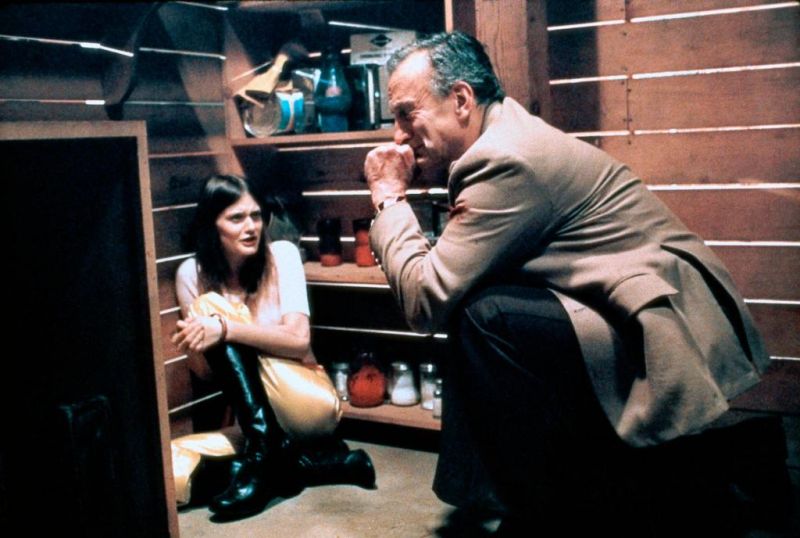
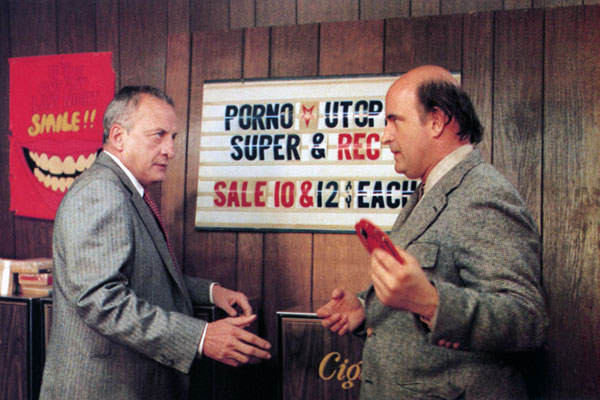
Near the end of Paul Schrader’s Hardcore, an incandescently angry George C. Scott busts through thin, pasteboard walls with such focus and furious dedication that it looks like the kind of perverse, surrealistic nightmare that a wrathful Christian would have. It’s also strangely beautiful. He’s in the House of Bondage and Scott’s Calvinist Jake Van Dorn is chasing after a tight-jeaned, feathered-haired pornographer named Tod (Gary Rand Graham). The younger man breaks open the walls first with Jake raging and rampaging behind him, tumbling into spaces, pre or post-coitus. As Tod pushes his youthful, fit body through each wall, the older and bigger Jake bashes on along right after him, smashing through every partition and decimating the private sex rooms in this supposedly sturdy bondage lair. Jake tumbles into the rooms awash in the glow of each space’s different colored lights – green to blue to red – and this has to annoy him. He’s already proven in an earlier scene back in Grand Rapids, Michigan, before he descended into red light hell searching for his runaway daughter, that he’s particular about colors. He cleverly and with an obsessive need for control manipulates his female display designer out of a certain shade of blue: “Don’t you think it’s a little too bright?” he asks, rhetorically. When she asks if he wants her to tone it down, he pulls reverse psychology on her and suggests a big stripe across the back wall. “No, that would be much too overpowering,” she says. He agrees with what he already agrees with. He asks what shade of blue it is – “Pavonine” she answers. Pavonine? Pavonine is  a shade resembling a peacock. We now understand why he’s so put off by this hue. Or maybe he secretly loves it. That peacock blue has got to go.

Cscotthardcore

So here is Jake pursuing Tod, a cock of the walk himself, after taking in excessive plumage during his underworld journey – more than he’s seen in his lifetime, including his own daughter in a hardcore 8mm porno called “Slave of Love.” Jake’s busting through walls so intensely we’re worried the entire structure will crash down on him. He can’t lose the chase. Though we almost fear watching what will happen to the man on the other end of Jake’s ire, no matter how sleazy and shitty that man is, we want Jake to catch up to him and knock him around. Because . . . he’s gotten this far. We’re yearning for his brutal release and the movie knows we yearn for this. This space, this delicately walled space hosting all kinds of pleasure and pain, serves those seeking bondage, humiliation, fear – things that require a safe word. Watching fury-filled Jake crash through each wall makes you wonder how many customers would be aroused by this spectacle. Or would that safe word be screamed out the moment a client saw Jake’s furious, pulsating face? We’ve already seen the biblically named dungeon doms, Faith, Hope and Charity, panic and scream in their black lingerie.

6a00d83451cb7469e201b8d28826fa970c-800wi

Fittingly, when Jake and Tod spill out onto the San Francisco street and into the outside real world – punching and rolling down a hilled sidewalk with garbage flying everywhere – Jack Nitzsche’s mind-bending, brilliant score is drowned by the sounds of celluloid flickering through a projector. The other times we’ve heard that sound (that I can recall) are first when Jake is tortured through his daughter’s porn film, enduring a father’s worst nightmare in that privately rented theater – famously and heartbreakingly yelling, “Turn it off. Turn it off. Turn it off!” The next time is when he watches the black & white snuff film starring his little girl’s boyfriend, the villainous Ratan (Marc Alaimo), in which a young woman is killed. On the street, the sound spikes the picture without a film showing, an interesting auditory decision. Is Jake so possessed by what he’s seen that he’s now hearing projectors in his head? Or are we so absorbed in this violence that the flickering sounds natural? Am I actually hearing this? Have I lost my mind? Jake finally forces Tod to submit by bashing his face into a pole.

6a00e5523026f58834010536bdc111970c-800wi

It’s a powerfully concentrated, vivid sequence that intertwines myriad issues Scott’s God-fearing, distraught daddy is wrestling with, sometimes literally, as he shoves, shakes, punches and stomps his way around the porno world. If he’s not a physical man when it comes to sex, he’s presumably got no problem (enough to stop anyway) about expressing his body through violence, unleashing his wrath when the blood hits his brain. If his blood is hitting anywhere else, he shuts that shit down and sublimates carnality through brutality, its own kind of intercourse. The wrath of God is holy and justified. Rarely is a human’s wrath holy (justified is another question), but Jake fixes his fury on sinners like a divine power, impatient to wait for God. Romans 12:19: “Beloved, never avenge yourselves, but leave it to the wrath of God, for it is written, ‘Vengeance is mine, I will repay, says the Lord.’’ Jake snarls: “I’m not gonna let this Tod slip through my hands! Now where is he?” The vulnerable young porn actress and booth girl, Niki (a wonderful Season Hubley) who is helping him, the one who just ditched her pimp and is latching onto Jake with a veneer of streetwise toughness, responds with worry: “But then you’ll forget about me!” His answer is brutal – he smacks Niki across the face and holds a clenched fist over her while grabbing her by the throat – and on a bed. He then kisses her on the forehead and reassures her. Why some critics think it unrealistic that Jake isn’t tempted by sex within this milieu shows that, perhaps, they don’t understand how drunk on violence this guy really is and how intimate that brutality feels. Jake’s spraying his anger all over the fucking place.

6a00d83451cb7469e201b7c8fdf0ba970b-800wi

In fact, the Midwestern Christian square, who really isn’t square at all, is nearly becoming Niki’s new pimp (based on their power dynamic) and seems on the precipice of violence overflowing into sexual pleasure. But not quite yet. He’s about to find his daughter and he’ll leave Niki behind. And so, maybe he’ll close that box. Or not. But, now, there are too many colors in this red-light-land, ones alien to the snow-covered Calvinist world he came from, colors he cannot control, and his rage bursts not merely for those harming his daughter, but for those he’s likely harmed him before his descent. Maybe himself? Where is this violence coming from beyond his fixed fury of finding his girl? Why did his wife leave him? Why does his daughter hate him enough to take off with, not just a pornographer, but a guy who makes snuff films? It’s an extraordinary story and works like some paranoid fever dream and, yet, thanks to Scott and Hubley (and Peter Boyle and Dick Sargent) it feels rooted in an odd, familiar reality. We feel like we know or have known a few of these people.

But how well do we know Jake? He’s a complicated mystery and both Scott and Schrader intelligently keep him that way. Even as he discusses his ideology via the five points of Calvinism, he harbors some deep deep muck inside. There’s a lot more to Jake (and intuitive Niki figures this out – that his wife didn’t die, as he said she did, she instead bailed on him). And so, his violence, his discretion and his faith in this faithless world are fascinating and almost exotic when compared to his current surroundings. Explaining those points a.k.a TULIP (“T, for total depravity  . . .” etc.) he’s strangely charming – he smiles and delights in his faith, but he’s unwavering and strong; he’s even attractive as this unusual, virile Calvinist and perhaps attractive to Niki, sexually or paternally – or both. Only in his last scene do we hear him apologize and confess culpability to his daughter’s fleeing and we’re not even sure how we feel about that.

2317061 1ebr0NNurHg7pyGaqTGvKFi1mYu8tK50F3X2zZsiWwC5vlLma+InCuf+WGyZGONpFG54BcGDKzs2m9EcdXUIwQ==

What helps make the film so unforgettable is how much we wrestle with our feelings – ethical, sexual, religious if we’re religious or not and, just, how we feel about our hero. We don’t buy their happy ending (and Schrader himself wanted a different ending – his original found the daughter dying in a car accident unrelated to the porn world, a terrifically downbeat ending that can’t even blame pornography on her death). And yet, we don’t have to buy it. I feel like it works even with the weird, tacked on ending because questions linger as father and daughter walk back to their car, ready to return to downhome Grand Rapids. Like The Searchers’ Ethan Edwards (it’s no secret this film was inspired by Ford’s classic), he’s likely going to wander through his life lonely and broken. There’s no way he’ll return from this experience normal and she won’t either (Kristin, played by Ilah Davis) and he wasn’t normal to begin with. Whatever normal means.

6a00d83451cb7469e201b7c8fdf0a8970b-800wi

We see glimpses of his lonely “normalcy” at the beginning of the picture during which Jake spends Christmas with his Calvinist friends and family. He has his daughter there but no wife and he seems like he’s been keeping it together for . . . how long? We don’t know. There’s something sad about this man. These scenes leading up to his daughter running off (or being kidnapped) during a church trip to California are fascinating, subtly funny and poignant. Schrader (who based this on his own background in Calvinism and his father, and set the movie in his own hometown, Grand Rapids) is taking their faith seriously; he’s not mocking it. When Jake and his brother-in-law, Wes (Sargent) hire Boyle’s boastful sleazy private detective, Mast, their innocence or, perhaps, lack of connection to the world he comes from is disarmingly touching – they sit with him nervously, hoping he tracks down the teenage girl and your heart breaks a little that they even have to be there. When Jake has taken matters into his own hands, going in deep to locate his daughter, Wes comes to see him in a divey Los Angeles motel, seriously concerned. A stony Jake hugs him and tells him to leave him alone. The furtiveness of Wes, and that Jake knows he cares about him is moving and sweet and unexpected – a balm he cannot handle. He’s got to stay, well, hard.

18948351.jpg-r_640_600-b_1_D6D6D6-f_jpg-q_x-xxyxx

When Wes re-hires Mast (Jake fired him in a humorous scene in which Mast was caught indulging with a young woman: “Get out!” Jake orders. Mast protests: “But this is my apartment!”), you again feel for Wes. Even if you’re not anti-pornography (and I’m not, but one can see the complexity of one’s own feelings towards the life and what it can do to people), you want poor Wes to get the hell out of that damn place and go back home. Some people aren’t made for this. Fueled by righteous anger and something probably he even can’t even figure out, Jake, in his own way, is. You’re not sure while watching Jake fake-audition actors, disguised in a wig and moustache, clad in swinger-looking clothes and a gold chain, you can’t help but laugh at how much he’s trying to fit in. “I’m sorry Mr. Blaque, I’m sure you’re very good” he says professionally and kindly to an African-American actor (Hal Williams) who is yelling at him for being a racist, and not appreciating his penis size or his credentials. When the boy comes in who starred in his daughter’s porno and Jake has to play-act the interested producer (this is how he’ll track her down), the smug, slouchy kid spits out vile words about Jake’s daughter, fueling his rage to a terrifying degree. He beats the shit out of him. You’re not sure if he killed the kid until Mast later tells him he ruined his face. Within that scene, Mast (who calls him “Pilgrim,” a John Wayne and biblical nod) says he cares about his health and his daughter’s. You actually believe that while also feeling that Mast is a sleazebag loser. This movie drags your emotions and all over the place, like George C. Scott has you by the hair and won’t let go.

6a00d83451cb7469e201b7c8fdf0f1970b-800wi

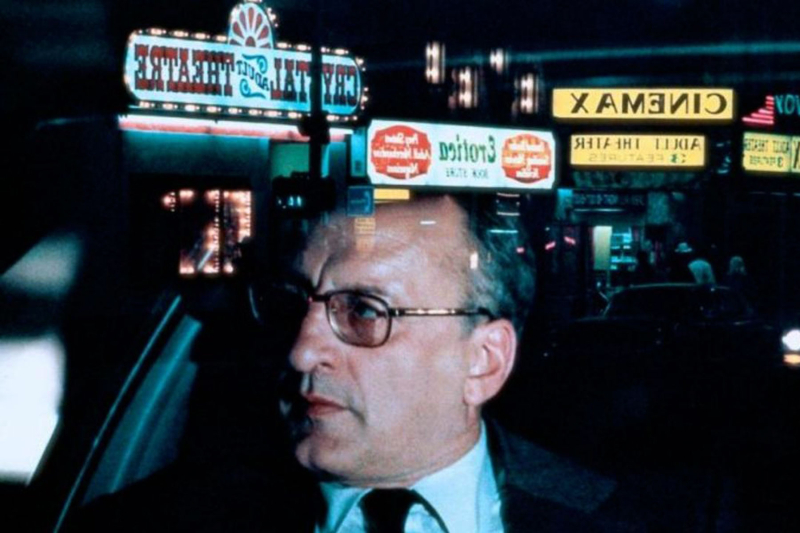
It often makes you sad, too. As dark and as violent as Hardcore is, as occasionally, irreverently funny, and as dreamlike those pasteboard walls are, it swirls around in your head with mixed emotions that lead to an effective emptiness. A key scene that always gets to me is when Jake drives through the Los Angeles red light district, with its dens of sin, strip clubs and sex shops flickering past him, eying his face in the rearview mirror like Schrader’s other “God’s lonely man,” Travis Bickle. Women in short-shorts strut the street and Jake seems, not repulsed, but focused towards his destination. Who knows what he’s really thinking. Nitzsche’s score blasts a warped, creepily gorgeous rock composition as Jake pulls up to a store and parks. When he walks into the shop, Crosby, Stills, Nash & Young’s “Helpless” is playing (I can’t help but wonder if Carrie Snodgress saw this and had a moment, given her dramatic involvement with Nitzsche and Young). Neil Young sensitively, plaintively sings: “Blue, blue windows behind the stars/Yellow moon on the rise/Big birds flying across the sky/Throwing shadows on our eyes/Leave us Helpless, helpless, helpless, helpless …” as Jake wanders through the store. It could seem too on-the-nose (Jake’s not getting any help at this moment), but the song paints a mournfully deep picture of loneliness.

It’s the last thing you’d want to hear perusing a porn shop on a solitary night, whether you were finding your daughter or not, and it speaks not to the moral dilemma of pornography, but to how lonely it can feel. For women and for men.  With all of its questions of faith and men and women and sex and violence and running away and the differing confinements we run from and to, the movie can overcome you with poignant moments of vulnerability and sadness. Of feeling trapped. Watching this “Helpless” scene again (I’ve watched this scene countless times for some curious reason), I thought of Niki, and not Jake’s daughter, in an amusing moment, bitterly complaining to Jake that he at least has the power of faith to comfort him: “So I guess we’re both fucked, huh? But at least you get to go to heaven. I don’t get shit.” I always laugh when she says that, but by the end of the movie it just seems so heartbreaking – for both of them.

From my piece published at the New Beverly

Fool For Love: Reservoir Dogs at 25

6a00d83451cb7469e201b7c8fdca78970b-800wi
Out of sight in the night out of sight in the day
Lookin’ back on the track gonna do it my way
Lookin’ back
Lookin’ for some happiness
But there is only loneliness to find
Jump to the left, turn to the right
Lookin’ upstairs, lookin’ behind

He’s committed? In Quentin Tarantino’s Reservoir Dogs, Mr. Orange rifles through a tray of change, finds a gold band among the nickels and dimes and pennies, and slides it on his finger. It’s a wedding band and he’s honoring (or pretend-honoring) the off-screen wife or off-screen ex-wife or off-screen dead wife or the fake wife we never see. It’s a curious moment that, in one aspect, reveals just how vulnerable this guy is. Or, is he solely a liar, a great actor? He’s all of those things, but then many people are. He’s now shoved one of his guns in his boot holster and the other in his coat pocket, knowing those are the two things that serve as the real protection. But the wedding ring is some kind of superstitious gesture of defense – it represents trust, loyalty, commitment. And yet, there it is, floating in a pile of nearly worthless loose change, as valuable as about 67 cents.

6a00d83451cb7469e201b7c8fdca0c970b-800wi

As Mr. Orange is readying himself to meet Mr. White and Nice Guy Eddie waiting in the car below, he’s listening to Sandy Rogers’ liltingly lovely, country-sad song “Fool For Love,” a song about a guy who falls one too many times for romance until he (what I take from the song anyway) dies. A hopeless romantic and also a sucker. Before Mr. Orange exits his little apartment, he looks in the mirror and reassures himself: “You’re not gonna get hurt. You’re fuckin’ Baretta. They believe every fuckin’ word ’cause you’re super cool.” This is something the other person wearing a ring should be telling him, but she’s not there. He’s alone. Maybe he wants to be.

Reservoir-dogs-12

It’s a touching, funny and mysterious moment that fits right into the film’s themes – trust and loyalty. Trust is of course important in heist pictures, but whenever I watch Reservoir Dogs, I question the idea of loyalty and trust so much, that I wonder if it even matters in this weird fucking world. On the one human hand, of course it does – unless you exist solely as a lone wolf, insisting on abiding by your own rules, screw sentiment and favors and sticking by someone to the very end, you can’t really get through life without trusting a few people. And you certainly can’t team up and commit a crime without trust. Criminal partnerships require more trust than marriage. But, on the other hand, the rightfully suspicious, trembling hand, trust is often a huge risk, especially when you don’t know someone, really, at all, and if a certain kind of bonding between you and your new friend/crook has come about after a short, starry-eyed courtship. You should be wary. You have to listen to your gut instinct: “Will this person have my back when the shit comes down?” If you think “yes” much too soon, you’re Mr. White, a seasoned criminal who should have known better. And yet, for reasons one can only deduce as a need, an identification, a kind of brotherly love, he falls for young Mr. Orange, the seductive actor/cop. He really likes this guy. And Mr. Orange might like him too, though he’s not above swearing on his mother’s very soul that he’s not a liar, when he really is (but what do those kind of solemn declarations mean anyway? About as much as that wedding ring in the change pile).

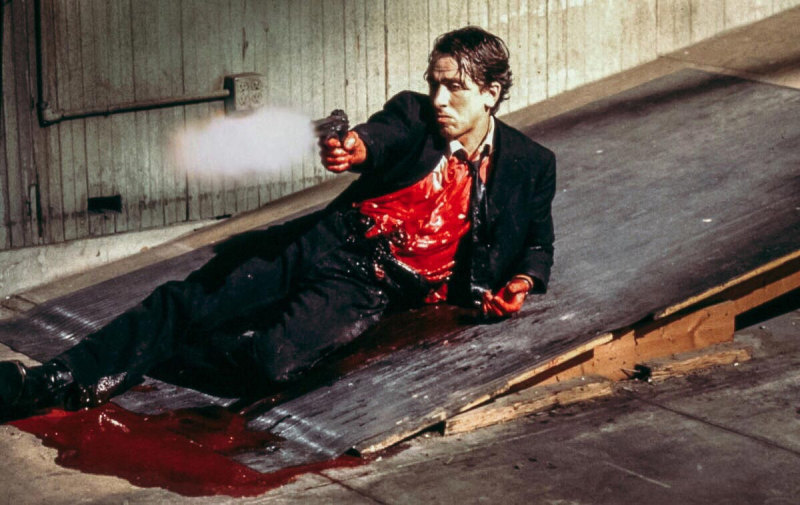
Nevertheless, maybe after too many hard, lonely years, Mr. White wants to trust someone. Maybe he’s tired of looking in the mirror and reassuring himself that he’s “super cool.” So taking that leap of faith, that sense of instinct (or ignoring it), it seems no surprise that, of all places, Mr. Orange is shot right in the gut. A transference of Mr. White’s trust, bleeding all over the upholstery, a blood-soaked emblem of how muddy and confused trust and loyalty actually are. Maybe had Orange not been a rat, these two could have made it as associates, friends? I’m not sure about that as I’m not sure about Mr. Orange. Blood is thicker than water they say, but these guys aren’t family. But how do you make a family anyway? As we’ll learn, Mr. Blonde is likely more family and trustworthy than any of these fellas. Mr. Blonde put in the time, he made sacrifices for another; he did more than a lover might commit to. He’s also a psychopath.

6a00d83451cb7469e201b8d28800c2970c-800wi

There are many reasons why, after 25 years, Tarantino’s quintessence-of-cool, game-changing debut Reservoir Dogs, not only holds up beautifully but also timelessly (there’s nothing dated about this picture) – one of the reasons is … depth. Feeling. Something many of the Tarantino imitators who followed did not possess. They just tried to copy the cool, never the real blood and guts spilling all over the place. Tim Roth’s Mr. Orange is bleeding his guts out, not just for the dark beauty of all that red (and, cinematically speaking, it is startlingly beautiful, soaking into his white shirt and black suit) but for the emotional reaction it provokes in Harvey Keitel’s Mr. White. As he defends his Orange alliance to understandably rattled Mr. Pink (Steve Buscemi), White protests: “I mean, the man was dyin’ in my arms. What the fuck was I supposed to do? Tell him I’m sorry? I can’t give out that fuckin’ information? It’s against the rules? I don’t trust you enough?” (My inner voice: Yes! You don’t trust him enough!) But, and I don’t know how many of us have held bleeding criminals in our arms after a jewel heist gone to hell, but metaphorically speaking, aren’t most of us Mr. White at one time or another in our lives? If we’ve lived at all and endured some experiences with friends or lovers and have any kind of a heart, yes we are. Jesus. Mr. Pink – the non-tipper – he is right. He’s right if you want to survive: “You’re acting like a first year fucking thief! I’m acting like a professional!”

Reservoir-dogs-mr-white-L-1ucUpI

Why is Mr. White acting like that? All of these shifting, murky feelings, questions of alliance and damaged relationships benefit from the movie’s non-linear structure, where we have to adjust ourselves and pay close attention to each man, and, of course, the crime and the betrayal itself – that of a jewel heist gone horribly awry. The precision and planning is now a total mess, as these things often go down (see numerous heist pictures but, chiefly, Stanley Kubrick’s The Killing, an inspiration to Reservoir Dogs, where, by the end, a goddamn cheap suitcase ruins Sterling Hayden’s life). These guys spend most of the movie in a warehouse, flipping out, nervously planning, turning against each other, torturing, bleeding, and by film end, facing each other down in a now-famous Mexican stand-off, loyalties stressed, tested and seriously fucked.

6a00d83451cb7469e201b8d2880103970c-800wi

Boss Joe Cabot (Lawrence Tierney) who, with his son, Nice Guy Eddie (Chris Penn), assemble these six strangers for the job with Joe choosing their names: Mr. White, Mr. Orange (an undercover cop), Mr. Pink, Mr. Brown (Quentin Tarantino), Mr. Blue (Edward Bunker) and Mr. Blonde (Michael Madsen), whom Joe and Eddie already know. Mr. Blonde (real name, Vic Vega) served time in the Big House and didn’t rat old man Cabot out. That’s a big deal, and it should be. He’s also someone who appears the most cool and self-assured, charming, in the beginning, laughing along at Mr. Brown’s theory of Madonna’s “Like a Virgin,” an amusing moment of casual conversation and banter that belies a deeper relevance (is Mr. White going to be touched/fucked for the very first time?), and someone everyone trusts. That he turns into an ear-cutting lunatic who surprises the others with his bloodlust during the robbery (the robbery is entirely off-screen, a genius move on Tarantino’s part) is an unsettling surprise – when you first see the movie. The ear slicing is now so famous you almost wish you could watch it again, for the very first time. Like a virgin.

Reservoir-dogs-funniest-scenes

Psycho Mr. Blonde is an important center when testing the character’s bonding and their trust, but also in testing our own alliances and identification. We have sympathy for Mr. White, we love that both noir icon (Born to Kill, The Devil Thumbs a Ride) and real life troublemaker, the numerously arrested Lawrence Tierney and the real hard timer, writer and actor Eddie Bunker show up, and we revel in the varied personalities on display chattering their Tarantino parlance, but Mr. Blonde is the guy all of us want to be. He’s the sexiest: That handsome mug, the old school, understated 50’s leading man charm, the one who brings up Lee Marvin, the amused menace, he even dances. Our attraction to Mr. Blonde (and don’t just say it’s me, it’s not) is one reason the ear-slicing scene is so disturbing to viewers even if we don’t even see Mr. Blonde cut off the tied-up cop’s ear. The camera pans away, but it’s so intense we feel like we’re seeing the coolest cat in the movie commit the most needlessly brutal act. And with laid back Stealers Wheel playing right along, Mr. Blonde cheerfully moving around the room, the hippest guy in the crew is now a monster. For once we feel sorry for the cop (we often don’t in movies like this) while also feeling complicit because, well, we’re enjoying this viciousness a little bit (or a lot). The scene is so brilliantly staged, that when Mr. Blonde goes out to fetch the gasoline (I love how the song continues playing as he re-enters the warehouse, alerting the audience that it is on the radio), we’re thinking … is he going to do it? Is he going to actually set this poor guy on fire? And then Mr. Orange shoots him.

It’s a powerful moment when Mr. Orange kills Mr. Blonde, like the hero exiting the movie too soon, even if Mr. Blonde is not the hero (who is here?). It leaves a necessary empty feeling that surprises me, still, with my consistent reaction. I ask myself, “Am I the only one who doesn’t like that Mr. Blonde is gone?” And, yet, at the same time, I’m not begrudging Mr. Orange for shooting him. I’m also certain I’m actually not the only one who feels this way and so, again, we (I’ll say “we”), we don’t know how to feel about all of these guys. It’s a wonderfully complicated set of sensations, the way the picture is shot (cinematography by Andrzej Sekula) and edited (by Sally Menke), settling you in with these fellas, listening to their hard-boiled slang mixed with pop culture patois and the discussion of regular stuff (“Did you forget your French fries to go with the soda?”) – we find ourselves comfortable with these men. Even Lawrence Tierney, who is easily one of the scariest actors ever to exist on screen, and, if you talk to anyone who had actually met him, off-screen as well. (Come to Los Angeles. You’ll meet about five people in one month). The actors are so superb, their diverse charm and faces and individual éclat so charismatic, that we enjoy hanging out with them even when they’re terrifying. And we like all of these men. We certainly love watching them.

6a00d83451cb7469e201b7c8fdca90970b-800wi

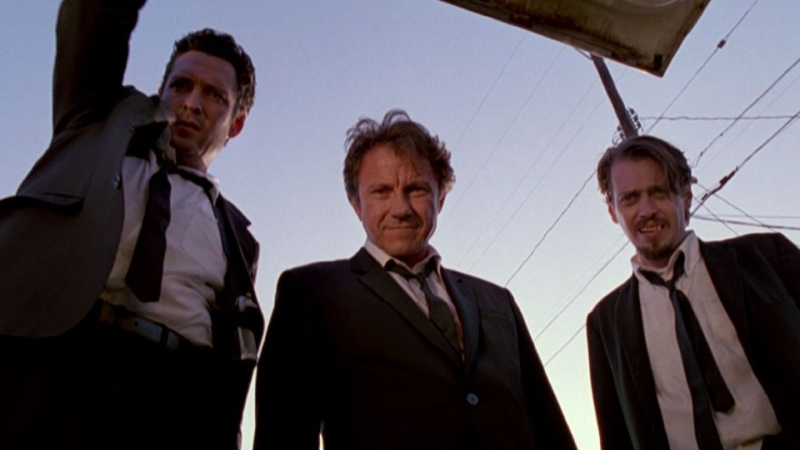
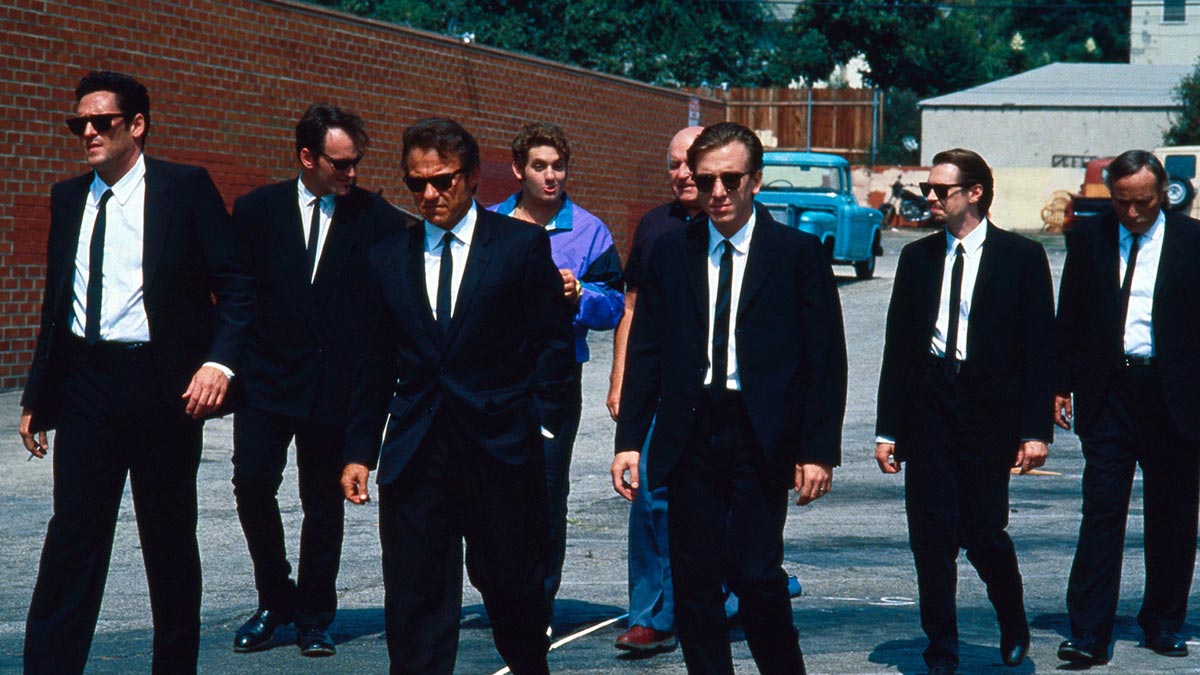
The joy of watching them is immediate, but most striking when taking in the famous credit sequence tuned to the George Baker Selection’s “Little Green Bag.” Announced by Steven Wright’s stoner-intoning, deadpan D.J. (K-Billy’s “Super Sounds of the 70’s” weekend”), I still get a rush of strange happiness looking at these men walking in slow motion in their black suits and sunglasses (with Penn and Tierney in regular clothes, an aesthetically pleasing choice, setting them apart). Tarantino (one of the best cinematic juke-boxes in movies) could have been on the nose and chosen songs that might “match” these black-suited hoods (however anyone is matched) but the ‘70s sounds moving along with these men in black suits and skinny ties (recalling Hong Kong cinema and the French New Wave) was/is the simultaneously perfect and unexpected touch. Part of the music’s power is proving that nearly everyone, even psychopaths, have a fondness for “Stuck in the Middle with You” when it pops up on the radio, making this alternate universe of criminals living right down on earth with us. It both glamorizes and grounds them.

Reservoir-dogs-06

And that Tarantino makes a point to create a D.J. choosing these songs, rather than simply scoring the movie with pop tunes, gives these guys the lucky weekend of the perfect playlist, like they just stumbled into their own exceptional soundtrack. And this furthers the picture’s timelessness and postmodernism (or, as some have called it, “post-post modernism”), where nostalgia is not necessarily nostalgia. History is embedded in a timeless world, a world that’s a veritable mix tape of past eras, styles, genres, stories and classic tracks – tracks we actually like, not just for the sake of wistfulness (though that’s there too). It might take some characters back to an earlier time (as when “The Night the Lights Went Out in Georgia” is discussed), but like classic literature or movies, enough time has passed that these songs are almost part of our DNA. And certainly the Reservoir Dogs soundtrack, at 25 years now, is for fans, woven into our own life. Some of us even might get emotional about it. 6a00d83451cb7469e201b7c8fdcaa1970b-800wi

Which brings me back to the strikingly sensitive, emotional Mr. White, holding onto Mr. Orange with such moving devotion. What are the constants in life? Our favorite books, songs and movies? Yes. They rarely let us down. But people? That’s a whole other messy, bloody area as we see with that instinct (or lack of) that Mr. White had for Mr. Orange. He’s shattered by the end.  Did he even listen to his gut? Or did he just read it wrong? Mr. White says to the grievously wounded Mr. Orange: “The gut is the most painful area a guy can get shot in. But it takes a long time to die from it.” But he’s also, touchingly and tragically, talking about himself. As Mr. Pink mocks, “I’m sure it was a beautiful scene.” It was. And 25 years later it still is.

From my piece for the New Beverly.

Blonde Venus, Blonde Genius

6a00d83451cb7469e201b8d286cf1c970c-800wi

“I wish I was someone else. Then I could stay with you here, forever.”

Radiation poisoning. That’s what Blonde Venus’s Herbert Marshall catches while submerged in work, hunched over beakers and microscopes and boiling cauldrons of early 1930s chemicals, toiling to manage a respectable middle class to poor life six years after he contracted that other near-incurable illness: love. Since marriage and scientific occupation, he’s grown increasingly toxic, so much that he’s going to die. Those in his life must make sacrifices to ensure his survival, specifically his radiant, loving wife who will also toil and suffer and risk infection. But she will be punished. He will be cured, medically speaking. Mentally, he’s a disaster.

Blonde-Venus-1-620x400

Radiation poisoning isn’t discussed in detail in Josef von Sternberg’s picture, just that Marshall knows he has it and that treatment is lengthy and expensive; requiring an overseas trip and time away from his family. But when researching the effects, I learned that if left untreated, extreme doses are fatal, leading to neurovascular symptoms in the brain. One such symptom is an altered level of consciousness with disturbances sounding almost pleasant – levels of arousal are rendered abnormal and sufferers often find themselves in a stuporous state; the afflicted can fall into a coma. I also learned that extreme levels of beta particles cause higher levels of radiation. Extreme levels of beta particles? Oh, no, men don’t want that. Beta. That could lead to … cuckolding. Nothing is presented so literally in the picture, beta particles and obtundation and ionizing and such, but a patriarchal pollutant spreads all over this fever dream, shoving its heroine (and that heroine, an iridescent Marlene Dietrich) towards punishment, heartbreak and squalor. Radiation poisoning is one thing, but cheating is quite another, no matter if it saves Herbert Marshall’s life. Society agrees. And, so, in Dietrich’s Blonde Venus world, most men now seem radioactive. She must run and hide; go underground, go undercover so it doesn’t catch up with her.

6a00d83451cb7469e201b8d286cecb970c-800wi

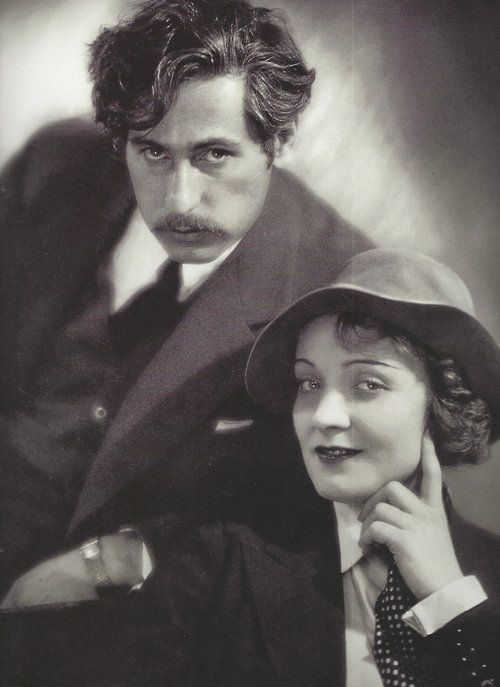
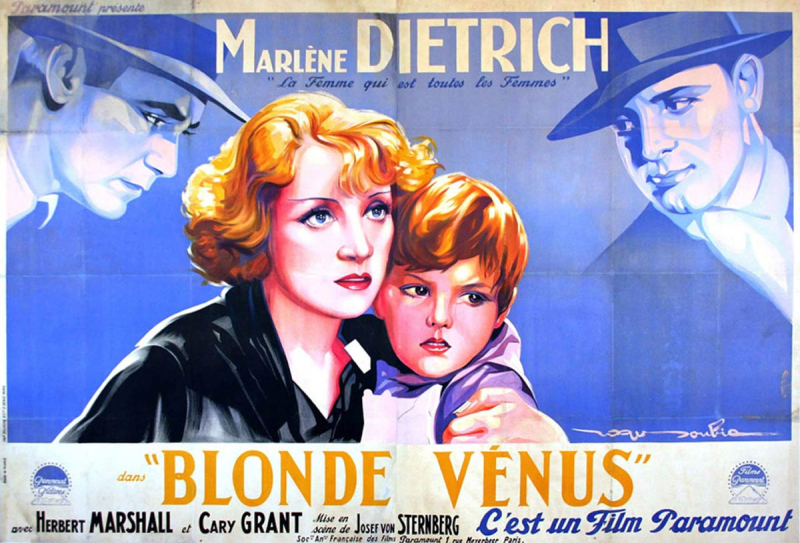
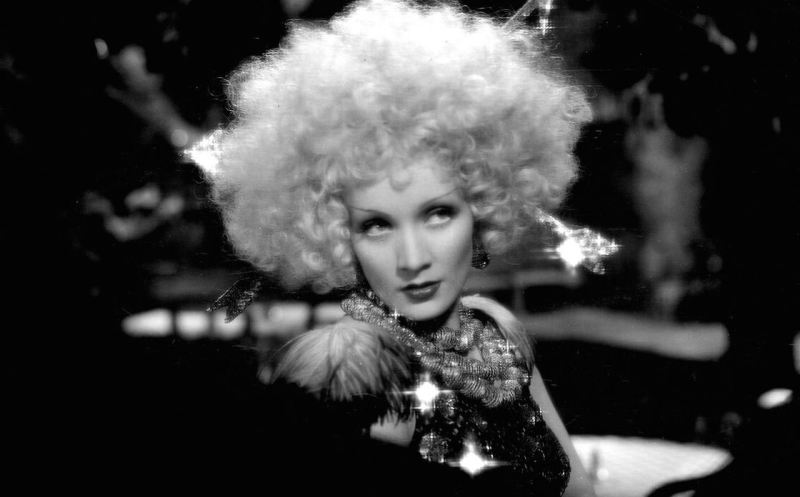
Blonde Venus was the fifth picture out of the seven Dietrich made with her artistic partner, the besotted/bullying genius von Sternberg and it’s largely considered inferior to others (some masterpieces) like The Blue Angel, Morocco, Dishonored, Shanghai Express, The Scarlett Empress and The Devil is a Woman. I’ve read descriptions like “dreary,” “maudlin,” “melodramatic,” “slack,” and while I understand some issues (chiefly, that the original script was altered three times to satisfy the censoring MPPDA – in previous drafts Dietrich embraced her affair and prostitution, in another she loved both her husband and her lover), I revere the picture, regardless. But even Sternberg didn’t like it, not surprising given the finger-wagging headache attached to the production (the film was co-written by Jules Furthman and S. K. Lauren). In fact, he claims he barely remembered the “opus” though, considering how reportedly personal the film’s subject matter is (even if modified), I don’t believe him for one second. Perhaps he wanted to forget it. Nevertheless, this is how he described the dreamy picture in his autobiography, “Fun In A Chinese Laundry”:

Von-sternberg-dietrich

“I became more and more partial to fancy as I proceeded to make a fifth film with my fair lady in another vehicle deemed unworthy of her superb talents. One writer stated it thus: ‘It is as if the Delphic Oracle had stepped down from her pedestal to give her opinion of the weather.’ This film was Blonde Venus, also based on a story of mine written swiftly to provide something other than the sob stories that were being submitted. There is little to be said of this film, except that I tried to leave the company before making it. But Miss Dietrich also left, refusing to work with anyone else, but I was forced to return, as we were both under contract. I remember this opus very vaguely, but recalled some of it years later while driving through France with a charming companion, who, in a moment of confidence, after we had stopped in Rouen for goose and Beaujolais, leaned toward me to say, ‘You know, it took me five years to understand what you said to me when I worked in your film.’ This was Cary Grant, whom I had rescued from the status as one of Mae West’s foils to launch him on his stellar career. After all, five years is not too long a time to understand what someone else is trying to impart.”

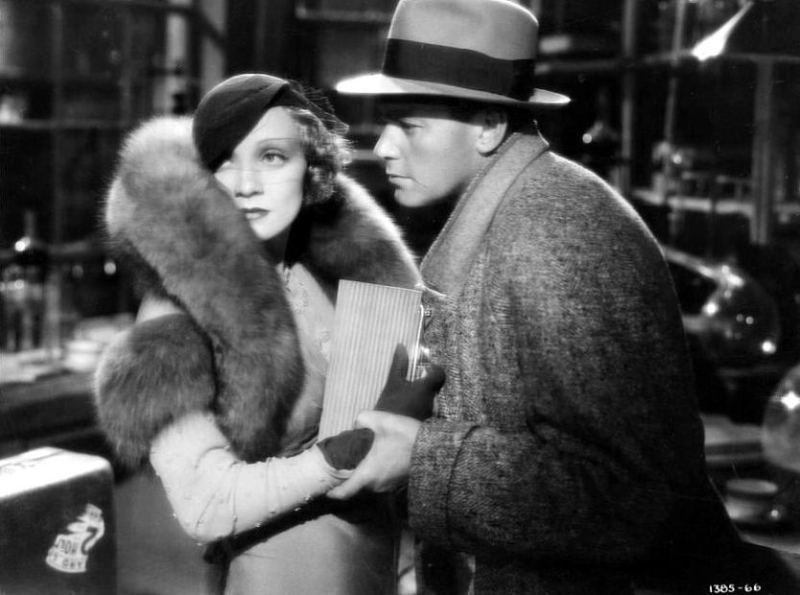
Five years is about the same length of time Helen Faraday (Dietrich) has been married to physicist Edward ‘Ned’ (Marshall), whom she met in a most pre-code scintillating way – skinny-dipping. The picture opens in Germany with the hallucinatory image (shot by the brilliant Bert Glennon) of Dietrich swimming in the raw with a bevy of water beauties while science-minded Ned and students tramp through nature, stumbling across this lovely tableau, not so science-minded anymore. Ned and company peep, Helen tells them to go away, he asks her out, and then he soon learns she’s a cabaret singer. Naturally, he’s smitten. She’s Marlene Dietrich. But things change over those years, a fact underscored in an almost humorous transition shot from past lovely legs swaying in a pond, to hausfrau Helen bathing her beloved child, Johnny (Dickie Moore), splashing in the bathtub. She’s now a regular mom (as regular as she could ever look), tending to domestic child rearing while her husband is informing a doctor about his dreaded overdose of radium. She married for love, clearly. Ned’s not a wealthy man and he can’t afford his $1,500 cure, necessitating his wife return to the stage to earn money for him. He’s torn-up about it and hates seeing his strong, stunning wife out there working. He also feels diminished as a man. At this point you feel sorry for Ned (as elegantly-voiced as Herbert Marshall is, he seems rather dull next to his luminous wife) but you still want to reach into the movie and shake him – she loves you for heaven’s sake!And her powerful allure is why he fell in love with her in the first place. But that Helen seems forever ago and once made his, Helen must (in many a man’s eyes), be tamed. And this is 1932. Married women of physicists generally did not return to cabaret singing.

6a00d83451cb7469e201bb099faed7970d-800wi

She’s given the once over with an agent and a club owner: “Let me see your legs.” She pulls up her skirt and asks, “Is that enough?” His answer: “For the time being.” The burly owner (Robert Emmett O’Connor) anoints her as Blonde Venus. But this Venus does not emerge from the half shell. Not to be trite or expected or surpassed in surrealistic stylishness, Marlene Venus emerges from a… gorilla costume. It’s the movie’s most gorgeously strange moment of highly suggestive erotic exoticism – Marlene removing her gorilla head, her blonde-haloed face glowing (perfectly) in von Sternberg’s baroque frames (and her knowledge of lighting as well), she then grabs a golden Afro wig, places it on her head and sings “Hot Voodoo.” Describing this moment requires two words you don’t often see together often enough but should: blonde genius.

6a00d83451cb7469e201b7c8fc9309970b-800wi

I’d follow a cave man right into his cave.
That beat gives me a wicked sensation
My conscious wants to take a vacation!
Got voodoo, head to toes,
Hot voodoo, burn my clothes…

I want to start dancing, just wearing a smile.
Hot voodoo, I’m aflame,
I’m really not to blame,
That African tempo is meaner than mean.
Hot voodoo make me brave!

I want to misbehave
I’m beginning to feel like an African queen
Those drums bring up the heaven inside me
I need some great big angel to guide me

Hot voodoo, makes me wild
Oh, fireman, save this child
I going to blazes
I want to be bad!

Does she want to be bad? The movie does not think she is bad, but that she is human. And so when the absurdly handsome, wealthy playboy Nick Townsend (Cary Grant… Cary Grant, for emphasis), falls for her and writes her a check for $300, she takes it. That is enough money for Ned to leave for treatment, but while he’s out of the country, successfully sucking the radium out of his body (however they do it), she moves in with Nick (with a happy Johnny in tow). She becomes a kept woman able to pay for her husband’s medical expenses while genuinely enjoying herself with a benefactor who does not look like Charles Coburn – he looks like Cary Grant. We forgive her. And she might be in love with him. He’s in love with her, but since her husband’s returning, she must do the right thing and stay with Ned. Nick leaves the country to properly forget about her. A lot happens to her after he leaves. Of course he won’t forget about her.

6a00d83451cb7469e201bb099faee9970d-800wi

Here’s the first start of her journey into blonde-dishonor: Ned comes home before Helen is back, cured, worried, wondering where his wife is. She’s honest and admits the affair. She’s honest. He doesn’t take it well and, at this point, Ned becomes a dark figure of rage. He’s even constantly shot with a shadow over his face, the brim of his hat low, his visage so menacing that his cuckolded anger has turned to a physical manifestation of black bile. (Even Steve McQueen took it better after Ali MacGraw slept with Ben Johnson to help him out, her husband, in Sam Peckinpah’s The Getaway – he smacked her a few times but he stayed with her) He brands her a whore and threatens to take Johnny from her. So she runs away with Johnny. And in a series of lovely to sad sequences, Helen and Johnny survive on the lam, Helen eventually resorting to tricks. In one especially potent scene, a sleazy, cigar-chomping restaurant owner works out a deal with Helen who has no money to pay for dinner (she offers to do dishes). He says, lasciviously: “You gonna wash my dishes? Go back and see the cook.” We know what happens next.

6a00d83451cb7469e201bb099faf09970d-800wi

Time and emotional exhaustion run out for Helen when a detective (Sidney Toler) catches up with her and Johnny, living in an artfully created dump with chickens roaming around (a shot of Marlene with a pigeon on her shoulder is so beautiful you almost can’t believe how beautiful it is). She can’t stand Johnny to live this life anymore and agrees to return him to Ned, which is heartbreaking in its sensibility. Why must life be like this? Why must her husband torture her so? In an ardently acted scene, Helen sits silent, head down as Ned picks up Johnny. We think for a moment, perhaps Ned will be kind to Helen. No. He gives her another piece of his mind, and pays her back the $1,500. He considers it filthy. Helen later gets drunk, stumbling around in degradation, and hands that $1,500 to a broken down suicidal woman in a flophouse. It’s the act of a generous woman and the act of a masochistic woman. Helen knows that old woman can’t make as much on her back, but Helen can. And will. And as she does, she scratches her way back up, becoming the toast of Paris. Through gritty determination and a hardening of her heart, she’s a sensation, singing in white tux and top hat, the transformation complete. She is in control of her life, finally. Dressed androgynously, she saunters around her dressing room in charge. No man will rule her life again. And love? Never. She’s not catching that illness again. Not even for her son.

BlondeVenus27

Well, no not so fast. She can’t cure her love for her son. There’s no radiation-like treatment that can ever scrub out the pain in one’s heart – forget her toxic husband. It’s her son. She agrees to marry millionaire Nick who takes her back to New York to see Johnny one more time. A surly Ned finally allows her visit after Nick insults his pride with money. But that’s why – he shamed him. And then … that ending. In which once radioactive, beta-afflicted Ned softens to the bonding of his wife and son. Is this where the movie becomes silly? That she gives it all up to live happily ever after with a man who has been a tyrant ever since her one indiscretion? I don’t think so. But this is what many don’t buy, as if one needs to “buy” such complex emotions. But here are the questions: Why would she stay with Ned? Why should we be happy she stays with Ned when she has Cary Grant? Why does Ned change his mind? My answer in the form of a question: Has anyone been in a complicated, guilt-ridden, toxic relationship?  Because not only do I find the ending touching (for the love of her son, and Dickie Moore is fantastic, never cloying or cutesy or affected), I find it sad and not at all unrealistic (whatever realism means). Who knows if Ned and Helen will be happy? Ned has taken everyone down with his sickness, extreme beta to extreme alpha – he’s toxic beyond radiation, but he, too, is human. Perhaps there is hope for him? Perhaps not. The future could be grim.

6a00d83451cb7469e201b8d286cf3d970c-800wi

To me, the picture works poetically, an allegory, an exquisite, concentrated reverie of suffering womanhood – what one must endure to remain free and sexual, artistic and loving, and a loving mother. But also a tough woman with no child, a woman who dons a top hat and playfully caresses chorines. Dietrich and von Sternberg’s Helen represents all types of woman in one woman – women do live with such various sides to themselves. And society doesn’t want this full woman (and yet, so many truly do, they’re just to afraid to accept her). This is a woman who, at one point said, “I wish I could be someone else.” And then she became, not someone else, but different versions of female representation: Vixen, wife, mother, whore, self-destructor, self-reliant. She’s also an artist, which her husband will likely never understand (Sternberg did). But perhaps, with all of this history, this full-fledged woman with a profound past, with talent and maternal love, it will take Ned and Helen another five to six years of marriage to sort through this. And either stay or go. As Sternberg said: “Five years is not too long a time to understand what someone else is trying to impart.”

Originally published at the New Beverly

Kill Or Be Killed # 9: Mikey and Nicky

6a00d83451cb7469e201b8d282caa4970c-800wi

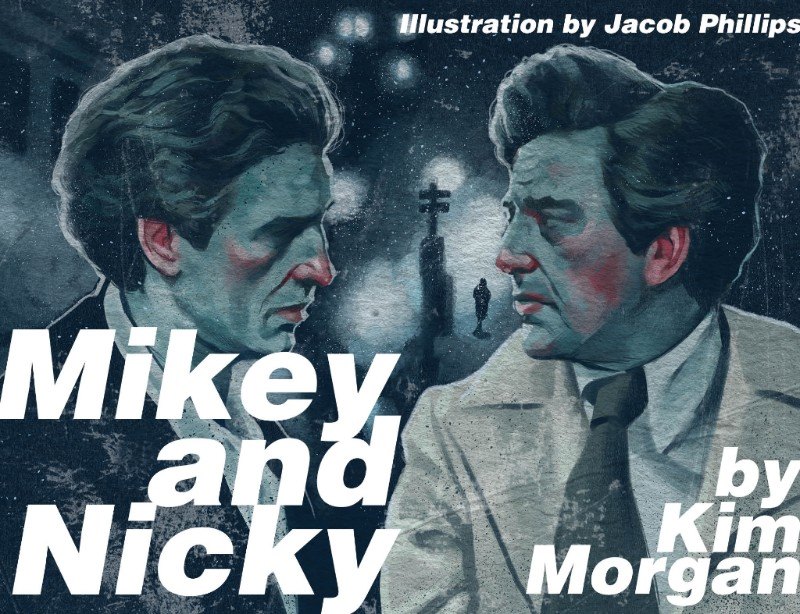
Heads up — issue #9 of Ed Brubaker's Kill Or Be Killed is coming out May 31. In this one, I dig into a favorite, Elaine May's Mikey and Nicky (with art by Jacob Phillips).

One graph from my piece:

As the evening wears on and these two talk, fight, hit each other and smack a troubled, sensitive woman, the friends reveal more and more about themselves and your emotions shift all over the place. Whatever alliances you had, whatever charm you’ve felt from these two guys, all that has been dragged around and sullied, dirtied up like that door in Nicky’s dumpy motel room. And May shoots it that way, never allowing a glamorous moment to enter the frame. You can practically smell the bars they’re drinking in. And yet, you don’t want to get out of this movie, you don’t want to unlock the door and make a run for it. You like being stuck with these two small-timers, you’re fascinated and drawn to hem, and you wonder where this is all gonna end … who is going to make it through the night?

Pre-order soon here

My Favorite Demme: Something Wild

6a00d83451cb7469e201b7c8f20f79970b-800wi
Jonathan Demme has passed away. To honor his life and his musical, deeply humanistic films, in love with the odd and the beautiful, and the oddly beautiful, the art of everyday people who aren't so everyday, and the depth and complications of love —  I'm posting my New Beverly piece on one of the great films of the 1980's — Something Wild. Rest in peace, Jonathan Demme.

“I’m glad to see you finally made it to the suburbs, bitch!”

Love can be traumatizing. It’s also exciting, unsure, bizarre, freeing and imprisoning (at times, somehow, simultaneously), and when it starts – that delicate, vulnerable starting point – there are messy shifts in mood that mirror a kind of mental illness. It might even be a mental illness, an abnormal interruption of serotonin levels causing mania, anxiety, depression and obsessive compulsive behavior. Of course that sounds more troublingly clinical than romantic, and people really don’t like viewing themselves as mentally unstable lunatics while in the throes of lovesickness (this is the socially acceptable sickness, one tells oneself), but if you read British clinical psychologist Frank Tallis (who wrote an entire book about it), you might be convinced of its psychopathology: “Love seems to have the power to destabilize people emotionally. Particularly in vulnerable individuals, it can be very difficult to cope… Some people are referred to me because of an admission to depression or anxiety disorder, but in fact, once we’d explored issues around their problems, it was clear they were just in love.”
6a00d83451cb7469e201b7c8f20f06970b-800wi

With that kind of dysfunctional amore in mind (isn’t it always at least a bit dysfunctional?), Jonathan Demme’s moody, transgressive, genre-bending, weirdly romantic (and unromantic) Something Wild isn’t such a strange hybrid. For a love story, it mirrors what often happens when people do fall for another – it’s destabilizing and terrifying. A movie that upsets some viewers with its stark shift in tone – from winsome, sexy, romantic comedy to violent, obsessive thriller – it stares directly in the faces of its male protagonists – one, a dorky stuffed shirt type, the other, a charming, murderous criminal, and wonders if they are at all so very different. And in an especially powerful scene utilizing the Demme close-up, it wonders if anyone is at all so very different.

Something-wild-1-1

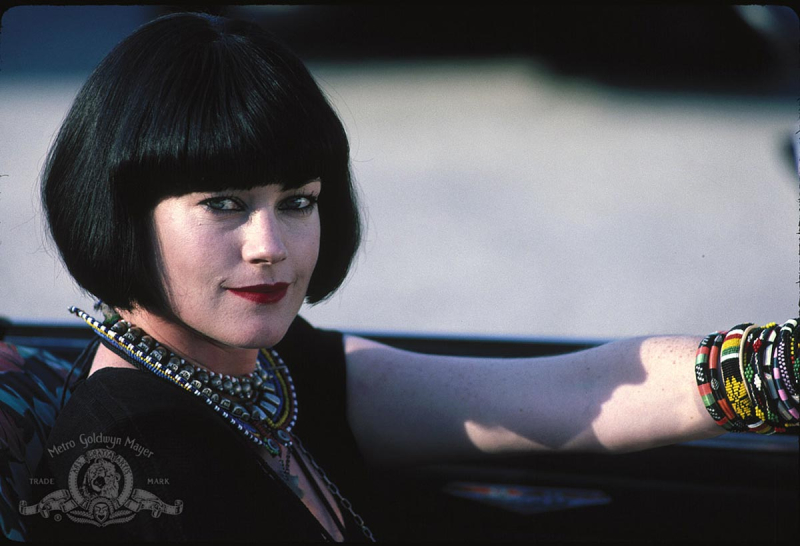
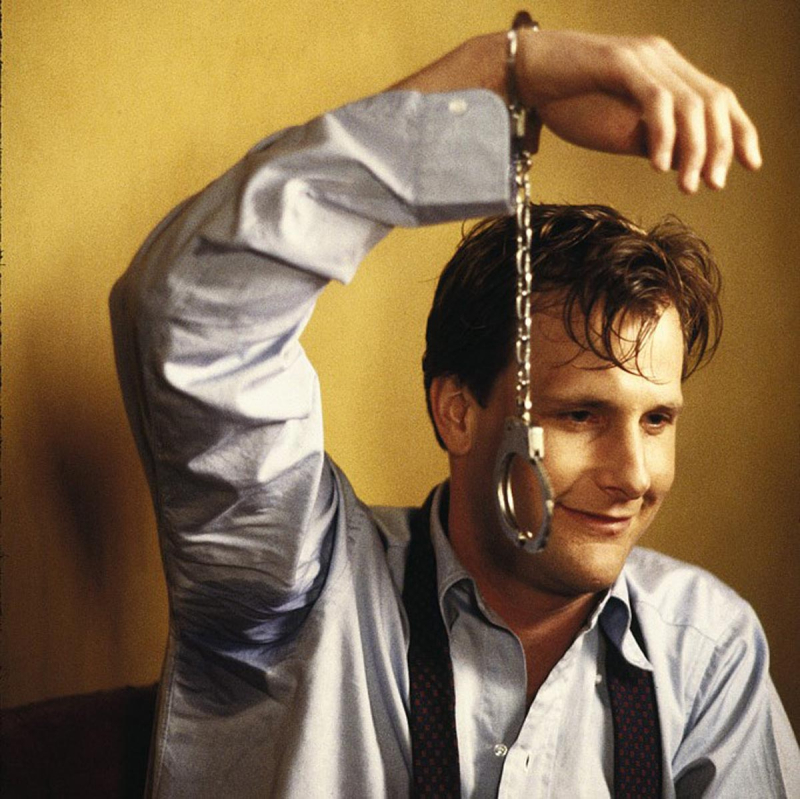
This question, through shifts of persona and the crazy act of falling in and reclaiming love, makes the character’s desire to embark on a quest, whether it be a journey through the past (to quote Neil Young), a new identity or the liberating adventure of a road trip, all the more poignant and unsettling. And relatable. It begins when the buttoned-up, newly appointed vice president of a Wall Street firm, Charles Driggs (Jeff Daniels) commits a sneaky criminal act for his own personal thrill – he pockets a check in a Manhattan diner and walks out without paying. Spying him is the pretty Pandora’s Box of a woman, appropriately named Lulu (Melanie Griffith) sporting a Louise-Brooks-bobbed wig and African jewelry – this is not the type typically drawn to Charles. The dark-haired stranger follows him outside and confronts his “closet” rebelliousness of which he protests – he made a mistake! He’s already lying. Once he learns that she doesn’t work there and that she doesn’t actually care that he lifted his lunch (she’s, in fact, turned on by it), she offers to drive him to work. Work doesn’t happen. Instead she takes him to a seedy motel room in Jersey where they have handcuffed sex to the tune of Fabulous Five’s “Ooh! Waah!” Natural to all uptight men confronted with the free-spirited, screwy dame going after what she wants (in movies), he’s reticent at first, but succumbs, which isn’t that tough.  After all, sex is involved and Demme does not shy away from showing the eroticism of this encounter, allowing Lulu to enjoy herself and take control. You also sense something more problematic going on with this woman. Maybe she has a drinking problem? What is she evading?
6a00d83451cb7469e201bb09952d06970d-800wi

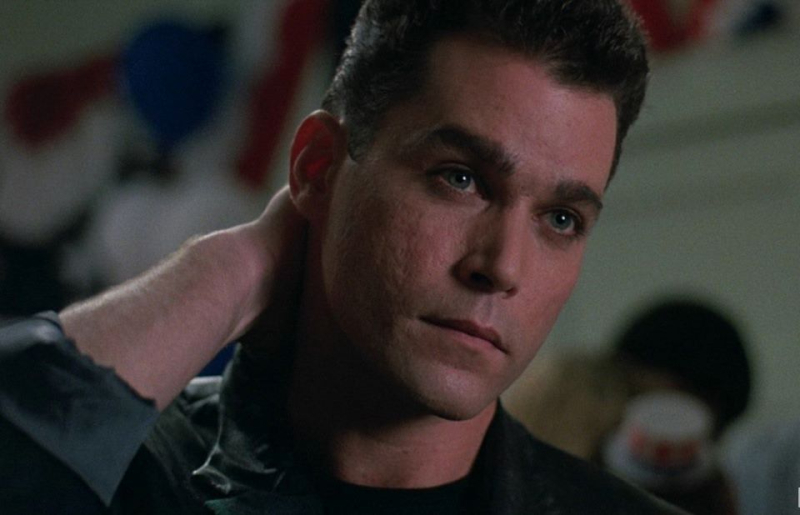
She has other aims too – thinking Charlie (he’s now anointed Charlie) is a square (but rebellious enough to ditch a check), and a decent-looking, upstanding fellow, she convinces him to join her on a road trip to her Pennsylvanian hometown. It’s her ten-year high school reunion and she needs a fake husband to tag along. She also needs to show him off to her sweet mother, Peaches, who, in a charmingly affectionate scene, tells Charlie she knows Lulu (now going by her real name, Audrey) is pretending. She says nothing to Audrey about it; Peaches accepts her daughter’s impersonation of a “normal life” likely touched by the need to please her mama. This is the first tonal shift in the picture and another alteration  (or doubling) of what men desire – going from the fantasy of the erotic, madcap siren to the toned-down, sweet, high school vision – the lovely woman, the kind Charlie could take home to his mother.  From the so-called whore to the proverbial Madonna, she cleans up well. But why on earth this woman cares about her high school reunion shifts her to a place decidedly more squaresville than the viewer originally imagined. She saunters into the ballooned, name-tag wearing event as nearly an all-American girl, albeit the wild one – the blonde hair, the pretty white dress, the white shoes.  But even before the dark force of romance past shows up, there’s an edge to this presentation, enough where, you can almost hear the song Demme used so powerfully in a film he hadn’t made yet, The Silence of the Lambs – Tom Petty’s wistful, mysteriously spectral “American Girl.” Here it’s The Feelies (fantastic) singing the mournful, menacing “Loveless Love,” and the guy remembering that girl thinking, “there was a little more to life somewhere else,” turns out to be Ray Liotta.

Something-wild-3

This is when the movie is akin to Bringing Up Baby as interrupted by Born to Kill, with an obsessed, jealous Lawrence Tierney pistol-whipping Cary Grant and kidnapping Katharine Hepburn. Can you imagine that? Demme did. The kooky, sexy girl isn’t so much charmingly incorrigible any more, and she instead brings with her menacing, abusive baggage. There’s now a reason why she’s drinking so much. And being the estranged wife of a criminal, she might even be complicit with this psycho (what did they do together in the good old days?). And yet, Liotta’s Ray, all blue-eyed and charming with his rough trade handsomeness, freshly sprung from prison, isn’t immediately a threat to Charlie. Charlie likes him, in fact. Charlie’s so stupidly loved-up at this moment, he’s both naïve and not paying attention; he’s not even paying attention to Audrey’s nervousness, so self-absorbed he is while indulging this new love-struck feeling. He’s also caught up in the masculine energy of Ray.

Through Demme’s direction (and his brilliant cinematographer, Tak Fujimoto), Ray’s entrance is something to behold – the camera moving in on Liotta’s smiling, ominous face, we know this guy is chaos. We’re also positively struck by Liotta’s charisma – it hits the viewer so much that they feel a dark thrill, even a kind of love at first sight. Liotta is scarily sexy in this movie and Demme knows it, aptly understanding that being drawn in by Ray is going to become something more complicated than merely rooting against a stock villain. We even feel for Ray at times, in spite of how inexcusable his actions are. After all, he’s in love too. Even worse, he’s still in love, and she doesn’t love him anymore. Thinking back to love as mental illness, that might make you crazy. Add prison time to unrequited emotions, and you’ll be even more incurably “romantic.”
6a00d83451cb7469e201b7c8f20f90970b-800wi

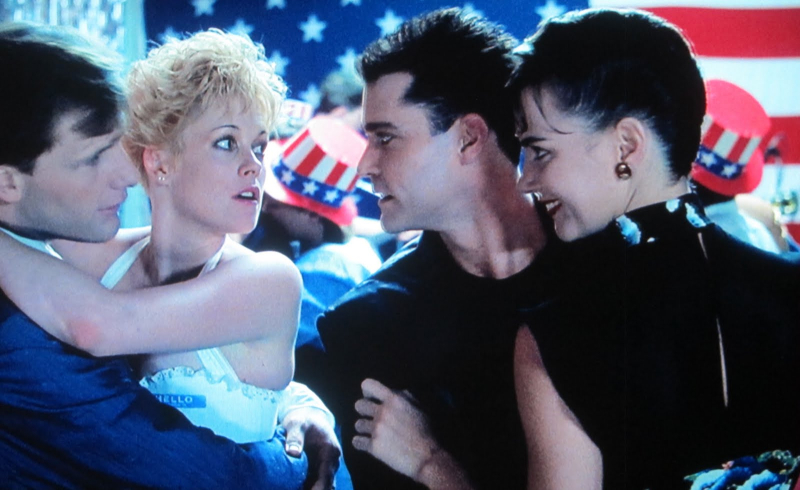
Intelligently allowing Ray to partially take over the picture, Demme (and screenwriter E. Max Frye) raise the stakes, making us question how we feel about this smiling jailbird. He’s so fit and so focused and so fucking damaged. And yet, he’s appealing. When Demme has Ray turn so shockingly violent (it’s not cute) he becomes some kind of nightmare delirium of jealousy and fear – namely Charlie’s. As if, when a woman talks about her most recent ex, the bad boy ex, and her new boyfriend wonders, worried, what their relationship was like. How will he measure up? In this movie, that guy appears, not only taking her away, but also taking her away with charm, brutality and mockery. Ray tests Charlie’s masculinity so much, but with such a powerful combination of desperation and violent angst, that the viewer, and perhaps Ray, questions what being typically masculine means in the first place (a question Demme studies in other films, and directly after this one with Matthew Modine’s heroic, but quirky straight arrow F.B.I. agent in Married to the Mob).
6a00d83451cb7469e201bb09952da1970d-800wi

And yet, Charlie takes to him. You understand why. He feels stimulated being around the animal magnetism of Ray. At first. And then, again, the story shifts, the mood gets darker, and boy meets girl becomes boy meets boy, transforming into two boys pursuing one girl, albeit with different means. Or are they so different? They’re both, in a fashion, and in their own kind of feverish love, chasing/casing Lulu. Charlie is, of course, saving her, and from obvious threat, but what is he releasing her from, really? And does she have much choice in the matter? Does she even really love Charlie?

Lulu WScreen Something Wild

Perhaps it wouldn’t have gone so terribly awry had Audrey done something she shouldn’t have to do and simply told Ray she still loved him – as in, lied – but he seems like the one person she can’t lie to. Charlie’s fibbing about his wife and kids (revealed via Ray) and that lie pisses off Audrey enough that she resigns herself to Ray’s entrapment. The kinky S&M she brought to Charlie is no longer role-playing, it’s real, and the veneer of Charlie’s normalcy and of Lulu’s uninhibited allure is fully lifted (when rewatching the picture, we’re observed it slowly revealing itself from the beginning, however). How we present ourselves when falling in love, what we want that other person to see (and notsee) and often, what we choose to ignore, undergoes a transformation here, with Charlie and Lulu gazing at each other in the exposing bare light bulb glow of Ray. Gee, is this movie any fun? Yes, it is.

What’s so wonderful about the picture (among other things) is that while skating on the edge of a potentially joyless thriller, it never becomes one, even as it upsets you.  It’s still fun and, importantly, it’s still moving. In Demme’s view of this particular corner of America, there’s life and joy bursting out of every frame. With the picture’s music (49 songs) providing such a singular, superb soundtrack to these lives, people serve not just as scenery but as distinct individuals, sometimes poignant, sometimes musical. Among many stand-out, small performances, there’s a group of rappers outside of a gas station market, an inquisitive girl checking in on Charlie as he sits in his car, and a lovely moment in which Charlie engages with a clerk named Nelson (Steve Scales) who helps him pick out attire from the tacky tourist gear. It’s delightful, how long Demme allows this scene to go on and how much he, Daniels and Scales underplay what could have been a rote “wacky” incident. Charlie is changing in the store (appropriately in a “Virginia Is For Lovers” tee shirt) and Nelson is not at all perturbed by this, instead he’s encouraging, even casually life affirming. When Charlie asks Nelson if he should buy new glasses (he’s wearing Lulu’s colorful kiddie-looking specs) Nelson says, “Nah, keep ’em. You’re beautiful.” The world is not such a shitty place after all.

Within that strange, disarming world, cameos like John Sayles as a motorcycle cop, Demme favorite Charles Napier as an angry cook and John Waters as a used car salesmen fit right into the environment without any kind of showy strain. I especially love a small moment when, after Charlie has rescued Audrey from Ray, Ray sits angrily by a diner window trying to figure out what to do. An extra passes by outside, saluting him with a little wave.  Just a little wave. It’s a humorous and endearing punctuation mark. Soon after, in that same window, a young woman Ray’s already flirted with at a gift shop, cheerily taps on the glass, and seeing his way out, Ray exclaims “Oh, thank you lord!’” He kisses the window and then manically laughs to himself. You kind of love Ray at that moment – just for being so damn charming and resourceful. And amused. It’s infectious.

6a00d83451cb7469e201bb09952dca970d-800wi

Which is why Ray’s final moments wind up so strangely touching. He’s not without his own vulnerabilities; we’re not hoping he dies. We’re not sure what we’re hoping for. As mentioned earlier, Demme employs his now famous close-up shot; the character’s eyes full of sadness and regret, staring at each other, and we look directly at them. In some ways the two men merge at this moment, provoking complex feelings of identification, fear and empathy. This is not a happy ending. Charlie will never be the same. But who was he in the first place? And who is Lulu? Not long before this moment, Lulu/Audrey asks Charlie: “What are you gonna do now that you’ve seen how the other half lives?” He says, “The other half?” She answers: “The other half of you.” Good question.


Kill Or Be Killed: Murder By Contract

6a00d83451cb7469e201b8d27bf9a0970c-800wi
"The risk is high but so is the profit. I wasn’t born this way. I trained myself. I eliminate personal feeling. I feel hot. I feel cold. I get sleepy and I get hungry.” — Claude (Vince Edwards)

My next piece for Ed Brubaker's issue 8 of "Kill Or Be Killed" with art by the great Sean Phillips: Irving Lerner's spare masterpiece, Murder By Contract starring Vince Edwards. Order a copy!

Out April 26, order here.


April Sight & Sound: Anna Biller

6a00d83451cb7469e201b8d278756f970c-800wi

The April Sight & Sound is out — I interview the brilliant Anna Biller — discussing her varied influences (Dreyer, Demy, Losey, Fassbinder, Hitchcock, John Stahl's Leave Her to Heaven and John Brahm's The Locket) as well as Biller's unique style and complex, intriguing ideas about … many things. See The Love Witch. And pick up this issue. Here's a small excerpt:

Kim Morgan: Writers often apply easy labels to female characters, particularly in noir with ‘femme fatale’, when many women [in noir] are actually rebelling – much like your character, they’re rebelling against the patriarchy or the pressures that society places on them.

Anna Biller: Yes, that’s exactly right. It’s very similar to a noir film or a film like Leave Her to Heaven – a woman who is locked in the patriarchy, doing the best she can. A lot of people think that’s old-fashioned, that I’m creating a character that is out of time, but I feel it’s very relevant to today. Many women respond to it because it feels so relevant to their own lives. A lot of men actually can’t see that, which is why a lot of them are calling it ‘sexploitation’ or ‘pastiche’. They can’t see what I’m doing. They think it’s a joke about other types of movies from the past, when it comes from personal trauma, actually.

KM: That makes me think of John Brahm’s The Locket, a great, underseen picture.

AB: It’s such a masterpiece. It really did inform The Love Witch. Laraine Day in The Locket is kind of a Stepford Wife, right? She’s perfect on the outside, but completely wacko on the inside. She’s been destroyed somehow by childhood trauma. But you’re sympathetic towards her because you see the trauma. John Brahm also made Guest in the House [1944], another fascinating movie about a crazy woman. He was such an interesting director, picking stories about female psychology. It’s very unusual for men to be like that now, whereas before there were [several] male directors and writers who did so. Like Hitchcock – his female characters are brilliant.

KM: Which brings me to parallels with The Birds [1963]. When Tippi Hedren drives into town, it’s like she starts Armageddon by her very different female presence; she’s disturbed the universe somehow. It’s the same with Elaine in The Love Witch.

6a00d83451cb7469e201b7c8ee1571970b-800wi

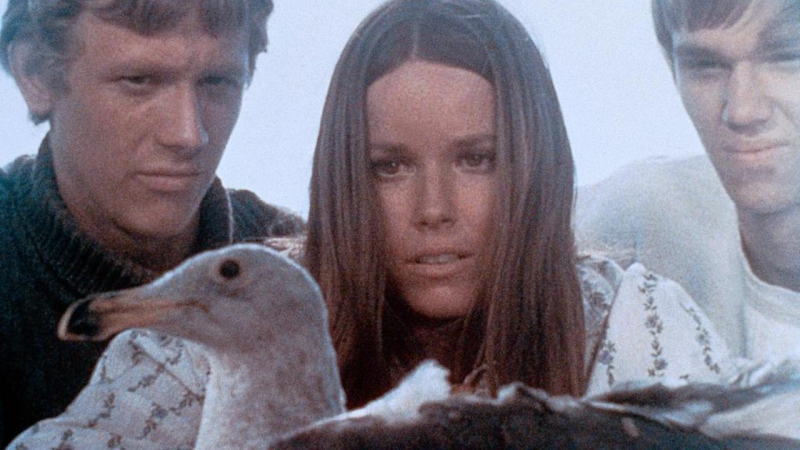
AB: Female sexual power destroys an entire town. I don’t think Hitchcock is judging her either. He’s just saying, “This is what happens.” Melanie’s aggressive. She’s pursuing a man. She goes to his apartment and then drives out of town and she sneaks up on him in a boat. As she’s rowing towards him, she gets the attack from the gull and it’s brilliant because you’re almost fearful for her because she’s so sexually aggressive for that time! I think the movie is on her side. It’s about women who socially transgress, so it’s similar to The Love Witch. It’s like when Elaine is attacked in the bar. In bringing out this mythos of the feminine, you don’t have to have a negative or positive judgment about it, you just have to be aware of it. [Some critics] don’t acknowledge the mythos of the feminine as being a serious thing to explore in films, so they call it parody. Men feel they’ve effectively tamed us so they don’t have to deal with the mythos of the feminine any more, and they’re relieved. They sure as hell don’t want it coming back… so they just call it what they want and then reduce it down to something that it isn’t; this compact little parody thing. The reality of watching the movie is different – it’s powerful. But whatever they say afterwards, that’s still the experience of watching it. They’re experiencing it, whether they like it or not.

KM: There's personality and art in the artifice and the masks that women wear through makeup in cinema – think of Joan Crawford, Bette Davis… So when Elaine is taking off her wiglet and looking in the mirror and you hear the critical voices, I thought of when women remove the mask and how women do think of these things when gazing in the mirror.


AB:
Yes. You see her putting on her mask and taking off her mask. That was really important to me. The mask is something outside of herself, and also that Trish [Elaine’s outwardly prim landlady and friend, played by Laura Waddell] could put on the mask. That was meaningful because you think of Elaine as this kind of woman and you think of Trish as that kind of woman, but actually they’re both just women. They’ve made different choices about self presentation, but either could switch at any time. I’m trying to undo some of those stereotypes and to show that this is a choice to make, to become this woman, to become feminine. A lot of people find the feminine so ridiculous now, they find a movie like this campy or silly because the feminine to people is campy or silly. I’m trying to change that, hopefully, by keep making movies like this so people take feminine women more seriously.

Read the entire interview by ordering or picking up the magazine, here:

6a00d83451cb7469e201b8d2787580970c-800wi

Perry & Didion: Play It As It Lays

6a00d83451cb7469e201bb098e91cd970d-800wi

"I wrote stories from the time I was a little girl, but I didn’t want to be a writer. I wanted to be an actress. I didn’t realize then that it’s the same impulse. It’s make-believe. It’s performance. The only difference being that a writer can do it all alone. I was struck a few years ago when a friend of ours – an actress – was having dinner here with us and a couple of other writers. It suddenly occurred to me that she was the only person in the room who couldn’t plan what she was going to do. She had to wait for someone to ask her, which is a strange way to live." – Joan Didion

All of us live in our own movie. (Don’t we?) But how do we control our narrative? Well, of course we can’t. With all of those around us – family, friends, lovers, husbands, wives, one-night stands or just a single conversation at a desert rest stop with a stranger, our self-perception is passed on to another person, translated by other eyes and ears creating their own movies – movies either on replay or nearly forgotten, a flickering memory of that one person in that one place at that one time. Unless it is told to us, or, in the case of those writing about or filming us (or both), we can’t know. And we can’t control the sometimes warped perception of “the truth” (whatever that is), their truth, not ours. (Which doesn’t necessarily mean it’s untrue either.) There is so much that others can pour into us, or live through us, particularly lovers and friends, and if we are depressed or troubled especially, the end result may be banishment or beauty or, if embittered, a mythologized distress, an exaggerated fantasia of spite. In many cases, muses are born from this kind of heightened narrative. And drained. Magnetic lightning rods like Edie Sedgwick and Neal Cassady, artists themselves, were alluring and inspiring. And troubled. And in the end, weary, depressed and drug-addled. They sparked genius, but Sedgwick (a gifted model and actress) and Cassady (a brilliant writer), both of whom everyone wanted to fuck (and fuck and fuck, sometimes they probably didn’t want to fuck) found themselves, by the end of it, lost. And nothing brings out the vipers and the leeches like a vulnerable person, traveling along to the next adventure towards oblivion.

MPW-47433

In Frank Perry’s Play It as It Lays (adapted from Joan Didion’s novel by Didion herself with her husband, John Gregory Dunne), Hollywood, already filled with vipers and leeches and artists and muses, is the perfect backdrop for this type of dramatic discernment, as model and actress Maria (Tuesday Weld, very much a Sedgwick/Cassady mold breaker), wanders through the spread-out city with all of its surrounding areas and high desert lonesome in a state of depressive detachment and grim determination of … something. She’s not sure. Geographically, Los Angeles provides ample space for this kind of physically roaming narrative as Maria drives the labyrinthine freeways, stopping off in small desert towns, drinking cold cokes or engaging in little dramas (or big ones), whether with another human or talking on a roadside payphone. She has her own story and she’s trying to weave together her own narrative connection – to be her own film editor. Fragmented trips to hotels, Malibu dinner parties, Beverly Hills shindigs, movie shoots, apartments and swimming pools propel her to her who-knows-what future. And so, like many an emptied Angeleno, she’s “not too crazy about people.” There are friends and lovers, she’s always one step away from a party or a conversation, good, bad, banal or momentarily exciting, as she talks or listens to others talking, but she sometimes says nothing at all. She wonders what others close to her are thinking. She’s decided to not give a fuck. In the novel Maria observes:

"If Carter and Helene want to think it happened because I was insane, I say let them. They have to lay it off on someone. Carter and Helene still believe in cause-effect. Carter and Helene also believe that people are either sane or insane. Just once, the week after the desert, when Helene came to see me in Neuropsychiatric, I tried to explain how wrong she had been when she screamed that last night about my carelessness, my selfishness, my insanity, as if it had somehow slipped my attention what BZ was doing. I told her: there was no carelessness involved. Helene, I said: I knew precisely what BZ was doing. But Helene only screamed again. Fuck it, I said to Helene. Fuck it, I said to them all, a radical surgeon of my own life. Never discuss. Cut. In that way I resemble the only man in Los Angeles County who does clean work."

6a00d83451cb7469e201bb098f69a4970d-800wi

Carter ( a terrific, perfectly cast Adam Roarke) is her husband, a director on the rise, a guy quite different than the producer he works with who happens to be Maria’s only true friend who sees her – the nihilistic, sometimes sharply funny, sensitive and smart B.Z. (Anthony Perkins), who is gay but in a marriage of convenience. Maria and Carter are heading towards divorce,  their marriage is troubled, and she talks with B.Z. and his languorous, sharp-tongued wife, Helene (Tammy Grimes), about her various predicaments. She doesn’t seem to like Helene much, but she’s almost terrifyingly close to clever, haunted B.Z. – her only confidant. B.Z. gets her like no one else does and he wants her to fall into his philosophy of … nothingness.  There’s a lot of cold comfort in their acidic conversations and beach strolls and like their characters in Pretty Poison, they’re beautiful oddballs (Perkins is strangely beautiful) and in this film, two Hollywood animals who seem a skip or two away from the norm, and five steps ahead of everyone else. Of course that’s not easy for them.

6a00d83451cb7469e201b7c8eb6ecf970b-800wi

Carter’s second picture, in which Maria appears (in the novel, she’s gang-raped in the film, not for real), was a hippie biker movie (kind of like the movies actor Roarke actually starred in), and his first picture, named Maria, is a cinéma vérité work starring… Maria. Carter followed Maria around with his camera while she, in the only scenes in which she appears momentarily happy (this was a while back), talks about her own life. She laughs and smiles discussing her parents from a dusty one horse desert town (Silver Wells, Nevada), her western mythology, she seems proud of, sad (her parents are both dead, and died tragically) but it defines her. He prods her on camera, asking about who her father was balling and if she was jealous of this, assuming she wanted to ball her own father, clearly intending to provoke a reaction the way Chuck Wein did to Edie Sedgwick in Andy Warhol’s Beauty No. 2. Carter likes showing this movie, and she hates watching it when he does. One night she sees him on TV discussing Maria with a panel of cinema intellectuals recalling how Maria’s personality was so her – as he addresses her in his view through his camera, now framed though his discussion. His most artistic success is Maria’s own life and presence, filmed and edited by him, which must annoy her. As their marriage is disintegrating, Maria listens to Carter and the moderators, a bit pretentiously, dig into performance and real life:

6a00d83451cb7469e201b7c8eb6e80970b-800wi

Carter: “I was experimenting. I was trying to see how far I could go before breaking down the barrier between film and real. And yet the personality constantly shattered the conventional camera, subject relationship.

First moderator: That personality being your wife’s.

Carter: Well, she wasn’t my wife, yet. No.

Second moderator: You didn’t just hire her, Carter. You couldn’t have gotten that kind of performance.

Carter: Well, that’s the whole point of the film. It wasn’t a performance.

Third moderator: You mean, existentially it wasn’t a performance.

Carter: It wasn’t a performance. It was not a performance.

First moderator: This was her life, as it were.

6a00d83451cb7469e201bb09dd4cfe970d-800wi
“As it were.” And with that Maria turns off the TV. In another scene on a film set directing his newest picture, Carter talks existential while being interviewed by an on-set reporter, and Maria is once again irritated. Later that day when Carter seeks her out to talk, she’s buying lunch. She snaps back at him: “Existentially, I’m getting a hamburger.” It’s a funny line (not in the novel) and you get the feeling Carter knows she’s probably smarter than he is. This runs through Didion’s book and reminds me of Didion’s idea about performance and writing – if only Maria could write her own story, not rely on acting in someone else’s story, perhaps she could help herself and not spend so much time waiting. As she wheels around in her yellow Corvette just to drive, cracking hard boiled eggs on the steering wheel, the wind blowing through her long blonde hair, she is attempting escape and a certain kind of organization through the Los Angeles freeways, as one pieces together the various routes and towns snaking around the city. You’ll always end up somewhere, sometimes even proud of finding your destination (Barstow, Oxnard, Palmdale) which Perry observes, beautifully, in shooting desert towns, those places that, even just a couple of hours outside of Los Angeles, feel like another universe. Carter’s making a movie in the desert, likely inspired by Maria’s background, and she’s more at home there than anyone else on set it seems, talking to a waitress in a diner without any condescension or awkwardness. These scenes are lovely – Perry casting desert denizens as those who couldn't care less about Hollywood, but not the wiser for it necessarily (and people out there tend to not give two fucks about Hollywood). Maria remarks that the waitress sweeping up the same desert dust – it’s only going to return seconds later with the wind – but the woman ignores her. She just keeps sweeping. Everyone has their rituals.

6a00d83451cb7469e201b8d275ce48970c-800wi

Maria and Carter have a disabled daughter who is shuttered away in a sanitarium, which distresses Maria to no end. Though she visits her, Maria’s constant hope is to take the little girl away and raise her alone – canning fruit and jams, she thinks, in a strangely banal fantasy that becomes startlingly dramatic for the way Weld pronounces “apricot preserves, sweet Indian relish, pickled peaches,” comforting a despairing and dying B.Z.  In one of their many almost blackly humorous arguments, Carter threatens that Maria will never see their child again if she doesn’t get an abortion (she’s pregnant from an affair) and he throws the doctor’s number on Maria as she sits up in bed. This is an abortion she’s not sure about getting (“He does clean work”) but Carter doesn’t want his career in jeopardy should his wife wind up in the gossip pages. The abortion does not help Maria’s mental health and she goes alone – save for the abortionist’s assistant, wearing all white and smacking gum, who accompanies her. This makes for one of the greatest sequences of the movie – a grim distillation of Maria’s need to roam mixed with this terrifying invasion into literally, her most private places.

6a00d83451cb7469e201b8d275ce1e970c-800wi

With cinematographer Jordan Cronenweth and editor Sidney Katz, Perry shoots this trip to the abortionist beginning with Maria trying to find where in hell she’s to meet the abortionist’s assistant who rides with her to the doctor. She picks him up under a big red “T” (“What big red T?” she asks, discussing directions over the phone. He answers exasperated, “The Thrifty Mart. The Thrifty Mart, Maria.”) After picking him up in a gorgeously composed shot (it looks like a William Eggleston photograph) under the looming “T,” a beacon of “T” to the abortionist, they then share a perfectly normal conversation that stars out with: “Don’t take offense if I ask you something…” You suspect the “offense” will have something to do with the prospective abortion, but instead, it’s about her Corvette: “What kind of mileage you get on this?” He then discusses his thoughts of getting out of leasing cars and buying himself a Camaro. They pull into the abortionist’s office, and in a series of swift cuts (the movie is filled with intense, razor-like cuts that could almost slice your hand and bleed), we see in quick succession, a bloody object dumped in a garbage can, gloved doctor’s hands washed in a sink and the loud droning drain as Maria drearily asks, “What do you do with the baby?” When finished, Maria walks back out to the assistant who is watching a western on a small black and white TV. She sits down and an Earl Scheib advertisement starts playing. The assistant, not understanding the absurdity of the statement  (or perhaps he does) says to the woman who just received an abortion: “You missed a pretty fair movie, Maria.”

6a00d83451cb7469e201b7c8eb6e9b970b-800wi

The picture floats and swerves and cuts with observations and weirdly timed statements like this throughout, brilliantly matching the fragmented time fame and switching POV of Didion’s novel, while wandering from place to place and person to person with Maria’s depressed but succinct sensitivities. It’s often genius, so that the film was poorly to adequately received at the time (though Roger Ebert loved it) seems unduly unjust to me. Many critics thought it very pretty, and Weld and Perkins fantastic (they are), but very empty (it’s not, and it is, precisely the point). Or that Perry was all wrong for Didion (he’s not). Didion’s novel has sometimes single-paragraph sentences, terse observations met with deadpan responses and Perry visualizes her manner stunningly. And he does so as a Perry film, not just a Didion film – this is what happens when another is helming your own work, even if you write the screenplay – you cannot control your narrative once it’s in the eyes of the other beholder. No surprise Didion has expressed admiration for film editors. Those who construct.

6a00d83451cb7469e201bb098e91a8970d-800wi

Weld and Perkins float through the picture almost as phantoms haunting their own story, and Perry’s sharp scene shifts, from loud planes flying overhead to Weld’s wild gun shots from her car, hair mussed all over the place, to an entrancing opening and closing of Weld walking the perfectly manicured tree-lined grounds of her institution (in real life, it’s the famed Greystone Mansion, where oil tycoon William Doheny’s son Ned was found dead in a murder/suicide with his assistant/rumored lover, Hugh Plunkett) accords and intersects Weld’s (and Perkins’) thoughts, spoken outright and interiorly felt. Perry’s style is as graceful and as jarringly angular as Perkins’ thin frame, cuddled in Tuesday Weld’s lap, overdosing on Seconal. The picture is loadedwith style (which some unfairly hold against it), a necessary surface beauty, critiquing that very surface beauty while reveling in it, showing spurts of intense film work to be met with many more lazy, debauched days dragging into nights in which bored rich people discuss fresh lemon or lemon reconstituted, how they eat breakfast (Carter’s breakfast discussion is amusingly dull) or the jolt of poppers that a vacuous actor inhales before shagging Maria. The actor must also watch himself on TV before getting aroused, another comically caustic moment via Didion and Perry.

Play-it-8

Weld, Perkins and Perry are a divine threesome – all three serious but grimly funny, attractively understated with bursts of psychodrama and shock, weird but never too crazy. And sad. (Also why Carrie Snodgress, Richard Benjamin and Frank Langella are perfect in Perry’s bleakly amusing and disturbing Diary of a Mad Housewife.) Perry has an offbeat, singular talent for dissecting despair and upper class ennui that’s entirely recognizable yet ambiguous, allegorical and often chilling. His wife Eleanor who had been his screenwriter up until Diary of a Mad Housewife, and an excellent artistic partner, was gone by the time this film was made (they divorced), but working with another married couple, Didion and Dunne, was a successful match for Perry. I’ve heard that at one point, Sam Peckinpah was attached, which would have been fascinating (Maria has a restless outlaw in her as well, her Corvette the horse she rides through the desert), but Perry is mightily in sync with Didion’s words and universe. A movie about a troubled woman, marriage, movies; about trying, sometimes in vain, to tell your own story, and a movie about Los Angeles – this was something Perry and Didion understood dry desert air bone deep. In “The White Album,” Didion wrote:

6a00d83451cb7469e201b7c8eb6eb2970b-800wi

“We tell ourselves stories in order to live … We live entirely, especially if we are writers, by the imposition of a narrative line upon disparate images, by the ‘ideas’ with which we have learned to freeze the shifting phantasmagoria which is our actual experience … Or at least we do for a while.”

6a00d83451cb7469e201b8d275ce5d970c-800wi

Maria is doing this for a while too. At the end of the picture, she walks the spectral grounds of her mental institution, again, filmed at Doheny-haunted Greystone (ghosts communing with ghosts) and narrates: “I know something Carter never knew or Helene or, maybe, you. I know what nothing means and keep on playing.” The off-camera voice asks, “Why?” and she looks directly at the camera, breaking the fourth wall and answers, “Why not?” It’s simultaneously nihilistic and Zen, letting go like Sterling Hayden at the end of The Killing or Warren Oates reinforcing William Holden in The Wild Bunch (“Let’s go!” “Why not?”); it also continues her endeavor to define her own story, even if she’s seemingly given up, this time controlling through nothing. Perry wants us to know that this is a movie by film end and now, Maria, her own muse, will play it however she likes, or at least, “for a while.”


March Sight & Sound: Anton Yelchin

6a00d83451cb7469e201bb09894507970d-800wi

The day after Prince died, I happened to catch a moving screening of Jeremy Saulnier’s punk-band horror thriller Green Room (2015) in the ArcLight cinema in Hollywood. If you’ve not seen it, one of the film’s threads is that perennial test of musical fandom – which one musician or musical group would you keep with you on a desert island? To begin, the film’s various hardcore punkers pick their expected choices – Poison Idea, The Misfits – though the film’s star, a superb Anton Yelchin, is more contemplative. When they’re later trapped in the titular green room by sundry Nazi skinheads and a dog of death, the question is again put to them under duress, which brings out the unvarnished truth. “Simon & Garfunkel!” one blurts out. And the badass of the band (Joe Cole), the guy who in another movie would lead the group to victory, spills his heart: “Prince!” 

The March issue of Sight & Sound is out — my piece on the late, great, gone-too-soon Anton Yelchin with a lovely contribution from Joe Dante. Pick it up or read here.

6a00d83451cb7469e201b8d27069cf970c-800wi

Last Summer

6a00d83451cb7469e201bb09890fe3970d-800wi
Memories of adolescence can come to you in a multitude of ways. Some thoughts are often so hazy, and in many of us, so strange, that even happy reminiscences take on a peculiar sensation of both centered familiarity (we are all still who we are), our teenage years directly in our body and in our being, and yet, entirely remote. All that excitable, depressed or terrified youth has drifted so far off shore that one must stand on their toes and block the sun to see it bobbing in the water. Other times, it hits you like a sharp pain and you are living it all over again, right in your core. This can come to you happily but that rarely seems to be the case – wistfulness usually greets a nice memory. It’s the trauma, loneliness, alienation, guilt – those sensations – that overwhelm us while lost in thought or living through a crisis or from very little drama at all. You could be looking out of a car window or looking at a fish tank or talking to a grocery clerk who treats you like you’re 14 and something just overcomes you. You could, like John Cheever (writing in his journals), be walking outside:

6a00d83451cb7469e201b7c8e58c99970b-800wi

“Walking back from the river I remember the galling loneliness of my adolescence, from which I do not seem to have completely escaped. It is the sense of the voyeur, the lonely, lonely boy with no role in life but to peer in at the lighted windows of other people’s contentment and vitality.”

As Cheever so movingly observed, these are senses one can never escape – because, well, one just can’t. Frank Perry’s Last Summer is suffused with all of these impressions, a movie that reflects the sexually charged, weird, freeing and, at times, inexplicably perverse feelings that swirled in and around you as you were about to touch adulthood (which seems like it happens too fast). As you watch these teenagers on screen, you are right there with them, and yet, at the same time, you feel removed, observing from a distance. In direction, setting, texture, light and sound, the picture feels powerfully foggy, as if these are the last teenagers on earth, or a collection of sensitives we’ve conjured from our own memories. It’s quite an artistic and emotional feat – this in-body/out of body experience the movie manages to convey, a pull in and float out – and you drift along with these characters almost in a hallucinatory state. The sharper moments come to you like Cheever describing his young loneliness – they are “galling.”

6a00d83451cb7469e201b7c8e58ca2970b-800wi

The movie begins with what will appear to be a sad but sweet moment – two healthy, tanned, good looking blonde boys meet a lovely, bikini-clad, long-haired brunette girl on the beach at Fire Island as she leans over what appears to be a dead seagull. It’s actually still alive she tells them, with one remarking unconcerned, “Not for long.” In another movie, you might think immediately of innocence crushed or the kid’s yearning for the seagull to be free, but Perry (and his wife, the great Eleanor Perry, who adapted the screenplay from Evan Hunter’s novel) are not trafficking in such thudding clichés. Already the picture feels different, edgier, and these kids appear like how teenagers actually are – more interested in the girl than in the seagull, the girl sizing up her power in this dynamic of two cute boys. Also, there appears to be no one else around – not on the beach anyway – no other kids at all – giving the picture an extra intense lyricism. There’s a dark undercurrent to the sunny exterior with the focus on just these kids – outsiders seem unwelcome or even alien. Later, one alien will eventually appear.

Sandy (Barbara Hershey) snaps back flippantly at the boys, Peter (Richard Thomas) and Dan (Bruce Davison), after requesting they help her move the gull off the beach, which one warns could give her rabies: “Rabies my ass!” she says. Certainly her looks are enough to interest them, but something about her ease with her body and informal exchanges, her intelligence is especially alluring to them, and they indeed help her bring that gull back to her mother’s beach house. You never see any of these kid’s parents in the movie, giving the picture a focused, particularly desolate feel, the kid’s alienation more trapped than exuberant.

Lastbk

Swiftly, the three become best friends, so inseparable that it verges on a sexual three-way, but not quite at intercourse. The boys want to sleep with Sandy, of course. Smart-ass, rather typical Dan, more intent to bang her than the more sensitive Peter, who suddenly feels badly when he bugs her to remove her top – and she does – discuss the coming-of-age query of “should they or shouldn’t they?” These conversations are between boys who are both insecure and confident – or in a more sinister view – boys who will ask or demand. Sandy is free with her body, unafraid to pull her top off or roll all over the hormone raging boys, her hormones raging as well, laughing and drinking and dancing; washing their hair, and in a dark movie theater, letting one feel up her breasts, while the other feels up her legs and up to her panties. It’s a bold, kinky scene, but not unlike many hot and horny teens pushing closer and closer to going all the way. The double grope is sexy to her, and she says so, she gets all the attention, while the boys are observant and even sophisticated enough to question whether she does this to merely flirt, or if she’s just that way and that’s fine. Even if it’s driving them fucking crazy, they’re friends, they play “trust” games and they’re not going to go somewhere creepy-dark. Until they do. All of them.

While occupied with their gull on the beach, which they’ve harnessed and are teaching to fly again, a plump 15-year-old in a dowdy bathing suit, one who looks very much not in their crowd approaches, demanding to know what they’re doing with that bird. Rhoda (Catherine Burns) is lonely and looking for friends, but bold and even bossy, enough to where Sandy tries to wave her off with, “Oh, go suck your mother’s tit!” Rhoda continues to harangue the kids who simply want her to go away, but she’s unyielding about the gull:  “You’ve traumatized him. You’ve taken away his sense of identity.  He doesn’t know he’s a bird anymore.  Well, look at him squatting there. He probably thinks he’s a crab…. He can’t help it, you’ve turned him into a schizophrenic!” It’s a fascinating introduction – part future Shelley Winters in her more tragic roles (like A Place in the Sun), part likable, intelligent voice of reason (they are making that bird crazy). You have no idea where this character is heading, but the Perry’s deepen her, giving her a complexity that’s beyond just the chubby girl who feels left out. Her mother is dead – recounted in a brilliant monologue where you can practically smell the booze and the salt water, where you can see the thinness of her mother, feel a man grasping Rhoda’s backside, all rolled into this vivid, heartbreaking recollection. (Burns was Oscar nominated for this performance) Rhoda even writes a column for her school newspaper called “Feelings,” which sounds corny as anything, but given her monologue, she’s likely a fine writer.

6a00d83451cb7469e201b8d2700d0f970c-800wi

We will become wary of Sandy, if we weren’t already. She’s clobbered the gull’s head in, secretly (the boys find out), after the poor thing bites her. She’s upset that this damn gull turned on her after she saved his life, and so she simply kills it – either out of demented power, or hurt that anything could not love her, or both. (The novelist, Evan Hunter, also adapted Daphne du Maurier’s The Birds for Alfred Hitchcock, and I can’t help but think of the woman vs. birds subtext of that picture, and the one panic-stricken woman unfairly blaming the bird invasion on outsider Melanie Daniel, screaming: “I think you’re evil! Evil!”)  Here, Sandy demands and commands the gull: “I’m absolute ruler over your world and I have absolute power over you and what I say goes… Therefore when I say fly, you fly.” That sounds all tough-cute in the moment, perhaps, but it’s actually more fitting of her personality, which is revealed to be manipulative and cruel. Something is off and disturbed in her – or maybe she’s just not learned anything about empathy yet (her family life isn’t entirely stable, but then no one’s is) – or maybe she’s drunk on her feminine power. Whatever the case, the picture’s not going to give you an easy answer. Sandy and the boys put up with Rhoda, sometimes casually annoyed, or curious to see her in a funny situation and they set Rhoda up on one of Sandy’s self-humoring computer dates (with a sweet Puerto Rican man) whom they treat terribly. Rhoda is appalled by but remains “friends” with them, even as their silly games continue and, as smart as Rhoda is, she trusts them. Or is willing to. Again, she’s only 15-years old.

089103-008-1

She even trusts them to teach her to swim, and they, or rather Richard sticks to the task. The kids think it’s weird she can’t swim (given that her mother drowned one can understand why she is scared), and Richard starts taking a more tender, romantic interest in her. In one moment, the two lie on the beach and he waxes poetic about the ocean: “Wait till you see how beautiful it is down there. The colors, the way the light shines on things. The plants. Just the shape of things. You know, even a piece of broken glass can be like an emerald! And the fish move, gentle, you know, nice  … You do everything I tell you to do. You learn how to swim, and you learn how to dive, and you know what?” Rhoda asks, “What?” And Richard declares, romantically, “I’m gonna kiss you at the bottom of the sea.” It’s lovely and heartfelt the first time you see it, and maybe it is, but watching it a second time when you know what happens to Rhoda, it seems a bit sinister: “You do everything I tell you to do.”  Richard’s small soliloquy reflects the shifting tones of the movie – poetic and pretty to subtly disquieting. By film end, Rhoda’s sexual “awakening” will not be her choice.

Last Summer was the Perry’s fourth collaboration, their first three: David and Lisa, about two mentally ill teenagers (one can’t stand touch, the other suffers a split personality, talking in rhyme, the other can’t speak), Ladybug, Ladybug, about school panic under nuclear attack, in which a 12-year-old girl locks herself in a refrigerator and suffocates, and then The Swimmer (starring Burt Lancaster), a transfixing, powerfully allegorical and disturbing adaptation of John Cheever’s short story. The direction was taken away from Frank Perry on that picture (an uncredited Sydney Pollack shot the rest) but what you see is another expression of their lyricism and cynicism that, through the early 60s and up until 1970, made them two of the most unique and fascinating independent filmmakers of that time. Probing the alienation and/or rot within adolescence or in the supposed stability of suburbia, or of marriage, they were a potent pairing – their partnership ended with their divorce (Frank went on to make films without Eleanor, notably Doc, Play It As It Lays and Mommie Dearest). Their last film is one of their best, Diary of a Mad Housewife, an especially lacerating portrait of matrimony, which also weaves a dreamlike, almost mentally insane spell of both abuse and masochism.

6a00d83451cb7469e201b8d2700d5d970c-800wi

Characters are trapped in the Perry’s films, literally, in refrigerators, or swimming pools, or in marriages and affairs giving no profound satisfaction or release. Burt Lancaster banging on the door of his empty house, as if he’s trying to break through to another consciousness or world (one he’ll never reach) while revealing how lonely and empty he feels, is a refrain in the Perry’s work. This all may sound incredibly depressing, but there’s a sly sense of humor to these pictures as well (Housewife in particular), a mordantly humorous touch that, at times, comes off like Sandy’s weird charm in Last Summer – disarming.

6a00d83451cb7469e201b8d2700d6b970c-800wi

In Last Summer, Rhoda is lonely but she’s certainly not empty, and her emotions are right there on the surface. In this particularly cruel universe, that makes her prey to the socially dominant Sandy, Peter and Dan.  She’s a kid who, like Cheever’s memory, “peers into the lighted houses of contentment and vitality,” only the other kids in Last Summer aren’t exactly content. In the cinema of the Perrys, no one is.

From my piece that ran at the New Beverly