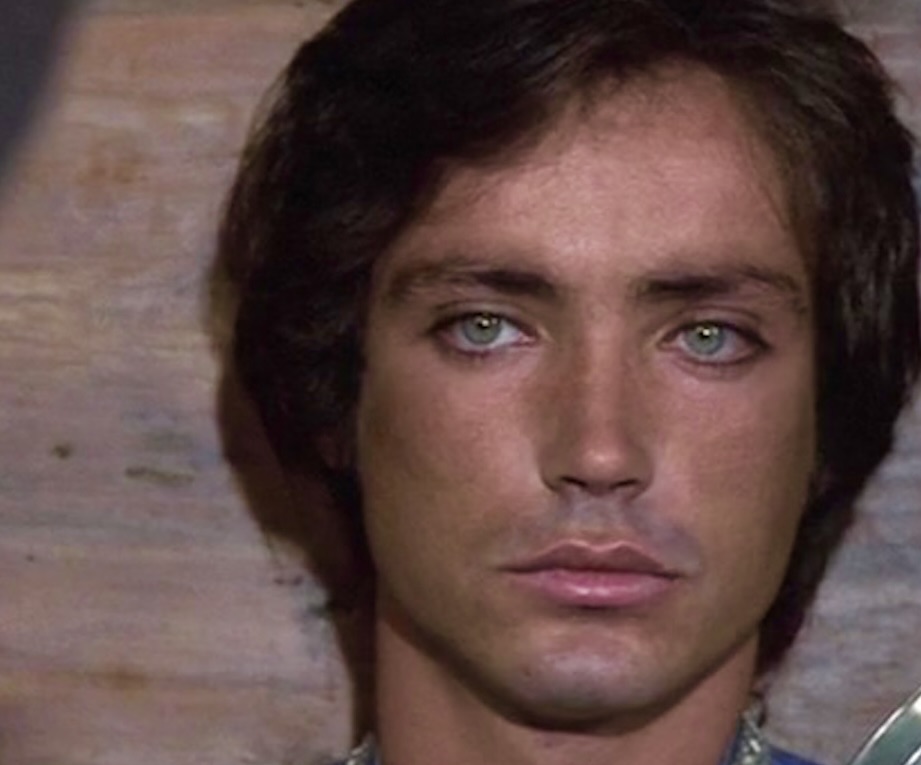
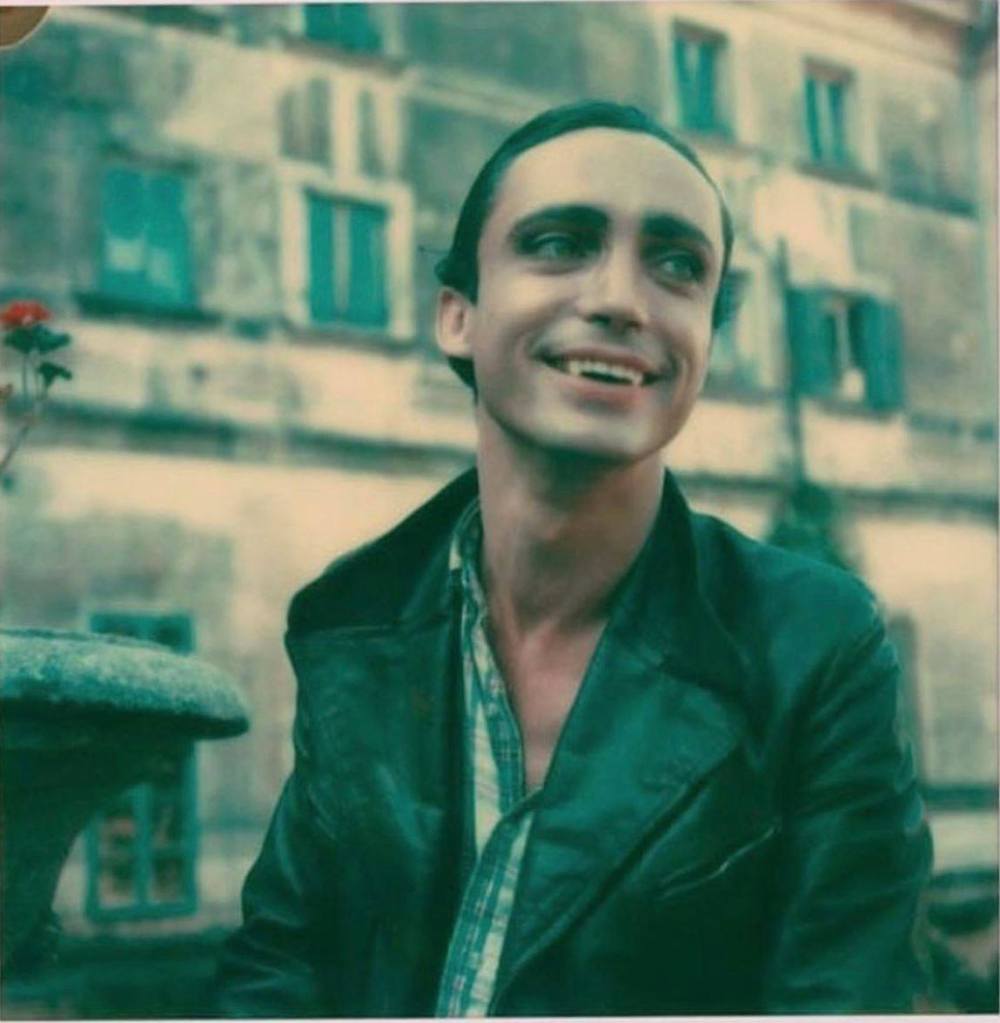
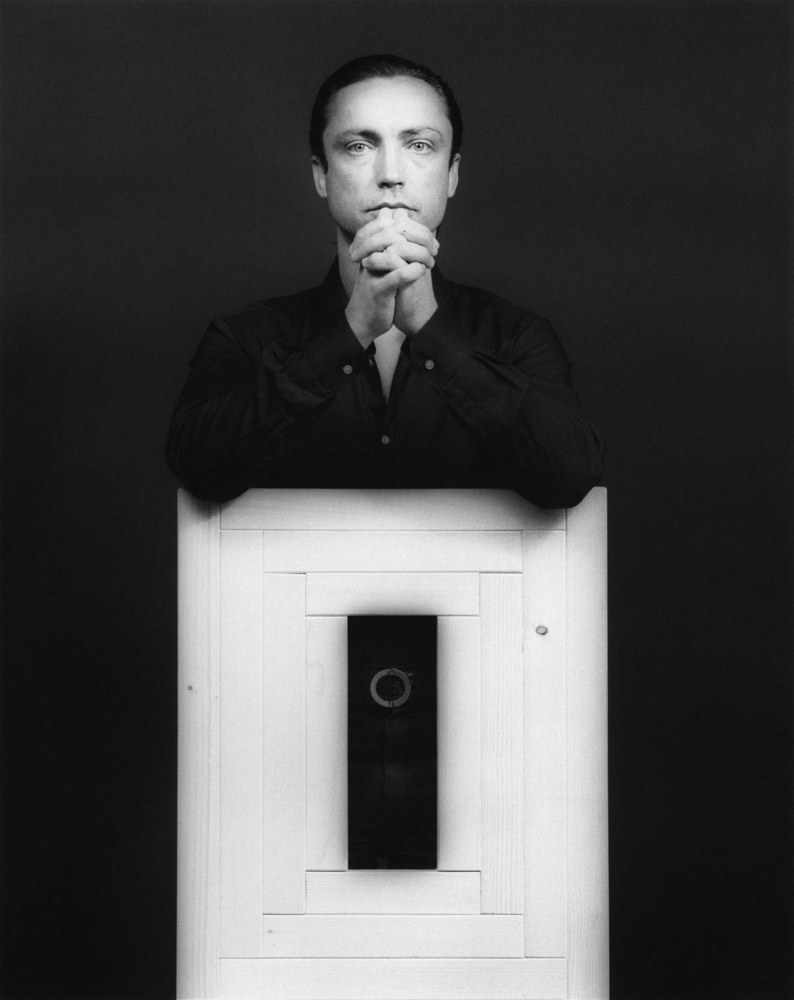
The Eye of the Universe: Udo Kier

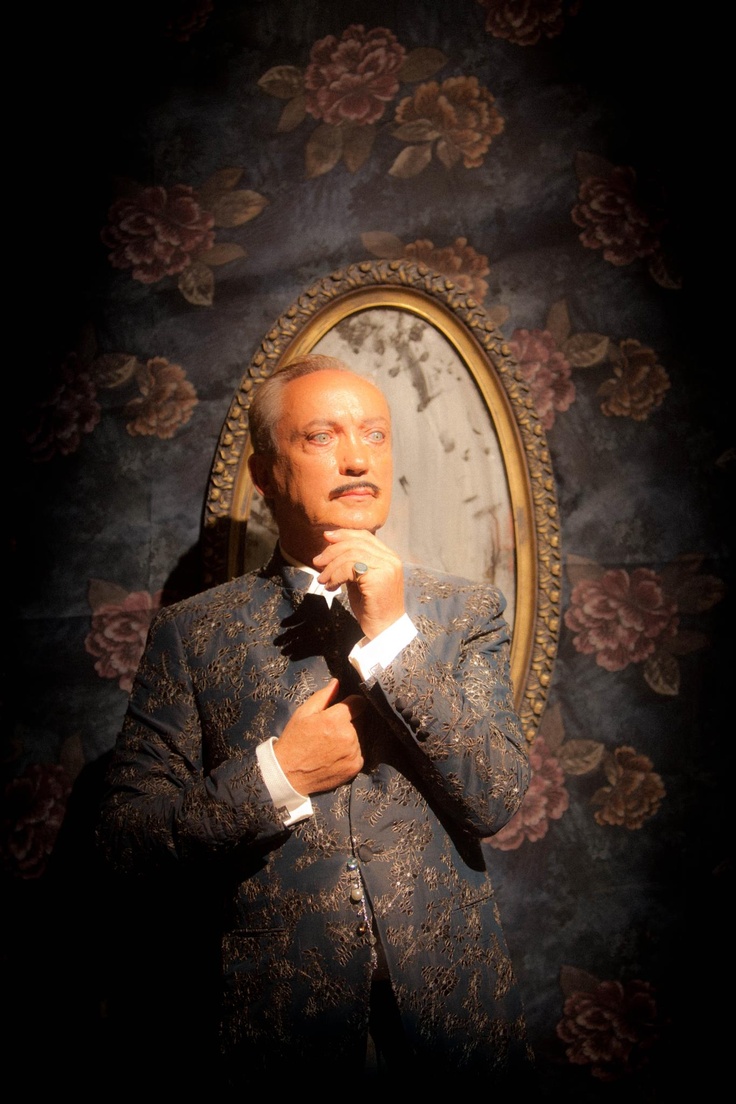
I published this in 2014 after working with Udo in 2010 and 2012. Eleven years later, the legend, the unforgettble actor, the sui generis Udo Kier has passed away. Film and, really, the world, will never be the same without him. There will never be another. I will miss you so much, my friend. And deepest condolences to wonderful Delbert.

We’re driving around Palm Springs and Udo Kier is asking me to check on his ball. Has it arrived? I’m not certain what he’s talking about. A ball has not been mentioned yet today, but as we slowly creep past his block, I check for a ball as if this is the most normal thing to do. “It’s enormous, you can’t miss it,” Udo tells me in his distinct German accent of Udo-ness; only Udo sounds like Udo — and no one sounds like Udo. I don’t see the ball. “No. No ball. OK. It’s not here yet, let’s drive some more,” he says with a curious mixture of stern cheeriness. We do just that, eyeing houses, discussing the architecture of Palm Springs, how our mornings went. We discuss his life living in both Palm Springs and out further, far into the high desert. He stops by his other house to show a couch he wants to give me. It’s lovely from what I can see, but dusty and crammed in the back of his garage. It’s massive. How will I ever move this thing? He seems incredulous: “Well, don’t you have any strong friends?”

Udo-Kier

Yesterday Udo and I drove around Morongo Valley shopping in thrift stores. Udo doesn’t care for the antique marts where everything is curated and nicely arranged and usually overpriced. He prefers the hunt, to search through the junk and treasures, to stumble on something remarkable and unexpected. And he always manages to do so. We come across a big white desk with pink and gold details – faux neoclassical with those delicate legs. Probably from the 1960s, but very Louis XVI. It’s a little ridiculous but sturdily made and beautiful, bordering on tacky and we both love it.  

He says that I must have this desk. He urges me to buy it. I’m waffling but Udo persists. He tells me this is where Marie Antoinette would sit and write letters. He shows me how. He tells me it would look good with my hair. He’s ever convincing, but I need to think about it (“strong friends”). We continue to browse and almost immediately see two men, maybe antique dealers, spying the desk, inching closer, checking the price. We return to the desk. Udo says “She is going to buy it.” I am? We place it on hold. Oh dear. More things to move. More strong friends.

0udo_kier_c_rm-scaled-1000

Everyone in these dusty little shops know him. Some know he’s an actor, a movie star, some probably aren’t so sure. They can tell he’s something famous. He talks nicely and with jovial familiarity to everyone working. When we drive further on to a thrift store in Yucca Valley, an older female employee wearing her Angel Thrift smock stands out front on her smoke break. She greets him with a scratchy, gin-soaked voice, “Hey, Udo. We got some clay pots.” Udo is pleased. She takes a drag from her cigarette and says, “Yeah. But you got too many clay pots.” She cackles and goes back inside. The clerk says an immediate hello — there are items in the back. Everyone’s happy to see him. Walking through the store, someone asks Udo if I’m his daughter. He says, “Don’t insult her! She’s my granddaughter.”

Driving through the desert, we talk about his life, art, his work (and all the work he’s currently doing — it’s a lot), people he’s met, working with Fassbinder, von Trier, Morrissey, von Sant, Argento, Herzog, Maddin and more and, then, movies he’s loved as a kid. He loved watching Errol Flynn pirate movies. He didn’t have much money growing up, but he’d rush to see Flynn on screen. He discusses one of the three pictures he almost made with Alejandro Jodorowsky. It later became Santé Sangre. Before it was to star Udo and Bette Davis. Wait. What? Bette Davis?

Udo says he cried that they couldn’t raise the money back then; that he couldn’t work with Bette Davis. “Originally Bette Davis played my mother. It was a circus family and my father cut off the arms of my mother and I swear to her that as long as she lives, I will be her arms! Imagine! Imagine! Bette Davis and me! And I would have trained how to do it.” Udo adds: “I don’t want to spill a cup of coffee on Bette Davis.”

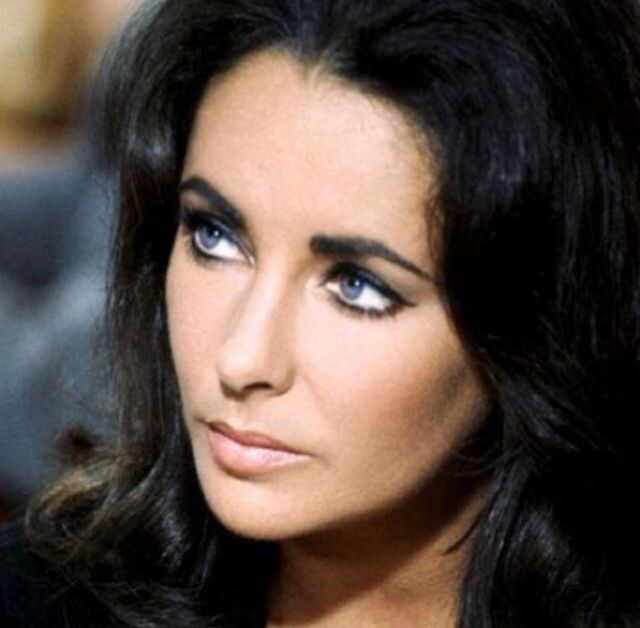
I mention Davis’ eyes. Udo and Bette, in a staring match! Udo laughs. Bette’s eyes lead to another favorite actress and her famous eyes, Elizabeth Taylor. “I was in love with Elizabeth Taylor when I saw Suddenly, Last Summer. Oh, my god! She should have got an Oscar for that.” He brings up numerous Taylor performances that stayed with him including Reflections In a Golden Eye (“With Marlon Brando when she hits him!” he says), Who’s Afraid of Virginia WoolfButterfield 8 and X, Y & Z. And then he tells me he kissed her, in real life.

“It was at a dinner in Miami … the guest speakers were Elizabeth Taylor and Audrey Hepburn. And I was sitting at one table, with a very famous artist and I was bored. Because the wine, they give it to you and you drink it. But the food takes forever. So I said, I’m going to take a rose from the table and give it to Elizabeth Taylor. She’s at the table with Valentino. The painter I’m sitting with said, ‘You are not brave enough to do that.’ So I poured one more glass of wine, took the rose, walked over to where she was sitting, kissed her on the forehead and said, ‘You are so beautiful’ and gave her the rose. She said, ‘Thank you.’” 

Aaa97e5def9866cda97f09ce87829623

“My dream as a young actor was playing Elizabeth Taylor’s son because we had the same eyes. My idea, was, I would be her son, who she doesn’t know about in Rome. And he comes into her life and she’s flirting with him, and then they have an affair and she finds out it’s her son.” I’m taken aback by this. What a wonderfully sexy and kinky idea. (Udo has a lot of intriguing ideas.) I exclaim, “Why didn’t you write and direct this movie?” He agrees he probably should have. 

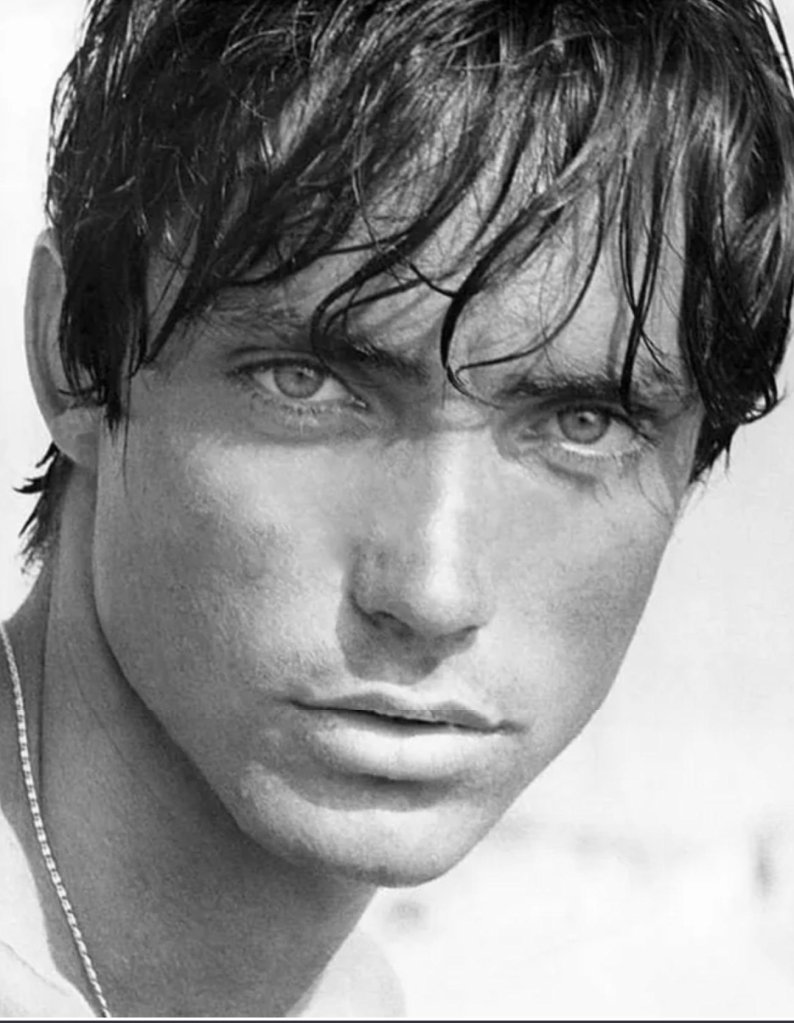
I bring up Udo’s beauty. He’s shy about this for a moment. I tell him he’s still gorgeous now, because he really is. He’s lucky in that, as he gets older, he never loses his Udo-ness, it just seems to increase. He’s too interesting a person, too unique, too vital, too great an actor, too smart for anything like beauty to fade. I’m not flattering him. It’s just too obvious. Every place I’ve been with him, Paris or Winnipeg or Los Angeles or in the middle of a dirty thrift store in Morongo Valley, people look at him, things shift, the room temperature changes. Charisma. When he was young, he had to know he was one of the most beautiful men on the planet, I say. He’s very gracious about this. Not boastful. It must have been crazy, at times. He is again, humble and discreet but he knows what I am getting at or pondering.

C592751e32e36a1a2a56222ed5ba043a

We stop off at his halfway finished property in Joshua Tree. A simple, but semi large green structure, set in the vast expanse of desert. His survivalist-looking neighbors, seemingly the only ones, check in and offer a beer from their truck. They invite us to see their pet donkeys. They love Udo. The man hands him a bag full of thrift store neckties. We’ll see the donkeys later.

Inside the house, he’s still putting in the kitchen and the bathroom. The inside is like a barn with exposed beams that he’ll keep that way. It’s gorgeous. It’s filled with all kinds of pretty, strange things, all eclectic and fitting of Udo’s taste. Udo loves the Palm Spring mid century modern aesthetic, and he has an impressive, enormous art collection (and furniture and just about everything), but he’s not boring and strict about it like too many people. An instinctively creative person, he mixes it up with all eras and expression and his own art projects.

Udo makes fantastic chairs out of neckties. (Now I understand the neckties.) There’s a box of doll heads and I reach in to grab one. All of the dolls have holes in the back of their heads. He says he’ll put feathers in the holes. He shows me a lovely antique dining room set that he hates to part with but doesn’t have room for. He says I can have it if I can move it. More strong men. He tells me, once it’s all moved and set up in my dining room, he’ll come visit me and the dining room set. He’ll make a movie about it. Elegant and absurd: About a man who comes over to visit because he wants to sit at the table and chairs he gave to his friend. But then he just keeps coming over, repeatedly, over and over, to sit there. He sits in different chairs. He likes to put his hands on the table. He misses the table. He misses the chairs And sometimes he’ll come into her house and just sit there alone. This movie is told off-the-cuff, poetic. Like when he instructed me to get air conditioning: “You don’t want to be a dried flower, Kim.”

We drive back to Palm Springs, talking about the desert, why it’s preferable to spread oneself across this hot, high lonesome instead of settling in Beverly Hills or somewhere like that. Udo, who does not have a normal life, but remains down to earth and sensitive, talks about having a normal life. “I don’t want to lose reality. The more normal you feel, the more you have a fantasy of being someone you loved. And that was always my goal, to talk to people, finding out people’s stories… I will look at a man walking in a strange way and I think, that’s great. Maybe one day I will play a role and I will walk like that man or that woman who walks very strange…”

F89511f8ebbe907a4059b868a28a1169

“The problem is that people think that actors live in this mundane world. That they’re driven in a Rolls Royce and all that. And those that do, they lose reality. If you live like a millionaire, and then you play a millionaire, what is there to do? I fantasize of a combination of [things] of what I’ve read in books or magazines or Dostoyevsky or see in real life. If you have lost the reality, you lose the fantasy. You need to have the need for fantasy. The happiest of all the places where I could be is here, in the high desert. There is something magical about it.”

We return to Palm Spring and I stay the night. We wake up, drink coffee and check on his other house. He waters a tree.  And, then, back to that ball. We drive down his street. I finally see the ball. He wasn’t kidding about this thing. You couldn’t miss it. An enormous orb taller than his fence, made of steel and iron or something ridiculously heavy has arrived on a truck, a massive sculpture to set in his expansive backyard by the pool. The artist unloads it himself in the blazing sun. Udo is grateful and kind to the artist, a friend, accomplishing something that appears incredibly dangerous. How heavy is that ball? The artist doesn’t need any help, and seems to want to be left alone focusing on this task, so we go back into the house. Udo makes lunch and we talk about work. But we can’t stop eying that ball. Udo decides he likes the ball slightly off center and we interrupt our conversation to peek on the thing’s progress. Udo is correct. The ball is somehow more impressive and interesting when pushed a bit to the left. It takes three hours to unload the ball.

We move outside by the pool and gaze at it. I am oddly moved by the ball, the way it’s just sitting there, tall and round and set against the blue sky. It’s strangely beautiful. You can stand inside the ball and Udo says I can dance in it at night. Udo is thrilled by his newest work of art. He points out that it looks like a giant eyeball. Udo names it, half jokingly, half serious, “The Eye of the Universe.”

I drive back to Los Angeles that night and fall asleep early. I wake up around 6 AM to an earthquake. The bed is shaking, the walls are shaking and I’m confused. I remember I’m in Los Angeles, and not in Palm Springs. I suddenly worry about that enormous ball. I sincerely hope that ball hasn’t rolled into Udo Kier’s house. I reassure myself. It’s an eye. It’s Udo. And Udo is resilient. As large as it is, it won’t win. And if that eye tried, it would make a great movie with Bette and Liz and dear Udo. The Eye of the Universe.

Love you, Udo. Udo Forever.

Nightmare Alley on Criterion

SSFts8eR0TCZ1sJtjNG2SuzrrT7zDT_large
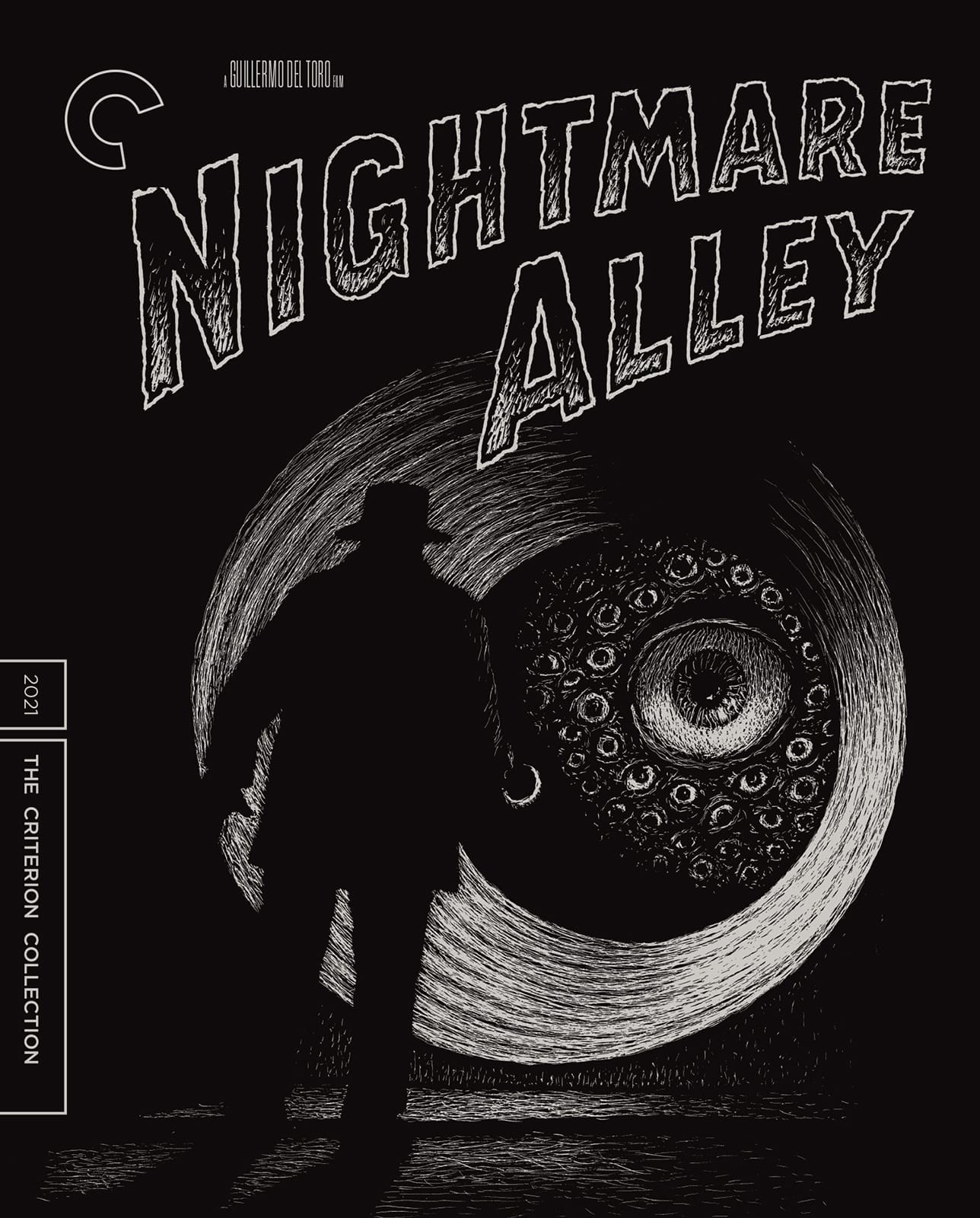
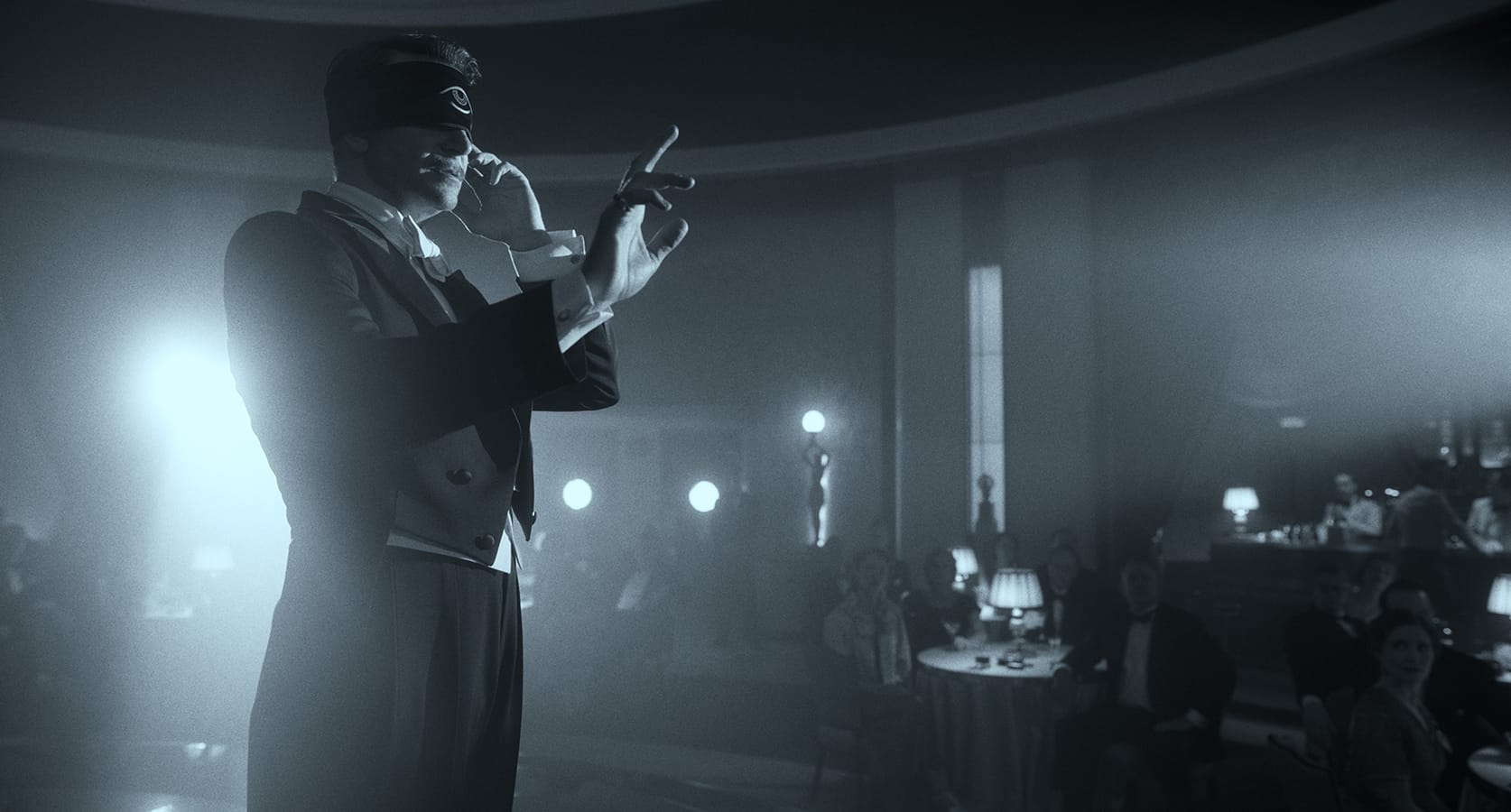
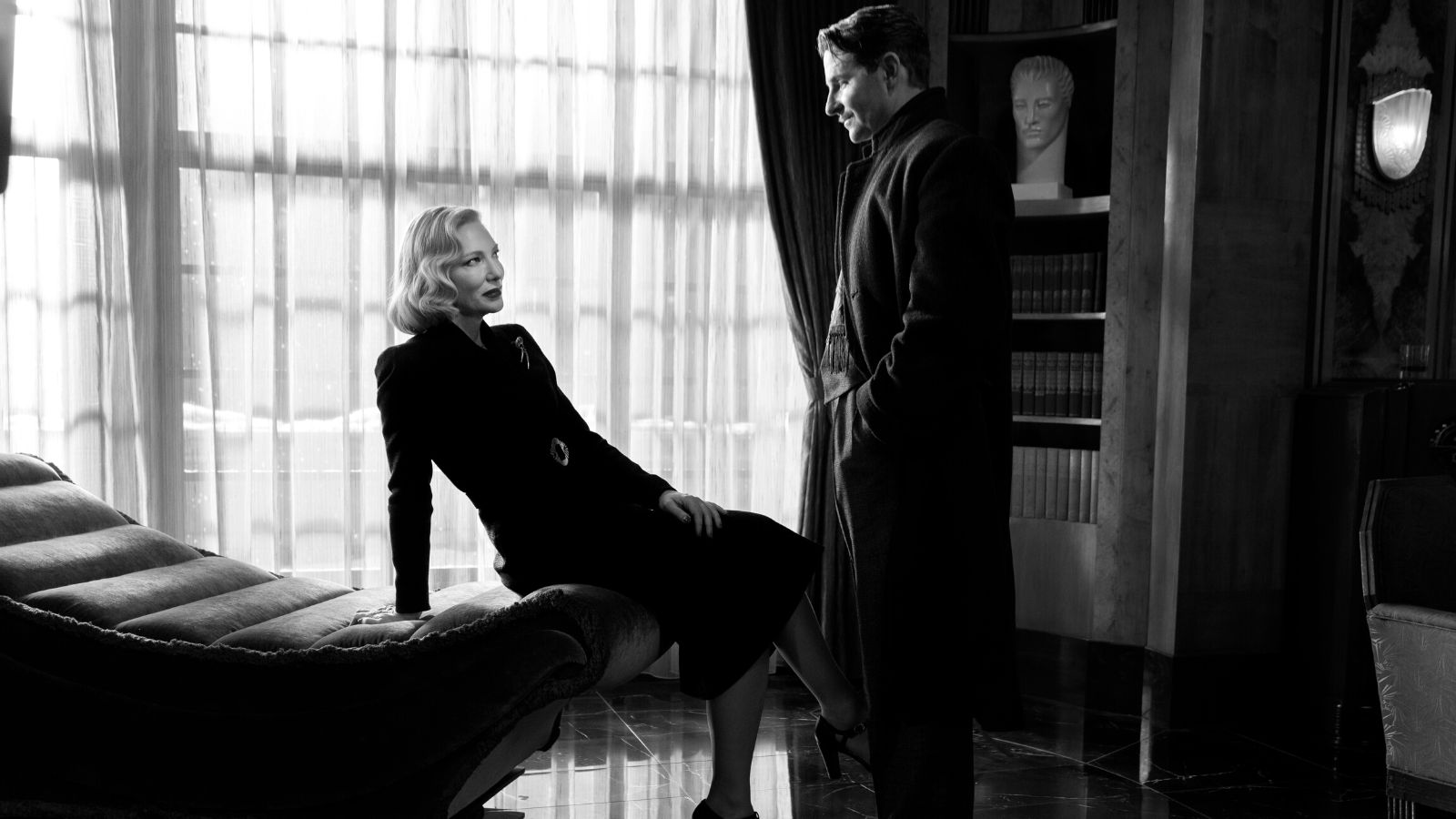
Excited to announce  our Nightmare Alley, directed by Guillermo del Toro — which I co-wrote with him — is getting the Criterion treatment this year. Release date  – October 28!

Here are the details:

-4K digital master of Nightmare Alley: Vision in Darkness and Light, a new black-and-white extended director’s cut, supervised by director Guillermo del Toro, with 5.1 surround DTS-HD Master Audio soundtrack

Gv6V8tuXIAcxDOu
-4K digital master of the theatrical version of the film, with Dolby Atmos soundtrack
Two 4K UHD discs of the films presented in Dolby Vision HDR and two Blu-rays with the films and special features

Gv6V8tjXIBENY_m
-New audio commentary on the extended director’s cut featuring del Toro

-New documentary on the film’s performances, visual language, costume and production design, and score

-New conversation between del Toro and actor and producer Bradley Cooper

-New conversation between del Toro and co-screenwriter Kim Morgan

-Trailers

Gv6WAsrXIAQzhRs
-English subtitles for the deaf and hard of hearing and English descriptive audio

-PLUS: An essay by crime-fiction and true-crime expert Sarah Weinman

New cover by Thomas Ott


Felix E. Feist’s The Threat

5cf03b247ae04
“When I accepted the assignment to take over Nick Fury, Agent of S.H.I.E.L.D., Marvel Comics’ four-color 007 facsimile, the series was shambling through creative purgatory, charted by a knot of writers and artists who (with the exception of Jack Kirby) apparently didn’t know or didn’t care about its direction—or, more appropriately, its lack of direction… I might have used Charles Bronson, Kirk Douglas, James Coburn, or other cinematic tough-guys upon which to build my matrix, but instead opted for one of my favorite character actors: Charles McGraw. Whether playing heroes or villains, he was always as hard-boiled as they came, always just as ready to shut anyone up with a backhand slap as with a warning. His vocal delivery neatly summed up everything he brought to the screen: a predatory growl as harrowing as that of a cornered tiger’s, bristling with menace, and suggesting a penchant for violence beyond that of his blunt, granite features. Sometimes there was even a harsh, metallic quality in his timbre, like that of a Sonovox voice amplifier. Something beyond human. Perhaps something even less than human. The voice of Charles McGraw personified what I felt Fury was all about. His was the voice I heard as I wrote him into the S.H.I.E.L.D. saga. His voice was the core of the character, the point at which every adventure began and ended..” – Jim Steranko, from his intro to Alan K. Rode’s “Charles McGraw: Biography of a Film Noir Tough Guy”

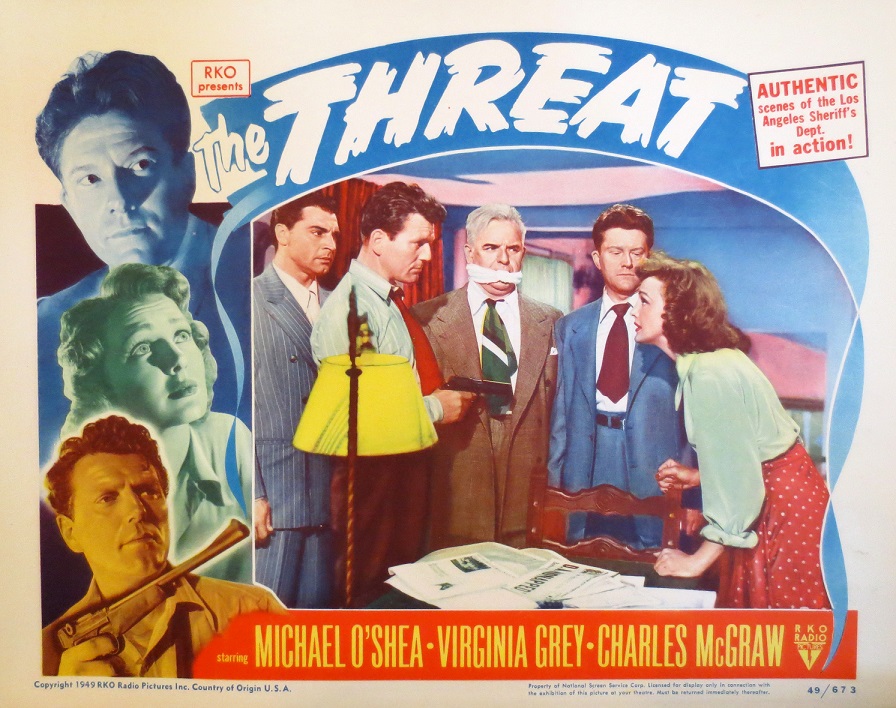
 In Felix Feist’s The Threat, Charles McGraw’s Red sits in a chair in California desert shack – he’s leaning back. His feet are propped up on another chair – indifferent to the cast of characters freaking out around him – hot-placid amidst chaos. His sweaty partners in crime (Anthony Caruso’s Nick and Frank Richards’ Lefty) are pacing uncomfortably, wishing the beer wasn’t so warm (“Hot or cold it’s still beer!” Nick snarls to Lefty’s whining). They keep on the lookout. The tied-up men in the back – police detective Ray Williams (Michael O’Shea) and district attorney, Barker MacDonald (Frank Conroy) responsible for Red’s prior incarceration (Red busted out) – are strategizing and scared – and they look completely useless. What on earth are these straight-arrow fellas gonna do? What are they capable of – up against Red? Let’s see them try. Will they try?

The traumatized ex-girlfriend, Carol, who was forced along this dire road trip (Virginia Grey), the one who never ratted Red out and keeps telling him so – she is trying to keep her shit together and we feel for this poor soul. Red doesn’t believe her or the cops, and this slip of a woman (she is pretty, very distinct looking, but so thin she looks almost like she’s going to pass out), endures, vulnerable as all hell, but somehow stronger than the authority figures wiggling in the further room. She has a past with this man – you’d have to be vulnerable and strong to have a past with Red. And we’ll see more of that later.

Charles+mcgraw+in+the+threat
The force of Red is so intense, so nearly unmoving, that everyone around him look like mice, circling an enormous cat – one who will casually swipe his paw and lay any one of them flat, maybe even dead. He’s ready to strike and yet totally relaxed – if that’s possible in a human. With McGraw it is. He doesn’t look comfortable necessarily, that’s not the right word, he doesn’t look like he’s enjoying himself either – he looks angry, but not out of control (just born pissed, something) – but he looks in his element, as if this was just what he was naturally meant to be and do and live in. Like he almost can’t help himself. 

At this point, no one seems like they could take him (no one ever does, not really, until the end … keep your eye on skinny Carol), and all he really has against him is that old standby – time. So, when one of his partners claims that Red said they’d be out of there by daylight (it’s past daylight – and they’re worried and itching to exit this hell hole), the other asks for the time. Red rasps, “Give me your watch.” The guy (that’s Nick) takes his off watch and hands it to Red. Red puts the watch on the table, grabs a beer bottle, and smashes it. He chucks it back to Nick and says with his distinct growl, simply: “Now you don’t have to worry about the time.”

Well, indeed no.

This is a perfect Charles McGraw moment and one where you think – no other actor in the world would deliver that line the way he does. Even that simple of a line. None. Not even Lawrence Tierney, who never seemed like he was acting either. There is just something about this man’s voice and demeanor that is unmatched and reverberates through a room. Alan K. Rode, who wrote the ultimate biography on McGraw, summed it up beautifully in his book:

"His guttural rasp of a voice, reminiscent of broken china plates grating around in a burlap sack, was complemented by an intimidating, laser-like glare and a taciturn demeanor that verged on being closed captioned for the hearing impaired. McGraw’s brusque noir characterizations are comparable in technique to Thelonious Monk’s splayed fingers beating his unique jazz stylings into submission on the piano ivories. The title of Monk’s identifying theme ‘Straight, No Chaser’ exemplified McGraw’s artistic and personal bent for over half a century.”

The-threat-7
In The Threat (1949) – Feist’s lean and mean story is told without an ounce of flab – filled out by the presence of the electrifying McGraw. The story is simple: Red busts out of Folsom Prison – we see this briefly at the very beginning – guys running, guns firing, sirens blaring, but we don’t need to see much else. The movie gets right to it. He’s on the run, and hell bent to get the guys who put him behind bars — that’s the District Attorney and the police detective who wind up in the aforementioned shack (one will get such bad treatment off screen, we hear his torment and truly wonder what on earth is being done to the guy – it’s more terrifying that we only hear his pained moans). They nab these two, nab sad Carol, nab a poor guy who has nothing to do with any of this, a guy named Joe (Don McGuire), and head out to the California desert hide-out, waiting for Red’s old partner to smuggle him into Mexico.  

So, what’s going to happen? I’m not going to say because the joy in this movie is wondering how on earth anyone is going to get out of this place alive. And how are they going to take on McGraw? You wonder about the body count. You worry about Carol and you are riveted by Red. You can’t take your eyes off of him.

And so we watch – we watch the room rumble with McGraw's blood, his pumping black heart bouncing off those hate-shack walls. He’s casually savage, and for a moment, we might think he’s got something going on inside there – so if he briefly stares forlornly into the void, we look for some kind of feeling – and then wonder if he’s merely staring into a sociopathic abyss. McGraw’s Red, a furnace of vengeance, is boiling his captive's lives away by simply breathing near them. But, really, he’s boiling his own life away too – absolutely self-destructing. But he’s doing it his way. We guess. We wonder if this guy ever feels joy. He doesn’t seem too sad.

Everyone’s good to great here (Gray is a standout as are McGraw’s sleazy cronies), but it’s McGraw’s gruesome party all the way – from his silent menace to his terrifying bursts of violence (like pinning a man's wrists with his feet and crushing his head with a chair – one of the greatest scenes in the movie – emotionally and technically— and it was probably that same chair Red was so easily reclining) he is like nothing you’ve ever seen, and probably never will.

This is the movie that made McGraw something of a star – thought not a usual leading man – notably in Richard Fleischer’s Armored Car Robbery (1950), and The Narrow Margin (1952).  And he did sometimes play a good guy – a tough guy but a good guy. He’s also terrific in Harold D. Schuster’s Loophole, Howard Daniels’ Roadblock, John Farrow and Richard Fleischer’s His Kind of Woman and of course, Stanley Kubrick’s Spartacus.

Image6 copy
Feist (who directed two other hellraisers, on and off screen – Lawrence Tierney in the tough, excellent The Devil Thumbs a Ride, and Steve Cochran in the rough and romantic Tomorrow is Another Day) working with cinematographer Harry J. Wild, knows how to showcase McGraw in such doomed digs. Tension builds so much that you can practically smell the sweat – and everyone’s sweat is a little different – you can smell that too. These characters perspire and dread and plan and panic and grow crazier and crazier while their big bad captor sits and waits, radiating wrath.

And all in just 66 minutes. That is six minutes over an hour for those who are bad at math. And during that time, this hysterical entrapment does not waste one minute of intensity, style, intelligence and Charlie-McGraw-magnitude. Feist knew what he was doing and who he was dealing with here. He knew who was the star (even though McGraw is third billed!)

And the movie needn't be shorter or longer. As if you were concerned about the time. Were you concerned about the time? Smash! “Now you don’t have to worry about the time.”

June 1: Marilyn Monroe

6a00d83451cb7469e20263e85f866b200d-800wi

Happy Birthday Marilyn Monroe!

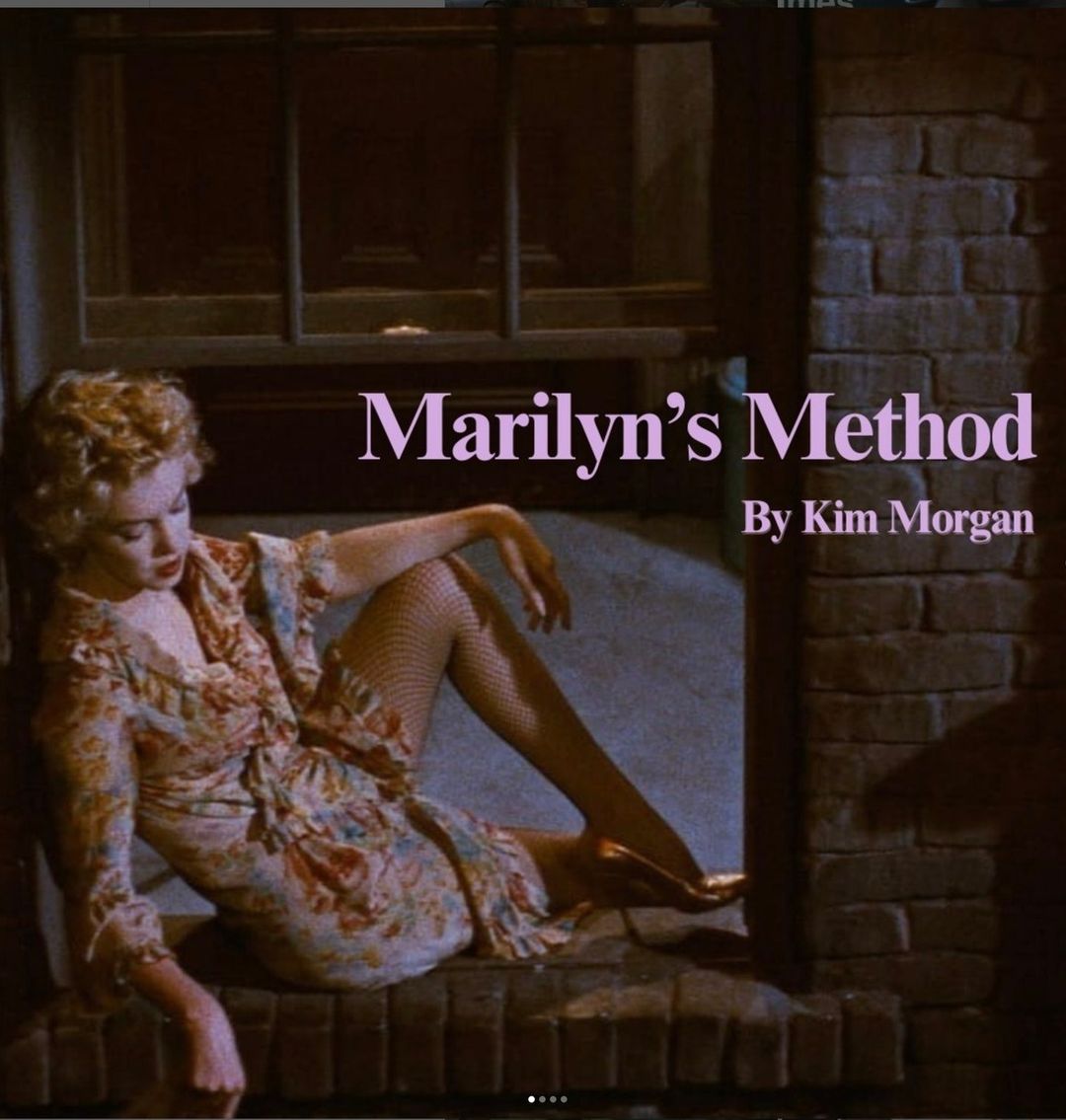
For beloved MM's birthday, here's a small excerpt from my Criterion piece, "Marilyn's Method," published in 2023.  It covers, among other things, her performances in The Misfits, Niagara & Bus Stop, specifically, and her journey and power as an actress and an artist. Here's a portion:

“Do you want me to turn them loose?” This is what cowboy Perce asks a sad-eyed Roslyn in John Huston’s elegiac The Misfits (1961), and that one question about untying the mustangs he and fellow wranglers Gay (Clark Gable) and Guido (Eli Wallach) have captured—beautiful horses who will be turned to dog food—is so extraordinarily moving in its quietly weighed delivery that it’s breathtaking. It’s moving because it’s Montgomery Clift asking the question, and because of the power of Marilyn Monroe’s Roslyn and her chemistry with Clift. But it’s sublimely moving because of Roslyn’s preceding scene instigating the request—her scream in the desolate landscape, her testimony:

Killers! Murderers! You’re liars! All of you liars! You’re only happy when you can see something die! Why don’t you kill yourself to be happy? You and your God’s country! Freedom! I pity you! You’re three dear, sweet, dead men!

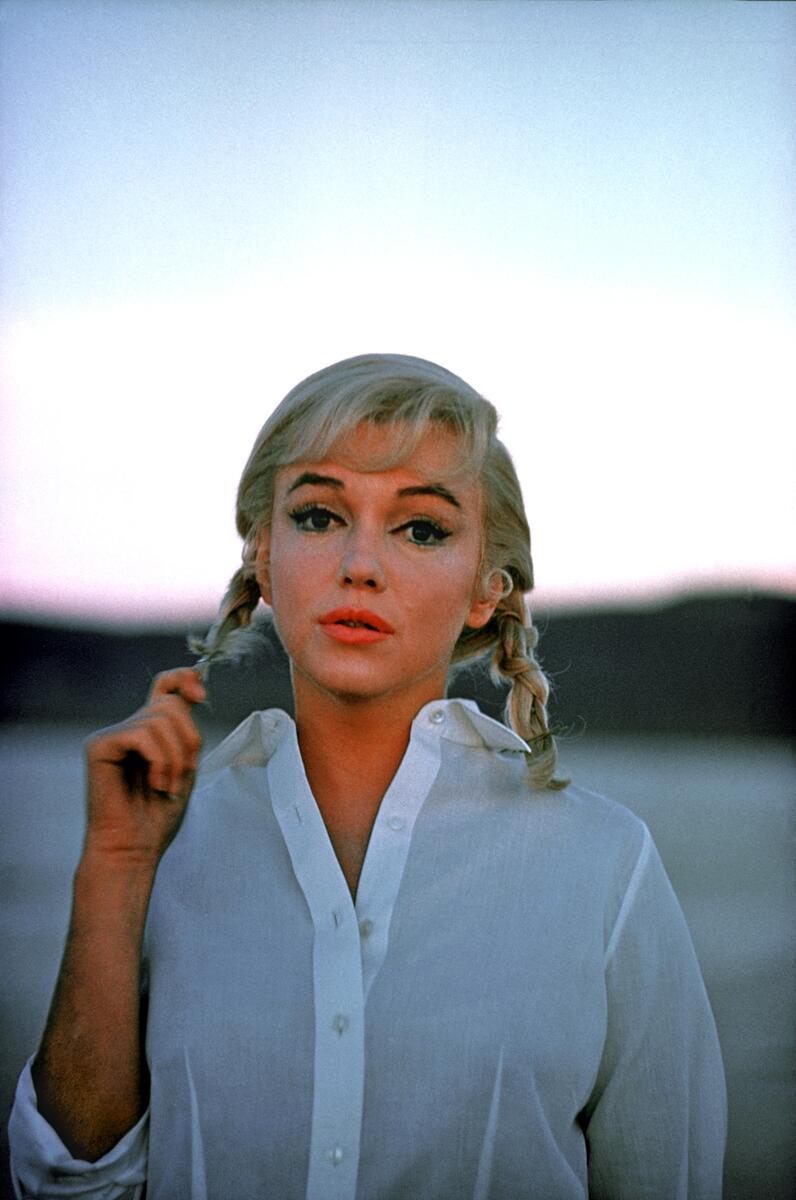
That big, blistering moment is filmed in a gorgeous and almost unmerciful long shot, with a distant Monroe, her blond hair and denim in the desert; viewers fix their eyes to see her better as she rages—a brilliant choice by Huston. By forgoing a close-up, he makes Monroe’s speech feel almost unexpected and shocking, and, oddly, more powerful. There are three men who, throughout the movie, have observed this woman with bewilderment, lust, love, and anger. She’s represented multiple ideas, dreams, or wishes for them (the script was written by her soon-to-be ex-husband, playwright Arthur Miller), but she’s now screaming and nearly tearing her hair out—almost as if to make herself flesh and blood.
Marilyn as Roslyn espouses part of the movie’s thesis—a potential sledgehammer—without the directness feeling unnatural, underscoring the end-of-the-line lives these men lead and the simultaneous empathy and anger she feels toward them. Clift’s Perce, who is already feeling lousy about capturing the mustangs, so much so that he doesn’t even want to be paid for it, gazes with sadness and, perhaps, shame; Gable’s Gay looks on concerned, disquieted, and Wallach’s Guido, at that moment, is all annoyance and anger: “She’s crazy,” he says. “They’re all crazy. You try not to believe it because you need them.”

364807148_10160587287070792_67047706235272040_n

Read it all here.

Happy Birthday Marilyn! 

Little Masterpiece: Little Murders

6a00d83451cb7469e20263e9450338200b-800wi

“Little Murders was conceived as an essay on what I perceived to be going on in America in the mid-1960s…’inspired,’ if you will, by the assassination of JFK and the shooting of Oswald a week later. The post-assassination climate of urban violence made me realize this country was in the process of having an unstated and unacknowledged nervous breakdown. All forms of authority which had been previously honored and respected, on every level of society, were slowly losing their validity.” – Jules Feiffer

In Little Murders Elliott Gould is an American under attack. An exaggerated, satiric American under attack, but as this movie ever so slyly shows, perhaps for some, not so exaggerated. The city and everyone in it has gone mad and fear — so much fear — is making citizens turn on each other. Even the cops are freaking out. Gould, numbed by those little and big things that beat us down by life — those soul-crushing day-to-day existential agonies — also endures genuinely violent threats: a push in the park, a punch in the gut, a full-on beating. He’s not paranoid about those waiting in the alleys anymore because, why? Why be paranoid if you’re beat up nearly every day? Gould is so directly in touch with these perils that he’s adopted a nihilistic nonchalance of protection and simply shrugs off the offenses. He doesn’t find the need to fight back, not because he’s a pacifist, but because he’s an “apathist.” As he explains to his soon-to-be-wife’s parents in perfect Elliott Gould deadpan: “Well, there's a lot of little people who like to start fights with big people. They hit me… And they see I'm not gonna fall down. They get tired and they go away. It's hardly worth talking about.”

It’s both a strangely reasonable rationale (people will stop, you might wind up dead but they will eventually stop hitting you) and an absurdly funny display of dispassionate blunting: he says he hums through the pain and thinks of something else, like taking pictures (he’s a photographer). Makes sense — if the world feels insane — and it often does, especially now.  Cartoonist, playwright and screenwriter Jules Feiffer wrote this in response to what he deemed America suffering from: an “unacknowledged nervous breakdown.” That was 1967. And here we are (as I wrote this — 2017) — now, it's 2025.

Little Murders is a satire, but never beyond reality  – it’s so brilliantly observed, so smart, so hilarious, and so disturbing, that watching now, the picture moves beyond a time capsule of New York City circa late 60s early 70s and into the dark heart of American madness. And in the grand American literary tradition — Hawthorne, Melville, Poe — we are all a little crazy: Said Poe, “I became insane, with long intervals of horrible sanity.”

Little-murders-2
I’m not sure if anyone displays simple sanity (whatever that means) in
Little Murders — maybe (OK, not really) Patsy Newquist (played by Marcia Rodd) who is trying her hardest to at least be optimistic in a city full of muggers, shootings and heavy-breather obscene phone calls that follow her from apartment, to parent’s place to even a payphone at her wedding. But trying is indeed a “horrible sanity” in this movie’s unsparing universe, so when she meets Alfred (Gould) as he’s getting attacked outside her flat, she does the most insane thing imaginable, she falls in love. Her version of love is to “mold” Alfred, a photographer who takes pictures of dog shit (a jab at the art world? Or he’s a really talented photographer of dog shit? I say both), and she urges him to listen to her schizoid entreaties: “I want to be married to a big, virile, vital, self assured-man that I can protect and take care of! You've got to let me mold you. Please! Let me mold you!” Gould’s not so sure about this whole love thing but he proclaims a more powerful declaration: “I trust you! I very nearly trust you!”  For a guy like him, that’s saying a lot. Hell, that’s saying a lot of anyone.

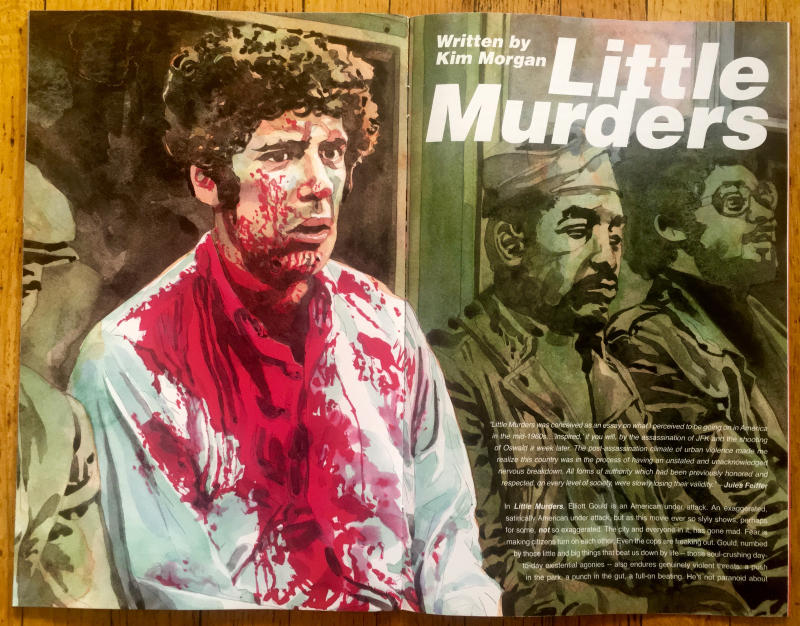
Directed by Alan Arkin and shot by Gordon Willis, this 1971 adaptation of Feiffer’s genius, pitch-black comedic play still feels like nothing you’ve ever seen before. The beats of the movie, from hilariously nutzo family dinners to genuinely reflective moments of horror (like a blood splattered Gould on the subway), remain potently uneasy. This is not a comfortable movie, nor should it be. For that reason, one can understand its fascinating backstory as a play. First running in 1967 and starring the great Gould, it only played seven nights and then closed. People weren’t ready for it, perhaps; something didn’t click, or something clicked too much. Two years later, after America had been batted around enough (and would even more in the ensuring years), it played off Broadway, this time to great success. As for the film? In 1971 so much had hardened in this country.

P1444_i_h9_aa
In Feiffer’s vision no one is spared. He’s not being conservative at all — this is not a decrying of city violence or a return to values. I believe Feiffer is instead a shrewd, frustrated observer, while giving what we hold “sacred” a raspberry. Patsy yells at Arthur to fight back, she can’t stand his apathy. She’s right, but then she’s not right. She ceaselessly questions his masculinity as Gould in all of his tall, dark, offbeat Belmondo prime, wanders around in a bemused daze — he's a guy who could likely land a punch but doesn’t want to. Maybe that’s just as masculine, not giving a fuck. Everything is questioned here. Patsy’s family, the conservative father (Vincent Gardenia) who thinks everyone’s a “swish” and is so fearful of appearing weak that he hollers at anyone who states his first name (“Carol”); her “come and get it!” mother (Elizabeth Wilson) who sits Arthur down to show him pictures of their dead son because she figures Arthur likes photography; her bizarre little brother (a hilarious Jon Korkes) who moves around in constant comic motion, lurching and smiling and making noises to be humorous (we think), and he is funny, albeit with a kind of sinister brotherly love (he and Patsy have some underlying incestuous dynamics).

Their apartment feels like a bunker as shots are fired outside and the “typical” American family is holed up, a group of loons, no crazier than Arthur and, yet, strangely recognizable if you’ve ever felt unsure meeting a partner’s family. Arthur’s intellectual parents are a different kind of nuts — they only speak through books — and so when he drops in on them (he clearly hasn’t seen them in forever) and questions his childhood — they can only answer through literary, philosophical and even cinematic reference. It’s funny, but it’s a bit heartbreaking as Arthur returns to Patsy, defeated, and, then defeated to become what she wants. He discusses his past college days when he was an activist and the FBI was on his tail. He says, "It was after this that I began to wonder…. why bother to fight back? It's very dangerous. It's dangerous to challenge a system unless you're completely at peace with the thought that you're not going to miss it when it collapses."

Feiffer, who also wrote Carnal Knowledge, released the same year as Little Murders (what a year) is relentlessly, hilariously toxic and yet, one never feels pushed away from the movie. The characters become weirdly likable; we start caring about them, we understand their anxiety while questioning those sacred institutions right along with Feiffer and Arthur: There’s a fantastic wedding scene with Donald Sutherland as a hippie reverend, announcing vows that are hysterically sensible:

“So what I implore you both, Patricia, and Alfred, to dwell on, while I ask you these questions required by the state of New York to ‘legally bind you’ — sinister phrase, that — is that not only are the legal questions I ask you, meaningless, but so too are the inner questions that you ask yourselves, meaningless. Failing one's partner does not matter. Sexual disappointment does not matter. Nothing can hurt, if you do not see it as being hurtful. Nothing can destroy, if you do not see it as destructive. It is all part of life, part of what we are.”

Another powerful, eerily prescient moment comes after Arkin’s paranoid cop flees the Newquist’s apartment, summoned when Patsy’s been killed (yes, this happens — she’s randomly shot). Mr. Newquist loses it and delivers a speech with crazed, paranoid satirical pronouncements that now, don’t seem so satirical anymore:

“What’s left? What’s there left? I’m a reasonable man. Just explain to me, what have I left to believe in? Oh, I swear to God, the tide is rising… We need honest cops! People just aren’t being protected anymore! We need a revival of honor and trust! We need the army! We need a giant fence around every block in the city—an electronically-charged fence! And anyone who wants to leave the block has to get a pass and a haircut and can’t talk with a filthy mouth. We need RESPECT for a man’s reputation! TV cameras, that’s what we need, TV cameras in every building, lobby, in every elevator, in every apartment, in every room. Public servants who ARE public servants! And if they catch you doing anything funny, to yourself or anyone, they BREAK the door down and beat the SHIT out of you! A RETURN to common sense! We have to have lobotomies for anyone who earns less than 10,000 a year. I don’t like it, but it’s an emergency. Our side needs weapons, too! Is it FAIR that THEIR side has all the weapons? We have to PROTECT ourselves and STEEL ourselves. It’s FREEDOM I’m talking about, goddamn it. FREEDOM!”

6a00d83451cb7469e20263e85ff3a9200d-800wi
By the end, Arthur finally breaks down after snapping pictures of people in the park, and it’s important we see he’s shooting people, not shit, which may seem like a bright new beginning. Really, it’s an on-the-nose (but perfectly on-the-nose) symbol of what’s to come. He brings home a rifle and the family embraces violence. They smile and laugh and celebrate crazily, but there’s no catharsis. They sit down to dinner and it’s all so terribly sad. It’s also terribly funny. And terribly timely.

My piece was originally published in 2017 for Ed Brubaker's Kill or Be Killed

Little Murders is playing tonight, June 1, at 7 PM at Egyptian Theatre | Q&A with actor Elliott Gould. Moderated by Larry Karaszewski. 


Too Late Blues

Too-Late-Blues-7-1

From Ray Carney’s “Cassavetes on Cassavetes”: “I loved Frank Capra when I was a kid. I saw Mr. Smith Goes to Washington and I believed in it. I believed in the people in our country and our society. I believed that the rich were not that bad and that the poor had a gripe, but that people could come together and that made America a better place for me to live in and be proud of. And every Capra film I’ve ever seen showed the gentleness of people. There were corrupt people within that framework, sure. The poor people were always oppressed, but they were oppressed with such dignity and loveliness that they were really stronger than the rich; the rich had to be educated. I grew up with that idea. I grew up on guys that were bigger than life. Greenstreet, Bogart, Cagney, Wallace Beery. Those were my favorite guys. I’d think, God, what a wonderful life they had – to have an opportunity to stand up there in front of people, in front of a camera, to express yourself and be paid for it, and say things and have it mean something to the audience.”

“I am trying to show the inability of people to recognize that society is ridiculous. Hardly anyone obeys the mores, but they respect them. If they are exposed breaking the mores their lives can collapse. Our hero is not a coward, but in covering up this failure he destroys everything else that is important to him. A silly search for mores reduces the great, wonderful hero of the story into a cheap individual with no morals and ethics and no place to go.” – John Cassavetes on Too Late Blues

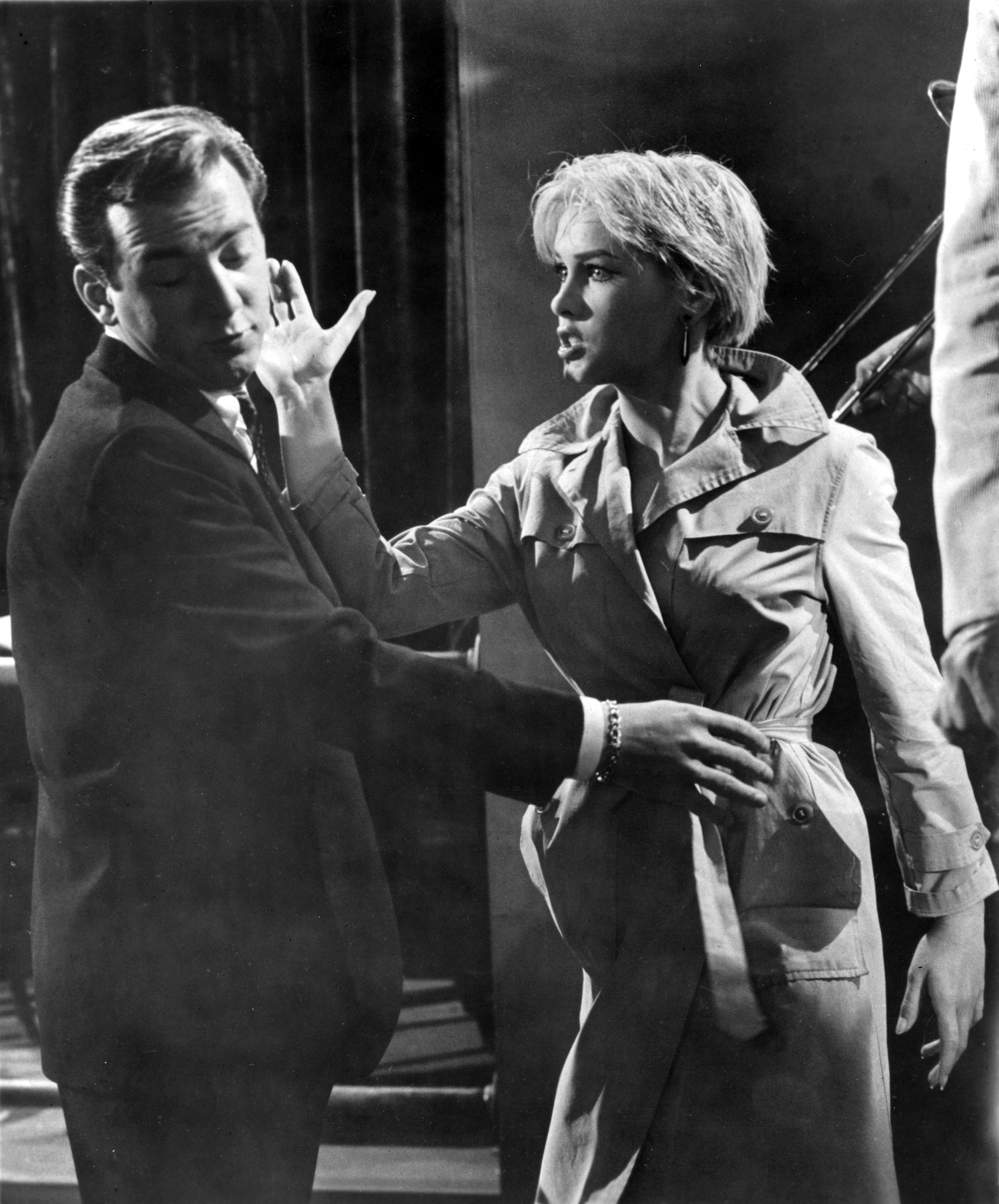
Everyone in Too Late Blues is miserable. And I mean miserable. That is in no way a condemnation of the picture, not at all, as this is a beautifully realized collection of melancholic musicians (also an agent, B-girls, a couple of bartenders and a touchy tough guy) who are depicted as humanely, compellingly and explicably miserable in a way that only John Cassavetes (who co-wrote, with Richard Carr, and produced and directed the picture) grooves on with his particular kind of dignity for the defeated. Some don’t know how miserable they are, they’re even laughing and exuberant at times, but we can feel it throughout the picture – it just hangs over these characters with their respected musical purity and perilous futures in a world that manages to grind down your purity and grind down your debasement (and yes, the world can grind down your sullying even more than you thought). Though none of these individuals are really trying to maintain a bright outlook since they know how life goes, they’ve been around. They’re also not ready to chuck away their dreams even when they go “commercial” (for a time). That should be a positive. It is. In an easier world. And so they walk from room to room, bar to bar, gig to gig, haunted. It’s no wonder the lead character’s name is jazz cat Ghost (Bobby Darin) – his ego might ruin him to that fate – a potential phantom, a guy people talk about from the past, leaving stale smoke and circles on bars behind him while maybe, just maybe his real music will be playing somewhere, a memory. Or maybe he’ll make it his way. Cassavetes did (but by 1961, while he was directing this picture, he hadn’t yet), and one can’t help but see the anxious, questioning parallels between Ghost and Cassavetes.

10KEHR-superJumbo
Darin’s Ghost Wakefield yearns to keep his artistic integrity, no matter if his band complains about playing in parks to birds and trees, living off nothing, is portrayed with the drive of a guy with lots of talent, lots of charm, but a hell of a lot more insecurity than he’s letting on. Darin in real life was a singer with loads of talent and though he was popular, he always seemed a bit off-center, not quite as cool as he would have liked, but not as square either. In Too Late Blues Darin entirely gets the anger and ego of a guy with talent to burn playing dumps, fighting during recording sessions and dealing with scummy agents while trying to do what he loves. He’s seen this world before. You can tell. And he’s both poignant and completely unlikable all at once.

 You can also tell that Stella Stevens (who plays Jess) the beleaguered B-girl and singer, has seen some sleazy situations in her time. She floats into the picture a petrified beautiful bird, nervously scatting with a seasoned jazz pro and ends it a suicidal wet-haired feral cat, once again singing in her wordless, almost disturbing near incantations. She’s heartbreaking – a broken young woman who has been so used, she can slip from quiet, contemplative junkie (without ever shooting up – her character just oozes opiate addiction and trauma) to drunk and boisterous to runny-eye-makeup, furious good time girl. She’s acting a part when she’s out hooking sliding right into the role men want her to be, but when she’s faced with actually loving someone (in this case, Ghost) she’s an emotional wreck. She’s also so vulnerable that one contemptuous moment from Ghost and she’s gone. She sleeps with his musician friend who is, as she says, bigger than him. She repeats this with emphasis so you get that she doesn’t just mean taller.

And yet, the film never judges her. Cassavetes is so understanding of this kind of woman that the picture feels downright radical in that regard. She’s not just a whore – she’s not even sure what she is – and that’s sad, not ugly. And Ghost (who will become kept himself by a rich woman playing music just for the scratch) well, what right does he have to judge? Ghost may represent the movie’s mixed idealism and egoism of holding onto your vision, but Stevens is its vulnerable center. She’s spinning from one place to another, even a baseball field, with all of these men swirling around her either telling her she’s worth something or distracting her from the purity of not just music (for she can sing) but of her own self. She is so down and depressed that her later, very physical meltdown in a bathroom is so shattering it almost takes you by surprise. We knew she was despondent and yet, she’s so brilliant in this moment, we are genuinely taken aback by just how despondent she really is. As Cassavetes reflected:  “I see women in bars, crazy girls who don’t want to be themselves and who don’t want to admit what they are. They’re difficult people. They’re hard to talk to. But to me they’re like a mother; awkward, pretty young girls.” He’d known these women. And, again, Stevens must have, too. She’d likely known these men.

And Cassavetes knew about the struggle of working for dough. This was Cassavetes’ second picture after directing his groundbreaking, independent Shadows and starring in his “commercial” TV show, Johnny Staccato, and his first time directing under a studio (Paramount). He was allowed neither his casting choices with the leads (he wanted Montgomery Clift and his wife, Gena Rowlands) nor his preferred location (he wanted New York City, the film was shot and set in Los Angeles), but, according to Ray Carney’s ‘Cassavetes on Cassavetes,’ he felt some optimism bringing most of his trusted friends and crew along: Shadows cast members Seymour Cassel, Cliff Carnell, Rupert Crosse and Marilyn Clark; Johnny Staccato actors Val Avery and Everett Chambers; American Academy of Dramatic Arts alums like Bill Stafford, James Joyce and Vince Edwards. Both his co-scripter and his cameraman (Lionel Lindon, a veteran who also shot for John Frankenheimer, including The Young SavagesAll Fall Down and The Manchurian Candidate) worked on Johnny Staccato. He was given freedom in spite of some stipulations, and he worked beautifully with his cast and musicians (Shelly Manne, Red Mitchell, Jimmy Rowles, Benny Carter, Uan Rasey, Milt Bernhart a score by David Raskin, and Slim Gaillard shows up in the film as well).

6a00d83451cb7469e20263e86012f4200d-800wi
The picture is also gorgeously shot, the black and white cinematography giving us a life where men and women live, play, fight and drink by night, only to look strangely awkward in the daylight (Ghost remarks how beautiful Jess looks in the sunlight partly because she’s never in the sunlight). Though it has less the ragged experimentalism of Shadows, the composition and interiors and the lack of an actual street life (it’s just a lot of darkness out there, or a depressing pool lighting up the outside of Jess’ pad) powerfully conveys the claustrophobia of club life. One second it’s fun and dancing, the next it’s Vince Edwards punching and screaming about needles in pockets, hollering about dope fiends. Everything feels entombed and perilous all at once. Never mind how anyone breaks through this life, how does anyone break through this room? The picture is something near a masterpiece.

But, never mind all that. Like Ghost compromising his 100 percent artistic vision, Cassavetes wasn’t happy with the end result. He didn’t get the edit he wanted (and that edit would have been interesting, likely greater than this one). The movie didn’t do well and some of those ready to attack him for going commercial jumped on him. He wound up making another picture for Paramount that proved even more upsetting (A Child Is Waiting) and would eventually make one of his finest films, Faces.

As Cassavetes said about working with the studio: “All I care about is making a movie I believe in. Everyone else in the room with me, they’re concerned with figures rather than people and emotions. They only care about money. There are no artists in the room with me, only bankers. I’m all alone.”

Making art just for money? Compromise? Thankfully, Cassavetes created his own kind of career so he wouldn’t have to. But, Too Late Blues’ Ghost? He might get the group back together and go places. Other than that, he’s miserable. Miserable in a magnificent movie.


Previously published at The New Beverly 

6a00d83451cb7469e20263e944934e200b-800wi
Rest in Peace Robert Benton. 


From my 2019 essay on Benton's The Late Show published at the New Beverly 

“Back in the 40s this town was crawling with dollies like you. Good looking cokeheads trying their damndest to act tough as hell. I got news for you: they did it better back then. This town doesn’t change. The just push the names around.”

“Jeez, Charles, he doesn’t look so hot to me.” So says Lily Tomlin’s new agey Margo when she first spies Art Carney’s retired private investigator, Ira Wells. She’s scoping him out at a place many young people think guys his age are about to set one foot in – a cemetery. A seemingly anonymous old looking guy in a rumpled suit paying his respects to a dead person and the dead person’s loved ones, Ira walks past crypts on one of those sunny, deceptively cheery Los Angeles days that would feel strangely depressing even if he wasn’t in a cemetery. It feels a little impersonal too, all out in the open with those rows of crypts, and especially as Margo is sizing him up for hire. The camera follows Ira and you can hear a plane passing overhead. It’s an interesting way to introduce Tomlin’s character as she’s introduced to Ira – just her voice and her first impression observation – and then her sleazy-slick pal Charlie (Bill Macy) reassuring her: “Let me tell you kiddo, Ira Wells used to be one of the greats.”

Used to be. We’re still not so sure even after we’ve been introduced to Ira in the opening scene of Robert Benton’s 1977 picture, The Late Show. When we first see Ira, he’s sitting in his little room – not in an apartment we don’t think at first – but what looks like a room in a boarding house. An old movie plays on his TV. This is a lived-in space and it’s nice that the movie takes the time to show us his surroundings: there’s books stacked around and taped up photos of the old days, socks hanging to dry, a messy bed. We’ve noticed from the start that he’s working on a memoir, the title reads: “Naked Girls and Machine Guns: Memoirs of a Real Private Detective.” Well, that’s quite something. Who is this guy? If we had no idea what this movie was about before watching, we’d wonder how much of that title is an exaggeration. Or, is he writing a detective novel? But, right away, we think, this man – this man in this humble, rather touching room – thinks of his life as something to remember (as he certainly should. As anyone should.) And he also thinks that his life is something others should remember, hence, a memoir, or writing based on himself. And he’d like to grab people right away with the pulpy title: “Naked Girls and Machine Guns” (kind of ridiculous and “immature,” as Margo might say, but, hey, it grabbed me too). Obviously, Ira sees glamour in his old, sexy dangerous days, and maybe at this point of the movie, he’s content to drown himself in times past. The present? Watch another old movie and go to the race track.


As he sits in this somewhat sad, sagging room, we see some glamour in a framed photo of a beautiful young woman. An ex-wife? An old sweetheart? Probably not, as the woman is actress Martha Vickers, so memorable in Howard Hawks’ The Big Sleep. A noir-soaked nod on part of the filmmakers, a fan photo for Ira and, at first glance, a possible old flame of Ira’s. An old flame is not likely but … you never know. Ira may have had an even more exciting past than we will ever know. This is a room of memories. Not cool or flashy or dingy in a hardboiled, black & white, neon-sign-flashing-in-the-window kind of way, but the room of an old man. The room of someone’s grandfather. But. We suspect that this guy doesn’t have any grandkids. Or any kids for that matter. Or, any grandkids or kids that he’s ever kept in contact with, anyway.

His peaceful night of old movies and writing is interrupted when his old partner, Harry (Howard Duff – Duff played Dashiell Hammett’s private eye Sam Spade on the radio, and appeared in Brute ForceThe Naked CityPrivate Hell 36 and While the City Sleeps – he was also married to Ida Lupino for a time) pays him a bloody visit. And then promptly dies in his room. He’s been shot. Ira is both pissed off and heartbroken. Now we see the tough guy Ira once was and still is: “God damn you, Harry! Letting someone walk up and drill you like that. Point blank. Nobody can palm a .45. Jesus Christ. You never had the brains god gave a common dog!” And then we see how heartfelt Ira is too: “Sorry you’re going off, pal. You were real good company.”

Ira starts tearing up.

Harry is the dead man Ira is seeing off at the cemetery, so it makes sense he’s so grumpy from the intrusion of Margo and Charlie. Let the man mourn his friend and partner for chrissakes. And worse, the case seems two-bit to him. You see, Margo wants to hire Ira to find … her cat. (We can’t help but think of Carney’s recent starring role in Paul Mazursky’s Harry and Tonto, though Ira does not give a toss about Margo’s cat). Margo owes a guy 500 bucks and, to settle the score, the guy has stolen her cat – he’s threatening to kill the animal if she doesn’t pay him. “So pay him!” Ira barks at her. Angry at Charlie he walks away muttering about how younger people should respect their elders. He’s sick of this shit, and he’s got other things to do. Like get on the bus. Go to the races. Sleep. Something. But soon enough, Ira knows there’s more going on here if Charlie is involved. In a terrific exchange, while Ira and Charlie are seated for a shoe shine (Charlie, wearing his flashy brown leather jacket, polyester shirt, orange pants and yellow socks, is reading The Hollywood Reporter – there’s ragged reminders of supposedly glitzy Hollywood all over this picture), Ira asks him what the hell is going on here with this “dolly” and the cat. Ira breaks it down: “Somebody puts the freeze on Harry Regan. Next thing I know you show up at Harry’s funeral with some dolly and a song and a dance about a stolen cat and all that hot comedy. What’s it all got to do with Harry?”

KuM3UzI8ScoVMEVNFUHvRP64CoY-1200-1200-675-675-crop-000000

Well, something has got to do with Harry in this mess with the cat and “all that hot comedy,” and so Ira is on the case, discussing details with Margo in an amusing scene in her apartment, a space very different than Ira’s living quarters. Cat pictures, lots of plants, tapestries, bright colors, rock posters, there’s a meditation recording playing (she wisely turns it off), Ira shifts uncomfortably in his chair, while listening to her brief life story (wanted to be an actress, gave it up because she couldn’t play the Hollywood game, is now designing clothes, used to deliver items for some guy – probably hot – and split the money with the cat kidnapper. Only, one time she didn’t – here’s where Harry gets involved…). A woman of the 1970s, one who openly talks about her period and her therapist and astrological signs, Margo is a woman who’s seemingly trying anything in Hollywood, not just out of desperation, but out of, what she says, to “go with the flow.” I thought of the scene in Robert Altman’s The Long Goodbye (Altman produced The Late Show) when Elliott Gould’s Marlowe tells bumbling Harry (David Arkin) what his scantily clad neighbors do for a living – they dip candles and sell them in a shop on Hollywood Blvd.  Harry exclaims: “I remember when people just had jobs.”

Tomlin makes Margo lovable and smart – not just kooky and stereotypical hippy dippy – and a little mysterious too. For how much younger she is, and all of her more youthful of-the-time speak, does she have any friends, really? Other than the singer she manages? And are they even friends? Surely, she has a whole other life, but as presented here, it seems Charlie is her only friend. You start to understand that Margo, like Ira, is actually lonely. And that Los Angeles can be an alienating town whether you were a once aspiring actress, or you’re a retired private eye. You feel like people don’t care about you anymore. You’re don’t have that “it” factor. You feel disposable. It’s this observation of the fringes of Los Angeles, the “real” people (who may have had extraordinary lives if you bother to ask them about it), that makes The Late Show so intriguing and moving. It’s showing the sleazier side of the city; one in which people are still hanging on – some, by their fingernails. But they’re not all down-and-out, not yet, though one day they might be.

As the complicated mystery unfolds, Ira and Margo grow closer, and his crankiness softens. He seems amused by her, even likes her. And, in one scene at a bar, she tells him that she confessed to her shrink that she thinks he’s cute. He’s not sure what to make of that but the old guy must be flattered. She is thrilled after a high-speed chase in her van and she delights at the idea of them partnering up – a P.I. team. You feel for Margo as she suggests Ira move in to the apartment next door because, well, not only is she thinking of her new venture past designing clothes and managing talent, but she’d like to have this guy closer to her. She likes his company. He tells her he’s a loner. But the movie never turns this into a typical May-December romance – their attraction works as friends, as potential partners, as two different generations who have found something within each other that works, even if they drive each other crazy. And the movie never makes fun of them either. Margo may be a little zany, even annoying at times, but she’s got a heart, she’s got substance. And Ira may be cantankerous, walking around with his bum leg and aching gut, but he’s not always cranky, he’s witty, he finds joy in some things. And he’s got a good soul. Also – he’s still a good shot. In a remarkable scene, Ira aims fire at a car, but before he shoots, he pulls out his hearing aid. Somehow this is not funny, it’s just badass.

Benton (who earlier had co-written Bonnie and Clyde) wrote and directed this picture, his second directorial effort after Bad Company, and before his next picture, the Oscar-laden Kramer vs. KramerThe Late Show, mostly acclaimed upon release, but underseen, is one of his best, if not his very best (I also like his later work with Paul Newman, Nobody’s Fool and Twilight). This is a gentle character study about the seamier side of Los Angeles that’s also violent, funny and melancholic – not super striking cinematically-speaking, certainly not showy, but deeply felt and nuanced. And the actors are all splendid here including Eugene Roche as fence Ronnie Birdwell, John Considine as the creepy/stupid gold chain-wearing henchman, Lamar, Ruth Nelson as Ira’s sweet landlady Mrs. Schmidt, and a terrific Macy who is both fantastically oily and entirely human.

Carney, famous for his comedic (though touching) role as Ed Norton on the television show The Honeymooners was enjoying a resurgence in the 70s on the big screen (he hadn’t been in many motion pictures before), winning an Oscar for Harry and Tonto and co-starring in Martin Brest’s Going in Style (among other pictures). His performance here is beautiful. He’s rough and gruff and no-nonsense, spitting out hard-boiled dialogue naturally (he’s never forced, he never plays cute, he never fills his character with easy bathos), but he’s also poignant and real. There’s an inner life going on with this guy, one of regrets, surely, one of sorrows, but also one of past excitement. He doesn’t just play this simply as an aging tough guy gumshoe, as Mr. Cool, and that makes his performance even cooler. There’s a wonderful moment where Ira is trudging down the street, dragging his laundry along in a sack (he doesn’t have a car) and Charlie and Margo drive by, asking him where he’s headed. He’s snaps back, “I’m on my way to the Brown Derby to meet Louis B. Mayer! Where does it look like I’m headed?” The humbleness of the laundry, and the idea that he both does and does not give a f*** about what it looks like, his quick-witted delivery –  it’s both charming and moving.

And the ending of the picture is charming and moving, circling back to the beginning of Ira and Margo and where they met – at a cemetery. Another friend is buried, and the two walk along to the bus stop. They sit on a bench that’s advertising the Hollywood Wax Museum: “Mingle with the Stars,” it proclaims. There’s nothing much star-studded going on as they sit on the bench, on a typical smog-choked Los Angeles street, wondering what to do next. But it appears hopeful. Maybe they’ll even partner up. After all, he’s still great at his job – age is experience, in spite of Hollywood’s endless quest for new stars, for youth – and he’s got a connection with Margo. And they’re in Los Angeles, a town, that Ira thinks, even as he grows older, never really changes: “The just push the names around.”


Happy Birthday Marilyn Monroe

Dsn7uCy6VSXKxrb9q9SPHWxMbtbmcp_original
Jonas Mekas wrote of her in The Misfits for the Village Voice in 1961:

"It is MM that tells the truth in this movie, who accuses, judges, reveals. And it is MM who runs into the middle of the desert and in her helplessness shouts: “You are all dead, you are all dead!” — in the most powerful image of the film — and one doesn’t know if she is saying those words to Gable and Wallach or to the whole loveless world.

"Is MM playing herself or creating a part? Did Miller and Huston create a character or simply recreate MM? Maybe she is even talking her own thoughts, her own life? Doesn’t matter much. There is such a truth in her little details, in her reactions to cruelty, to false manliness, nature, life, death — everything — that is overpowering, that makes her one of the most tragic and contemporary characters of modern cinema…"

Happy Birthday, beloved Marilyn Monroe.

Elaine May’s A New Leaf

NewLeaf12

“Unseemly? Unseemly!? Harold, after her behavior tonight, anything I do will be seemly. Never have I seen one woman in whom every social grace was so lacking. Did I say she was primitive? I retract that. She’s feral. I’ve never spent a more physically destructive evening in my life. I am nauseated. I limp. And I can feel my teeth rotting away from an excess of sugar that no amount of toothpaste can dislodge. I will taste those damn Malaga coolers forever. That woman is a menace not only to health but to Western civilization as we know it. She doesn’t deserve to live. Forget I said that.”

“She’s about to drop that teacup…” Teacups, the European kind with handles, the pretty porcelain things you balance on saucers and daintily sip while eating crumpets or finger sandwiches or whatever little crumbly confections are served, seem a cruel creation intent on exposing the shy and the nervous. In Elaine May’s A New Leaf, this is made abundantly clear as May’s heiress/botany professor, Henrietta Lowell, attempts to sip at a posh afternoon tea party while she sits on a chair up against a wall, dressed in a prim suit with pearls, her handbag resting next to her. She is noticeably not seated at a table with the other guests (Mr. and Mrs. Sims, Toot and Roggie, Dr. and Mrs. Daryl Hitler, etc., “Excuse me, you’re not by any chance related to the Boston Hitlers?” Walter Matthau’s Henry Graham asks) as she politely and nervously looks around the room, gracious to others but in her own world. She is utterly charming. To us. To Henry Graham, she is horrifying. But as he’s searching, quite frantically, for a wealthy wife to save him from poverty, she’s exactly the one he’s been looking for. Henry sits next to a man with a crooked bowtie and tape on his glasses (a nice, perfectly ruffled blue blood touch that Paul Fussell would have studied for categorization) who reveals to him how enormously wealthy and alone Henrietta is. No family, nothing. Henry says: “Rich, single, isolated . . . she’s about to drop that teacup. Oh, she’s perfect.”

A-new-leaf-7
She does drop that teacup and it causes quite a scene. Her hostess requests another cup of tea while Henrietta nervously apologizes, drops her gloves, drops her glasses, drops the teaspoon resting on the new cup and sits back down to dab and blot, or whatever the hostess has been annoyingly suggesting as she fusses over Henrietta. Henry makes his move, but Henrietta’s head collides with his teacup, spilling tea on the carpet. The snowball effect of that damn teacup in the trembling hands of poor, innocent Henrietta has now upset the rude hostess who berates her in front of the party: “Henrietta, is this some kind of joke? Because if it is, I do not find it amusing. If your nerves aren’t steady enough to hold a cup and saucer in your hand, then you shouldn’t be drinking tea.” This is when Henry defends her tea-drinking honor (as he should) and in another movie would be seen as the purely gallant romantic gent. Henrietta is the damsel in distress here – the dropping the handkerchief routine – only, dropped by a woman continually dropping her teacup and everything else in her hands, and one who is oblivious to dropping handkerchiefs for any other reason save for they’re in the way of her teacup. She’s also been spotted by a gold digging predator – she’s about as vulnerable as that cup balancing on the saucer – no wonder it keeps slipping.

There’s no romance or flirtation here, Henry has other motives, and yet, as written, directed and acted by May (one of greatest living writers, directors and comic talents), it is both oddly romantic and hilariously cynical. Henry’s heart is beating black, but we feel a surge of victory for this pair. Who wouldn’t want a cantankerous Walter Matthau disparaging a discourteous woman with, “Madam, I have seen many examples of perversion in my time but your erotic obsession with your carpet is probably the most grotesque and certainly the most boring I have ever encountered.” As Henrietta would say, and does say, often, “Heavens.” Never mind he might murder you after your wedding day.

A-new-leaf-5The sweetness and darkness of May’s brilliant first feature (she’s directed four, all excellent: The Heartbreak KidMikey and NickyIshtar) looks at this absurd world, the relationships we find ourselves in (or create) and the institutions we march through with a jaundiced yet utterly human eye. May’s genius with the teacup, that quivering teacup and that woman’s stupid carpet, is one, among many moments in which May dissects a detail, whether small, like crumbs rolling off of Henrietta’s dress, or large, like Henry losing all of his money, and shows us how painfully recognizable it is, even among such extraordinary characters. And Henry is certainly not a common type of man. An entitled trust fund playboy, a millionaire who has never worked a day in his life, Henry seems to only love his red sports car (a Ferrari), himself, of course, and maybe (maybe) he harbors a fondness for his butler (George Rose). He spends too much money – something that is called to his attention via his long-suffering lawyer, Beckett (William Redfield), who despises him, in a scene that reveals just how hilariously out of touch Henry really is. So used to luxury, he can’t wrap his mind around destitution, much less the word capital:

Beckett: “I’m trying to explain to you that it is impossible to pay the check because your expenses have exceeded your income to such a point that you have exhausted your capital. Now you have no capital, no income, therefore no funds for the check, you see?

Henry: Don’t treat me as though I were a child, Mr. Beckett. I am as aware of what it means to have no capital as you are.

Beckett: Oh, good.
Henry: Now, what about this check?

Beckett: Well, are you entirely sure that you really do understand what I mean by capital, Mr. Graham? You see, you’ve exhausted the capital. I can’t cover the check because the check is for $6,000 and you don’t have $6,000. In other words, you don’t have $60.

Henry: Come to the point, Beckett.

The point is, he’s broke and as suggested by his sensible butler Harold, he’s going to need to do “what any gentleman of similar breeding and temperament would do” in such a position. Henry responds, “Suicide?”  Harold corrects him: marriage. “Marriage? You mean to a woman?” Henry asks.  This question isn’t studied further but based on Henry’s attempts at dating and his general disgust for the female sex, we may wonder if he’d rather make love to his Ferrari. In a couple of painful dates, May doesn’t spare both the ridiculousness of desperation and how terribly misanthropic and neurotically fussy Henry is. He’s even terrified by breasts (one of Matthau’s funniest looks of abject horror). As a date declares herself a woman who wants, needs and desires love, melodramatically hollering out: “Oh, I am alive! I want to give love!” Henry yells: “No! Don’t let them out!” He’s an asshole, Matthau is working a kind of upper crust W. C. Fields type, but anyone whose been on a disastrous date might relate to this moment – it’s a bit much. May understands there is a judging prick inside many of us, particularly when we’re rolling through a series of terrible dates. You don’t exactly feel sorry for Henry, you just recognize those moments of distaste. And cringe. For everyone involved.

A-New-Leaf-3
Offsetting the woman about to pull out her breasts is May’s Henrietta, who can’t even put on her Grecian-style nightgown properly. We don’t cringe for Henrietta here, we find her endearingly dizzy, and really very beautiful even before she gets that thing on. This is one of May and Matthau’s finest comic scenes – Matthau is aiding her so strangely patiently (it wouldn’t be as funny if he were yelling at her, or even if he were overly cranky, he’s simply matter of fact about getting that nightgown on her); and it’s so ingenious the way they talk back and forth about the “arm-hole” that it becomes something like a seduction. Sex scenes are often tedious and typical, so watching May and Matthau fumble with her meant-to-be alluring gown becomes their sort of sex scene. It’s also hilarious and disarmingly sweet:

Henry: I just think you have your head through the arm-hole. If you’ll just stand up for a minute. That’s it. There you are. I think, you see, you have your head through the arm-hole. Now, pick your arm up. No, not that one. Put that one down. That arm down. Let’s pick this arm up. Thaaaat’s it. That’s it. Now, here we are.  Just get this over …

Henrietta: Let me put my glasses …

Henry: Oh, here. Let me put your glasses down here. Alright. Now, hold it. No, just a minute. See, you have your … you have your head through the arm-hole. We have to get your head out… out of the armhole.

Henrietta: See, both of the holes look very similar.

Henry: Where is your head-hole?

Henrietta: Well, I thought my head was in it.

Henry: No. You had your head in the arm-hole. Where are you now?

Henrietta:  I’m still where I was.

NewLeafT1
For a moment, you think Henry might enjoy Henrietta in that arm-hole nightgown, but once correctly fitted, he still thinks she looks “strange.” This is during their honeymoon, and, in her darkly screwball style here, May digs into the cynicism of marriage. It’s an extreme example – Henry rushes into matrimony with Henrietta or he’ll owe his uncle (James Coco), whom he’s borrowed 50K from, everything. That’s the only reason. We barely have time to ponder if Henry secretly likes her for a second, though their chemistry is so perfectly in tune at being out of tune that we suspect, something. Any fraction of warmth from Henry, even with an arm-hole, makes us wonder. Nevertheless, after agonizingly enduring Henrietta’s crumbs, her love of cheap wine that gets smeared all over her lips, her clothes with price tags still hanging from them and her botany obsession, he takes the plunge – with the intention of murdering her. People marry for a lot of reasons and it’s often women who are singled out as those waiting for their rich husbands to drop. Here, Henry is the gold digger and the femme fatale. It’s acerbically funny and touching watching Henrietta fall for Henry – a meaner kind of Ernst Lubitsch as Matthau’s thieving cad is no elegant Herbert Marshall (and he’s murderous), and stealing isn’t as sensuous, and yet, like Lubitsch, May relishes a kind of rebellious sophistication that makes us root for this non-traditional pairing: two disparate people living among those obsessed with class and their carpet – one yearning for languorous luxury, the other, a highly intelligent billionaire searching for ferns and fronds. Why not? Unlike anyone near the altar in the magnificently acidic Heartbreak Kid, we can’t help it – we want these two to work out, in spite of Henry’s murderous intentions.

Would we have wanted it to work out if Henry was more murderous? I actually think so. May’s picture was even darker and longer in its original cut, supposedly sheared at the behest of Robert Evans at Paramount, which upset May enough to sue (unsuccessfully) and attempt to remove her name from the film. Reportedly, in her preferred version, Henry poisons and kills two characters (her lawyer, Jack Weston, and one of her servants, William Hickey). Either too long or too bleak or both, it was cut (and that footage has never been found), leaving a happier ending, however happy you take the ending of the picture (Henry almost really does kill her – the last-minute change of heart based on a fern isn’t the strongest indication he’s forever a new man).

But it’s a testament to May’s genius (and Matthau’s) that the film could work either way.  It's, to me, still one of the greatest comedies of the 1970s — and one of my favorite films. Recently I was asked to do a list of the greatest films from the late 60s-early 1980s (which was nearly impossible for me — I can't even think of that list without realizing what I didn't have on it — including another May film, Mikey & Nicky, which was on it, and then swapped out in the cruelty and sometimes, coin tossing of list-making — and the omissions go on), and A New Leaf was on it. I was concerned for a bit because May herself, as discussed, wasn't happy with the film. But, well, as I said, it's one of the greatest. And I love her in the film. Even in a version she finds compromised, it's the one. 

A-new-leaf-6-1
As May said in an early, brilliant Mike Nichols Elaine May routine, it all feels “suicidally beautiful.” Either Henry really is that cold-blooded and we’ll have to grapple with his malevolence as we find him strangely appealing, or perhaps, in love, perhaps a coward (or both), he truly can’t commit murder. Does he find an odd pleasure in sticking up for Henrietta after she drops a teacup on an obnoxious woman’s carpet? A woman far more obnoxious than Henrietta? After all, everyone seems insufferable to Henry. As he said so witheringly and ironically to Harold: “I think I have found, God help us, Ms. Right.” Maybe he did.

Originally published at the New Beverly