6a00d83451cb7469e20263e944934e200b-800wi
Rest in Peace Robert Benton. 


From my 2019 essay on Benton's The Late Show published at the New Beverly 
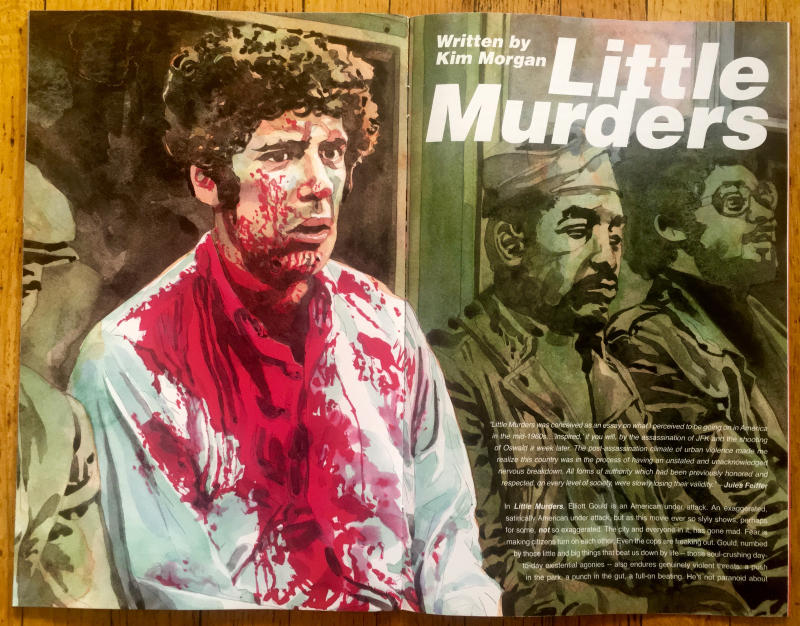
“Back in the 40s this town was crawling with dollies like you. Good looking cokeheads trying their damndest to act tough as hell. I got news for you: they did it better back then. This town doesn’t change. The just push the names around.”

“Jeez, Charles, he doesn’t look so hot to me.” So says Lily Tomlin’s new agey Margo when she first spies Art Carney’s retired private investigator, Ira Wells. She’s scoping him out at a place many young people think guys his age are about to set one foot in – a cemetery. A seemingly anonymous old looking guy in a rumpled suit paying his respects to a dead person and the dead person’s loved ones, Ira walks past crypts on one of those sunny, deceptively cheery Los Angeles days that would feel strangely depressing even if he wasn’t in a cemetery. It feels a little impersonal too, all out in the open with those rows of crypts, and especially as Margo is sizing him up for hire. The camera follows Ira and you can hear a plane passing overhead. It’s an interesting way to introduce Tomlin’s character as she’s introduced to Ira – just her voice and her first impression observation – and then her sleazy-slick pal Charlie (Bill Macy) reassuring her: “Let me tell you kiddo, Ira Wells used to be one of the greats.”

Used to be. We’re still not so sure even after we’ve been introduced to Ira in the opening scene of Robert Benton’s 1977 picture, The Late Show. When we first see Ira, he’s sitting in his little room – not in an apartment we don’t think at first – but what looks like a room in a boarding house. An old movie plays on his TV. This is a lived-in space and it’s nice that the movie takes the time to show us his surroundings: there’s books stacked around and taped up photos of the old days, socks hanging to dry, a messy bed. We’ve noticed from the start that he’s working on a memoir, the title reads: “Naked Girls and Machine Guns: Memoirs of a Real Private Detective.” Well, that’s quite something. Who is this guy? If we had no idea what this movie was about before watching, we’d wonder how much of that title is an exaggeration. Or, is he writing a detective novel? But, right away, we think, this man – this man in this humble, rather touching room – thinks of his life as something to remember (as he certainly should. As anyone should.) And he also thinks that his life is something others should remember, hence, a memoir, or writing based on himself. And he’d like to grab people right away with the pulpy title: “Naked Girls and Machine Guns” (kind of ridiculous and “immature,” as Margo might say, but, hey, it grabbed me too). Obviously, Ira sees glamour in his old, sexy dangerous days, and maybe at this point of the movie, he’s content to drown himself in times past. The present? Watch another old movie and go to the race track.


As he sits in this somewhat sad, sagging room, we see some glamour in a framed photo of a beautiful young woman. An ex-wife? An old sweetheart? Probably not, as the woman is actress Martha Vickers, so memorable in Howard Hawks’ The Big Sleep. A noir-soaked nod on part of the filmmakers, a fan photo for Ira and, at first glance, a possible old flame of Ira’s. An old flame is not likely but … you never know. Ira may have had an even more exciting past than we will ever know. This is a room of memories. Not cool or flashy or dingy in a hardboiled, black & white, neon-sign-flashing-in-the-window kind of way, but the room of an old man. The room of someone’s grandfather. But. We suspect that this guy doesn’t have any grandkids. Or any kids for that matter. Or, any grandkids or kids that he’s ever kept in contact with, anyway.

His peaceful night of old movies and writing is interrupted when his old partner, Harry (Howard Duff – Duff played Dashiell Hammett’s private eye Sam Spade on the radio, and appeared in Brute ForceThe Naked CityPrivate Hell 36 and While the City Sleeps – he was also married to Ida Lupino for a time) pays him a bloody visit. And then promptly dies in his room. He’s been shot. Ira is both pissed off and heartbroken. Now we see the tough guy Ira once was and still is: “God damn you, Harry! Letting someone walk up and drill you like that. Point blank. Nobody can palm a .45. Jesus Christ. You never had the brains god gave a common dog!” And then we see how heartfelt Ira is too: “Sorry you’re going off, pal. You were real good company.”

Ira starts tearing up.

Harry is the dead man Ira is seeing off at the cemetery, so it makes sense he’s so grumpy from the intrusion of Margo and Charlie. Let the man mourn his friend and partner for chrissakes. And worse, the case seems two-bit to him. You see, Margo wants to hire Ira to find … her cat. (We can’t help but think of Carney’s recent starring role in Paul Mazursky’s Harry and Tonto, though Ira does not give a toss about Margo’s cat). Margo owes a guy 500 bucks and, to settle the score, the guy has stolen her cat – he’s threatening to kill the animal if she doesn’t pay him. “So pay him!” Ira barks at her. Angry at Charlie he walks away muttering about how younger people should respect their elders. He’s sick of this shit, and he’s got other things to do. Like get on the bus. Go to the races. Sleep. Something. But soon enough, Ira knows there’s more going on here if Charlie is involved. In a terrific exchange, while Ira and Charlie are seated for a shoe shine (Charlie, wearing his flashy brown leather jacket, polyester shirt, orange pants and yellow socks, is reading The Hollywood Reporter – there’s ragged reminders of supposedly glitzy Hollywood all over this picture), Ira asks him what the hell is going on here with this “dolly” and the cat. Ira breaks it down: “Somebody puts the freeze on Harry Regan. Next thing I know you show up at Harry’s funeral with some dolly and a song and a dance about a stolen cat and all that hot comedy. What’s it all got to do with Harry?”

KuM3UzI8ScoVMEVNFUHvRP64CoY-1200-1200-675-675-crop-000000

Well, something has got to do with Harry in this mess with the cat and “all that hot comedy,” and so Ira is on the case, discussing details with Margo in an amusing scene in her apartment, a space very different than Ira’s living quarters. Cat pictures, lots of plants, tapestries, bright colors, rock posters, there’s a meditation recording playing (she wisely turns it off), Ira shifts uncomfortably in his chair, while listening to her brief life story (wanted to be an actress, gave it up because she couldn’t play the Hollywood game, is now designing clothes, used to deliver items for some guy – probably hot – and split the money with the cat kidnapper. Only, one time she didn’t – here’s where Harry gets involved…). A woman of the 1970s, one who openly talks about her period and her therapist and astrological signs, Margo is a woman who’s seemingly trying anything in Hollywood, not just out of desperation, but out of, what she says, to “go with the flow.” I thought of the scene in Robert Altman’s The Long Goodbye (Altman produced The Late Show) when Elliott Gould’s Marlowe tells bumbling Harry (David Arkin) what his scantily clad neighbors do for a living – they dip candles and sell them in a shop on Hollywood Blvd.  Harry exclaims: “I remember when people just had jobs.”

Tomlin makes Margo lovable and smart – not just kooky and stereotypical hippy dippy – and a little mysterious too. For how much younger she is, and all of her more youthful of-the-time speak, does she have any friends, really? Other than the singer she manages? And are they even friends? Surely, she has a whole other life, but as presented here, it seems Charlie is her only friend. You start to understand that Margo, like Ira, is actually lonely. And that Los Angeles can be an alienating town whether you were a once aspiring actress, or you’re a retired private eye. You feel like people don’t care about you anymore. You’re don’t have that “it” factor. You feel disposable. It’s this observation of the fringes of Los Angeles, the “real” people (who may have had extraordinary lives if you bother to ask them about it), that makes The Late Show so intriguing and moving. It’s showing the sleazier side of the city; one in which people are still hanging on – some, by their fingernails. But they’re not all down-and-out, not yet, though one day they might be.

As the complicated mystery unfolds, Ira and Margo grow closer, and his crankiness softens. He seems amused by her, even likes her. And, in one scene at a bar, she tells him that she confessed to her shrink that she thinks he’s cute. He’s not sure what to make of that but the old guy must be flattered. She is thrilled after a high-speed chase in her van and she delights at the idea of them partnering up – a P.I. team. You feel for Margo as she suggests Ira move in to the apartment next door because, well, not only is she thinking of her new venture past designing clothes and managing talent, but she’d like to have this guy closer to her. She likes his company. He tells her he’s a loner. But the movie never turns this into a typical May-December romance – their attraction works as friends, as potential partners, as two different generations who have found something within each other that works, even if they drive each other crazy. And the movie never makes fun of them either. Margo may be a little zany, even annoying at times, but she’s got a heart, she’s got substance. And Ira may be cantankerous, walking around with his bum leg and aching gut, but he’s not always cranky, he’s witty, he finds joy in some things. And he’s got a good soul. Also – he’s still a good shot. In a remarkable scene, Ira aims fire at a car, but before he shoots, he pulls out his hearing aid. Somehow this is not funny, it’s just badass.

Benton (who earlier had co-written Bonnie and Clyde) wrote and directed this picture, his second directorial effort after Bad Company, and before his next picture, the Oscar-laden Kramer vs. KramerThe Late Show, mostly acclaimed upon release, but underseen, is one of his best, if not his very best (I also like his later work with Paul Newman, Nobody’s Fool and Twilight). This is a gentle character study about the seamier side of Los Angeles that’s also violent, funny and melancholic – not super striking cinematically-speaking, certainly not showy, but deeply felt and nuanced. And the actors are all splendid here including Eugene Roche as fence Ronnie Birdwell, John Considine as the creepy/stupid gold chain-wearing henchman, Lamar, Ruth Nelson as Ira’s sweet landlady Mrs. Schmidt, and a terrific Macy who is both fantastically oily and entirely human.

Carney, famous for his comedic (though touching) role as Ed Norton on the television show The Honeymooners was enjoying a resurgence in the 70s on the big screen (he hadn’t been in many motion pictures before), winning an Oscar for Harry and Tonto and co-starring in Martin Brest’s Going in Style (among other pictures). His performance here is beautiful. He’s rough and gruff and no-nonsense, spitting out hard-boiled dialogue naturally (he’s never forced, he never plays cute, he never fills his character with easy bathos), but he’s also poignant and real. There’s an inner life going on with this guy, one of regrets, surely, one of sorrows, but also one of past excitement. He doesn’t just play this simply as an aging tough guy gumshoe, as Mr. Cool, and that makes his performance even cooler. There’s a wonderful moment where Ira is trudging down the street, dragging his laundry along in a sack (he doesn’t have a car) and Charlie and Margo drive by, asking him where he’s headed. He’s snaps back, “I’m on my way to the Brown Derby to meet Louis B. Mayer! Where does it look like I’m headed?” The humbleness of the laundry, and the idea that he both does and does not give a f*** about what it looks like, his quick-witted delivery –  it’s both charming and moving.

And the ending of the picture is charming and moving, circling back to the beginning of Ira and Margo and where they met – at a cemetery. Another friend is buried, and the two walk along to the bus stop. They sit on a bench that’s advertising the Hollywood Wax Museum: “Mingle with the Stars,” it proclaims. There’s nothing much star-studded going on as they sit on the bench, on a typical smog-choked Los Angeles street, wondering what to do next. But it appears hopeful. Maybe they’ll even partner up. After all, he’s still great at his job – age is experience, in spite of Hollywood’s endless quest for new stars, for youth – and he’s got a connection with Margo. And they’re in Los Angeles, a town, that Ira thinks, even as he grows older, never really changes: “The just push the names around.”


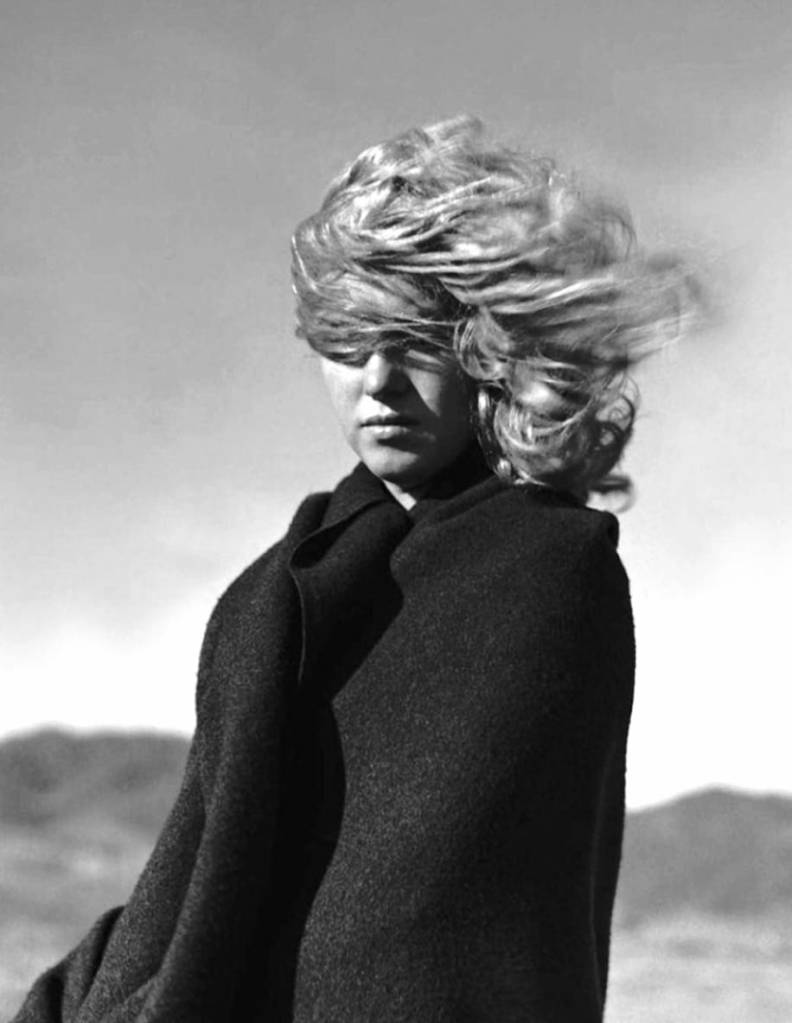
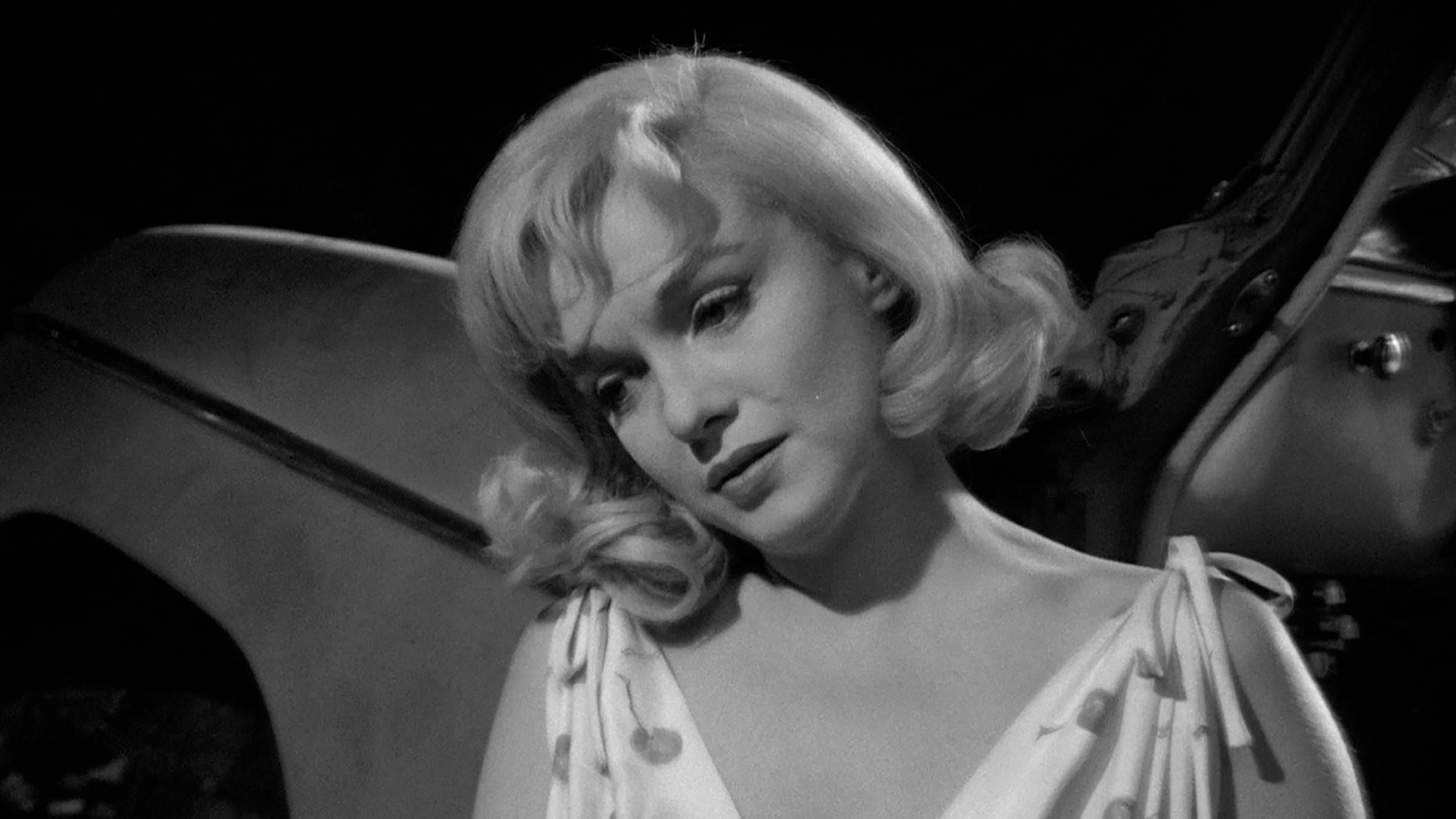
Happy Birthday Marilyn Monroe

Dsn7uCy6VSXKxrb9q9SPHWxMbtbmcp_original
Jonas Mekas wrote of her in The Misfits for the Village Voice in 1961:

"It is MM that tells the truth in this movie, who accuses, judges, reveals. And it is MM who runs into the middle of the desert and in her helplessness shouts: “You are all dead, you are all dead!” — in the most powerful image of the film — and one doesn’t know if she is saying those words to Gable and Wallach or to the whole loveless world.

"Is MM playing herself or creating a part? Did Miller and Huston create a character or simply recreate MM? Maybe she is even talking her own thoughts, her own life? Doesn’t matter much. There is such a truth in her little details, in her reactions to cruelty, to false manliness, nature, life, death — everything — that is overpowering, that makes her one of the most tragic and contemporary characters of modern cinema…"

Happy Birthday, beloved Marilyn Monroe.

Elaine May’s A New Leaf

NewLeaf12

“Unseemly? Unseemly!? Harold, after her behavior tonight, anything I do will be seemly. Never have I seen one woman in whom every social grace was so lacking. Did I say she was primitive? I retract that. She’s feral. I’ve never spent a more physically destructive evening in my life. I am nauseated. I limp. And I can feel my teeth rotting away from an excess of sugar that no amount of toothpaste can dislodge. I will taste those damn Malaga coolers forever. That woman is a menace not only to health but to Western civilization as we know it. She doesn’t deserve to live. Forget I said that.”

“She’s about to drop that teacup…” Teacups, the European kind with handles, the pretty porcelain things you balance on saucers and daintily sip while eating crumpets or finger sandwiches or whatever little crumbly confections are served, seem a cruel creation intent on exposing the shy and the nervous. In Elaine May’s A New Leaf, this is made abundantly clear as May’s heiress/botany professor, Henrietta Lowell, attempts to sip at a posh afternoon tea party while she sits on a chair up against a wall, dressed in a prim suit with pearls, her handbag resting next to her. She is noticeably not seated at a table with the other guests (Mr. and Mrs. Sims, Toot and Roggie, Dr. and Mrs. Daryl Hitler, etc., “Excuse me, you’re not by any chance related to the Boston Hitlers?” Walter Matthau’s Henry Graham asks) as she politely and nervously looks around the room, gracious to others but in her own world. She is utterly charming. To us. To Henry Graham, she is horrifying. But as he’s searching, quite frantically, for a wealthy wife to save him from poverty, she’s exactly the one he’s been looking for. Henry sits next to a man with a crooked bowtie and tape on his glasses (a nice, perfectly ruffled blue blood touch that Paul Fussell would have studied for categorization) who reveals to him how enormously wealthy and alone Henrietta is. No family, nothing. Henry says: “Rich, single, isolated . . . she’s about to drop that teacup. Oh, she’s perfect.”

A-new-leaf-7
She does drop that teacup and it causes quite a scene. Her hostess requests another cup of tea while Henrietta nervously apologizes, drops her gloves, drops her glasses, drops the teaspoon resting on the new cup and sits back down to dab and blot, or whatever the hostess has been annoyingly suggesting as she fusses over Henrietta. Henry makes his move, but Henrietta’s head collides with his teacup, spilling tea on the carpet. The snowball effect of that damn teacup in the trembling hands of poor, innocent Henrietta has now upset the rude hostess who berates her in front of the party: “Henrietta, is this some kind of joke? Because if it is, I do not find it amusing. If your nerves aren’t steady enough to hold a cup and saucer in your hand, then you shouldn’t be drinking tea.” This is when Henry defends her tea-drinking honor (as he should) and in another movie would be seen as the purely gallant romantic gent. Henrietta is the damsel in distress here – the dropping the handkerchief routine – only, dropped by a woman continually dropping her teacup and everything else in her hands, and one who is oblivious to dropping handkerchiefs for any other reason save for they’re in the way of her teacup. She’s also been spotted by a gold digging predator – she’s about as vulnerable as that cup balancing on the saucer – no wonder it keeps slipping.

There’s no romance or flirtation here, Henry has other motives, and yet, as written, directed and acted by May (one of greatest living writers, directors and comic talents), it is both oddly romantic and hilariously cynical. Henry’s heart is beating black, but we feel a surge of victory for this pair. Who wouldn’t want a cantankerous Walter Matthau disparaging a discourteous woman with, “Madam, I have seen many examples of perversion in my time but your erotic obsession with your carpet is probably the most grotesque and certainly the most boring I have ever encountered.” As Henrietta would say, and does say, often, “Heavens.” Never mind he might murder you after your wedding day.

A-new-leaf-5The sweetness and darkness of May’s brilliant first feature (she’s directed four, all excellent: The Heartbreak KidMikey and NickyIshtar) looks at this absurd world, the relationships we find ourselves in (or create) and the institutions we march through with a jaundiced yet utterly human eye. May’s genius with the teacup, that quivering teacup and that woman’s stupid carpet, is one, among many moments in which May dissects a detail, whether small, like crumbs rolling off of Henrietta’s dress, or large, like Henry losing all of his money, and shows us how painfully recognizable it is, even among such extraordinary characters. And Henry is certainly not a common type of man. An entitled trust fund playboy, a millionaire who has never worked a day in his life, Henry seems to only love his red sports car (a Ferrari), himself, of course, and maybe (maybe) he harbors a fondness for his butler (George Rose). He spends too much money – something that is called to his attention via his long-suffering lawyer, Beckett (William Redfield), who despises him, in a scene that reveals just how hilariously out of touch Henry really is. So used to luxury, he can’t wrap his mind around destitution, much less the word capital:

Beckett: “I’m trying to explain to you that it is impossible to pay the check because your expenses have exceeded your income to such a point that you have exhausted your capital. Now you have no capital, no income, therefore no funds for the check, you see?

Henry: Don’t treat me as though I were a child, Mr. Beckett. I am as aware of what it means to have no capital as you are.

Beckett: Oh, good.

Henry: Now, what about this check?

Beckett: Well, are you entirely sure that you really do understand what I mean by capital, Mr. Graham? You see, you’ve exhausted the capital. I can’t cover the check because the check is for $6,000 and you don’t have $6,000. In other words, you don’t have $60.

Henry: Come to the point, Beckett.

The point is, he’s broke and as suggested by his sensible butler Harold, he’s going to need to do “what any gentleman of similar breeding and temperament would do” in such a position. Henry responds, “Suicide?”  Harold corrects him: marriage. “Marriage? You mean to a woman?” Henry asks.  This question isn’t studied further but based on Henry’s attempts at dating and his general disgust for the female sex, we may wonder if he’d rather make love to his Ferrari. In a couple of painful dates, May doesn’t spare both the ridiculousness of desperation and how terribly misanthropic and neurotically fussy Henry is. He’s even terrified by breasts (one of Matthau’s funniest looks of abject horror). As a date declares herself a woman who wants, needs and desires love, melodramatically hollering out: “Oh, I am alive! I want to give love!” Henry yells: “No! Don’t let them out!” He’s an asshole, Matthau is working a kind of upper crust W. C. Fields type, but anyone whose been on a disastrous date might relate to this moment – it’s a bit much. May understands there is a judging prick inside many of us, particularly when we’re rolling through a series of terrible dates. You don’t exactly feel sorry for Henry, you just recognize those moments of distaste. And cringe. For everyone involved.

A-New-Leaf-3
Offsetting the woman about to pull out her breasts is May’s Henrietta, who can’t even put on her Grecian-style nightgown properly. We don’t cringe for Henrietta here, we find her endearingly dizzy, and really very beautiful even before she gets that thing on. This is one of May and Matthau’s finest comic scenes – Matthau is aiding her so strangely patiently (it wouldn’t be as funny if he were yelling at her, or even if he were overly cranky, he’s simply matter of fact about getting that nightgown on her); and it’s so ingenious the way they talk back and forth about the “arm-hole” that it becomes something like a seduction. Sex scenes are often tedious and typical, so watching May and Matthau fumble with her meant-to-be alluring gown becomes their sort of sex scene. It’s also hilarious and disarmingly sweet:

Henry: I just think you have your head through the arm-hole. If you’ll just stand up for a minute. That’s it. There you are. I think, you see, you have your head through the arm-hole. Now, pick your arm up. No, not that one. Put that one down. That arm down. Let’s pick this arm up. Thaaaat’s it. That’s it. Now, here we are.  Just get this over …

Henrietta: Let me put my glasses …

Henry: Oh, here. Let me put your glasses down here. Alright. Now, hold it. No, just a minute. See, you have your … you have your head through the arm-hole. We have to get your head out… out of the armhole.

Henrietta: See, both of the holes look very similar.

Henry: Where is your head-hole?

Henrietta: Well, I thought my head was in it.

Henry: No. You had your head in the arm-hole. Where are you now?

Henrietta:  I’m still where I was.

NewLeafT1
For a moment, you think Henry might enjoy Henrietta in that arm-hole nightgown, but once correctly fitted, he still thinks she looks “strange.” This is during their honeymoon, and, in her darkly screwball style here, May digs into the cynicism of marriage. It’s an extreme example – Henry rushes into matrimony with Henrietta or he’ll owe his uncle (James Coco), whom he’s borrowed 50K from, everything. That’s the only reason. We barely have time to ponder if Henry secretly likes her for a second, though their chemistry is so perfectly in tune at being out of tune that we suspect, something. Any fraction of warmth from Henry, even with an arm-hole, makes us wonder. Nevertheless, after agonizingly enduring Henrietta’s crumbs, her love of cheap wine that gets smeared all over her lips, her clothes with price tags still hanging from them and her botany obsession, he takes the plunge – with the intention of murdering her. People marry for a lot of reasons and it’s often women who are singled out as those waiting for their rich husbands to drop. Here, Henry is the gold digger and the femme fatale. It’s acerbically funny and touching watching Henrietta fall for Henry – a meaner kind of Ernst Lubitsch as Matthau’s thieving cad is no elegant Herbert Marshall (and he’s murderous), and stealing isn’t as sensuous, and yet, like Lubitsch, May relishes a kind of rebellious sophistication that makes us root for this non-traditional pairing: two disparate people living among those obsessed with class and their carpet – one yearning for languorous luxury, the other, a highly intelligent billionaire searching for ferns and fronds. Why not? Unlike anyone near the altar in the magnificently acidic Heartbreak Kid, we can’t help it – we want these two to work out, in spite of Henry’s murderous intentions.

Would we have wanted it to work out if Henry was more murderous? I actually think so. May’s picture was even darker and longer in its original cut, supposedly sheared at the behest of Robert Evans at Paramount, which upset May enough to sue (unsuccessfully) and attempt to remove her name from the film. Reportedly, in her preferred version, Henry poisons and kills two characters (her lawyer, Jack Weston, and one of her servants, William Hickey). Either too long or too bleak or both, it was cut (and that footage has never been found), leaving a happier ending, however happy you take the ending of the picture (Henry almost really does kill her – the last-minute change of heart based on a fern isn’t the strongest indication he’s forever a new man).

But it’s a testament to May’s genius (and Matthau’s) that the film could work either way.  It's, to me, still one of the greatest comedies of the 1970s — and one of my favorite films. Recently I was asked to do a list of the greatest films from the late 60s-early 1980s (which was nearly impossible for me — I can't even think of that list without realizing what I didn't have on it — including another May film, Mikey & Nicky, which was on it, and then swapped out in the cruelty and sometimes, coin tossing of list-making — and the omissions go on), and A New Leaf was on it. I was concerned for a bit because May herself, as discussed, wasn't happy with the film. But, well, as I said, it's one of the greatest. And I love her in the film. Even in a version she finds compromised, it's the one. 

A-new-leaf-6-1
As May said in an early, brilliant Mike Nichols Elaine May routine, it all feels “suicidally beautiful.” Either Henry really is that cold-blooded and we’ll have to grapple with his malevolence as we find him strangely appealing, or perhaps, in love, perhaps a coward (or both), he truly can’t commit murder. Does he find an odd pleasure in sticking up for Henrietta after she drops a teacup on an obnoxious woman’s carpet? A woman far more obnoxious than Henrietta? After all, everyone seems insufferable to Henry. As he said so witheringly and ironically to Harold: “I think I have found, God help us, Ms. Right.” Maybe he did.

Originally published at the New Beverly 

Ingmar Bergman’s The Magician

MV5BMTU0MTYyMDM2OF5BMl5BanBnXkFtZTcwMTc4MjE5Ng@@._V1_
Briefly, a movie I love:  Ingmar Bergman's The Magician

Made after The Seventh Seal and Wild Strawberries, and before his “God’s Silence Trilogy,” it’s one of Bergman’s smartest, cleverest and uniquely toned films (so far that I can say). Dreamy and sad and beautiful and wonderfully weird, it's also disarmingly funny. 

A personal picture for Bergman,  this is a film about a magician, yes, but it’s also a film about art, science, audience and criticism with Bergman firmly on the side of the artist. Max Von Sydow's magician is played powerfully, so mysteriously — with inner complications. He doesn’t speak for nearly an hour into the picture. His Albert Vogler is a tired, morose miracle man wearing a Rasputin-looking wig and a fake beard. He travels with his troupe, including his wife, posing as a boy (an enchanting Ingrid Thulin).

Summoned by officials in town to show his act, and expose himself and his snake oil salesmen ways, most specifically by a scientist, the minister of health (played by Gunnar Björnstrand), Vogler will turn the tables in a scary, though darkly humorous moment involving a dead body (his, just watch and you will see). Bibi Andersson appears as a “lusty” servant girl, but she (and Bergman) make her more than just that. It’s all spellbinding – it's contemplating truth and how we should process it, whether through shadowy unreality, or cold hard facts.

Magicianc2a10309
But back to the personal — in Bergman’s memoir, “Images,” he openly discusses the intent to create as he called it,  “a malicious portrait.” According to Bergman, the film was born out of taking “small revenge on Harry Schein.” Harry Schein was a movie critic and Ingrid Thulin’s husband, and Bergman, annoyed that  Schein advised Thulin to quit acting, admitted to modeling the health official on him.

So I think — Thulin to quit acting? Who can blame Bergman? Bergman also stated that the sleazy manager of the troupe (played by Åke Fridell) was him — Bergman. Bergman wrote: “if Vogler is the magician, who, even though he is tired to death, keeps repeating his by now meaningless hocus-pocus, then Tubal is the exploiter, the salesman of art. Tubal is Bergman, the director, trying to convince Dymling, the head of the studio, of the usefulness and quality of his latest film. In front of extremely skeptical studio executives, I managed to sell the face (also the title) as a hell of an erotic comedy.”

This is some kind of different erotic comedy.

Happy Birthday Elliott Gould

Elliott-gould-long-goodbye

Happy Birthday to one of the all-time greats and one of the coolest of the cool Elliott Gould.

From my 2019 New Beverly interview with Elliott Gould about The Long Goodbye — on working with Sterling Hayden:
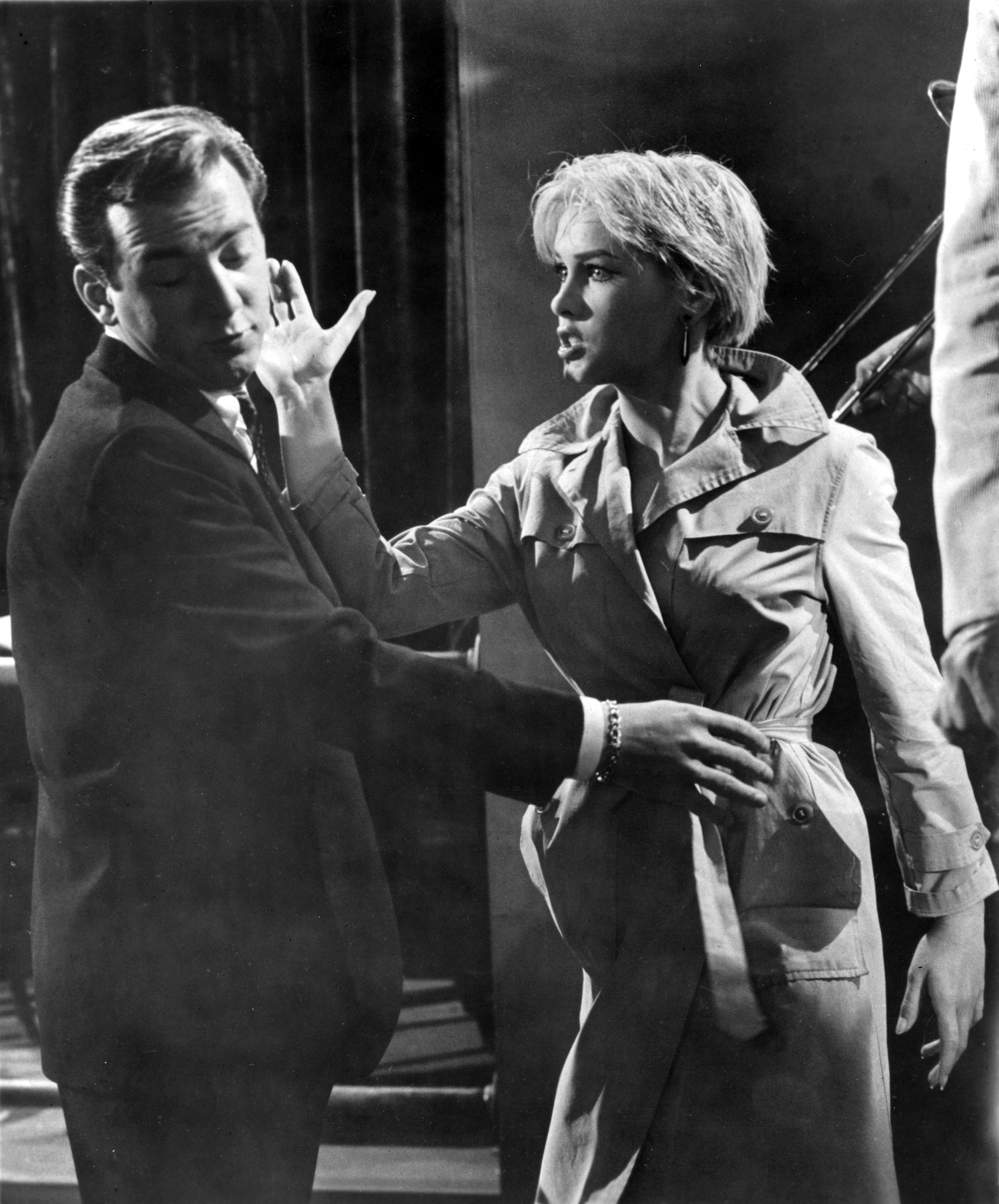
Elliott Gould: You know the history was that Bob cast Dan Blocker and then Dan Blocker died and it was almost the end of the picture. And then I thought about John Huston, but then Bob cast Sterling Hayden. And I asked to meet Sterling Hayden; I just wanted to sit alone with him. And in a dark room in the house that Bob had been living in…
 
KM: The house in Malibu…
 
EG: Yes, which was the Wade House [in the movie]. I was in a room like this, and he had recently come back from Ireland where he had some work with R.D. Laing… and so I knew that Sterling knew that I knew that Sterling knew that I understood him… So, at one point when we were in Pasadena working at the sanitarium where we find Sterling Hayden in that cottage that he’s in with Henry Gibson (you know, that specific cottage was where W.C. Fields lived the last part of his life…), And when Altman would be stressed… Sterling would say to me, I don’t know how he phrased it exactly, but, “Is the old man giving you a hard time?” something like that… And I said, “A little bit.” It didn’t have to do with the work but it probably had to do with my response to what Bob needed, and I’m always looking for something. And Sterling said, “Just vamp.” [And] what does vamp mean? It means, to hold time, meaning, when you vamp with music, you hold time.
 
KM: Sterling Hayden and you … your chemistry together is beautiful.
 
Lgbye73-cl1-pants
 
EG: And the kind of man that he was! That scene where we’re sitting down and [having the drink] … Bob had designed it so that the camera is circling the two of us. And we couldn’t even know whether it would be able to be edited, but I didn’t have any doubt, and I don’t think that Bob has doubt, and so we did that with the aquavit.
 
KM: And part of it was improvised?
 
EG: I knew there were certain pieces of information that had to be in that scene so I could help with that [improvising], otherwise it was just about getting to know and see this relationship between these two different generations of men, and that was pretty amazing…

Read the entire interview here.


Aquarium Drunkard: Play It as It Lays

Play it. jpeg copy
"Existentially, I'm getting a hamburger.”

I was interviewed by Eric Hehr for his excellent VIDEODROME column (read all of his essays) at the great Aquarium Drunkard to discuss one of my favorites — Frank Perry’s masterful Play It As It Lays.

Talking Tuesday Weld, Anthony Perkins, Perry, and lots of driving in Los Angeles and more and more. 

From my interview:

I guess I really connected with this film because of how Perry explores everything: the enigmatic, the way we feel when depressed, the mystery and the ghosts; things that I frequently feel in Los Angeles. There is a beauty to that. I’m not sure if Frank Perry thought this was all beautiful in real life, but I think a lot of what is in this film is beautifully expressed and composed, like the snaking freeways. I could get into more specific shots and things like that because that’s important — they fuse with Maria’s search for her narrative. She’s almost like her own editor. Not surprisingly, Didion was fascinated by film editing, and Perry expertly conveys this with his innovative editing. Maria’s an actress and a model, but I feel that this is a woman who maybe really wants to be a writer. She’s trying to write her own life in a sense, and everyone else around her is interpreting her. Her husband is a director inspired by her story. She breaks through it all by telling her own truth, which is really interesting — that she bluntly says things. She cuts through everything.

PIAIL31
Here's my essay on Play It as It Lays for the New Beverly.

And, thanks for the wonderful discussion, Eric. 

Read the entire interview here.

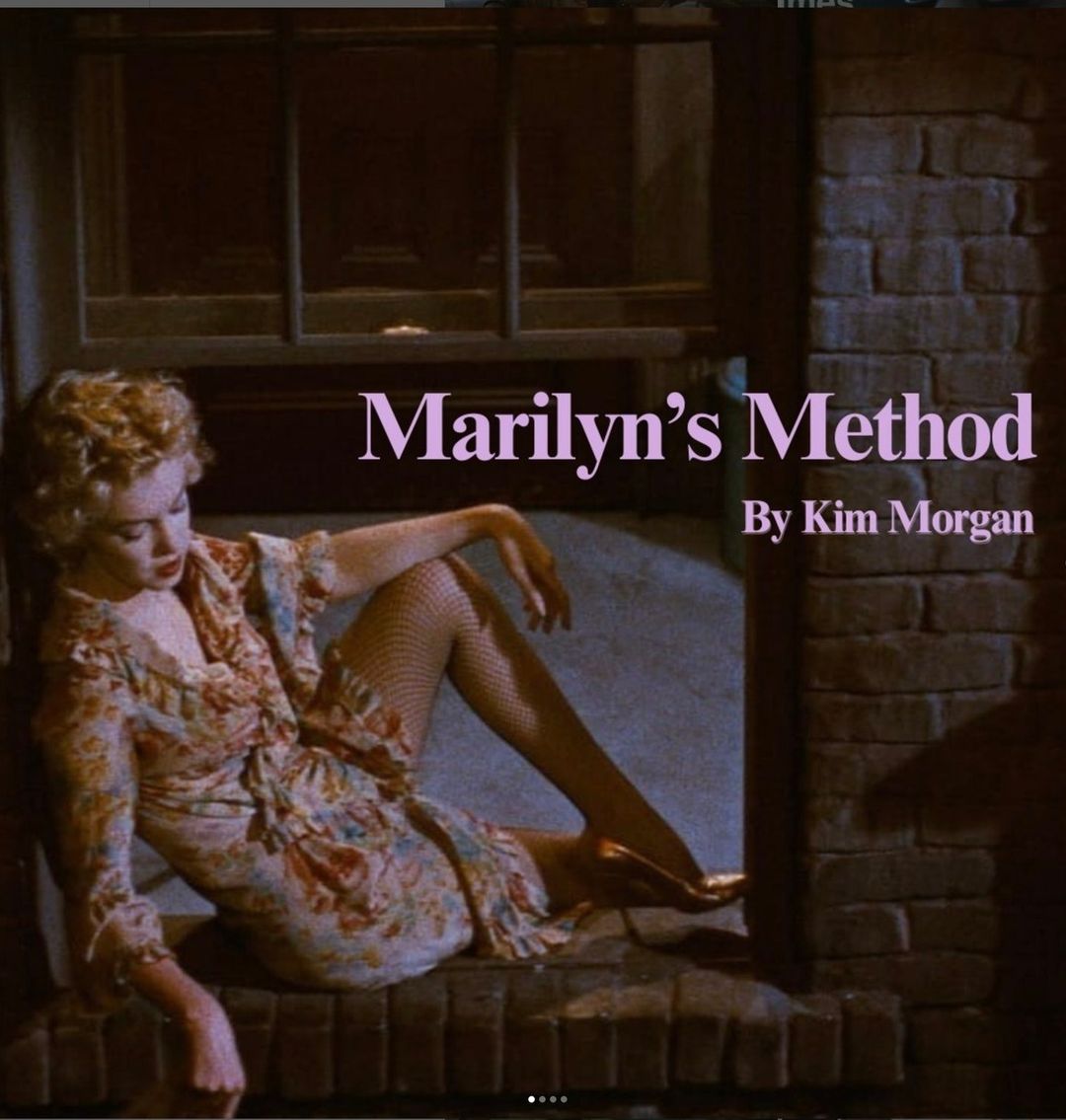
Marilyn’s Method: MM on Criterion

39732553f8c5f644946c266537394f55
Marilyn’s Method: My piece for Criterion on Marilyn Monroe, her performances in The Misfits, Niagara & Bus Stop, specifically, and her journey and power as an actress and an artist:

“Do you want me to turn them loose?” This is what cowboy Perce asks a sad-eyed Roslyn in John Huston’s elegiac The Misfits (1961), and that one question about untying the mustangs he and fellow wranglers Gay (Clark Gable) and Guido (Eli Wallach) have captured—beautiful horses who will be turned to dog food—is so extraordinarily moving in its quietly weighed delivery that it’s breathtaking. It’s moving because it’s Montgomery Clift asking the question, and because of the power of Marilyn Monroe’s Roslyn and her chemistry with Clift. But it’s sublimely moving because of Roslyn’s preceding scene instigating the request—her scream in the desolate landscape, her testimony:

Killers! Murderers! You’re liars! All of you liars! You’re only happy when you can see something die! Why don’t you kill yourself to be happy? You and your God’s country! Freedom! I pity you! You’re three dear, sweet, dead men!

That big, blistering moment is filmed in a gorgeous and almost unmerciful long shot, with a distant Monroe, her blond hair and denim in the desert; viewers fix their eyes to see her better as she rages—a brilliant choice by Huston. By forgoing a close-up, he makes Monroe’s speech feel almost unexpected and shocking, and, oddly, more powerful. There are three men who, throughout the movie, have observed this woman with bewilderment, lust, love, and anger. She’s represented multiple ideas, dreams, or wishes for them (the script was written by her soon-to-be ex-husband, playwright Arthur Miller), but she’s now screaming and nearly tearing her hair out—almost as if to make herself flesh and blood.
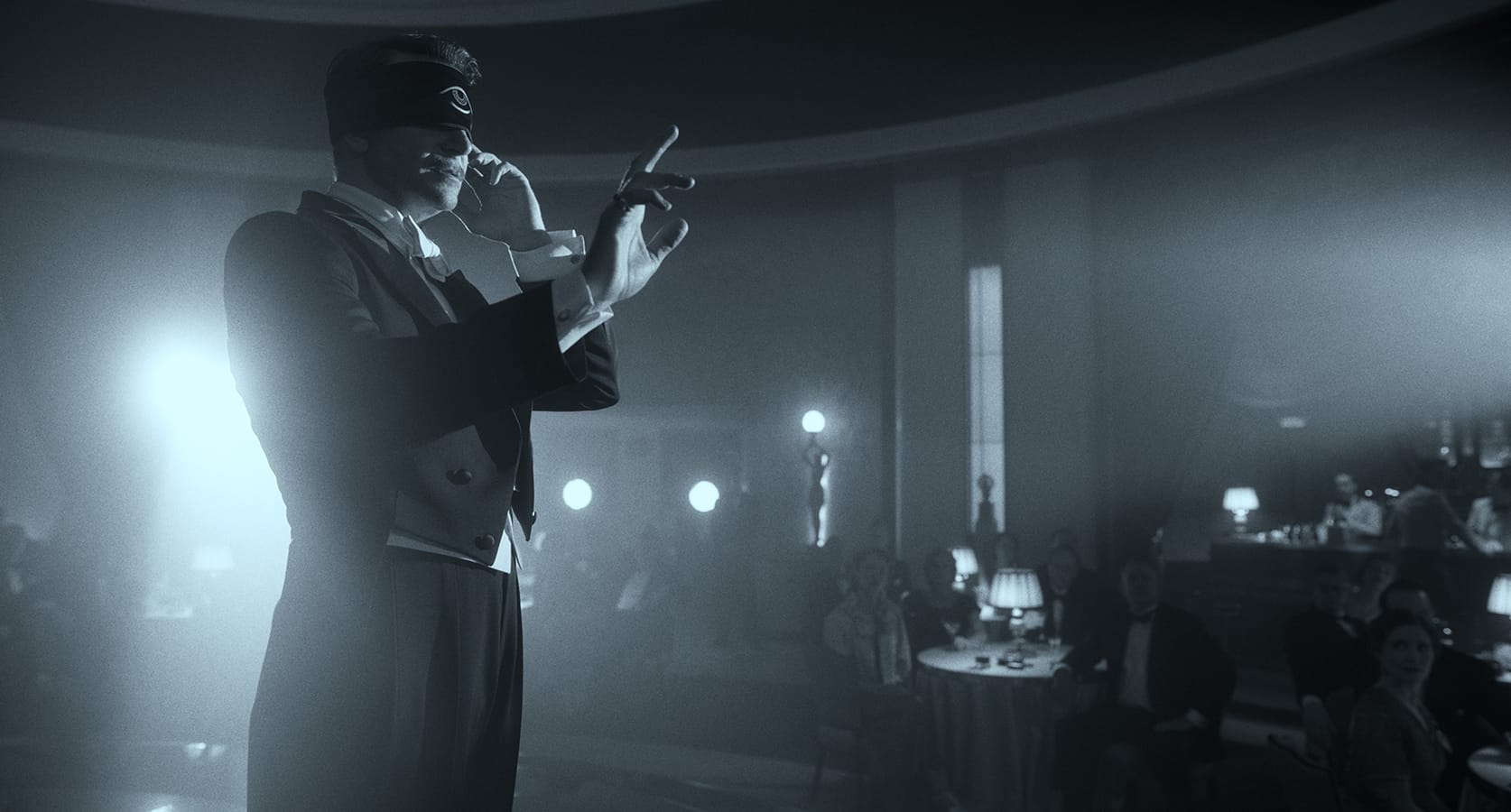
Marilyn as Roslyn espouses part of the movie’s thesis—a potential sledgehammer—without the directness feeling unnatural, underscoring the end-of-the-line lives these men lead and the simultaneous empathy and anger she feels toward them. Clift’s Perce, who is already feeling lousy about capturing the mustangs, so much so that he doesn’t even want to be paid for it, gazes with sadness and, perhaps, shame; Gable’s Gay looks on concerned, disquieted, and Wallach’s Guido, at that moment, is all annoyance and anger: “She’s crazy,” he says. “They’re all crazy. You try not to believe it because you need them.”

364807148_10160587287070792_67047706235272040_n

Read it all here.


Frank and Eleanor Perry’s Last Summer

6a00d83451cb7469e201bb09890fe3970d-800wiFrom my piece that ran at the New Beverly:

Memories of adolescence can come to you in a multitude of ways. Some thoughts are often so hazy, and in many of us, so strange, that even happy reminiscences take on a peculiar sensation of both centered familiarity (we are all still who we are), our teenage years directly in our body and in our being, and yet, entirely remote. All that excitable, depressed or terrified youth has drifted so far off shore that one must stand on their toes and block the sun to see it bobbing in the water. Other times, it hits you like a sharp pain and you are living it all over again, right in your core. This can come to you happily but that rarely seems to be the case – wistfulness usually greets a nice memory. It’s the trauma, loneliness, alienation, guilt – those sensations – that overwhelm us while lost in thought or living through a crisis or from very little drama at all. You could be looking out of a car window or looking at a fish tank or talking to a grocery clerk who treats you like you’re 14 and something just overcomes you. You could, like John Cheever (writing in his journals), be walking outside:
6a00d83451cb7469e201b7c8e58c99970b-800wi

“Walking back from the river I remember the galling loneliness of my adolescence, from which I do not seem to have completely escaped. It is the sense of the voyeur, the lonely, lonely boy with no role in life but to peer in at the lighted windows of other people’s contentment and vitality.”

As Cheever so movingly observed, these are senses one can never escape – because, well, one just can’t. Frank Perry’s Last Summer is suffused with all of these impressions, a movie that reflects the sexually charged, weird, freeing and, at times, inexplicably perverse feelings that swirled in and around you as you were about to touch adulthood (which seems like it happens too fast). As you watch these teenagers on screen, you are right there with them, and yet, at the same time, you feel removed, observing from a distance. In direction, setting, texture, light and sound, the picture feels powerfully foggy, as if these are the last teenagers on earth, or a collection of sensitives we’ve conjured from our own memories. It’s quite an artistic and emotional feat – this in-body/out of body experience the movie manages to convey, a pull in and float out – and you drift along with these characters almost in a hallucinatory state. The sharper moments come to you like Cheever describing his young loneliness – they are “galling.”

6a00d83451cb7469e201b7c8e58ca2970b-800wi

The movie begins with what will appear to be a sad but sweet moment – two healthy, tanned, good looking blonde boys meet a lovely, bikini-clad, long-haired brunette girl on the beach at Fire Island as she leans over what appears to be a dead seagull. It’s actually still alive she tells them, with one remarking unconcerned, “Not for long.” In another movie, you might think immediately of innocence crushed or the kid’s yearning for the seagull to be free, but Perry (and his wife and collaborator, the great Eleanor Perry, who adapted the screenplay from Evan Hunter’s novel) are not trafficking in such thudding clichés. Already the picture feels different, edgier, and these kids appear like how teenagers actually are – more interested in the girl than in the seagull, the girl sizing up her power in this dynamic of two cute boys. Also, there appears to be no one else around – not on the beach anyway – no other kids at all – giving the picture an extra intense lyricism. There’s a dark undercurrent to the sunny exterior with the focus on just these kids – outsiders seem unwelcome or even alien. Later, one alien will eventually appear.

Sandy (Barbara Hershey) snaps back flippantly at the boys, Peter (Richard Thomas) and Dan (Bruce Davison), after requesting they help her move the gull off the beach, which one warns could give her rabies: “Rabies my ass!” she says. Certainly her looks are enough to interest them, but something about her ease with her body and informal exchanges, her intelligence is especially alluring to them, and they indeed help her bring that gull back to her mother’s beach house. You never see any of these kid’s parents in the movie, giving the picture a focused, particularly desolate feel, the kid’s alienation more trapped than exuberant.

Lastbk

Swiftly, the three become best friends, so inseparable that it verges on a sexual three-way, but not quite at intercourse. The boys want to sleep with Sandy, of course. Smart-ass, rather typical Dan, more intent to bang her than the more sensitive Peter, who suddenly feels badly when he bugs her to remove her top – and she does – discuss the coming-of-age query of “should they or shouldn’t they?” These conversations are between boys who are both insecure and confident – or in a more sinister view – boys who will ask or demand. Sandy is free with her body, unafraid to pull her top off or roll all over the hormone raging boys, her hormones raging as well, laughing and drinking and dancing; washing their hair, and in a dark movie theater, letting one feel up her breasts, while the other feels up her legs and up to her panties. It’s a bold, kinky scene, but not unlike many hot and horny teens pushing closer and closer to going all the way. The double grope is sexy to her, and she says so, she gets all the attention, while the boys are observant and even sophisticated enough to question whether she does this to merely flirt, or if she’s just that way and that’s fine. Even if it’s driving them fucking crazy, they’re friends, they play “trust” games and they’re not going to go somewhere creepy-dark. Until they do. All of them.

While occupied with their gull on the beach, which they’ve harnessed and are teaching to fly again, a plump 15-year-old in a dowdy bathing suit, one who looks very much not in their crowd approaches, demanding to know what they’re doing with that bird. Rhoda (Catherine Burns) is lonely and looking for friends, but bold and even bossy, enough to where Sandy tries to wave her off with, “Oh, go suck your mother’s tit!” Rhoda continues to harangue the kids who simply want her to go away, but she’s unyielding about the gull:  “You’ve traumatized him. You’ve taken away his sense of identity.  He doesn’t know he’s a bird anymore.  Well, look at him squatting there. He probably thinks he’s a crab…. He can’t help it, you’ve turned him into a schizophrenic!” It’s a fascinating introduction – part future Shelley Winters in her more tragic roles (like A Place in the Sun), part likable, intelligent voice of reason (they are making that bird crazy). You have no idea where this character is heading, but the Perry’s deepen her, giving her a complexity that’s beyond just the chubby girl who feels left out. Her mother is dead – recounted in a brilliant monologue where you can practically smell the booze and the salt water, where you can see the thinness of her mother, feel a man grasping Rhoda’s backside, all rolled into this vivid, heartbreaking recollection. (Burns was Oscar nominated for this performance) Rhoda even writes a column for her school newspaper called “Feelings,” which sounds corny as anything, but given her monologue, she’s likely a fine writer.

6a00d83451cb7469e201b8d2700d0f970c-800wi

We will become wary of Sandy, if we weren’t already. She’s clobbered the gull’s head in, secretly (the boys find out), after the poor thing bites her. She’s upset that this damn gull turned on her after she saved his life, and so she simply kills it – either out of demented power, or hurt that anything could not love her, or both. (The novelist, Evan Hunter, also adapted Daphne du Maurier’s The Birds for Alfred Hitchcock, and I can’t help but think of the woman vs. birds subtext of that picture, and the one panic-stricken woman unfairly blaming the bird invasion on outsider Melanie Daniel, screaming: “I think you’re evil! Evil!”)  Here, Sandy demands and commands the gull: “I’m absolute ruler over your world and I have absolute power over you and what I say goes… Therefore when I say fly, you fly.” That sounds all tough-cute in the moment, perhaps, but it’s actually more fitting of her personality, which is revealed to be manipulative and cruel. Something is off and disturbed in her – or maybe she’s just not learned anything about empathy yet (her family life isn’t entirely stable, but then no one’s is) – or maybe she’s drunk on her feminine power. Whatever the case, the picture’s not going to give you an easy answer. Sandy and the boys put up with Rhoda, sometimes casually annoyed, or curious to see her in a funny situation and they set Rhoda up on one of Sandy’s self-humoring computer dates (with a sweet Puerto Rican man) whom they treat terribly. Rhoda is appalled by but remains “friends” with them, even as their silly games continue and, as smart as Rhoda is, she trusts them. Or is willing to. Again, she’s only 15-years old.

089103-008-1

She even trusts them to teach her to swim, and they, or rather Richard sticks to the task. The kids think it’s weird she can’t swim (given that her mother drowned one can understand why she is scared), and Richard starts taking a more tender, romantic interest in her. In one moment, the two lie on the beach and he waxes poetic about the ocean: “Wait till you see how beautiful it is down there. The colors, the way the light shines on things. The plants. Just the shape of things. You know, even a piece of broken glass can be like an emerald! And the fish move, gentle, you know, nice  … You do everything I tell you to do. You learn how to swim, and you learn how to dive, and you know what?” Rhoda asks, “What?” And Richard declares, romantically, “I’m gonna kiss you at the bottom of the sea.” It’s lovely and heartfelt the first time you see it, and maybe it is, but watching it a second time when you know what happens to Rhoda, it seems a bit sinister: “You do everything I tell you to do.”  Richard’s small soliloquy reflects the shifting tones of the movie – poetic and pretty to subtly disquieting. By film end, Rhoda’s sexual “awakening” will not be her choice.

Last Summer was the Perry’s fourth collaboration, their first three: David and Lisa, about two mentally ill teenagers (one can’t stand touch, the other suffers a split personality, talking in rhyme, the other can’t speak), Ladybug, Ladybug, about school panic under nuclear attack, in which a 12-year-old girl locks herself in a refrigerator and suffocates, and then The Swimmer (starring Burt Lancaster), a transfixing, powerfully allegorical and disturbing adaptation of John Cheever’s short story. The direction was taken away from Frank Perry on that picture (an uncredited Sydney Pollack shot the rest) but what you see is another expression of their lyricism and cynicism that, through the early 60s and up until 1970, made them two of the most unique and fascinating independent filmmakers of that time. Probing the alienation and/or rot within adolescence or in the supposed stability of suburbia, or of marriage, they were a potent pairing – their partnership ended with their divorce (Frank went on to make films without Eleanor, notably Doc, Play It As It Lays, Man on a Swing, and Mommie Dearest). Their last film is one of their best, Diary of a Mad Housewife, an especially lacerating portrait of matrimony, which also weaves a dreamlike, almost mentally insane spell of both abuse and masochism.

6a00d83451cb7469e201b8d2700d5d970c-800wi

Characters are trapped in the Perry’s films, literally, in refrigerators, or swimming pools, or in marriages and affairs giving no profound satisfaction or release. Burt Lancaster banging on the door of his empty house, as if he’s trying to break through to another consciousness or world (one he’ll never reach) while revealing how lonely and empty he feels, is a refrain in the Perry’s work. This all may sound incredibly depressing, but there’s a sly sense of humor to these pictures as well (Housewife in particular), a mordantly humorous touch that, at times, comes off like Sandy’s weird charm in Last Summer – disarming.

6a00d83451cb7469e201b8d2700d6b970c-800wi

In Last Summer, Rhoda is lonely but she’s certainly not empty, and her emotions are right there on the surface. In this particularly cruel universe, that makes her prey to the socially dominant Sandy, Peter and Dan.  She’s a kid who, like Cheever’s memory, “peers into the lighted houses of contentment and vitality,” only the other kids in Last Summer aren’t exactly content. In the cinema of the Perrys, no one is.

From my piece that ran at the New Beverly