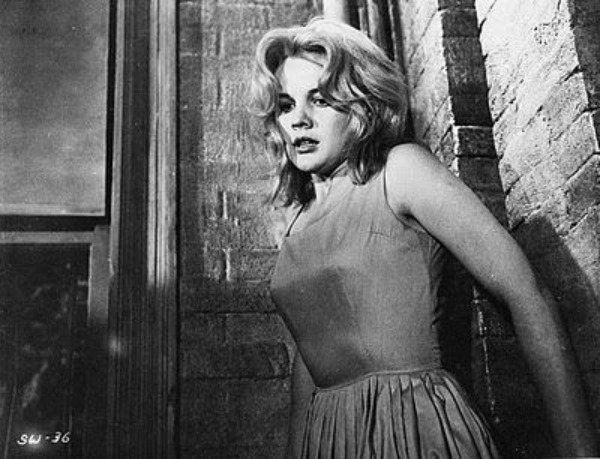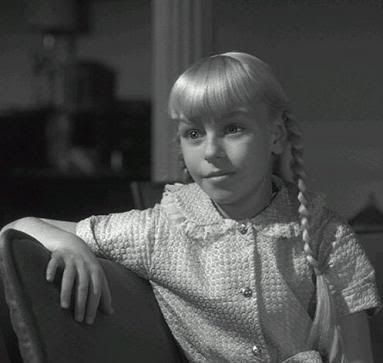
That little blond child. In 1950’s America — that mainstream overly idealized notion — the flaxen haired child to adore and spoil. But by 1956, two important films emerged — showing the underbelly of these perfect specimens. The more esteemed, and notorious (it was condemned by the Legion of Decency) was Elia Kazan’s Baby Doll, in which the gorgeous child bride Carroll Baker destroys Karl Malden’s masculinity whilst sleeping in a crib and sucking her thumb. While other relevant issues pervade Kazan’s masterful take on Tennessee Williams, the lingering image is of Ms. Baker in that crib is an iconic, powerful vision of arrested sexuality.
But just as viewers took a heated look at Baby Doll, they had another blonde to contend with — a younger and deadlier one — The Bad Seed. Pretty 10-year-old Patty McCormack playing an 8-year-old, owning her pig tails and pinafore skirts as Rhoda Penmark, a curtsying, cutie-pie brat who’ll manipulate, terrorize and kill anyone who gets in her way. Both actresses’ were deservedly Oscar nominated for their performances, both pictures became the more cultish pictures in these filmmaker’s canons (Bad Seed and Baby Doll fans are a devoted group) and both have felt a touch underrated through time.
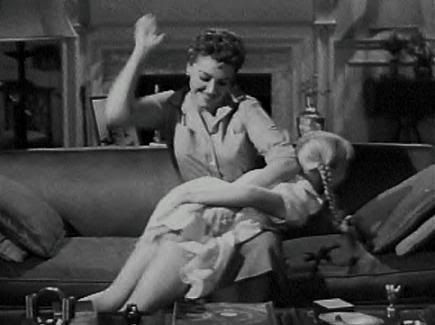
In the case of The Bad Seed, part of the problem may lie in the transfer from play to film. Director Mervyn LeRoy rightfully transported nearly all of the actors from the successful stage play (adapted by Maxwell Anderson from the novel by William March), but was forced to change the ending. In the play, an unstoppable Rhoda continues her evil while after her killings, she chillingly plays her continual practice piece, “Claire de Lune” on the piano. Perfect. In the picture, however, she is socked with a lightning bolt. O.K, also perfect. But, (and I’m not endorsing the harm of children here, even evil children), Warner Brothers instructed LeRoy to further punish Rhoda, or in this case Patty, by having cast members spank little McCormack, assuring the audience this was all a bunch of fun. You know, burning, drowning, murdering kids with tap shoes…
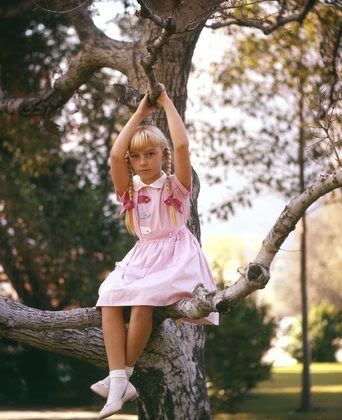
But The Bad Seed is fun. Gleefully, unapologetically and relevantly fun. In its own way, the tweaked ending just makes the picture even more inadvertently subversive, experimental, calling out to the audience that you’ve just seen a motion picture and haven’t you enjoyed watching this cute little killer? The picture knows how we love to hate little Rhoda, and some of us, how we love to love her. She’s just too damn full of vicious personality. I’d even go so far as to nearly (I say nearly) champion her spirit (even if patholoical) and wish she would invoke more of that personality before her inevitable demise. She’s such a fascinating vixen villain. More women, or little girls in this case, should be blessed with such material.
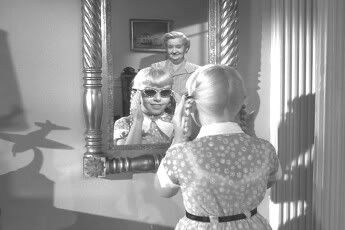
Living with her mother Christine (an understandably neurotic Nancy Kelly) and mostly absent father (William Hopper, Hedda Hopper’s son) Rhoda’s life is one of privilege and attention. When kissing her father goodbye he asks “What would you give me for a basket of kisses?” Rhoda coos back: “A basket of hugs!” Landlady and supposed expert in psychology, Monica Breedlove (Evelyn Varden) dotes on Rhoda, applauding her outmoded manners and showering her with presents, one, being rhinestone movie star glasses. Of course Rhoda loves those glassess and admires herself in the mirror like a little movie star. As Breedlove (the name!) prattles on about Freud and abnormal psychology, the rather ridiculous woman simply cannot see the freakish behavior in front of her. She’s blinded by all that bright, beauteous blonde and fakey, clenched smiles.
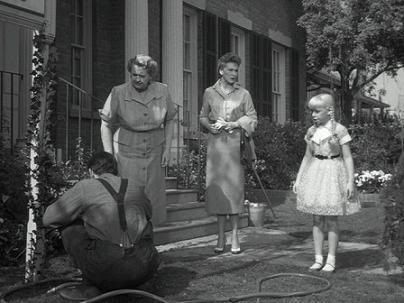
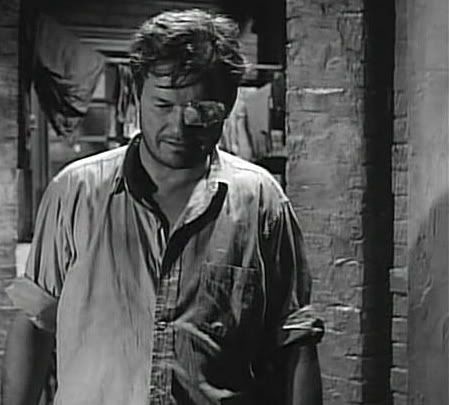
But Leroy (a scene stealing Henry Jones), the disturbed, somewhat perverse handyman disrespected by the household can see right through Rhoda. You even get a sense he’s got a thing for her, splashing her with the hose and harassing her tea parties. He understands her pathologies because he’s pathological — they’d make a fine pair. He’s just not as smart as she is. Their moments provoke some of the picture’s most inspired moments. Man, does Leroy get off digging into Rhoda after a fateful class outing leaves one child dead; not coincidentally, the class-mate who won the penmanship medal over the all perfecting Rhoda (“Everyone knew I wrote the best hand!” she sulks in sour grapes dramatics). The little boy is drowned and Rhoda returns home as if nothing happened. “Why should I feel bad? It was Claude Daigle got drowned, not me” she insists. And then she goes roller skating. Meanwhile, her poor mother becomes increasingly rattled and the boy’s mother (a heartbreaking Eileen Heckart), stumbles around in a dipsomaniacal stupor, trying to understand the death of her son by making everyone uncomfortable, which is refreshing. Everyone should feel uncomfortable.
Though some have a tough time with The Bad Seed’s talkier sequences (especially when Rhoda’s not around), to me they are an intriguing look into ideas that would later be seriously considered in American life. They also point out how psychology can’t explain everything (hence, a bad seed) as the one woman (Breedlove) who brags of her knowledge, fails to sense anything wrong with a child who is, at the very least, self obsessed to the point of dangerous narcissism. Never mind she’s a murderer, she’s an ungrateful, vapid manipulator.
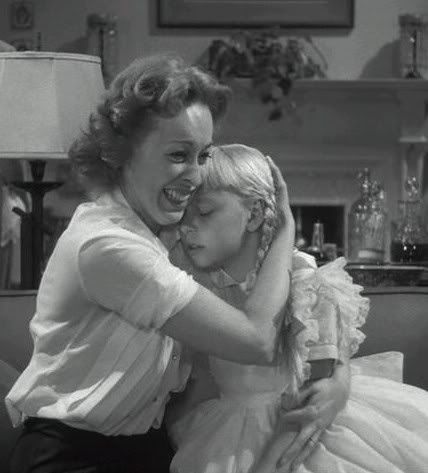
And, the golden moments come, again, between Leroy and Rhoda who argue like two prison inmates waiting for lockdown. Though Rhoda finds him revolting, he’s the only adult who can actually frighten the child with his taunts of “stick blood hounds” or the dreaded electric chair, a fate he swears she’ll meet. “They don’t send little girls to the electric chair!” Rhoda protests. “Oh they don’t?” He answers. “The got a blue one for little boys and a pink one for little gals!”
Films like The Omen or The Good Son have tried, nothing compares to The Bad Seed — and no child actor has out-seeded McCormack. Calm and cool, she can also rip into fits of rage that are both terrifying and hilarious. Perfectly balancing a disarmingly adult demeanor with the tantrums of a little girl, her performance is even more impressive in that it’s the blueprint. Where did McCormack learn this wonderful balance of over-theatrical camp with an icy, realistic serenity? And before John Waters became obsessed with her?
A first of its kind, the then shocking Bad Seed holds up, albeit with a tad more camp to some. Though I would say stylized and intriguingly formal, while also terrifying, touching and real, particularly in moments between mother and daughter. Nancy Kelly is superbly moving in her need to believe and her realization that she can’t any longer. But the psychotic gusto of Rhoda! You hate her. You love her. And she’s so devilishly entertaining. Revel in her. Agree with Leroy who spits out: “I thought I saw some mean little gals in my time, but you’re the meanest!” What a character. The itty bitty ultimate ice queen bitch goddess.The first Pretty Poison. The original Curse of Millhaven.”My hair is a-yellow and I’m always a-combing. La la la la La la la lie!”
The DVD
The Bad Seed is presented in Full Screen Standard (1.33:1). The transfer is crisp, highlighting the sometimes interesting black and white cinematography (as McCormack points out in the commentary, notice all the crosses in the celluloid). Lovely to look at–you really appreciate the staging and composition of the picture in this superior transfer.
The film’s audio comes in Dolby Digital 2.0 Mono. The sound is excellent. This is a talky movie and tone is important–from Rhoda’s voice rising over her stolen shoes to the theatrical asides Leroy imparts to himself. The music is effectively conveyed and you will not get Rhoda’s piano tinkling out of your head.
Extras:
The Bad Seed has nice extras, though not enough to satisfy the bigger fans. You do learn a lot about McCormack’s experience through the commentary track with McCormack and Charles Busch (who wrote and starred in the campy Die Mommie Die!–he claims The Bad Seed one of his favorite movies). He probes Patty on all aspects of the film–who she got along with, how did she channel this evil little “bitch” and the transfer from play to film. It’s a fun track that isn’t afraid of underscoring the camp, even if the film is good enough to be given a straight track. But Patty’s game. Also on board is the film’s trailer and “A Conversation with Patty McCormack,” a fifteen minute conversation with the star that reveals more about her work. This is a remarkably well adjusted woman for such a performance.