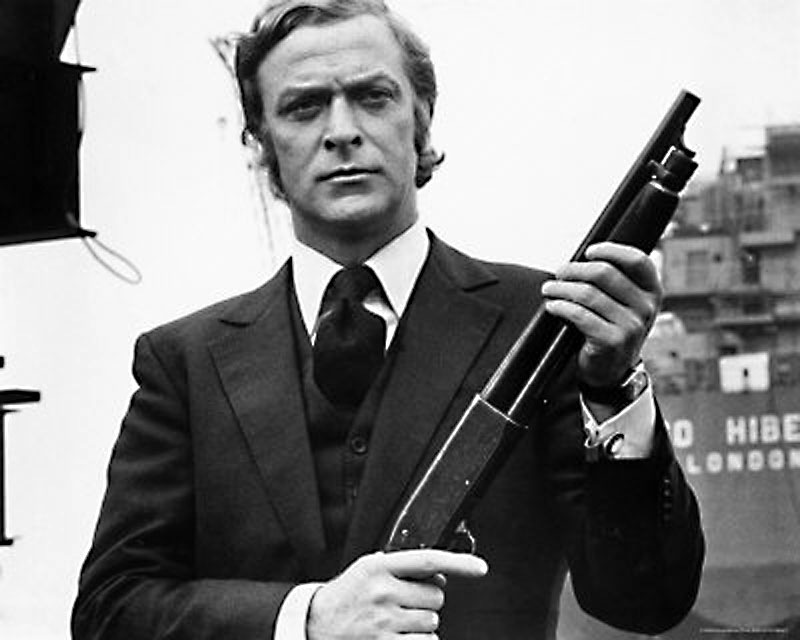
Happy Birthday Michael Caine

Caine-deadfall

I asked the easy, but often hard to answer: "Who was the greatest director you ever worked with?" He answered, without hesitation, "John Huston."

That was Michael Caine and this was 2009, when I sped up from an away-from-LA respite in Joshua Tree to talk to the legendary actor among a small (surprisingly small) roundtable of film writers. When he walked into the suite, he was casual cool, but burning with that kind of charisma that makes the entire room feel a little high. Actors are actors and often not so exciting in person but Caine, an icon, was thrillingly magnetic. We all looked at him. Stared. I want to say a woman dropped her cookie though I don't think that happened. We couldn't turn away. 

Michael-Caine-Rolex-Get-Carter

And then he talked. Discussing his current movie (Is Anybody There?), a few of his classics, Batman and more, he was even game when a reporter brought up the Christian Bale Terminator: Salvation outburst. He was surprised by it ("completely out of character" for Bale) but understanding of his co-star. He laughed and said, "I’m more like that than he is. You’re liable to get a volley off of me if you walk around during my takes."

Actors are human, after all. He told us this story:

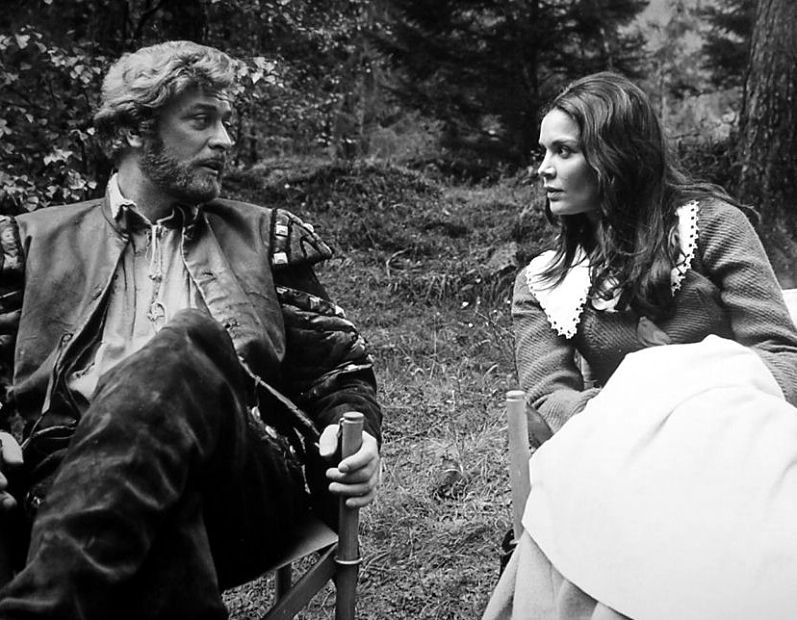
Caine-bolkan-break_opt

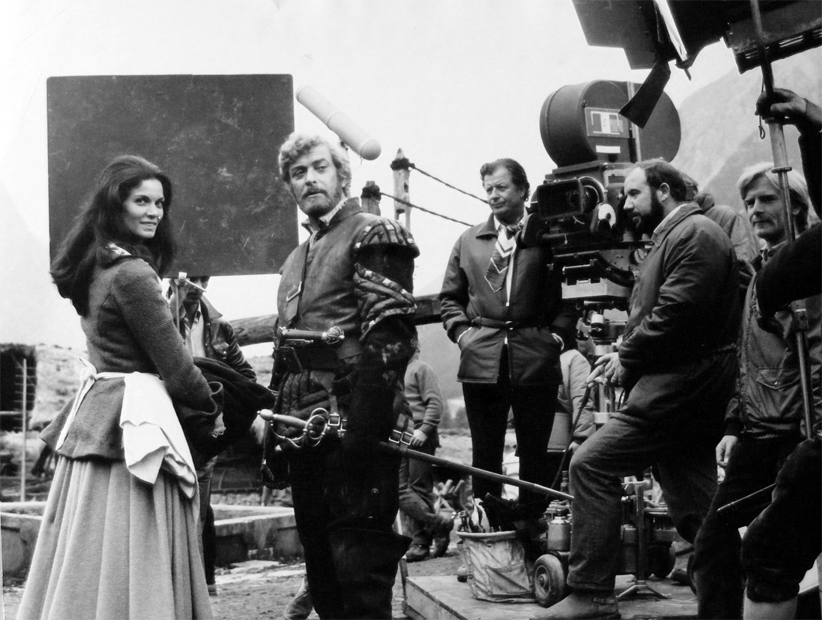
“I lost my temper on a movie years ago when I was doing a movie called The Last Valley. James Clavell was the director. I’m not a very good horseman and they put me on this horse that they knew was a killer and it ran away with me for two miles and I brought it back at a slow pace and then I got off and all the unit were laughing. And then I started and I outdid Christian by about 30 minutes with more language than he knows. So James Clavell broke the crew for an hour and he said, ‘Let’s have a cup of tea.’ And so we went and had a cup of tea."

Bolkan-caine-clavell-last-valley-copy

"James Clavell was captured in Hong Kong when he was 14 by the Japanese and spent the first part of his life in a Japanese prison camp. He said to me, ‘The way I survived was I became Japanese in mentality. So I knew where they were coming from in their treatment of us and I knew where I should be in everything.’ He said, ‘The one thing that the Japanese never do is they never lose their temper because anger is an emotion that you should never show to strangers because you expose too much of yourself.’ He said, ‘You must never expose yourself like that to strangers.’ And he gave me this long lecture on the Japanese and anger and I have never lost my temper on a set since. I go home and I scream at the kids. (Laughs) But I have never lost my temper on a set since.”

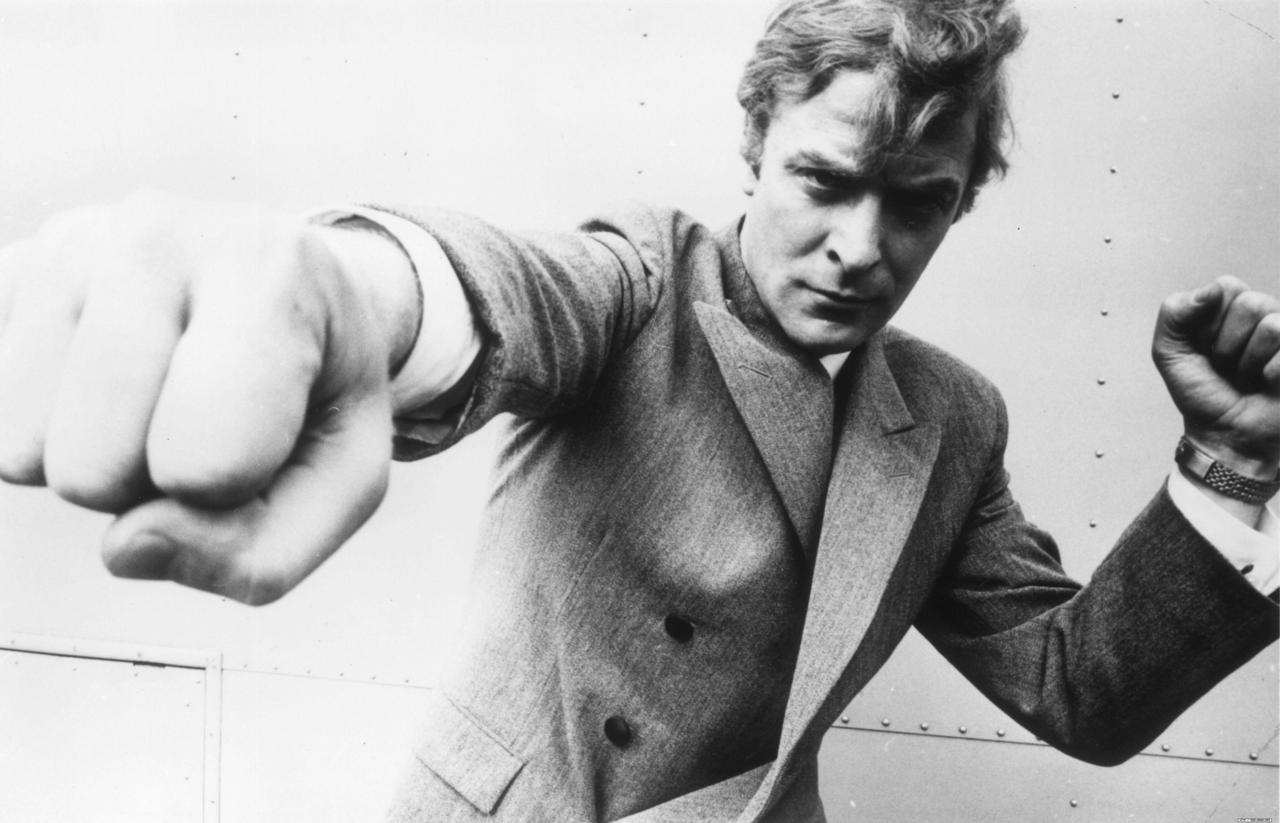
Michael-caine-001

He also discussed retirement, something I just can't see yet. Can anyone?

“You don’t know when your time is up so to speak. There just goes a period of time when the right scripts don’t arrive. And it hasn’t happened to me yet. It might have happened now. I finished this last picture, as I said. I don’t have another picture to do. If a script doesn’t come, then I won’t do anything and I’ll be retired. There won’t be any announcement or anything. I remember MacArthur saying ‘Old soldiers don’t die. They fade away.’ Well, old actors don’t die. They fade away."

Well, he won't. Happy Birthday Michael Caine.

New Year’s Eve: Olmi’s Poignant Ode

Screen shot 2013-12-31 at 8.08.29 PM

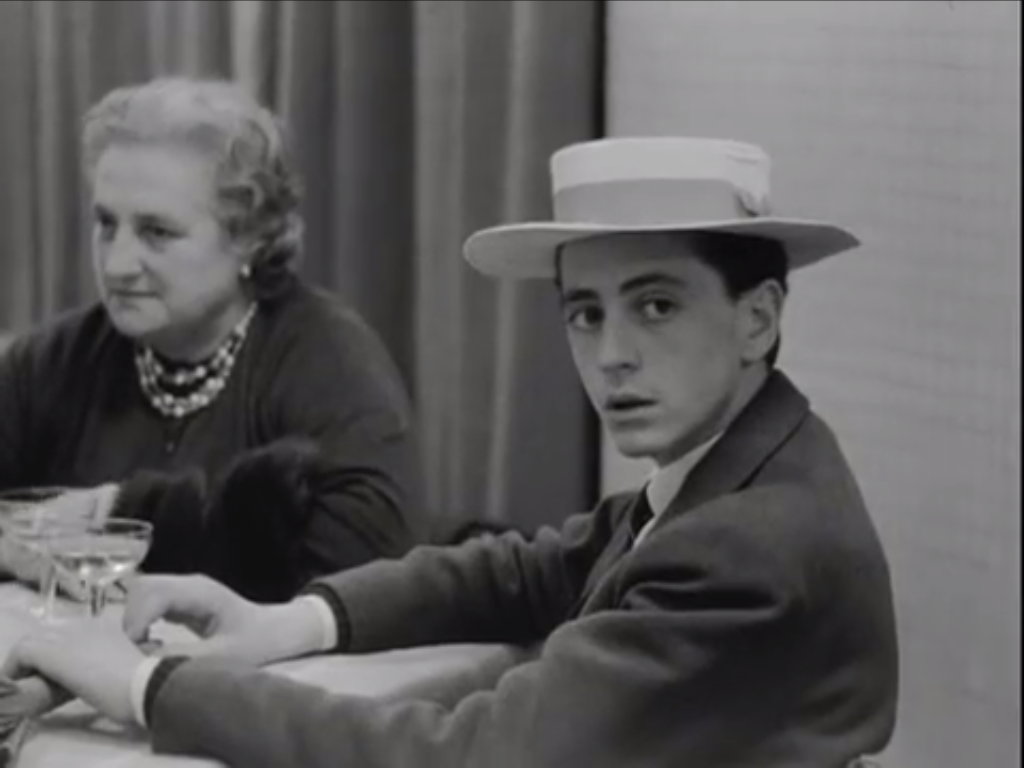
It's often those little moments. What happens while waiting for the train, walking with a girl, sitting at the desk, working your tedious job. Those little things — they work so beautifullly in Italian filmmaker Ermanno Olmi's maserpiece Il Posto (1961), a film that observes work (“Il Posto" means "The Job") through the orbs of a teenager (the saucer-eyed and touchingly languid non-professional actor Sandro Panseri) entering the work force. Olmi displays those little heartbreaks that lead people to inspiration or desperation with a beguiling combination of warmth and melancholia. An auteur whose attention to the small details of everyday life creates quiet character studies of tedium, irony, hilarity, and sadness, he had a marked quality of making the hum-drum almost fantastical.

Screen shot 2013-12-31 at 8.07.56 PM

Reality depends on how you look at it (after all, what is reality?) and Olmi's aggressively common, poignant depictions can veer into Kafkaesque torture while remaining sweet and perilously hopeful. It's not a surprise then, that that perilously depressing (even potentially suicidal) day, New Year’s Eve, showcases a scene so touching, that you find yourself in a place that moves beyond bittersweet. It's more agonizingly human. And then, just lovely.

Screen shot 2013-12-31 at 8.07.28 PM

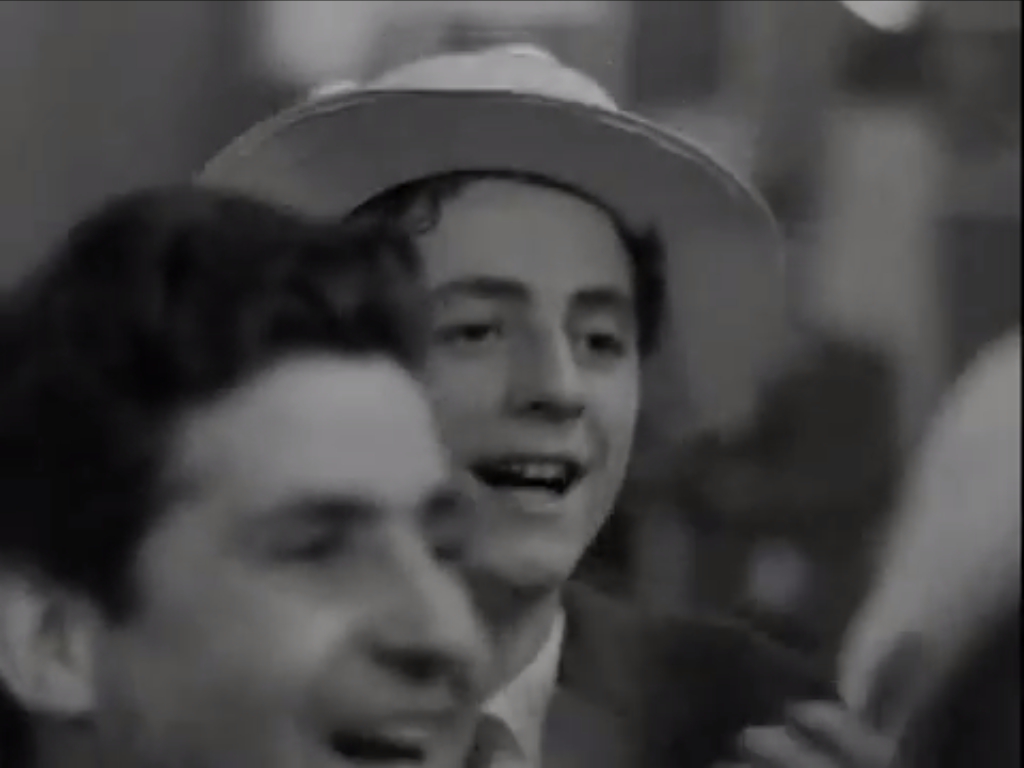
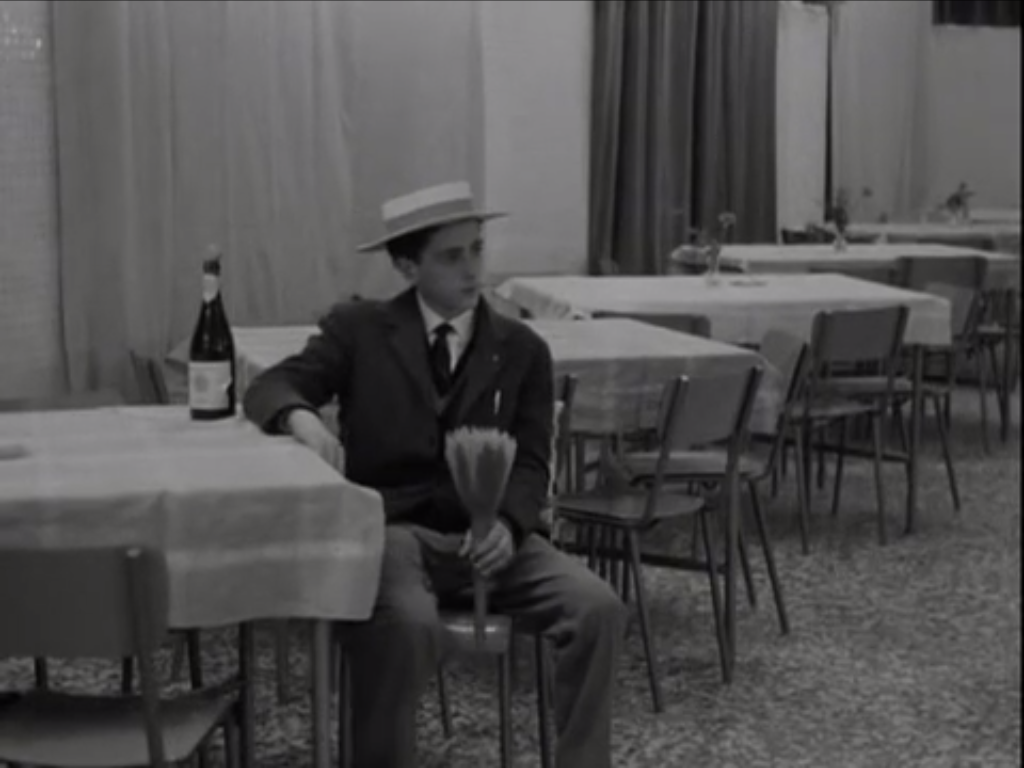
After Panseri has conformed at his job (or is understanding that's what his  future holds), it’s at at, at first, empy, cold New Year’s Eve party that the tenative teen will finally let loose, surrounded by the dreary commonality of his future. Though he hopes to meet the pretty woman he’s smitten with, he instead enters this rather sterile, flavorless party, and talks to an older couple at a nearby table. As the evening opens up and revelers have downed extra liquids, the shy young man unleashes a joy, perhaps a desperate joy, dancing, smiling, resigned to his sure night of singledom.

Screen shot 2013-12-31 at 8.09.28 PM

The fact that he's momentarily happy, widening his usual placid face with toothy grins and jumping in a circle with other party-goers, makes the sequence all the more heartbreaking. Especially since the New Year brings a new position, as well as a potentially endless life — he will be staring at the back of his co-worker's head for the rest of the year. I always hope his year will be better. It probably won't, but perhaps his life will. And he should always dance. Especially when the girl doesn't show up.

Happy New Year.

Screen shot 2013-12-31 at 8.10.38 PM

Love, Sex, Death and Christmas

Tom-Cruise-plays-Dr.-William-Harford-in-Warner-Bros-drama-movie-Eyes-Wide-Shut-1999-90

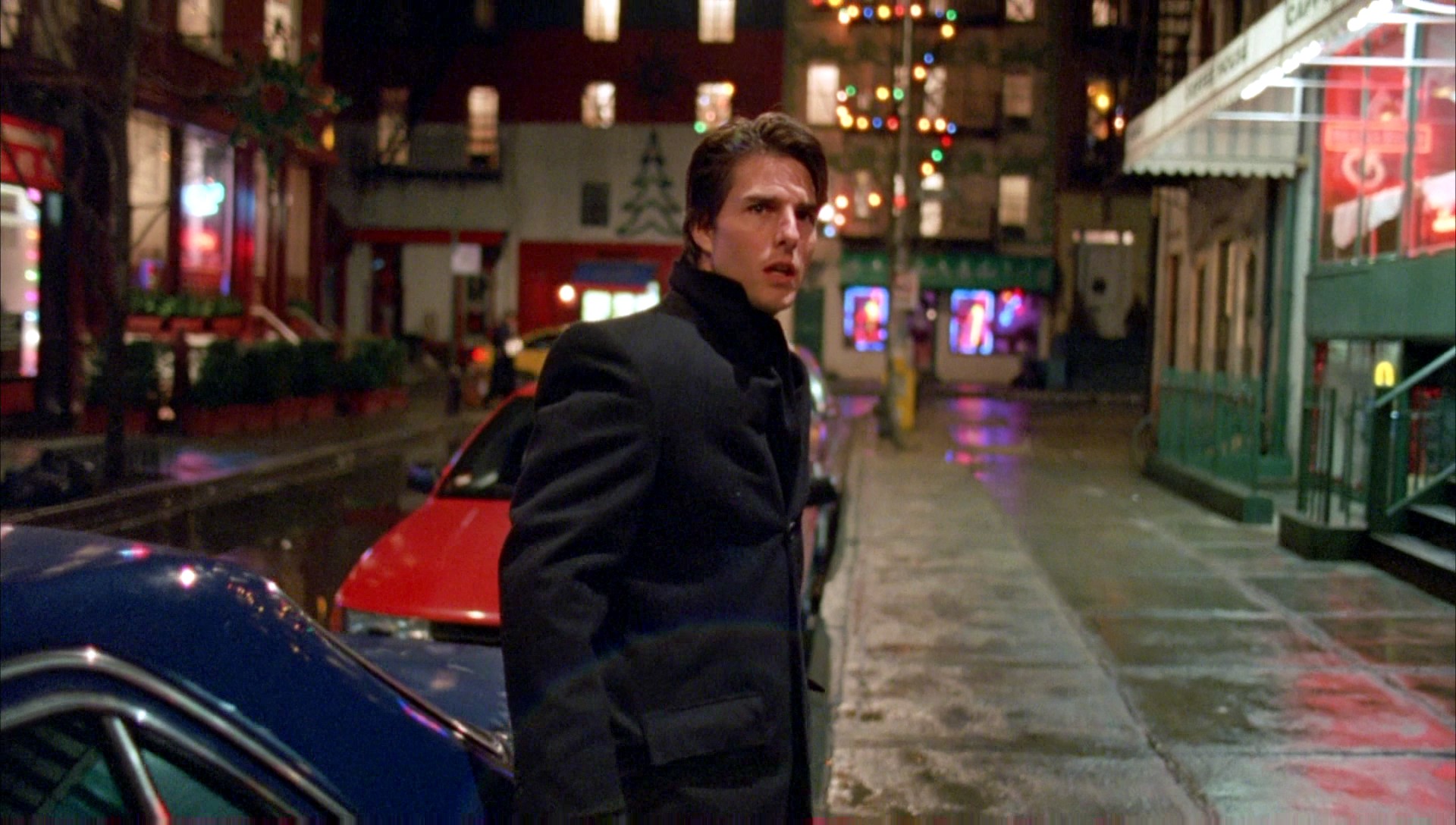
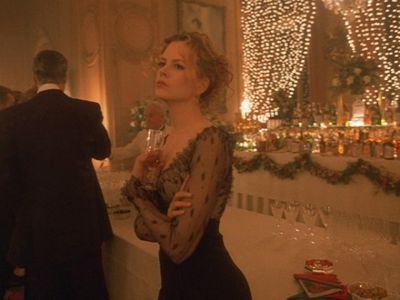
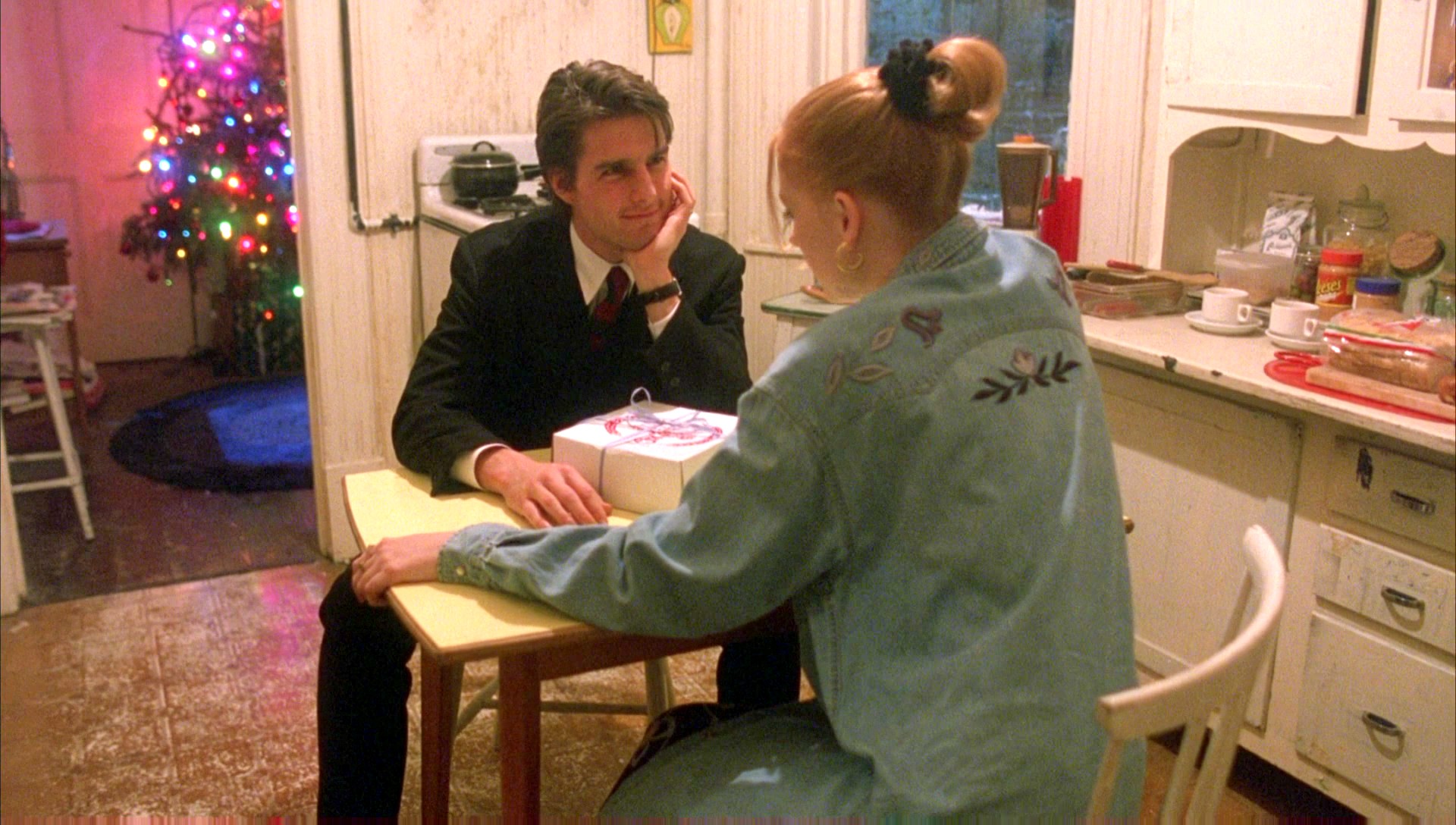
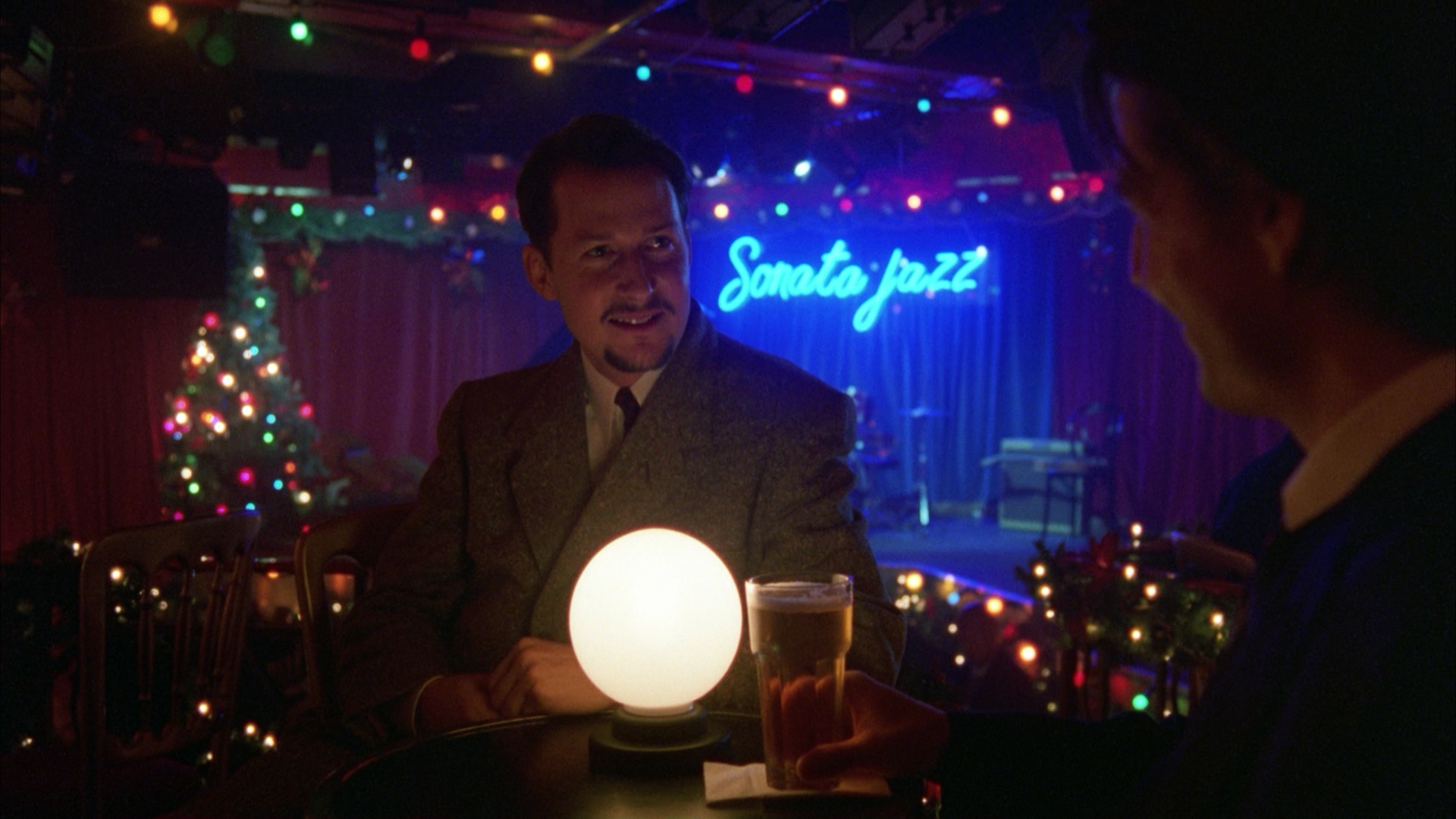
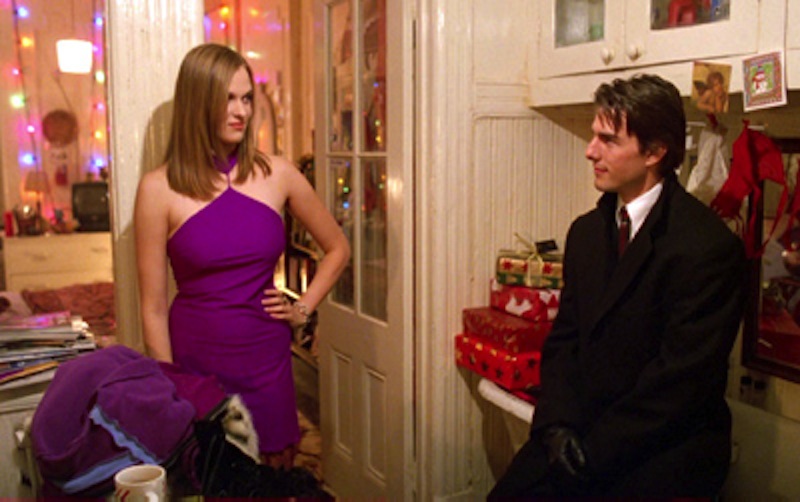
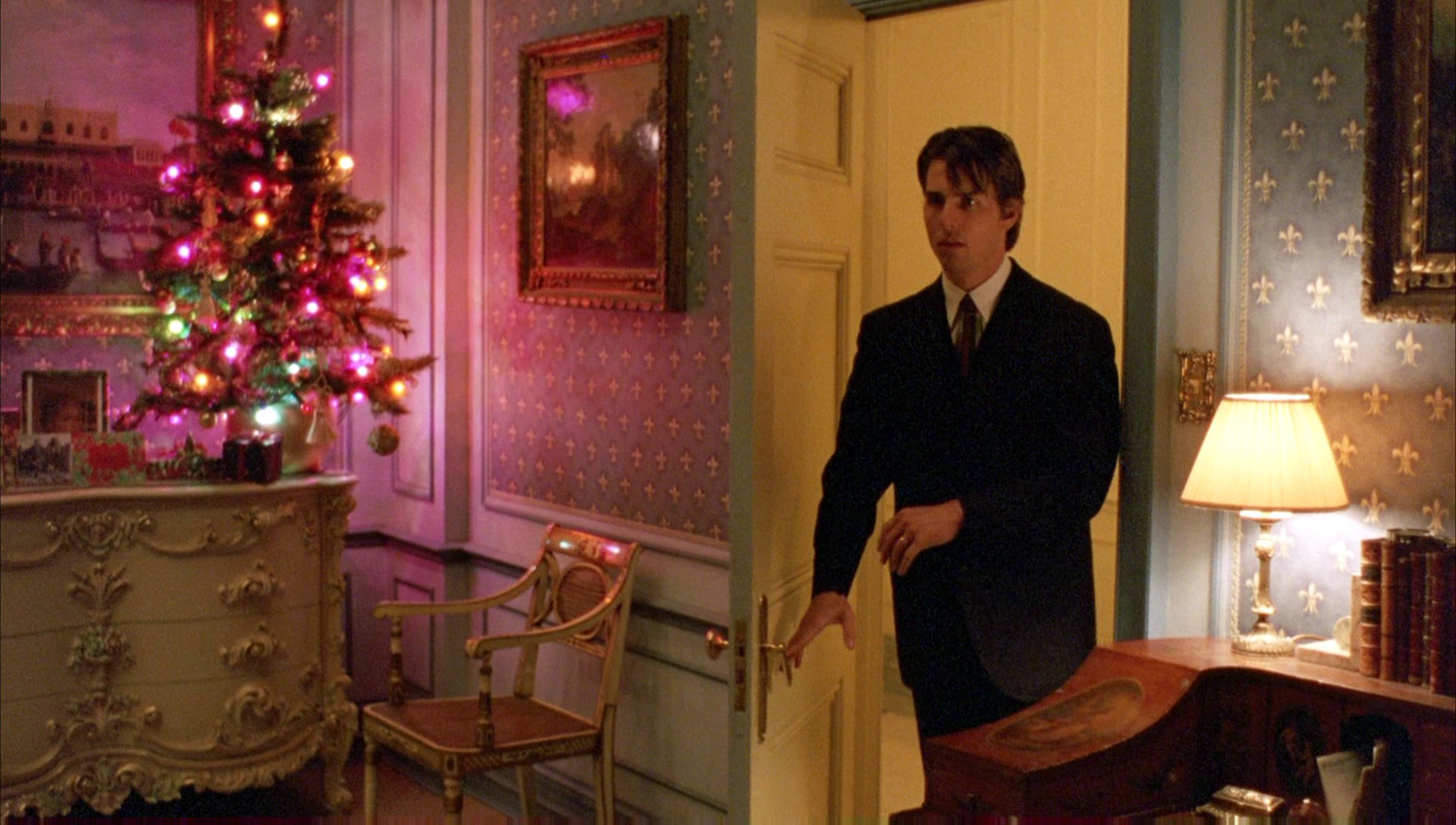
Another Christmas, another posting of one of my favorite holiday movies — Stanley Kubrick's Eyes Wide Shut starring Nicole Kidman and that bizarre force — Tom Cruise. A movie star and a fascinating, sometimes, brilliant actor, Cruise is an actor who thinks he's sincere. And he is. But is he? You really believe that he thinks he's sincere but… there's something off. Something he doesn't seem to understand (or perhaps he does?), which makes him extra compelling. He's charismatic. Charismatitcally creepy. And Stanley Kubrick understood this — all of that mega star weirdo power hiding in plain sight. He might be crazy. He might be a tedious square. Whatever he is, Kubrick and company are dragging out the fubar. All that insanity-inducing yuletide anxiety (and then some) is so perfectly conveyed in Eyes Wide Shut via his leading man that  Cruise is Christmas stress — pretty, festive, overly serious, overly grinning, and often hilariously, creepily Christmassy. 

Fhd999EWS_Tom_Cruise_010

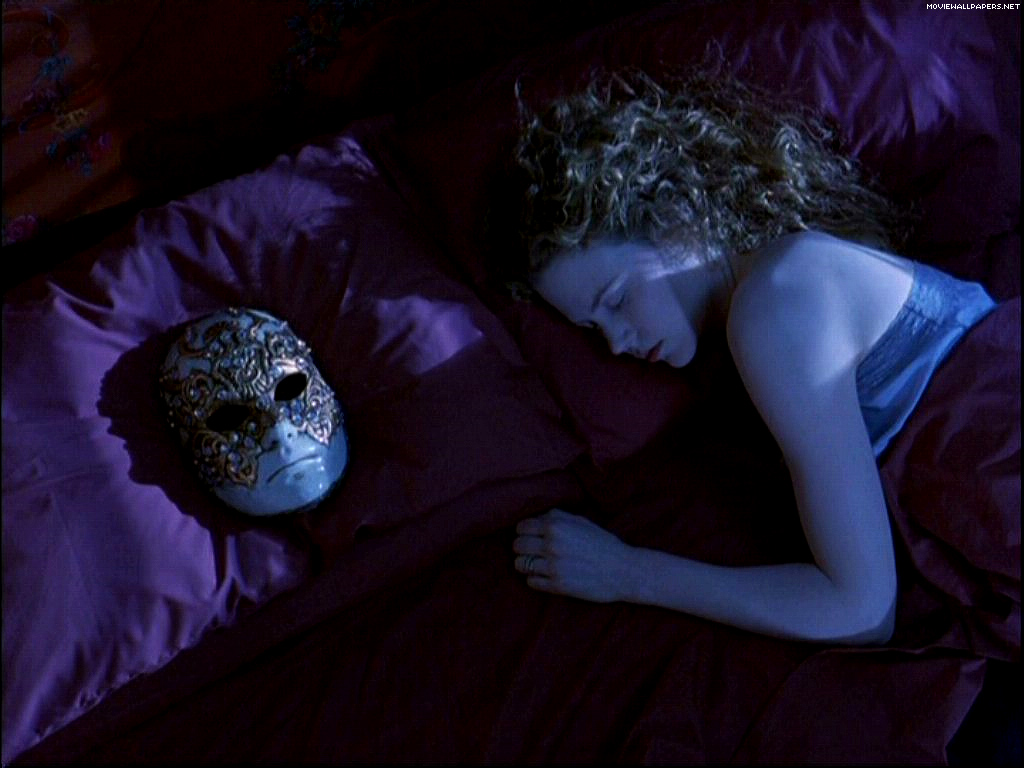
And then, scared. Terrified, even, delivering Kubrick's social, sexual, surrealist themes within the director's gorgeous holiday milieu. Bathed in Christmas style, Eyes Wide Shut uses Christmas lights, background Christmas trees and traditional colors of red and green with almost perverse relentlessness. With that, I'm dipping into my archives for my annual posting of one of  Kubrick's most underrated pictures –  a film that in terms of love, sex, death, fear and träume remains timeless. And again, it's a perfect Christmas movie…

6a00d83451cb7469e2014e5fb6907f970c-400wi

In  Kubrick's cinematic universe, reality, dreams, order and insanity progress on distinct, intersecting planes. Whether he was depicting an absurd, chillingly real war room in Dr. Strangelove, the disturbing but oddly sexy ultra violence of an Orwellian future in A Clockwork Orange, the siren call of insanity in The Shining, the hyper fantastical yet authentic Vietnam War in Full Metal Jacket, or the irony and powerlessness among such transcendent opulence in Barry Lyndon, life was a surreal work in progress – an ambiguous joke that veered from hilarious to sexy to terrifying, sometimes within seconds. Attempting to understand order, or how any system designed to make our universe more rational or safe seemed fruitless. Think Sterling Hayden approaching such a predicament at the end of Kubrick's The Killing. He watches his life literally fly away on an airport tarmac and bitterly spits one of cinema’s greatest final lines: “Eh, what’s the difference?”

Eyes-wide-shut-2-1024

Which brings me to the final line of Kubrick’s frequently misunderstood Eyes Wide Shut in which Nicole Kidman states rather flatly, “Fuck” — as in, that’s the answer, that’s what we need to do. A movie I’ve defended since its release, it’s a picture that deserves closer inspection and a worthy finale for the enigmatic auteur.

Fhd999EWS_Tom_Cruise_020

The controversial movie (some thought it silly, some, un-erotic) Eyes Wide Shut found the director once again studying the perplexing nature of dreams and reality, this time exploring them in a more personal and private arena: sexuality. As he did with Lolita, Kubrick created more than a film about sexual desire; he created a film about bitter romance, troublesome marital bonds, societal contradictions and, significantly, the fear of death.

An updating of the 1927 Traumnovelle (Dream Novel) by the sardonic Austrian writer Arthur Schnitzler, the picture remains an unsettling blend of antiquated garishness and modern transgression — an alternate sexual universe haunted by ghouls of the past, present and future.

Ews6

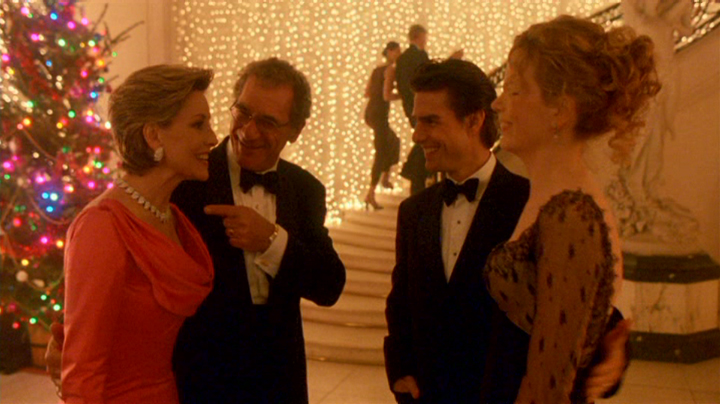
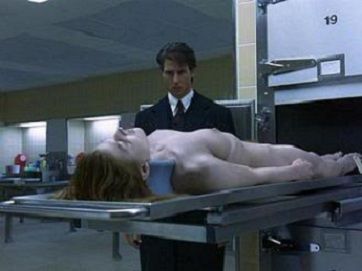
In this universe “live” the healthy, handsome walking dead – Dr. Bill Harford  Cruise) and his wife, Alice (a slinky, wonderfully creepy  Kidman), a glamorous, rich couple who appear the picture of storybook perfection. But like most supposed perfection, there are cracks in that portrait, and in their case, it’s the usual: they want to screw other people (or at least they think they do). At a sumptuous party given by Bill's obscenely wealthy friend Victor (Sydney Pollack), Bill almost strays upstairs with two models while Alice flirts with a strange Hungarian man who looks like one of the cadaverous party-goers from The Shining. The next evening, in a fit of jealousy over Bill's near indiscretion (he ended up contending with a beautiful, naked drug overdose instead of a debauched roll in the hay — though the way her body sits in this shot is disturbingly erotic), Alice confesses that she’s had thoughts of cheating and, even worse, reveals that if things had been different, she would have thrown her entire life away for one flight of sexual fancy.

Ews_xmas_ (2)

Unmasking something that should remain one of those deep, dark secrets you never confess to your significant other, Alice deftly rattles Bill's perception of her fidelity and the strength of their marriage in a speech that makes his mind spin out of control (Kidman's performance here is superb). After this confession, Bill is abruptly called away to confirm the death of a patient and keeping in tune with the love/death/sex of the picture, the daughter of the deceased makes a pass at him. The grief stricken but, considering the circumstances, kinky gesture aids in Bill’s decision to not immediately return home. Instead, he wanders the streets of New York and embarks on a sequence of actions that, though not as outwardly comic, somewhat resemble those in the Scorsese movie After Hours: He discovers a surreal sexual underworld that he’s both attracted to and repelled by.

Fhd999EWS_Leelee_Sobieski_004

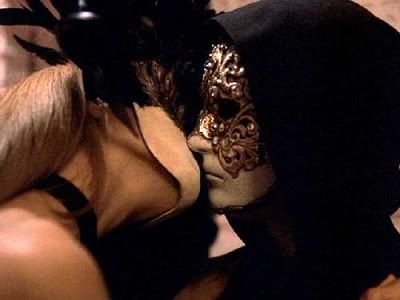
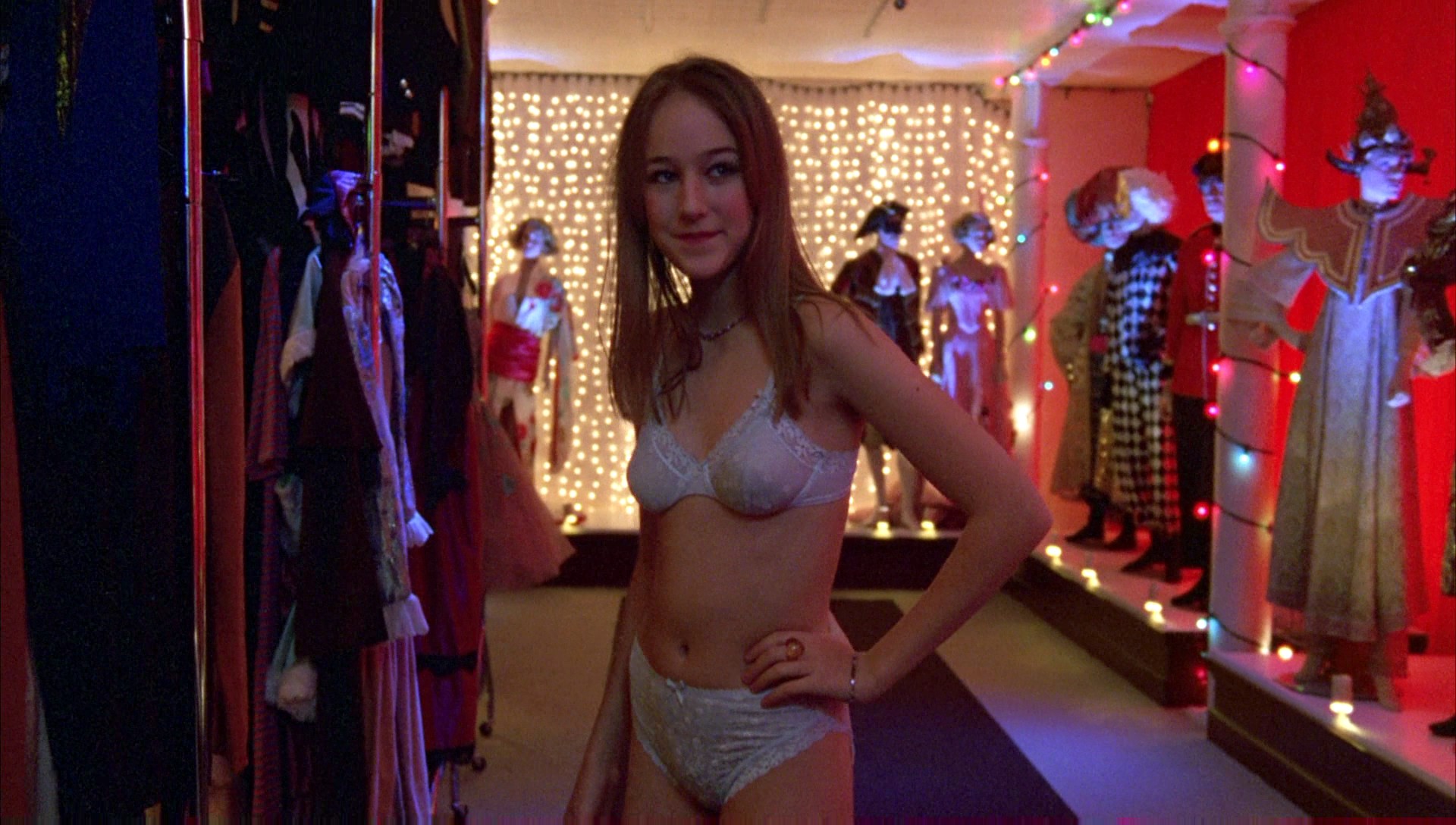
A prostitute, a piano player, a peculiar costume-store owner and his Lolita-esque 14-year-old daughter lead Bill to the film's infamous ritualistic orgy sequence, during which participants are cloaked and masked, and naked women are used as sacrificial sex lambs. The gothic, terrifying yet titillating feel of this sequence walks a fine line between horror and parody and true to Kubrick’s genius, manages to cross into both camps. The magnificent, exacting camera work and unrelenting music compel us to look, no matter what happens, and though I was actually a little scared the first time I saw this moment, I found myself highly amused, laughing even. If ever a person was out of place in a Bohemian Grove-like orgy, it is Tom Cruise’s Dr. Bill. And yet, I was absolutely hypnotized, watching these moments like a waking dream and investing it with multiple meanings. What the hell is going on here besides a bunch of silly old rich men getting their jollies with beautifully breasted, long legged Helmut Newton models? And further, what do all of Bill’s adventures mean? Are Bill's encounters simply nightmares that will damage his marriage beyond repair, or are they mere titillating fantasy — fodder for a closer relationship and better sex with his spouse?

Eyes-wide-shut-prostitute-Tom-Cruise

Well, I can’t answer that. Given the picture's ominous tone, however, there is something definitely rotten within its slinky, Christmas-lit loveliness. Like the impeccable environment of The Shining, the aura of Eyes Wide Shut is one of beauty ready to be defiled, sexuality ready to be slaughtered, lovely exteriors that reek of formaldehyde. The pall that hangs over this picture is fear: fear of the unknown; fear of yourself or of others; and fear that if sex can lead to freedom, it can just as easily lead to death.

eyeswideshutbody-1.jpg picture by BrandoBardot

In fact, the picture can be viewed as a commentary on sexual attitudes in the last few decades — a time when meaningless indiscretions can lead to horrifying blood-test results. It is no surprise, then, that Bill is a doctor and that throughout the film, he flashes his physician's ID as a police detective would his badge. "I'm a doctor," he constantly says, for both reassurance and intimidation.

Fhd999EWS_Tom_Cruise_011

In a profession that requires intimate investigation of flesh that may well be on its way to the morgue, sex is serious. These unsettling references to AIDS, necrophilia and forbidden sex (not to mention Kubrick's own death upon bringing the film to completion, une petite mort of sorts) permeate the picture like one giant prick tease. In today's world, sex is still there for the taking, but at what cost and for what gain? Kubrick's frustrating, brilliant coda neither answers nor ignores its own questions. Rather, it leaves us in a mysterious, contradictory mishmash of dream and reality, where not only are our eyes wide shut, but our legs are too.

Fhd999EWS_Tom_Cruise_006

Merry Christmas.

Walter Wanger: My Life with Cleopatra

Elizabeth-Taylor-in-Cleopatra-elizabeth-taylor-7280058-304-380_large

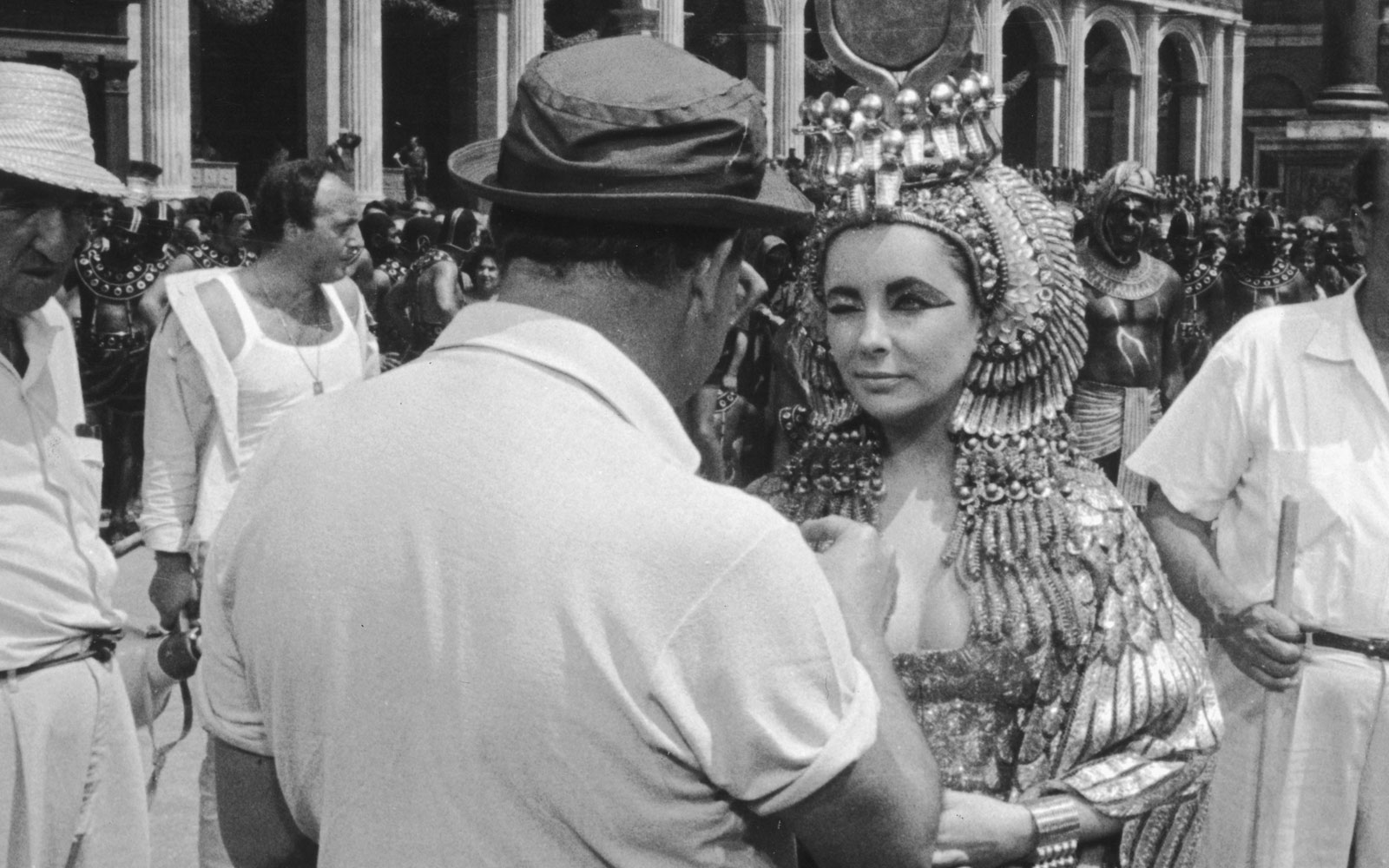
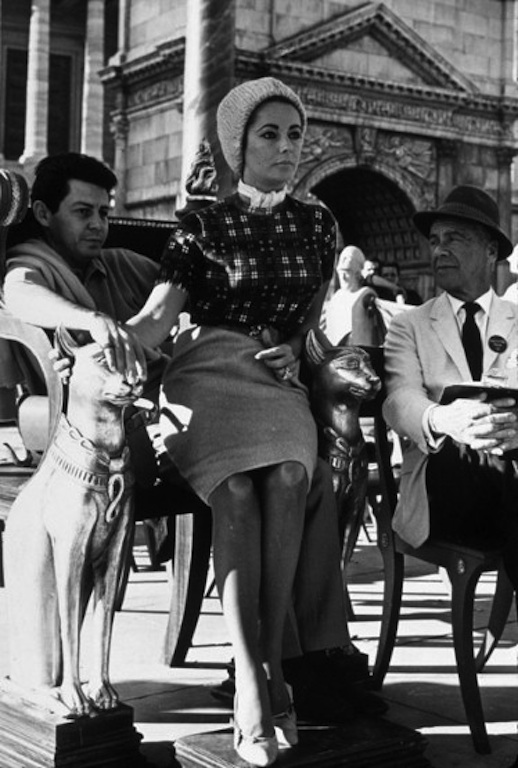
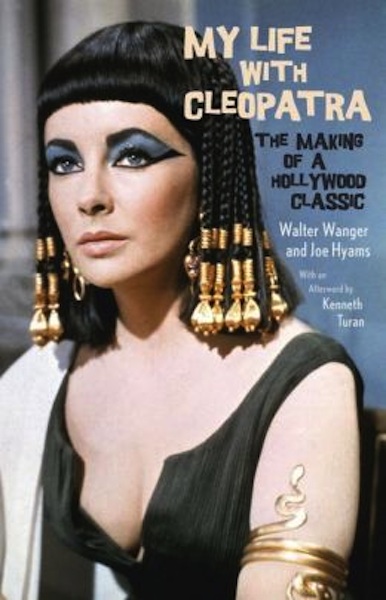
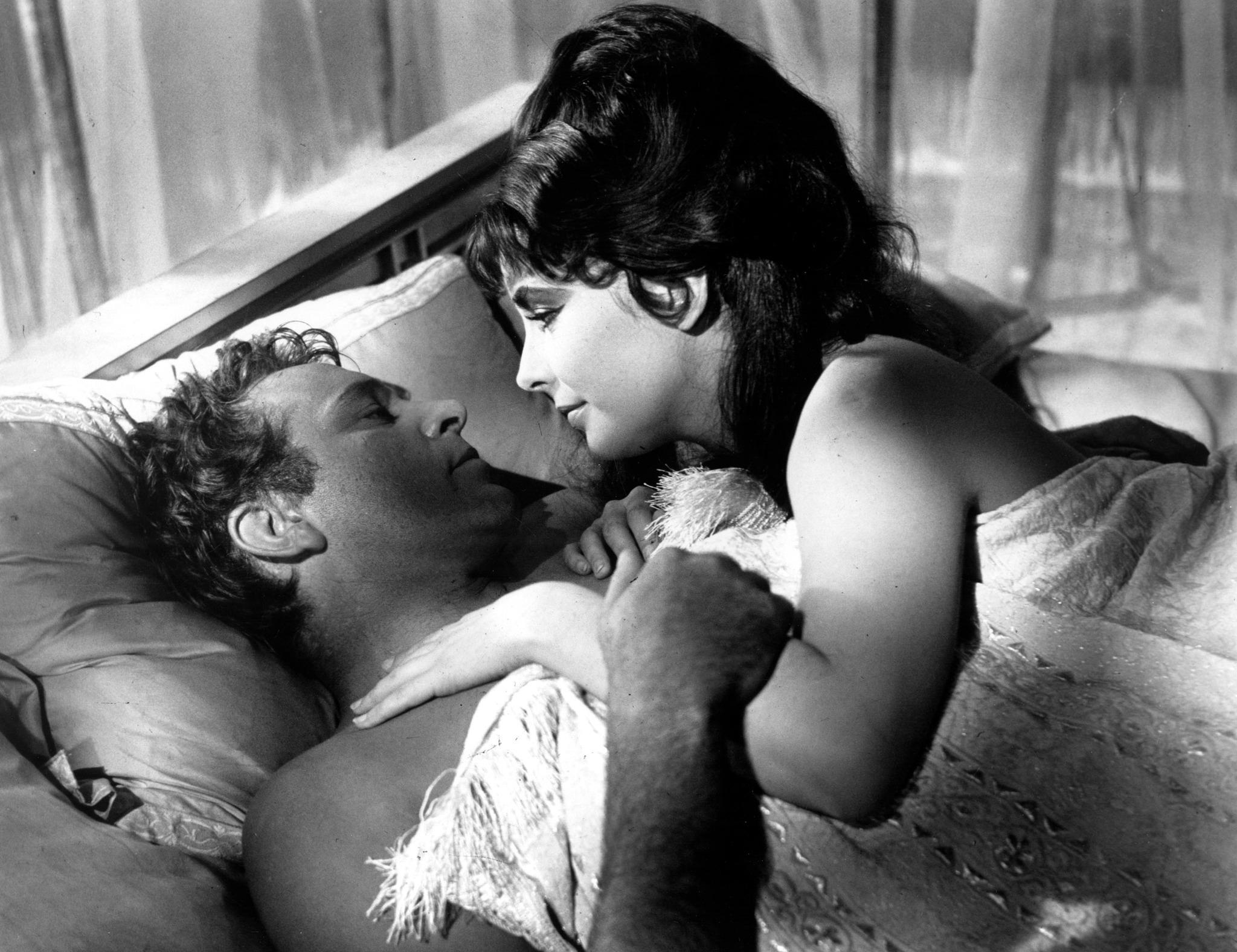
This year marks the 50th anniversary of Joseph L. Mankiewicz's's 1963 Cleopatra, a grand spectacle beset with production hell, hirings, firings, budgetary insanity and one of the most legendary affairs in Hollywood history. Re-released to coincide with Cleopatra's 50th is the book "My Life with Cleopatra: The Making of a Hollywood Classic" by Cleopatra producer Walter Wanger. Wanger's journals offer some intriguing inside information, but digging into the producer's own life and scandal proved extra fascinating. I discuss at The Los Angeles Review of Books. Here is my piece. Originally excerpted but read it all here.
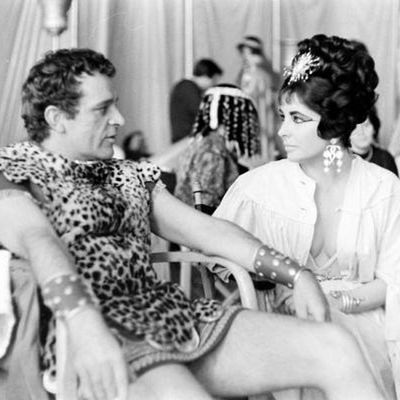
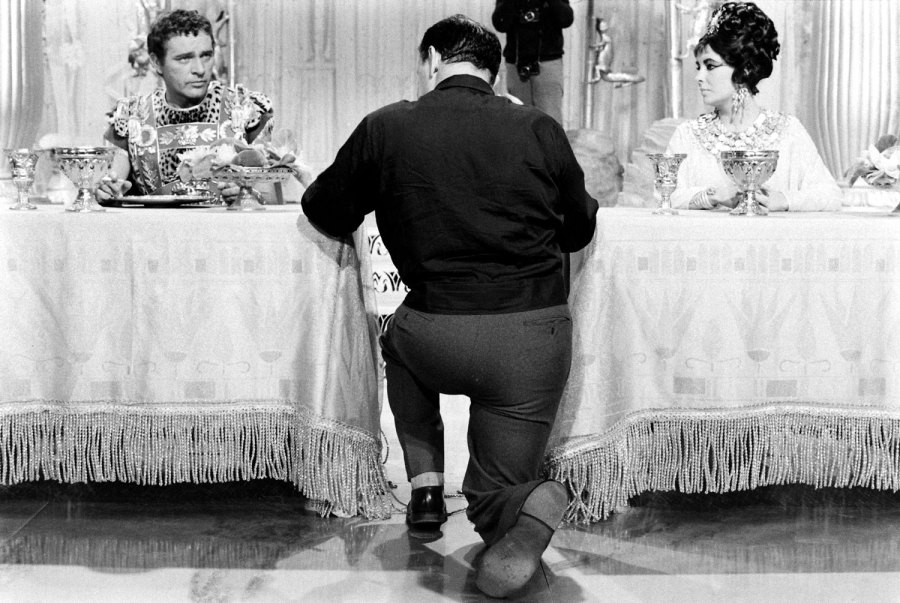
Liz and Dick on set

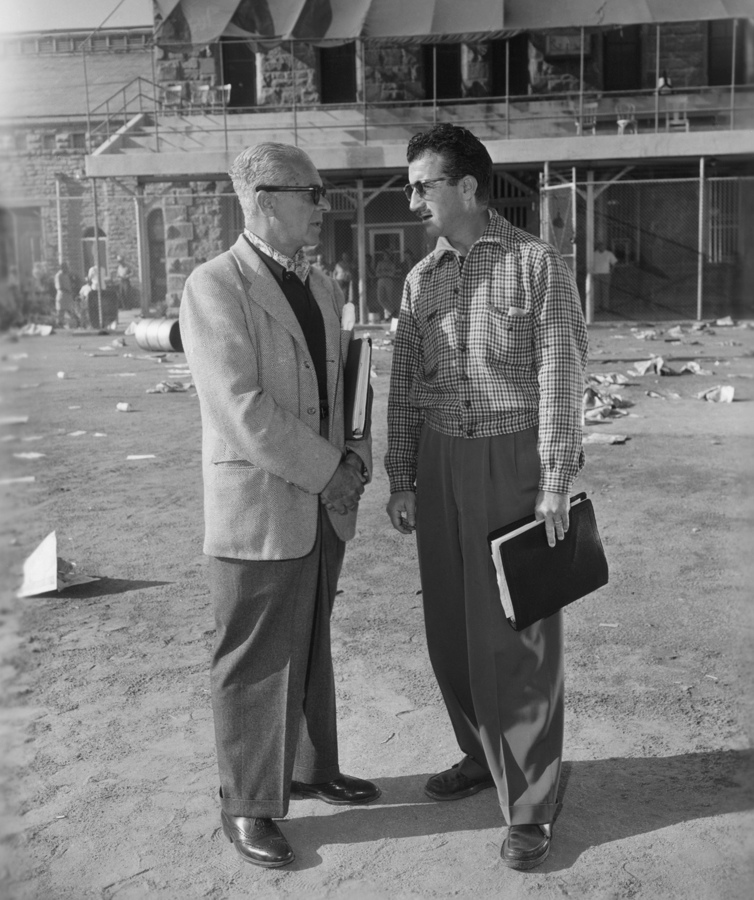
Cleopatra producer Walter Wanger had surely seen it all. Having lived and worked through the silents, the talkies, and Todd-AO, the movie veteran understood the art and commerce of Hollywood, the deals and decadence. The eminently erudite and sophisticated producer also understood the infidelities — the groin-crushing infidelities — and with a cinematic vengeance, he shot a man for it. So it’s quietly startling to read, in his published production diary, My Life with Cleopatra, this miniature entry regarding Eddie Fisher’s infamous betrayal by wife Elizabeth Taylor and her new lover Richard Burton. It’s darkly amusing, and almost winkingly cryptic: 

Cleopatra-2

"March 19, 1962

"Eddie Fisher to New York.

"I think it is ill-advised to leave now. He didn’t ask me for advice, however, which is just as well. I was no expert in solving a similar problem myself."

Indeed, he was not. Wanger went to the slammer for the felonious confrontation with his wife’s lover. There was no “we need to talk about this, honey”; no higher ground or any of that path-of-least-resistance business. Simply put: he shot his wife’s paramour in the crotch. But with prison comes wisdom. And, certainly, with Elizabeth Taylor comes wisdom.
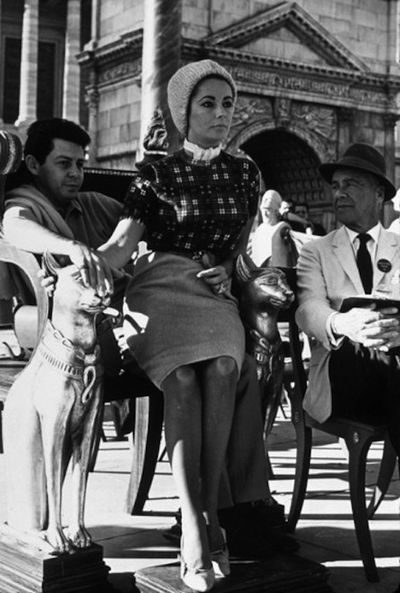
Fisher liz cleo

Had heartsick crooner Fisher actually sought advice from educated ex-con Wanger, perhaps he would have learned something. Or, perhaps he would have gotten too many ideas. In any case, Eddie Fisher did not seek counsel with Walter Wanger before exiting the Cleopatra set, so distraught over his violet-eyed wife lusting for that ruggedly handsome Welshman-in-the-grass that, according to Elizabeth Taylor (via Vanity Fair contributing editors Sam Kashner and Nancy Schoenberger), he put a gun to her head. “I’m not going to kill you. You’re too beautiful,” he told the woman who’d just survived a life-threatening and emergency tracheotomy the year prior. 
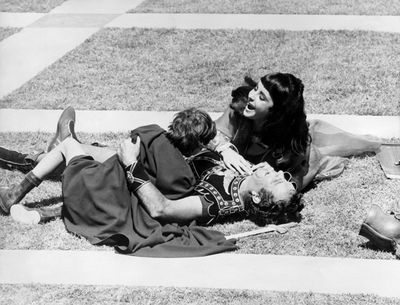
Burton Taylor play

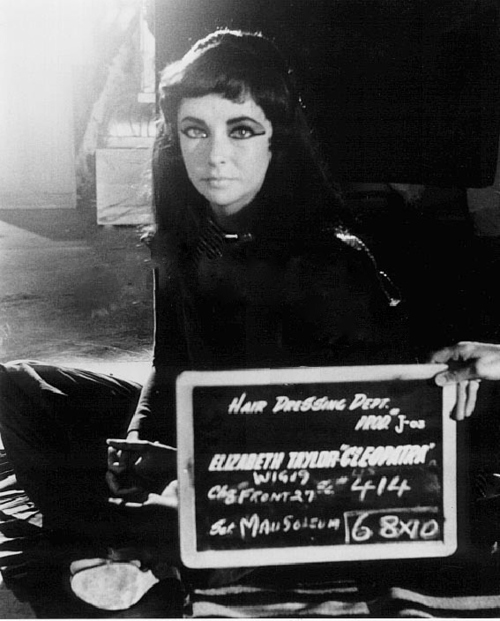
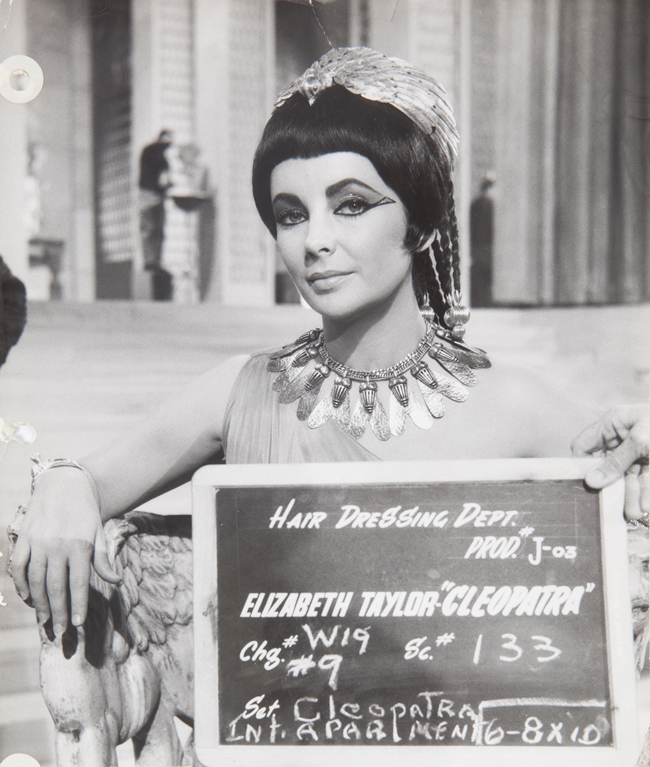
Who knows what might have happened had Eddie Fisher shot Elizabeth Taylor? The bullet would have connected, for Liz was notoriously catastrophe-prone, but something would have saved her, for she was also freakishly resilient. A jewel from one of her glittering headdresses or a flinty sequin from her customized Cleo eye-makeup would have deflected the fell bullet. Instead of spending a couple days in the morgue, Liz would have returned to the hospital after a months-long vigil while Fischer anguished darkly in the slammer. Wanger would have had no choice but to endure the production delays as he had all the others, and Taylor would have returned to the set alive and refreshed. Wonderful. Except for the hair department. They’d have to alter all of her wigs to cover that damn bullet wound.
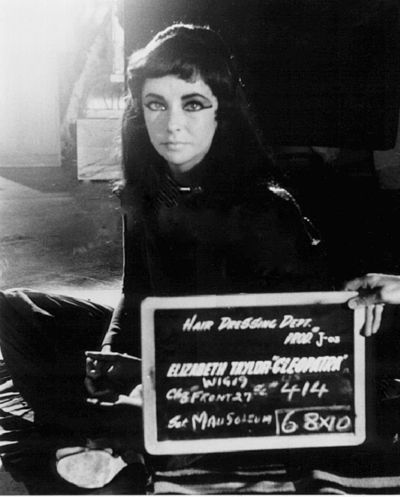
Liz Taylor Cleo Hair

But Fisher’s fresh hurt must have rustled up some past tumult within Wanger — much more than that skinny, enigmatic 1962 diary entry suggests. One can only speculate how much Wanger knew of Fisher’s rage, but he surely reflected on l’affair — particularly when considering Liz’s lover, Burton. Fisher reportedly bought a gun just for Burton, whom he dreamt of shooting (I can’t help but think of Fisher humming his own hit “I’m Walking Behind You” in his sleepless fantasy murder scenarios), but, thankfully, never fired a bullet. 

Walter Wanger with wife Joan Bennett

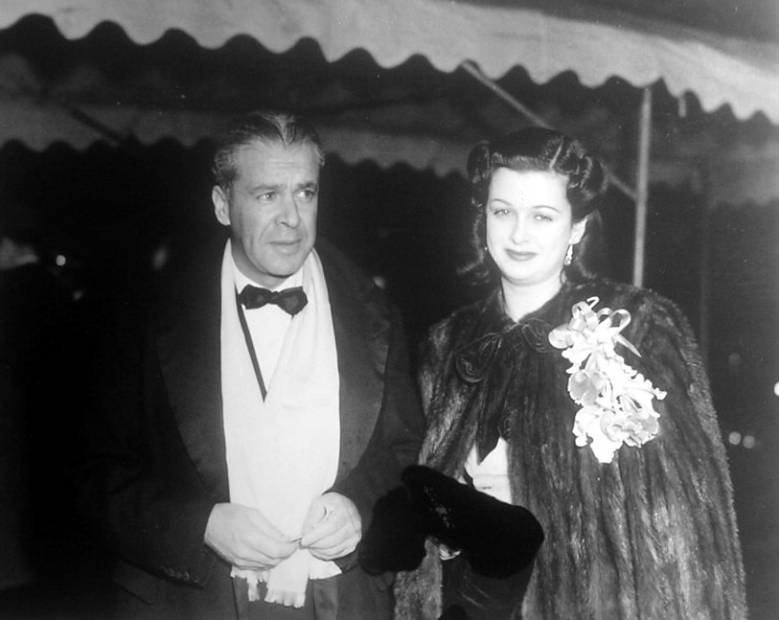
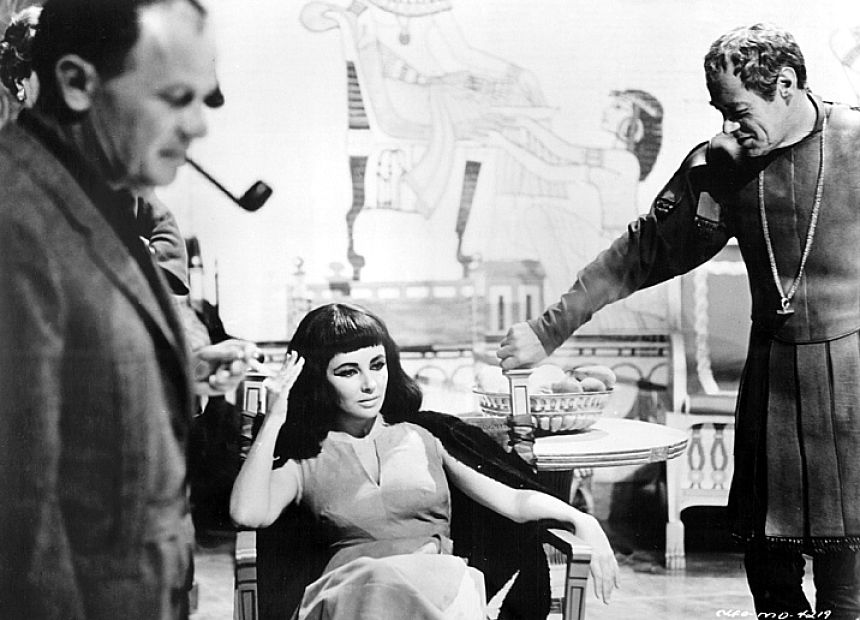
Walter Wanger was a different kind of man. When in 1951 he found himself in a similar predicament, the pipe-smoking producer didn’t pack his bags and run to New York. He packed a heater and headed for the MCA parking lot. 

Wanger barely discusses his own scandal (of course he doesn’t) in My Life With Cleopatra (co-written with Hollywood columnist and author Joe Hyams), his making-of diaries dating from the film’s beginning in 1958 to his epilogue dated March 7, 1963:

Burton Taylor CLEO

"It would be pleasant to say that the trials and tribulations which characterized the making of Cleopatra ended with that day in Egypt eight months ago when I made my farewell speech. It would also be pleasant to say that the pleasures of fame and fortune made all our sufferings worth while and, that in the true Hollywood tradition, we lived happily thereafter. The truth is something else again." 

The truth, Mr. Wanger, the truth. Whatever that means is questionable, especially in regard to something as chaotic as Cleopatra. Knowing more about the man, you get the feeling his past dramas pale when dealing with the madness of Cleopatra, a fiasco that famously cost, in some estimates, up to $44 million and is considered, adjusted for inflation, the most expensive movie ever made. My Life with Cleopatra, first excerpted in The Saturday Evening Post two months before the movie’s opening in 1963, was a fascinating move on Wanger’s part.

2b0b7d388cb0acab5d67b2d86f768edf

Yes, publicists Jack Brodsky and Nathan Weiss unleashed the divulging Cleopatra Papers: A Private Correspondence in the same year, but Wanger was big stuff. What working producer would write a tell-all about a major production his name was still attached to? Executives were shocked, the public was insatiable for Liz and Dick, and Wanger needed some good publicity. And yet, even as Wanger spills secrets and names names while detailing the exhausting production and its budget-bleeding stresses, these aren’t soul-baring journals of a man entering the final years of his life. The diary is, in part, a face-saving account: a glimpse into the inner workings of production to disconcert studio executives; an exposé that was a first of its kind. Wanger knew he might never eat lunch in this town again and was up for the gamble. His legacy and reputation were more important. 
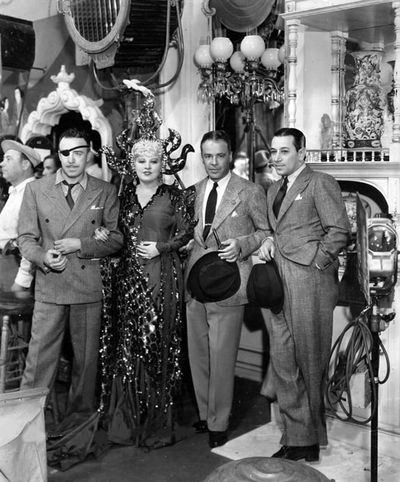
Walsh-west-wanger-raft

And Wanger deserves some respect. Cleopatra was a throwback, a movie to reclaim the glory of Wanger’s opulent “orientalist” spectacles from the ’20s and ’30s. Nearly four decades earlier, the young producer was prescient enough to bring a project called The Sheik to Paramount vice president Jesse L. Lasky, making Rudolph Valentino a sensation and the vogue of exotic spectacle a phenomenon in 1921. Based on his accomplishment, the 69-year-old understandably desired more credit, veneration, and, of course, more money. My Life with Cleopatra underscores his efforts in sometimes brief, sometimes extensive detail penned by a man sorely disappointed and burned by studio executives, the men “who made my job as a producer of the picture an obstacle race.”

“I am bitter indeed,” Wanger wrote,

"about what I consider to be their bungling indifference. In retrospect, however, I can say that I understand that they were operating, for the most part, out of insecurity and fear. They were desperate, nervous men, trying to protect the studio from further losses, and Cleopatra soon became their scapegoat."

My Life With Cleo

In basic, sometimes writerly style, well suited for popular consumption, Wanger recounts his then-recent history (the book was published when the movie was released) concerning a picture that switched directors (Rouben Mamoulian to the tragically overworked Joseph L. Mankiewicz), switched locations (London to Rome), switched Caesars and Antonys (Peter Finch to Rex Harrison; Stephen Boyd to Richard Burton) and, in the end, switched Fox presidents (Spyros Skouras to Darryl F. Zanuck). Insider-ish and dishy enough to cover Cleo essentials for both the casuals and the obsessives, the memoir of the nightmarish production and its famous affair (Liz was accused of the deliciously worded “erotic vagrancy”) makesCleopatra ever-enthralling 50 years later. A gloriously restored Cleopatra showed this year at Cannes with a Blu-ray to follow, and indeed, this forever fascination is the very reason Wanger’s diary has been dusted off and put back in print (with a new afterword by Kenneth Turan). The backstory has always been more interesting than the movie itself, and Wanger capitalizes on its glamorously morbid curiosities. He claimed to be proud of the picture, but he understood what the public wanted: scandal.

Movies-richard-burton-cleopatra-set

Though the book reads relatively tame by today’s confessional standards, there are plenty of intriguing, page-turning smaller details that ring wonderfully bizarre. Wanger’s accounts of Roddy McDowall’s broken tooth (the Pope’s personal dentist is called to the set) or the night Taylor’s dress ignited after she stepped on a book of matches at a party (who else spontaneously combusts after stepping on a book of matches?) or anything to do with elephants (circus owners sued production for $100,000 based on an elephant supply and threw in a slander claim for daring to call their pachyderms “wild”) prove more surrealistically entertaining than the endless budget issues or how Wanger felt about the travails of poor Joseph L. Mankiewicz (One wishes world-class wit Mankiewicz had published his own diary.) Whatever his intention, Wanger does deliver something powerful: battle fatigue by proxy. He makes you sick and tired of the thing. The bloated production becomes wearisome enough that just reading about the budgetary issues makes a person resentful and scattered. You just want it to end. I felt myself wishing Elizabeth Taylor, bless her, would just stop having so many goddamn problems

Liz-taylor-bert-stern

And yet, it was Taylor who saved the picture because of her glamorous preposterousness: in those four years she nearly died, won an Oscar, dumped her husband, incited a world-wide scandal, and made Richard Burton a household name. That sells tickets no matter how turgid the movie. But despite its faults, Cleopatra is, in moments, dazzling, and it eventually became popular and profitable. It also inspired many, including Andy Warhol, who called it “the most influential movie of the ’60s." A new generation of women would ditch their red lipstick in favor of nudes and carefully draw those sultry, smoky Cleopatra eyes before slithering into their skimpy mini dresses. The story may have been bogged down by old fogey studio gloss, but Liz’s look was positively youth-quaking.
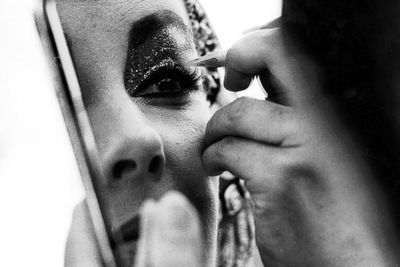
Liz touching up makeup cleo

Survivor Liz reigns triumphant. Cleopatra did not damage her. Wanger is another story. You can’t help but feel for the man, even if you question the veracity of his self-reflection and responsibility in these diaries. How heartbroken was he? What was going on with him, personally? Near the end of the long and laborious production, he writes on June 20, 1962:  

"Haven’t heard a word from the executives in New York or Hollywood since they left here. 

"Although I am off salary and, theoretically, without any real authority I am remaining with the picture and still functioning as producer. 

"I don’t think the executives know what they are doing. Regardless of what they think and do, this is my project."
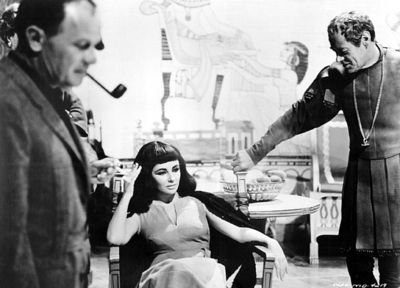
Mankiewicz-taylor-harrison_opt

But by that time, was it? In spirit, yes, but that’s about it. For elucidation, I reached for Matthew Bernstein’s indispensable Walter Wanger: Hollywood Independent, the definitive biography of Wanger and a fascinating look at Hollywood history from the silent era to the confused 1960s. In Bernstein’s book, I read accounts, written or spoken by Wanger, that were more illuminating and eloquent than My Life with Cleopatra.  Where was that Walter Wanger in his own diary?  Obviously My Life With Cleopatra wasn’t going to read like John Cheever’s beautiful, laceratingly honest journals (not many diaries do), or Richard Burton’s charmingly acerbic, intelligent, and frequently moving diaries — the beleaguered producer cannot resist spin. My Life With Cleopatra contains some keen insight and nicely worded observations (“I sometimes feel as though I am living a scene from The Snake Pit. Every time I turn around there are grinning, leering, shouting photographers — the paparazzi. They are everything and everywhere. They are like the cats of Rome, hiding on rafters, hiding under beds, always screaming for a morsel.”) But I’d wished Wanger had penned a more dramatically thought-provoking, forthright tome. Wanger’s life certainly contained drama — melodrama, in fact, and a love triangle that, though less glamorous, was intriguingly darker and more shocking than Eddie, Liz, and Dick.
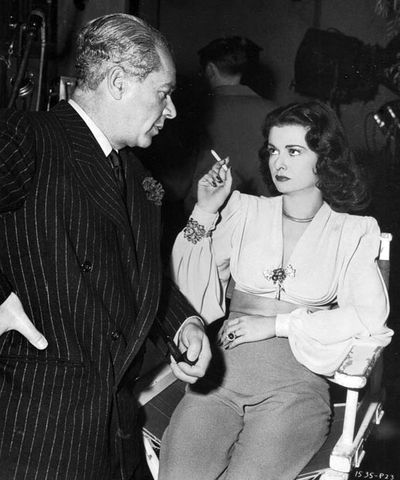
Walter-Wanger-Joan-Bennett-Secret-Beyond-the-Door

Which leads me back to 1951, Wanger, his wife, and that parking lot. As detailed in Bernstein’s book, 57-year-old Wanger was besieged with career worries, money stress, absurd Red Scare pestering, and the extra-marital wandering, however understandable, of his frequently cheated-upon wife, the talented, versatile, smart and sexy actress Joan Bennett, who’d played everything from saucy Fritz Lang femme fatales to a ’50s freeze-dried Douglas Sirk housewife.
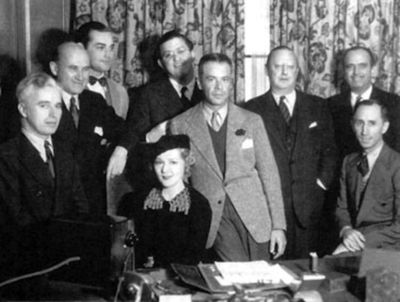
Ua-group

Wanger, the independent who worked at every major Hollywood studio, produced, among many, movies like The CocoanutsQueen ChristinaStagecoachForeign CorrespondentScarlet Street, and up to that point, portentously, The Reckless Moment; he was an intellectual, an educated man intent on making movies a more respectable art form. And yet he found himself committing a criminal act Eddie Fisher only fantasized about. Suspecting an affair with Bennett’s agent, Jennings Lang, Wanger hired a detective to tail his wife and learned exactly what he feared: she’d been sneaking off for months, even meeting Lang in a flat (which reportedly inspired Billy Wilder’s classic, The Apartment). In a fit of violent jealousy, Wanger drove to the MCA parking lot where Lang and Bennett were chatting outside her car. Wanger approached; argued with Lang, shot twice, the second bullet hitting Lang where it counted most: in the groin. The irate husband was swiftly caught; conveniently and ludicrously, the Beverly Hills Police Station was just across the street. Upon arrest, Wanger, possessed with a furious sensibility, stated: “I’ve just shot the son-of-a-bitch who tried to break up my home.”
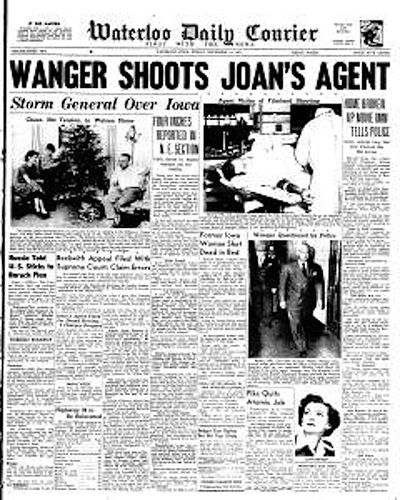
Wanger shoots joans agent

What followed was counsel provided by Jerry Giesler (who else but the man who represented Errol Flynn, Charlie Chaplin, Bugsy Siegel, and Lana Turner?), studio heads from Darryl Zanuck to Samuel Goldwyn contributing to his legal costs, a not guilty by reason of temporary insanity plea, and a four-month stint at Castaic Honor Farm Prison. As related in Bernstein’s book, Wanger explained his actions to Giesler with an almost poetic reiteration, staring down a very real prison sentence (which he never thought he’d serve — it was a forgivable crime of passion, he thought) while maintaining his dramatic panache. In words that read like Humbert Humbert’s repetitive “because you took advantage” letter to Clare Quilty, Wanger mournfully avowed:  

Wangergiesler

"I am 57 years old and I loved my wife and family and had no desire for any change — I was not only jealous of Joan I was jealous of our way of life […] I was jealous of Joan’s forthrightness — I was jealous of her good judgment […] I was jealous of the time we had with the family — I was jealous of our liking or disliking a book or play and our reasons – of her interest in my clothes and mine in hers — of her perfume (La Rose) and my cologne (Fraser’s) — the way she ran the house, the way she organized — the efficiency of her means of travel — her interest in my work — my interest in her pictures — the discussion over directors, scripts and all the rest of show business — her desire to entertain well — her love of church and her desire to be with the children — these are all things I was jealous of plus the physical attraction […] her lack of conceit and willingness to look objectively at her career […] I was jealous of all of this which I saw changing from day to day and a hardened new code of behavior and an attitude so foreign and distant and bitter that it was quite obvious to me that our marriage had entered a new phase and a dire one — I did not want to see this change occur and was ready to do all I could to stop it." 
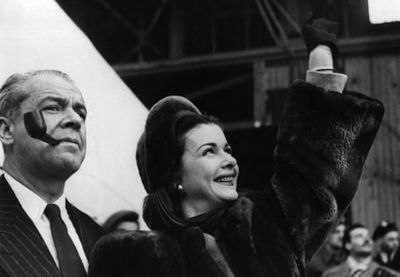
Wanger bennet

Four months in prison was a depressing experience, but Wanger understood the raw humanity of it, the rough romantic glory. You catch the man screwing your wife, you shoot his balls off. But by Cleopatra, Wanger reveals a refreshingly liberal attitude toward such matters. The macho rage has lessened, and women, not just goddesses like Elizabeth Taylor, can be forgiven. In My Life With Cleopatra he writes: 

"These are hypocritical times, when men are permitted to have more than one love at a time and women are castigated for the same kind of behavior. I believe that Elizabeth loves two men. And who is to say that a woman can’t love two men at the same time, any more than that a man can’t love two women at the same time?" 

"I have lived in several of the great cities of the world during my lifetime, and I have known many women considered to be paragons of virtue. I doubt, however, that many of these moral women have as strong a code of personal ethics as Elizabeth. Further, I doubt that many of them would have been able to resist Burton’s charm."
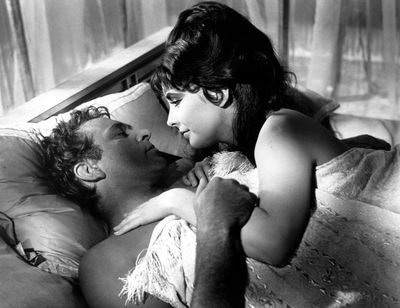
Still-of-richard-burton-and-elizabeth-taylor-in-cleopatra-(1963)-large-picture

This is lovely, a tribute not only to Taylor who “goes where her heart leads her,” but perhaps to both his wife and himself. He may have hardened after four months in prison, but he seems to have evolved emotionally. And yet, four years of Cleopatra destroyed his pride; it was a spirit-crusher, a quagmire of business and emotions, a once passion project that through time, could only feel passionate when Elizabeth’s name was invoked, which Wanger does frequently in his journals: “It is not a far stretch of the imagination to compare Elizabeth with Cleopatra. She has the intelligence and temperament of the Egyptian Queen — and she has the honesty and directness that characterize all big people.” Writing My Life With Cleopatra was Wanger reaching for that .38, hoping the pen would be mightier than the gun. But alas, the book couldn’t have possibly provided the relief he sought, and he remained a troubled man. In a letter published in Bernstein’s book (and not in Wanger’s diary), a heartbreakingly humiliated Wanger begged Zanuck to save his reputation after firing him during post-production of the picture: 
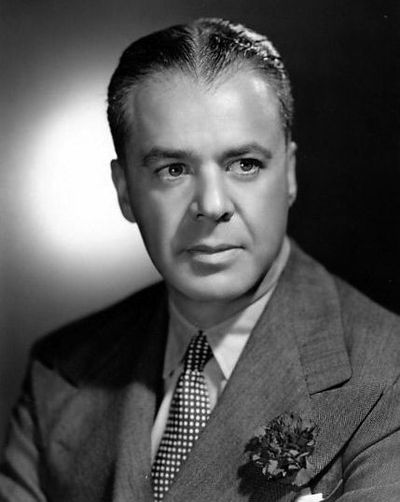
Walter-wanger

"I beseech you, Darryl, as the new president of the company to not aggravate this situation and further damage my status as producer of Cleopatra by not bringing me to Paris for the conferences and cutting and editing of this picture. Not only will this further harm my reputation and status, but I think you, as the new president of Twentieth Century Fox would not want to further humiliate and degrade me, a fellow producer, in this manner, in the eyes of the entire industry and of the entire world […] I appeal to you as a man not to do this to me."
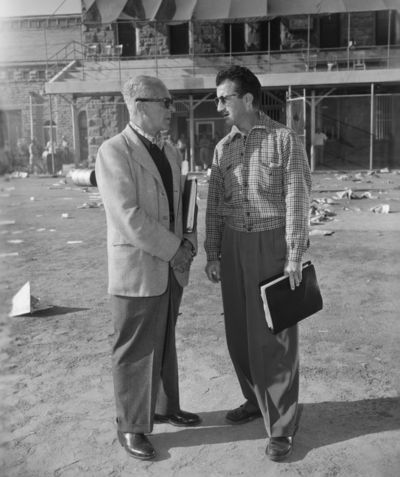
Wanger, Siegel Riot in Cell Block 11

After shooting Jennings Lang, Wanger stayed with Bennett, albeit with understandable friction, for another 14 years, produced (among other films) three terrific, lean, and meaningful-masterful pictures that resonated with him personally (Riot in Cell Block 11, Invasion of the Body Snatchers, and the award-winning I Want to Live!), and entered a new stage in his career. He wasn’t a radically different man but a changed one, inasmuch as movies, life’s indignities, and a prison sentence can change a person. He was both tired and tireless. He suffered heart ailments. He was old. But he endured the 1950s. He was ready for new projects and adventures. 

Elizabeth-Taylor-Cleopatra-Headdress

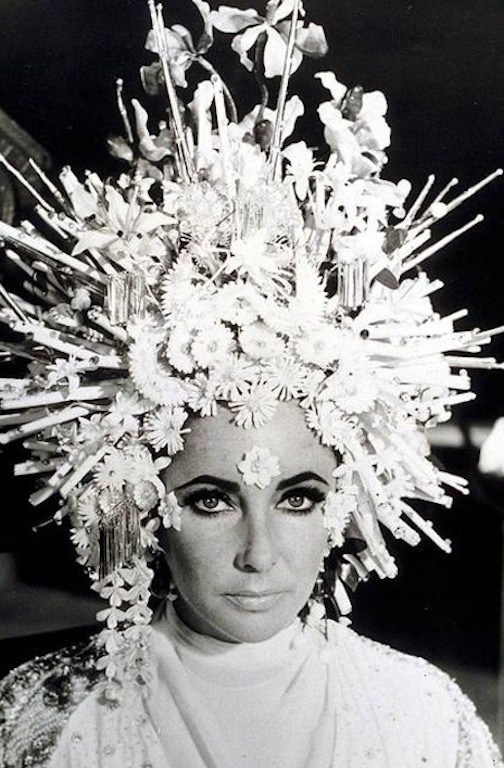
And then came shooting Cleopatra. He survived Cleo’s four-year stretch, but he didn’t survive the 1960s. He died at age 74 in 1968 — the same year a truly underrated Taylor and Burton picture was released, Joseph Losey’s Boom! There, his queen Elizabeth, dissipated and drugged-up, playing Tennessee Williams’s Flora “Sissy” Goforth, dons enormous headdresses, screams at servants for injections, and takes overripe, bar-ragged Burton as a lover while rotting in her mansion on the Isle of Capri. The picture is an engorged wonder; tumescent, histrionic, and hilarious, but beautifully bizarre and emotionally honest. Taylor shows us the dark side of excess, the desperation of love, and the disillusionment of lust and, despite the picture’s poor reviews, she is fantastic. Here is the “the honesty and directness that characterize all big people.”
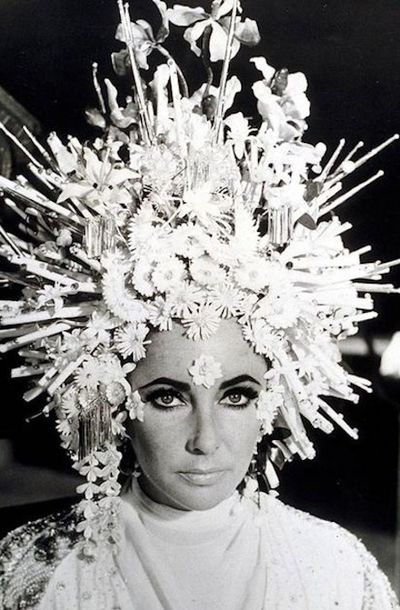
LIZ BOOM!

And here is the honesty of opulence, its fading glamour that was already losing its luster by the time of Cleopatra, the vulgarity of a queen in her own mind, and her lover (now older) sliding into the 1970s, garish, sagging, and exceedingly brave for it. Building on their groundbreaking brilliance in Who’s Afraid of Virginia WoolfBoom! presents the glittering duo reveling in and revealing their decay with an almost avant-garde perceptibility. At this point, regardless of the baubles and booze and purple, writ large, Liz and Dick seemed to get it. One wonders if Wanger saw an early screening. One wonders if he got it, too. I hope so.

Originally published at The Los Angeles Review of Books.
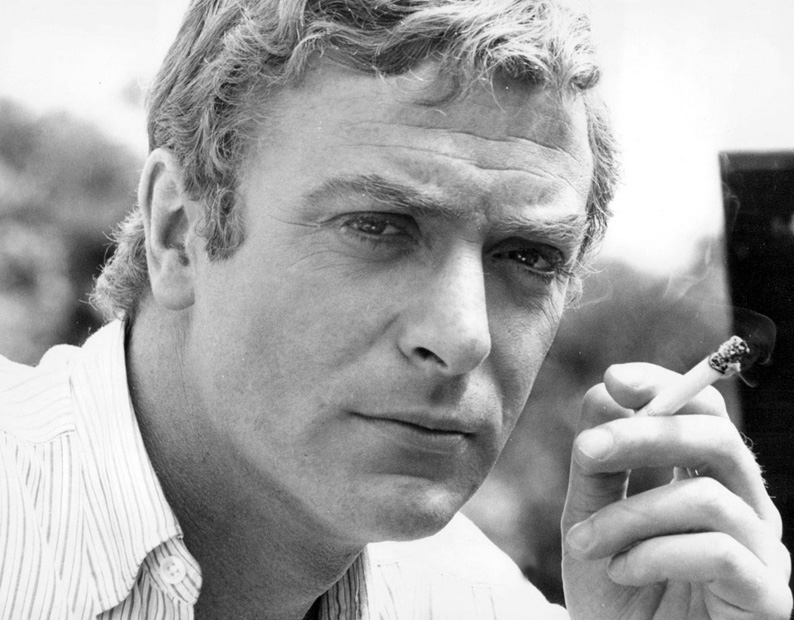
Blood, Sweat and Guts: The Threat

Threat4

How in the name of Felix E. Feist did I manage to miss the wickedly efficient The Threat until 2011? What a bracing, lean and mean movie this is; a tense, simple, yet vigorously acted action/hostage picture with not an ounce of flab on it. Current action pictures or, really, any modern motion picture (not all, there are exceptions, of course) with their frequently abused 120-plus running times, should take note of this one. Get to the point. We can read between the lines. Or in the case of this movie, the broken furniture.

6a00d83451cb7469e2016300f1ee33970d-800wi

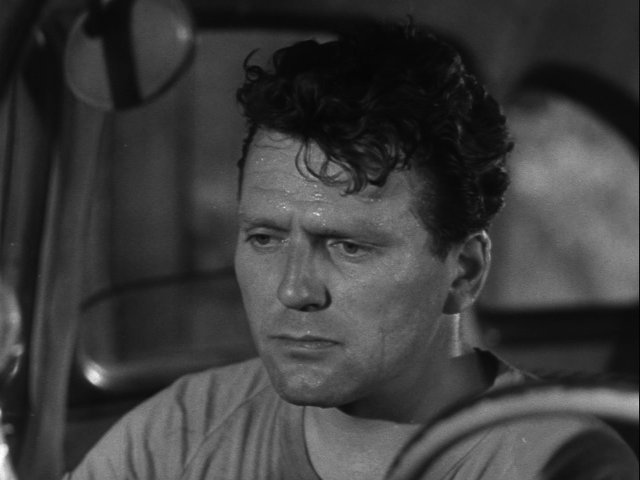
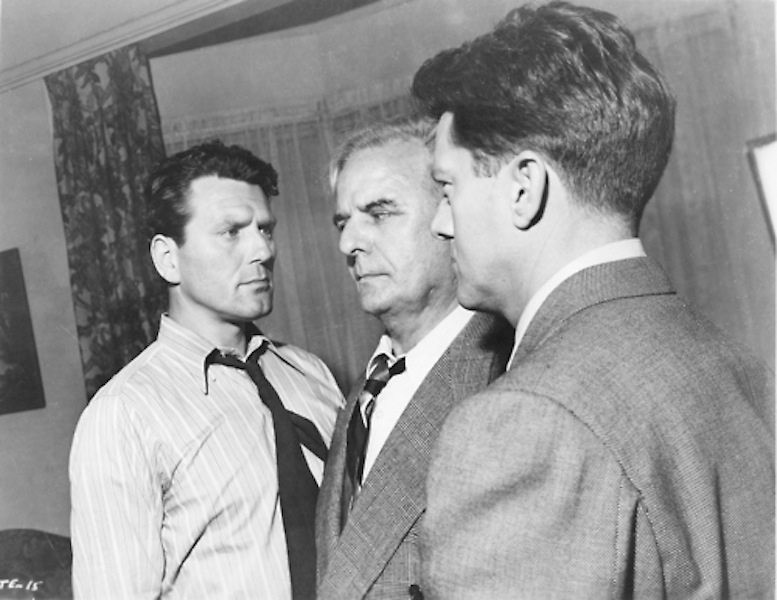
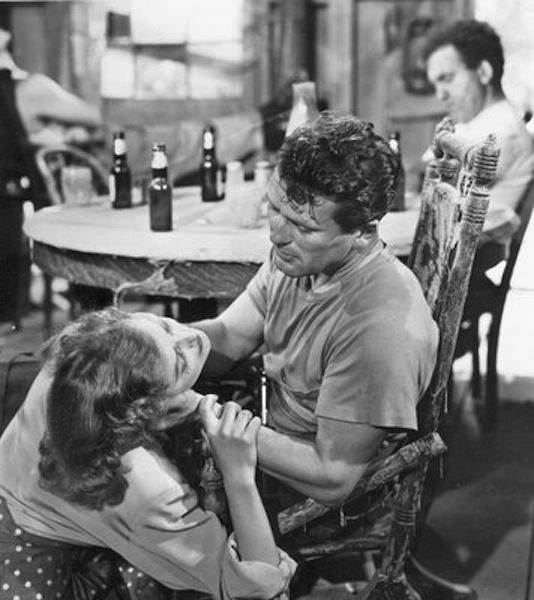
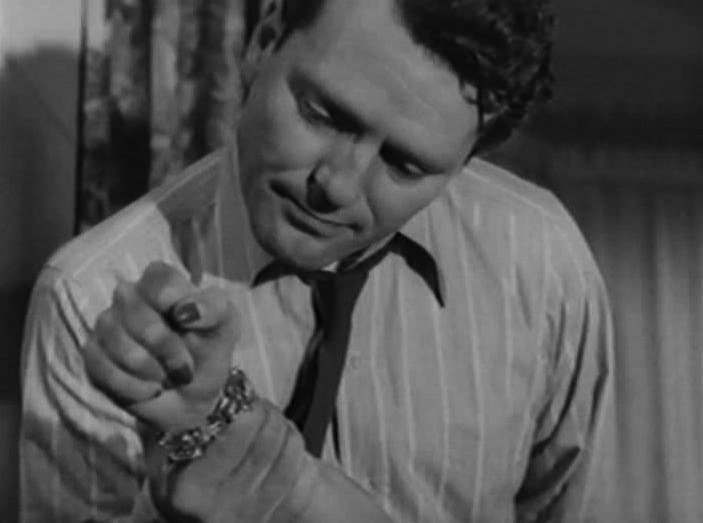
The Threat (1949) stars one of my favorite forces/icons of noir, Charles McGraw, as a ruthless killer who breaks out of Folsom only to kidnap the police detective (Michael O’Shea) and district attorney (Frank Conroy) responsible for his incarceration (with Anthony Caruso, Frank Richards and a wonderfully wan Virginia Grey along for the ride.) Everyone’s terrific here, but it’s McGraw’s party and he'll bust some heads if he wants to. From his silent menace to his terrifying bursts of violence (like pinning a man's wrists with his feet and crushing his head with a chair) he is like nothing you’ve ever seen, and probably never will. Is there any actor alive like McGraw? The answer is no.

Cmcgraw the threat

When the picture moves into its sweltering set piece — a hot California desert hideaway — it grows even more desperate and volatile. Feist (who directed two of my other favorite hellraisers — Lawrence Tierney in the tough, excellent The Devil Thumbs a Ride, and Steve Cochran in the rough and romantic Tomorrow is Another Day) working with cinemtographer Harry J. Wild, knows how to showcase McGraw in such doomed digs. Tension builds so much that you can practically smell the sweat among McGraw and company. They perspire and dread and grow crazier and crazier while their big bad captor sits and waits, radiating wrath.

THREAT2

The room rumbles with McGraw's blood, his pumping black heart bouncing off those hate-shack walls. But what makes him even more intriguing is how casually savage he can be, like a tired cat swiping a claw over his trembling prey. And yet, McGraw is so persuasive that if he even briefly stares forlornly into the void, you find yourself feeling something for him. McGraw, that furnace of vengeance, is boiling his captive's lives away. But mostly his own.

1313338378_8

And all in just 66 minutes during which this hysterical entrapment does not waste one minute of intensity, style, intelligence and Charlie-McGraw-magnitude. That's six minutes over an hour. It worked then and it works now. So, watch your old movies, new Hollywood. And try to find another Charles McGraw. Good luck. You may need to actually bust a guy out of prison to do it. 

Ernst Lubitsch’s Elegant Transgressions

El_1932-master-ernst-lubitsch-directs-miriam-hopkins-in-one-of-his-supreme-achievements-trouble-in-paradise

Each week, The Dissolve "designates a movie of the week for staffers and readers to watch and discuss, with a leadoff essay on Monday, a roundtable-style forum on Tuesday, and another related feature to follow."  This week, they chose Ernst Lubitsch's Trouble in Paradise and asked me to write their related feature. Here's an excerpt from my piece on the pre-Code comedies of Lubitsch. Read it all at The Dissolve 

“Darling, remember, you are Gaston Monescu. You are a crook. I want you as a crook. I love you as a crook. I worship you as a crook. Steal, swindle, rob. Oh, but don’t become one of those useless, good-for-nothing gigolos.”

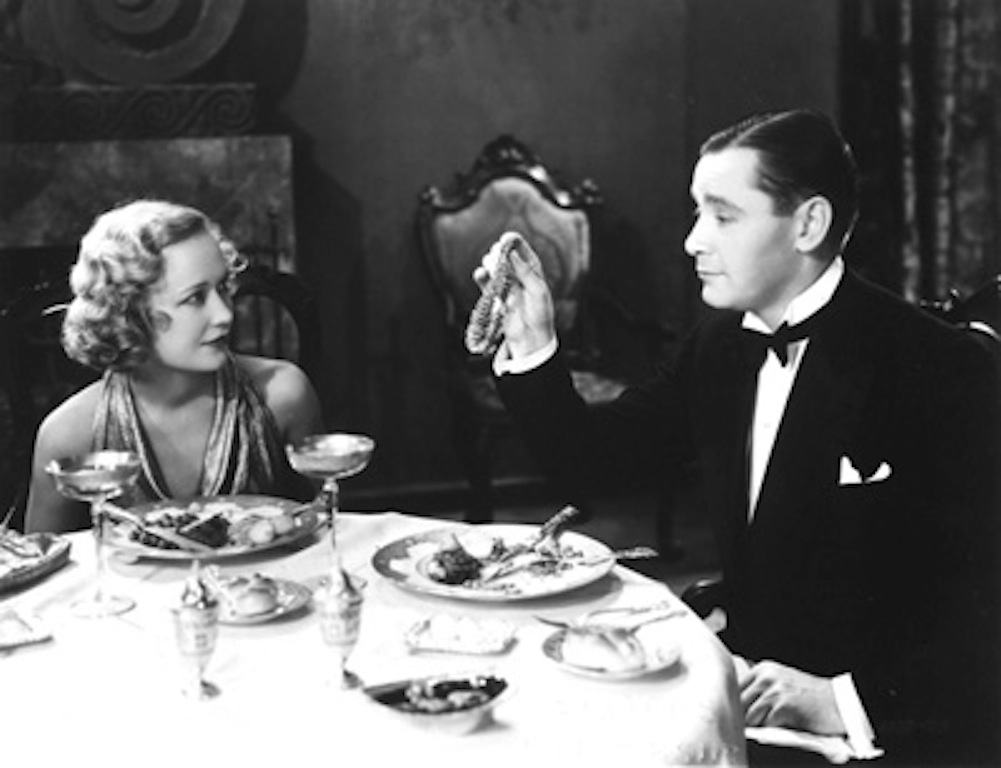
What a stunningly erotic line; pleading for not only devotion, but also larceny, both monetary and sexual. And what a perfectly Lubitschian line, layered with meaning, hunger, sincere feeling, ironic humor, and even sadness. “Don’t leave me, but do steal, swindle, rob. And on top of that, stroke, seduce, and ravish me,” robber Lily (Miriam Hopkins) seems to be saying to her live-in lover, gentleman thief Gaston (Herbert Marshall), in Ernst Lubitsch’s 1932 masterpiece Trouble In Paradise.

Trouble-in-Paradise-2

Most, possibly all, of the multiple themes of Lily’s romantic entreaty could apply to Lubitsch’s comedies made between 1929 and 1934, most co-scripted by Samson Raphaelson. (Though not his one drama of the period, 1932’s Broken Lullaby.) These movies offer not just a twist, but a twist atop a twist, and a joke atop the joke: the “superjoke,” as Billy Wilder called it. Those themes repeat: the lively, often-painful love triangle, the sexual and romantic jealousy, the thrill of sex, and in this case, the carnal kicks co-mingling with the art of stealing, an act more erotic than gold-digging. (Gold-fleecing is much more penetrating.) And then—important during one of the worst economic times in America’s history—there’s Lily and Gaston’s hard, artful work, something to respect, to take pride in.

Stealing is magical in Trouble In Paradise. Sleight of hand is more titillating than Don Juanery. (Don’t hook, darling: crook.) Prostitution is too easy, too boring—about as boring as marriage. And marriage needs to stay saucy, or who needs it? Here’s the power and thrill of pre-Code Hollywood, propelled into elegant, inventive, intelligent orbit within the luminous world of Ernst Lubitsch.

Annex - Francis, Kay (Trouble in Paradise)_01

The Motion Picture Production Code was adopted under Will H. Hays in 1930, but not fully enforced until Joseph Breen got his mitts all over it. (“Pre-Breen” is a more appropriate term than “pre-Code,” Thomas Doherty writes in Pre-Code Hollywood: Sex, Immorality, And Insurrection In American Cinema 1930-1934.) Pictures were submitted for review, Trouble In Paradise among them. Lubitsch was told to remove some of the more “scandalous” lines, including “Oh, to hell with it!” But countless movies flaunted the “Don’ts” and "Be-carefuls” the Code warned filmmakers about. Just a handful of the transgressions indulged in films ranging from scrappy Warner Bros. gangster pictures to glossy MGM melodramas: criminals getting away with it, sex before marriage, adultery, drug addiction, drunkenness, mockery of matrimony, and suggestion of nudity. (Check how many times Barbara Stanwyck and Joan Blondell dress and undress in William Wellman’s Night Nurse.)

The-love-parade-ernst-lubitsch-1929-013

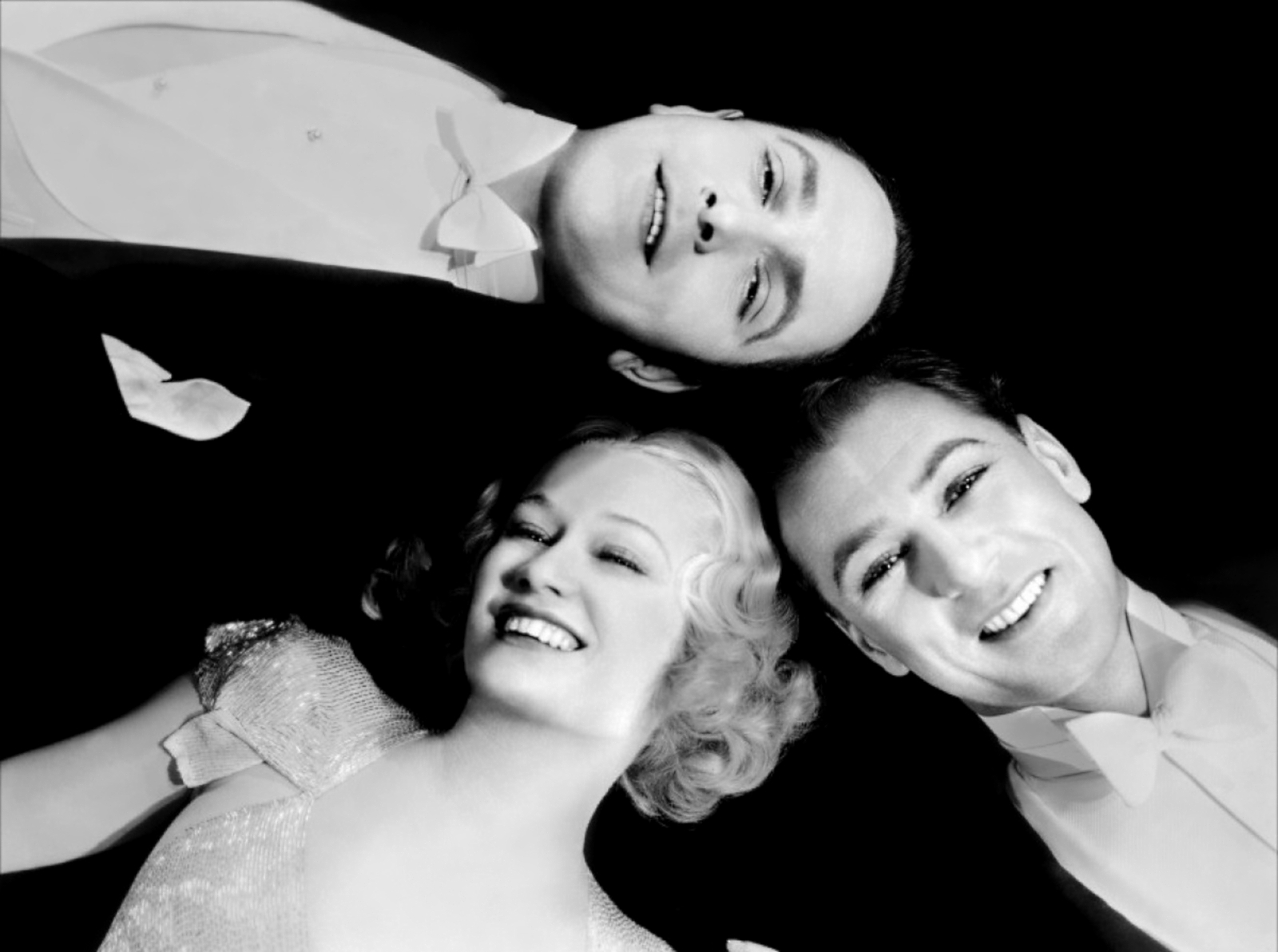
From 1929’s innovatively crafted talking musical The Love Parade (Lubitsch’s first sound picture) up to 1934’s Code-rupturing threesome in Design For Living, Lubitsch worked strictly at sophisticated Paramount. (Also released in 1934, The Merry Widow was an MGM picture.) There, he became one of the studio’s top directors, a name audiences remembered just as they would Frank Capra’s—rare for a director at the time. For a brief spell, he was even Paramount’s Head Of Production, which, according to Lubitsch biographer Scott Eyman, was possibly related to the director’s quiet turmoil once Breen took over, and Lubitsch needed to “get out of the line of censorship fire and take some time to figure out what to do.” After all, Lubitsch comedies were about sex, love, joy, and the messy human complications that come from voluptuous adventure. Breen and the Catholic Legion Of Decency held such ardors suspect, a wicked playground for lotharios and trollops.

Annex - Cooper, Gary (Design For Living)_04

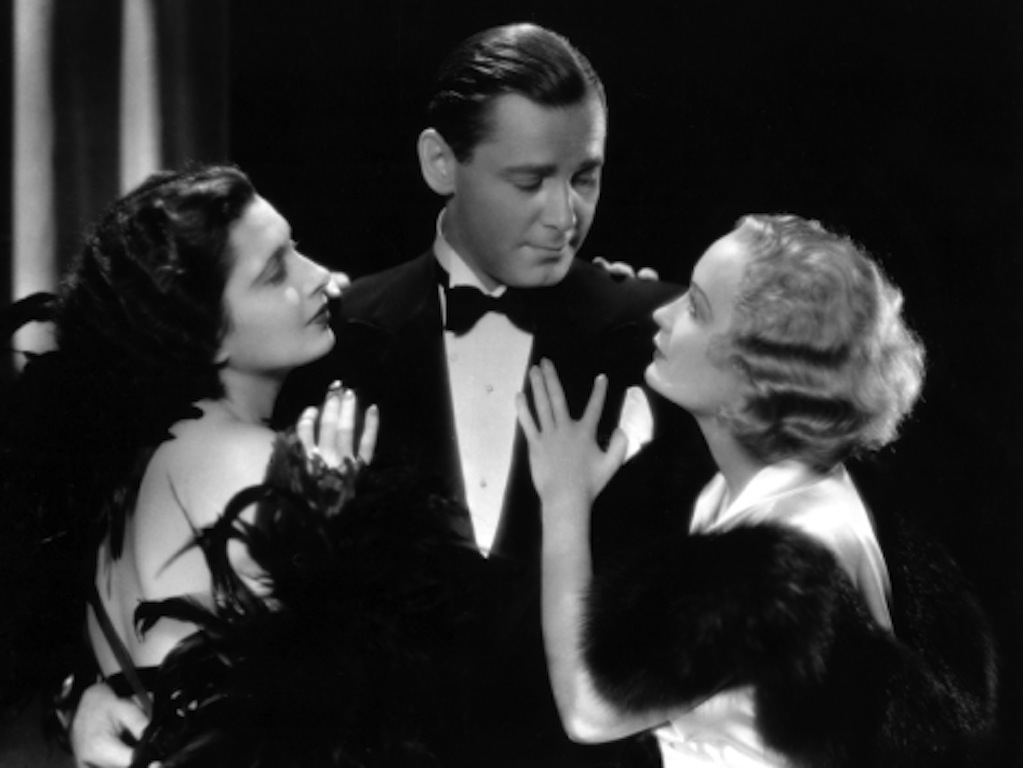
For Lubitsch, a romantic triangle or adultery wasn’t just the side story, it was often the central plot, making his pre-Breen pictures as gracefully scintillating as William Wellman’s Other Men’s Women or Dorothy Arzner’s Merrily We Go To Hell. According to the Code (as quoted from Olga J. Martin’s Hollywood Movie Commandments, quoted in Doherty’s Pre-Code Hollywood), a love triangle needed “careful handling,” especially if “marriage, the sanctity of the home, and sex morality are not to be imperiled.” Furthermore, adultery was a forbidden subject and “never a fit subject for a comedy.” Lubitsch disagreed: He found it a comedic, musical, elegant, fantastical, oh so real-life.

OneHourWithYou

1932’s One Hour With You concerns both triangles and adultery, and has its own sticky history between George Cukor and Ernst Lubitsch. Originally assigned to direct One Hour With You, Cukor was doing such a frustrating job that the exacting Lubitsch took over the production, according to Eyman: “For the next six weeks, Cukor sat quietly on the set, drawing his salary, confining most of his conversation to expressions of approval after each Lubitsch-directed scene.” The result was a direction credit for Lubitsch, a lawsuit from Cukor, and a compromise with the added credit, “Assisted by George Cukor.” As Eyman wrote, “Lubitsch pictures could not be mass-produced.”

6a00d83451b77e69e200e55006b0e38833-800wi

Despite the picture’s difficult production, it’s a fascinating, joyfully randy work about, yes, cheating. Colette (Jeanette MacDonald) is married to impish Andre (Maurice Chevalier), who can’t help but succumb to her horndog best friend Mitzi (Genevieve Tobin). He even sings his dilemma directly to the audience, praising his wife’s virtues while gleefully returning to the potential mistress with, “Ohhhh! That Mitzi!” When the deed is done, Andre again breaks the fourth wall and asks, in song, “What Would You Do?” inquiring of men—and, since this is Lubitsch, women, who aren’t exempt from the equation—how they would handle such a pickle: “Do you think you could resist her? Do you think you would have kissed her? Would you treat her like your sister? Come on, be honest, mister!”

Never mind that that the song explains and excuses his indiscretion; it’s so damn charming that viewers feel mischievously complicit with Andre. (I wonder how many couples gave each other the side-eye during his ode to adultery, or even a jab in the ribs.) Chevalier’s considerable Gallic delights help him get away with such things, but even us non-Chevaliers, we’re all human, we all transgress. Be honest. Grow up. Get over it.

UNA HORA CONTIGO

And yet Lubitsch isn’t merely flip here; he understands the pain Andre and his Mitzi have caused the distraught Colette. Even Colette’s lovesick revenge kiss with poor Charles Ruggles (which becomes another amusing Lubitsch twist on deception) is tinged with sadness. She can’t even cheat properly! And Ruggles, well, he doesn’t have a chance next to that dashing so-and-so Chevalier. Pain presents itself in all Lubitsch’s comedies, with some characters standing on the precipice of tragedy.

In 1931’s The Smiling Lieutenant, Chevalier’s Niki is forced to marry a besotted princess (Miriam Hopkins) after she mistakenly accepts his smile and wink, when in fact, he’s directing the amour to his girlfriend, beer-drinking band leader Franzi (Claudette Colbert). Stuck in an unhappy marriage with the ridiculously prim, innocent Princess Anna, Niki refuses to sleep with her, leaving her to play a sad game of checkers on the marriage bed with her blowhard father, King Adolf (a wonderful George Barbier), which is simultaneously hilarious and poignant. (The father-daughter relationship becomes increasingly touching as the movie progresses.) Franzi has tearfully left Niki with a garter to remember her by, but she later becomes his mistress, trysting with her lover while his wife putters around the palace, unfulfilled and heartbroken. This is a comedy musical?

Annex-Chevalier-Maurice-Smiling-Lieutenant-The_02

Lubitsch goes even further. Once Anna discovers the affair, she summons Franzi to the palace. (In a kinky touch, Niki has been using the police to arrest Franzi and deliver her to their rendezvous spots.) The confrontation is surprising—both women flop on the bed to blubber their eyes out. Franzi realizes Anna is no enemy and takes pity on the square, surprisingly sweet princess, teaching her how to play a jazzy piano, wear silky négligées (to the tune of “Jazz Up Your Lingerie”), and let down her prissy, pinned-back hair. The mistress instructs the wife how to properly make love to the man the mistress loves. Well, they both love him, but someone has to get their man. The princess reigns (although she’s much less self-sufficient than Jeanette MacDonald’s Queen Louise in The Love Parade, or Countess Helene Mara in Monte Carlo), and Lubitsch allows sacrificial Franzi a mournful exit with the self-defeated, undeserved line, “Girls who start with breakfast don’t usually stay for supper.”

Hopkins-I

Perhaps this is a flawed, too-easy resolution to the aching triangle, but it’s also an ironic twist. It’s the aforementioned “superjoke.” With The Smiling Lieutenant, Wilder perceived the superjoke as “the wrong girl gets the man.” Some joke. And yet it works, leaving viewers with the shot of Colbert dejectedly waving from behind her back so Niki and Anna can dig into their final scenes of jazzed- and juiced-up foreplay, and finally, a whole lot of sex. Poor Franzi. It was fun while it lasted.

Trouble-in-paradise-kay-francis-herbert-marshall-miriam-hopkins-1932_i-G-67-6722-DYUA100Z

In Trouble In Paradise, the short but memorable affair is not only fun—if that is the right word for a thing so elegant—it could have been marvelous, Gaston says. “Divine,” agrees Mme. Colet. But what can transform such smooth, dreamy sophistication into something clumpy and common? The cops. And so Mme. Colet, knowing Gaston intended to rob her but has fallen in love with her, watches him flee into the night with his other lover. She’s understanding enough to allow him to nab her pearls as a parting gift for Lily, and like Franzi in The Smiling Lieutenant, she’s left alone. Such is life. Gaston and Lily ride away in a cab, culminating their sex-as-stealing one-upsmanship, with Gaston grabbing Mme. Colet’s stealthily snatched wad and stuffing it into Lily’s purse. That purse sits on her lap, or, if one wants to be Freudian about it, between her legs.

And so the crooks get away with it. Paul Muni’s Tony Camonte and James Cagney’s Tom Powers would have been impressed, had they lived. Even they have to pay for their crimes in pre-Code films—but what spectacular endings those two were granted. Gaston and Lily aren’t gangsters or killers; they’re aristocrats incognito (the reverse of Jack Buchanan’s sweet incognito hairdresser in Lubitsch’s Monte Carlo, also released in 1931.) But they do indeed break that bendable code by making lawlessness so sumptuously attractive that pickpocketing is not only exceptionally suave, but synonymous with sex.

Troubleinparadise5

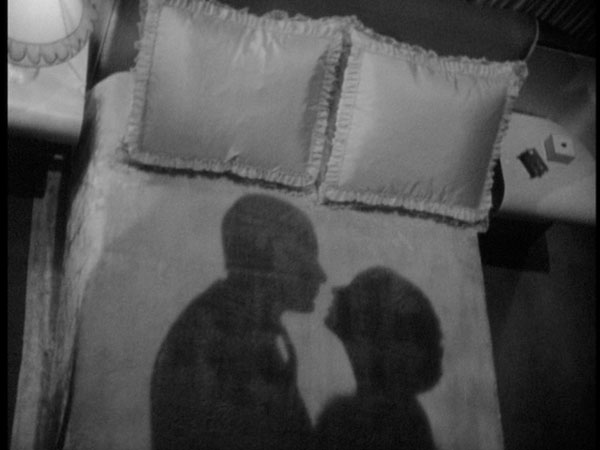
And yet within this dreamscape so graceful that it feels musical, with its fluid panning shots, meaningful use of clocks, knowing shadows on beds, superbly climbed staircases and perfectly timed edits, is a waft of Depression-era actuality. Gaston gently complains, “You have to be in the Social Register to keep out of jail. But when a man starts at the bottom and works his way up, a self-made crook, then you say, ‘Call the police! Put him behind bars! Lock him up!’” Reading that, not with Herbert Marshall’s exquisite cadence in mind, and instead with James Cagney’s rat-a-tat pugnacity—well, the two men could have shared a drink together. Marshall may have been too sophisticated, too elitist for Cagney, but he wasn’t a snob. And between the two of them, they had the streets and boudoirs covered. And even better in Lubitsch-land, in which a bit part is often allowed a big moment, they could have invited the fellow who contributes to Trouble In Paradise’s famous opening shot, the garbage-man gondolier.

Read the rest of my piece on Lubitsch's pre-Code comedies and especially their triangles, continuing with Design for Living and what may have even charmed that uptight schoolmarm Joseph Breen, The Merry Widow, at The Dissolve

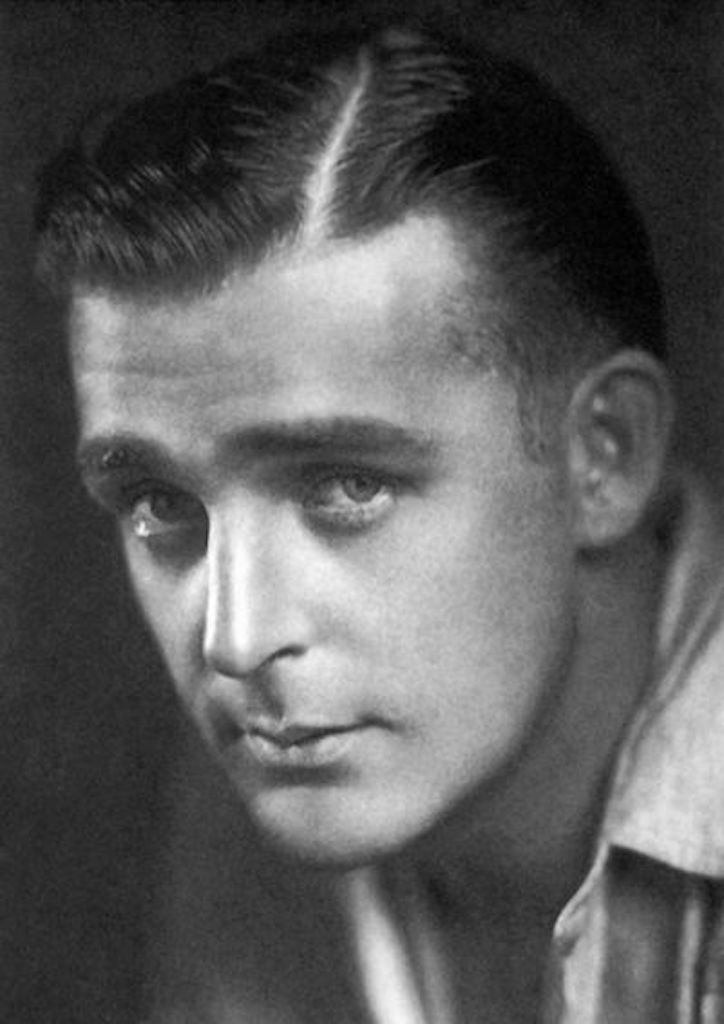
The Roaring Road to Ruin: Wallace Reid

6a00d83451cb7469e2019b00083124970d-400wi

“Wally Reid was a 180-pound diamond…”

–Cecil B. DeMille

Wallace Reid loved cars. When not working in pictures, the silent screen star would speed through Hollywood in a choice automobile, wildly tearing up roads in anything from a Marmon Coupe to a Stutz Convertible. Not just a well-heeled showboat Reid actually understood cars. He knew how to work on cars, he comprehended their mechanics and appreciated their beauty. Before his racing pictures, before traveling to Hollywood, before even working at Vitagraph, Reid wrote about cars for Motor Magazine, covering races, attending car shows and test-driving new models. As a famous actor he made friends with racecar drivers and entered races himself. He was fearless and he was reckless. For those he delighted with his rakish rapidity, there were others he horrified. His abandon was legend. He reportedly crashed his Marmon into a family while hurtling along the Pacific Coast Highway, killing a father and seriously injuring a mother and child. His passenger, Thomas Ince, suffered a broken collarbone and internal injuries. Wally was fine. He was well connected, well liked and lucky.  D.W. Griffith bailed him out of jail. He wasn’t lucky for long. In less than ten years the star of The Roaring Road would be dead. His beloved Marmon didn’t do him in. Morphine did.

6a00d83451cb7469e2019b000832e0970d-400wi

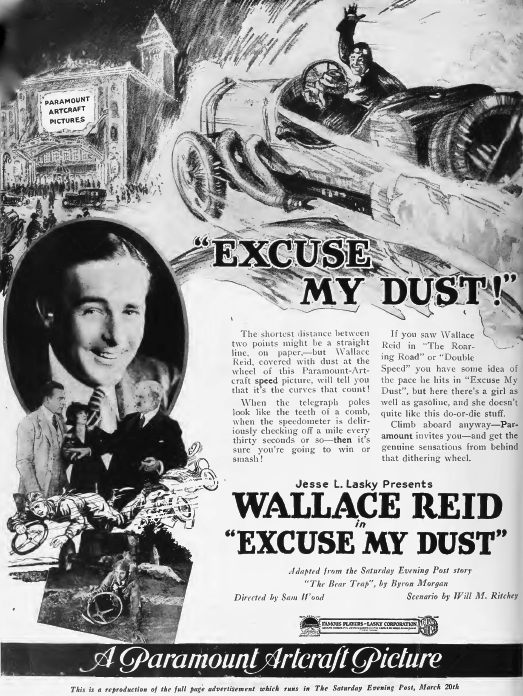
An enormous star of the Silent Screen, Wallace Reid or, “Wally,” as he was affectionately called, isn’t talked about much these days. His 200 plus pictures, many lost or tough to find, are rarely seen, his troubles occasionally discussed; many don’t even know who he is.  A big enough name to rival Mary Pickford, Douglas Fairbanks and Charlie Chaplin, the "screen's most perfect lover" was beloved by fawning women, admiring men and awe-struck kids. He was cool. He made soft collars fashionable, influencing men to abandon their stiff, detachable neck stranglers. Young, not-yet-famous Clara Bow once waited eight hours to see Wally’s personal appearance in Brooklyn. He starred in Cecil B. DeMille pictures including, Carmen (1915), Joan the Woman (1916) and The Affairs of Anatol (1921), worked with Dorothy Gish, Gloria Swanson, Geraldine Farrar and Bebe Daniels, popularized racing pictures including The Roaring Road (1919), Double Speed (1920), Excuse My Dust (1920) and Too Much Speed (1921); the inventory of pictures and collaborators are too extensive to list. Tall, well built, handsome, he was adept with drama, romance, comedy and action, making him a major moneymaker for Paramount/Famous-Players Lasky and one of the first movie stars of the silver screen. He was also one of its first dope casualties.

Wallace Reid dog

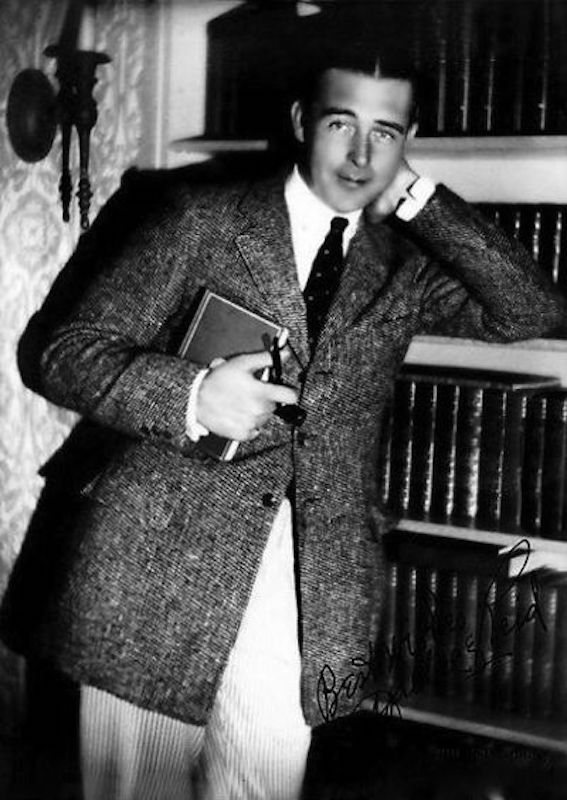
In photographs, he’s immediately handsome in a boyish, everyman sort of way. One wonders if he would pop on screen the way Douglas Fairbanks, John Gilbert or Rudolph Valentino had. But in the few starring roles I’ve seen, he does stand out, albeit with different effect. He’s relatable. Watching him sensual and intense in Carmen opposite Geraldine Farrar or almost erotically explosive in his smaller but unforgettable part in The Birth of a Nation, you get the sex appeal right away. He's timeless. I could picture him a heart-throb today. In pictures like The Roaring Road, the pre-McQueen real-life gearhead was thrilling to viewers. Utterly American, he was the adventure-seeking dream, affable, a man’s man. But there was something soft and lost in his eyes; a vulnerability that wasn’t simply effete, more like susceptible. Though intelligent, well read, outdoorsy, musically talented (he could play any instrument and reportedly kept neighbor Rudolph Valentino up with his saxophone) and creative, Wally was modest, generous to a fault and suffered low self-esteem. He didn’t always feel like a man’s man. When inscribing a photo for his friend, the journalist, screenwriter and novelist Adela Rogers St. Johns, Wally wrote: “Just another so-and-so who never got into uniform except when he put on his greasepaint.”


Reid entered the movie business during its exciting, embryonic time, when motion pictures were an evolving art, full of invention and experimentation. An enthusiastic Wally worked, watched and learned alongside some of the great pioneers: Griffith, Dwan, DeMille. Studying Reid’s history is studying the inception of movies – all of it – the developing technology, the lengthening of films reel by reel, the beginning of the star system, the growth of the studios, the arrival of watchdog Will Hays, the press, the fans, the scandal. Surely, the first flushes of scandal were hard to wrap one’s mind around. With fame coming so suddenly and with such unexpected fervor, the new stars had to quickly learn navigational skills never before imagined. There was, as they say, no road map. That mixture of adoration and scrutiny, the money and the mania, it had to have muddled the mind, creating great highs and great lows. Those drunk with celebrity one second could be depressed and paranoid the next. Drugs settle the mind, sooth the nerves and at their most blissful, double your pleasure. Smoothing out that rocky road, who needs a map?

The two Reid biographies, E.J. Fleming’s “Wallace Reid: The Life and Death of a Hollywood Idol” (McFarland, 2007), and David Menefee’s “Wally: The True Wallace Reid Story” (BearManor Media, 2011), take you through this fascinating period with a compelling leading man; a young man who had no idea how “live fast and die young” emblematic his story would become. Both books were essential to researching this piece and proved passionately written page-turners by writers who made all of their exploration and analysis come to life. Born in 1891 to a theatrical family, both successful and scandalous (as reported in Fleming’s book, his actor and playwright father was charged with rape in 1887, a newspaper calling him “Hal Reid the Minneapolis Fiend”), Wally had little desire to work in front of the camera. While at prep school, young Reid was intent on becoming a surgeon. Nevertheless, he was seduced by cinema, excited about writing and directing.

6a00d83451cb7469e2019b0007ccc9970c-400wi

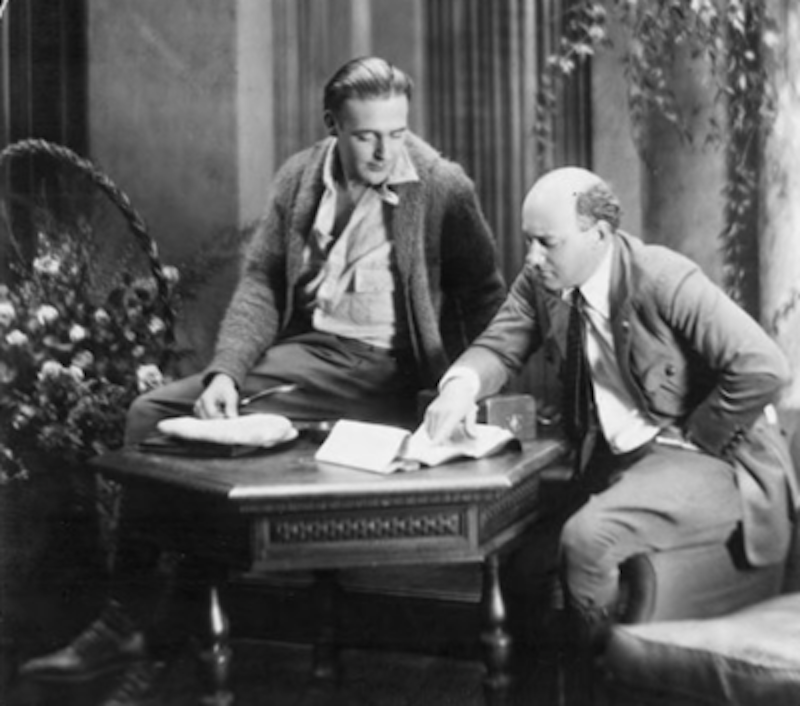
According to Fleming, Wally worked as an “assistant director, scenario writer, cameraman and utility man” in Chicago under William N. Selig where he wound up appearing in numerous pictures. His first credited role was in The Phoenix in 1910. After that came Vitagraph where he wrote, directed, cranked camera and played violin or viola on set. Against his filmmaking desires, he also acted. After a failed engagement, he ventured to Hollywood and again worked with Selig and moved on to the West Coast Vitagraph. He also worked with his mentor, pioneer Allan Dwan, at Dwan’s “Flying A” company, and went with him to Universal. It’s tough to keep track of or to know just how much Wally accomplished during the infancy of cinema, he seemingly did it all. But he was too good-looking to stand behind a camera for long. Once he stunned audiences in Griffiths’ Birth of a Nation (1915) as the wrathful, shirtless blacksmith, that was it. Wallace Reid was a movie star.

Wallace Reid picnic

I first learned of Reid as one part of the early trinity of Hollywood scandal. The trials and unjust destruction of Roscoe “Fatty” Arbuckle (who was cleared in the case of Virginia Rappe but the reputational damage was done), the mysterious murder of William Desmond Taylor and the All-American matinee idol turned addict, Wallace Reid. His fate was sealed by what is usually understood in figurative terms, a train wreck. For speed demon Reid it was horrifyingly literal. While traveling to their Oregon location for the James Cruz picture, Valley of the Giants (1919), Reid and company experienced a near-catastrophic crash when their train fell off a bridge, rolled down 15 feet and landed on its side. Wally was seriously injured, suffering a deep laceration to his skull, a gash in his arm that cut to the bone and severe injury to his already weakened back. It was a harrowing, bloody calamity that would, today, stop production on any motion picture. Menefee wrote: “Alone and in the middle of nowhere, they were without any outside help… For the next twelve hours, Wally used his medical skills to administer to those who were injured… Rescuers finally arrived, but only after the injured had languished in isolation for half of a day." Wally, most wounded, was one of the last to be treated. He was soon back on set.

To ease the excruciating pain during filming, Wally was given morphine — a lot of morphine. And so it began. Shot up with the opiate for his agonizing injuries, it was administered whenever needed. Swiftly, he was hooked. And, as the story goes, the studio kept him good and smacked up. Needing their All-American cash cow to work at his same level, to continue to churn out pictures fans stood in line for, junk was necessary. In 1919 Wally had eight movies released. Mary Pickford had two. Whether or not the studio supplied him with endless drugs is not absolutely proven, and from reading both biographies, it’s clear that when his addiction worsened, Wally scored his dope on his own.

6a00d83451cb7469e2019b0007f2aa970c-400wi

Wally was well-liked around town and, like many actors and addicts, gifted at concealing his problems. When rumor was strong, the studio hired a doctor to live with Wally for two weeks. Wally either bravely abstained two weeks of hell or sneaked his doses, manipulating his watchful houseguest. The doctor reported back to his bosses with not only a clean bill of health but with a veritable boy crush. He wrote, “I don’t know anyone else I could live with like Siamese twins for two weeks without wanting to murder, but he is unquestionably the nicest chap I’ve ever known.”
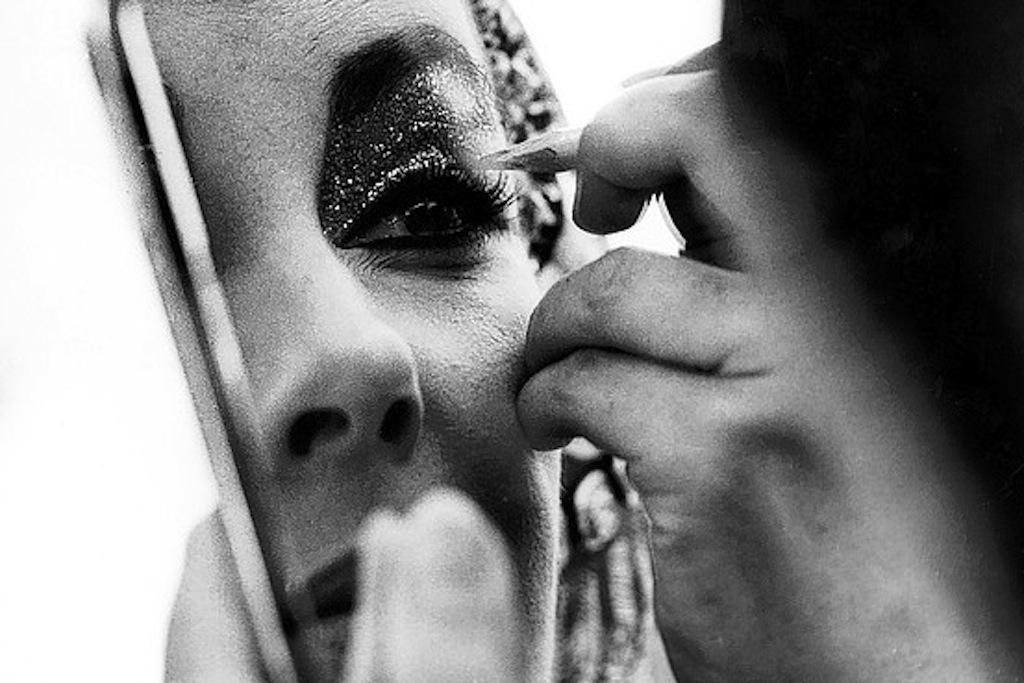
6a00d83451cb7469e2019b00083e93970d-400wi

Wally could not and would not stop. As chronicled in Fleming’s book, it was work, drugs, parties, affairs, a mysteriously adopted three-year-old daughter and eventually, unavoidable scandal, with Wally’s drug dealers getting arrested and newspapers writing items alluding to or frankly discussing Wally’s drinking and drugging.  And yet, he continued to work. Eventually, his diminishing frame, loss of teeth, moodiness and deteriorating beauty were becoming all too evident. The fact that he was even cast in Nobody’s Money directly after being unable to stand during the filming of 1922’s Thirty Days is horrifying – the studio was going to use their asset, and Wally wasn’t giving up, even on the brink of death.

Wallace Reid Carmen

In Kevin Brownlow’s 13-part documentary Hollywood: A Celebration of the American Silent Film, then assistant director Henry Hathaway tells a heartbreaking description of Reid’s last day on Nobody’s Money, Reid’s last day on any movie set: “He sort of fumbled about, and bumped into a chair, and then just sat down on to floor and started to cry. They put him in a chair, and he just keeled over. They sent for an ambulance and sent him to the hospital.”

Wally was taken to the Los Angeles sanitarium of Dr. C.B Blessing, which treated addicts via a controversial method called the “Barker Cure.” As told by biographer Fleming, Blessing followed the remedies of Dr. John Scott Barker, whose Oakland drug treatment facility was raided “numerous times.” Fleming wrote, “His most famous client, actress Juanita Hansen, said the ‘cure’ consisted of a cocktail of unidentified pills and medicines and a rigid diet ‘to extract the poison that remained in my system.’ Rumors abounded that the pills were just replacement drugs that kept the addict off one but hooked on another.” Wally stayed there for six weeks. When that didn’t take, his wife placed him in a private sanitarium where he dried out in a padded room. He wasn’t improving. He was, in fact, dying.
One thing curious about Reid’s story is just why he was dying. Hearing about Reid’s tragedy, one would think the man suffered a fatal shot of morphine and overdosed after various cures. Cold turkey is terrifying and dangerous, but you can live through it, particularly at 30 years of age. Adjusting your life and resolving the need for dope is the long-term challenge. Reid never even got that chance. Instead he wasted away, with kidneys failing him, a respiratory system, shot, fever, flus –a nightmare.  Overdose would have surely been a welcome relief from such wretched hell. Both Reid biographers state that Wally wanted to go out clean, that he’d rather die than seek comfort from the elixir that produced his demise. Drugs and drink will lower your immunity, and Reid’s use was extreme, but after reading of another one of Reid’s earlier cures, I wondered if it contributed to his rapid decline.

Wallace_Reid_in_Excuse_my_Dust_by_Sam_Wood_Film_Daily_1920

Called the “Crebo Method,” the regime, as Fleming describes, “was a daily mix of injections, enemas, and pills with crebo, curare, ephedrine, luminal, emetine hydrochloride, philocarpine hydrochloride, adrenalin, avertin, and adreno-spermine. Curare was an interesting choice, a plant compound used in South America as an extremely potent arrow poison… Death results from asphyxia by paralyzing skeletal muscles and depending on the animal’s size takes from seconds to 20 minutes.” Curare?! If that’s not enough to raise an eyebrow, these disturbing mixtures were injected directly into the chest. The side effects are a list of horrors: every kind of nervous symptom, exhaustion, twitching, cramping, thirst and dysentery are among the trauma. Usually these treatments were undertaken in a clinic. Wally performed all this at home.

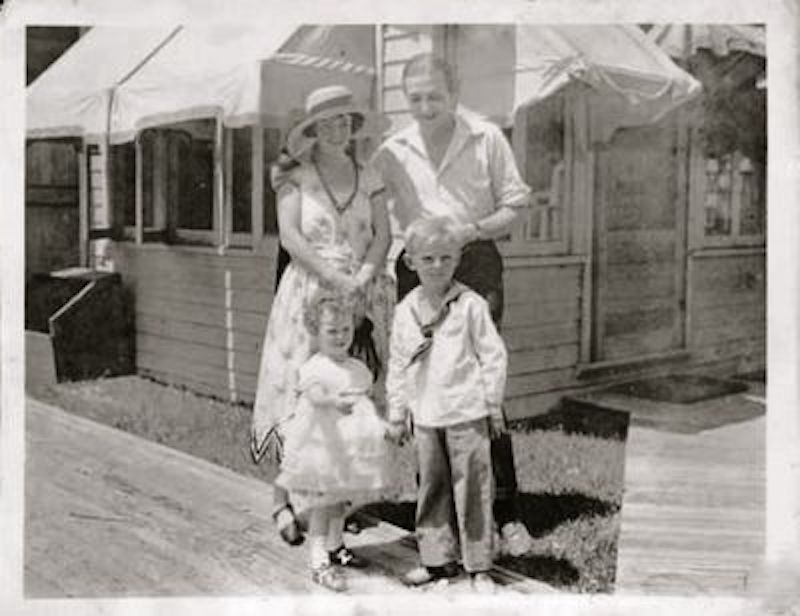
He wasn’t alone. His wife, actress and, later, filmmaker, Dorothy Davenport was by his side. Dorothy, whom Reid married in 1913 (back when he was known as a director at Universal instead of an actor) is an intriguing character herself. After Wally’s death, the actress became something of a pioneer for both female directors and exploitation pictures, often crediting herself as “Mrs. Wallace Reid.” Her earlier work contained tonier collaborators, including the 1923 drug scare picture Human Wreckage, starring herself and Bessie Love. Dorothy co-produced the now lost film with Wally’s crash survivor, Thomas Ince. The next picture she produced was 1924’s Broken Laws (based on an original story by Reid friend, Adela Rogers St. Johns) in which she stars as an overbearing mother whose son becomes a spoiled jazz head and reckless driver on trial for vehicular manslaughter. Considering her relationship with Wally’s mother, this was an interesting social ill to sensationalize. She moved on to directing exploitation pictures including, Linda (1929), Sucker Money (1933), Road to Ruin (1934) and The Woman Condemned (1934) and, for a spell, before she lost money in a lawsuit involving her white slavery film The Red Kimono (1925), she owned and ran a Los Angeles apartment building. Purchasing the place in 1930, she called it “Mrs. Wallace Reid’s Casa de Contenta Apartments.” One of her tenants was Roscoe “Fatty” Arbuckle.

Her fervor started before Wally died. When Wally’s use became too obvious to ignore, she went to the already pouncing press to discuss not only her husband’s plight but the evils of narcotics. Reid didn’t see shame in Wally’s misfortune and appealed to an empathic public. She also changed stories, a lot, and comes off as unreliable — oddly, both frank and in denial. \

She must have suffered guilt over enabling him (though no one used that term at the time). She was probably angry too. And, so, turning to more exploitative measures, she's a controversial figure.

6a00d83451cb7469e2019b0007f3db970b-400wi

While Wally struggled, Dorothy let the world in on his torment. Reported in Menefee’s book, the distraught wife told the New York Times intimate details: “He thought he would die the other night,” she said. “He was so brave about it, poor boy. For three nights he had expected to die. He isn’t afraid to die, but he wants so much to live for Billy and Betty and me,” referring to their son and adopted daughter. Mrs. Reid, in describing his condition just before the present breakdown, said that he wept and said: ‘How did I happen to let myself go? Why couldn’t I have stopped long ago? I thought I was so strong; I thought I knew myself so well; I can’t understand it.’”

Wallace Reid in Two Much Speed

Reid was still young. Just out of his twenties. It’s not surprising he was baffled by how deadly his addiction became. Like the Marmon that he cracked up, he was confident he could control it at any speed. And when he lost control, he even thought he could outrun it. But not by the end. He finally collapsed and, on January 12, 1923, he was dead. He was 31.

In Fleming’s book, Wally is quoted from a picture magazine interview, revealing more about himself than he probably realized: “I love to speed. If I always drove myself, I’d probably spend half my money on fines for breaking the road laws… Whether speeding down an open road or through the air, I feel a surge of blood through [my] veins that prompts [me] to ever-increasing speeds.” 

Happy Birthday Tuesday Weld

11820814a65b4137647e78164cbf3b03

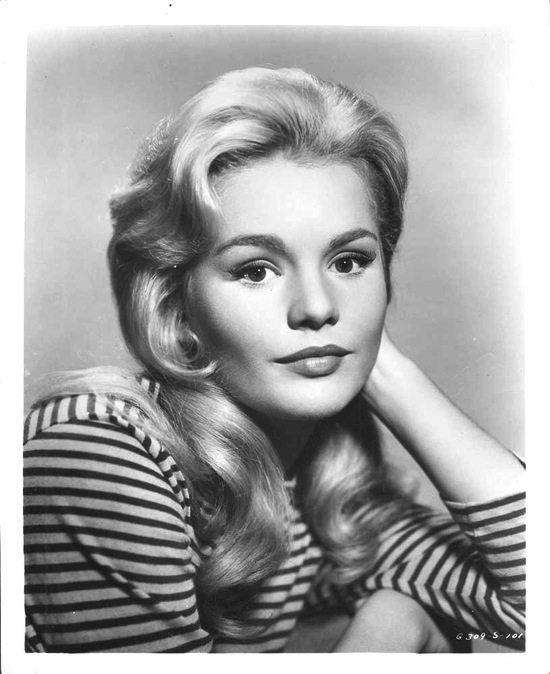
I love Tuesday Weld. I'm going to sound melodramatic and swoony Tiny Tim "Satisfied with Life" here but, I love her so much it's almost frustrating. More Tuesday Weld roles, come forward! Lord Love a DuckWild in the CountryThe Cincinnati KidPlay It as It Lays, Who'll Stop the Rain, A Safe PlaceI Walk the Line, Once Upon a Time in AmericaLooking for Mr. GoodbarThief, her appearance opposite Rip Torn in The Naked City episode, "A Case Study of Two Savages," and on and on. 

Tumblr_mo2paiEV3j1rdstp0o1_1280

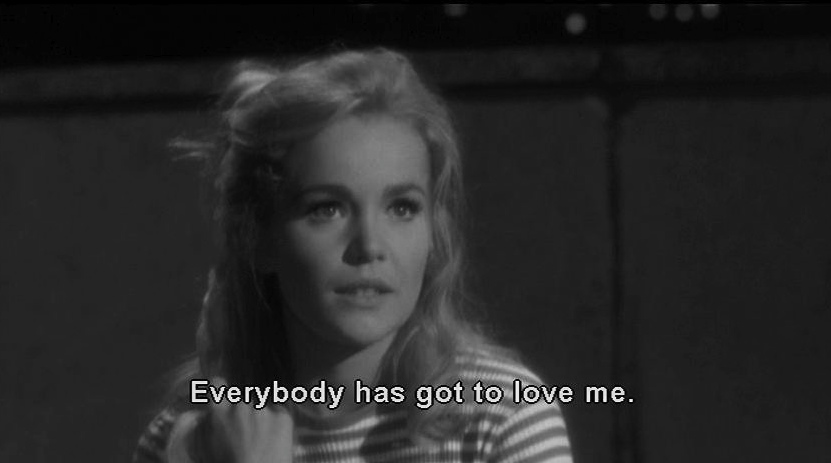
But one of my favorite Weld performances is her Sue Ann Stepanek in Noel Black's Pretty Poison. As I wrote in another piece about angry teen girls in movies: "The gorgeous, iconic Tuesday Weld is the queen of precocious teenage girls and one of the sexiest in the history of cinema. So hilarious and subversive in Lord Love a Duck (watch the orgasmic sweater scene with Daddy Max Showalter  and… oh my goodness what year was that film made?) and the girl who almost played Lolita over that other precocious sexpot, Sue Lyon, Weld was, in her youth, all the more powerful for tapping into her evil side. Pretty Poison is her showcase." 

Tuesday-weld

Playing the beautiful but deadly high-school majorette to Anthony Perkins' twitchy, creepy fire-starter, Weld is the deliciously deviant underbelly of America's heartland. Where pretty blonde high school girls are supposed to be good but, we know better. Where the older, supposedly controlling and dangerous nutjob (Perkins) ends up the one manipulated and screwed over. The 1968 picture wasn't as popular upon release (too sexually disturbing? Too strange? Too much of a guilty turn on?), it's achieved cult status since and deservedly so.

Tumblr_mmmbiyACLd1qzdzwdo1_500

With its violence, pitch black comedy and erotic viciousness (watch Weld commit murder only to be filled with carnal copulating bloodlust) the picture is wonderfully transgressive and deeply strange. And Weld… she is charming, scary, beautiful and sickly erotic. It's a daring performance by a young actress unafraid of scaring those who desire her; an actress intelligent enough to know her kinkiness will also thrill men and women. Perhaps, especially women. “Let’s do something exciting” says Weld’s seventeen-year-old. Exciting is one word for what she does with all this gleeful evil.

Artwork_images_972_534095_dennis-hopper

As he surely was by The Bad Seed's Rhoda Penmark, Nick Cave had to have been inspired by Pretty Poison. Cave's pretty, murderous "Millhaven" teen with yellow hair she's always "a-combing" is something of a Sue Ann: "Since I was no bigger than a weavil, they've been saying I was evil, that if bad was a boot that I'd fit it. That I'm a wicked young lady, but I've been trying hard lately. Oh fuck it! I'm a monster! I admit it!" Thinking that Weld may have influenced Cave — that is exciting. And so is even thinking about the now reclusive Tuesday Weld. 

1966-lord-love-a-duck-tuesday-weld

She notoriously turned down some major roles, like the aforementioned Lolita and then Rosemary's Baby and Bonnie & Clyde, among others,for various reasons, some that make sense, some that seem rather mysterious. About Lolita she said, "I didn't have to play Lolita. I was Lolita," She dated older men, she dated Elvis, she drank, she had issues with her mother (check out, or don't check out, her mother's bizarre book, "If It's Tuesday…I Must Be Dead!"), she didn't conform to both Hollywood and what was expected of a pretty blonde starlet. 

Tumblr_mg1e2z6DXz1qc47c2o2_400

It might have hurt her in Hollywod, but it only added her rebel appeal. After seeing her on a talk show, walking out barefoot in a bathrobe, Sam Shepard wrote, "I fell in love with Tuesday Weld on that show. I thought she was the Marlon Brando of women." Indeed. I bet a lot of men and women fell in love with Weld that night. Watching her shift in a chair and just be herself… One gets the feeling Weld wouldn't come off as canned, the well trained good little girl. Or trying too hard. "Look how crazy I am." She had been through some crazy shit. Modern actresses could take a cue from Weld — it's OK to be yourself. If you're interesting anyway. And Weld was. Enormously so.

Tuesday weld what's my line

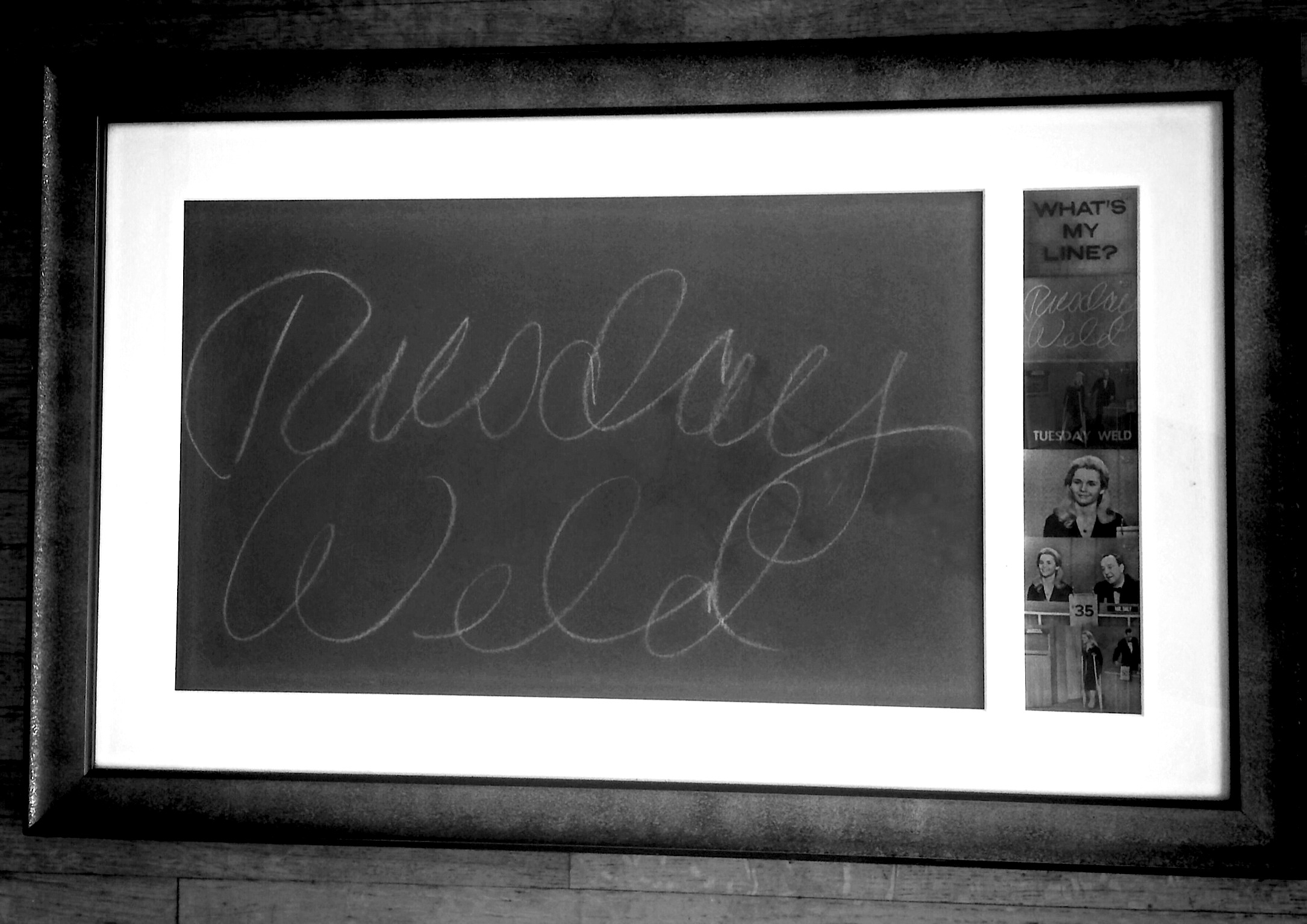
You see that when she appeared on "What's My Line" hobbling out all gorgeous and busted on crutches, she had pre-signed her slate due to her injury. This seems so very Tuesday Weld and she made that look intriguingly cool too, especially when she stated her reason for the crutches: "I kicked a camera… I kicked a camera dolly." Promoting the movie Bachelor Flat, answering the questions of Johnny Carson, Dana Andrews, Dorothy Kilgallen and Bennett Cerf, she spoke in a vaguely creepy baby doll voice and, of course, stumped them,

Weld line four

Dana Andrews disqualified himself because he put it together based on information he had heard (also, they had the same agent). If you watch, he seems a bit smitten with her, at least somewhat thrilled by her, and who can blame him? She's so modern. One of  my prized possessions is Weld's original slate from that appearance, given to me by a close friend who pays very close attention to my obsessions. I'm not one to over-collect entertainment memorabilia but Weld's slate is so much more than an autograph, it's a piece of history. To me, it's a work of art.

Tuesday slate

Happy Birthday to the gorgeous, edgy, one-of-a-kind talent Weld. And, as she turns 70 it naturally falls on a Tuesday. And even better, the day Pretty Poison's Perkins fell for her: "I met you on Monday, fell in love with you on Tuesday, Wednesday I was unfaithful, Thursday we killed a guy together. How about that for a crazy week, Sue Ann?" 

The Love Song of D. Samuel Peckinpah

Bringmebw

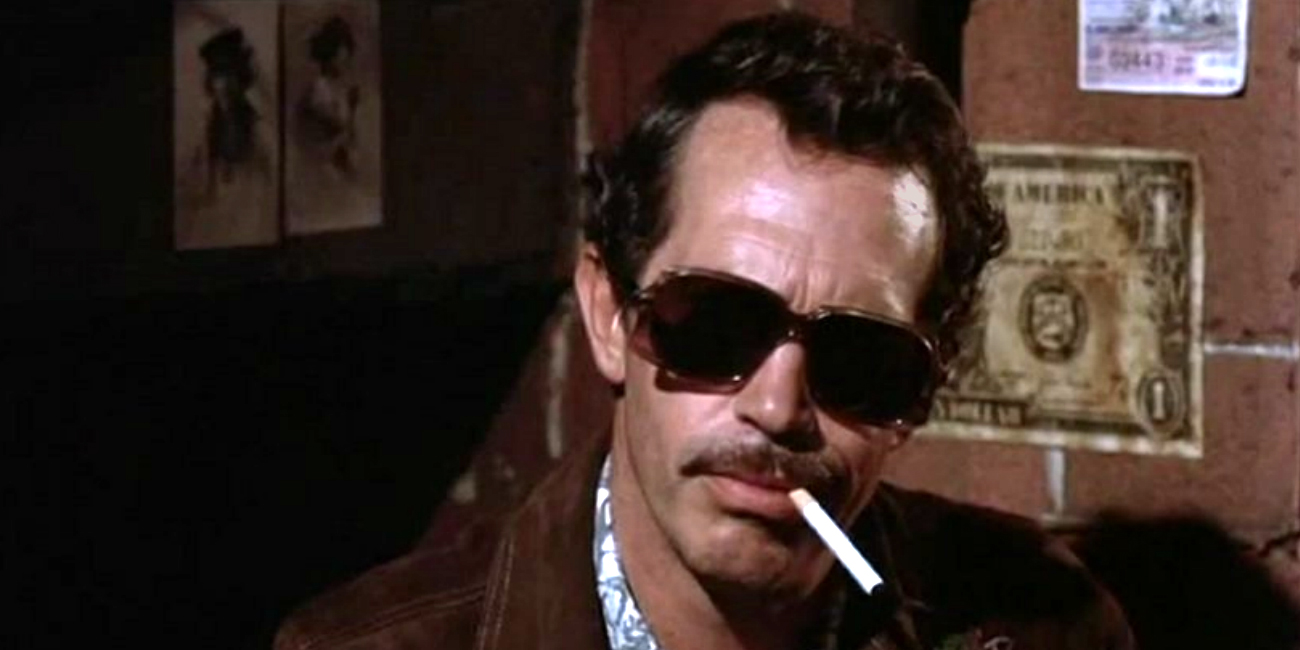
I blame Warren Oates. Or rather, his white suited, blood spattered beautiful loser named Bennie. This is the man who ruined me for all others — romantically, sexually, heroically, pitifully, existentially, all of it — throw in the filthy kitchen sink soaking a seeping red sack.

Bring-Me-the-Head-of-Alfredo-Garcia

I may never find a romantic paramour as powerful as Oates’ Bennie, or by extension, Sam Peckinpah, the man who blasted my brain with such wild-eyed, gritty grandeur, bleeding sweaty passion and maniacally sincere poetry. This movie, one of the only pictures Peckinpah had total control over, isn’t just personal, it’s fucking personal. For Bring Me the Head of Alfredo Garcia isn’t merely declarative for those seeking the headless bounty, but for those demons rattling around Peckinpah’s near nihilistic noggin.

Warren-oates-from-point-to_head

I say near nihilistic because the movie isn’t as hopeless as many perceive it to be and Peckinpah isn’t the mean-spirited misogynist he’s painted as. Like Bennie, he’s a fighter and a lover, dammit.  Though the picture begins with a Mexican land baron violently extracting the name of the man who seduced his daughter, it remains oddly sensitive, even as the girl is stripped and beaten. You feel for her. And in the end, Bennie feels for her. And you feel for Oates’ Bennie, the piano playing drifter hired to collect the million dollar bounty.  Bennie’s desperate determination to make a better life for himself and his lovely, seasoned girlfriend Elita (Isela Vega) who just happens to be a whore (and is all the stronger for it), can be summed up in his assertion: “Nobody loses all of the time.” No, they do not, particularly when they’ve experienced love, no matter how doomed, and happiness, no matter how fleeting.  Maybe in a world filled with insensitive one-nighters, phony thinkers, blood-sucking scumbags, casual rapists and reprobate renegades, these two supposed lowlifes are deluding themselves, and maybe they know it.

But really, who the hell isn’t?

Bringmeiselabennie

And yet, their love isn’t a delusion. In one small moment that moves me more than a hundred sweeping melodramas, Bennie senses Elita’s sadness as she take a shower. It’s soon after she was nearly raped, something he harshly convinces himself: “She can handle it better than I can.” Opening the curtain, tough Elita sits wet, vulnerable, sad-eyed, and Bennie simply, movingly says, “I love you.” Stated with such empathy and gentleness, this is all she needs to hear. This is all I need to hear.

00-bring-me-the-head-of-alfredo-garcia

It makes me realize just how much this critique of capitalistic greed, this ingenious, viscerally violent orchestration of madness and dread, is at its heart, a love story. So when Elita is killed, it makes perfect sense that Bennie goes nuts, finds Alfredo’s rotting head and, with a perverse sort of respect, drives around with it, talks to it, swats at the flies swarming around it and stops to cleanse and ice the foul cranium. Bennie bonds with that head, the head of his dead lover’s ex, possessed by a crushing nostalgia for his girl, a gleefully gruesome bloodlust for her killers and a passionate, single-minded self destruction for himself, that’s as ruinous as it is valiant as it is romantic and it is just… so… beautiful.

Tumblr_lym6j9st3t1qafve9o1_500

Forget “We’ll always have Paris.” What gets me to the core is Bennie repeatedly shooting a dead man and exclaiming, “Why? Because it feels so damn good!”  Yes it does. Over-the-moon crazy love dripping crimson romantic damn good — which is how it should always be. Damn you Warren Oates.

Happy Birthday Warren Oates. You left us too soon.

From my archives and originally written for GQ.