October Sight & Sound: The Female Gaze

6a00d83451cb7469e201bb086e9c05970d-800wi
N
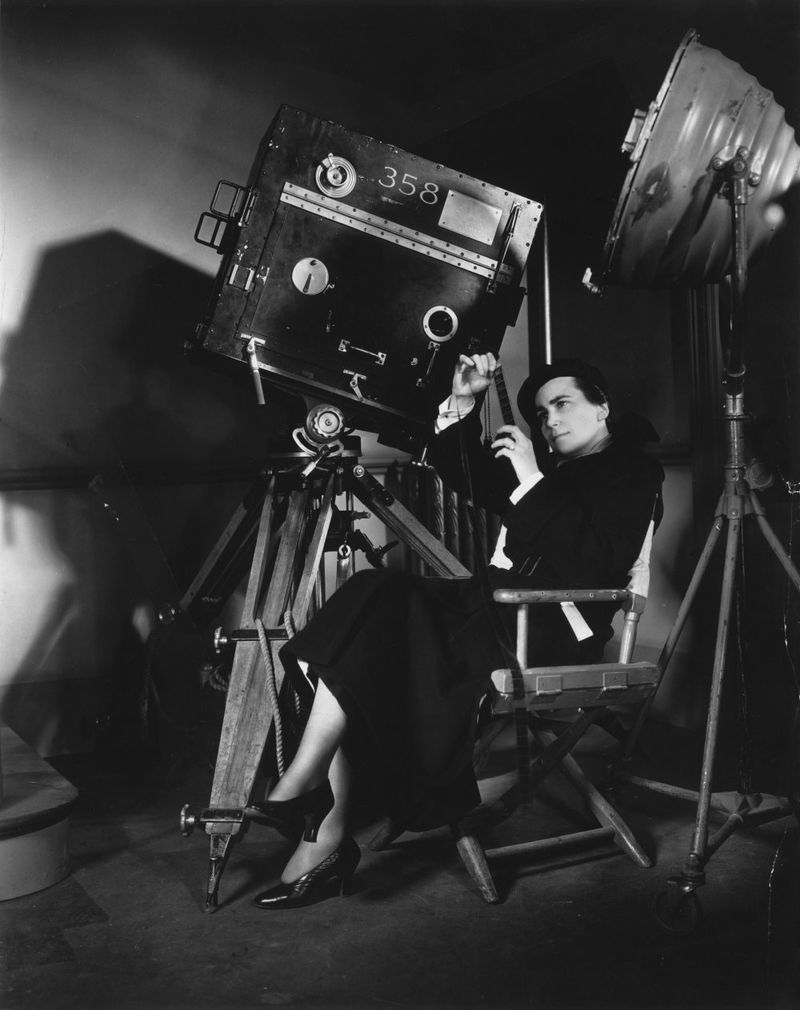
ew Sight & Sound! I was honored to contribute to this group and grouping of 100 films directed by women with so many esteemed writers, filmmakers, actors and artists. My short pieces include Merrily We Go to Hell (1932) by Dorothy Arzner, my favorite and I think, the best Arzner picture.  And Elaine May's Mikey and Nicky (1976) that though adored by some is still, to use the overused "u" words, underrated and underseen.

6a00d83451cb7469e201bb086e9c03970d-800wi

I also wrote a small online piece about the lost film, Human Wreckage (1923 — which will post online sometime next week) made by the intriguing, pioneering and early filmmaker, Dorothy Davenport (a.k.a. Mrs. Wallace Reid). Her real life, how it found its way wrapped up into her early pictures, and how she peddles education and exploitation — she's a fascinating woman — handling the inception of Hollywood as an actress, marriage to a huge movie star, contending with the first kind of rapacious tabloid gossip and then, drug addiction, via her husband. 

6a00d83451cb7469e201b7c7ca5448970b-800wi

Human Wreckage is a dope scare picture, released the same year her addicted-matinee idol husband Wallace Reid died, and in such tragic circumstances… and I really wish I could see it! Perhaps one day it will be found. A curious woman in film and in real life. Incidentally, you can read my piece on Wallace Reid here.

6a00d83451cb7469e201bb086e9c33970d-800wi
 Pick up a copy of the October edition now.


The Power of the Purse: Marnie

6a00d83451cb7469e2017ee91bb4dd970d-800wi

When Madonna's "Sex" was released, actor Udo Kier, who was featured prominently in some of the book's best pictures, was asked about Ms. Ciccone. What she was like? But more specifically, since Kier had ample chance to see, what was her vagina like? (A question one should probably not ask but those things were asked) Mr. Kier's answer? "Organized."  

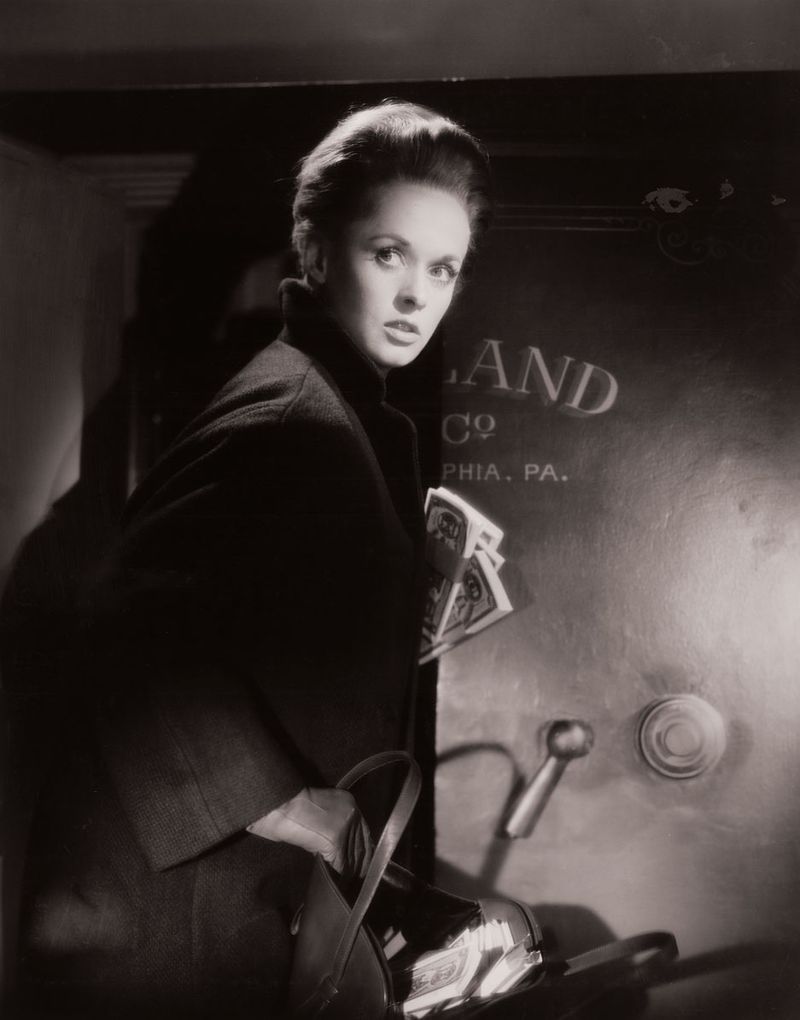
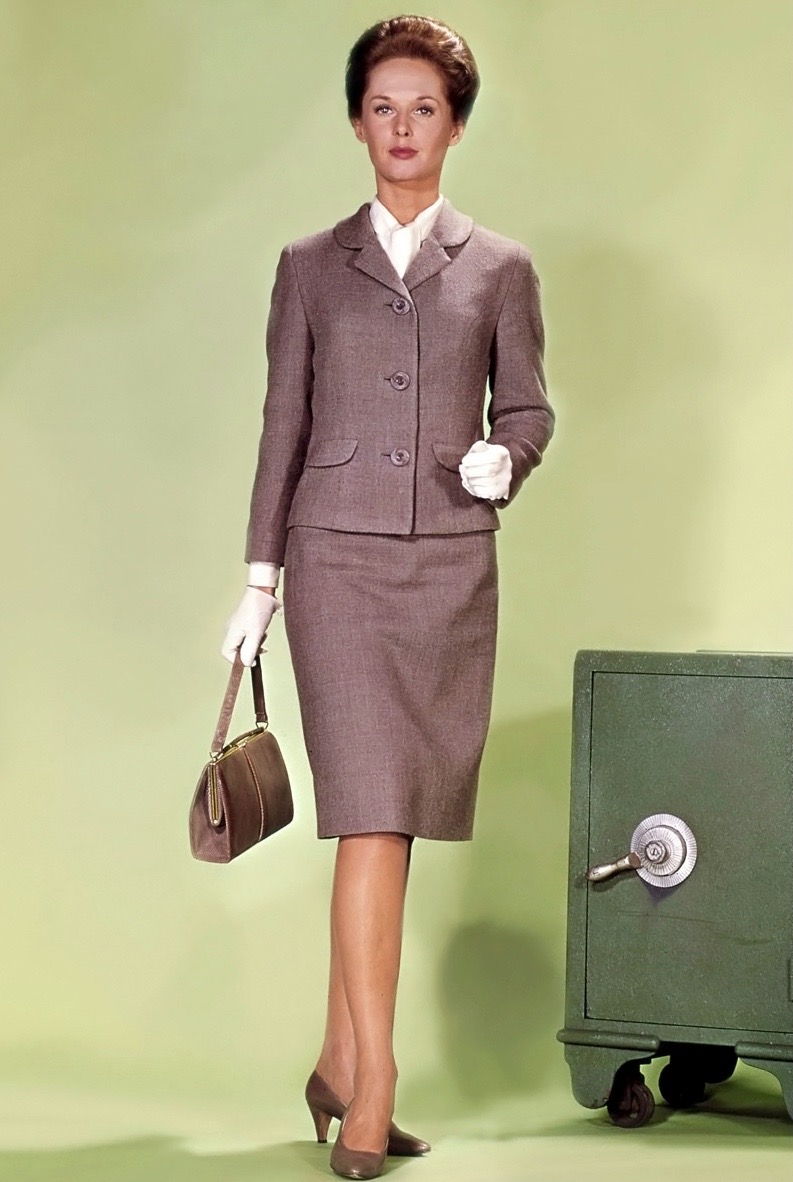
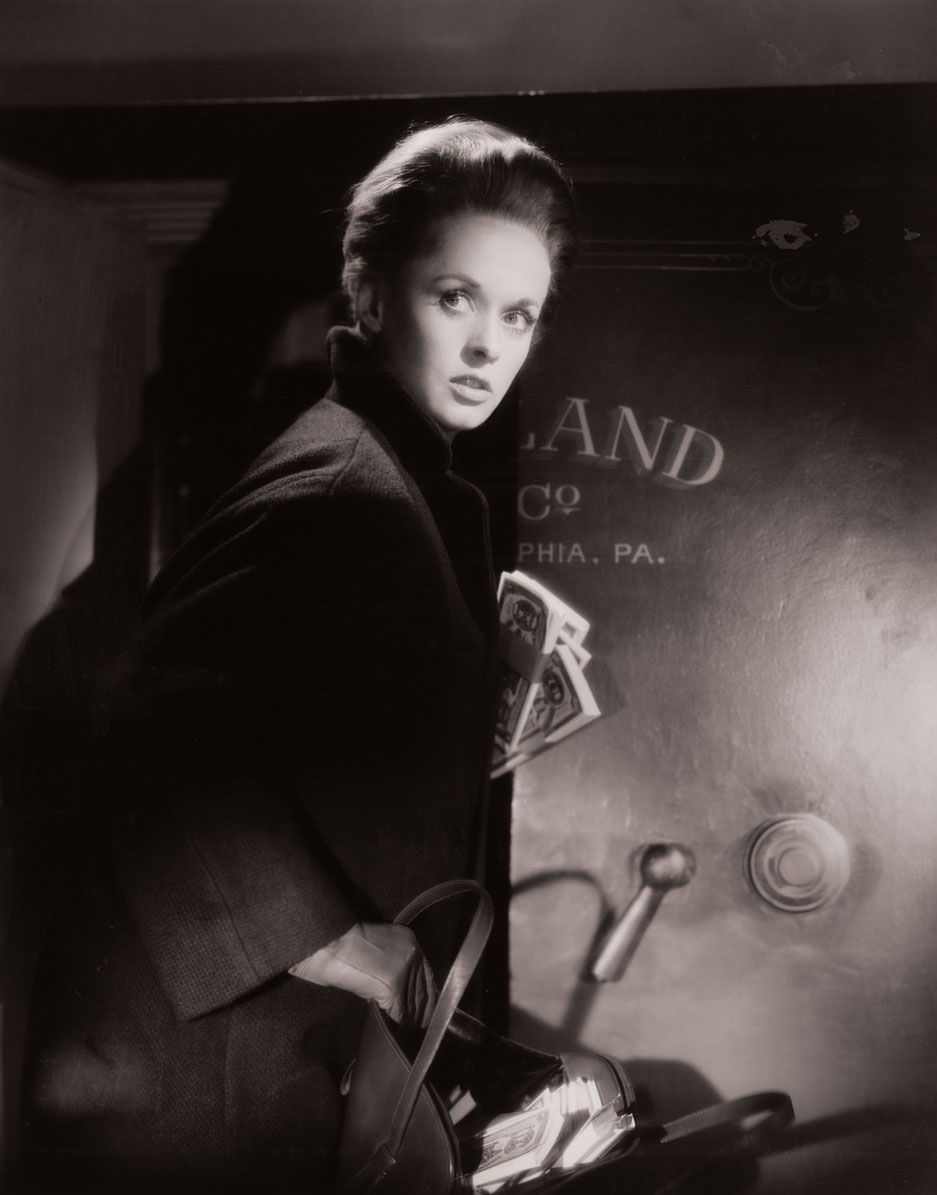
He could have been talking about Tippi Hedren's handbags in Marnie.

6a00d83451cb7469e201bb086e1a34970d-800wi

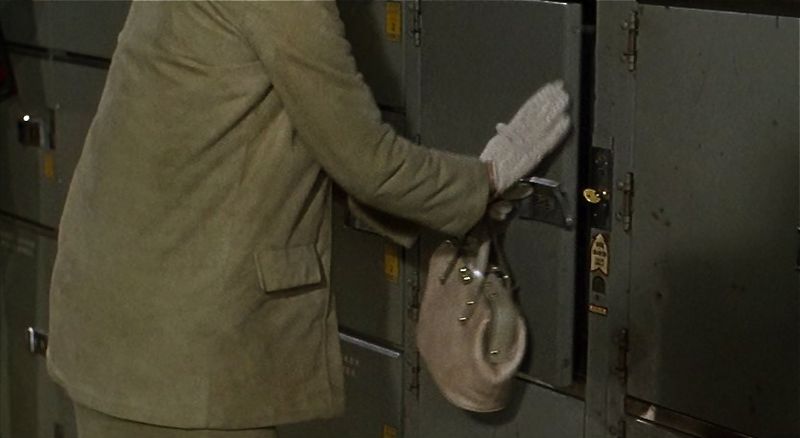
The Hitchcock handbag — they're lovely, and fetishistic — creamy, dreamy vaginal things. Vaginal. I don't find this a stretch. With all those crisp, snapped, soft or hard bodied rectangular satchels and muffs (sorry), Hitchcock's women clutched wombs of wonder that, like, many ladies obsessed with their handbags, seem to serve the purpose to only mystify men. Who cares so much about a damn handbag? Women do. And not just for fashion, as Hitchcock so astutely noticed, but for what Kier also so astutely pointed out. Organization. Organization in that some feel is a chaotic organ that will spill out of your satchel in messy, sticky, dysfunctional, bloody, passionate disarray. And purses, they often lose control. Or you're worried they will. Or, rather, men, are. Purses — they are often quite efficient, even when messy.

6a00d83451cb7469e201b8d153b666970c-800wi

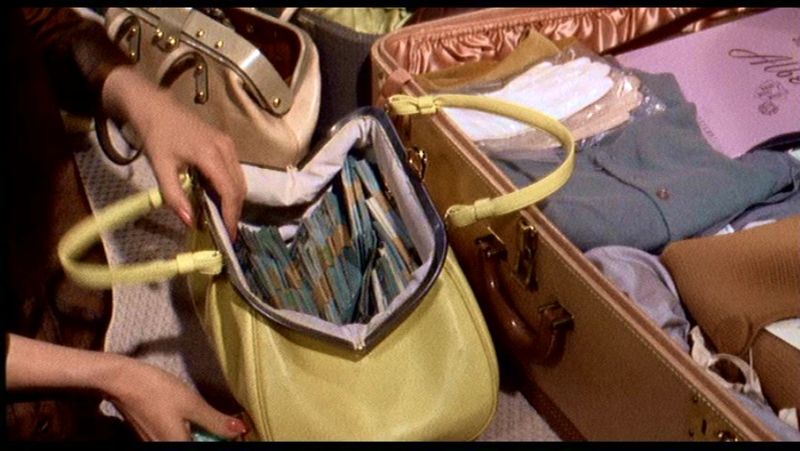
But back to Marnie, one of my favorite Hitchcock pictures, and, of all purse-filled pictures, I find her handbags, suitcases, ID cases and wallets the most intriguing. 

6a00d83451cb7469e201b7c7c9c666970b-800wi

The yellow purse the raven-haired Marnie clutches while walking to the train looks (or feels?), I will say it again, vaginal. It can’t be an accident, at least I don’t want it to be — she needs that thing. An eventual cool blonde (there are many colors), a compulsive liar and thief so traumatized by her past that her only arena for both escape and personal gain is work, she moves from city to city, nabbing jobs with her expert demeanor and skills (she is an efficient secretary) only to embezzle from employers. And dump that money in her various, vaginal bags.

6a00d83451cb7469e2017d41a8031e970c-800wi

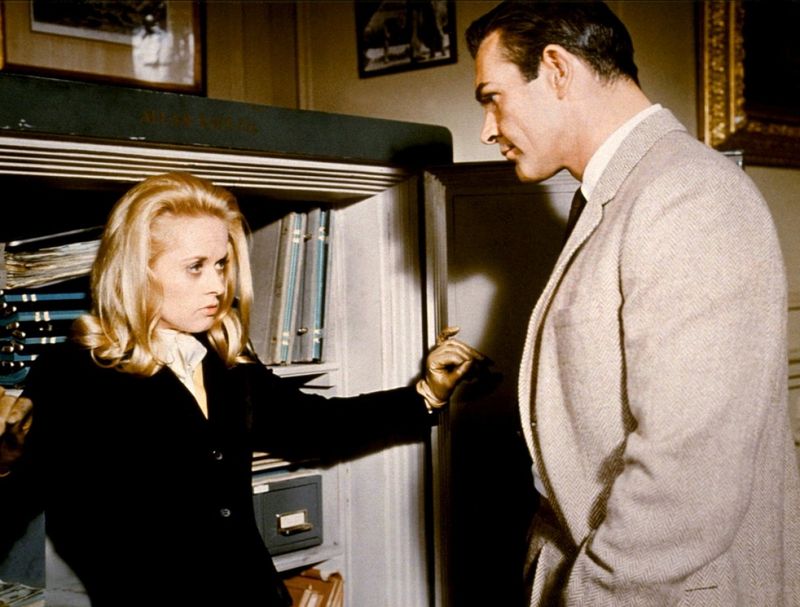
Perhaps the imprisoning Freudian arms of Mark Rutland (Sean Connery) understands a well functioning handbag. Rutland. Yes. He'll supposedly fix her. Icy, "frigid," (to him) –  a traumatized woman who can't stand the color red (of course she'll spill scarlet ink, liquid menstruation, on her white silk blouse) and one who has an unusually strong bond with her horse (saddles).

She's clearly never had a normal or healthy sexual encounter (which is very sad) and though she shows flickers of attraction and flirtation, she appears to hate men. Or maybe just all of humanity. But she does possess one heart-aching weakness — she loves her mother to the point of masochism. 

6a00d83451cb7469e201bb086e18c8970d-800wi

I'm not the only one who has noticed this. The controversial Camille Paglia brought up the Tippi vaginal-satchel in her BFI book on The Birds. There's also "The Women Who Knew Too Much: Hitchcock and Feminist Theory" — author Tania Modlesk discusses other feminist takes on Hitchcock's use of purses, keys and safes. But she makes a fascinating case for Marnie, her mother and that fur wrap — the luxurious non-utilitarian opposite of the clenched, accessory-stuffed purse. It's a sensual gift. And one her mother will reject. Modlesk writes: 

6a00d83451cb7469e201bb086e1953970d-800wi

"But there is a fetish that no one to my knowledge has remarked upon, oddly enough since it is one of the most classic fetishes of all time — the fur piece. On the first visit to her mother, Bernice, Marnie brings her this fur and wraps it around her mother's neck. A few minutes later, the fur set aside, Marnie watches with longing as Bernice combs [the young blonde girl visiting] Jessie's hair, captured in a signature shot of Hitchcock tracking into the hair at the back of the head, evoking desire and longing on the part of the one who looks [Marnie is the one looking]… Jessie leaves the house, and Marnie immediately places the fur around her mother's neck. Shortly thereafter the two go into the kitchen (to make 'Jessie's pie')…"

6a00d83451cb7469e201b7c7c9c858970b-800wi

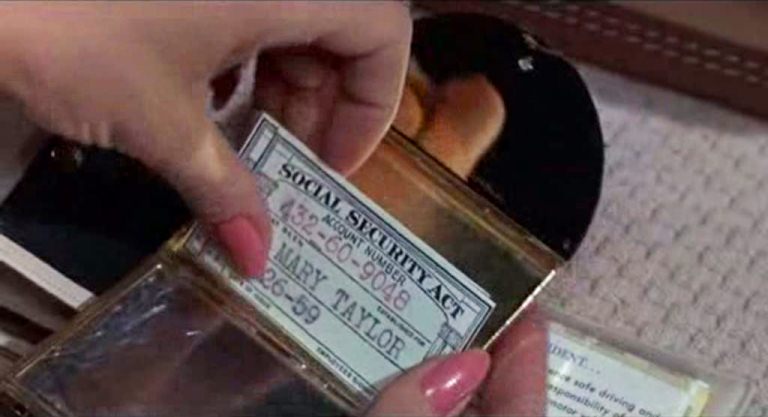
Jessie's pie. Well, that leads to a jealous argument. And Bernice admonishes her daughter with the potent demand, "Mind the drippings, Marnie." What a muddled household. Not unkempt, just mentally untidy. Brushing Jessie's hair and minding Jessie's pie are more important than stroking that sweet furry piece. And worse, her mother (an ex-prostitute), remarks that Marnie's hair is, well, whoreish: "Too-blonde hair always looks like a woman's trying to attract a man." Never mind her mother's hair is also quite light. Marnie needs to get out of there. It's time for her to change identities (Marnie Edgar/Margaret Edgar/Peggy Nicholson/Mary Taylor) and stash more jack in her pocketbook. 

6a00d83451cb7469e2017ee91bc681970d-800wi

However, it's only a matter of time when Mark Rutland will supposedly figure her out. Here come the man readying to shake that pocketbook and empty the thing out, stick his hands inside, figure out her secrets, lies and perhaps the red-lipstick-sex within. Most women don't like it when you open up their very personal purses without asking (you think Catherine Deneuve wants you to spy the dead rabbit she's carrying in her Repulsion reticule?) and Marnie would be no exception.

6a00d83451cb7469e201bb086e1995970d-800wi

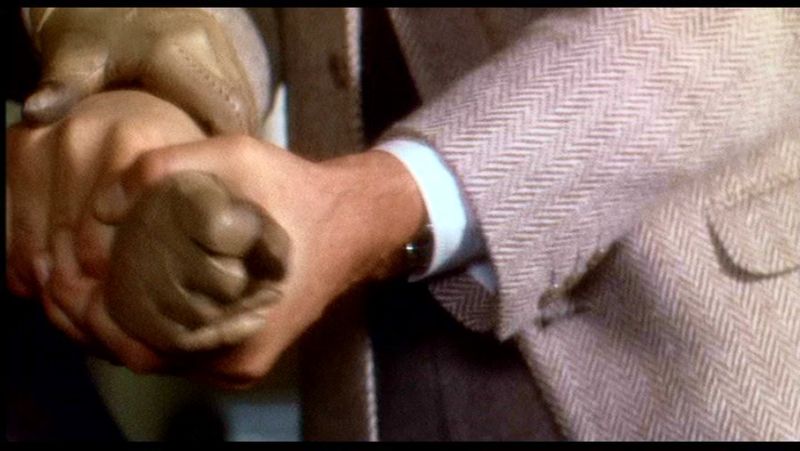
Gripping and grabbing her soft flesh, he'll take apart her clutches. (And it's not nice — at all — as we will see) These were vaginal satchels more than likely approved by Hitchcock but chosen by costumer Edith Head. Certainly Ms. Head understood the power of the purse. The male Hitchcock and the female Head (these names are just too much) must have enjoyed penetrating their pursey mystery and allure. 

6a00d83451cb7469e2017d41a7f07e970c-800wi

Though Mark's the romantic lead, he's a pervert himself, a very troubling person, and maybe not the healthiest partner for this wounded woman. And yet, he is trying to understand her, albeit in often terrible ways. The movie is sympathetic towards understandably troubled Marnie, making it tough to blame the woman for her antisocial tendencies. In her experience, men (people) are beasts who've only done her harm (flashback to a very young Bruce Dern freaking out a very young Marnie). The world is a cold-hearted place and she finds no solace at home, no father and no maternal warmth. 

6a00d83451cb7469e201bb086e1afb970d-800wi

In return, she violates the world (men) by lying, cheating and stealing without ever giving them the full pleasure of her body (and how can blame her?). There are moments (of which I can do nothing, this is Hitchcock filling the controlled receptacle) when I think Marnie should just flee Mark, everyone, in fact, and ride her horse Forio ("Oh, Forio, if you want to bite somebody, bite me!") and push her remaining pleasure into her sex-repressed satchels.

6a00d83451cb7469e201b8d153b47e970c-800wi

She may move on to something better, something more loving. Like pretty, organized purses and their vaginal sisters, there is such a thing as productive, controlled chaos. So, sister Marnie? Embrace the pussy riot.

6a00d83451cb7469e2017d41a7ef18970c-800wi

Talking With John Waters: Influences

6a00d83451cb7469e201b7c7bc74ef970b-800wi

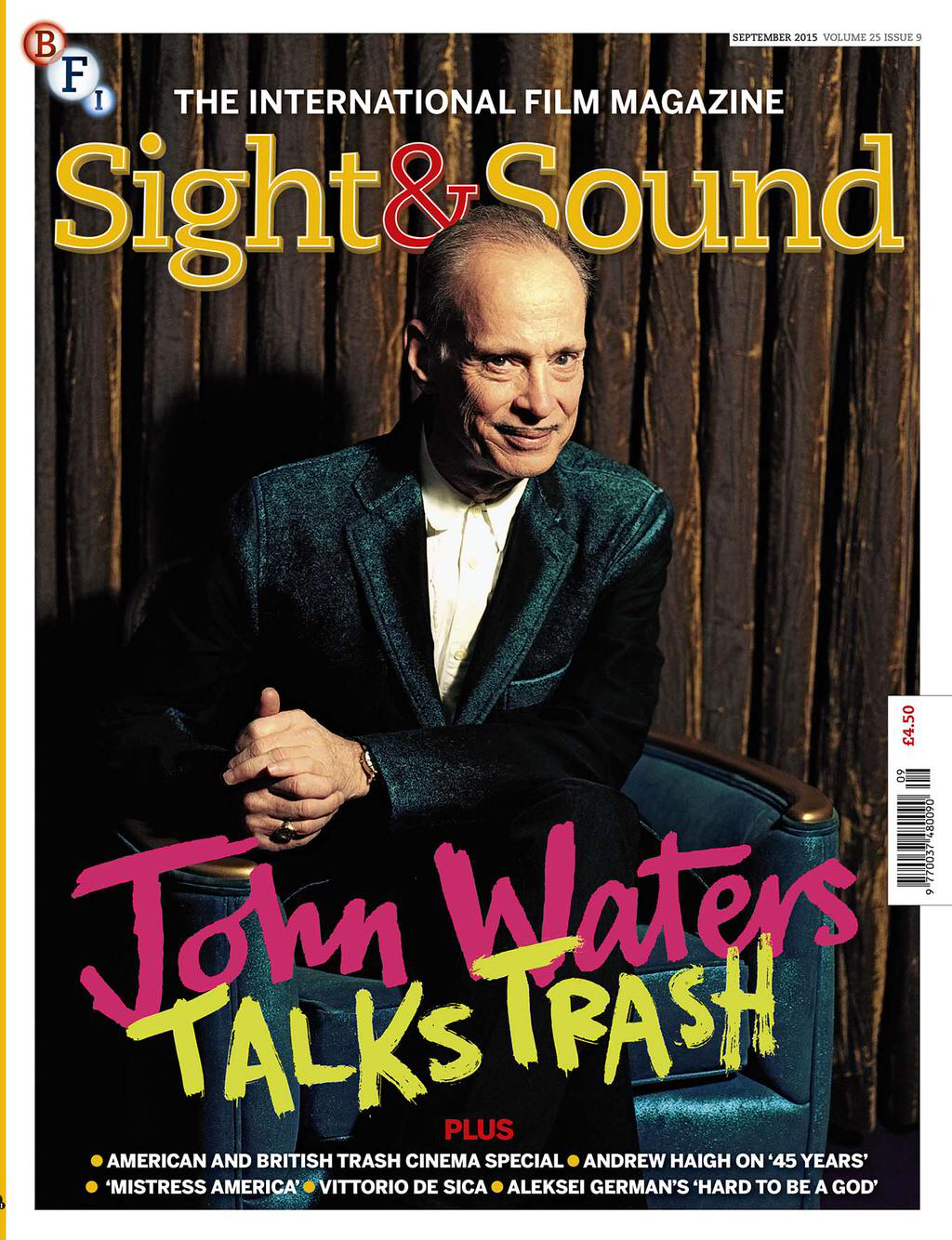
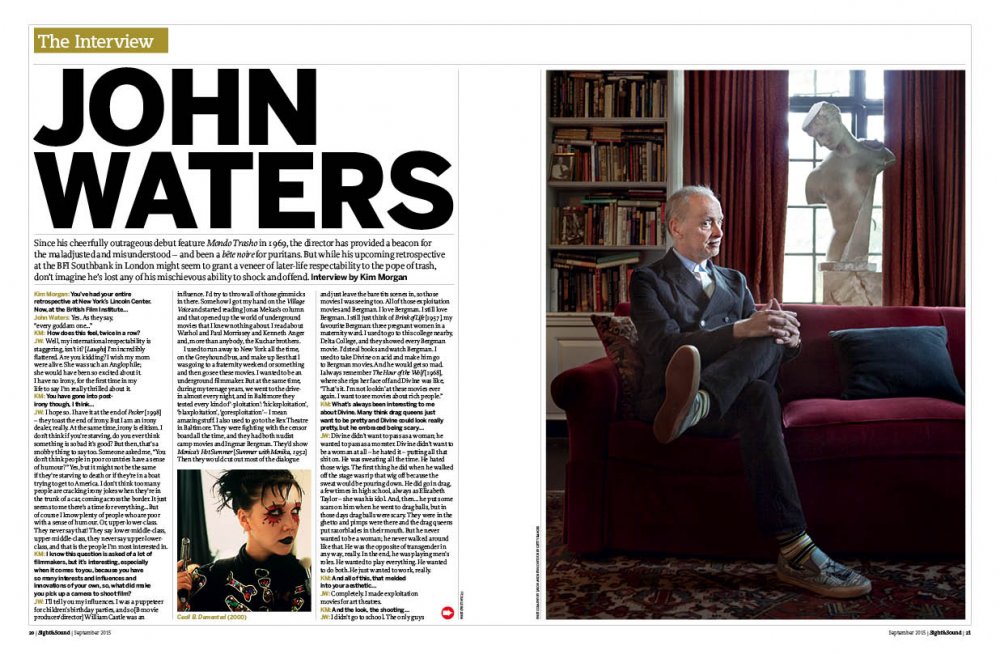
Talking with John Waters: Endlessly funny, erudite, charming and so well-read, just try to keep up (he reads two books a week). So I was thrilled to interview him for Sight & Sound's September issue. I won't publish the entire, long and entertaining interview here, this is just a teaser. You'll need to go out and buy the magazine, beautifully laid — out to get all of it — and there's a lot. But, to whet your appetite, here are excerpts. Enjoy. And let's all try Bergman on acid! 

Kim Morgan: I know this question is asked of a lot of filmmakers, but it’s interesting, especially when it comes to you, because you have so many interests and influences and innovations of your own. So, what did make you pick up a camera to shoot film?

John Waters: I’ll tell you my influences. I was a puppeteer for children’s birthday parties, and so William Castle was an influence. I’d try to throw all of those gimmicks in there. Somehow I got my hand on the Village Voice and started reading Jonas Mekas’s column and that opened up the world of underground movies that I knew nothing about.

William-Castle

I read about Warhol and Paul Morrissey and Kenneth Anger and, more than anybody, the Kuchar brothers. I used to run away to New York all the time, on the greyhound bus, and make up lies that I was going to a fraternity weekend or something and then go see these movies. I wanted to be an underground filmmaker. 

But at the same time, during my teenage years, we went to the drive-in almost every night, and in Baltimore they tested every kind of ‘-ploitation’: ‘hicksploitation’, ‘blacksploitation’, ‘goresploitation’, I mean amazing stuff.

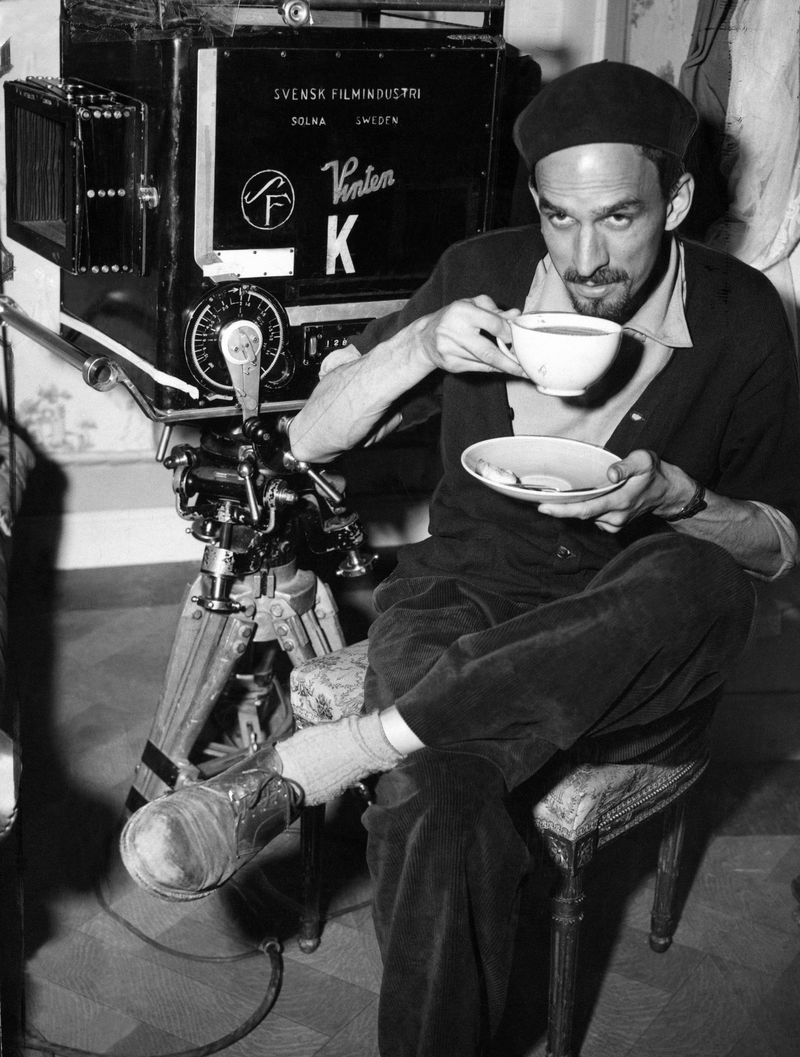
I also used to go to the Rex Theatre in Baltimore. They were fighting with the censor board all the time, and they had both nudist camp movies, and Ingmar Bergman! They’d show Monica’s Hot Summer [Summer with Monika] Then they would cut out most of the dialogue and just leave the bare tits scenes in, so, those movies I was seeing too. All of those exploitation movies and Bergman.

6a00d83451cb7469e201b7c7bc7181970b-800wi

I love Bergman. I still love Bergman. I still just think of Brink of Life [1957], my favorite Bergman: three pregnant women in a maternity ward. I used to go to this college nearby, Delta College, and they showed every Bergman movie. I’d steal books and watch Bergman. I used to take Divine on acid and make him go to Bergman movies. And he would get so mad. I always remember, The Hour of the Wolf [1968], where she rips her face off and Divine was like, “That’s it. I’m not lookin’ at these movies ever again! I want to see movies about rich people!”

6a00d83451cb7469e201bb08606534970d-800wi

KM: It seems your audience is a great equalizer; it’s always been all types, and still is.

JW: Yes. And they’re all ages too. I was at this punk rock show, presenting at this show, and there was a punk rock group who were especially sleazy and hilarious and after they went off, I thought, “Boy I wish I had a teenager daughter. She could date one of these guys.” I do bring out in people behaviour that you might not expect, but that’s just humor. I don’t think I’m ever mean, even Pink Flamingos, as shocking as it is. There are parts of it I look at it now and think, “Oh my god… no wonder…” but I’m proud of it. It didn’t mellow. It isn’t old hat. It still works.

KM: And it would still shock [former head of the Maryland State Board of Censors] Mary Avara. I saw an interview with her from the 1990s, it was when Pecker came out and she was still mad at you.

Polyester

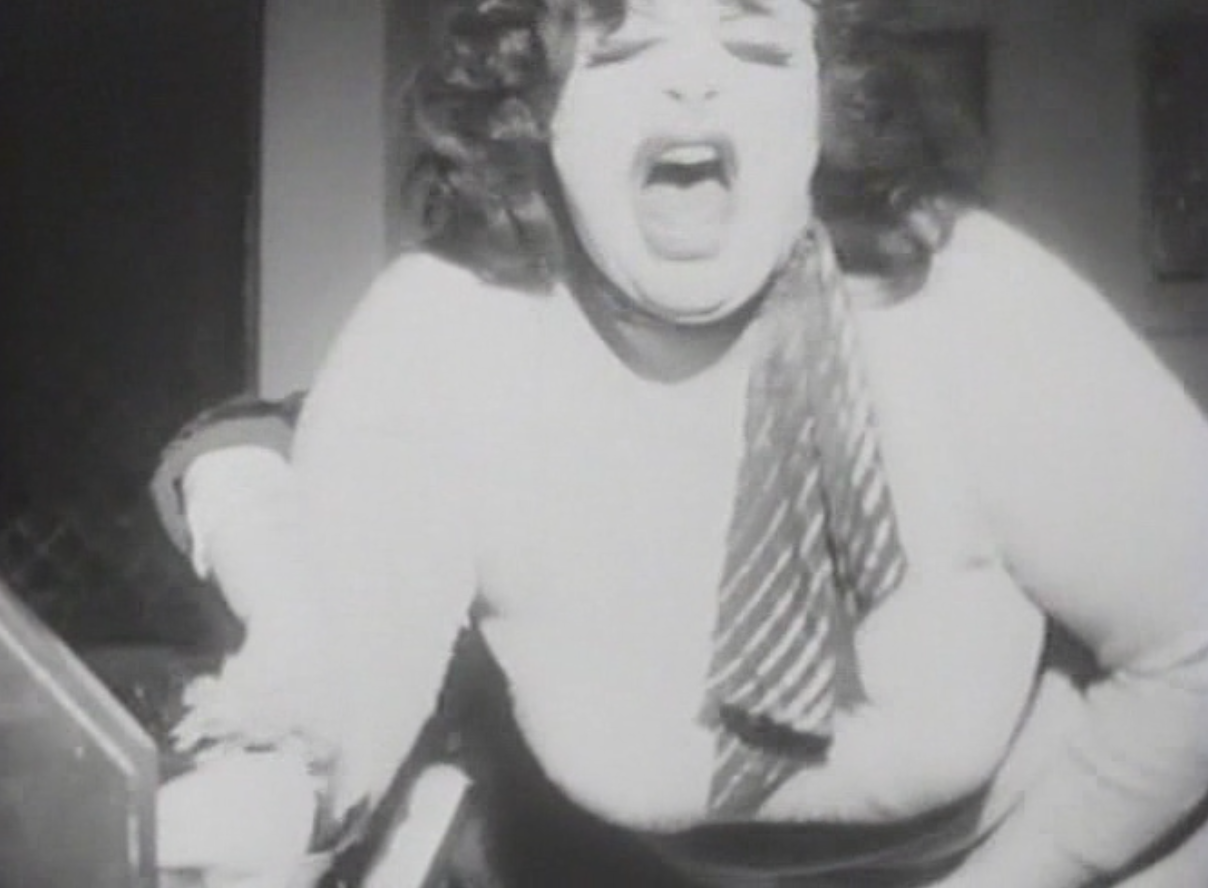
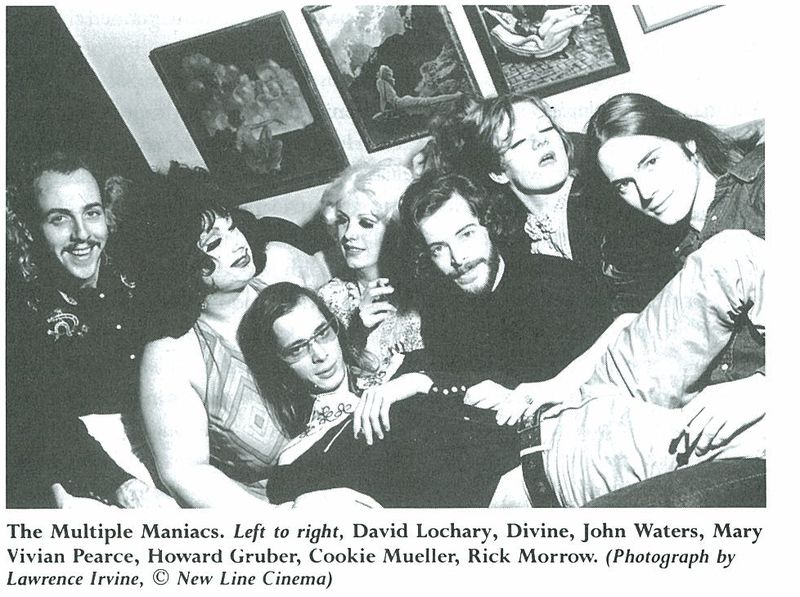
JW: Well, the most she was mad, when we were making Polyester [1981], Multiple Maniacs finally got shown in a real theatre, so she had to see it. When she saw the rosary job in that – it’s when you put a rosary up someone’s ass – she went so insane and banned the whole thing and went to court. The judge, he said his eyes had been insulted for 90 minutes but, still, it was not illegal. And she went insane from it. Because there was no law against rosary jobs. Because there is no such thing. [Laughs]

KM: Yes, I read a quote from her where she said, in her 80s: “I wanted to throw him out of window!”

JW: I know. She would go berserk. But I hated her with equal hatred… because she would make me cut a brand new print I had spent my last penny on. She would stay things like, “Don’t tell me about sex. I was married to an Italian!” Now, I used that line in A Dirty Shame, so I got material from her. I’ve always said, dumb censors are your press agents. You should pay them. She really helped my career. But smart liberal censors, like the MPAA, they are the scary ones. You lose when you fight them.

Multiple maniacs

KM: In Multiple Maniacs, back to that rosary job, which is funny, but shot so beautifully and artfully, cross cut with the crucifixion…And Divine says, “It’s like fucking Jesus himself!”

JW: [Laughs] I forgot that line…

KM: I thought of those crazy saints, like there’s one I love, 14th century Julian of Norwich, an anchoress, who wrote Revelations of Divine Love. The book is beautifully written, but it really sounds like she wants to have sex with Jesus page after page in her exaltations…

JW: All those crazy religious people are having sex with Jesus, aren’t they?

KM: Yes. You wrote about Saint Catherine of Siena in Role Models

JW: Oh, I looove her. She’s my favorite. She’s the only one I pray to. And Pasolini. I pray to Pasolini…

KM: But did you think about those crazy religious people when you created that rosary scene in Multiple Maniacs? And filmmakers, like maybe Buñuel or Pasolini? There’s a lot going on, and it reminded me so much of these holy women’s relationships with Jesus…

6a00d83451cb7469e201b8d14604b2970c-800wi

JW: I did read those books. I read [Rudolph M. Bell’s] Holy Anorexia [1985]. That is a great, great book. I read that later than Multiple Maniacs, but it’s a book I’ve written and talked about: it’s all the story of those saints and nuns. They were so out of their minds. They were like S&M, anorexic lunatics. And these people were prayed to. I love extreme Catholic behaviour before the Reformation. The Reformation ruined everything.

6a00d83451cb7469e201b7c7bc52d6970b-800wi

KM: You’ve discussed before about nuns and their movie censoring, how they were an influence on your cinema watching, movies they were declaring not to watch, like, say, Elia Kazan’s Baby Doll [1956]…

JW: I went to private grade school and my mother was Catholic and my father wasn’t, so when you didn’t go to Catholic school, you had to go to Sunday school. But the nuns knew that these were the parents of the kids who didn’t send their kids to Catholic school, so they hated your parents and they were very cruel to the children. My mother said, “When I was young, I loved the nuns.” And I said, “Well something happened because these nuns were sadists.” It made me rebel really early. All they did was tell you everything you’d go to hell for doing, constantly.

6a00d83451cb7469e201b7c7bc544b970b-800wi

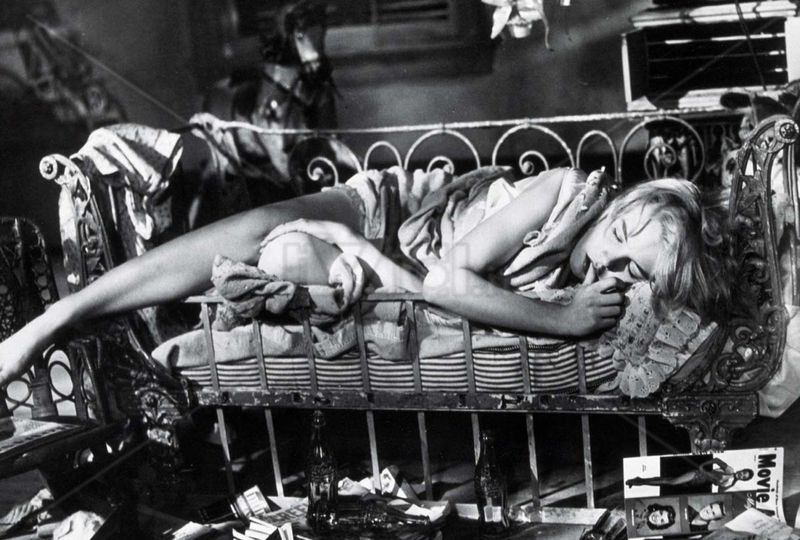
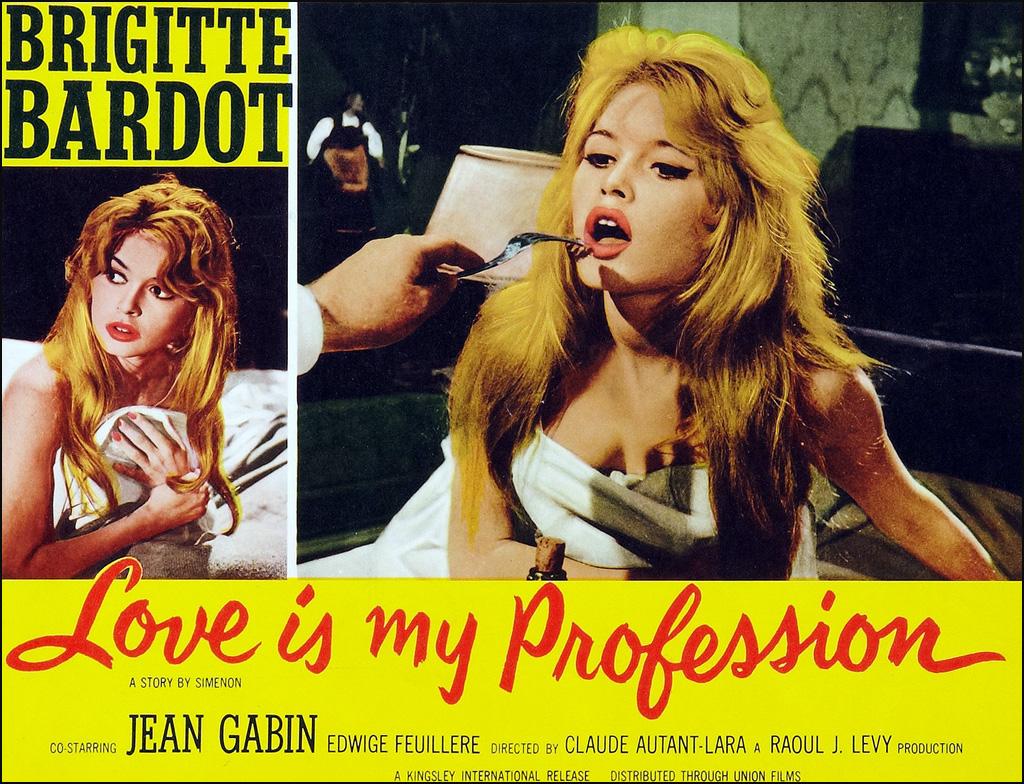
We got the Catholic Review at home, and my mother told me it was the first she ever saw me rebel, when I was really young, when we had to stand up in church and take the Legion of Decency Pledge, which they did once a year. And I refused to do it. I would cut out the ads for [the condemned movies] and I would memorize them. Other kids memorize multiplication tables; I would remember And God Created… Woman [1956], Baby Doll. I would remember them in alphabetical order. Of course, I would never have heard of these movies if not for the nuns. Naked in the Night [1958], Looove Is My Profession [1958], that was my favorite, to hear the nuns say that one.

Love is my profession

My secret little life was that I pretended I had a dirty movie theatre; that’s how I played as a child. All the movies that you go to hell for seeing. And I would redesign the ad campaigns… this was creative play to me. I always think later in life, all I really wanted as a child was the wrath of the Pope himself. (Laughs).

KM: Your movies tweak genres and conventions and even labels. What do you think of certain labels? Like camp? Or melodrama?

JW: Well, melodrama, I like. Camp, I’ve said a million times: “No one says that word anymore do they?” Even kitsch. That’s like old queens talking about Rita Hayworth. And there’s nothing the matter with old queens talking about Rita Hayworth, I’d probably like to hear that. I haven’t heard that in a while. But I don’t even say trash anymore. The punk movement never died… a lot of the punk world was gay. It was a great look for gay disguise. And it was a great look for really unattractive people. And goth.

6a00d83451cb7469e201bb08608559970d-800wi

So I always loved that style, because if you were not a traditional beauty, or even if, by society’s standards, you were ugly or had a body type that wasn’t thought of as sexy, you could work it in the punk world and come across with a great look and be a star. So, I always felt comfortable in that world.

6a00d83451cb7469e201b7c7bc5328970b-800wi

KM: It makes me think of how you view your characters and shoot them – like Edith Massey, an, unusual, interesting looking woman and, so, photographs wonderfully. Who were the photographers who inspired you?

JW: Oh, Diane Arbus. The hugest influence on me, way before Pecker. If you look at that one shot, the woman who looks like Divine in Female Trouble, she’s holding a child and the other child is drooling, we looked at that picture. That was a direct quote, basically. Diane Arbus was a huge, huge, huge influence.

6a00d83451cb7469e201bb08606616970d-800wi

When I would sneak away and go to New York, I would sit in Washington Square, that’s where the beatniks went, that’s where the oddball gay people went and the drag queens, and that’s where Arbus took all those pictures. As a kid, I thought, “Wow. This is dangerous here. This is beyond Life magazine.” But I was corrupted by Life magazine too, because they brought Jackson Pollock, homosexuality, beatniks, all things into my house that I was so relieved to know about.

KM: Tennessee Williams, who we brought up before, was also an influence…

6a00d83451cb7469e201bb0860726a970d-800wi

JW: Oh, he saved me. Because when I first read him, I realized there was bohemia. Nobody had ever told me what that was and that’s what I always wanted, and still want. That was the world I was trying to find.

KM: And Williams didn’t define himself as one thing. One thing that might become problematic is when things are labeled too easily…

JW: I agree. I’m against separatism. That’s what I said in my commencement speech. Separatism is defeat.

Divine-and-John-WatersKM: The term political correctness is over-used, to the point where it starts to lose meaning, especially among liberals; it’s either a pejorative or not a pejorative. You’ve seen people rebelling on all sides of the spectrum, and when the term didn’t exist…

JW: I am politically correct. I am completely politically correct.

KM: Yes. But there’s got to be something beyond, perhaps? Like in your recent commencement speech you said, “Being gay is not enough anymore.”

JW: It’s not. In rich kid schools? Being straight… they’re the ones who should be marching. As a gay man in the arts, do I ever feel prejudice? No. But, if I was gay maybe in a poor neighborhood in a poor kids’ school? Yes, then it can be a problem. It’s a class issue now. What’s happening now, with rich kids, they pretend they’re gay when they’re not. But then you have to do it. So, I don’t care. I mean, “Eatin' pussy for politics.” You still have to do it.

6a00d83451cb7469e201b8d14623d8970c-800wi

KM: You’ve always used music brilliantly, and introducing older music, with great taste and some shocking surprises. Like, in A Dirty Shame, you had Slim Harpo’s ‘Baby Scratch My Back’, but then Johnny Burnett’s ‘Eager Beaver Baby’ and Doug Clark and the Hot Nuts’ ‘Baby Let me Bang your Box’ and more… And in Mondo Trasho [1969] you’ve got that whole collage of music. You use music, not just as a soundtrack, but you overlap and songs run into each other to create this unique effect. And this before a lot of filmmakers were doing that. You had The Chordettes, the Del-Vikings, Little Richard, Link Wray…

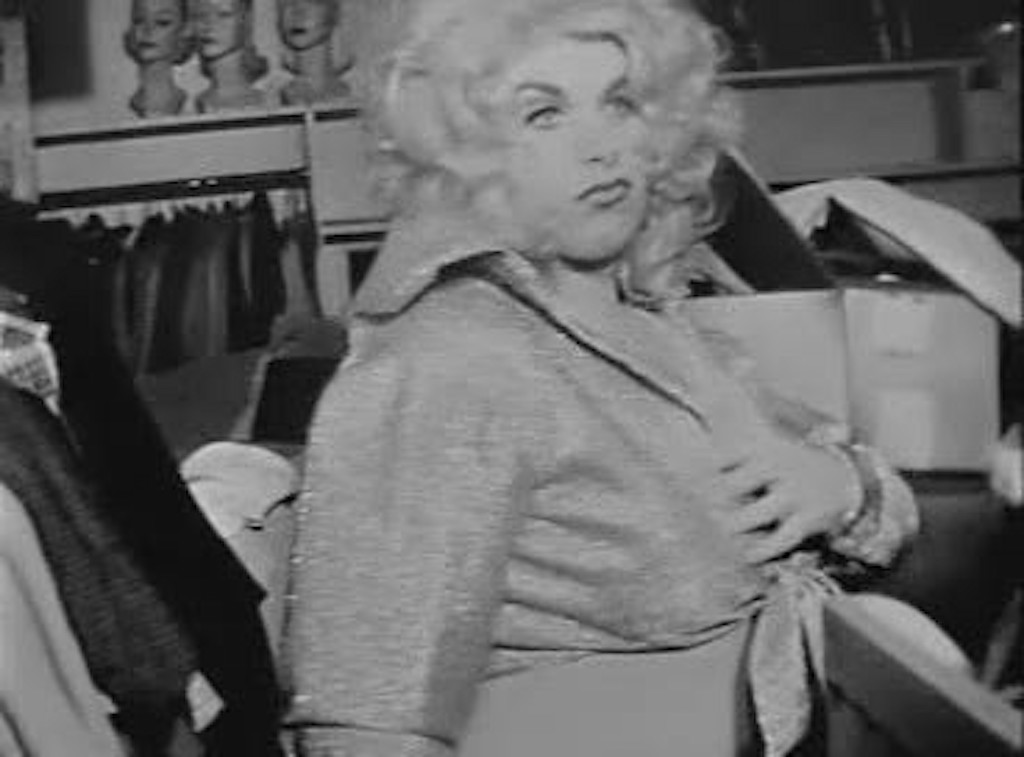
JW: And that’s why Mondo Trasho will never be released. It just makes the movie more and more likely never to come out hundreds from years from now. I didn’t know then, that you were supposed to buy music rights. But it was a silent movie. You know how silent movies had music to tell the story? That’s what I was going on for. I think the first person to really do it was Kenneth Anger with Scorpio Rising [1964], he was the first one to use pop music in that brilliant way. And, [with Mondo Trasho] it’s all because of the novelty hit ‘Flying Saucer’. That was the first song that took lyrics, sampled them and told a story. A flying saucer has landed. And we cut to John Cameron Swayze… (singing) “Come on baby, let’s go downtown!” Meanwhile, the space ship is over here… It told a story by sampling lyrics from songs. That is where that came from.

Mondo-Trasho-Divine-dreamlanders-12810763-368-272

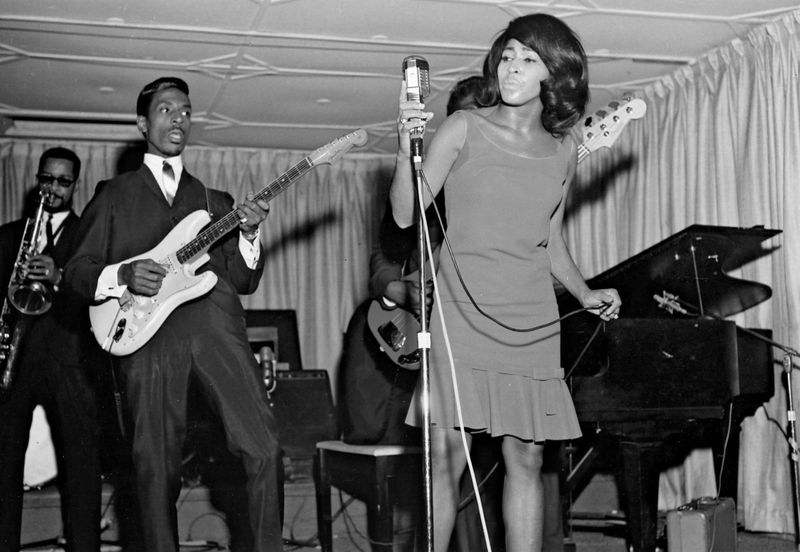
KM: I love the scene where Divine is shoplifting to Ike and Tina’s ‘Finger Poppin’’.

JW: Oh, well, Ike and Tina. We were listening to them when we were shoplifting. Divine and I used to go a place and see them in high school.

KM: Oh my god. That must have been fantastic.

JW: Oh my god, yes! The Ike and Tina Turner Revue. I don’t care what anyone says, she was better when she was with him. I mean, I don’t blame her for leaving him, good for her, but… We would see them at Unity Hall, it was a kind of working class, blue-collar Union Hall. And they would come in a broken-down green school bus with ‘Ike and Tina Turner Revue’ painted on the side, like, hand-painted. And she looked like she did on the cover of ‘Dynamite’: she had on a ratty wig, a mink coat, a moustache, springalators, she did have a moustache. She was un-believe-ably great. And when they would sing, they would almost do rap songs, ‘Letter to Ikey’ and that. And the Ikettes behind them were so great. It was a huge influence on both Divine and I, Tina Turner. And I still love her…. God knows, they could sing.

6a00d83451cb7469e201bb0860668d970d-800wi

They were unbelievable together. I saw them a couple times. And they’d sing ‘Don’t Play Me Cheap’. Oh my god… she was an influence. More than anybody. I had an album A Date With John Waters and I have that song, ‘All I Can Do Is Cry’, that long one where Ike’s getting married to somebody else. I wish I could have done that video with her. They didn’t have videos then but imagine that video with her. “I took a seat in the BACK of the church!” Ohhhh

KM: When thinking of Female Trouble [in which Divine’s character is disfigured in an acid attack and then taken to a local beauty salon where the owners find her new look inspired], I think of today, when so many people change their faces through extreme measures, and tabloid culture, how we follow celebrity crime…

JW: Nobody’s shot up liquid eyeliner yet!

KM: It’s on its way! But, this idea in Female Trouble that crime and beauty are the same seems so relevant to me, especially now…

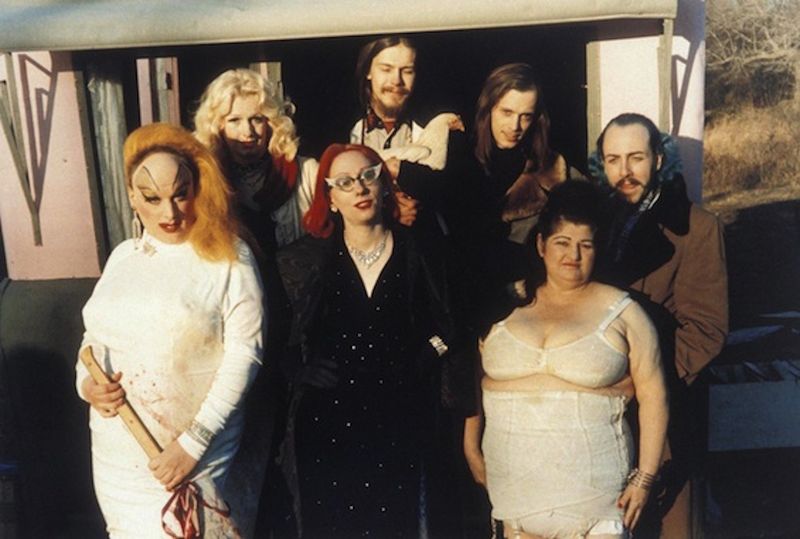
Female_TroubleJW: That was all Genet. That was what I read in high school, he was a big influence on me. And I always say, “Everybody looks better under arrest.” I still visit people in prison, I taught in prison. In my book Role Models [2010] I wrote a pretty serious thing about parole regarding one of the Manson women [Leslie Van Houten], who looks back in horror about it. So, I’ve always been interested in extreme behaviour. I would follow the Boston Bomber case mostly because I wanted to know what happened to the ex-wife of the one that died? She then remarried, supposedly, and has a child! I always say, “God. She has a boyfriend? Where did she find a new boyfriend? Where did she date?”

KM: In terms of your Dreamlanders actors, was everyone game all of the time? You had some actors do some pretty extreme stuff…

6a00d83451cb7469e201b7c7bc53cf970b-800wi
JW
: Yes! Everyone was game. Recently I presented the [William Friedkin] film Killer Joe… that scene with the chicken. And Mink [Stole] said afterwards, “They were just like us. They went for it! If you’re gonna do it, go for it!” And she was right. It was never anyone saying, “Should we do this?” It was just like group madness. We all were on the same page; all doing it as a group effort and it was almost like a political act in a weird way. It was exciting. We were young and everyone was bonded together. We were… what’s that psychosocial term when you’re crazy all together?

KM: Amour fou?

JW: Yes. That’s what we were. And proud to be so.

Read the entire interview at Sight & Sound, in which he discusses more about Female Trouble, Divine's dislike of hot wigs, Tab Hunter's bravery, Johnny Depp, Patty Hearst, Hairspray, Serial Mom (and more movies), how he learned filmmaking from teamsters, the movie industry today, his love of Freddie Francis's Trog, Derek Jarman's Blue and Joseph Losey's Boom!, among other British films he programmed along with his own BFI retrospective which is showing all of his films (every damn one), and how his next project will probably be for TV — even though he never watches TV. Well, except for The Wire, he watched that religiously. Pick up the September issue now. You can order it online here

 For now, here's some Ike & Tina, "Finger Poppin'…"

The September Issue: John Waters

IMG_4431
The September cover of Sight & Sound features my interview with national treasure John Waters. The BFI is doing a series on Waters, showing every single one of his films and Waters programmed ten of his favorite British films for the series as well. Yes, Joseph Losey’s gloriously insane Boom! will be screened, and we talk about it.

We also talk nuns, Pasolini, Diane Arbus, the magnificence of Ike & Tina, watching Bergman on acid and more… Pick up a copy and check out more here.

2015-09-01-john-waters

BBC 100 Greatest American Films: My List

6a00d83451cb7469e201b8d13b60fe970c-800wi

This was not easy. The ten greatest American films of all time? I can't pick a mere ten! So when the BBC asked me, among 61 other film writers from around the world, to contribute to their 100 Greatest American Films list, I said yes, knowing I'd be second-guessing every damn decision. I wrote my first list with both thought and gut instinct. I looked it over and over, labored over changes, what was missing, went back and forth and then, decided: these stay. I'm not thinking about this anymore. Since the BBC emphasized choosing movies that weren't simply "the best" but also favorites, movies that stick with you personally and emotionally, that made it easier. Or harder? God, I don't know. I do know that I have seen these favorite pictures multiple times, some too many times to count, some because, to quote one of the chosen, "it feels so goddamn good!" And, all, I believe, are masterpieces. 

2841816_orig

So, argue with me and I'll probably agree (No Sirk? No Fuller? No Lubitsch? No Lang? No Cukor? No Wellman (Wild Boys of the Road almost made the list)? No Borzage? No Welles? No Ray? No Mann? No Keaton? No Stroheim? No My Darling Clementine? No Sternberg-what-the-fuck-is-wrong-with-me? No Hitchcock's Marnie?) I know! I'm hitting myself too!

Here, from the BBC:

"America’s films are among its greatest exports. Since Thomas Edison’s innovations in the medium in the 1890s, the United States has consistently been a powerhouse in the development of cinema – from the massively popular entertainments of Hollywood to independent and avant-garde film. In recognition of the astounding influence of the US on what remains the most popular art-form worldwide, BBC Culture has polled 62 international film critics to determine the 100 greatest American films of all time…

6a00d83451cb7469e201b8d13b60b1970c-800wi

"What defines an American film? For the purposes of this poll, it is any movie that received funding from a US source. The directors of these films did not have to be born in the United States – in fact, 32 films on the list were directed by film-makers born elsewhere – nor did the films even have to be shot in the US. Each critic who participated submitted a list of 10 films, with their pick for the greatest film receiving 10 points and their number 10 pick receiving one point. The points were added up to produce the final list. Critics were encouraged to submit lists of the 10 films they feel, on an emotional level, are the greatest in American cinema – not necessarily the most important, just the best."
Here's my personal list:

Scarface: The Shame of a Nation — Howard Hawks (1932) 

6a00d83451cb7469e201b7c7b1fcfe970b-800wi

Bring Me the Head of Alfredo Garcia — Sam Peckinpah (1974) 


6a00d83451cb7469e201b8d13b5b8f970c-800wi
The Unknown — Tod Browning (1927)
 
 
6a00d83451cb7469e201b8d13b5c6b970c-800wi
 
Inherent Vice — Paul Thomas Anderson (2014)
 
 
6a00d83451cb7469e201b8d13b5ca1970c-800wi
 
Gold Diggers of 1933 — Mervyn LeRoy and Busby Berkeley (1933) 
 
 
6a00d83451cb7469e201b7c7b1fcd8970b-800wi
 
Two-Lane Blacktop — Monte Hellman (1971)
 
 
6a00d83451cb7469e201b8d13b5dad970c-800wi
The Night of the Hunter — Charles Laughton (1955)
 
 
6a00d83451cb7469e201b8d13b5ea5970c-800wi
 
 Dr. Strangelove — Stanley Kubrick (1964)
 
 
6a00d83451cb7469e201b8d13b5e64970c-800wi
 
California Split — Robert Altman (1974)
 
 
6a00d83451cb7469e201b7c7b1fc7d970b-800wi
 
Kiss Me Deadly  — Robert Aldrich (1955)
 

6a00d83451cb7469e201b8d13b5ef6970c-800wi
 

And here's the entire list, the top 100 from the BBC. Number 100 is a good place to start and a picture I almost chose, Billy Wilder's Ace in the Hole… 

Aceinthehole1


Here She Comes Now: My Ronnie Reading

6a00d83451cb7469e201b7c7a0e0f4970b-800wi
"Baby do you know what you did today? Baby do you know what you took away? You took the blue out of the sky, my whole life changed when you said goodbye. And I keep crying, crying… Oh, baby Oh, baby… 
I wish I never saw the sunshine. I wish I never saw the sunshine. And if I never saw the sunshine, baby. Then maybe, I wouldn't mind the rain."

6a00d83451cb7469e201bb084fe009970d-800wi

New York/ Brooklyn friends. Come join me and other wonderful writers reading from our new book, "Here She Comes Now: Women in Music Who Have Changed Our Lives"  Tonight at 7 at the Powerhouse Arena, Brooklyn. My essay is on the brilliant Ronnie Spector and the beautiful horrifying sexy sick trapped dysfunction of love songs. Do not miss! 

6a00d83451cb7469e201b7c7a0e137970b-800wi

From the editors: "Whether it was Patti Smith's angry moan, Nina Simone's guttural growl, or Dolly Parton's towering hair and sweet voice, women have been a musical force to be reckoned with, inspired by, and paid attention to. In Here She Comes Now, today's biggest and brightest writers tackle their favorite female musicians and the effect they've had on their own lives."

The book, edited by Jeff Gordinier and Marc Weingarten, will be released July 14, so order a copy now!  

Happy Birthday Marilyn Monroe: A Letter

6a00d83451cb7469e201bb083ac1a7970d-800wi
The heartbreaking and, in passages, beautifully written letter Marilyn Monroe wrote to her psychiatrist, Dr. Greenson, in 1961, from a psychiatric ward and how a famous poet read it aloud… 

While in New York this February I carried an important copy of a letter in my bag — a letter from Marilyn Monroe. I was wandering around the snowy city afraid I'd lose the document if I left it in my hotel room. It's a sad letter and I was clinging to it for my own reasons beyond research. I just kept reading it. It was a copy from a real letter (the front page shown below) that a friend found among papers years ago while working on a documentary about the making of Something's Got to Give. As I was doing research for a current project, this letter was essential. And I kept reading it.  

This was the third day in the city — the day it was my honor to visit the poet John Ashbery at his apartment in Chelsea. While we were talking, he noticed me pulling out the six-paged typed papers from a magazine I had picked up for him. He looked curious. I said, "This was written by Marilyn Monroe." He wanted to read it. I handed it to him and, to my delight, he read it aloud, beautifully, commenting on how lovely the first paragraph was. He joked, "Watch out. I might steal some of this!" He then scanned through M.M.'s raw, powerful and frequently witty words, reading passages he liked. The moment was tremendously moving, listening and watching John read ("Was it Milton who asked 'The happy ones were never born?'") and I asked if he would sign the letter. I felt the occasion needed to be marked — John Ashbery reading passages of original writing by Marilyn Monroe, the pulled out pieces their own kind of poetry. He happily laughed and signed the letter. Wandering through time and titans,  this was quite something, something I'll never forget. 

6a00d83451cb7469e201b7c8589bbb970b-800wi

Here's the letter:

March 1, 1961

Just now when I looked out the hospital window where the snow had covered everything suddenly everything is kind of a muted green. The grass, shabby evergreen bushes — though the trees give me a little hope — the desolate bars branches promising maybe there will be spring and maybe they promise hope.

Did you see “The Misfits” yet? In one sequence you can perhaps see how bare and strange a tree can be for me. I don’t know if it comes across that way for sure on the screen — I don’t like some of the selections in the takes they used. As I started to write this letter about four quiet tears had fallen. I don’t know quite why.

Last night I was awake all night again. Sometimes I wonder what the night time is for. It almost doesn’t exist for me — it all seems like one long, long horrible day. Anyway, I thought I’d try to be constructive about it and started to read the letters of Sigmund Freud. When I first opened the book I saw the picture of Freud inside opposite title page and I burst into tears — he looked depressed (which must have been taken near the end of his life) that he died a disappointed man — but Dr. Kris she had much physical pain which I had known from the Jones book — but I know this to be so but still I trust my instincts because I see a sad disappointment in his gentle face.

The book reveals (though I am not sure anyone’s love-letters should be published) that he wasn’t a stiff! I mean his gentle, sad humor and even a striving was eternal in him. I haven’t gotten very far yet because at the same time I’m reading Sean O’Casey’s first autobiography — (did I ever tell you how once he wrote a poem to me?) This book disturbs me very much in a way one should be disturbed for those things —  after all there was no empathy at Payne-Whitney — it had a very bad effect — they asked me after putting me in a “cell” (I mean cement blocks and all) for very disturbed depressed patient (except I felt I was in some kind of prison for a crime I haven’t committed. The inhumanity there I found archaic. They asked me why I wasn’t happy there (everything was under lock and key; things like electric lights, dresser draws, bathrooms, closets, bars concealed on the windows – the doors have windows so patients can be visible all the time, also, the violence and marking still remain on the walls from former patients). I answered: “Well, I’d have to be nuts if I like it here” then there screaming women in their cells — I mean they screamed out when life was unbearable I guess – at times like this I felt an unavailable psychiatrist should have talked to them. Perhaps to alleviate even temporarily their misery and pain. I think they (the doctors) might learn something even — but all are only interested in something from the books they studied — I was surprised because they already knew that! Maybe from some live suffering human being maybe they could discover more — I had the feeling they looked more for discipline and they they let their patients go after the patients have “given up.” They asked me to mingle with the patients, to go out to occupational therapy. I said: “and do what?” They said: “You could sew or play checkers, even cards and maybe knit.” I tried to explain the day I did that they would have a nut on their hands. These things were furthest from my mind. They asked me why I felt I was “different” (from the other patients I guess) so I decided if they were really that stupid I must give them a very simple answer so I said: “I just am.”

6a00d83451cb7469e201b8d120167f970c-800wi

The first day I did “mingle” with a patient. She asked me why I looked so sad and suggested I could call a friend and perhaps not be so lonely. I told her what they had told me that there wasn’t a phone on that floor. Speaking of floors, they are all locked — no one could go in and no one could go out. She looked shocked and shaken and said “I’ll take you to the phone” — while I waited in line for my turn for the use of the phone I observed a guard (since he had on a grey knit uniform) as I approached the phone he straight-armed the phone and said very sternly: “You can’t use the phone.”

By the way, they pride themselves in having a home-like atmosphere. I asked them (the doctors) how they figured that. They answered: “Well, on the sixth floor we have wall-to-wall carpeting and modern modern furniture” to which I replied: “Well, that any good interior decorator could provide — providing there are the funds for it” but since they are dealing with human beings why couldn’t they perceive even an interior of a human being.”

The girl that told me about the phone seemed such a pathetic and vague creature. She told me after the straight-arming “I didn’t know they would do that.” Then she said “I’m here because of my mental condition — I have cut my throat several times and slashed my wrists” — she said either three or four times.

       I just thought of the jingle:

              “Mingle – but not if you

               were just born single.”

Oh, well, men are climbing to the moon but they don’t seem interested in the beating human heart. Still one can change but won’t — by the way, that was the original theme of THE MISFITS — no one even caught that part of it. Partly because, I guess, the changes in the script and some of the distortions in the direction and . . . . .

LATER WRITTEN

I know I will never be happy but I know I can be gay! Remember I told you Kazan said I was the gayest girl he ever knew and believe he has known many. But he loved me for one year and once rocked me to sleep one night when I was in the great anguish. He also suggested that I go into analysis and later wanted me to work with his teacher, Lee Strasberg.

Was it Milton who wrote: “The happy ones were never born?” I know at least two psychiatrists who are looking for a more positive approach.

Mmcollector-20090621115344-Barris_Beach_Sweater_4ac-original_large

THIS MORNING, MARCH 2

I didn’t sleep again last night. I forgot to tell you something yesterday. When they put me into the first room on the sixth floor I was not told it was a psychiatric floor. Dr. Kris said she was coming the next day. The nurse came in (after the doctor, a psychiatrist) had given me a physical examination including examining the breast for lumps. I took exception to this but not violently only explaining that the medical doctor who had put me there, a stupid man named Dr. Lipkin. But when the nurse came in I noticed there was no way of buzzing or reaching for a light to call the nurse. I asked why this was and some other things and she said this is a psychiatric floor. After she went to the phone, I was waiting at that elevator door which looks like all other doors with a door-knob except it doesn’t have any numbers (you see they left them out). After the girl spoke with me and told me about what she had done to herself I went back into my room knowing they had lied to me about the telephone and I sat on the bed trying to figure if I was given this situation in an acting improvisation what would I do. So I figured, it’s a squeaky wheel that gets the grease. I admit it was a loud squeak but I got the idea from a movie I made once did called “Don’t Bother to Knock.” I picked up a light-weight chair and slammed it, and it was hard to do because I had never broken anything in my life — against the glass intentionally. It took a lot of banging to get even a small piece of glass – so I went over with the glass concealed in my hand and sat quietly on the bed waiting for them to come in. They did, and I said to them “If you are going to treat me like a nut I’ll act like a nut.” I admit the next thing is corny but I really did it in the movie except it was a razor blade.

I indicated if they didn’t let me out I would harm myself — the furthest thing from my mind at the moment since you know Dr. Greenson I’m an actress and would never intentionally mark or mar myself, I’m just that vain. Remember when I tried to do away with myself I did it very carefully with ten seconal and ten nembutal and swallowed them with relief (that’s how I felt at the time.) I didn’t cooperate with them in any way because I couldn’t believe in what they were doing. They asked me to go quietly and I refused to move staying on the bed so they picked me up by all fours, two hefty men and two hefty women and carried me up to the seventh floor in the elevator. I must say at least they had the decency to carry me face own. You know at least it wasn’t face up. I just wept quietly all the way there and then was put in the cell I told you about and that ox of a woman one of those hefty ones said: “Take a bath.” The man who runs that place, a high-school principal type, although Dr. Kris refers to him as an “administrator” he was actually permitted to talk to me, questioning me somewhat like an analyst. He told me I was a very, very sick girl and had been a very, very sick girl for many years. He looks down on his patients because I’ll tell you why in a moment. He asked me how I could possibly work when I was depressed. He wondering if that interfered with my work. He was being very firm and definite in the way he said it. He actually stated it more than he questioned me so I replied: “Didn’t he think that perhaps Greta Garbo and Charlie Chaplin perhaps and perhaps Ingrid Bergman they had been depressed when they worked sometimes but I said it’s like saying a ball player like DiMaggio if he could hit a ball when he was depressed. Pretty silly.

6a00d83451cb7469e201b8d120167f970c-800wi

By the way, I have some good news, sort of, since I guess I helped, he claims I did. Joe said I saved his life by sending him to a psycho-therapist; Dr. Kris says he is a very brilliant man, the doctor. Joe said he pulled himself up by his own bootstraps after the divorce but he told me also that if he had been me he would have divorced him too. Christmas night he sent a forest full of poinsettias. I asked who they were from since it was such a surprise, (my friend Pat Newcomb was there) — they had just arrived then. She said: “I don’t know the card just says ‘best, Joe.’” Then I replied: “Well, there’s just one Joe.” Because it was Christmas night I called him up and asked him why he had sent me the flowers. He said first of all because I thought you would call me to thank me and then he said, besides who in the hell else do you have in the world. He said I know I was married to you and was never bothered or saw any in-law. Anyway, he asked me to have a drink sometime with him – to which I replied then it would have to be a very, very dark place. He asked me what I was doing Christmas night. I said nothing, I’m here with a friend. Then he asked me to come over and I was glad he was coming though I must say I was bleary and depressed but somehow still glad he was coming over.

I think I had better stop because you have other things to do but thanks for listening for a while.

                                                                                                                                                         Marilyn M.

PS: Someone when I mentioned his name you used to frown with your moustache and look up at the ceiling. Guess who? He has been (secretly) a very tender friend. I know you won’t believe this but you must trust me with my instincts. It was sort of a fling on the wing. I had never done that before but now I had – but he is very unselfish in bed.  

From Yves, I have heard nothing — but I don't mind since I have such a strong, tender, wonderful memory.

I am almost weeping. . . . .

6a00d83451cb7469e201b7c7969184970b-800wi


Endings: Stanley Kubrick’s The Killing

TK2

From my piece in the May issue of Sight & Sound, out on stands now, the ending of Stanley Kubrick's the Killing. Nicely edited for space (yes, I went over word count) my editor kindly allowed me to publish my longer essay here

Image

Should we start with the final shot? Or the very near final shot? The one with the iconic line? No, let’s start with the suitcase. That cheap suitcase Sterling Hayden (fantastically named Johnny Clay) purchases at a pawnshop and stuffs with money; stuffs with his final getaway; stuffs with this new life. That damn cheap suitcase. Why? Why the used suitcase? You’ve got the dough, take yourself to Sears and splurge on some Samsonite. Oh, but you can’t begrudge him that. Because why would Sterling Hayden go to Sears? He’s too big, he’s too hurried – he’d knock over a few mannequins and chuck some cheap lingerie out of his way to get to the luggage. He’d look suspicious. It’d be a pain in the ass. But then what happens? Well, this movie is so classic and so beloved, and surprisingly, never discussed in this column, that most readers know exactly what happens as a result of that second-hand suitcase. But we won’t go there yet.

0enGOXz

So much has been written about Stanley Kubrick’s The Killing, (1956) and for good reason, it’s a masterpiece. The young director’s third film (he would discount his first, Fear and Desire) after Killer’s KissThe Killing is frequently deemed the pioneering triumph of Kubrick’s career (though it didn’t do well at the box office, it’s peerless and inspirational to other filmmakers) – his first great film. The Killing may seem like an anomaly among his work, but it’s not. A film noir, a heist picture, filled with noir veterans, it could be classified simply within those two genres, but Kubrick always tweaked genres (comedy, horror, war, period piece, science fiction, romance) upturning convention with something harder, funnier, more philosophical, beautiful and ugly. 

LjsqKa9

Dark humor simmers underneath this picture directly alongside the dread during which, like many heist movies, we root for the robbers knowing they’re not gonna make it. It’s absurd – like rooting for the frog jumping on the back of the scorpion. We foresee the demise, but never mind, we tense up along with the characters and drag down further as their ends becomes ever painful. And the ends of The Killing are damn painful, and in many ways, darkly funny.

The killinG hayden

With narration by Art Gilmore that’s so dead serious it’s actually a bit perverse, a voice of god, “Dragnet” style attempt to organize what will become insanity, The Killing showcases the then 27-year-old filmmaker’s absolute precision with story, dialogue (thanks to Jim Thompson), non-linear plotting and confidence with actors, flaunting some of the greatest mugs since André De Toth’s Crime Wave and Orson Welles’ The Lady From Shanghai. Hayden is so Hayden you feel like you’re watching, not just an icon, but some kind of loser Jesus Christ. As if Kubrick’s idol Weegee were God and Hayden were his son — J.C. as a deep-voiced, lumbering ex-con with too-short a tie and a pouty lower lip.

Ssquotethekilling1

Along the way there’s corrupt cop Ted DeCorsia; granite faced Jay C. Flippen; Vince Edwards as we always liked him, sleazy, no Ben Casey in sight; sweetie pie Colleen Gray who’s so ridiculously insecure she actually believes she’s not pretty; Marie Windsor who amps up the double crossing femme fatale into a Shakespeare figure of crooked rot. Elijah Cook, Jr. in his wide-eyed humiliation and powerlessness against wife Windsor (and the world she represents) that it’s almost masochistic just to watch his masochism. You feel a sigh of relief viewing the couple’s counterpoint, Joe Sawyer and his darling bedridden wife (Dorothy Adams), but that’s just another awful scenario too. The world is awful, let’s face it.

Killing17

Timothy Carey, a man no film (no world?) can contain, brilliantly so, faces it, and in fact, revels in the awfulness, smirking and smiling while petting his puppy – he knows everything’s shit. Fine. And we’re with his psycho intensity, we even like him in some sick way and Kubrick knows it. So the director makes us flinch. When Carey casually drops a racist remark to the agreeable African-American parking attendant (James Edwards), it’s one of the most startlingly nasty moments in the picture. How do you like your psychopath now?

Gorgeous-George-and-another-man-wrestling-in-Chicago1

Kubrick takes this Los Angeles racetrack heist and gives the picture both immediacy and a formality, something that likely came from his young days as a photojournalist at LOOK magazine. The lighting, from dark to harshly lit, from organic to lifeless to documentary-looking interiors, the lamps and pools of blackness appear like some of his most powerful snaps (one can’t help think of wrestler and chess player Kola Kwariani harkening back to Kubrick’s photographs of wrestler Gorgeous George in action). It’s no wonder that, reportedly, cinematographer Lucien Ballard was annoyed with the young upstart. But this is Kubrick and even young Kubrick will prove to be a perfectionist – obviously – that photographic detail and rigor stayed with Kubrick his entire career. The Killing is so exceptionally gorgeous and gritty, you see him priming for Dr. Strangelove  – pushing faces and moments and outlandishness into the frame that at times, you feel it could burst wide open. The Killing is old school noir and absolutely modern all at once.

The killing lenny bruce suitcase hayden

Which leads us back to that goddamn suitcase. “Ten minutes later he bought the largest suitcase he could find,” intones Gilmore. Exit Johnny Clay with that rickety suitcase and shoving it into his car, right next to a poster featuring an icon of the old school melding with the modern, an innovator himself – Lenny Bruce on a Burlesque bill. Hightailing it to the airport to meet up with his girl, Hayden’s almost there.

The killing

But… flight 808, the watchful cops, that woman and her wittle poodle who hasn’t seen daddy in such a wong, wong time. Checking in the luggage. Oh God, checking in the luggage and trusting it to baggage handlers and the driver and that obnoxious yapping poodle as nightmarish as the parrot squawking next to Elijah Cook, Jr.’s dead, bloodied face. When the cheap suitcase falls off the luggage truck on the tarmac, Hayden watches, money swirling like some sick green smoke. It’s almost beautiful. Like Werner Herzog’s films of the oil fires in Kuwait, Lessons in Darkness.

The killing money

Hayden and Grey are still on the go, lamely attempting a taxi outside the airport while the police inch through the double glass doors. So what’s Hayden’s famed response to this spectacular ruin? It’s the resigned, quiet and tough, “Eh, what’s the difference?” That last line is so many things at once – deeply sad, it’s an embracing of nihilism and, yet, weirdly Zen. You’ll never escape Kubrick’s fateful frames, no matter how much Hayden’s big-boned body shoves through doors. Hayden’s trapped but his acceptance is so cool, so calm, so perfect, he almost busts through Kubrick’s maddening maze via pure acknowledgement. If doom could be motivating, Hayden is downright inspirational. Maybe he is Jesus Christ.

Killing-end-title

Pick up the May issue of Sight & Sound, out on stands since last week, today.

2015-05-shadow
 

Wicked Woman in February Sight & Sound

WickedWoman_Michaels-and-Helton

Before I forget… please pick up the February edition of Sight & Sound on stands now where you can read my essay on Russell Rouse's "Wicked Woman." Here, my piece, from their "Lost and Found" column: "Overlooked films currently unavailable on UK DVD or Blu-Ray." The movie is not on DVD in the US either… 

There's something especially mesmerizing about watching Beverly Michaels slump her tired, six-foot tall body through a tiny, dingy room. And not just any room, her depressing end-of-the-line boarding house run by a woman who calls the joint a "respectable place" (which means it most certainly is not). This is the walk of a woman who has spent her entire day pounding the pavement, clad entirely in white, making sure that white stays clean, which isn't easy, making sure her tight clothing doesn’t reveal too much (but maybe just enough), making sure she won’t wobble on those heels and trip up her icy cool. Her beauty is her success in life (of course there is more to her — she's an interesting woman to say the least). But this will get her somewhere — anywhere — doesn't have to be too far. Even a job would be nice. As Ingrid Bergman remarked about being born beautiful "Aren't I lucky?" Well, yes, but when, to the world's unfair eyes, you have little else to go on, your luck can run out.

6a00d83451cb7469e201b8d0d7634d970c-400wiAs Billie, in Russell Rouse's Wicked Woman, Michaels is so perfectly cast it's unimaginable to think of any other actress in the part. Men gape as she slinks along the street. She's an extraordinary creation. But when she walks into that room — that sexy, hypnotic gait turns into the angry walk of a woman so sick and tired of life's day-to-day indignities, that you feel like you're spying on her. Tossing her handbag on the bed in disgust, chucking off her shoes, tying on her robe, skulking to her fridge to crack open a beer, she's almost as foot-heavy as Bette Davis in Whatever Happened to Baby Jane? opening doors with her backside, sliding across the floor in dirty slippers while bitterly delivering Joan Crawford her lunch. She's not quite Baby Jane Bette, of course, not yet — she's too young and lovely — but there is some kind of version of that woman possibly in her future (minus the past childhood glory) but there's the anger, at least. Not the delusion, but the anger of eventually winding up where she didn't hope to be. And that anger is likely going to build the more towns she travels to. And though, for now, she can finally relax in her small sanctuary after a day of slinking, she's never settled — she's mad at the world. She’s mad at men, particularly her neighboring creep (Percy Helton). And great actress that Michaels is — you can see it all in her body. She doesn't even need to say it: "What kind of goddamn life is this?"

Under the direction of Russell Rouse, notable for writing challenging, some, seminal pictures with Clarence Greene (who co-wrote Wicked Woman with Rouse) including D.O.A and The Well, and directing, among other pictures, the intriguing, experimental, dialogue empty The Thief and the excellent New York Confidential, the rarely seen Wicked Woman plays more like kitchen sink pulp than pure noir (an appellation that's constantly debatable). Rouse, an inventive filmmaker dove right into this world with an almost documentary eye and kept it squarely on his characters, trusting his actors to move around their surroundings with the familiarity of all losers: beds are where you throw your clothes, bar counters are where you lay your drunken head when you can't hold it up any longer and cars are for domestic squabbles. (Rouse married Michaels after making this picture.)

6a00d83451cb7469e201bb081d30f0970d-400wi
The story is both simple and absurdly complex: when Billie finally does land a job at a bar she naturally falls in love with the handsome bartender (Richard Egan). But there's a problem — he's married. And, worse, he's married to the woman who owns he bar — the blowzy, sympathetic drunk who hired her (Evelyn Scott). As frequent in film noir, love walks in at the worst possible moment. How do they escape? What are they going to do? In a rare case (and a gender switch on The Postman Always Rings Twice, which this movie resembles), it's the wife who needs to be removed. Will they rub her out? No. That's too typical noir. How about devising something crooked where it looks like the dipsomaniac wife signed some papers, lost her business and the two lovers run off to Acapulco? There's a plan! It's devious. But it's not as wicked as the title suggests. And neither is desperate Billie. But, alas, fate steps in via the angry emasculated reject: Percy Helton. When Percy Helton louses up your entire life, your world is truly two-bit. And then, like love, a colossal misunderstanding walks in at the worst possible moment and the deal is off. Love is over. Life starts all over again. Drifting.

6a00d83451cb7469e201b8d0d763b7970c-400wi

Billie as drifter is, again, in gender reversal, more like Tom Neal in Detour or John Garfield in Postman – tangling with the wrong jerk or dropping into the wrong town. As a woman, her challenges are greater than men – she gets pawed at, possibly raped, or, to reference another female drifter, Detour’s Vera, in danger of being accidentally killed by a telephone cord in a hotel room. You never know what can happen on the open road.

I dislike using the word “realistic” but there’s no other way to describe what distinguishes Wicked Woman from other tawdry B movies punched up with melodrama. Nothing wrong with melodrama, I love it, but there’s no such thing here. The cast feels so lived-in and real, they’re almost freakish. Michaels isn’t just leggy, she’s six feet tall, Helton is such a worm he’s a near hunchback and Egan is so obnoxiously handsome he’s managed to grow a dimple between his eyes. With that, you find yourself liking and feeling for everyone in this picture — even pervy Percy. They're just not very smart. It's all just so sad.

Unlike other femme fatales, Billie's not as intelligent as Martha Ivers (though she's not at all dumb), she’s not as evil as Kathie Moffat, she's not as murderously duplicitous as Phyllis Dietrichson, she's just in love and trying, desperately, to survive in a man's world (which takes bravery and smarts). The aforementioned women were too, but they possessed more conniving brass and crazy. Poor Billie actually allows love to louse up the works. In that way, the ending is more dispiriting than any sexy Gun Crazy blast of amour fou. Egan's stuck with an enraged wife and Billie's back on the bus. Another town, another man, another lonely life. But when will it all run out?She's back to keeping those white clothes clean and trying not to wobble on those heels.

Read the essay in Sight & Sound. And also, of course, Jonathan Romney's cover story on the best movie of the year, "Inherent Vice."

10830574_10152944809915792_8951922705941258212_o


The Forbidden Room

Ariane Labed by Kim Morgan

The Forbidden Room.

Here's on-set pictures I took just about three years ago in Paris while working on what would become Guy Maddin's The Forbidden Room (co-directed by Evan Johnson) soon to be seen at Sundance and Berlin. These pictures are from the project, then called Spiritismes, shot at the Centre Pompidou, which I wrote about here and here. For me, it all started in July 2010, appearing in what was called Hauntings (during that time I also co-wrote with Guy and starred opposite a white wolf in our short/installation project, Bing & Bela.) It then grew and changed (as outlined in this interview with Guy) and has shaped into a feature film. I was happy to take part as additional story writer and actress. Here's the official wesbite with more information to follow. 

  Adèle Haenel and Charlotte Rampling by Kim Morgan

This has been a long journey (for this writer and contributor, since 2010) for all involved and quite meaningful, in many, many ways, for me. 

Here's more of my photos. Click on the pictures for larger images.

Adèle Haenel by Kim Morgan

Christophe Paou by Kim Morgan

Charlotte rampling shoes photo by Kim Morgan

 Maria de Medeiros and kid by Kim Morgan

Slimane Dazi by Kim Morgan

Charlotte rampling photo by Kim Morgan

Udo Kier red by Kim Morgan

Mathieu Amalric by Kim Morgan

Udo Kier gun photo by Kim Morgan

Adèle Haenel by Km Morgan

Udo Kier directed by Guy Maddin by Kim Morgan

Jacques Nolot by Km Morgan

Charlotte Rampling and Adèle Haenel by Kim Morgan'

Udo Kier stash by Kim Morgan

Ariane Labed and Geraldine Chaplin photo by Kim Morgan

Charlottle Rampling on phone photo by Kim Morgan 

Udo Kier by Kim Morgan

Udo Kier eye photo by Kim Morgan


Udo and I in The Forbidden Room. Smaller poster created by Galen Johnson.

Forbidden room udo and kim