Tatum & Ryan: Paper Moon

6a00d83451cb7469e201bb0977888b970d-800wi

“There was a part in the script and I asked my dad to help me with it, I was still learning to read… and it said that I had to say: ‘I love you’ to him in the movie… And I looked at him and said, ‘I can’t say that! They don’t want me to say that! Why would I say that?’ I wasn’t the kind of kid who went around saying ‘I love you’ to many people, or at least to my dad. I mean, which little girl wants to say ‘I love you’ to their dad? Well, at least this kid didn’t. But anyway, they cut it. And so you’ll see that I never do say that in the movie.” – Tatum O’Neal, 2011

“Tatum has lived more than any 10 people three times her age. I want the best for Tatum, because she has lived through the worst.” – Ryan O’Neal, 1974

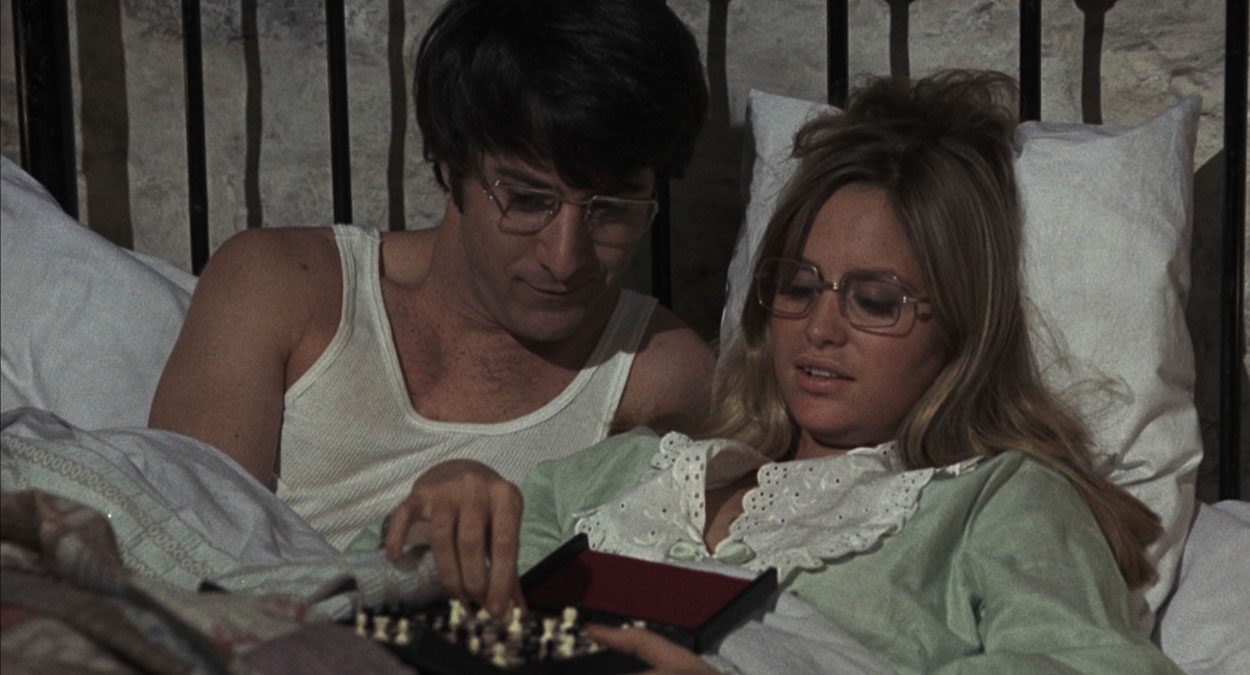
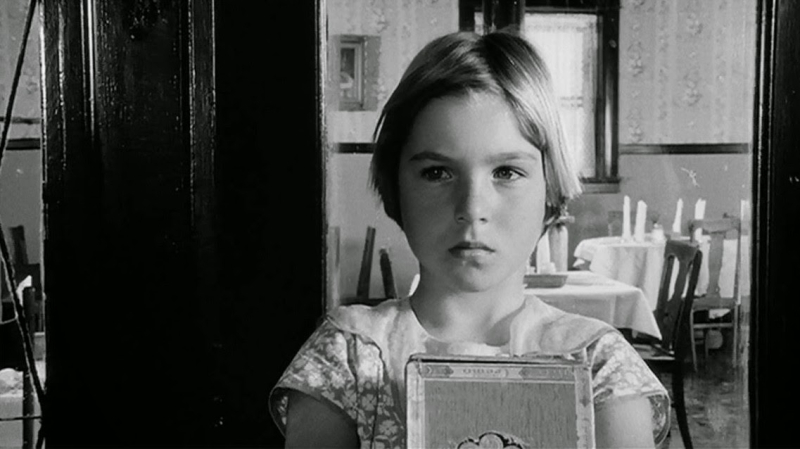
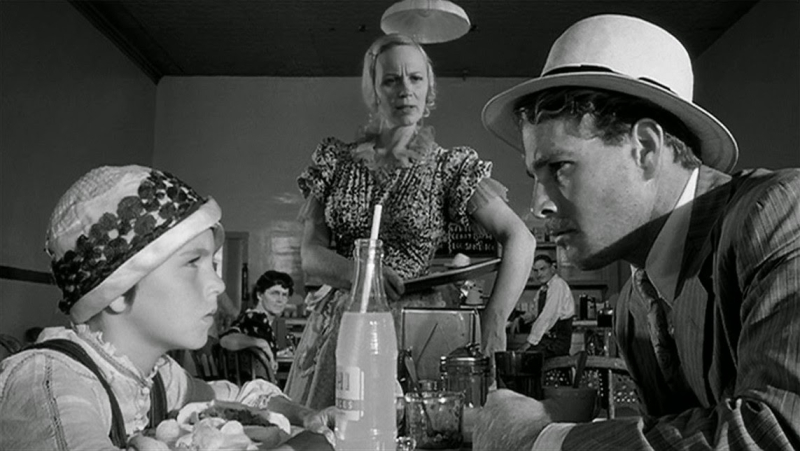
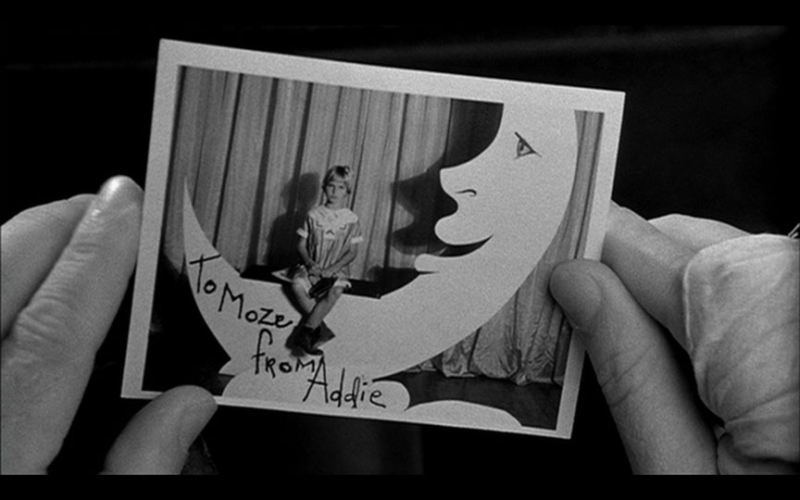
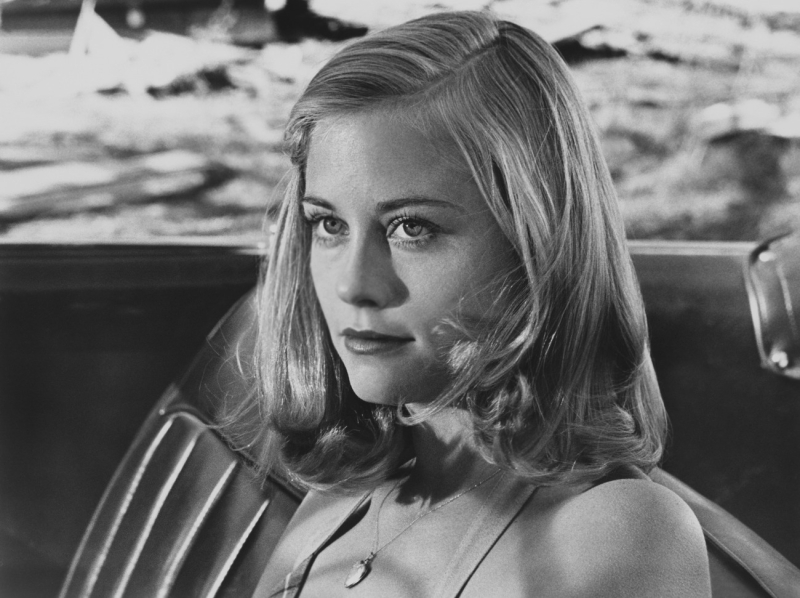
Tatum O’ Neal’s nine-year-old face in Paper Moon is the face of thousands of little girls, pissed off at their broken families and their absent dads. It’s a tough little face that’s resilient and smart, because in the movie, life has made her grow up fast (her mother just died, she’s gonna be sour), and it’s a lonely face, yearning for her dad to at least reveal himself. And yearning for him to stick around, not so she can simply hug him and blubber in his arms, but so she can yell at him. Yell at that son of a bitch! Where the hell have you been? Oh, and I want my 200 dollars!

6a00d83451cb7469e201b8d25eb40b970c-800wi

In the movie, we never do truly learn if O’Neal’s daddy, played by her real-life daddy, Ryan O’Neal, is indeed her pops, but they got the same jaw. And they both have a talent for grifting. And she’s so good at trickery that her talent mirrors Tatum’s first-time acting ability – she’s a goddamn natural. Director Peter Bogdanovich (on the advice of his brilliant production designer and ex-wife Polly Platt) was canny and perceptive enough to cast the O’Neals: already wizened tomboy Tatum and her divorced, weekend father (who didn’t see her enough weekends) who were working through their relationship in real life. As Ryan O’Neal said in a 2011 interview alongside Tatum, “I was separated from her mother. So I only knew her on the weekends… But we had good weekends together, really good weekends. I thought that maybe if Tatum and I worked on this picture, it might seal our doom, or our bond. One or the other.”

6a00d83451cb7469e201b7c8d466e4970b-800wi

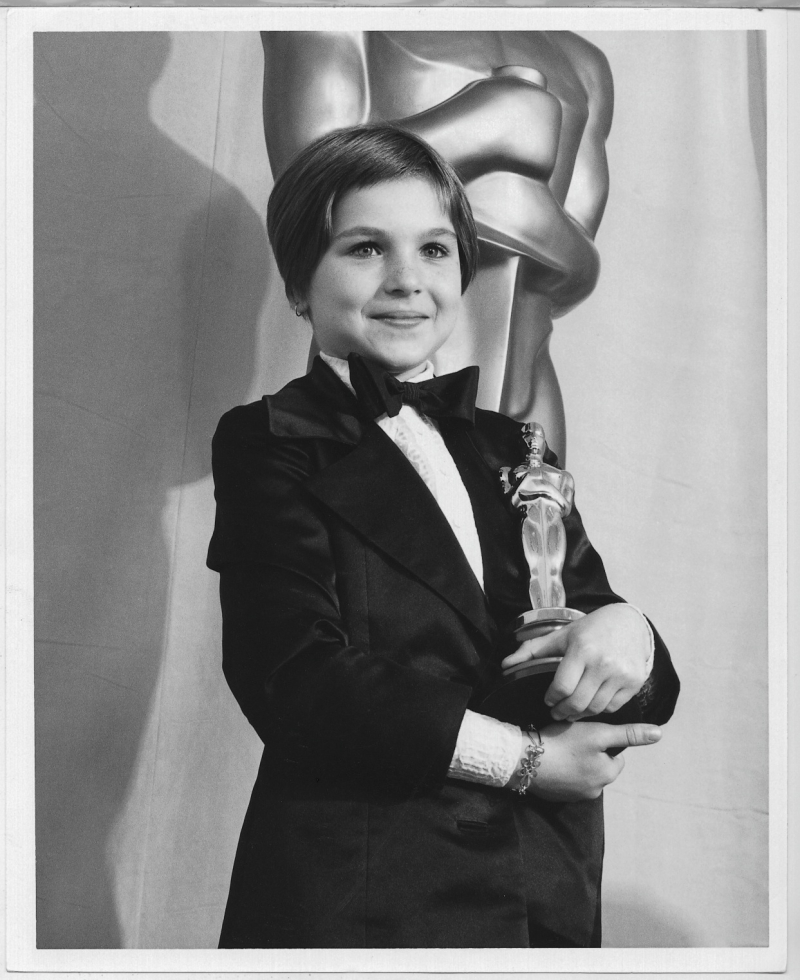
Doom? That is some tough stuff (read Tatum’s autobiography “A Paper Life” if you want to dig further into this and her entire, tumultuous life). But they are so perfect together, that Tatum, not Ryan, as great as he can be under the right director utilizing his specific talents (see my piece on Stanley Kubrick and Barry Lyndon), is the one who lifts him up to a higher level here. This is one of his greatest performances. I don’t care if she was reportedly a pain in the ass on the set. She was a child. And she breaks through the screen with such charm and charisma and the camera loves her so much that it’s like what Billy Wilder said of working with the brilliant Marilyn Monroe: “She was a pain in the ass. My Aunt Millie is a nice lady. If she were in pictures she would always be on time. She would know her lines. She would be nice. Why does everyone in Hollywood want to work with Marilyn Monroe and no one wants to work with my Aunt Millie? Because no one will go to the movies to watch my Aunt Millie.” Exactly. And viewers and critics liked watching Tatum so much that she won an Oscar for it. Striding on stage in her little man’s tuxedo with bow tie and short hair (GODDDESS), she not only deserved that gold statue but she gave a fantastically brief, no-bullshit speech that adults should learn from: “All I really want to thank is my director, Peter Bogdanovich, and my father. Thank you.”

6a00d83451cb7469e201b7c8d46732970b-800wi
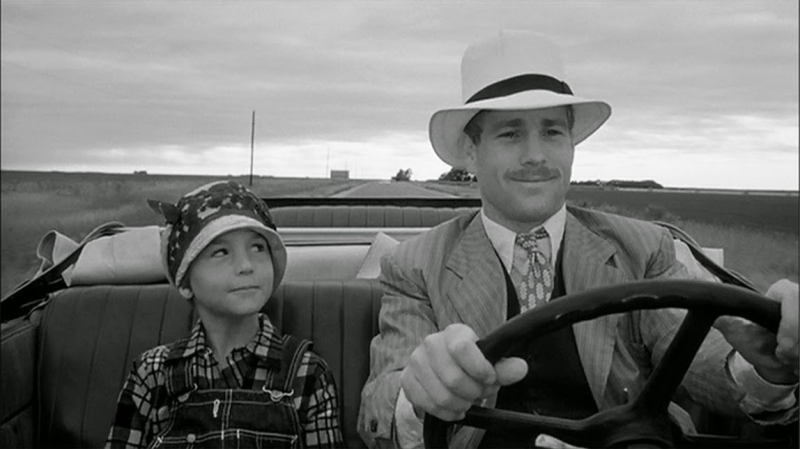
In Paper Moon (adapted by screenwriter Alvin Sargent from Joe David Brown’s novel “Addie Pray”), Tatum, playing depression-era scruff Addie Loggins, spies her maybe dad Ryan’s Moses Pray when he shows up at her mother’s funeral. He chucks some flowers on the casket and intends to high tail it out, but suspecting adults believe him to be orphaned Addie’s father.  He insists he is not, but agrees to deliver Addie to her aunt’s house in Missouri. You can’t slip a trick past this kid, however, so when she hears Moses collecting the two hundred dollars from the man who accidentally killed Addie’s mom, she starts demanding her money. And she demands it loudly while he stupidly thinks a Coney Island is going to shut her up. Nope.  They end up becoming a team – the con of charging Bibles to recent widows for their dearly departed husband’s gifts, never ordered for them. Preying on the idea-lie that someone would love you enough to buy a bible with your name imprinted inside is a nicely cynical reminder of this little girl’s own thinking about life. No, everything may not turn out OK with her Aunt (who seems like a real nice person in their brief moment they share at the end of the picture), this liar is surely my dad but we’ll never say so, this “Miss Trixie Delight” he picks up (a hilarious and, in a lovely, honest moment with Addie, touching, Madeline Kahn) is an operator. Well, she wants this guy to be her dad. Who says “family” has to be normal? Or even honest? It never is anyway.

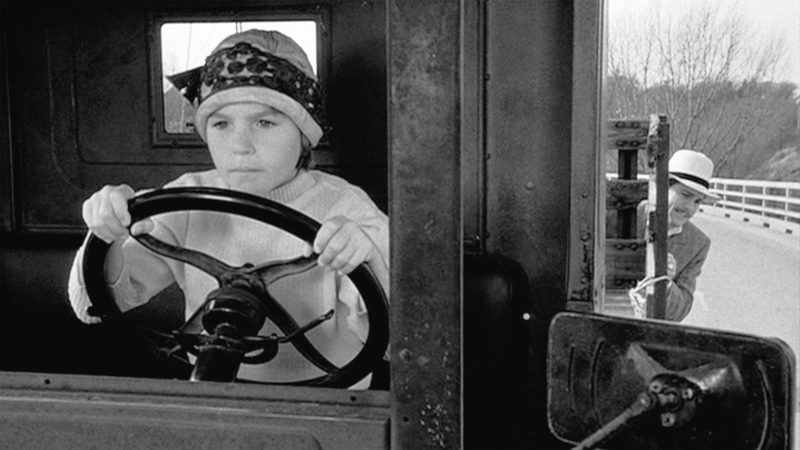
All of these thoughts flicker across Tatum’s face, even when she’s not speaking her mind (which is a lot), but in beautiful little moments – like when she’s all Leo Gorcey-tough guy, sullenly smoking in bed, or posing pretend ladylike in the mirror, or smiling to herself in the car after getting the better of Moses. There’s many sequences in the movie so expertly shot by Bogdanovich that not only show Addie’s sharp little mind at work (her scheming with Trixie’s put-upon maid, Imogene, played by a terrific P.J. Johnson is hilarious, impressive and genuinely moving for the fate of Imogene too), but the stand-out is an uninterrupted argument between Tatum and Ryan in the car. The amount of dialogue, the comic timing, the way the disagreements flow from “But they’re poorly!” to “Frank D. Roosevelt” to complicated directions on a map, is so expertly handled by Tatum and Ryan, that you’re left a little breathless by it all. These two were made for each other. And that makes these deceptively light moments extra poignant.

6a00d83451cb7469e201bb097788dc970d-800wi

Also adding emotional complexity is the gorgeous, effective deep focus black and white cinematography by László Kovács – it isn’t handled in some self consciously old-timey manner.  The stark landscape and Dorothea Lange-looking faces have been compared to Bogdanovich’s hero, John Ford, and specifically his work with Gregg Toland on The Grapes of Wrath. And you certainly see and feel that in this picture, but it also achieves a modern European look as well. But then, maybe it’s just a Bogdanovich  “look” and I shouldn’t label it as anything else. For as much as Bogdanovich lovingly harkened back to the past with Paper Moon andThe Last Picture Show, he wasn’t merely aping it, or reveling in nostalgia – as touching and as gentle as those pictures are, there is a harder edge to these movies. These were not the “good old days” because Bogdanovich was not only old enough to know better, but he was enough of a film historian to know that old movies never thought the days were so great either. Again, 1940’s The Grapes or Wrath is indicative of this, as well as plenty of pre-code pictures from the 1930s (and how about the 1950s and Elia Kazan and… I could go on an on). Paper Moon is a sweet road movie but it’s also very sad. And timeless –  fathers and daughters (and surrogate fathers and daughters) will have strained relationships until the end of time.

6a00d83451cb7469e201b8d25ee9b8970c-800wi

And Bogdanovich trusts his actors to know this. With the O’Neals especially, he trusts their own real-life bumping up against the written word. And they know it too. And they and Bogdanovich know that the future is a mystery. Taking the time to look at their faces and wonder what else they’re thinking, or what is down the road or around a corner adds an extra visually potent unknowability about what will happen to these two. When Addie arrives at her Aunt’s house at the end, it’s a nice house, and yet there’s something incredibly depressing about the place. In spite of what any sensible person would say, you want Addie to leave it, and to go back on the road with Moses. And you want her to get that 200 dollars. And you want Moses to be her dad. Who knows if that’s the happy ending?

From my piece on Paper Moon for the New Beverly

Adrian Lyne’s Lolita

6a00d83451cb7469e201bb09766044970d-800wi
From my piece written for the New Beverly

“Then she crept into my waiting arms, radiant, relaxed, caressing me with her tender, mysterious, impure, indifferent, twilight eyes – for all the world, like the cheapest of cheap cuties. For that is what nymphets imitate – while we moan and die.” – Vladimir Nabokov

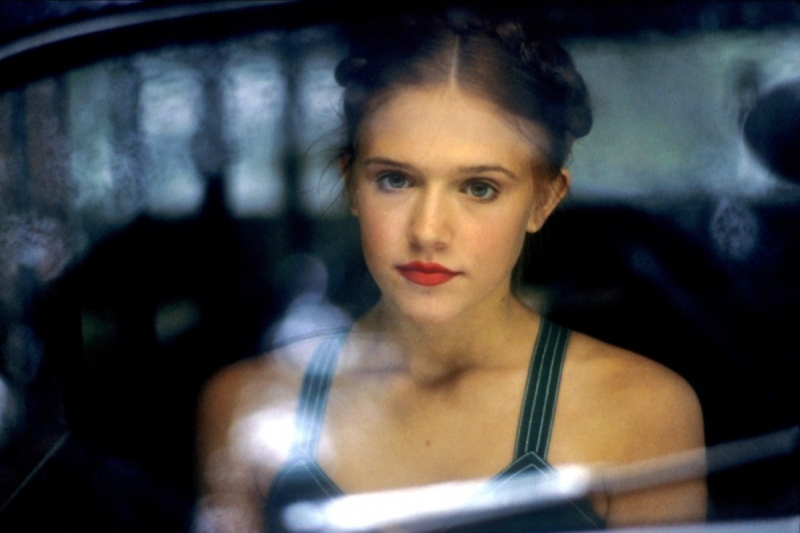
Adrian Lyne’s Lolita? At the time, the very thought made certain cinéastes and academics shudder. How could the “vulgar” white-gauzy-sex director of Fatal Attraction, Flashdance and Indecent Proposal ever think he could match the brilliance of Stanley Kubrick’s 1962 tragi-comic adaptation? And one starring a Dolores Haze (our great teenage wonder of cinema – Sue Lyon) whom Nabokov himself approved of? Furthermore, could Lyne even touch the poetic resonance, the linguistic ingenuity, the slyly sad and humorous pedophilic venerations of Humbert Humbert from Vladimir Nabokov’s magnificent novel? One of the greatest novels ever written (says this writer, and many others). How could Lyne cover Lolita without getting all 9 ½ Weeks on us? Sadomasochistic role-playing and erotic food-feeding next to an open refrigerator, copious milk guzzling, white cream sliding all over Kim Basinger’s pillowy lips? Basinger is a grown woman. She can guzzle milk and let it run down her face like metaphoric sperm. But a young teenager?  Well, a fridge does happen in Lolita: the girl alone at night, spied on by an older man as she enjoys a midnight snack next to the open ice box, eating raspberries from each hand and sucking them off of her fingertips. Lyne likes a good fridge scene.

6a00d83451cb7469e201b8d25d8405970c-800wi

That young teenager and older man are lovely, scary, heartbreaking, sardonic and powerfully perverse through the written word (a captivating and gorgeously written novel), and were handled with wit, sadness and irony in Kubrick, but with Lyne? At the time, naysayers likely shook their heads or rolled their eyes and, in the case of freaked-out censors attempting to quash its release, wagged their fingers. But both were asking, albeit for different reasons:  where does this Adrian Lyne get off?

Getting off is an appropriate/inappropriate question. Given that the film’s controversial source material – a pedophile (technically, an ephebophile) who falls in love with and beds a 14-year-old “nymphet” was such a taboo tale, surely to be made more titillating through imagery, and during a time (1997, when the picture was released), when people were arguing over the photography and, in some cases banning the work of the great Sally Mann or Jock Sturges, eyebrows were raised the moment filming was announced, no matter who the director was (though Lyne had directed the great 1980 teen film Foxes, with a casually Humbert-like character in Randy Quaid). Brooke Shields’ Pretty Baby beauty would not be tolerated or acceptable to admit as sexy then or now (check out Shields’ “The Brooke Book” from 1978 – much collectable now, probably by many creeps), and yet, teenagers and men were ogling 16-year-old Britney Spears a year later dancing in her Catholic school girl uniform to “Baby One More Time.”

6a00d83451cb7469e201b8d25d842d970c-800wi

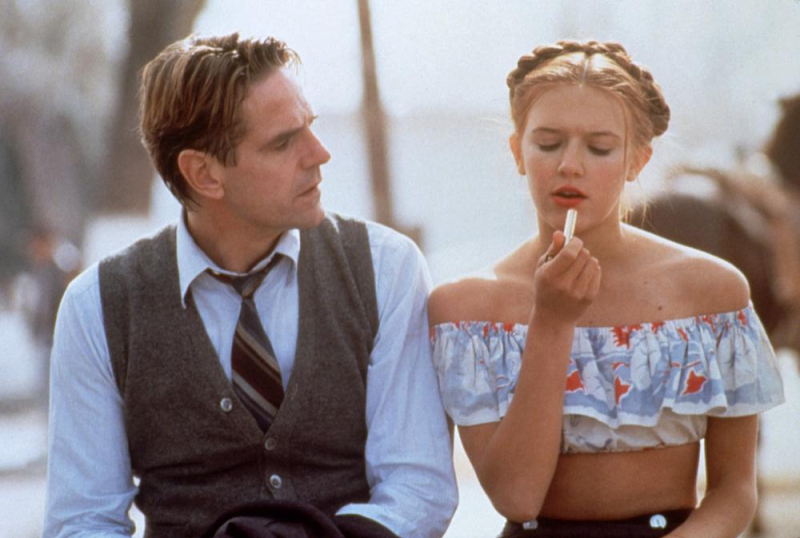
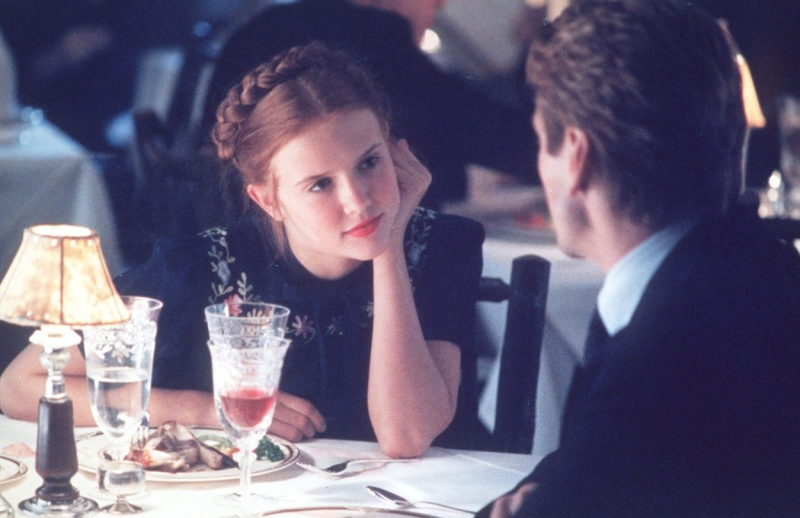
But here’s what Lyne did  – he made a visually stimulating portrait, a heartbreaking work of lyricism highlighted by two sensitive, provocative performances by Jeremy Irons and Domique Swain (aided by an exquisite, heart-aching score by Ennio Morricone). Yes, the movie lacked the more trenchant humor of both Nabokov and Kubrick (who brilliantly amped it up to metaphorical levels with Peter Sellers’ Claire Quilty as a hilarious, bedeviling double of Humbert), but Lyne’s Lolita was still indeed funny, though subtly so. And Lyne went directly to the tragedy and the romanticism, which felt even creepier, but in the way that it should. He also made Irons’ Humbert watch Lolita, and really watch her, eroticize her, yearn for her. Constantly. In Kubrick’s introduction to Lo, Shelley Winters as mama pronounces that bulls-eye double entendre with “My cherry pies” as Sue Lyon, clad in a bikini, gives James Mason’s Hum-Baby an alluring look-see, Nelson Riddle’s “Lolita Ya Ya” taunting him. She seems to know her power in the moment and what that dirty old man Mason is thinking (read my essay on Kubrick’s Lolita for more on this).

Lolita-1

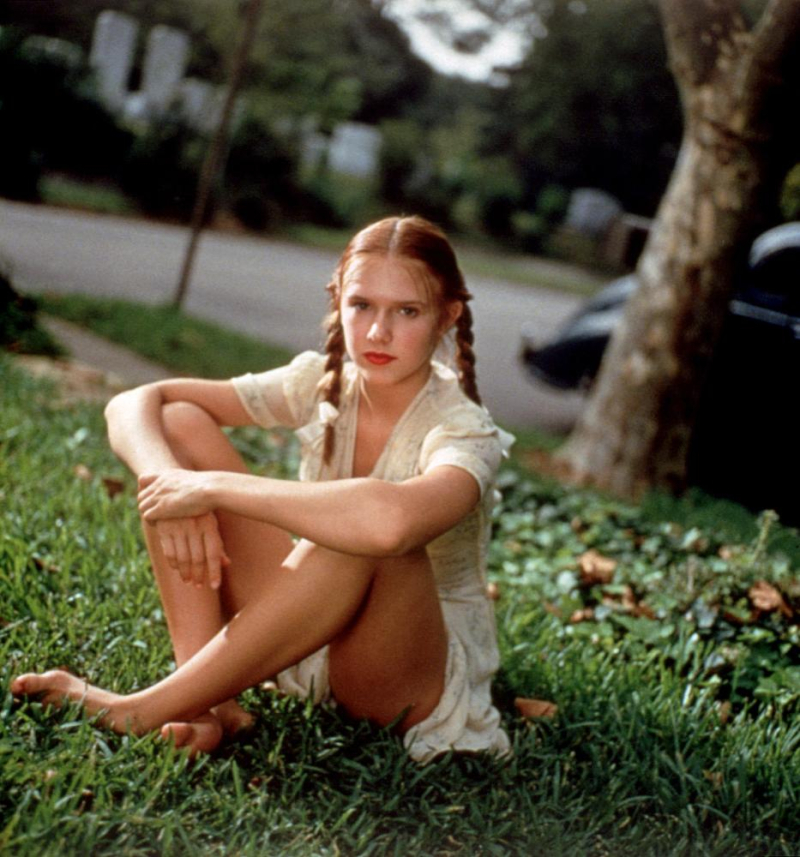
In Lyne’s introduction, Lolita lies in the backyard grass in her own world, looking at pictures of movie stars, a sprinkler spraying near her white, wet dress, which clings to her young body like a perfected David Hamilton image (considering the charges against the now dead Hamilton, this seems even more disturbing a comparison). She looks up at him and smiles, retainer in her teeth. She doesn’t appear to know what he’s thinking; she looks like a pretty adolescent placed in a haltingly erotic composition through the lens of Lyne (and cinematographer Howard Atherton). She will soon know what he’s thinking, but at that moment she’s just relaxing in the grass, and Humbert just stares. He utters the word “beautiful” to her mother’s admiration of her “lilies” (beautiful is obviously meant for another lily), and again, he stares. And stares. You wish he’d stop. But you can’t stop staring at him staring. This is from his point of view and the movie makes no bones or excuses about it. All that discussion of the male gaze, as if females don’t gaze in similar ways (we do), this is a male gaze movie by a man with a problem. And that’s part of the point.

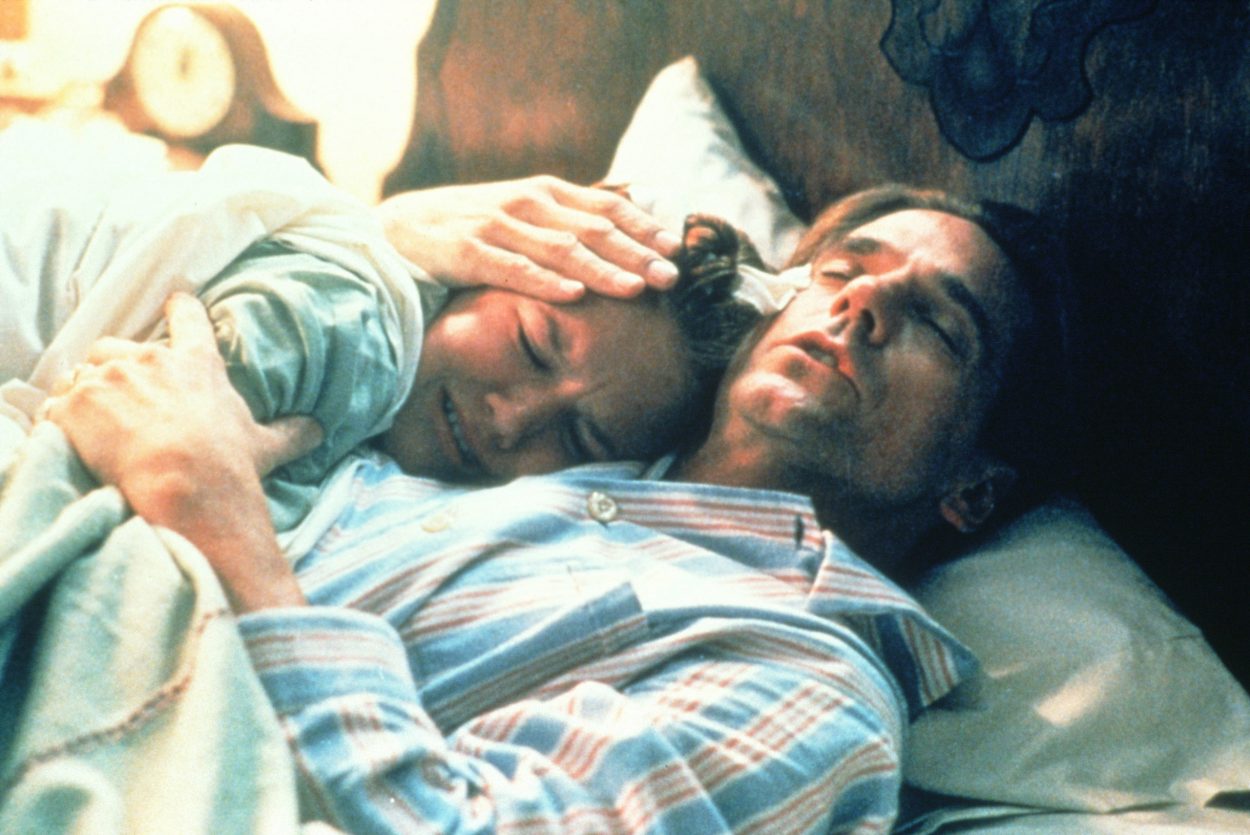
But we also get to understand and see Lolita, her humor, her rambunctious energy, her sexual curiosity, her power, her innocence and the consequences of losing her “innocence,” and we eventually see her pain. After a later sexual encounter with Humbert, she places two pillows over her head and begins to cry. She’s confused. What did she do this time, even if she did it another time? I can think of many girls who will understand this confusing moment very deeply. You feel for her and you loathe Humbert at that moment. And you root for Lolita when she either irritates Humbert or screams at him (“Murder me like you murdered my mother!”) There’s much pleasure in watching Swain’s Lolita drive Humbert to such angry annoyance (he wanted a teenager, he’s got one). In Lyne’s version, it well matches Nabokov’s novel:

“Lolita, when she chose, could be a most exasperating brat. I was not really quite prepared for her fits of disorganized boredom, intense and vehement griping, her sprawling, droopy, dopey-eyed style, and what is called goofing off – a kind of diffused clowning which she thought was tough in a boyish hoodlum way. Mentally, I found her to be a disgustingly conventional little girl. Sweet hot jazz, square dancing, gooey fudge sundaes, musicals, movie magazines and so forth – these were the obvious items in her list of beloved things. The Lord knows how many nickels I fed to the gorgeous music boxes that came with every meal we had.”

6a00d83451cb7469e201bb09766091970d-800wi
So, even as eloquent as Humbert speaks and writes, we occasionally tire of his utterances of such dramatic proportions that they play sick, ridiculous and romantic all at once. As Irons narrates: “Gentlewomen of the jury. If my happiness could’ve talked, it would have filled that hotel with a deafening roar. My only regret is that I did not immediately deposit key number 342 at the office and leave the town, the country, the planet, that very night.”

Lolita-2

He’s talking about the doom of Quilty (Frank Langella), who shows up at the hotel Humbert and Lo are staying after her mother, Charlotte (Melanie Griffith – serviceable – no Shelley Winters), dies. Unlike Peter Sellers impersonating a police officer (and various other characters), Langella’s Quilty is like an elegant devil, saying things Humbert thinks he’s hearing, but is not (or is he?). He’s maddening. And he’s sinister. If Sellers was the vulgarian double, Langella is the predatory evil double in a proper suit, the black pit of jealousy, the voices and scenes one hears and envisions in one’s head while imagining their lover embraced by a man turned demon-man. Both men Humbert would not dare consider himself to be (Sellers or Langella), but in a part of himself (indeed many men)…. he is. That soils his romanticism and riddles with the darker recesses of his conscience. He loves Lolita. This is a love story. This is not obscene!

The movie begins with the famous words: “She was ‘Lo’, plain ‘Lo’ in the morning standing four-feet-ten in one sock. She was ‘Lola’ in slacks; she was ‘Dolly’ at school. She was ‘Dolores’ on the dotted line. In my arms she was always Lolita. Light of my life, fire of my loins. My sin, my soul. Lolita.” And continues with the point of his obsession, “But there might have been no Lolita at all had I not first met Annabel. We were both fourteen. Whatever happens to a boy during the summer he’s fourteen can mark him for life.” You see, the refined, intelligent and attractive Humbert, a professor of French literature who is so consumed by his sweetheart Annabel dying when he was 13, has maintained a fixation for pubescent girls. And, so, he has remained a frustrated and romantically empty man, even if he’s had his moments. In the novel, Humbert states:

“Overtly, I had so-called normal relationships with a number of terrestrial women having pumpkins or pears for breasts… I was consumed by a hell furnace of localized lust for every passing nymphet whom as a law-abiding poltroon I never dared approach. The human females I was allowed to wield were but palliative agents. I am ready to believe that the sensations I derived from natural fornication were much the same as those known to normal big males consorting with their normal big mates in that routine rhythm which shakes the world.”

6a00d83451cb7469e201b7c8d33c86970b-800wi

But, then, that fateful day in a quiet New England town, 1947 (Lyne’s movie, closer to the novel, places it back in the 1940s), where Humbert has taken a teaching job at the local university, he, again, spies Lolita on the grass and falls instantly in love with 14-year-old Dolores Haze. While Lolita’s mother, Charlotte (Griffith) romantically pursues her boarder, Humbert preys on, and in his mind, slyly courts his Lolita. Though eye-catching, she is a typical adolescent: mouthy, cute and flirtatious. But to Humbert she is so much more – she becomes his daughter, his orphan, his lover, his traveling companion and his downfall. Lyne’s quiet, alluring and disturbing direction maintains the claustrophobic feel of Humbert’s fate with a soft chokehold that is not necessarily exploitative but rather, fearlessly, complexly erotic (I’m sure people will disagree with me) or, at times, grossly obvious. With sensitivity, style and soul, Lyne slowly strangles both protagonists to a heartbreaking, cathartic submission that, as Nabokov intended, could only lead to doom.

Judging neither character as simply saint or sinner, Lyne’s Lolita will displease both those who are quick to condemn any depiction of this union (statutory rape) and those yearning for pornography. While the film presents images that have become, in most cultures, standard turn-ons for barely legal porn, or fashion or video imagery, or for women who think merely holding a copy of “Lolita” is “sexy”: white socks on young, awkward legs and illicit sexual activity between young and old, it’s not simply getting off on those details, it’s putting them all out there, yes, but you have to think about that fetish while watching it. Particularly because Lyne shows (very carefully filmed when you study the picture’s production history) Humbert and Lo consummating what is often a role-playing fantasy. And you do think about the girl on the other end of it (I do). As a result, it is haunting, horribly sad and sometimes sickening.

Lolita-6-1250x835

Though Lyne triumphs with his picture (it’s one of his best, and this is from a writer who likes Lyne, even his supposed trash), writer Stephen Schiff’s screenplay is potently mournful, a perfect pairing with Lyne’s moody imagery. And Lolita’s stars – Irons and Swain – their understanding and intelligence, no writing or photography could have made the picture as powerful as it is without them. They carry the film. Not a stranger to deviants, Irons (and his eyes, his voice, that voice) plays Humbert as a handsome, helpless, depraved and, at times, a sympathetic character. But he’s also the quintessence of tormented compulsion. And he works wonderfully off Swain, who is an ideal Lolita. Though lovely, she resembles Nabokov’s depiction of a girl whom Humbert views a semi-vulgar adolescent with those “certain mysterious characteristics, the fey grace, the elusive, shifty, soul-shattering, insidious charm that separates the nymphet from such coevals of hers.”

Showing an inventive and well-timed humor as well as an apt understanding of her role and its emotional complexities, Swain is different but equals her predecessor in Kubrick’s picture – the hilarious, sexy-smart Sue Lyon (some critics who admire Lyne’s film think Swain betters Lyon). Swain’s Lolita is a complicated siren/victim. She’s enchanting but exceedingly normal. She uses her wiles to manipulate and control but, much like Lyon, it’s for survival rather than pure sexual teasing. Lolita is aware of her sexuality but not certain of its morality or what that even means (even as she’ll scream at Humbert for being a sick pervert – and deservedly so). One moment she is embracing the game and the next she is crying herself to sleep. Swain has Lolita in a defensive position but not a pathetic one, and not one many a woman can’t understand herself. Embracing the illicit, running from it and towards an even more deviant predicament, she is what the picture so achingly dissects: the confusion and darkness of a young girl’s sexuality which can, in the end, become heartbreak. And through Humbert’s all-gazing eyes, which get right into how men frequently look at girls as they grow into teenagers, with lust or with discomfort, sometimes averting their gaze to be decent, and girls see this. Humbert is all out there, and he acts on it. This leads to doom – a doomed love or a doomed obsession.

6a00d83451cb7469e201b8d25d8480970c-800wi

Lolita then, with its more openly sexual scenes, presents difficult questions; it probes your own creepy turn-ons and, for some, makes you recollect your own teenage past. Lyne never shying away from the kissing, the lovemaking, the legs wrapped around the back, puts viewers in a unique, uncomfortable position; making us complicit with Humbert while rooting for Lolita. Lolita has some control and no control (though, what does that control mean, exactly, and it won’t help her in the end), and Humbert both admires and resents it. As Nabokov wrote: “You have to be an artist and a madman, a creature of infinite melancholy, with a bubble of hot poison in your loins and a super-voluptuous flame in order to discern at once the little deadly demon among the wholesome children; she stands unrecognized to them and unconscious herself of her fantastic power.”

The Searchers: Debbie and Martin

6a00d83451cb7469e201bb097394eb970d-800wi
From my piece written for the New Beverly.

What will happen to Debbie? What will happen to Martin? I always ponder this when watching the ending of John Ford’s masterpiece, The Searchers. Most certainly I’ve long soaked in, reflected on and studied the famous final shot of John Wayne’s Ethan Edwards, standing outside that beautifully-framed doorway — the warmth and domesticity, darkened, on one side, the light from the frontier of Monument Valley on the other — he’ll roam lonely and damaged, never fitting in civilized society, never fitting in anywhere. The past is the past and he’ll reject it, and he will be rejected from the future (no one invites him inside). Ethan stands solitary in near purgatory, much like the dead Comanche he ruthlessly shoots in the eyes earlier in the picture, wandering “forever between the winds.” Even with his final forgiving act towards Debbie, there’s no redemption for him. There’s no saving him from himself  — he will remain dark and demented and a question mark to Ford lovers: “Do I feel for Ethan?”

6a00d83451cb7469e201b8d25ab51a970c-800wi

It’s one of the most famous shots in film history, inspiring filmmakers from Francis Ford Coppola’s fade to darkness door-shutting scene of The Godfather to Vince Gilligan’s finale of Breaking Bad. The movie is notably worshiped and studied – Ford biographers, notably Scott Eyman and Joseph McBride’s impressive tome dig into the movie and Ford, and directors Jean-Luc Godard, George Lucas, Paul Schrader, Peter Bogdanovich, Steven Spielberg and Martin Scorsese are among the famous, much-discussed, passionate devotees, so much that it’s been a point of annoyance for a few film critics who have reassessed it as overrated, offensive or, worse, boring. Xan Brooks at The Guardian questioned why it’s been so canonized with, “They [those who love the film] misinterpreted a tentative shuffle-step as a giant leap forward and hailed the film as a revisionist masterpiece as opposed to a stumbling reconnaissance.”

The-Searchers-poster

One of the most interesting and best essays comes from Jonathan Lethem, who wrote “Defending The Searchers,” which covers his decades-long love of the movie; how he wrestles with the picture at different stages of his life, what it means to him and how he views it. He wrote, “The film on the screen is lush, portentous. You’re worried for it.” Anyone who has seen and admired The Searchers multiple times, drawn into Ford’s poetry and stunning compositions, finds something to think about and drink in, often beyond what they thought of from their previous viewing. Scorsese claims to watch The Searchers at least once or twice a year and in doing so, discovers something more to reflect upon. In a 2013 column for The Hollywood Reporter Scorsese wrote:

“Like all great works of art, it’s uncomfortable. The core of the movie is deeply painful. Every time I watch it – and I’ve seen it many, many times since its first run in 1956 – it haunts and troubles me. The character of Ethan Edwards is one of the most unsettling in American cinema. In a sense, he’s of a piece with Wayne’s persona and his body of work with Ford and other directors like Howard Hawks and Henry Hathaway. It’s the greatest performance of a great American actor. (Not everyone shares this opinion. For me, Wayne has only become more impressive over time.)”

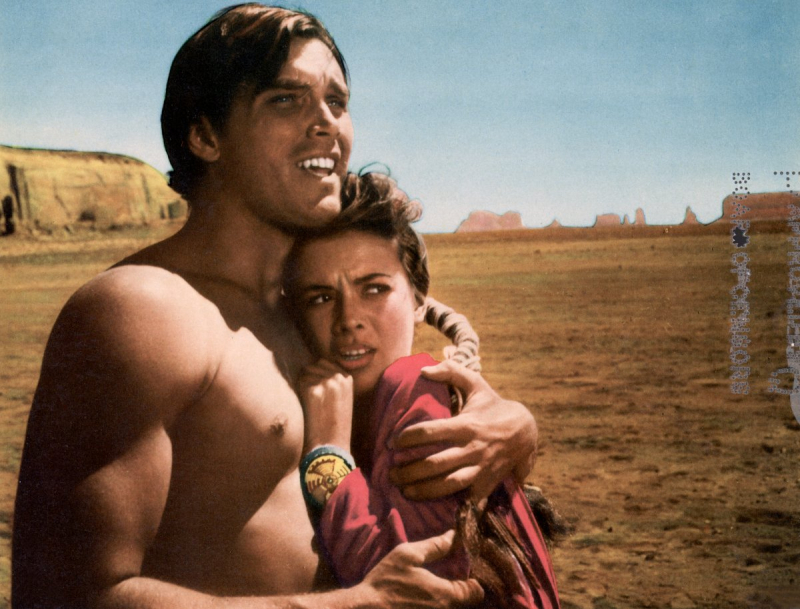
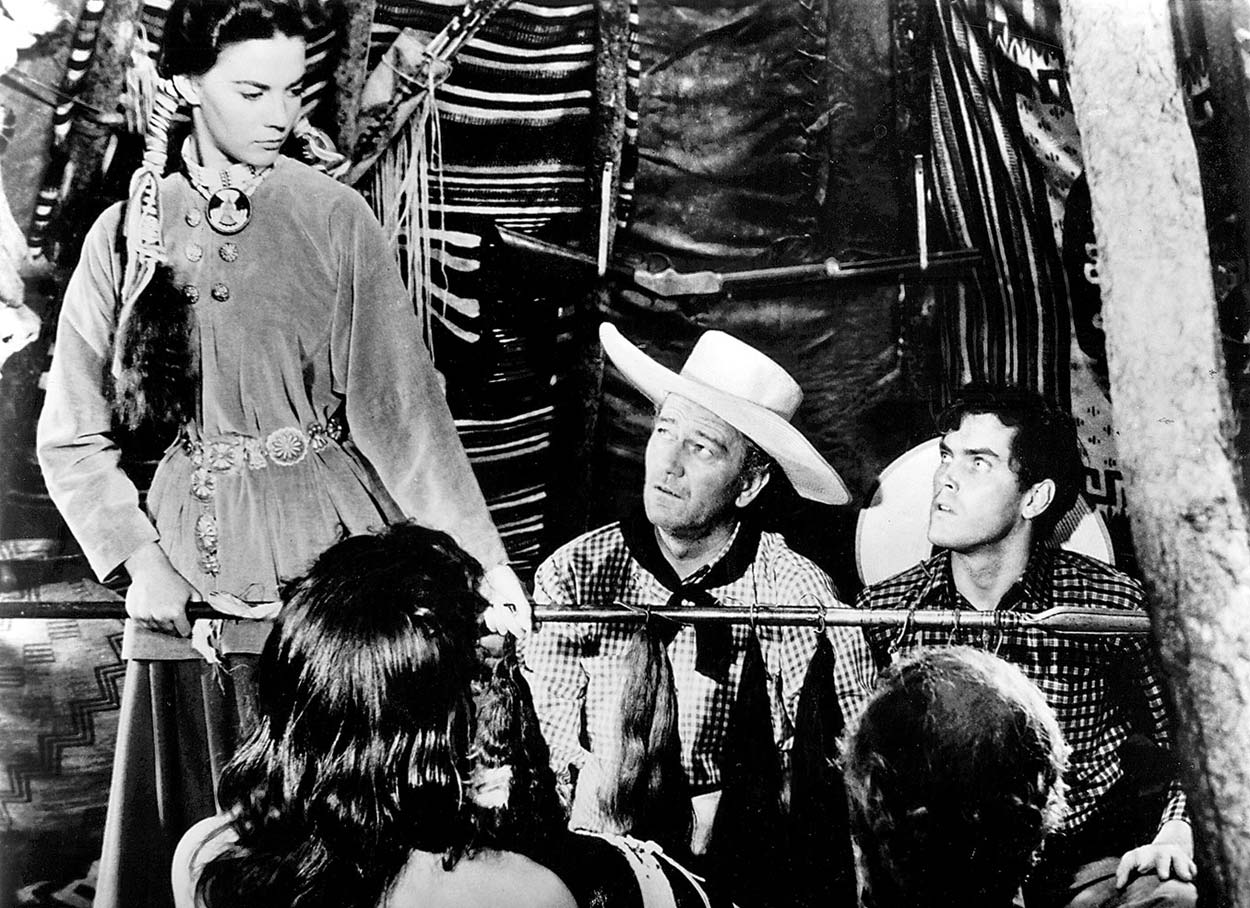
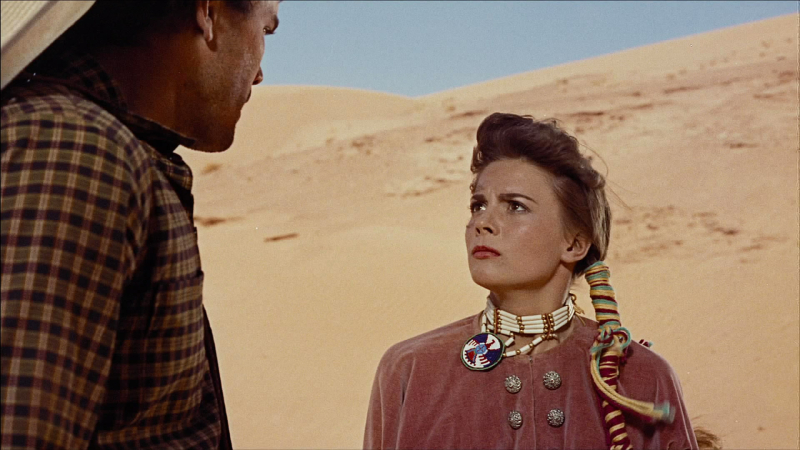
He’s right. The movie is uncomfortable, but not solely because of Ethan, it’s uncomfortable for Debbie and for Martin as well. Because walking through that famous door is teenager, now-a-woman Debbie (Natalie Wood), tentative, traumatized, the widow and “polluted” white woman of the slain Comanche, Scar (Henry Brandon), and her adopted brother, Martin Pawley (Jeffrey Hunter), the part Cherokee (one eighth) who spent all those years protecting Debbie from murderous Uncle Ethan while enduring his uncle’s humiliations and racist ridicule (“Blanket head”) and Vera Miles’s hyperactive horniness (which isn’t so terrible, though she’s not exactly a likable character).

6a00d83451cb7469e201bb0973955d970d-800wi

Indian-hating Ethan does grow fond of Martin (if you can call it that) along their five-year Homeric quest to find Martin’s sister, Debbie (kidnapped by the Comanche as a young girl after her family is slaughtered and raped), but Martin’s put through so much along the way, made the butt of jokes, in danger, I find myself admiring his resolve more and more every time I watch it. He pushes on in spite of his indignities. He’s not even allowed to drink in a bar. Martin works as the moral center of the picture but defies cliché. Like the intriguingly dark and amoral anti-hero Ethan, a guy who will shoot a man in the back, Martin, who would probably be more typically macho in another picture, is frequently aggravated to exasperation, lovable and comic, almost light, but, no… wait minute, he’s not light. Martin’s been through some heartbreaking hell: himself an orphan, rescued by Ethan years before after an Indian massacre, orphaned again after his adoptive family is killed. “It just happened to be me,” Ethan harshly hollers to the young man he refuses to consider any kind of kin. “You don’t need to make any more of it.”

The-Searchers-2

Resourceful and tougher than he seems, Martin’s passionate, even tortured, a defender of Debbie but also following along, sometimes in awe, to find anything forgiving in Ethan. Just the casting of Jeffrey Hunter (who would later play the most beautiful Jesus Christ in the history of Jesus Christs in Nicolas Ray’s King of Kings) seems a way to complicate Wayne – to irk him beyond his character’s Cherokee blood. Martin’s youth, goodness, beauty, and real liberalism towards his sister (he does not think her virtue destroyed by Indians) is decent and lovely. It’s also somewhat radical and reflects how complex and murky John Ford was on these issues as well.

But Ethan is such a force, he exudes so much presence and fearsome qualities, that he overtakes nearly everything, distracting or perhaps even diluting Martin’s heroism. This is to the picture’s credit since Martin builds and grows on you and grows on Ethan as well, so much that he becomes some kind of sneak attack of intractable sensitivity. Viewing Martin, at first, as a well-meaning greenhorn, hotheaded but insecure and sweet, a sort of apprentice to Ethan, it’s extra moving when he bravely shields his sister from Ethan’s gun. That scene hits you hard; it’s mightily emotional and potent to the point that it takes you aback (don’t forget – this is her brother – and Martin is not some novice). At that moment, Martin is braver than anyone in the movie. If anything happened to him, you’d be brokenhearted. I would be.

6a00d83451cb7469e201bb097395d1970d-800wi

The scenes between Debbie and Martin are so touching and, to me, as powerful as Ethan famously holding Debbie aloft at the end of the picture (“Let’s go home Debbie”) – not killing her. Wood and Hunter connect on the screen so lovingly and so strongly, that I’ll transfer what Franzen said about the movie and place it on brother and sister: “you’re worried” for them. What will happen to them? Again, this takes me back to the end, when I think of the two beaten-up beauties walking through that door. The family welcomes them with open arms, but will society? And will the family remain so open? Debbie will now have to learn to live outside of the Native American world she’s become accustomed to and brother Martin will doubtlessly marry Laurie (Vera Miles), who expresses her own racism when she complains of their search for Laurie: “Fetch what home? The leavings a Comanche buck sold time and again to the highest bidder, with savage brats of her own? Do you know what Ethan will do if he has a chance? He’ll put a bullet in her brain… I tell you, Martha would want him to!” Martin answers, “Only if I’m dead.” Laurie throws in Martin’s dead mother on top of her racist repudiation? Jesus. You wonder how Laurie and family reallyare going to treat Debbie once she’s “home.”

Searchers-6

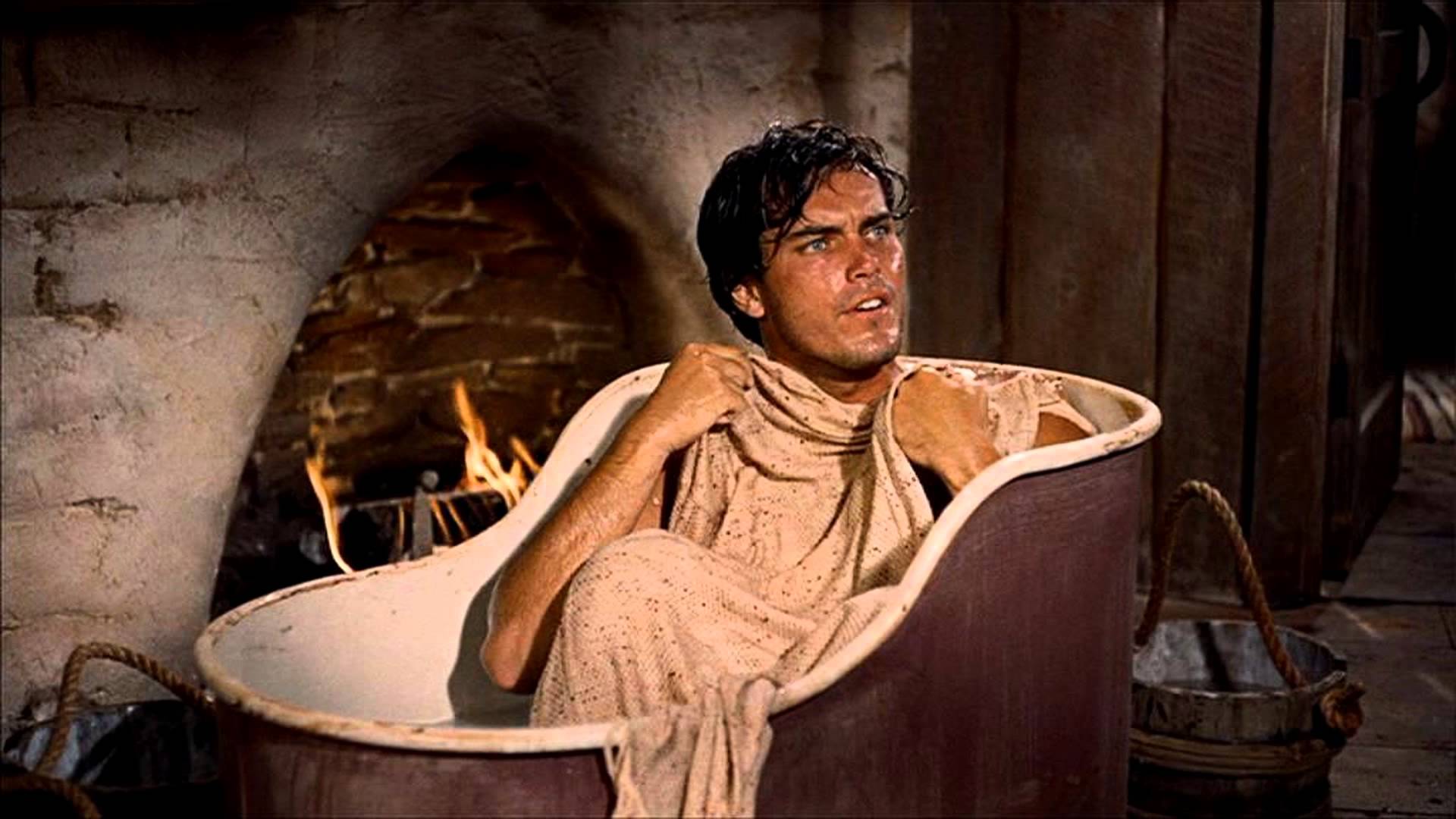
Laurie also seems more sexually obsessed with Martin than in love — she can’t keep her hands off of him and delights seeing him naked while he’s demanding privacy during a bath. She’s sexually aggressive to the point of obnoxiousness. There’s nothing wrong with that and who can blame her? She’s lonely out there and it is Jeffrey Hunter after all (who shows up looking like that?) but it’s intriguing just how much Martin is objectified in the movie, much more than the women. Often shirtless, soaking in the bath shielding his body like a bashful woman, rolling around in blankets, or just ridiculously gorgeous, those blue eyes burning a hole through Ford’s lyrical, magnificent frames, Hunter’s beauty occasionally makes you gasp. It’s also a source of Ford’s humor, particularly his romantic mishaps (and the entire wedding sequence that goes haywire), but also underscores his difference from others. When first introduced, Martin, all sprightly and smiling, is riding Indian style –  bareback.

6a00d83451cb7469e201b8d25ab5c2970c-800wi

In some ways, he’s more akin to Scar (also handsome, also with alarming blue eyes) whom his sister is sleeping with (never said, but clearly the idea of sex with a savage further fuels Ethan’s murderous fury). According to Hunter in a 1956 Picturegoer Magazine profile, the young actor met Ford in his office with slicked-back dark hair, wearing a “very open-necked sports shirt to display a healthy tan.” John Ford sat at his desk smoking a large cigar, stared at Hunter “for what seemed an endless time, then grunted: ‘Take your shirt off!’ Hunter replied as if Ethan was barking at him and recalled, “I did just that.”

514Pv-ODWXL._SX329_BO1,204,203,200_

Reading Glenn Frankel’s impressive, exhaustive book, “The Searchers: The Making of an American Legend,” gives insight into the true story and the layered mythologies around the kidnapping that inspired the novel and the movie. And it makes you contemplate Debbie’s fate after going “home.” Cynthia Ann Parker was the real-life Laurie, a Texan girl who in 1836 was abducted by Comanches after they attacked and killed her family. She spent 24 years with the Comanches, married a war chief, presumably loved him and birthed three children. In 1860 the U.S. Cavalry and Texas Rangers came to her village and she once again witnessed the slaughter of her family. When they realized she was white, she and her baby were returned to what was left of her family. But she wasn’t happy. She was now a Comanche, did not want to be a Christian or to live in the white world outside of the Indians. She remained depressed and lonely for the rest of her days –  an absolutely shattered figure.

From that tragic story, a mythology was woven and expanded as her Uncle (who obsessively searched but never found her in real life) was transformed into the protagonist of Alan Le May’s 1954 novel “The Searchers” from which Ford’s 1956 picture was adapted. From real life to mythology to novel to screen, the tale twists and turns and bends but one thing remains: the captivity narrative being a popular western tale, bringing up all kinds of issues and ideas about conquest and even eroticism. As Frankel stated in an interview:

“It raises all of these difficult issues. At the same time, besides all of this sort of personal and psychological tension involved, it becomes a sort of justification for the conquest of the West … So there are these psychological, psychosexual tensions involved, there are these imperial notions, and Americans continue to tell these stories. Around the time Cynthia Ann was kidnapped in 1836, if you look at the bestseller list, three of the four top bestsellers in America are James Fennimore Cooper novels, all of which have captivity themes. And then the fourth one was a non-fiction book about Mary Jamison, a woman who was captured by Seneca Indians in upstate New York in the 18th century.”

He also said, “There’s something about being in this land and having the ‘other’ savages, these people, these natural, scary, people, come and take you, take your family, take your wife, take your children, and haul them off into the wilderness. It’s scary, and it’s a little bit sexy.”

6a00d83451cb7469e201b7c8d0734f970b-800wi

That sexiness horrifies Ethan. Or he’s drawn to it. After all, we’ve no idea what he’s been doing during his long wanderings, learning the Comanche language, understanding their customs. It would not be a surprise if he’d slept with many Native Americans or harbored an attraction (though the poor Squaw who accidentally becomes Martin’s bride is treated with cruel humor, only to be met with selfless tragedy – Martin and Ethan appear visibly guilty). Ethan is the dark heart, perhaps in his case, additionally the broken-hearted (and not just romantically – for his past forbidden love of Martha), blood-soaked history of violence and domination of the West, but a man who must contend with the likes of Debbie and Martin and… soften. He cannot kill Debbie, even if he believes her sullied by savages, and sticks with Martin, whom he spends many a night with, five damn years in fact (as Roger Ebert asked in his review, “What did they talk about?”). Ethan will never really approve of brother and sister, he’ll never be friends with Martin (even after bequeathing everything to him, which Martin rejects on behalf of Debbie), but Ethan has a little in common with those he’s saved, more than he knows. Or perhaps he does know this. These three are not at all “normal” and they are all going to endure some strangeness in their futures. Martin has been through enough to prove his resiliency but… Debbie?

So, that doorway shot, Ethan standing outside representing the past, Debbie and Martin, walking in, the arresting exotics of the future, what will become of them? Thinking of Frankel’s thoughts and deep study of Cynthia Ann Parker, Martin and especially Debbie, whom the picture suggests will be loved by their families (even if Laurie previously proclaimed Debbie better off dead), will likely become objects of sexual fascination and hatred of miscegenation from the outside world. With Debbie “home” protective, liberal Martin has a lot more defense ahead of him. He’ll surely repeat the same he said of Ethan concerning other angry men and in different circumstances: “He’s a man that can go crazy wild, and I intend to be there to stop him in case he does.”

Just Waitin’: The Last Picture Show

6a00d83451cb7469e201b7c8ce5723970b-800wi
My piece published at The New Beverly.
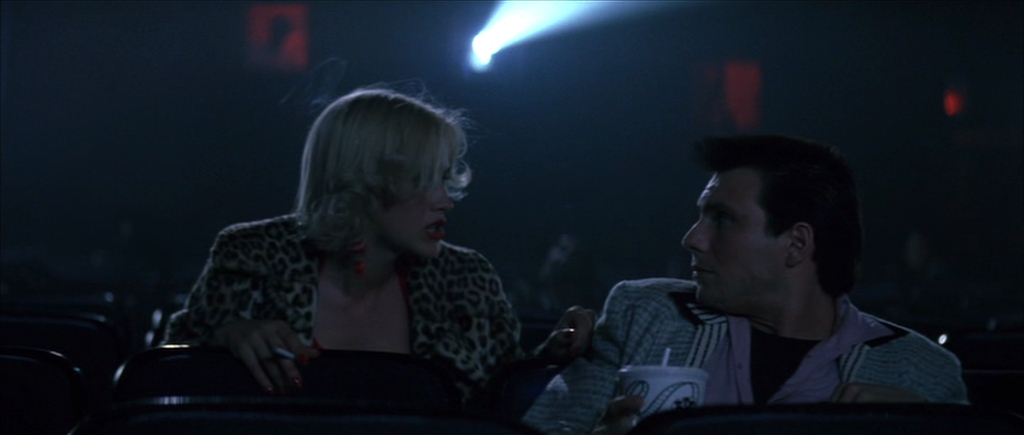
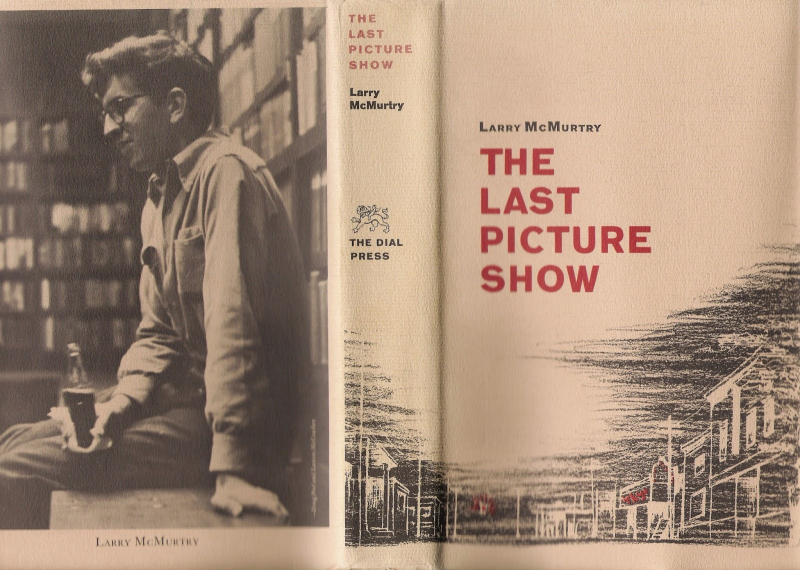
“Of all the people in Thalia, Billy missed the picture show most. He couldn’t understand that it was permanently closed. Every night he kept thinking it would open again. For seven years he had gone to the show every single night, always sitting in the balcony, always sweeping out once the show was over; he just couldn’t stop expecting it. Every night he took his broom and went over to the picture show, hoping it would be open. When it wasn’t, he sat on the curb in front of the courthouse, watching the theater, hoping it would open a little later; then, after a while, in puzzlement, he would sweep listlessly off down the highway toward Wichita Falls. Sonny watched him as closely as he could, but it still worried him. He was afraid Billy might get through a fence or over a cattle-guard and sweep right off into the mesquite. He might sweep away down the creeks and gullies and never be found.” — Larry McMurtry’s novel, “The Last Picture Show” 

6a00d83451cb7469e201b8d258a1a7970c-800wi

Some of us walk through life as the leading players in our movies. Memories and real life melodrama can intertwine in our minds like our own personal photoplays – we make pictures every day. We see this online, shared photographs and videos, creating story, mystery and art, and sometimes narcissism and pleading. But some of us also do this when we stop for a moment and put away that camera or phone, and we’ve done this ever since feature films have appeared in theaters. Pictures started moving and we starting moving our own pictures. Not with a camera but with eyes and minds – and we still do. Flickering through our brains like vivid Technicolor reminiscences or black and white chiaroscuro, our movie minds also project cinema out into the world, eyes scanning surroundings like cameras, hearts hopeful for something cinematic and exciting to create our own big screen stories. Movies can seep into our souls so much that we often feel we’re walking in a movie – real life should be like a movie – we think. Life can be lonely, a vast expanse of time, experiences behind us, experiences ahead of us, and when we stop to take a look at our environment, a forlorn feeling can flood our thoughts through the most everyday things: out of a car window during traffic, listening to a song, in crowded cities, staring down endless roads and observing barren landscapes. Many of us will be stricken, if even for a minute, with a void or an ache or, to quote Peggy Lee, “Is that all there is to a fire?” Though we study movies for all the reasons people essay and critique them, watching movies can fill and fuel that fire for 90 or 120 minutes or more, an all-enveloping escape, enclosed in dark rooms transported by that large screen. So can transferring those images onto real life, imprinting and even blurring our reality.

6a00d83451cb7469e201b7c8ce5739970b-800wi

There are many passages in Larry McMurtry’s novel The Last Picture Show that exemplify the merging of movies and real life, illustrating why it was so well-suited for Peter Bogdanovich’s tender and heartbreaking big screen adaptation. In the novel, which takes place in 1951 (the 1971 movie does as well), the high school senior protagonist Sonny, admits his affair with an older, sad and married woman to a waitress he’s fond of: “‘Ruth Popper?’ she said, amazed. ‘How do you mean, Sonny? Have you been flirtin’ with her like you do with me, or is it different?’ ‘It’s different,” he said. ‘It’s… like in a movie.’”

Pho-09mar26-155816

That Sonny really is having an affair with Ruth Popper, and one that becomes complicated, raw and emotionally messy to the point that she frightens him even as he desires her, makes it a hopeful yearning on his part – that it’s like a movie. It’s not, not with any kind of glamour or “suitable” romance, but in its own heightened way, of course it is. Peyton Place or a Douglas Sirk masterpiece, though Bogdanovich and McMurtry do not frame it that way. (The picture feels both New Wave and classic, Bogdanovich knowing his Ford and his Hawks and also something less easily definable, then and even now.) But Sonny gets a thrill and peculiar love from Ruth and eventually they don’t care about their audience – all that talk and the looks in the town – everyone knows. And Ruth is nice to kiss. Much nicer than his first disagreeable girlfriend. Earlier in the movie they do some heavy-petting in the theater and Sonny’s eyes are fixated on a close-up of beautiful Elizabeth Taylor, not his date. In the novel it’s Ginger Rogers and he envisions her naked. In Bogdanovich’s version (co-scripted with McMurtry), we can only think that’s what Sonny is thinking. We don’t doubt it.

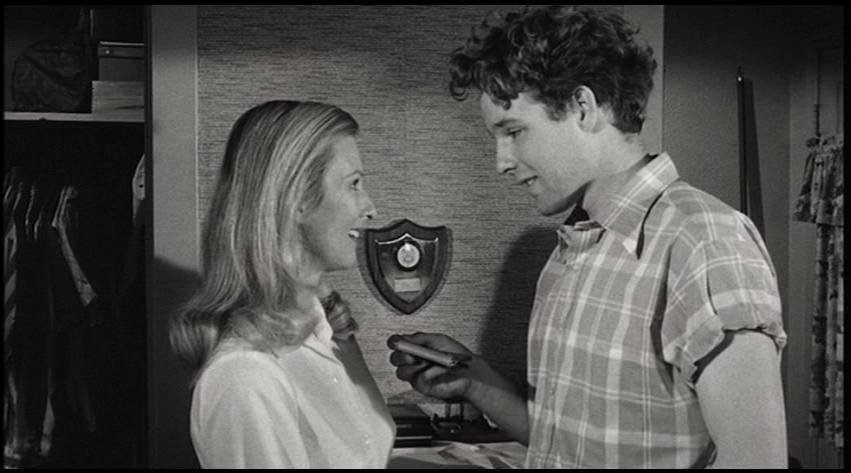
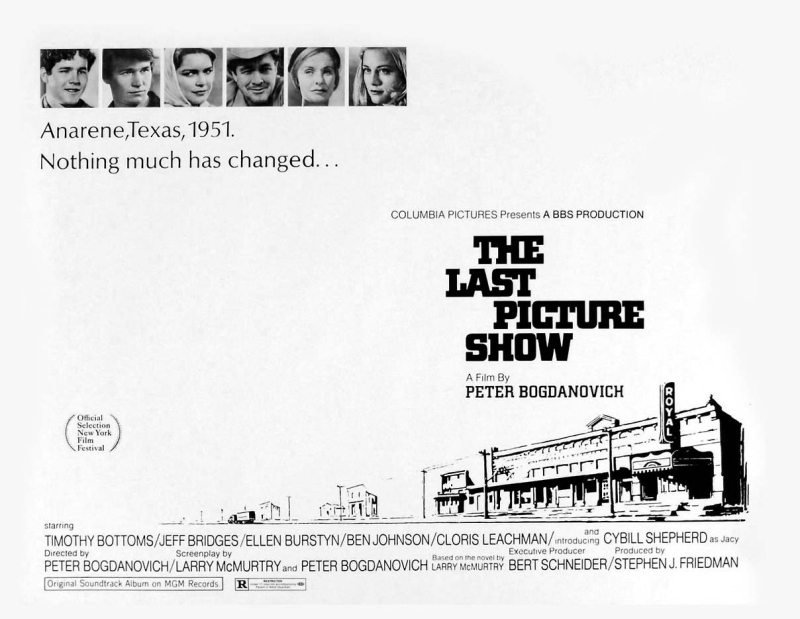
A perfect place for thinking, projecting, remembering and watching, Bogdanovich’s The Last Picture Show, set in the tiny town of Anarene, Texas, opens on their one movie theater, The Royal (Father of the Bride is on the marquee), panning to reveal a desolate Main Street with one traffic light, all dusty and fading and hanging on for dear life. Wind and leaves blow across the chilly landscape (shot so evocatively in black and white by veteran Robert Surtees) as we hear a car motor chugging. That’s Sonny (Timothy Bottoms) who struggles to get the heap going, freezing his ass off and fixing his radio dial to better receive Hank Williams’ “Why Don’t You Love Me?” Hank Williams will follow these characters all over the movie, commenting on and filling in the quiet they’re intent to avoid. He also matches many of the character’s spirits and Sonny’s especially – “I’m So Lonesome I Could Cry.” The novel’s first two sentences begin: “Sometimes Sonny felt like he was the only human creature in the town. It was a bad feeling, and it usually came on him in the mornings early, when the streets were completely empty.”

Sonny spies Billy (Sam Bottoms, the actor’s younger brother) sweeping the street and gives him a lift, playfully turning the younger kid’s baseball cap backwards, an affectionate refrain throughout the movie and they drive on to the pool hall. Through the detailed, formal but never stodgy, and incredibly lived-in excellence of Bogdanovich’s direction (and production designer Polly Platt) we are immediately transported right into this world that, at the time, was 20 year ago, but we don’t feel simple nostalgia about it (though we wished these places still existed. I do anyway). As beautifully shot and as intriguing as this town is, it also appears hard and unforgiving. Maybe life was simpler? Maybe? But as the picture goes on to show, it certainly wasn’t more innocent (that’s fine, nothing is) or easier (that’s also true). Watching it in 2017, Anarene is such a relic that it’s almost exotic. If these towns were dying then they’re sure as hell not surviving now unless you’re lucky enough to stumble across one on a cross-country road trip. But meeting Sam the Lion (Ben Johnson), a father figure to Sonny and Billy and, as we’ll soon learn, Sonny’s best friend Duane (Jeff Bridges), we feel warmer with his friendship (the place seems too small to say community). Even razzing the boys for their lousy football team, Sam’s a complex, even poetic man (though he’d never describe himself as such).

6a00d83451cb7469e201b8d258a235970c-800wi

He’s the heart and soul of the town – and not in any corny way – and we grow so fond of him that it will bring on an almost sick despair to even think of him gone. If he ever leaves, the town will sag down further, almost on top of itself. Not only does Sam own the pool hall (where handsome-hard mystery man, Abilene, played by Clu Gulager, has his own key), but the diner and the movie theater. Sam provides all of the services for escape and joy it seems, but also wisdom and ageless camaraderie, even if he’s decades older than the boys. But he’s missing a piece in his life, and there’s something quite melancholy about him, specifically because he’s so gracious and lovingly worn-in. In a later, powerful moment, he recalls a memory to Sonny that, as spoken by Johnson, is so vivid and cinematic that we can envision the scene almost right there in front of us – his mind rolling a movie reel of the past as we watch him speak:

Lps-sam-the-lion“You wouldn’t believe how this country’s changed. First time I seen it, there wasn’t a mesquite tree on it, or a prickly pear neither. I used to own this land, you know. First time I watered a horse at this tank was – more than forty years ago. I reckon the reason why I always drag you out here is probably I’m just as sentimental as the next fella when it comes to old times. Old times. I brought a young lady swimmin’ out here once, more than 20 years ago. Was after my wife had lost her mind and my boys was dead. Me and this young lady was pretty wild, I guess. In pretty deep. We used to come out here on horseback and go swimmin’ without no bathing suits. One day, she wanted to swim the horses across this tank. Kind of a crazy thing to do, but we done it anyway. She bet me a silver dollar she could beat me across. She did. This old horse I was ridin’ didn’t want to take the water. But she was always lookin’ for somethin’ to do like that. Somethin’ wild. I’ll bet she’s still got that silver dollar.”

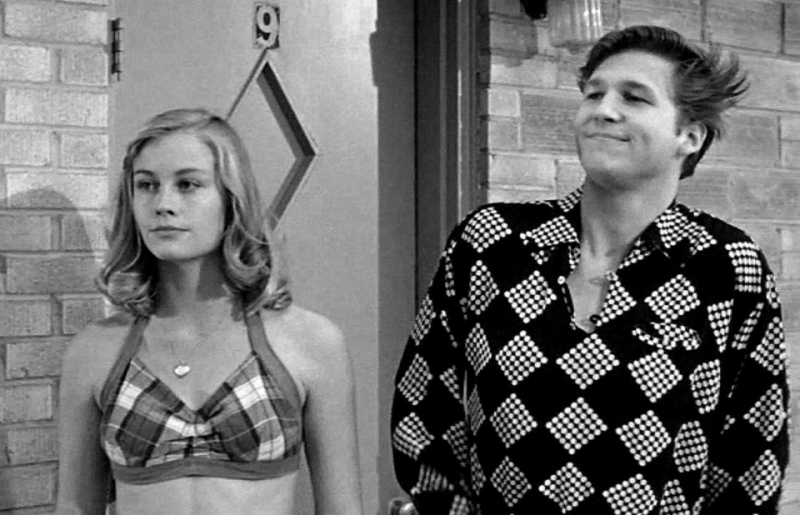
That woman turns out to be his greatest love and, he, the greatest love of the woman (who still lives in the town, Ellen Burstyn’s saucy and soulful Lois Farrow), deepening a character whom we might initially view as simply calculated and alcoholic. Not Lois. She’s hard but sexy as hell here (her opening shot reminded me of Lee Remick in Anatomy of a Murder), but when the ice in her drink cools, Lois seems like one of the wisest women in town. Refreshingly, Bogdanovich and Burstyn (and McMurtry) allow her to be a bitch, but a human-being bitch, and when she opens up and warms us with a smile or simply amuses us with a line, we genuinely like her. Few are simple or shallow in this movie, in fact, not even Lois’s daughter, Jacy (Cybill Shepherd), the prettiest, richest girl in town and girlfriend of Duane. Jacy’s been described by some writers as a cock-tease or even a femme fatale, but she’s a bit more complicated than that (as she is definitely in the novel). She’s a tease but she’s doing it for reasons that may appear cold-blooded, reasons more resourceful, yet confused and, yes again, cinematic. She wants a big story; she wants drama, romance; she wants everyone talking about her. Why not? There’s not much else going on and if she’s the prettiest girl, why sit around waiting for intrigue? So start it. She’s vain (she’s so lovely it’s hard for her not to be) but she’s also unsure of herself, adventurous and curiously sexual, though sometimes scared, without the movie showing her any condescension (her later moment with Abilene boldly proves this). When she finally tries to sleep with lovesick, horny Duane and, baffling to him, he can’t perform, she makes sure those outside the motel room watching in their cars think they just did it. She has an audience and she is going to be the star, virgin or no virgin, dammit. When her girlfriends excitedly bounce into the de-flowering chamber asking her how it was, she gives them her best movie star face, looking up, liquid eyes all dreamily: “I just can’t describe it in words.” Jacy really should get out of Anarene and move to Hollywood.

6a00d83451cb7469e201bb09719210970d-800wi

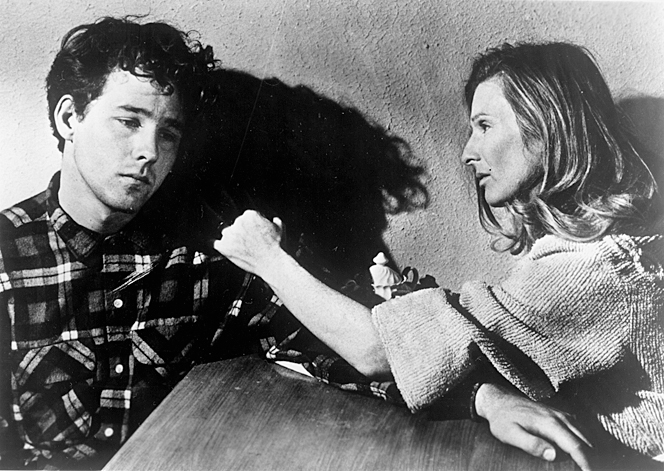
Sonny’s lover is not so Hollywood – the aforementioned Ruth Popper (Cloris Leachman) – wife of the one the most unlikable characters in the movie – the coach. She’s pretty, frail, nervous, middle-aged, prone to crying or occasional anger, apologizing to Sonny, mad at him, then mad at herself. You feel for her, you want her to find happiness, but you’re not sure what to make of their union; if it should last at all. Sonny is still growing up even after growing up so fast. You grow up quickly in a town like this – working, running a pool hall, smoking, whoring, maturing past sexual interludes with bovine (mentioned in passing in the movie, in much more detail in the novel) – but he’s not weathered the 40 years Ruth has yet. And, yet, she seems like she’s done absolutely nothing in her life save for changing her bedroom wallpaper and serving cookies to kids. She hates her husband, she gets sick, she falls for Sonny. A lot more pain is in store for her and the Picture Show of Sonny – that lovely romance that makes her swoon and escape her depressing little house – could not be sustainable. But what’s wonderful about this movie is, hell. It very well could be, for good reasons or bad reasons or reasons somewhere in between. Sonny, nearly an orphan, loves (maybe, we’re not sure) and desires Ruth, but he also makes her feel childlike, and gives her an underage kind of paternal care. She’s less a mother figure (his mother is deceased), and more like the sweet, drug-addicted father he can’t count on. In the novel McMurtry writes of Sonny looking at Ruth: “There was something wild in her face that made Sonny think of his father – when she smiled at him there was a pressure behind the smile, as if something inside were trying to break through her skin.”

Cloris Leachman Timothy Bottoms

But Sonny is just so young, and in a final scene, as Ruth gazes at his innocent-looking eyes, his youth so strong, it’s both strangely upsetting and tenderly poignant. Bogdanovich lingers on this long enough for the viewer to truly feel that age gap. And Bottoms plays all of this with a quiet charm and longing, a longing for something (what is it?). His longing is so powerful that, in some cases, it’s simply his eyes, those cinematic eyes, looking as we look with him – surveying the land, the town, a face or even a tumbleweed – that gives us an overwhelming surge of beautiful heartache. Sonny’s already experienced two other beloved people die: one young (which he sees), the other old (offscreen, which feels so jarring since Sonny views everything) and both unexpectedly, that you wonder how much he’s truly processed in his mind. What is he thinking? He seems like the type who might get out of the town (and he tries, briefly) but, nope. Looks like he’s gonna stay. Will he always? Bogdanovich and McMurtry will not answer that. Not in this picture (you’ll need to read and watch Texasville to find out).

6a00d83451cb7469e201bb0971921f970d-800wi

And now the movie theater has closed down (Sonny and Duane watch Howard Hawks’s Red River the final night before Duane heads out for Korea, another loss). No more time staring at the screen (TV is taking over) but Sonny will likely listen to more music and drink in whatever is in front of him or comes his way – the pool hall, the residents, newcomers, cars, random excitements, girls. Maybe he’ll go crazy. Whatever he’s doing or wherever he’s going, the fading town is still standing while he matures into another year. Sonny will continue to make his own movie memories through living, however that goes. One day he’ll likely weave a vivid impression of a time to one younger than him, just as Sam the Lion did. Maybe he’ll fall for another woman, hard. Wonder if it’ll be different? “Like in a movie.”

Kill or Be Killed: Little Murders

6a00d83451cb7469e201b8d2553591970c-800wi

Out today! The first of my monthly essays for Ed Brubaker's acclaimed "Kill or Be Killed" with artwork by the great Sean Phillips. Read my take on Alan Arkin's adaptation of Jules Feiffer's darkly comic Little Murders starring Elliott Gould (with a brilliant scene by Donald Sutherland, as well standouts by Vincent Gardenia, Marcia Rodd and a hilariously strange Jon Korkes).

Pick it up or order here: https://imagecomics.com/comics/releases/kill-or-be-killed-5

6a00d83451cb7469e201bb096e2e39970d-800wi


Kid Dynamite: Leo Gorcey & Bobby Jordan

6a00d83451cb7469e201bb096cb4ed970d-800wi
From my New Beverly piece on the trials, tribulations and tragedies of Leo Gorcey & Bobby Jordan and looking at Kid Dynamite.

Leo Gorcey was once a plumber. He was in his last year of high school and worked for his Uncle’s plumbing business earning six dollars a week. He didn’t like that kind of money. It was 1935 and though, not dirt poor, times were tight for the divorced family living in New York City. His dad (Bernard Gorcey) was a respected stage actor who, according to Richard Roat’s “Hollywood’s Made to Order Punks,” used a bit of reverse psychology, telling his son he couldn’t act, luring the pugnacious kid to audition for the play Dead End. He came in his plumber’s clothes. In an interview with Richard Lamparski shortly before his death, Gorcey claimed his dad knew someone involved in Dead End. He said his dad could have used connections early on to help the kid along with acting but Gorcey wasn’t interested in that. Still, he wasn’t interested in being a plumber either. The money was negligible and he complained that he couldn’t “buy a pair of slacks or a pair of shoes in a month.” (Hearing him utter this with distinct Brooklyn Gorcey-speak, I thought of all those depression-era youngsters, wanting more out of life and being proud of it when they got it – Paul Muni showing off his shirts in Howard Hawks’ Scarface. Gorcey didn’t find the work (to use one of his favorite words) remunerative. He got the part, wound up lucky to take over for the bigger role of Spit. Gorcey was now earning 35 dollars a week. 35 dollars a week? “Big deal,” he said in the interview, “I want 50.” The producers told him, Nope. They could locate any damn kid in New York City to play that part. “Find one,” Gorcey challenged. They gave him 50 dollars a week.

Cbfc8070f58d3d7ab8def38538a5b427

He moved up in the world, taking Spit to screen in various incarnations, names and studios (including, and most famously, Spit, Slip, Muggs) in The Dead End Kids, The East Side Kids and The Bowery Boys from 1937-1956 (he was never in The Little Tough Guys, which also slide into this original punk history). Some of the early pictures were beautifully directed social commentaries – William Wyler’s Dead End (with Humphrey Bogart), Michael Curtiz’s Angels With Dirty Faces (with James Cagney) and Busby Berkeley’s They Made Me a Criminal (with John Garfield) with a cast including Huntz Hall, Bobby Jordan, Gabriel Dell, Billy Halop and Bernard Punsly. Through time the kids became more comedy than commentary (which was fine, Gorcey and Hall are a terrific comic duo) and the pictures became weirder, they were often still assuredly shot by some interesting filmmakers (notably The Big Combo, Gun Crazy director Joseph H. Lewis). Not bad, as some might say, but as time went on, wonderfully fucking weird with, perhaps, accidental commentary (who wants to grow up?) and definite surrealism holding the plots together. To use a word Gorcey would probably like as a malapropism and mispronounce  (I can’t even pronounce it) they feel hypnagogic.
6a00d83451cb7469e201bb096cb553970d-800wi

A movie like Hold That Baby! (one of my favorites, starring Gorcey, Hall, William Benedict, David Gorcey and Bennie Bartlett) is magnificently bizarre. The fellows looking more boozed-up than boyish, all world-weary while running around like maniacs, helping a baby abandoned in a Laundromat (they own the place!), while gangsters and a mental institution fall into the scenario (naturally) – it’s the cinematic equivalent of something you’d dream up after ingesting too much narcotic cough syrup one night. These little comedies starring multiple-divorced men still burlesquing as tough guys when some of them actually are tough guys, or at least, little shits, now with arrest records, are marked with a peculiar darkness, as if Diane Arbus somehow took over direction. Gorcey once shot a gun in a toilet, got the boys to glue it back together, which then caused Martha Raye to fall in and injure her nether-regions. That’s a true story, according to Gorcey. Why not just put that in one of the movies?

0f7da5d5cd737385a4a16377713feba0

From 1940-1945 the series cranked out pictures through Monogram (which introduced Our Gang veteran, the great ‘Sunshine’ Sammy Morrison into the club, the only African-American in the group). Gorcey left the studio, quarreling over more money, formed The Bowery Boys with Huntz Hall and Bobby Jordan and owned 40 percent of the company. That was smart. He wouldn’t die broke (though this pissed off some cast members, including Morrison who declined to join, reportedly due to Gorcey’s more remunerative control). Gorcey was a “kid” deep in his 30s when making his last picture, Crashing Las Vegas, remnants of the original boys hanging on – Hall and his younger brother, David. Pops, who, without much hullabaloo, had been playing Louie Dumbrowski, the guy who ran the ice cream parlor and co-starred with his son in 44 pictures, died in 1955. He crashed into a bus. Leo drank more, became problematic and was replaced by Stanley Clements. He lived a hell-raising, hard-drinking, multi-married life, writing an entertaining, damn near poetic memoir about it with a tongue twisting title: “An Original Dead End Kid Presents: Dead End Yells, Wedding Bells, Cockle Shells and Dizzy Spells.” He died the day before his 52nd birthday – liver failure.
6a00d83451cb7469e201b7c8c99eb5970b-800wi

This is a long walk down Gorcey lane before discussing Wallace Fox’s Kid Dynamite, the 1943 East Side Kids picture when they’re still young and fresh, but pertinent since the talented, tragic Bobby Jordan (playing Danny) is Gorcey’s lead co-star. He is also a reluctant rival to Gorcey’s Muggs who is, for lack of a better word, an asshole. As the picture moves along briskly with a nicely shot boxing match and an entertaining, gleefully odd jitterbug contest within, we come to feel for shitheel Muggs – the world’s not nice to him. Gorcey always played it more acerbic, nastier and Stooges-like slap happy, but there’s an extra edge here. He’s so mean to moist-eyed, tall and gracious Danny that he becomes less funny and more aggressively unpleasant. And he’s jealous.  This is not a criticism; it makes the movie deeper and more poignant as we root for both guys. We want them to figure out their issues; we know it’s based on power and acceptance and looks and everything society throws at kids growing up, and we know it’s probably not going to be solved by the film’s conclusion – joining the service. But the surge of patriotism at the end of the movie makes you question if the picture even believes its own message. Even Muggs’ mother cautions her son to join (and won’t let him at first, he’s too young) if he’s doing so for the wrong reasons.

Kid-Dynamite-3

The whole misunderstanding begins when teenage boxer Muggs believes Danny set him up. Gangsters kidnap Muggs when he won’t throw a fight (such is the life of an East Side Kid) and he misses the match, stuck in a scary car, fast-talking guttersnipe sass. Out of shape Danny (who does not appear to be out of shape) has to fill in for Muggs and in a sweet surprise, wins the fight. Danny is innocent, a nice guy (he is also dating Muggs’ sister), but never mind that – Muggs is so pissed off and distrustful, he can’t accept his friend wasn’t in on it, and he kicks him out of the gang: “Danny’s name is gonna stricken from the record. He’s outta the club intimately, ultimately and forever.” Other members, notably Huntz Hall as Glimpy (“Why don’t you play ping pong with a time bomb?”) and “Sunshine Sammy” Morrison as Scruno are nicely featured and likable (also Benny Bartlett as Benny ‘Beanie’) but they too are following along with the bullying Muggs. Tensions increase – Danny gets the job Muggs wants (for being a “gentleman”) and in a scene that opens with Mike Riley’s Orchestra and Marion Miller doing the most intriguing, craziest and even creepiest rendition of “Comin’ Thro’ the Rye” (did J.D. Salinger see this picture? Did Davd Lynch?) wins the jitterbug contest after Muggs is disqualified for bringing a professional dancer (Kay Marvis, Gorcey’s first wife, who later married Groucho Marx).  Well, that’s it.

6a00d83451cb7469e201bb096cb53b970d-800wi

It will get all resolved – Muggs finally believes Danny, but anger enflames yet again, and he continues being a jerk. There’s a lot of desperation to Jordan here that feels utterly believable – we might want to join with Muggs deeming him a fake goody-goody but Danny is too sincere. At the same time, Muggs is such a sore loser and so obviously insecure, that we can’t stay mad at him, especially when he starts looking inward, thinking of the War, understanding he’s being a heel, maybe even a coward, and his jealousy is more at play than truly believing Danny’s a bad person. But, again, the patriotic WW2 closer where the boys are sauntering through town in uniform is strangely sad. And thinking of Bobby Jordan is sad too. He was drafted.

Jordan wasn’t happy with the last incarnation of The Bowery Boys whom he helped form with Gorcey and Hall. He was becoming less prominent on screen, making less money and angry with Gorcey and Hall for pushing him out of any kind of light. He left after eight pictures. He still worked, did some movies and television, but supplemented his income as an oil driller; photograph salesman, nightclub act and bartender – not a good profession for an alcoholic.

6a00d83451cb7469e201b7c8c99e89970b-800wi
According to various sources, in 1958 he was briefly jailed for not making child support payments. Before that, in 1945 the poor guy was in an elevator accident, forcing removal of his right kneecap (really?). The talented young kid who went to the Professional Children’s School and started out in Dead End with the name Angel, who served in the Army during WWII (drafted in 1943, the 97th Infantry) – he died at age 42 in 1965 in a Veteran’s hospital in Los Angeles  – cirrhosis of the liver. Nearly four years before Gorcey and six years younger.

Gorcey says of Jordan in Kid Dynamite, “He’s presently out, henceforth, etc.” Reportedly, in real life, Gorcey mused, “Bobby Jordan did not have had a guardian angel.” Jordan might have “depreciated” that sentiment.


Sunset Gun & Sight & Sound: Tops of 2016

6a00d83451cb7469e201bb096569e6970d-800wi

I contributed to Sight & Sound's Best Films of 2016, choosing five pictures among so many released this year, some I hadn't seen yet (the list was due in November), so I must add.

From the magazine:

"We asked 163 critics and curators to name their five top movies of the year – and atop what may be our most diverse annual poll yet, the runaway winner is a German comedy…" Read the full list here.

And here's my individual top five with five more added to equal a neat ten. A ten that could change in two days. Not in any order:

Added: Jackie

Jackie-natalie-portman-today-161006-tease-02_e549f017f2a99114fefe91579e669542.today-inline-large

Finally saw Pablo Larraín's Jackie… now one of my favorite movies of last year. Maybe my very favorite. The tricky manner in which Natalie Portman plays her reality and artifice is incredible — the sadness and horror, the control — Jackie wandering around the White House alone like a living ghost… The direction and score are brilliant — it moved along with her, matching her performance, and felt like grief — the confusion of grief and how to control it. Nothing of what she says is exactly true and everything remains mysterious — a woman with a reality and a persona, smashed in that moment, walking around with blood all over her suit, and then she had to gather herself quickly and put up the walls even higher.

The Lobster  — Yorgos Lanthimos  

Hero_The-Lobster-2016-2

You don't require things in common to be in love. You don't need to be in love or out of love. You don't need to be with someone or without someone. You don't have to be married. It's OK to be alone. It's not OK to be alone, for some. Please consider this mordantly funny and heartbreaking allegory of the terrifying future — dating sites and lists of requirements and everything that one person with supposedly all of the answers tells you or that dumb social media update about love or that one bromide-filled essay that tells you which way is the right way. Or those articles, lists and quizzes about who is a sociopath or are you an empath while you nod in agreement. And don't choose a lobster. Don't even choose a dog. Choose a raccoon. No one messes with raccoons, they're tough, they're cute as hell, they're street smart and they could give two fucks about you. They're also good to their kids. 

Moonlight – Barry Jenkins  

Moonlight-2016-001-young-chiron-at-dusk-by-waterside

A film so beautiful in story, struggle, love, connection, danger, drugs, race, masculinity, black masculinity, and one made more poetic by cinematography and performance, particularly by Trevante Rhodes, that one leaves the theaters with images and thoughts lingering. As Rhodes told Out Magazine: "Being a black person in America right now is shit, being a homosexual in America right now is shit, and being a black homosexual is the bottom for certain people. That’s why I’m so excited for people to see Moonlight. I don’t feel like there’s a solution for our problems, but this movie might change people. That’s why you do it — because you feel like you’re doing something that matters. This is someone’s story." 

The Handmaiden – Park Chan-wook  

960-1

This really should rank as my number one, I was so taken with this movie's ambition, going beyond a thriller (this is Park Chan-wook — he's going to go above and beyond — I'm pretty certain he's a genius at this point), but the gothic power, eroticism, violence, delicious perversity and romanticism of this picture might make this his greatest work. And that's saying a lot. 

Hail, Caesar! — Joel Coen, Ethan Coen  

Watch it again. As with every Joel and Ethan Coen picture, there's a lot more going on here than wacky comedy and Hollywood hijinks — chiefly many questions about spirituality, politics and movie making (watch Jesus on the cross ask if he's a principle or an extra, consider the godhead, what about Das Kapital "with a K"… ).

6a00d83451cb7469e201b8d24c3fd8970c-800wi
And Alden Ehrenreich's singing cowboy Hobie provides some of my favorite moments in cinema this year, one being his casual lasso twirling before his set-up studio date. I'll quote the movie's most famous line, but it's as fitting as the Coen's "Accept the mystery" of A Serious Man: "Would that it were so simple."  

Green Room – Jeremy Saulnier

960

I thought this movie would be good, but I did not expect it to be this good. As in, so tense and funny and well acted (chiefly by the late, great Anton Yelchin, leading the proceedings with his smart, soulful eyes and genuine terror turned cynical fuck-it-all), that I even accepted elegant Patrick Stewart would lead a bunch of scumbags skinheads in the PNW woods. The last scene is met with the perfect musical punchlines of the year and did as much for Creedence Clearwater Revival as The Big Lebowski. "Sinister Purpose."

Elle Paul Verhoeven

The rape movie, as I've heard it called by some people. It's more than that, of course. It's a daring look at a woman who is not like most women in movies — not merely because of how she handles the rape that opens the film — but because of the way she talks, considers her actions, indulges her fantasies, excites her cruelty, reflects on her so extraordinary backstory that, in another movie, would seem easy and ridiculous (as in, "Oh, so this is why she's so weird…").

Elle-film-reviewTruth is, she's not that weird. She's a human being (Isabelle Huppert, brilliant). And a woman. They're perverse creatures too. Thank god. 

American Honey — Andrea Arnold

160929_MOV_AmericanHoney.jpg.CROP.promo-xlarge2

Andrea Arnold is so good with young women in her movies, allowing them danger and sex and love and music and curiosity, that I watch her movies and wish I had her around when I was 15. I talked to a friend who didn't like this movie — thought it was too American ugly — the scruffy kids and their music all scummy to be scummy — an outsider's version of America. I disagreed (also, I like "scummy" kids) and found so much beauty in those young ones, the filmmaking, just the way she allows them to take to the road and feel it, feel new love, feel fear, feel their sex, that the celluloid almost seems tangible. Like you could touch this movie. It's that vibrant and alive.

Weiner-Dog  – Todd Solondz

I do not recommend this movie to anyone. I loved it, so that sounds odd, but dear god, don't do this to yourself. This is the Au hasard Balthazar of our time and I warn people about that one too, though at least Bresson's beauty sweeps you away, somewhat. This one, though strangely beautiful (you've never wanted to laugh and cry so much at the longest, loveliest shot of dog shit you've ever seen), has a harshness that makes you grip the theater seat, wincing at what comes next.

6a00d83451cb7469e201b7c8c27448970b-800wi

And do not go if your pet is ill. 

O.J.: Made in America  – Ezra Edelman

160607_TV_oj-made-in-america.jpg.CROP.promo-xlarge2

The five part documentary that deepens the headlines, the crime and the court case, and digs more profoundly into American race relations via one of our most famous fallen heroes — O.J. Simpson. It's also historically important and deeply tragic (it also goes further with the fate of Nicole Brown and Ronald Goldman), merging great cinema with great journalism — powerful, complex. I was riveted and, by the end, very sad. 

Nocturnal Animals – Tom Ford

I've not met many people who love this movie as much as I do, but I think Tom Ford managed a difficult feat — crafting a nerve-racking thriller but a ridiculous nerve-racking thriller that has to know how absurd it is. It just has to. And if it doesn't, I don't care because the picture works — both as an unreliable narrator story, telling of grief and revenge, and a look at an empty art world where we have no idea if anyone is as talented as they think they are. Is the novel Amy Adams reading, the one her poor dumped husband Jake Gyllenhaal wrote and dedicated to her any good? We don't know. It might be pulp trash but it's affecting her regardless (because who says trash can't affect us? Especially if it's personal).

6a00d83451cb7469e201bb09656a45970d-800wi

Is she even any good at what she does? Is he the toxic man some critics claim he is? I don't know. Maybe she really did give up the love of her life and he's not that bad. Jake Gyllenhaal is so powerful in so many scenes against such hot hillbillies (they sure do dress cool, but hey, a very visual woman is reading this book, we're seeing what she's seeing) that you truly feel for him. And then there's Michael Shannon, who is both touching and funny, giving the movie both gravitas and a wink. I'm gonna trust Tom Ford on this one. He's seen The Eyes of Laura Mars. He knows this movie is scary, stylish, moving and also hilarious but he's not going to tell…  

Also, Fences, Hell Or High Water, The Nice Guys, 13th  and this list will probably change…

(Movies I have not seen that could alter the list: Silence, Toni Erdmann, Paterson, No Home MovieThings to Come, Personal Shopper, Julieta…) 

Here's my Sight & Sound to five DVD and Blu-ray picks, write-ups posted later in Sight & Sound:

One-Eyed Jacks (Criterion) — Marlon Brando 

One-eyed-jacks-selvege

Napoleon (BFI) — Abel Gance
 
The Hired Hand (Arrow) — Peter Fonda 

 
Johnny Guitar (Olive Signature) — Nicholas Ray
 
Punch-Drunk Love (Criterion) — Paul Thomas Anderson

Happy New Year! 

A Very Merry Condor Christmas

6a00d83451cb7469e201b8d24a6b35970c-800wi
From my New Beverly piece on Sydney Pollack's Three Days of the Condor, the perfect Christmas movie, especially now.


Kathy Hale: Why did you tie me up like that? I mean, you thought I’d call the police. I wouldn’t have.

Joe Turner: Why?

Kathy: Well, sometimes… I take a picture that isn’t like me, but I took it, so it is like me. It has to be. I put those pictures away.

Joe: I’d like to see those pictures.

Kathy: We don’t know each other that well.

Joe: Do you know anybody that well?

“Lonely pictures.” So says Robert Redford’s on-the-run CIA analyst Joe Turner in Sydney Pollack’s Three Days of the Condor, stopping for a moment to contemplate the photographs of the woman he’s held hostage in her own apartment while fretting over his endangered life, the CIA, his dead colleagues, including his dead girlfriend, and later, a CIA within a CIA, oil, invading the Middle East (prescient), and whatever else is going on in that big, frightening, treacherous outside world. The woman, Faye Dunaway’s Kathy Hale, sits nervously (and it’s Dunaway-nervous, a mold-breaking kind of neurotic that’s unmatched by any other actress), looking at the man who is about to tie her up, maybe rape her, trying to believe his story or not believe his story, while he muses over her doleful black and white pictures of empty park benches and bleak trees. She answers with some defensiveness, it’s her art after all: “So?” We’re with her on this one — what’s wrong with lonely pictures? He says, “You’re funny. You take pictures of empty streets and trees with no leaves on them.” Suddenly this beautiful, word-filled man with an unusual job of reading everything all day feeding codes and plots into a computer, realizes that this beautiful, visual woman who takes pictures of chilly emptiness, has a life beyond an available car and warm pad he can hide out in as he attempts to unravel an insane conspiracy closing in on him. Now he’s trying to figure out her pictures. She again defends her photography (and obscures its meaning, she’s private, and some man has forced himself into her domain and starts deconstructing her art, who can blame her): “It’s winter,” she says.

6a00d83451cb7469e201bb096395c4970d-800wi

It is winter. And it’s Christmastime, and Christmas music is playing all over the movie – all of these cheery, classic carols taunting these characters who, like a lot of people during the holidays, are stressed and sad and fucking irritated by aggressive happiness and all this “Good King Wenceslas” business, ready to practically kill themselves. (Recently, at Slate, Daniel Harmon made the excellent claim that Condor should be considered a Christmas classic. I agree. I re-watched the movie last year during the holidays and it made me feel better about the gloom of forced cheer.) Kathy’s preparing to go on a ski trip with a boyfriend and you get the feeling she doesn’t really want to go. (Perhaps this is just me but I always read this like she’s being forced into an activity her boyfriendlikes to do –  ski – when she’d rather be taking pictures). But that is now. Joe’s not buying that winter excuse because he’s so damn specific. Trying to get to what’s really going on here, her sadness and alienation, a situation that reflects his own and one he’s now thrust on her tenfold (she, too, has to figure out who to trust in order to survive), he says: “Not quite winter. They look like November. Not autumn, not winter. In-between. I like them.”  That he’s so particular could be annoying (so she took these before Thanksgiving? So what?), but it’s not, he’s genuinely halted to consider this human being before him and just why she’s running around in-between winter, before all the obnoxious holiday music drowns the world, taking photographs of forlorn objects and leafless trees. It’s also not corny, as some critics suggest, like the symbolism is supposed to resonate so much that we’re awestruck by Pollack’s meaning. He knows we get the symbolism; it’s more that Joe is actually trying to consider her work and her and have some kind of connection. What’s wrong with that? And a lot of people, those curious with one another, would have that conversation. I love how she answers so simply: “Thanks.” What the hell else is she supposed to say? This is not the same Dunaway as Helmut Newton sexy-violence-high fashion photographer from The Eyes of Laura Mars and he’s not Tommy Lee Jones (though Dunaway is forced to face another insane situation and work through her art), but it would be interesting for these two women to meet up in in the near future. They could discuss how colossally fucked up the world is and how it’s reflected, beautifully, in their photographs. Oh, and what about the Pentagon Papers? Watergate? Alan J. Pakula’s Klute and The Parallax View?

Condor-Hostage

The mood around the fantastically entertaining, politically-charged thriller, but, still, sad and rightfully paranoid, Three Days of the Condor, reminded me of another film photography discussion: Alan Arkin’s adaptation of Jules Feiffer’s darkly comic masterpiece Little Murders, also a film about alienated people surviving New York City (albeit with less Hollywood sheen, and more hilariously heightened paranoia). Marcia Rodd’s first sort of date after her violent “meet cute” finds her in Elliott Gould’s apartment, looking at what? His photography. Gould one-ups Dunaway’s desolate park benches by taking endless pictures of unhappy dogshit. And like Dunaway, he’s good at it too. Rodd compliments his pictures, but then starts psychoanalyzing in a more critical way: “Isn’t that awfully limited?”  Gould explains this is all he likes to do and she says, “No wonder you’re depressed.” He says, calmly, bemused: “I’m not depressed.” She doesn’t believe him: “So, this is it? This all that you do? You don’t… ski?” All Gould can say is, “Ski?” You get the feeling Dunaway’s unseen “tough” and “understanding” boyfriend has said the same damn thing to her. “You really need to ski.” At least Redford gets her pictures and before they sleep together, asks to see more of them, the ones she doesn’t show people. And, to me, that is part of the reason why she begins trusting him.

6a00d83451cb7469e201b7c8c0a8b3970b-800wi

Though some critics at the time (and now) don’t buy the romance between them, and the rapey undertones – that she would consent to sleep with a guy who has previously pushed a gun in her side, threatened violence and tied her up in the bathroom while pacing around her apartment rambling about reading for the CIA and who would invent a job like that and people are trying to kill him – because what the hell? This is a guy who looks like Robert Redford rambling insane shit, not a guy who looks like David Berkowitz. But so what of that – she’s a visual person – and this movie idol man is believably truthful (not “kind” she says about his eyes, but honest) and they have undeniable chemistry (you never know who you’re going to meet and how), that it’s sad when he’s worried he can’t even trust her at the end. As Pollack said in a 2007 interview: “It’s about a man in a paranoid business who trusts everyone – and he turns from that to a man who’s suspicious of everyone because of what happens to him. In the process, he meets a girl who trusts no one, who has her worst nightmare happen – a guy kidnaps her at gunpoint – and she finds that she blossoms. So, at the end of this movie, when they say goodbye, he’s the suspicious one, suspecting that she may tell on him.”  Yes. That she finally believes his situation and helps him is not only touching, it’s also essential to Joe’s survival. Without her, he’d be dead.

6a00d83451cb7469e201b7c8c0a8b9970b-800wi

We follow Joe, thrillingly, from one reveal after another, all of the layers culminating in a face-to-face with Max von Sydow’s brilliantly cool assassin Joubert (rogue for hire) who becomes (stick with me) something like Kathy: After all that, he helps Joe too. After offing Atwood (Addison Powell, CIA Deputy Director of Operations for the Middle East – the boss to Joe’s senior, Higgins (Cliff Robertson), CIA’s deputy director of the New York division), he warns Joe of smiling men in cars who look trustworthy but aren’t (Kathy would never trust someone like that either, just as Redford running up to her in the street outside her car showed, and which her photography suggests). He recommends Joe become an assassin too – move to Europe – he’s good at this stuff. In their final scene, Joubert even brings up Kathy, the observational details, asking if he chose her based on age, her looks (Joe says it was random). Joubert hands him a gun and gives him a ride. We also wish for a moment (perversely, given the presented future occupation), that they’d go off together. Kathy, a fine suspicious fit for Joe and skilled at observation herself, had to leave. Taking off with von Sydow’s seductive, fine-boned creature seems appealing. But alas, Joe claims he’d miss America too much. “A pity,” Joubert says.

Three-days-of-the-condor-3

And, then back to Christmas in New York City. (The movie was adapted from James Grady’s novel, “Six Days of the Condor,” which I’ve not read, but it mercifully cuts down the timeframe of holiday hell). By the end, a smiling Higgins has a car for Joe on a crowded holiday-bedecked street while a likely miserable, alcoholic freezing-his-ass-off Santa Clause is ringing a bell. “God Rest Ye Merry Gentlemen” is being sung (again, madness-inducing) while Joe attempts some kind of power through the press. It’s ambiguous if that’s going to work and Higgins tells Joe to get ready to become like one of Kathy’s photographs: Lonely. What the hell is going on in America? The world? Who to trust? Will any of this shit work? Merry Christmas.

Elliott Gould on The Silent Partner

6a00d83451cb7469e201b7c8c075a0970b-800wi
Happy Christmas Eve! The New Beverly is showing The Silent Partner tonight, and I talked with my friend, the iconic Elliott Gould about starring in a very Canadian thriller. And more. Go see it tonight!

Kim Morgan: Thank you for talking with me about The Silent Partner. The theater is showing it on Christmas Eve…

Elliott Gould: I love that you’re doing that. It’s great.

KM: It’s a holiday favorite and a magnificent movie any time of the year. Daryl Duke is such a provocative, unique filmmaker – dark and funny. Payday is something of a masterpiece and so is The Silent Partner.  How did you get involved with Daryl Duke and this project?

6a00d83451cb7469e201b7c8c075b4970b-800wi

EG: Daryl was wonderful. Daryl was interested in me doing it. I read the script and the book. It’s an interesting book – “Think of a Number” – it was Scandinavian. And Curtis [Hanson] bought it or optioned the book and wrote the screenplay. I recall it took me a long time to commit to it. I’m slow, you know, I try to be deliberate. Or, on the other hand, I can be extremely impulsive and go too fast. Daryl and I were quite friendly, but I remember meeting with Daryl in the boardroom at the agency ICM, and it was just Daryl and me. And Daryl said to me: “I don’t want any of you in the picture.” And I thought, A. I’m not committed to your picture yet and who do you think I am? Who are you talking about?” So you have a reference of work I’ve done before? I mean, this is going to be something new for me. And I’m going to be something, hopefully, new enough for it. But I did adore Daryl Duke and we had a very good work relationship. We talked about doing other things together. Daryl was a friend.

KM: There are also so many excellent collaborators on this project… as well as being beautifully directed and acted, and it’s so wonderfully shot…

6a00d83451cb7469e201b8d24a37d3970c-800wi

EG: Yes. You’ll find this interesting: Late evening in [an office] in Toronto, I was looking out the window with [cinematographer] Billy Williams, who had done Women in Love and then went on to do Gandhi – he was a great cinematographer. And I was looking out the window with him, and the sky was orange like it happens in the summer, and I knew we had a picture, because we were looking out of the window at the same time at the same light. Billy Williams is first class.

KM: And the score by Oscar Peterson…

EG: I met Oscar Peterson in London at a place called the White Elephant, in 1978, when I had gone on to start to make a remake of Hitchcock’s The Lady Vanishes. I was with Herb Gardner, the writer who wrote A Thousand Clowns andI’m Not Rappaport. I saw Oscar, and I said to him, “Are you validated? This is the first picture that you did and was it worth it?” And Oscar said, “Yes.” He was very happy with it and that made me feel good.

Silentpartner5

KM: Also John Candy…

EG: We introduced John Candy and one of the funny things is, his name in the script was “Simonson.” And the scene where the police came in to see what was going on with the robbery, I said “Simonson.” And I thought he should have a first name so they let me give him one. I dubbed him “Raoul.” “Raoul.” It was very intense in terms of where my character’s head was at, that scene. And when I’d say “Raoul” I couldn’t stop smiling because it was so funny.

KM: It’s a tense film, the action is unique – the scene through the mall with Christopher Plummer in the Santa Suit – as well as other scenes both violent or just at the office or at a party, they’re human and scary and, again, funny. Duke has a sly sense of humor …

EG: That’s interesting. Daryl used to do television; I think he used to do Steve Allen shows…

KM: I was reading early reviews of the movie when it came out, Roger Ebert in Chicago for instance, and he loved the movie and commented that it kind of came from nowhere. The movie didn’t show on enough screens. It deserved better.

6a00d83451cb7469e201b8d24a3787970c-800wi

EG: People were trying to drive a harder deal with Paramount and what a work like that would need, in terms of stimulating an audience, would be distribution and money to spend on prints and advertising… So I know that it played in Chicago… It played in South America. I had people from Argentina who said that they liked me so much that I could be with their horses. And horses mean a lot to people in Argentina. It was a good picture. It was different.

KM: The movie, its twists and turns, is rightfully compared to Alfred Hitchcock. You mentioned Hitchcock earlier…

ER: I met Mr. Hitchcock in 1977, when I was co-hosting a prime time network presentation show – the Photoplay Awards. After our last camera rehearsals the management came to me and said, “Alfred Hitchcock is here to collect his award, can he sit in your room?” My room was the closest to the stage. And I said, “Well, of course.” And so I went back to my room and there’s Alfred Hitchcock. This was the first time we met. And this was May of 1977 because I had finished Capricorn One, and I was going off to do The Silent Partner. And so I walked into my room and there was Alfred Hitchcock with an assistant and I said to him, “Are you going to make another film?” And he said to me, “I’m toying with one now.” And then he leaned closer to me and he said, “I said, I’m toying with one now but I don’t know if the audience still wants my fantasy.” To which I responded, “Without a doubt.” And then we talked a little bit about The Silent Partner, and he knew it. I went off to prepare to do The Silent Partner and I started to write to him. I wrote Mr. Hitchcock a couple of cards because I knew I wanted to keep that in mind. I wanted it to be a sort of Hitchcockian story. He was a perfect reference for The Silent Partner.  And then, coincidentally, the next year, I didThe Lady Vanishes with Angela Lansbury and Cybill Shepherd – that’s when I started to communicate with Mr. Hitchcock and got the chance to spend some real quality time with him.

Sprt4KM: Did you bring any of your earlier talk with Hitchcock into the movie? With Duke or Curtis Hanson?

EG: No, no. Curtis and I barely talked. We played liar’s poker and Daryl and I were quite friendly. I was not happy that he was taken off the picture. He wouldn’t do the beheading scene. I called Daryl in Vancouver and he said that what he stopped his work on it and he was a minute away from what he wanted.

KM: Really?

EG: Well, it was him and Curtis Hanson until post-production when they took Daryl off the picture so they could shoot the beheading, which was never in the script.

KM: They took him off for that?

EG: No, the picture was done… I don’t know. I had never talked politics, that’s just what happened. Daryl Duke was great. I don’t think he wanted to shoot the beheading … they took him off for whatever reason… I thought that Daryl did an almost perfect job with the picture. And then I said, “I have to see this for myself because I don’t want my head being fucked with.” So on my own dime, I flew from Toronto to Vancouver to see Daryl’s print and they were right in the same place. And Daryl would not compromise. I got back on the road and went to Europe to work with David Niven and Gil Taylor, the cameraman, to do that picture [Escape to Athena].

6a00d83451cb7469e201b7c8c07667970b-800wi

KM:  So … the beheading scene, who’s idea was it? Someone had the idea to put that scene in there to make the film more shocking and add extra impact?

EG: Maybe. I don’t know. I won’t speculate. All I know is that I did the picture with Daryl Duke and then in post-production, I did what they asked me to do. And then I flew out to see what Daryl’s version was, and they were close to the same. But they wanted that thing in it… I was not happy about it. Daryl really did a wonderful job… I mean, I really believe in loyalty. And perhaps that’s in terms of karma, that’s one of the reasons the picture didn’t go further because of that kind of… I can’t think of the word, there’s a word, it’s an interesting word and maybe I’ll flush it out since you and I are friendly. I don’t know what the word is, but it’s not so good.

KM: That’s curious because the picture reflects some of these things you’re talking about…

EG: Well, in a way it’s about integrity, which seems sort of peculiar. I’ve done a lot of things, especially Little Murders, something like that where I didn’t understand it. And people live lives – and you know this – they live their life and don’t understand what they’ve done or what they’re doing. But you’ve got to live it and experience it and then deal with it to make the adjustments.

KM: It does also extend to this movie where Miles is striving to have a better life…

Vlcsnap-2012-12-14-21h04m48s150EG: Better life? He’s striving to have a life! He’s the keeper of the vaults who cannot have a relationship with the girl he’s attracted to. And then he goes through this. The key in the jar of jam and then it getting thrown out and him having to run after the garbage truck…

KM: You’re always so great, so unique as a romantic lead. You have this magnetism that’s all your own

EG: Aw, that’s so kind of you. But he [Miles] was an interesting guy! It was way off-center. I remember the clothes that they made for me. In the picture they attired me very well. And my apartment was interesting. Those details. The chess game. It was someone living in his head

KM: And then getting involved with the lovely Celine Lomez, which adds another layer and another attraction…

EG: It gives him some confidence. He didn’t have any confidence! And, also to go against that creepy guy that Christopher played. It gives him some balls.

KM: The chemistry is there with Susannah York where you think, why is she so interested in the bank manager?

EG: Well, listen, you know this: She needs some degree of security. And the bank manager was a youngish guy and [Michael Kirby] was a good actor. There was no chemistry between the manager and she, but there was some degree of security, something that was predicable. But it was unpredictable with Miles. I really appreciate that you’re going into the romantic part of it. It is quite romantic, the movie. The whole case is a very interesting metaphor in getting someone to come out and get involved in life.

KM: Plummer is really terrifying throughout the film, but by the end, he’s really under your thumb and seems almost vulnerable, which is interesting to think of then that he changes up from dressing as Santa Clause to dressing as a woman…

6a00d83451cb7469e201b7c8c0769a970b-800wi

EG: Well, that was his thing. I can’t think of why necessarily. I’m sure you’re right. But he being dressed as a woman was just so creepy… and Plummer was a very very creepy guy in that part. Christopher was great. But [initially]… I had wanted Mick Jagger to do Christopher’s part. Mick, in honesty, is not so creepy. Or, David Bowie.  I wouldn’t have necessarily seen Mick or David Bowie act. It would have been like, “I don’t know these people? Who are they? These are people from space.” But Christopher was great and he gave me a touch of class.

KM: Miles is one of your great characters.  Did you at all approach him differently than other roles you’ve played?

EG: I approach everything from the same place and in the same way. It’s like what Alfred Hitchcock had said to me: It’s all music so, therefore, it’s a composition…