Chuck Your Chest Up to the Wood : Angels with Dirty Faces
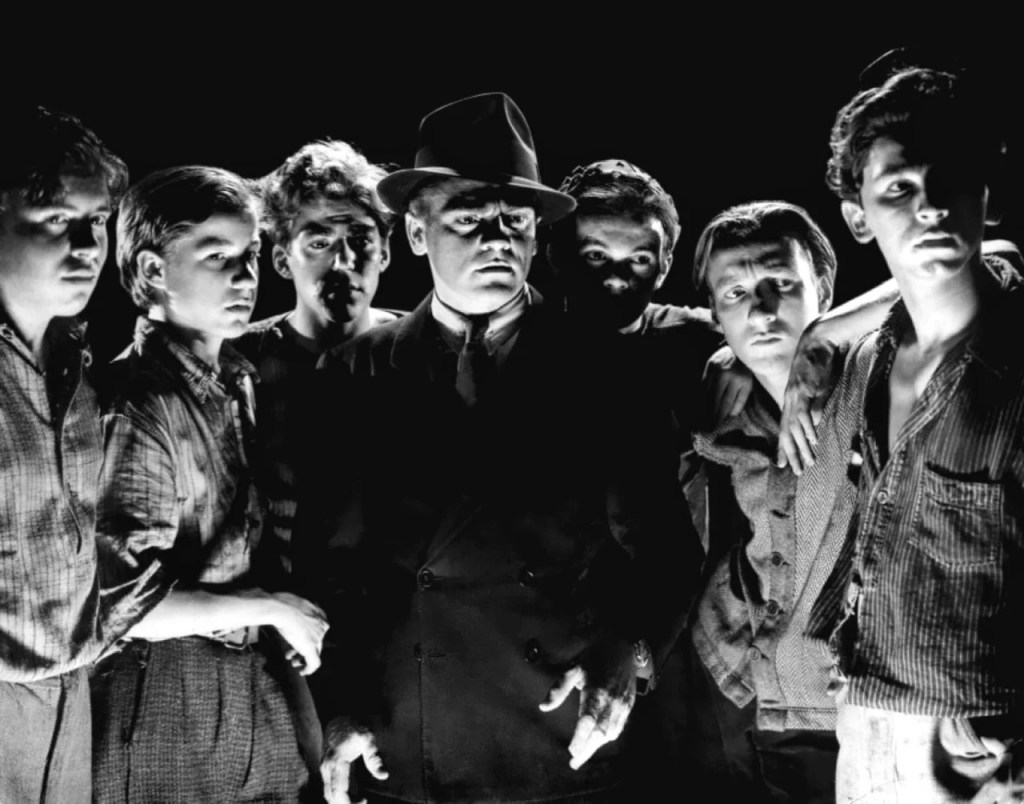
“The character I played in the picture, Rocky Sullivan, was in part modeled on a fella I used to see when I was a kid. He was a hophead and a pimp, with four girls in his string. He worked out of a Hungarian rathskeller on First Avenue between Seventy-seventh and Seventy-eighth streets—a tall dude with an expensive straw hat and an electric-blue suit. All day long he would stand on that corner, hitch up his trousers, twist his neck and move his necktie, lift his shoulders, snap his fingers, then bring his hands together in a soft smack. His invariable greeting was “Whadda ya hear? Whadda ya say?”  — James Cagney from “Cagney By Cagney”

“You’ll slap me? You slap me in a dream, you better wake up and apologize.” – Rocky Sullivan

We love Rocky Sullivan.

And not just love him because we’re Spit/Spike/Bim/Slip/ Muggs or whomever else Leo Gorcey embodied as his days as a Dead End Kid/East Side Kid/Bowery Boy — but we love him as an audience watching Angels with Dirty Faces, delighting in the pugnacious charm of James Cagney. 

We love him just as much, even more, perhaps, when he’s fried at the end of the picture. He turns, or, rather, pretends to be (we don’t know which one for sure) yellow. He howls for mercy as the jailers drag him to the electric chair in that gorgeous, horrifying, shadowed death chamber sequence:

“No! I don’t want to die! Oh, please! I don’t want to die! Oh, please! Don’t make me burn in hell. Oh, please let go of me! Please don’t kill me! Oh, don’t kill me, please!” 

Rocky is either really scared or a really good actor or both – we feel like crying whichever way it goes. Some of us do cry when Rocky gets it. The guard sounds almost Shakespearean once they finish him off:

“The yellow rat was gonna spit in my eye” (“Why dost thou spit at me?”). 

Pat O’ Brien’s priest Jerry Connolly, while so visibly moved at Rocky’s cowardice or courage, practically sees the skies opening, angels singing, readying for Rocky’s hoofing to heaven. Rocky cannot be burning in hell. No. There’s no way God is going to allow Satan a Rocky, and not after Rocky granted Jerry that kind of courage, a courage “born in heaven,” getting straight with God. Unless God is a double crosser– lost a bet with Satan. We hope not. If we believe. Do we believe? 

We believe in Rocky.
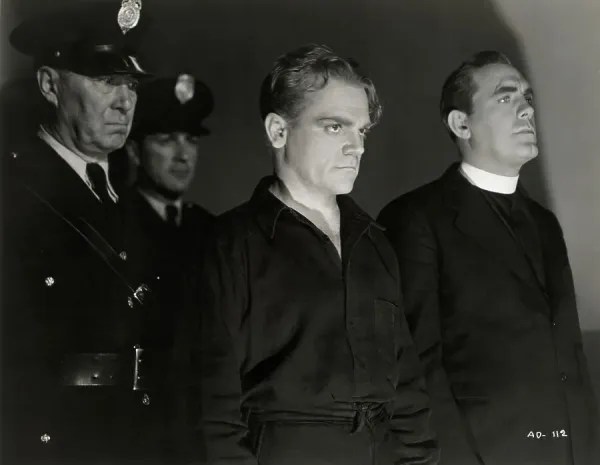
A tear drops from gentle Jerry’s eye and we, somehow, hold nothing against him for asking Rocky to ham it up before death – a pretty unreasonable request if you ask me – and Rocky says so too: “You ask a nice little favor, Jerry. Asking me to crawl on my belly the last thing I do.” Indeed.

And indeed, when we think about the Hollywood production code, led by Catholic censor Joseph Breen, meddling with movie morality, passing on his suggestions/demands especially here — as this is, a movie in 1938, following the friendship between a priest and a gangster — was of keen interest to him. Breen was concerned earlier gangsters were shown in too glamorous and sympathetic light – he worried those rebels, like a pre-code Tom Powers (Cagney, in The Public Enemy) or Tony Camonte (Paul Muni, in Scarface) were leading the public astray. They were just too damn sexy and exciting for the depression-era audiences and he feared they sided with their rejection of what would be deemed a square society. A society of suckers because, look how bad things are anyway? Why go straight? 

But Breen’s not really getting his wish granted with Michael Curtiz’s entertaining, moving, at times masterful Angels with Dirty Faces (gorgeously shot by cinematographer Sol Polito), even if he thought he may have. Sure, we have a priest “winning” in the end – if you call that winning. And, yes, we’ve got a melodrama about good and evil and those society are most worried about – impressionable children. The young ones who hero worship gangsters, the kids who, quite understandably, wonder why in hell they should work as hard, and for peanuts, like their parents do. Or, maybe, their parents aren’t working at all (here, the Dead End Kids – Billy Halop as Soapy, Bobby Jordan as Swing, Leo Gorcey as Bim, Gabriel Dell as Pasty, Huntz Hall as Crab, Bernard Puntzley as Hunky – I think I got them all). But nothing can erase the unescapable magnetism of Cagney’s Rocky Sullivan, no matter what the headline hollers after his death: “Rocky Dies Yellow: Killer Coward at End!” 

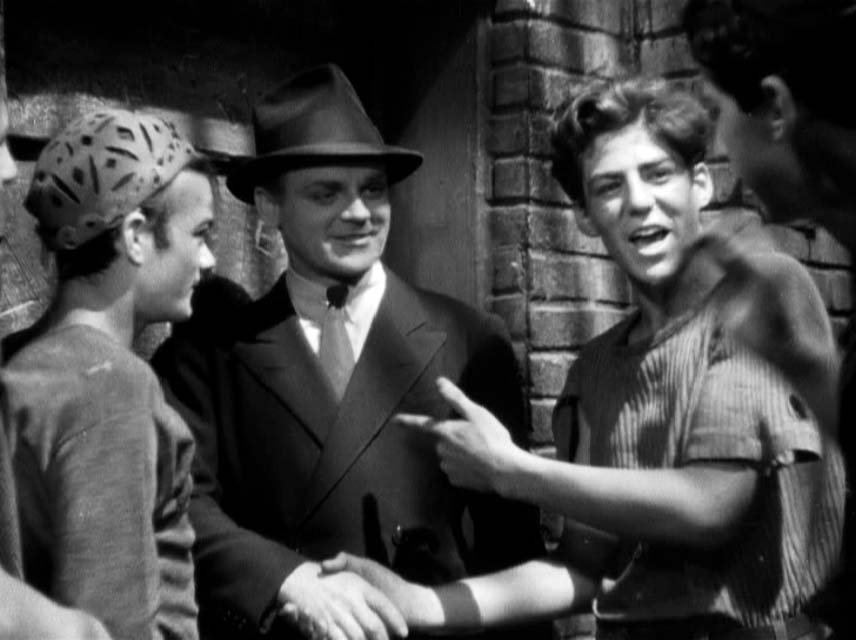
Those kids, led by Soapy, are introduced to Rocky’s swagger the moment they steal his wallet. Rocky’s out of prison and back to his criminal ways and, not knowing that this is THE Rocky Sullivan, the little toughies rob him. He figures it out quickly, and heads down to their hide-out, a place that used to be his old hide-out with his pal, Jerry, who was once a hooligan like him, and is now a priest. We’ve learned that Rocky was chucked in juvenile detention when he couldn’t outrun the cops like Jerry could (you’ll be reminded of this in the film’s final heavenly line). And, so, Rocky turned deeper into crime. Jerry turned to God. Endearingly, they remain friends. 

The scene where the kids figure it out is so seductive and charming, that, if you haven’t fallen in love with Cagney already, you will right then and there. “Next time you roll a guy for his poke, make sure he don’t know your hideout,” Rocky says to them, not even angry, just kicking them in the pants for being so stupid, laughing along because he used to be like them. He puckishly winks as confirmation of being Rocky, rather than announcing himself, he doesn’t need to. Swing exclaims: “It’s Rocky Sullivan! We tried to hook you! What a boner!” 
Well, now the kids idolize him. What is Father Jerry going to do? He tries to get Rocky involved as some kind of good influence – but Rocky is already back to his criminal ways, getting in even deeper with his crooked, and it turns out, quite quickly, murderous, double-crossing lawyer, Jim Frazier (Humphrey Bogart, terrific here), who is the picture’s real villain. Frazier tries to get Rocky killed, who strikes back (which isn’t so surprising). The corrupt lawyer will later even put a hit on Jerry, a damn priest – we already know that Rocky can’t go that far. (Can you imagine how less sympathetic Rocky would have been had he agreed to that plan? Where was Breen on all this? Probably secretly seduced by Rocky too…). 
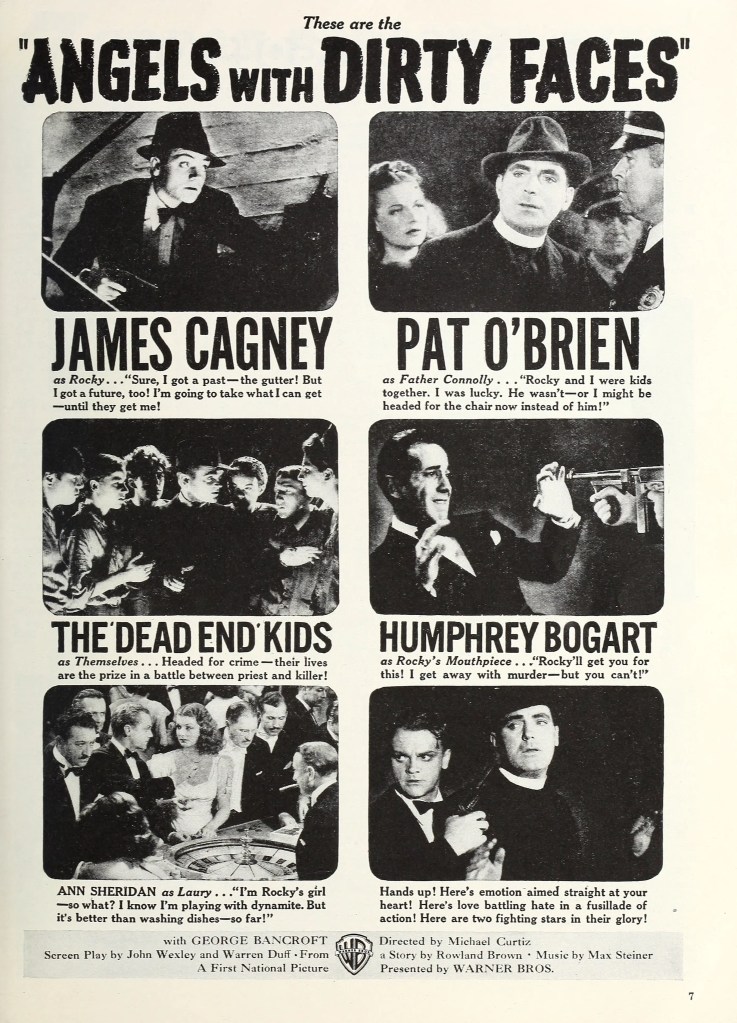
Rocky’s also got a likable love interest in beautiful, spirited Ann Sheridan who runs the boarding house Rocky initially rents once out of stir. These are good people around him – and he riffs and physicalizes with the kids with such ease and, at times, brilliant hoofer that Cagney was, a plug ugly grace. There’s famous lines here, and then there’s just wonderful, rapid-fire little toss-offs too, like when Rocky asks the kids to sit down to lunch. He instructs, “Chuck your chest up to the wood.” It seems to mean a few things by the very way Cagney utters it – sit down, listen to me, deal with life, grow the fuck up. Oh, and eat your lunch. 

So, when it’s all over, well, I just don’t believe that these kids have really lost respect for Rocky, even if they appear so. O’Brien, with his lovely eyes and genuine humanity is still likable, we don’t want him to fail the kids, but we also don’t think his plan will work. After all, this is Cagney as Rocky. This is “Whadda ya hear! Whadda ya say!”

They’ll get over the coward bit. They may even begin to disbelieve it. And they may not turn to crime, and that’s good, but they may have learned some more know-how about life. They may now really- and not just to eat their lunch- chuck their chests up to the wood.
Nothing’s Normal: Miracle on 34th Street

There’s Mr. Sawyer. He’s contemptible, dishonest, selfish, deceitful, vicious … Yet he’s out there and I’m in here. He’s called normal and I’m not. Well, if that’s normal, I don’t want it.” – Kris Kringle

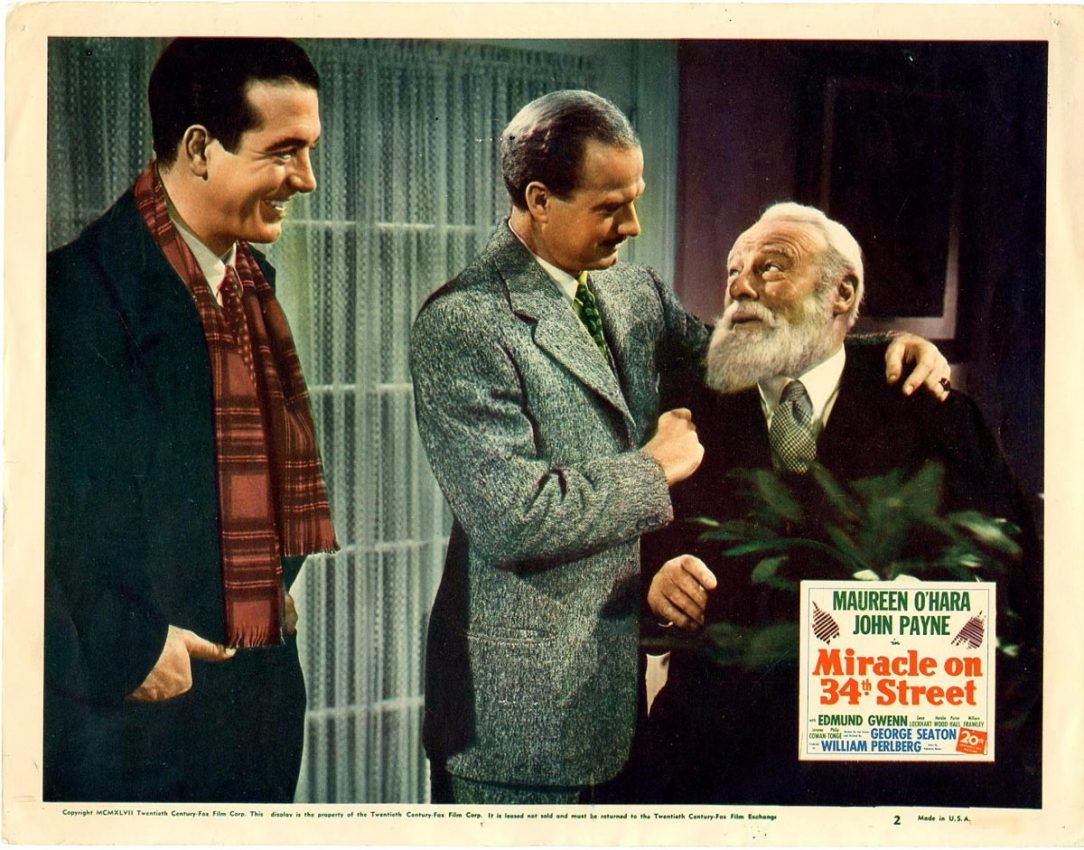
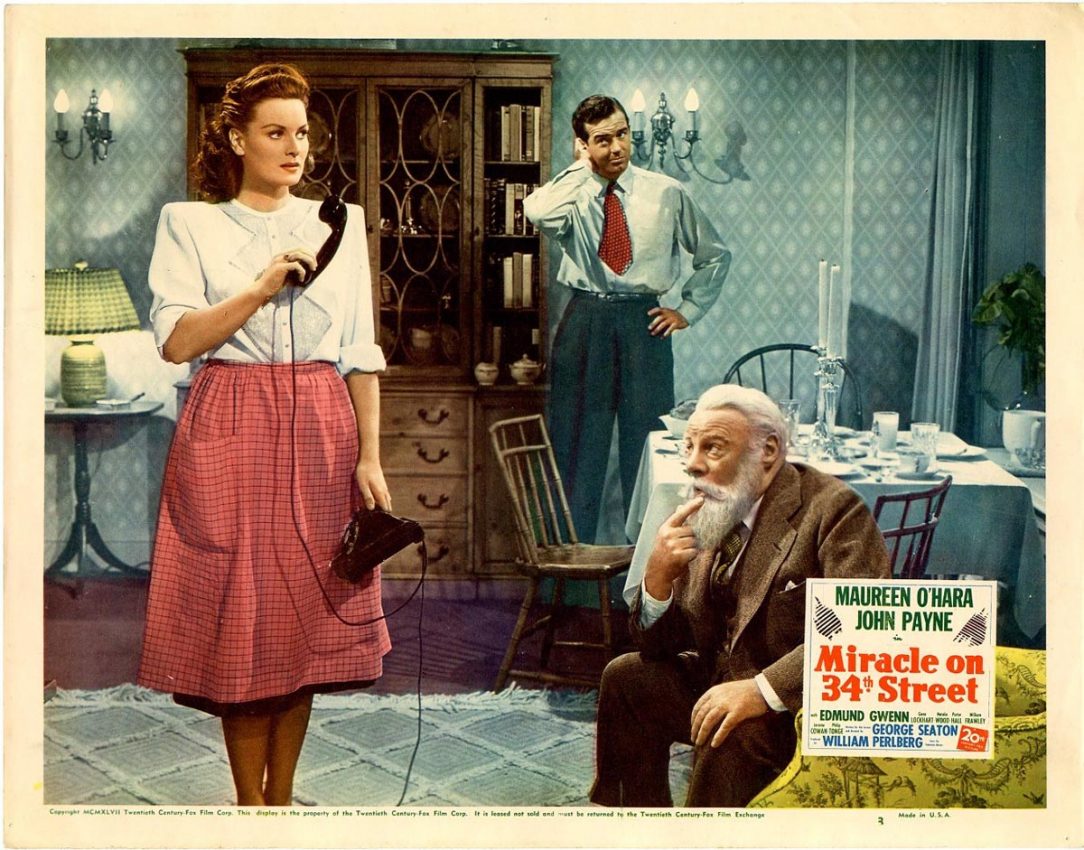
Miracle on 34th Street

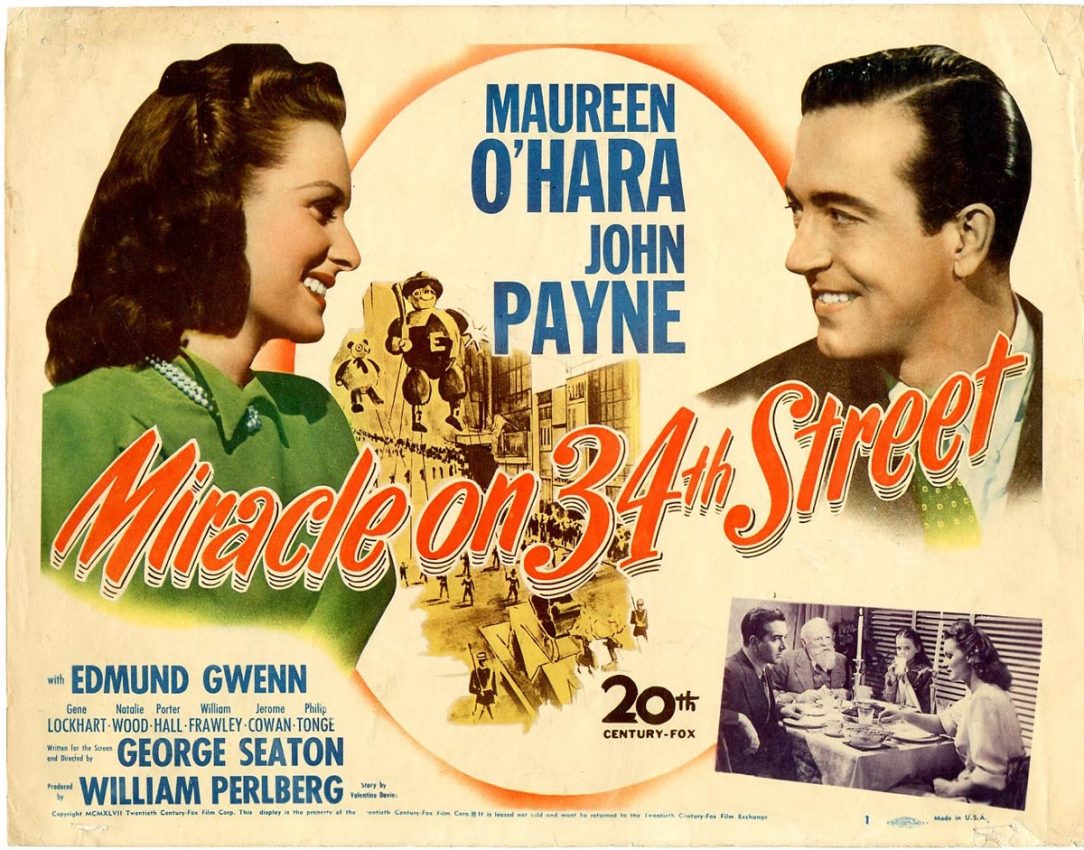
Is Santa Claus insane? That’s what Miracle on 34th Street asks and never really answers. Not really. Santa is cleared in court and certainly not dangerously delusional and there’s a strong suggestion that he might really be Santa, though I never bought it. No way. I don’t care what people who love this movie say (and I love this movie). Kris Kringle, who lives in an Old Folk’s Home where no elves are to be seen, with no Mrs. Claus nearby (as far as we can see), a guy who takes the subway into the city, is wonderfully, sweetly …a little off… that’s my take, and that’s what makes me like the movie even more.

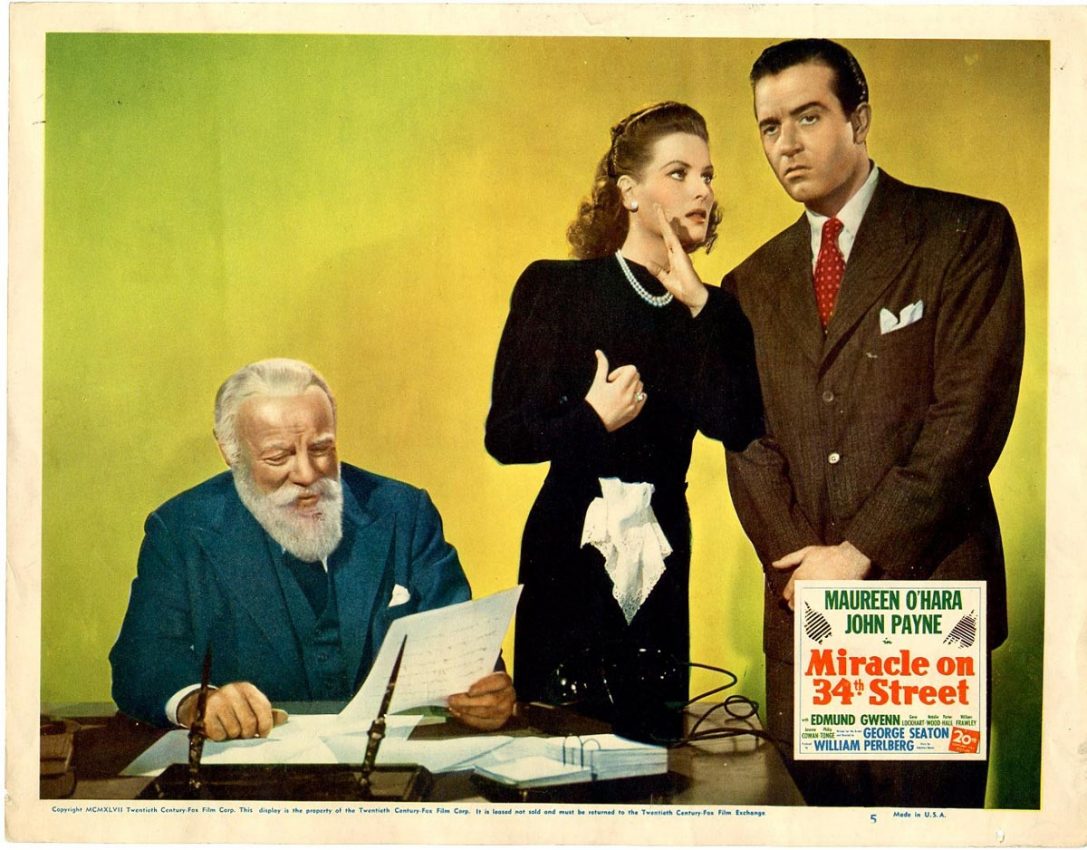
The beloved George Seaton classic gives you room to ponder Santa’s mental stability and think further about the white-bearded fellow – the figure of myth, of commercialism, of the shrewd business and competition of department stores (in this case, Macy’s and Gimbels), courts, greedy kids and nice kids and awful parents and frazzled parents and then, the common-sense parents. Almost progressive common sense – like Doris Walker, the mother Maureen O’Hara plays – a movie-mother I always liked, even if the film wishes she would stop being so sensible. But who can blame her pragmatism? It’s 1947, she’s divorced, living in New York City, working hard at Macy’s as an event director and raising her kid alone. She certainly doesn’t believe in Prince Charming or Santa Claus and probably not God either, and she doesn’t want her child to buy into mythology or malarkey that will only let her down. I always loved her character and I loved her daughter Suzie, played by the natural, intelligent Natalie Wood. I understood Suzie’s initial side-eye of the man who keeps saying he’s the real deal Santa Claus, softened by her sweet notice of what a good job he’s doing. When he tells the little girl he’s actually Santa Claus, she knows the score: “My mother’s Mrs. Walker, the lady who hired you,” she says. And then, nicely, she adds, “But I must say, you’re the best one I’ve seen.”

Already, she likes the myth of Santa, and she likes Gwenn’s real beard, his gentle, though different demeanor. What is so different about him? You see young Natalie Wood wondering this so convincingly. Well, for one, that he seems so real. Is she starting to believe?  And, again, she likes this man. After all, he’s Edmund Gwenn as Kris Kringle, a gentleman so charming and sparkly-eyed and lovely and interestingly real (he opens the film walking the streets of New York City in an impressively long location shot, giving the picture an almost gritty feel), that he’s impossible not to love, even if he’s a bit pushy in the matchmaking department.

And he’s not a drunk (poor guy – he’s cold – “A man’s got to do something to keep warm.”) like the other Santa Suzie’s mom had to fire from the Macy’s Day Parade. That sad drunk we actually feel sorry for is played by the great Percy Helton – Percy Helton! The lech who leads to Beverly Michaels’ downfall in Wicked Woman, that worm! Edmund Gwenn is on to him right away, and any kid would be too. I mean, did we really believe in Santa? Deep down? What if you caught mommy kissing Percy Helton underneath the mistletoe? Or rather, Percy Helton kissing mommy? Shove him off of her! Call the cops! That’s not Santa.

Miracle on 34th Street

I was six when I learned there was no Santa Claus. Six is too old. And of course I had my suspicions earlier — I was a somewhat sensible child (I mean, come on did I really believe?) — I was a wary child — but I wanted to believe in that man and just held firm even if I was lying to myself and I damn well knew it. I liked the idea of Santa, but I was growing up, and six is not five, that’s a big step, and these figures of folklore took on an absurd, sometimes sinister edge, which made them both not believable and intriguing; weird, or wonderful. I loved fairy tales for that reason, and devoured all of the real Brothers Grimm, intertwining those stories with the holiday creatures, wondering if they might have darker sides as well. The Easter Bunny then became something like the Big Bad Wolf. That once delightful bunny became a chilling monster for an evening after my sister woke me up in the middle of the night when I was five, informing me that an enraged rabbit was trying to break into the house because my mom locked all the doors. She said he was loitering outside and would probably bust through the door with an ax. Would he eat us? I didn’t want him to come in. The next morning, finally understanding she was joking (I love my sister), I was resolute to not believe in that enormous rabbit anymore because essentially, this big bunny was a home invader, and while my sister was messing with my belief in a tough love, darkly humorous Night of the Lepus kind of way (wise up, kid, a rabbit jumping into your house could KILL YOU) I understood he’s better considered as a mythic creature.   That one I stopped believing.

And so, I had to come to terms with Santa. He, too, sneaks (breaks) into your house in the middle of the night. He gives you the cold shoulder if you’ve been “naughty” (or puts coal in your stocking – or worse, in other cultures). So, the truth. I learned when an older neighbor kid told me there was no such thing as Santa Claus. “You’re being really dumb,” he said. He was right, and I was standing there simmering – all seething six-year-old rage. And yet, inside I thought, The Easter Bunny, he’s not real, that silly Tooth Fairy (what the hell does he do with kid’s teeth anyway?), Oh, god, I am dumb! He’s right. How could I believe this? Well, of course I didn’t. I was just holding on to it. My parents were divorced when I was five — maybe I liked holding on to some childhood fantasy for that reason. Maybe I needed the crazy. Crazy made sense to me at this time.I don’t know. We get mad at ourselves because we’ve known we’ve been right for a long time.

Miracle on 34th Street

So you move on. Big deal. I thought, if a guy is pretending to be Santa, like Gwenn in Miracle, he’s either really sweet, or really creepy – which isn’t fair to all those guys who just want to work for a holiday season – and I don’t blame them for drinking – but I’m talking about being a six-year-old here. And, I thought, if you think you are Santa, like Gwenn, you’re probably nuts. But I was fine with nuts – create your own world, be whoever you want to be. It’s better than exhausted, fake Santa at the mall or drunk Percy Helton and his lap I will not sit on (I don’t think I ever did when I was a kid), even if exhausted, fake Santa became a source of amusement later in life. All forms of exhausted, drunk or deranged Santas became amusing and/or disturbing with an entire sub-genre of films to dig into what lies beneath that red suit. But before all of those Silent Night, Deadly Night movies or Santa-suited Christopher Plummer vs. Elliott Gould in Silent Partner, or Billy Bob Thornton being “Bad,” or Johnny Craig creating “…And All Through the House…” for EC Comics’ The Vault of Horror in 1954, people were aware of the delightful strangeness of Santa via Miracle on 34th Street. Like when young Alfred (Alvin Greenman) tells Gwenn’s Kris that the uptight pseudo-psychologist, Granville Sawyer (Porter Hall), has been assessing him as a special case, that he finds it odd for a 17-year-old wanting to play/be employed as Santa – which isn’t too outlandish to wonder about. But this supposed doctor is a spiteful know-it-all and even cruel. Kris thinks the man’s psychoanalyzing is scaring the kid. Underscoring how some are suspicious of a certain kind of fake Santa, even finding them creepy, but through a sweeping generalization, Alfred relays what Sawyer told him:

“He says guys who dress like Santa Claus, see, and give presents away, do it because when they was young they must have did something bad and they feel guilty about it. So now they do something they think is good to make up for it. It’s what he calls a guilt complex.”

Alfred goes on with what Sawyer is assessing deep inside this young man’s psyche. And it enrages Kris – which is curious. He’s really mad. Kris, not anti-psychiatry (a nice touch in the movie – he’s not against heads being examined, even when his will thoroughly be searched), demandingly asks Sawyer if he’s a licensed psychiatrist. Sawyer says it’s none of Kris’s business, but Kris presses on: “I have great respect for psychiatry, and great contempt for amateurs who go around practicing it.” And then it leads to Kris … knocking Sawyer on the head, infuriating the man (“When a delusion is challenged, the deluded is apt to become violent!”) – and this propels the courtroom drama of the film. Kris is freaking everyone out – he’s not fit to sit at Macy’s – even if the most perfect Santa on earth is pulling in good business. He didn’t really hurt Sawyer so much as hurt his pride (Kris is clearly more intelligent than Sawyer) and Sawyer is milking it, but what if he hits a customer? What if he hits a kid? It’s a valid concern (though more interested with business than anything else), but what’s so beautiful about Gwenn’s performance is that we never ever think he would do such a thing – we are on his side right away. We believe he believes he’s Santa and we believe in this actor. So when Santa is chucked in a car to be carted off to an insane asylum, it’s genuinely distressing (though I wish the picture had went even darker here –  I was always hoping for one scene like The Snake Pit or Suddenly, Last Summer – Suddenly, Last Santa).

Miracle on 34th Street

But Miracle on 34th Street is a family film, a picture that’s viewed by many as a lot of corn-pone Christmas cheer. I disagree – I always felt it expressed darker, more cynical tones (“All right, you go back and tell them that the New York State Supreme Court rules there’s no Santa Claus. It’s all over the papers. The kids read it and they don’t hang up their stockings. Now what happens to all the toys that are supposed to be in those stockings? Nobody buys them…”). The darkness/light balance is not quite at the level of Frank Capra, but the picture asks interesting questions and is genuinely different. A Christmas story to be sure, but also a down and almost dirty New York story (the cinematography by Lloyd Ahern and Charles Clarke is often very stark, sometimes noirish dark, and the Macy’s Day Parade sequence is beautiful). The sappy stuff never really soaked into me because it’s not really that sappy – Gwenn’s Santa isn’t just making people think of the true meaning of Christmas, but making people ponder just who should be deemed insane? Why can’t this old guy just believe what he believes? Be an eccentric? And then it also uses this old guy’s need to believe for manipulation – for business, for publicity, and for a lawyer (chiefly, Fred Gailey, played by John Payne) who is romantically interested in Doris Walker. He really does come to adore Kris, but he’s in love with Doris, and he’s not above using Kris and the ensuing drama to extra woo her. He’s sincere, but all of this Santa business is making him seem much more romantic. As he says: “Look Doris, someday you’re going to find that your way of facing this realistic world just doesn’t work. And when you do, don’t overlook those lovely intangibles. You’ll discover those are the only things that are worthwhile.”

Whenever Fred says this to her, I want to jump in and say, back off, buddy, allow Doris her “way of facing things.” Doris deserves some leeway given how many more challenges she’s surely had to face, certainly more than Fred. And she’s not wrong in wondering what is going on with this Kris Kringle – she’s got to think of safety – can’t have a psycho on her watch. But, thankfully, the movie never turns Doris into a shrew or a woman who must be tamed by the right man – even if Fred and Kris can get a little pushy. And she’s never cruel to Kris – she really becomes fond of him. Loves him, even. Doris is a smart, warm woman and she loves her kid – she rightfully doesn’t want Suzie to be hurt by fairy tales or some guy pretending to be Santa. But Suzie, sensible, cute Suzie – Suzie needs, well, a little crazy in her life. Fairy tales. For Doris, this is a sense of faith – not just in Kris or Fred but perhaps in men – and she likely needs that faith. And though faith could be interpreted as Doris finding a slight religious voice, she means faith in people, and so, not God or the Easter Bunny or Santa Claus (that’s how I choose to take this), but people. As she finally says near the end of the movie: “Faith is believing in things when common sense tells you not to.” That’s very sweet, but I like Kris’ take on imagination, which may even be an admission of himself. When little Suzie answers that imagination means seeing things that aren’t really there, he answers:

“No, to me the imagination is a place all by itself. A separate country … the first thing you’ve got to learn is how to pretend.”

Edited from a piece originally published at The New Beverly

Here She Comes Now: My Ronnie Reading

6a00d83451cb7469e201b7c7a0e0f4970b-800wi
"Baby do you know what you did today? Baby do you know what you took away? You took the blue out of the sky, my whole life changed when you said goodbye. And I keep crying, crying… Oh, baby Oh, baby… 
I wish I never saw the sunshine. I wish I never saw the sunshine. And if I never saw the sunshine, baby. Then maybe, I wouldn't mind the rain."

6a00d83451cb7469e201bb084fe009970d-800wi

New York/ Brooklyn friends. Come join me and other wonderful writers reading from our new book, "Here She Comes Now: Women in Music Who Have Changed Our Lives"  Tonight at 7 at the Powerhouse Arena, Brooklyn. My essay is on the brilliant Ronnie Spector and the beautiful horrifying sexy sick trapped dysfunction of love songs. Do not miss! 

6a00d83451cb7469e201b7c7a0e137970b-800wi

From the editors: "Whether it was Patti Smith's angry moan, Nina Simone's guttural growl, or Dolly Parton's towering hair and sweet voice, women have been a musical force to be reckoned with, inspired by, and paid attention to. In Here She Comes Now, today's biggest and brightest writers tackle their favorite female musicians and the effect they've had on their own lives."

The book, edited by Jeff Gordinier and Marc Weingarten, will be released July 14, so order a copy now!  

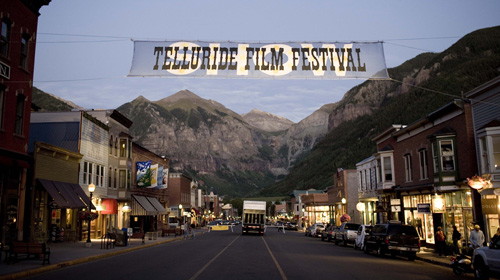
Telluride Film Festival 2014

TFF1_PB_Swanson_Tribute274

The plane leaves this morning and I'm excited, nervous, prepared and ready for anything. I also have a cold. Out! Devil Cold!

The Telluride Film Festival begins Friday, and I, along with Guy Maddin have been chosen at Guest Directors of this year's festival. We programmed six films — no easy task. We've been sworn to secrecy but the cat's out of the bag today (I think). Maybe Friday it'll be in the river. I'm still not sure. Soon, we can spill! 

6a00d8341c630a53ef0120a59c3b36970c

As we said in our joint statement:

“We are honored and thrilled to be guest directors at Telluride, by far the most concentrated, smartly curated, and enchanting of all the film festivals. More than any other festival, Telluride is driven by the sheer love of cinema — discovering new talents, honoring titans and unearthing neglected masterworks and geniuses. The opportunity to share our favorite films with Telluride and its always-discerning audience is not only exciting but an absorbing, wonderful challenge. There are so many movies we love, and to program a selection of six…  where to begin? We really wanted to show those masterpieces we felt hadn't been revived enough, if ever, and to see them as they were meant to be seen — on the big screen. We can’t wait to watch!”

Christie vidor

And we can't.

You make friends at Telluride and, as much as I wanted him to attend Norman Lloyd (who appears in one of the pictures we programmed) could not make it. He's turning 100 in November and is as sharp as a tack, I've me Norman numerous times, had l had lunch with him, attended his  birthday celebration at the Egyptian, even went to Oliver Stone's Savages with him (he thought it was ho-hum —  Design for Living did it bettert), At our Spago Telluride Dinner, we sat next to each oher and talked endlessly. Too bad he can't attend this year (we have a treat, not to be revealed). Telluride reveres Norman Lloyd.

10568835_10152636829085792_3379008430121751035_n

The header photo of two fantastic faces is from the first Telluride in 1974, Gloria Swanson sitting with her soon-to-be- enemy, Kenneth Anger (Swanson, Leni Riefenstah and Francis Ford  Coppola all won silver medallions), what a trio that must have been!  

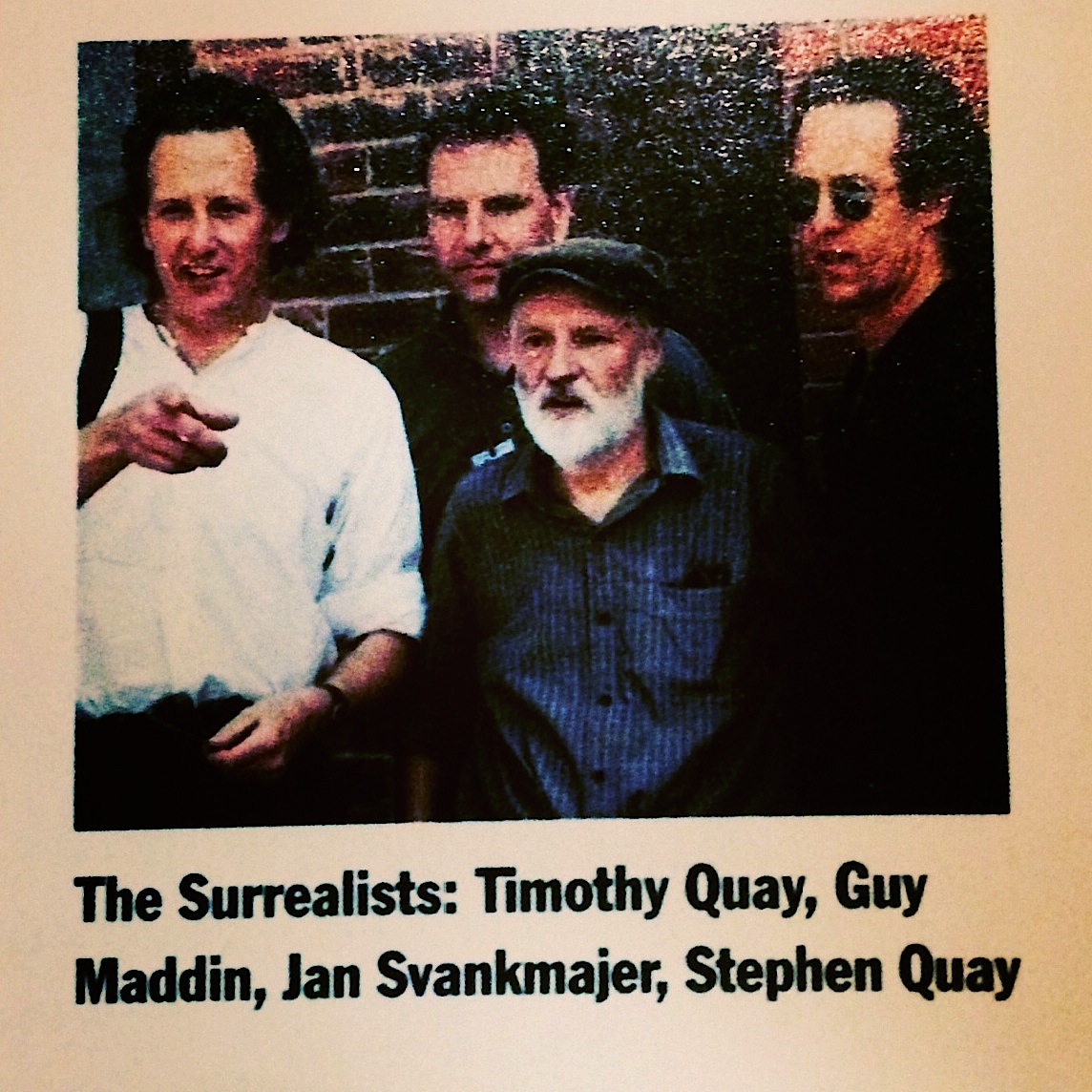
And here's Guy with the Surrealists, winning the Telluride Silver Medallion in 1995.

Guy surrealists

I'll end this with my favorite Telluride experience from 2012, presenting two of Jack Garfein's woefully underseen masterworks, Something Wild and The Strange One. Interviewing Jack on stage, walking around the festival with him, talking to him about life (and man, does he have so many interesting stories), visiting him in Los Angeles, and keeping in touch, giving me some of the most useful advice,  he's become a good friend. Telluride is always rewarding. Now pray this cold lifts. Perhaps the mountain fever will take over and the cold will cower in a corner. Onward! 

Kim jack telluride

Read more about Telluride here.

Followup: They've been announced! 

Here's our list:

CALIFORNIA-SPLIT_1

CALIFORNIA SPLIT (d. Robert Altman, U.S., 1974) ·

IL GRIDO (d. Michelangelo Antonioni, Italy, 1957) ·

M (d. Joseph Losey, U.S., 1951) ·

Mans-castle11

MAN’S CASTLE (d. Frank Borzage, U.S., 1933) ·

THE ROAD TO GLORY (d. Howard Hawks, U.S., 1936) ·

MisterPercyHeltonWickedWoman1953

WICKED WOMAN (d. Russell Rouse, U.S., 1953)

SunsetShots Gun Goes Tumblr

34567

I love pictures. I love searching for pictures. And of course, I love looking at pictures

So as an additional blog to Sunset Gun, I’ve emraced a tumblr site, called  Sunset GunShots.

Pictures and words. Some of my favorite, especially from abbreviated poets

Eecummings

i am so glad and very
merely my fourth will cure
the laziest self of weary
the hugest sea of shore

I will continue to write  longer essays on the original Sunset Gun, but  I’m just taking this curatorial position  seriously — for now. And it’s a wonderful way to research, which I love doing …

Tuesday+Weld+(TIH)

Please check it out.

And remember: Tuesday deserves those orgasmic angora sweaters…

Alone Again Or–R.I.P. Arthur Lee

ArthurLee.jpg

I can’t collect my thoughts on this.

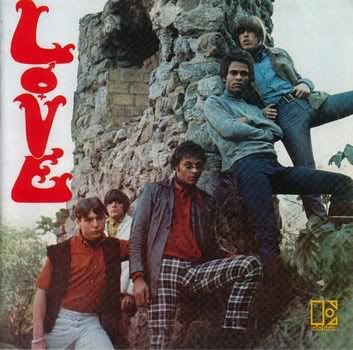
Arthur Lee, who led one of rock’s greatest bands (ever), Love, has passed away. The group’s three classic albums, Love, Da Capo and Forever Changes contain some of the most influential/ genius/disturbing/gorgeous/crazy/poetic/punk/inspiring/cool music you will ever hear. And achingly beautiful. Some songs get me on every level, right down to my nerve endings. I’ve not gone a month without listening to more than one Love tune since discovering them so many years ago and I don’t plan on changing this habit. Even if the brilliant song "Red Telephone" occasionally feels like it has crawled into my brain and scrambled around any sanity I have left. But such was the power of Arthur Lee.

I’m happy I was able to see him in 2002 (soon after he was released from prison) but I remember sensing a palpable doom. There was always doom around Arthur Lee. Thankfully, Lee created brilliant music out of this darkness.

In hippy dippy terms, Love sometimes seemed an ironic name. They were too multi-dimensional for that. Watch them blow away American Bandstand, garage-rocking out a Burt Bacharach tune. They take anything potentially simple from this song and make it tough, full of attitude and almost threatening. And the band was never as simple as just love (there was hate in there)– but then real love never is. And I can safely say that I loved Arthur Lee. Your Mind and We Belong Together.

The Make-Up sang "Free Arthur Lee"–he finally is.

Lovealbum.jpg

I’ve been here once
I’ve been here twice
I don’t know if the third’s the fourth or if the…
The fifth’s to fix
Sometimes I deal with numbers
And if you wanna count me
Count me out