

Happy Birthday, Marilyn Monroe

6a00d83451cb7469e20240a48b1a33200d-800wi

One of the most arresting images I’ve ever seen of Marilyn Monroe came not from a movie or newsreel footage or one of her many photographs. It came from a blanket.

Driving through Death Valley on a long road trip, I stopped in a tiny town for gas and a cold drink. Few seemed to live in this town: it served as a pit stop, a place to either check your radiator or check your mind (or, in my case, both) — one of those locales that offer such a bare minimum of services that a candy bar has never tasted so good. Delirious from hours of 70 mph signposts, I stumbled back into my car, feeling as if modern civilization had melted around me. For months, I’d been working on a piece about Marilyn (a cover story for Playboy . She was never pleased about that centerfold, though she handled it with great spirit, as nothing to be ashamed of ).

Marilyn had been on my mind nearly every day. And then … there she was. Driving away, I spied Marilyn on the side of the road, 20 feet from the gas station. With a mixture of excitement and a strange sadness, I jumped out of the car and stared. Her face was hanging from clothespins, blowing in the breeze, next to an open garage. A warm blanket in the hot sun, set against the blue sky, flapping and undulating in the merciful wind, her face changing shape and expression. This desolate desert Marilyn, so frank and alone, just hanging there, cleared away all the clutter of so many T-shirts, stickers, shower curtains, pillows, purses, wall clocks, and coffee mugs — all those Marilyns you walk right past in any given gift shop on Hollywood Boulevard. A little hypnotized and maybe a little crazy, I thought of how Marilyn described herself, as the woman who “belonged to the ocean and the sky and the whole world.” I had to film it.

That was the summer of 2012, the 50th anniversary of Marilyn Monroe’s passing, a year when Marilyn was on many people’s minds, whether they wanted her there or not. I did want her there, so much so that I was flooding my mind with all things Marilyn, which, given the seemingly infinite amount of material out there, isn’t hard to do. Reading and rereading the books and biographies, rewatching her movies, staring at her photos, and visiting the Hollywood Museum’s Marilyn exhibit (where, among other personal effects, dresses, shirts, telegrams, prescription pill bottles, and notes to Dr. Greenson were on display), I became consumed, as so many have before me.

Out there in the desert, I thought of Marilyn and John Huston’s gorgeous sad end of the line, The Misfits — one of my favorite Marilyn performances and movies. And, again, I thought of the other misfit, Marilyn. I thought of her marriage to Arthur Miller (and I thought of my own marriage which was worrying me … and staring at the lonely blanket of MM, for the purpose of decoration and for the purpose of warming a stranger, almost brought me to tears).

6a00d83451cb7469e201a3fd14acf2970b-800wi

End of the line … Her once hope-filled marriage — this brilliant, world-weary, haunted, mischievous, smart, artistic woman emulates The Misfits fading cowboys. A movie star in a cruel industry wondering how much time she has left. But still a movie star for sure, but one beset with a gorgeousness that's a little beautifully worn, wise. a little, almost, sick of herself. Troubled … Which, to me, makes her all the more beautiful. Real. And real life spilled into the picture with Miller — sick of her marriage, but really did she want it to end? Probably she did. Perhaps she didn’t. One thing is for sure: the movie had to end. The marriage had to end too.

Marriages end in Reno. They start there too but they end in that dusty strange place. As Marilyn said:

“When we were first married, he saw me as so beautiful and innocent among Hollywood wolves that I tried to be like that. I almost became his student in life and literature . . . But when the monster showed, Arthur couldn’t believe it.” “I disappointed him when that happened. But I felt he knew and loved all of me. I wasn’t sweet all through. He should love the monster, too. But maybe I’m too demanding. Maybe there’s no man who could put up with all of me. I put Arthur through a lot, I know. But he also put me through a lot.”

Indeed he did. But Marilyn is so charitable here. As Miller, said, “I had no inkling of what to do or say anymore and sensed she [Marilyn] was in a rage against me or herself or the kind of work she was doing. She seemed to be filling with distrust not only for my opinions of her acting [in The Misfits], but also for Huston’s.” Her rage. In herself in Miller. Her distrust."

Unknown-marilyn-monroe-and-arthur-miller-on-the-set-of-the-misfits-1960

He had “no inkling” what to say but he has a pretty good inkling regarding her rage … take a look deeper regarding that rage. And those reservoirs of rage under that beautiful blonde face and body is why she is brilliant in the movie. It’s hard to know what to say. Just let Marilyn release it. So as Monroe screams, in her big, blistering moment in The Misfits, filmed in a haunting, almost unmerciful long shot, making Monroe a speck of blonde hair and denim in the desert while the men observe and comment on her words from afar — Ii’s perfect. And so powerful. She has to scream, almost an invisible creature in the desert and the dust as the men look with differed expressions. She needs to be heard. Monroe hollers:

"Killers! Murderers! You're liars! All of you, liars! You're only happy when you can see something die! Why don't you kill yourself to be happy? You and your God's country! Freedom! I pity you! You're three dear, sweet, dead men!” 

She understood those words. Miller must have too. And we do too… We try to understand and we never forget Marilyn.

Why is this so? Why Marilyn? I’m not entirely certain unless it’s because she’s so ever-present that you start to project your own qualities and feelings onto her. The more you study her, the more you excavate her history and personae, the more you find yourself using her as a mirror, and the more you find that she reflects something back at you. It seems silly at times, this obsession, this rendering, this exorcism: she’s just a movie star. Yet “her story continues to grow,” as S. Paige Beatty reflects in American Monroe: The Making of the Body Politic (1995):

"And as it grows it assumes new meanings and possibilities. Those who tell Marilyn’s tale negotiate myriad ways of being in America past and present. The dreams, conspiracy theories, photos, tributes, postcards, and refrigerator magnets run together with increasing speed only to crash in a heap of detritus at the feet of the angel of history. Looking back over her shoulder, Marilyn rushes forward, compelled by the wreckage piling in her wake."

Beatty wrote this beautiful passage almost two decades ago, and Marilyn’s still rushing forward, still looking over her shoulder nearly 20 years later. It’s doubtful she’ll ever stop.

6a00d83451cb7469e201a511c405b9970c-800wi

That year of 2012 Marilyn deluge found her gracing magazine covers from Vanity Fair to Playboy, and starring in a new documentary (Love, Marilyn) as well as several new books (Marilyn by Magnum, Marilyn: The Passion and the Paradox, and a rerelease of Norman Mailer’s Marilyn, with photographs by Bert Stern from her last sitting). She inspired a storyline on the TV series Smash, a line of MAC makeup (the color collection was referred to as “distinctly Marilyn”), and starred as ghost spokeswoman for a lovingly crafted, surprisingly moving Chanel No. 5 commercial, which used her famous, provocative answer to the question of what she wore to bed: “Just a few drops of Chanel no. 5.” Chanel surprised viewers with Marilyn’s own voice, taken from an interview conducted soon before her death, as if she were speaking from the grave. And Marilyn loomed large, quite literally, when in a 26-foot tall, 34,000-pound statue, “Forever Marilyn,” was moved from Chicago to downtown Palm Springs, her white Seven Year Itch dress fluttering and enormous. Marilyn was not only everywhere that year: she was elevated, in stature and in sophistication.

22141100_1615361205151116_547480127557840748_n

Now that the anniversary had passed, the flood has slowed but had not let up. In March 2013, a 33-page comic book titled Tribute: Marilyn Monroe, written by Dina Gachman, illustrated by Nathan Girten, and colored by Dan Barnes, was released. The comic covered the star’s sad, glamorous and tumultuous life: her humble, heartbreaking beginnings when she was shuffled through foster homes, her young marriage to Jim Dougherty at age 16, her divorce, her early modeling career, her struggle and rise in Hollywood, her famous marriages to Joe DiMaggio and Miller, her movie roles, and her eventual downfall. It’s a sensitive, celebratory ode to Monroe, with some charming, unexpected details that prove Gachman did her homework: for instance, the fact that teen Norma Jeanne cooked peas and carrots because she liked the colors (something ex-husband Dougherty relayed in an interview), and the story of how Marilyn and her early roommate, Shelley Winters, got drunk with Dylan Thomas, who then crashed into Charlie Chaplin’s tennis court.

Marilyn-monroe-peasant-sitting-1956-shot-by-milton-h-greene-2

I was worried, for a moment, when I read Gachman’s Indiewire essay, in which she admits that, upon receiving the assignment to write about Marilyn Monroe, she didn’t have a “huge amount of respect for her.” But, predictably, extensive reading and research resulted in a newfound appreciation and admiration of her intelligence and talent. In Tribute, you can sense Gachman wanted to do Marilyn justice, and with the fresh, excited perspective of a newly christened devotee. “I really fell in love with her,” she writes.

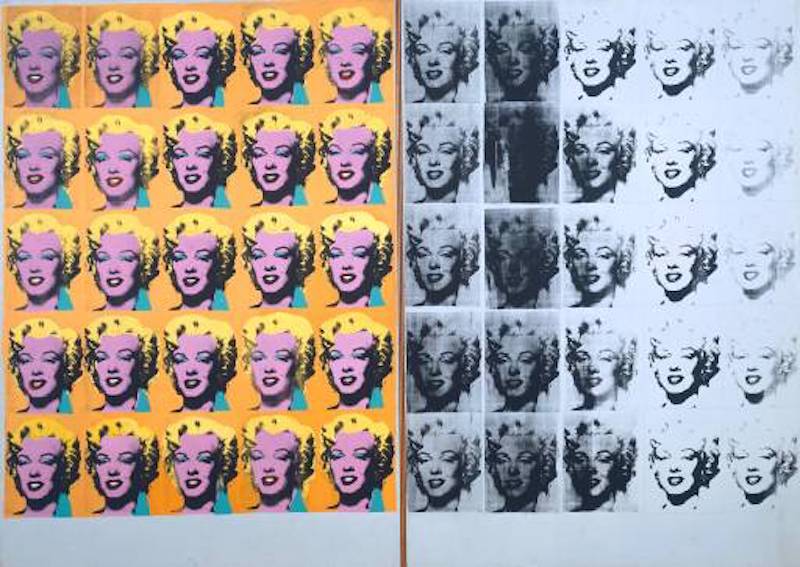
And new love is refreshing. One would think that this woman — the woman Mailer so eloquently called “more than the silver witch of us all” — had already been represented to death. And yet, she remains, decades after her death, enthralling. Ubiquity may cause some to take Marilyn for granted, or even to become tired of her, but it will never, ever diminish her. Andy Warhol, the first artist to put her in what was, essentially, a comic-book setting, knew it right away. His Marilyn Diptych (1962), created weeks after her death, with its rows of colorful Marilyns juxtaposed with the inkier, moodier black and white Marilyns, is a prescient, powerful work. Placing a picture that already seemed like a relic (a va-va-voom publicity shot from Niagara) into a modern pop art tableau, he exposed her timelessness and her versatility. Each of the 50 duplicate images, on closer inspection, are different.

6a00d83451cb7469e201a3fd1466ea970b-800wi

It’s easy to say that the two halves of the picture represent the two sides of Marilyn: one side the bright star, the other the darker, moodier Marilyn who is fading away. But the work is more surreptitious than that. Warhol seemed to know instinctively that the viewers would project their own thoughts on her image. Helpless victim, powerful sex goddess, movie star, beauty icon, camp icon, cartoon — we take her in many ways, positive, negative, or a mixture of both. Warhol, bless him, catapulted Marilyn into the modern era after she lost the ability to do it herself (and, rest assured, she would have).

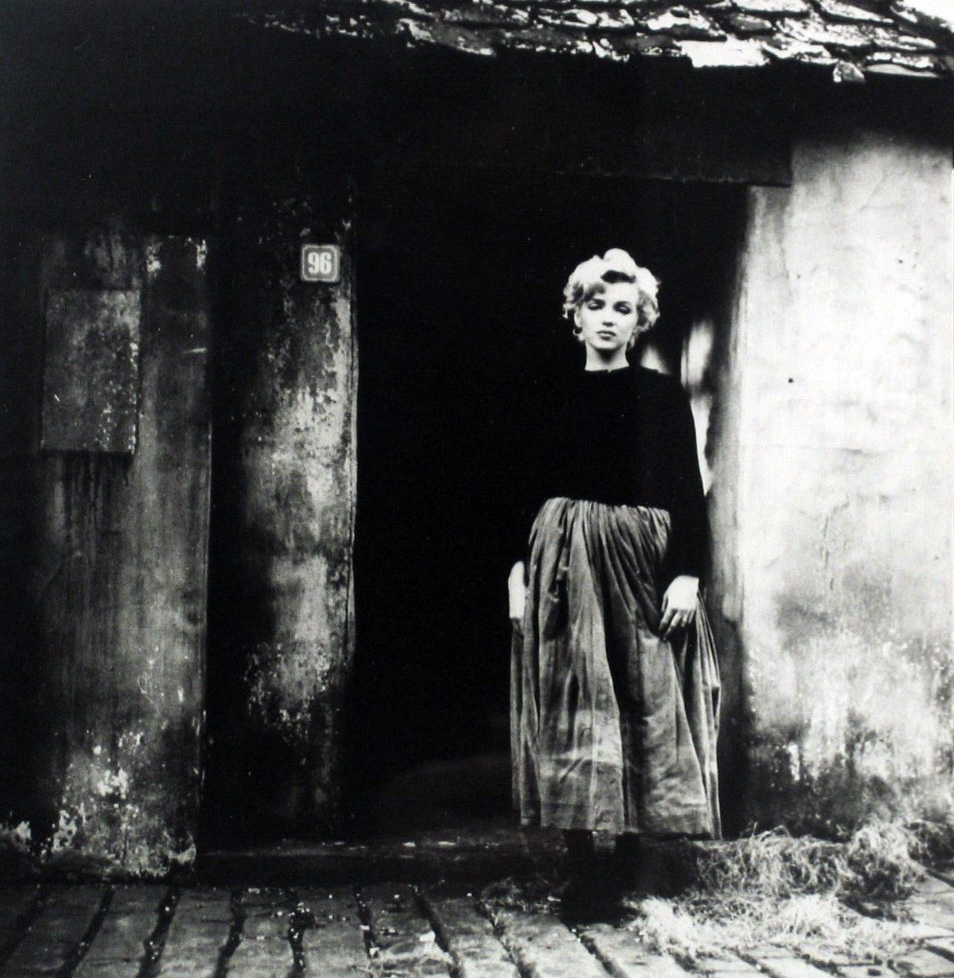
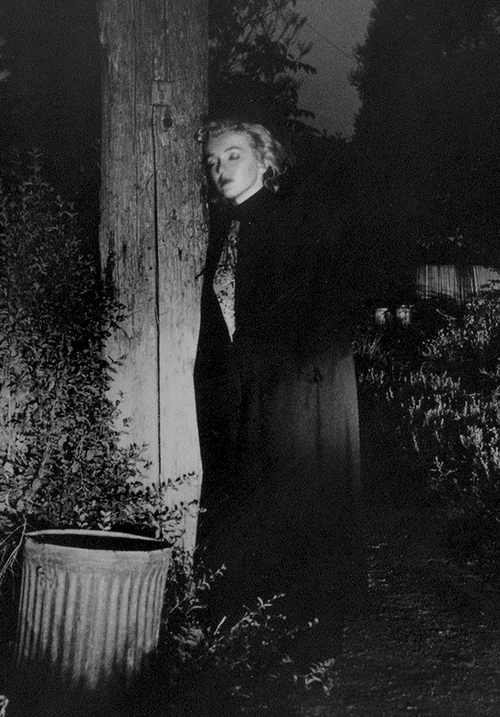
What did Marilyn want us to see? Well, of course, we’ll never really know, and that is an enormous part of Marilyn’s power. You can see this in her work in front of the camera, as a brilliant, creative photographer’s model, with, among other greats, Andre de Dienes, Eve Arnold, Milton H. Greene, Bruce Davidson, Richard Avedon, Erich Hartman, George Barris, Bert Stern, Phil Stern, Henri Cartier-Bresson, Dennis Stock, Philippe Halsman, Elliott Erwitt, Douglas Kirkland, and Inge Morath (who shot some of the more powerful photos of Marilyn alone and with her husband Arthur Miller as their relationship was disintegrating — and, who, interestingly, became Miller’s next wife). Morath loved photographing Marilyn. Most photographers did. As Eve Arnold said:

"I never knew anyone who even came close to Marilyn in natural ability to use both photographer and still camera. She was special in this, and for me, there has been no one like her before or after. She has remained the measuring rod by which I have — unconsciously — judged other subjects."

6a00d83451cb7469e201a511c40558970c-800wi
Marilyn died young and beautiful, but she still inspires, beguiles, and offers new gifts, like that cheap blanket I encountered in the middle of nowhere.

I hope that blanket is keeping someone warm at night, as Marilyn famously claimed her work failed to do: “A career is wonderful, but you can't curl up with it on a cold night.” But thank God for that career — the movies, the photographs, the life. Even after tragically expiring on that lonely mattress, nude, in her rather humble Beverly Hills hacienda, she never lost her mythic power. In her last picture, The Misfits, Montgomery Clift’s cowboy poignantly and revealingly tells Marilyn’s Roslyn, “Don't you let them grind you up. Hear?” Decades later, we still hear you, Monty. 

6a00d83451cb7469e201a511c4058a970c-800wi


Jump Into the Fire: GoodFellas

6a00d83451cb7469e20240a4af7668200b-800wi

"Rock ‘n’ roll is an attitude: it’s not a musical form of a strict sort. It’s a way of doing things, of approaching things. Writing can be rock ‘n’ roll, or a movie can be rock ‘n’ roll. It’s a way of living your life.” – Lester Bangs

“I thought of it as being a kind of attack… Attacking the audience. I remember talking about it at one point and saying, ‘I want people to get infuriated by it.’  I wanted to seduce everybody into the movie and into the style. And then just take them apart with it. I guess I wanted to make a kind of angry gesture.” – Martin Scorsese (Conversations with Scorsese, Richard Schickel)

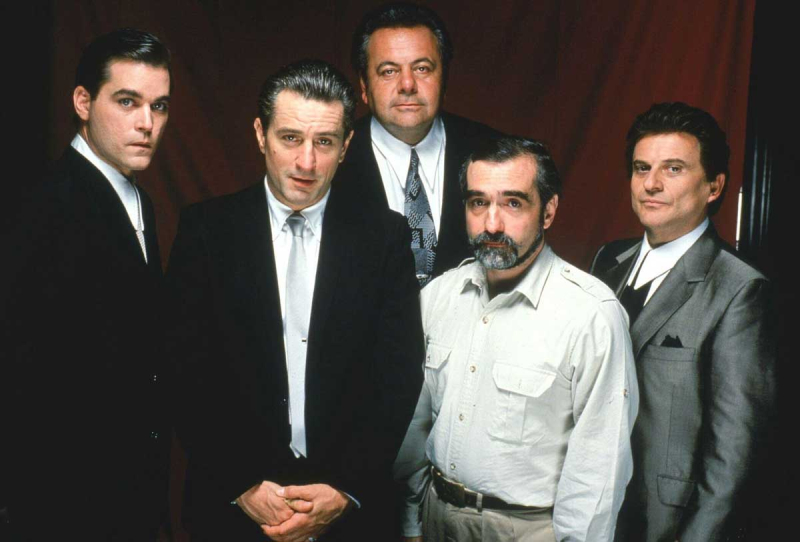
GoodFellas is music. It’s like a concept album. I don’t know which album specifically – but an album all its own.

And it’s not just a Martin Scorsese mix-tape, it’s something the director manipulated through his vision – as his own production – he laid the tracks. Romance, sex, menace, murder – he thought of the music intertwining in the scenes, commenting on characters and actions, music moving alongside the characters, getting into their heads. He wrote the music into the script before shooting. He was thinking in pictures and thinking in music. And he crafts a kind of magic here that vibrates. It’s the double album with the epic scope of “Exile on Main Street” (even if none of those songs are in the movie – it’s songs from “Let it Bleed” and then Mick Jagger’s solo record “Memo From Turner”) but then of course it’s, among many others, Harry Nilsson and the Cadillacs and George Harrison and Muddy Waters and Tony Bennett and Cream and Derek and the Dominos and The Crystals and Donovan and Sid Vicious singing “My Way” because there is no way that movie is gonna end with Sinatra singing it (no offense to Frank). And that’s just the half of the music. It’s an album I can listen to over and over and never grow tired of it. It pulls a lot out of me – it’s still dangerous, soulful, sexy, scary, innovative, crazy…

This is not to glamorize GoodFellas – the end result of the movie is a brutal, bloody, sad decline –  a giant stumble from an illusory life of “brotherhood” and into dishonor, the end of a marriage, the end of an era.

6a00d83451cb7469e20240a48afaeb200d-800wi

When people think this movie is some kind of guidebook to cool (as cool as many of these guys look – check out Ray Liotta’s sharp-suited, sexy-as-hell introduction, with the camera tilting up adoringly), or the way tough guys should behave, they’re not getting it, they’re not getting what Scorsese pulls on all of us here, they’re not even remembering the ending. It’s Joe Pesci as Tommy’s dark “funny like a clown” humor proving to be deadly – once poor, timid Spider decides to stick up for himself, he’s done for. It’s your wife flushing the cocaine down the toilet because that is the only sensible thing to do and then yelling at her because that’s the only source of income you’ve got. It’s Henry Hill saying this as the movie’s nearing the end:

“If you’re part of a crew, nobody ever tells you that they’re going to kill you, doesn’t happen that way. There weren’t any arguments or curses like in the movies. See, your murderers come with smiles, they come as your friends, the people who’ve cared for you all of your life. And they always seem to come at a time that you’re at your weakest and most in need of their help.”

And Scorsese said as much in Richard Schickel’s “Conversations with Scorsese:” “Everyone paid for the privilege eventually. The danger of the picture is that young people could look at it and think, Hey, what a great life. But you’ve got to see the last hour of the picture when things start going wrong in a big way.” But – Jesus – the goddamn excitement of the movie, even when everything is falling apart, it’s still so breathtaking to watch. And at times, so darkly funny you have to catch yourself. And once you start watching, you can’t turn it off. You’re not skipping to better songs on the album. Every song is great and the structure is so perfect- You’re hooked.

GoodFellas is a gangster picture, of course, but it’s a rock ‘n’ roll movie if I ever saw one. At times it’s, in an oblique way, one of the greatest rock ‘n’ roll movies ever made, which may sound hyperbolic because, yes, there are actual, direct rock ‘n’ roll movies that are great (and Martin Scorsese had made a few of them – The Last WaltzNo Direction HomeShine a LightGeorge Harrison: Living in the Material World…) There’s also Jailhouse RockA Hard Day’s NightPurple Rain… There’s The Girl Can’t Help It. There’s PerformanceEasy Rider (where creepy Phil Spector memorably shows up), HeadTommyQuadropheniaThis Is Spinal Tap … the list goes on and on, I am missing many here … But GoodFellas makes me feel like I’m not just inside the lifestyle of a rock star, but inside the songs, the sex, drugs, romance, violence and downfall. The paranoia. The combined power of cast and crew pulls me into its thrall. But as flashy as the characters are in the movie, as they live a rock star life, it’s the creators who are the real rock stars: Scorsese, co-screenwriter Nicholas Pileggi, cinematographer Michael Ballhaus, and editor Thelma Schoonmaker. These artists are swaggering with style, but never style over substance. They, in fact, transmutate style into substance – the sensory/sensual overload is a weapon. And it is meant to be. The characters in GoodFellas are sensualists, some are also sociopaths, but they do indeed have soul – dark as it is, paradoxical as it is.

Pauline Kael, whom I admire, was mixed on the movie and said this, “Is it a great movie? I don’t think so.” (She’s wrong! It’s more than a great movie, it’s a landmark) However, she goes on to say, “But it’s a triumphant piece of filmmaking – journalism presented with the brio of drama. Every frame is active and vivid, and you can feel the director’s passionate delight in making these pictures move.” Passion. Yes. And this passion is so important here. Her piece is called “Tumescence as Style” – I think this is meant as an insult – tumescence – but I love how swollen and engorged the picture is, so alive and scary, ready for sex or on the verge of limp death – shambling towards doom. That is what we return to. And it is through that passionate, sensual style – the excitement of the soundtrack, the colors, the groundbreaking camera moves and “The life” that are such a huge part of it. I was thrilled to see it turn up again in two other Scorsese masterpieces, Casino (epic sibling to GoodFellas), and The Wolf of Wall Street (the scrappy, silk-suited bastard brother to GoodFellas). Watching Scorsese’s virtuosity – the zooms, the dolly/zooms, the freeze-frames, the variable speed shots, THAT tracking shot set to the Spector-produced “Then He Kissed Me.” Scorsese is creating his own Spector-like wall of sound (and image) in GoodFellas, or Brian Wilson producing the album “Pet Sounds” or “Good Vibrations” – the ingenuity of it all, the obsessive attention to detail. But – those sounds and those images in your brain – it’s gorgeous, but it’s got to be hard, too, carrying all that around on your own.

And as I said: It’s not for show, it lends feeling and weight and emotion to the proceedings: It’s like an injection of a drug and cruises, quickly, through your bloodstream. It’s a thrill.

As I write this, I think of Lorraine Bracco’s Karen – and, to my mind, we, the viewer, are Karen – and Henry – we are seduced by the bright lights, the power, the violent power of it all. There’s some part of us that wants to partake, our blood rushes, our heart pumps. Scorsese knows this, after all why do people live lives like this? He sees this as seductive, as dangerous as scary. Scorsese described how he saw these men in his introduction to Nicholas Pileggi’s 25th-anniversary edition of Wiseguy:

“I wanted to stay as close to the facts as we could. There was a natural rise and fall narrative there, but that wasn’t what made it special. It was the places, the restaurants and bars, the food they ate; the clothes, the sense of style; the gestures, the body language, the way of being with one another; the ease with which they committed murder. On the one hand, an immersion in detail that was sensual and documentary at the same time; on the other hand, a forward propulsion that moved with their energy and exhilaration, and then with their paranoia and stone-cold fear.”

Stone cold fear. It all goes bad. But Scorsese sees that you’re attracted to it – until you can take only so much. That’s the thing – we, again, like Karen, start to think… how far would we go with this? She was taken in by the excitement and romance – that date set up with the historic tracking shot into the Copacabana tuned to “Then He Kissed Me” – walking through the service door, through the kitchen, Henry knowing everyone (“Every time, you two! Every time!”) – the table floating in, especially for him, like he’s royalty. Or as Scorsese said, his “Valhalla.” The “Court of kings.”

Karen feels like a princess. It’s so romantic and no one can deny it – even when she asks what he does for a living and he answers “Construction.” We laugh knowing, yeah… that’s not all together true. The song swoons: “All the stars were shining bright and then he kissed me…” Well, that is perfect. Too perfect of course. Move forward in time to Sunday, May 11th, 1980, 6:55 am, the bravura sequence which serves almost as a short film all its own but fits seamlessly within the movie – Harry Nilsson’s fantastic, nervous breakdown of a love song, “Jump into the Fire” starts the ball rolling, excitedly amping up the harrowing, sometimes hilarious proceedings. (All of the songs, from “Monkey Man” to “Mannish Boy” to “Magic Bus” to “Memo From Turner” to “What is Life” have a stream-of-consciousness, mood-altering power, overlapping to underscore, comment and echo Henry’s mind) Henry is seeing helicopters, picking up guns, grabbing and snorting cocaine, meeting his mistress, instructing the babysitter, making sure his brother stirs the sauce, etc. and so on… music is all over the place, but there’s something about Nilsson scream/singing: “We can make each other happy!” almost like a threat. As if screaming is the only way he’ll be able to shout out all the dysfunction to delusionally convince himself these two will ever be happy again. Of course, they won’t be.

Karen’s a romantic to some degree, likely a girl staying up at night as a young woman listening to records, dreaming of love, but also not taking shit from a guy who jilts her (as she does so beautifully when Henry dodges her: “You’ve got some nerve standing me up. Who do you think you are? Frankie Valli or some kind of big shot?!”). In the Scorsese world, she’d be listening to Phil Spector produced songs (which are already dysfunctional and dangerous and yet swooningly romantic – songs written and produced by a psychopath) but there’s a sensuality and danger in those songs there that Scorsese well understands (think of the opening to Mean Streets with “Be My Baby,” a song Brian Wilson said was like having your mind revamped.”) And then there’s, Scorsese, who, perhaps, like Henry, watched the wise guys from his fire escape ladder, saw the Cadillacs, the shiny sharkskin suits with his own score playing in his head. You feel all of this swirling together – the characters, the creator, the music – and Karen is key to understanding the attraction. The songs and dates and sexy temperaments and crossing the street to pistol whip an asshole, things that we know are red flags, they pull Karen in (“I know there are women, like my best friends, who would have gotten out of there the minute their boyfriend gave them a gun to hide. But I didn’t. I got to admit the truth. It turned me on.”) And they pull the viewer in too.

But it’s not all fireworks and bravado – it’s something much more totemic, and essential, rhythmic, choral – something in our very life blood. We want to feel alive, on fire, and GoodFellas makes us, at the very least, live vicariously through these cock-of-the-walk men who live life on their own primal terms, just as we would like to. Take for instance, the Billy Batts/Tommy get your shine-box scene. Do you know how many women relate to this moment? The condescension of Batts towards Tommy? How he’s telling him to know his place and then making him feel hysterical for becoming so pissed off about it? (Forget any idea that women can’t understand this picture…) Tommy’s reaction before the murder – we get it, we even relate to it. Of course, until we can no longer and watch the destruction. Like any great dramatic rock band story, there’s a downfall.

The Band breaks up…

6a00d83451cb7469e20240a461a440200c-800wi

Scorsese meticulously maps out each betrayal, he choreographs them: each of them as dazzling a set-piece as the adrenaline-pumping “Side A” tracks he presented us with – the pink Cadillac with two dead bodies laid to rest as Derek and Dominoes’ lush piano coda from “Layla” begins, moving to the bodies in the garbage truck, the cranes jib down and push into a meat-freezing truck, all the way to the frozen body of Carbone. This is a song that makes you want to cry, Clapton and Duane Allman working together here – Allman’s sweet slide guitar and Jim Gordon on piano (I will add here that Gordon also played drums on two other GoodFellas’ tracks – let me know if there are others – Nilsson’s “Jump into the Fire,” and Harrison’s “What is Life” – and in real life, suffered from schizophrenia and murdered his mother. He, like Spector, is currently in prison. Also, reportedly, by some insiders including Rita Coolidge, he stole that piano coda from Coolidge, his ex-girlfriend. The dark resonance to this beautiful song has so many layers it’s kind of mind boggling). And so here we are, looking at all of these sleazeballs dead and feeling it. I mean, really feeling it, beyond who they are because do we really feel for them? I don’t know – it feels more as some kind of sad statement about life. Of what we stupidly reach for. Of our mistakes. Another beautiful moment is when Scorsese shoots a close up of Robert De Niro (cued to the opening chords of Cream’s “The Sunshine of Your Love”) at 32 frames per second so the camera can linger just oh-so-long in the glint of his eye – so he can bronze the moment Jimmy the Gent decides he doesn’t need living partners – or liabilities. He might as well keep the Lufthansa bounty all to himself. Another – Billy Batts is murdered to Donovan’s elegiac, epic “Atlantis,” an unexpected, genius decision that felt so surprising and yet so perfect the first time I saw it, I could never think of the song the same way again. It’s a sad song about a disappearing continent, a disappearing culture. Pesci kills a made man thinking he’s invisible. “Hail Atlantis!”

Scorsese also takes us down with Karen and Henry, we experience (in one of the most suspenseful scenes in the film) Karen almost getting killed with great ease by Jimmy as he offers her “…some beautiful Dior dresses…” for free – if only she would go into a dimly lit warehouse where ominous silhouettes await her.  She comes out of this encounter, trembling and joining Henry in the driveway in a perfect symmetrical callback to the moment where Henry, like a focused, fast-walking knight in shining armor met her in the driveway after swiftly beating her offending neighbor to a pulp. This is the end, my friend, and Scorsese makes sure to rhyme with the opening thrills: Henry was getting hundreds of dollars when he was a kid, parking Caddies for the mob and now, when he goes to Paulie he is worth just that: a few hundred dollars. That is all he will harvest.

6a00d83451cb7469e20240a461a465200c-800wi

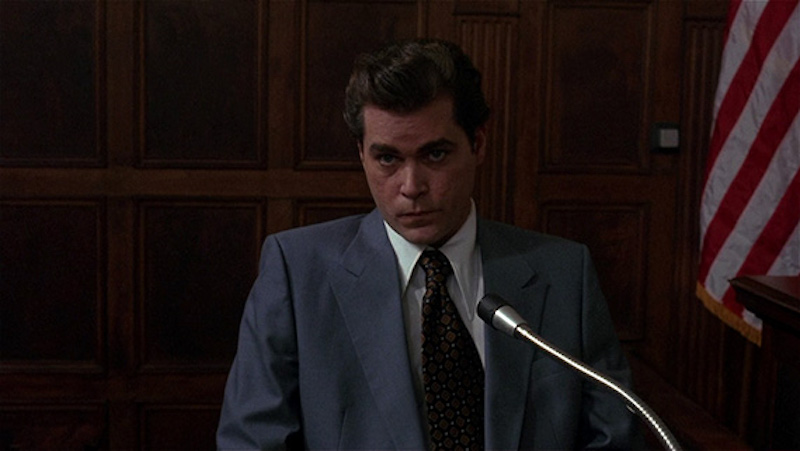
Oaths of loyalty are overturned, once more, in symmetry – Henry came out of jail, and into that fellowship, with a few words of advice from Jimmy “Never rat on your friends” and now, in the final act, he will.

Loyalty, family, identity and homeland will be foregone. Fingers will be pointed, like muzzles. Each of them, an assassination in court – each of them underlined by the camera pushing in – killing what is left of the life and the lights and the glory. And then Scorsese caps it all off with a POV shot of Tommy – gun straight at us, firing.

You’ve been hooked, lifted and dropped to the ground. And it is then that we figure it out: these songs, this album, like most of the best music, is about heartbreak. “You can jump into the fire, but you’ll never be free.”

Rest in Peace, Seymour Cassel

6a00d83451cb7469e201bb0953b9ef970d-800wi

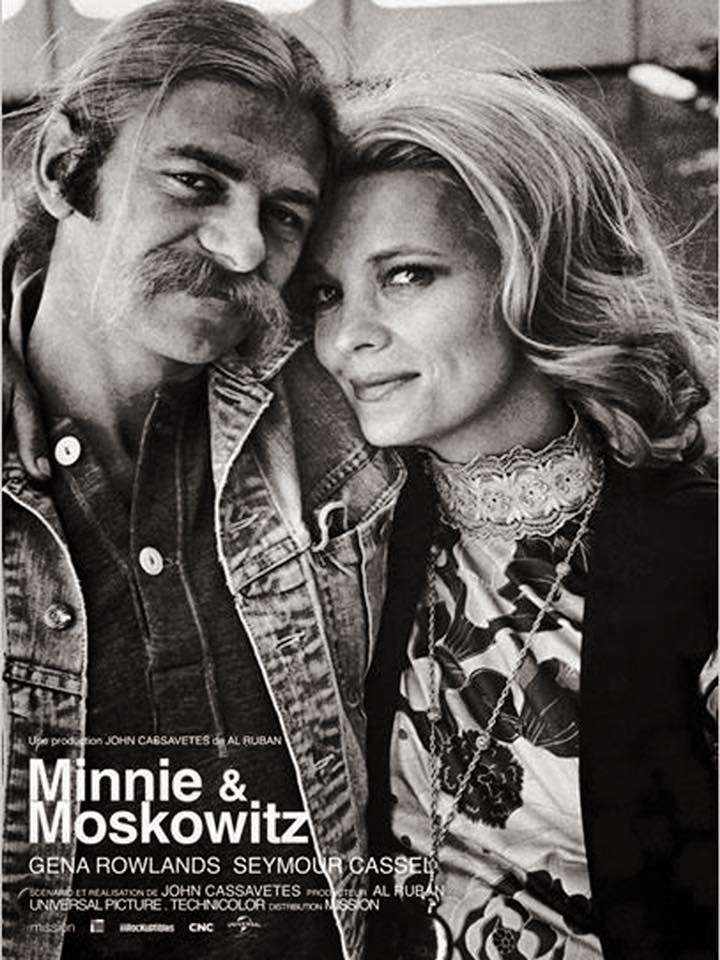
Here's my New Beverly piece John Cassavetes' romantic, poignant, emotionally volatile and movie-drenched, "Minnie and Moskowitz — one of my favorite Seymour Cassel pictures. May the great man Rest in Peace. 

“I wish my life was a non-stop Hollywood movie show. A fantasy world of celluloid villains and heroes. Because celluloid heroes never feel any pain and celluloid heroes never really die.” – The Kinks, “Celluloid Heroes”

6a00d83451cb7469e201b7c8b0bd21970b-800wi

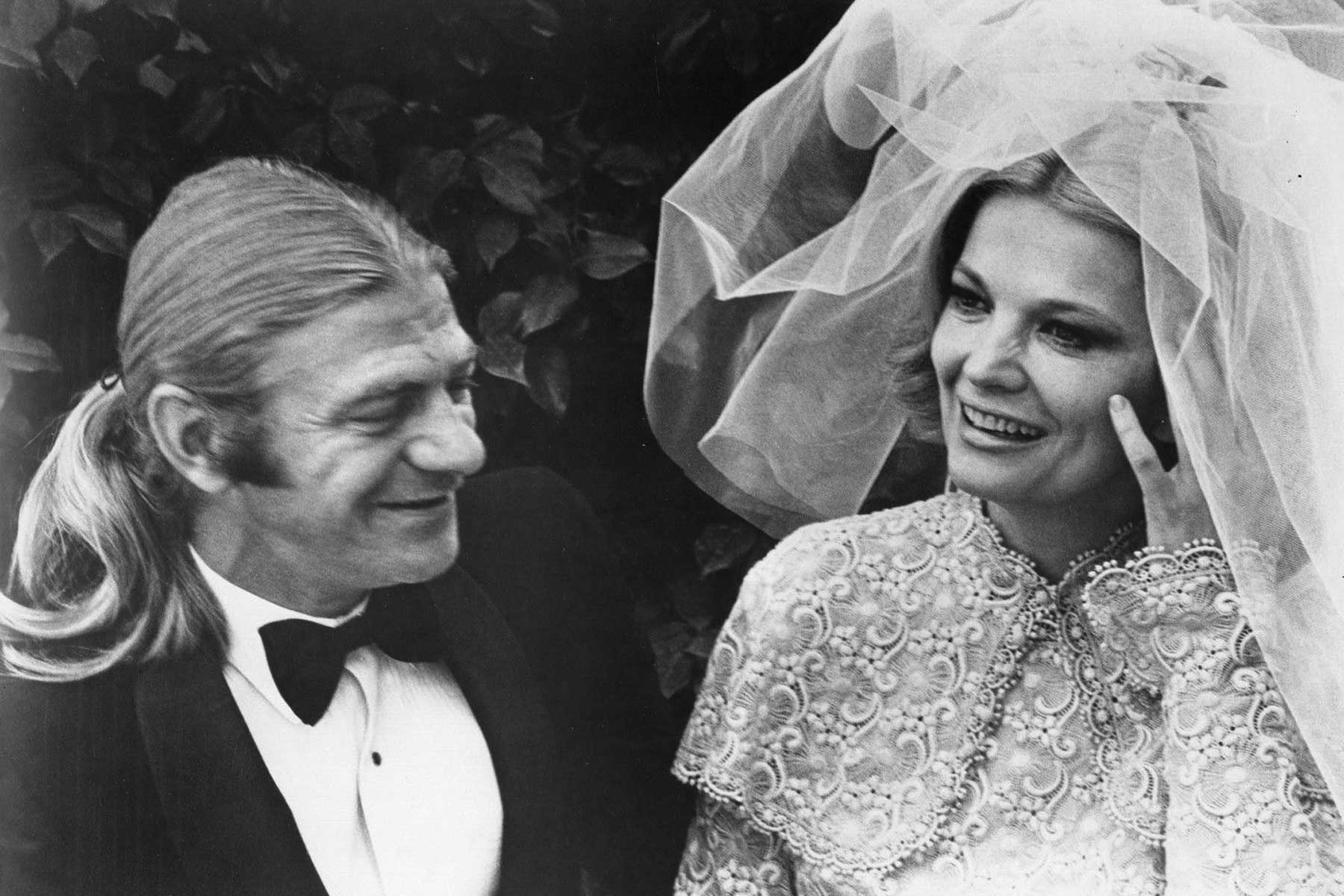
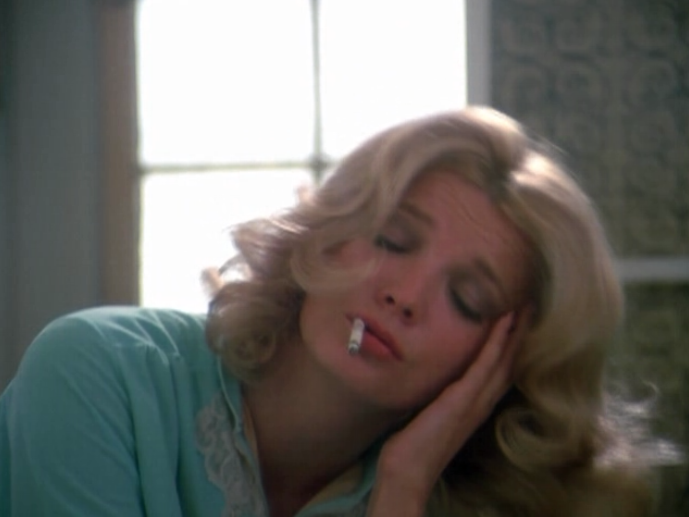
Movies set you up. That’s what movie lover Minnie Moore (Gena Rowlands) emphatically states to her older friend and co-worker, Florence (Elsie Ames), after the two women spend an evening out watching Casablanca. They drink wine in Florence’s dark little apartment and they talk; they talk like real women. It’s a disarmingly frank discussion between a much older woman with a younger woman about sex, men, doing what they can to please men (who seem to want everything from them, their heart, their soul, as Minnie states, only to learn men really don’t want it when they finally get it), loneliness and… movies. And yet, that “set up,” that fantasy, hangs over Minnie and Moskowitz in a complicated manner that neither damns the siren call of cinema nor negates their delusional pull. Perhaps we need movies. Perhaps we need them to realize we don’t need to believe in them? Perhaps to realize they’re often lovely, but often a lot of lovey bullshit? That’s how beautifully complex writer director John Cassavetes makes Minnie and Moskowitz  – it’s just not that simple. Nothing in the Cassavetes universe is that simple.

Image009

As Minnie says: “You know, I think that movies are a conspiracy. I mean it…. They are actually a conspiracy because they set you up, Florence. They set you up from the time you were a little kid. They set you up to believe in everything. They set you up to believe in ideals and strength and good guys and romance and of course, love. Love, Florence… So, you believe it. You go out. You start looking. Doesn’t happen and you keep looking…. There’s no Charles Boyer in my life, Florence. I never even met a Charles Boyer. I never met Clark Gable, I never met Humphrey Bogart. I never met any of them… They don’t exist, Florence. That’s the truth. But the movies set you up. They set you up and no matter how bright you are, you believe it. ”

Minnie’s monologue is a potent clarification within a movie full of movies, a movie in which characters go to the movies, talk about movies, even drive past movie marquees. And that the film, set in Hollywood, was a studio picture, a supposed “youth movie” (if Lew Wasserman had his way) and also, according to Cassavetes’ biographers, a movie inspired by the director’s own courtship with his real life wife Gena Rowlands. It’s both a valentine and a warning tale. Don’t believe all that movie mush but don’t deny your feelings either. Don’t harden. Don’t get cynical. Don’t shove it all away. Love is the thing, but how we get there is a frustrating almost violent struggle. It is not gorgeous, suave and smooth, like Charles Boyer; it’s embarrassing, volatile and weird, like Seymour Cassel.
 
6a00d83451cb7469e201b7c8b0bd04970b-800wi
The picture works as a subversion of the romantic movie and the screwball comedy in that the “opposites attract” story is layered with pain, alienation and often at times, violence. The beautiful, blonde museum worker, Minnie, in opposition to the scruffy, long-haired, unpredictable Seymour Moskowitz – a man whom she states straight to him, is not her romantic ideal – could not be any more different. But Seymour is not going to take no for an answer.  And that’s where the movie builds and spirals and literally screams into another realm – where the adorable troublemaker woman, Katharine Hepburn of Bringing Up Baby, will win Cary Grant by following him, nearly stalking him and perpetually putting him in peril, becomes the obnoxious almost unlikable man Seymour, who causes fights and arguments at every turn. A man we’re not sure about. Should Minnie even succumb to this guy? Is this healthy? I believe Cassavetes would say yes. After all it’s a version of him (and that marriage lasted until his death). But as a movie, we’re not so sure how this will end up, making it extra poignant and multidimensional. We’re happy they will feel happy, but… will it last?
 
Minnie
Well, who knows? And considering Rowlands’ Minnie has been contending with so many messed-up, oppressive and abusive suitors at least Seymour sticks up for her, clumsily, when the moments arise (and they arise a few times, sometimes, his own fault). When she returns home after her night with Florence, a man is in her apartment. That man turns out to be her married boyfriend Jim (played by Cassavetes), whom she thinks she loves. What does he do? He hits her and knocks her on the ground. Why? Because he’s jealous (he justifies his behavior with the “I love you so much I just get jealous” routine.) Of course he’ll go back to his wife (after his wife attempts suicide) and Minnie’s left both depressed and disgusted. Then, in a standout scene, there’s another man (in a complicated scenario, he’s an accidental date) who berates her after she says she’s not interested in him over lunch. In a funny, sad and acerbic moment with a magnificent Val Avery as the never-in-a-million-years potential partner, Minnie listens to all he can give her (he’s very aggressive and nervous about this) only to get hollered at upon rejection: “Blondes. What is it with you blondes? You all have some Swedish suicide impulse? Huh? I took a blonde to lunch once, next think you know she wanted me to kick her… Bleached blonde, 90 dollar a week worker. I just wanted to take you out! Give you an education! Show you there’s a little love and understanding left in the world!”
And that’s where Seymour steps in to save the day. You know, like in the movies. Sort of. He really starts driving poor Minnie insane, even when he takes her to Pink’s (there are so many wonderful Los Angeles details in this movie). Seymour has just freshly arrived in L.A. from New York where his dating life wasn’t exactly aces either. But we learn that he does have at least one thing in common with Minnie – he loves movies too. The picture begins with Seymour watching The Maltese Falcon and also having a conversation with a fellow loner, in this case a stranger in a diner played by the brilliantly bizarre Timothy Carey (who adored working with Cassavetes). Carey is the unforgettably named Morgan Morgan and in a magnificently manic, sweaty scene, talks and yells about a lot of things: Aging, the kind of women he likes, his wife’s death… and again, movies. Seymour asks: “You like movies? I just saw a movie called The Maltese Falcon. You ever see that?”

Carey-Minnie-and-Moskowitz

Morgan Morgan: “Uh-uh. I don’t care anything… I don’t know anything about cinema. I don’t like it. Bunch of lonely people, looking up. Forget about it.

Seymour: You don’t like Bogart?

Morgan Morgan: I only like one: Wallace Beery

See, even Morgan Morgan likes one movie star.

By allowing all of these scenes to unfold with remarkable but very real people, movies and real life intertwine in Minnie and Moskowitz showing both the naturalism and uniqueness of everyday individuals. Real people may not be movie idols, but they’re often interesting and different. And scary. Seymour’s love for Minnie verges on the frightening. He violently threatens, fights, yells and punches things in her bathroom (reminding me of the rage-filled, frustrated love outburst in Paul Thomas Anderson’s Punch-Drunk Love only, Adam Sandler’s Barry Egan explodes with violence from repression whereas Seymour is constantly at full volume). Seymour exclaims: “That’s what happens when you love someone! You punch doors! You make a fool of yourself!"

6a00d83451cb7469e20240a479cc34200d-800wi

But there’s a lot of tenderness here too. And, in one scene, while watching Casablanca together. Seymour tells her that she looks like Lauren Bacall from the side. She smiles and leans her head on his shoulder. Movies. When they take a night swim, they return to her apartment and she begins singing the song she sang earlier in the film with loneliness towards Jim: “I love You Truly.” But this time Seymour sings along. It’s a lovely moment and it’s another movie moment. The song is indeed evergreen, many singers have sung it, but I thought of Ward Bond and Frank Faylen lovingly serenading James Stewart and Donna Reed on their wedding night in Frank Capra’s It’s a Wonderful Life. Cassavetes loved Capra.

From Ray Carney’s “Cassavetes on Cassavetes”: “I loved Frank Capra when I was a kid. I saw Mr. Smith Goes to Washington and I believed in it. I believed in the people in our country and our society. I believed that the rich were not that bad and that the poor had a gripe, but that people could come together and that made America a better place for me to live in and be proud of. And every Capra film I’ve ever seen showed the gentleness of people. There were corrupt people within that framework, sure. The poor people were always oppressed, but they were oppressed with such dignity and loveliness that they were really stronger than the rich; the rich had to be educated. I grew up with that idea. I grew up on guys that were bigger than life. Greenstreet, Bogart, Cagney, Wallace Beery. Those were my favorite guys. I’d think, God, what a wonderful life they had – to have an opportunity to stand up there in front of people, in front of a camera, to express yourself and be paid for it, and say things and have it mean something to the audience.”

Tumblr_m5hos6eiXw1ro2c2ro5_400

Movies a conspiracy? Is it a wonderful life? Like Capra, John, Gena, Minnie, Moskowitz, Florence and Morgan Morgan, it’s never that easy to answer.

Criminal 3: The Color of Money

6a00d83451cb7469e20240a448c068200c-800wi

Out now in Ed Brubaker's Criminal number three…

I dig into Martin Scorsese's The Color of Money — a strangely under-discussed Scorsese featuring a wonderfully weird Tom Cruise before he was doing wonderfully weird and Paul Newman in all of his wizened movie star glory. This is like a samurai movie with pool cues for swords… it's also something of a vampire story … I love it.

Order here.


This Town Doesn’t Change: The Late Show

6a00d83451cb7469e20240a44295a1200c-800wi

“Back in the 40s this town was crawling with dollies like you. Good looking cokeheads trying their damndest to act tough as hell. I got news for you: they did it better back then. This town doesn’t change. The just push the names around.”

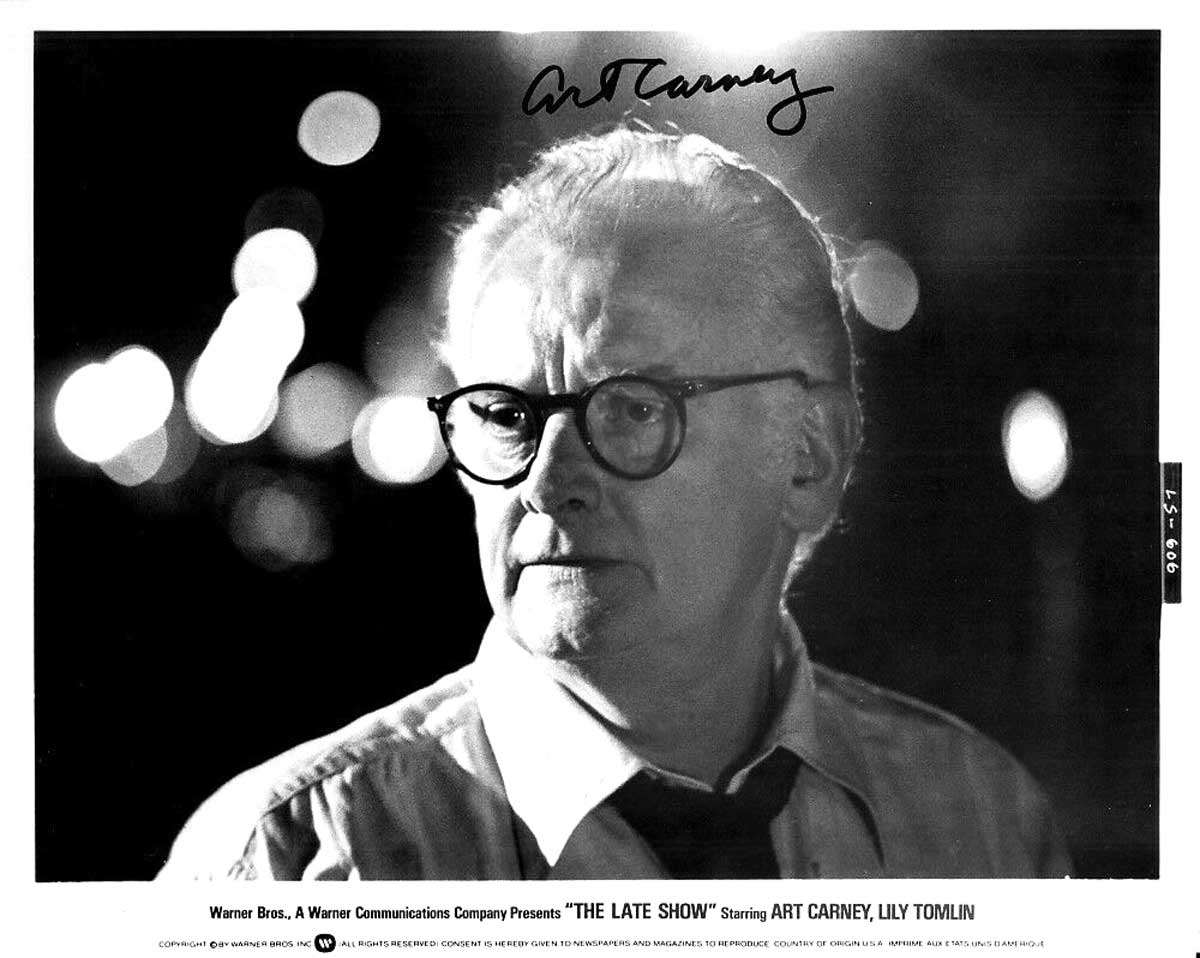
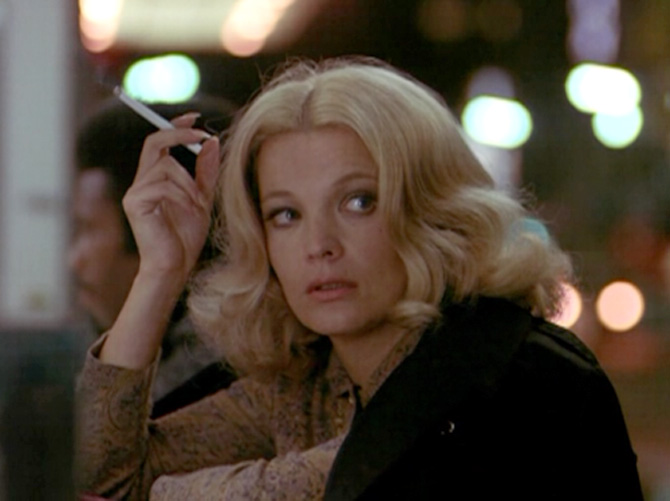
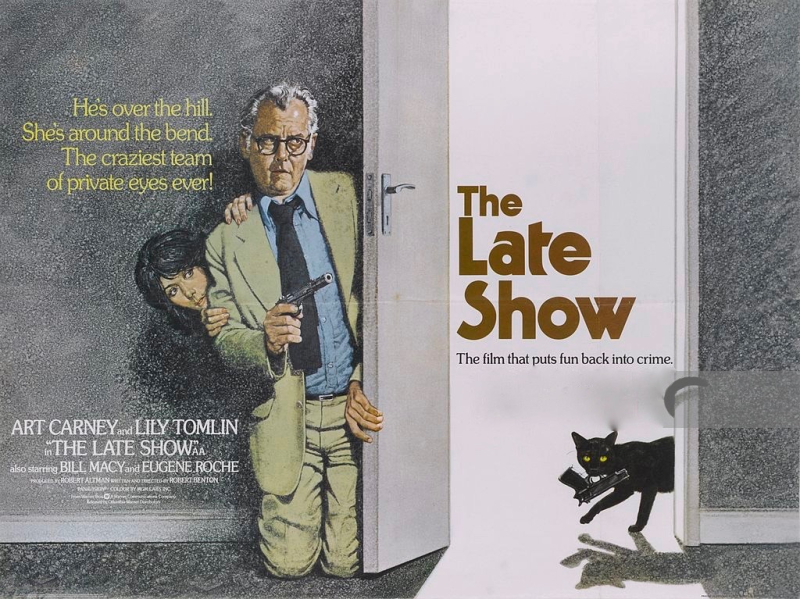
“Jeez, Charles, he doesn’t look so hot to me.” So says Lily Tomlin’s new agey Margo when she first spies Art Carney’s retired private investigator, Ira Wells. She’s scoping him out at a place many young people think guys his age are about to set one foot in – a cemetery. A seemingly anonymous old looking guy in a rumpled suit paying his respects to a dead person and the dead person’s loved ones, Ira walks past crypts on one of those sunny, deceptively cheery Los Angeles days that would feel strangely depressing even if he wasn’t in a cemetery. It feels a little impersonal too, all out in the open with those rows of crypts, and especially as Margo is sizing him up for hire. The camera follows Ira and you can hear a plane passing overhead. It’s an interesting way to introduce Tomlin’s character as she’s introduced to Ira – just her voice and her first impression observation – and then her sleazy-slick pal Charlie (Bill Macy) reassuring her: “Let me tell you kiddo, Ira Wells used to be one of the greats.”

Late-Show-Lily-Tomlin-Art-Carney-Bill-Macy-1977

Used to be. We’re still not so sure even after we’ve been introduced to Ira in the opening scene of Robert Benton’s 1977 picture, The Late Show. When we first see Ira, he’s sitting in his little room – not in an apartment we don’t think at first – but what looks like a room in a boarding house. An old movie plays on his TV. This is a lived-in space and it’s nice that the movie takes the time to show us his surroundings: there’s books stacked around and taped up photos of the old days, socks hanging to dry, a messy bed. We’ve noticed from the start that he’s working on a memoir, the title reads: “Naked Girls and Machine Guns: Memoirs of a Real Private Detective.” Well, that’s quite something. Who is this guy? If we had no idea what this movie was about before watching, we’d wonder how much of that title is an exaggeration. Or, is he writing a detective novel? But, right away, we think, this man – this man in this humble, rather touching room – thinks of his life as something to remember (as he certainly should. As anyone should.) And he also thinks that his life is something others should remember, hence, a memoir, or writing based on himself. And he’d like to grab people right away with the pulpy title: “Naked Girls and Machine Guns” (kind of ridiculous and “immature,” as Margo might say, but, hey, it grabbed me too). Obviously, Ira sees glamour in his old, sexy dangerous days, and maybe at this point of the movie, he’s content to drown himself in times past. The present? Watch another old movie and go to the race track.

6a00d83451cb7469e20240a4905274200b-800wi

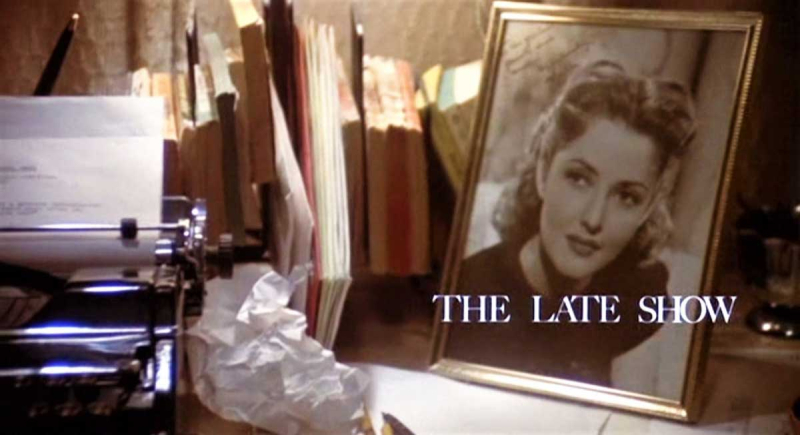
As he sits in this somewhat sad, sagging room, we see some glamour in a framed photo of a beautiful young woman. An ex-wife? An old sweetheart? Probably not, as the woman is actress Martha Vickers, so memorable in Howard Hawks’ The Big Sleep. A noir-soaked nod on part of the filmmakers, a fan photo for Ira and, at first glance, a possible old flame of Ira’s. An old flame is not likely but … you never know. Ira may have had an even more exciting past than we will ever know. This is a room of memories. Not cool or flashy or dingy in a hardboiled, black & white, neon-sign-flashing-in-the-window kind of way, but the room of an old man. The room of someone’s grandfather. But. We suspect that this guy doesn’t have any grandkids. Or any kids for that matter. Or, any grandkids or kids that he’s ever kept in contact with, anyway.

His peaceful night of old movies and writing is interrupted when his old partner, Harry (Howard Duff – Duff played Dashiell Hammett’s private eye Sam Spade on the radio, and appeared in Brute ForceThe Naked CityPrivate Hell 36 and While the City Sleeps – he was also married to Ida Lupino for a time) pays him a bloody visit. And then promptly dies in his room. He’s been shot. Ira is both pissed off and heartbroken. Now we see the tough guy Ira once was and still is: “God damn you, Harry! Letting someone walk up and drill you like that. Point blank. Nobody can palm a .45. Jesus Christ. You never had the brains god gave a common dog!” And then we see how heartfelt Ira is too: “Sorry you’re going off, pal. You were real good company.”

Ira starts tearing up.

Late-Show-FeaturedHarry is the dead man Ira is seeing off at the cemetery, so it makes sense he’s so grumpy from the intrusion of Margo and Charlie. Let the man mourn his friend and partner for chrissakes. And worse, the case seems two-bit to him. You see, Margo wants to hire Ira to find … her cat. (We can’t help but think of Carney’s recent starring role in Paul Mazursky’s Harry and Tonto, though Ira does not give a toss about Margo’s cat). Margo owes a guy 500 bucks and, to settle the score, the guy has stolen her cat – he’s threatening to kill the animal if she doesn’t pay him. “So pay him!” Ira barks at her. Angry at Charlie he walks away muttering about how younger people should respect their elders. He’s sick of this shit, and he’s got other things to do. Like get on the bus. Go to the races. Sleep. Something. But soon enough, Ira knows there’s more going on here if Charlie is involved. In a terrific exchange, while Ira and Charlie are seated for a shoe shine (Charlie, wearing his flashy brown leather jacket, polyester shirt, orange pants and yellow socks, is reading The Hollywood Reporter – there’s ragged reminders of supposedly glitzy Hollywood all over this picture), Ira asks him what the hell is going on here with this “dolly” and the cat. Ira breaks it down: “Somebody puts the freeze on Harry Regan. Next thing I know you show up at Harry’s funeral with some dolly and a song and a dance about a stolen cat and all that hot comedy. What’s it all got to do with Harry?”

Well, something has got to do with Harry in this mess with the cat and “all that hot comedy,” and so Ira is on the case, discussing details with Margo in an amusing scene in her apartment, a space very different than Ira’s living quarters. Cat pictures, lots of plants, tapestries, bright colors, rock posters, there’s a meditation recording playing (she wisely turns it off), Ira shifts uncomfortably in his chair, while listening to her brief life story (wanted to be an actress, gave it up because she couldn’t play the Hollywood game, is now designing clothes, used to deliver items for some guy – probably hot – and split the money with the cat kidnapper. Only, one time she didn’t – here’s where Harry gets involved…). A woman of the 1970s, one who openly talks about her period and her therapist and astrological signs, Margo is a woman who’s seemingly trying anything in Hollywood, not just out of desperation, but out of, what she says, to “go with the flow.” I thought of the scene in Robert Altman’s The Long Goodbye (Altman produced The Late Show) when Elliott Gould’s Marlowe tells bumbling Harry (David Arkin) what his scantily clad neighbors do for a living – they dip candles and sell them in a shop on Hollywood Blvd.  Harry exclaims: “I remember when people just had jobs.”

Late-Show-Bill-Macy-Art-Carney-Lily-Tomlin-1977

Tomlin makes Margo lovable and smart – not just kooky and stereotypical hippy dippy – and a little mysterious too. For how much younger she is, and all of her more youthful of-the-time speak, does she have any friends, really? Other than the singer she manages? And are they even friends? Surely, she has a whole other life, but as presented here, it seems Charlie is her only friend. You start to understand that Margo, like Ira, is actually lonely. And that Los Angeles can be an alienating town whether you were a once aspiring actress, or you’re a retired private eye. You feel like people don’t care about you anymore. You’re don’t have that “it” factor. You feel disposable. It’s this observation of the fringes of Los Angeles, the “real” people (who may have had extraordinary lives if you bother to ask them about it), that makes The Late Show so intriguing and moving. It’s showing the sleazier side of the city; one in which people are still hanging on – some, by their fingernails. But they’re not all down-and-out, not yet, though one day they might be.

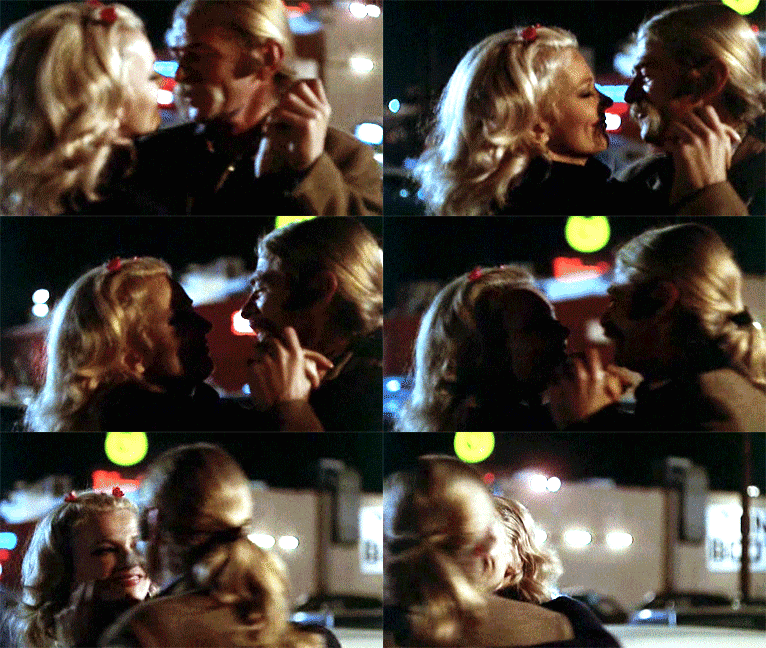
As the complicated mystery unfolds, Ira and Margo grow closer, and his crankiness softens. He seems amused by her, even likes her. And, in one scene at a bar, she tells him that she confessed to her shrink that she thinks he’s cute. He’s not sure what to make of that but the old guy must be flattered. She is thrilled after a high-speed chase in her van and she delights at the idea of them partnering up – a P.I. team. You feel for Margo as she suggests Ira move in to the apartment next door because, well, not only is she thinking of her new venture past designing clothes and managing talent, but she’d like to have this guy closer to her. She likes his company. He tells her he’s a loner. But the movie never turns this into a typical May-December romance – their attraction works as friends, as potential partners, as two different generations who have found something within each other that works, even if they drive each other crazy. And the movie never makes fun of them either. Margo may be a little zany, even annoying at times, but she’s got a heart, she’s got substance. And Ira may be cantankerous, walking around with his bum leg and aching gut, but he’s not always cranky, he’s witty, he finds joy in some things. And he’s got a good soul. Also – he’s still a good shot. In a remarkable scene, Ira aims fire at a car, but before he shoots, he pulls out his hearing aid. Somehow this is not funny, it’s just badass.

Late-Show-Art-Carney-1977 (2)

Benton (who earlier had co-written Bonnie and Clyde) wrote and directed this picture, his second directorial effort after Bad Company, and before his next picture, the Oscar-laden Kramer vs. KramerThe Late Show, mostly acclaimed upon release, but underseen, is one of his best, if not his very best (I also like his later work with Paul Newman, Nobody’s Fool and Twilight). This is a gentle character study about the seamier side of Los Angeles that’s also violent, funny and melancholic – not super striking cinematically-speaking, certainly not showy, but deeply felt and nuanced. And the actors are all splendid here including Eugene Roche as fence Ronnie Birdwell, John Considine as the creepy/stupid gold chain-wearing henchman, Lamar, Ruth Nelson as Ira’s sweet landlady Mrs. Schmidt, and a terrific Macy who is both fantastically oily and entirely human.

6a00d83451cb7469e20240a46bb281200d-800wi

Carney, famous for his comedic (though touching) role as Ed Norton on the television show The Honeymooners was enjoying a resurgence in the 70s on the big screen (he hadn’t been in many motion pictures before), winning an Oscar for Harry and Tonto and co-starring in Martin Brest’s Going in Style (among other pictures). His performance here is beautiful. He’s rough and gruff and no-nonsense, spitting out hard-boiled dialogue naturally (he’s never forced, he never plays cute, he never fills his character with easy bathos), but he’s also poignant and real. There’s an inner life going on with this guy, one of regrets, surely, one of sorrows, but also one of past excitement. He doesn’t just play this simply as an aging tough guy gumshoe, as Mr. Cool, and that makes his performance even cooler. There’s a wonderful moment where Ira is trudging down the street, dragging his laundry along in a sack (he doesn’t have a car) and Charlie and Margo drive by, asking him where he’s headed. He’s snaps back, “I’m on my way to the Brown Derby to meet Louis B. Mayer! Where does it look like I’m headed?” The humbleness of the laundry, and the idea that he both doesand does not give a f*** about what it looks like, his quick-witted delivery –  it’s both charming and moving.

Late-Show-Art-Carney-Lily-Tomlin-1977 (2)

And the ending of the picture is charming and moving, circling back to the beginning of Ira and Margo and where they met – at a cemetery. Another friend is buried, and the two walk along to the bus stop. They sit on a bench that’s advertising the Hollywood Wax Museum: “Mingle with the Stars,” it proclaims. There’s nothing much star-studded going on as they sit on the bench, on a typical smog-choked Los Angeles street, wondering what to do next. But it appears hopeful. Maybe they’ll even partner up. After all, he’s still great at his job – age is experience, in spite of Hollywood’s endless quest for new stars, for youth – and he’s got a connection with Margo. And they’re in Los Angeles, a town, that Ira thinks, even as he grows older, never really changes: “The just push the names around.”

From my essay at the New Beverly

Criminal # 2: Angels With Dirty Faces

6a00d83451cb7469e20240a490518b200b-800wi

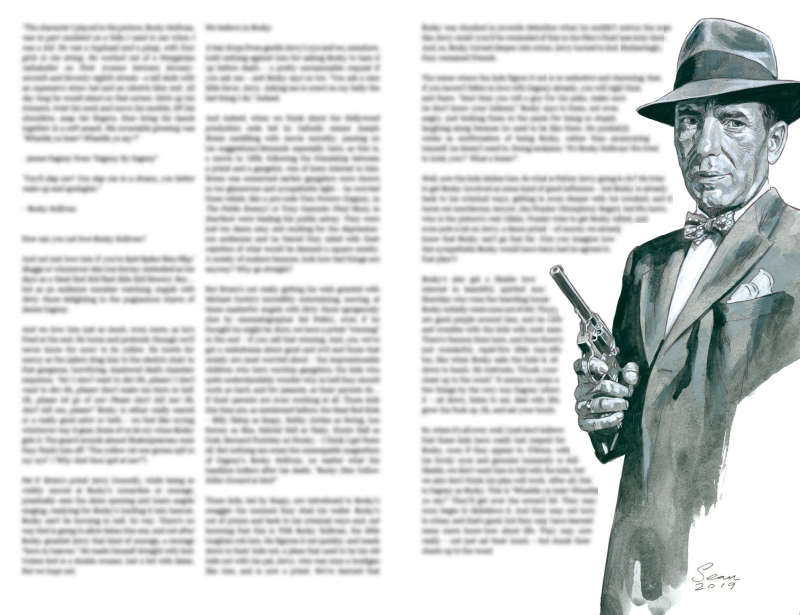
I forgot to mention … my piece on Michael Curtiz's Angels with Dirty Faces in the Feb. 13 edition of Criminal. Artwork by the great Sean Phillips.

“The character I played in the picture, Rocky Sullivan, was in part modeled on a fella I used to see when I was a kid. He was a hophead and a pimp, with four girls in his string. He worked out of a Hungarian rathskeller on First Avenue between Seventy-seventh and Seventy-eighth streets—a tall dude with an expensive straw hat and an electric-blue suit. All day long he would stand on that corner, hitch up his trousers, twist his neck and move his necktie, lift his shoulders, snap his fingers, then bring his hands together in a soft smack. His invariable greeting was “Whadda ya hear? Whadda ya say?”  — James Cagney from “Cagney By Cagney”

“You'll slap me? You slap me in a dream, you better wake up and apologize.” – Rocky Sullivan

6a00d83451cb7469e20240a442949f200c-800wi

Order here

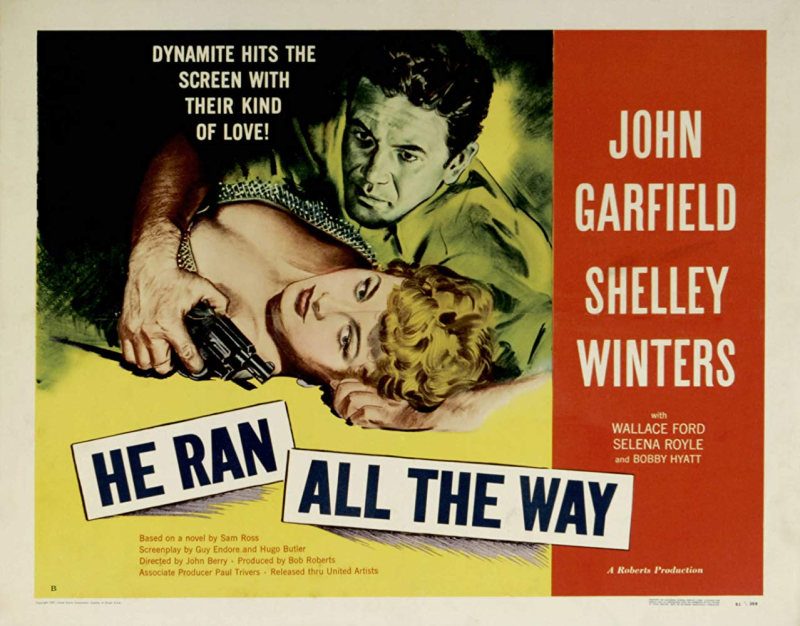
He Ran All the Way: John Garfield

6a00d83451cb7469e20240a4904fc7200b-800wi

My full piece from Ed Brubaker's Kill Or Be Killed

“When an actor doesn't face a conflict, he loses confidence in himself. I always want to have a struggle because I believe it will help me accomplish more.” – John Garfield

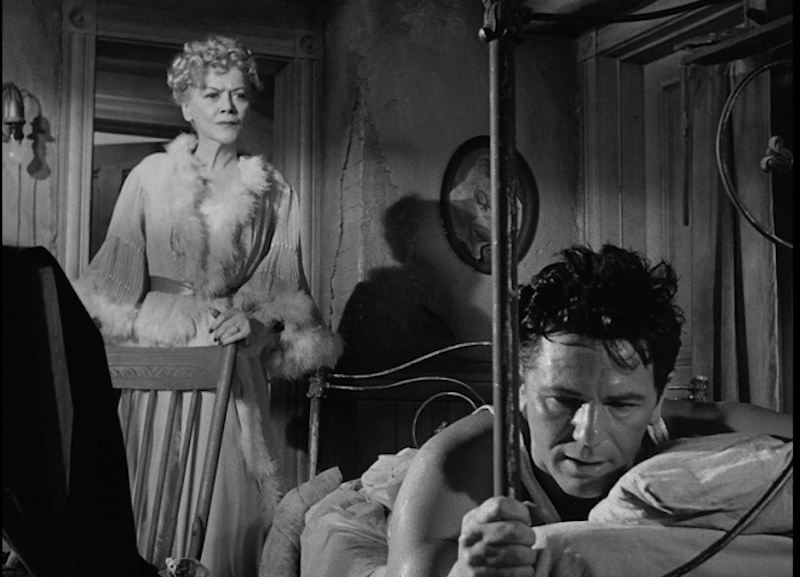
Nick Robbey is trapped. Everywhere. No matter what. The man can’t even escape this claustrophobic life he trudges through while sleeping. Sleep – a place where you can run through sunny fields, bask in wealth, make it with beautiful girls, or just truly, actually sleep – enjoy the warm cocoon of dark nothingness; your body restoring itself for another good or bad day of something – anything – at least you slept well. No such luck for poor Nick – you get the sense this fella is always being chased and traumatized and worried and haunted, awake or not. Running. All the Way. Where? By the end you see where and it’s not through some sunny field – it’s staggering in a gutter with Shelley Winters close behind.

HqdefaultThat Nick is brilliant John Garfield in director John Berry’s tough, poignant and doomed (on and off the screen), He Ran All the Way – a movie that opens with this beautiful loser tossing and turning in his bed, sweaty and convulsed in bad dreams. But he wakes up to something worse – reality – his mother (a harsh as hell Gladys George). After hollering at him for moaning in his slumber (no maternal instinct in this woman), she pulls open the dingy shades of his room and screeches: “If you were a man you’d be out looking for a job!” His reply? “If you were a man I’d kick your teeth in.”  This ain’t no happy family. But family will become something important to Nick in this picture – even if he has to force his way into one.

When this over-age punk emerges into the light of the city streets, seemingly to do something else (perhaps look for a straight job?) he’s beckoned by one of his criminal friends – wormy Al (Norman Lloyd) – who convinces poor Nick to join in on a payroll robbery. Nick’s worried – he tries to discuss his bad dream, he was running, running, and he’s seeing it as some kind of portent of doom (he’s not so dumb after all). Al brushes it off and talks of his dream – wealth and sunny Florida. They go on that heist and the movie wastes no time in showing it all go to hell very quickly – like so many two-bit crimes do. Nick winds up killing a payroll guard. Shit. He didn’t intend for that. He didn’t want to kill someone today. He’s probably never really wanted to kill anyone, not even his mother (later on in the picture she doesn’t give a damn if he dies or rots). But he’s gotta run. He’s got the case of money (freedom! Yeah, sure) and so he runs and runs. It’s like his dream never really ended. He runs all the way to a public pool, a curious but ingenious place for a quick hide-out, shoving his money in a locker next to the guys with wet towels and swim trunks, Nick looking out of place but tough enough for people to just get out of his way. He’s jittery and worried about his locker and you feel for him, no matter what, something the movie and Garfield hold on to as rough as he gets. You can’t help it.

6a00d83451cb7469e20240a4904fd8200b-800wi

This guy was born under a bad sign and you know he’s never been treated right. There’s a vulnerability here that’s not forced by Garfield, it’s just there, so much so that even as he changes into trunks and jumps into the water, you feel for him. It’s so normal, but not. And water— it should be cleansing, so refreshing but it isn’t. However, it is there that he meets another worried, sad soul – Shelley Winters’ Peg Dobbs. She’s shy and charmed by this handsome creature offering her such attention in the pool (as usual Shelley has some weird fate with water – see A Place in the Sun, The Night of the Hunter, Lolita and The Poseidon Adventure), and soon she’s bringing him home to family.  Poor Peg. She thinks this is a proper pick-up and she landed herself a sexy bad boy (with depth) John Garfield. Even her sweet, welcoming family – Papa Dodd (Wallace Ford) and Mama (Selena Royle) along with kid brother Tommy (Bobby Hyatt) – seem a bit excited that she’s brought over this good-looking stranger, even if he’s sweaty and nervous and a little feral. They even go out for a spell, presumably so she can be alone with him. When they return, the entire family is held hostage.

6a00d83451cb7469e20240a4429301200c-800wi

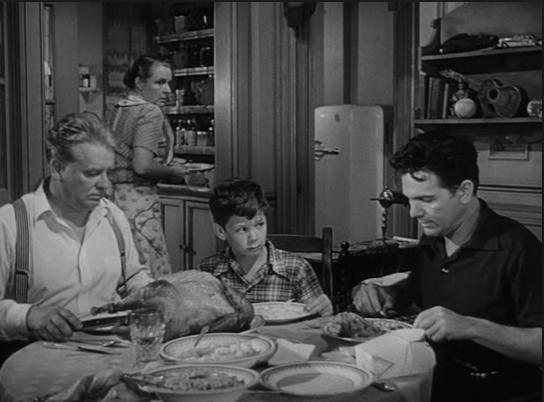
It’s an intriguing set up – Nick running and holing up with this terrified family (a la The Desperate Hours before that movie was made, and this one is the grittier, better version) – and enclosing himself in further— a trapped rat. The romance, of sorts, between Garfield and Winters just feels tragic and awful – there’s nothing sexy or come hither about it. But as he’s pacing and planning his next move, he grows closer to the family, he does anyway, they really don’t – a nice family, something he’s never experienced. Watching him interact with the brood is fascinating. He threatens, sure, but he also wants to have family time, even setting up a turkey dinner for everyone to eat. The patriarch does not want to. He just won’t. And then Nick gets angry, forceful, hurt, actually. Eat the turkey! (I always think, Jesus Christ people, just eat the goddamn turkey).

He-ran-all-the-way-1951So, it’s constant stress and worry and where he is going to go? Run off with Peg? Really? And why does it become increasingly important that this family accept him? Or in any way love him? Well, clearly he desperately needs love – but he has to reject it because, really? By the end of the picture, that’s what he’s screaming about to Peg in a beautifully acted (and shot) sequence as he shoves her down the stairs with him. Love. He’s yelling that she never loved him. Never. With the family turning on him, there’s no love anywhere in this world: “Nobody loves anyone. You, your old man, your family, the cops, my old lady, Al Molin! Garbage. Garbage!”

It’s a powerful scene that kicks you in the gut. You really believe John Garfield. You believe every move he makes here, in fact, and every line on his face says something. Ingeniously shot by James Wong Howe with some powerful deep focus close-ups, particularly of Garfield’s face, you get a visceral sense of dread – you want to wipe the sweat dripping from Garfield’s brow, and his eyes are so expressive and troubled that even when he twists into hoodlum mode, slapping Ford around or scaring Winters, you know it’s not out of mere power (though he wields it over them) but out of absolute panic. And watching this film now, and knowing what happened to its lead and its makers – damn. The experience is extra tragic. Victims to one of cinema's darkest, most shameful moments, the scabrous House of Un-American Activities Committee, Berry was blacklisted, two of the screenwriters, Hugo Butler and an uncredited Dalton Trumbo were blacklisted already, Lloyd was blacklisted for a time (he came back, thankfully, and is still with us) as was Royle. And of course, John Garfield. A serious actor and movie star (he trained in the Group Theater), a progressive man (and patriotic, he helped create The Hollywood Canteen) was called to name names and unlike many other actors, writers and directors, Garfield, both a once young street tough and a man of principle, refused to rat. Hero.

6a00d83451cb7469e20240a4904ff4200b-800wi

Work was then harder to come by and at the young age of 39, this great actor died of coronary thrombosis. Many speculate an already present heart condition was worsened by the stress caused by the House's inquisition, and that is probably true. Here was one of cinema’s greatest actors who looked fantastic on screen, pure charisma and craft and a precursor to Clift, Dean and Brando. His career with intense, funny, heartfelt, oftentimes roughly romantic and edgy performances in movies such as Gentlemen's Agreement, They Made Me a Criminal, The Postman Always Rings Twice, Body and Soul, Force of Evil, The Breaking Point, Nobody Lives Forever, Humoresque and so many more, was cut short because of the HUAC abomination. He Ran All the Way was his last movie. Watching the final shots of the picture – Garfield’s Nick staggering and slumping into that gutter – Jesus Christ, what a bad dream poor Nick had. Why didn’t anyone listen? Simple answer: no love. Well, we love you Nick. And we love John Garfield. And we’ll never forget him. He didn’t rat and he didn’t run.  

Elliott Gould & The Long Goodbye

6a00d83451cb7469e2022ad3d44c64200b-800wi

From my New Beverly interview with the great Elliott Gould:

Talking with Elliott Gould is a unique, enriching experience. He philosophizes, he riffs, he free-associates in an erudite, non-linear way that recalls jazz. Jazz – which is how he describes the movie we’re talking about  Robert Altman’s masterpiece, The Long Goodbye, in which he unforgettably stars at Philip Marlowe. I met with Gould recently in Los Angeles to discuss Altman’s seminal picture, and the conversation moved to multiple subjects – Altman, Bergman, Chandler, Bogart, identity, freedom, how you can’t double cross a cat … so many things. It’s never not fascinating talking to Gould…

Kim Morgan: I’ll start with the genesis of the project …  Can you discuss the journey of this version of The Long Goodbye?

Elliott Gould: I went to visit my friend David Picker who was running United Artists, I went looking for a job or looking to see if I could produce something with someone who seemed to get me. And David Picker gave me Leigh Brackett’s script. And, at the time, I didn’t know if there was a formal attachment with Peter Bogdanovich. I read the script – and I thought it was somewhat old-fashioned … the word pastiche doesn’t come from here, but, still, I was always interested in the genre. I was told that Peter couldn’t see me in it. He saw, in his mind, Robert Mitchum or Lee Marvin. And I said to David Picker, “I can’t argue with them, they’re like my Uncles. But we’ve seen them, and you haven’t seen me.” And then out of the blue I got a call from Robert Altman to whom United Artists had given the material. Altman called me from Ireland where he was finishing Images with Susannah York. And Altman said, “What do you think?” And I said, “I always wanted to play this guy.” And Altman said to me, “You are this guy.” And that was it.

KM: What made Altman decide to get involved …

EG: Well, we didn’t do McCabe & Mrs. Miller (You know I couldn’t do it at that point) and still McCabe & Mrs. Miller didn’t suffer, although I understand that wasn’t so easy for Bob to work with Warren [Beatty]. Bob had said to me, at that time, “You’re making the mistake of your life.” And I said, “Well it’s not my life yet and you can’t take away that I was your first choice for this and someday I will look at this and say, wow what a masterpiece and you wanted me to play it.” Meanwhile Warren and Julie were great. But, Bob and I had done so well with MASH and I guess it was just such a blessing because I was not only out of work, I had gone too far… being that I was producing. But I didn’t understand limitations with the business. I didn’t understand realty with the business. But Bob was certainly perfect for me and we really did great. I thought we might have done perhaps a Raymond Chandler every three years. Just to do the whole thing…

KM: It was already an iconic character but you made it iconic in your own interpretation … but it doesn’t sound like you had any trepidation with this character…

EG: No! Bob gave me so much freedom…. When we [with Steven Soderbergh] were all shooting Ocean’s Eleven, and it was 1:20 in the morning and we were set to do the scene where George Clooney tells everyone what it’s going to be, and I had a little scene with Matt Damon and all of us – the whole group was there – and just as we’re ready to shoot at 1:20 in the morning, Steven Soderbergh walked up to me and said “the ink on the face…”

KM: Yes…

EG: You’ve heard this and you know this. “Was the ink on the face an improvisation?” I’m ready to do my scene with Matt Damon, hit my marks and play my part, and I thought, what are you talking to me about? I have to wake up to respond to your question. And then we said, at the same time, “The Long Goodbye” –  I said, “Yes, the ink on the face was an improvisation … was that behavior acceptable to you?” And Stephen said “Yes, but it was so unexpected.” I [told him] that exhibited the kind of confidence and trust that Bob had in me…  Here’s this fascist cop who was questioning the character of Marlowe in this little room which was being observed from a two-way mirror, right? I thought in terms of the irreverence of the character and the core, the substance of somebody who will not deviate when it comes to pure nature and justice and what we need to believe in…  And the cops saying, “What are you doing?” And I’m saying “I have a big game.” (You know in football they put like charcoal under their eyes to take the glare away) … and just being totally irreverent to the authority that is [pauses]… trying to build a wall on our Southern Border. It’s the same thing…

KM: Yeah …

EG: Yeah, it’s the same thing. Yeah. And then I went even further and put it on my face and started to do Al Jolson … I said, “So once I committed to putting ink on my face… If I had stopped and hadn’t continued and followed through and done it, it would have taken us about twenty-five minutes to clean me up and as you know, movies are about time management in relation to resources. Everything to me is about nature. Everything is about nature. And it exhibited Bob Altman’s confidence in me. I could weep, you know. And his trust in me.

KM: That he let you really improvise.

6a00d83451cb7469e2022ad3b4a562200d-800wi

EG: More than that… because I know when we did MASH, he said to me, a couple of times, and I don’t like the way it sounds but it’s true, “I can’t keep my eyes off of you …I don’t know what you’re going to do.” And I said, “Then don’t look at me. I’m always in character. My presence here once you have a camera and you’re working, I’m always in character so don’t kill what I’m doing until you see it in consort with everyone else. Then, if it doesn’t work, you tell me and I’ll change immediately.” And the next day, Bob came up to me and said, “You’re right.” Bob always had a problem with authority. So, did I… With The Long Goodbye, I felt it was, the first picture for me. The first picture for me…

KM: Really?

EG: Well, I remember each up to The Long Goodbye

KM: Yes, we talked about all of the movies leading up to this and how important they were to you …

[Gould discussed all of the pictures leading up to The Long Goodbye, what he learned, and the experiences associated with them, from his first picture, William Dieterle’s The Confession, also called Quick, Let’s Get Married, to William Friedkin’s The Night They Raided Minsky’s to Paul Mazursky’s Bob & Carol & Ted & Alice, a movie in which Gould said it was where he discovered his relationship “with the camera and that the camera is my first friend. It doesn’t lie to me, it doesn’t tell me do, or don’t, it just reports. It’s objective. Everything was subjective to me. That was a breakthrough for me. That was a great opportunity for me.” To, of course, MASHwith Altman, and how he was first offered Tom Skerritt’s part but said to Altman, “I could do it. I have a very musical ear, I could do it. But this guy Trapper John, if you haven’t cast it. I got what that character is. Even if it’s a certain color, a certain energy.” And then Altman gave him the part. He did Move and I Love My Wife. He did Richard Rush’s Getting Straight. And then he starred in and produced Little Murders, directed by Alan Arkin, based on the Jules Feiffer play… And then Ingmar Bergman’s The Touch – “I can’t say no to Ingmar Bergman, I want to know if I can act” –  which was a meaningful experience for him –  to work with Bergman and to talk to Bergman about many things – “In recent times I had seen an article which quoted Ingmar Bergman as saying I was difficult to work with. And that wasn’t true, nor is it true. But Ingmar is no longer living. Fortunately, there was an interview with Dick Cavett when The Touch was going to be released, and I couldn’t attend it, which was a disappointment to us… but Ingmar said on the Cavett show, which is on YouTube, that the day I showed up it was evident to him and his whole family, the crew, that I was a team player.” We led up to his ill-fated project A Glimpse of Tiger. So much interesting stuff – I will try to work on a second part of this interview to dig in deeper regarding all of those movies before and beyond The Long Goodbye…]

Gould-bergman

EG: The Long Goodbye was like a movie, movie, this was like in relation to movies I had seen growing up. And what with Altman giving me the kind of freedom he gave me, and for to have played a classic character out of time and place, it was like, in a way, a first movie for me…The Long Goodbye was the perfect vehicle for me to live in… I had come back from working with Ingmar Bergman [on The Touch], to do another picture, which was an error. There’s no shouldas… Once I could see that mostly people were in it for mostly what they could get out of it – and I don’t have necessarily a false value – but a great deal of what I could bring to it. You know, become a part of something. And so, that picture didn’t get made. But I started it and I didn’t finish it and I had to pay for it… and it was thought that I was nuts. And I must have been a little nuts in terms of not fulfilling my commitment to a picture…

KM: Oh, this was the project…

EG: It was called A Glimpse of Tiger and it emanated into What’s Up, Doc? which had nothing to do with what I was talking about [A Glimpse of Tiger]. My picture was like The Little Prince in urban American now, and the prince was this young girl, played by Kim Darby. They let me cast Kim Darby and they fought me all the way with Kim Darby and we couldn’t find anyone. And I remember meetings that I had … but that’s a different story… So, then I’m not working. I can’t work and they, being the establishment, without me being examined, they collect an insurance policy based on me being nuts. And I wasn’t. But in terms of understanding what I was doing and what I was trying to do, I didn’t quite know boundaries and limits. I thought I had earned the right to create. I thought I had earned the right to be in charge. We already made Little Murders I could do almost anything and… I had a very fertile potential to produce. I know chemistry in terms of nature and what worked together and there’s nothing more important and therefore, I just need writers… so I had no work. And then David Picker gave it to Robert Altman and here we are…

KM: I read that Altman had people read “Raymond Chandler Speaking”… which brings me to the beginning of the picture with your cat, a famous scene, which I love, and is an extension of Chandler because Chandler loved cats. I read that Altman said the cat is key because you can’t lie to a cat.

6a00d83451cb7469e2022ad38e9a9f200c-800wi
EG:
 Well, sure that was Altman! Altman said to me before we started to shoot, he told me the first sequence with the cat and the food. He said, “That’s the theme of the picture.” And that’s all Altman. It’s all Altman…

KM: And then the line throughout the movie is “It’s OK with me…” which was you …

EG: Altman gave me that freedom. It’s always the way I am. That was the first day. What that reflected to me was, I don’t necessarily know what anything means, I don’t know what’s going on and here we are after having awakened and trying to replace my cat’s food with something concocted. And again, this scene is not in it – the first day of shooting, we went to the CBS Radford Studio because we wanted an office building where a lot of different, like if you’ve got dentists, or a lot of different private eyes, or even Sam Spade at one point – and when I’m there and I say “It’s OK with me” … meaning, like I don’t understand what you’re doing or what any of this means, just don’t tread on me. And think what you think, do what you want to do, but I’ll just go my own way.

KM: It’s such a wonderful refrain throughout the movie…

EG: I had a little house in the beach… and Altman hired a skywriter to fly over my house and write, “It’s OK with me, too…”

KM: Really?!

EG: Yes, isn’t that sweet?

KM: Yes, that’s incredible. Do you also believe that by the end of the film that it’s not OK for Philip Marlowe?

EG: No, it wasn’t. He killed him [Terry Lennox]. No, it’s not OK.

KM: The setting is that present – the early 1970s Los Angeles,  which is so much different than now, in Los Angeles, but… in some ways, not entirely different…

EG: No, it’s not different than now. That’s the title for the sequel that I’m still interested in making – It’s Always Now [an adaptation of Raymond Chandler’s story, The Curtain]. The Chandler Estate gave me the rights to (I no longer have them) The Curtain… this [Chandler’s story] was pre-The Big Sleep and pre-The Long Goodbye. The character’s name [is different] and they said I could be Philip Marlowe… The character is much older but he still has the same spirit and the same mind and the same focus… I did a little work with Bob on it, I’ve got a first draft screenplay from Alan Rudolph… It’s a very interesting project, and you can see where The Big Sleep came from…

KM: Working with Sterling Hayden – he’s so raw and touching.

EG: You know the history was that Bob cast Dan Blocker and then Dan Blocker died and it was almost the end of the picture. And then I thought about John Huston, but then Bob cast Sterling Hayden. And I asked to meet Sterling Hayden, I just wanted to sit alone with him. And in a dark room in the house that Bob had been living in…

KM: The house in Malibu…

EG: Yes, which was the Wade House [in the movie]. I was in a room like this, and he had recently come back from Ireland where he had some work with R.D. Laing… and so I knew that Sterling knew that I knew that Sterling knew that I understood him… So, at one point when we were in Pasadena working at the sanitarium where we find Sterling Hayden in that cottage that he’s in with Henry Gibson (you know, that specific cottage was where W.C. Fields lived the last part of his life…) And when Altman would be stressed… Sterling would say to me, I don’t know how he phrased it exactly, but, “Is the old man giving you a hard time?” something like that… And I said, “A little bit.” It didn’t have to do with the work but it probably had to do with my response to what Bob needed, and I’m always looking for something. And Sterling said, “Just vamp.” [And] what does vamp mean? It means, to hold time, meaning, when you vamp with music you hold time.

KM: Sterling Hayden and you … your chemistry together is beautiful.

EG: And the kind of man that he was! That scene where we’re sitting down and [having the drink] … Bob had designed it so that the camera is circling the two of us. And we couldn’t even know whether it would be able to be edited, but I didn’t have any doubt, and I don’t think that Bob has doubt, and so we did that with the aquavit.

KM: And part of it was improvised?

EG: I knew there were certain pieces of information that had to be in that scene so I could help with that [improvising], otherwise it was just about getting to know and see this relationship between these two different generations of men, and that was pretty amazing…

KM: I know you loved Hayden – was Hayden during the whole shoot, working with Altman – was he fine all during the production?

Longgoodbye-coffee_1050_591_81_s_c1EG: Yes. [Gould nods a decided yes]. He hit me in the ear. When he comes home the night before he goes to sleep and I’m there, the “Marlboro Man,” he hit me on the ear – it really hurt. He really gave me a whop on the ear. Oh my god. It’s there in the picture too. I almost saw stars. Sterling was fabulous. Just fabulous…

KM: His frustration, his anger is so palpable, his drunkenness so real, it’s just such a powerful performance…

EG: Oh yeah, I sometimes think about establishing or seeing what it would take to establish a new category, several new categories at the Academy for performances that were not only overlooked, but not recognized, and his would be one.

KM: I like the little touches of old Hollywood in the film kind of living there on the periphery

EG: Of course! Bob does that in the beginning and the end. And then, the end, “Hooray for Hollywood…”

KM: The security guard who does the impressions, he is so lovable.

EG: Oh, I know. He’s so charming! I wouldn’t have used the car… that was my car… the 1948 Lincoln Continental Convertible. I had won a bet once, and I don’t gamble anymore, as much as I love to win, I hate losing more and there’s nothing I need that I can win… I won the money to buy that car. And Bob used it. I didn’t even charge them for it. But I wouldn’t have used that car. I thought it was sort of obvious, I must say. It was called the Last American Classic. And John Wayne had one earlier. It was green. I gave it to Harrah’s Museum and they re-painted it and it’s there in the museum right next to the car that James Dean used in Rebel Without a Cause… It all connects. You know, it all connects…

KM: The casting is so wonderful and unexpected throughout – two of the main actors had never acted before…

EG: Yes. Jim Bouton. And Nina van Pallandt. She was a singer…

KM: And then, Henry Gibson – this was his first time working with Altman and he was so perfect…

EG: Henry Gibson. Yes, he was great. He was really scary in it. A really scary character.

KM: And Mark Rydell is also so scary in it…

EG: Oh, he was fabulous in the movie…

KM: As you obviously know, Rydell, a director… and he directed you…

EG: Yes, in Harry and Walter Go to New York…

KM: And I read that Rydell and Larry Tucker – who wrote with Paul Mazursky as you also know – that Tucker and Rydell re-wrote the Marty Augustine character …

EG: Larry Tucker and Paul Mazursky – they wrote I Love You, Alice B. Toklas, and Bob & Carol & Ted & Alice. And then they did some other pictures. They did Alex in Wonderland. They were pleading with me to do Alex in Wonderland but I wanted to do Little Murders. And again, not to be sorry… I have no regrets…

KM: And Little Murders is such a great movie! I love that movie.

EG: Me too. I know. Oh, I know. But… I would have met Fellini…

KM: I’m curious about how the movie, the way it was shot, the camera movement, all of that, and how all of the actors flowed together as you were working…

EG: I read Luis Bunuel’s autobiography and there’s a story in it about when someone asked him to do a movie. And he asked, “How much do you have for the movie?” And at the time they said $75,000 and he thought, and then said, “I’ll do your movie for what you have for it, but you’ve got to stay away, I don’t want anyone else there thinking. No one else can be involved. It’s just us.” Do you know what I mean?

KM: And so, was Altman like that on the set – and with you?

EG: He said to me, when he called me in Munich another time, to take over what we thought Steve McQueen was going to do in California Split, he said, “I know if I give you a nickel, you’ll stretch it more than anyone else would consider.” And, well yeah. We want to work, we want to continue to work, but we have to be free…

KM: Did you have the most freedom with Robert Altman? It sounds like you did, of all of your directors you worked with, that he gave you that freedom…

6a00d83451cb7469e2022ad3b4a614200d-800wi

EG: Well, I took it. I took it… Altman needed so much freedom to do what he did. I breathed it in. I took it… On The Long Goodbye, he told me I scared him. In terms of being free, and in terms of adapting to where we were at. Because even with the drowning scene and having waited for the high tide, Altman said to me, “Do you think we can do the two days work in one night?” Being that the first part was Sterling [when, in the movie, he’s walked out to the water], and the next was me running down, and the next part was waiting for the high tide, and then me going in there and coming out – and I nearly drowned. I literally nearly drowned… I had been playing basketball all day, and then I ran down to the beach several times… I thought, “You can’t go down, Elliott, there’s no one here to bring you back up.” And I was able to bring myself up and be able to go to her [Nina van Pallandt] and she was acting right there. She did great, she was perfect. And then we had to do it again, and I was really scared. And so, I could act a little more. I didn’t realize this was the mother ocean. And, I was aware that I was out of control, and if I went down, I was really close to drowning, because there was no one there with me… And I said, we could do it. Because I might have had shots with the sun coming up – in the scene where I talk about Ronald Reagan and throw the bottle of liquor – and I can see that people are lying – the police are playing parts, and she’s lying. And also, something interesting, if you want to look at it and analyze it, that Altman gave me all of that room, you know, all of that room. And … we did [the scene] three times… and we could have done it [again], but Altman came to me and said, “I’m tired. We can’t do it.” And I was all ready to do the two nights together. But it worked. But I would have loved to have seen sunrise in it. I would have loved to have seen the light change. Using light in relation to our mind.

KM: The movie is referenced in other films, you see the influence – like The Big Lebowski and you feel it in Inherent Vice… you see how much people return to the picture…

EG: It’s an American jazz piece… Sometimes I’ll study a generation later [in life]. Like I started to study High Sierra, and [John] Huston wrote that… Yeah. Ida Lupino. And I remember seeing it at the time. Now that I understand myself, and I could see through it. Bogart was fucking perfect… You talk about things that hold up. I mean, I watched Casablanca [again], not to be sentimental. I don’t want to deny it – if it touches me, it touches me. It means I’m still living.

KM: But no one’s ever been able to do you – you are so one-of-a-kind, I don’t think anyone could really emulate your performance, there’s no one like you.

EG: I would rather not ever go there… I should really go out and find all of the books on tape that I did [reading] Chandler, I think I did all of them – but I don’t want to go there. I find a personal identity in that. But it’s very hard to do. Because you have this character. This guy. I mean, he’s, it’s, a unique character. There’s no ego there…

KM: No, and it’s not a stereotypical type of masculinity either…

EG: Well, whatever masculinity is…

KM: And how Marlowe talks to himself, your interior monologue that you’re vocalizing…

EG: Always! Don’t we all have that?

KM: There’s such alchemy with this picture. Did you know you were making something so masterful, so magical while you were doing it?

EG: No, no you can’t… And sometimes we hope for things, and we don’t necessarily know what we hope for. We hope to do well enough to validate continuing to work. I’m sure that there have been some pictures as far as seeing some magic, or seeing something fuse; seeing different ideas fuse… But the idea… it’s Altman. It’s Altman. It’s Altman’s chemistry. And of course, me, being in the right place at the right time … It’s so close to me. It’s so close. It really is. I mean, again, Bogart was sublime. Dick Powell – he’s interesting, I look at some of his work, he’s a very fine actor and director and smart business man. And then you had several people, and even afterwards, like Robert Mitchum, and I love Mitchum… But, no, no, I’m glad Bob and I made the one. And… it breathes.

Happy New Year and Hell Upside Down: The Poseidon Adventure

6a00d83451cb7469e2022ad3ca77b9200b-800wi

There’s got to be a morning after
If we can hold on through the night
We have a chance to find the sunshine
Let’s keep on looking for the light

It’s New Year’s Eve on the SS Poseidon. And New Year’s Eve is often horrible. I’m sorry, I’m sure there are many who love New Year’s Eve and that is a wonderful thing, but good god it can be depressing. And especially at a party – crammed in a room (or on a boat) with people you’re supposed to be having a good time with. But there’s also something a bit mysterious about how woeful it can be. It’s not like you really want the same year to continue, not even if it was a great one, we all need a refresh of course, so that is the hope – a fresh start, a new beginning and, in some more dramatic circumstances, light out of the darkness. As Maureen McGovern sings, “There’s got to be a morning after…”

6a00d83451cb7469e2022ad3aacc88200d-800wi

And that can happen for people. People who have permanently good attitudes, loads of self-motivation, or good luck. But with time and wisdom (and cynicism), you often know the next day, the New Year, really makes no damn difference from the day before. Unless you make it so (for yourself – for your community, or for the world, that’s something else). So here come the reflections about your life, which can fill you with melancholy or anxiety. And here come the resolutions. But will you empower yourself to even start them? Will you not, as Gene Hackman’s The Poseidon Adventure preacher testifies, “pray to God to solve your problems!” But instead, “Pray to that part of God within you! Have the guts to fight for yourself!” Maybe.

The-poseidon-adventure-5658136b49b99

Or maybe you need an enormous push – a holler from a malevolent God, or a mischievous Devil (your choice), or, you need to take an absurdist journey through the looking glass. Or maybe you just need to freak yourself out. That all sounds so dramatic – it doesn’t need to be that dramatic, not in real life, and so this is why cinema is so glorious. You can, in the Ronald Neame-directed, Irwin Allen-produced, John Williams-scored, The Poseidon Adventure, live through all of these other people’s lives – their and hopes and their dreams and their freak-outs on New Year’s Eve. And enjoy the hell out of it. You can forgo a party or watching the ball drop or falling asleep early on the couch and experience the surreal hellscape of this aging luxury liner. There they go, sliding sideways across a dance floor, screaming. Here they are, terrified, hanging upside down from a table in a 1970’s party pantsuit. They’re not taking down the Christmas tree this year, they are, instead, climbing up it.

The passengers of the Poseidon, including four past Oscar winners, are facing the fight of their lives in an otherworldly realm of water, fire, explosions, and shimmering holiday tinsel. It’s ridiculous, it’s bizarre, it’s weirdly beautiful, it’s silly, it’s exciting, it’s, at times, incredibly human. You want a memorable New Year’s Eve? Or at least a pleasant kind of drunkenness? Watch Gene Hackman and Ernest Borgnine yell at each other about the right thing to do stuck in a capsized ship and watch Borgnine usually (always?) be wrong about it. No wonder, even beyond the whole disaster he’s found himself in, he’s often in a rotten mood.

And from the start, he’s sour – even as none of the sliding-across-the-dance-floor or hanging-upside-down has happened yet (the only one aware of danger is Leslie Nielsen, the ship’s captain, and his immediate crew). But Borgnine’s cop, Detective Lieutenant Mike Rogo, is, from the first scene, dealing with his sick wife, Linda (Stella Stevens), who is also upset. She’s often cranky and snips at him (“To love, dummy” she says later during a toast), but he clearly loves her. She’s a former prostitute (it’s discussed a few times after this moment – she’s worried someone on board recognized her – so much for new beginnings) and he’s bickering with her about suppositories (he doesn’t know where you put them – she does). He’s also annoyed with the doctor for taking so long, but, a portent of doom – three quarters of the passengers aboard the Poseidon are sick. New Year’s Eve is already starting off terribly.

Poseidon-Adventure-oscar-winning-song

On a more positive note, there’s sweet Belle Rosen (Shelley Winters) and her husband, Manny (Jack Albertson), a loving, retired couple who are traveling to Israel, thrilled that they’ll finally meet their grandson. Belle notices the older bachelor James Martin (Red Buttons), speed-walking on deck, an activity that looks wobbly and weird – it seems like he’s both running away from something or towards a goal he may never reach (it’s hard not to think of Buttons’ marathon dancer in They Shoot Horses, Don’t They? – and Jane Fonda’s Gloria dragging his dead body on her back across the dance floor). Belle thinks the health-conscious haberdasher is lonely. “That’s why he runs. So he won’t notice,” she says. God, what a bummer, Shelley, and on New Year’s Eve of all times. But she’s right.

Then there’s the rogue preacher, Reverend Frank Scott (Gene Hackman, who was in two great, very different pictures than this one –Cisco Pike and Prime Cut – the same year Poseidon was released), whose gotten in trouble with his church for, I suppose, being so rebellious, and is being sent to Africa. He thinks that’s just fine as he’s the best kind of reverend, he says: “Angry, rebellious, critical, a renegade. Stripped of most of my so-called clerical powers. But l’m still in business.” (He sounds like Royal Tenenbaum at that moment) We don’t know how to feel about him, he seems a little unstable, and he is going to become the hero of this movie, which is fantastic – a refreshing change of pace. He’s certainly not typical, he’s not square-jawed boring, this is going to be interesting…

2736_tn

He is full of New Year’s Eve assuredness and an almost creepy, all-powerful positivity towards the future. His punishment is, in fact, to him, “Freedom! Real freedom. Freedom to dump all the rules and all the trappings. And freedom to discover God in my own way!” He’ll discover something like God soon enough.

Later on, he’ll preach to a group of passengers – including a young woman (with a resourceful gown, we’ll learn that night) that he’ll bond with, Susan Shelby (Pamela Sue Martin), who is traveling with her ship-curious younger brother, Robin (Eric Shea), and the sensitive singer Nonnie Parry (Carol Lynley), who will form a connection – traumatized – with James Martin. The Reverend is sermonizing that God wants “winners, not quitters.” And he will, indeed, bring up, quite forcefully, New Year’s resolutions:

“So, what resolution should we make for the New Year? Resolve to let God know that you have the guts to do it alone! Resolve to fight for yourselves and for others and for those you love. That part of God within you will be fighting with you. All the way.”

He really seems to vibing something here, like perhaps a major catastrophe (or maybe he was really upset by the state of the world, hated Richard Nixon) and that is surely the point, but some of this preaching seems like it would creep out half of the ship. But Hackman is so good, so angry/charming, that he makes this guy’s weirdness riveting. I’d go see him preach if I were on that boat. I’d sit there all entranced and scared like Red Buttons in his natty scarf hoping his multiple doses of vitamins keep him virile enough to find a girlfriend or a wife or survive a 90-foot tidal wave. New Year’s Eve is awful anyway. Why not?

6a00d83451cb7469e2022ad384c832200c-800wi

Once we get to the New Year’s Eve celebration, we’ve now met a likable waiter named Acres (Roddy McDowall), who is digging the young people and their music, and Arthur O’Connell as an older Chaplain who seems a bit disturbed by Hackman’s iconoclastic Reverend. Everyone’s celebrating in the grand, holiday-decorated ball room where the Captain doesn’t sit at his table for long – he and the greedy Linarcos (Fred Sadoff) must leave as there is an emergency (the undersea earthquake and all) – and Reverend Scott will take over as Captain. At the table anyway. But then he already seems like he has taken over. And then…  the boat, described by the purser as “a hotel with a bow and a stern stuck on,” will capsize. Spectacularly so.

It’s an incredible, strangely beautiful, artfully composed sequence. The passengers, adorned in bright gowns and suits with frills and funny hats, fall to one side, tumbling over chairs and tables and musical equipment. They keep rolling along with the boat as its turned over by the tidal wave – the floor becoming the ceiling. They slide on a surface strewn with colorful New Year’s Eve confetti, trying to grab on to anything, desperately attempting to hang on to loved ones. The tables now have screaming topsy-turvy passengers clinging to them as they hang in the air. It’s insane, wonderfully surreal – Alice in Wonderland going down the rabbit hole by way of Hieronymus Bosch mixed with a Max Ernst collage. The Day of the Locust’s Tod Hackett could paint it in his mind – and go crazy for sure – or maybe Shelley Winters would save him.

6a00d83451cb7469e2022ad3ca77d5200b-800wi

And from then on, the movie does not stop. These passengers, who really become only the handful of survivors/movie stars (all mentioned above) – the ones who climbed up that Christmas tree (save for Roddy McDowall who was already at the top, and then poor Arthur O’Connell stays down with all those who sided with the by-the-book purser instead of the rebel Reverend), will work through an unearthly quagmire within this upside-down abyss. They are moving up, from the top of the ship to the bottom (insane), to the outer hull, and they climb and crawl and swim through various stages of hell. Belle, who is constantly worried that her weight will impede her, will perform her heroic, sacrificial swim (she was once the underwater swimming champ of New York) and it’s quite moving. People argue – Rogo and the Reverend, Rogo and Linda, some are braver than others, some nearly lose their minds, and some of them die. And they’re all being led by a Reverend who is so challenged by God that, in his last act, he screams to the big man upstairs: “How many more sacrifices? How much more blood? How many more lives?! Belle wasn’t enough! Acres wasn’t! Now this girl! You want another life? Then take me!”

Poseidon-Adventure-Jack-Albertson-Shelley-Winters-1972 (2)

The Reverend, who has not wasted any time praying, something he seems not to believe in (for good reason in this case, he’s got to keep himself and everyone moving, what good would praying do?) is fueled with an anger at a blood-thirsty God that feels damn righteous at this point. If God set up this entire catastrophe as a test – why? Why did brave Shelley Winters have to die a watery death again (remember A Place in the SunThe Night of the Hunter, the rain storm in Lolita)? Yes, I am blurring Shelley Winters with Belle, and with everything else she’s played (am I forgetting another cinematic water death?), but this is what The Poseidon Adventure does to me. Why take out any of these people?

And more about God – God is all over this picture, and yet, it really feels like God isn’t around much, not any sort of benevolent God. This God is furious. This God does not give a good goddamn while they’re twisting through this upside-down underworld of a ship. (Maybe a kinder God helped with the Christmas tree?) Or, to go further, there is no God – how could one not feel that while being so tested and enraged by a higher being? There is a Devil, likely. And maybe nature is God. (Maybe Gene Hackman’s Reverend is really getting to me…)

Well, wait a second… perhaps there is something more powerful up there to believe – a divine intervention. Near the closing of the movie, when they reach the end of the line, their only chance out of this netherworld, Rogo hollers out, “My God, there is somebody up there. The preacher was right! The beautiful son of a bitch was right!” (That would be a terrific bible verse – someone should work on that) Rogo once angrily accused the Reverend of thinking that he, himself, was God. Now Rogo may think that “beautiful son of a bitch” was some kind of Christ figure.

6a00d83451cb7469e2022ad3aaccb4200d-800wi

But does everyone believe now? I don’t know. Certainly not all of the viewers. The movie’s power is from how punishing and surreal it is – not entirely spiritually, even if religious allegory is all over the picture and surely meaningful to some – there’s something more potent about it being a crazy, screaming spectacle intertwined with all of this God business – it moves into another realm, one of wonderful epic absurdity. It spins through your brain like those Alice in Wonderland passengers rolling through the ball room in loud clothing with confetti and pianos flying everywhere. It manages to be both mind-numbing and invigorating, inane and inspiring. Is that possible? Sure it is. Life can be like that. And the movie is strangely satisfying. What you might need as the year comes to a close. What you might need on a day before the morning after.

Originally published at the New Beverly.