Al Green Will Be in the Building…

Al_green_f

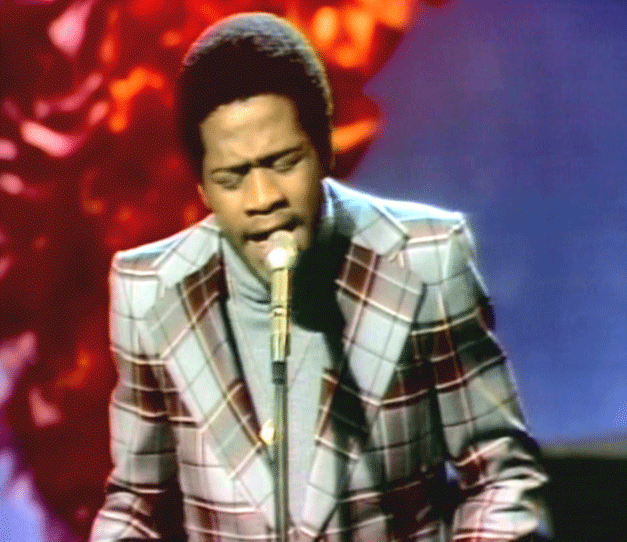
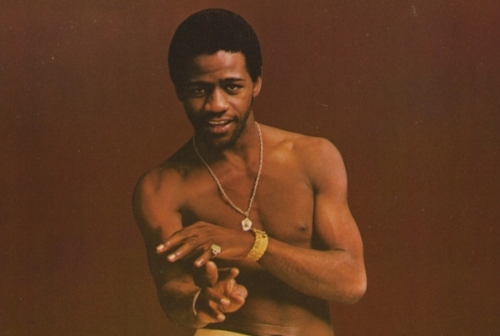
Oh me, oh my… Al Green is performing tonight, in Los Angeles at the Greek Theater — something that's filling me with love and happiness and his version of "Light My Fire" and a channeling of my inner "I'm a Ram" and … well, take me to the river! In excited anticipation, I'm reposting my ode to the Reverend. I've written about him frequently here and I hope to update after the show. Unless he hands me a rose. If he does that I might not be the same for a few weeks …

AlGreen72

Since Otis Redding, Marvin Gaye, Jackie Wilson, Curtis Mayfield, Ike Turner, Wilson Pickett, Willie Mitchell, Solomon Burke and so many more have left us, I have to ask how any self respecting (or self flagellating) Christian thinks I that should believe in God is beyond me. Not that I need God necessarily, or that I don't believe (in something), and yet, when I hear that true soul survivor, Al Green, I start to think … Jesus Christ … maybe I do need the Lord. Green, one of the greatest soul singers ever placed on this God-forsaken planet, is still living, still putting out records and still performing live. One of the last real soul singers blessing our landscape — especially a musical landscape populated by lip-syncing video vixens, pop punk whiners and faux transgressive bores, Al Green will make you believe. And, again, dear sweet lord … I will witness Al Green, live tonight.

Lets-stay-together-by-al-green

The Arkansas–born, Michigan–raised, Memphis-living Green crafted brilliant albums during his Hi Records heyday (Al Green Gets Next to You, Let’s Stay Together, I’m Still in Love With You, Call Me), his live performances (which I’ve fanatically collected over the years) are something to behold — sexy, inspirational, transcendent experiences that weren’t simply swoon-worthy (though the ladies love Al Green), but genius examples of tightness and improvisation. Al Green can riff off the margins, break from his sensuous mid-range to talk to the audience, and then lift to falsetto only to bust into a goose-bump–inducing raw growl that comes from a place so deep it’s nearly impossible to describe its power.

Al-green-3

To use simpler terms, Green performs with raw, soulful intensity in its purest form. And where do you see that anymore? Heaven? Green is heaven on earth. And in trying times, listening to Green say "Help me, I'll help you, Jesus, save my soul, I'll live for you, I'll do my best to just, do what I can to, stand up and be a man." Well, chriiiist. Never mind I'm a woman, goddammit, I want to stand up and be a man.

Algreen----

A man indeed. Green’s realness can be achieved anywhere, from the soundstages of Soul Train to his awe-inspiring Midnight Special appearances, to still-packed concert halls to his Full Gospel Tabernacle where the soul icon remains the residing reverend. If you’re ever in Memphis, don’t miss the chance to possibly catch Mr. Green presiding over worship — an experience that, years back, one of my atheist-leaning friends caught and was so significantly inspired by, the guy was moved to tears. If you’ve ever watched Green perform the baptism-by-orgasm “Take Me to the River,” you’ll completely understand his reaction.

Algreen

So, judgement day. Green makes me want to pop a doll, worship God and face the white horse all at once. Especially when he sings the sexy, slinky, scary, haunting “Jesus Is Waiting.”  You can interpret this Soul Train performance as pure holy high or, pure holy high-high (check out Green's eyes) or whatever kind of godliness you apply to your Green, but one thing’s for sure, it’s on a holy high mountain of silky hot brilliance. This is religion. This is rapture. 

*Al Green photo number four by Riny van Eijk.

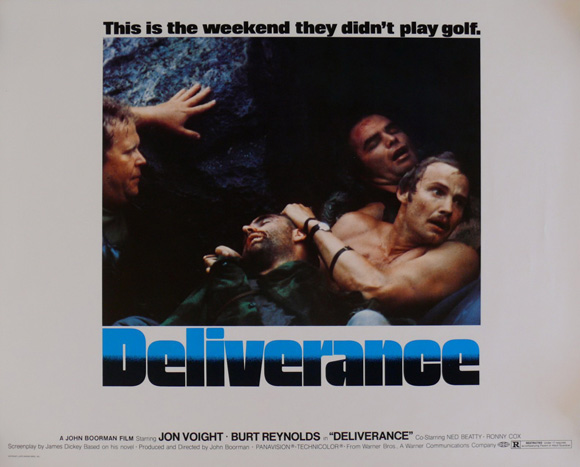
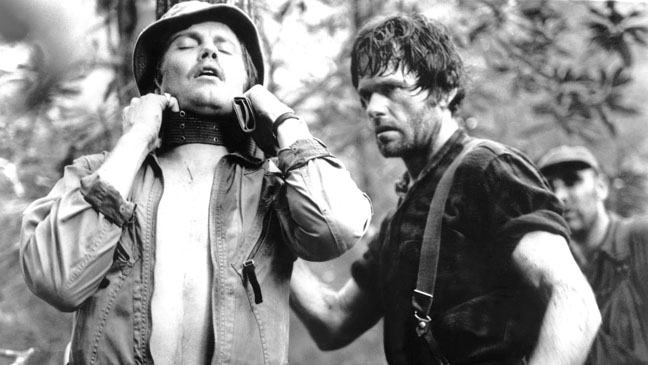
Four Men, Forty Years: Deliverance

Tumblr_m6e0j0A7nn1qiosrfo1_1280

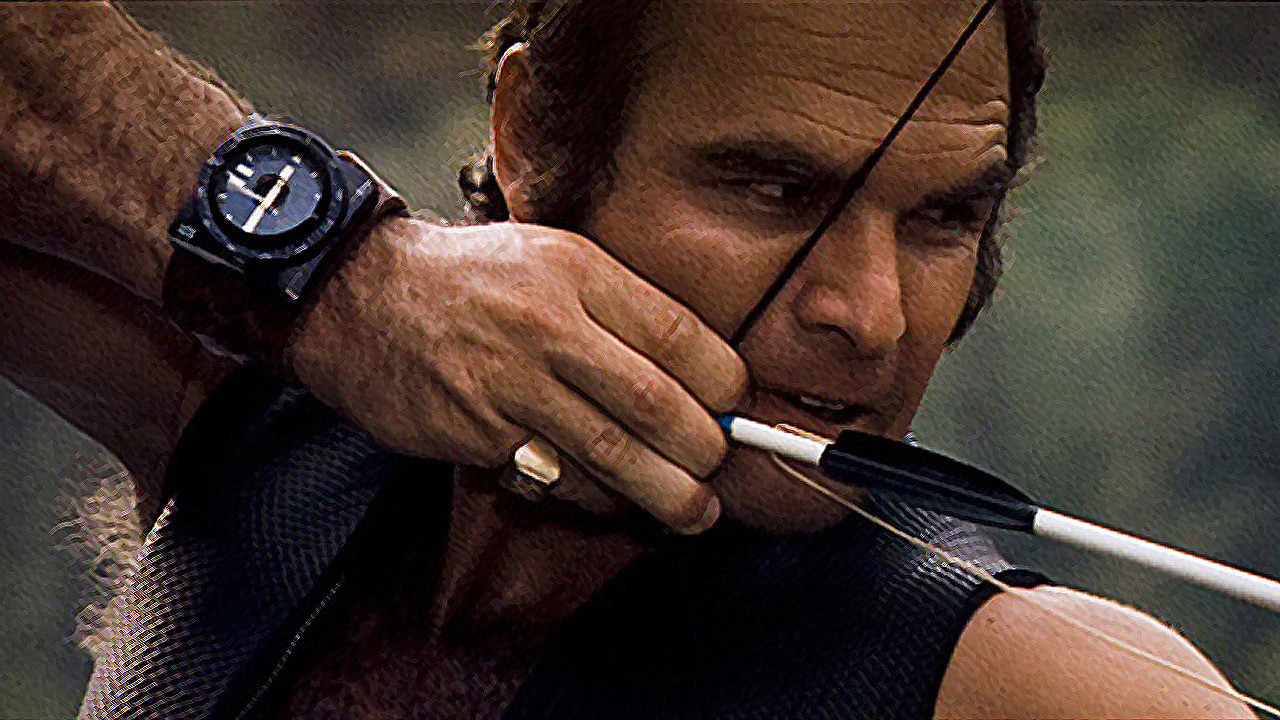
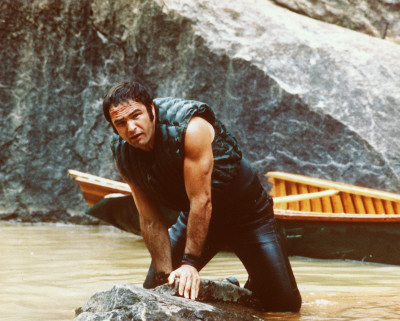
"Because they're building a dam across the Cahulawassee River. They're gonna flood a whole valley, Bobby, that's why. Dammit, they're drownin' the river… Just about the last wild, untamed, unpolluted, unfucked up river in the South. Don't you understand what I'm saying?… They're gonna stop the river up. There ain't gonna be no more river. There's just gonna be a big, dead lake… You just push a little more power into Atlanta, a little more air-conditioners for your smug little suburb, and you know what's gonna happen? We're gonna rape this whole god-damned landscape. We're gonna rape it." — Lewis (Burt Reynolds)

122961

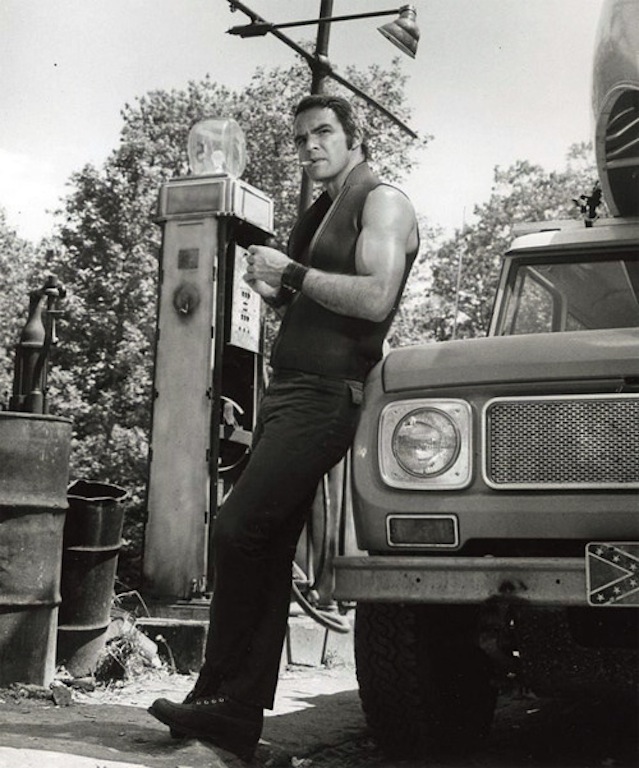
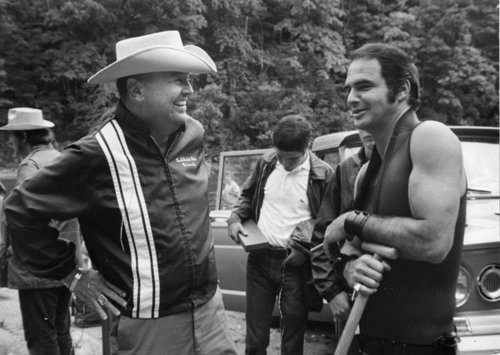
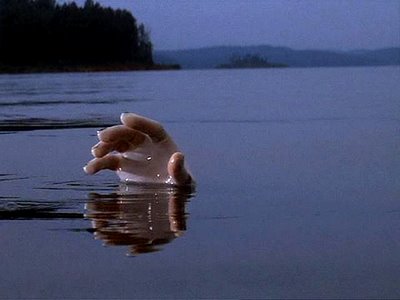
John Boorman's Deliverance plays just as powerful and as terrifying and as beautiful today. Released in 1972, the movie is thoughtful, disturbing, haunting, controversial, shocking – its story layered with action, darkness and the character’s self-reflection, their soul-wrenching journeys. With a screenplay adapted from his own novel, James Dickey didn't spare us the depth and horror of the story – and nature, though beautiful – was something to look at lovingly, something to experience, and something to save from destruction, but also something to fear. And that is real. Nature is big and unpredictable and it doesn’t care about you.

Deliverance_Festival_Ston_t607

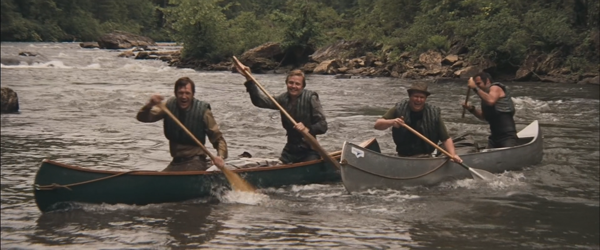
Dickey and Boorman crafted an entertaining, tension-horror-packed adventure tale about four men on a river canoe trip in remote Northern Georgia, but within its wild rapids, brief joy of dueling banjos, gorgeous scenery, and ominous mountain terrors, it explores nature, civilization and the dark, vulnerable, muddled hearts of men – their violence, their masculinity (and questioning it – what does that even mean), their inner struggles, their sadness, their guilt, their values and their humanity.

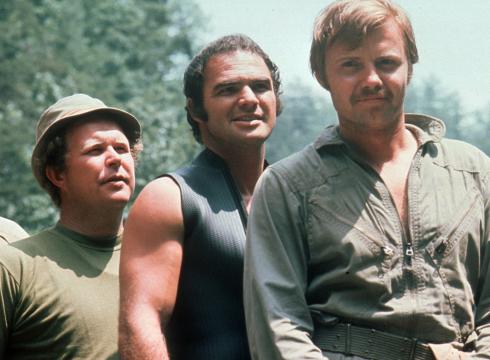
In Los Angeles, promoting the picture's 40th anniversary, the four stars, Jon Voight, Burt Reynolds, Ned Beatty and Ronny Cox, sat down with me to discuss the classic picture, its themes and what went into making such a challenging film. Sometimes when you talk to actors about movies they made decades ago, they speak in more general terms – even of their classics. Not this group. They remember specific stories. Some very funny stories. Some scary. And they certainly remember each other. Very well.

B717e4ec_DeliveranceCastPhoto

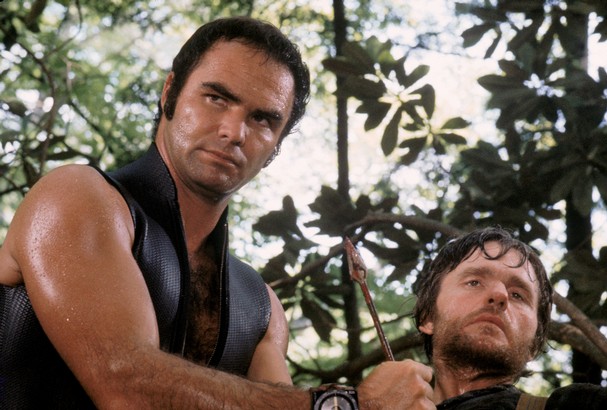
Burt Reynolds was charismatic and still full of his own kind of swagger (it’s not boastful, it’s playful, like he knows his masculinity is amusing), and he was quick-witted, insightful and charming. Ned Beatty was jokingly ornery while genuinely curious about how his wife's golf game was going. Jon Voight was warm and pensive but quick to laugh. Ronny Cox was thoughtful and down to earth. They were all surprisingly easy to talk to, in fact, and all incredibly intelligent, not surprisingly. Watching them interact I, at times, felt like I had sat down at a card game among good buddies – playfully ribbing and riffing off of each other, these men were so comfortable with one another, they clearly bonded during that tough shoot so many years ago. And that bond remains. It was impressive and touching and wonderful to experience all these years later.

418387.1020


It was a rare opportunity. But since time was crunched, (they were readying to get on stage and present the picture), I only had ten minutes. Maybe fifteen. Fifteen minutes! Not enough time and so many questions. Each man required an hour at the very least. All of these actors have been a part of such phenomenal, legendary movies – to name just a handful – Midnight CowboyComing HomeBound for GloryRoboCopNetworkNashvilleThe Longest Yard, Smokey and the BanditSemi-Tough, Boogie Nights – and have worked with notable directors such as Hal Ashby, Sidney Lumet, Elaine May, Alan J. Pakula, Michael Ritchie, Robert Aldrich, Robert Altman, Paul Verhoeven, Paul Thomas Anderson and the list goes on and on and on. Dear lord, I could have rambled on for hours with Burt Reynolds, on White Lightning and Gator alone (the great Reynolds is, I think, underappreciated for his impressive range – see the excellent Starting Over – but that's another piece). So please excuse the brevity here. What follows is my short, sweet, funny, insightful and, for me, personally historic discussion.

Deliverance19721080px26

KIM MORGAN: What an honor to sit with all of you and discuss such a legendary movie. Just to say a few things: Deliverance never feels dated. It still plays so revolutionary and daring today. There really has never been another movie like it. And one that truly, truly explores its themes: civilized man having to face their uncivilized, more savage natures, and not making any easy moralizations about it. And you just feel these characters – what they're going through – I have to think much of that was based on the way it was shot. You shot it chronologically. And then… all the beauty, power, attraction and fear of nature. It’s so potent, making it one of the many reasons why it sticks with viewers for such a long time. 

BURT REYNOLDS: I think you’re right on the money. You said it very well. I’d also like to mention… as Ronny has said too… that women get this movie much quicker than men. Women also understand. You know, for so many years men threw the word rape around and never thought about what they were saying. And I think the picture makes men think about something that’s very important, that we understand the pain and embarrassment and the change of people’s lives.

Deliverance-original

RONNY COX: I think also, the thing that you mentioned. That we did it together, and that we did it in sequence. Because typically movies especially this day of CGI and things like that, there’s a part of your brain that knows that is CGI and you sort of willingly believe that characters are going through these things, but then, you don’t REALLY. Whereas, if you look at this film, and there’s, for instance, a long shot of guys in canoes… and they say, “Stay on that shot! Stay on that shot!" –  it pays off viscerally in ways that other films can’t. I think that’s one of the reasons why it’s such a visceral experience today. Because it’s forty years old now, and it still stands up.

KM: Your characters go through so many changes in the film, obviously, Mr. Reynolds, you start out as, what in any other Hollywood movie, would serve as the hero but then you get that compound fracture..

Burt-reynolds-deliverance-1

REYNOLDS: You know where that bone that came out of my leg came from? Well I went to a butcher in Clayton and I said, “I really want that really huge bone that you have there.” And then I broke it backwards and I said, “I need some blood.” And he said, “I’ve got a lot of blood.” And he gave me a huge pail of blood, real blood, so it didn’t look like that stupid ketchup that they have in movies, and when I went out and stuck it through my legs and I poured the blood over it. I must say, a lot of guys got kind of ill over it.

COX: Me! (Laughs)

REYNOLDS: But it had a wonderful effect. It had the effect that I wanted it to have, which that it was frightening. And it worked internally for me. It was an external thing that worked internally.

COX: There were so many shocking things, I mean, of course the rape. But my shoulder being out of place. Their stomachs were turned by that. 

JON VOIGHT: A lot of reasons to get sick in this movie.

(Everyone laughs)


Bill_mckinney_deliverence_a_h

REYNOLDS: (Pointing to Cox) His shoulder is amazing. Have you seen him do that?

KM: In person? No.

REYNOLDS: He can do it. Ronny?

VOIGHT: You can’t do it any longer, can you?

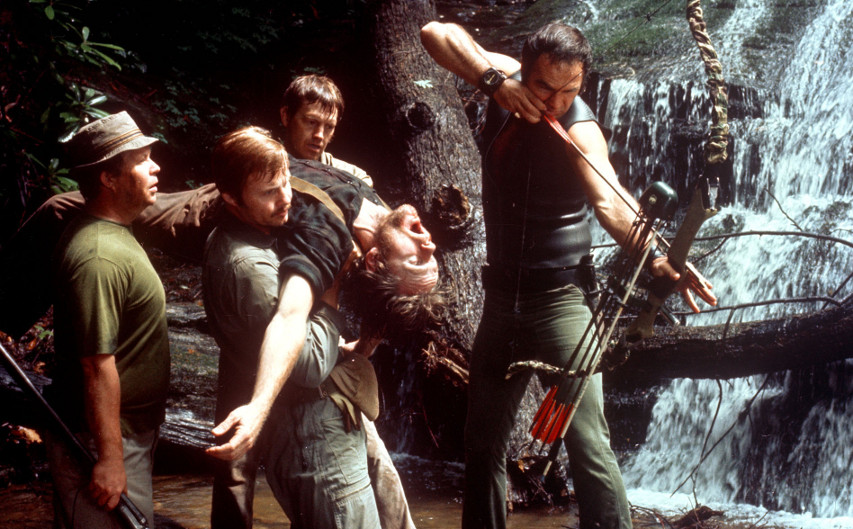
COX: I’m too old. (Laughs) But the film, when they find Drew, with his arm around – that’s actually my shoulder. I actually did that. I’ve had a whole lot of people say, that’s the most unbelievable shot. That movie was believable except that! And it was real!

Deliverance-ronny-cox1

KM: (To Voight) One of my favorite scenes is when you have to scale that mountain, and you have to take over the “hero” role, but it’s not as simple as that. And I know you really did get on that mountain, so the feelings there are so authentic and it’s so sad and terrifying.  One of the most powerful moments is when you lose your family photos, when they drop out of your hands… it’s just so heartbreaking.

VOIGHT: Yes, yes. When he's losing his touch with his family. What that reminds me of is all the guys that we send to war. You understand what they go through. They go through all of those feelings and then they have to put themselves on the line… they don’t know if they’re coming back. All of those guys – that’s true bravery. Anyway, that piece of the film in the book is brilliantly written, of course when you’re doing a film, as opposed to the novel you can’t get all this stuff in. But with these two brilliant imagists, Dickey on the one hand and Boorman on the other – one gives you the visual poetry and the other gives you the verbal poetry. But in the book it goes on for five pages… It was exciting to participate in that [scene]. It was the one thing that drew me to the film, that scene, that moment that you’re talking about.  When he has this catharsis in the middle and a crisis and he almost breaks apart halfway up the climb, and he loses his touches with his family and civilization, and then he has to get himself together and then continue on the way. It was exciting to be the person to embody that one chapter in the book.

Deliverance

KM: Mr. Beatty, this was your very first feature film. 

NED BEATTY: Me? No! My very first film role was for the FBI.

KM: For the FBI?

BEATTY: Yeah, I played a bank robber in a film for J. Edgar Hoover. I thought I was making this to train FBI officers…

KM: It wasn’t a feature film it was a… [Note: Deliverance was Beatty's first feature film]

BEATTY: (Joking) Let me finish! (He then stands up and with ornery playfulness, makes more jokes.) I’m just kidding. I like being the bad guy. You wanna know why? (He leans in). You make more money and it’s more fun.

BEATTY: So anyway, I went into this place…

(Everyone starts laughing)

BEATTY: (To everyone, joking) Shut up, I’m talking here, dammit! (Calls out to the publicists) Hey! Can I have someone in here to control these three guys? I don’t care who it is! Send three or four women, they can take care of them! They’re old guys!  They can’t do nothing. Anyway, I made this movie for the FBI and when I walked in the door to the audition, I dressed up like an FBI guy because that’s what I thought I was going to play. When I walked in the door the guy said, “That’s our bank robber right there!” So I robbed a bank.

Deliverance-ned-beatty

REYNOLDS: (Amusingly exasperated to Beatty) This is longer than the movie.

BEATTY: (Playfully) Shut up, Burt! Burt knows that I love and respect him… so anyway that was my first movie and they sent it out to all the police officers all around the small towns of America and when I was still working in the theater, I used to go to a small town and do a play or something and I got arrested right away.

COX: (Offers) It was my first film.

BEATTY: Are you doing a book on this?

KM: No, I’m not doing a book…

BEATTY: You snatch my story. This is a real story. (Says jokingly) The rest of this is a bunch of artistic poof!

KM: But again, this was a daring first major role to take on, and a lot of actors now would even shy away from it. 

BEATTY: You know what, at that point in my acting career, I thought I could act anything. And I could. So, what would be the problem?

Memories-of-film-Deliverance-still-linger-K01MFBH4-x-large

KM: To all of you. What was it like working with James Dickey? He was on the set for some of the time…

REYNOLDS: It was not easy. Not easy. No. He’s a big man and he’s a poet and he’s full of…

BEATTY: Himself.

REYNOLDS: Himself.

COX: And he actually wasn’t on the set except when he came back to play the sheriff maybe because he was asked by John Boorman to not be there.

REYNOLDS: He was asked by us! By us!

COX: The problem with Dickey, he’s a wonderful poet and novelist and he had written the screenplay, but he also had a mammoth ego and wanted to run everything.  He really wanted to direct the picture. He really wanted to be in charge of everything. James Dickey’s talent goes a long, long, long way before it runs out of gas. But it does run out of gas and it runs out of gas just short of knowing how to make a film, and so it became problematic.

REYNOLDS: He also was an alcoholic. He was usually pretty smashed by two o clock.

COX: Yes, several times, we would come back from rehearsal or whatever, and he never called any of us by our real names.

REYNOLDS: No, he called us our character’s names.

COX: Yes… our character’s names. I figured out why that was. He owned those characters. He owned Lewis. He didn’t own Burt. He would come in with his cronies and say “Drew! Come over here and do that scene!” And want you to play that scene for his cronies.

KM: He was wonderful as the sheriff…

REYNOLDS: He was.

COX: He was good. And he’s a wonderful poet.

REYNOLDS: He was bigger than life.

Slideshow_1084570_deliverance


VOIGHT: There’s a secret to that scene too.

KM: What’s the secret?

VOIGHT: When John [Boorman] shot that scene, Jim Dickey had written the part for himself and he had a whole section, he went on and on, so I was looking at it saying going, “Woah… this is going to be difficult.” And he was very convincing as the sheriff, he was really terrific and he had great presence, but he had all of these extra words so John said, “OK, Jim, say these words over here… and you get up in front of the hood and say the rest of these words, and then you come over and talk to Jon…” And what John [Boorman] was going to do in the beginning, was take those sections by the headlights and cut them out. So, he just had this first section, and you see him arrive and talk with me. So, he had designed for himself a major scene that wasn’t in it. But, listen, he was very brilliant, the writing was all good, but it was not needed. And if he’d known that it was going to be cut out, there would have been a big argument.

DeliveranceHand01aa1

BEATTY: (Joking) I thought he sounded a little bit too southern.

(Everyone laughs)

REYNOLDS to BEATTY: Would you like another drink?

"Deliverance" has been released in a 40th anniversary Blu-Ray edition which features commentary by John Boorman, multiple featurettes with the cast and crew, a vintage behind the scenes documentary that includes James Dickey and more. The Blu-Ray is packaged in a nice hardback, 42 page book with all kinds of information and production stills.


And here's that famous scene. I love this moment, not just for the joyful, now iconic music, but that this joy is mixed with such a portent of doom. Joy does not last long. Burt Reynolds' Lewis smiles, but you get the feeling he knows before the song is over — this is not going to be easy, in so many ways.

Link Wray: So Glad, So Proud

Tumblr_kumxq0kfTo1qzs4ido1_400

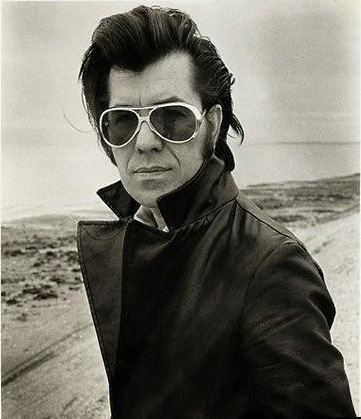
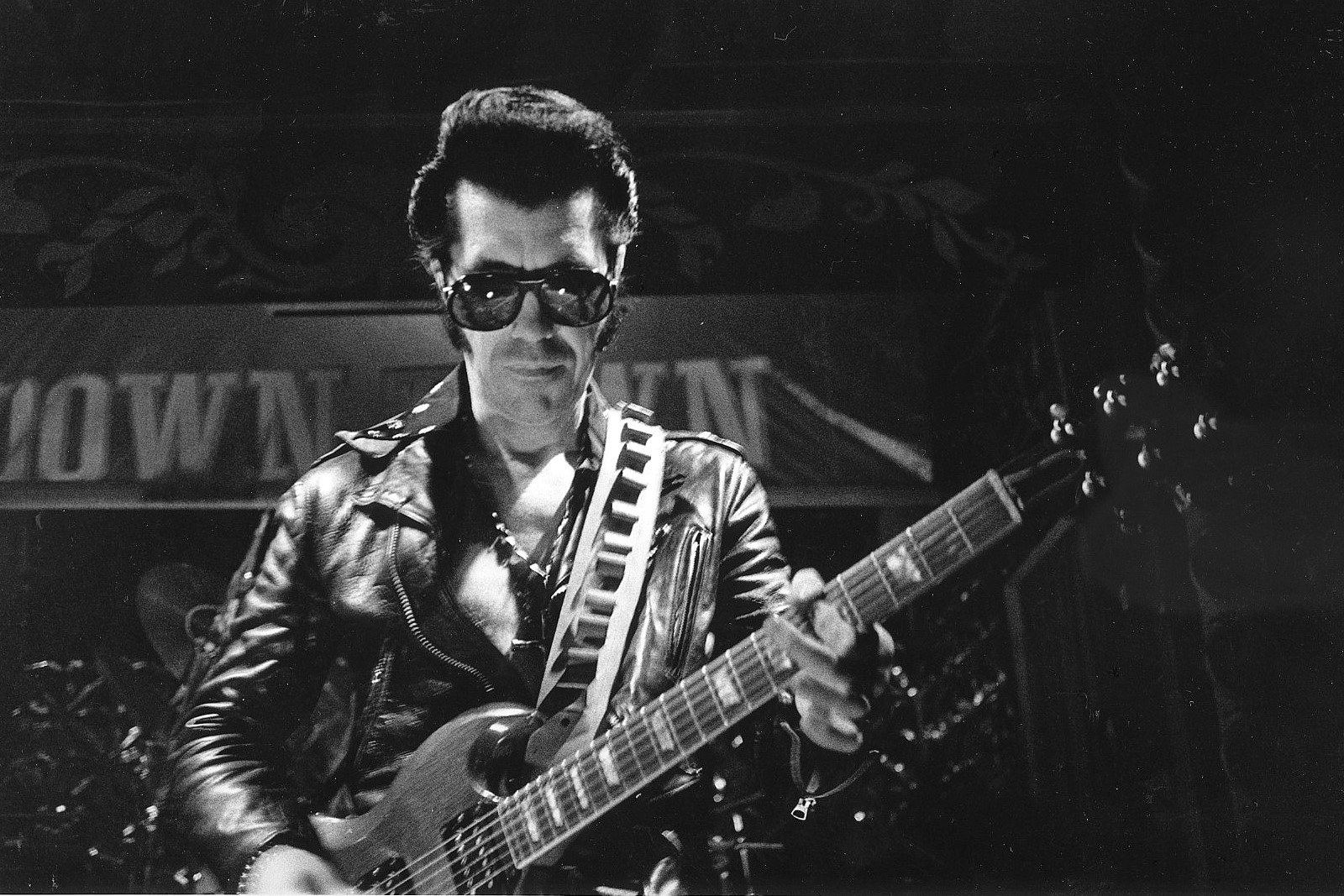
Rock pioneer Link Wray, most famous for "Rumble" was boss in every era.

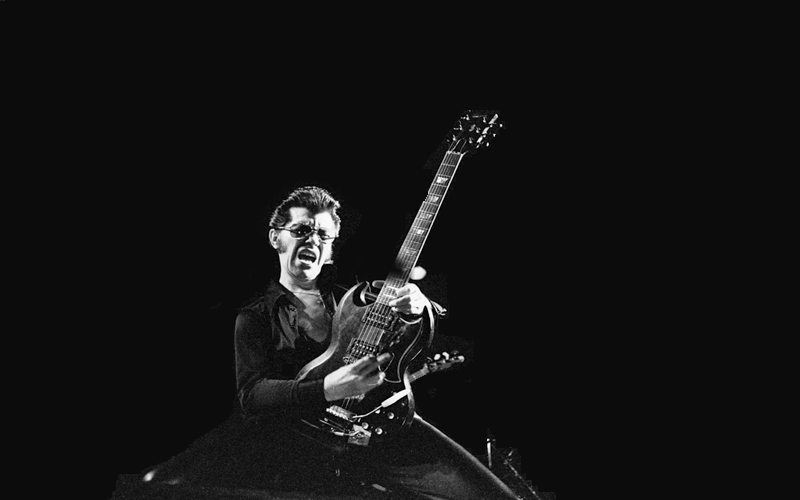
In 2000, at a small club in Portland, Oregon I witnesses this for myself. The half Shawnee shaman, at the age of 71, performed one of the greatest shows I've ever seen in my life. Some time had passed since Quentin Tarantino featured Wray's famed "Rumble" in Pulp Fiction, so the "Rawhide" rocker attracted a smaller crowd this time around. The better for all of us. The crowd consisted of die-hard Rockabillies, a smattering of older people, varied Wray fans, me and my little sister. I stood in the front, hands on stage, and watched one of rock n' roll's most influential guitar Gods work his power — taking all that is raucous and dark and soulful and yes, light, and hypnotizing us. There were no bad vibes in that cramped crowd of potential rowdies. Moving on stage like the half-Shawnee he was, he worked us as if performing some kind of Native American rock and roll rain dance, while still playing down and dirty — music that made us feel alive and real and raw. And then dreamy — a seedy, sexy, soulful, demonic, beatific dream. 

Tumblr_m3ncf7kT051qiosrfo1_1280

And then this wide awake fever dream became so tangibly real — a moment that's remained a highlight of my life: Link Wray handed me his guitar in the middle of "Rumble." Yes, he actually, mid performance, leaned over from the stage, and placed his guitar in my hands. And that devil (an angel in disguise) did so with a grin on his face. I was holding Link Wray's guitar! I didn't scream or cry or crumble into Beatlemania hysterics (I did inside), instead I held it as long as I could and then, in a trance-like state, passed that sacred idol through the crowd. This was to be shared. And Link just took it all in — jovial and delighted as the awed audience passed it along, and with great, religious respect. He trusted us. It was safely returned back to Wray who, in spite of his dark image (Wray was still one of the greatest looking leather clad rockers ever) and menacing sound, smiled broadly. I still have his pick, stashed safely in my jewelry box.

Link Wray

Sadly, Link Wray, born May 2, 1929, passed away in 2005. I wish he was still with us. Wray brought so much to American rock music. Distortion, feedback, the power cord and a raw, dirty, crunchy, heavy sound that everyone from Poison Ivy to Pete Towsend to Jimmy Page to Neil Young credit as most influential. Some even claim him the father of heavy metal. "Ace of Spades," "Jack the Ripper," the brilliant "Rumble" (watch Wray rock the ever-loving hell out of that one here) and one of my favorites "Comanche" are just a few of his classics. And then there's "Rawhide" as seen here on "American Bandstand." 

The way Dick Clark mentions "Rumble" cracks me up. He says: "They've had one very big hit record gone by, a thing [at first I thought he said 'I think'] called 'Rumble.'" Quite a thing, Mr. Clark. And a think! That was a powerful hit. I've always loved that in 1957, "Rumble" was banned from a number of radio stations — banned for its menacing suggestion. There were no lyrics! This is how complicated and primal and mysterious his music could be. And a true testament to his art.

Tumblr_m3irckifO31qiosrfo1_1280

And, as I stated from the outset, Wray rocked in every era. I revere all of his work (I especially love his Dylan covers —  "It's All Over Now Baby Blue" and "Girl from the North Country") and I love his unique singing voice — that cracked voice — a voice I hear in Dylan or Jagger screaming rough or even in Van Morrison — but so distinctly Link Wray. His baritone, just slightly, beautifully broken, crooning through  Elvis' "Love Me Tender" is plaintive and lovely. And his "Girl from the Northern Country," released in 1964, feelss so both ahead of its time and timelessly intimate  – it's so gravelly gorgeous, so different, so… Link. Wray really admired Dylan, but I prefer Wray's strikingly raw and emphatically romantic version:

And I get so damn excited when I hear what he was up to in the 1970s. Not enough '70s Wray is discussed or heard. Wray excelled with his seemingly smaller records in an era of enormous Stones and Zep releases with some gritty LPs that feel ahead of their time then and now. The Black Keys and Jack White would kill to imbibe whatever magical potion Wray was concocting. And as much as I respect White, they'll never achieve the alchemy of Wray. And they would surely agree.   

Link2

I could ramble forever about his '70s records (and I won't even begin to touch the utter ridiculousnes that this man has not been inducted into the Rock and Roll Hall of Fame), but here's one track: Wray’s “I’m So Glad, I’m So Proud” from his 1973 album “Beans and Fatback.” Recorded in 1971 by Link’s brother Vernon, in a chicken shack (Link’s Three Track Studio) on Wray’s Accokeek, Maryland farm, this is the shit. My favorite ’70s Wray is his self titled “Link Wray,” featuring the masterpiece “La De Da” (a song the “Exile”-era Stones had to have heard) but this one, this one is a whole lot of hot damn. And thene there's … good God! "Fire and Brimstone," from 1971. Screw Clapton. Link Wray is God.

And check out Jimmy Page in "It Might Get Loud" here. In the face of "Rumble," he can't contain himself. He’s a kid again! He MUST air guitar to Link Wray!

Sad Men: Days of Wine and Roses

Annex%20-%20Remick,%20Lee%20(Days%20of%20Wine%20and%20Roses)_NRFPT_01

And sad women… From the archives and updated: "Days of Wine and Roses."

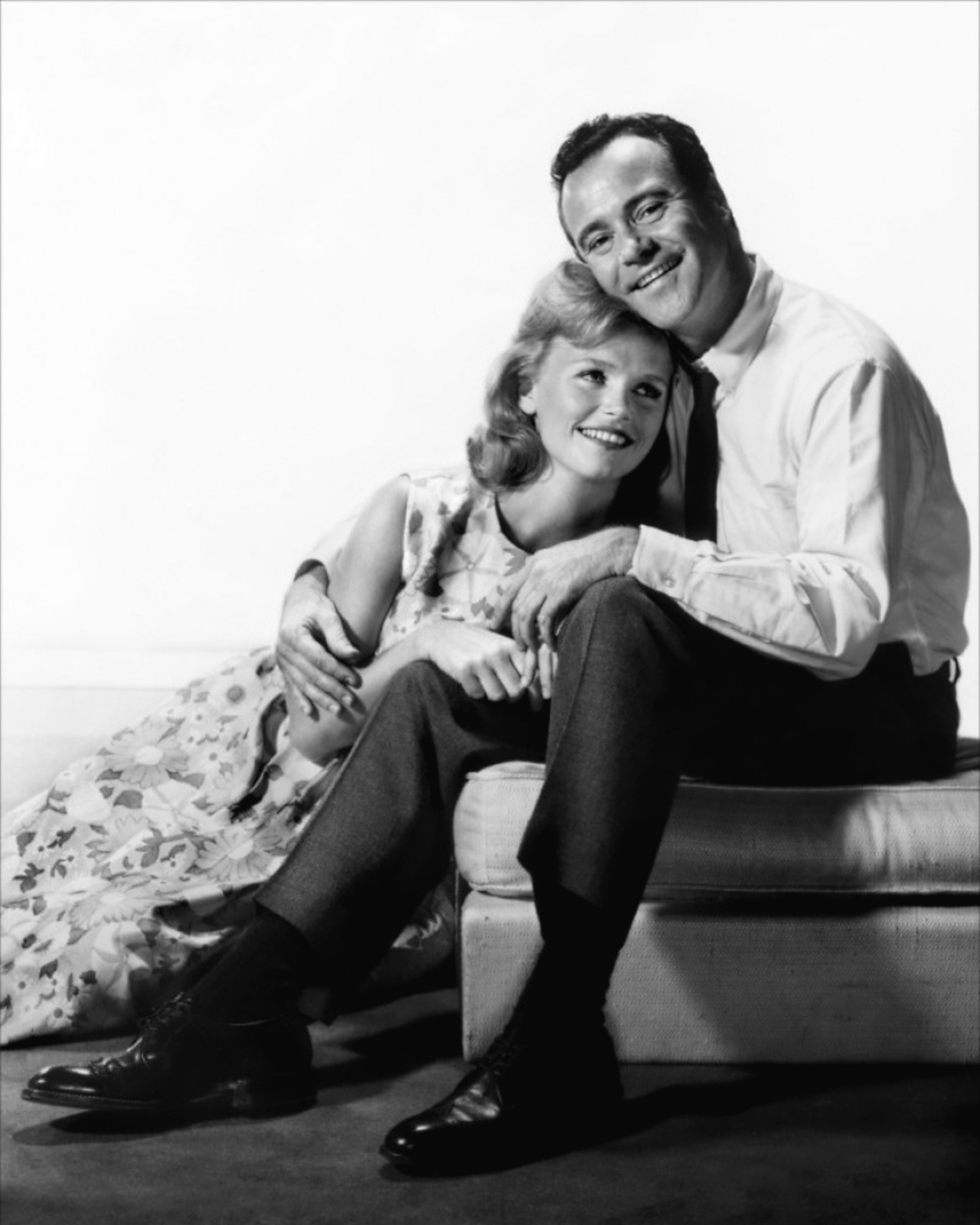
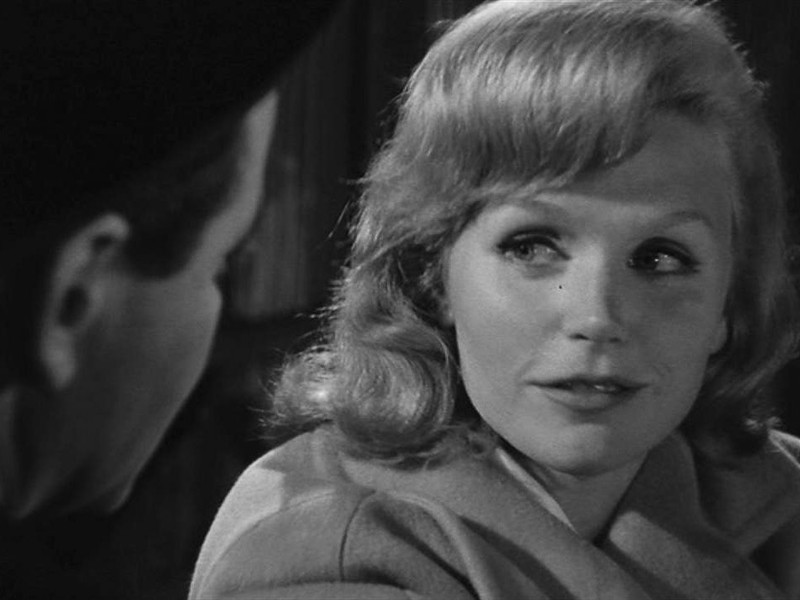
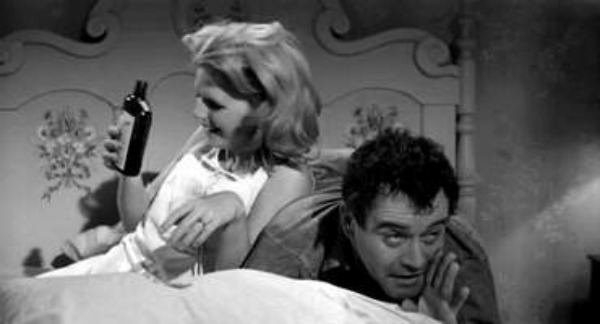
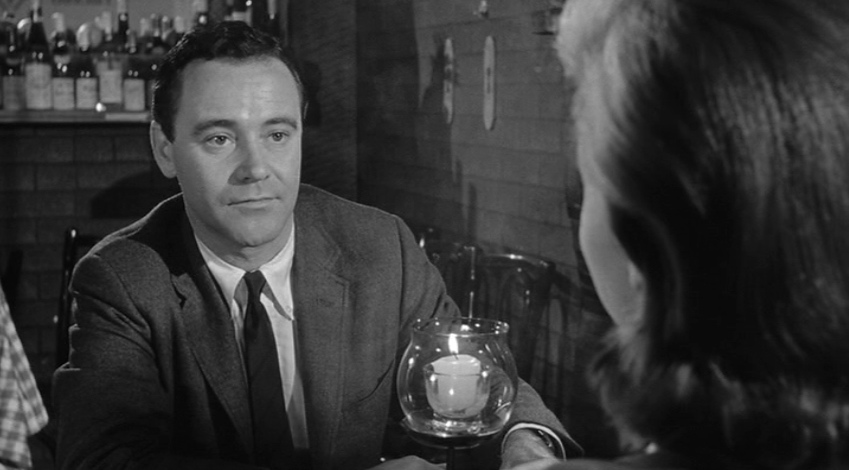
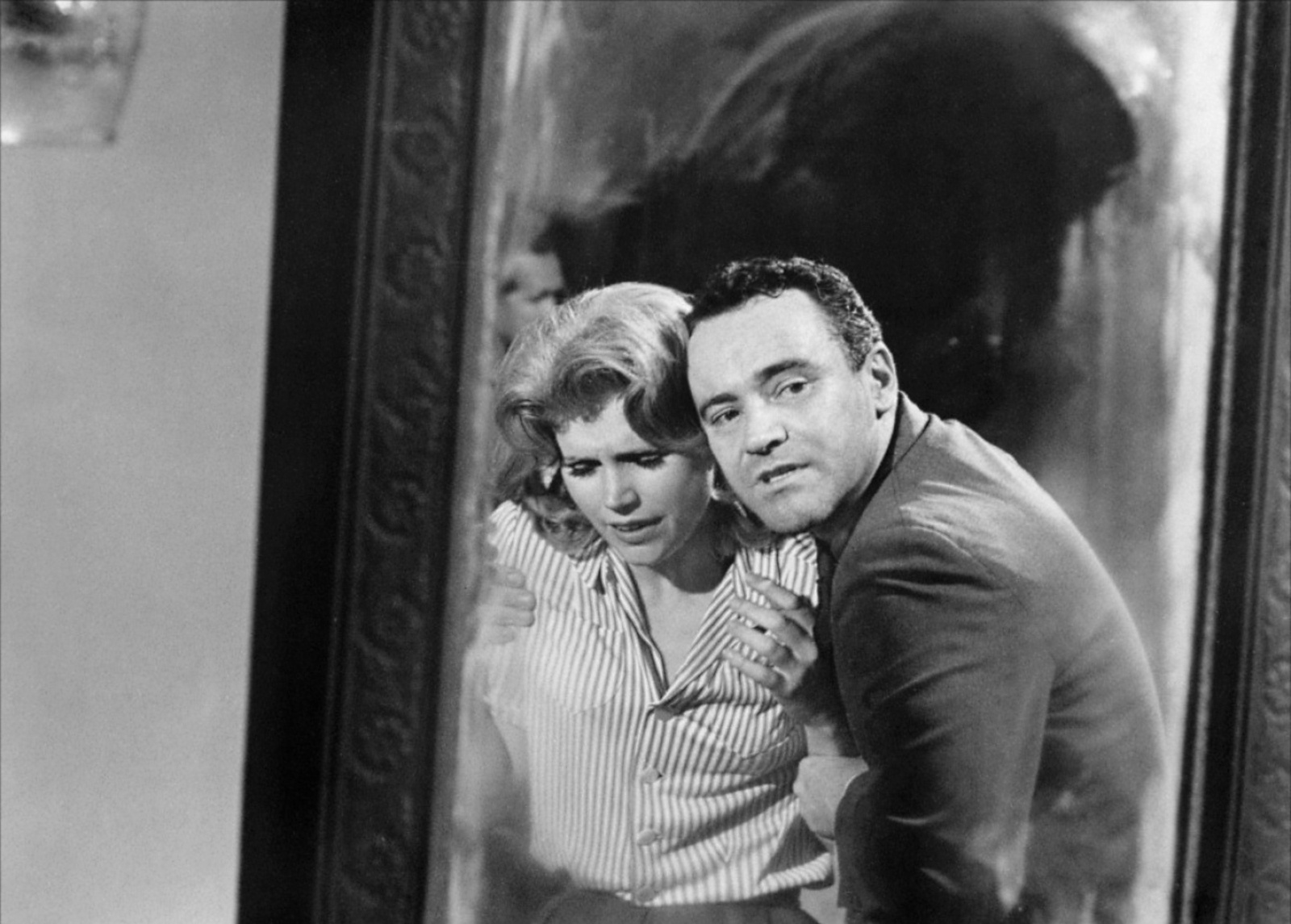
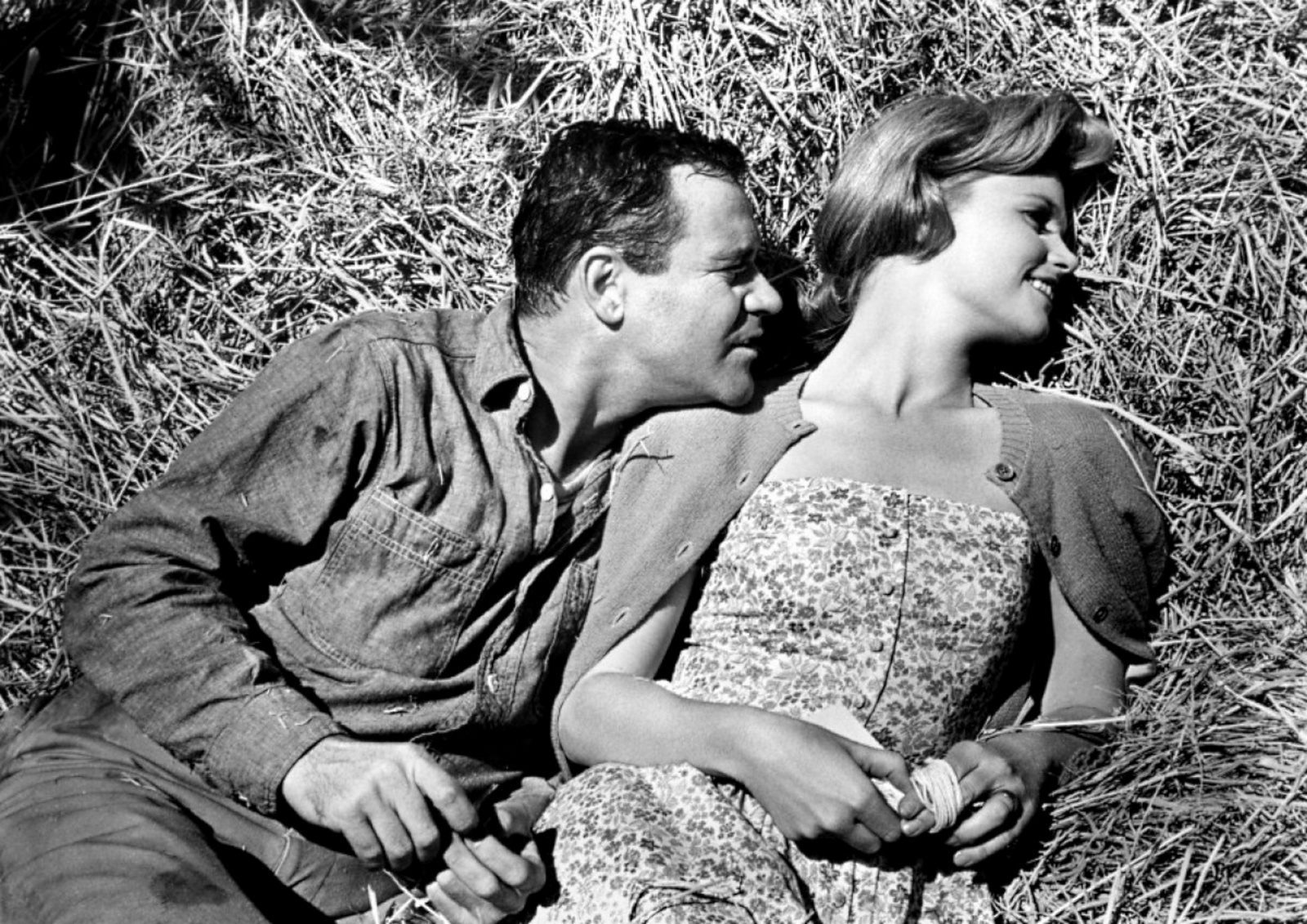
In Blake Edwards' Days of Wine and Roses you can easily see — even if you didn't know the movie was about alcoholism — that Lee Remick is going to fall, hard and bad, for liquor. Beginning the movie as a teetotaler, a woman who's only vice is the love of chocolate; we see her weakness arrive when her date (played by Jack Lemmon) insists she imbibe. Knowing that she'll enjoy it, he orders her a fancy chocolate cocktail and watches her delicately down the concoction with an almost vampiric joy, as if knowing another potential boozer is a sixth sense. It's a sad moment watching poor Remick throw that drink back, her innocent enjoyment and eventual giddiness made all the more tragic by how unaware she is. In the midst of an almost predatory drinker and harboring the right kind of troubled past or brain chemicals or addictive personality, we know this woman will not be able to innocently drink again.

Blake_Edwards_Lee_Remick_Days_of_Wine_and_Roses_1962

First directed in 1958 for the classic television anthology Playhouse 90, Days of Wine and Roses was originally filmed by John Frankenheimer in a searing TV play that starred Cliff Robertson and Piper Laurie. The grittier vision with the arguably darker, more complicated, experimental director at the helm (watch Seconds, The Manchurian Candidate, All Fall Down, The French Connection 2 – this man understood human pain) the original has been considered, by many, superior to the 1962 big screen adaptation and Laurie the better actress. Since I revere Frankenheimer, I can understand the preference. And yet I think Edwards' version (who also understood human suffering and horror — watch the opening of Experiment in Terror) is just as interesting. Chiefly for how "normal" Lemmon and Remick are. 

Days-of-wine-and-roses

It often feels perverse watching Jack Lemmon and Lee Remick squirm — especially Lemmon. All through his career, from The Apartment to Save the Tiger to Glengarry Glen Ross, the high-strung, twinkly-eyed actor was always craving more out of life. But that something more, even when given a happy ending (like The Apartment, which isn't so happy) he will seemingly never satisfy. He'll never quench that thirst. With humor (Some Like It Hot) and devastation (Glengarry Glen Ross), he's desperately hanging by a thread, perpetually frustrated. He may win The Apartment's Fran Kubelik in the end but will he keep her? Or will she become Remick's Kirsten Arnesen Clay?

Days-of-Wine-and-Roses-3

The actors are indeed different in the alternate versions (both written by J.P. Miller) but all bring something specific and true to their performances. That Lemmon and Remick appear the passive, nice, normal, All-American couple, fluffy on the outside or even, obnoxiously "regular," their fall into the abyss is, at times, shocking, and then familiar and then, truly depressing. These are the people who get married, have kids and move to the suburbs, not a flop house next to the closest watering hole. For these two, there's no romance in either scenario.

7days_of_wine_and_roses

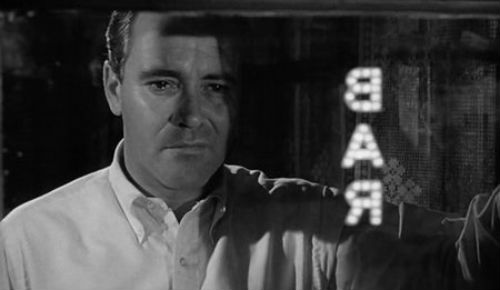
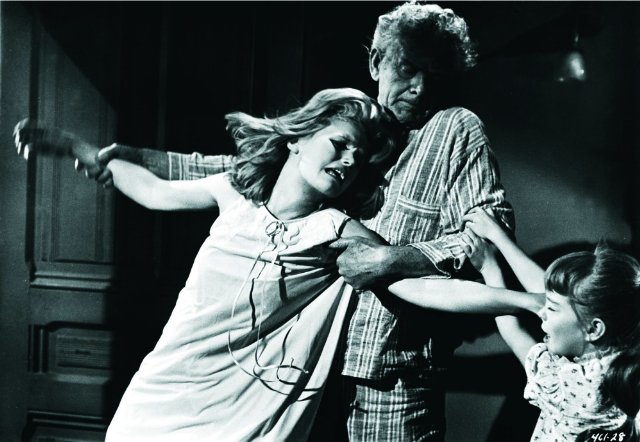
Lemmon begins the movie as a drunk (though he doesn't know it) and much like his legendary character in The Apartment, engages in unseemly activities to move up the sleazy corporate ladder. A gregarious PR executive with less charm than he thinks he has, he goes so far as to supply hookers for his bosses just to keep a job that will prove to be unrewarding. Remick is the pretty, Encyclopedia-reading secretary (whom he mistakes as one of the girls at a party — an awkward, harsh scene) and in a moment of fate for two future sots sharing an addiction they don't even know they have yet, they fall in love, marry, have a child and become desperate drunkards. He loses his job, she can't take care of their neglected child, he tries to dry out, she hits near rock bottom, sleeping with strangers for liquor. And by film's end, we don't know what their future holds.

Annex%20-%20Remick,%20Lee%20(Days%20of%20Wine%20and%20Roses)_NRFPT_02

As acted by a twitchy, sometimes smarmy Lemmon and a wide-eyed, dippy, sweet, eventually bitter Remick, both actors become sympathetic with characters who go from lovable to potentially unlikable to absolutely shattering. You feel for them. When Lemmon digs up and destroys his father-in-law's greenhouse (a wonderfully stoic Charles Bickford) on a selfish, hysterical search for one bottle of booze, his desperation is so embarrassingly human and so pitiful that you're not only shielding your eyes from his destructive digging but for his abasement. And when a strung-out Remick comes home later in the movie to Lemmon fresh from AA, no one needs to further discuss what she's been doing all night, how much she's lowered herself. But then, maybe she had a good time. 

MV5BMTQwNjQyNjU2MF5BMl5BanBnXkFtZTcwOTQ2MzMyNw@@._V1

Though the Alcoholics Anonymous sequences have been considered heavy handed and maybe a bit irritating, this seems to be the point. What a drag, spending the rest of your life being lectured; living whatever de-mystified new life AA expert Jack Klugman is leading. How awful to sit around a bunch of grim one-day-at-a-timers, underscoring how so very not special you are. You are average. And yet, perhaps not-so-average. What kind of people will Lemmon discover at those meetings? Don Birnam? It won't be Don Draper. More like Freddy Rumsen. Even AA-understanding viewers of Mad Men are disturbed by the schlubby normalcy of Freddy. What a buzz kill, taking all the sparkle and swank out of those perfectly clinking cocktails. 

Annex%20-%20Remick,%20Lee%20(Days%20of%20Wine%20and%20Roses)_NRFPT_03

Lemmon and Remick are sexier than Freddy, but those drinks stop looking so good. Who knows what will become of this couple. Unlike the sexy, though suitably addled (those horror movie DTs) Ray Milland as that clever writer — that "don't be ridic" Don Birnam dipsomaniac of the great Lost Weekend, or Susan Hayward's deliciously melodramatic Lillian Roth and all her "crying tomorrow," Lemmon and Remick's most interesting characteristic is, sadly, that they are alcoholics. They can't indulge the brilliant mental gymnastics of Who's Afraid of Virginia Woolf's George and Martha, whose addiction and spitefulness are, in a highly dysfunctional way, disarmingly romantic and strangely heroic. Lee and Jack — they're like a lot of people — just regular old drunks. No wonder they drink.

It’s Alive! Guy Maddin and Spiritismes…

CIN-SPIRITISMES

"Over eighty percent of silent films are lost. I’ve always considered a lost film as a narrative with no known final resting place — doomed to wander the landscape of film history, sad, miserable and unable to project itself to the people who might love it." — Guy Maddin

The spirits will rise…

A project that has long haunted the obsessive and hard working Guy Maddin and one that's haunted our household in nearly every conceivable way (happy, unhappy, insane spirits, or merely the thoughts of those spirits, have a way of infecting our lives, quite personally. And a few smashed objects along the way. I like to think that Erich von Stroheim hurled that plate against the wall…), the reality, or the dream reality; the prenominal, the fantastical… there are so many ways to describe what is happening. In short, the Hauntings have begun. Watch. Live.

Erich von Stroheim 050732

Today begins the first day of Guy Maddin's SPIRITISMES at the Centre Pompidou in Paris (which run until March 12). As the Pompidou writes "Guy Maddin invites daily visitors to the Centre Pompidou to attend the making of a new film. During 'séances'…Maddin and his actors will allow themselves to be possessed by the wandering spirits of the dead, to bring their movies back to life." 

Filmmaking, dead made undead, is happening live at the Centre — lost or unrealized films by directors as diverse as Jean Vigo, Kenji Mizoguchi, Lois Weber, William Wellman, von Stroheim (I will appear in that particular Poto-Poto), Alexandre Dovjenko and more are coming — rising from the dead, in their own unique way. Maddin will be shooting one film a day, starting today, from February 22 to March 12. You can watch live streaming, between 11 AM to 9 PM (6 AM -3 PM ET) all those days. For those of you in the States, get up early or indulge your insomnia. 

Tumblr_lqpb90UP0w1qbr0feo1_500

And then there's the impressive array of actors. Udo Kier, Charlotte Rampling, Mathieu Amalric, Slimane Dazi, Rudy Andriamimarinosy, Jacques Bonnaffé, Amira Casar, Géraldine Chaplin, Miguel Cueva, Mathieu Demy, Jeanne de France, Adèle Haenel, Ariane Labed, Elina Löwensohn, Maria de Medeiros, Jacques Nolot, Christophe Paou, Jean-Baptiste Phou, Jean-François Stévenin, Robinson Stévenin and André Wilms will all take part. Please look at the full list of pictures, or seances, at the Centre Pompiodu, here.

Jean Vigo

As Guy said:

"Over eighty percent of silent films are lost. I’ve always considered a lost film as a narrative with no known final resting place — doomed to wander the landscape of film history, sad, miserable, and unable to project itself to the people who might love it. Their friends, their family, their loved ones and the public. 

"This absence haunts me. I need to see these films. It’s eventually occurred to me that the best way to see them would to make contact with their miserable spirits and invite them to possess me. And with actors quite willing to participate in some para-normal cinematic experiments.

TR (1)

"These are not direct re-creations or the imitations of the films themselves.  I would never dare consider myself capable of even the lousiest impersonation and wish to pay respect to all —  Jean Vigo, Ernst Lubitsch, F.W. Murnau, Ed Wood and all. 

"Every day my actors will plunge themselves deep into a trance, and open themselves up to possession by the unhappy spirit of a lost film. And every day my actors will act out the long forgotten choreographies that once lived so luminously on the big screen for thousands, maybe millions of viewers." 

Weber

As Guy told the Pompidou:

"This project made ​​its way into my head for almost twenty years. During all these years, he moved my heart and even my soul, until I myself am possessed! I learned that there are lost films. Beautiful films, made ​​for a very long, generally silent, popular films, glorified, loved, raised to the level of myth by millions of spectators, some obsessively. Films which, however, dying in obscurity. Since I realized this, I literally haunted. Some of these films were destroyed by the studios, simply because they needed shelves, some were thrown into the sea or burned in a bonfire at picnics countryside. Others were reduced to dust because they were poorly preserved, others perished in the flames in an accident of projection. Some of these films have simply disappeared from history.

90626-050-D4033B2A

"These are films that have no abode, films can not be thrown in their public accounts unfortunates condemned to wander forever in the landscape of film history. It is the fact of not being able to see, that haunts me, because they were all made ​​for that! I feel their pain wandering when I go to the movies, particularly in old cinemas. Yes, these films sadden me as much as they intrigue me. I thought that the only way to restore a situation as melancholy was to hold séances to contact these desperate souls and give them the chance to show again a part of themselves, even tiny. I decided to set up a device in which we could all attend these séances and perhaps, if we're lucky, take a look at the past glories of cinema."

Guy will not only shoot, but attempt to make paranormal contact with the spirit of the lost film (not literallly, of course. But you never know what could happen…) working like a spirit photographer, recording what transpires — ectoplasm, trances, twitches and of course, the re-imagined films themselves — dream narratives, shorts that well deserve their title: Hauntings.

Babysmash

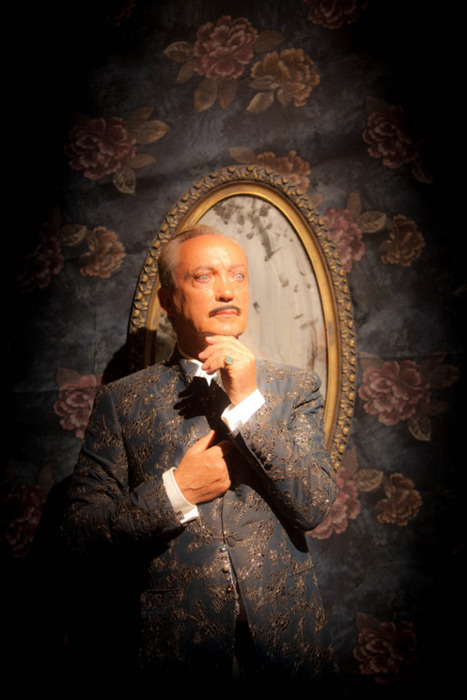
He will eventually edit the pictures, and this ambitious project will be moving on to many places (including MoMA in New York) and with many more actors and films to re-create, and many more ways to view them. Online, in the cinema, live-streaming and directly live in person. If you can't be present, again, you can watch online. And you do not want to miss the chance to watch Udo — Udo's eyes. Udo eyes could awaken the deadest of the dead, those who would never choose to rise again. And so can Guy.

Guy-maddin-2flow

Please watch it all live here. And I will be updating as much as possible. I'm working here, writing some of the scritps and acting in a few of the pictures, so it can be hard to break away — especially when I'm doing such things like, pulling a ribbon of ectoplasm out of Charlotte Rampling's mouth. I never thought I would have done such a thing, but it, strangely, seemed quite natural. (I must be delirious) Of course, she looked beautiful and intense — ribbon fluttering, with those spellbinding eyes and those famous lips, allowing the silky spirit to emerge. 

(Speaking of silky spirits —  I would be remiss to not mention For the Love of Film: The Film Preservation Blogathon to help raise funds for the National Film Preservation Foundation. Contribute! As we are attempting to bring lost films to life, remember all those pictures that should remain alive and well. This project underscores the importance of such matters all the more. The tireless minds and beautiful words at The Self Styled Siren and Ferdy On Films have been on this, and you should be too. But I will write more about that on another post…)

JS1263140

For now, we began with Lines of the Hand. An unrealized film by Jean Vigo starring Vigo's daughter Luce Vigo. Also with that other famous daughter, Geraldine Chaplin and the great Udo Kier.  Today is Marshall Neilan's Bits of Life with Rampling, Kier, Jacques Bonnaffe, Miguel Cueva, Sherpa Macilu and Andre Wilms The set-up has begun. And there are so many more to come. 

You can watch here – live streaming.

These obscure objects of desire. They are alive..

Lynch & Los Angeles: This is the Girl

2001_Mulholland_Dr_136-1

Because today is David Lynch's birthday. And because I adore Los Angeles in all of its sunny/dark schizophrenic glory. It's the one city where I feel like it's OK to feel insane. And that makes me feel sane.   

I'm in Paris for a few months, which is wonderful and will offer many creative adventures (chiefly the project I'm working on). And, of course, it's a place of countless complexities, high and low, deeply historical, cinematic, literary and on and on. And it's one of the most beautiful cities in the world. Still, I'm always happy to return to ugly/gorgeous, happy/sad, winning/desperate, crazy, crazy, crazy Los Angeles.

MV5BMTczOTQwMjc2Ml5BMl5BanBnXkFtZTYwNTkyOTc2

Like James Ellroy wrote regarding his return to L.A. (and in reference to W.H. Auden) Ellroy's beloved L.A. is "The Great Right Place." Sayeth Ellroy: "As L.A. bids pundits to spin epigrams. W.H. Auden called L.A. 'The Great Wrong Place.' I'll ascribe intent. Auden saw L.A. as a lodestone for opportunists and psychically maimed misfits. I sense this because I fall into both categories. Auden couched L.A. in a film-noir construction. Losers migrated here to start over and become someone else. L.A. was a magnet for lives in desperate duress. The sheer indifference of the place consumed the migrants and drove them mad. They succumbed to madness in a sexy locale. The place itself provided solace and recompense. They had the comfort of other arriviste losers. They entered the L.A. spiritus mundi. They handed out their head shots. They joined that unique L.A. casting call."

Rena-Riffel-Mulholland-Dr_4-1024x550

He could have been describing Lynch's ultimate L.A. movie: Mulholland Dr.

So, with that, a re-post. And again, Happy Birthday Mr. Lynch.

David Lynch gets America. America the beautiful, America the bizarre. We can discuss how "weird" he is, how inscrutable his movies can be, how much he loves oddly conceived babies, oddly shaped humans, oddly pale-faced Robert Blake, oddly obsessed Crispin Glover and his "lunch!", but the man gets what drives our subconscious, our sweet dreams, our nightmares.

muldrphone.jpg picture by BrandoBardot

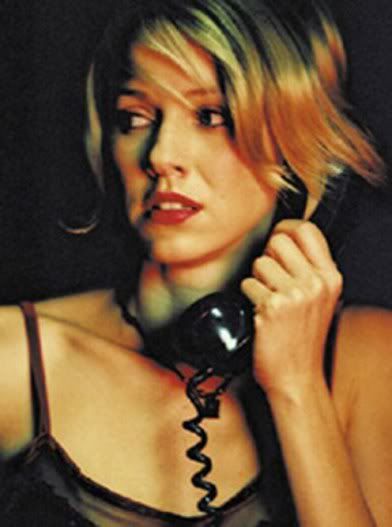
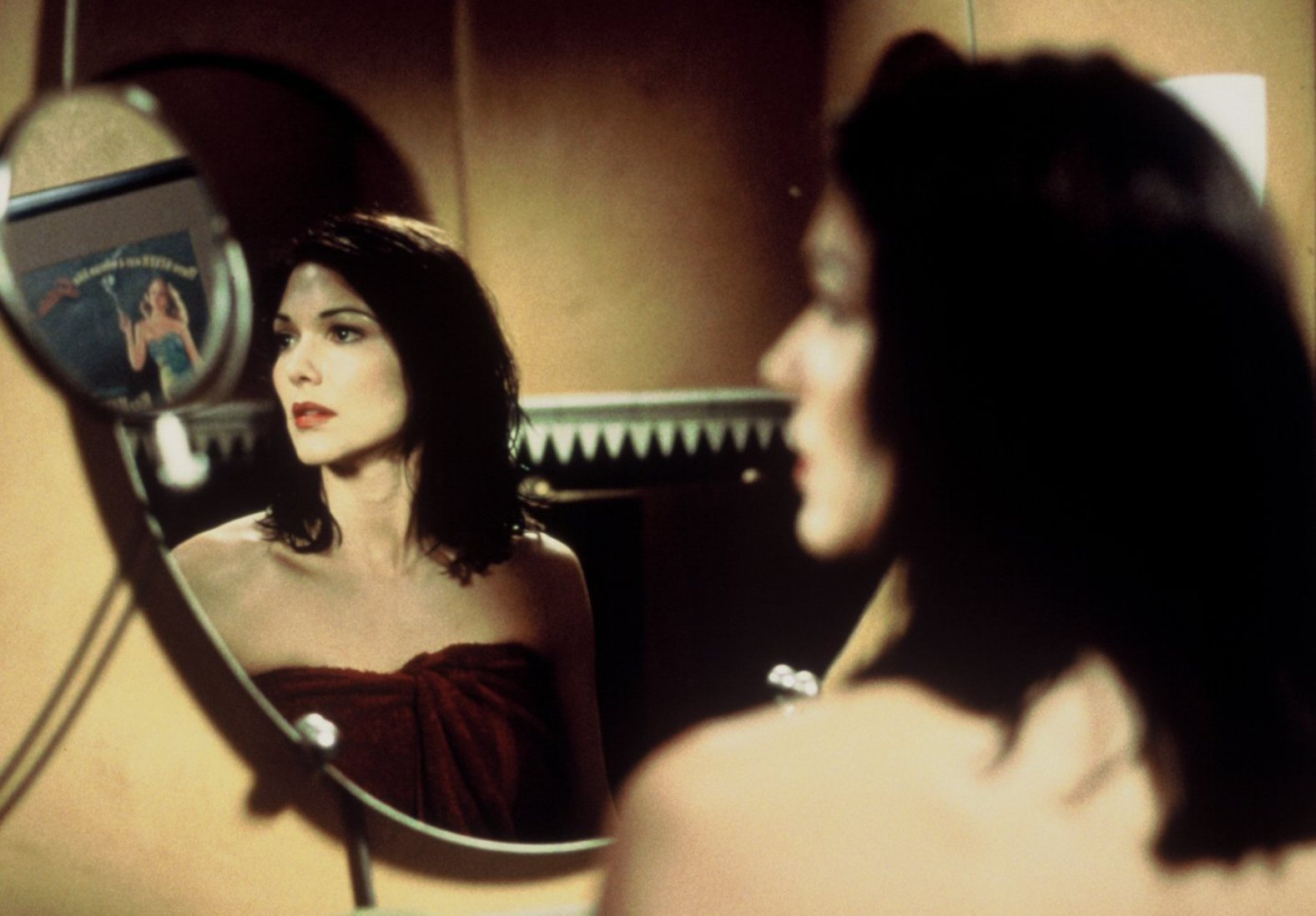
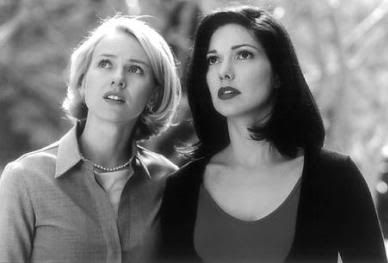
So naturally, Lynch understands one of the oddest cities on earth — Los Angeles. With his brilliant, labyrinthine Mulholland Dr., a movie that started out like a jilted starlet (it was an axed TV pilot) he digs underneath our peculiar Hollywood system — a system that pedals dreams, desire, sex, money, magic — dreams that have the ability to spread like a celluloid sickness all over America (especially during the 2000’s. Did he know how prescient he was going to be?). Through the bright-eyes of innocent Betty (Naomi Watts, in a career defining performance), a starlet seeking fame in La La land, he presents a twisted, romantic, funny, terrifying and deeply emotional mystery involving a gorgeous amnesiac, a monster behind a diner, a persona altering box, a pair of elderly folks who slither under doors, and a director who answers to a dwarf, a mobster and a cowboy. And let’s not forget Coco.

Mulholland_drive_movie-207802

Hauntingly beautiful, poignant, funny, subversive, dark, meditative, sexual (Lynch is one of the few American directors who can actually create inspired, erotic and yet intensely emotional sex scenes) and more, Mulholland Dr. poses many questions, but offers few answers, reflecting life in all of its enigmatic complexities. And if you think it’s weird that a box might be responsible for transforming a promising young actress into a suicidal starlet, rubbing herself in a tragic masturbatorial rage, then you need to spend a little more time in Los Angeles. Or on reality television. Or in your girlfriend’s living room after you ditch her. Or in a director’s chair. Or simply walking up and down Hollywood Blvd. between Western and Normandie.

Muldrreflections.jpg picture by BrandoBardot

Speaking personally, I can say that living in this city long enough, Mulholland Dr. does not seem that out of the ordinary. And this realization came to me quickly. Directly upon moving here, the very first apartment I looked at, (recommended to me at the noodle joint across from Jumbo’s Clown Room at 2 AM by a weathered, drunk L.A. native waxing nostalgic about seeing Patty Duke perform her mournful "Don't Just Stand There" on Shindig!) was, unbeknownst to me, that very same apartment Ms. Watts inhabited as sad, suicidal Diane. I’ll never forget the creepy familiarity while walking through the grounds, searching for a landlord and knocking on a stranger’s door only to be answered by a stern faced woman who treated me like a suspicious intruder. A lovely place, but, when it hit me just where I was standing, I resisted a possible rental application. I realize it’s only a movie but, no. Living there seemed tantamount to beginning my new life in Roman Polanski’s digs from The Tenant.

muldrivebettyrita.jpg picture by BrandoBardot

That’s how powerful the picture is – it just gets under your skin and into your bones and bubbles with your blood. It may be notoriously tough to decipher, but truly, Lynch captures the city, its vibe, its ragged romanticism, its cruelty, its impenetrable dysfunction and its absurdity (Billy Ray Cyrus is the pool cleaner. And that makes perfect sense) with his distinct brand of warped clarity. Our country’s often freakish, surreal desperation to emulate or ponder the “glamour” of Hollywood is just as weird and just as affecting and just as relatable as…Winkie’s dream. Mulholland Dr. is a masterpiece. “This is the girl” indeed.

Christmas: Lights, Trees & Eyes Wide Shut

Ews2nddominostree

I could write about countless Christmas or Christmas-themed movies I revere (Ernst Lubitsch's masterpiece, The Shop Around the Corner, which I watched last night and was properly destroyed by is a major example … and then there's so many more), but I've got other things on my mind this morning. Chiefly, and for some, odd reason: Tom Cruise.


Well, it's not so odd –  as we all know, Cruise stars in the newest Mission Impossible, but it's more than the movie connection –  it's all that insanity-inducing yuletide stress (and then some) so perfectly conveyed in Stanley Kubrick's Eyes Wide Shut. The picture's social, sexual, surrealist themes with the very festive, pretty and, in this case, creepy, wonderfully creepy (and often hilarious) Christmas background. Bathed in Christmas style, Eyes Wide Shut uses Christmas lights, background Christmas trees and traditional colors of red and green with almost perverse relentlessness. And perverse relentlessness is really what we're about this season. Well, perhaps I am. But this kind, strangely, makes me feel better. With that, I'm dipping into my archives to consider one of  Kubrick's most underrated pictures –  a film that in terms of love, sex, death, fear and träume remains timeless. And again, it's a terrific Christmas movie…*Now updated with my 2019 piece fr0m the New Beverly … 

“If you men only knew…”

There’s a moment in Stanley Kubrick’s Eyes Wide Shut where Alice (Nicole Kidman) calls her husband, Dr. Bill (Tom Cruise), wondering when he’s returning home. It’s very late, and he answers his cell phone quietly, pretending to be sitting with the bereaved daughter of a dead patient, when, in reality (in some kind of reality), he is in the apartment of a prostitute named Domino (Vinessa Shaw) who picked him up on the street, getting ready to complete his transaction. Maybe. Maybe he will. Maybe he would have. Eyes Wide Shut is – at some level – about forks on the road – the labyrinth of paths not taken. Possibilities. “It’s a little difficult to talk right now. It could be a while… we’re still waiting for some relatives to arrive,” he lies to his wife.

Alice sits at the small kitchen table eating a box of cookies in front of her, the picture of domestic normalcy as she watches a movie on the little TV. Which movie? It’s Paul Mazursky’s Blume in Love – obviously not an accident on the part of Kubrick. A movie about a man (George Segal) who cheats on his wife, his wife leaves him, and then the man spends the entire movie pining for his now ex-wife, wanting to win her back in all kinds of selfish, sad, funny and in the end, frighteningly forceful ways.

Mazursky’s film is a comic tragic portrait of marriage – and, in my mind, it exists, half of the time, with its fragmented narrative and wistful moments, in Venice – within some kind of dream or fantasy world.  I’m not even sure if the final scene of the movie occurs in reality or in the fevered imagination of Blume.

As Alice watches, in one of those real but feels-like-a-dream reveries, Segal’s Blume is seen sitting in romantic Venice in the Piazza San Marco, his favorite place, where he says “Grazie” to a waiter. The Italian waiter answers back, a little curt, “You’re welcome.” Blume narrates, self-obsessed and insecure and slightly annoyed: “If I was Italian, he would have answered me in Italian.” It’s a funny, dreamy moment in Mazursky’s best film, pairing the selfishness and insecurity of Blume to Dr. Bill, who also, I believe, loves his wife, even as he’s about to possibly cheat on her. And it, of course, calls back, obliquely, to Mazursky’s early work as an actor – starring in Stanley Kubrick’s first feature film as a director, a movie Kubrick disliked, and was possibly mortified by (it’s actually an impressive, beautifully shot film, I think) – Fear and Desire.

Fear and desire indeed because as soon as his wife calls – Dr. Bill cancels the possible interlude with the prostitute and leaves. Guilt? Yes, there is that, perhaps, but also just a fear of the unknown – the unfamiliar (in more ways than one). After all, he wasn’t even sure what to ask Domino – what he preferred, sexually – and allowed himself to be entirely in her hands. What would they do? He’s not used to indulging in prostitutes, we’re guessing, and even in this transactional arrangement, he’s conceding some power, which is, well, a little demure, a little sweet? Is it? No, that’s not quite it.

But Bill is certainly an intriguing character: often smiling and laughing nervously at the women who come on to him – flattered and aroused but also, nervous. Scared. And then there’s the also the idea… maybe he wasn’t as into sex, at least just at that minute with Domino, as he thought he was? (It’s possible) Maybe sex isn’t the answer to what is bothering him right now? Though it’s often what seems to be an answer for many people when upset (I once talked to a psychiatrist who studied male depression and aggression and she told me that, frequently, when men feel powerless, they choose between two things: “Fight or fuck”). Well, Dr. Bill doesn’t fight and he doesn’t fuck. Instead, Bill, floats. Floats around the city in a semi-somnambulant state, thinking of his wife’s near infidelity in steamy black and reverie.

But leaving Domino, he doesn’t rush home. He instead stops off to see his old medical school buddy who dropped out (He says something like, “Never a doctor. Never a doctor.”  Possibilities) and is now a pianist gigging in the city – Nick Nightingale (Todd Field), a guy who has a wife and kids in Seattle (the movie makes sure we know this) – a guy who gets a break from family to lead a more bohemian life. But the movie never plays him like he’s ultra-cool or enviable – there’s something kind of sad, workman-like and lonely aura about the guy. And it’s not as if he can partake in the bizarre orgy that he will tell his old friend Bill about, because who is he? He’s just the piano player. To the absurdly rich and powerful, he is, in a way, some kind of servant. As for Dr. Bill – to those same people, he’s just a doctor. And a doctor is a wealthy man’s accessory – but back to that later…

Released soon after Kubrick’s startling death in 1999 (he was 70 years old, but reportedly not in ill health), the then controversial movie has, through these last twenty years, been re-assessed as not only one of his best, or certainly one of his most interesting, but, to some, a masterpiece (this incredibly smart recent piece by Adam Nayman and Manuela Lazic in The Ringer is a wonderfully discussed, deep dive defense). At the time of Eyes Wide Shut’s release, however, there was an argument to be had if you were throwing down for this film (and there are other terrific, earlier pieces out there either lauding or lovingly defending the picture).

But some critics (some writing really beautifully and smart too – I’m not saying all of these critics were wrong, specifically, it’s their opinion, and they didn’t have the benefit of watching the movie numerous times before writing – not everyone is simply wrong), but some thought it silly, or disappointing, for not being erotic enough. Some found it laughable (like a lot of Kubrick, it is often dry and comedic, on purpose), some found it hopelessly old fashioned and moralistic, others found it (a critique I am tired of) cold and removed and un-emotional and proof that Kubrick doesn’t understand human beings. And then some thought since perfectionist Kubrick was known to edit films even after they were released – like The Shining – there was no way this was his true film and should only be viewed as unfinished, etc. and so on. Part of the latter is likely a little true – Kubrick probably would have tweaked something until the last moment – but from all that we do know, this was his cut. Maybe not the last cut, but his cut.

One thing that is evident to me, after all these years – is that Eyes Wide Shut looks and feels timeless. An oft-raised critique of the film was how New York City “did not look like New York,” since Kubrick, who famously did not travel far from home, shot the film in London (with some pickup shots peppered throughout) and so, the city didn’t feel like any city anyone really had experienced. Externally, perhaps. But internally? I think we all have. Unless we’ve never felt frustrated or jealous or had any kind of nightmare in our lives. Since the movie exists as a wide-awake dream real, the alternate universe city (bathed in the glow of Christmas lights) feels appropriate – and necessary.  Curiously unpopulated, ethereal. How many dreams have you had when, recounting, you say something like “I was in Los Angeles, but it didn’t feel like Los Angeles, it felt like Portland, Oregon, but Portland, Oregon made to look like Los Angeles…”? In your dream you have one foot planted in your home, and the other …God knows where. Everyone has their own version of Oz.

An updating of Austrian writer Arthur Schnitzler’s 1926 novella Traumnovelle (Dream Story – co-adapted by Kubrick and Frederic Raphael), a book that has a long history with Kubrick – his widow, Christiane Kubrick, stated that she was glad he made the film when he was older because, as she said in some fashion, that he was wiser then. Eyes Wide Shut remains an unsettling alternate sexual universe haunted by past, present and future desires. And, in this universe, death exists side-by-side with lust and often is invoked by it. And of course, it feels mournful – nightmarish – that Kubrick died upon completion. Or near completion.

Eyes Wide Shut exists in a cinematic universe wherein reality, dreams, order, death and possible insanity progress on distinct, ever-intersecting planes – and we watch and feel, trying to sort this out. Life is a surreal work in progress that veers from hilarious to sexy to terrifying, sometimes within seconds. Attempting to understand order – any system, in fact, designed to make our world more rational or safe seems fruitless. Think Sterling Hayden approaching such a predicament at the end of Kubrick’s The Killing. He watches his life literally fly away on an airport tarmac and bitterly, yet with almost Zen-like concession, spits one of cinema’s greatest final lines: “Eh, what’s the difference?”

They’re all possibilities.

In this world of Eyes Wide Shut “live” two seemingly healthy, handsome people – as already discussed, Dr. Bill Harford and his wife, Alice (Kidman), a glamorous, rich couple who appear the picture of tightly controlled perfection. But like most supposed perfection, there are cracks in that portrait.

At a big, beautiful, but eerily hollow, tomb-like Christmas party given by Bill’s obscenely wealthy friend Victor Ziegler (Sydney Pollack), a party where both Bill and Alice know pretty much no one (and discuss this – Alice even asks why they are invited every year – Bill answers because he’s a doctor who gives house calls), they wander the party, off on their own. Bill is flanked by two models who come on to him, and he is aroused, asking, where are they going: “Where the rainbow ends,” they answer.

At the same time, bored Alice puts up/flirts with an absurdly forward Hungarian man, Sandor Szavost (Sky du Mont) who resembles one of the better looking, but cadaverous party-goers from The Shining. He discusses marriage with her (why is she married?) and she, tipsy, goes along with his blunt attempts at seduction, likely out of amusement, but perhaps, too, thrilled to be seen again – earlier, she was a bit annoyed with Bill not paying enough attention to her before leaving for the party (“You’re not even looking at it”) – so she’s somewhat enjoying being perceived, once again, as a sexual, complex woman (however complex this man believes her to be) and not just as saintly domesticity. (Though this is a woman who, when she leaves the house, surely receives a lot of male attention.)

Not tempted, she mostly seems curious to see how much this grand Hungarian will say – one of those anthropological moments women often find themselves in when studying the male species, and what men will do in attempts to get laid:

“You know why women used to get married, don’t you?” He asks. “Why don’t you tell me” she answers, half-laughing, probably already knowing some version of his horny answer. “It was the only way they could lose their virginity and be free to do what they wanted with other men. The ones they really wanted.” He’s so elegant, but, oh, brother. No wonder Kidman laughs in fits when Bill later asks her about the man she was dancing with – he is somewhat ridiculous in his suave “sophistication”. And Kubrick knows this, as he did know it about Humbert Humbert in Lolita.

But while Alice is being seduced by a man who appears as a ghost of affairs past, or future, or a fairy tale wolf you read about in childhood stories, Bill is called away from the models to contend with Ziegler’s situation in his large bathroom upstairs. Near death. A near ghost. A long-legged naked woman, Mandy (Julienne Davis), is passed out on a chair – Ziegler is panicking. She shot up a speed ball before or during their copulation, and he’s worried she’s going to fatally OD. Well, really, he’s worried people will find out, and he’ll risk embarrassment. He doesn’t seem to care much for her. Ziegler’s attitude towards Mandy – it’s so condescending and disgusting – he’s acting all faux agreeable and avuncular after their very adult acts up there. Standing over her and talking to her like a child, he lectures: “That was one hell of a scare you gave us, Kiddo.”

At least Dr. Bill advises that she seek rehab. At least he smiles at her, reassuringly, something. (Though this is something he’s used to doing – he’s a doctor) At least he may have even saved her life. But then he possibly gets off on this. Being such a “good guy.” Earlier with the models, one of the women remembers him for being such a “gentleman,” helping her remove something from her eye. He says, flirting and boasting/joking about himself, “Well that is the kind of hero I can be.”

But this also encapsulates a truth about Dr. Bill, for he is not entirely wise, even if he’s learned.

The next evening, stoned on pot, upset by Bill’s seeming lack of interest in her curiosity as a woman, and the idea that men only are interested in fucking her, Alice challenges him on wanting to fuck the models at the party, and indeed, some of his prettier patients. She also points out what she perceives as his sexism regarding female desire:

Alice: Millions of years of evolution, right? Right? Men have to stick it in every place they can, but for women… women it is just about security and commitment and whatever the fuck else!

Bill: A little oversimplified, Alice, but yes, something like that.

Alice: If you men only knew…

So, when the idea comes forward that she could stray, and Bill states that he trusts her, she laughs. She laughs at him. And then comes her speech. Alice confesses that she’s had thoughts of cheating and, even worse, reveals that if things had been different, she would have thrown her entire life away for one flight of sexual fancy with a gorgeous naval officer she spies in a hotel on a family trip with their daughter, Helena. Alice says:

“And yet at no time was he ever out of my mind. And I thought if he wanted me, even if it was only for one night, I was ready to give up everything. You, Helena, my whole fucking future. Everything! And yet it was weird, because at the same time, you were dearer to me than ever, and at that moment, my love for you was both tender and sad.”

Alice deftly rattles Bill’s perception of her fidelity and the strength of their marriage, in a speech that makes his mind spin out of control (Kidman’s performance here is superb – as it is throughout the picture). Feeling offended, enraged, by Bill’s description of her passive, trustworthy domesticity, she comes alive and reveals a complexity in which she can feel desire for other men and yet love her husband tenderly at the very same time. But it’s so much for him to take in, that Bill simply appears stunned, numb even.

After this confession, Bill is abruptly called away to confirm the death of a patient and keeping in tune with the love/death/sex themes of the picture, the daughter of the deceased makes a pass at him and states her love, that she would even leave her fiancée (it also confirms what Alice has previously stated – a woman could throw everything away for one man). It’s so on-the-nose, it must feel a bit like … is he dreaming? And so, the grief stricken but, considering the circumstances, kinkily arousing gesture aids in Bill’s decision to not immediately return home.

Instead, he wanders the streets of New York looking for the validation of his potency – his masculinity – and embarks on a sequence of actions that, though not as outwardly comic, somewhat resemble those in the Scorsese movie After Hours: He discovers a surreal – perennially awake and available – sexual underworld that he’s both attracted to and repelled by. And he is constantly humiliated and tested – from the hateful young men on the street (“Hey watch it, faggot! Merry Christmas, Mary!” they yell at him, “Come on Macho Man!” they keep going), to the later treatment at the orgy which I keep bringing up, to the thoughts of Alice fucking that handsome naval officer. That specter of the ever-potent man.

Some of the best filmmakers tackled the tightly wound ballet of death and desire. Hitchcock did it brilliantly with the hermetic Vertigo and Bunuel with his masterpiece El. These narratives question both the very masculinity of their protagonists and the mystery and power they contemplate in their female objects of desire. Both Eyes Wide Shut and Barry Lyndon share a funereal march, an inexorable rhythm – both of them have male stars, regarded as empowered and popular, beautiful and boyish, lost in the turbulence of circumstance and the pursuit of satisfaction. And over both, the specter of death hovers.

“It was in the reign of King George III that the above personages lived and quarreled, good or bad, handsome or ugly, rich or poor, they are all equal now…”

As I have written before, regarding Barry Lyndon, Cruise (who is brilliant here – perfectly cast in his smiling and nervousness and eagerness to please, all the while worrying about his masculinity, and, just worrying), like O’Neal, imbues these near ciphers with meaning and pathos, and even hilarity at times. And I love how Cruise is constantly repeating questions or statements said to him. Is he being careful? Killing time for what to say? It really does sound like the way one talks in a dream. But, in the end, you feel for Barry and Dr. Bill. And the more I watch both movies, the more I see similarities –  and I feel empathy for their characters, particularly Cruise’s Bill, who, as stated before, really does love his wife. You can love your wife and search … search to be, in simplistic terms, bad.

So, a grieving woman, a prostitute, a piano player, a bizarre costume-store owner and his Lolita-esque daughter lead Bill to the film’s infamous ritualistic orgy sequence, during which participants are cloaked and masked, and naked women are used as, what appears to be, sacrificial sex lambs. The point of this sequence walks a fine line between horror and parody and true to Kubrick’s genius, manages to cross into both camps. The magnificent, exacting camera work (just pretend those covered up sex parts didn’t happen) compel us to look, no matter what happens, and, Bill is looking, like the sex tourist he is. If ever a person was out of place in a Bohemian Grove-like orgy, it is Tom Cruise’s Dr. Bill. What the hell is going on here besides a bunch of rich men getting their jollies with beautifully breasted, long legged look-alike Helmut Newton models? (Women’s bodies – from the orgy participants to Kidman’s are observed throughout this movie – as ideal forms, yes, and then also as slumped in chairs, or in Kidman’s case, on the toilet – they are real, live people after all. Both Julienne Davis and Kidman imbue those small moments with humanness).

And as we watch – questions abound: Why is Bill being called out by the red-cloaked one? Why does the woman warn him that he’s in danger? Why does she worry for him so much, that she sacrifices herself for him? If that is, indeed, what really happened. In true dreamlike fashion, when Bill is called up to state the password (“Fidelio” – perfect choice: Beethoven’s only opera and one concerned with marital faithfulness) and then can’t provide the second password (there isn’t one), he is asked to not only remove his mask, but to strip off his clothes. To be naked and afraid in front of strangers is a common dream. And it also doubles and evokes the good doctor’s power to ask his patients to remove their clothes and stand before him.

Further, it will echo the dream Alice wakes up from when he returns home from the orgy. “Oh, I was having such a horrible dream,” she says, disturbed and confused. But she doesn’t, at first, appear to be going through such horror. When Bill sits on the bed next to her after his own crazy fantasia of a night – she is laughing. She is laughing in her sleep to something quite delightful or something quite terrible or something delightfully terrible. But Alice wakes up. And there is no delight in the dream she tells her husband. He asks what she dreamt about – and she worriedly demurs at first, but then tells him – and tells him, again, humiliating him. She was fucking so many men in this dream… so many men… Bill is offered no comfort. Now, he must solve a possible crime and unwrap the riddle of the orgy? Why must he solve anything?

Back to that orgy: I find it curious how some critics had read the orgy scene as terrible. So not sexy, some complained. Ridiculous! They opined. Well, I don’t think it’s supposed to be sexy (and it is kind of ridiculous). It’s an orgy for the benefit of men and the benefit of men only – most of them assuredly powerful but almost infallibly old – you do not get a sense that these women are the ones who signed up, excitedly, for some swinger’s night to get their rocks off. They’re being paid, hired – like the pianist, like the house call doctor. Accessories too. Curious things to play with and discard. Sure, that can be sexy to some, but that is not how this party is presented. It’s mechanical and soulless and creepy and weirdly hilarious at the same time. It’s curiously not sexist when viewed as an act of male power, not sex. No wonder some of these women need to get high before participating. No joy.

So, is Bill even turned on? We can’t tell and we shouldn’t be able to tell, with that mask on. When the masked woman warns Dr. Bill of danger, one could read that as a woman who sees a compassionate man through the mask (the “gentleman” he is referred to earlier by the model), or as a shattering of his own masculine dream of being the compassionate savior. She’s going to save him. He’s learning a lot this night, about how women really can take control of a situation. And how badly men treat them for doing so. And so, in searching for the dead woman, is he trying to afford her the respect she deserves? But does he when he sees her body, laid out on the slab, his face near hers, nearly kissing her head? I am not sure…

I’m not perfectly certain about much of Eyes Wide Shut – what it all means – and that is how I prefer this masterpiece. It’s not a movie that ties events up in a neat little bow. It presents a waking dream/nightmare – one of the normality of marriage and boredom and temptation leading to transgressions never fulfilled, sex becoming so sad and weird and slaughtered (again, that poor woman on the slab); and then, those lovely-creepy Christmas-lit houses and shops and clubs that, like Christmas, twinkle with excitement, but what happens after the bang of Christmas? Often depression. Eyes Wide Shut uses Christmas lights, trees and traditional Christmas colors with almost perverse relentlessness – it’s gorgeous, but it also can produce insanity-inducing yuletide anxiety. Fear.

Sex and death are near and the pall that hangs over this picture is fear: fear of betrayal, fear of yourself, fear of humiliation, fear of the unknown and the fear of knowing yourself. Do you want to know yourself? Do you want to be unmasked? But it’s also about being drawn towards that fear, towards that excitement, towards discovering what’s at the end of the rainbow. Perhaps it is death. Or, in a more positive reading, it’s a better understanding of your marriage.

One of the reasons Eyes Wide Shut is so complex and rich upon each viewing is – the idea of possibly cheating on your spouse (which seems like an easy plot point for a movie, but, here, isn’t) – brings up emotions that are as hard to navigate, mentally, as that topiary maze in The Shining. Bill may think he wants to stray, to experience a world he rarely visits because, as the model reminds him, he probably works too hard (and doctors do), but then… what is he seeking? Really? Beyond mended pride and masculinity and the fleeting pleasure of getting laid?

Though Ziegler breaks it all down to him in a long, perfectly awkward scene that goes on and on (in an intriguing way – I was reminded of that long interview process in The Shining), that the warning woman at the orgy was a whole “charade,” set up to scare him. And, further, Ziegler is asking, just what the hell was Bill doing there? He arrived in a cab! These men come in limos! Says Ziegler:

“Bill, do you have any idea how much trouble you got yourself into last night just by going over there? Who do you think those people were? Those were not just some ordinary people. If I told you their names… no, I’m not going to tell you their names… but if I did, I don’t think you’d sleep so well at night.”

Yes, this is not a class Bill belongs to – and, my god, maybe Bill is finally relieved he doesn’t belong by the end of it. But do we really believe Ziegler? Is it a lie? Is it true? Is it partly true? Do we want to know if any is true? Possibilities.

Bill returns home. He then sees something that terrifies him, and I think, breaks his heart a little. The orgy mask he wore – the one he thought he had lost. It’s resting there, facing him on the pillow next to Alice’s sleeping head. He breaks down crying. I’ve read that some view this moment as comical – “I’ll tell you everything!” Bill cries. But I find it immensely moving and Cruise delivers it beautifully. Bill breaks, and after all of these titillating/stressful adventures, he returns to what he hopes is the love of his wife. And he does tell her all. Or, rather, we think he tells her all of it.  He clearly tells her something that makes an emotional impression.

And so, finally (but not summing up everything) this is a movie about a couple who do love each other. I don’t think it’s a simple moralistic story either – being human, feeling jealousy or fearing abandonment or worrying about cheating – some people feel incredible pain from this, some people, not as much. Human nature is varied. It’s good to talk about it.  At the end of the film, the couple are on a family outing, shopping for Christmas presents, Bill brings up the word “forever:”

Alice: The important thing is: we’re awake now. And hopefully… for a long time to come.” 

Bill: Forever.

Alice: Forever? Hum…

Bill: Forever!

Alice: Let’s not use that word. You know? It frightens me. But I do love you. And, you know, there’s something very important that we need to do as soon as possible.

Bill: What’s that?

Bill seems a bit taken aback by that response over forever. Forever scares her? What does she seek beyond and apart from him and their lives together? Would she like to live another dream? Maybe she would and that’s perfectly her own dream or decision later on down the line.

Kubrick’s brilliant coda neither answers nor ignores these questions. Rather, it leaves us in a mysterious, contradictory mishmash of dream and reality, where not only can our eyes be wide shut, but our legs can too. Unless, they do as Alice asks, something important, “as soon as possible.” The film’s final line – fuck. We hope they do. And we hope, unlike Sterling Hayden’s money on the tarmac statement, it actually does make a difference.

Three Make a Match: Design For Living

Tumblr_lahb8oS7Jm1qbfzylo1_500

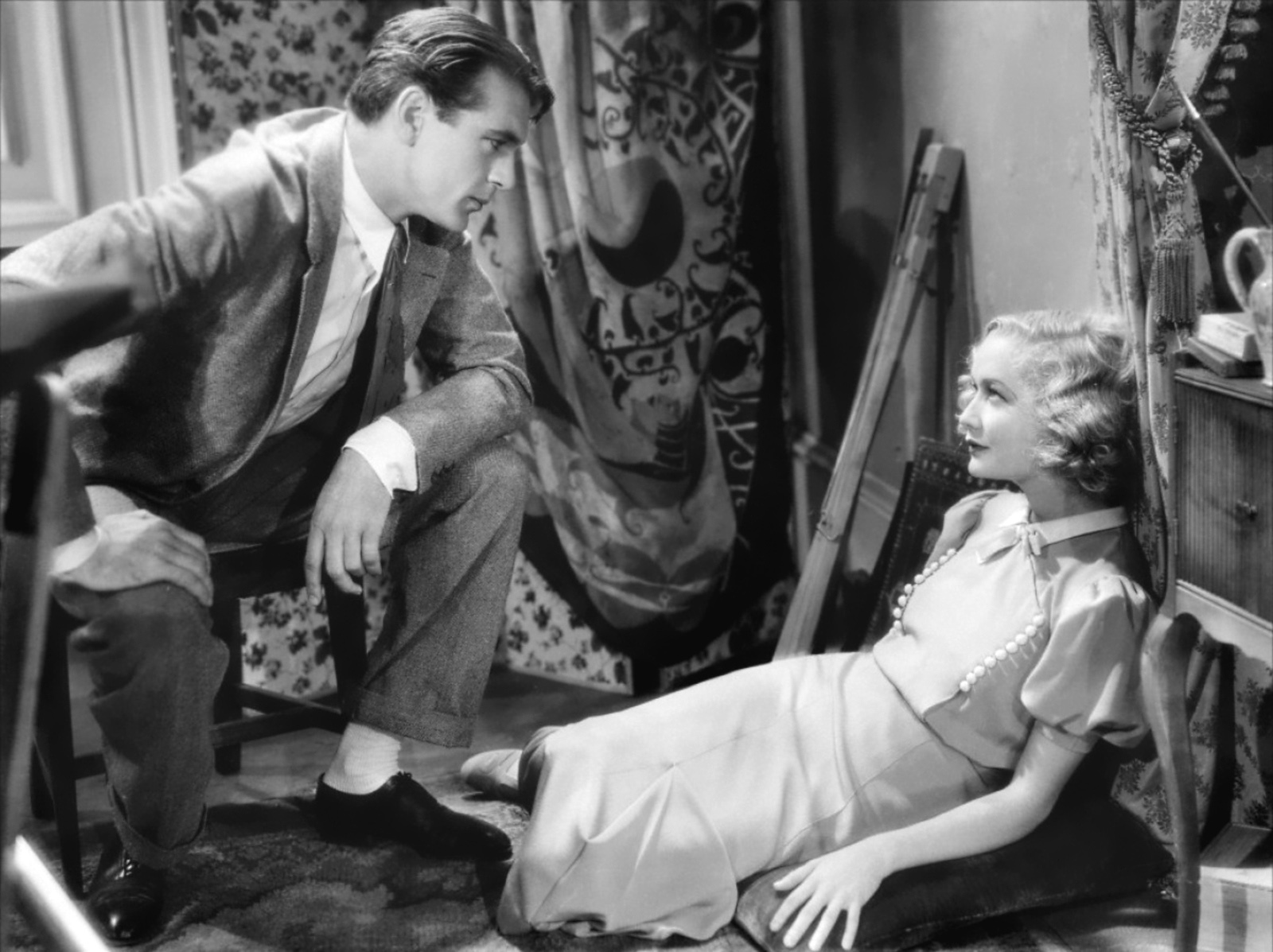
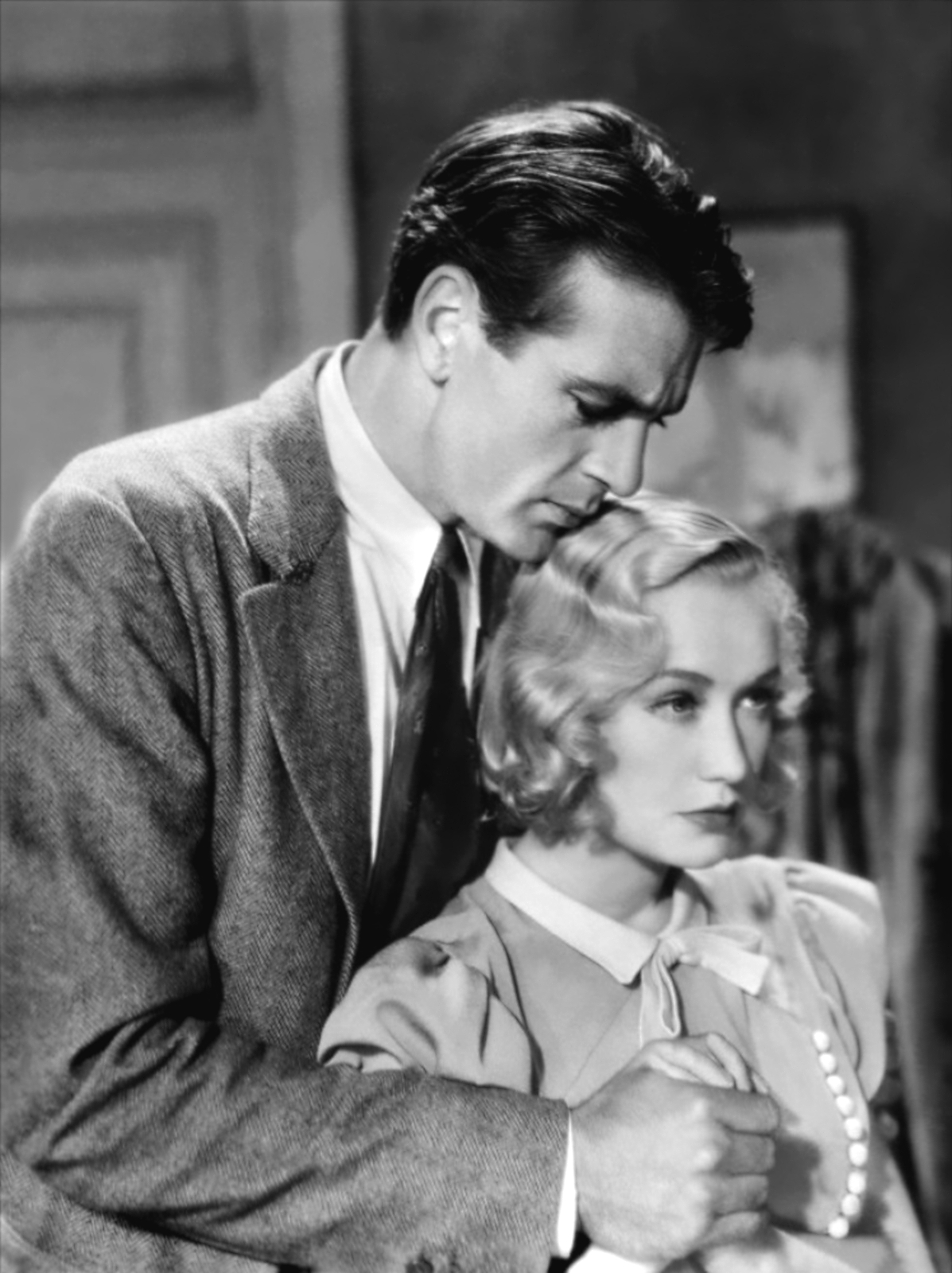
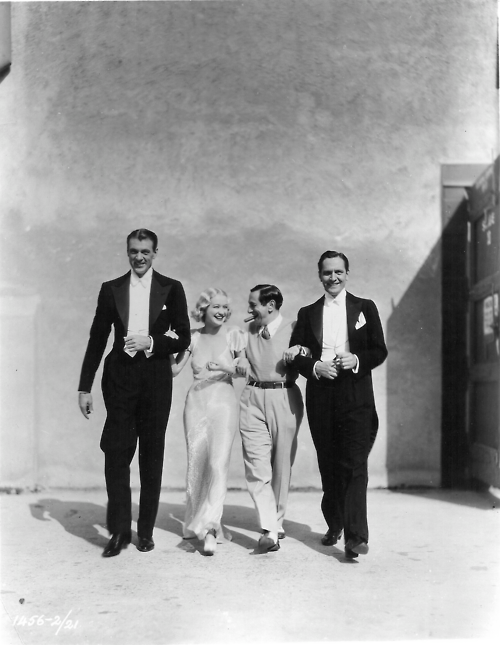
A "gentleman’s agree­ment" is not so easy — not when it comes to Miriam Hopkins, Gary Cooper and Fredric March. As I mentioned yesterday, Criterion has released Design for Living on DVD and Blu-ray, Ernst Lubitsch's sublime, soulful and very, very sexy Pre-Code masterpiece. I was thrilled to write the accompanying essay/booklet for this release, and you can read a portion of it here: 

90573-050-1E9F1770-1

Ernst Lubitsch’s Design for Living (1933) is what sexy should be—delightful, romantic, agonizing ecstasy. And it’s not just sexy but also revolutionary, daring, sweet, sour, cynical, carefree, poignant, and so far ahead of its time that one could cite it as not only a pre-Code masterpiece but also a prefeminist testimonial. A uniquely Lubitschian picture in its elegance and graceful wisdom, with the gruffly intelligent, street-smart Hollywood writer and soon-to-be legend Ben Hecht collaborating, this take on the trials, titillations, and torments of a kind of relationship usually seen in true adult films, a ménage à trois (and one involving the gorgeous trio of Fredric March, Gary Cooper, and Miriam Hopkins), is unlike any other movie of its era.

Annex%20-%20Cooper,%20Gary%20(Design%20For%20Living)_03

What film, even before that killjoy schoolmarm Joseph Breen brought his Squaresville strictness to the Production Code in 1934, has ever presented the potentially salacious scenario of three-way love in such a wistfully complicated way? This is neither a bunch of hot-to-trot cheap thrills nor a moralizing sermon on the dangers of sexual transgression—it’s a soulful look at human desire.

Annex%20-%20Cooper,%20Gary%20(Design%20For%20Living)_01

Design for Living recognized that desire is not divided unequally between the sexes. It can, in fact, be genderless. A place where gentlemen can be women. And women can be wolves. And men can be romantic Red Riding Hoods, wandering through a quixotic forest only to stumble across a beautiful blonde with shimmering white teeth, delicate little feet, and a big, beguiling wit. “The better to share you with,” she will eventually declare, before not eating them whole but tasting their specific Coop and March delicacies with equal ardency. Here, however, is where the movie reveals clearly that men are indeed men. Male horniness is not to be trifled with. Best friends or no best friends, how can they resist? This is some woman. They surrender, dear.

Design for living0001

And that surrender happens from the get-go, perfectly, in a favorite movie location for scintillating erotic interplay: a train. With a wonderfully wordless introduction, the movie—adapted quite loosely from Noël Coward’s notorious play—begins like a declaration: This is a movie. To those expecting two lumps of Coward in their Lubitsch, well, sorry; you’re getting a pinch (and thrown over the shoulder for good luck). This is not a play. This is a motion picture. Faces are the thing, faces writ large, gorgeous faces as directed by the sparklingly urbane Lubitsch.

Tumblr_lvvymaK0Vv1qiosrfo1_500

Please read the rest of my essay at Criterion. And, don't be a gentleman, buy yourself an early Christmas present. Buy it for a friend, but most importantly, buy it for yourself. Cooper? March? Hopkins? Lubitsch? Hecht? You can't go wrong. Well, you, or rather they (the characters) can go wrong, but in all the right, sexy, elegant ways… And that's not exactly wrong. Viva unconventional love!