Movies, Marilyn and Media Mayhem

Annex - Davis, Bette_28

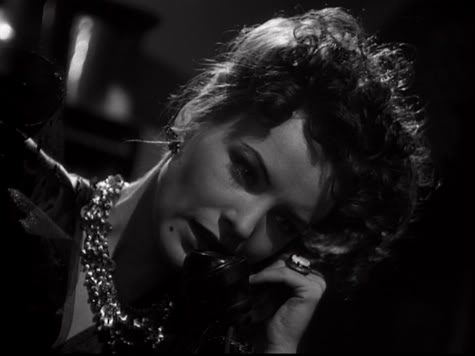
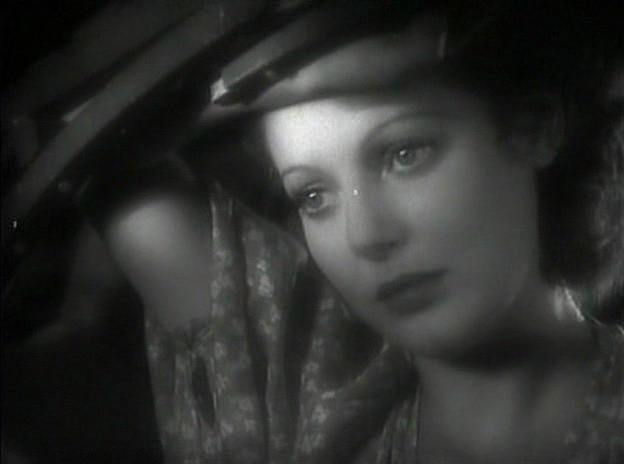
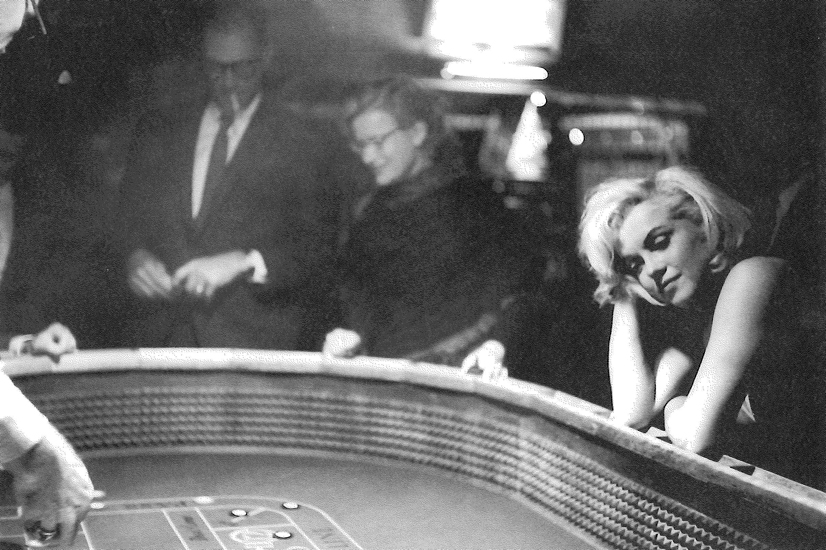
Yesterday I was a guest on Allison Hope Weiner's show "Media Mayhem" discussing, live, among other topics, cinema, movie writing, tabloids, Bette Davis, Lindsay Lohan, Marilyn Monroe, Spring Breakers, William Friedkin and Roger Ebert, who sadly, I had just learned passed away minutes before appearing on camera. Thank you Allison, for allowing such a vast array of subjects. It's rare I get to discuss Bette Davis's performance in The Star on air and with such an enthusiastic Davis fan.

P.S. Happy Birthday Bette Davis.

What’s My Line: Fredric March Edition

Fredric-march_opt

I'm currently working on a Fredric March piece to be posted soon, this year (get on it, Kim). Five favorite or fifteen favorite — there's so many to list. Nothing SacredDr. Jekyll and Mr. HydeThe Road to GloryMerrily We Go to HellDeath Takes a HolidayThe Best Year of Our Lives, The Sign of the CrossA Star is Born, Design for Living and more. More, more March! I'm watching Elia Kazan's Man on a Tightrope tonight. Fredric March and Gloria Grahame — this will be interesting.

90573-050-1e9f1770

He's one of my favorite actors — such expansive range filled with charm, intelligence, strength, sexiness, vulnerability and a wicked wit. March had it all. As I've been watching and re-watching his long career, flooding my mind in all things Fredric, I came across his 1954 appearance on the show "What's My Line?" Wow. The mystery guest was always an interesting feature, revealing which celebrity could or could not think on their feet and disguise their voice with panache. Proving, not surprisingly, his unique comedic talent and unpredictability, Fredric March kills. This is one of the greatest episodes I've ever seen. Watch him positively stump the panel.

Sexy Dirty Drum Boogie: Phantom Lady

Ella-raines-phantom-lady-1944-pic-27

Since I have taken most of January off I'm dipping into my archives and revisiting… Phantom Lady.

There's a dangerous, sickly titillating sexuality to film noir that's not seen enough on screen these days. That thrill, that edge, that mixture of sadism and masochism, that passion, that cold-heartedness, that control and abandon. I'll speak mostly of the genre's women: Peggy Cummins coolly shooting between her legs in Gun CrazyDecoy’s Jean Gillie laughing with maniac, orgasmic glee after she’s offed her duped boyfriend who’s just dug up the only thing that turns her on — money.

PDVD_000-70

Cloris Leachman running barefoot down a two-lane blacktop, panting and hyper-venting over Nat King Cole’s silky opening song in Kiss Me Deadly. Rita Hayworth's Gilda, who uses her considerable sexuality for her only clutch of power and is then, made miserable by it. Richard Egan getting an eyeful of beautiful six foot Wicked Woman Beverly Michaels — a femme fatale who actually falls in love and is, in the end, alone to continue her manipulations in the next dump the bus drops her off at. Born to Kill's Lawrence Tierney tossing and turning over Claire Trevor — wanting to rape, murder, kiss, kill — and she wanting it too. And, dear lord, Lana and that lipstick in The Postman Always Rings Twice. The look John Garfield gives Lana when that tube of red rolls across the floor is worth a hundred contemporary sex scenes. 

Ella-raines-phantom-lady-1944-pic-1

Noir reveals complicated sexuality that's not just dishy dames in sexy high heels or snappy men in fedoras (I don't have to say this to readers who actually watch noir). It's screwy sexy, frequently populated by losers (frequently attractive losers) made all the more erotic because even as sex, often toxic sex, motivates many of its character’s actions, the genre’s aim isn’t merely to steam your glasses. It can serve (directly or indirectly) as allegory for many of the power struggles we may endure in the tumult of relationships. If they're easy, they're usually boring. If they're hard, they're usually worth questioning. If they're hot and hard, they're nearly impossible to put down. If they're causing you to saunter into situations that sicken you, you're in mad love. Or a masochist. Usually both. 

Ella-raines-phantom-lady-1944-pic-17

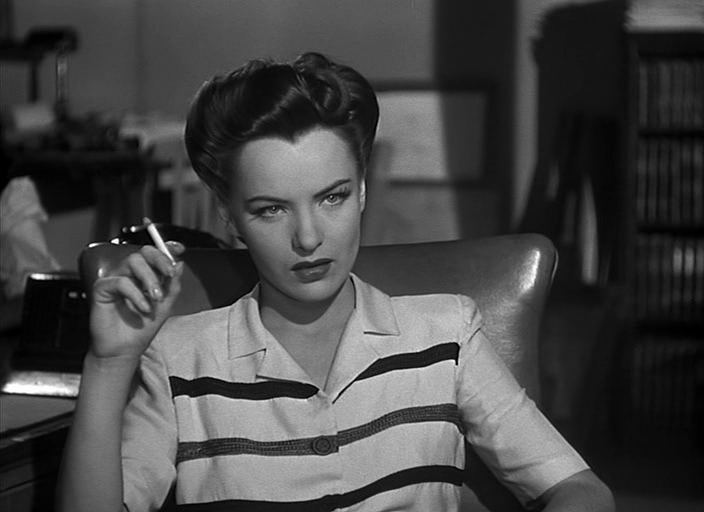
Which led me to a movie I hadn’t seen in years — Robert Siodmack’s Phantom Lady — a picture that features a performance by Ella Raines that’s so sizzling, so, at times, sick and yet so alluringly poignant, you’re a little overwhelmed by it.

Tumblr_mck36cQ6D81qiosrfo1_500

Adapted from the Cornell Woolrich novel, Phantom Lady was Siodmak’s first American screen success and he would later craft some sublime noir including Criss Cross, Cry of the City, The Dark Mirror, The File on Thelma Jordan and The Killers (among others). I’ll run down the story: Ella Raines (her character’s nicknamed “Kansas” — which seems like a Wizard of Oz reference given the subterranean world she will find herself in) works as Alan Curtis’s secretary. When he’s framed for the murder of his wife, she sets out to help him because she doesn’t believe he did it.

Ella-raines-phantom-lady-1944-pic-6

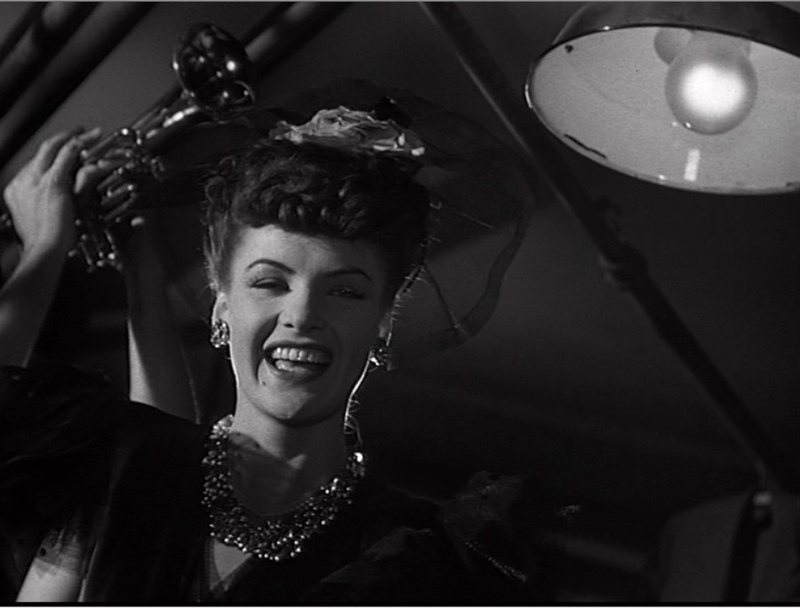
She's also besotted with him (lucky man). Sexing up her image as cub private dick, she’s off to find this “Phantom Lady” with the help of Curtis’s friend (Franchot Tone) and an off duty police detective (Thomas Gomez, so wonderful in Force of Evil). OK, so that's the story, but what I really want to discuss is Raines's interaction with the hep cat, hopped up jazz drummer, played by noir staple, the great sap/sleaze Elisha Cook, Jr.

00343

I am absolutely gob-smack over their famed moments together. Ella’s seduction of Elisha — a freaky sexy, conflicted, crazily drugged sequence (you can practically smell the booze, marijuana, heroin and dexies permeating the joint) in which Raines plays hot-to-trot, seems to be eating up her vampy method of getting to the straight dirt and yet, is repulsed by both Cook (that kiss!) and herself for having to go this far.

Phantom_lady_2

Showcasing Siodmak’s (and cinematographer Woody Bredell’s) evocative, angled compositions (used gorgeously throughout the movie), the style brilliantly underscores the mounting hysteria and varied state of Raines’s psychology. This is an extreme example, but what Raines reveals is something many women feel when finding themselves in the belly of the sleazy beast. It's a little fun and a little horrifying and you're definitely not in Kansas anymore.


Drunken Angels: Holiday

307652_10151374172995792_1019016798_n

It's that screwy, supposedly joyful, yet depressing time of the year again: the holidays. And they're almost over. Thank God, the Master, Freddie Quell or my beloved Marilyn Monroe — my woman of the year (I'll get to my movies in the next few days).

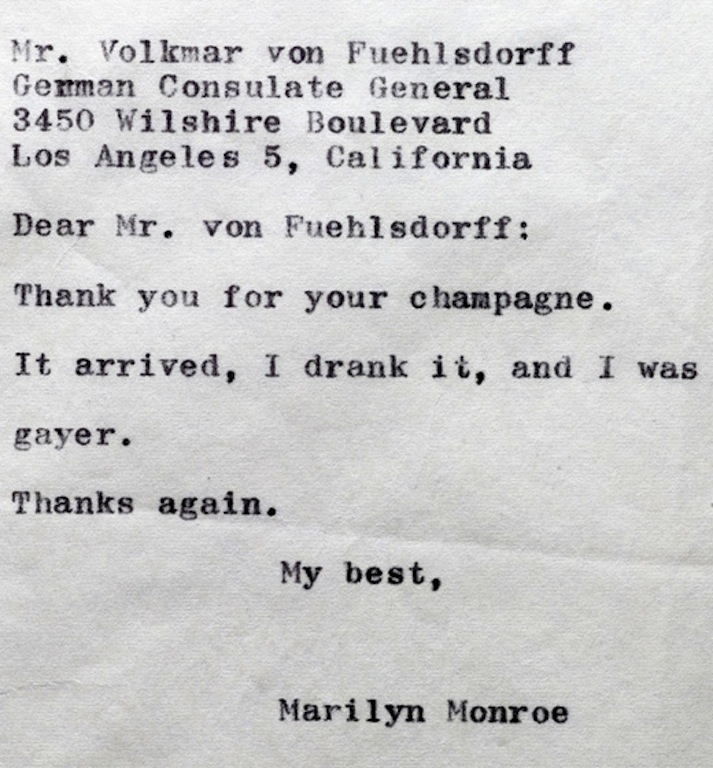
I despise all year-end parties, which is why I'm now enjoying New Year's Eve, safely tucked away on a train, ringing in 2013 somewhere at the Oregon/California border. I only wish Sugar Cane was in the next sleeping car, Manhattan in a paper cup. Or better yet, champagne. Marilyn loved her champagne.

Photo (73)

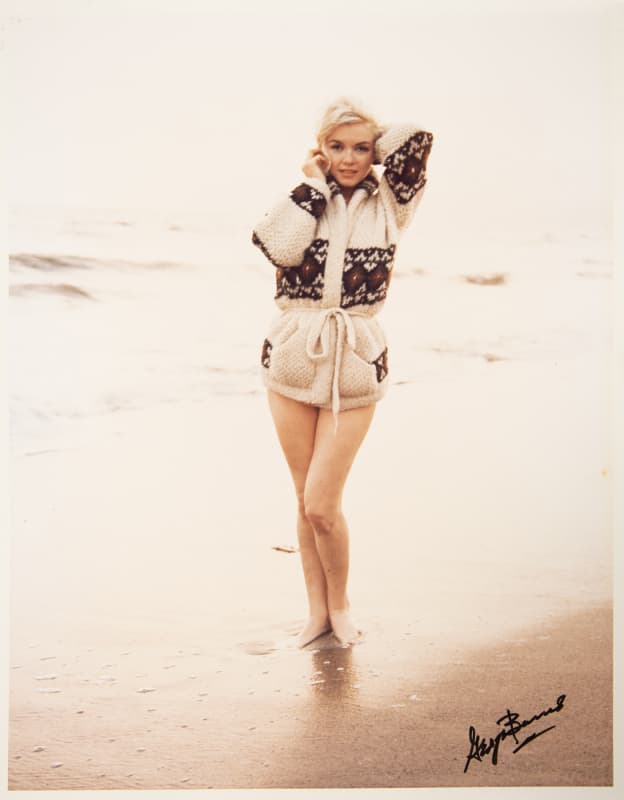
When I see MM holding a champagne glass in a picture, I often think she is New Year's Eve — a glistening light, all bright, blonde, silver, slinky-curvy and drunken and gorgeous and who gives a damn if she's had a few too many? Like our New Year hopes, she always embarked on a new start (and succeeded quite well, brilliantly, at times) but fell, like many of us into those ruts. Those fuzzy ends of the lollipops. But she tried. 

Photo (78)

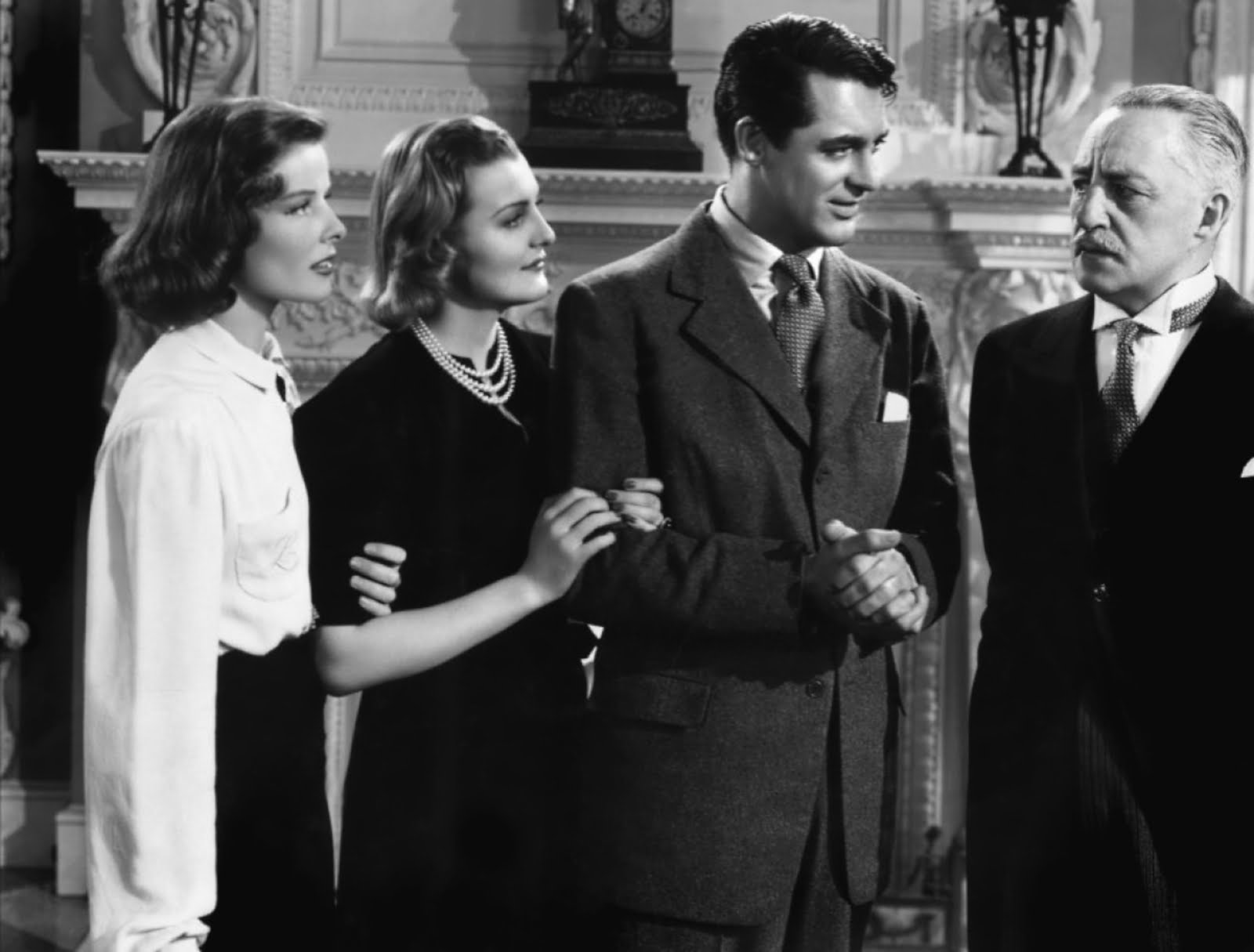
So, this New Year's Eve, I will think of Marilyn and one of my favorite New Year's movies, George Cukor's blissfully ebullient "Holiday." A picture that I think Marilyn (MM obsessive that I am) probably loved. And perhaps related to. Freedom! Expression! It's hard not to. Funny, carefree, silly, inspiring and yet, curiously sad — sad because you get the feeling that all the exploring dreams its lead character (a joyous, lovable Cary Grant) hopes and plans for, well, they may not work out in the real world. Can one be that simple yet complex and happy and live their life that way?

So, for me, it's the perfect New Year movie, filled with fresh starts, all-night parties, dreams, and happy/poignant revelations — those things we make lists of before the clock strikes midnight and usually ditch a few weeks into the month. But not Johnny, we hope.

An extended, wonderful portion of this movie does indeed take place on New Year's Eve during a society party where Johnny is set to announce his engagement to wealthy Julia (Doris Nolan). But he's falling in love wih her rapturous, different sister (a luminous Katharine Hepburn) who's attracted to his counterculture desires. The movie works subtly and elegantly, infused with an almost startling blend of comedy and pathos.

As Johhny and Linda clearly fall for each other and even literally tumble (in a jubilant scene, the two stars perform a beautiful bit of acrobatic talent) they leave us all bubbly MM intoxicated and charged up for something new ourselves. But what? Is it possible to ever feel elation like that? Is it? We can always do as Cary Grant's Johnny does and attempt a little blind faith. Blind faith can get you through the night. I'm sure it helped Marilyn more than a few times. That, and a sweet glass of champagne. Happy New Year.

Thank-you-note-marilyn-monroe


More About Marilyn: An Interview

323916_l

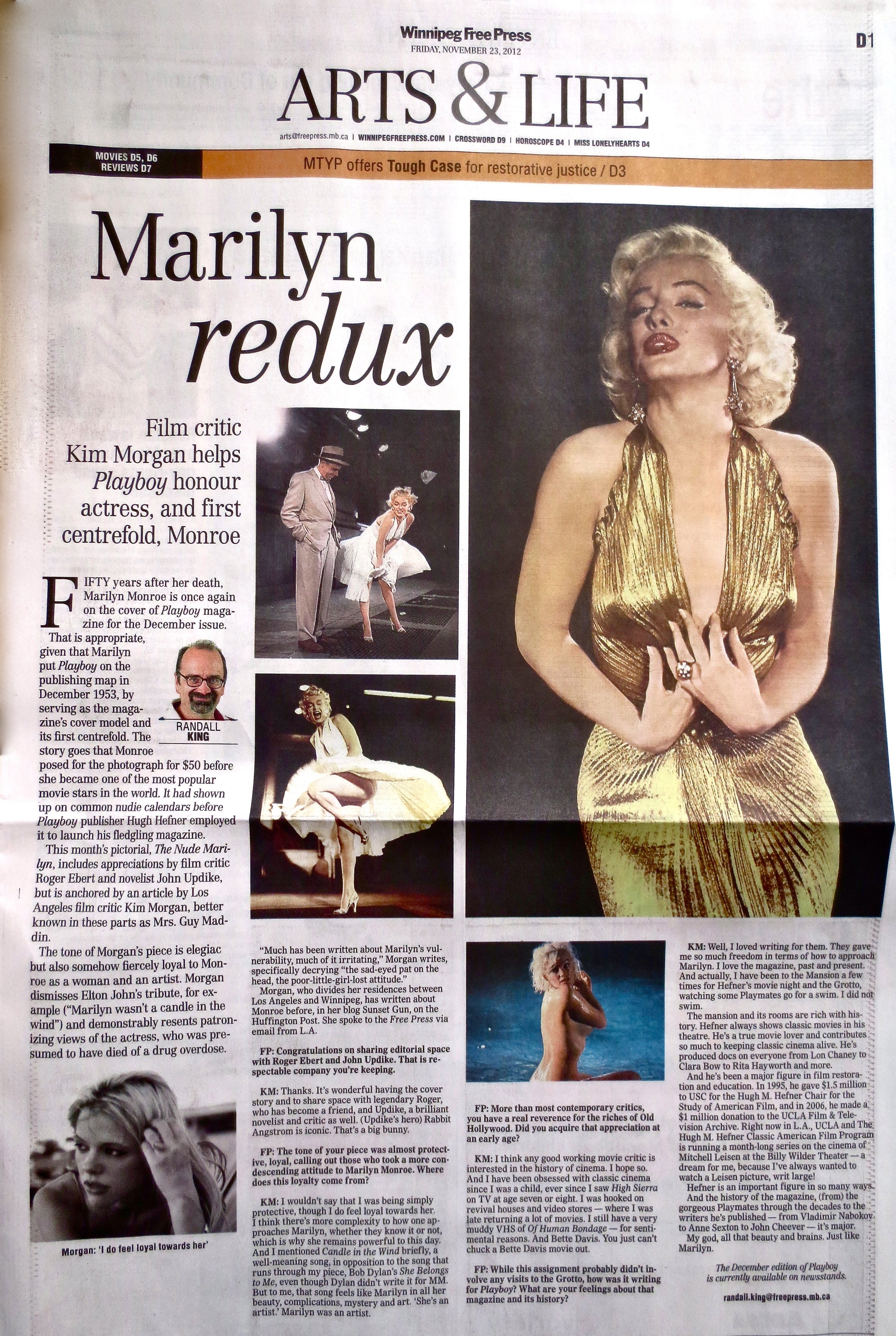
The Winnipeg Free Press was kind enough to interview me regarding my Playboy Marilyn Monroe essay. Marilyn, Hefner's dedication to classic cinema, Bob Dylan and Rabbit Angstrom are discussed and more. Here's Randall King's introduction and the interview that follows:

Fifty years after her death, Marilyn Monroe is once again on the cover of Playboy magazine for the December issue.

That is appropriate, given that Marilyn put Playboy on the publishing map in December 1953, by serving as the magazine's cover model and its first centrefold. The story goes that Monroe posed for the photograph for $50 before she became one of the most popular movie stars in the world. It had shown up on common nudie calendars before Playboy publisher Hugh Hefner employed it to launch his fledgling magazine.

Bilde

This month's pictorial, "The Nude Marilyn," includes appreciations by film critic Roger Ebert and novelist John Updike, but is anchored by an article by Los Angeles film critic Kim Morgan, better known in these parts as Mrs. Guy Maddin.

The tone of Morgan's piece is elegiac but also somehow fiercely loyal to Monroe as a woman and an artist….

FP: Congratulations on sharing editorial space with Roger Ebert and John Updike. That is respectable company you're keeping.

KM: Thanks. It's wonderful having the cover story and to share space with legendary Roger, who has become a friend, and Updike, a brilliant novelist and critic as well. Rabbit Angstrom is iconic. That's a big bunny.

FP: The tone of your piece was almost protective, loyal, calling out those who took a more condescending attitude to Marilyn Monroe. Where does this loyalty come from?

KM: I wouldn't say that I was being simply protective, though I do feel loyal towards her. I think there's more complexity to how one approaches Marilyn, whether they know it or not, which is why she remains powerful to this day. And I mentioned Candle in the Wind briefly, a well-meaning song, in opposition to the song that runs through my piece, Bob Dylan's She Belongs to Me, even though Dylan didn't write it for MM. But to me, that song feels like Marilyn in all her beauty, complications, mystery and art. 'She's an artist.' Marilyn was an artist.

Read more online at Winnipeg Free Press.


Here's a link to the article online. Thanks again to Randall King. 

Winnipeg free press cover

The December edition of Playboy is currently available on newsstands.

Gala Christmas Issue: The Nude Marilyn

468837514_10161899120070792_5761027229721726719_n

I'm honored to have written an essay on the genius Marilyn Monroe for Playboy Magazine's cover story. My essay "The Nude Marilyn" (it's really not about her being nude necessarily — it's a lot more than that) along with Roger Ebert's "A Sense of Control" and John Updike's "A Broken Venus" are not available for online reading (though Playboy offers a peek of MM here) so pick up a copy of the print edition on newsstands now.

As Updike wrote, "like a broken marble Venus, she defies time." 

You Wander Down the Lane and Far Away

6a00d83451cb7469e2017c339afa8a970b-400wi

I finally saw a picture. Little Dorothy Gentry — the girl who grew up on an orchard in Oregon's Rogue River Valley. The woman I barely knew while growing up in Seattle, Bainbridge Island and Oregon's Willamette Valley. As I wrote and experienced last month, the woman who went to Alaska and who passed away this October. 

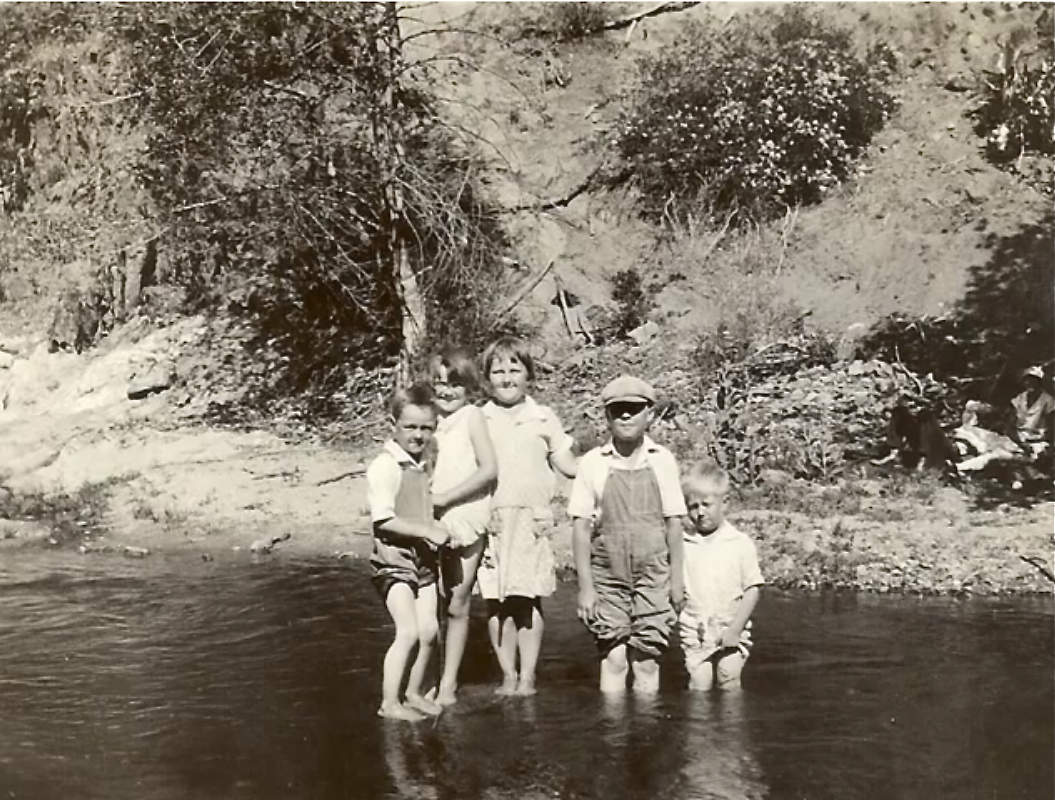
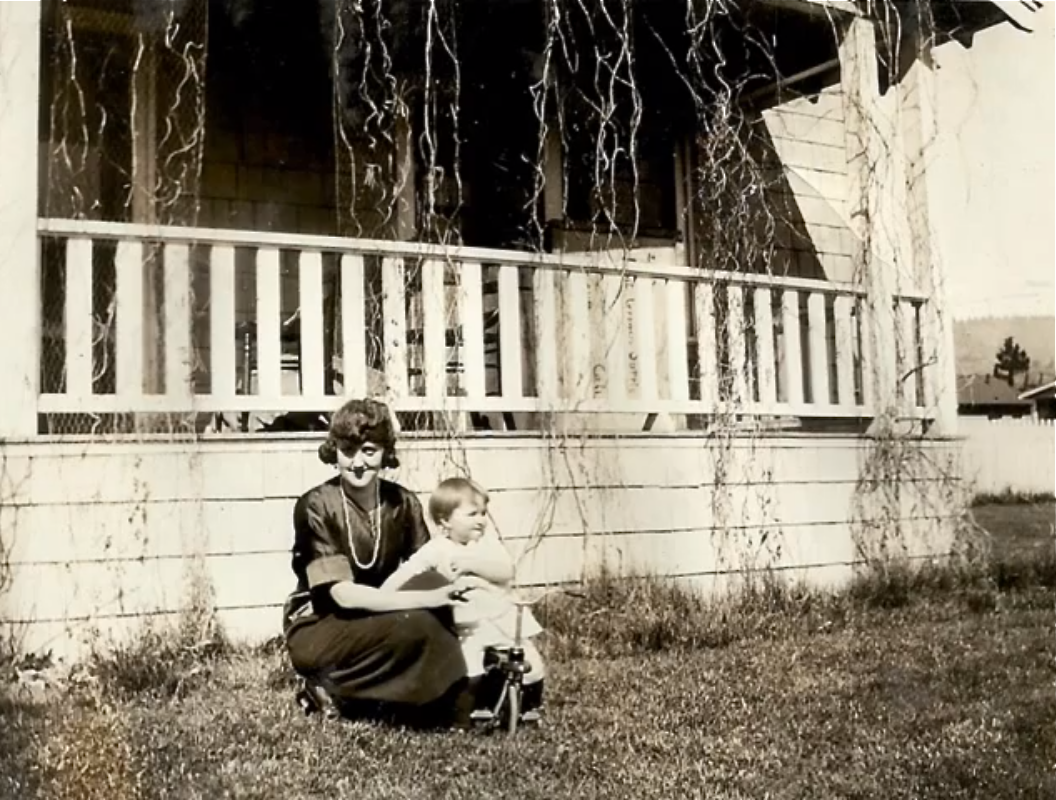
When Dorothy died, I discussed the scant photos I'd seen of Dorothy and her family — her mother and my mother. There were only two pictures I could remember, and one I didn't see in this collection. Maybe I imagined that picture? 

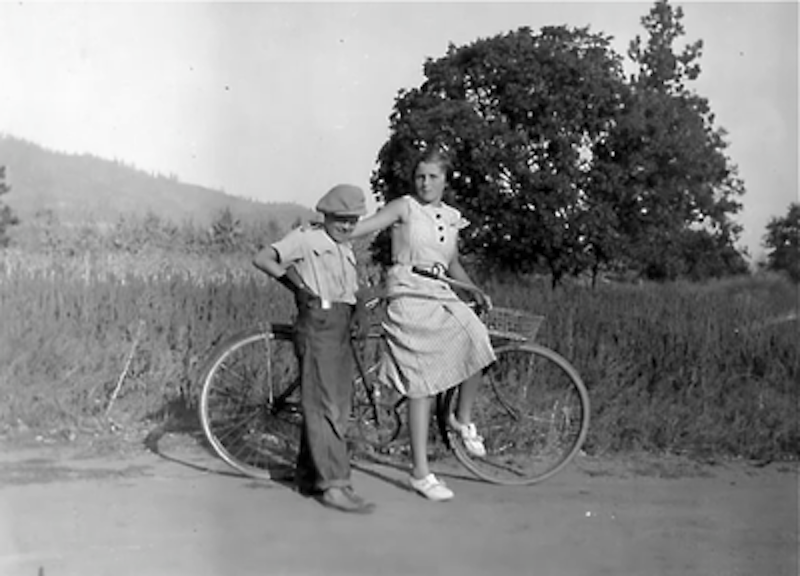
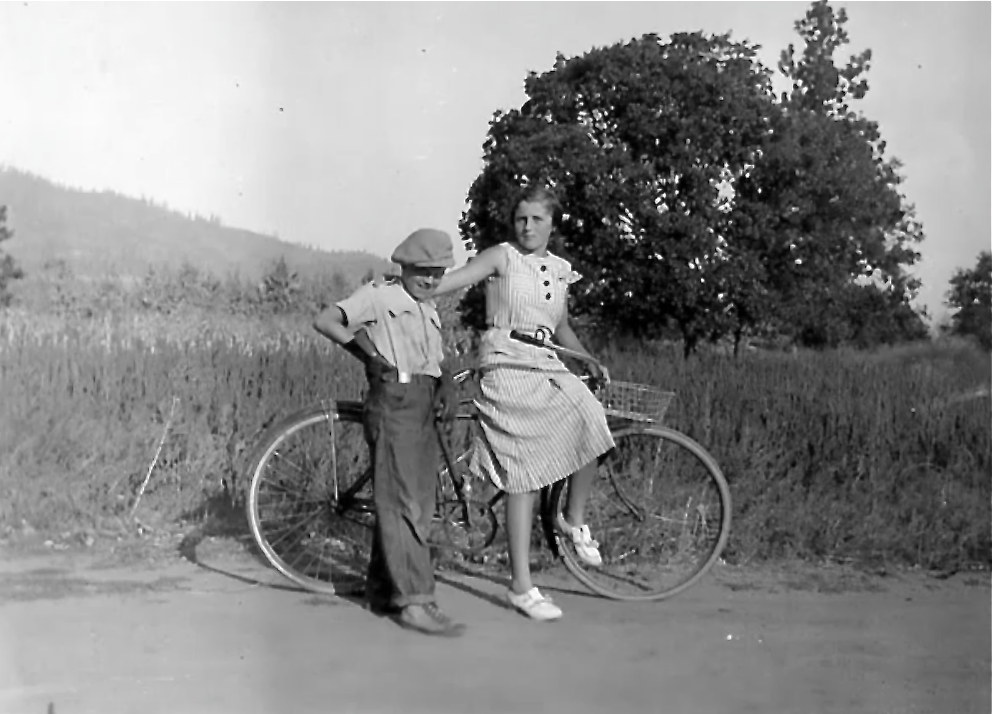
Dorothy & bobby & friends at swimming holeBut for the first time in my life, this week, I saw less than a dozen old pictures. I looked at my great-grandmother Ethel for the first time in my life. I saw Dorothy as a baby, as a girl and as a 13-year-old, sitting on her bicycle, appearing almost protective with a boy I'd never seen before. I saw their house. I saw Dorothy's friends.

I saw Dorothy as a young mother with her brood. I saw my little mother. I saw my aunts and uncles as children. It all looked so stark and questionably happy and beautiful. Nature and growth unfold around these people, little people, they seem, with enormous problems to face in their futures. The orchards seem protective. Or a trap. I'm not certain

Grandparents leave us — and often we have no idea who our family really are. And we'll never know. Dorothy and her kin, her entire life, haunt me. I've always felt rootless, yearning to understand my blood ties, where they came from and what kind of people they were. I heard bits and pieces of ancestral drama and tragedy (abandonment, prison apparently, mental institutions) but only through my mother, and from what she could piece together. It was a mystery and It seems everyone wanted to keep it that way.

Dorothy was not the matriarch to discuss her past. As far as I know, she rarely talked about her mother, she rarely discussed her first husband, who fled the family and eventually went to prison (Dorothy married several times — maybe this is family lore but I tend to believe my family — one died reportedly in a barroom brawl, another was a pharmacist, I don't know who the others were — my mother was ok with some, others not so much). After ditching his family, my grandfather lived, for a time, with this family on an orchard, and my mom was hungry all the time. The kids would try to run over there to eat fruit — but they'd be shooed off the property. And then he was sent away — he spent time in prison with his brother, my grandfather was there for grand theft, something like that, I'm not sure, his brother was there for murder. Only a few days ago did I learn Dorothy had a younger brother. My mother told me. His name was Bobby, like my brother. Dorothy's Bobby, sometime in his early thirties, was killed by a drunk driver. Bobby is the boy, standing with his big sister next to the bike. He's wearing a hat. He liked hats. And I like to think that his mother Ethel was happy to see him in hats. She liked them too. 

6a00d83451cb7469e2017d3dc9f67d970c-800wi

That's half of what I glean from these mysterious, first-seen photographs. There's so much I don't know. I should have asked more questions — but I never felt I could. I rarely saw Dorothy to ask, and the few letters were about happy things — flowers, books, movies. I worried that her past would only bring sadness. Though I'm sure there was joy and some wonderful stories, I didn't want to dredge up painful memories. Chiefly, about my great-grandmother Ethel, who was sent to The Oregon State mental institution at about age 28 or 29, when Dorothy was a young girl and remained interned until (I found out later) she was released to a halfway house very shortly before she died. When I was a little girl, my mother took us out to visit Ethel — I barely remember (it could be just a memory because my mother told me).

We stopped to eat hamburgers (I think) and everyone seemed happy, happy with a question mark. There was a cold pall that would hang over the meeting.  I was too young to understand her mental state, but according to my mother, she was not crazy. She'd been through horrors at that institution (I can only imagine what kind of treatments occurred during that time in Salem, the real Cuckoo's Nest, where they filmed the movie.) and that was her life. She was used to it now. "Normal" life, she felt, was too late. She could not re-enter regular society save for that house she was wound up in before she passed. For a long time, she didn't want to leave the institution. Too scared of the outside world.

Real life was now too frightening. I thought of Ethel first arriving, packing up her suitcase and walking into that place, barely 30 years old. From vast fruit-filled orchards, biting into sweet things, feeling the sun and the rain, to white walls and white starched nurses and cups of pills — Ethel looking out at the sun and the rain, only being allowed to feel it on her pretty hair and pretty face in designated, organized outings. 

Ethel and dorothy

I feel she should never have been locked away. From all I've heard, she suffered terrible anxiety (as I do), and she likely received horrific treatments during that dark time of mental health institutions. Again, this is just my thoughts, but I feel she was misdiagnosed. I was always fascinated by her. I remember, at around age ten or so, discovering her old, snazzy suitcase in a closet after she died. I went through her carefully folded clothes and noticed her name "Ethel Gentry" marked on all of her garments. Maybe this was the institutional rule. Maybe she didn't want people touching her pretty things. I knew she'd feel fine if I did. I put on her fancy nightgown and wandered around the house. I went into the kitchen and filled a highball with soda and ice and pretended it was liquor. 

I thought this was something she would do, sexily swill a drink —  something I saw in old movies. I staggered around, pretending to be angry and drunk but thinking I was so crazy glamorous. I imagined this was how Ethel might have conducted herself towards all those jerks and orderlies in the loony bin. Movie Star. (Ethel's mother was a dressmaker and a costumer for the movies. Ethel was born in California. Her father died in Los Angeles. I just learned all of this today). Well, now my play-acting makes more sense, even if I had no idea at the time. But I doubt she was treated like a movie star.

6a00d83451cb7469e2017d3dc9812c970c-400wi

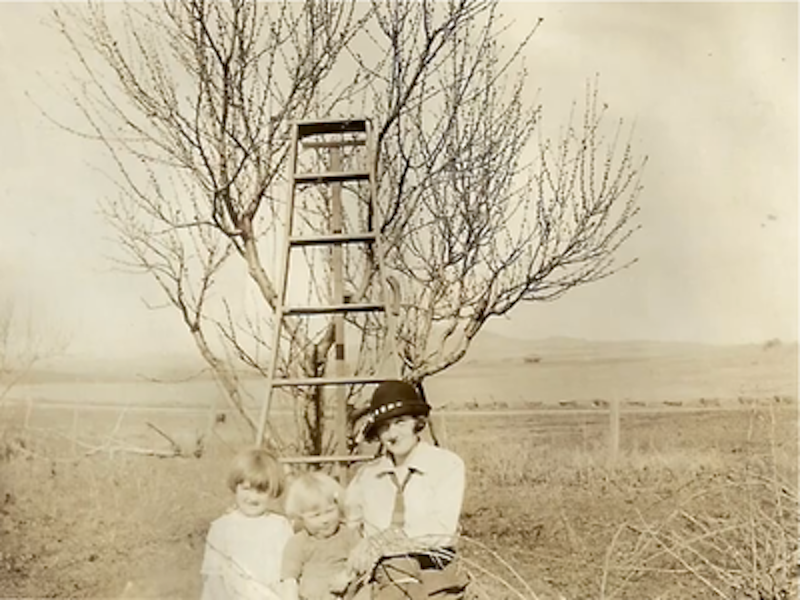
Ethel has never been clear to me. I don't know what happened to her. Those times, especially for women suffering from depression and anxiety, were obviously different when Ethel was a young woman. My great grandfather McKinley (he went by Kim), who I do remember vaguely as a little girl, I only saw him about three times (I have a memory of picking cherries with him, eating so many on the drive back home that all of us kids swore off cherries forever) — I adored him.  I was named for him. But I've never understood why he agreed to send Ethel away. Was she dangerous? Did she want to go? I can't believe that. She was acting odd, is all I've heard. Odd. In these photos, she looks what has been described to me — unique, smart, stylish, musical (she played the piano beautifully) — an interesting woman. There she is. Fantastic. Sitting with her children, a tree and a ladder, clad in menswear complete with a fabulous hat and tie. And, in another photo, lovely in her silky shirt, bobbed hair, and long necklace. But I have no idea what was really going on during this period. If I romanticize her, I say she was a woman ahead of her time, a woman who spoke her mind  – a woman who could not be contained. But then, this is nothing new. Women are still demonized, written off as crazy, and blamed for others' problems. She was a "problem." So, remove her.

Mary, Pat, Barbra & Ted

I've written about how we view images in pictures and in movies, sometimes as time capsules, and looking at these photos reminded me of how I took in The Virgin Suicides — how those memories, by the boys who never really knew those girls, unfolded in their minds. I feel my blood when I look at these photos, but as I've stated before, recollections never play out in fully developed narrative timeframes, as perfectly balanced and structured strands of thought. As I reflected, they are not tangible, easily understood events. Memories can be visited but never wholly embraced.

Dorothy

They can be strong and unforgettable, but bit by bit, they lose their edges, making them, for many, even more melancholic. The more they elude us, the less simplistic they become — never just happy or sad, but mysterious and bittersweet, replete with or bereft of emotion for reasons often beyond comprehension.

I'm trying to comprehend. And I certainly feel things. I feel nearly overwhelmed, in fact, looking at these photos for the first time. And I think of Dorothy, the little girl who lost her mother, her husband, and then her brother. She was not a perfect mother. She should not have left for the wild frontier of Alaska, almost unreachable, so early in my mother's life — leaving my teenage mother alone to watch over her younger brothers. But now, even as I feel anger for her leaving my young mom and two boys, I better understand her need to flee, as selfish as it was to her kids.

She wanted to start her life all over again. The men leave. The mothers are sent away. Her mother, confined and creative and lovely, undergoing god knows what could not run away. Dorothy could. 

Telluride Showcases Genius Jack Garfein

6a00d83451cb7469e20147e3a5680d970b-800wi

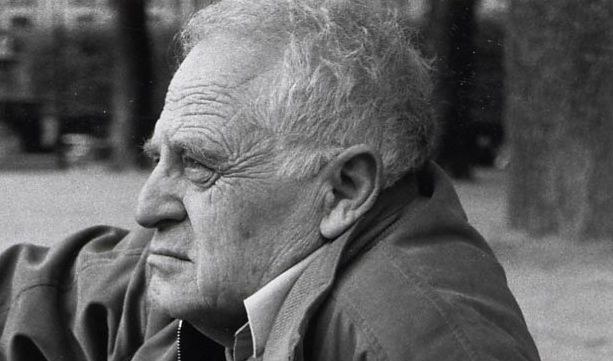
"I am a product of violence myself. By the age of 15 I'd been through Auschwitz and Belsen and my family destroyed… Without motivation, without warning. One's whole life is literally changed by making oneself cope with violence. The force cannot destroy the sensitive… Tennessee Williams believes that violence destroys sensitivity but I don't believe this — we go on, the life force goes on in spite of it." – Jack Garfein

I'm honored to be presenting the work of Jack Garfein at this year's Telluride Film Festival. He's a master. A master with only two feature films. But he's accomplished so much more in the world of theater, film and life. Garfein has so many stories. Sweet, brilliant, moving funny and empathetic, it will be wonderful to interview him on stage. The man is a force. 

Jack-Garfein-02

Garfein is a filmmaker so ahead of his time that, even after 50 years, his two features The Strange One (1957) and Something Wild (1961) continue to inspire, shock, provoke empathy and amaze. You can’t believe these complicated, human stories remain so modern and experimental to this day. But this is Garfein – an artist who beautifully combines expressionistic lyricism with raw naturalism while exploring still controversial subjects; never preaching, simplifying or insulting his characters: The fascistic military dehumanization and homoeroticism of The Strange One, and the complexity of rape and entrapment in his masterpiece, Something Wild.

Aj8ca6y6bgr6gb66

Garfein, born July 2, 1930 in Czechoslovakia came to the U.S. after surviving Auschwitz, joined the Actor’s Studio, directed, in his early twenties, “End as Man” with Ben Gazzara and founded the Actors Studio West. His accomplishments are too vast to list, but he remains one of the great acting teachers, and continues to instruct in Paris. He’s chronicled his return to Auschwitz with his documentary The Journey Back, and has written “Life and Acting – Techniques for the Actor.” He remains a power in the world of acting and film. 

Tcmcarroll-2

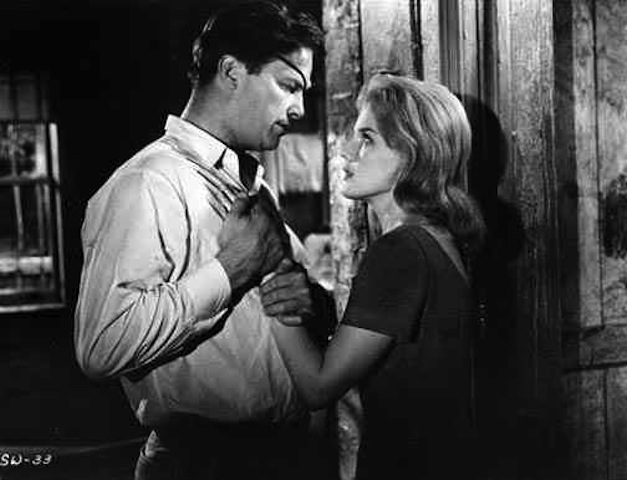
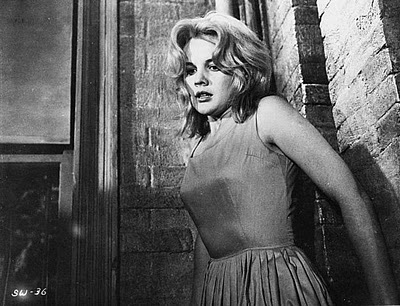
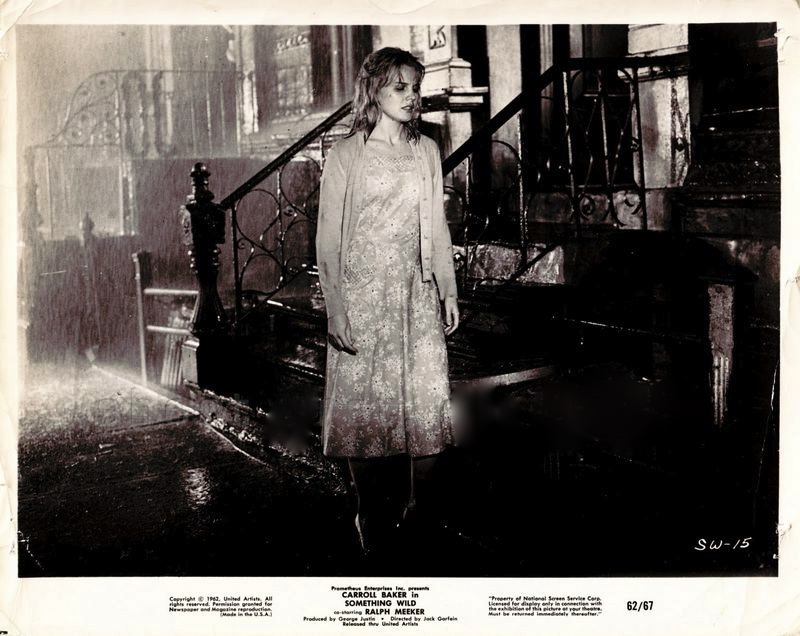
On Saturday (today), I'll be presenting a picture I programmed for Turner Classic movies  a few years ago and have written about here — the extraordinary Something Wild. Garfein’s brave, emphatic, confounding, mysterious and in the end, darkly beautiful Something Wild is a picture so powerful, that it shocks and distresses viewers to this day. This expressionistic and naturalistic work of art (the location shooting is remarkable) dared observe the complexity of rape by following a young woman (a brilliant Carroll Baker, Garfein’s then wife) after she is viciously attacked by a stranger in the park.

Baker rain

The psychologically chaotic aftermath – her anxiety, repulsion, depression and eventual withdrawal from society — not, and then by her own choice – is given a potent punch with the arrival of a tremendous Ralph Meeker in a performance you’ve never seen before. Not one to oversimplify (as rape never should be), this story of victimization turns into a twisted Stockholm syndrome/true love (or not, which makes it even more intriguing) fairy tale that still provokes argument. With a score by the virtuoso Aaron Copland, title sequence by legendary Saul Bass and cinematographer by the remarkable Eugen Schüfftan, Something Wild is an un-sung masterpiece.

MV5BMjE0MzY4NzExOV5BMl5BanBnXkFtZTcwOTg2MjUxNw%40%40._V1._SX640_SY820_

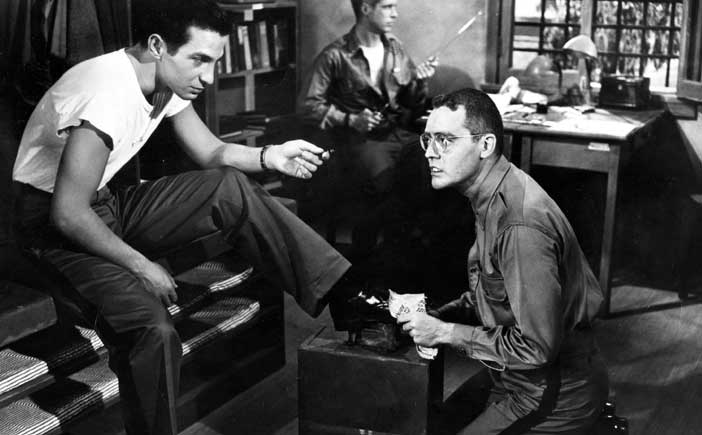
On Sunday I'll be presenting The Strange One, which is strange and not so strange when considering the extent of human sadism. But the film remains shocking and potently violent — both physically and emotionally. Adapted from Calder Willingham’s novel and play End as a Man (directed on stage by Garfein), The Strange One looks at a sadistic, little Hitler of a sociopathic cadet Jocko De Paris (a remarkable Ben Gazzara) as he terrorizes and manipulates underlings in a Southern military academy. Garfein’s picture boldly took on the abuse of power in such a system and the fearful acceptance of abuse — sick abuse that goes well beyond boyish hazing.

Strangeslider

It also dared to delve into undercurrents to overt moments of homosexuality. Along with Gazzara in his film debut, the cast includes George Peppard, Pat Hingle, Geoffrey Horne, James Olson, Larry Gates and Arthur Storch. It's a major first effort by a young director with a mighty new leading man in Gazzara. The synergy is obvious between these two young talented men and it's not just raw, though it's unafraid of raw emotion and almost feels natural born — but it's more fine tuned, intelligent and observant. They were thinking but they were never over-thinking. Garfein believes in instinct and his movies and performances flow — you're swept into worlds both shocking and recognizable.

Jack Garfein is a maverick — a sensitive, perceptive maverick. Cinema needed him then (but stupidly resisted) and cinema needs him now. Once you've seen his work, it's impossible to forget.

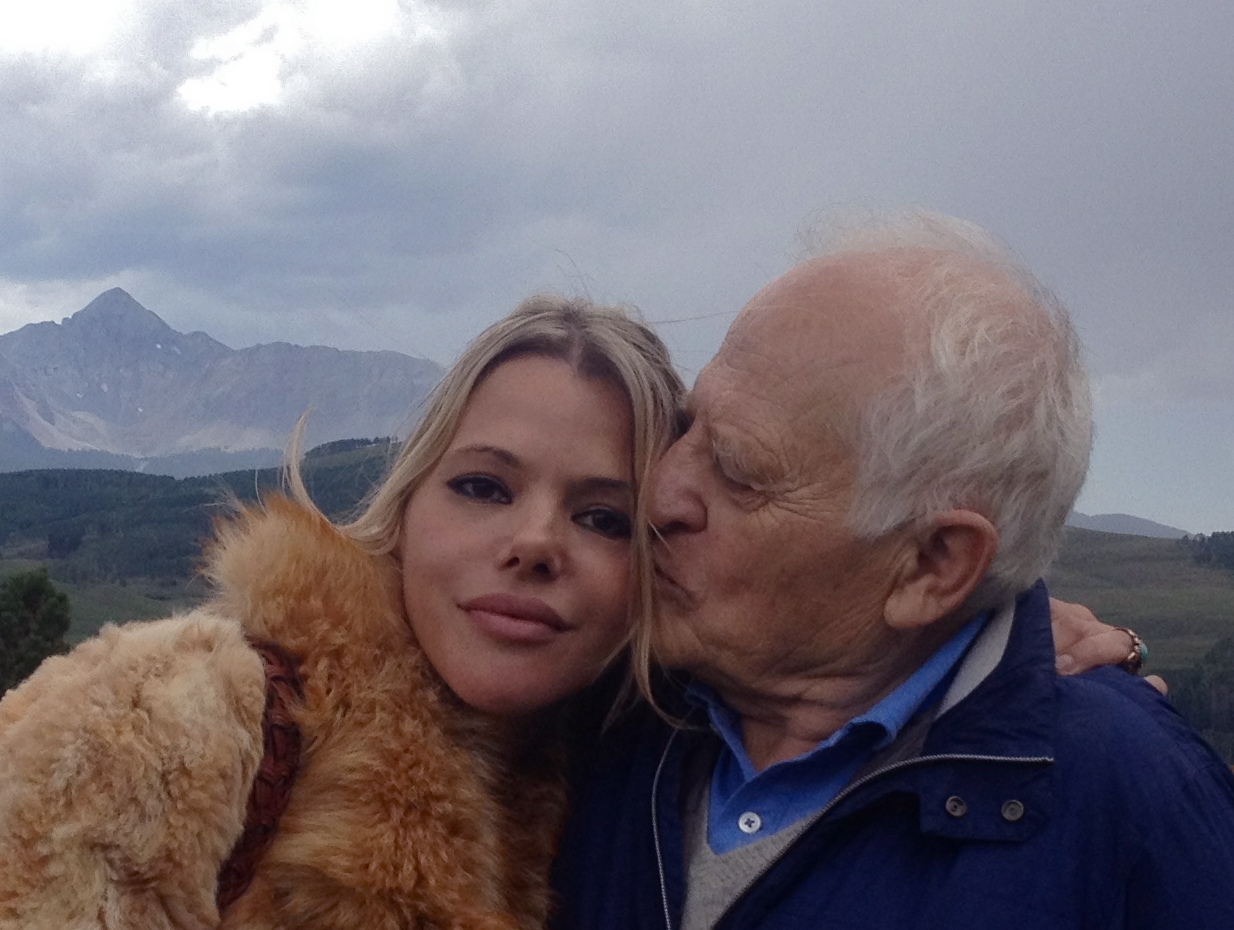
Jack kim mountain

With Jack in Telluride, high in the mountains at Gray Head.

Touching the Real World: Tony Scott

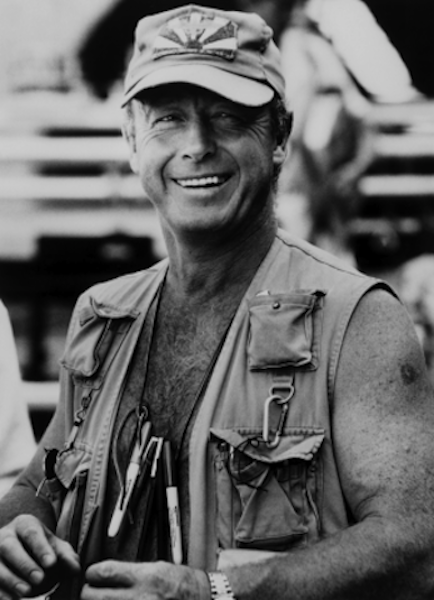
Tony scott

"Once you’ve touched the real world, there’s nothing more fascinating and nothing stranger than the real world and the people." — Tony Scott

Tony Scott had ideas. He had so many ideas that, the day I interviewed him (in 2006) for his then newest picture, the remarkable Deja Vu, he talked to me (often off the record) for nearly an hour. We talked about Helmut Newton, Hunter S. Thompson (Scott wanted to bring “Hell’s Angels” to the big screen), film noir, painters he especially loved and how The Last Boy Scout is something of an underappreciated masterpiece (my words). He was exceedingly bright. He was also incredibly personable. He asked me questions about myself. He was curious about what I was doing with my career and life, and asked about any creative endeavors I may have. He offered advice and encouragement. He was clearly interested in real people. He was larger than life and down to earth at the same time. It didn't seem like an act. He was genuine.

Crimson-Tide-Set-Denzel-Washington-and-Tony-Scott

What follows is that interview, shortened for my particular outlet due to the many detours the discussion took and off the record talk (I yearn to find my original tape). In person, he was inspired — one with such enthusiasm, sparkling eyes, warmth, intelligence and excitement for the next thing, that his excitement was infectious. I’ve always heard his crews loved him. I’m not surprised. When I think of Tony Scott, I think of his last, and one of his finest, most beautifully crafted and heartfelt movies  – Unstoppable. What a tremendous loss.

Article-2190928-149F3C42000005DC-471_640x462

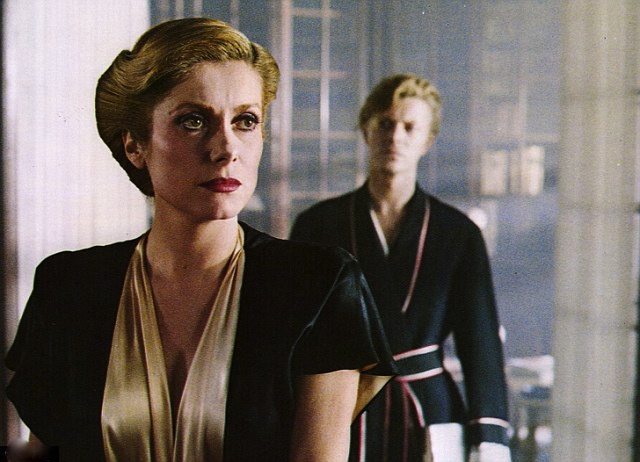
Tony Scott may well have been one of the most influential, yet underrated directors working. He was also one of the most talented, interesting and multi-layered in terms of truly merging that difficult task of style and substance – something lazier critics have a hard time understanding. For as flashy and big budgeted and beautiful as his pictures can be, they’re also both surreal and real, and often powerfully sincere. Unstoppable showcased pure Tony Scott but was as lean and as old fashioned as a Richard Fleischer picture with the added dimension of working class Americans — and Washington in particular –disenfranchised from his job, sticking it to the man, sticking up for himself and stopping that goddamn train. From his artistic, sensuous debut, The Hunger; to his massively successful and influential Top Gun; to his Quentin Tarantino-penned, adored now classic True Romance; to his solidly entertaining Crimson Tide; to his complex and funny, The Conversation-like Enemy of the State; to the Pitt/Redford teaming in Spy Game; to his ambitious, hyper speedy Domino; to all the other films that have been underrated (like the great, unfairly maligned The Last Boy Scout and the soulful Man on Fire), Scott has influenced, infuriated and entertained people with a boundless energy – on film and in person.

Deja_vu_tony-scott

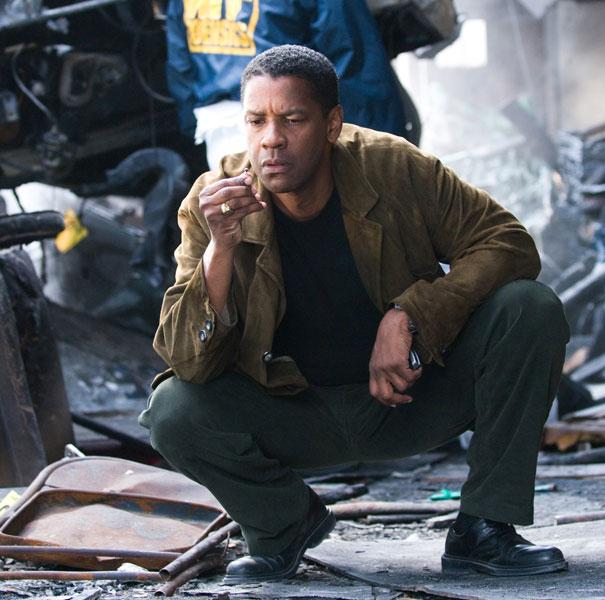
Here, he was discussing the time travel thriller Deja Vu, starring Denzel Washington (in their then third collaboration. Washington would continue with The Taking of Pelham 1 2 3 and one of my top ten of 2010, Unstoppable). Scott found the time to discuss work, inspiration, real life, movies and his famous older brother Ridley. I wish I could include more of this conversation. Like his movies, Scott proved to be both endlessly interesting and interested.

What filmmakers inspired you?

Two influences. My brother and Nick [Nicholas] Roeg. My first movie, The Hunger, was a direct knock-off of Nick’s movie Performance. And Ridley really inspired me…You know, I can talk about Polanski and all the other guys. I steal!

Maclear_Andrew_004_Mick_Jagger___Anita_Pallenberg_337

And a lot of filmmakers, as you say, “steal…”

A lot of them deny it though! They’re liars! (laughs) Because that is what art is about. Art is about reproducing and recreating and my background as a painter involves the same choices. Canvases and scripts: You’ve got cast, you’ve got wardrobe and locations. It’s the same mental process.

Domino-aug20

Your films are incredibly stylistic while being rooted in the real world — you base so much on real people and events, like Domino.

Domino. I should have slowed down a bit (laughs). But I have no regrets. I love the fact that people will continue to employ me and pay me to do what I want to do, which is attempt another world. That’s what so great even about this. I get the opportunity to do new things. I get the chance to do the research, educate myself and I get the chance in touching bounty hunters, touching this word. But… (laughs) all the fucking guys I met were on speed! [He wanted the film style to match that feeling] And little Domino, God bless her, I knew her for twelve years. She was like my daughter.

2004_man_on_fire_005

Your style mixes different film technologies in really intriguing personal ways. Man on Fire is such a moving story of redemption.

It sounds very intellectual and its not, it’s just a fact — I let style be dictated by material. The style of Man on Fire and its vision and it’s my point of view of how I want to tell the story. With Man on Fire I had a rule of thumb — if Denzel thought it, I would see it. To me the movie was about paranoia, betrayal and redemption, so therefore I wanted to work the inner psyche of Denzel’s mind so if he thought it, I would see it. And I would articulate it with the different techniques from a hand crank camera to the flashbacks.

2006_deja_vu_023

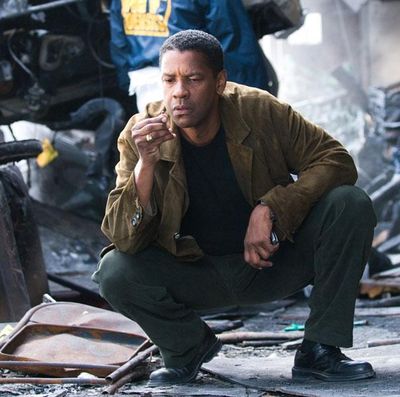
Deja Vu is an interesting kind of suspense – thriller. And it’s ambitious in terms of how real it all feels. And I like the idea of an ATF agent falling in love with an image through “a time portal” of a dead woman. It reminded me of Otto Preminger's Laura. Was that at all intentional?

Yes! The Deja Vu writers were inspired by Laura. This movie terrified me more than anything because it’s creatively so dangerous, the science fiction. This movie is a dangerous movie because its science fiction that I wanted to make science fact. And if you get these movies a little bit wrong it can go drastically wrong. So all the technology we used in the movie is used in the world today.
120820_denzel_washington_deja_vu_605

This is the third time you’ve worked with Denzel Washington, why do you like working with him?

One, I love what he does. I love that he always comes up with the goods, he always delivers. I also love his work ethic. He and I are very similar, not just with his ethic but with his process. He loves research. I love research. And he always looks back into the real world for inspiration. And so, in each of the movies, I’ve found a role model for him — a real guy. Denzel’s very serious about what he does. He loves doing homework.

Deja-vu-33

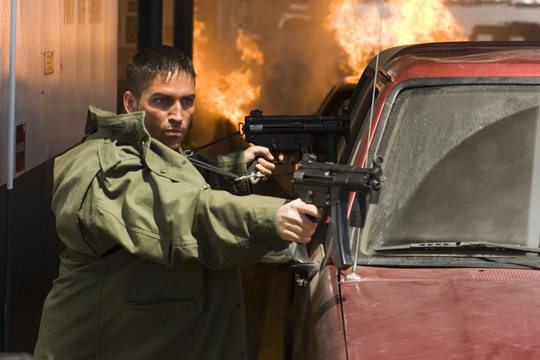
Jim Caviezel is so powerfully creepy in this movie, were you thinking specifically of him for this role?

For J.C. (as I call him)…it’s hard trying to pass the bad guy or terrorist because in the end in can be so arch or archetypal and I was trying to think of who I was going to use. And I took a meeting with J.C. only because his agent was Denzel’s agent and I thought, I don’t know about Jim Caviezel, he played Jesus Christ. But when I sat with him for thirty seconds and he barely said anything. I said, “You’ve got the part.” [Scott underscored how talented Caviezel was and how he should play evil more often. He felt he could play Jesus just as easily as the devil.]

Walken_true_romance34

You’ve worked with a lot of great and legendary actors — from Gene Hackman to Christopher Walken to Dennis Hopper to Rober De Niro to Robert Redford (and more), and at the same time you’ve showcased a lot of new talent, like Keira Knightley in Domino and Tom Cruise in Top Gun. How do you work with actors?

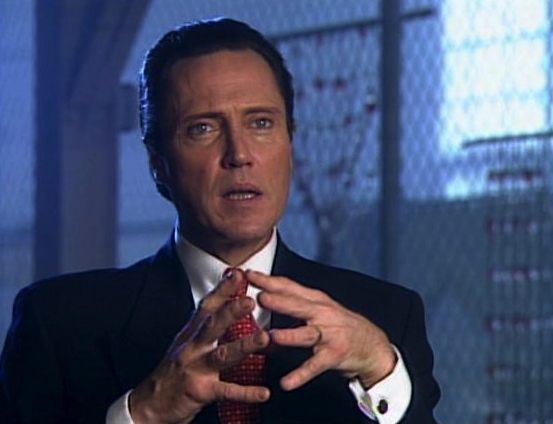
A director’s like the shrink. You have to adapt to the personality in front of you. So someone like Chris [Walken] is that he’s an adaptation to himself. What’s funny about Walken and Hackman is that in their early days, they almost didn’t have a funny bone in their body, and now they’re so funny. You think of Chris when he was in The Deer Hunter (a great film), and now he’s the funniest guy. His sense of timing. He can read the telephone book and you’ll laugh.
Boy-aug20

From the flight sequences in Top Gun to the creative and layered vision of violence (and romantic and darkly funny too) in pictures like True Romance and The Last Boy Scout, you’ve been very influential. Do you see a movie and go, I thought of that?

I’m pleased that I do influence things. I see it on television mostly, things like “C.S.I.” It makes me happy when it’s done well. When I did The Hunger, I called up Nick [Roeg] and said, “I think I just ripped you off — I ripped off Performance” and he said, “Well dear boy, as long as you did a good job, I don’t give a fuck!”

Trueromance_2198217b


KM: This question is asked so often and hard to answer, but I am curious: Do you have a favorite film?

TS: True Romance.I love all my films but True Romance was the best screenplay I ever had. And all that was Quentin. It was so well crafted. But I did change the end. Originally in Quentin’s version [Christian Slater dies] and Patricia [Arquette] pulls over on the freeway and she puts a gun in her mouth [she doesn’t die]. I shot the film in continuity, so by the time I got to the end of shooting the movie, I had fallen in love with the two characters. It was a love story. I wanted these characters to live!
9

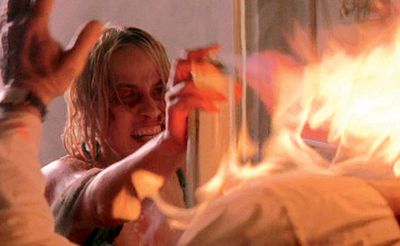
You’ve sometimes been criticized for the violence in your pictures but I think there’s always meaning attached. I especially admire the ferocious sequence in True Romance between Patricia Arquette and James Gandolfini. Arquette’s trying so hard to fight back and we’re rooting for her — it’s truly a woman doing everything she can to survive. It hits the viewers with all kinds of emotions and sensations.

That particular scene. It was so multi-layered in terms of charm, humor and violence at the extreme…and James added a lot to that. Patricia is unique; she’s fantastic in that movie. She’s got this angelic childlike quality yet she’s got this strangeness. She was amazing in True Romance.

What’s happening with The Warriors re-make?

With The Warriors, I’m going to set it in L.A. I’m not going to do a re-make, I’m going to do a re-think. I want to do it in L.A. and make it contemporary but instead of the gangs being thirty guys, it’s going to be 300. I got to meet all the gang members, all the drug cartels. To me, that’s exciting. And I’m not just being hip. I’m meeting tough guys. It’s great to do that. You can’t reproduce those faces in Hollywood with extras. Once you’ve touched the real world, there’s nothing more fascinating and nothing stranger than the real world and the people.
Tony-scott-and-ridley

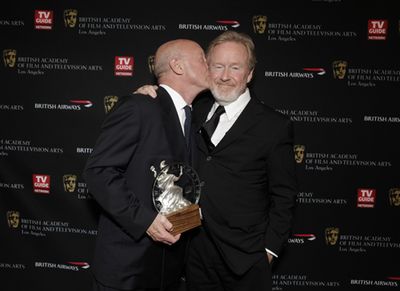
Would you ever direct with your brother Ridley?

There would be bloodletting! Someone would die on the first day! Ridley and I are great in terms of business, there’s nothing stronger than blood. But we’re very different… Ridley’s a father figure. He’s always coaxed and guided me through lots of trials and tribulations in my life and I’ve always looked to him. As a family we’re very close. Without sounding corny, he’s my best friend.

Farewell, Tony Scott. 
The Sight & Sound List: Guy Maddin

Mans-castle-1

The critics kicked Citizen Kane to the number two curb in favor of Vertigo. Directors lauded Tokyo Story, placing the almighty Kane in a tie with 2001. Quentin Tarantino loves The Bad News Bears more than you ever knew (God bless him)That list! Or rather, those lists! Everyone's been talking, dissecting and arguing about Sight & Sound's greatest films lineup that comes once a decade (see the top 50 here). The internet was abuzz  – exciting and agitating cineastes and as usual with lists, provoking discussion about what their picks would consist of. I wanted to know more about individual choices (here's the director's tallied top ten) and since I have access to Guy Maddin, one of the filmmakers invited to the Sight & Sound soiree, he has allowed a look at his personal list (Sight & Sound will post the 358 directors’ entries on August 22). Discussing each movie with me (his official write-ups will be at S&S) and pleased to include his honorable mentions (all twenty of them) here's his terrific, toiled-over tally. 

1. Zero de conduite (1933) Jean Vigo

Zero_de_conduite_13

Vigo knows exactly how we sort and reconfigure our childhood memories, how we tear them up into shreds of pure sensation and sloppily collage them back together into heightened and giddy mythologies. This is film assembled with the logic of music, a song you need to hear over and over again, and each time out it's more thrilling, mysterious and revolutionary.

2. The Unknown (1927) Tod Browning

Annex%20-%20Chaney%20Sr.,%20Lon%20(Unknown,%20The)_02

Tod Browning's lean, unpredictable circus melodrama is as bizarre as this macabre auteur's work gets, yet far more universal than one would think possible.  Long under-praised genius Lon Chaney plays that dishonest part of us all who prefers to tack indirectly upon his lust object, preferring any approach, no matter how self-mutilatingly impractical, except the direct one. Perhaps the most savage, nightmarish and honest melodrama of all time.

3. Man’s Castle (1933) Frank Borzage

Mans-castle11

Submerged in the most silvery and darkly enchanted emulsions of 30s Hollywood romance, yet minutely, unhurriedly observed, this masterpiece expresses itself in a mannered naturalism, unique to Borzage, who details the human heart like no other studio titan.

4. Tree of Life (2011) Terrence Malick

Vlcsnap-2011-07-06-22h06m22s140

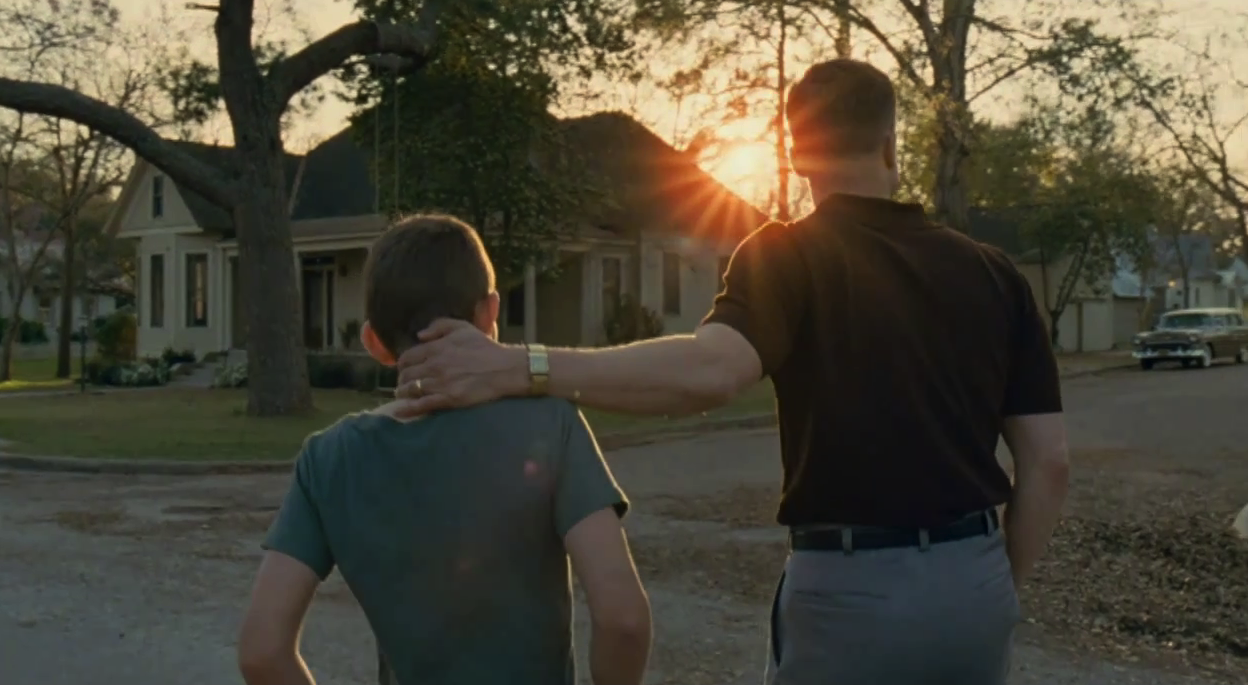
Malick thought it time to project directly from his wrung heart to the screen, resulting in a purity of intent something like minimalism (no matter how many near-baroque detours through grief and memory he may take) in this account of a brother's long-ago suicide — gorgeous and cathartic.

5. L’Age d’or (1930) Luis Buñuel

L'age d'or 1

Essay film or dream? After 82 years, this singular hybrid is still the most assuredly jagged, trope-packed, gleeful, swaggering and mischievous filmic salvo of all-time. We'll never quite catch up to this picture.

6. The Long Goodbye (1973) Robert Altman

Tumblr_lz1oj9zPyK1qzq6gbo1_500

This movie feels shambled together by Elliot Gould and his director, both in some cocky visionary state when every move they made together was exactly right for the moment and, sadly, after the also brilliant California Split, impossible to duplicate. Some sort of evanescent miracle that produces viewer euphoria and regret in equal portion. 

7. Mulholland Dr. (2001) David Lynch

Mulholland%20Dr

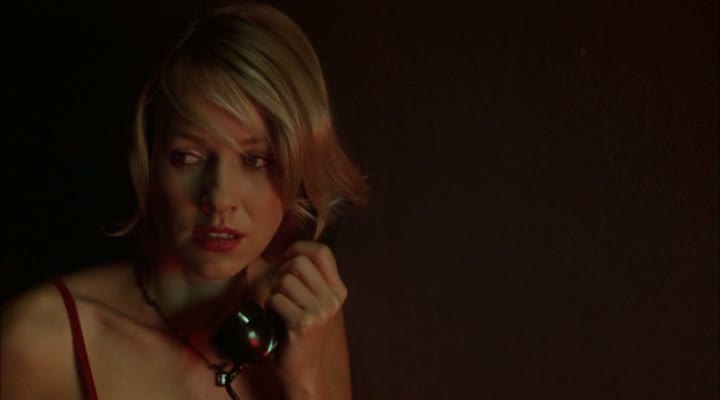
Fairy tale inside nightmare featuring false bottom and healed-over escape hatch. The master's most vertiginous peak. 

8. Letter from an Unknown Woman (1948) Max Ophuls

Letterfromanunknownwoman-1t11

Maybe the most bracingly masochistic comedy possible. Take ten parts pure unrequited love, let fester in heart for two decades, then shatter. The laughs may have a strange aftertaste.

9. After Life (1998) Hirokazu Kore-eda

Afterlife01

Singular use, reuse and re-reuse of memory and film-as-memory in this strangely playful yet moving wonder. What a structure!

10. Zvenigora (1928) Alexander Dovzhenko

Zven2

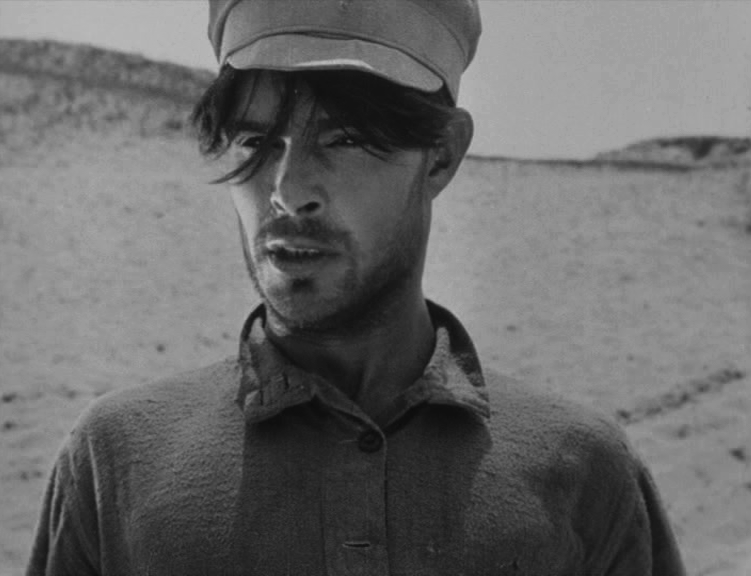
This guy Dovzhenko has his own film vocabulary — quirky, mythopoetic, brazen and downright perverse — and he wields it to create the oddest portraits of whatever he's thinking about, unlikely subjects treated in a style that comes from an eccentric place film might have evolved toward in another, parallel, pass through time. No one has the heart and voice of this man. 

20 Honorable Mentions:

   Annex%20-%20Mitchum,%20Robert%20(Night%20of%20the%20Hunter,%20The)_01-1

The Night of the Hunter (Charles Laughton, 1955), Scarface (Howard Hawks, 1932), Blonde Venus (Josef von Sternberg, 1932), Mother and Son (Aleksandr Sokurov, 1997), His Girl Friday (Howard Hawks, 1940), The Lady Eve (Preston Sturges, 1941), The Tenant (Roman Polanski, 1976), Ace in the Hole (Billy Wilder, 1951), The Birds (Alfred Hitchcock, 1963), Detour (Edgar G. Ulmer, 1945), City Lights (Charlie Chaplin, 1931), Swing Time (George Stevens, 1936),

Annex%20-%20Turner,%20Lana%20(Imitation%20of%20Life)_02

Imitation of Life (Douglas Sirk, 1959), The Overcoat (Grigori Kozintsev, Leonid Trauberg, 1926), Women in Revolt (Paul Morrissey, 1971), Possessed (Curtis Bernhardt, 1947), The Shop Around the Corner (Ernst Lubitsch, 1940), Straw Dogs (Sam Peckinpah, 1971), Pink Narcissus (James Bidgood, 1971), The Chase (Arthur Ripley, 1946)