Telluride 2014: Wicked Woman

$_57

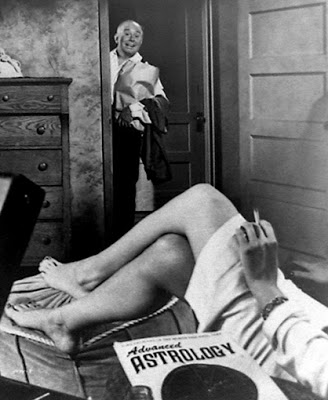
The title is deceptive because, really, Beverly Michaels isn’t wicked, she’s just sick of it all. That whole bit about being a woman in this life, unmarried, down on your luck and, oh, sure, gorgeous, but how far will that lead you? And how you’ve heard and seen it all. The thrill or disgust of a cat call (depending on the day, or the man), the joy of one’s own beauty co-mingling with the bitterness that comes when people think that’s all you’re made of, the creep next door who won’t leave you alone because, in a moment of desperation, you were nice to him once; all of those day to day indignities are so viscerally felt when Michaels just slumps across a room.

MisterPercyHeltonWickedWoman1953-1

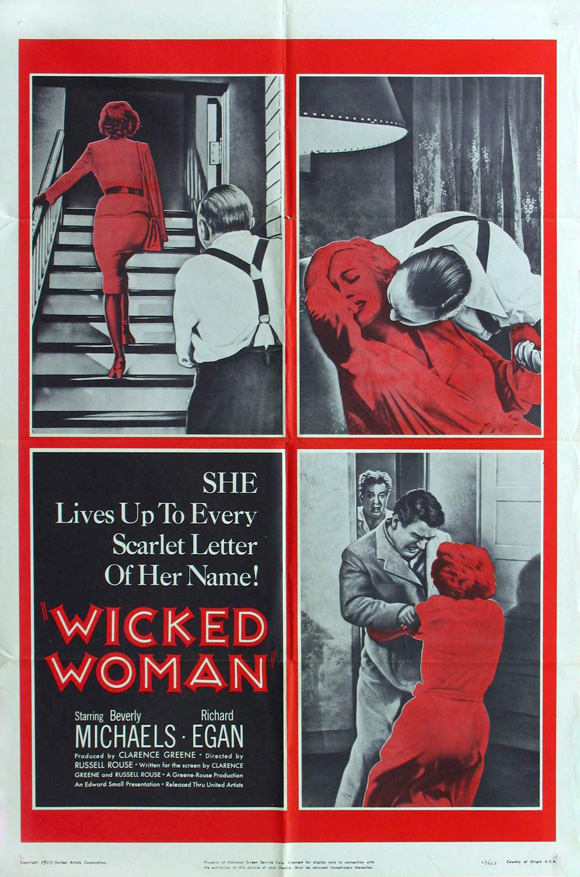
That room being her dingy dive in a boarding house, the type of place her landlady hollers is “respectable” (which always means it’s not); the dump she reads her horoscope, drinks beer, and dreams of her new love (and she really does love him), Richard Egan. Only one problem — Egan’s wife. White-clad drifter Michaels (always white –Michaels tops Lana’s lily-clad faux purity in Postman Always Rings Twice with her getups) sashays into town, nabs a job as the hot waitress at an establishment run by hunky Egan, but owned by his wife, a blowsy and sad drunk (a terrific Evelyn Scott).

Wicked-woman-movie-poster-1953-1020429105

What to do? Well, probably something pretty crooked, but surprisingly, when viewed against other devious noir couples, not as evil as you’d imagine. Russell Rouse (The ThiefNew York ConfidentialThe Oscar) directs this 1953 B grade pulp with A plus panache – he allows his actors to take over their sordid surroundings with such power, that you truly feel for them – particularly Michaels. 

WickedWoman-1953-09

It’s like kitchen sink pulp, with characters who could seem overdrawn, but are, in fact, very real. So real they’re almost freaks. Michaels is more than leggy, she’s six feet tall, neighborly creep Percy Helton is such a letch he’s a bonafide hunchback and Egan is so obnoxiously handsome he’s managed to grow a dimple between his eyes.

Wicked creeping percy

Rouse crafts a dirty jewel with this one, a masterpiece (yes, a masterpiece) that not only speaks vividly of human nature, but also understands women, from the so-called floozies to the sad carping drunks (who often carp for good reason) and even the men pushed and pulled and struggling themselves. Women aren't always "wicked" becuase they're out to get men. Often they need a job, they need money for the bus, they need at least one nice white suit.  I mean it.  Wicked Woman should be taught in every Women’s Studies class on every college campus in America.

Wicked Woman will be introduced by Kim Morgan and Guy Maddin at the Telluride Film Festival. 

Telluride 2014: California Split

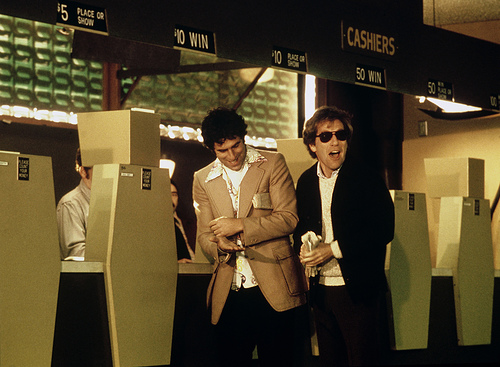
CALIFORNIA-SPLIT_1

"I was friends with Steven Spielberg, and Steven and I were going to do California Split. I worked in Steven's home for about eight months. MGM said yes, and suddenly everything changed. Jim Aubrey, head of the studio, was the smiling cobra — and the snake struck. He said, 'I want it changed. I don't want what's going on here. I want a straight movie. I want the Mafia to chase the two guys — they owe the Mafia money. The Mafia catches the two guys, they get away. And I want Dean Martin to be the star of it. He wears a lucky chip around his neck, and he gets shot and the chip saves his life.' He even had the title for it — 'You call the movie Lucky Chip. You've got to be kidding me. I pulled out of it with a hundred twenty-seven dollars in my pocket. People said, 'You are the greatest moron of all time. You should do what they want.' But to me I couldn't do it." — Joseph Walsh (California Split screenwriter)

Altmandirectingcaliforniasplit1-1

When Robert Altman made a picture about gambling, he didn’t hit you over the head with one of the most obvious and easiest ways to sap “meaning” out of a movie – the overdrawn, bathos-ridden addiction story. The sadness of lost lives, lost money, destroyed relationships, underscored, twice, in ink. But he didn’t make it all Rat Pack glamour either. The complexity and sorrow are all there, of course, but Altman allowed these feelings and concerns to creep up on you as you observe, laugh and, in the end, feel a little blue for two characters you grow to love. There’s a melancholy to winning and Altman got that. But there’s also a whole lot of fun in a life unfettered, especially when you’ve just met an exciting new friend. He got that too. There’s a reason people do things like gamble excessively – it can be thrilling tossing the dice, staying out all night and drinking in bars where some women don’t even bother to wear pants. How can we not get it?

Californiasplit_pn

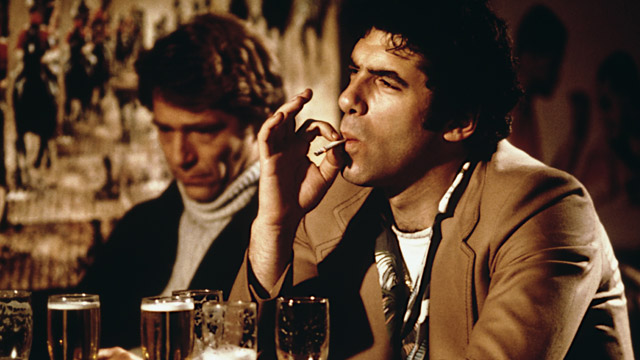
And how can we not with Elliot Gould and George Segal as our guides? Paired with the wise words within screenwriter Joseph Walsh’s autobiographical screenplay, based on his own gambling predilection and problem, Altman crafted one of those movies so special it’s hard to even write about.  It’s just so alive and breathing and real and charming and sad you can practically smell it. It’s a movie I turn to time and time again because, even if I know it’s not a healthy world, I want to be in that world again. I want to experience its off-kilter cool, its bummer vibes. I want to, once again, fall in love with its scruffy-cool, wisecracking, charismatic leads.

Cali_split6

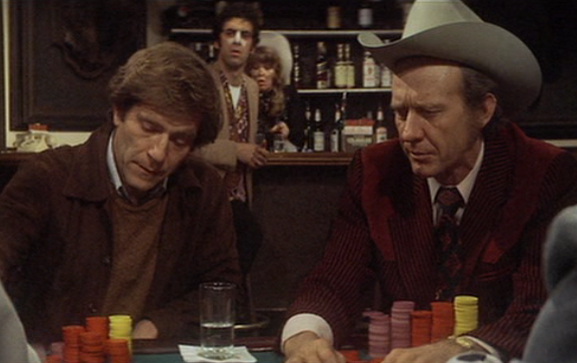
And you do fall for them. Segal, as magazine writer, Bill Denny, who bonds with Gould’s Charlie Waters, the more experienced gambler in something like their own love affair. Their relationship is one of camaraderie but, not so fast. Even Altman doesn’t let that become an easy kind of connect the dots. These men have mutual mysteries, are their own men, and probably, won’t ever truly understand one another like brothers. Gould, the fast-talking, charming rogue; Segal the more pensive, lonely and wary of the two. Their friendship always contains an edge – and since the movie feels so real and unexpected, you’re never sure what that precipice entails. Bill does find himself circling further and further into the money pit, which leads to a trip to Reno in a game in which former world champion Amarillo Slim (who plays himself) is one of participants. Bill wins and wins and wins and… what does that do for him? You have to think about it. And wonder if he’ll be OK. And if these two guys will ever be friends again. Probably not. And with no showdown between them, no big speech; you don’t need one. All you need is to look at Gould and Segal and you… just know. Through all of this winning, something has been lost.

California_Split_10

Reviewing Karl Reisz’s fine The Gambler (written by another great gambling enthusiast and addict James Toback), Pauline Kael made a point of mentioning California Split’s wonderful inclusiveness: “The big difference is … not just that Altman’s allusiveness is vastly entertaining while The Gambler seeks to impress us, but that California Split invites us into the world of its characters, while The Gambler hands us a wrapped package and closes us out.”

California_Split_5

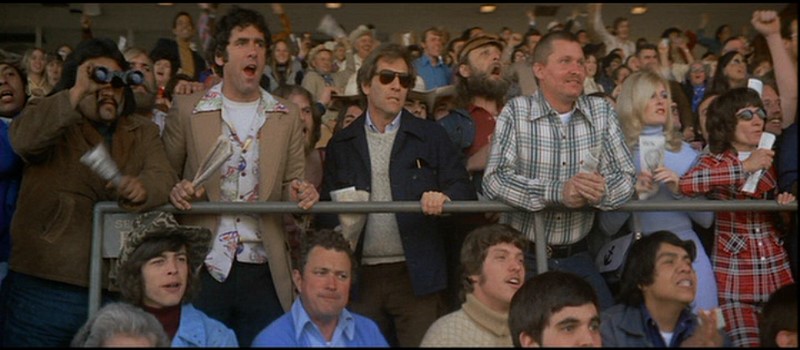
Along with the fantastic pairing of Segal and Gould, Walsh’s script helped allow us in, and he fought to maintain his voice every step of the way. That tension obviously worked onscreen, lending the performances such freshness, that no matter how many times you watch the movie, you feel a little disarmed. It always feels so new. On top of that, Altman cast many real-life addicts as extras, carpeting the movie wall-to-wall with lived-in faces, utilizing hise eight-track sound system to wonderful effect — the gabbing of a minor player could add weight or humor to a scene. Gould and Segal are central, but everyone has a part, and even, at times, a voice, in California Split

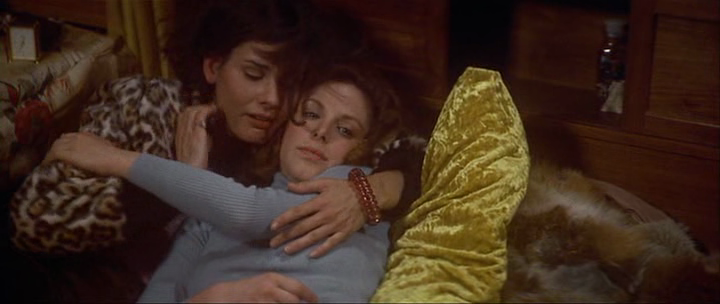
Californiasplit-women

Altman places us in this unbalanced world of gambling addicts and eventual friends, with their varied adventures, games, female friends (or hookers, Ann Prentiss and Gwen Welles, who are never demeaned or condescended to and are given their own humor and humanity, something you wouldn't even see today), goons, oranges and conversations – conversations that veer from betting on the names of all Seven Dwarfs (“Dumbo wasn’t in that cast?”) to the fantastic statement, “Everybody's named Barbara.”

Slimincaliforniasplit

It all comes together so naturally that, at times, you can’t believe you’re watching a movie. And yet, it doesn’t feel like a documentary or something so real that you could view it all on your next jaunt to Reno. It’s pure Altman. He’s working in a universe that knows it’s human, knows it’s cinematic and knows it’s meaningful but isn’t going to tell you what to think or even what it all means.

5429232

You must decide that for yourself. Along the way, you spend time with two effortlessly natural actors playing such incredibly different men, but ones who give you so much fun that when you feel the movie’s underlying sadness, it makes it all the more aching; all the more human, all the more bittersweet. And utterly inimitable.

California Split was followed by a discussion with me and Guy Maddin talking to George Segal and Joseph Walsh. Elliot Gould was set to attend, but was called unexpectedly for a shoot on "Ray Donovan." More to follow about our conversation, which was fantastic. Segal and Walsh are funny, smart, obviously enormously talented and incredibly sweet. They were the absolute highlight of Telluride for me. And, the below picture with George Segal, well, this was more than wonderful. 

Kim george two

Telluride 2014: Joseph Losey’s M

BwOiSW7IAAEoOY8

How to remake one of Fritz Lang's greatest pictures? Joseph Losey found a way. But many, including Lang, did not embrace Losey's vision. I had longed to see this film for years in an at least semi-decent print. I could never find anything but the murkiest of  copies but I managed to track down a muddy, barely watchable version and I took it in — even as the picture quality frustrated me. I could still see it was so beautiful, so wonderfully shot, so powerful, even within all that murk and muck. I revere Joseph Losey, from his masterworks such as The Prowler to Big Night to The Criminal Accident, also The Boy with the Green Hair, These Are the Damned, Modesty Blaise and of course, The Servant and The Go Between. And Boom!  One can't forget Boom! One shouldn't forget Boom! "Injection!"

6c2020802bf79f9b2ae4782ce84551b8

There are those who just don't take to remakes, tiresome souls they are. To those, I say, calm down and watch Sirk’s Imitation of Life and realize it can be done, brilliantly, and with some unique deviations. I’ve also heard non believers grouse about actor David Wayne filling in for Peter Lorre’s brilliant performance  – that he’s too understated, too boring; there’s just no heft to him. Well, the subtlety works and he comes off not only incredibly creepy and heavy breathing sexual but an effective cipher and just terrifying (he's different than Lorre) who allows Losey’s spectacular supporting cast — Martin Gabel, Luther Adler, Norman Lloyd, Raymond Burr and Jim Backus — to work off and perhaps even through him by going larger (Luther Adler is especially strong here).

Mlosey1-1

And the locations they go through as well, Ernest Laszlo’s cinematography and depiction of 1950s Los Angeles is exceptional — from the seedy Bunker Hill settings to a terrific use of the Bradbury Building where the killer is hunted, to the use (and abuse) of mannequins  (women, children, sexuality, parts), all winding up and and swirling together into a powerful, sexual mob hysteria, underscoring that era’s political paranoia and what would happen to the soon-to-be-exiled HUAC target Losey.

11A-M

The director wanted to make some interesting changes from the Lorre kiddie killer to the Wayne child murderer, and he did. It's not that one is preferable (Lang vs. Losey), it's just that both are intriguing. The production notes were based on a study of two real life murderers, and according to David Caute's fine biography on Losey, in files Losey wrote, "Harraw was isolated in his youth by religion and by poverty. He is suffering from hyper sensitivity. He was sexually attracted to his mother. This resulted in frustration, hatred of father." Losey continued, "The shoe and foot as sexual symbol — contact with earth, fecundity… And I wanted to present him as a product of a mother-dominated and materialistic society of lower middle-class America, where everybody had to be big he-men otherwise they were sissies… this man undoubtedly was a concealed homosexual, totally in conflict with everything including his own mother whom he adored and hated." 

5161

Oh, yes. The mother. The kinky shoes. But the environment. Los Angeles has never looked so lonely and vulnerable, from the creepy killers to those kids walking around downtown Los Angeles, looking in windows, walking out of theaters. One still feels this way in Los Angeles — both cramped and wide open, friendly and sinister. You never know what is lurking. Even in the most innocent of circumstances.

20137327_1_IMG_FIX_700x700

So, finally! A restored copy of Joseph Losey’s underseen, under-discussed, and that overused but, in this case, apt term, underrated M, here at Telluride. Lang never saw it but was pleased that it bombed and based on what he had heard, disagreed with how Losey discussed the killer's motives and psychology. Again, we can agree to disagree Mr. Lang. And I think your version is a masterpiece. Nothing will take away from that. Losey's is just too different. 

Vlcsnap-2010-04-25-16h26m37s7

Losey, pursued himself, and during the very year this picture was released, the HUAC target would leave the country instead of naming names for that ghastly, career-destroying committee, only to return in 1952, blacklisted. Thankfully, he embraced Britain, and become one of the more fascinating filmmakers of the 1960s. He also, in Secret Ceremony, got Elizabeth Taylor to take an on screen bath with Mia Farrow… He’s a treasure. And now, his picture has been restored. I can't wait to watch tonight.

Presented at the Telluride Film Festival by Kim Morgan, Guy Maddin and special guest Pierre Rissient who has been championing Losey's M for decades.

Three Obsessions: Lightning, Big, Vice

0f6bb335-1578-4d7a-a768-978b6c3bb597

I haven't done one of these in a while.

Three obsessions. Here's some recent ones…

1. Heat Lightning (1934)

6a00d83451cb7469e201a73e04d4c6970d-400wi

Just rewatched Mervyn LeRoy’s Heat Lightning. A 1934 Pre-code desert drama and sweaty, in the-middle-of-nowhere lust and intrigue with Aline MacMahon and Ann Dvorak as sisters working in the Cal desert. The auto garage, diner and road side motel are a literal hot spot for all sorts of dubious, mysterious and amusing characters/situations… Preston Foster and Lyle Talbot show up, on the lam. Also Glenda Farrell as “Feathers” and Ruth Donnelly as “Tinkle,” rich divorcees road tripping with their jewels and chauffeur, of course. The camerawork is exceptional — beautiful and interesting.

I especially love the tracking shot at the beginning when we’re introduced to the sisters — tough minded McMahon and pretty, frustrated Dvorak — while McMahon is walking to the car she’s working on. Dvorak storms away, angry, and LeRoy shoots from McMahon’s POV under the car. MacMahon  and Dvorak are wonderful here — really appealing and touching. 

2. The Big House (1930)

6a00d83451cb7469e201a511f97e69970c-400wi

An uncompromising prison picture with powerful performances by Wallace Beery, Chester Morris and Robert Montgomery (while making the movie, director George W. Hill reportedly stated he’d fire the first person he saw "acting"). Beautifully shot — both claustrophobic and vast, endlessly institutional — I love how the story turns as well. You’re expecting Montgomery to be the hero but, nope, he’s a coward, a rat, and yet, not simply villainous. He’s acting like a lot of terrified newbies when first incarcerated.

This has to be the best Chester Morris performance too. I've always liked him, but he was never so tough and likable as he is here. I always saw something like a cross between Franchot Tone and future Ralph Meeker in Morris, hoping for the meatier Meeker to surface. Here, the Meeker comes forward, toughening up and de-blanding the Tone out of him. Interesting casting note: Lon Chaney, Sr. was originally going to play the Beery role but he tragically died.

That would have been something to see. I wonder how he would have transformed himself for that part? Chaney was brilliant, but Beery is exceptional here and probably didn't need much transforming as a big, loud, violent thug. And, as stated ealier, the picture is wonderfully framed  – that we start with Robert Montgomery, thinking we'll be following this poor guy through the hell of his inmates or teaming up with them and we will, perhaps, identify with him. Not really. I never stopped feeling sorry for him but did get to the point where I was like, "F you, Robert Montgomery, you creepy coward."  And yet, the movie never makes you simply turn on him. Or any of the three leads for that matter. When Montgomery loses it at the end, it's just sad. Prison is sad, the movie reminds you. It's rare and more complicated than most modern prison movies.

While doing screen grabs (there are so many fantastic shots in the movie), I remembered George Hurrell took some great publicity stills of the picture, posted here. In between shooting a glammed up Norma Shearer and Joan Crawford, Hurrell snapped Chester Morris as an emaciated jailbird. The dungeon walk is a gorgeous Hurrell here but the scene itself is as gritty and as stylish and a standout in the movie. 

3. Looking forward to Paul Thomas Anderson's Inherent Vice

6a00d83451cb7469e201a73e04d53a970d-400wi

Inherent Vice. Incredibly excited for this one, more than any other upcoming film. Also, I love this photo and how it looks like a much more artful picture my Dad snapped in the 70s of his cop friend Carl — a guy who ate blocks of cheese like candy bars.

More about Inherent Vice, Paul Thomas Anderson’s take on Thomas Pynchon and more at Cigarettes and Red Vines.

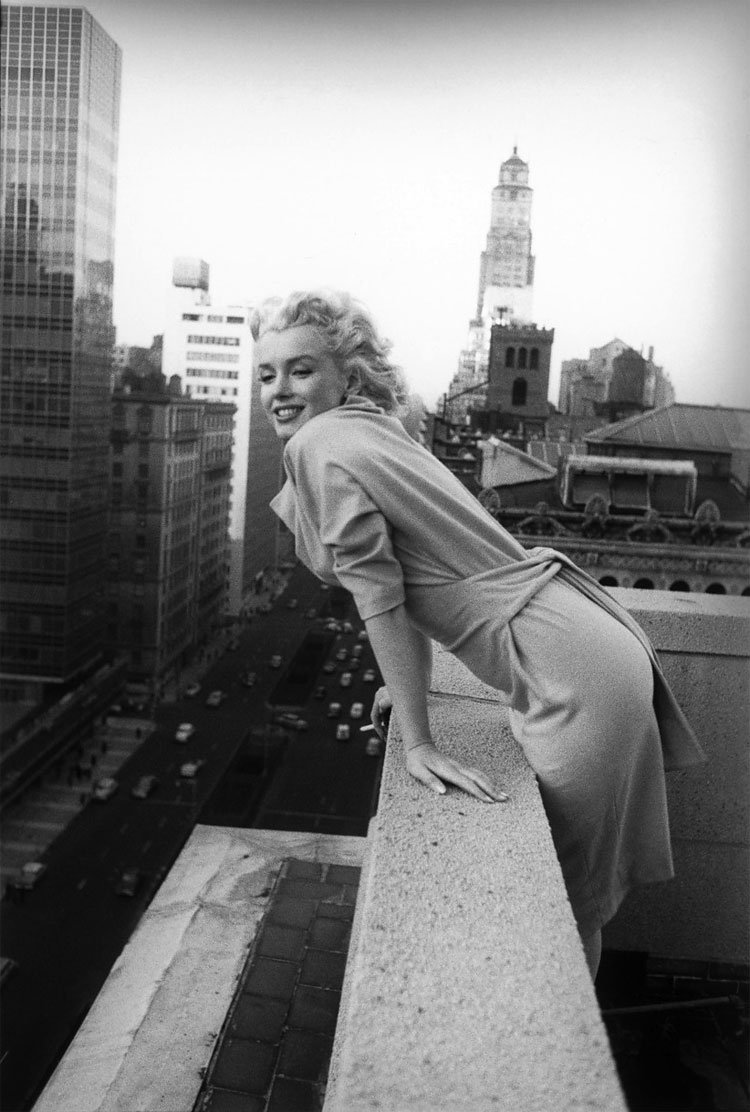
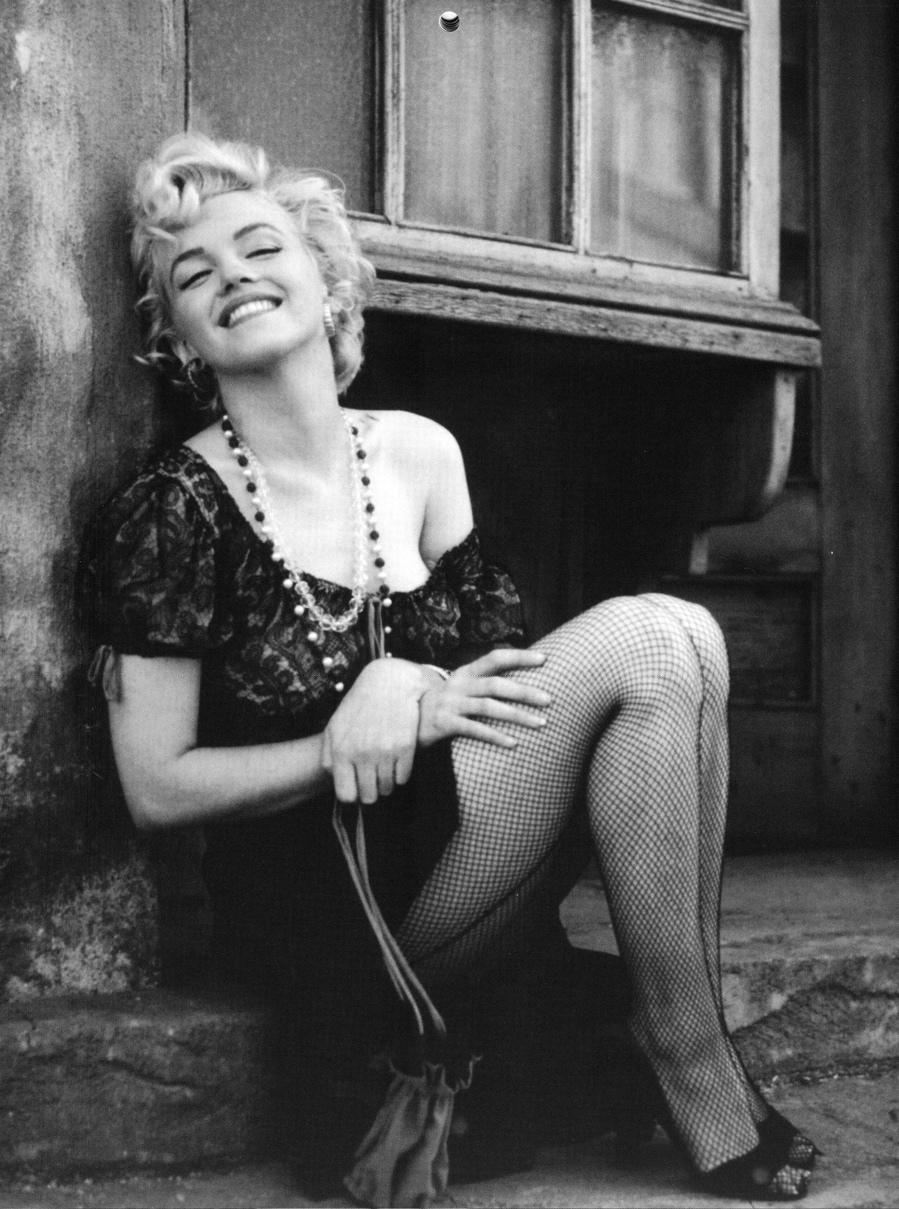
June 1: Happy Birthday Marilyn Monroe

Mm flowers bert stern

“A sex symbol becomes a thing. I just hate to be a thing. But if I’m going to be a symbol of something I’d rather have it sex than some other things they’ve got symbols of.”  — Marilyn Monroe

Jack Garfein vividly remembers first seeing Marilyn Monroe in person. She was almost overwhelming to him. It wasn't just that she was gorgeous, there was something more — something expressed in her flesh that was both magical and moving. He remembered how she glowed, how she laughed and lived. When Jack talked about her, this intelligent, mischievous spirit, I thought of how Montgomery Clift recalled Marilyn.

Marilyn-Monroe-in-New-York-by-Ed-Feingersh-1955

“She listens, wants, cares. I catch her laughing across a room and I bust up. Every pore of that lovely translucent skin is alive, open every moment-even though this world could make her vulnerable to being hurt. I would rather work with her than any other actress. I adore her.”  

Marilynmonroesmile

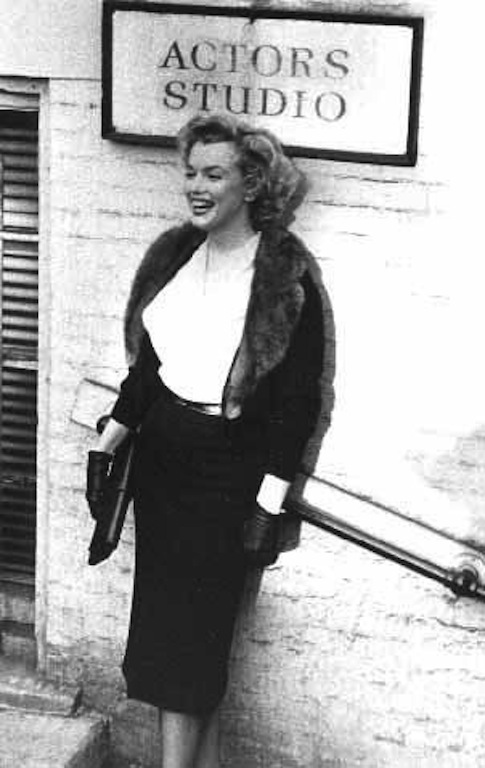
Jack met Marilyn when she was in New York City during the time she was  studying with Lee Strasberg at the Actors Studio. He saw her walk into a party. Everyone saw her walk into that party. Elia Kazan introduced them. (Jack would later work with Marilyn's ex husband, Arthur Miller, producing two of his plays, The Price and The American Clock.)  Deeply attracted, he also deeply respected her — her acting talent and potential, her power in front of the camera and just her beguiling way. A friendship developed.

Marilyn actors studio

I became friends with Jack after I was honored to present his two brilliant pictures, Something Wild and The Strange One, at Telluride in 2012. He'll be turning 84 in July and he's still one of the most liberal-minded men I've ever met. So full of life and so free-thinking, Jack is warm, wise, bracing, funny and incredibly empathetic. I understand why Marilyn liked him so much. He got her. Or, at least, he tried to. 

Tumblr_m8y7jt7b5a1r2t5pso1_1280

Nothing happened between them (Jack was married to actress Carroll Baker at the time) but he was clearly smitten and still is. To him, Marilyn was a good person, a woman who took her craft seriously and a woman who thought her sexuality was often funny, and certainly nothing to be ashamed of. After Telluride, Jack spent some time in Los Angeles and we discussed many things — his career, his life, his art (and art and life), people… And then he told me this story about Marilyn. I love this story. Happy Birthday, Marilyn. 

Jack Garfein on Marilyn Monroe from Kim Morgan on Vimeo.

The Hateful Eight Live Read

0c3f0efd-e340-4594-b597-ba47fbbb28ae
“Starting to see pictures, ain’t ya?” — Major Marquis Warren

Without seeing a shot of it, not one spectacular sweeping frame, not one lovely snow-covered panorama, not one majestic vision of horses, “rip snorting through the bottom of the landscape,” I got it. I got it on stage with chairs and actors and pantomimed guns and imagined stagecoaches and blue coffee pots laced with poison. Quentin Tarantino is (hopefully) gonna shoot the hell out of his newest script, The Hateful Eight, and, importantly, in “big super CINEMASCOPE 70MM filmed gloriousness.” Those are Tarantino’s words, spoken directly from his script; words he repeats with a giddy exultation of cine-love that becomes both exciting and funnier the more you hear him say it. We see it in our mind’s eye and we truly understand it: super CINEMASCOPE 70 mm is fucking glorious.

680x478-400x230

But will he direct it? That was the lingering question after the script was leaked, Gawker media was sued for copyright infringement (the suit has since been dismissed, with Tarantino allowed to re-file by May 1st) and Tarantino decided to do something unprecedented – perform a live read of the script, on stage with actors, and for just one night. Those of us who watched Saturday witnessed something special, once-in-a-lifetime, but something we’ll hopefully view in… “big super CINEMASCOPE 70MM filmed gloriousness.” Tarantino said before that, after the script leak, he wouldn’t shoot it, that he would publish the work instead. And now we've heard he will shoot, this winter, and then… this one-night-only event. Oh, he better make this movie.

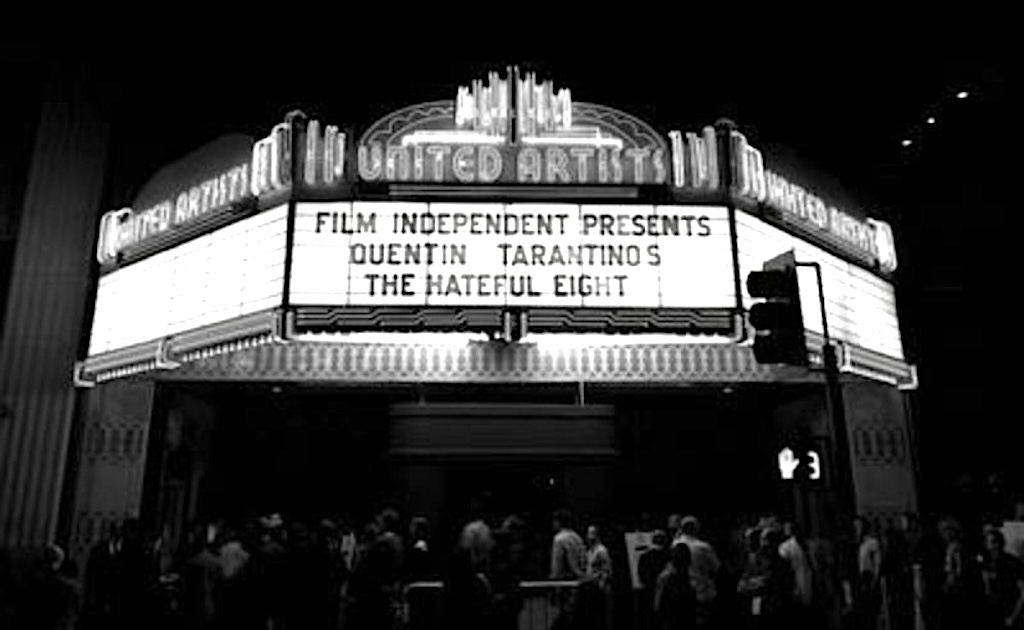
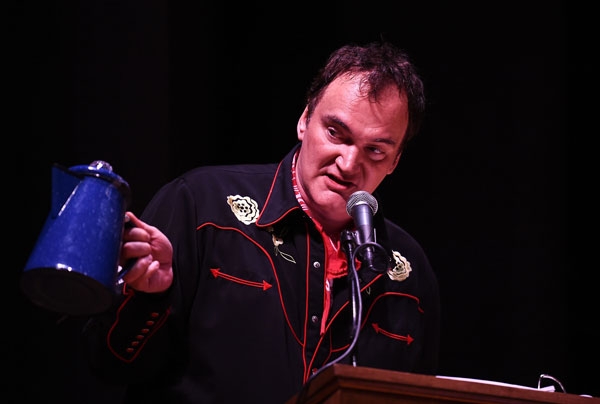
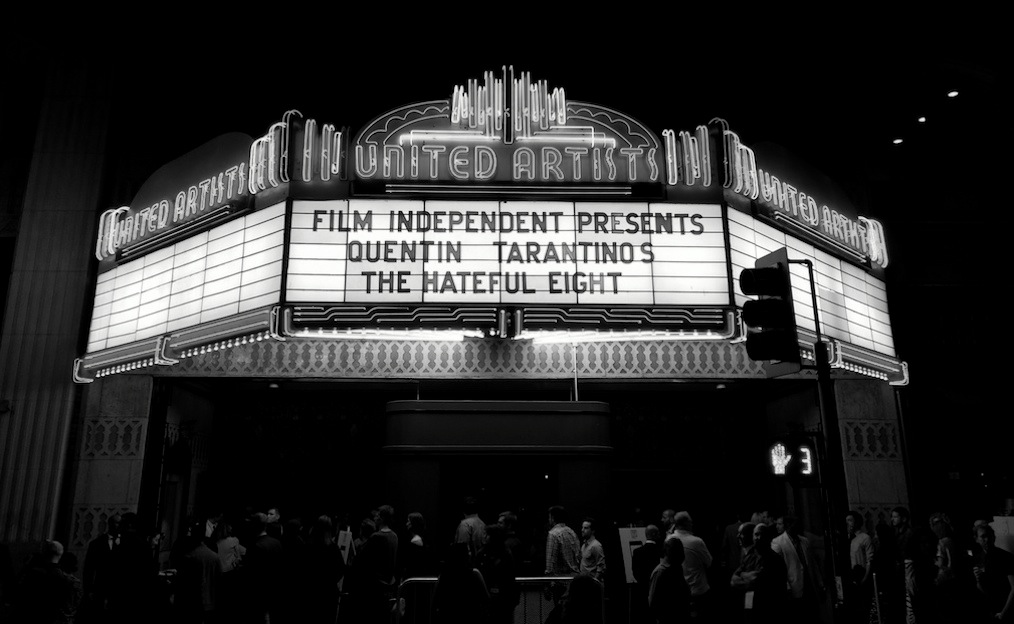
Taking the stage at the beautifully renovated downtown Los Angeles United Artists Theatre, a movie palace at the Ace Hotel on Broadway, Tarantino, clad in black cowboy shirt and black hat, announced to the eager audience how singular this event was. “This is the first draft,” he said. There will be changes, second and third drafts. One major change will be the script’s final chapter, titled “Black Night, White Hell.” He’s re-writing that. “This is the only time you’ll see this version,” he declared. Suddenly this all seems so intimate.

Sure, a person could have read the leaked first draft online, but sitting here on a Saturday night after walking from your downtown parking spot, leaving your cell phone in the trunk of your car and working your way through the throng of attendees who are keeping to themselves, searching for their seats or ogling others (people were so loud returning from the intermission, Tarantino had to tell them to keep it down), it’s an entirely different experience. Tarantino is in control of this read – and it’s so physical and direct. You are inside of his process. They’ve only rehearsed a few days, but they got it.

2a1b5c37-ca32-4172-a4ca-2ca1e7842b7f

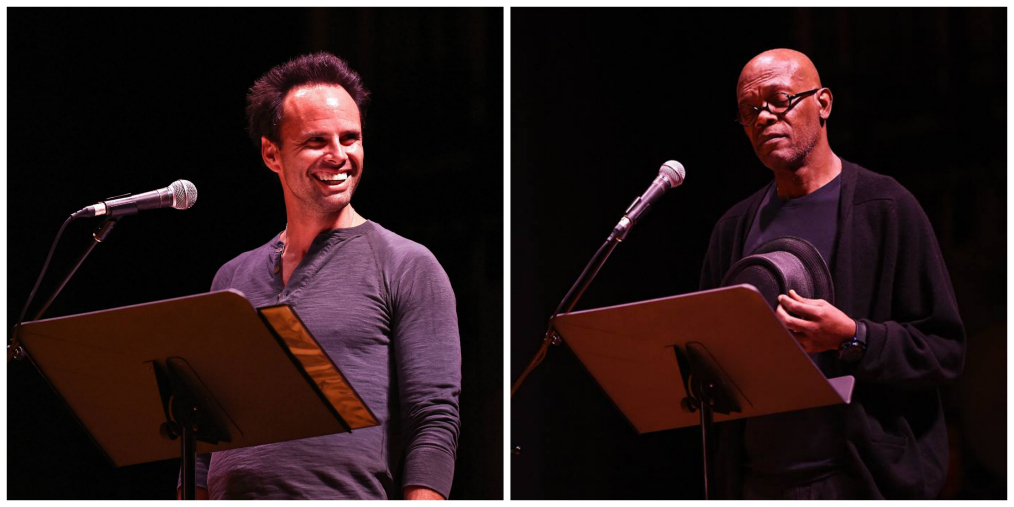
The writer-director himself read from his pages, passionately imparting to us his intended camera moves, coolly raising a coffee pot for occasionally mimed pouring. And then the actors: Kurt Russell, James Parks, Amber Tamblyn, Walton Goggins, Denis Ménochet, Tim Roth, Bruce Dern, Michael Madsen, Dana Gourrier, Zoë Bell, James Remar and Sameul L. Jackson. This is exciting.

Hateful eight 1

The story, briefly: Set sometime after the Civil War, we’ve got bounty hunter John Ruth (Russell), his “N” word-spewing prisoner Daisy Domergue (Tamblyn — ode to Howard Hughes' Howard Huges' protégé, actress Faith Domergue?), bounty hunter, former Union Cavalry officer Major Marquis Warren (Jackson — ode to western writer, producer, director Charles Marquis Warren?), and Red Rock sheriff Chris Mannix (Goggins).

They stop off at Minnie’s Haberdashery (with their stagecoach driver, played by James Parks) and are faced with a gallery of mixed nuts, of mysterious intent and geographically diverse origins (Roth, Ménochet, Madsen and Dern). Words are exchanged, ambiguities presented, revelations unveiled and, again, that goddamn blue coffee pot. (I grew to love that coffee pot and how QT would raise the thing – it became its own character).

Quentin blue coffee pot

Everyone’s blizzard-bound, and, as such, stage-bound, which is interesting given the “big super CINEMASCOPE 70MM filmed gloriousness.” But who says 70 mm should be strictly David Lean or Cleopatra? And clearly the script, as read by Tarantino, utilizes wide-open spaces, flashbacks set outside the haberdashery and a stagecoach traveling through snow. And a face in 70 mm close-up can be a thing of magnificence – think Joaquin Phoenix’s injured, feral mug in Paul Thomas Anderson’s The Master.

Walton-sam

And voices are cinematic too. Kurt Russell was intoning John Wayne here, which carried well from the stage, Amber Tamblyn delivered her lines with a hard-ass intensity, spitting out insults and assertions that put the viewer on edge (I kept thinking of the aptly named actress Quentin Dean, roughly announcing, “I’m PREGNANT!” in In the Heat of the Night) and then Tim Roth, who did “foppish” with an amused mellifluousness.

The standout, for me, was listening to the cantankerous, slow-talking voice of a hateful, racist Confederate General Bruce Dern scowling at that sonic powerhouse Samuel L. Jackson. When Jackson relays one of the script’s most provocative high points – that he not only killed Dern’s son, but had the young man perform fellatio on him – with pleasure — my mind lingered on the visual force of watching those two faces on the big screen. And then the subject at hand: Cocksucking, in “big super CINEMASCOPE 70MM filmed gloriousness.”

The script’s fittingly been compared to The Petrified Forest and Key Largo, and even Agatha Christie’s Ten Little Indians.

High_Voltage_(1929)_1

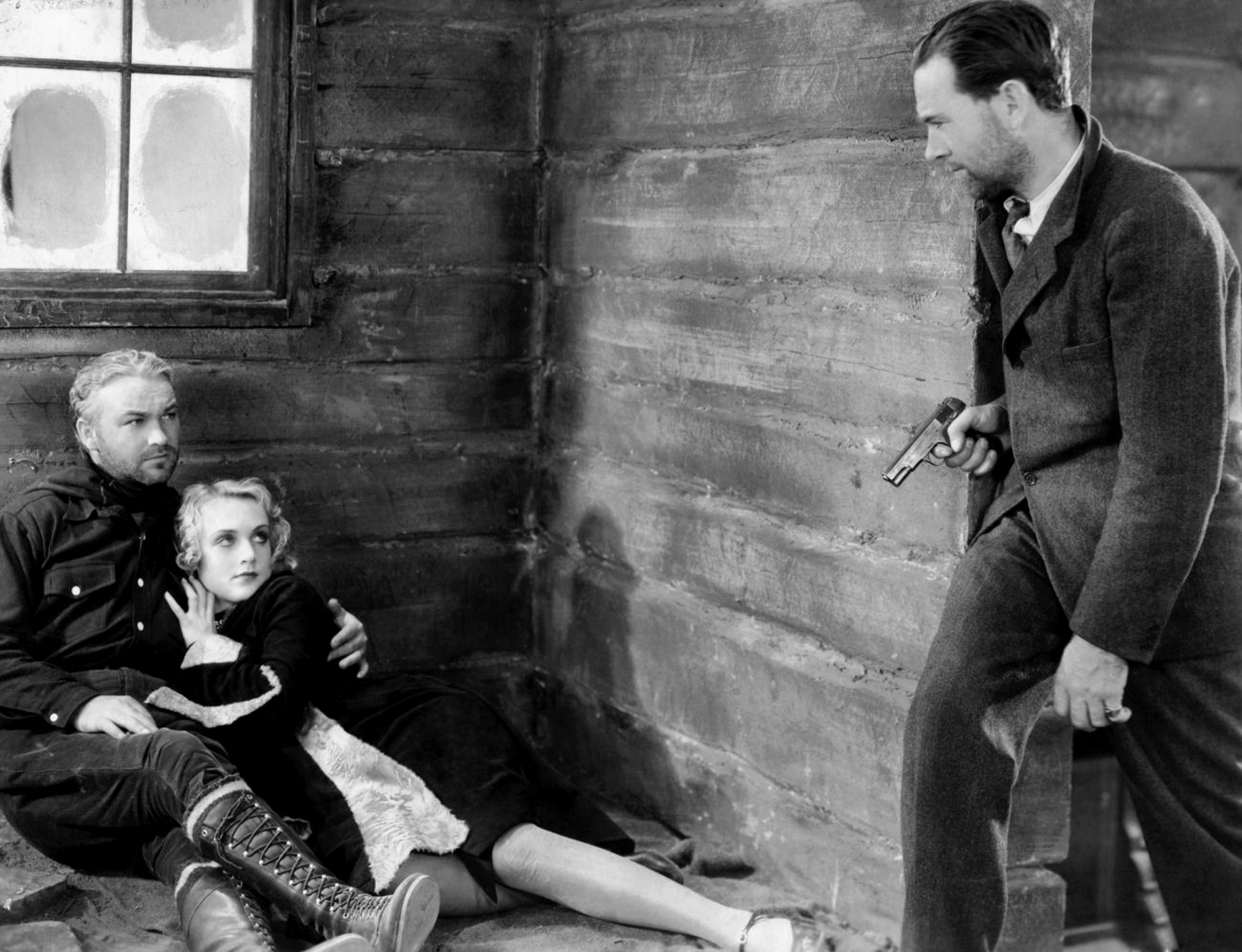
I see other works in there, like Tarantino's own, Reservoir Dogs, but also confined, pressure cooker pictures like Felix Feist’s The Threat (1949), Mervyn LeRoy’s Heat Lightening (1934) and Howard Higgins' High Voltage (1929), a movie recommended to me by a friend after I described the reading to him. (QT influence by proxy). The tense High Voltage features a group of also snow-bound bus passengers stranded in a church with their driver, a female prisoner (Carole Lombard) with her lawman keeper (Owen Moore) and a mysterious man (William Boyd) already hiding out, on the lam.

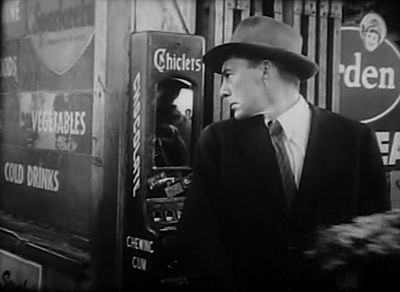
Cmcgraw the threat

High Voltage isn't  a perfect movie, and it’s not no where near exactly like The Hateful Eight, but the snowy spirit contains some similarities, even if Lombard never, ever drops an N bomb (a word used frequently in The Hateful Eight, which QT amusedly warned the audience of the first time it's uttered). Samuel L. Jackson would have livened up High Voltage movie enormously.Thank god he exists in cinema in general, and to be the stirring Lee Van Cleef-looking centerpiece of The Hateful Eight, much like the gravel voiced Charles McGraw's inspired ferociousness in The Threat. Do not mess with these men. Ever

Devi's 8

I’m not sure if Tarantino was thinking of any of these movies while writing his script (and the script is distinctly, terrifically pure Tarantino, right down to Kurt Russell instructing one to move "molasses like") but regardless, it further proves how Tarantino can drift you towards other movies, even if unintended (a wonderful thing).

For instance, there’s also Burt Topper’s entertaining, down and dirty, The Devil’s 8 (which I know Tarantino admires), a 1969 AIP picture starring the diverse crew of, among others, Christopher George, Ron Rifkin, Fabian, Cliff Osmond and, my favorite, Ralph Meeker. The similarities are really in title only, but dammit,Tarantino knows a great title.

And he knows a great motion picture. We saw it read, live, on stage, now let’s see it sweat and bleed and pulsate on the big screen in, of course, “big super CINEMASCOPE 70MM filmed gloriousness,” grateful to be hateful.

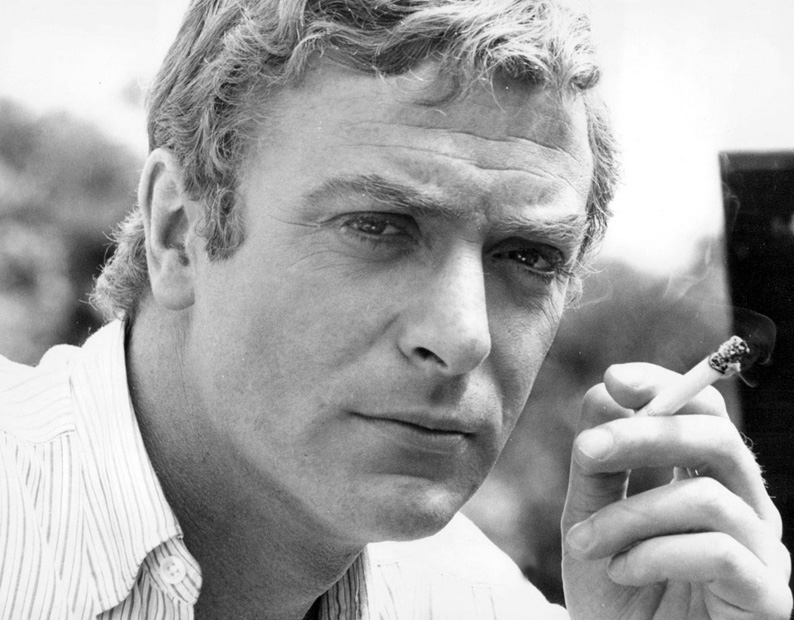
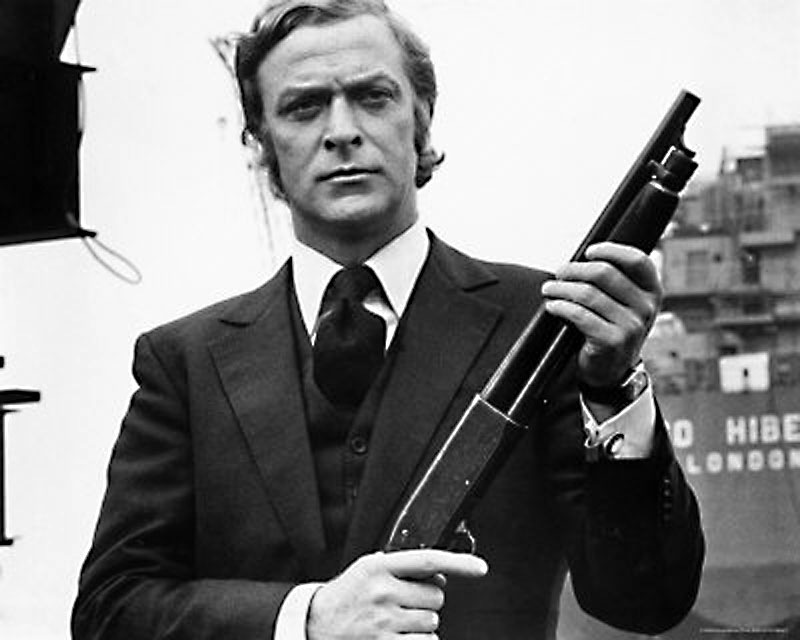
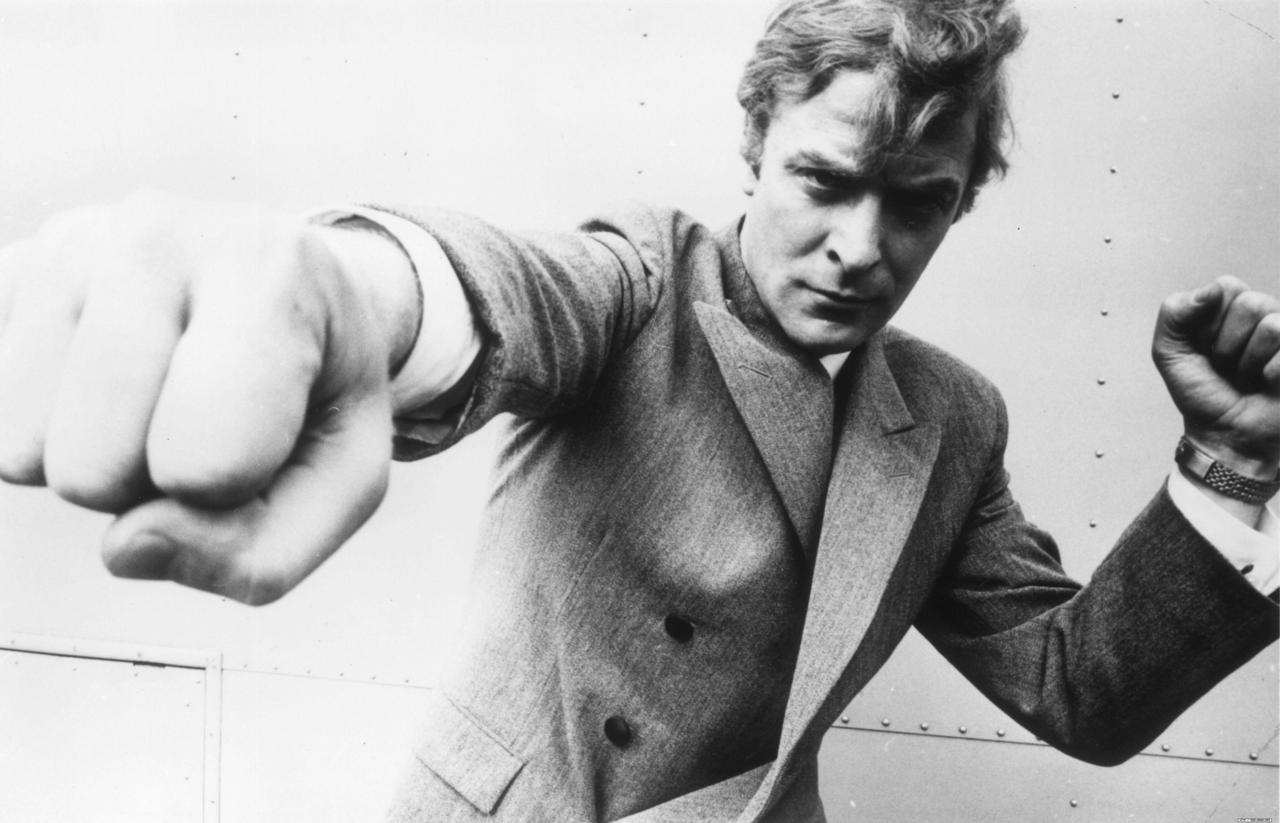
Happy Birthday Michael Caine

Caine-deadfall

I asked the easy, but often hard to answer: "Who was the greatest director you ever worked with?" He answered, without hesitation, "John Huston."

That was Michael Caine and this was 2009, when I sped up from an away-from-LA respite in Joshua Tree to talk to the legendary actor among a small (surprisingly small) roundtable of film writers. When he walked into the suite, he was casual cool, but burning with that kind of charisma that makes the entire room feel a little high. Actors are actors and often not so exciting in person but Caine, an icon, was thrillingly magnetic. We all looked at him. Stared. I want to say a woman dropped her cookie though I don't think that happened. We couldn't turn away. 

Michael-Caine-Rolex-Get-Carter

And then he talked. Discussing his current movie (Is Anybody There?), a few of his classics, Batman and more, he was even game when a reporter brought up the Christian Bale Terminator: Salvation outburst. He was surprised by it ("completely out of character" for Bale) but understanding of his co-star. He laughed and said, "I’m more like that than he is. You’re liable to get a volley off of me if you walk around during my takes."

Actors are human, after all. He told us this story:

Caine-bolkan-break_opt

“I lost my temper on a movie years ago when I was doing a movie called The Last Valley. James Clavell was the director. I’m not a very good horseman and they put me on this horse that they knew was a killer and it ran away with me for two miles and I brought it back at a slow pace and then I got off and all the unit were laughing. And then I started and I outdid Christian by about 30 minutes with more language than he knows. So James Clavell broke the crew for an hour and he said, ‘Let’s have a cup of tea.’ And so we went and had a cup of tea."

Bolkan-caine-clavell-last-valley-copy

"James Clavell was captured in Hong Kong when he was 14 by the Japanese and spent the first part of his life in a Japanese prison camp. He said to me, ‘The way I survived was I became Japanese in mentality. So I knew where they were coming from in their treatment of us and I knew where I should be in everything.’ He said, ‘The one thing that the Japanese never do is they never lose their temper because anger is an emotion that you should never show to strangers because you expose too much of yourself.’ He said, ‘You must never expose yourself like that to strangers.’ And he gave me this long lecture on the Japanese and anger and I have never lost my temper on a set since. I go home and I scream at the kids. (Laughs) But I have never lost my temper on a set since.”

Michael-caine-001

He also discussed retirement, something I just can't see yet. Can anyone?

“You don’t know when your time is up so to speak. There just goes a period of time when the right scripts don’t arrive. And it hasn’t happened to me yet. It might have happened now. I finished this last picture, as I said. I don’t have another picture to do. If a script doesn’t come, then I won’t do anything and I’ll be retired. There won’t be any announcement or anything. I remember MacArthur saying ‘Old soldiers don’t die. They fade away.’ Well, old actors don’t die. They fade away."

Well, he won't. Happy Birthday Michael Caine.

New Year’s Eve: Olmi’s Poignant Ode

Screen shot 2013-12-31 at 8.08.29 PM

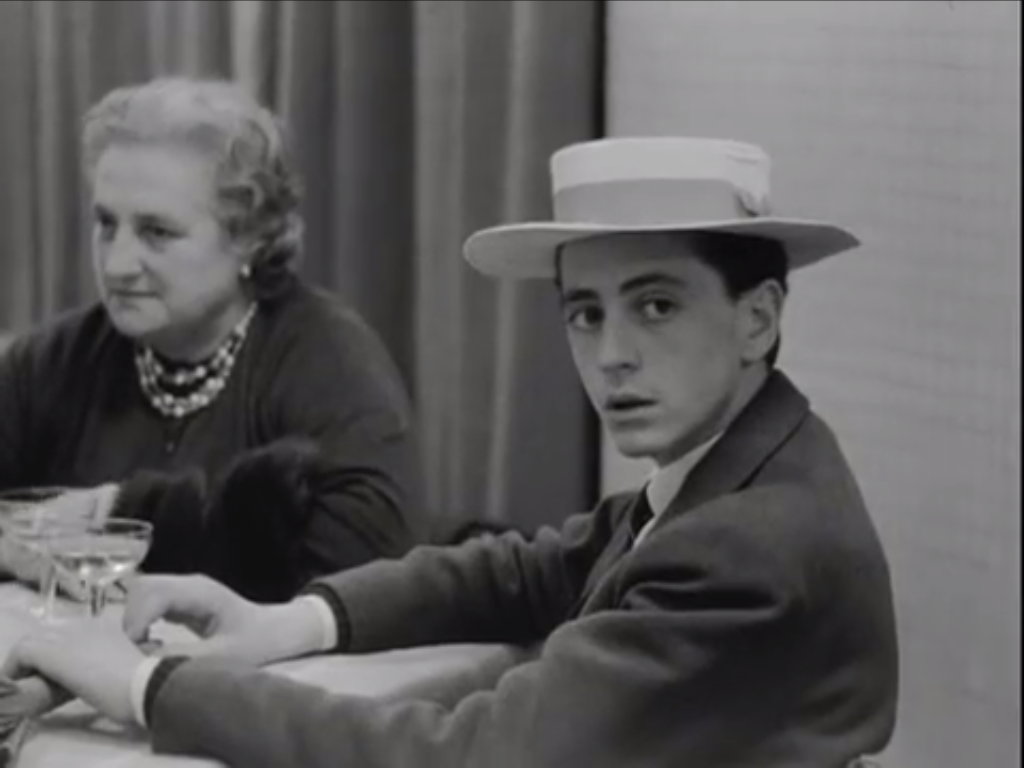
It's often those little moments. What happens while waiting for the train, walking with a girl, sitting at the desk, working your tedious job. Those little things — they work so beautifullly in Italian filmmaker Ermanno Olmi's maserpiece Il Posto (1961), a film that observes work (“Il Posto" means "The Job") through the orbs of a teenager (the saucer-eyed and touchingly languid non-professional actor Sandro Panseri) entering the work force. Olmi displays those little heartbreaks that lead people to inspiration or desperation with a beguiling combination of warmth and melancholia. An auteur whose attention to the small details of everyday life creates quiet character studies of tedium, irony, hilarity, and sadness, he had a marked quality of making the hum-drum almost fantastical.

Screen shot 2013-12-31 at 8.07.56 PM

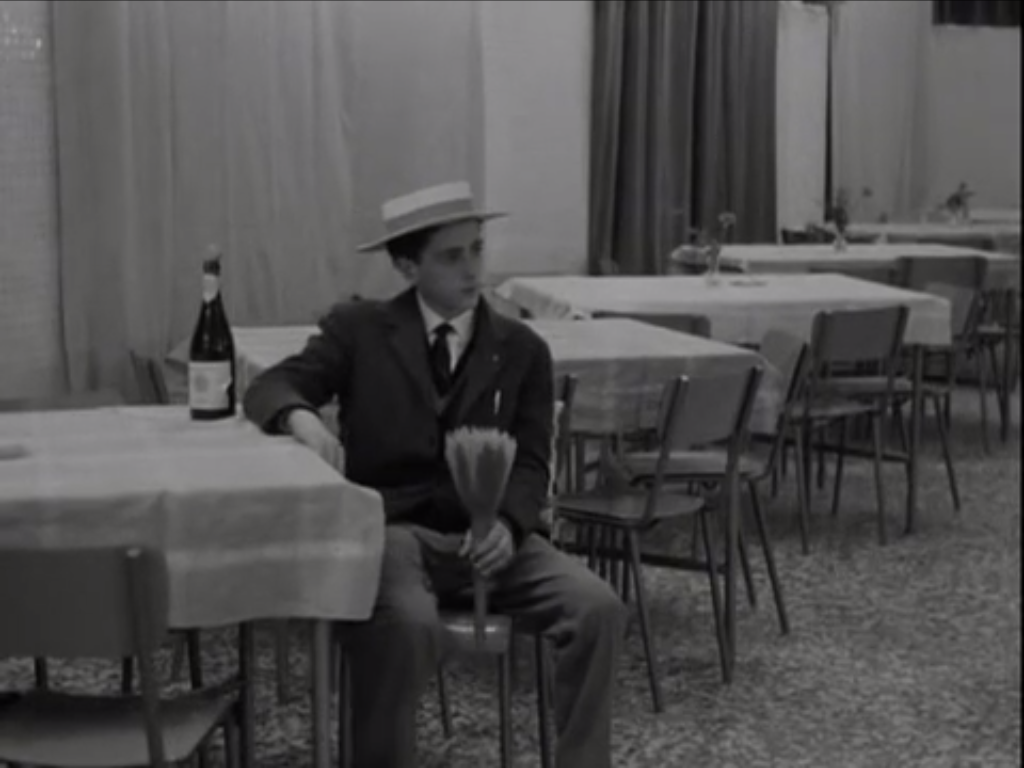
Reality depends on how you look at it (after all, what is reality?) and Olmi's aggressively common, poignant depictions can veer into Kafkaesque torture while remaining sweet and perilously hopeful. It's not a surprise then, that that perilously depressing (even potentially suicidal) day, New Year’s Eve, showcases a scene so touching, that you find yourself in a place that moves beyond bittersweet. It's more agonizingly human. And then, just lovely.

Screen shot 2013-12-31 at 8.07.28 PM

After Panseri has conformed at his job (or is understanding that's what his  future holds), it’s at at, at first, empy, cold New Year’s Eve party that the tenative teen will finally let loose, surrounded by the dreary commonality of his future. Though he hopes to meet the pretty woman he’s smitten with, he instead enters this rather sterile, flavorless party, and talks to an older couple at a nearby table. As the evening opens up and revelers have downed extra liquids, the shy young man unleashes a joy, perhaps a desperate joy, dancing, smiling, resigned to his sure night of singledom.

Screen shot 2013-12-31 at 8.09.28 PM

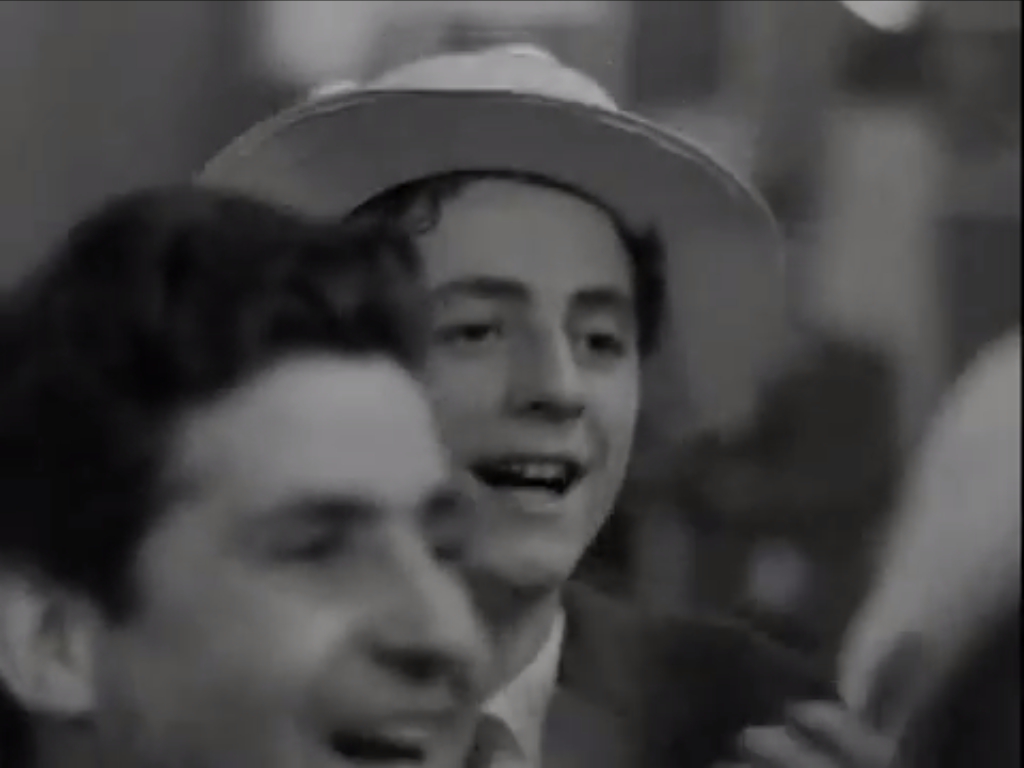
The fact that he's momentarily happy, widening his usual placid face with toothy grins and jumping in a circle with other party-goers, makes the sequence all the more heartbreaking. Especially since the New Year brings a new position, as well as a potentially endless life — he will be staring at the back of his co-worker's head for the rest of the year. I always hope his year will be better. It probably won't, but perhaps his life will. And he should always dance. Especially when the girl doesn't show up.

Happy New Year.

Screen shot 2013-12-31 at 8.10.38 PM

Love, Sex, Death and Christmas

Tom-Cruise-plays-Dr.-William-Harford-in-Warner-Bros-drama-movie-Eyes-Wide-Shut-1999-90

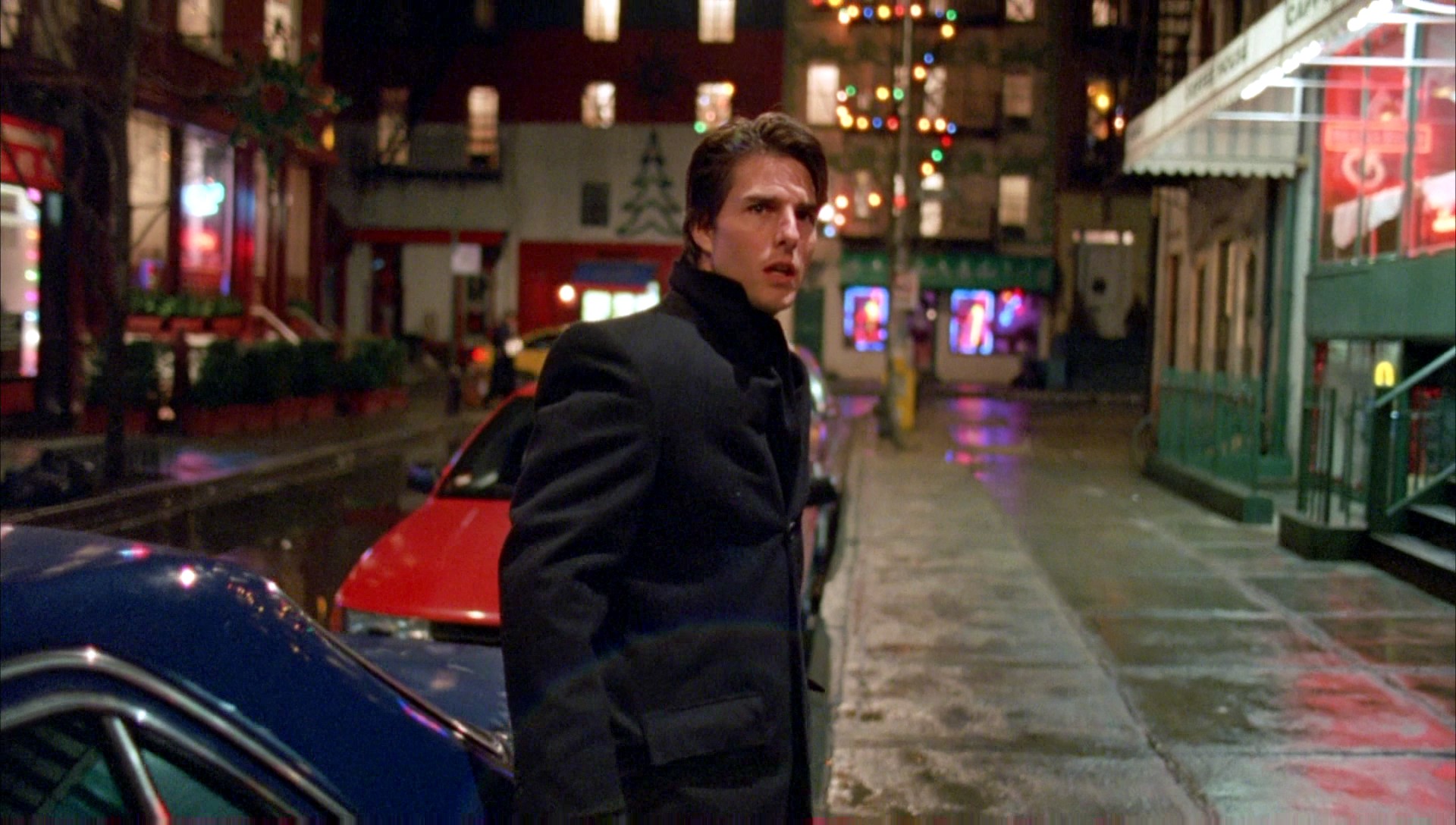
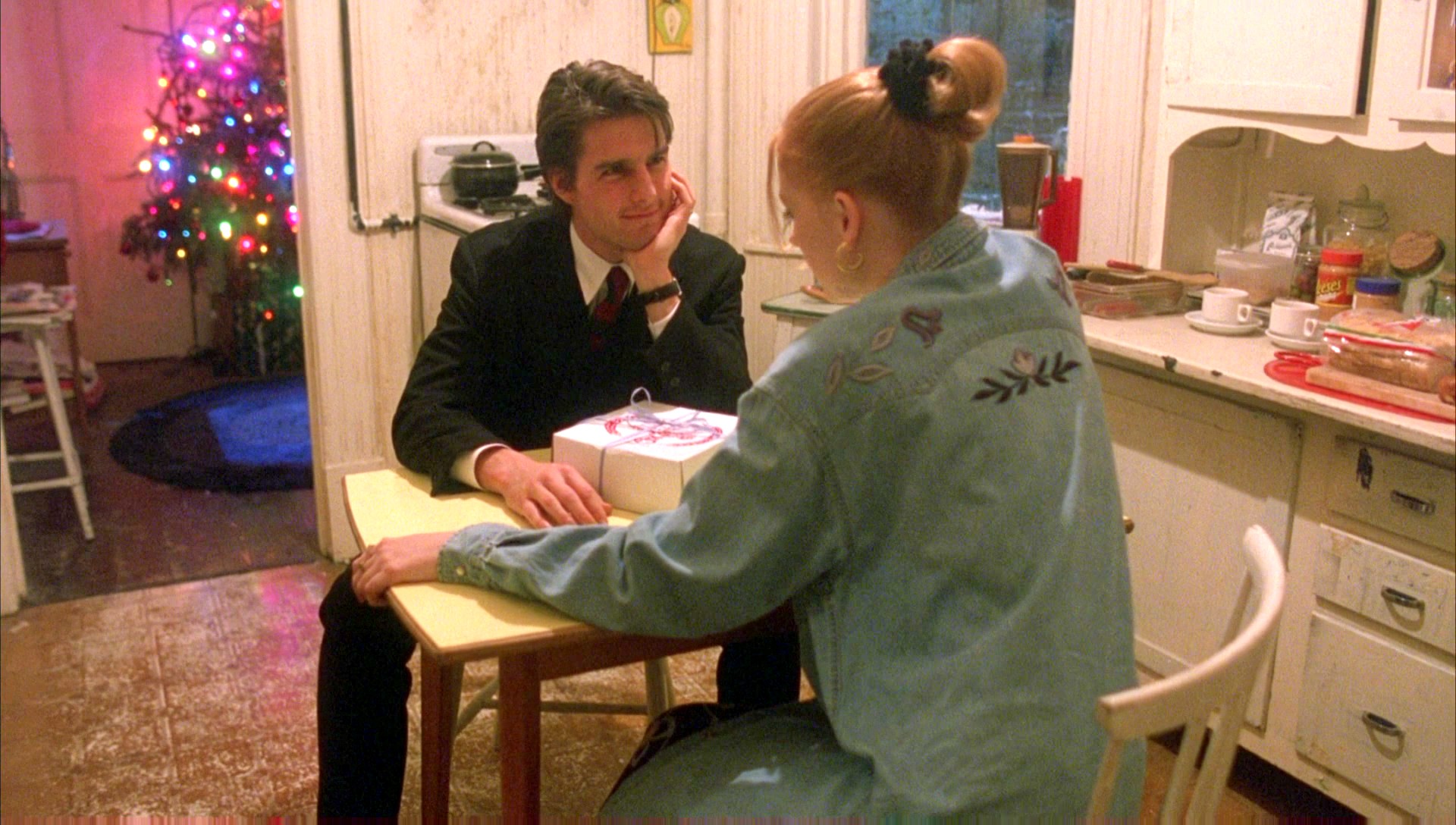
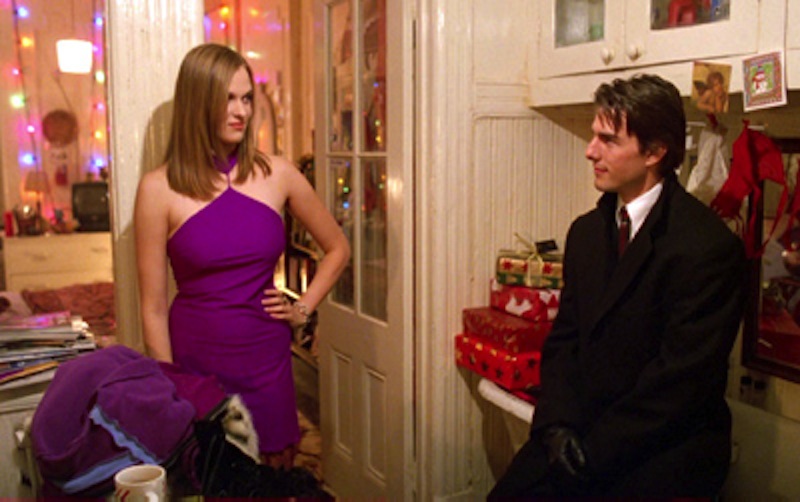
Another Christmas, another posting of one of my favorite holiday movies — Stanley Kubrick's Eyes Wide Shut starring Nicole Kidman and that bizarre force — Tom Cruise. A movie star and a fascinating, sometimes, brilliant actor, Cruise is an actor who thinks he's sincere. And he is. But is he? You really believe that he thinks he's sincere but… there's something off. Something he doesn't seem to understand (or perhaps he does?), which makes him extra compelling. He's charismatic. Charismatitcally creepy. And Stanley Kubrick understood this — all of that mega star weirdo power hiding in plain sight. He might be crazy. He might be a tedious square. Whatever he is, Kubrick and company are dragging out the fubar. All that insanity-inducing yuletide anxiety (and then some) is so perfectly conveyed in Eyes Wide Shut via his leading man that  Cruise is Christmas stress — pretty, festive, overly serious, overly grinning, and often hilariously, creepily Christmassy. 

Fhd999EWS_Tom_Cruise_010

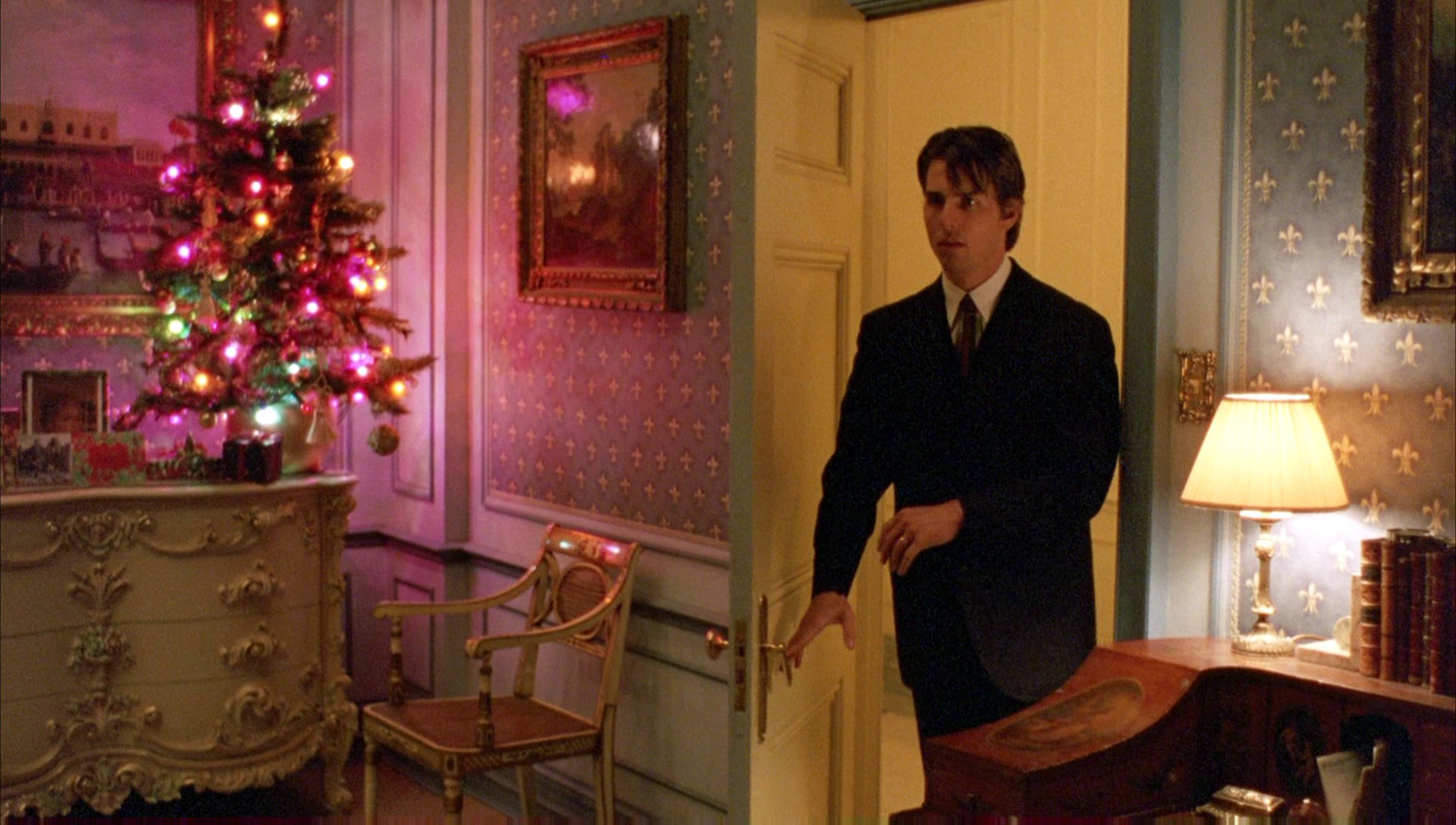
And then, scared. Terrified, even, delivering Kubrick's social, sexual, surrealist themes within the director's gorgeous holiday milieu. Bathed in Christmas style, Eyes Wide Shut uses Christmas lights, background Christmas trees and traditional colors of red and green with almost perverse relentlessness. With that, I'm dipping into my archives for my annual posting of one of  Kubrick's most underrated pictures –  a film that in terms of love, sex, death, fear and träume remains timeless. And again, it's a perfect Christmas movie…

6a00d83451cb7469e2014e5fb6907f970c-400wi

In  Kubrick's cinematic universe, reality, dreams, order and insanity progress on distinct, intersecting planes. Whether he was depicting an absurd, chillingly real war room in Dr. Strangelove, the disturbing but oddly sexy ultra violence of an Orwellian future in A Clockwork Orange, the siren call of insanity in The Shining, the hyper fantastical yet authentic Vietnam War in Full Metal Jacket, or the irony and powerlessness among such transcendent opulence in Barry Lyndon, life was a surreal work in progress – an ambiguous joke that veered from hilarious to sexy to terrifying, sometimes within seconds. Attempting to understand order, or how any system designed to make our universe more rational or safe seemed fruitless. Think Sterling Hayden approaching such a predicament at the end of Kubrick's The Killing. He watches his life literally fly away on an airport tarmac and bitterly spits one of cinema’s greatest final lines: “Eh, what’s the difference?”

Eyes-wide-shut-2-1024

Which brings me to the final line of Kubrick’s frequently misunderstood Eyes Wide Shut in which Nicole Kidman states rather flatly, “Fuck” — as in, that’s the answer, that’s what we need to do. A movie I’ve defended since its release, it’s a picture that deserves closer inspection and a worthy finale for the enigmatic auteur.

Fhd999EWS_Tom_Cruise_020

The controversial movie (some thought it silly, some, un-erotic) Eyes Wide Shut found the director once again studying the perplexing nature of dreams and reality, this time exploring them in a more personal and private arena: sexuality. As he did with Lolita, Kubrick created more than a film about sexual desire; he created a film about bitter romance, troublesome marital bonds, societal contradictions and, significantly, the fear of death.

An updating of the 1927 Traumnovelle (Dream Novel) by the sardonic Austrian writer Arthur Schnitzler, the picture remains an unsettling blend of antiquated garishness and modern transgression — an alternate sexual universe haunted by ghouls of the past, present and future.

Ews6

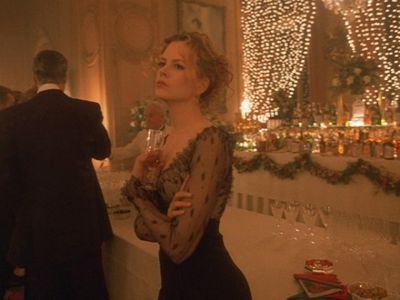
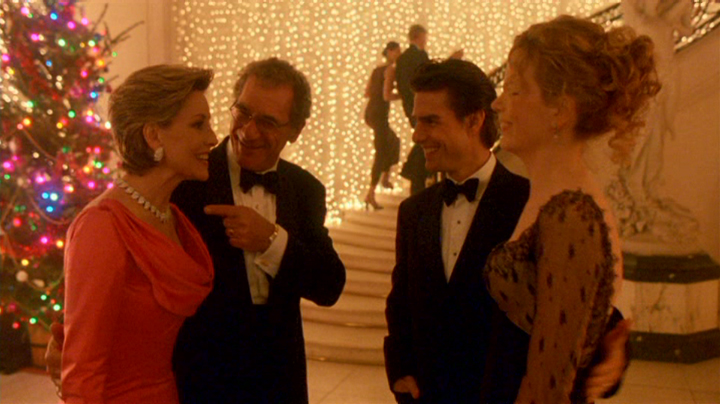
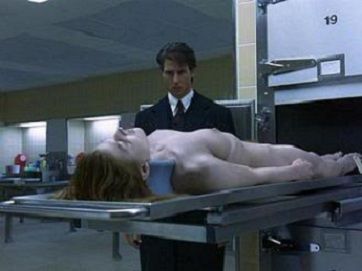
In this universe “live” the healthy, handsome walking dead – Dr. Bill Harford  Cruise) and his wife, Alice (a slinky, wonderfully creepy  Kidman), a glamorous, rich couple who appear the picture of storybook perfection. But like most supposed perfection, there are cracks in that portrait, and in their case, it’s the usual: they want to screw other people (or at least they think they do). At a sumptuous party given by Bill's obscenely wealthy friend Victor (Sydney Pollack), Bill almost strays upstairs with two models while Alice flirts with a strange Hungarian man who looks like one of the cadaverous party-goers from The Shining. The next evening, in a fit of jealousy over Bill's near indiscretion (he ended up contending with a beautiful, naked drug overdose instead of a debauched roll in the hay — though the way her body sits in this shot is disturbingly erotic), Alice confesses that she’s had thoughts of cheating and, even worse, reveals that if things had been different, she would have thrown her entire life away for one flight of sexual fancy.

Ews_xmas_ (2)

Unmasking something that should remain one of those deep, dark secrets you never confess to your significant other, Alice deftly rattles Bill's perception of her fidelity and the strength of their marriage in a speech that makes his mind spin out of control (Kidman's performance here is superb). After this confession, Bill is abruptly called away to confirm the death of a patient and keeping in tune with the love/death/sex of the picture, the daughter of the deceased makes a pass at him. The grief stricken but, considering the circumstances, kinky gesture aids in Bill’s decision to not immediately return home. Instead, he wanders the streets of New York and embarks on a sequence of actions that, though not as outwardly comic, somewhat resemble those in the Scorsese movie After Hours: He discovers a surreal sexual underworld that he’s both attracted to and repelled by.

Fhd999EWS_Leelee_Sobieski_004

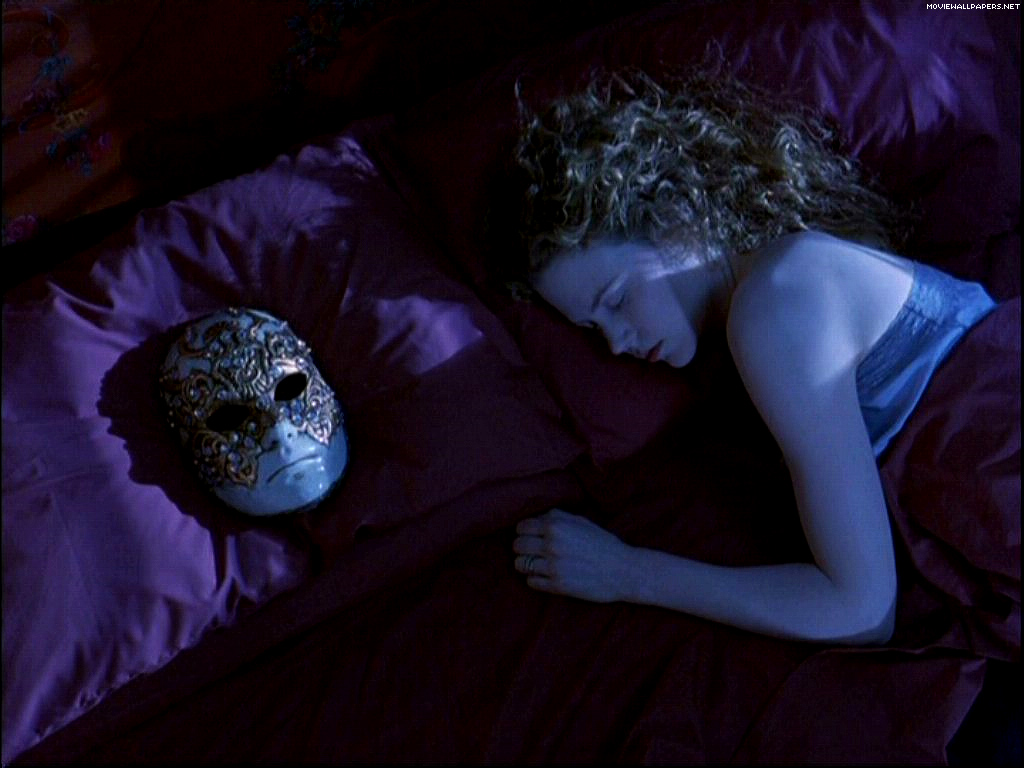
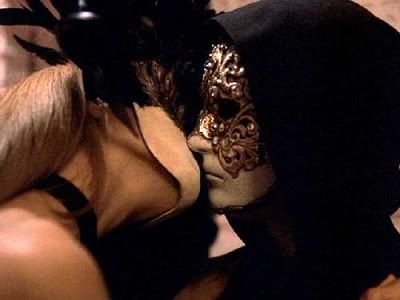
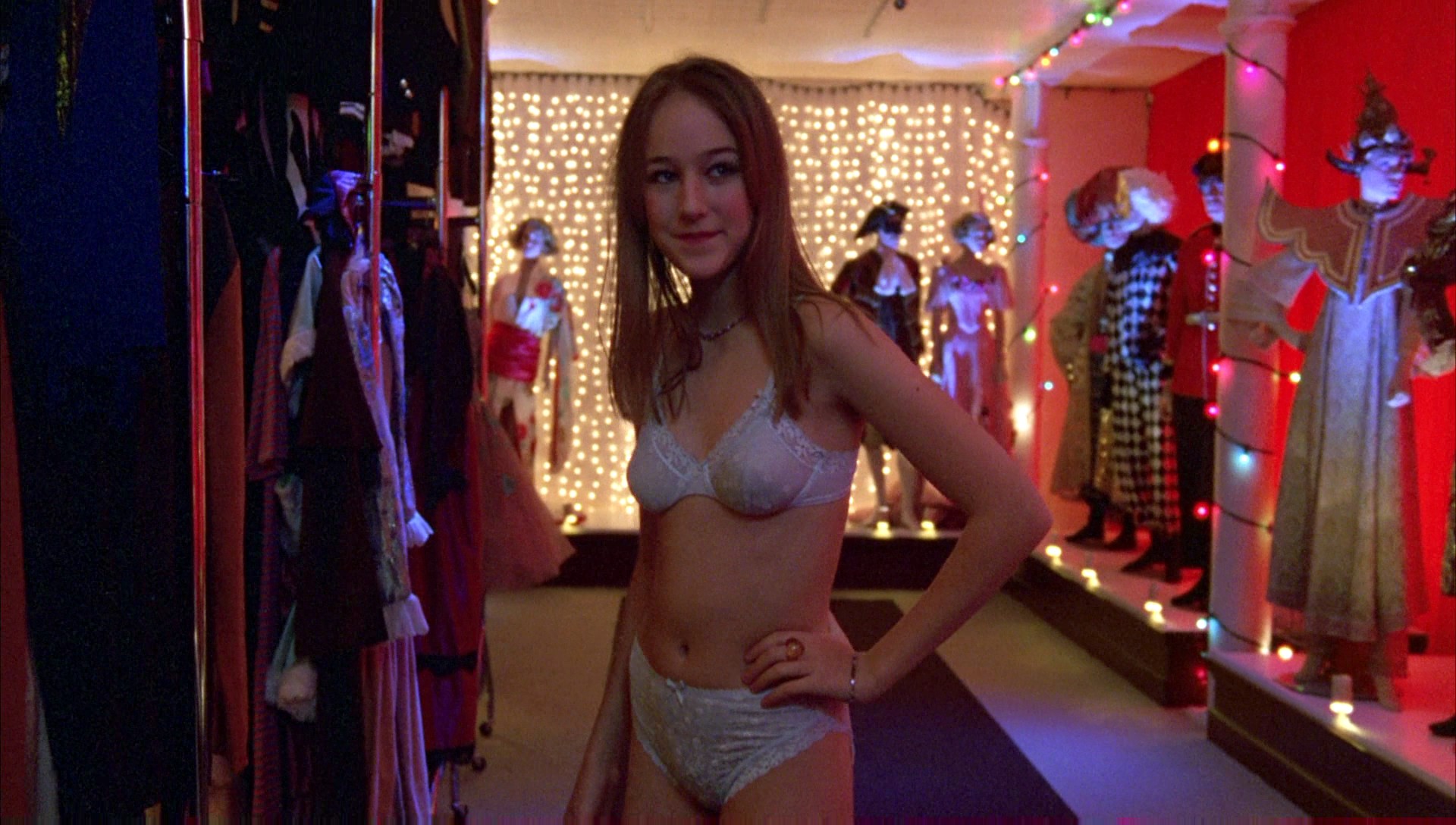
A prostitute, a piano player, a peculiar costume-store owner and his Lolita-esque 14-year-old daughter lead Bill to the film's infamous ritualistic orgy sequence, during which participants are cloaked and masked, and naked women are used as sacrificial sex lambs. The gothic, terrifying yet titillating feel of this sequence walks a fine line between horror and parody and true to Kubrick’s genius, manages to cross into both camps. The magnificent, exacting camera work and unrelenting music compel us to look, no matter what happens, and though I was actually a little scared the first time I saw this moment, I found myself highly amused, laughing even. If ever a person was out of place in a Bohemian Grove-like orgy, it is Tom Cruise’s Dr. Bill. And yet, I was absolutely hypnotized, watching these moments like a waking dream and investing it with multiple meanings. What the hell is going on here besides a bunch of silly old rich men getting their jollies with beautifully breasted, long legged Helmut Newton models? And further, what do all of Bill’s adventures mean? Are Bill's encounters simply nightmares that will damage his marriage beyond repair, or are they mere titillating fantasy — fodder for a closer relationship and better sex with his spouse?

Eyes-wide-shut-prostitute-Tom-Cruise

Well, I can’t answer that. Given the picture's ominous tone, however, there is something definitely rotten within its slinky, Christmas-lit loveliness. Like the impeccable environment of The Shining, the aura of Eyes Wide Shut is one of beauty ready to be defiled, sexuality ready to be slaughtered, lovely exteriors that reek of formaldehyde. The pall that hangs over this picture is fear: fear of the unknown; fear of yourself or of others; and fear that if sex can lead to freedom, it can just as easily lead to death.

eyeswideshutbody-1.jpg picture by BrandoBardot

In fact, the picture can be viewed as a commentary on sexual attitudes in the last few decades — a time when meaningless indiscretions can lead to horrifying blood-test results. It is no surprise, then, that Bill is a doctor and that throughout the film, he flashes his physician's ID as a police detective would his badge. "I'm a doctor," he constantly says, for both reassurance and intimidation.

Fhd999EWS_Tom_Cruise_011

In a profession that requires intimate investigation of flesh that may well be on its way to the morgue, sex is serious. These unsettling references to AIDS, necrophilia and forbidden sex (not to mention Kubrick's own death upon bringing the film to completion, une petite mort of sorts) permeate the picture like one giant prick tease. In today's world, sex is still there for the taking, but at what cost and for what gain? Kubrick's frustrating, brilliant coda neither answers nor ignores its own questions. Rather, it leaves us in a mysterious, contradictory mishmash of dream and reality, where not only are our eyes wide shut, but our legs are too.

Fhd999EWS_Tom_Cruise_006

Merry Christmas.

Walter Wanger: My Life with Cleopatra

Elizabeth-Taylor-in-Cleopatra-elizabeth-taylor-7280058-304-380_large

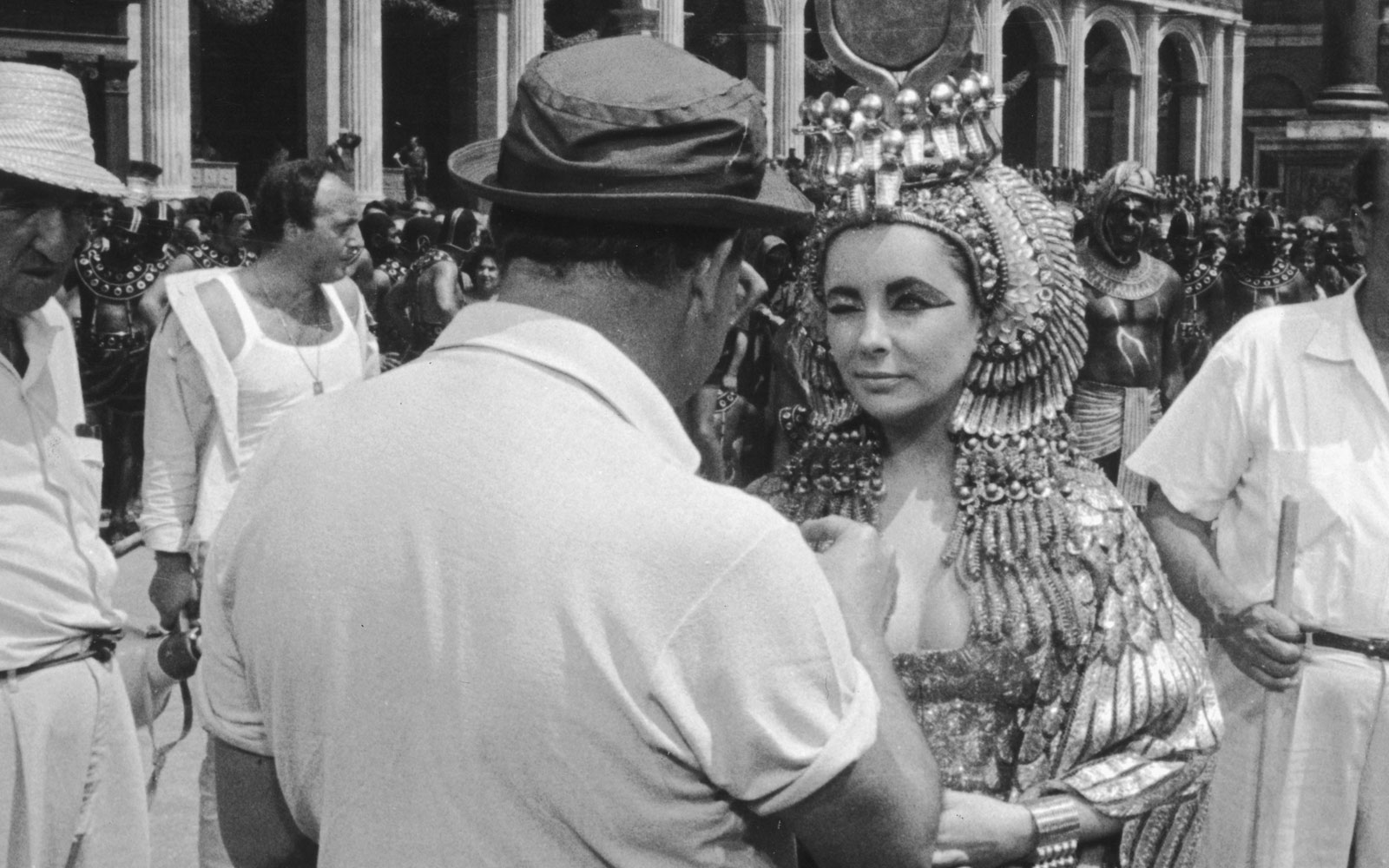
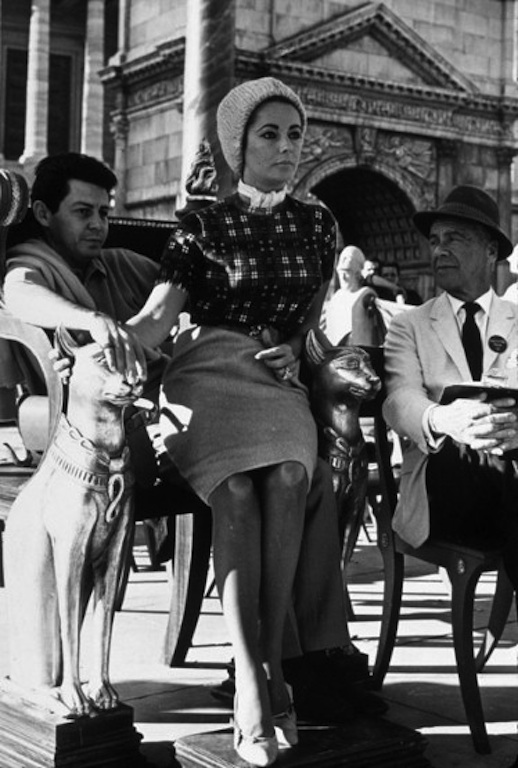
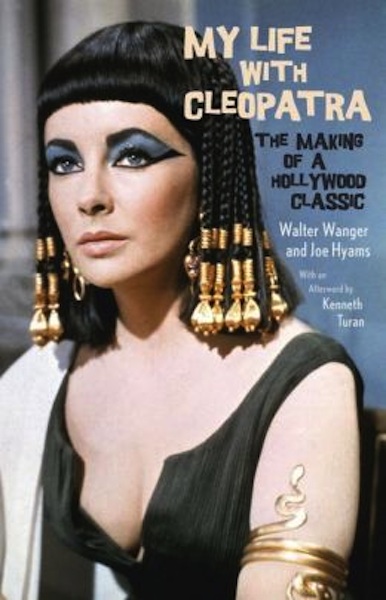
This year marks the 50th anniversary of Joseph L. Mankiewicz's's 1963 Cleopatra, a grand spectacle beset with production hell, hirings, firings, budgetary insanity and one of the most legendary affairs in Hollywood history. Re-released to coincide with Cleopatra's 50th is the book "My Life with Cleopatra: The Making of a Hollywood Classic" by Cleopatra producer Walter Wanger. Wanger's journals offer some intriguing inside information, but digging into the producer's own life and scandal proved extra fascinating. I discuss at The Los Angeles Review of Books. Here is my piece. Originally excerpted but read it all here.
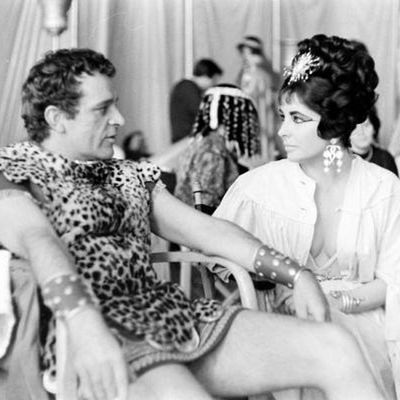
Liz and Dick on set

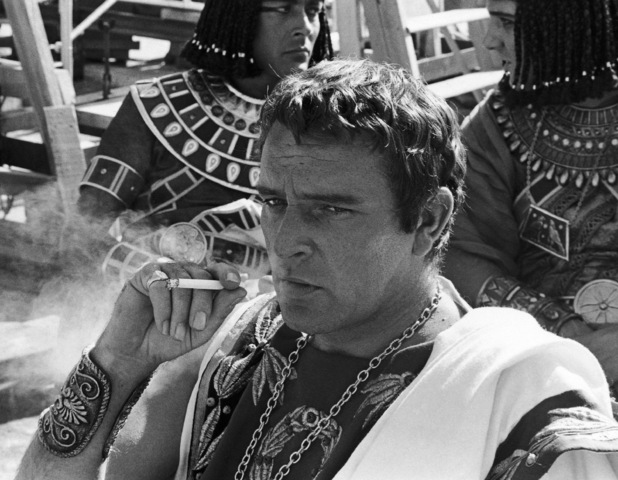
Cleopatra producer Walter Wanger had surely seen it all. Having lived and worked through the silents, the talkies, and Todd-AO, the movie veteran understood the art and commerce of Hollywood, the deals and decadence. The eminently erudite and sophisticated producer also understood the infidelities — the groin-crushing infidelities — and with a cinematic vengeance, he shot a man for it. So it’s quietly startling to read, in his published production diary, My Life with Cleopatra, this miniature entry regarding Eddie Fisher’s infamous betrayal by wife Elizabeth Taylor and her new lover Richard Burton. It’s darkly amusing, and almost winkingly cryptic: 

Cleopatra-2

"March 19, 1962

"Eddie Fisher to New York.

"I think it is ill-advised to leave now. He didn’t ask me for advice, however, which is just as well. I was no expert in solving a similar problem myself."

Indeed, he was not. Wanger went to the slammer for the felonious confrontation with his wife’s lover. There was no “we need to talk about this, honey”; no higher ground or any of that path-of-least-resistance business. Simply put: he shot his wife’s paramour in the crotch. But with prison comes wisdom. And, certainly, with Elizabeth Taylor comes wisdom.
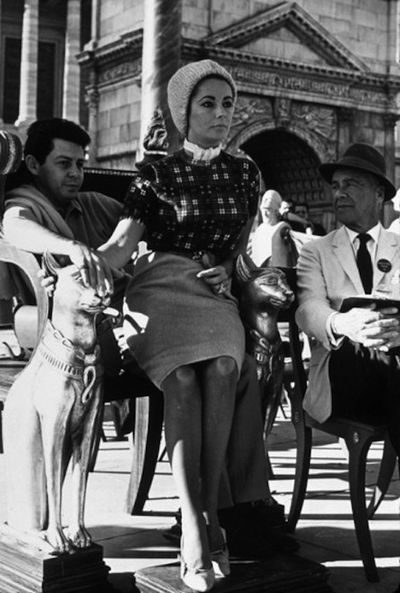
Fisher liz cleo

Had heartsick crooner Fisher actually sought advice from educated ex-con Wanger, perhaps he would have learned something. Or, perhaps he would have gotten too many ideas. In any case, Eddie Fisher did not seek counsel with Walter Wanger before exiting the Cleopatra set, so distraught over his violet-eyed wife lusting for that ruggedly handsome Welshman-in-the-grass that, according to Elizabeth Taylor (via Vanity Fair contributing editors Sam Kashner and Nancy Schoenberger), he put a gun to her head. “I’m not going to kill you. You’re too beautiful,” he told the woman who’d just survived a life-threatening and emergency tracheotomy the year prior. 
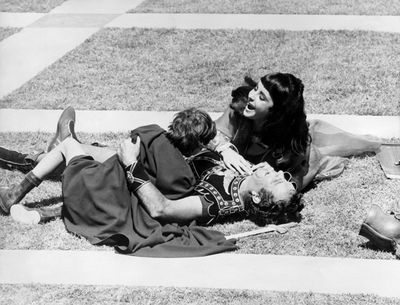
Burton Taylor play

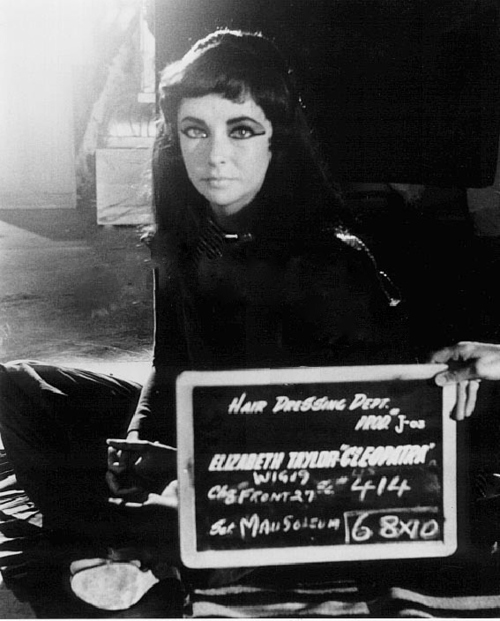
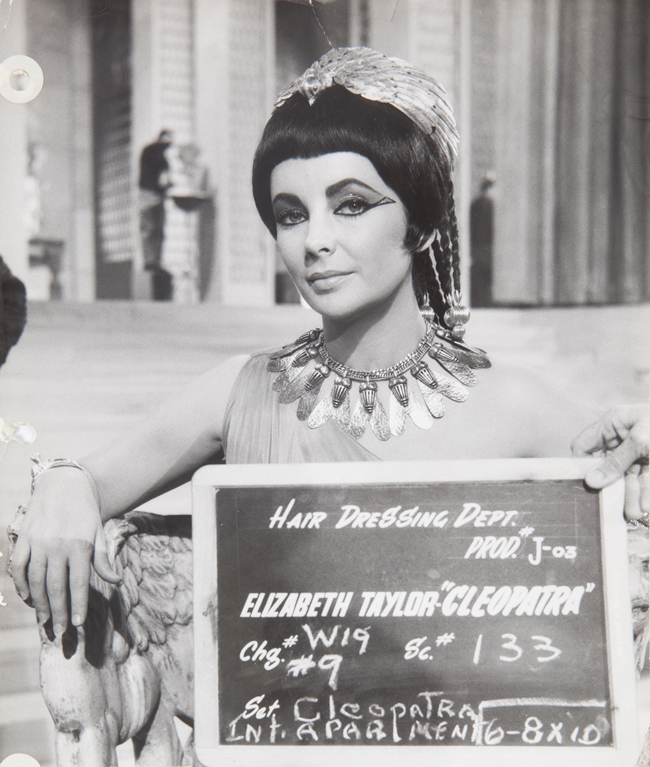
Who knows what might have happened had Eddie Fisher shot Elizabeth Taylor? The bullet would have connected, for Liz was notoriously catastrophe-prone, but something would have saved her, for she was also freakishly resilient. A jewel from one of her glittering headdresses or a flinty sequin from her customized Cleo eye-makeup would have deflected the fell bullet. Instead of spending a couple days in the morgue, Liz would have returned to the hospital after a months-long vigil while Fischer anguished darkly in the slammer. Wanger would have had no choice but to endure the production delays as he had all the others, and Taylor would have returned to the set alive and refreshed. Wonderful. Except for the hair department. They’d have to alter all of her wigs to cover that damn bullet wound.
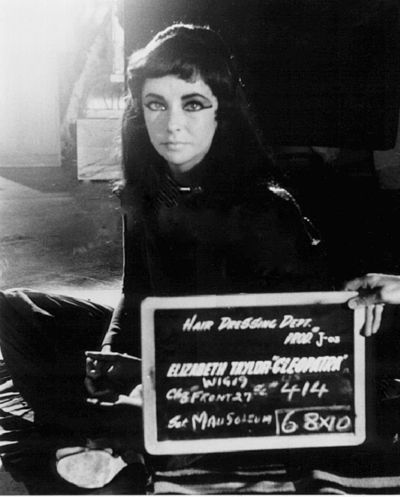
Liz Taylor Cleo Hair

But Fisher’s fresh hurt must have rustled up some past tumult within Wanger — much more than that skinny, enigmatic 1962 diary entry suggests. One can only speculate how much Wanger knew of Fisher’s rage, but he surely reflected on l’affair — particularly when considering Liz’s lover, Burton. Fisher reportedly bought a gun just for Burton, whom he dreamt of shooting (I can’t help but think of Fisher humming his own hit “I’m Walking Behind You” in his sleepless fantasy murder scenarios), but, thankfully, never fired a bullet. 

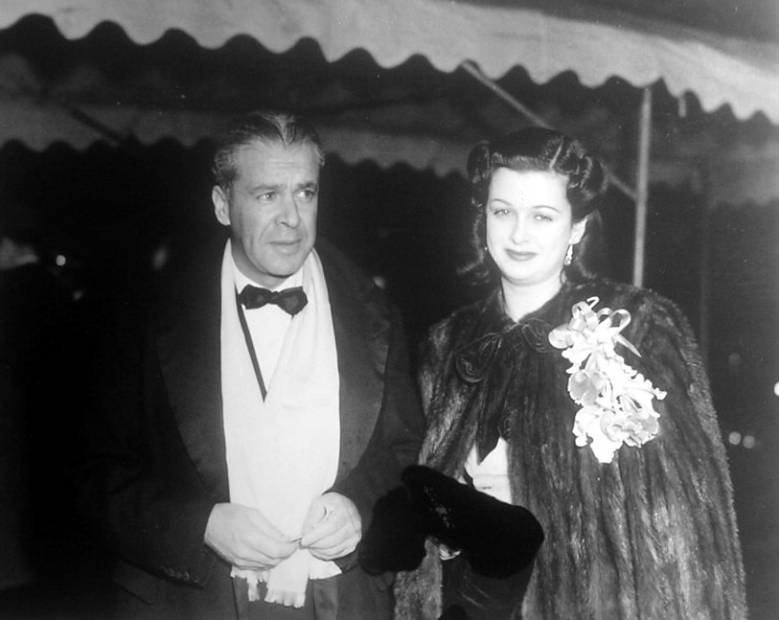
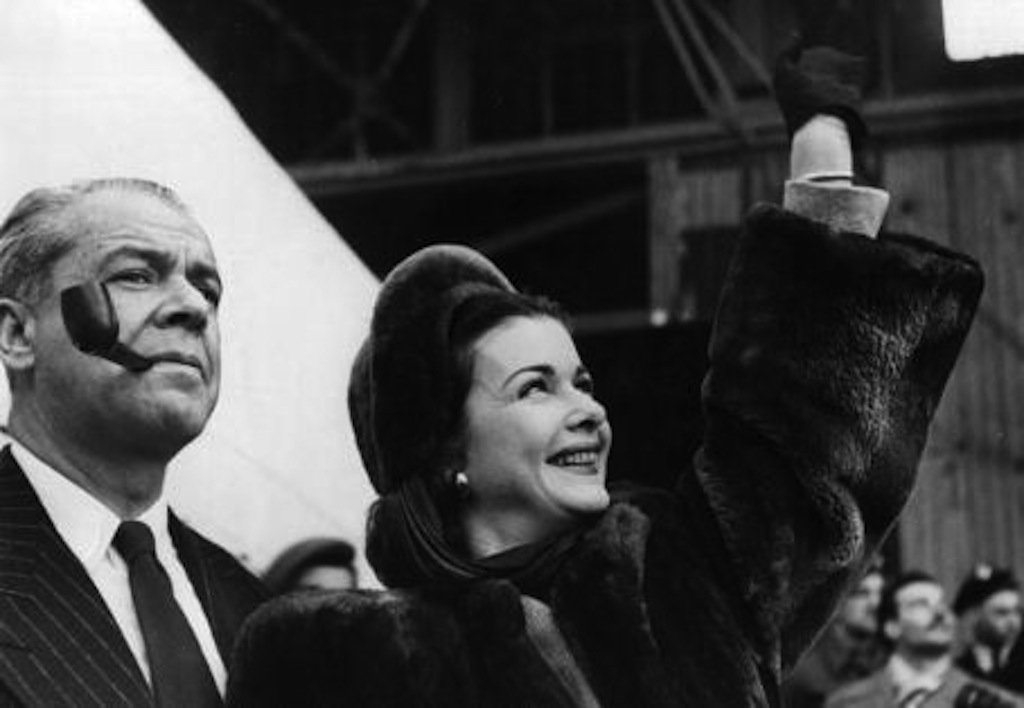
Walter Wanger with wife Joan Bennett

Walter Wanger was a different kind of man. When in 1951 he found himself in a similar predicament, the pipe-smoking producer didn’t pack his bags and run to New York. He packed a heater and headed for the MCA parking lot. 

Wanger barely discusses his own scandal (of course he doesn’t) in My Life With Cleopatra (co-written with Hollywood columnist and author Joe Hyams), his making-of diaries dating from the film’s beginning in 1958 to his epilogue dated March 7, 1963:

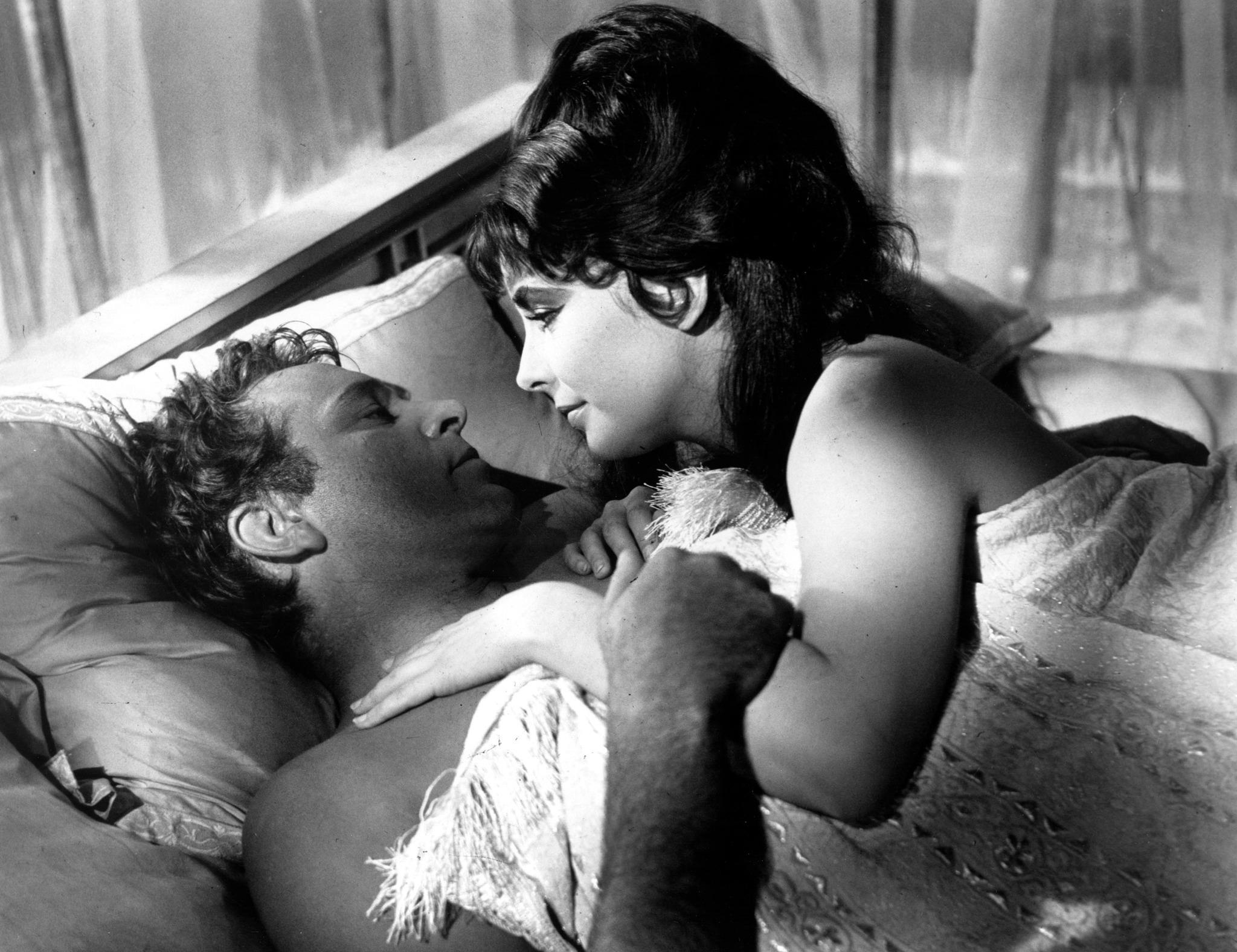
Burton Taylor CLEO

"It would be pleasant to say that the trials and tribulations which characterized the making of Cleopatra ended with that day in Egypt eight months ago when I made my farewell speech. It would also be pleasant to say that the pleasures of fame and fortune made all our sufferings worth while and, that in the true Hollywood tradition, we lived happily thereafter. The truth is something else again." 

The truth, Mr. Wanger, the truth. Whatever that means is questionable, especially in regard to something as chaotic as Cleopatra. Knowing more about the man, you get the feeling his past dramas pale when dealing with the madness of Cleopatra, a fiasco that famously cost, in some estimates, up to $44 million and is considered, adjusted for inflation, the most expensive movie ever made. My Life with Cleopatra, first excerpted in The Saturday Evening Post two months before the movie’s opening in 1963, was a fascinating move on Wanger’s part.

2b0b7d388cb0acab5d67b2d86f768edf

Yes, publicists Jack Brodsky and Nathan Weiss unleashed the divulging Cleopatra Papers: A Private Correspondence in the same year, but Wanger was big stuff. What working producer would write a tell-all about a major production his name was still attached to? Executives were shocked, the public was insatiable for Liz and Dick, and Wanger needed some good publicity. And yet, even as Wanger spills secrets and names names while detailing the exhausting production and its budget-bleeding stresses, these aren’t soul-baring journals of a man entering the final years of his life. The diary is, in part, a face-saving account: a glimpse into the inner workings of production to disconcert studio executives; an exposé that was a first of its kind. Wanger knew he might never eat lunch in this town again and was up for the gamble. His legacy and reputation were more important. 
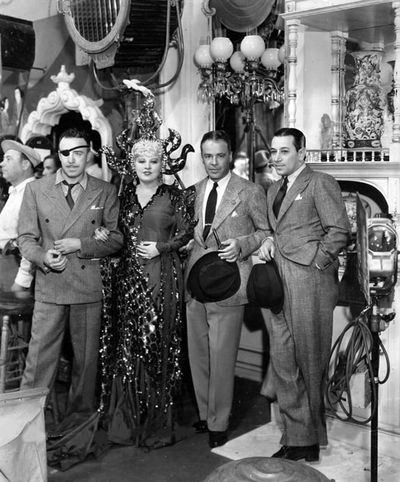
Walsh-west-wanger-raft

And Wanger deserves some respect. Cleopatra was a throwback, a movie to reclaim the glory of Wanger’s opulent “orientalist” spectacles from the ’20s and ’30s. Nearly four decades earlier, the young producer was prescient enough to bring a project called The Sheik to Paramount vice president Jesse L. Lasky, making Rudolph Valentino a sensation and the vogue of exotic spectacle a phenomenon in 1921. Based on his accomplishment, the 69-year-old understandably desired more credit, veneration, and, of course, more money. My Life with Cleopatra underscores his efforts in sometimes brief, sometimes extensive detail penned by a man sorely disappointed and burned by studio executives, the men “who made my job as a producer of the picture an obstacle race.”

“I am bitter indeed,” Wanger wrote,

"about what I consider to be their bungling indifference. In retrospect, however, I can say that I understand that they were operating, for the most part, out of insecurity and fear. They were desperate, nervous men, trying to protect the studio from further losses, and Cleopatra soon became their scapegoat."

My Life With Cleo

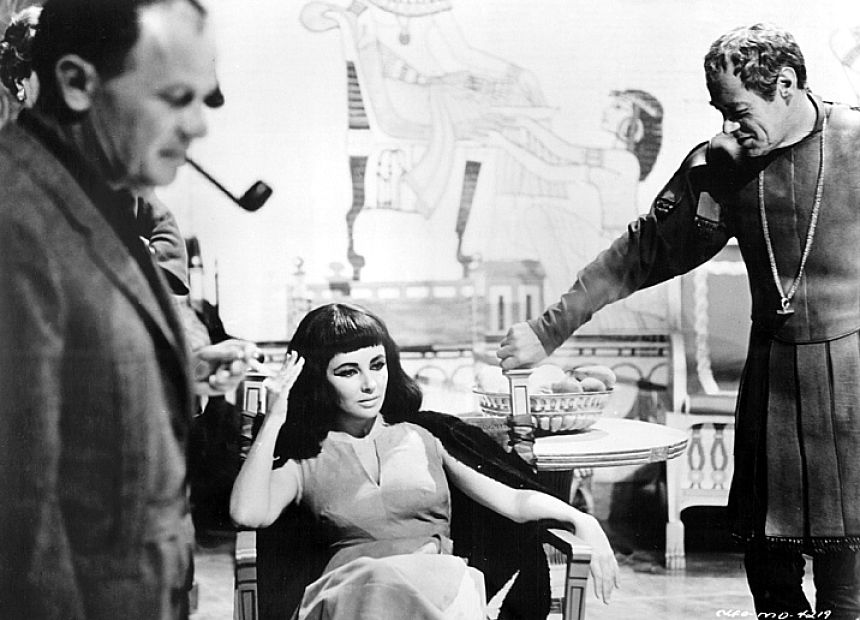
In basic, sometimes writerly style, well suited for popular consumption, Wanger recounts his then-recent history (the book was published when the movie was released) concerning a picture that switched directors (Rouben Mamoulian to the tragically overworked Joseph L. Mankiewicz), switched locations (London to Rome), switched Caesars and Antonys (Peter Finch to Rex Harrison; Stephen Boyd to Richard Burton) and, in the end, switched Fox presidents (Spyros Skouras to Darryl F. Zanuck). Insider-ish and dishy enough to cover Cleo essentials for both the casuals and the obsessives, the memoir of the nightmarish production and its famous affair (Liz was accused of the deliciously worded “erotic vagrancy”) makesCleopatra ever-enthralling 50 years later. A gloriously restored Cleopatra showed this year at Cannes with a Blu-ray to follow, and indeed, this forever fascination is the very reason Wanger’s diary has been dusted off and put back in print (with a new afterword by Kenneth Turan). The backstory has always been more interesting than the movie itself, and Wanger capitalizes on its glamorously morbid curiosities. He claimed to be proud of the picture, but he understood what the public wanted: scandal.

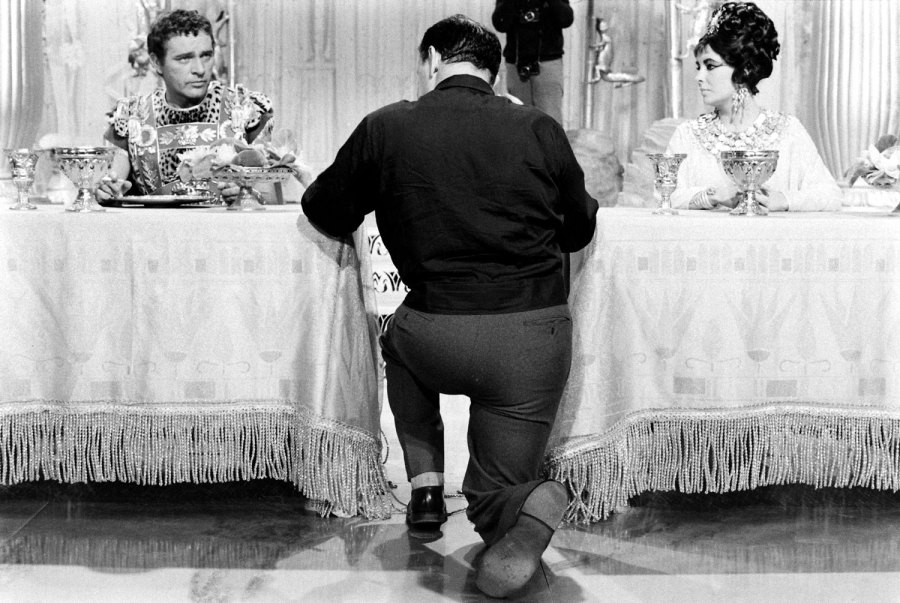
Movies-richard-burton-cleopatra-set

Though the book reads relatively tame by today’s confessional standards, there are plenty of intriguing, page-turning smaller details that ring wonderfully bizarre. Wanger’s accounts of Roddy McDowall’s broken tooth (the Pope’s personal dentist is called to the set) or the night Taylor’s dress ignited after she stepped on a book of matches at a party (who else spontaneously combusts after stepping on a book of matches?) or anything to do with elephants (circus owners sued production for $100,000 based on an elephant supply and threw in a slander claim for daring to call their pachyderms “wild”) prove more surrealistically entertaining than the endless budget issues or how Wanger felt about the travails of poor Joseph L. Mankiewicz (One wishes world-class wit Mankiewicz had published his own diary.) Whatever his intention, Wanger does deliver something powerful: battle fatigue by proxy. He makes you sick and tired of the thing. The bloated production becomes wearisome enough that just reading about the budgetary issues makes a person resentful and scattered. You just want it to end. I felt myself wishing Elizabeth Taylor, bless her, would just stop having so many goddamn problems

Liz-taylor-bert-stern

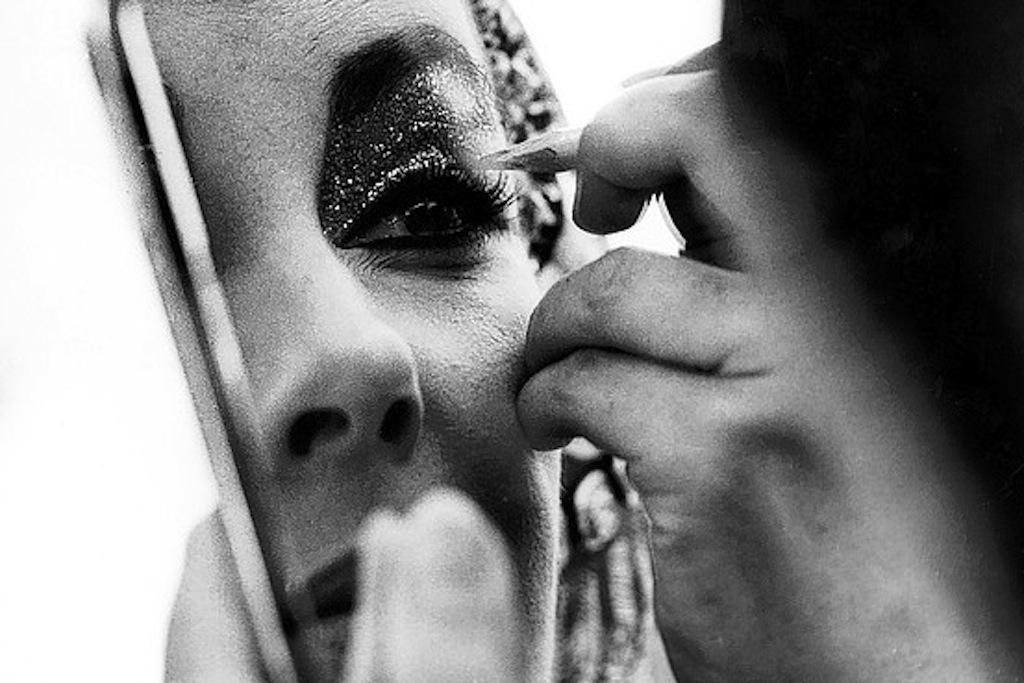
And yet, it was Taylor who saved the picture because of her glamorous preposterousness: in those four years she nearly died, won an Oscar, dumped her husband, incited a world-wide scandal, and made Richard Burton a household name. That sells tickets no matter how turgid the movie. But despite its faults, Cleopatra is, in moments, dazzling, and it eventually became popular and profitable. It also inspired many, including Andy Warhol, who called it “the most influential movie of the ’60s." A new generation of women would ditch their red lipstick in favor of nudes and carefully draw those sultry, smoky Cleopatra eyes before slithering into their skimpy mini dresses. The story may have been bogged down by old fogey studio gloss, but Liz’s look was positively youth-quaking.
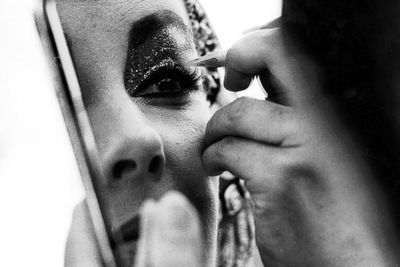
Liz touching up makeup cleo

Survivor Liz reigns triumphant. Cleopatra did not damage her. Wanger is another story. You can’t help but feel for the man, even if you question the veracity of his self-reflection and responsibility in these diaries. How heartbroken was he? What was going on with him, personally? Near the end of the long and laborious production, he writes on June 20, 1962:  

"Haven’t heard a word from the executives in New York or Hollywood since they left here. 

"Although I am off salary and, theoretically, without any real authority I am remaining with the picture and still functioning as producer. 

"I don’t think the executives know what they are doing. Regardless of what they think and do, this is my project."
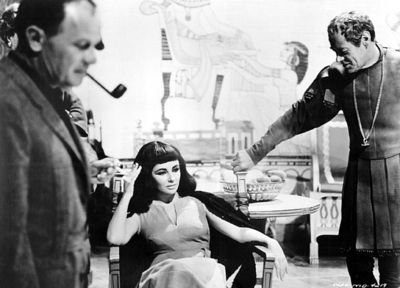
Mankiewicz-taylor-harrison_opt

But by that time, was it? In spirit, yes, but that’s about it. For elucidation, I reached for Matthew Bernstein’s indispensable Walter Wanger: Hollywood Independent, the definitive biography of Wanger and a fascinating look at Hollywood history from the silent era to the confused 1960s. In Bernstein’s book, I read accounts, written or spoken by Wanger, that were more illuminating and eloquent than My Life with Cleopatra.  Where was that Walter Wanger in his own diary?  Obviously My Life With Cleopatra wasn’t going to read like John Cheever’s beautiful, laceratingly honest journals (not many diaries do), or Richard Burton’s charmingly acerbic, intelligent, and frequently moving diaries — the beleaguered producer cannot resist spin. My Life With Cleopatra contains some keen insight and nicely worded observations (“I sometimes feel as though I am living a scene from The Snake Pit. Every time I turn around there are grinning, leering, shouting photographers — the paparazzi. They are everything and everywhere. They are like the cats of Rome, hiding on rafters, hiding under beds, always screaming for a morsel.”) But I’d wished Wanger had penned a more dramatically thought-provoking, forthright tome. Wanger’s life certainly contained drama — melodrama, in fact, and a love triangle that, though less glamorous, was intriguingly darker and more shocking than Eddie, Liz, and Dick.
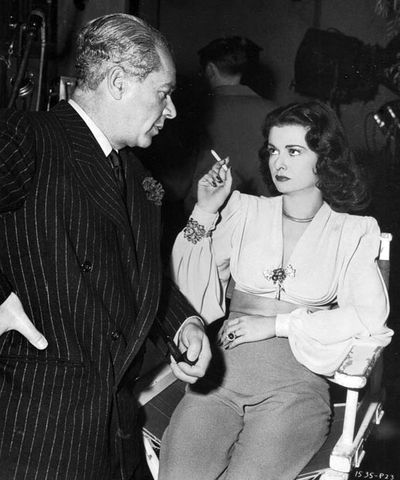
Walter-Wanger-Joan-Bennett-Secret-Beyond-the-Door

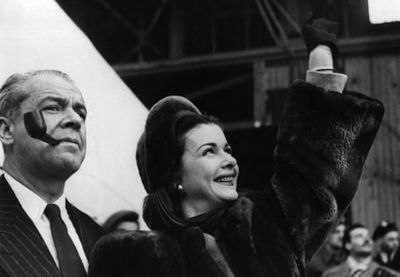
Which leads me back to 1951, Wanger, his wife, and that parking lot. As detailed in Bernstein’s book, 57-year-old Wanger was besieged with career worries, money stress, absurd Red Scare pestering, and the extra-marital wandering, however understandable, of his frequently cheated-upon wife, the talented, versatile, smart and sexy actress Joan Bennett, who’d played everything from saucy Fritz Lang femme fatales to a ’50s freeze-dried Douglas Sirk housewife.
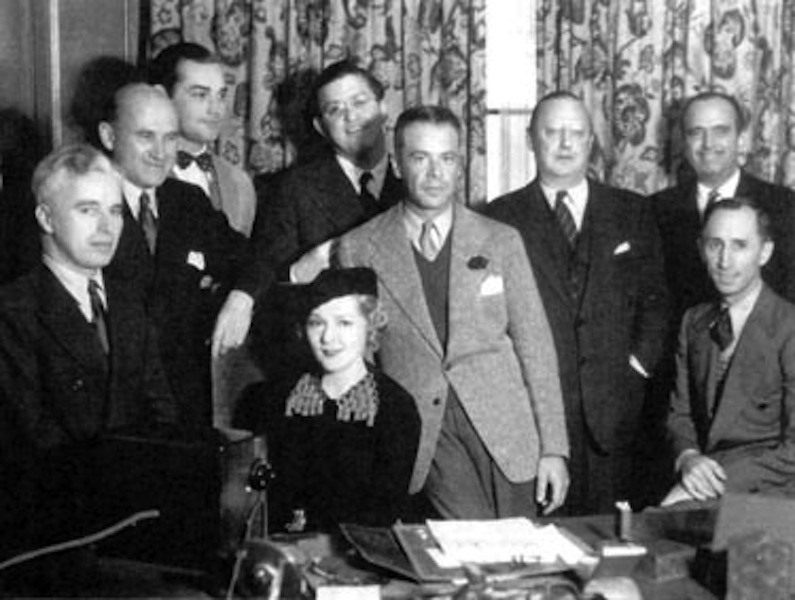
Ua-group

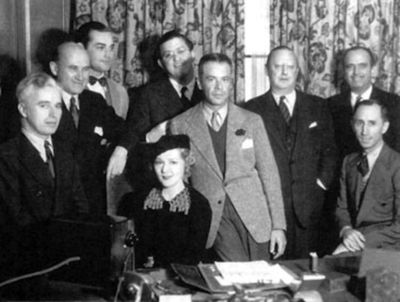
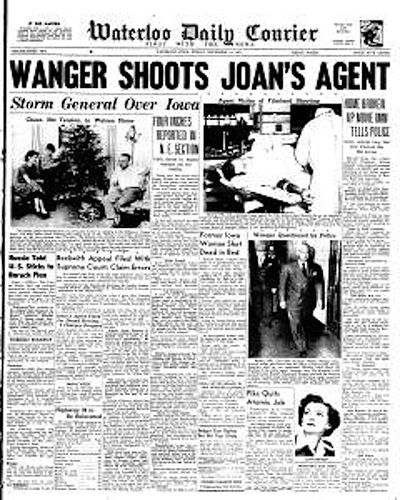
Wanger, the independent who worked at every major Hollywood studio, produced, among many, movies like The CocoanutsQueen ChristinaStagecoachForeign CorrespondentScarlet Street, and up to that point, portentously, The Reckless Moment; he was an intellectual, an educated man intent on making movies a more respectable art form. And yet he found himself committing a criminal act Eddie Fisher only fantasized about. Suspecting an affair with Bennett’s agent, Jennings Lang, Wanger hired a detective to tail his wife and learned exactly what he feared: she’d been sneaking off for months, even meeting Lang in a flat (which reportedly inspired Billy Wilder’s classic, The Apartment). In a fit of violent jealousy, Wanger drove to the MCA parking lot where Lang and Bennett were chatting outside her car. Wanger approached; argued with Lang, shot twice, the second bullet hitting Lang where it counted most: in the groin. The irate husband was swiftly caught; conveniently and ludicrously, the Beverly Hills Police Station was just across the street. Upon arrest, Wanger, possessed with a furious sensibility, stated: “I’ve just shot the son-of-a-bitch who tried to break up my home.”
Wanger shoots joans agent

What followed was counsel provided by Jerry Giesler (who else but the man who represented Errol Flynn, Charlie Chaplin, Bugsy Siegel, and Lana Turner?), studio heads from Darryl Zanuck to Samuel Goldwyn contributing to his legal costs, a not guilty by reason of temporary insanity plea, and a four-month stint at Castaic Honor Farm Prison. As related in Bernstein’s book, Wanger explained his actions to Giesler with an almost poetic reiteration, staring down a very real prison sentence (which he never thought he’d serve — it was a forgivable crime of passion, he thought) while maintaining his dramatic panache. In words that read like Humbert Humbert’s repetitive “because you took advantage” letter to Clare Quilty, Wanger mournfully avowed:  

Wangergiesler

"I am 57 years old and I loved my wife and family and had no desire for any change — I was not only jealous of Joan I was jealous of our way of life […] I was jealous of Joan’s forthrightness — I was jealous of her good judgment […] I was jealous of the time we had with the family — I was jealous of our liking or disliking a book or play and our reasons – of her interest in my clothes and mine in hers — of her perfume (La Rose) and my cologne (Fraser’s) — the way she ran the house, the way she organized — the efficiency of her means of travel — her interest in my work — my interest in her pictures — the discussion over directors, scripts and all the rest of show business — her desire to entertain well — her love of church and her desire to be with the children — these are all things I was jealous of plus the physical attraction […] her lack of conceit and willingness to look objectively at her career […] I was jealous of all of this which I saw changing from day to day and a hardened new code of behavior and an attitude so foreign and distant and bitter that it was quite obvious to me that our marriage had entered a new phase and a dire one — I did not want to see this change occur and was ready to do all I could to stop it." 
Wanger bennet

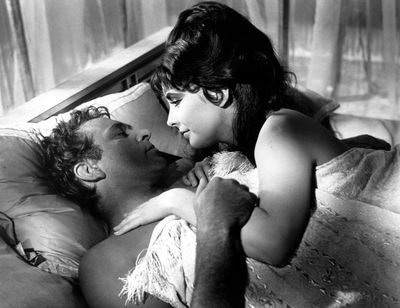
Four months in prison was a depressing experience, but Wanger understood the raw humanity of it, the rough romantic glory. You catch the man screwing your wife, you shoot his balls off. But by Cleopatra, Wanger reveals a refreshingly liberal attitude toward such matters. The macho rage has lessened, and women, not just goddesses like Elizabeth Taylor, can be forgiven. In My Life With Cleopatra he writes: 

"These are hypocritical times, when men are permitted to have more than one love at a time and women are castigated for the same kind of behavior. I believe that Elizabeth loves two men. And who is to say that a woman can’t love two men at the same time, any more than that a man can’t love two women at the same time?" 

"I have lived in several of the great cities of the world during my lifetime, and I have known many women considered to be paragons of virtue. I doubt, however, that many of these moral women have as strong a code of personal ethics as Elizabeth. Further, I doubt that many of them would have been able to resist Burton’s charm."
Still-of-richard-burton-and-elizabeth-taylor-in-cleopatra-(1963)-large-picture

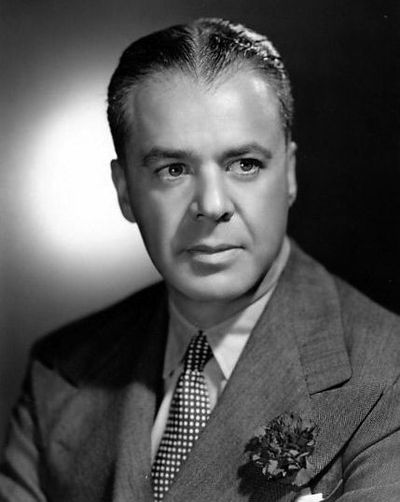
This is lovely, a tribute not only to Taylor who “goes where her heart leads her,” but perhaps to both his wife and himself. He may have hardened after four months in prison, but he seems to have evolved emotionally. And yet, four years of Cleopatra destroyed his pride; it was a spirit-crusher, a quagmire of business and emotions, a once passion project that through time, could only feel passionate when Elizabeth’s name was invoked, which Wanger does frequently in his journals: “It is not a far stretch of the imagination to compare Elizabeth with Cleopatra. She has the intelligence and temperament of the Egyptian Queen — and she has the honesty and directness that characterize all big people.” Writing My Life With Cleopatra was Wanger reaching for that .38, hoping the pen would be mightier than the gun. But alas, the book couldn’t have possibly provided the relief he sought, and he remained a troubled man. In a letter published in Bernstein’s book (and not in Wanger’s diary), a heartbreakingly humiliated Wanger begged Zanuck to save his reputation after firing him during post-production of the picture: 
Walter-wanger

"I beseech you, Darryl, as the new president of the company to not aggravate this situation and further damage my status as producer of Cleopatra by not bringing me to Paris for the conferences and cutting and editing of this picture. Not only will this further harm my reputation and status, but I think you, as the new president of Twentieth Century Fox would not want to further humiliate and degrade me, a fellow producer, in this manner, in the eyes of the entire industry and of the entire world […] I appeal to you as a man not to do this to me."
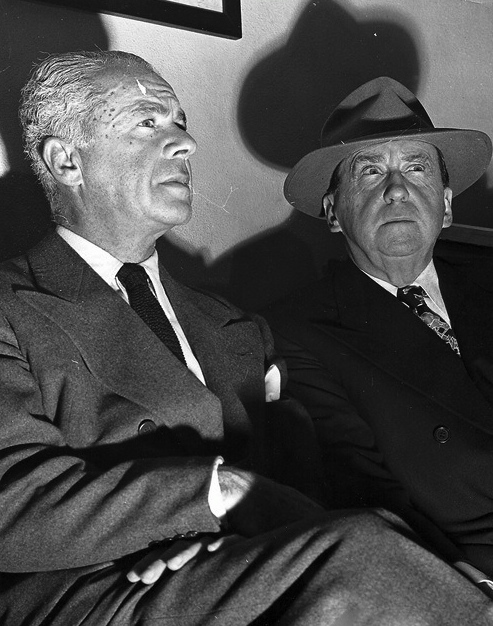
Wanger, Siegel Riot in Cell Block 11

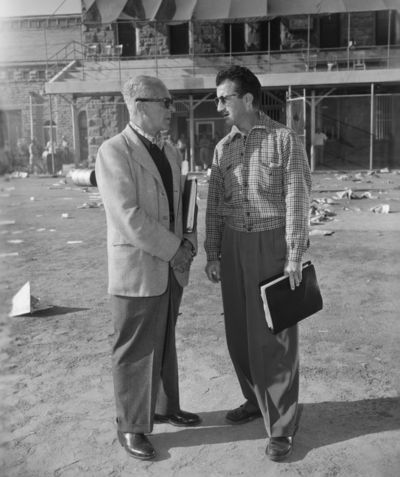
After shooting Jennings Lang, Wanger stayed with Bennett, albeit with understandable friction, for another 14 years, produced (among other films) three terrific, lean, and meaningful-masterful pictures that resonated with him personally (Riot in Cell Block 11, Invasion of the Body Snatchers, and the award-winning I Want to Live!), and entered a new stage in his career. He wasn’t a radically different man but a changed one, inasmuch as movies, life’s indignities, and a prison sentence can change a person. He was both tired and tireless. He suffered heart ailments. He was old. But he endured the 1950s. He was ready for new projects and adventures. 

Elizabeth-Taylor-Cleopatra-Headdress

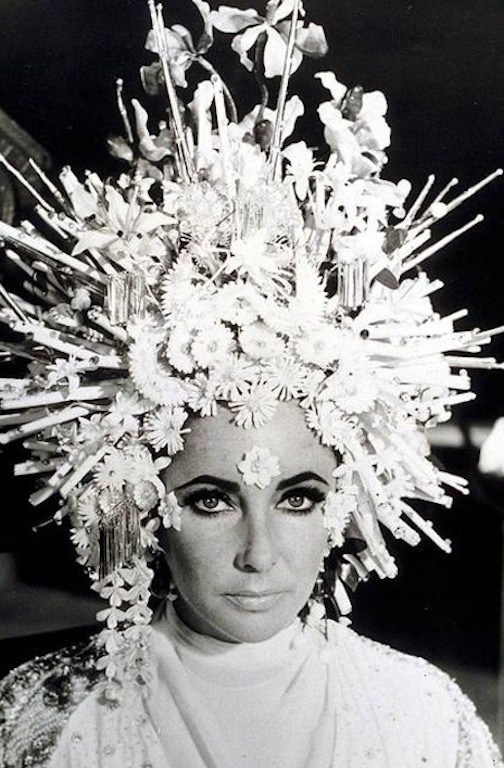
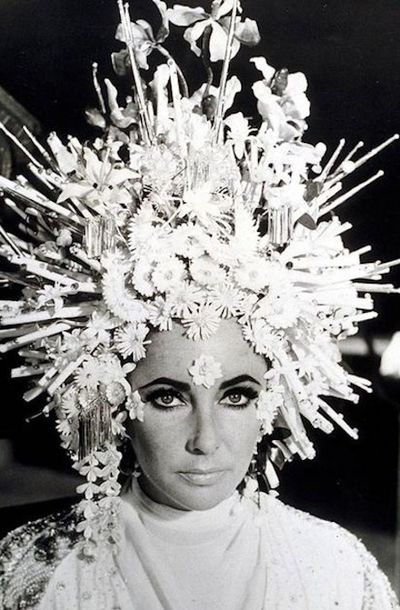
And then came shooting Cleopatra. He survived Cleo’s four-year stretch, but he didn’t survive the 1960s. He died at age 74 in 1968 — the same year a truly underrated Taylor and Burton picture was released, Joseph Losey’s Boom! There, his queen Elizabeth, dissipated and drugged-up, playing Tennessee Williams’s Flora “Sissy” Goforth, dons enormous headdresses, screams at servants for injections, and takes overripe, bar-ragged Burton as a lover while rotting in her mansion on the Isle of Capri. The picture is an engorged wonder; tumescent, histrionic, and hilarious, but beautifully bizarre and emotionally honest. Taylor shows us the dark side of excess, the desperation of love, and the disillusionment of lust and, despite the picture’s poor reviews, she is fantastic. Here is the “the honesty and directness that characterize all big people.”
LIZ BOOM!

And here is the honesty of opulence, its fading glamour that was already losing its luster by the time of Cleopatra, the vulgarity of a queen in her own mind, and her lover (now older) sliding into the 1970s, garish, sagging, and exceedingly brave for it. Building on their groundbreaking brilliance in Who’s Afraid of Virginia WoolfBoom! presents the glittering duo reveling in and revealing their decay with an almost avant-garde perceptibility. At this point, regardless of the baubles and booze and purple, writ large, Liz and Dick seemed to get it. One wonders if Wanger saw an early screening. One wonders if he got it, too. I hope so.

Originally published at The Los Angeles Review of Books.