Just Waitin’: The Last Picture Show
6a00d83451cb7469e201b7c8ce5723970b-800wi
My piece published at The New Beverly.

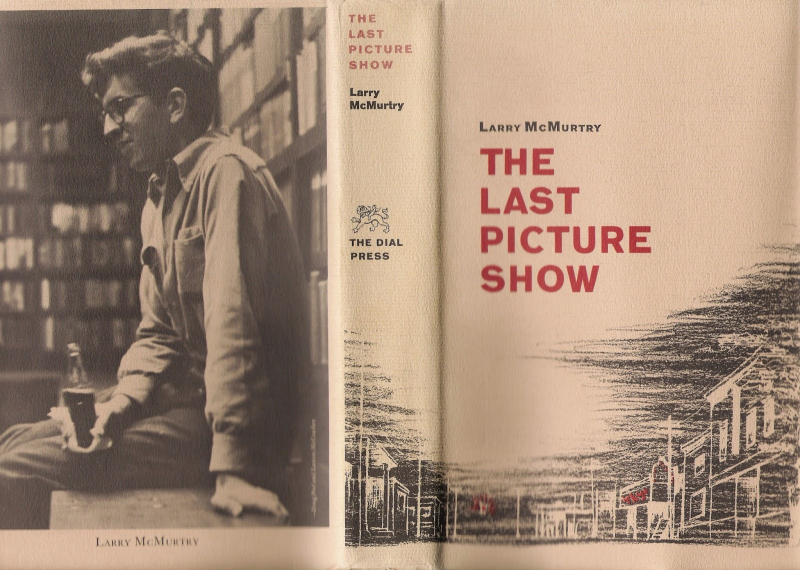
“Of all the people in Thalia, Billy missed the picture show most. He couldn’t understand that it was permanently closed. Every night he kept thinking it would open again. For seven years he had gone to the show every single night, always sitting in the balcony, always sweeping out once the show was over; he just couldn’t stop expecting it. Every night he took his broom and went over to the picture show, hoping it would be open. When it wasn’t, he sat on the curb in front of the courthouse, watching the theater, hoping it would open a little later; then, after a while, in puzzlement, he would sweep listlessly off down the highway toward Wichita Falls. Sonny watched him as closely as he could, but it still worried him. He was afraid Billy might get through a fence or over a cattle-guard and sweep right off into the mesquite. He might sweep away down the creeks and gullies and never be found.” — Larry McMurtry’s novel, “The Last Picture Show” 

6a00d83451cb7469e201b8d258a1a7970c-800wi

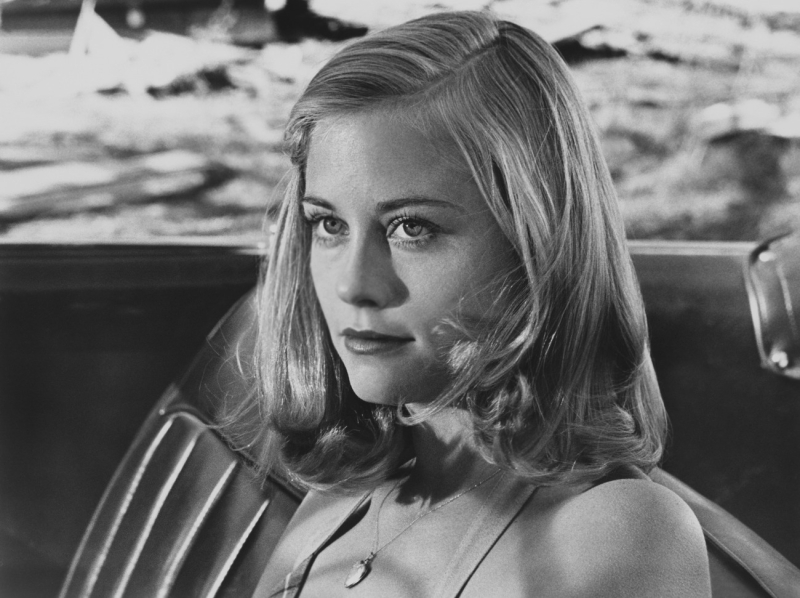
Some of us walk through life as the leading players in our movies. Memories and real life melodrama can intertwine in our minds like our own personal photoplays – we make pictures every day. We see this online, shared photographs and videos, creating story, mystery and art, and sometimes narcissism and pleading. But some of us also do this when we stop for a moment and put away that camera or phone, and we’ve done this ever since feature films have appeared in theaters. Pictures started moving and we starting moving our own pictures. Not with a camera but with eyes and minds – and we still do. Flickering through our brains like vivid Technicolor reminiscences or black and white chiaroscuro, our movie minds also project cinema out into the world, eyes scanning surroundings like cameras, hearts hopeful for something cinematic and exciting to create our own big screen stories. Movies can seep into our souls so much that we often feel we’re walking in a movie – real life should be like a movie – we think. Life can be lonely, a vast expanse of time, experiences behind us, experiences ahead of us, and when we stop to take a look at our environment, a forlorn feeling can flood our thoughts through the most everyday things: out of a car window during traffic, listening to a song, in crowded cities, staring down endless roads and observing barren landscapes. Many of us will be stricken, if even for a minute, with a void or an ache or, to quote Peggy Lee, “Is that all there is to a fire?” Though we study movies for all the reasons people essay and critique them, watching movies can fill and fuel that fire for 90 or 120 minutes or more, an all-enveloping escape, enclosed in dark rooms transported by that large screen. So can transferring those images onto real life, imprinting and even blurring our reality.
6a00d83451cb7469e201b7c8ce5739970b-800wi

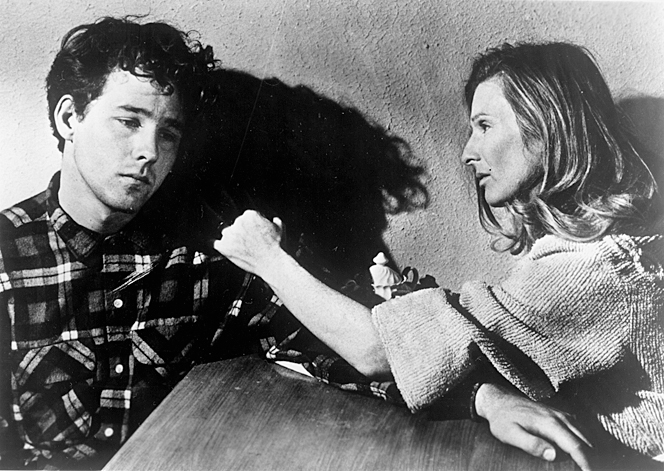
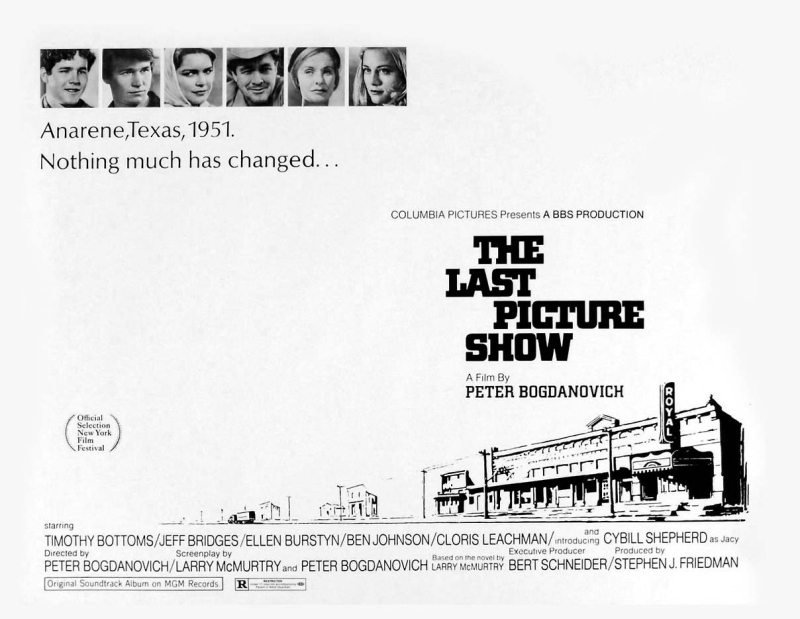
There are many passages in Larry McMurtry’s novel The Last Picture Show that exemplify the merging of movies and real life, illustrating why it was so well-suited for Peter Bogdanovich’s tender and heartbreaking big screen adaptation. In the novel, which takes place in 1951 (the 1971 movie does as well), the high school senior protagonist Sonny, admits his affair with an older, sad and married woman to a waitress he’s fond of: “‘Ruth Popper?’ she said, amazed. ‘How do you mean, Sonny? Have you been flirtin’ with her like you do with me, or is it different?’ ‘It’s different,” he said. ‘It’s… like in a movie.’”
Pho-09mar26-155816

That Sonny really is having an affair with Ruth Popper, and one that becomes complicated, raw and emotionally messy to the point that she frightens him even as he desires her, makes it a hopeful yearning on his part – that it’s like a movie. It’s not, not with any kind of glamour or “suitable” romance, but in its own heightened way, of course it is. Peyton Place or a Douglas Sirk masterpiece, though Bogdanovich and McMurtry do not frame it that way. (The picture feels both New Wave and classic, Bogdanovich knowing his Ford and his Hawks and also something less easily definable, then and even now.) But Sonny gets a thrill and peculiar love from Ruth and eventually they don’t care about their audience – all that talk and the looks in the town – everyone knows. And Ruth is nice to kiss. Much nicer than his first disagreeable girlfriend. Earlier in the movie they do some heavy-petting in the theater and Sonny’s eyes are fixated on a close-up of beautiful Elizabeth Taylor, not his date. In the novel it’s Ginger Rogers and he envisions her naked. In Bogdanovich’s version (co-scripted with McMurtry), we can only think that’s what Sonny is thinking. We don’t doubt it.

A perfect place for thinking, projecting, remembering and watching, Bogdanovich’s The Last Picture Show, set in the tiny town of Anarene, Texas, opens on their one movie theater, The Royal (Father of the Bride is on the marquee), panning to reveal a desolate Main Street with one traffic light, all dusty and fading and hanging on for dear life. Wind and leaves blow across the chilly landscape (shot so evocatively in black and white by veteran Robert Surtees) as we hear a car motor chugging. That’s Sonny (Timothy Bottoms) who struggles to get the heap going, freezing his ass off and fixing his radio dial to better receive Hank Williams’ “Why Don’t You Love Me?” Hank Williams will follow these characters all over the movie, commenting on and filling in the quiet they’re intent to avoid. He also matches many of the character’s spirits and Sonny’s especially – “I’m So Lonesome I Could Cry.” The novel’s first two sentences begin: “Sometimes Sonny felt like he was the only human creature in the town. It was a bad feeling, and it usually came on him in the mornings early, when the streets were completely empty.”

Sonny spies Billy (Sam Bottoms, the actor’s younger brother) sweeping the street and gives him a lift, playfully turning the younger kid’s baseball cap backwards, an affectionate refrain throughout the movie and they drive on to the pool hall. Through the detailed, formal but never stodgy, and incredibly lived-in excellence of Bogdanovich’s direction (and production designer Polly Platt) we are immediately transported right into this world that, at the time, was 20 year ago, but we don’t feel simple nostalgia about it (though we wished these places still existed. I do anyway). As beautifully shot and as intriguing as this town is, it also appears hard and unforgiving. Maybe life was simpler? Maybe? But as the picture goes on to show, it certainly wasn’t more innocent (that’s fine, nothing is) or easier (that’s also true). Watching it in 2017, Anarene is such a relic that it’s almost exotic. If these towns were dying then they’re sure as hell not surviving now unless you’re lucky enough to stumble across one on a cross-country road trip. But meeting Sam the Lion (Ben Johnson), a father figure to Sonny and Billy and, as we’ll soon learn, Sonny’s best friend Duane (Jeff Bridges), we feel warmer with his friendship (the place seems too small to say community). Even razzing the boys for their lousy football team, Sam’s a complex, even poetic man (though he’d never describe himself as such).
6a00d83451cb7469e201b8d258a235970c-800wi

He’s the heart and soul of the town – and not in any corny way – and we grow so fond of him that it will bring on an almost sick despair to even think of him gone. If he ever leaves, the town will sag down further, almost on top of itself. Not only does Sam own the pool hall (where handsome-hard mystery man, Abilene, played by Clu Gulager, has his own key), but the diner and the movie theater. Sam provides all of the services for escape and joy it seems, but also wisdom and ageless camaraderie, even if he’s decades older than the boys. But he’s missing a piece in his life, and there’s something quite melancholy about him, specifically because he’s so gracious and lovingly worn-in. In a later, powerful moment, he recalls a memory to Sonny that, as spoken by Johnson, is so vivid and cinematic that we can envision the scene almost right there in front of us – his mind rolling a movie reel of the past as we watch him speak:

Lps-sam-the-lion“You wouldn’t believe how this country’s changed. First time I seen it, there wasn’t a mesquite tree on it, or a prickly pear neither. I used to own this land, you know. First time I watered a horse at this tank was – more than forty years ago. I reckon the reason why I always drag you out here is probably I’m just as sentimental as the next fella when it comes to old times. Old times. I brought a young lady swimmin’ out here once, more than 20 years ago. Was after my wife had lost her mind and my boys was dead. Me and this young lady was pretty wild, I guess. In pretty deep. We used to come out here on horseback and go swimmin’ without no bathing suits. One day, she wanted to swim the horses across this tank. Kind of a crazy thing to do, but we done it anyway. She bet me a silver dollar she could beat me across. She did. This old horse I was ridin’ didn’t want to take the water. But she was always lookin’ for somethin’ to do like that. Somethin’ wild. I’ll bet she’s still got that silver dollar.”

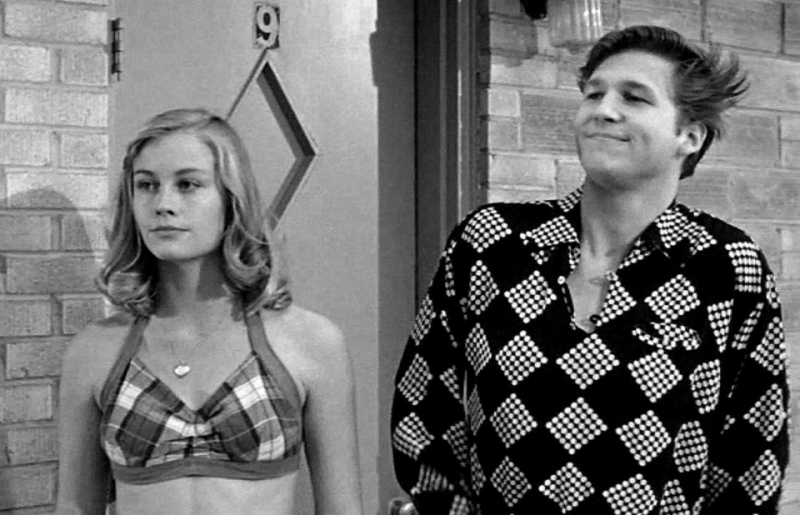
That woman turns out to be his greatest love and, he, the greatest love of the woman (who still lives in the town, Ellen Burstyn’s saucy and soulful Lois Farrow), deepening a character whom we might initially view as simply calculated and alcoholic. Not Lois. She’s hard but sexy as hell here (her opening shot reminded me of Lee Remick in Anatomy of a Murder), but when the ice in her drink cools, Lois seems like one of the wisest women in town. Refreshingly, Bogdanovich and Burstyn (and McMurtry) allow her to be a bitch, but a human-being bitch, and when she opens up and warms us with a smile or simply amuses us with a line, we genuinely like her. Few are simple or shallow in this movie, in fact, not even Lois’s daughter, Jacy (Cybill Shepherd), the prettiest, richest girl in town and girlfriend of Duane. Jacy’s been described by some writers as a cock-tease or even a femme fatale, but she’s a bit more complicated than that (as she is definitely in the novel). She’s a tease but she’s doing it for reasons that may appear cold-blooded, reasons more resourceful, yet confused and, yes again, cinematic. She wants a big story; she wants drama, romance; she wants everyone talking about her. Why not? There’s not much else going on and if she’s the prettiest girl, why sit around waiting for intrigue? So start it. She’s vain (she’s so lovely it’s hard for her not to be) but she’s also unsure of herself, adventurous and curiously sexual, though sometimes scared, without the movie showing her any condescension (her later moment with Abilene boldly proves this). When she finally tries to sleep with lovesick, horny Duane and, baffling to him, he can’t perform, she makes sure those outside the motel room watching in their cars think they just did it. She has an audience and she is going to be the star, virgin or no virgin, dammit. When her girlfriends excitedly bounce into the de-flowering chamber asking her how it was, she gives them her best movie star face, looking up, liquid eyes all dreamily: “I just can’t describe it in words.” Jacy really should get out of Anarene and move to Hollywood.

6a00d83451cb7469e201bb09719210970d-800wi

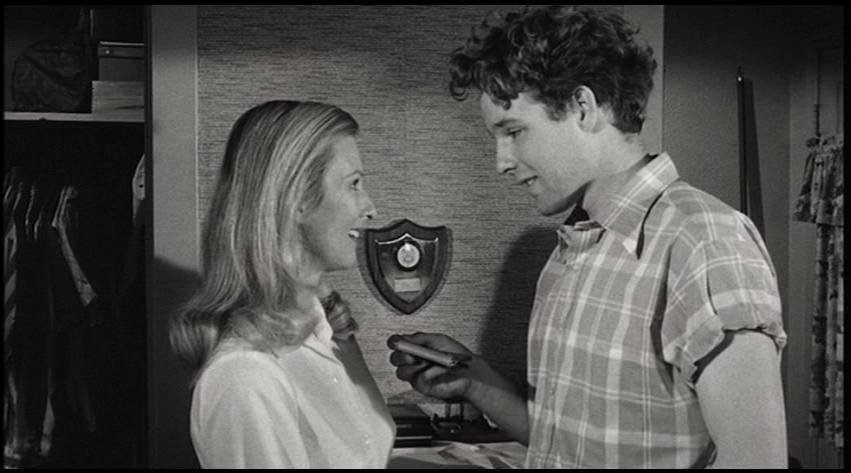
Sonny’s lover is not so Hollywood – the aforementioned Ruth Popper (Cloris Leachman) – wife of the one the most unlikable characters in the movie – the coach. She’s pretty, frail, nervous, middle-aged, prone to crying or occasional anger, apologizing to Sonny, mad at him, then mad at herself. You feel for her, you want her to find happiness, but you’re not sure what to make of their union; if it should last at all. Sonny is still growing up even after growing up so fast. You grow up quickly in a town like this – working, running a pool hall, smoking, whoring, maturing past sexual interludes with bovine (mentioned in passing in the movie, in much more detail in the novel) – but he’s not weathered the 40 years Ruth has yet. And, yet, she seems like she’s done absolutely nothing in her life save for changing her bedroom wallpaper and serving cookies to kids. She hates her husband, she gets sick, she falls for Sonny. A lot more pain is in store for her and the Picture Show of Sonny – that lovely romance that makes her swoon and escape her depressing little house – could not be sustainable. But what’s wonderful about this movie is, hell. It very well could be, for good reasons or bad reasons or reasons somewhere in between. Sonny, nearly an orphan, loves (maybe, we’re not sure) and desires Ruth, but he also makes her feel childlike, and gives her an underage kind of paternal care. She’s less a mother figure (his mother is deceased), and more like the sweet, drug-addicted father he can’t count on. In the novel McMurtry writes of Sonny looking at Ruth: “There was something wild in her face that made Sonny think of his father – when she smiled at him there was a pressure behind the smile, as if something inside were trying to break through her skin.”
Cloris Leachman Timothy Bottoms

But Sonny is just so young, and in a final scene, as Ruth gazes at his innocent-looking eyes, his youth so strong, it’s both strangely upsetting and tenderly poignant. Bogdanovich lingers on this long enough for the viewer to truly feel that age gap. And Bottoms plays all of this with a quiet charm and longing, a longing for something (what is it?). His longing is so powerful that, in some cases, it’s simply his eyes, those cinematic eyes, looking as we look with him – surveying the land, the town, a face or even a tumbleweed – that gives us an overwhelming surge of beautiful heartache. Sonny’s already experienced two other beloved people die: one young (which he sees), the other old (offscreen, which feels so jarring since Sonny views everything) and both unexpectedly, that you wonder how much he’s truly processed in his mind. What is he thinking? He seems like the type who might get out of the town (and he tries, briefly) but, nope. Looks like he’s gonna stay. Will he always? Bogdanovich and McMurtry will not answer that. Not in this picture (you’ll need to read and watch Texasville to find out).
6a00d83451cb7469e201bb0971921f970d-800wi

And now the movie theater has closed down (Sonny and Duane watch Howard Hawks’s Red River the final night before Duane heads out for Korea, another loss). No more time staring at the screen (TV is taking over) but Sonny will likely listen to more music and drink in whatever is in front of him or comes his way – the pool hall, the residents, newcomers, cars, random excitements, girls. Maybe he’ll go crazy. Whatever he’s doing or wherever he’s going, the fading town is still standing while he matures into another year. Sonny will continue to make his own movie memories through living, however that goes. One day he’ll likely weave a vivid impression of a time to one younger than him, just as Sam the Lion did. Maybe he’ll fall for another woman, hard. Wonder if it’ll be different? “Like in a movie.”

Kill or Be Killed: Little Murders

6a00d83451cb7469e201b8d2553591970c-800wi

Out today! The first of my monthly essays for Ed Brubaker's acclaimed "Kill or Be Killed" with artwork by the great Sean Phillips. Read my take on Alan Arkin's adaptation of Jules Feiffer's darkly comic Little Murders starring Elliott Gould (with a brilliant scene by Donald Sutherland, as well standouts by Vincent Gardenia, Marcia Rodd and a hilariously strange Jon Korkes).

Pick it up or order here: https://imagecomics.com/comics/releases/kill-or-be-killed-5

6a00d83451cb7469e201bb096e2e39970d-800wi


Kid Dynamite: Leo Gorcey & Bobby Jordan

6a00d83451cb7469e201bb096cb4ed970d-800wi
From my New Beverly piece on the trials, tribulations and tragedies of Leo Gorcey & Bobby Jordan and looking at Kid Dynamite.

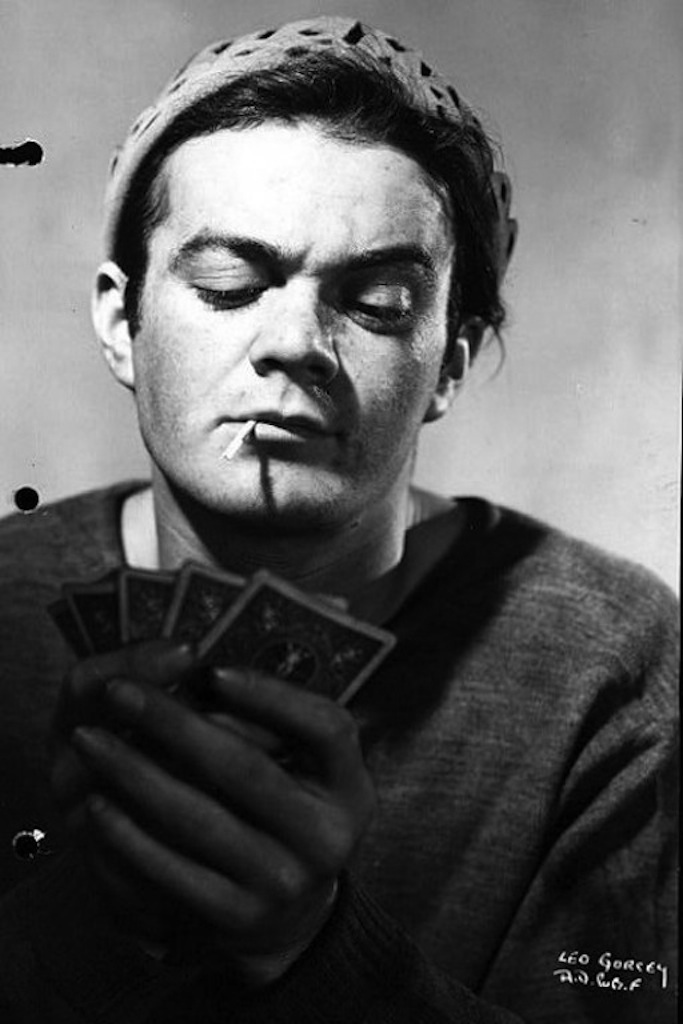
Leo Gorcey was once a plumber. He was in his last year of high school and worked for his Uncle’s plumbing business earning six dollars a week. He didn’t like that kind of money. It was 1935 and though, not dirt poor, times were tight for the divorced family living in New York City. His dad (Bernard Gorcey) was a respected stage actor who, according to Richard Roat’s “Hollywood’s Made to Order Punks,” used a bit of reverse psychology, telling his son he couldn’t act, luring the pugnacious kid to audition for the play Dead End. He came in his plumber’s clothes. In an interview with Richard Lamparski shortly before his death, Gorcey claimed his dad knew someone involved in Dead End. He said his dad could have used connections early on to help the kid along with acting but Gorcey wasn’t interested in that. Still, he wasn’t interested in being a plumber either. The money was negligible and he complained that he couldn’t “buy a pair of slacks or a pair of shoes in a month.” (Hearing him utter this with distinct Brooklyn Gorcey-speak, I thought of all those depression-era youngsters, wanting more out of life and being proud of it when they got it – Paul Muni showing off his shirts in Howard Hawks’ Scarface. Gorcey didn’t find the work (to use one of his favorite words) remunerative. He got the part, wound up lucky to take over for the bigger role of Spit. Gorcey was now earning 35 dollars a week. 35 dollars a week? “Big deal,” he said in the interview, “I want 50.” The producers told him, Nope. They could locate any damn kid in New York City to play that part. “Find one,” Gorcey challenged. They gave him 50 dollars a week.

Cbfc8070f58d3d7ab8def38538a5b427

He moved up in the world, taking Spit to screen in various incarnations, names and studios (including, and most famously, Spit, Slip, Muggs) in The Dead End Kids, The East Side Kids and The Bowery Boys from 1937-1956 (he was never in The Little Tough Guys, which also slide into this original punk history). Some of the early pictures were beautifully directed social commentaries – William Wyler’s Dead End (with Humphrey Bogart), Michael Curtiz’s Angels With Dirty Faces (with James Cagney) and Busby Berkeley’s They Made Me a Criminal (with John Garfield) with a cast including Huntz Hall, Bobby Jordan, Gabriel Dell, Billy Halop and Bernard Punsly. Through time the kids became more comedy than commentary (which was fine, Gorcey and Hall are a terrific comic duo) and the pictures became weirder, they were often still assuredly shot by some interesting filmmakers (notably The Big Combo, Gun Crazy director Joseph H. Lewis). Not bad, as some might say, but as time went on, wonderfully fucking weird with, perhaps, accidental commentary (who wants to grow up?) and definite surrealism holding the plots together. To use a word Gorcey would probably like as a malapropism and mispronounce  (I can’t even pronounce it) they feel hypnagogic.

6a00d83451cb7469e201bb096cb553970d-800wi

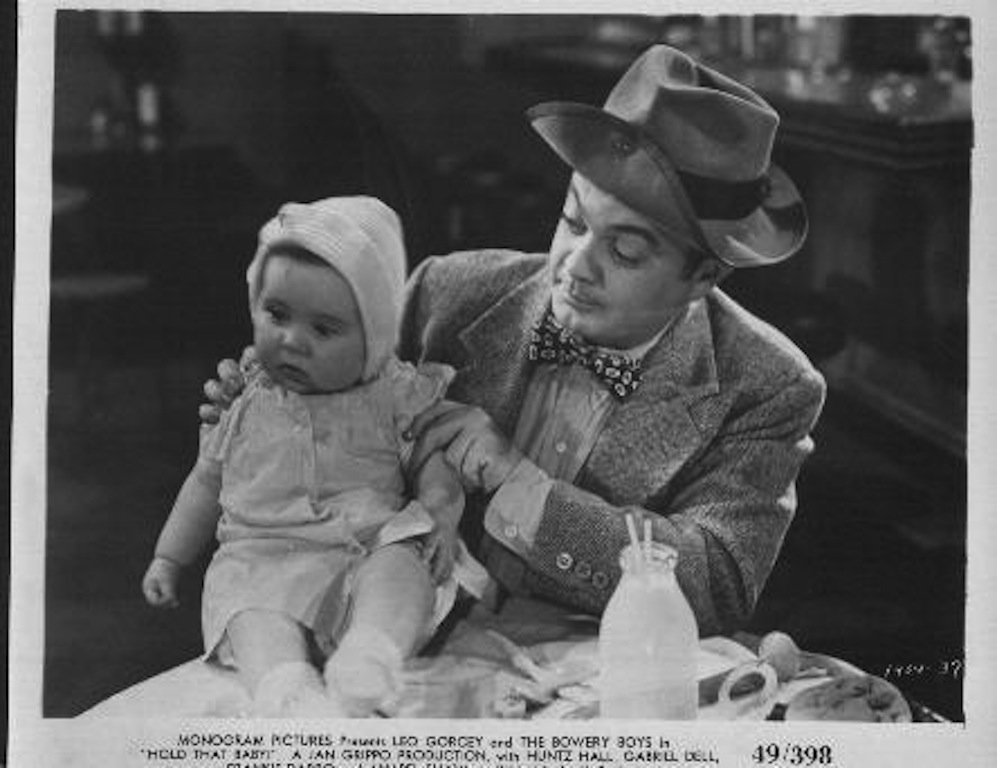
A movie like Hold That Baby! (one of my favorites, starring Gorcey, Hall, William Benedict, David Gorcey and Bennie Bartlett) is magnificently bizarre. The fellows looking more boozed-up than boyish, all world-weary while running around like maniacs, helping a baby abandoned in a Laundromat (they own the place!), while gangsters and a mental institution fall into the scenario (naturally) – it’s the cinematic equivalent of something you’d dream up after ingesting too much narcotic cough syrup one night. These little comedies starring multiple-divorced men still burlesquing as tough guys when some of them actually are tough guys, or at least, little shits, now with arrest records, are marked with a peculiar darkness, as if Diane Arbus somehow took over direction. Gorcey once shot a gun in a toilet, got the boys to glue it back together, which then caused Martha Raye to fall in and injure her nether-regions. That’s a true story, according to Gorcey. Why not just put that in one of the movies?

0f7da5d5cd737385a4a16377713feba0

From 1940-1945 the series cranked out pictures through Monogram (which introduced Our Gang veteran, the great ‘Sunshine’ Sammy Morrison into the club, the only African-American in the group). Gorcey left the studio, quarreling over more money, formed The Bowery Boys with Huntz Hall and Bobby Jordan and owned 40 percent of the company. That was smart. He wouldn’t die broke (though this pissed off some cast members, including Morrison who declined to join, reportedly due to Gorcey’s more remunerative control). Gorcey was a “kid” deep in his 30s when making his last picture, Crashing Las Vegas, remnants of the original boys hanging on – Hall and his younger brother, David. Pops, who, without much hullabaloo, had been playing Louie Dumbrowski, the guy who ran the ice cream parlor and co-starred with his son in 44 pictures, died in 1955. He crashed into a bus. Leo drank more, became problematic and was replaced by Stanley Clements. He lived a hell-raising, hard-drinking, multi-married life, writing an entertaining, damn near poetic memoir about it with a tongue twisting title: “An Original Dead End Kid Presents: Dead End Yells, Wedding Bells, Cockle Shells and Dizzy Spells.” He died the day before his 52nd birthday – liver failure.

6a00d83451cb7469e201b7c8c99eb5970b-800wi

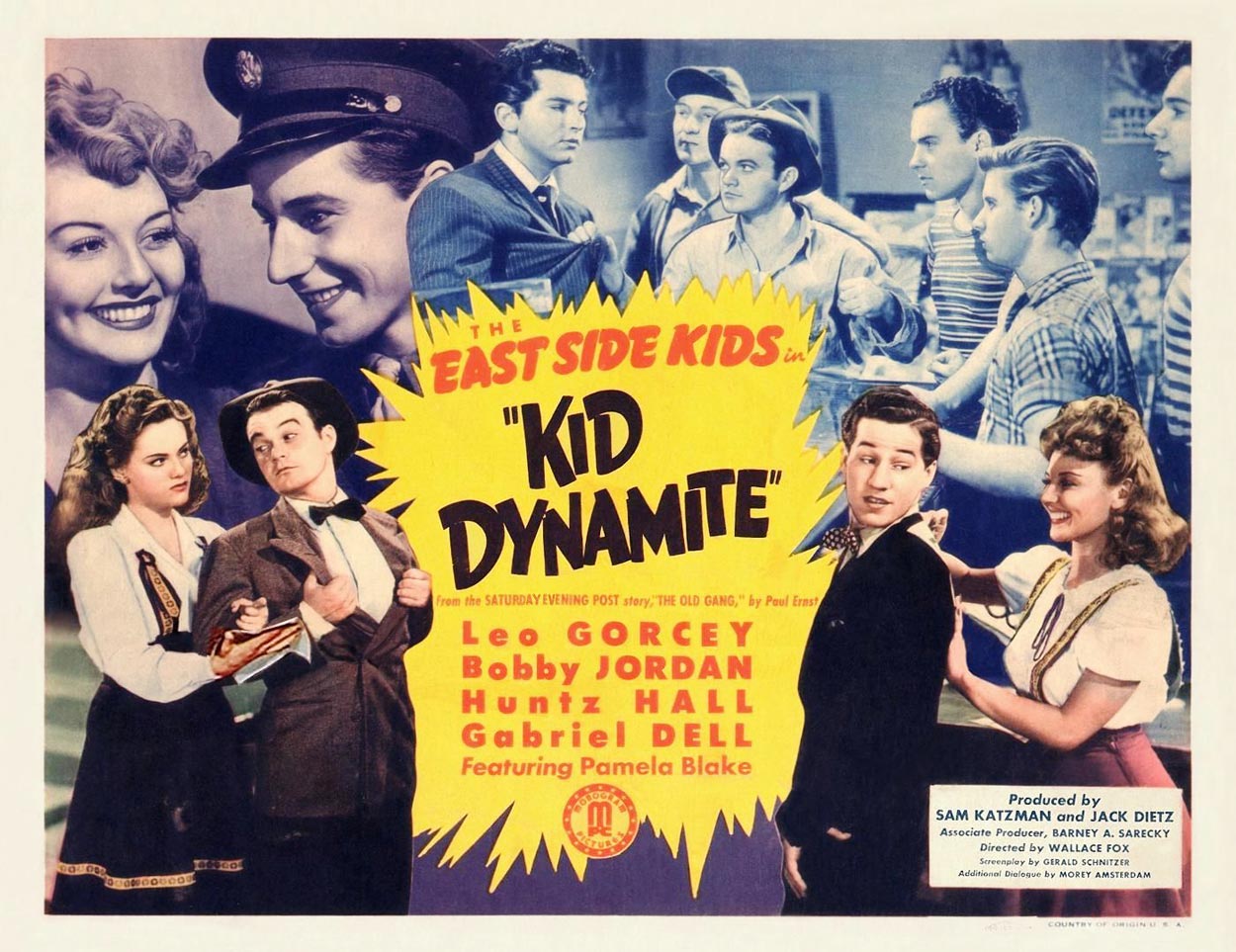
This is a long walk down Gorcey lane before discussing Wallace Fox’s Kid Dynamite, the 1943 East Side Kids picture when they’re still young and fresh, but pertinent since the talented, tragic Bobby Jordan (playing Danny) is Gorcey’s lead co-star. He is also a reluctant rival to Gorcey’s Muggs who is, for lack of a better word, an asshole. As the picture moves along briskly with a nicely shot boxing match and an entertaining, gleefully odd jitterbug contest within, we come to feel for shitheel Muggs – the world’s not nice to him. Gorcey always played it more acerbic, nastier and Stooges-like slap happy, but there’s an extra edge here. He’s so mean to moist-eyed, tall and gracious Danny that he becomes less funny and more aggressively unpleasant. And he’s jealous.  This is not a criticism; it makes the movie deeper and more poignant as we root for both guys. We want them to figure out their issues; we know it’s based on power and acceptance and looks and everything society throws at kids growing up, and we know it’s probably not going to be solved by the film’s conclusion – joining the service. But the surge of patriotism at the end of the movie makes you question if the picture even believes its own message. Even Muggs’ mother cautions her son to join (and won’t let him at first, he’s too young) if he’s doing so for the wrong reasons.

Kid-Dynamite-3

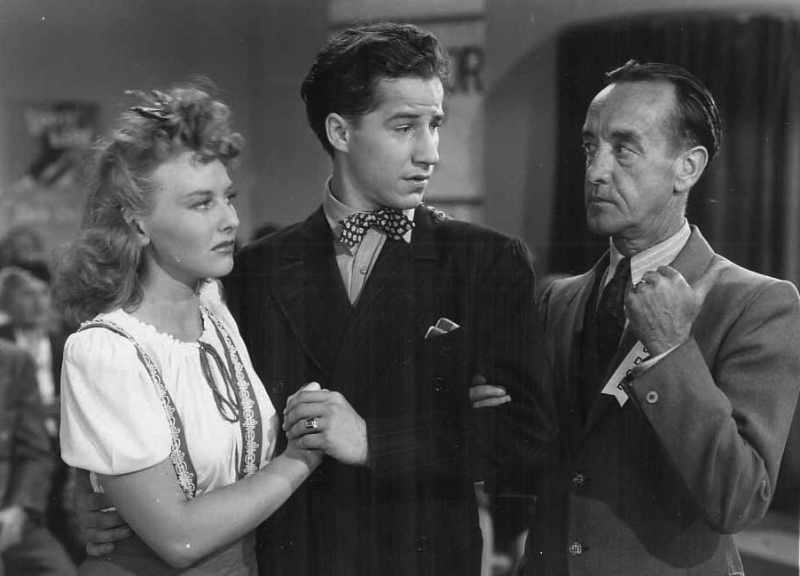
The whole misunderstanding begins when teenage boxer Muggs believes Danny set him up. Gangsters kidnap Muggs when he won’t throw a fight (such is the life of an East Side Kid) and he misses the match, stuck in a scary car, fast-talking guttersnipe sass. Out of shape Danny (who does not appear to be out of shape) has to fill in for Muggs and in a sweet surprise, wins the fight. Danny is innocent, a nice guy (he is also dating Muggs’ sister), but never mind that – Muggs is so pissed off and distrustful, he can’t accept his friend wasn’t in on it, and he kicks him out of the gang: “Danny’s name is gonna stricken from the record. He’s outta the club intimately, ultimately and forever.” Other members, notably Huntz Hall as Glimpy (“Why don’t you play ping pong with a time bomb?”) and “Sunshine Sammy” Morrison as Scruno are nicely featured and likable (also Benny Bartlett as Benny ‘Beanie’) but they too are following along with the bullying Muggs. Tensions increase – Danny gets the job Muggs wants (for being a “gentleman”) and in a scene that opens with Mike Riley’s Orchestra and Marion Miller doing the most intriguing, craziest and even creepiest rendition of “Comin’ Thro’ the Rye” (did J.D. Salinger see this picture? Did Davd Lynch?) wins the jitterbug contest after Muggs is disqualified for bringing a professional dancer (Kay Marvis, Gorcey’s first wife, who later married Groucho Marx).  Well, that’s it.

6a00d83451cb7469e201bb096cb53b970d-800wi

It will get all resolved – Muggs finally believes Danny, but anger enflames yet again, and he continues being a jerk. There’s a lot of desperation to Jordan here that feels utterly believable – we might want to join with Muggs deeming him a fake goody-goody but Danny is too sincere. At the same time, Muggs is such a sore loser and so obviously insecure, that we can’t stay mad at him, especially when he starts looking inward, thinking of the War, understanding he’s being a heel, maybe even a coward, and his jealousy is more at play than truly believing Danny’s a bad person. But, again, the patriotic WW2 closer where the boys are sauntering through town in uniform is strangely sad. And thinking of Bobby Jordan is sad too. He was drafted.

Jordan wasn’t happy with the last incarnation of The Bowery Boys whom he helped form with Gorcey and Hall. He was becoming less prominent on screen, making less money and angry with Gorcey and Hall for pushing him out of any kind of light. He left after eight pictures. He still worked, did some movies and television, but supplemented his income as an oil driller; photograph salesman, nightclub act and bartender – not a good profession for an alcoholic.

6a00d83451cb7469e201b7c8c99e89970b-800wi
According to various sources, in 1958 he was briefly jailed for not making child support payments. Before that, in 1945 the poor guy was in an elevator accident, forcing removal of his right kneecap (really?). The talented young kid who went to the Professional Children’s School and started out in Dead End with the name Angel, who served in the Army during WWII (drafted in 1943, the 97th Infantry) – he died at age 42 in 1965 in a Veteran’s hospital in Los Angeles  – cirrhosis of the liver. Nearly four years before Gorcey and six years younger.

Gorcey says of Jordan in Kid Dynamite, “He’s presently out, henceforth, etc.” Reportedly, in real life, Gorcey mused, “Bobby Jordan did not have had a guardian angel.” Jordan might have “depreciated” that sentiment.


Sunset Gun & Sight & Sound: Tops of 2016

6a00d83451cb7469e201bb096569e6970d-800wi

I contributed to Sight & Sound's Best Films of 2016, choosing five pictures among so many released this year, some I hadn't seen yet (the list was due in November), so I must add.

From the magazine:

"We asked 163 critics and curators to name their five top movies of the year – and atop what may be our most diverse annual poll yet, the runaway winner is a German comedy…" Read the full list here.

And here's my individual top five with five more added to equal a neat ten. A ten that could change in two days. Not in any order:

Added: Jackie

Jackie-natalie-portman-today-161006-tease-02_e549f017f2a99114fefe91579e669542.today-inline-large

Finally saw Pablo Larraín's Jackie… now one of my favorite movies of last year. Maybe my very favorite. The tricky manner in which Natalie Portman plays her reality and artifice is incredible — the sadness and horror, the control — Jackie wandering around the White House alone like a living ghost… The direction and score are brilliant — it moved along with her, matching her performance, and felt like grief — the confusion of grief and how to control it. Nothing of what she says is exactly true and everything remains mysterious — a woman with a reality and a persona, smashed in that moment, walking around with blood all over her suit, and then she had to gather herself quickly and put up the walls even higher.

The Lobster  — Yorgos Lanthimos  

Hero_The-Lobster-2016-2

You don't require things in common to be in love. You don't need to be in love or out of love. You don't need to be with someone or without someone. You don't have to be married. It's OK to be alone. It's not OK to be alone, for some. Please consider this mordantly funny and heartbreaking allegory of the terrifying future — dating sites and lists of requirements and everything that one person with supposedly all of the answers tells you or that dumb social media update about love or that one bromide-filled essay that tells you which way is the right way. Or those articles, lists and quizzes about who is a sociopath or are you an empath while you nod in agreement. And don't choose a lobster. Don't even choose a dog. Choose a raccoon. No one messes with raccoons, they're tough, they're cute as hell, they're street smart and they could give two fucks about you. They're also good to their kids. 

Moonlight – Barry Jenkins  

Moonlight-2016-001-young-chiron-at-dusk-by-waterside

A film so beautiful in story, struggle, love, connection, danger, drugs, race, masculinity, black masculinity, and one made more poetic by cinematography and performance, particularly by Trevante Rhodes, that one leaves the theaters with images and thoughts lingering. As Rhodes told Out Magazine: "Being a black person in America right now is shit, being a homosexual in America right now is shit, and being a black homosexual is the bottom for certain people. That’s why I’m so excited for people to see Moonlight. I don’t feel like there’s a solution for our problems, but this movie might change people. That’s why you do it — because you feel like you’re doing something that matters. This is someone’s story." 

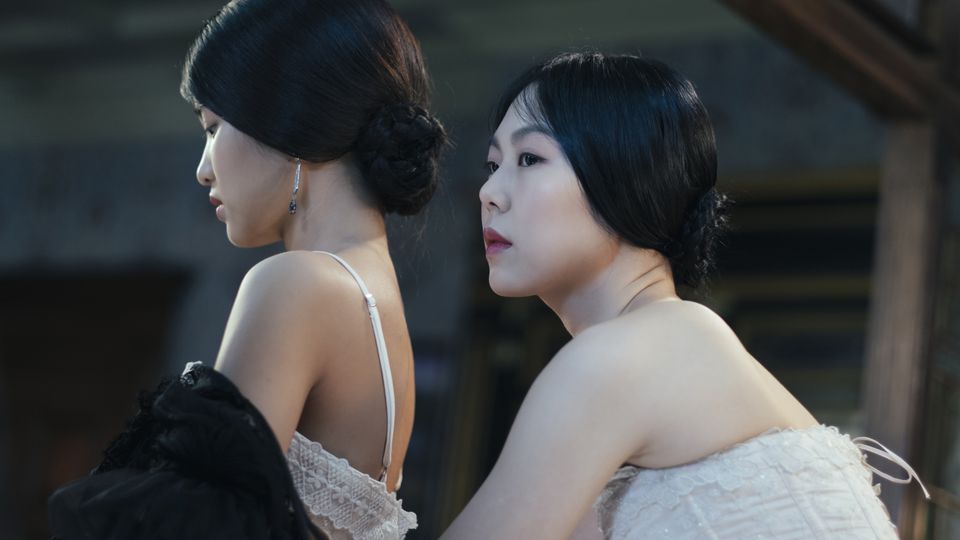
The Handmaiden – Park Chan-wook  

960-1

This really should rank as my number one, I was so taken with this movie's ambition, going beyond a thriller (this is Park Chan-wook — he's going to go above and beyond — I'm pretty certain he's a genius at this point), but the gothic power, eroticism, violence, delicious perversity and romanticism of this picture might make this his greatest work. And that's saying a lot. 

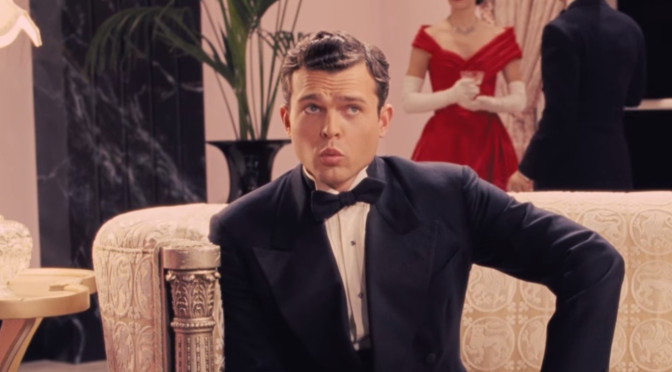
Hail, Caesar! — Joel Coen, Ethan Coen  

Watch it again. As with every Joel and Ethan Coen picture, there's a lot more going on here than wacky comedy and Hollywood hijinks — chiefly many questions about spirituality, politics and movie making (watch Jesus on the cross ask if he's a principle or an extra, consider the godhead, what about Das Kapital "with a K"… ).

6a00d83451cb7469e201b8d24c3fd8970c-800wi
And Alden Ehrenreich's singing cowboy Hobie provides some of my favorite moments in cinema this year, one being his casual lasso twirling before his set-up studio date. I'll quote the movie's most famous line, but it's as fitting as the Coen's "Accept the mystery" of A Serious Man: "Would that it were so simple."  

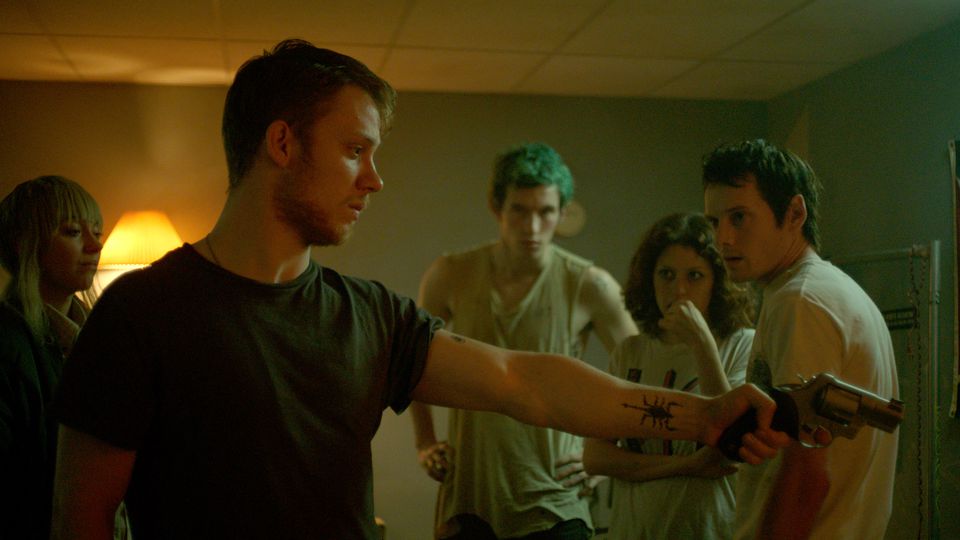
Green Room – Jeremy Saulnier

960

I thought this movie would be good, but I did not expect it to be this good. As in, so tense and funny and well acted (chiefly by the late, great Anton Yelchin, leading the proceedings with his smart, soulful eyes and genuine terror turned cynical fuck-it-all), that I even accepted elegant Patrick Stewart would lead a bunch of scumbags skinheads in the PNW woods. The last scene is met with the perfect musical punchlines of the year and did as much for Creedence Clearwater Revival as The Big Lebowski. "Sinister Purpose."

Elle Paul Verhoeven

The rape movie, as I've heard it called by some people. It's more than that, of course. It's a daring look at a woman who is not like most women in movies — not merely because of how she handles the rape that opens the film — but because of the way she talks, considers her actions, indulges her fantasies, excites her cruelty, reflects on her so extraordinary backstory that, in another movie, would seem easy and ridiculous (as in, "Oh, so this is why she's so weird…").

Elle-film-reviewTruth is, she's not that weird. She's a human being (Isabelle Huppert, brilliant). And a woman. They're perverse creatures too. Thank god. 

American Honey — Andrea Arnold

160929_MOV_AmericanHoney.jpg.CROP.promo-xlarge2

Andrea Arnold is so good with young women in her movies, allowing them danger and sex and love and music and curiosity, that I watch her movies and wish I had her around when I was 15. I talked to a friend who didn't like this movie — thought it was too American ugly — the scruffy kids and their music all scummy to be scummy — an outsider's version of America. I disagreed (also, I like "scummy" kids) and found so much beauty in those young ones, the filmmaking, just the way she allows them to take to the road and feel it, feel new love, feel fear, feel their sex, that the celluloid almost seems tangible. Like you could touch this movie. It's that vibrant and alive.

Weiner-Dog  – Todd Solondz

I do not recommend this movie to anyone. I loved it, so that sounds odd, but dear god, don't do this to yourself. This is the Au hasard Balthazar of our time and I warn people about that one too, though at least Bresson's beauty sweeps you away, somewhat. This one, though strangely beautiful (you've never wanted to laugh and cry so much at the longest, loveliest shot of dog shit you've ever seen), has a harshness that makes you grip the theater seat, wincing at what comes next.

6a00d83451cb7469e201b7c8c27448970b-800wi

And do not go if your pet is ill. 

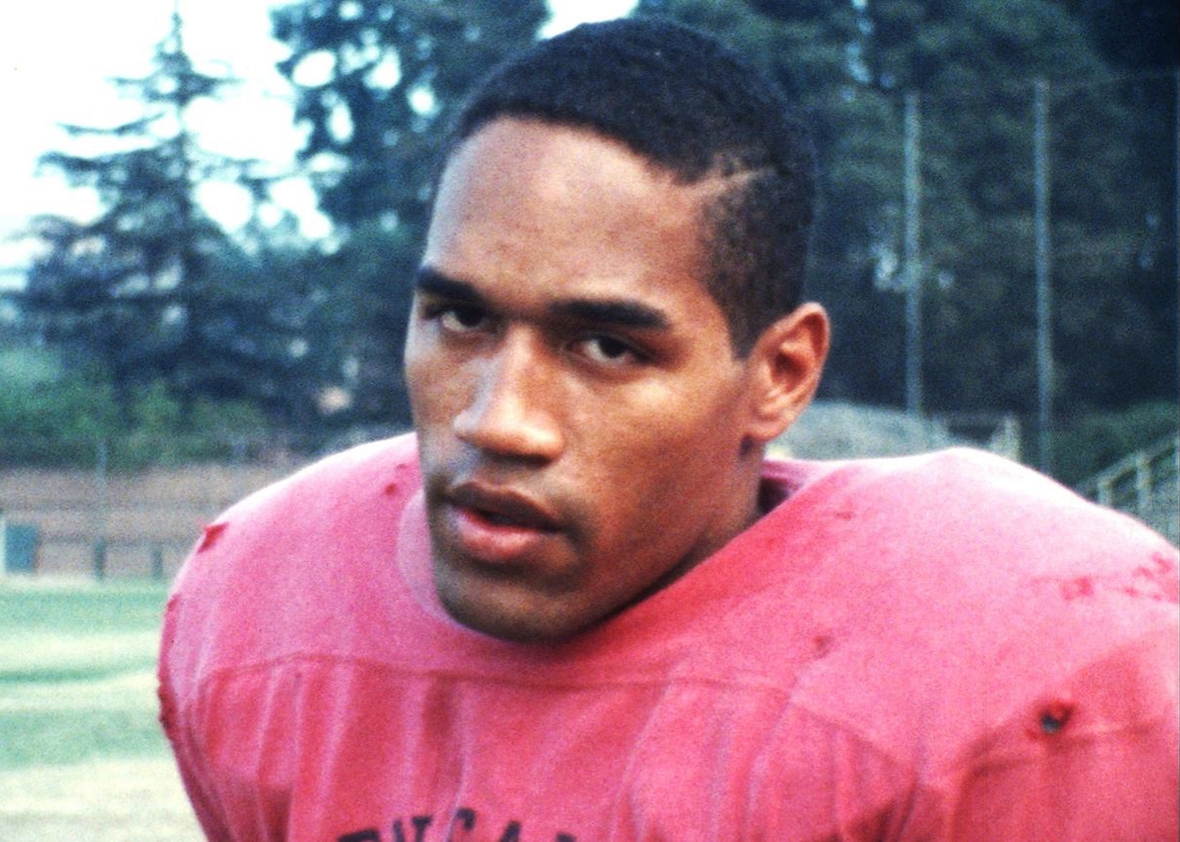
O.J.: Made in America  – Ezra Edelman

160607_TV_oj-made-in-america.jpg.CROP.promo-xlarge2

The five part documentary that deepens the headlines, the crime and the court case, and digs more profoundly into American race relations via one of our most famous fallen heroes — O.J. Simpson. It's also historically important and deeply tragic (it also goes further with the fate of Nicole Brown and Ronald Goldman), merging great cinema with great journalism — powerful, complex. I was riveted and, by the end, very sad. 

Nocturnal Animals – Tom Ford

I've not met many people who love this movie as much as I do, but I think Tom Ford managed a difficult feat — crafting a nerve-racking thriller but a ridiculous nerve-racking thriller that has to know how absurd it is. It just has to. And if it doesn't, I don't care because the picture works — both as an unreliable narrator story, telling of grief and revenge, and a look at an empty art world where we have no idea if anyone is as talented as they think they are. Is the novel Amy Adams reading, the one her poor dumped husband Jake Gyllenhaal wrote and dedicated to her any good? We don't know. It might be pulp trash but it's affecting her regardless (because who says trash can't affect us? Especially if it's personal).

6a00d83451cb7469e201bb09656a45970d-800wi

Is she even any good at what she does? Is he the toxic man some critics claim he is? I don't know. Maybe she really did give up the love of her life and he's not that bad. Jake Gyllenhaal is so powerful in so many scenes against such hot hillbillies (they sure do dress cool, but hey, a very visual woman is reading this book, we're seeing what she's seeing) that you truly feel for him. And then there's Michael Shannon, who is both touching and funny, giving the movie both gravitas and a wink. I'm gonna trust Tom Ford on this one. He's seen The Eyes of Laura Mars. He knows this movie is scary, stylish, moving and also hilarious but he's not going to tell…  

Also, Fences, Hell Or High Water, The Nice Guys, 13th  and this list will probably change…

(Movies I have not seen that could alter the list: Silence, Toni Erdmann, Paterson, No Home MovieThings to Come, Personal Shopper, Julieta…) 

Here's my Sight & Sound to five DVD and Blu-ray picks, write-ups posted later in Sight & Sound:

One-Eyed Jacks (Criterion) — Marlon Brando 

One-eyed-jacks-selvege

Napoleon (BFI) — Abel Gance
 
The Hired Hand (Arrow) — Peter Fonda 

 
Johnny Guitar (Olive Signature) — Nicholas Ray
 
Punch-Drunk Love (Criterion) — Paul Thomas Anderson

Happy New Year! 

A Very Merry Condor Christmas

6a00d83451cb7469e201b8d24a6b35970c-800wi
From my New Beverly piece on Sydney Pollack's Three Days of the Condor, the perfect Christmas movie, especially now.


Kathy Hale: Why did you tie me up like that? I mean, you thought I’d call the police. I wouldn’t have.

Joe Turner: Why?

Kathy: Well, sometimes… I take a picture that isn’t like me, but I took it, so it is like me. It has to be. I put those pictures away.

Joe: I’d like to see those pictures.

Kathy: We don’t know each other that well.

Joe: Do you know anybody that well?

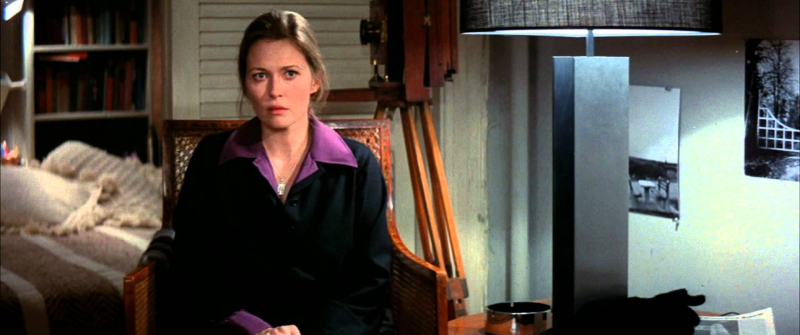
“Lonely pictures.” So says Robert Redford’s on-the-run CIA analyst Joe Turner in Sydney Pollack’s Three Days of the Condor, stopping for a moment to contemplate the photographs of the woman he’s held hostage in her own apartment while fretting over his endangered life, the CIA, his dead colleagues, including his dead girlfriend, and later, a CIA within a CIA, oil, invading the Middle East (prescient), and whatever else is going on in that big, frightening, treacherous outside world. The woman, Faye Dunaway’s Kathy Hale, sits nervously (and it’s Dunaway-nervous, a mold-breaking kind of neurotic that’s unmatched by any other actress), looking at the man who is about to tie her up, maybe rape her, trying to believe his story or not believe his story, while he muses over her doleful black and white pictures of empty park benches and bleak trees. She answers with some defensiveness, it’s her art after all: “So?” We’re with her on this one — what’s wrong with lonely pictures? He says, “You’re funny. You take pictures of empty streets and trees with no leaves on them.” Suddenly this beautiful, word-filled man with an unusual job of reading everything all day feeding codes and plots into a computer, realizes that this beautiful, visual woman who takes pictures of chilly emptiness, has a life beyond an available car and warm pad he can hide out in as he attempts to unravel an insane conspiracy closing in on him. Now he’s trying to figure out her pictures. She again defends her photography (and obscures its meaning, she’s private, and some man has forced himself into her domain and starts deconstructing her art, who can blame her): “It’s winter,” she says.

6a00d83451cb7469e201bb096395c4970d-800wi

It is winter. And it’s Christmastime, and Christmas music is playing all over the movie – all of these cheery, classic carols taunting these characters who, like a lot of people during the holidays, are stressed and sad and fucking irritated by aggressive happiness and all this “Good King Wenceslas” business, ready to practically kill themselves. (Recently, at Slate, Daniel Harmon made the excellent claim that Condor should be considered a Christmas classic. I agree. I re-watched the movie last year during the holidays and it made me feel better about the gloom of forced cheer.) Kathy’s preparing to go on a ski trip with a boyfriend and you get the feeling she doesn’t really want to go. (Perhaps this is just me but I always read this like she’s being forced into an activity her boyfriendlikes to do –  ski – when she’d rather be taking pictures). But that is now. Joe’s not buying that winter excuse because he’s so damn specific. Trying to get to what’s really going on here, her sadness and alienation, a situation that reflects his own and one he’s now thrust on her tenfold (she, too, has to figure out who to trust in order to survive), he says: “Not quite winter. They look like November. Not autumn, not winter. In-between. I like them.”  That he’s so particular could be annoying (so she took these before Thanksgiving? So what?), but it’s not, he’s genuinely halted to consider this human being before him and just why she’s running around in-between winter, before all the obnoxious holiday music drowns the world, taking photographs of forlorn objects and leafless trees. It’s also not corny, as some critics suggest, like the symbolism is supposed to resonate so much that we’re awestruck by Pollack’s meaning. He knows we get the symbolism; it’s more that Joe is actually trying to consider her work and her and have some kind of connection. What’s wrong with that? And a lot of people, those curious with one another, would have that conversation. I love how she answers so simply: “Thanks.” What the hell else is she supposed to say? This is not the same Dunaway as Helmut Newton sexy-violence-high fashion photographer from The Eyes of Laura Mars and he’s not Tommy Lee Jones (though Dunaway is forced to face another insane situation and work through her art), but it would be interesting for these two women to meet up in in the near future. They could discuss how colossally fucked up the world is and how it’s reflected, beautifully, in their photographs. Oh, and what about the Pentagon Papers? Watergate? Alan J. Pakula’s Klute and The Parallax View?

Condor-Hostage

The mood around the fantastically entertaining, politically-charged thriller, but, still, sad and rightfully paranoid, Three Days of the Condor, reminded me of another film photography discussion: Alan Arkin’s adaptation of Jules Feiffer’s darkly comic masterpiece Little Murders, also a film about alienated people surviving New York City (albeit with less Hollywood sheen, and more hilariously heightened paranoia). Marcia Rodd’s first sort of date after her violent “meet cute” finds her in Elliott Gould’s apartment, looking at what? His photography. Gould one-ups Dunaway’s desolate park benches by taking endless pictures of unhappy dogshit. And like Dunaway, he’s good at it too. Rodd compliments his pictures, but then starts psychoanalyzing in a more critical way: “Isn’t that awfully limited?”  Gould explains this is all he likes to do and she says, “No wonder you’re depressed.” He says, calmly, bemused: “I’m not depressed.” She doesn’t believe him: “So, this is it? This all that you do? You don’t… ski?” All Gould can say is, “Ski?” You get the feeling Dunaway’s unseen “tough” and “understanding” boyfriend has said the same damn thing to her. “You really need to ski.” At least Redford gets her pictures and before they sleep together, asks to see more of them, the ones she doesn’t show people. And, to me, that is part of the reason why she begins trusting him.

6a00d83451cb7469e201b7c8c0a8b3970b-800wi

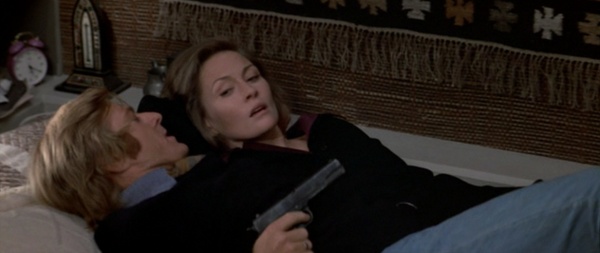
Though some critics at the time (and now) don’t buy the romance between them, and the rapey undertones – that she would consent to sleep with a guy who has previously pushed a gun in her side, threatened violence and tied her up in the bathroom while pacing around her apartment rambling about reading for the CIA and who would invent a job like that and people are trying to kill him – because what the hell? This is a guy who looks like Robert Redford rambling insane shit, not a guy who looks like David Berkowitz. But so what of that – she’s a visual person – and this movie idol man is believably truthful (not “kind” she says about his eyes, but honest) and they have undeniable chemistry (you never know who you’re going to meet and how), that it’s sad when he’s worried he can’t even trust her at the end. As Pollack said in a 2007 interview: “It’s about a man in a paranoid business who trusts everyone – and he turns from that to a man who’s suspicious of everyone because of what happens to him. In the process, he meets a girl who trusts no one, who has her worst nightmare happen – a guy kidnaps her at gunpoint – and she finds that she blossoms. So, at the end of this movie, when they say goodbye, he’s the suspicious one, suspecting that she may tell on him.”  Yes. That she finally believes his situation and helps him is not only touching, it’s also essential to Joe’s survival. Without her, he’d be dead.

6a00d83451cb7469e201b7c8c0a8b9970b-800wi

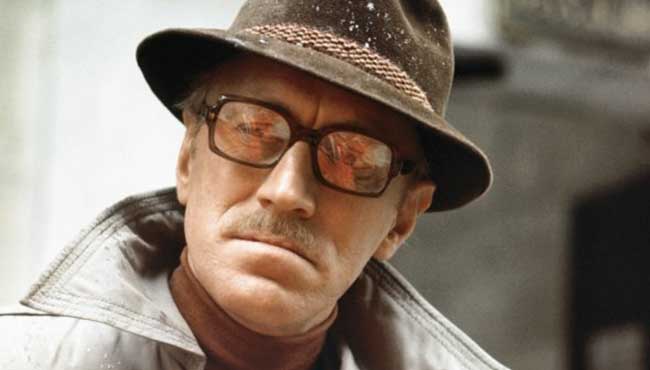
We follow Joe, thrillingly, from one reveal after another, all of the layers culminating in a face-to-face with Max von Sydow’s brilliantly cool assassin Joubert (rogue for hire) who becomes (stick with me) something like Kathy: After all that, he helps Joe too. After offing Atwood (Addison Powell, CIA Deputy Director of Operations for the Middle East – the boss to Joe’s senior, Higgins (Cliff Robertson), CIA’s deputy director of the New York division), he warns Joe of smiling men in cars who look trustworthy but aren’t (Kathy would never trust someone like that either, just as Redford running up to her in the street outside her car showed, and which her photography suggests). He recommends Joe become an assassin too – move to Europe – he’s good at this stuff. In their final scene, Joubert even brings up Kathy, the observational details, asking if he chose her based on age, her looks (Joe says it was random). Joubert hands him a gun and gives him a ride. We also wish for a moment (perversely, given the presented future occupation), that they’d go off together. Kathy, a fine suspicious fit for Joe and skilled at observation herself, had to leave. Taking off with von Sydow’s seductive, fine-boned creature seems appealing. But alas, Joe claims he’d miss America too much. “A pity,” Joubert says.

Three-days-of-the-condor-3

And, then back to Christmas in New York City. (The movie was adapted from James Grady’s novel, “Six Days of the Condor,” which I’ve not read, but it mercifully cuts down the timeframe of holiday hell). By the end, a smiling Higgins has a car for Joe on a crowded holiday-bedecked street while a likely miserable, alcoholic freezing-his-ass-off Santa Clause is ringing a bell. “God Rest Ye Merry Gentlemen” is being sung (again, madness-inducing) while Joe attempts some kind of power through the press. It’s ambiguous if that’s going to work and Higgins tells Joe to get ready to become like one of Kathy’s photographs: Lonely. What the hell is going on in America? The world? Who to trust? Will any of this shit work? Merry Christmas.

Elliott Gould on The Silent Partner

6a00d83451cb7469e201b7c8c075a0970b-800wi
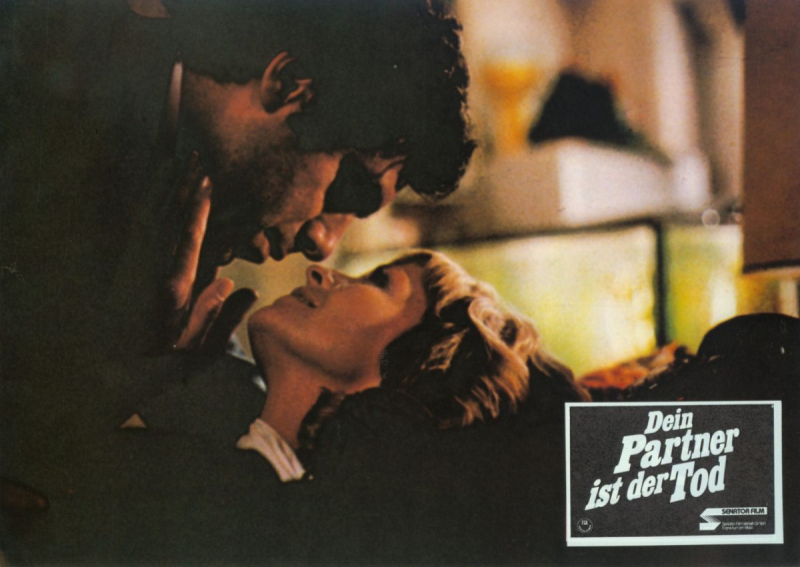
Happy Christmas Eve! The New Beverly is showing The Silent Partner tonight, and I talked with my friend, the iconic Elliott Gould about starring in a very Canadian thriller. And more. Go see it tonight!

Kim Morgan: Thank you for talking with me about The Silent Partner. The theater is showing it on Christmas Eve…

Elliott Gould: I love that you’re doing that. It’s great.

KM: It’s a holiday favorite and a magnificent movie any time of the year. Daryl Duke is such a provocative, unique filmmaker – dark and funny. Payday is something of a masterpiece and so is The Silent Partner.  How did you get involved with Daryl Duke and this project?

6a00d83451cb7469e201b7c8c075b4970b-800wi

EG: Daryl was wonderful. Daryl was interested in me doing it. I read the script and the book. It’s an interesting book – “Think of a Number” – it was Scandinavian. And Curtis [Hanson] bought it or optioned the book and wrote the screenplay. I recall it took me a long time to commit to it. I’m slow, you know, I try to be deliberate. Or, on the other hand, I can be extremely impulsive and go too fast. Daryl and I were quite friendly, but I remember meeting with Daryl in the boardroom at the agency ICM, and it was just Daryl and me. And Daryl said to me: “I don’t want any of you in the picture.” And I thought, A. I’m not committed to your picture yet and who do you think I am? Who are you talking about?” So you have a reference of work I’ve done before? I mean, this is going to be something new for me. And I’m going to be something, hopefully, new enough for it. But I did adore Daryl Duke and we had a very good work relationship. We talked about doing other things together. Daryl was a friend.
KM: There are also so many excellent collaborators on this project… as well as being beautifully directed and acted, and it’s so wonderfully shot…

6a00d83451cb7469e201b8d24a37d3970c-800wi

EG: Yes. You’ll find this interesting: Late evening in [an office] in Toronto, I was looking out the window with [cinematographer] Billy Williams, who had done Women in Love and then went on to do Gandhi – he was a great cinematographer. And I was looking out the window with him, and the sky was orange like it happens in the summer, and I knew we had a picture, because we were looking out of the window at the same time at the same light. Billy Williams is first class.

KM: And the score by Oscar Peterson…

EG: I met Oscar Peterson in London at a place called the White Elephant, in 1978, when I had gone on to start to make a remake of Hitchcock’s The Lady Vanishes. I was with Herb Gardner, the writer who wrote A Thousand Clowns andI’m Not Rappaport. I saw Oscar, and I said to him, “Are you validated? This is the first picture that you did and was it worth it?” And Oscar said, “Yes.” He was very happy with it and that made me feel good.

Silentpartner5

KM: Also John Candy…

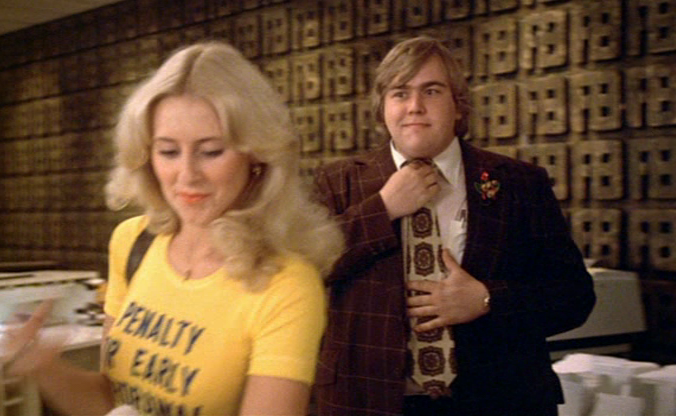
EG: We introduced John Candy and one of the funny things is, his name in the script was “Simonson.” And the scene where the police came in to see what was going on with the robbery, I said “Simonson.” And I thought he should have a first name so they let me give him one. I dubbed him “Raoul.” “Raoul.” It was very intense in terms of where my character’s head was at, that scene. And when I’d say “Raoul” I couldn’t stop smiling because it was so funny.

KM: It’s a tense film, the action is unique – the scene through the mall with Christopher Plummer in the Santa Suit – as well as other scenes both violent or just at the office or at a party, they’re human and scary and, again, funny. Duke has a sly sense of humor …

EG: That’s interesting. Daryl used to do television; I think he used to do Steve Allen shows…

KM: I was reading early reviews of the movie when it came out, Roger Ebert in Chicago for instance, and he loved the movie and commented that it kind of came from nowhere. The movie didn’t show on enough screens. It deserved better.

6a00d83451cb7469e201b8d24a3787970c-800wi

EG: People were trying to drive a harder deal with Paramount and what a work like that would need, in terms of stimulating an audience, would be distribution and money to spend on prints and advertising… So I know that it played in Chicago… It played in South America. I had people from Argentina who said that they liked me so much that I could be with their horses. And horses mean a lot to people in Argentina. It was a good picture. It was different.

KM: The movie, its twists and turns, is rightfully compared to Alfred Hitchcock. You mentioned Hitchcock earlier…

ER: I met Mr. Hitchcock in 1977, when I was co-hosting a prime time network presentation show – the Photoplay Awards. After our last camera rehearsals the management came to me and said, “Alfred Hitchcock is here to collect his award, can he sit in your room?” My room was the closest to the stage. And I said, “Well, of course.” And so I went back to my room and there’s Alfred Hitchcock. This was the first time we met. And this was May of 1977 because I had finished Capricorn One, and I was going off to do The Silent Partner. And so I walked into my room and there was Alfred Hitchcock with an assistant and I said to him, “Are you going to make another film?” And he said to me, “I’m toying with one now.” And then he leaned closer to me and he said, “I said, I’m toying with one now but I don’t know if the audience still wants my fantasy.” To which I responded, “Without a doubt.” And then we talked a little bit about The Silent Partner, and he knew it. I went off to prepare to do The Silent Partner and I started to write to him. I wrote Mr. Hitchcock a couple of cards because I knew I wanted to keep that in mind. I wanted it to be a sort of Hitchcockian story. He was a perfect reference for The Silent Partner.  And then, coincidentally, the next year, I didThe Lady Vanishes with Angela Lansbury and Cybill Shepherd – that’s when I started to communicate with Mr. Hitchcock and got the chance to spend some real quality time with him.

Sprt4KM: Did you bring any of your earlier talk with Hitchcock into the movie? With Duke or Curtis Hanson?

EG: No, no. Curtis and I barely talked. We played liar’s poker and Daryl and I were quite friendly. I was not happy that he was taken off the picture. He wouldn’t do the beheading scene. I called Daryl in Vancouver and he said that what he stopped his work on it and he was a minute away from what he wanted.

KM: Really?

EG: Well, it was him and Curtis Hanson until post-production when they took Daryl off the picture so they could shoot the beheading, which was never in the script.

KM: They took him off for that?

EG: No, the picture was done… I don’t know. I had never talked politics, that’s just what happened. Daryl Duke was great. I don’t think he wanted to shoot the beheading … they took him off for whatever reason… I thought that Daryl did an almost perfect job with the picture. And then I said, “I have to see this for myself because I don’t want my head being fucked with.” So on my own dime, I flew from Toronto to Vancouver to see Daryl’s print and they were right in the same place. And Daryl would not compromise. I got back on the road and went to Europe to work with David Niven and Gil Taylor, the cameraman, to do that picture [Escape to Athena].

6a00d83451cb7469e201b7c8c07667970b-800wi

KM:  So … the beheading scene, who’s idea was it? Someone had the idea to put that scene in there to make the film more shocking and add extra impact?

EG: Maybe. I don’t know. I won’t speculate. All I know is that I did the picture with Daryl Duke and then in post-production, I did what they asked me to do. And then I flew out to see what Daryl’s version was, and they were close to the same. But they wanted that thing in it… I was not happy about it. Daryl really did a wonderful job… I mean, I really believe in loyalty. And perhaps that’s in terms of karma, that’s one of the reasons the picture didn’t go further because of that kind of… I can’t think of the word, there’s a word, it’s an interesting word and maybe I’ll flush it out since you and I are friendly. I don’t know what the word is, but it’s not so good.

KM: That’s curious because the picture reflects some of these things you’re talking about…

EG: Well, in a way it’s about integrity, which seems sort of peculiar. I’ve done a lot of things, especially Little Murders, something like that where I didn’t understand it. And people live lives – and you know this – they live their life and don’t understand what they’ve done or what they’re doing. But you’ve got to live it and experience it and then deal with it to make the adjustments.

KM: It does also extend to this movie where Miles is striving to have a better life…

Vlcsnap-2012-12-14-21h04m48s150EG: Better life? He’s striving to have a life! He’s the keeper of the vaults who cannot have a relationship with the girl he’s attracted to. And then he goes through this. The key in the jar of jam and then it getting thrown out and him having to run after the garbage truck…

KM: You’re always so great, so unique as a romantic lead. You have this magnetism that’s all your own

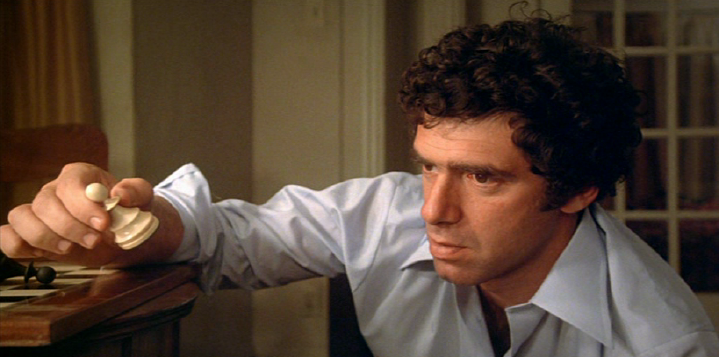
EG: Aw, that’s so kind of you. But he [Miles] was an interesting guy! It was way off-center. I remember the clothes that they made for me. In the picture they attired me very well. And my apartment was interesting. Those details. The chess game. It was someone living in his head

KM: And then getting involved with the lovely Celine Lomez, which adds another layer and another attraction…

EG: It gives him some confidence. He didn’t have any confidence! And, also to go against that creepy guy that Christopher played. It gives him some balls.

KM: The chemistry is there with Susannah York where you think, why is she so interested in the bank manager?

EG: Well, listen, you know this: She needs some degree of security. And the bank manager was a youngish guy and [Michael Kirby] was a good actor. There was no chemistry between the manager and she, but there was some degree of security, something that was predicable. But it was unpredictable with Miles. I really appreciate that you’re going into the romantic part of it. It is quite romantic, the movie. The whole case is a very interesting metaphor in getting someone to come out and get involved in life.

KM: Plummer is really terrifying throughout the film, but by the end, he’s really under your thumb and seems almost vulnerable, which is interesting to think of then that he changes up from dressing as Santa Clause to dressing as a woman…

6a00d83451cb7469e201b7c8c0769a970b-800wi

EG: Well, that was his thing. I can’t think of why necessarily. I’m sure you’re right. But he being dressed as a woman was just so creepy… and Plummer was a very very creepy guy in that part. Christopher was great. But [initially]… I had wanted Mick Jagger to do Christopher’s part. Mick, in honesty, is not so creepy. Or, David Bowie.  I wouldn’t have necessarily seen Mick or David Bowie act. It would have been like, “I don’t know these people? Who are they? These are people from space.” But Christopher was great and he gave me a touch of class.

KM: Miles is one of your great characters.  Did you at all approach him differently than other roles you’ve played?

EG: I approach everything from the same place and in the same way. It’s like what Alfred Hitchcock had said to me: It’s all music so, therefore, it’s a composition…


Anthony Burgess & A Clockwork Orange

6a00d83451cb7469e201b8d247df7b970c-800wi
My piece on Anthony Burgess and A Clockwork Orange, the novel and movie, which plays one last night tonight, at The New Beverly

I think it’s the job of the artist, especially the novelist, to take events like that from his own life, or from the lives of those near to him, and to purge them, to cathartise the pain, the anguish, in a work of art. It’s one of the jobs of art. I think it was D.H. Lawrence who said, ‘We shed our sicknesses in works of art.’” – Anthony Burgess

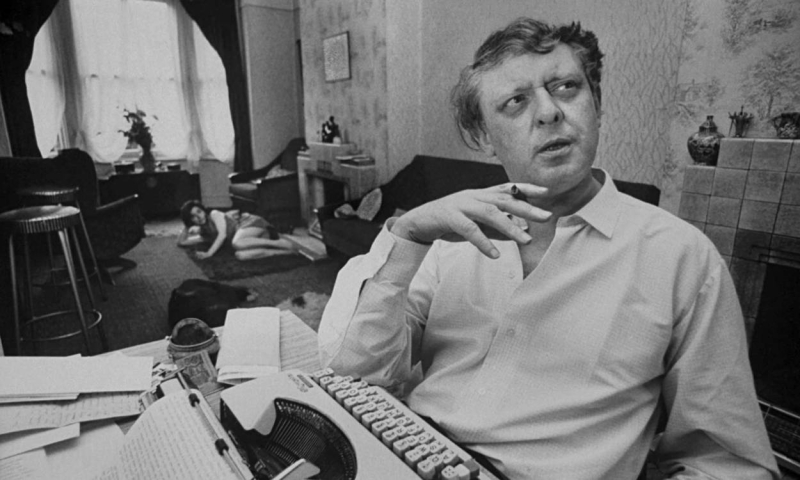
Before writing A Clockwork Orange, Anthony Burgess thought he was going to die. This is what he said, anyway. An education officer in Malaya and Brunei, he began writing under the name Anthony Burgess (he was born John Burgess Wilson). He taught, reportedly argued with headmasters and led a rather unhappy, though insatiably intellectual life. He drank. So did his wife, who imbibed with extraordinary excess. But he did begin writing his novels, shaping his style and voice with that musical and linguistic obsession while observing, listening and soaking in the direct horror through his tragic first wife, a horror (not “horrorshow”) that would partly inspire his most famous work, A Clockwork Orange. That was likely the key event – what happened to his wife – this unfortunate Welsh woman named Lynne who, by many accounts, was an unpleasant libidinous lush; a woman who, at first, inspired Burgess but then angered him with her overindulgence and bed-hopping and god knows what else.He, too, apparently cheated. Given what happened to her, one’s drinking would likely increase, if one were an alcoholic, and one’s unpleasantness, too (my god, give Lynne a break, I keep thinking). But I’ll get back to her because there was that other thing. That medical emergency.

_86845400_burgessbbc

One day in 1959, Burgess collapsed while teaching and was rushed home – a brain tumor was the diagnosis. He was given less than a year to live. That’s whatBurgess had famously stated. Is this true? According to Burgess’ biographer Andrew Biswell and the reviews of the biography I pored over, perhaps, not? This could be some kind of Burgess fantasia (he lived 34 years past that). Perhaps he made up the condition? If not, it was obviously a misdiagnosis which is still terrifying, and I tend to want to believe his story, or a version of it, because he wrote numerous books in such short time. Write! Before you die! It makes sense. But it’s also interesting to consider the fantastic notion of it all. I am just postulating, but perhaps this marriage, this depressed wife poisoning herself required yet another narrative for himself? Another malady and one so directly deadly? Is it possible, as some critics speculated, that Lynne made it up to get out because he also wanted to get out? This mythology (possibly?) was the stimulus to create infamy and urgency, to make a case for the rest of his life, in which it seems a day did not go by that Burgess did not write something.

6a00d83451cb7469e201b7c8be1e01970b-800wi
 
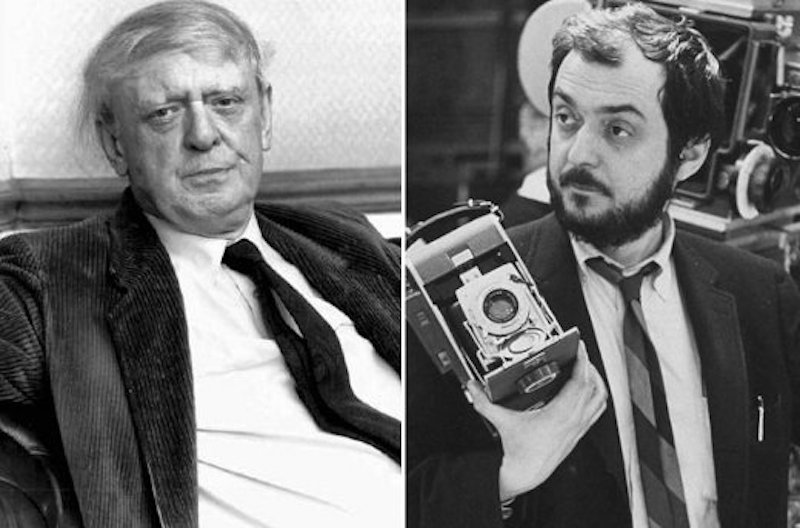
He was the complete opposite of the master who turned his most famous work into one of the most controversial movies of all time, Stanley Kubrick; Burgess was absurdly prolific, seemingly never pausing to breathe between books. Eventually, this seemed to exhaust critics (probably himself too?). He wrote more than 50 works. He wrote novels but also books on music and James Joyce and Shakespeare. He was an amateur composer. He reviewed and essayed and interviewed. He went on Dick Cavett in 1971 and told a funny story about that famed brain tumor. He’s witty and “on” – who cares if he might have made it up? I certainly don’t. But the real truth was, after that infamous diagnosis, it was his wife who had very few years left to live.

6a00d83451cb7469e201b7c8be1dee970b-800wi

He wrote his dystopian masterwork, A Clockwork Orange (published in 1962), supposed diagnosis looming, marriage in shambles. As I re-watched Kubrick’s picture, I thought about the movie and I thought about Burgess; I kept reading Burgess’s back-and-forth reflections on the novel, years of interviews and autobiographical explanation, over and over (I surely I missed even more, there seemed to be so many). I then watched the movie again. Burgess’s haunted memories and, at times, guilt, hung over the picture like some kind of Kubrickian bi-proxy (whose own family would be threatened because of the movie, according to Kubrick’s wife), mirroring why it’s so powerful and enduring, upsetting and exciting. Why it gives you a rush and slaps you down, and almost guiltily, lifts you back up – a brilliant, sexy, disgusting, funny, violent political satire that thrills and sickens.

A-Clockwork-Orange-1250x753

Kubrick’s opening shot, in which Alex stares directly at you, is challenging, hypnotic and complicit. We’re in this terrifying world and we’re rapt (which has repulsed and angered some viewers and critics – we’re stuck with this psycho as our leading antihero). I keep saying this about Kubrick – that he’s frequently and unfairly accused of coldness –  but he’s not cold – his technical achievement and exacting detail, his perfected frames, his innovation; they are not mere show, and rather, enrich the material and deepen our feelings and discomfort as we gaze and listen and, of course, enjoy.

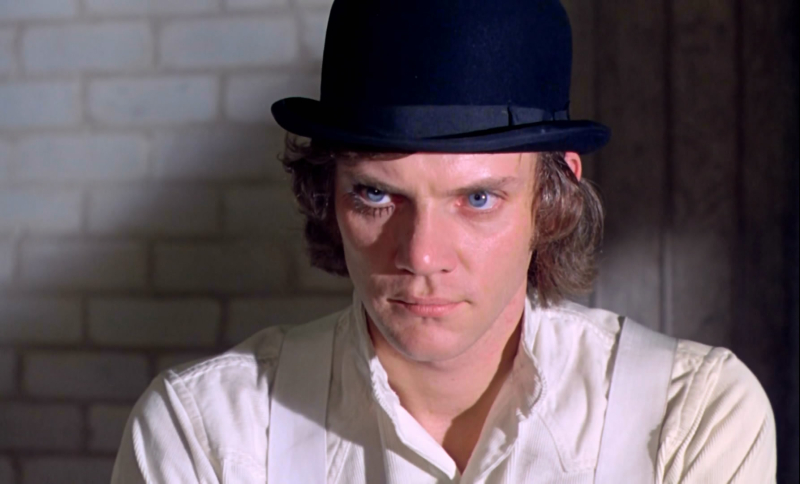
Because, you (or, I, rather) can’t not feel some kind of buzz for Malcolm McDowell’s Alex. His sociopathic joie de vivre and white-wearing, bowler-topped style is too seductive and musical, even as his actions sicken. This buzz does not mean getting off on the violence (though some surely do), and this buzz becomes a kill when Alex and his droogs are abusive, chiefly when beating up and raping the writer and his wife in their home (darkly humorously marked “Home” outside) while perverting “Singing in the Rain.” This scene is so distressing, messy and ugly, and yet, superbly graceful on the part of a magnificent McDowell that, the first time I saw it (on VHS, in high school) my friend stormed out of the room, distraught. Too much joy! My eyes remained peeled to the screen. I felt awful for this couple but I was transfixed. It was unlike so many other violent movies I had ever seen and remains so to this day. I am not desensitized by it. It's so violating and so casually unmoved, their act, and yet it feels so incredibly personal. It was.

In an interview with the Village Voice, Burgess said: “It was the most painful thing I’ve ever written, that damn book… I was trying to exorcise the memory of what happened to my first wife [Lynne], who was savagely attacked in London during the Second World War by four American deserters. She was pregnant at the time and lost our child. This led to a  dreadful depression and her suicide attempt… It was the only way I could cope with the violence. I can’t stand violence. I loathe it. And one feels so responsible putting an act of violence down on paper. If one can put an act of violence down on paper, you’ve created the act! You might as well have done it! I detest that damn book now.”

6a00d83451cb7469e201b7c8be1e53970b-800wi

Strong words. And not surprising. A stricken, despairing Lynne, a victim of group violence not unlike the droog attack, died a painful death in 1968 from liver failure. She drank herself to death. Burgess remarried the same year to an Italian translator and literary agent named Liana whom he was seeing as Lynne was fading. He remained married to Liana until he died. The movie was released in 1971 and Burgess became even more famous. Guilt? Survival? Sheer ambition? Probably all of it – Burgess is nothing if not complicated and so available to discuss (in interviews, on television, in his own reviewing) that his ubiquity somehow makes him even more mysterious and tough to unravel. Burgess finds beauty in this horrifying world but, at times, seems angry with himself. As relayed in the Second Volume of his autobiography (via David Hughes’ “The Complete Kubrick”) he said, “I saw that the book might be dangerous because it presented good, or at least harmlessness, as remote and abstract, something for the adult future of my hero, while depicting violence in joyful dithyrambs. Violence had to be shown, but I was sickened by my own excitement at setting it down.”

This, I find fascinating, how he dealt with his wife’s tragedy if this was indeed the only way to exorcise those demons (Burgess said a lot of things). Working through pain and grief through a frightful, exciting teenager, whom he casts as narrator, Burgess walked through the fire of free will, creating startling ultraviolence, hipped-out hedonism and beauty. For a man like Burgess who mostly disdained youth culture and popular music, it’s interesting, then, that the book and movie continue to be a teenage rite of passage, and is referenced endlessly in popular culture – from David Bowie to New Order to The Simpsons.

But, again, what a horrifying and intriguing way to face his wife’s wrecked life: by putting yourself in the mind of a young, ebullient psychopath and finding sympathy. And, then, also finding joy in all the things Burgess found such distinct joy in – classical music, beauty and language – and giving that sociopath a language all his own (Nadsat), a kind of slang poetry that’s lowbrow and exquisitely formal at the same time (Kubrick compared Alex to Richard III). Reading one of Burgess’s New York Times’ pieces on poet Gerard Manley Hopkins, I thought of Alex-speak when he wrote: “Modernism was dangerous, and one of the marks of modernism was strangeness of language. Hopkins, like James Joyce, had bizarre compound words like ‘beadbonny’ and ‘fallowboot-fellow’; he seemed to be dragging the Germanic roots of English out of freshly dug earth.” I then thought of Alex reciting “Pied Beauty”: “Fresh-firecoal chestnut-falls; finches’ wings…” What a lovely thought, Alex saying such things. He could have.  And then I remembered it was Alex – what would come after such beautiful verses?

6a00d83451cb7469e201b7c8be1e37970b-800wi

The unduly harsh behavioral modification, the Ludovico technique, will solve nothing and removes any “Pied Beauty” from the world. And the bureaucrats are just as twisted as Alex. The movie’s final scene finds Alex, cured of the Ludovico, now some kind of celebrity, smiling while being spoon-fed by the apologetic Minister of the Interior. His face fixes into a wicked expression as he imagines himself naked with a beautiful woman, onlookers cheering him on. When Gene Kelly floods the soundtrack as the closing titles blast our eyeballs over red, we’re powerfully unmoored. This is the only way to close the movie, in my mind. Burgess would not agree or, rather, he didn’t know what to think.

32-1

Burgess’s UK edition of the book included an extra last chapter in which Alex seeks goodness in life. This was not so in the U.S. edition and Kubrick didn’t know about it until he was already making the picture and wouldn’t have used it anyway. Burgess thought this was an extremely American point of view. He told the Paris Review:  “Kubrick discovered the existence of this final chapter when he was halfway through the film, but it was too late to think of altering the concept. Anyway, he, too, an American, thought it too milk-and-watery. I don’t know what to think now. After all, it’s twelve years since I wrote the thing…  They seem to me to express in a sense the difference between the British approach to life and the American approach to life. There may be something very profound to say about this difference in these different presentations of the novel. I don’t know; I’m not able to judge.”

When presented cinematically, Burgess and Kubrick’s ideas became even more dangerous to social hysterics who began blaming a rise in violent crime on the film, which both novelist and director resented. Kubrick famously pulled the film in 1974 (as previously mentioned, his family was receiving death threats), banning it from ever being shown in the British Isles and Ireland (this was reversed shortly after his death). As I’ve discussed, Burgess wavered on his novel, and the movie  – he also resented that out of all of the works he published, it was A Clockwork Orange most everyone talked about.

6a00d83451cb7469e201b8d247e016970c-800wi

Even though Burgess and Kubrick were conflicted about the work (for various, seemingly mostly personal reasons), they would agree regarding the question (if it’s even a question – it’s been discussed ad nauseam): Should evil be erased and goodness be imposed? No, of course not. That’s totalitarianism and that’s dangerous. One of the most horrific maladies of Alex’s rehabilitation is how it sickens his love of Beethoven’s Ninth, so much that he must attempt suicide. This is, obviously, anathema to Burgess and Kubrick. The message sticks, of course, but it’s the way both novel and film present the “message” (this isn’t exactly a preachy film) through such a vivaciously twisted anti-hero, who returns right back where he was by film end, that makes the story so unique and compelling.

A107843c-3aa0-4a46-95d0-1a1e7631f56e-2060x1236-1

There’s a television interview of Burgess promoting the picture with Malcolm McDowell in which he says to moderator William Everson that he doesn’t find his work a depressing view of the future because he’s not “capable of getting depressed very much.” Curious, considering what influenced all of this. Presumably still on good terms with Kubrick (there was a falling out regarding the unrealized Napoleon project, and then his eventual resentment of Orange) he doesn’t appear haunted here but … Burgess gave good interview. He’s entertaining and eloquent in ways you don’t see on TV anymore. He sums up the work beautifully:

“I think that man is probably inherently bad or inherently anti-social. But, in a sense, men’s original sin is a product of his own will, he willed it himself and by curious paradox, this will is a rather glorious thing to possess. There’s a terrible statement made by St. Augustine which all Christians like to forget, but what he said about the fall, the fall of Adam, was this: ‘Oh happy fault. Sins that produce so great a redeemer.’ In other words, the orthodox Christian must feel the fall from grace… was a good thing, that it produced Christ, and it’s a good thing on a secular level because it indicated man’s desire to make his own life, to work his will, to make mistakes, and in the process of making mistakes, produce, as kind of byproducts, things like art and beauty in the life. Out of this powerful libido of Alex for instance, in the book and in the film, there is also cognizant with it, a realization of a beauty of music, a beautiful world, a beauty of language. Alex is a man in that he is violent as men are, he loves music, he loves beauty and he loves language. These three things go all together. If you produce a human being without the will to do evil, if you produce a human being without the will to do anything, and certainly not the will to create. So, this is not in my view a gloomy view of man of all. It’s a fairly realistic view of what man is like and the book, and also the film, represents a kind of fabula treatment of this human condition. It is not the future, really, it can be the future if you will, but it’s just a period of time which is at a slant to real time.”

6a00d83451cb7469e201bb096109d0970d-800wi

Burgess died in 1993 at 76 (a ripe old age considering his early diagnosis) and Kubrick in 1999, at age 70 (which, at the time, seemed premature and sudden). Though Burgess is impossible to sum up (no person should be so easily assessed), listening to him discuss the novel and movie in that earlier television clip, he seemed to be describing his own life, his possible mythology. Burgess, himself, reminds one why art and life are complex and not so simple to summarize or merely write off. And, in the case of A Clockwork Orange, writing off such thoughtful, innovative work as simply obscene or offensive. The book and movie continue to shock, sicken and inspire, while its creators, one who talked publicly (a lot) and the other, very little, are both endlessly analyzed (especially Kubrick), both still fascinatingly enigmatic. The work is alive and vital; our feelings toward it don’t sit there so easily and remain, as Burgess said, “a slant to real time.”

Doubles, Dolores Haze, Desire: Lolita

6a00d83451cb7469e201bb095e8080970d-800wi
Here's my New Beverly piece on Stanley Kubrick's "Lolita. Playing tonight and tomorrow at the New Beverly Theater. Go see it!

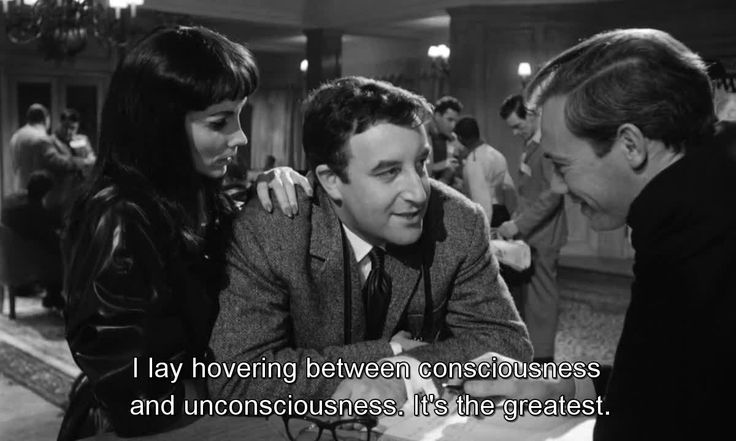
With Lolita, Stanley Kubrick and Peter Sellers seemed to have conspired to trap and hound their players on screen. Kubrick with his camera, style and irreverence; Sellers with his clever, often improvised conscience-cracking pursuit of the tortured romantic intellectual James Mason.

In various disguises, Sellers’ hipster Claire Quilty follows Mason’s lovesick academic Humbert Humbert from town to town, school to school, motel to motel, house to house almost as a fully realized figment of Humbert’s guilty  conscience – a guy just running around, like some cool Dostoyevskian double; a riddling reminder of his rationalized desire soiling his poetic, abiding love. The chameleon/impersonator vulgarian Quilty, a rival who knows exactly what the more “distinguished” Humbert is: a pervert. No love poems or odes to that light of his life are going to change that, nor will it make him stop pursuing that lovely blonde fire of his loins, for he’s an exploiter too. And that bedevils Humbert as he holds his unacceptable amour so tightly to his heart. Only death will make the devil stop watching, talking, reminding and bizarrely deconstructing. As such, even Quilty’s not going to make it out alive. But like a camera, he reveals, he notices and he also mocks.

6a00d83451cb7469e201b7c8bb86cb970b-800wi

Says Quilty (impersonating a police officer): “I notice human individuals – and I noticed your face. I said to myself when I saw you – I said, ‘That’s a guy with the most normal-looking face I ever saw in my life…’ It’s great to see a normal face because I’m a normal guy. It would be great for two normal guys like us to get together and talk about world events – you know, in a normal sort of way… May I say one other thing to you? It’s really on my mind. I’ve been thinking about it quite a lot. I noticed when you was checking in, you had a lovely, pretty little girl with you. She was really lovely. As a matter of fact, she wasn’t so little, come to think of it. She was fairly tall, what I mean, taller than little, you know what I mean. But, uh, she was really lovely. I wish I had a lovely, pretty tall, lovely little girl like that, I mean… Your daughter? Gee, isn’t it great to have a lovely, tall, pretty little, small daughter like that, it’s really wonderful.” 

6a00d83451cb7469e201b8d24545a2970c-800wi

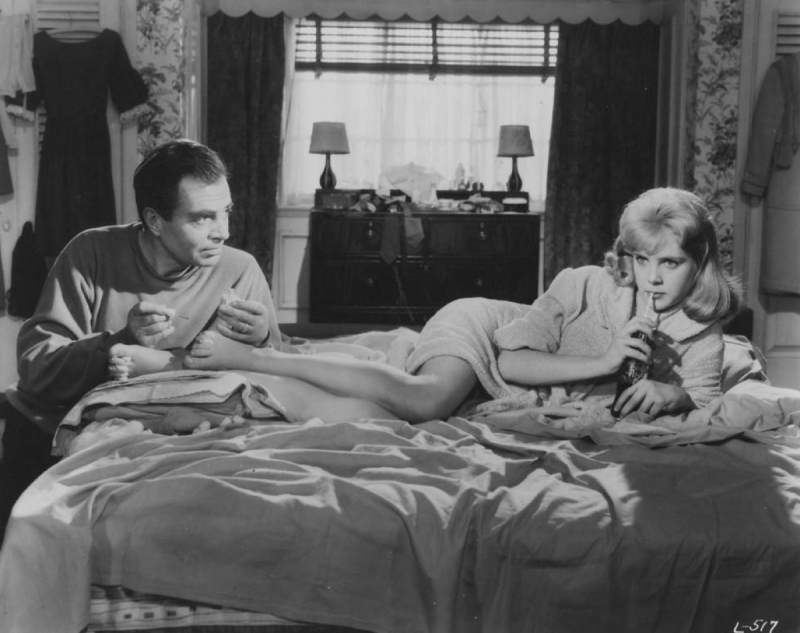
Kubrick obviously notices too (it’s his job, his art) taunting “normal” like Quilty and taking in Humbert’s handsome, haunted face, making him both constantly stricken, intelligent but pretentious and stupidly, pathetically lovesick. And then, of course, the iconic introduction of Lolita (a brilliant Sue Lyon) in hat, sunglasses and bikini, Nelson Riddle’s “Lolita Ya Ya” gently mocking Humbert’s heart – that’s a picture no one ever forgets. She’s a beautiful “normal” teenage girl, but through Humbert’s eyes, she’s love at first sight (viewers feel this gasp as well). Kubrick snapped those observations beautifully, first through his innate, precocious talent with photography (he started early, a teenager himself at age 17, the youngest staff photographer at LOOK Magazine; he likely saw a lot of weird adult behavior through young eyes). As I’ve written about Kubrick’s photography in previous pieces, notably Killer’s Kiss, Young Kubrick “honed his craft on the street and in the darkroom  – lighting, composition and of course, drama– the drama of life and how to capture it in an image – sometimes made surreal by the sheer intensity of reality.” Humbert looking at “normal” pretty America girl Dolores Haze is an intense reality.

Lolita04

And reality is so heightened in Lolita (adapted, with changes, from Vladimir Nabokov’s masterpiece) that the absurd, but perfectly absurd Claire Quilty enters the picture relentlessly (Pauline Kael aptly called Sellers’ performance surrealist – it is), and his strange, often nasty humor finds himself at a high school dance as if this is perfectly normal. It’s not. And yet it is. There’s always some “cool” exploiter hanging around teenage girls (just ask one). Being a young teenage girl is one “normal,” bumbling, bizarre, crush-worthy, inappropriate, terrifying pass after another – and many girls, like Dolores Haze, are so used to it, they roll their eyes and sip on their soda, demanding a sandwich with lots of mayonnaise because, why not? It’s not like these lecherous looks and embarrassing odes of love are going to stop. Eat all of their bacon while you’re at it too. Some might think that’s flippant on the filmmaker’s part, but to me, Sue Lyon’s Lolita, mixed-up and fatherless, attracted and flattered but also mockingly amused, is doing what she can to survive through all this

She’s also utilizing a power that is admirable but will hurt her in the end. A lot of girls struggle with this power as men wind up blaming them for that very power they were so enamored with in the first place. Humbert is “forgiving,” which has marked him (with much understandable argument) as the unreliable narrator/tragic romantic hero of the story (particularly the novel). Is this a love story? It is on Humbert’s end of it, but not really Lolita’s. Clearly it’s not that simple. And, even past her female prime (to Humbert’s abnormal age range) and pregnant, he still loves her. From the novel: “I insist the world know how much I loved my Lolita, this Lolita, pale and polluted, and big with another’s child, but still gray-eyed, still sooty-lashed, still auburn and almond, still Carmencita, still mine… even if those eyes of hers would fade to myopic fish, and her nipples swell and crack, and her lovely young velvety delicate delta be tainted and torn…” But, she’s not going to return to him.

6a00d83451cb7469e201bb095e8147970d-800wi

Working from the novel (published in the U.S. in 1958), one of the greatest novels ever written (Nabokov did get a screenplay credit, he wasn’t entirely thrilled with the movie), Kubrick’s Lolita faced scrutiny on many fronts: For being obscene, for not being obscene enough, for changing the novel, for not being as brilliant as the novel, and for the casting of Sue Lyon, who was upped two years (Nabokov’s 12 to Kubrick’s 14). In the book, Humbert is not fond of the “older” girls – coeds: “There are few physiques I loathe more than the heavy low-slung pelvis, thick calves and deplorable complexion of the average coed (in whom I see, maybe, the coffin of coarse female flesh within which my nymphets are buried alive).”

To Nabokov’s Humbert, Lyon would be on the precipice of being trapped in that flesh coffin and some critics thought she was too, well, understandably sexy; they didn’t feel uncomfortable about this young woman. The New York Times’ Bosley Crowther wrote of Lyon: “She looks to be a good 17 years old, possessed of a striking figure and a devilishly haughty teen-age air. The distinction is fine, we will grant you, but she is definitely not a ‘nymphet.’ As played by Sue Lyon, a newcomer, she reminds one of Carroll Baker’s ‘Baby Doll.’ Right away, this removes the factor of perverted desire that is in the book and renders the passion of the hero more normal and understandable.”

6a00e5518490a088340148c73a831e970c-800wi

“More Normal.” Jeez, well, she was 14-years old when she started the picture, Bosley Crowther, but never mind that. We do understand the attraction. The nymphet was an alluring presence in popular culture (still is), particularly by 1962 when the name “Lolita” conjured up a particular type: Tuesday Weld, who was up for the part (she said, “I didn’t have to play it. I was Lolita.”), Hayley Mills (also a contender) and even James Mason’s own daughter, Portland, whom Mason reportedly requested as an option for young Lo. Yes, James Mason’s own 14-year-old daughter as Lolita. Can you imagine?

While Lyon is more self assured and sexy, not removing Humbert’s pedophilia, but making him more an ephebophile, she is, like Lolita in the novel, a typical young girl eating potato chips, making faces and annoyed with her mother. She’s got Humbert wrapped around her finger while later being sexually abused (even with her consent, law and morality says she’s too young to consent) and trapped by him, all the while her obnoxious mama (a fantastic Shelley Winters, more heightened and physically different from Nabokov’s Charlotte Haze) brays and moans and competes with her daughter (at one point calling Lolita “homely”). Mama Haze has gotta go too – by terrible accident. After losing her mind (you really feel sorry for her at this point) from reading her boarder-turned husband Humbert’s diary (“The Haze woman…the cow…the obnoxious Mama…the brainless baba.”), she runs in the rain and is hit by a car. From then, Humbert is now free to grab Lolita from Camp Climax (lots of double entendres in the picture), take her on the road, consummate the union, finally inform her of her mother’s passing (It takes him a while. Lolita sobs) and settle down with his stepdaughter with a position at Beardsley College. She goes to school, hangs out with friends (at the Frigid Queen) and continually upsets him for trying to have a normal teenage life. This is all not normal, but like any toxic relationship, he’s pushing her away with his insufferable jealousy and controlling rules. Lolita spits: “You’re driving me crazy. You won’t let me do anything. You just want to keep me locked up with you in this filthy house! Someday you’re going to regret this. You’ll be sorry…” He is.

6a00d83451cb7469e201bb095e8170970d-800wi

Where can she go? To Claire Quilty, the only guy she’s really crazy about, as she says, a man who lives in a perverse pleasure dome of, not romance, but potential porno movies (she won’t make one) and one who seems to be sitting in a director’s chair right next to Kubrick. Kubrick and Sellers got under the skin of Humbert/Mason and Charlotte/Winters, the two “parents,” perhaps to heighten how silly and tragic their fate is on screen.

729

As written in David Hughes’ “The Complete Kubrick”:

“On more than one occasion, Mason stormed off the set, infuriated either by Sellers’ spontaneity or his own inability to match it. As Shelley Winters later wrote, [‘Peter] seemed to be acting on a different planet.’ Indeed, Winters found difficulties making a connection with both Sellers and Mason, but, although she frequently brought this to Kubrick’s attention, the director did nothing to alleviate her isolation. ‘Whenever I complained to Kubrick about trying to connect with my two leading men, he would agree with me,’ she recounted. ‘But he didn’t change their performances, and this very frustration that I had in real life was what was so sad and funny about Charlotte. I never felt anyone was listening to me when I talked.’ She added, ‘Again, I didn’t understand the lonely quality it gave [my character] until I saw the film.’”

So Lolita flees those parents – through Charlotte’s death, through the lure of Quilty and then, through marriage and pregnancy. She’ll die (in the novel), but you feel that pall hanging over her in the film whether in epilogue or not. It’s heartbreaking and ridiculous because love is often heartbreaking and ridiculous; and also often selfish and hypocritical (“Because you took advantage”).

6a00d83451cb7469e201b8d24546bf970c-800wi

And then there is, again, Kubrick and Sellers, nearly merging into each other, making an in-joke about Kubrick’s other movie, Sellers as Quilty even sounds like Kubrick:

Humbert Humbert: Are you Quilty?

Clare Quilty: No, I’m… Spartacus. You come to free the slaves or sumpn?

Humbert Humbert: Are you Quilty?

Clare Quilty: Yeah, yeah, I’m Quilty, yeah, sure.

“Yeah, sure.” This is all a heightened perverse reality, but many understand it when looking within our desires and darker selves or, for many women, thinking of our own childhoods. And many of us laugh with the darkness. And we hum along… “Ya ya…”

Big Beautiful Barry Lyndon Lingers

6a00d83451cb7469e201b8d24378c3970c-800wi
“I want to leave, to go somewhere where I should be really in my place, where I would fit in . . . but my place is nowhere; I am unwanted.” — Jean-Paul Sartre, “Nausea”

“Fate had determined that he should leave none of his race behind him, and that he should finish his life poor, lonely and childless.” – Narrator, “Barry Lyndon”

Stanley Kubrick’s Barry Lyndon is a big, beautiful tomb, a rhythmically hypnotic death march, an exquisite painting that traps a man within its brush strokes and never lets him go. It’s also startlingly moving and emotional; a film of sadness and humor and, at times, painful splendor. It’s not, as some critics have opined, a walk through a museum, a magnificent coffee table book, a cold exercise in art direction and mere Kubrickian geometry (though Kubrick’s design is essential to the story). Kubrick wrenched our hero (young to older Redmond Barry/Barry Lyndon) from the pages of William Makepeace Thackeray’s 1844 serialized novel, the ironically titled “The Luck of Barry Lyndon” and imprisoned him even more than Lyndon’s author-master Thackeray (and Lyndon’s own unreliable narrator – himself). Barry Lyndon lives in a movie now, and a Stanley Kubrick movie – an imperious place to inhabit. Lyndon’s new master wields a camera and as the Irish rogue attempts to escape his fate, he can’t. Like Jack Torrance haunting the halls of the Overlook, Lyndon’s never busting out of this life, not even in death. He’ll end up stuck in time, in a Kubrick freeze-frame, omniscient narrator asserting his future. He’s as fixed as Torrance is in that topiary maze. But unlike Torrance, Lyndon’s entrapment fills us with sadness. Barry Lyndon is a flawed hero; a potentially detestable fuck-up, but a fragile, bullying, duplicitous, charming and stupid man. In the end, he’s profoundly human.

6a00d83451cb7469e201b8d2437951970c-800wi

At that time an All-American heartthrob; Ryan O’Neal played our sad-faced fuck-up Redmond Barry/Barry Lyndon. An odd choice it seemed to many in Love Story-sick 1975 (Kubrick originally wanted Robert Redford), but O’Neal was/is perfect, which Kubrick swiftly learned while filming his pretty protagonist. There’s something about O’Neal’s face that’s just right – his blankness hides either a mysterious hurt or a void (or both). He can’t properly bargain with a robbing highwayman and, yet, the man will let him keep his boots because, look at that poor, lovely face. His lips curl with an almost female sensuality but also a smirk. He’s perpetually boyish, making his aging feel all the more ragged and strange – the dark circles under his eyes against his supple skin seem extra pronounced, extra haunted (and surely given Kubrick’s demanding amount of takes, O’Neal was genuinely tired and aged by the time filming was completed).

6a00d83451cb7469e201bb095cbbfa970d-800wi

Kubrick is expert at torturing our All-American movie stars – he did the same with Tom Cruise in Eyes Wide Shut in which Cruise played a somewhat similar character, one who is in over his head and moving through a world of wealth and Bohemian Grove-like hedonism that he can’t understand. Cruise is all lost-eyed and stupidly, humanly upset – wandering through places he doesn’t belong, trying to enjoy an adventure or solve a mystery or simply get laid (Barry Lyndon has more success in all of those areas but, still, never quite belongs). Like O’Neal, he’s both meaningful and hilarious without even knowing it himself (as character and probably as actor too). You feel Sydney Pollack stepping in as Lyndon narrator: “Bill, do you have any idea how much trouble you got yourself into last night just by going over there? Who do you think those people were? Those were not just some ordinary people. If I told you their names… no, I’m not going to tell you their names… but if I did, I don’t think you’d sleep so well at night.”

6a00d83451cb7469e201bb095cbc09970d-800wi
Redmond Barry/Barry Lyndon seems to sleep OK (though his eyes show otherwise) as he moves up the 18th century ranks from the ordinary, a young Irish man so trembling with love for his cousin, he can’t find the neck ribbon she alluringly hides in the top of her dress, buried in her bosom: “If you find it, you can have it. You are free to look anywhere for it. I will think little of you if you do not find it.” Jealous with her love of another, and with little means to support her, he shoots his rival in a duel (which turns out to be a set-up). He then moves on to fight in the Seven Years War, and then, in a series of circumstances, enters the Prussian Army. He becomes a gambler and an operator, realizing he’d better marry into wealth to secure any kind of future for himself, which leads him (romantically, yet with little soul – Kubrick manages to convey both) to the beautiful Lady Lyndon (Marisa Berenson) and her son (Leon Vitali) who will come to loathe him and later avenge himself and his mother. That vengefulness will result in a duel, circling back to the death of his father in a duel (Barry Lyndon is searching for a father figure throughout the movie, only to become a father) and his own tricked duel over his cousin. It all encloses Barry towards tragedy – at this point he’s already lost his spoiled biological son (David Morley), he’s losing his unhappy marriage (understandably, he cheats, lies, spends), and is going flat broke due to his stupidity and social climbing. Barry Lyndon ruins everything — by his own doing, by his sensible need to survive (handled, without sense) and by fate. It all falls apart.

6a00d83451cb7469e201b7c8b9b6ad970b-800wi

That it falls apart in these resplendent frames gorgeously lit (by John Alcott) with available light and candlelight (using special lenses -getting into the technical detail of this picture is another essay), moving unhurriedly with slow zooms, gives viewers the sensation of truly watching a painting come to life, its creations ominously trapped inside. The coldness some critics complained about and the knowing eventuality of their fate (as narrated) is the point. We understand it’s all going to hell for Barry Lyndon, but we are transfixed, wanting to know how, wanting to watch how. Kubrick’s perfected aesthetic inspired by 18th century paintings and music tuned to, among other composers, Handel, Schubert, Vivaldi, Bach and Verdi, creates a stunning, lyrical universe of relentless insensitivity and cynicism spiked by moments of sloppy violence (his brutal outburst to his stepson which makes society turn against him) and heartbreaking anguish (his biological son’s death, the death of his friend whom he kisses on the lips). Even as you know what will happen next, you’re held in suspense, worried and tense with both a pervasive dread and a dark sense of humor. Kubrick works a certain kind of magic, not through talk so much (which might be another reason some critics don’t appreciate it – not enough memorable dialogue – I think there is, but perhaps “If you find it, you can have it” didn’t quite catch on), but through his inspired, innovative understanding of everything cinematic. Everything. Barry Lyndon is a masterpiece.

6a00d83451cb7469e201b8d2437961970c-800wi

As John Hofsess wrote (in 1976) of his reassessment of the film for The New York Times: “‘I have no head above my eyes,’ replied Thackeray to these criticisms – a line that Kubrick could borrow to advantage. A second viewing of the film did not alter my lack of resolution. Then one night about another week later, I played the soundtrack recording – Handel’s ‘Sarabande,’ Women of Ireland’ by The Chieftans, and so on, and suddenly experienced a strong surge of emotion… Kubrick’s films have a way – at least with some people – of working on in the mind, of passing through all the stages from irritation to exhilaration.”

6a00d83451cb7469e201bb095cbc57970d-800wi

Yes. Barry Lyndon moves along from scene to scene, building up inside of you with varied emotions — it soaks into your subconscious almost alarmingly so. It “gets” you when you least expect it. Suddenly, this good-for-nothing rogue moves you or, you’re just moved by the melancholy and inevitability of tragedy – what many of us feel when challenged by life or observing its punitive absurdity. It’s almost creepy that way – how Kubrick makes a movie that riddles you with reflection and, in some cases, overwhelms you with sadness.

6a00d83451cb7469e201bb095cbc65970d-800wi

Barry Lyndon lingers. It lingers so much that I will often think of Ryan O’Neal’s stupid tragic eyes, yearning to reach for that neck ribbon, an innocent who will enter a world of rot and become rot. And then I think of him drunk, collapsed in his chair, a broken man. There have been many neck ribbons by that point and so what? And what does it mean? You have to think about it, search within yourself while these beautiful images soak into your soul. And Kubrick knew this power. As Kubrick said, “The most important parts of a film are the mysterious parts – beyond the reach of reason and language.”

My New Beverly essay on Stanley Kubrick's masterpiece, Barry Lyndon, starting tonight in beautiful 35mm at the New Beverly.