Happy Birthday Marilyn Monroe: Nell

6a00d83451cb7469e20224df3762c1200b-800wi

“There was just this scene of one woman seeing another who was helpless and in pain. It was so real, I responded. I really reacted to her. She moved me so that tears came into my eyes. Believe me, such moments happened rarely, if ever again, in the early things I was doing out there.” – Anne Bancroft on Marilyn Monroe

Dont_bother_to_knwock_1050_591_81_s_c1

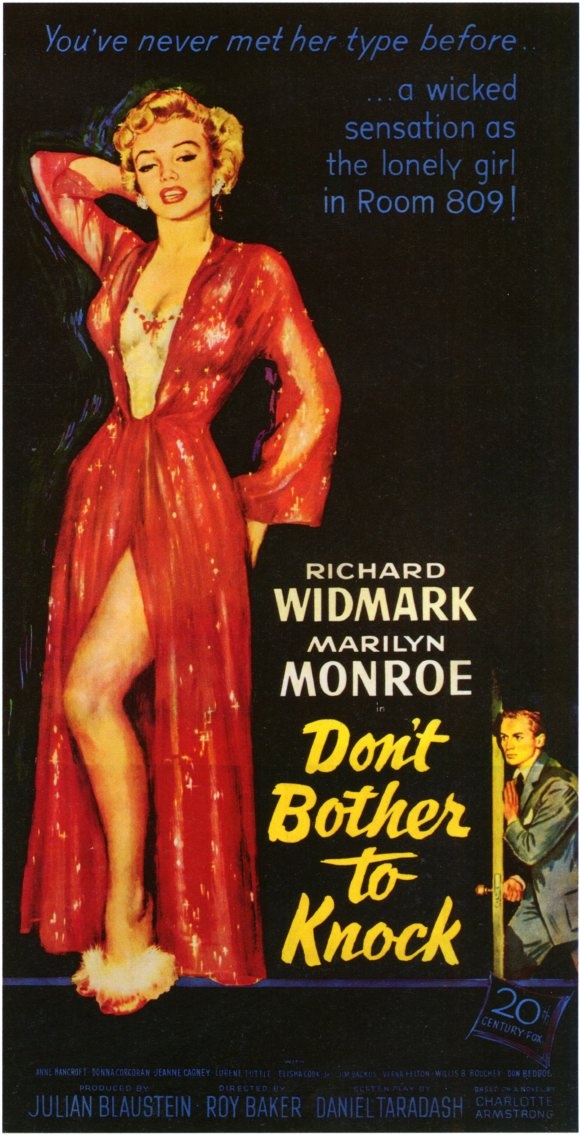
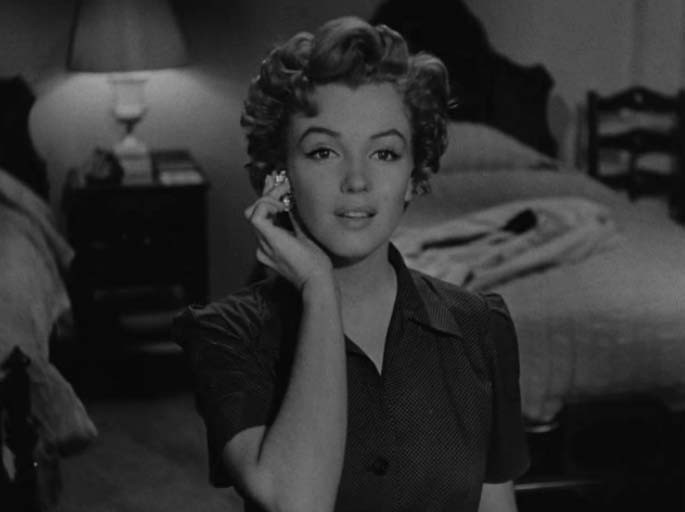
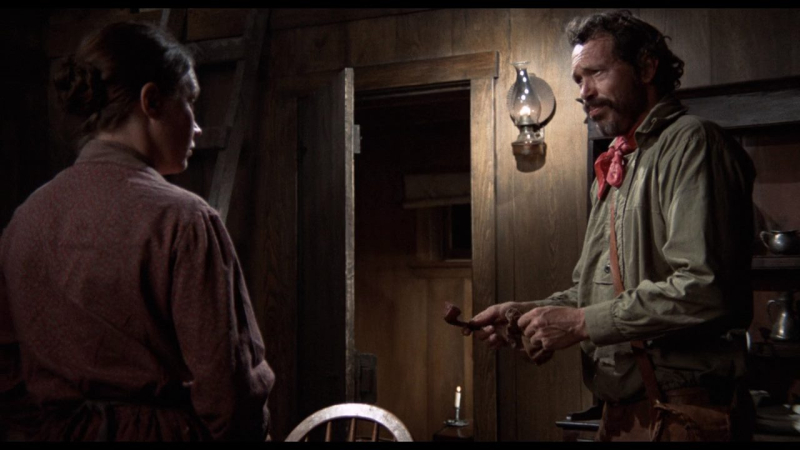
The moment Marilyn Monroe walks into the hotel of Don’t Bother to Knock – we are enthralled. It’s her first scene in the movie and without knowing anything about her beautiful, troubled Nell, and what her beautiful, troubled Nell has been through, we feel a pall hanging over this young woman. Monroe, on sight, is that powerful. Monroe’s tentative gait and unsure eyes enter the space (its own kind of asylum) where the lounge singer, Lyn Lesley (a grounded, lovely Anne Bancroft) sings swoony tunes in a cowboy themed room. It’s an intriguing juxtaposition – a nervous 1952 Marilyn (ten years before her death) – less made up, darker blonde hair, simple dress – passes the poster of glamorous Bancroft – not knowing she’ll be in a room with that woman’s soon-to-be ex, cocky pilot, Jed (Richard Widmark). That’s not so surprising – a seduction with Widmark. This is Marilyn Monroe after all, and even clad in simple frock and sad expression, she’s stunning to behold. But what feels unexpected is that the most understanding characters, the ones who will really sit down with this poor young woman and approach her with kindness, will be that hotel chanteuse and that cocky pilot. There’s no irredeemable cad in this picture and there’s no femme fatale either – even if the movie’s poster blared: “A wicked sensation as the lonely girl in Room 809!”

6a00d83451cb7469e20223c84fb70f200c-800wi

The scene continues and we’re further drawn to Nell. She walks up to a man she knows –  the elevator operator (Elijah Cook Jr.) – and she smiles. It feels disarming to us, and it surprises him, possibly angers him: “What’s the smile about?” He asks. “You seem so different in those clothes,” she answers with a curious mixture of eager happiness, even some relief. It’s a nice comment that is met with the slightly defensive: “I’m different all the time.” Immediately I’m thinking – let her say something nice, jeez. And then I think, he’s probably right – that he is different all of the time – and not in a good way. Cook Jr. excels at being so simultaneously wormy and woeful that right away you feel … she ought not be around this guy. Later you’ll learn he is indeed, not so nice to her, even as he’s supposedly doing her a solid. We don’t know how to feel about him.You see, not long ago, she was released from an insane asylum in Oregon, and she’s come to stay with him, her Uncle, in New York City. He’s gotten her a gig to babysit the child of some swanky hotel guests that night and she wonders if she’s ready for it. He thinks she’s getting better. He should have listened to her hesitation.

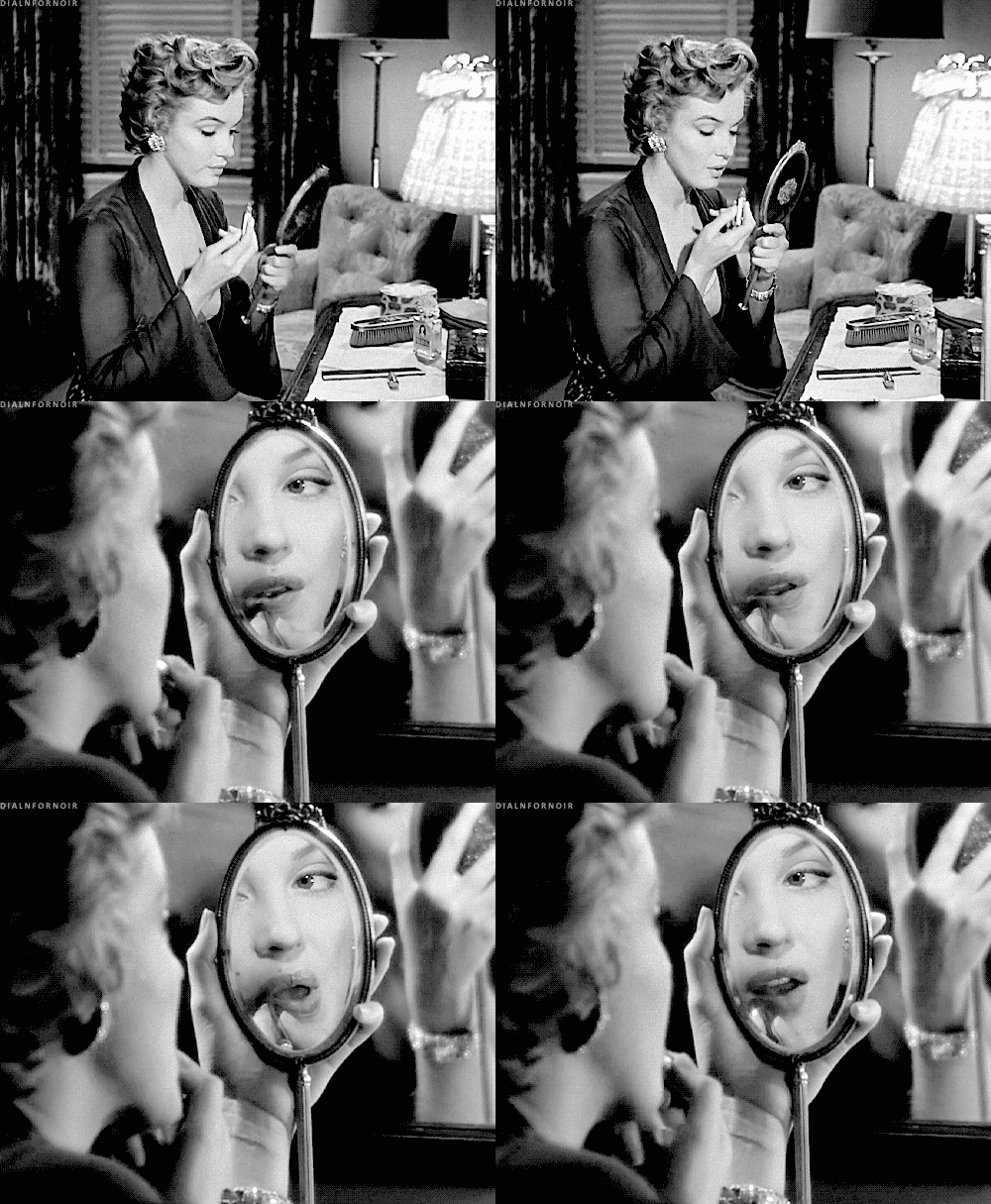
Nell reads to her little charge and then quickly puts the girl to bed. She eats the chocolates she turned down originally (a wonderful little moment) and walks through the suite, performing a beautiful, silent scene lasting two minutes where Monroe’s expressions, body language, how she reacts to objects, everything, comment on both her hope and her turmoil. Nell turns the dial on the radio (in a lovely, lingering touch, Lyn’s songs are piped into the rooms – Jed cannot escape her), then clicks off the radio, almost annoyed. She is drawn to the vanity table and puts on the mother’s perfume and diamond jewelry. There is something so touching and intoxicating about Marilyn placing those earrings next to her face – Norma Jeane to Marilyn – her skin lights up. And then she hears an airplane and everything darkens. She becomes haunted, her worried eyes moving towards the sound, her body twisting towards the window. It’s mysterious, but telling; it’s filling in details and nuanced. Nothing about this is easy, acting wise, and Marilyn makes it look effortless.

1_lM6Cs8Satvyr9RaDPKGCug

Director Roy Ward Baker shot on a short schedule, in sequence and reportedly printed the first takes. If true, she is all the more impressive. (As much as I revere The Misfits and Marilyn in it, I have seen interviews with Arthur Miller in which he says The Misfits was her first real dramatic role and I never understand what  he is saying — Don't Bother to Knock was certainly a dramatic role. As were Niagara and Bus Stop and River of No Return, and there's drama and pathos in her comedic roles, as well as her smaller parts in pictures like Clash By Night and The Asphalt Jungle.)

Watching her act silently, you further understand why she was one of the most brilliant models of all time. As I wrote of her in an essay for Playboy, she had the God-given talent, artistry and charisma to turn on that inner light, and she had the intelligence to dim that light as well, to create darker, erotic images, sad images, vulnerable images. If she was scared, she was also brave.

In another room, there is the man who will take all of her in – Jed – restless and stinging after Lyn has dumped him for being, well, a cad. “You lack an understanding heart,” Lyn opines. In an incredibly erotic flirtation, he spies Nell from his window to hers (the use of space in this picture is wonderfully utilized –black and white cinematography by Lucien Ballard) and when lonely Nell signals him from her room, he comes over for a good time. He puts up with her odd behavior until it gets a little too much. Widmark is fantastic here – he moves from sexy to smug to sympathetic and we never doubt it. He’s turned on and then he’s concerned and then he just wants to get out. But he can’t shake how sad this woman is. When she comes on strong, something most men would dream of, he exclaims, confused and annoyed: "You bother me! I can't figure you out! You're silk on one side and sandpaper on the other!" MM answers, tragic: "I'll be whatever you want me to be!" He asks the sensible, perplexed question: "Why?"

6a00d83451cb7469e20224df3766ca200b-800wi

Well… she has cracked, that’s why. But not because she’s wicked. Her husband died and she remains debilitated by a deep mourning that fogs her mind into thinking Widmark is her dead love. She wants to resurrect caring, protection, escape. Her life was hard. Her parents whipped her. She’s attempted suicide. And who knows what is happening with that Uncle. She’s holding on and protecting herself. She’s vulnerable while deep rage pours out of her. That death and that abuse makes her cling to Jed and terrify the child (she ties her up so she’ll be quiet, and in another scene, you get the sense she might push her out of a window), and Marilyn showcases this with such raw intensity, such honesty, that she is genuinely disturbing. We are truly concerned for her. But Nell doesn't really mean any harm – and Jed doesn’t think so either. She needs help, and, perhaps, she yearns to be herself, to be appreciated, and to be appreciated for not being what everyone wants her to be. Normal. What does that mean?

27316227545_ce7fcc42de_b 2

There’s such a prophetic sadness to Monroe’s complex performance, and knowing all we do (or think we know– there are so many books – MM manages to be ubiquitous and mysterious at the same time), it most likely wasn't a stretch for young Marilyn to understand the pathology and despondency of her character. As Donald Spoto wrote: “Marilyn made of Nell not a stereotypical madwoman but the recognizable casualty of a wider urban madness… As she said her lines that winter … she may well have thought of her own girlhood; when she spoke of the character’s loneliness in an Oregon asylum, the memory of her Portland visit with Gladys [her mother] may have come to mind.”

It’s a heartbreaking portrait, and a movie that sympathizes with Nell, but the moral of the story comes somewhat at Nell's expense – Widmark’s Jed becomes the decent man for not giving into temptation with the damaged woman. He finally shows an “understanding heart.” It’s almost heroic because, in real life, many men wouldn't be sensitive enough to resist. And you know that Nell will learn that soon enough. Likely, she already has.

6a00d83451cb7469e20223c84fb513200c-800wi

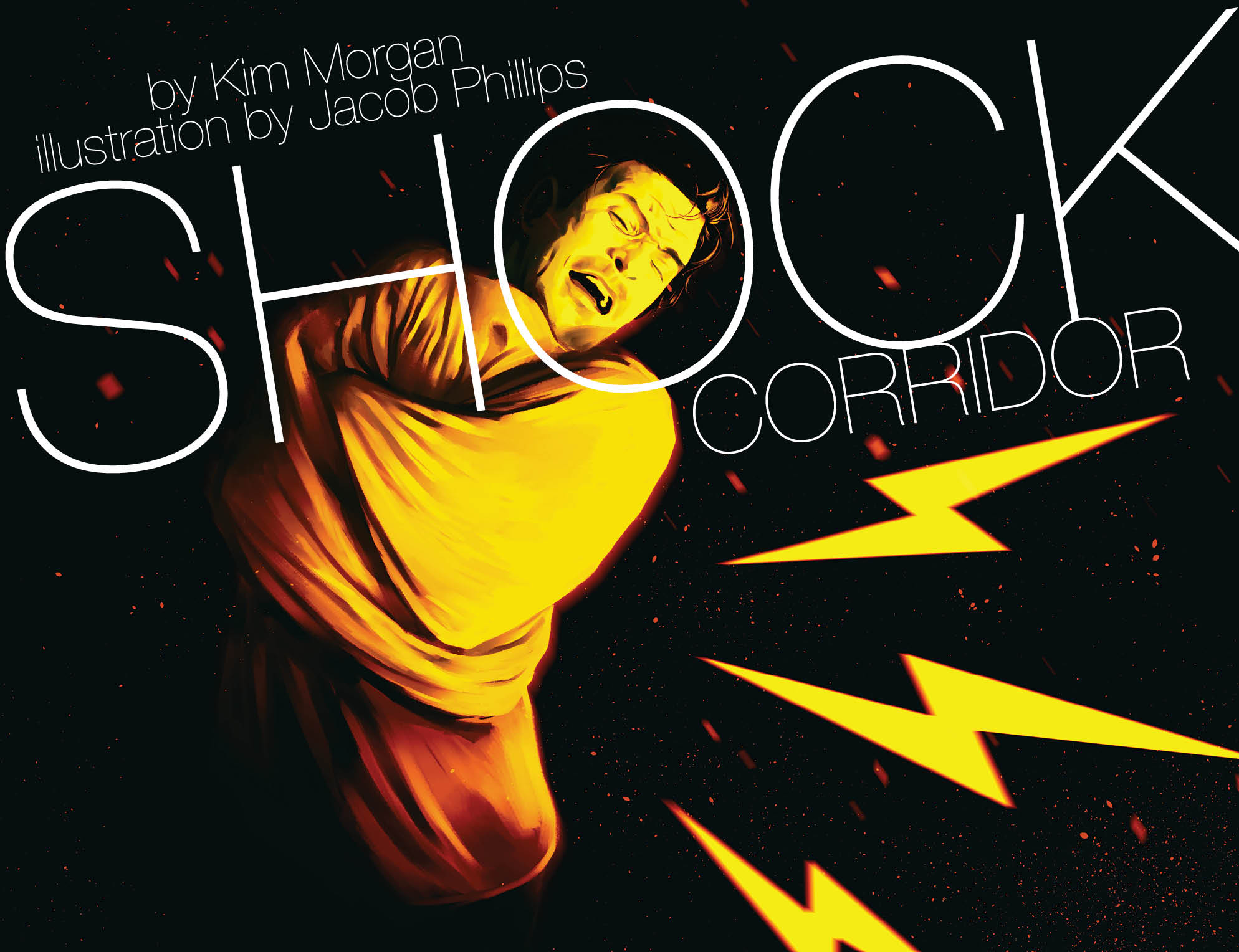
Kill Or Be Killed: Fallen Angel

6a00d83451cb7469e20224e03e53b9200d-800wi

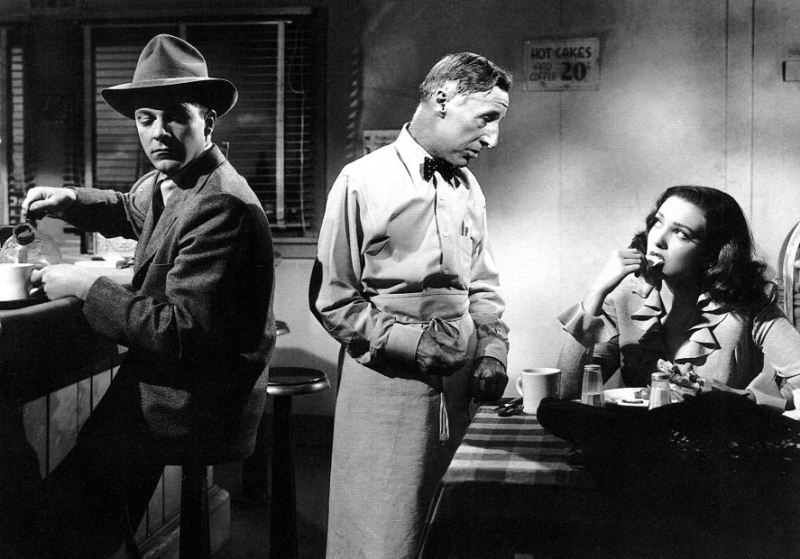
“You talk different, sure, but you drive just like the rest.” — A tired-of-it Linda Darnell as lovely Stella, the woman who can't get every damn man OFF HER BACK, and who has everyone's number in Otto Preminger's wonderfully dime-store "Laura" — "Fallen Angel" — the movie I dive into in this month's "Kill or Be Killed." I love this gorgeously shot movie (by Joseph LaShelle) and all of the performances. I even like the weird kinda "happy" ending that is entirely dysfunctional. And, of course, how Linda Darnell eats a hamburger. Out today. Pick it up now

6a00d83451cb7469e20224e03e53c8200d-800wi

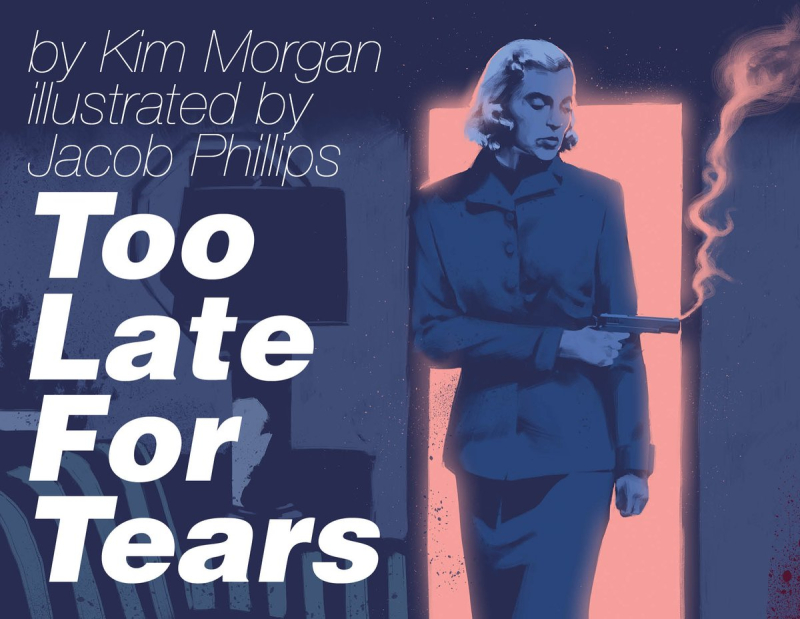
Kill Or Be Killed: Too Late For Tears

6a00d83451cb7469e20224e036f5ee200d-800wi

“I let you in because, well, housewives can get awfully bored sometimes…”

“What is it, Jane? I just don’t understand you.” So asks Arthur Kennedy’s upright husband to Lizabeth Scott’s kinked, cryptic wife in Byron Haskin’s Too Late for Tears, a movie as much about one woman suffering her own private hell (an infernal boredom with the late 1940’s bonds of traditional marriage, a disgust with patronizing rich people) as it is about a coveted bag of loot. And of course, murder – murder enacted by this “femme fatale” who hides her new furs in a comfy, nutritious place – the kitchen.

Read it all (my essay on "Too Late for Tears" starring the fantastic Lizabeth Scott and Dan Duryea) in the newest of Ed Brubaker's "Kill Or Be Killed" — out now. Pick it up or order here.

Bringing It All Back Home: The Hired Hand

6a00d83451cb7469e201b7c95f469c970b-800wi

“The Hired Hand is the America of what Walt Whitman means to me. I’d respect Peter for no other reason than showing me the family as an ideal unit. That’s very close to me, I’ve gone through divorce.” – Warren Oates (“Warren Oates: A Wild Life,” Susan Compo)

“Morality sucks. Clearly, so does gravity, but we can prove gravity. We can’t prove morality. It doesn’t exist at all. Don’t pay any attention to it. Those were the characters that Alan Sharp had written so beautifully. He has this old slang of that time. It comes just rolling off Warren Oates’ tongue, and you’re right there in that time in 1881. It wasn’t really a three-way deal, sexually, but the inference was that she was not a bad person, but that she didn’t have any compunction about forgetting the man who ran out on her six years earlier, and having sex with someone else. Women get horny, too. They did in 1881.” – Peter Fonda (Onion AV Club interview, 2003)
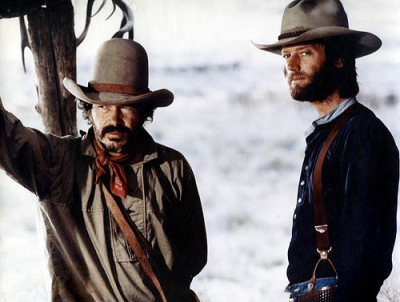
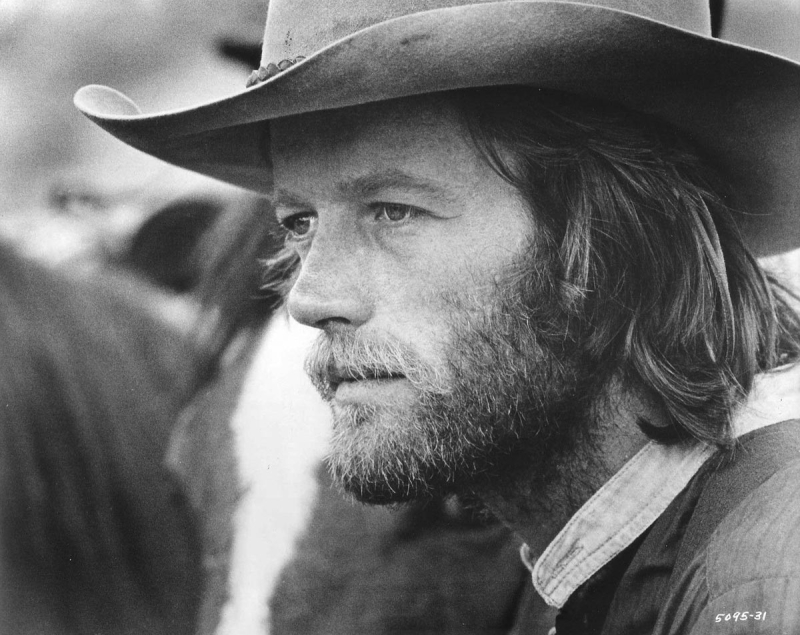
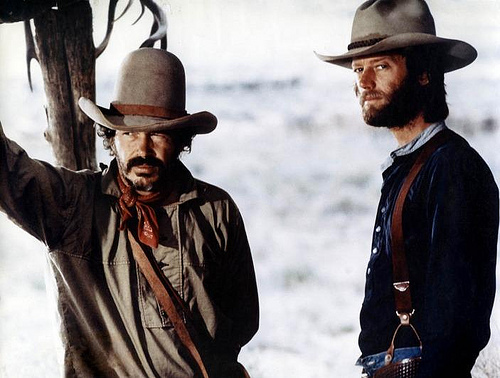
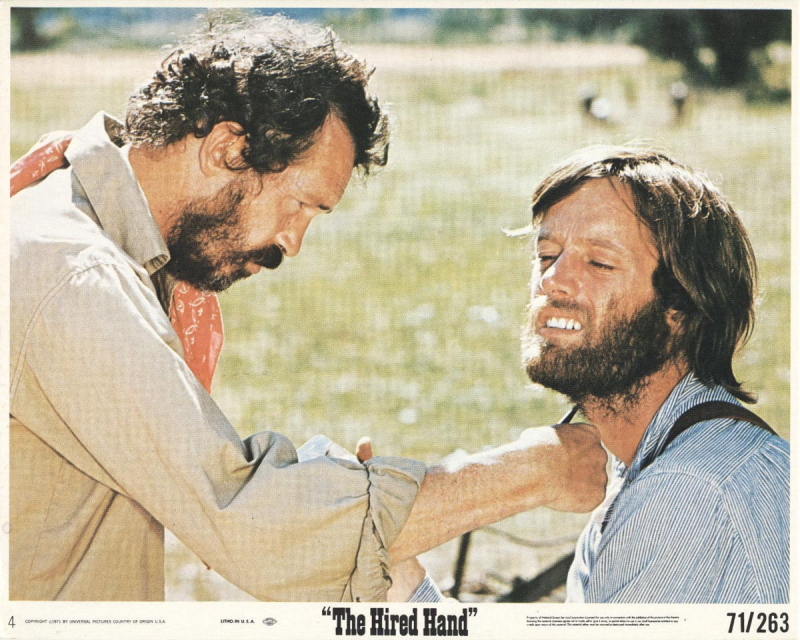
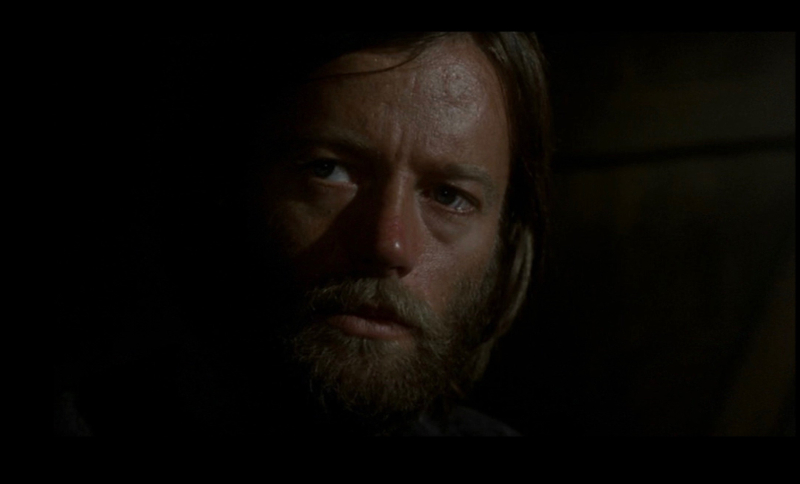
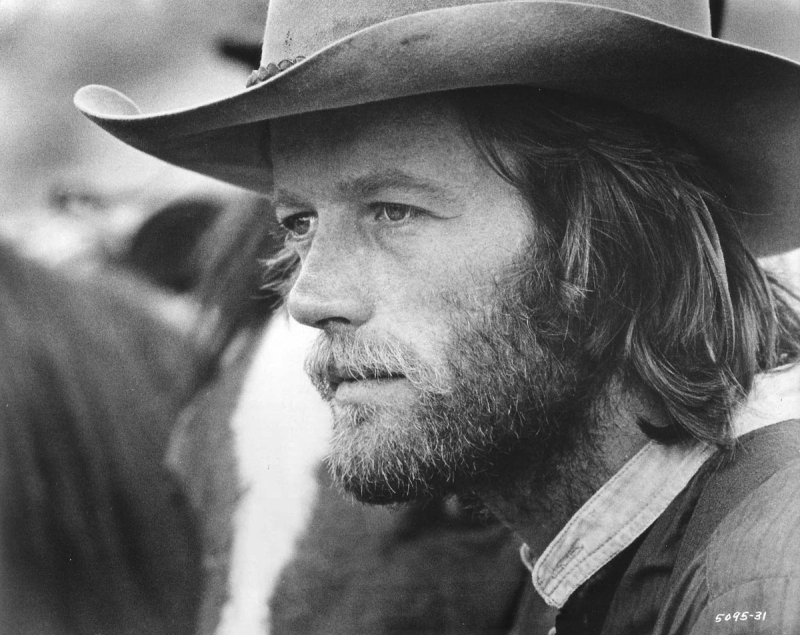
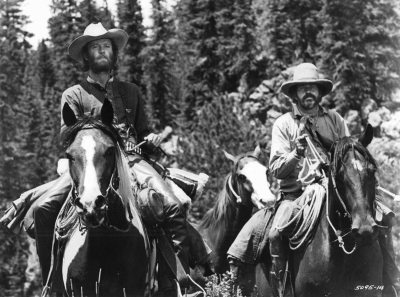
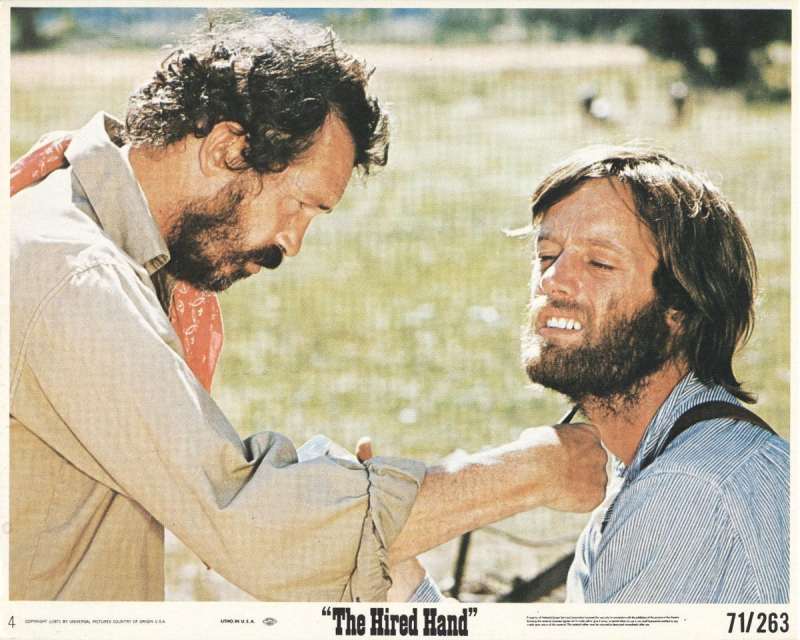
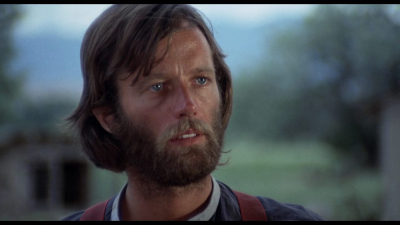
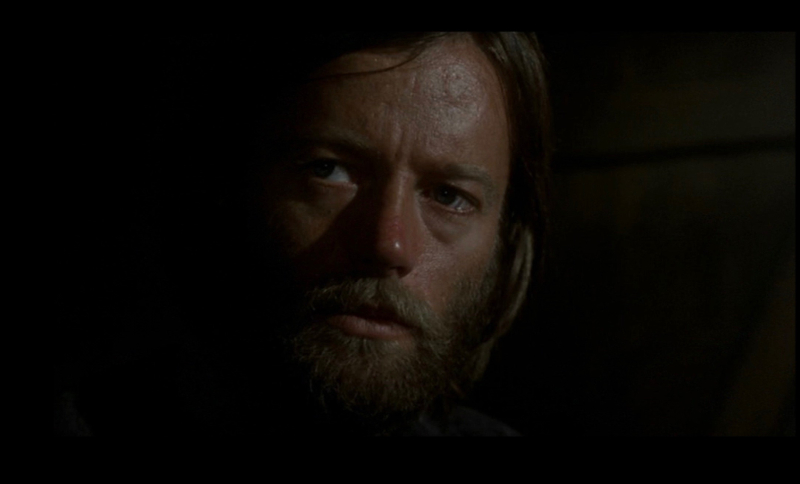
370cf371975770ffc6c3afec428fc735Peter Fonda and Warren Oates looking at each other – it’s an achingly beautiful thing. You feel the depth and concern of these two men, their friendship, lived-in and real, their faces, one blonde and stoic, sometimes dreamy-eyed and languid, a little lost, mysterious; the other dark-haired and soulful, but wily, and with a toothy grin and crinkly smile that can veer from loving laughter to murder ballad darkness – as Oates put it himself, a face like, “two miles of country road.” Captain America and Bennie. Iconic oddballs. Gorgeous in their own way and so deeply American. You see them together, take in their natural chemistry, and think, of course they love each otherTake this scene in Fonda’s elegiac, western, his masterpiece, The Hired Hand – it’s the moment in which we learn Fonda’s cowboy drifter, Harry Collings has a wife he left seven years ago. One of their riding companions, the youngster of the three, Dan Griffen (Robert Pratt), seems little interested, he doesn’t understand the depth or importance of this revelation and prattles on while Harry’s best friend, Arch Harris (Oates) looks at his good friend. Fonda gets up from the saloon and walks towards the door, as he walks, face melancholic, Oates watches him as if no one else is in the room. Dan says to Arch, “The hell with him we can go to the coast together…” and Oates states, while still watching Fonda, the seven years. Seven years – it’s been seven years that the wife and kid have been waiting for Fonda, or lamenting he’s never coming back, or perhaps forgetting he ever existed or not even caring if he does anymore. Who knows how they feel? His eyes are full of compassion and concern and maybe even worry as he gazes at his friend, studying his movements, knowing right then and there, without saying anything, this is a significant event.

Fonda’s face says, without words, I have a wife and kid out thereI need to go back. Oates’ face says: He has a wife and kid out there. He should go back. And then there’s the added question mark to Oates’ gaze: But will I lose my friend if he does?  It’s a meaningful exchange of such subtle, empathetic acting and beautiful, pure chemistry — they are so … powerful together. You believe every moment between them. It’s a meaningful exchange of such subtle, empathetic acting and beautiful, pure chemistry – they are so … powerful together. You believe every moment between them.

The Hired Hand was a first for quite a few people, a movie made with love and vision and the care to be quiet and reflective, something that came off both hippie dippy to some, and simple and sincere to others. Or both. Or perhaps it’s really a unique alchemy of many things. A revisionist western, or a hippie western, or just a different kind of western, the way Monte Hellman’s masterful The Shooting and Ride in the Whirlwind are so spare and existential, showing the west as a place full of mystery – mythic, yes, but the mythic almost looming over characters as a reminder of what once was, or who they should be, but also confusing; a place full of rough absurdities. Fonda’s reflection (from a lovely script by Scottish novelist and screenwriter Alan Sharp who wrote Ulzana’s Raid and Night Moves) was spare, if that is even the right word considering how visually stunning and scored the picture is. It also played with mythic ideas – what one should be or is required to be or was thought to be back then as a roaming man – but it was also bound to family and friendship and the struggle to come to terms with … a woman.
Hired-hand-5-1

Not just duty to a woman in a traditional sense, but a woman’s needs. It asks, what happened when he left? This is and was a refreshing question and Peter’s sister, Jane was pleased that it was what one would call something you don’t hear much of – a “feminist” western. His father, Henry, a western hero, reportedly admired it as well. Surely this made Peter happy, particularly with family at the core of this movie. In fact, at one point Fonda wanted his father to play the Warren Oates part. Fonda Sr. thought he was too old. Well, that would have been interesting, but Oates is so beautiful here and the movie is so powerful, so singular, that it works in every way. Every way. Alas, when released, Universal didn’t think so, which is really, really unfortunate. Though the film received mixed reviews, some quite impressed, the studio was upset with the final product. This was not the western they wanted, and it played in theaters for a scant time. It was pulled and buried in obscurity. You watch the movie now and that makes you angry. It wasn’t until 2001 that Fonda re-released it in a lovingly restored director’s cut (he also made the film shorter), and finally received the adulation and attention it deserved.

It was also a movie in which Fonda was given full artistic control. Coming off the phenomena and financial success of Easy Rider (1969), Universal allowed Fonda TheHired Hand to be his movie, his debut. Since Fonda co-wrote, produced and starred in Easy Rider, trust was granted, or perhaps a “this is what the kids want” devil may care attitude. How could it fail? After the counterculture, and everyone, embraced Easy Rider– yes. This is Captain America’s movie – people will go. Not surprisingly, that same year, Universal allowed Easy Rider co-star, and director, Dennis Hopper, to take off and make the fascinating, experimental The Last Movie, a notoriously complicated experience, and something that wasn’t a commercial success (it won the Critics Prize at the Venice Film Festival, but didn’t fare well financially and was mixed, critically, in the states, the New York Times called it “an extravagant mess,” though Stanley Kaufman championed it). Both men were and are talented directors with their own unique style and vision. The reaction to The Hired Hand reportedly left Fonda with a kind of gentle disappointment. That’s upsetting – it should have hung around longer, it should have been seen on the big screen (in initial release) more. It needs to be seen on the big screen. The fact that this film became more available in the 2000’s (on DVD), and was re-released in a director’s cut, underscores all those years Fonda was saddened by its quick obscurity. From 1971 all the way to 2001. That’s a long time. As Fonda say, “Universal tried to bury this film back in ’71. But the people who loved it really loved it. And they’ve kept on loving it.” They do (including Martin Scorsese) and they continue to.
Hiredhand

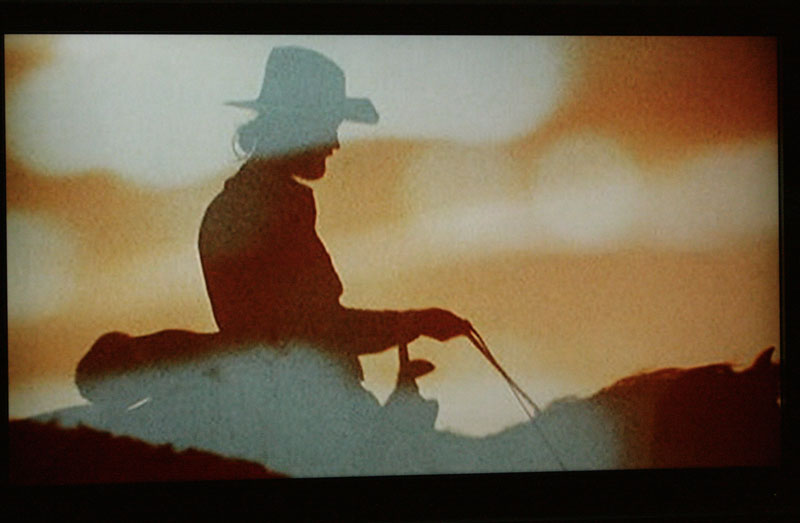
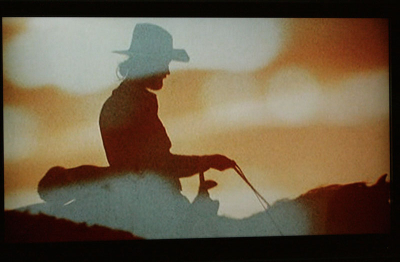
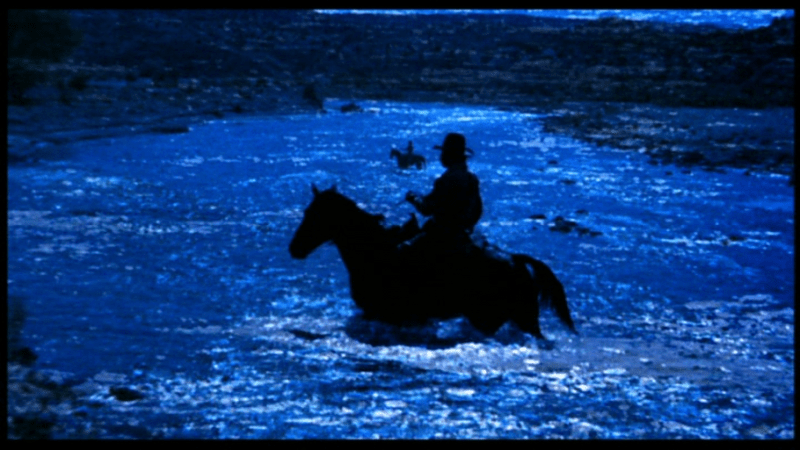
Fonda directed this sweet, painful, gritty, gorgeous, mystical and emotional story with a visual lyricism that tells its tale through its images (and score) as much as the script does. Working with the relative newcomer (in America), cinematographer Vilmos Zsigmond. The Hired Hand has been deemed his first movie, but he shot, distinctly, James Landis’ The Sadist and the underseen James Bruner picture, Summer Children, before that, and some other B movies – you can see the master’s talent and style in those movies. (Zsigmond said, “Before that, I basically did commercials. The Hired Hand was probably the first time that I actually had a dramatic story with good actors.”) But the magnificent, highly stylized choices he and Fonda worked with here immediately set the picture apart and certainly cemented Zsigmond’s tremendous craft – it’s a uniquely stunning picture. The long lenses, dissolves, slow motion, the figures in silhouette, the lens flare and the exquisite, expressive colors –all of this – created a superb tone poem of imagery that, at times, feels transcendent. (Editor Frank Mazzola’s lyrical montages also swirl into the mix, underscoring or adding emotions and mystery.)
6a00d83451cb7469e201b8d2e98010970c-800wi

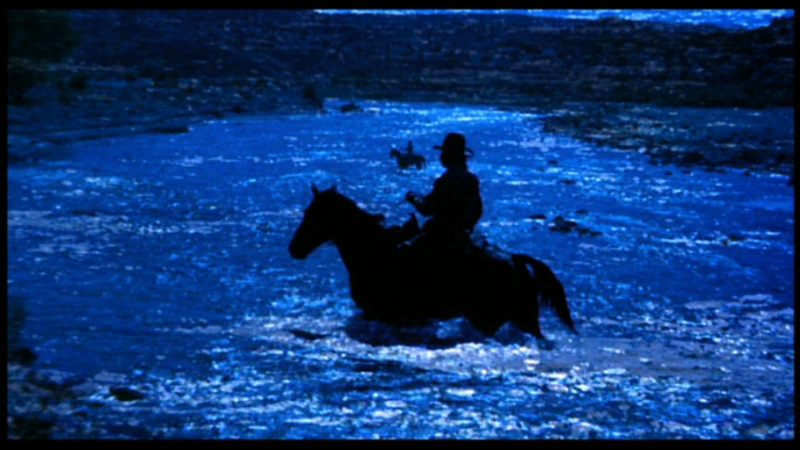
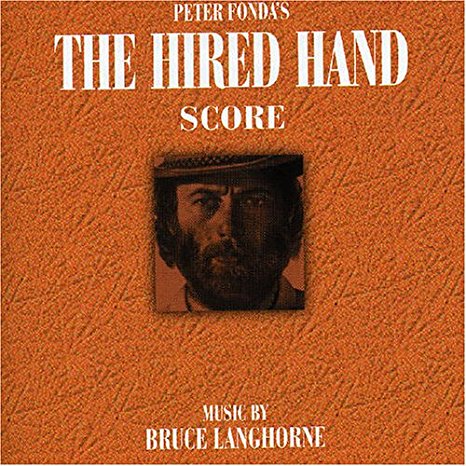
An early scene of Fonda riding his horse through the water shows him in an almost other-universe of light, color and nature – he’s suffused in a deeply blue world, and he no longer looks like just a man on a horse, but he looks like a man in a painting. Adding to this poetry is the brilliant score by Fonda’s friend, Bruce Langhorne, who had never scored a movie. A musician, and session man, who had worked in Greenwich Village with everyone from Bob Dylan (Dylan’s “Mr. Tambourine Man” was inspired by Langhorne, he also played on many of Dylan’s records) to Joan Baez to Richie Havens, Langhorne’s score is a character in itself, speaking when the film needn’t, but never obtrusive. Using varied instruments including soprano recorder, harmonica, upright piano, organ, dulcimer, and fiddle, the effect feels the landscapes Fonda directs, it instinctively understands the emotions conveyed on screen, while weaving itself into the poem of a movie. The score became as famous as the movie, and was released 35 years later. As Scissor Tail editions described:
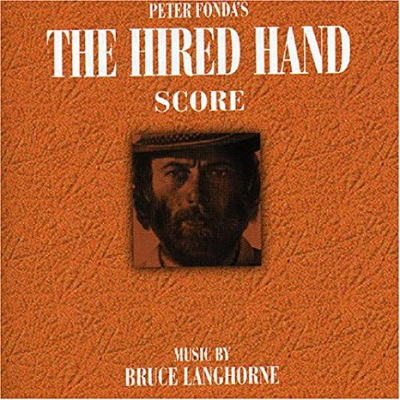
61PRHHNSKJL._SX466_[Langhorne] opted out of scoring the film in a projection room, instead chose to shoot the film onto a small black and white camera to take back to his home in Laurel Canyon. He would watch the film and play along to it as his girlfriend at the time would record him and play it back, allowing him to overdub Farfisa Organ, piano, banjo, fiddle, harmonica, recorder, and Appalachian dulcimer onto his Revox reel to reel. Bruce’s 1920 Martin guitar is most prominent throughout the record. The Results were a uniquely wide and lonesome soundscape. The closest comparison might be Sandy Bull or possibly John Fahey, but nothing of its kind or even of its time poses a resemblance to Langhorne’s minimal masterpiece."

There’s a dreaminess to The Hired Hand that shifts between feeling live and direct, and then, wistful, faraway, like you are always reaching for something, and even if it’s right in front of you, speaking frankly, you’re looking beyond. Or trying to understand something larger than yourself. You see it in Fonda’s eyes, you see it in Oates’ eyes, and then you see it in moments that you’re not even sure of – like when coming across something very real that doesn’t look real, not at first. Not right away.

What comes across is when the men (including young Pratt) find a dead girl in the water – something that feels not just incredibly sad, but portentous to the understandably disturbed men. A dreamy, natural reverie is interrupted by something that’s at first unreal, and then shapes into what is tough and hard in life, and something of which they know of – of course. But this girl’s death feels like something else. And it makes them think. It makes you think as well. People die. And women die. With those thoughts lingering, Fonda begins pondering life, that wife he left behind. Fonda needs to go back. That little girl in the water – dead as anything and drifting – that could be her. Or him. Or anyone. Life needs to change. Or at least it needs to stop drifting the way it is.
7bd17a83d201487f82c9fff67cdf93dc

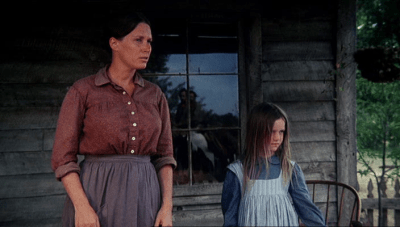
This is when Verna Bloom comes in. Or, rather, Fonda returns to her, his wife. An excellent stage-trained actress (she had made two movies prior, Medium Cool and Street Scene), Bloom is wonderfully unadorned here, though uniquely lovely, and she’s playing older than her co-lead by ten years (the actors were, in fact, the same age). I love her performance – she’s at once, matter of fact and sexual, then hard, then vulnerable. She’s complex. She’s real. She’s so real, in fact, that her sexuality feels striking and so refreshing that it’s almost startling to see, and not in any obvious come-hither way, but in the way that women just need to be pleased, like any man needs to be pleased. And she’s so open about it.

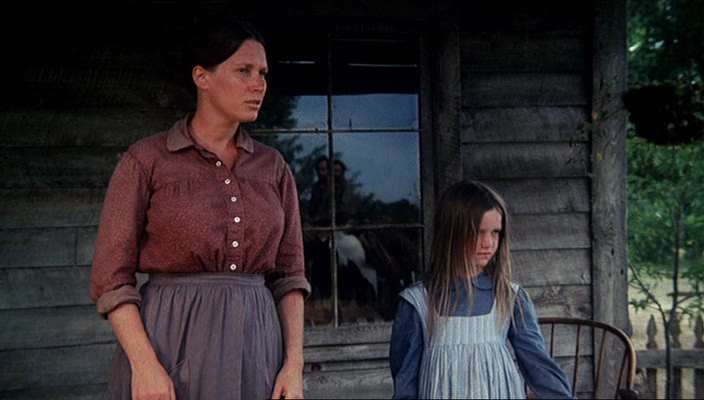
When Fonda does come back (almost like a new relationship) and back to their child, who has now grown into a young girl of about ten (again, you think of that portent at the film’s beginning), he brings his best friend Oates with him. The wife is skeptical at first. This man abandoned her. Why should she allow him back in her life? And who is this other guy? How is this going to even work? Fonda doesn’t ask to be her husband again, not right away, but just to work as her hired hand. He’ll work for his wife, he’ll get to know her again, if she likes. In a potent little moment, she asks, “Why’d you come back?” He answers, “Got tired of the life.” It’s a spare exchange, and she is maintaining her strength, her toughness, but Bloom is so marvelous, you can feel her emotions vibrating under that hard shell.
6a00d83451cb7469e201b8d2e97fc3970c-800wi

This is where the film turns into something audiences probably weren’t expecting: a movie about a man who returns to his wife and a movie about a man who comes to terms with her sexuality. There’s a frank exchange between the two of them after Fonda and Oates have heard in town about how many men she’s slept with since he left – all the hired hands she takes to her bed – the typical “the woman is a whore” moment. The two men are livid, and further than that, Fonda is confused. But later that night, he discusses the situation and talks with her and … she lays it out, bare. Essentially, she says: You left, I walked this house lonely night after night, and then, I decided to do something about it. She did do something about it. She states: “Sometimes I’d have him and he’d have me… But not all of them…” It addresses many of those westerns in which you wonder, what are the women thinking about, past their husband, past their children, past the horses or whatever else? All those things lingering in movies – like the sexual tension between Alan Ladd and Jean Arthur in Shane, or the obvious unspoken past love between John Wayne and Dorothy Jordan in The Searchers. Those women weren’t alone like Bloom is in this picture, but clearly, they wanted other men too, even while married. And the men who wandered off drifting, just as Fonda did in The Hired Hand, well, they wanted to sleep with them, and they wanted their love. You know Ladd’s Shane is yearning for something, something to hold on to. Here, had Bloom so desired, she would have invited Shane in and held him close. And more. As Fonda said in an interview, “Women get horny too. They did in 1881.”
The-Hired-Hand-1971-2

But what ties all of this tension and yearning and attempts at understanding together so gorgeously and perceptively is Warren Oates, the best friend. He is so close to Fonda that Bloom accuses him of marrying him, not her. (Oates and Fonda would go on to become best friends themselves, Oates both pal and father figure, and they’d memorably make other pictures together, including Race With the Devil and 92 in the Shade). Fonda understood Oates as more than a character actor, he got his depth, his experience, his sex appeal: “I had watched Warren in a couple of films and realized there was something else going on in this man. When he wasn’t playing the assistant sidekick character or the doofus goofus role, he had this quality which in a strange way was dashing—like Bogart. He had to play wisdom and experience and when it came time to cast the role, I didn’t even think of anyone else.”
6a00d83451cb7469e201b7c95f4839970b-800wi

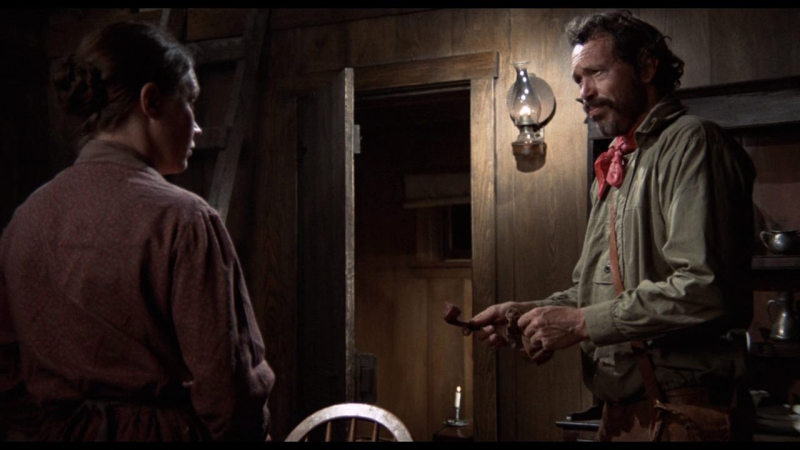
And you get his sex appeal in The Hired Hand right alongside Bloom. Bloom doesn’t resent Oates as an interloper, and, instead they, too, share lovely moments together. He treats her with the utmost respect, something that feels supremely touching, as women are so frequently not treated that way. At times you think, who are these men? Why are they so patient and accepting? But, then, you further think, why wouldn’t they be so sensitive? Drifters, misfits, however they would be labeled, who is to say the Old West wasn’t full of unconventional situations not ruled by fear of God or the townspeople’s gossip or typical “masculine” attitudes that we all think everyone exhibited back in the day? I mean, of course it wasn’t all that. And why should these men and this woman care what people think? They just want to start their lives over again and keep the family together – who cares about the petty gossips? As exhibited by that poor girl in the water – people die – adults die. People you love die. They know that.
6a00d83451cb7469e201bb0a02655c970d-800wi

Oates is with them in regards to these sentiments – live your life – though he realizes his own attraction could be getting in the way of his friend. He wishes for Fonda to just be with his wife and restore the original family. And, so, he leaves. It’s a gently heartbreaking moment because, well, we don’t want him to leave. It feels wrong and even a little scary. And, in the end, perhaps he shouldn’t have left – trouble awaits him. The trouble isn’t his fault, but this past trouble catching up with him, ropes in Fonda. And Fonda will … I can’t say anymore. Oates will return to Bloom, bringing Fonda’s horse with him. Whether or not he will stay is up to question, giving the movie its aching, high lonesome power… we want him to stay. Someone stay. Someone stay because nothing lasts. In an earlier scene between Oates and Bloom, she fears Fonda will leave again, and says resolutely and with fear, “He’ll go. Just a matter of time.” Oates answers with a line that sums up the film, the west, life, the nature of love and friendship, even his own mortality and loving union with Fonda, he says: “Well, most things are, ma’am. One way or the other.”

Originally published at the New Beverly, extended from my essay for Arrow.

Kill Or Be Killed: Don’t Bother To Knock

6a00d83451cb7469e201bb09fd58c5970d-800wi

"There was just this scene of one woman seeing another who was helpless and in pain. It was so real, I responded. I really reacted to her. She moved me so that tears came into my eyes. Believe me, such moments happened rarely, if ever again, in the early things I was doing out there.” – Anne Bancroft on Marilyn Monroe's heartbreaking, complex performance in "Don't Bother to Knock"

Out today  — the newest of Ed Brubaker's Kill Or Be Killed featuring my essay on one of Marilyn Monroe's finest performances (an early, brilliant leading role not discussed enough for how impressive she was), Roy Ward Baker's Don't Bother to Knock, also starring Richard Widmark and Anne Bancroft. Pick it up or order here.

Max & Lion: Jerry Schatzberg’s Scarecrow

6a00d83451cb7469e201b7c9544beb970b-800wi

“Just remember, all right, that you’re a person. You’re a person, right? And you were a kid before, and you’ve made mistakes… so you ran. That’s all.”

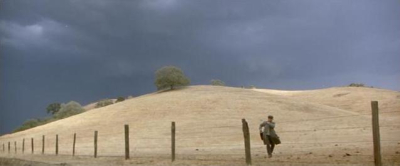
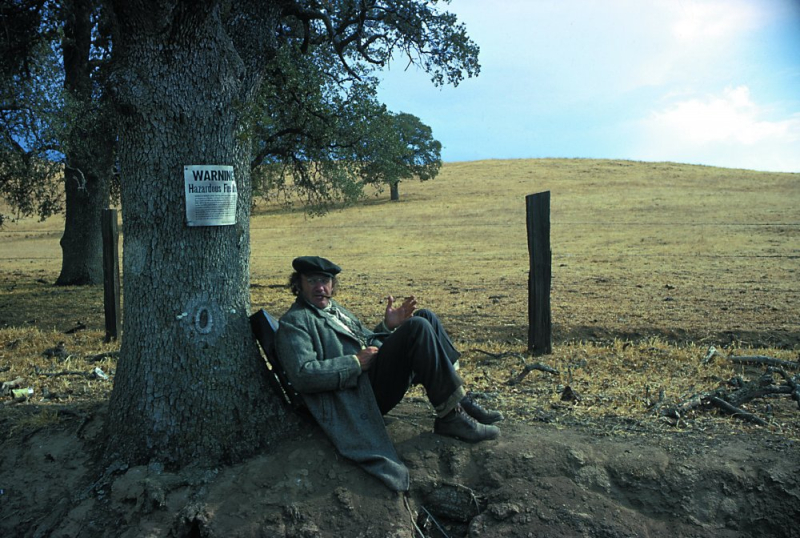
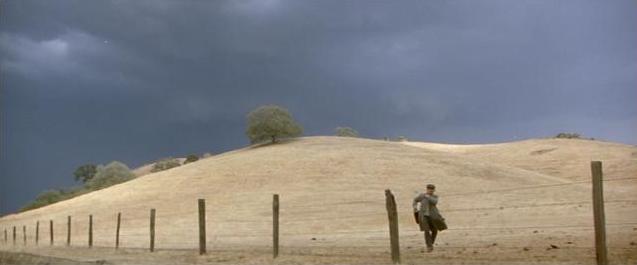
The opening shot of Jerry Schatzberg’s Scarecrow is so beautiful, so wide-open and haunting, it’s reminiscent of an Andrew Wyeth painting, “Christina’s World” without the house to look towards or “Winter 1946” made a bit darker with cinematographer Vilmos Zsigmond’s vast dramatic sky and evocatively framed tree.  You hear an oncoming storm and see a man walking down a hill, you have no idea who he is yet, he’s a small figure amidst the expanse, making his way down a pale, straw-colored mound set against a dark blue sky turning grey – he’s merely traveling, at peace, or in danger, or dangerous himself, we don’t know yet.

2f8e3ab8ce351d746437e7bab6e4cad8

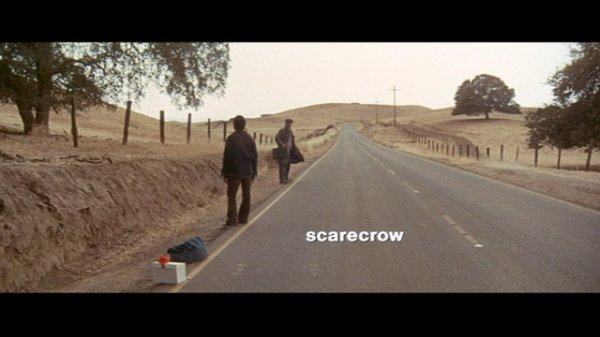
We see him struggle through barbed wire as he attempts to head towards his destination, the open road, and he’s snagged and rolling through the stuff – it’s not easy. He thinks (and we think) he’s alone until another man is shown looking at him from a tree, curious and amused by the other’s struggle with the fence. Once the man from the hill gets through the wire and slips onto the pavement, he’s greeted by the other with a “How you doing? You okay?” The man from the hill has no interest in making new friends and doesn’t answer. He moves along grumpily, even after the same man cheerfully jumps out in front of him and introduces himself: “Hi. I’m Francis.” The Andrew Wyeth tableau then turns to these two wanderers waiting for cars – a pair of strangers barely speaking to one another with a California two-lane blacktop between them, each one enacting their outer shields to make it through life – one, tough and distrusting, the other clowning and inviting. They will become friends. They’ll ramble along together. They’ll plan. Life will happen. For one, life will fall apart.

6a00d83451cb7469e201b8d2deab57970c-800wi
Scarecrow
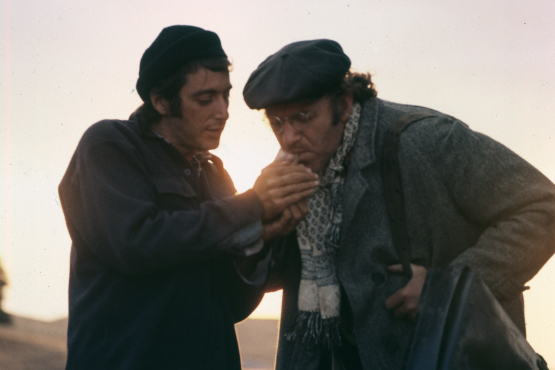
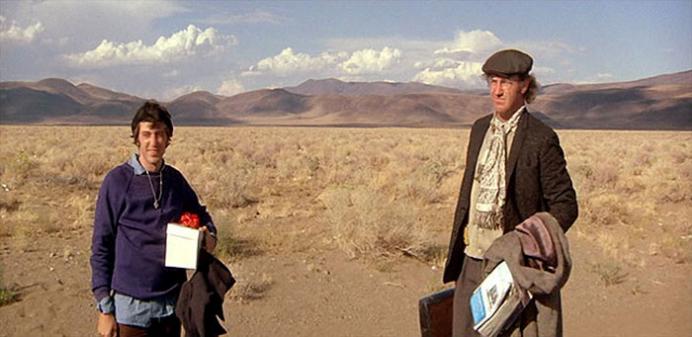
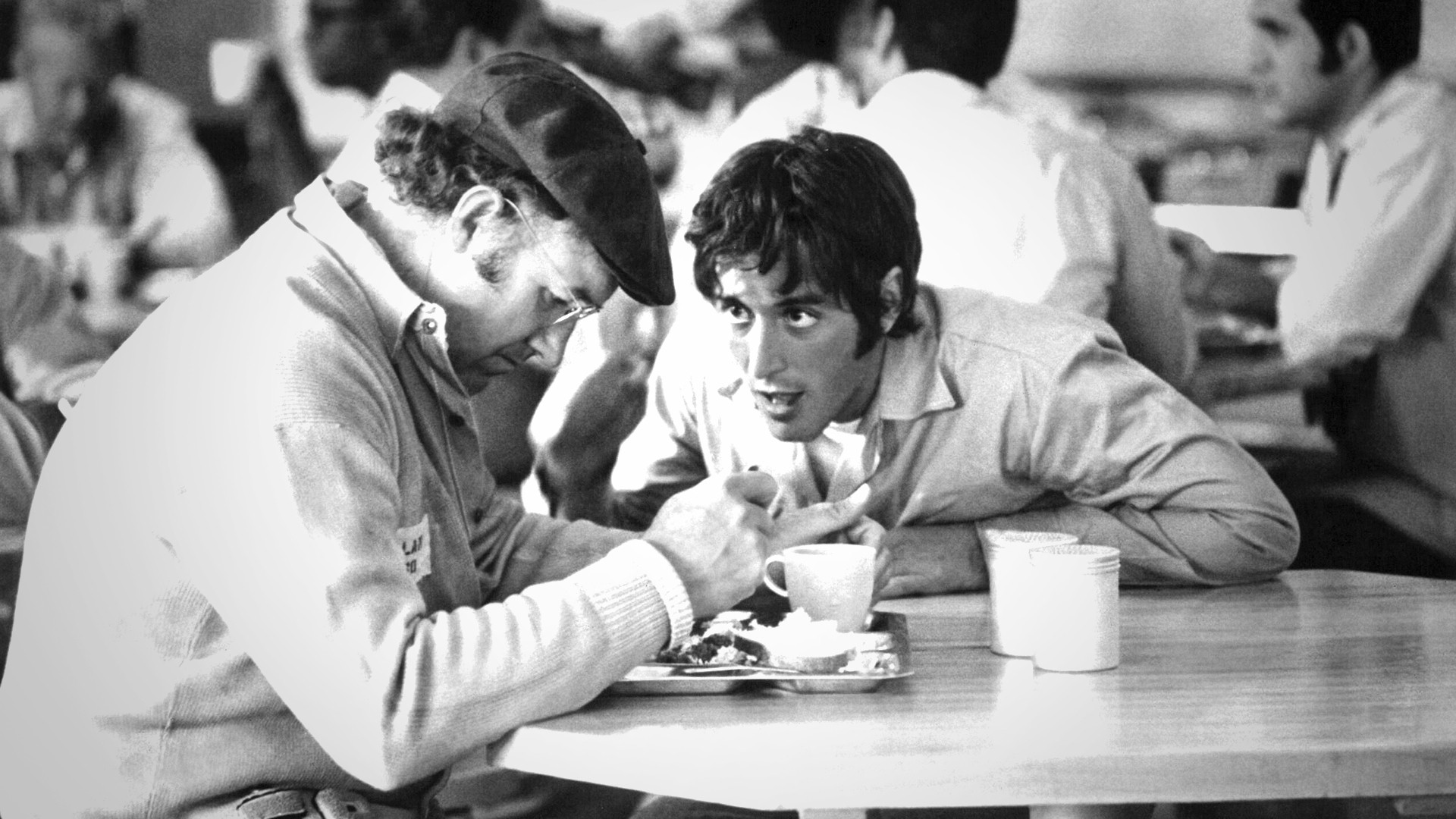
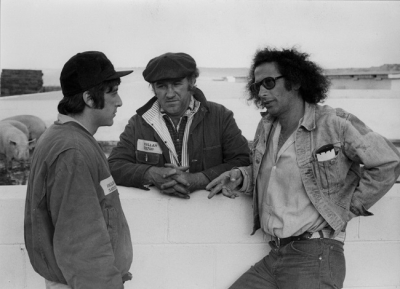
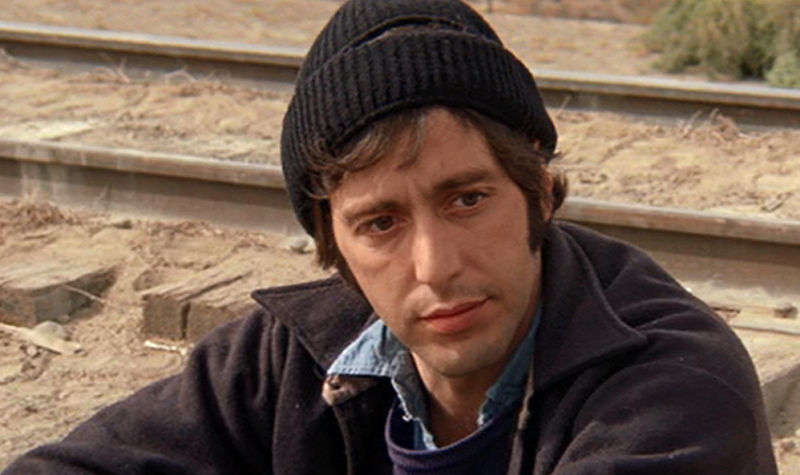
 is a movie about two American vagabonds, men returning from cramped spaces (a boat, a prison) that were full of other men, wandering through a big world both lonely and crowded – hungry and horny and hopeful, sometimes furious, and just eager that everything may work out alright, somehow. The bigger and older one, more prone to anger but insistent on planning a new life is Max (Gene Hackman), who has recently served six years in San Quentin. He wears extra layers of clothes and a ratty Letterman sweater because he’s frequently cold. He claims to be “the meanest son of a bitch alive” and continues this declaration with, “I don’t trust anybody. I don’t love anybody. And l can tear the ass out of a goddamn elephant, too.” The younger and smaller one is Francis Lionel (Al Pacino) whom Max names “Lion” (he can’t call him Francis, likely this seems too formal), a good-natured, almost baby-faced man who at times acts, not like a dumb child, he’s not dumb at all, but mysteriously innocent, as if he’s hiding something darker, something he wishes not to face. You don’t see it immediately, whatever you’re sensing, but you wonder. Lion would rather smile and make others laugh; just get on through life without incident. Wouldn’t a lot of us?
Scarecrow

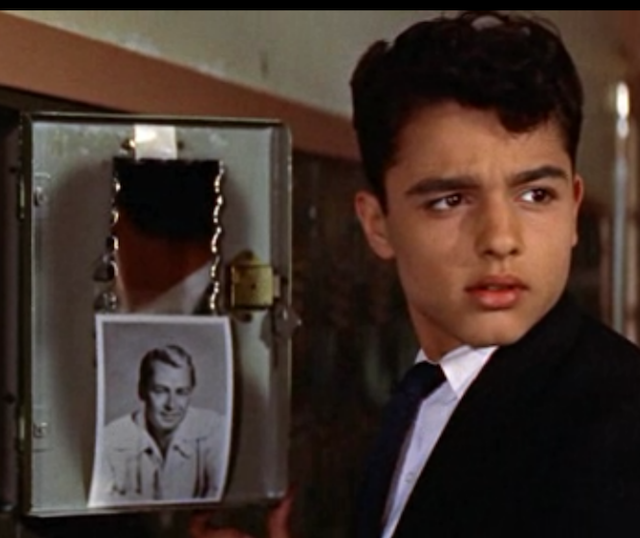
He has returned from five years at sea, which sounds so vague and romantic that it almost seems metaphorical but presumably life happened to him out there. Before that, he left behind a wife pregnant with his child in Detroit. He’s sent them money and his goal is to see them again, particularly his kid, but he has no idea of the kid’s sex, so he’s bought the now 5-year-old a little lamp that he carries in a white gift box with a red bow. He carries this thing no matter what. It’s present so much in the film, you keep your eye out for it – did he lose it? Nope. Still there. You really don’t want him to lose that box. You feel as if something terrible will happen to him if he does. Why is that box making everything seem so precarious?
You wonder about these two men – when they were out there wandering alone. How long were they out there? Were they just fine on their own? Maybe they felt free and good, at first, but given how quickly they take to each other, it’s hard to imagine one without the other, not because they needed just anyone, but because they needed this particular person, this kind of chemistry. Max feels it strongly enough that, for a guy who trusts and loves no one, he quickly asks Lion to help him with the car wash business he wishes to set up in Pittsburgh. Max has plans and tabulates numbers in a little notebook – that notebook gives him some kind of importance; he’s not just an anyone even if his kind sister doesn’t think he’s got good sense. Max’s plan wasn’t to meet Lion, but the serendipitous way in which we can meet a stranger, in this case, in that wide-open Wyeth-like landscape begins to feel exactly a part of Max’s plan – but not for what he thinks. Lion just seemed to show up – from where and for why . . . who knows?

6a00d83451cb7469e201b7c9544c08970b-800wi

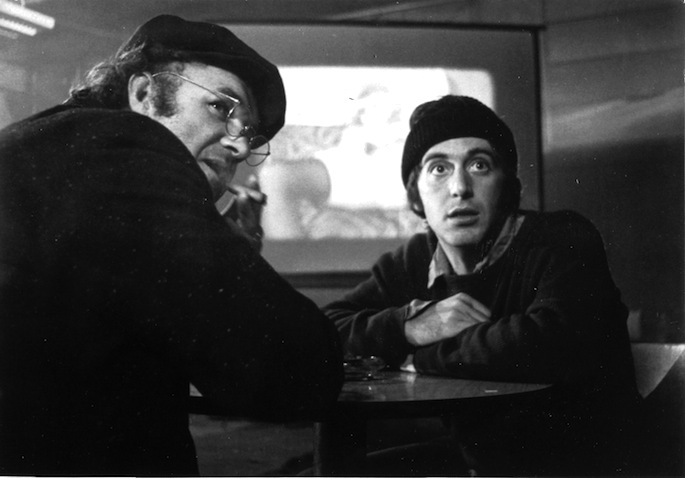
There are a lot of questions as we follow these guys around, ones that need not be answered, as they fall in love with each other (platonically) while we fall in love with them. The movie knows we’ll fall for them, but doesn’t force this on us – Schatzberg (and his screenwriter, Garry Michael White) are so clearly fond of Max and Lion, and the actors inhabit their roles so brilliantly, that you trail along with them. You move along to the groove and disruptions of their journey through diners and dive bars and freight trains and visits to family and a prison farm and cities that feel unwelcome and sad. And you feel protective of them too. Especially Lion. It’s a gentle movie punctuated by violence, and one moment of brutality that’s quite devastating, and then a phone call, just one damn phone call, that wrecks a character.  That phone call was suggested earlier as a way to plan better – maybe planning’s not always the best idea.

Scarecrow-cinefamily-pacino-hackman

Before that phone call, these men get to know each other, hitching, meeting women (only Max feels the itch to get laid – Lion is so disinterested it’s genuinely curious as to why . . . he can’t be that pure and it’s not because he doesn’t like women. This only makes him more intriguing) and, in a rough spot, winding up on a prison farm. Max is so upset at Lion for getting them there (it’s entirely Lion’s fault) that he leaves the kid to his own devices, and ever-eager to make friends, Lion gets chummy with an inmate (a superb Richard Lynch) who beats him senseless after Lion refuses to give him fellatio. The way Lion attempts to defuse the situation before it gets brutal is tremendously touching – he’s playing it off, at first, casually, a kind of goofy no big deal, just so the guy will leave him alone, but it doesn’t work. Lion’s charm probably pisses him off even more (“I’m not making fun of you” says Lion). Max could have helped him prepare for such a thing, taught him about these matters, after all he’s been to prison (in an earlier scene Lion says to Max, “In the joint, no women, right?” Max answers, “No.” Lion asks, “So how’d you get laid?” Max pauses a bit and says nothing. Read that however you read it . . .), but he angrily abandons his friend. He returns after Lion’s been brutalized, but once out, they change a bit, with the traumatized Lion still trying hard to be amiable, but clearly haunted, while Max exhibits extra sensitivity towards Lion – he wants to make him laugh and even does a joking strip tease, taking off those layers of clothes he wears because he’s always so inexplicably cold.

6a00d83451cb7469e201bb09f79f75970d-800wi

As Lion becomes more and more obviously troubled, you wonder just why he’s been so innocent and pleasant towards people. How did he survive out there at sea? I look at him and I wonder – what happened before what’s about to happen to him? Lion has set up his own moving philosophy based on scarecrows. He figures the straw men are put up by farmers, not to scare crows, but to make the birds laugh. I’ve read some criticism of Lion’s (and the movie’s) commitment to this idea – that it’s too obvious – but I don’t agree. I think this is exactly something a young guy might tell himself to get through life – why wouldn’t it be allegorically obvious and who cares if it is? He’s a man on the road – he observes his surroundings, he’s noticed scarecrows and doesn’t see their sinister qualities, he sees their humor.  But it’s not just a bright-side-of-life philosophy; it’s a tweaked observation. It’s even a bit desperate – something acquired based on the survival to stave off demons and darkness. Lion says, “People can’t stay mad at you if you make them laugh.” Actually, in his case, they can and they do, and in such brutal ways that one telephone conversation (with his wife) debilitates him, so much that he loses mind and he’s off to . . . another kind of prison. He tried the scarecrow on himself – brushing off his heartbreak with humor and even a lie to Max. Every time Lion attempts to repress his pain with a smile, you feel a crack of recognition, because, who hasn’t done the same?

9eb233711f88161f135181e03836baf8

Scarecrow was Schatzberg’s third movie after the excellent and stylish character studies, in very different ways – Puzzle of a Downfall Child and The Panic in Needle Park – and the picture won the Grand Prix at the 1973 Cannes Film Festival (sharing the honor with The Hireling directed by Alan Bridges). It didn’t fare so well in the U.S., critics here were not quite as enamored with it as the French were (though some did admire it and reviewed it well), but through time, it became a relatively unheralded picture from the 1970s (in the last few years that’s changed, thankfully). I have no idea why this gorgeous, potent picture wasn’t as well regarded and can only think – perhaps it’s too gentle? Schatzberg (a brilliant photographer himself, you can see how much he loves a face, particularly Pacino’s) and Zsigmond really showcase America with its rolling natural beauty, the hills and the sky and the long stretches of lonely asphalt. They also show an America full of sweet people or terrible people or just average people not paying any mind; a place of charming junk or lowdown waste, a place to roam, a place to become imprisoned. Confinement seems a constant threat in Scarecrow and it looms over the movie as a danger while loneliness nips at the heels of these close, freewheeling friends.

Very few people choose total solitude, and as tough as Max plays it, his life is a lot fuller with his smiling, sensitive buddy around. And Hackman grows to that depth of feeling naturally – never a trace of insincerity in his performance, he moves from brash to outbursts of laughter to rage to tremulous caring exquisitely.  It all sounds so simple, but the purity of how much these two wind up caring for one another is extraordinarily moving, largely because the actors are so nuanced, both delicate and powerful. As Francis/Lion, I’ve never seen Al Pacino so endearing and young as he is here, not just in age but in his face and movements – his large, expressive eyes, laughing one second, peaceful and kind the next, the way he walks, the way he helps Max with his sweater, and just his disarmingly lovable demeanor without being silly or overacting sweetness to the point of sugar shock. He’s nice. (Why does that feel so radical and / or strange in moments?) You’ll see some comparisons to Steinback’s Of Mice and Men, with the gruff wiser guy protecting the simpler, innocent one, but Pacino isn’t touched, and he’s not entirely green either, he’s more mysterious than that.

6a00d83451cb7469e201b8d2deab63970c-800wi

He taps into what makes Scarecrow so effective and why it lingers with you long after watching Max bang his boot on that ticket counter in the picture’s final scene. You wonder why people are the way they are. You hope Max will come back to Lion. He bought a round trip ticket. Will he get caught up in something else? Of course you don’t know. There’s an enormous world out there, mysterious and unpredictable, a world in which, no matter how much you plan, you cannot control. And you can’t always meet it with a smile. That’s both beautiful and terrifying and . . . you have to laugh.

Kill Or Be Killed 15: The Cobweb

6a00d83451cb7469e201bb09eb00de970d-800wi
My newest essay for Ed Brubaker's Kill Or Be Killed takes on Vincente Minnelli beautiful, wonderfully obsessive, The Cobweb, starring  Richard Widmark, Lauren Bacall, Charles Boyer, Gloria Grahame, Lillian Gish, Oscar Levant, Adele Jergens, Fay Wray, John Kerr and Susan Strasberg… 

“On The Cobweb, I’d arrive on the set and there he’d [Vincente Minnelli] be up on the boom, zooming up to the drapes, and I thought to myself, ‘He’s really in heaven now.’ The bloody drapes. It was all about the goddamned drapes in The Cobweb.” – Lauren Bacall

The drapes. The drapes in the library of the high-end private psychiatric clinic. Those dreary old Lilian Gish Miss Inch chosen drapes just hanging there for decades – taunting, not only the patients, but the doctors even more – enough to cause tense confrontations, enraged phone calls and … if you put your subtitles on while watching the movie, “fabric ripping.” Anyone who’s seen Vincent Minnelli’s The Cobweb (1955) knows what I’m talking about because those drapes and the trouble they cause …

Read the entire essay in the newest Kill Or Be Killed. Order here.

Happy Birthday Sal Mineo

6a00d83451cb7469e201bb09e7744c970d-800wi

From a piece I wrote for the New Beverly's Sal Mineo Festival

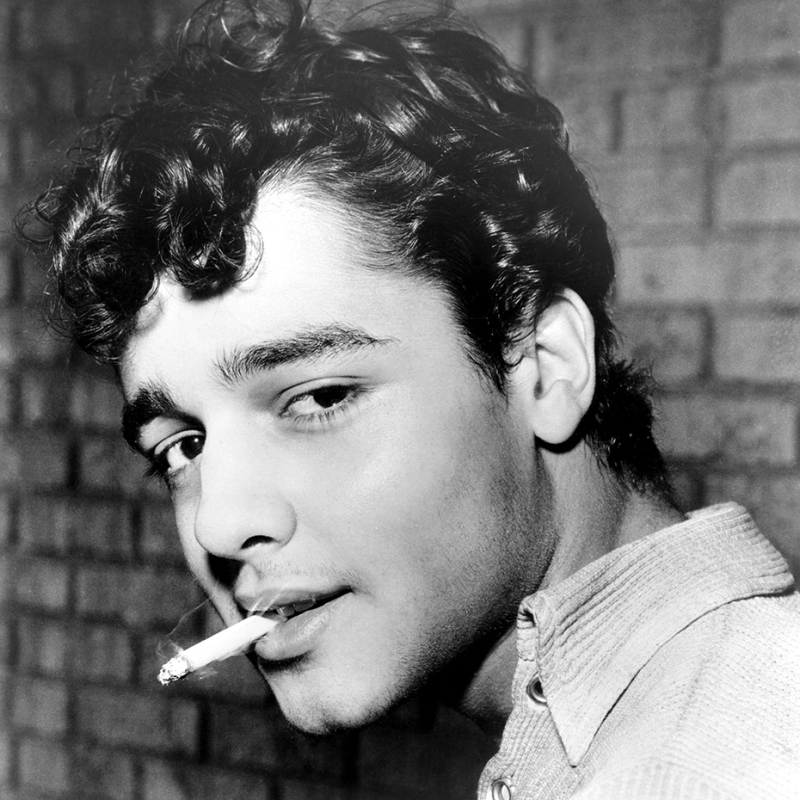
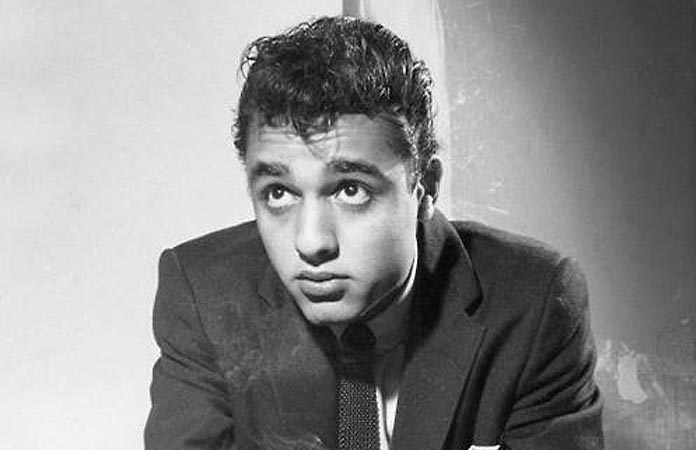
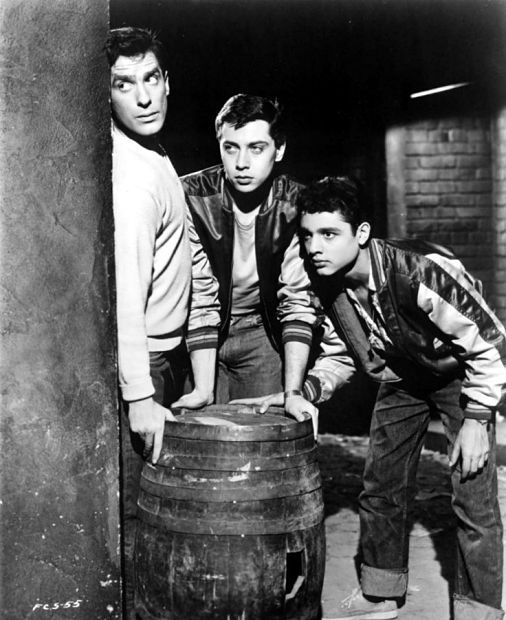
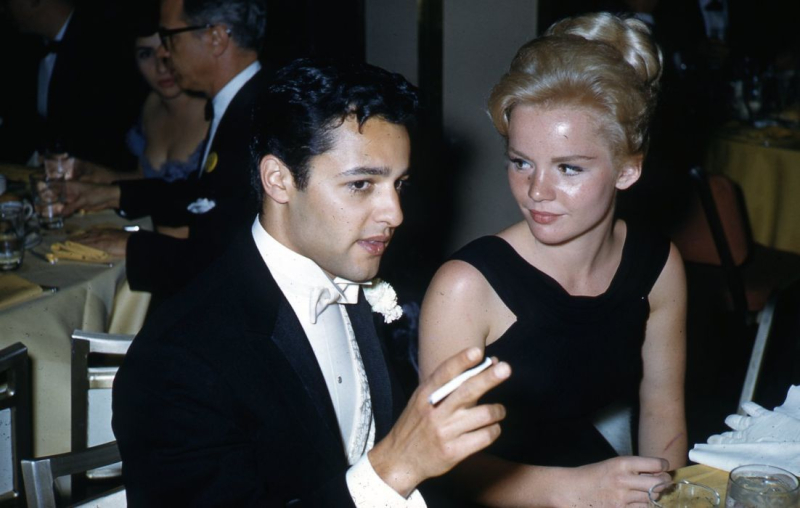
Sal Mineo was stunning. Hauntingly and uniquely so. His large, brown eyes, sweetly sad and darkly intense, his cleft-chinned handsomeness mixed with an almost cherubic baby beauty that remained child-like longer than he probably would have preferred, were so striking and different that the youth was discovered on the sidewalk. He was with other kids, but Sal stood out. It was 1948 and Sal was outside playing with his sister and friends when a man approached the children. The man asked if the kids would like to be on TV. Sal smarted something back at him and right away – the man saw something a little extra in this kid. He asked to speak to their mother. Later, Sal was approached by a casting agent and likely observed what the other guy observed – his loveliness, yes, but also the child’s charisma and charm, things that pop on stage and in photographs and on television and, wonderfully, writ large, on movie screens.

6a00d83451cb7469e201b8d2ce818b970c-800wi

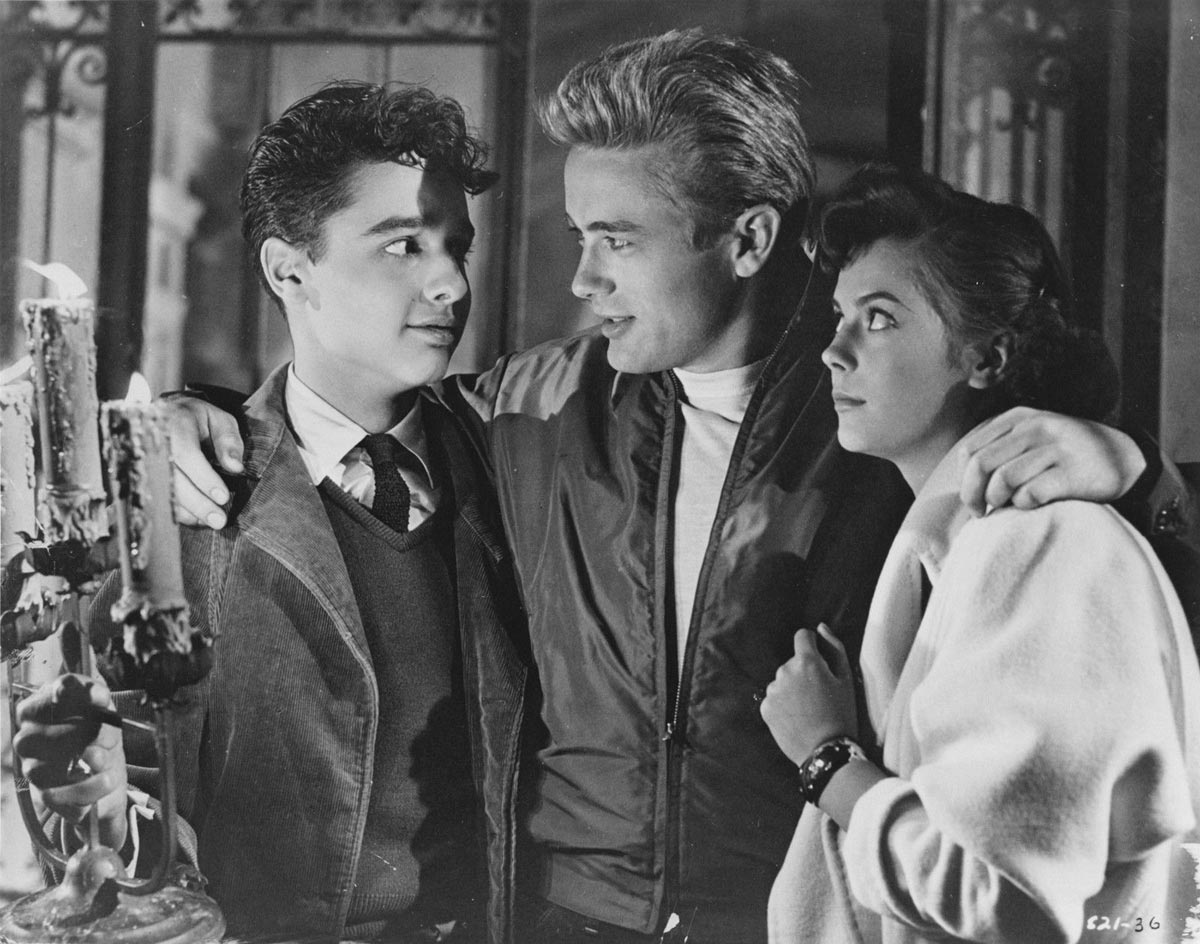
Mineo had that it. It’s not just a matter of attraction; it’s a matter of intrigue, a multifaceted intensity that could move from terrific joy when he breaks out into a laugh with James Dean to bursts of mischievousness, manically slapping the drums as Gene Krupa in Don Weis’ The Gene Krupa Story to the poignancy he shows in just about everything he didJust look at James Dean looking at Mineo and Mineo looking back at Dean in the mansion scene from Nicholas Ray’s Rebel Without a Cause (and in particular, the footage of production tests, shot on the sound stages for A Streetcar Named Desire). As much as I adore Natalie Wood in the picture, it’s Dean and Mineo bewitching the viewer with their shared gaze – and not just because Dean was so captivating – but because Mineo was so poignant and mysterious. Take a look at that rehearsal footage – Dean and Mineo playfully horse around until they collapse on the floor, all three leads attentive to Dean, Mineo’s head next to Dean’s as Wood strokes Dean’s hair. Later, Dean drapes his arm around both Natalie and Sal. Dean moves in closer and gives him a little kiss. He hands Sal a cigarette and Mineo cheekily blows smoke on Dean. Jesus. It’s both lovely to look at and sexually charged; their chemistry is undeniable and the attraction so palpable — it’s exciting to see these young men working off each other and also bittersweet. Dean is the bolder of the two, but it’s Mineo’s vulnerability and doe eyes that cast the spell, as if Dean can’t deny what’s right next to him. And he couldn’t. Rebel would not have been the same without Sal Mineo.

The Bronx-born son of a casket maker, the kid who ran from and fought bullies in school, the boy who made himself a little toughie as other boys were calling him a sissy, seemed destined to become a star. From his first stage role – in Tennessee Williams’ The Rose Tattoo where he runs across the stage (his line: “The goat is in the yard!”) – to his last acclaimed role, also on stage, in James Kirkwood Jr.’s P.S. Your Cat Is Dead, where he stars as a crook Vito tied to a kitchen sink, Mineo always remained interesting in spite of how the industry perceived him later in life. To some, he was viewed as frozen in time, forever that teenager, a relic of the 1950s. Of course he absolutely was not that but as often in Hollywood – they don’t like their child stars to grow up, even if they grow up into fascinating actors. Sal’s career struggles makes one angry and disheartened at the industry’s lack of imagination and an uptight homophobic world – Mineo should have been allowed more work and more time. That’s not saying he didn’t continue to create interesting work – he did – from stage to TV to movies.

6a00d83451cb7469e201b7c94429a3970b-800wi

Even in dinner theater, which he disliked, Mineo was by many accounts, impressive. He was daring in an era when such things scandalized squares, he was an artist, ahead of his time, unafraid of controversial subject matter (look up the searing prison-drama play he directed and starred in, opposite young Don Johnson, Fortune and Men’s Eyes), and he lived his life the way he wanted to. When you dive into Mineo’s life and work (I recommend Michael Gregg Michaud’s excellent, essential “Sal Mineo: A Biography,” which aided me greatly in learning more about Mineo), you’re captivated by this very complex, interesting actor and man. You also become upset over what could have been (I thought of all the parts he could have played into the late 70s and on, the directors he could have worked with, the projects he could have directed). You even feel protective. Not that Mineo was pathetic or entirely lost, he was quite strong in fact, but when you know how it’s going to end for Sal . . . you can’t help yourself.

Sal-mineo-3-1

So, it’s touching to know that James Dean took Mineo, under his wing while the other kids on Rebel (excluding Wood, a friend) thought him strange. According to Lawrence Frascella’s “Live Fast, Die Young: The Wild Making of Rebel Without a Cause,” actress Beverly Long said that “most of the actors playing gang members ‘never paid any attention’ to Mineo. ‘He was just young – and weird . . . He was a raging homosexual even in those days. [Sal later stated he was bi-sexual] He was very precious – no fun at all.’ [I doubt he was ‘precious’] Now, however, she admits, ‘We could have been nicer.’” Indeed, Ms. Long. You could have been nicer. Though their alienation likely only deepened his performance as Plato and his bond with Dean.

As Frascella continues: “The other cast members may have been somewhat jealous of the attention that Dean paid to Mineo. ‘If anyone was a bit closer to Dean it was Sal Mineo,’ [said Gary Nelson, second assistant director on Rebel]. ‘If he talked to anyone, it was Sal.’” Dean also saw something more in Mineo’s troubled Plato – he was inspired by Sal’s pathos and dramatic pull. Weeping over Plato’s body, Dean was emotional in real life. As detailed in Michaud’s book, Dean “acted as if Sal himself had been shot.” Sal said: “Immediately after the scene, I noticed there was a change in the relationship. He was very protective, and for the whole time he’d never let me out of his sight. He was always there . . . In Plato’s death scene I understood what being loved meant. Now here was the chance for me to feel what it would be like for someone close, someone that I idolized, to be grieving for me. It was an opportunity to experience what kind of grief that would be, what would he be like, what he would sound like, what would he be thinking.” Given what happened to both Dean and Mineo, this statement is doubly haunting and enormously moving.

6a00d83451cb7469e201b7c94429a8970b-800wi

Rebel co-star Dennis Hopper famously and frequently has been quoted saying a version of this – that Dean’s acting style was in one hand, Marlon Brando saying, “Fuck you!” and in the other hand, Montgomery Clift saying, “Please forgive me.” One could say something similar regarding Mineo, but I’d add another hand – young Peter Lorre saying, “Hide me” – the kid who killed that litter of puppies. That was Sal’s intriguing dimension; something he’d also tap into on stage and in the darker material that interested him. It’s not surprising, then, that he tried to buy the rights to Midnight Cowboy with the intention of playing Ratso Rizzo (he would have been splendid). He yearned to play the role of Perry Smith in Richard Brooks’ adaptation of Truman Capote’s In Cold Blood. Now, Robert Blake is excellent, I love him in the part, but I can’t get over imagining how great Mineo would have been as Smith, his switchblade kid all grown up, the murderer and Capote muse. He also wanted to play Michael Corleone – with his Sicilian heritage he found himself exactly suited for the story. Obviously that didn’t happen. He was disappointed.

In 1965 Mineo starred in the perfectly seedy, perverse and weirdly beautiful Who Killed Teddy Bear (directed by Joseph Cates — and of which I wrote about for Ed Brubaker's Kill Or Be Killed), one of his greatest performances and pictures (really, you must see it). The film was considered a low rent trashy curio, now something of a cult classic, though Mineo was given some fine notices (as he should have). He is brilliant in the picture, which lives in a kind of Warholian universe, downtown pulp with a gritty artiness to it – you could imagine the Velvet Underground showing up somewhere or Edie Sedgwick walking into the frame.  As the deranged stalker, Mineo is both creepy and disarmingly vulnerable. He’s also gloriously sexualized in a way that manages to not feel exploitative and more artful, more leeringly thoughtful. So much curious attention is paid to his body (an extended work-out scene, a bathing suit pool scene no one forgets and his dance with Juliet Prowse, Mineo wearing tight pants and a shirt that shows off his midriff) that it becomes an independent point of discussion rather than the mere gazing of a beautiful young man.

MV5BNmE1M2M2NmQtY2M3Zi00NDE0LTkzOGMtZjQ2Y2QwNjNhOTdlXkEyXkFqcGdeQXVyMjc4MjYzOA@@._V1_

Mineo takes it so much further in this bold performance – you’re thinking about beefcake and violence and sex and then sex messing up a traumatized character’s mind. And you’re even thinking about Mineo himself, the character’s he’s running away from, as if Plato is all grown up, still gorgeous but manlier, and now totally deranged. Take a look at your switchblade kid now. And yet, you still feel for him, you still find a point of identification. There’s something both enigmatic and relatable about Mineo. Nicholas Ray was dead-on with his instinct of casting the teenager in Rebel. In a loaded statement if there ever was one, Ray said of Sal: “I saw this kid in the back who looked like my son except he was prettier.”

6a00d83451cb7469e201b8d2ce81a5970c-800wi

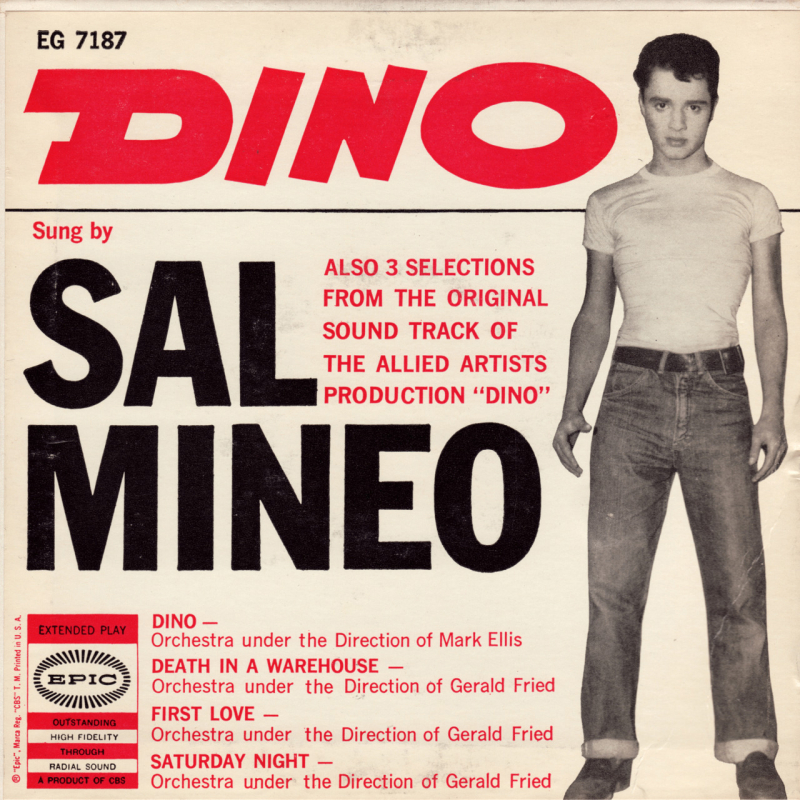
Sal was huge in the 1950s. He had a small, impressive role in George Steven’s Giant, and then he starred in, among others, Lewis R. Foster’s Tonka, Alfred L. Werker’s The Young Don’t Cry, Richard Bartlett’s Rock, Pretty Baby, and in Thomas Carr’s superb Dino as a powerfully tough, wounded juvenile delinquent whose been fucked with way too many times (and who hints at worse). His intense monologues, all flashing eyes and angry, abused and sad, opposite a calm Brian Keith are at times, heartbreaking (this was a reprise of Mineo’s impressive role on the televised Dino, with a wonderful Ralph Meeker in the Brian Keith role, originally played for Studio One). Sal’s youthful draw, the explosion of popularity that, quickly and, by the time of Don Siegel’s outstanding Crime in the Streets would be coined as “Mineo Mania,” would eventually wind up hurting his career. It was tough for Mineo to transition, or to be allowed to. He was deservedly nominated for two supporting actor Academy Awards (Rebel Without a Cause and Otto Preminger’s Exodus), and by 1965, he was in Ronald Neame’s Escape from Zahrain, Ken Annakin, Andrew Marton and Bernhard Wicki’s The Longest Day, John Ford’s Cheyenne Autumn and George Stevens’ The Greatest Story Ever Told. As I mentioned, there was also Who Killed Teddy Bear, which sadly did nothing for future work. But in the ’50s and like Dean, Mineo tapped into the restless hearts of teenage culture, and not just who they crushed on or who they listened to, but their troubles, their delinquency, real or fantasized about, their need to be heard, to be taken seriously, even if by threat or melodrama.

E1b8982597ccddb0b3f9d68629b70964--john-cassavetes-the-streets

Watching Mineo’s co-star and lead, John Cassavetes’ very serious 18-year-old in Crime in the Streets, we’re actually watching a very serious actor in his late 20s playing a teen. But kids related to that heaviness; that their youthful concerns could be considered important in an adult movie aimed at them. And they loved Mineo. Mineo and the mania was used as a large selling point for an excited teenage audience. Wonderfully acted and interestingly set bound (Crime has a terrific opening rumble sequence) the movie is potently brutal and Cassavetes is really, really believably mean until he breaks and future director Mark Rydell is especially sociopathic (the dialogue coach is credited to Sam Peckinpah). Mineo, however, is the most layered and troubled of the group, giving the most sensitive performance. After all, he was a teenager. He looked like a teenager, even younger than his own years at times, so much that in the picture, the boys call his character “Baby.” In many ways, he’s the most credible cast member, just as he is in a smaller role in Robert Wise’s Somebody Up There Likes Me, in which he plays the more believable New York street youth to Paul Newman’s Rocky Graziano.


But Mineo’s power at playing that kind of kid, and sometimes against men who would be considered the new guard like Cassavetes or Hopper or Newman (all older than him), unfairly relegated the actor to the old guard once he found himself deeper into the 1960s. As Mineo told Boze Hadleigh in 1972: “Hollywood don’t flex its muscle-brain. What you start out as is pretty much how you wind up. I mean, you get typed in the first thing that clicks, then they don’t give you no more fuckin’ chances.” He also said, “When I started in films, I was fifteen, sixteen, and I had this baby face that made me look like a wheat flour dumpling or something. And my fucking name didn’t exactly help.” Watching Mineo in his range of roles, and the pictures featured in the New Beverly’s Sal Mineo series (GiantRebelThe Gene Krupa StoryExodus, Raoul Walsh’s A Private’s AffairThe Young Don’t CrySomebody Up There Likes MeCheyenne AutumnWho Killed Teddy Bear, Bernard L. Kowalski’s Krakatoa: East Of JavaCrime in the Streets and Dino), you really see how diverse his talent was. From playing a Native American in Cheyenne Autumn to a singing and dancing private, ex beatnik, and one stealing every scene in A Private’s Affair, to the powerfully bitter Auschwitz survivor, Dov Landau, who becomes militant by joining the Irgun in Exodus, he stands out, with layers and depth and even a self mocking charm (in A Private’s Affair) that wasn’t shown enough (according to everything I read, Mineo had a wicked sense of humor and healthy humor about himself as well).

6a00d83451cb7469e201b7c94429ed970b-800wi

That Mineo didn’t get no more “fuckin’ chances” is a shame, but he continued to work, directing on stage and putting together provocative projects that never came to fruition (Fallen Dove, written by Mineo and Elliot Mintz, The Wrong People, about young boys in Morocco and their exploitation, McCaffery, about hustlers, which was about set to go until the terrible happened).

91JZtkIh-RL._SY445_

Looking at and reading about Mineo’s later work, particularly Who Killed Teddy BearFortune and Men’s Eyes and P.S. Your Cat Is Dead, you can see touches of Andy Warhol and Paul Morrissey, Hubert Selby Jr., Tennessee Williams and, of course, Midnight Cowboy writer James Leo Herlihy. This is not exactly a guy stuck in the 1950s. This is a kid who grew up fast in the 1950s, who spent a lot of money on his family (a lot) and who wound up losing much more, living in more humble digs, using set pieces and props for furnishings. He did have good ideas. According to Mineo’s friend Eric Williams in Michaud’s biography, Sal even bought the rights to Larry McMurtry’s The Last Picture Show, which he could never get made. He reportedly (not sure if this is exactly how it all went down) handed the book to Peter Bogdanovich (the two befriended each other while Bogdanovich was covering Ford’s Cheyenne Autumn) and quite clearly, that worked out well for Bogdanovich.

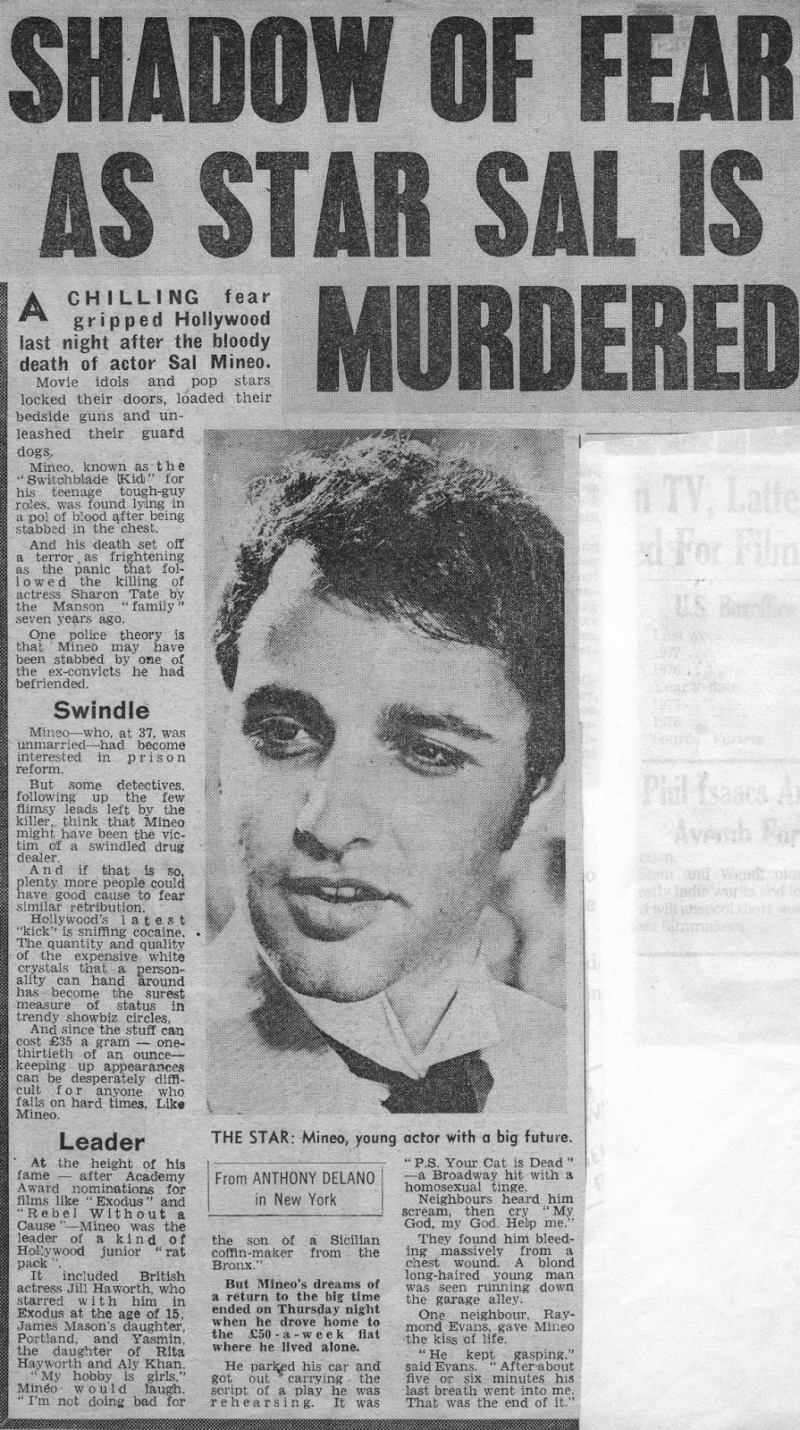
When reading Michaud’s biography, I was really struck by Mineo’s final days, before he died too early in life and so terribly in 1976. (I completely understood why James Franco was moved to make an entire film about those hours with his his underrated, impressive, touching Sal starring Val Lerner). Like anyone not anticipating the end, Mineo was working through his day, rehearsing his play and dropping by a nearby mini mart, buying a pack of smokes and a Hostess cupcake before driving home that night. When reading these details, something about that Mineo buying that damn cupcake destroyed me. I thought of the fascinating dualities to Mineo – his extraordinary life and his regular life. This exceptional man who was Rebel’s Plato; who posed nude (face shielded) in Harold Stevenson’s famous painting “The New Adam” (and in 1962); who played frantic drumming Krupa admirably and with style; who did sexy-weirdo-sadness in Teddy Bear; who was a two-time Oscar nominee playing a Manson like figure on an episode of S.W.A.T (and powerfully, do not discount his TV appearances); who was the young man on Shindig! who cut records and discovered other kids who cut records and became stars (namely, Bobby Sherman); who was the young guy on a celebrity panel game show who said women should marry men ten years younger if they wanted to (Lee Marvin thought so too, but for different reasons); the little boy who ran across the stage with the line “The goat is in the yard!” – Mineo was a complex, fascinating man doing something regular – buying junk food like everyone else does – not knowing he’d be walking into a horror that would end his life. That cupcake was almost his last meal. Parking his car in the garage to his West Hollywood apartment on Holloway Drive, a man (later fingered as Lionel Ray Williams in a case that is still confused with misinformation and prejudice, as if Sal was cruising when he was simply walking home) jumped out from the dark and stabbed him. He stabbed him once, but where it counts – in the heart. Mineo died quickly. He was 37-years old.

6a00d83451cb7469e201b8d2ce822d970c-800wi

Mineo had said in interview a year before: “I’m thirty-six now, and I still fantasize. And it’s very bizarre how so much of what’s happened in my life I’ve fantasized way ahead of time as a kid. It jolts me sometimes, how it manifests itself, when it was a seed that I planted as a little kid, y’know? I’m just so terrified that one day I’ll become realistic, and when I do, it’ll be all over. I just won’t be stopped if I want something. It may take years, but it will happen.” He shouldn’t have been stopped. Viva Sal.

6a00d83451cb7469e201b7c94429b6970b-800wi

New Year’s Eve & Inherent Vice

6a00d83451cb7469e201b8d2cb70a2970c-800wi

Because Phantom Thread was one of my favorites of 2017 and I've not written about it yet, here's my piece on Inherent Vice, first published at the New Beverly. If you know me, you know I love this one more than I could contain in one piece…

“If there is something comforting – religious, if you want – about paranoia, there is still also anti-paranoia, where nothing is connected to anything, a condition not many of us can bear for long.” – Gravity’s Rainbow, Thomas Pynchon

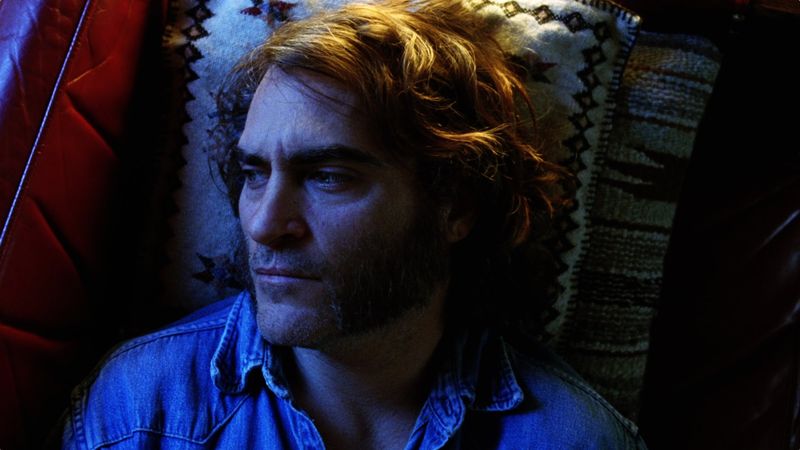
Obfuscation is a balm. Paranoia or conspiracy or lamenting the tangled reasons and non-reasons and imagined reasons for the end of a relationship, thinking of the past, of ghosts – often these types of rabbit holes are comforting. As long as they don’t become sink holes. And often all can intertwine in a rambling interior narrative of connections and “what if?” thinking that busies your mind from what you’re frequently avoiding – pain. Wistful memories are a lot more soothing, even if they make you sad. In Paul Thomas Anderson’s Inherent Vice, hippie, stoner, romantic PI, Doc Sportello (Joaquin Phoenix) listens when his ex walks back into his life, and bringing a labyrinthian mystery, says, “It isn’t what you’re thinking, Doc.” He answers, “Don’t worry, thinking comes later.” It does, and sooner rather than later – thinking that becomes muddied and strange and absurd and hilarious and ominous and beautiful and ugly and, what does this mean?

6a00d83451cb7469e201b7c94127a3970b-800wi

You can get overwhelmed by these complexities. You can also be exhilarated by them, the recognizable insanity (and it is recognizable, even bafflement is recognizable) of it all. Inherent Vice seeps into your soul, like the Neil Young songs and that faraway boat Doc and his maritime lawyer, the lovable Sauncho Smilax (Benicio Del Toro), are always looking at or that almost inexplicably mournful opening shot of Gordita Beach – that gap between beach pads – the light, the colors, the music (shot by Robert Elswit). Why is this is so heartachingly beautiful? The movie doesn’t so much require multiple viewings, it seduces you to revisit it, again and again, pulling you in far enough, while remaining just enough out of reach. You feel as if you need it. There are those who yearn to untangle the plot, but for me, among the many riches of watching Inherent Vice is searching to find something; something elusive, something you attempt to hold on to. But you know you’re not going to find it exactly because the movie works on an emotional current unlike any other I’ve ever seen. It’s like the first time I heard Love’s “Forever Changes” (and then listened to it over and over again), that masterful merging of haunting beauty, darkness, mystery, romanticism, crafted by a Los Angeles band who challenged any idea that the sunny Southern Californian 1967 Summer of Love was something every hippie bought into. As writer Andrew Hultkrans said of lead singer Arthur Lee: “Arthur Lee was one member of the ’60s counterculture who didn’t buy flower-power wholesale, who intuitively understood that letting the sunshine in wouldn’t instantly vaporize the world’s (or his own) dark stuff.

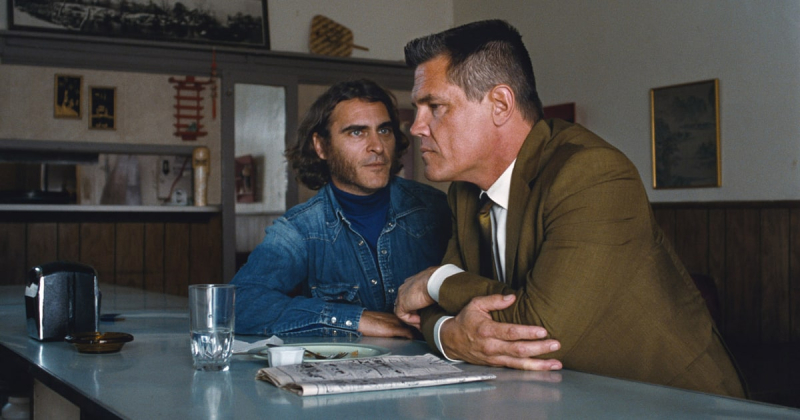
By the 1970 of Inherent Vice (adapted from Thomas Pynchon’s 2009 novel), characters seem attuned to the “dark stuff” – they’re already feeling coarsened to the new decade, weaving together once heroin-addled saxophone players turned COINTELPRO informants with dental syndicates of drug cartels and Nixon and Reagan and . . . a hippie movement picked up by the establishment to exploit for monetary reasons or reasons more nefarious than that. It’s haunting and humorous, and Anderson strikes the perfect surrealistic duality/mind-melding balance (if “balance” is the right word) between the two opposing forces that are now merging into a deadened, dreamlike reality. Like secretly tortured Lt. Det. Christian F. “Bigfoot” Bjornsen (Josh Brolin)/sometimes Adam-12 TV extra and ad pitchman puts on an afro wig and hippie beads and talks youth jargon from Doc’s TV: “Hey man, I don’t want you paying rent. Rent’s a hassle. I want to see you in your own pad. The Channel View Estates, Artesia’s newest and grooviest housing development. No buzz-kill credit checks. No minimum down payments. That’s not your bag. But check this out: fully equipped kitchen with automatic self-cleaning oven and breakfast nook. Out of sight. Attached one car and available two car garage and best of all, a view of the Dominguez Flood Control Channel that can only be described in two words: Right On!” Doc freaks out a little when, in a minor hallucination, Bigfoot leans into the ad and addresses Doc personally: “What’s up, Doc?” How far away are they from each other, really? Doc could go crazy wading through all of these correlations.

The trick (this is not really advice, just obvious common sense for the paranoid and the melancholic) is to ride out those thoughts and densely packed connections so it doesn’t choke you; like when you’re so suspicious you don’t leave the house, checking the blinds for imaginary intruders, wondering if your pot has been laced with PCP. Doc does smoke PCP, on accident, via an Aryan Brotherhood heavy (“Acid invites you through a door. PCP opens the door, shoves you through, slams it behind you and locks it.”), but he fights through the horrible high, valiantly and violently (it’s one of the picture’s many stunning scenes – watching hippie Doc utilize a firearm with an intensity and know-how and fear we’ve not seen on his face yet). And if that does happen, even without the PCP – paranoia that makes you feel as if your brain has disconnected from your body like a balloon floating off to the ocean – hopefully you can get up the next day and think about it; find reason for your freak-out. You know Doc could. Maybe that panic attack was a result of heightened sensitivity and almost extra sensory perception of something about to unfold? Some warning, whatever that is, that hasn’t found its way to you brain yet? The way dogs can sense earthquakes before everyone else does and hide under cars.

6a00d83451cb7469e201b7c94127d2970b-800wi

This isn’t a bad trait for a P.I., in spite of how humorous and a bit absurd the stoned gumshoe seems when set against the gimlet-drinking Philip Marlowe of the past. (Many have compared this picture to Robert Altman’s The Long Goodbye and Joel and Ethan Coen’s The Big Lebowski, and that’s apt, and Anderson discussed a host of influences, from Police Squad! to Neil Young’s Journey Through the Past to Alex Cox’s Repo Man to Quentin Tarantino’s Jackie Brown to Alfred Hitchcock’s North By Northwest, but, truly, this movie exists in its own universe) Pynchon (and the movie, too, which sticks closely to the novel with some deviations and additions, also Joanna Newsom’s Sortilège becoming a Jiminy Cricket-like narrator) calls that kind of intuition, when you sense something from your nervousness, “Doper’s ESP” (I feel like Thomas Pynchon has had more than a few illuminating anxiety attacks). Weaving throughout the various areas of Los Angeles and its sunshine suffused with an ominous undertow of darkness and corruption, Doc bumbles around on his own stoner wavelength – he’s good at his job in the way he works it. Partly, because he’s game, intrigued by various characters, surprised at times, and yet, low key. Madness doesn’t perturb him for too long, this is the sea the fish swim in, and he’s got a case to solve. Doc, who in spite of the slapstick humor and stoner indolence, is not dumb or too baked to be productive, he’s actually quite clever, and – this is key to the movie’s richness – he’s a guy who actually cares about people.

6a00d83451cb7469e201bb09e44bb7970d-800wi

Doc is given opportunity to make spinning, divergent connections regarding his ex, Shasta Fay Hepworth (Katherine Waterston), that night she sways into his little Gordita Beach pad (serving for Pynchon’s Manhattan Beach). She’s looking beautiful but “flatland,” looking like she swore she’d never look. She’s also dragged in a dramatic entanglement and, now, a new case for Doc. In her own way, she’s back with him, but then, as they say separately, twice in the film, “of course not.” This relationship will grow ever poignant as we watch Doc remember Shasta in lyrical sequences, and we see that at its center, this is a movie about a doomed relationship. So, all of the theories, dark operations, conspiracies and period-detail gloom mix in with Doc’s sentiment and sadness towards Shasta. They divert him, and yet, they make him closer to her.

6a00d83451cb7469e201b8d2cb70d8970c-800wi

Shasta reveals that her new boyfriend, bigwig real estate developer Mickey Wolfmann (a sublime Eric Roberts), is in danger, and she’s in a position to be complicit. Mickey’s wife and her lover/spiritual coach are conspiring to throw Mickey into a loony bin, hoping Shasta will aid in their plan; get him when he’s vulnerable. She doesn’t want to. Soon enough, both Mickey and Shasta go missing. Doc’s now on it more than ever. His ex-old lady is missing, causing frequent moments of fear and lamentations, and, in his own tripped-out headspace, a quality that’s both mellow and on edge. He’s stoned but he’s alert (not all potheads are useless, this is about as stupid as people thinking they suffer Reefer Madness manias). But he does get lost in the maze a few times. In a part of Pynchon’s novel I love (which reflects the movie), circular questioning finds Doc wondering about Shasta and the web of intrigue. It riddles Doc as he smokes out with his old partner (not a character in the picture) Fritz Drybeam:

"That Mickey, known to be a generous Reagan contributor, might be active in some anti-Communist crusade came as no big surprise. But how deeply was Shasta involved? Who had arranged for her passage out of the country aboard the Golden Fang? Was it Mickey? Was it somebody else paying her off for her services in putting the snatch on Mickey? What could she have gotten into so heavy-duty that the only way out was to help set up the man she was supposed to be in love with? Bummer, man. Bumm. Er.

"Assuming she even wanted out. Maybe she really wanted to remain in whatever it was, and Mickey stood in the way of that, or maybe Shasta was seeing Sloane’s boyfriend Riggs on the side, and maybe Sloane found out and was trying to get revenge by setting Shasta up for Mickey’s murder, or maybe Mickey was jealous of Riggs and tried to have him iced only the plan misfired and whoever had contracted to do the deed showed up and by accident killed Mickey, or maybe it was on purpose because the so-far-unknown hitperson really wanted to run off with Sloane. . . .”

6a00d83451cb7469e201b8d2cb70e6970c-800wi

Doc comes to the only conclusion these obsessive kinds of thought processes yield: He exclaims: “Gahhh!” Yes, he’s really, really high. In the novel Fritz informs him that PIs should stay away from drugs. All of  “‘em alternate universes just make the job that much more complicated,” he says. Doc argues that Sherlock Holmes was a good PI and he did a lot of cocaine, so, not true. His friend tells him Sherlock Holmes wasn’t a real guy. Doc disagrees: “No, he’s real. He lives at this real address in London. Well, maybe not anymore, it was years ago, he has to be dead by now.” Freak-out over. Digressions can really calm a person down.

6a00d83451cb7469e201b7c941281e970b-800wi

And the picture’s digressions (for there are many, wonderfully so) present a collection of characters whom Doc encounters with confusion, suspicion, fear, lust, fondness, empathy . . . so many various expressions. These disparate personalities, oddball, touching, sexy, terrifying or merely baffling, serve the detective story well, but they also add texture and depth to both the movie and to Doc. Part of Inherent Vice’s power is watching a brilliant Phoenix’s sensitive and mischievous face observing a person. His expressive blue eyes really study people, even when he’s supremely stoned. From Jade (a charming Hong Chau), who’s like the Joan Blondell of the movie; to prim-but-not-so-prim, kind-of girlfriend Deputy D.A. Penny Kimball (Reese Witherspoon); to his brief scene with Roberts’ Mickey in which Doc (and the audience) take in this man’s haunted face, moving from a weird “Hello little hippie” sweetness to expressing, nearly every poignantly tragic moment in the movie with just a few powerful close-ups of his face (my god, it’s lovely to see Eric Roberts on screen like that); to the way Doc kindly listens and nods as Hope Harligen (Jena Malone) describes her seedy meet-cute with her missing husband, Coy (Owen Wilson), handing Doc a graphic photo of their baby, which makes him quickly, hilariously, yell aloud, and then swiftly compose himself.

6a00d83451cb7469e201b8d2cb7105970c-800wi

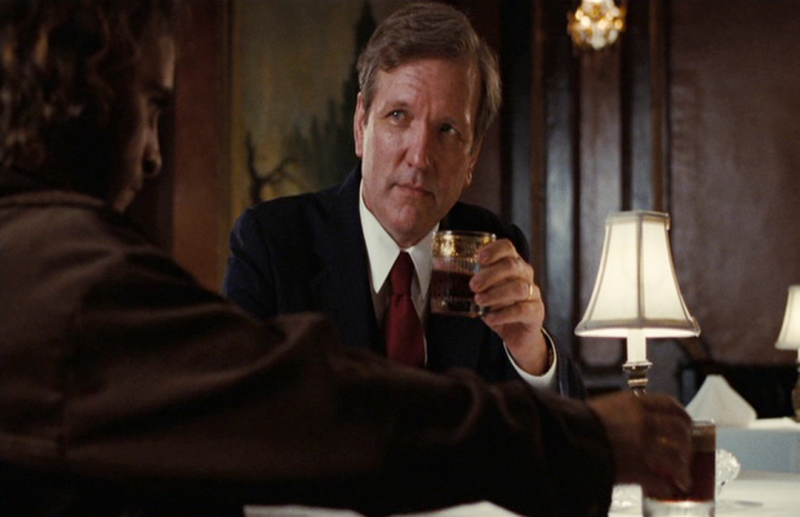
Another remarkably mixed mood moment is Doc’s dinner with Crocker Fenway (Martin Donovan), the wealthy, sneering snob who rewards Doc for saving his teenage daughter from demented dentist, Rudy Blatnoyd (Martin Short coming off like Austin Powers’ degenerate uncle and a touch of Phil Spector). Doc, dressed his best (that turquoise necklace) listens to Fenway detailing, with horror, the transgressions his daughter endured, and not all because of sex, but because of Blatnoyd’s tackiness (“The wallpaper. The lamps” – if you’ve ever wondered how a person could perfectly describe disdain for lamps, Donovan will quell your curiosity). Doc’s attempting to be both nice and tough, but Fenway insults him. The various expressions flickering on Doc’s face makes you feel for him in general (you feel for Doc a lot in this movie), but also feel (and this is without condescension) proud when he sticks up for himself: “I may not be as well connected, and for sure not as much into revenge as you folks are. But if you jive with me, my man. I say to you . . .” and he makes a click click sound. I love that sound he makes. It’s disarmingly touching.

6a00d83451cb7469e201bb09e44bf3970d-800wi

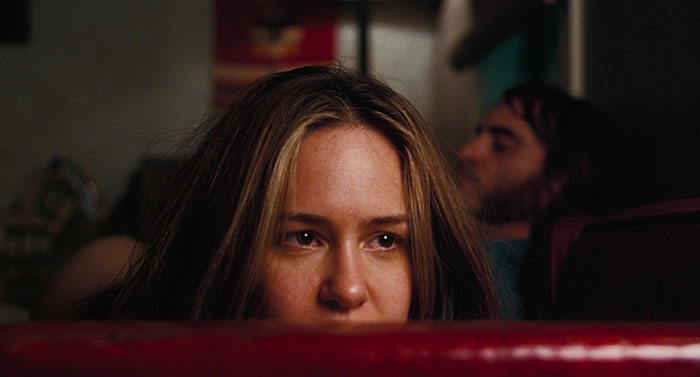
Doc’s relationship with Shasta is like a simultaneous love and ghost story. Often she appears like an idealized dream, the way we frequently remember those we pine for, forgetting the bad timesA flashback of the two running through the rain to Neil Young’s “Journey Through the Past” is so overwhelming romantic and stirring that it feels personal, like even personal to the viewer (who hasn’t had this kind of idyllic memory come to them before? Who wouldn’t want to return right back to that perfect feeling?). Things become, perhaps, real (in a still dreamy sense) in a powerful extended scene in which Doc has angry/emotional sexual encounter with Shasta. She sits naked detailing what Mickey made her do – is she taunting him? Expressing sadness and trauma? Is she getting off on it? It could be all things, and not because she’s a “femme fatale” or a bad person, or merely fucking with him, it’s much more nuanced than that. And so is Doc’s response. This scene’s been deemed controversial by some, a male fantasy even, but that takes away all of its complexity and rawness, for both Doc and Shasta. It’s an extraordinarily thorny moment, between two people who really know one another. It’s supposed to be discomforting and sad and emotionally honest. You’re supposed to think about it. It also shows that their relationship is more complicated than his idealizations.

6a00d83451cb7469e201b7c9412854970b-800wi

A separate essay could detail the relationship between Doc and the hilariously severe, incredibly damaged Bigfoot (“Like a bad luck planet in today’s horoscope, here’s the old, hippie-hating mad dog himself . . . SAG member, John Wayne walk, flat top of Flintstones proportion, and that little evil shit twinkle in his eye that says, civil rights violations.”) The interplay between Phoenix and Brolin (who is extraordinary) is so exquisitely timed, from big moments to seemingly throwaway lines (nothing is throwaway here), that their connection takes on a plaintive depth that builds and builds until, you are taken aback by how moved you are (and you really start to like Bigfoot). When Doc realizes that his nemesis and, in a strange way, his ally, is mourning the death of his partner (who he was probably in love with) Bigfoot’s actions attain a more dejectedly distressed meaning. His anger and chocolate covered banana sucking and yearning for respect shows a man who is on the edge of, likely, a complete nervous breakdown. The man who berates Doc constantly and who stomps on him (literally), and who puffs up his chest and yells “Molto Pan-a-cake-o!” is, in fact, the saddest character in the movie. By the time he eats a plate of marijuana, lamenting that Doc’s not come around after the case is closed, tears stream down Doc’s face. You’re stunned by what Bigfoot’s doing, and then, my god, are you moved. Doc asks: “Are you OK, brother?”  Bigfoot answers: “I’m not your brother.” Ever empathetic Doc replies: “Yeah, but you could use a keeper.

6a00d83451cb7469e201bb09e44c01970d-800wi

These characters will have more rabbit holes to dive down, but the case is over, and rather than rejoice, there’s a sadness that ends the picture with a  . . . what now? As Sortilège narrates: “Yet there is no avoiding time, the sea of time, the sea of memory and forgetfulness, the years of promise, gone and unrecoverable, of the land almost allowed to claim its better destiny, only to have the claim jumped by evildoers known all too well, and taken instead and held hostage to the future we must live in now forever.” That’s why we like to whirl with endless conspiracies because, well, they often never end. 

The one bit of closure has a poignantly heroic Doc saving Coy and dropping him off to his wife. But while you’re happy for Coy, the camera lingers on Doc’s bittersweet, forlorn face sitting in his car as Jonny Greenwood’s gorgeously melancholic score underlines the emotion. Nothing is wrapped up for him. Even when he’s driving off with Shasta, nothing is for certain. Who knows what’s in store? Who knows if it’s really even happening? Should we attempt to figure it out? “Of course not.”

6a00d83451cb7469e201b7c9412861970b-800wi