You Wander Down the Lane and Far Away
6a00d83451cb7469e2017c339afa8a970b-400wi

I finally saw a picture. Little Dorothy Gentry — the girl who grew up on an orchard in Oregon's Rogue River Valley. The woman I barely knew while growing up in Seattle, Bainbridge Island and Oregon's Willamette Valley. As I wrote and experienced last month, the woman who went to Alaska and who passed away this October. 

When Dorothy died, I discussed the scant photos I'd seen of Dorothy and her family — her mother and my mother. There were only two pictures I could remember, and one I didn't see in this collection. Maybe I imagined that picture? 
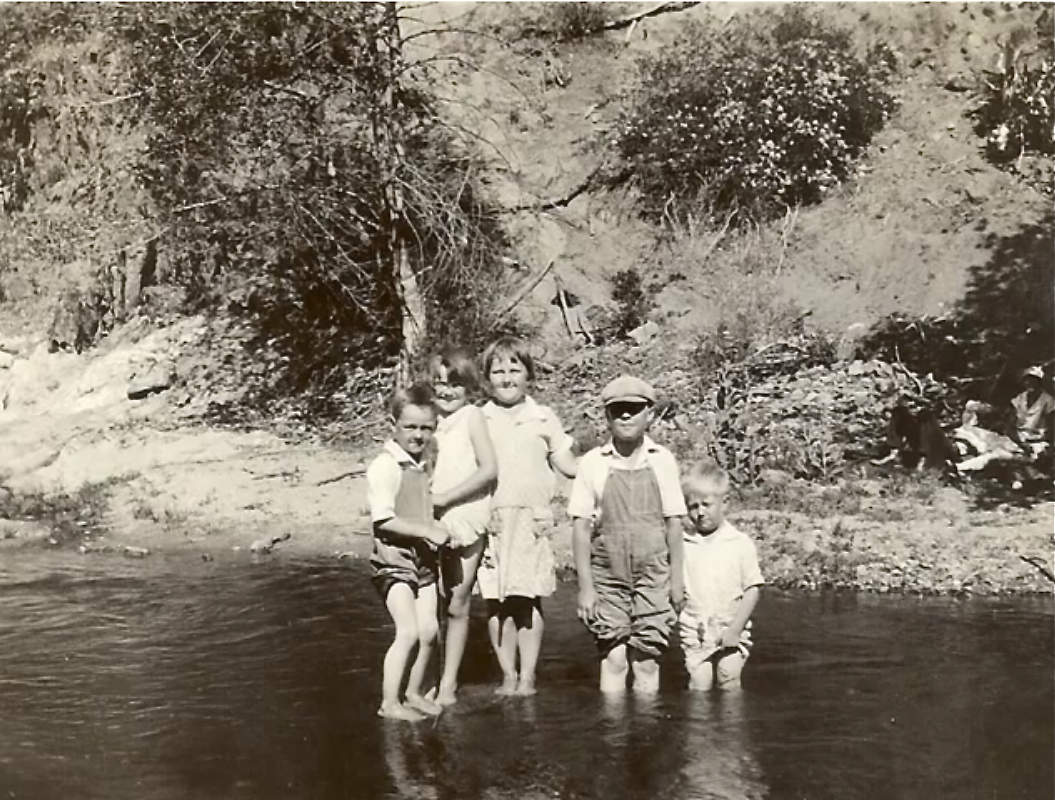
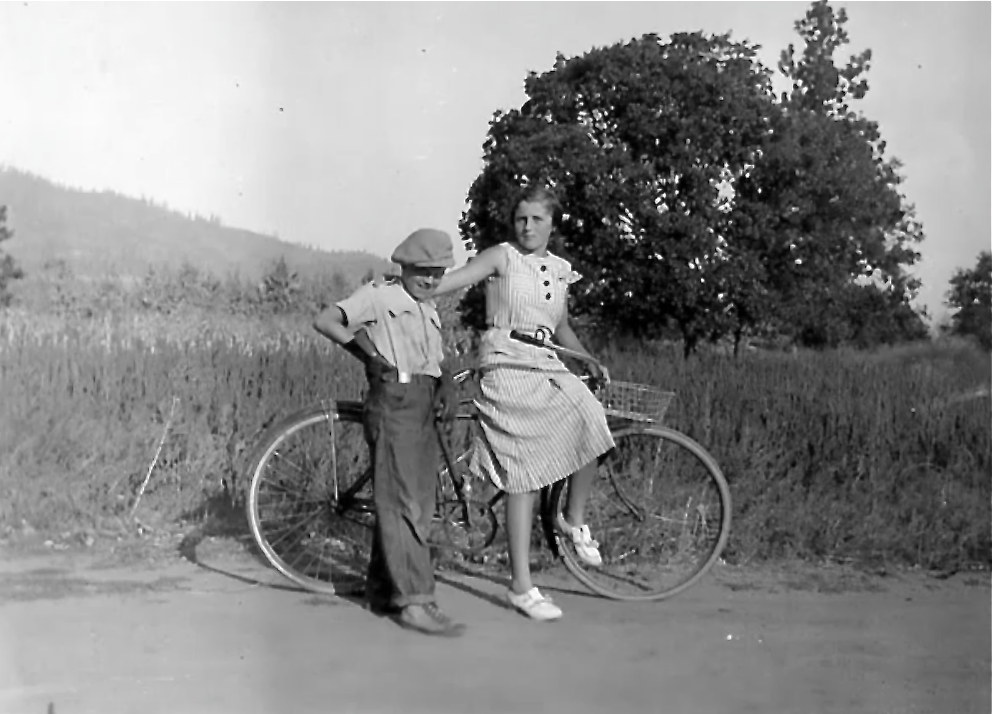
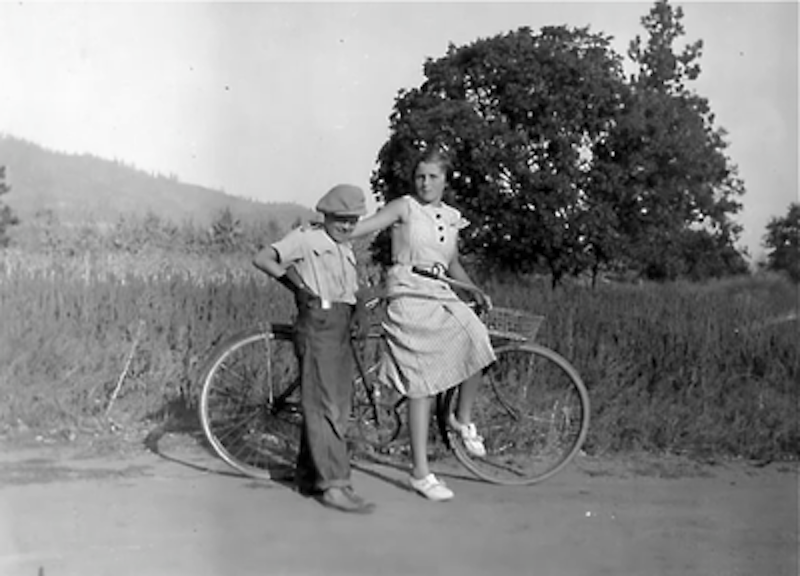
Dorothy & bobby & friends at swimming holeBut for the first time in my life, this week, I saw less than a dozen old pictures. I looked at my great-grandmother Ethel for the first time in my life. I saw Dorothy as a baby, as a girl and as a 13-year-old, sitting on her bicycle, appearing almost protective with a boy I'd never seen before. I saw their house. I saw Dorothy's friends.

I saw Dorothy as a young mother with her brood. I saw my little mother. I saw my aunts and uncles as children. It all looked so stark and questionably happy and beautiful. Nature and growth unfold around these people, little people, they seem, with enormous problems to face in their futures. The orchards seem protective. Or a trap. I'm not certain

Grandparents leave us — and often we have no idea who our family really are. And we'll never know. Dorothy and her kin, her entire life, haunt me. I've always felt rootless, yearning to understand my blood ties, where they came from and what kind of people they were. I heard bits and pieces of ancestral drama and tragedy (abandonment, prison apparently, mental institutions) but only through my mother, and from what she could piece together. It was a mystery and It seems everyone wanted to keep it that way.

Dorothy was not the matriarch to discuss her past. As far as I know, she rarely talked about her mother, she rarely discussed her first husband, who fled the family and eventually went to prison (Dorothy married several times — maybe this is family lore but I tend to believe my family — one died reportedly in a barroom brawl, another was a pharmacist, I don't know who the others were — my mother was ok with some, others not so much). After ditching his family, my grandfather lived, for a time, with this family on an orchard, and my mom was hungry all the time. The kids would try to run over there to eat fruit — but they'd be shooed off the property. And then he was sent away — he spent time in prison with his brother, my grandfather was there for grand theft, something like that, I'm not sure, his brother was there for murder. Only a few days ago did I learn Dorothy had a younger brother. My mother told me. His name was Bobby, like my brother. Dorothy's Bobby, sometime in his early thirties, was killed by a drunk driver. Bobby is the boy, standing with his big sister next to the bike. He's wearing a hat. He liked hats. And I like to think that his mother Ethel was happy to see him in hats. She liked them too. 

6a00d83451cb7469e2017d3dc9f67d970c-800wi

That's half of what I glean from these mysterious, first-seen photographs. There's so much I don't know. I should have asked more questions — but I never felt I could. I rarely saw Dorothy to ask, and the few letters were about happy things — flowers, books, movies. I worried that her past would only bring sadness. Though I'm sure there was joy and some wonderful stories, I didn't want to dredge up painful memories. Chiefly, about my great-grandmother Ethel, who was sent to The Oregon State mental institution at about age 28 or 29, when Dorothy was a young girl and remained interned until (I found out later) she was released to a halfway house very shortly before she died. When I was a little girl, my mother took us out to visit Ethel — I barely remember (it could be just a memory because my mother told me).

We stopped to eat hamburgers (I think) and everyone seemed happy, happy with a question mark. There was a cold pall that would hang over the meeting.  I was too young to understand her mental state, but according to my mother, she was not crazy. She'd been through horrors at that institution (I can only imagine what kind of treatments occurred during that time in Salem, the real Cuckoo's Nest, where they filmed the movie.) and that was her life. She was used to it now. "Normal" life, she felt, was too late. She could not re-enter regular society save for that house she was wound up in before she passed. For a long time, she didn't want to leave the institution. Too scared of the outside world.

Real life was now too frightening. I thought of Ethel first arriving, packing up her suitcase and walking into that place, barely 30 years old. From vast fruit-filled orchards, biting into sweet things, feeling the sun and the rain, to white walls and white starched nurses and cups of pills — Ethel looking out at the sun and the rain, only being allowed to feel it on her pretty hair and pretty face in designated, organized outings. 
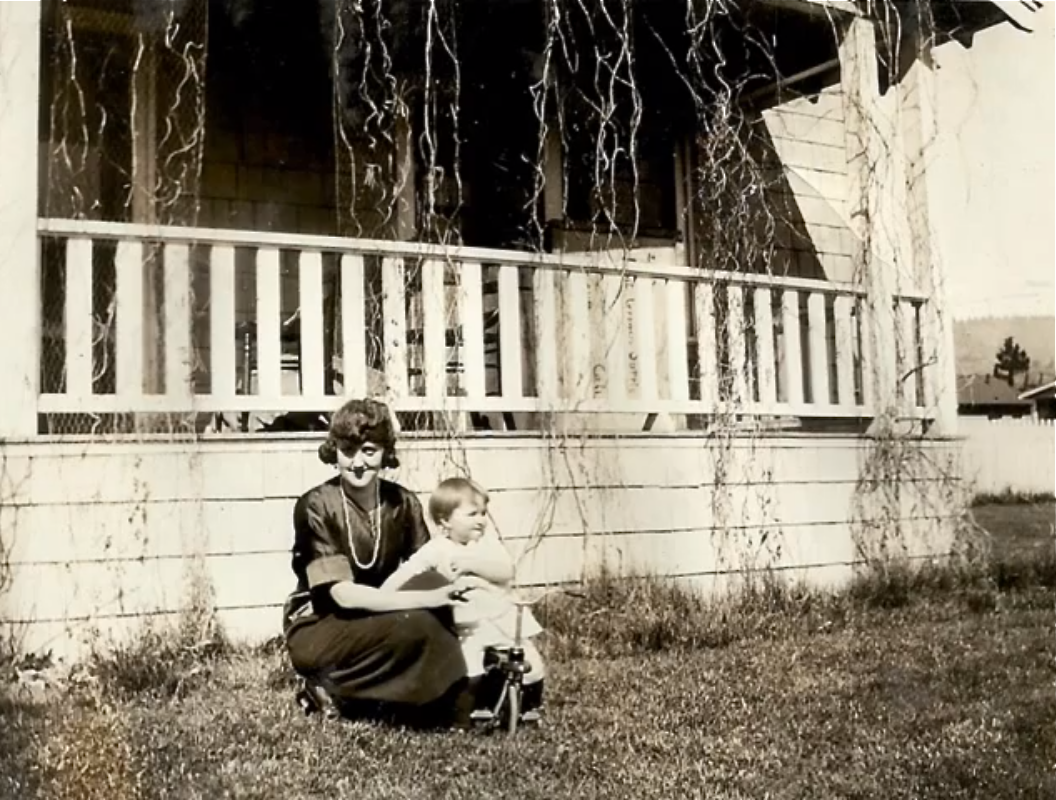
Ethel and dorothy

I feel she should never have been locked away. From all I've heard, she suffered terrible anxiety (as I do), and she likely received horrific treatments during that dark time of mental health institutions. Again, this is just my thoughts, but I feel she was misdiagnosed. I was always fascinated by her. I remember, at around age ten or so, discovering her old, snazzy suitcase in a closet after she died. I went through her carefully folded clothes and noticed her name "Ethel Gentry" marked on all of her garments. Maybe this was the institutional rule. Maybe she didn't want people touching her pretty things. I knew she'd feel fine if I did. I put on her fancy nightgown and wandered around the house. I went into the kitchen and filled a highball with soda and ice and pretended it was liquor. 

I thought this was something she would do, sexily swill a drink —  something I saw in old movies. I staggered around, pretending to be angry and drunk but thinking I was so crazy glamorous. I imagined this was how Ethel might have conducted herself towards all those jerks and orderlies in the loony bin. Movie Star. (Ethel's mother was a dressmaker and a costumer for the movies. Ethel was born in California. Her father died in Los Angeles. I just learned all of this today). Well, now my play-acting makes more sense, even if I had no idea at the time. But I doubt she was treated like a movie star.
6a00d83451cb7469e2017d3dc9812c970c-400wi

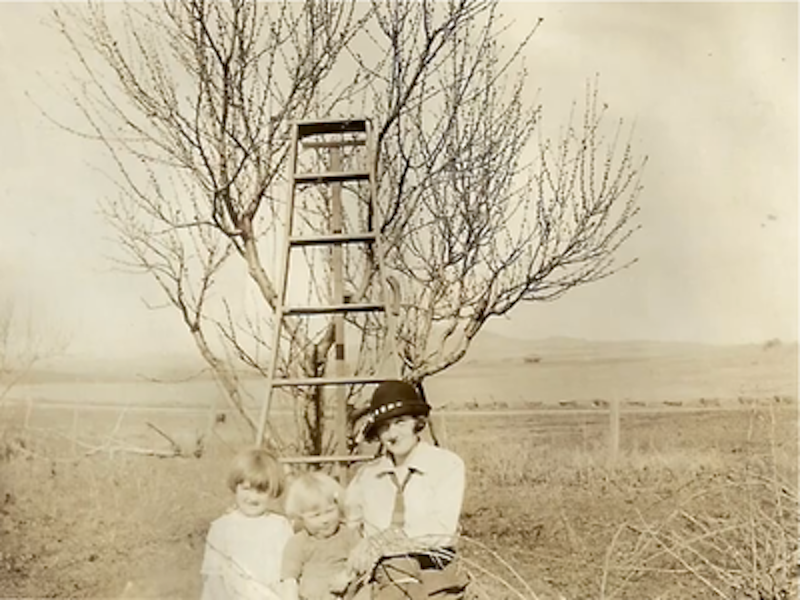
Ethel has never been clear to me. I don't know what happened to her. Those times, especially for women suffering from depression and anxiety, were obviously different when Ethel was a young woman. My great grandfather McKinley (he went by Kim), who I do remember vaguely as a little girl, I only saw him about three times (I have a memory of picking cherries with him, eating so many on the drive back home that all of us kids swore off cherries forever) — I adored him.  I was named for him. But I've never understood why he agreed to send Ethel away. Was she dangerous? Did she want to go? I can't believe that. She was acting odd, is all I've heard. Odd. In these photos, she looks what has been described to me — unique, smart, stylish, musical (she played the piano beautifully) — an interesting woman. There she is. Fantastic. Sitting with her children, a tree and a ladder, clad in menswear complete with a fabulous hat and tie. And, in another photo, lovely in her silky shirt, bobbed hair, and long necklace. But I have no idea what was really going on during this period. If I romanticize her, I say she was a woman ahead of her time, a woman who spoke her mind  – a woman who could not be contained. But then, this is nothing new. Women are still demonized, written off as crazy, and blamed for others' problems. She was a "problem." So, remove her.

Mary, Pat, Barbra & Ted

I've written about how we view images in pictures and in movies, sometimes as time capsules, and looking at these photos reminded me of how I took in The Virgin Suicides — how those memories, by the boys who never really knew those girls, unfolded in their minds. I feel my blood when I look at these photos, but as I've stated before, recollections never play out in fully developed narrative timeframes, as perfectly balanced and structured strands of thought. As I reflected, they are not tangible, easily understood events. Memories can be visited but never wholly embraced.

Dorothy

They can be strong and unforgettable, but bit by bit, they lose their edges, making them, for many, even more melancholic. The more they elude us, the less simplistic they become — never just happy or sad, but mysterious and bittersweet, replete with or bereft of emotion for reasons often beyond comprehension.

I'm trying to comprehend. And I certainly feel things. I feel nearly overwhelmed, in fact, looking at these photos for the first time. And I think of Dorothy, the little girl who lost her mother, her husband, and then her brother. She was not a perfect mother. She should not have left for the wild frontier of Alaska, almost unreachable, so early in my mother's life — leaving my teenage mother alone to watch over her younger brothers. But now, even as I feel anger for her leaving my young mom and two boys, I better understand her need to flee, as selfish as it was to her kids.

She wanted to start her life all over again. The men leave. The mothers are sent away. Her mother, confined and creative and lovely, undergoing god knows what could not run away. Dorothy could. 
Telluride Showcases Genius Jack Garfein

6a00d83451cb7469e20147e3a5680d970b-800wi

"I am a product of violence myself. By the age of 15 I'd been through Auschwitz and Belsen and my family destroyed… Without motivation, without warning. One's whole life is literally changed by making oneself cope with violence. The force cannot destroy the sensitive… Tennessee Williams believes that violence destroys sensitivity but I don't believe this — we go on, the life force goes on in spite of it." – Jack Garfein

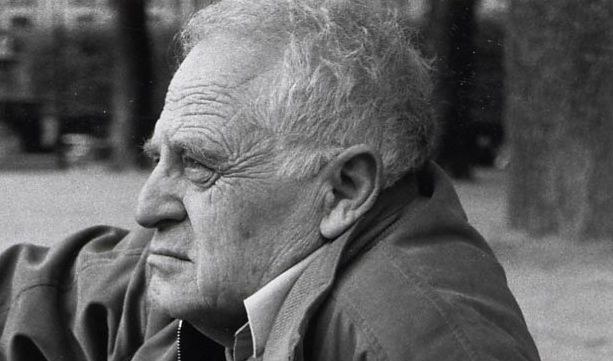
I'm honored to be presenting the work of Jack Garfein at this year's Telluride Film Festival. He's a master. A master with only two feature films. But he's accomplished so much more in the world of theater, film and life. Garfein has so many stories. Sweet, brilliant, moving funny and empathetic, it will be wonderful to interview him on stage. The man is a force. 

Jack-Garfein-02

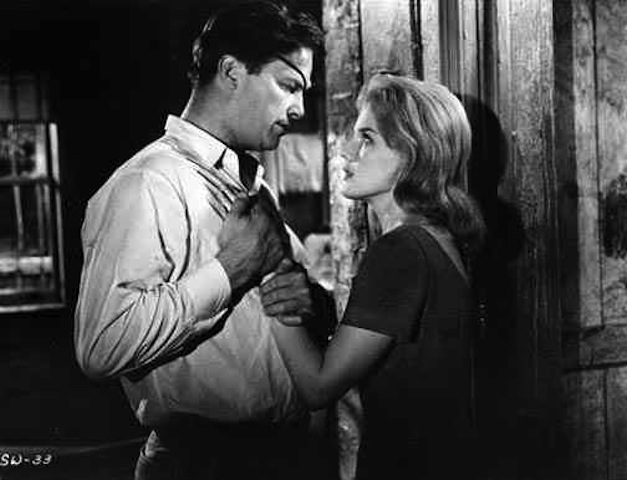
Garfein is a filmmaker so ahead of his time that, even after 50 years, his two features The Strange One (1957) and Something Wild (1961) continue to inspire, shock, provoke empathy and amaze. You can’t believe these complicated, human stories remain so modern and experimental to this day. But this is Garfein – an artist who beautifully combines expressionistic lyricism with raw naturalism while exploring still controversial subjects; never preaching, simplifying or insulting his characters: The fascistic military dehumanization and homoeroticism of The Strange One, and the complexity of rape and entrapment in his masterpiece, Something Wild.

Aj8ca6y6bgr6gb66

Garfein, born July 2, 1930 in Czechoslovakia came to the U.S. after surviving Auschwitz, joined the Actor’s Studio, directed, in his early twenties, “End as Man” with Ben Gazzara and founded the Actors Studio West. His accomplishments are too vast to list, but he remains one of the great acting teachers, and continues to instruct in Paris. He’s chronicled his return to Auschwitz with his documentary The Journey Back, and has written “Life and Acting – Techniques for the Actor.” He remains a power in the world of acting and film. 

Tcmcarroll-2

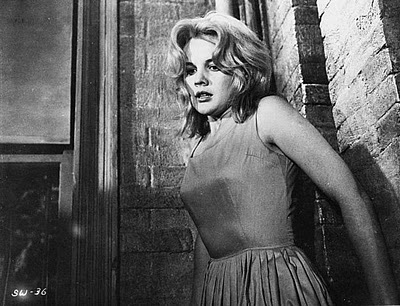
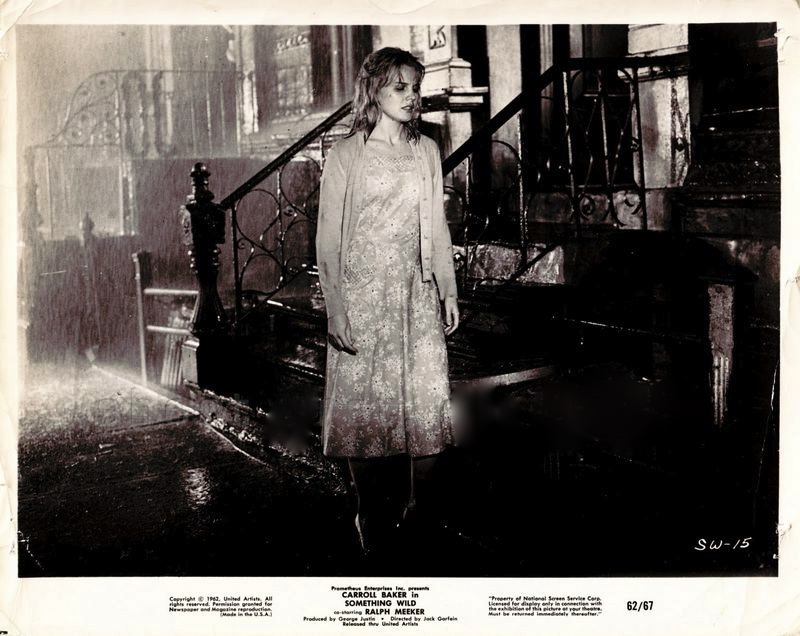
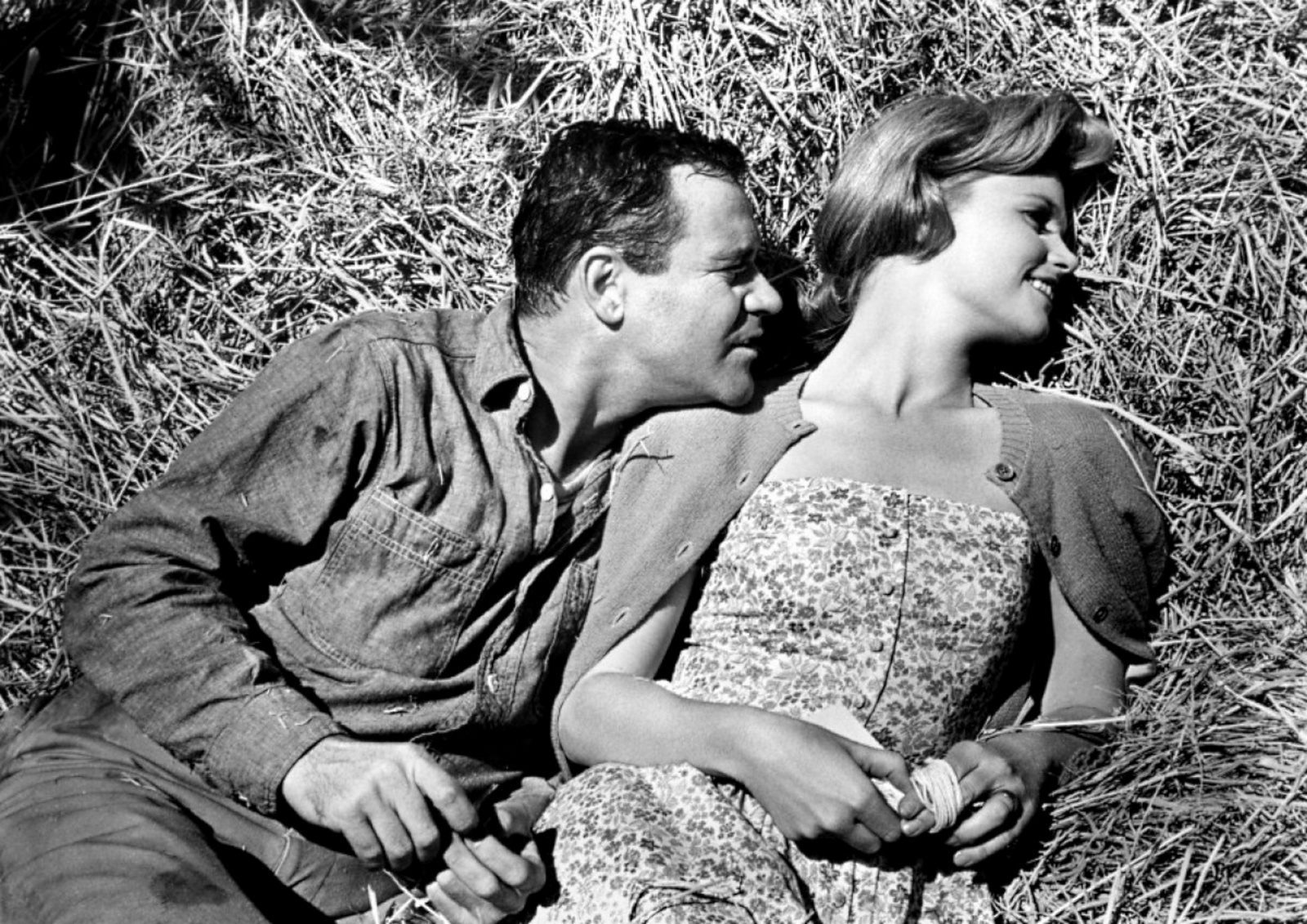
On Saturday (today), I'll be presenting a picture I programmed for Turner Classic movies  a few years ago and have written about here — the extraordinary Something Wild. Garfein’s brave, emphatic, confounding, mysterious and in the end, darkly beautiful Something Wild is a picture so powerful, that it shocks and distresses viewers to this day. This expressionistic and naturalistic work of art (the location shooting is remarkable) dared observe the complexity of rape by following a young woman (a brilliant Carroll Baker, Garfein’s then wife) after she is viciously attacked by a stranger in the park.

Baker rain

The psychologically chaotic aftermath – her anxiety, repulsion, depression and eventual withdrawal from society — not, and then by her own choice – is given a potent punch with the arrival of a tremendous Ralph Meeker in a performance you’ve never seen before. Not one to oversimplify (as rape never should be), this story of victimization turns into a twisted Stockholm syndrome/true love (or not, which makes it even more intriguing) fairy tale that still provokes argument. With a score by the virtuoso Aaron Copland, title sequence by legendary Saul Bass and cinematographer by the remarkable Eugen Schüfftan, Something Wild is an un-sung masterpiece.

MV5BMjE0MzY4NzExOV5BMl5BanBnXkFtZTcwOTg2MjUxNw%40%40._V1._SX640_SY820_

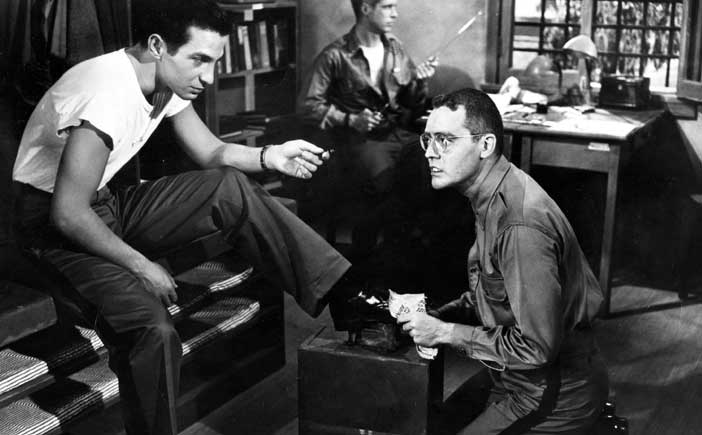
On Sunday I'll be presenting The Strange One, which is strange and not so strange when considering the extent of human sadism. But the film remains shocking and potently violent — both physically and emotionally. Adapted from Calder Willingham’s novel and play End as a Man (directed on stage by Garfein), The Strange One looks at a sadistic, little Hitler of a sociopathic cadet Jocko De Paris (a remarkable Ben Gazzara) as he terrorizes and manipulates underlings in a Southern military academy. Garfein’s picture boldly took on the abuse of power in such a system and the fearful acceptance of abuse — sick abuse that goes well beyond boyish hazing.

Strangeslider

It also dared to delve into undercurrents to overt moments of homosexuality. Along with Gazzara in his film debut, the cast includes George Peppard, Pat Hingle, Geoffrey Horne, James Olson, Larry Gates and Arthur Storch. It's a major first effort by a young director with a mighty new leading man in Gazzara. The synergy is obvious between these two young talented men and it's not just raw, though it's unafraid of raw emotion and almost feels natural born — but it's more fine tuned, intelligent and observant. They were thinking but they were never over-thinking. Garfein believes in instinct and his movies and performances flow — you're swept into worlds both shocking and recognizable.

Jack Garfein is a maverick — a sensitive, perceptive maverick. Cinema needed him then (but stupidly resisted) and cinema needs him now. Once you've seen his work, it's impossible to forget.

Jack kim mountain

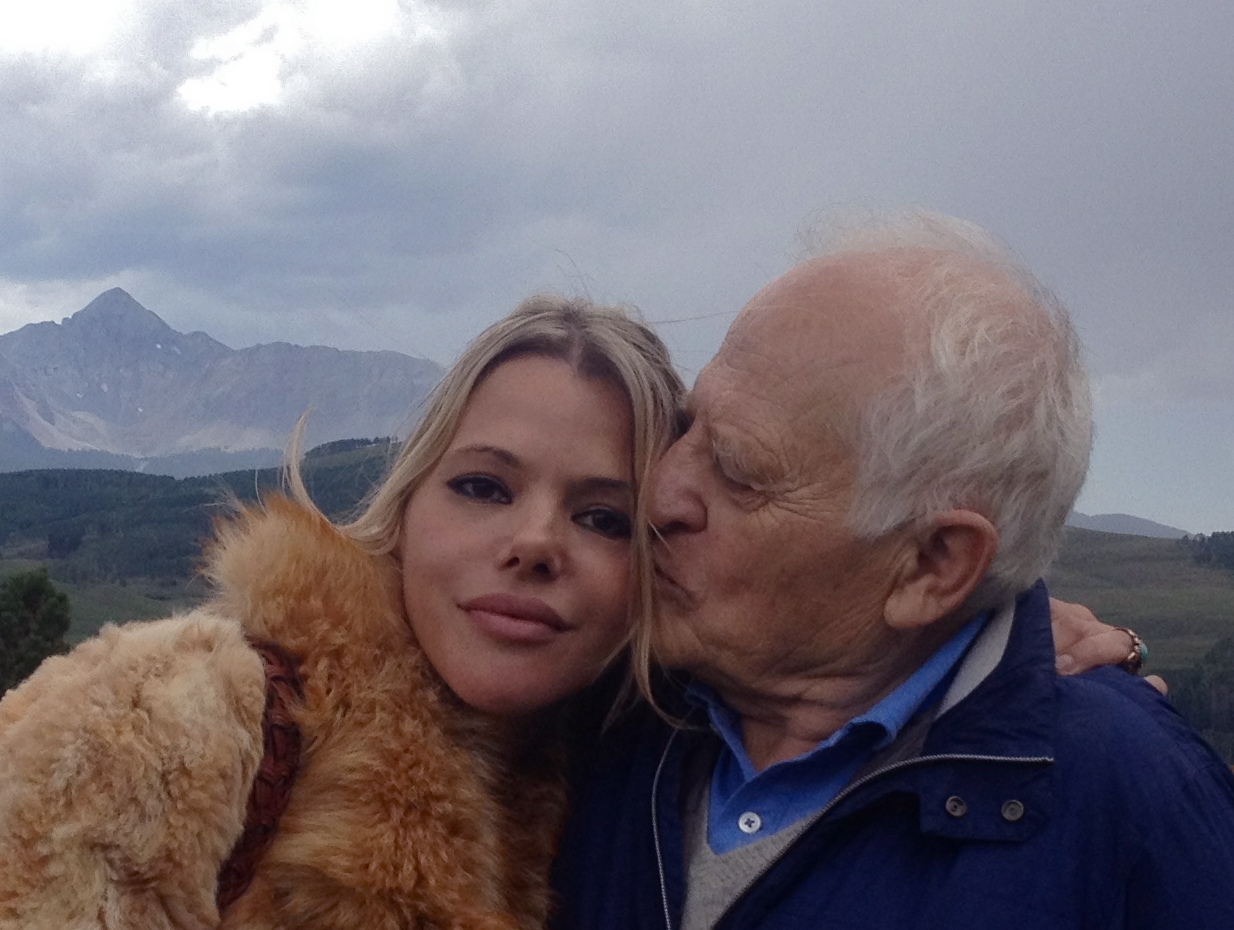
With Jack in Telluride, high in the mountains at Gray Head.

Touching the Real World: Tony Scott

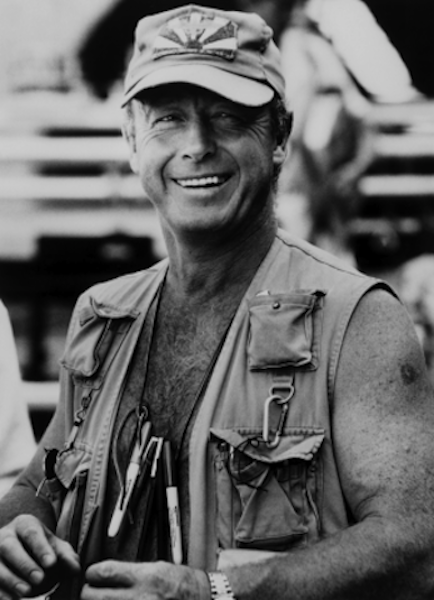
Tony scott

"Once you’ve touched the real world, there’s nothing more fascinating and nothing stranger than the real world and the people." — Tony Scott

Tony Scott had ideas. He had so many ideas that, the day I interviewed him (in 2006) for his then newest picture, the remarkable Deja Vu, he talked to me (often off the record) for nearly an hour. We talked about Helmut Newton, Hunter S. Thompson (Scott wanted to bring “Hell’s Angels” to the big screen), film noir, painters he especially loved and how The Last Boy Scout is something of an underappreciated masterpiece (my words). He was exceedingly bright. He was also incredibly personable. He asked me questions about myself. He was curious about what I was doing with my career and life, and asked about any creative endeavors I may have. He offered advice and encouragement. He was clearly interested in real people. He was larger than life and down to earth at the same time. It didn't seem like an act. He was genuine.

Crimson-Tide-Set-Denzel-Washington-and-Tony-Scott

What follows is that interview, shortened for my particular outlet due to the many detours the discussion took and off the record talk (I yearn to find my original tape). In person, he was inspired — one with such enthusiasm, sparkling eyes, warmth, intelligence and excitement for the next thing, that his excitement was infectious. I’ve always heard his crews loved him. I’m not surprised. When I think of Tony Scott, I think of his last, and one of his finest, most beautifully crafted and heartfelt movies  – Unstoppable. What a tremendous loss.

Article-2190928-149F3C42000005DC-471_640x462

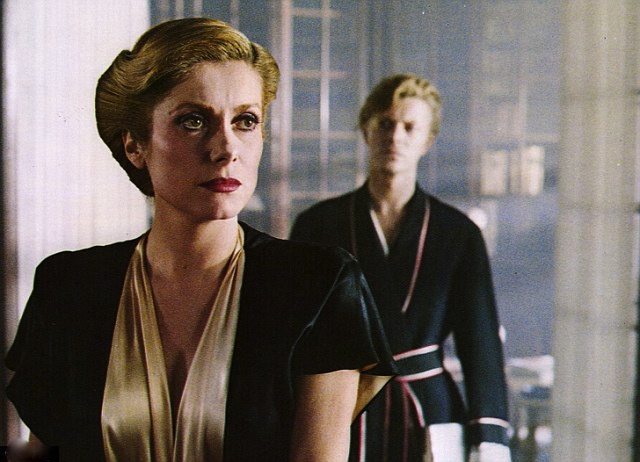
Tony Scott may well have been one of the most influential, yet underrated directors working. He was also one of the most talented, interesting and multi-layered in terms of truly merging that difficult task of style and substance – something lazier critics have a hard time understanding. For as flashy and big budgeted and beautiful as his pictures can be, they’re also both surreal and real, and often powerfully sincere. Unstoppable showcased pure Tony Scott but was as lean and as old fashioned as a Richard Fleischer picture with the added dimension of working class Americans — and Washington in particular –disenfranchised from his job, sticking it to the man, sticking up for himself and stopping that goddamn train. From his artistic, sensuous debut, The Hunger; to his massively successful and influential Top Gun; to his Quentin Tarantino-penned, adored now classic True Romance; to his solidly entertaining Crimson Tide; to his complex and funny, The Conversation-like Enemy of the State; to the Pitt/Redford teaming in Spy Game; to his ambitious, hyper speedy Domino; to all the other films that have been underrated (like the great, unfairly maligned The Last Boy Scout and the soulful Man on Fire), Scott has influenced, infuriated and entertained people with a boundless energy – on film and in person.

Deja_vu_tony-scott

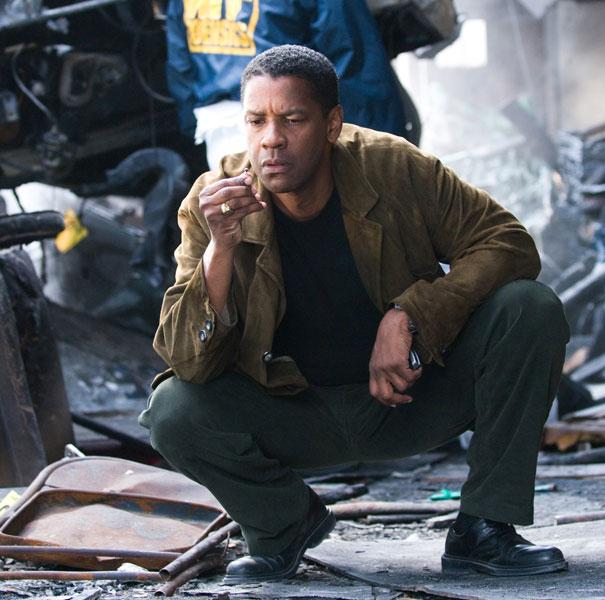
Here, he was discussing the time travel thriller Deja Vu, starring Denzel Washington (in their then third collaboration. Washington would continue with The Taking of Pelham 1 2 3 and one of my top ten of 2010, Unstoppable). Scott found the time to discuss work, inspiration, real life, movies and his famous older brother Ridley. I wish I could include more of this conversation. Like his movies, Scott proved to be both endlessly interesting and interested.

What filmmakers inspired you?

Two influences. My brother and Nick [Nicholas] Roeg. My first movie, The Hunger, was a direct knock-off of Nick’s movie Performance. And Ridley really inspired me…You know, I can talk about Polanski and all the other guys. I steal!

Maclear_Andrew_004_Mick_Jagger___Anita_Pallenberg_337

And a lot of filmmakers, as you say, “steal…”

A lot of them deny it though! They’re liars! (laughs) Because that is what art is about. Art is about reproducing and recreating and my background as a painter involves the same choices. Canvases and scripts: You’ve got cast, you’ve got wardrobe and locations. It’s the same mental process.

Domino-aug20

Your films are incredibly stylistic while being rooted in the real world — you base so much on real people and events, like Domino.

Domino. I should have slowed down a bit (laughs). But I have no regrets. I love the fact that people will continue to employ me and pay me to do what I want to do, which is attempt another world. That’s what so great even about this. I get the opportunity to do new things. I get the chance to do the research, educate myself and I get the chance in touching bounty hunters, touching this word. But… (laughs) all the fucking guys I met were on speed! [He wanted the film style to match that feeling] And little Domino, God bless her, I knew her for twelve years. She was like my daughter.

2004_man_on_fire_005

Your style mixes different film technologies in really intriguing personal ways. Man on Fire is such a moving story of redemption.

It sounds very intellectual and its not, it’s just a fact — I let style be dictated by material. The style of Man on Fire and its vision and it’s my point of view of how I want to tell the story. With Man on Fire I had a rule of thumb — if Denzel thought it, I would see it. To me the movie was about paranoia, betrayal and redemption, so therefore I wanted to work the inner psyche of Denzel’s mind so if he thought it, I would see it. And I would articulate it with the different techniques from a hand crank camera to the flashbacks.

2006_deja_vu_023

Deja Vu is an interesting kind of suspense – thriller. And it’s ambitious in terms of how real it all feels. And I like the idea of an ATF agent falling in love with an image through “a time portal” of a dead woman. It reminded me of Otto Preminger's Laura. Was that at all intentional?

Yes! The Deja Vu writers were inspired by Laura. This movie terrified me more than anything because it’s creatively so dangerous, the science fiction. This movie is a dangerous movie because its science fiction that I wanted to make science fact. And if you get these movies a little bit wrong it can go drastically wrong. So all the technology we used in the movie is used in the world today.

120820_denzel_washington_deja_vu_605

This is the third time you’ve worked with Denzel Washington, why do you like working with him?

One, I love what he does. I love that he always comes up with the goods, he always delivers. I also love his work ethic. He and I are very similar, not just with his ethic but with his process. He loves research. I love research. And he always looks back into the real world for inspiration. And so, in each of the movies, I’ve found a role model for him — a real guy. Denzel’s very serious about what he does. He loves doing homework.

Deja-vu-33

Jim Caviezel is so powerfully creepy in this movie, were you thinking specifically of him for this role?

For J.C. (as I call him)…it’s hard trying to pass the bad guy or terrorist because in the end in can be so arch or archetypal and I was trying to think of who I was going to use. And I took a meeting with J.C. only because his agent was Denzel’s agent and I thought, I don’t know about Jim Caviezel, he played Jesus Christ. But when I sat with him for thirty seconds and he barely said anything. I said, “You’ve got the part.” [Scott underscored how talented Caviezel was and how he should play evil more often. He felt he could play Jesus just as easily as the devil.]

Walken_true_romance34

You’ve worked with a lot of great and legendary actors — from Gene Hackman to Christopher Walken to Dennis Hopper to Rober De Niro to Robert Redford (and more), and at the same time you’ve showcased a lot of new talent, like Keira Knightley in Domino and Tom Cruise in Top Gun. How do you work with actors?

A director’s like the shrink. You have to adapt to the personality in front of you. So someone like Chris [Walken] is that he’s an adaptation to himself. What’s funny about Walken and Hackman is that in their early days, they almost didn’t have a funny bone in their body, and now they’re so funny. You think of Chris when he was in The Deer Hunter (a great film), and now he’s the funniest guy. His sense of timing. He can read the telephone book and you’ll laugh.

Boy-aug20

From the flight sequences in Top Gun to the creative and layered vision of violence (and romantic and darkly funny too) in pictures like True Romance and The Last Boy Scout, you’ve been very influential. Do you see a movie and go, I thought of that?

I’m pleased that I do influence things. I see it on television mostly, things like “C.S.I.” It makes me happy when it’s done well. When I did The Hunger, I called up Nick [Roeg] and said, “I think I just ripped you off — I ripped off Performance” and he said, “Well dear boy, as long as you did a good job, I don’t give a fuck!”

Trueromance_2198217b


KM: This question is asked so often and hard to answer, but I am curious: Do you have a favorite film?

TS: True Romance.I love all my films but True Romance was the best screenplay I ever had. And all that was Quentin. It was so well crafted. But I did change the end. Originally in Quentin’s version [Christian Slater dies] and Patricia [Arquette] pulls over on the freeway and she puts a gun in her mouth [she doesn’t die]. I shot the film in continuity, so by the time I got to the end of shooting the movie, I had fallen in love with the two characters. It was a love story. I wanted these characters to live!

9

You’ve sometimes been criticized for the violence in your pictures but I think there’s always meaning attached. I especially admire the ferocious sequence in True Romance between Patricia Arquette and James Gandolfini. Arquette’s trying so hard to fight back and we’re rooting for her — it’s truly a woman doing everything she can to survive. It hits the viewers with all kinds of emotions and sensations.

That particular scene. It was so multi-layered in terms of charm, humor and violence at the extreme…and James added a lot to that. Patricia is unique; she’s fantastic in that movie. She’s got this angelic childlike quality yet she’s got this strangeness. She was amazing in True Romance.

What’s happening with The Warriors re-make?

With The Warriors, I’m going to set it in L.A. I’m not going to do a re-make, I’m going to do a re-think. I want to do it in L.A. and make it contemporary but instead of the gangs being thirty guys, it’s going to be 300. I got to meet all the gang members, all the drug cartels. To me, that’s exciting. And I’m not just being hip. I’m meeting tough guys. It’s great to do that. You can’t reproduce those faces in Hollywood with extras. Once you’ve touched the real world, there’s nothing more fascinating and nothing stranger than the real world and the people.

Tony-scott-and-ridley

Would you ever direct with your brother Ridley?

There would be bloodletting! Someone would die on the first day! Ridley and I are great in terms of business, there’s nothing stronger than blood. But we’re very different… Ridley’s a father figure. He’s always coaxed and guided me through lots of trials and tribulations in my life and I’ve always looked to him. As a family we’re very close. Without sounding corny, he’s my best friend.

Farewell, Tony Scott. 

The Sight & Sound List: Guy Maddin

Mans-castle-1

The critics kicked Citizen Kane to the number two curb in favor of Vertigo. Directors lauded Tokyo Story, placing the almighty Kane in a tie with 2001. Quentin Tarantino loves The Bad News Bears more than you ever knew (God bless him)That list! Or rather, those lists! Everyone's been talking, dissecting and arguing about Sight & Sound's greatest films lineup that comes once a decade (see the top 50 here). The internet was abuzz  – exciting and agitating cineastes and as usual with lists, provoking discussion about what their picks would consist of. I wanted to know more about individual choices (here's the director's tallied top ten) and since I have access to Guy Maddin, one of the filmmakers invited to the Sight & Sound soiree, he has allowed a look at his personal list (Sight & Sound will post the 358 directors’ entries on August 22). Discussing each movie with me (his official write-ups will be at S&S) and pleased to include his honorable mentions (all twenty of them) here's his terrific, toiled-over tally. 

1. Zero de conduite (1933) Jean Vigo

Zero_de_conduite_13

Vigo knows exactly how we sort and reconfigure our childhood memories, how we tear them up into shreds of pure sensation and sloppily collage them back together into heightened and giddy mythologies. This is film assembled with the logic of music, a song you need to hear over and over again, and each time out it's more thrilling, mysterious and revolutionary.

2. The Unknown (1927) Tod Browning

Annex%20-%20Chaney%20Sr.,%20Lon%20(Unknown,%20The)_02

Tod Browning's lean, unpredictable circus melodrama is as bizarre as this macabre auteur's work gets, yet far more universal than one would think possible.  Long under-praised genius Lon Chaney plays that dishonest part of us all who prefers to tack indirectly upon his lust object, preferring any approach, no matter how self-mutilatingly impractical, except the direct one. Perhaps the most savage, nightmarish and honest melodrama of all time.

3. Man’s Castle (1933) Frank Borzage

Mans-castle11

Submerged in the most silvery and darkly enchanted emulsions of 30s Hollywood romance, yet minutely, unhurriedly observed, this masterpiece expresses itself in a mannered naturalism, unique to Borzage, who details the human heart like no other studio titan.

4. Tree of Life (2011) Terrence Malick

Vlcsnap-2011-07-06-22h06m22s140

Malick thought it time to project directly from his wrung heart to the screen, resulting in a purity of intent something like minimalism (no matter how many near-baroque detours through grief and memory he may take) in this account of a brother's long-ago suicide — gorgeous and cathartic.

5. L’Age d’or (1930) Luis Buñuel

L'age d'or 1

Essay film or dream? After 82 years, this singular hybrid is still the most assuredly jagged, trope-packed, gleeful, swaggering and mischievous filmic salvo of all-time. We'll never quite catch up to this picture.

6. The Long Goodbye (1973) Robert Altman

Tumblr_lz1oj9zPyK1qzq6gbo1_500

This movie feels shambled together by Elliot Gould and his director, both in some cocky visionary state when every move they made together was exactly right for the moment and, sadly, after the also brilliant California Split, impossible to duplicate. Some sort of evanescent miracle that produces viewer euphoria and regret in equal portion. 

7. Mulholland Dr. (2001) David Lynch

Mulholland%20Dr

Fairy tale inside nightmare featuring false bottom and healed-over escape hatch. The master's most vertiginous peak. 

8. Letter from an Unknown Woman (1948) Max Ophuls

Letterfromanunknownwoman-1t11

Maybe the most bracingly masochistic comedy possible. Take ten parts pure unrequited love, let fester in heart for two decades, then shatter. The laughs may have a strange aftertaste.

9. After Life (1998) Hirokazu Kore-eda

Afterlife01

Singular use, reuse and re-reuse of memory and film-as-memory in this strangely playful yet moving wonder. What a structure!

10. Zvenigora (1928) Alexander Dovzhenko

Zven2

This guy Dovzhenko has his own film vocabulary — quirky, mythopoetic, brazen and downright perverse — and he wields it to create the oddest portraits of whatever he's thinking about, unlikely subjects treated in a style that comes from an eccentric place film might have evolved toward in another, parallel, pass through time. No one has the heart and voice of this man. 

20 Honorable Mentions:

   Annex%20-%20Mitchum,%20Robert%20(Night%20of%20the%20Hunter,%20The)_01-1

The Night of the Hunter (Charles Laughton, 1955), Scarface (Howard Hawks, 1932), Blonde Venus (Josef von Sternberg, 1932), Mother and Son (Aleksandr Sokurov, 1997), His Girl Friday (Howard Hawks, 1940), The Lady Eve (Preston Sturges, 1941), The Tenant (Roman Polanski, 1976), Ace in the Hole (Billy Wilder, 1951), The Birds (Alfred Hitchcock, 1963), Detour (Edgar G. Ulmer, 1945), City Lights (Charlie Chaplin, 1931), Swing Time (George Stevens, 1936),

Annex%20-%20Turner,%20Lana%20(Imitation%20of%20Life)_02

Imitation of Life (Douglas Sirk, 1959), The Overcoat (Grigori Kozintsev, Leonid Trauberg, 1926), Women in Revolt (Paul Morrissey, 1971), Possessed (Curtis Bernhardt, 1947), The Shop Around the Corner (Ernst Lubitsch, 1940), Straw Dogs (Sam Peckinpah, 1971), Pink Narcissus (James Bidgood, 1971), The Chase (Arthur Ripley, 1946)

Al Green Will Be in the Building…

Al_green_f

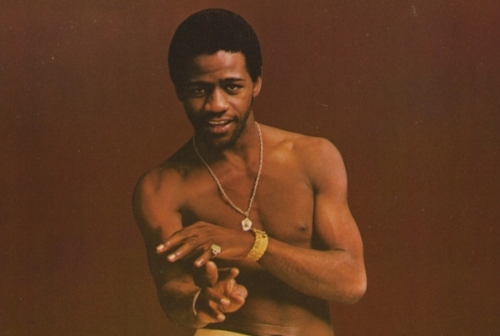
Oh me, oh my… Al Green is performing tonight, in Los Angeles at the Greek Theater — something that's filling me with love and happiness and his version of "Light My Fire" and a channeling of my inner "I'm a Ram" and … well, take me to the river! In excited anticipation, I'm reposting my ode to the Reverend. I've written about him frequently here and I hope to update after the show. Unless he hands me a rose. If he does that I might not be the same for a few weeks …

AlGreen72

Since Otis Redding, Marvin Gaye, Jackie Wilson, Curtis Mayfield, Ike Turner, Wilson Pickett, Willie Mitchell, Solomon Burke and so many more have left us, I have to ask how any self respecting (or self flagellating) Christian thinks I that should believe in God is beyond me. Not that I need God necessarily, or that I don't believe (in something), and yet, when I hear that true soul survivor, Al Green, I start to think … Jesus Christ … maybe I do need the Lord. Green, one of the greatest soul singers ever placed on this God-forsaken planet, is still living, still putting out records and still performing live. One of the last real soul singers blessing our landscape — especially a musical landscape populated by lip-syncing video vixens, pop punk whiners and faux transgressive bores, Al Green will make you believe. And, again, dear sweet lord … I will witness Al Green, live tonight.

Lets-stay-together-by-al-green

The Arkansas–born, Michigan–raised, Memphis-living Green crafted brilliant albums during his Hi Records heyday (Al Green Gets Next to You, Let’s Stay Together, I’m Still in Love With You, Call Me), his live performances (which I’ve fanatically collected over the years) are something to behold — sexy, inspirational, transcendent experiences that weren’t simply swoon-worthy (though the ladies love Al Green), but genius examples of tightness and improvisation. Al Green can riff off the margins, break from his sensuous mid-range to talk to the audience, and then lift to falsetto only to bust into a goose-bump–inducing raw growl that comes from a place so deep it’s nearly impossible to describe its power.

Al-green-3

To use simpler terms, Green performs with raw, soulful intensity in its purest form. And where do you see that anymore? Heaven? Green is heaven on earth. And in trying times, listening to Green say "Help me, I'll help you, Jesus, save my soul, I'll live for you, I'll do my best to just, do what I can to, stand up and be a man." Well, chriiiist. Never mind I'm a woman, goddammit, I want to stand up and be a man.

Algreen----

A man indeed. Green’s realness can be achieved anywhere, from the soundstages of Soul Train to his awe-inspiring Midnight Special appearances, to still-packed concert halls to his Full Gospel Tabernacle where the soul icon remains the residing reverend. If you’re ever in Memphis, don’t miss the chance to possibly catch Mr. Green presiding over worship — an experience that, years back, one of my atheist-leaning friends caught and was so significantly inspired by, the guy was moved to tears. If you’ve ever watched Green perform the baptism-by-orgasm “Take Me to the River,” you’ll completely understand his reaction.

Algreen

So, judgement day. Green makes me want to pop a doll, worship God and face the white horse all at once. Especially when he sings the sexy, slinky, scary, haunting “Jesus Is Waiting.”  You can interpret this Soul Train performance as pure holy high or, pure holy high-high (check out Green's eyes) or whatever kind of godliness you apply to your Green, but one thing’s for sure, it’s on a holy high mountain of silky hot brilliance. This is religion. This is rapture. 

*Al Green photo number four by Riny van Eijk.

Four Men, Forty Years: Deliverance

Tumblr_m6e0j0A7nn1qiosrfo1_1280

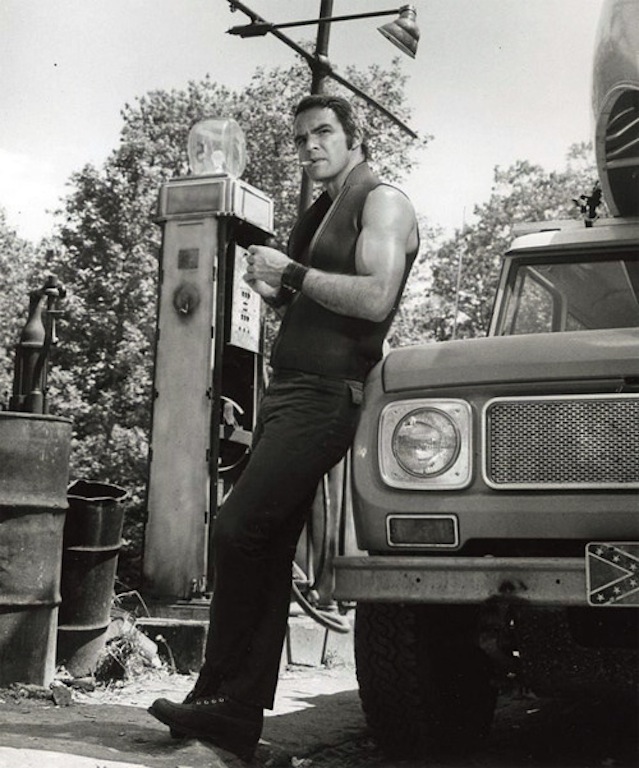
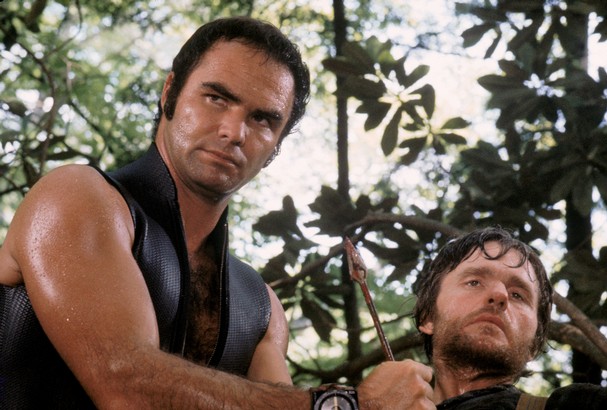
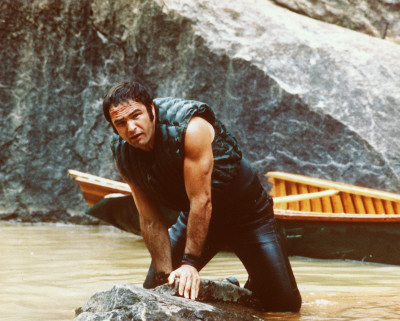
"Because they're building a dam across the Cahulawassee River. They're gonna flood a whole valley, Bobby, that's why. Dammit, they're drownin' the river… Just about the last wild, untamed, unpolluted, unfucked up river in the South. Don't you understand what I'm saying?… They're gonna stop the river up. There ain't gonna be no more river. There's just gonna be a big, dead lake… You just push a little more power into Atlanta, a little more air-conditioners for your smug little suburb, and you know what's gonna happen? We're gonna rape this whole god-damned landscape. We're gonna rape it." — Lewis (Burt Reynolds)

122961

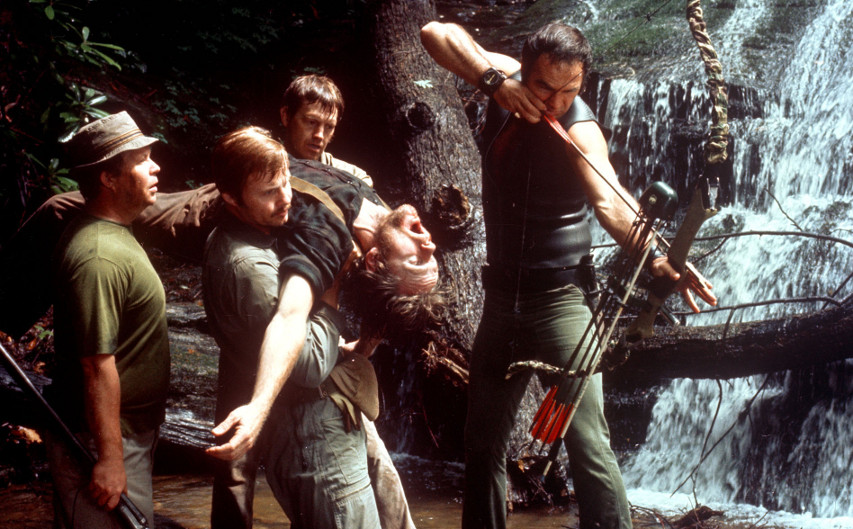
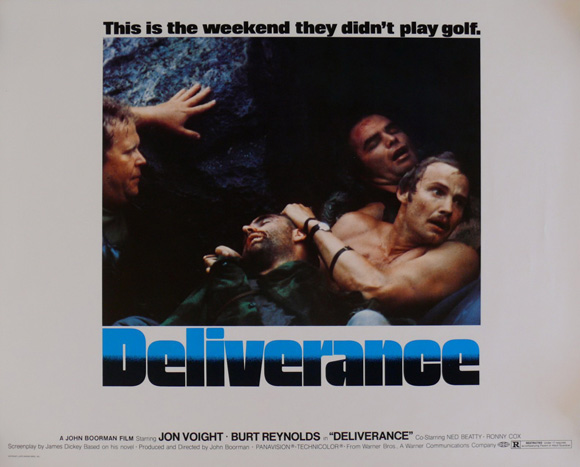
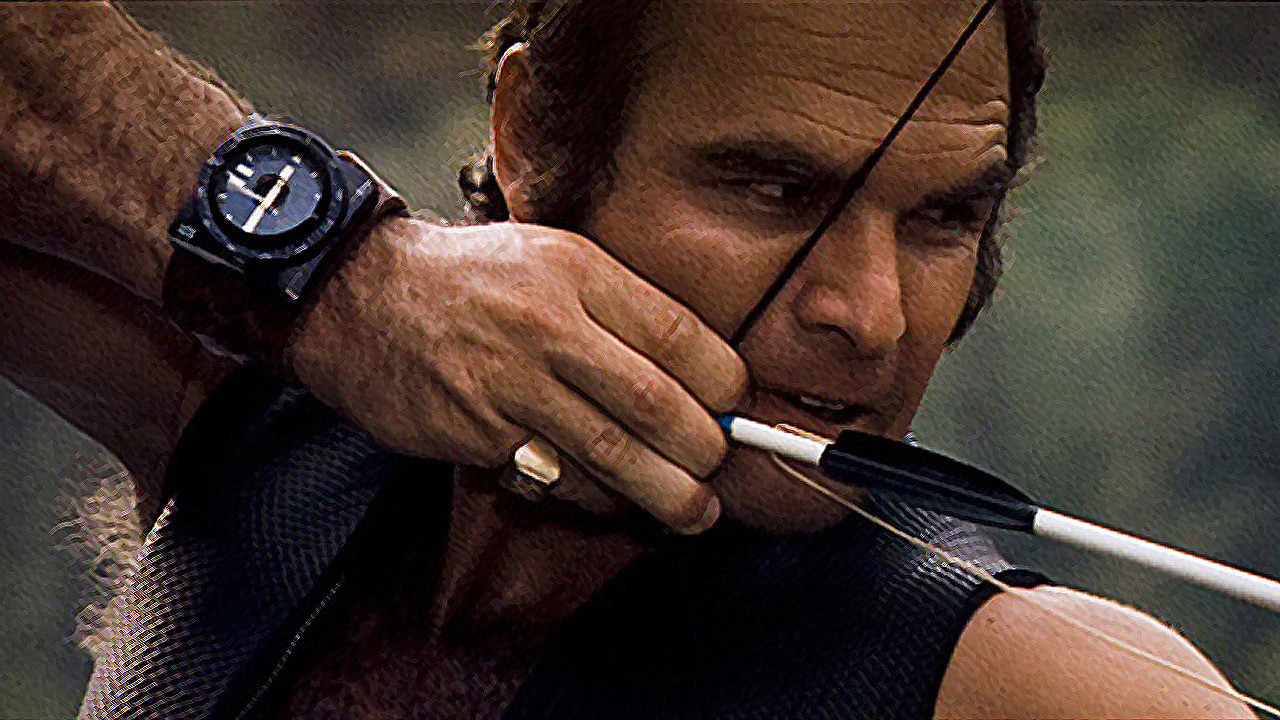
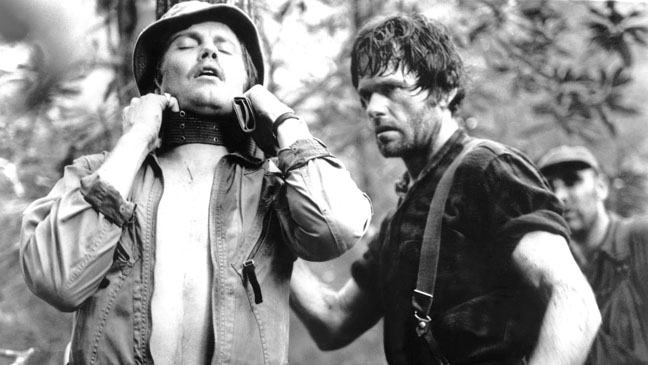
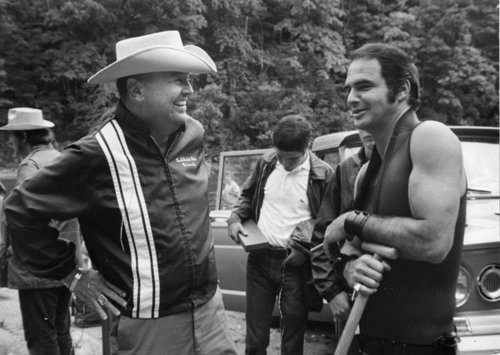
John Boorman's Deliverance plays just as powerful and as terrifying and as beautiful today. Released in 1972, the movie is thoughtful, disturbing, haunting, controversial, shocking – its story layered with action, darkness and the character’s self-reflection, their soul-wrenching journeys. With a screenplay adapted from his own novel, James Dickey didn't spare us the depth and horror of the story – and nature, though beautiful – was something to look at lovingly, something to experience, and something to save from destruction, but also something to fear. And that is real. Nature is big and unpredictable and it doesn’t care about you.

Deliverance_Festival_Ston_t607

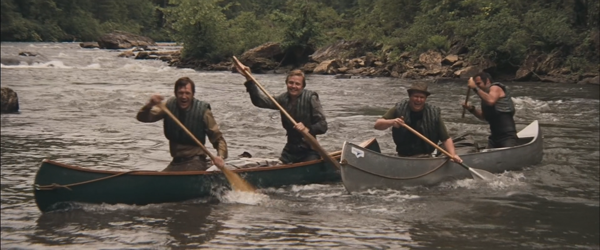
Dickey and Boorman crafted an entertaining, tension-horror-packed adventure tale about four men on a river canoe trip in remote Northern Georgia, but within its wild rapids, brief joy of dueling banjos, gorgeous scenery, and ominous mountain terrors, it explores nature, civilization and the dark, vulnerable, muddled hearts of men – their violence, their masculinity (and questioning it – what does that even mean), their inner struggles, their sadness, their guilt, their values and their humanity.

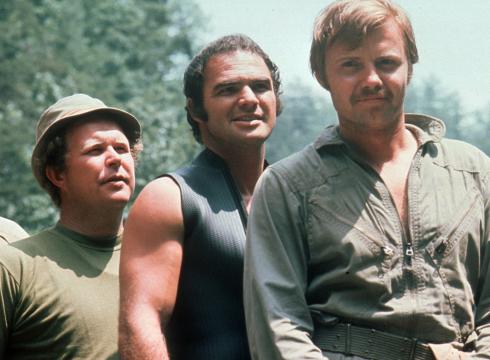
In Los Angeles, promoting the picture's 40th anniversary, the four stars, Jon Voight, Burt Reynolds, Ned Beatty and Ronny Cox, sat down with me to discuss the classic picture, its themes and what went into making such a challenging film. Sometimes when you talk to actors about movies they made decades ago, they speak in more general terms – even of their classics. Not this group. They remember specific stories. Some very funny stories. Some scary. And they certainly remember each other. Very well.

B717e4ec_DeliveranceCastPhoto

Burt Reynolds was charismatic and still full of his own kind of swagger (it’s not boastful, it’s playful, like he knows his masculinity is amusing), and he was quick-witted, insightful and charming. Ned Beatty was jokingly ornery while genuinely curious about how his wife's golf game was going. Jon Voight was warm and pensive but quick to laugh. Ronny Cox was thoughtful and down to earth. They were all surprisingly easy to talk to, in fact, and all incredibly intelligent, not surprisingly. Watching them interact I, at times, felt like I had sat down at a card game among good buddies – playfully ribbing and riffing off of each other, these men were so comfortable with one another, they clearly bonded during that tough shoot so many years ago. And that bond remains. It was impressive and touching and wonderful to experience all these years later.

418387.1020


It was a rare opportunity. But since time was crunched, (they were readying to get on stage and present the picture), I only had ten minutes. Maybe fifteen. Fifteen minutes! Not enough time and so many questions. Each man required an hour at the very least. All of these actors have been a part of such phenomenal, legendary movies – to name just a handful – Midnight CowboyComing HomeBound for GloryRoboCopNetworkNashvilleThe Longest Yard, Smokey and the BanditSemi-Tough, Boogie Nights – and have worked with notable directors such as Hal Ashby, Sidney Lumet, Elaine May, Alan J. Pakula, Michael Ritchie, Robert Aldrich, Robert Altman, Paul Verhoeven, Paul Thomas Anderson and the list goes on and on and on. Dear lord, I could have rambled on for hours with Burt Reynolds, on White Lightning and Gator alone (the great Reynolds is, I think, underappreciated for his impressive range – see the excellent Starting Over – but that's another piece). So please excuse the brevity here. What follows is my short, sweet, funny, insightful and, for me, personally historic discussion.

Deliverance19721080px26

KIM MORGAN: What an honor to sit with all of you and discuss such a legendary movie. Just to say a few things: Deliverance never feels dated. It still plays so revolutionary and daring today. There really has never been another movie like it. And one that truly, truly explores its themes: civilized man having to face their uncivilized, more savage natures, and not making any easy moralizations about it. And you just feel these characters – what they're going through – I have to think much of that was based on the way it was shot. You shot it chronologically. And then… all the beauty, power, attraction and fear of nature. It’s so potent, making it one of the many reasons why it sticks with viewers for such a long time. 

BURT REYNOLDS: I think you’re right on the money. You said it very well. I’d also like to mention… as Ronny has said too… that women get this movie much quicker than men. Women also understand. You know, for so many years men threw the word rape around and never thought about what they were saying. And I think the picture makes men think about something that’s very important, that we understand the pain and embarrassment and the change of people’s lives.

Deliverance-original

RONNY COX: I think also, the thing that you mentioned. That we did it together, and that we did it in sequence. Because typically movies especially this day of CGI and things like that, there’s a part of your brain that knows that is CGI and you sort of willingly believe that characters are going through these things, but then, you don’t REALLY. Whereas, if you look at this film, and there’s, for instance, a long shot of guys in canoes… and they say, “Stay on that shot! Stay on that shot!" –  it pays off viscerally in ways that other films can’t. I think that’s one of the reasons why it’s such a visceral experience today. Because it’s forty years old now, and it still stands up.

KM: Your characters go through so many changes in the film, obviously, Mr. Reynolds, you start out as, what in any other Hollywood movie, would serve as the hero but then you get that compound fracture..

Burt-reynolds-deliverance-1

REYNOLDS: You know where that bone that came out of my leg came from? Well I went to a butcher in Clayton and I said, “I really want that really huge bone that you have there.” And then I broke it backwards and I said, “I need some blood.” And he said, “I’ve got a lot of blood.” And he gave me a huge pail of blood, real blood, so it didn’t look like that stupid ketchup that they have in movies, and when I went out and stuck it through my legs and I poured the blood over it. I must say, a lot of guys got kind of ill over it.

COX: Me! (Laughs)

REYNOLDS: But it had a wonderful effect. It had the effect that I wanted it to have, which that it was frightening. And it worked internally for me. It was an external thing that worked internally.

COX: There were so many shocking things, I mean, of course the rape. But my shoulder being out of place. Their stomachs were turned by that. 

JON VOIGHT: A lot of reasons to get sick in this movie.

(Everyone laughs)


Bill_mckinney_deliverence_a_h

REYNOLDS: (Pointing to Cox) His shoulder is amazing. Have you seen him do that?

KM: In person? No.

REYNOLDS: He can do it. Ronny?

VOIGHT: You can’t do it any longer, can you?

COX: I’m too old. (Laughs) But the film, when they find Drew, with his arm around – that’s actually my shoulder. I actually did that. I’ve had a whole lot of people say, that’s the most unbelievable shot. That movie was believable except that! And it was real!

Deliverance-ronny-cox1

KM: (To Voight) One of my favorite scenes is when you have to scale that mountain, and you have to take over the “hero” role, but it’s not as simple as that. And I know you really did get on that mountain, so the feelings there are so authentic and it’s so sad and terrifying.  One of the most powerful moments is when you lose your family photos, when they drop out of your hands… it’s just so heartbreaking.

VOIGHT: Yes, yes. When he's losing his touch with his family. What that reminds me of is all the guys that we send to war. You understand what they go through. They go through all of those feelings and then they have to put themselves on the line… they don’t know if they’re coming back. All of those guys – that’s true bravery. Anyway, that piece of the film in the book is brilliantly written, of course when you’re doing a film, as opposed to the novel you can’t get all this stuff in. But with these two brilliant imagists, Dickey on the one hand and Boorman on the other – one gives you the visual poetry and the other gives you the verbal poetry. But in the book it goes on for five pages… It was exciting to participate in that [scene]. It was the one thing that drew me to the film, that scene, that moment that you’re talking about.  When he has this catharsis in the middle and a crisis and he almost breaks apart halfway up the climb, and he loses his touches with his family and civilization, and then he has to get himself together and then continue on the way. It was exciting to be the person to embody that one chapter in the book.

Deliverance

KM: Mr. Beatty, this was your very first feature film. 

NED BEATTY: Me? No! My very first film role was for the FBI.

KM: For the FBI?

BEATTY: Yeah, I played a bank robber in a film for J. Edgar Hoover. I thought I was making this to train FBI officers…

KM: It wasn’t a feature film it was a… [Note: Deliverance was Beatty's first feature film]

BEATTY: (Joking) Let me finish! (He then stands up and with ornery playfulness, makes more jokes.) I’m just kidding. I like being the bad guy. You wanna know why? (He leans in). You make more money and it’s more fun.

BEATTY: So anyway, I went into this place…

(Everyone starts laughing)

BEATTY: (To everyone, joking) Shut up, I’m talking here, dammit! (Calls out to the publicists) Hey! Can I have someone in here to control these three guys? I don’t care who it is! Send three or four women, they can take care of them! They’re old guys!  They can’t do nothing. Anyway, I made this movie for the FBI and when I walked in the door to the audition, I dressed up like an FBI guy because that’s what I thought I was going to play. When I walked in the door the guy said, “That’s our bank robber right there!” So I robbed a bank.

Deliverance-ned-beatty

REYNOLDS: (Amusingly exasperated to Beatty) This is longer than the movie.

BEATTY: (Playfully) Shut up, Burt! Burt knows that I love and respect him… so anyway that was my first movie and they sent it out to all the police officers all around the small towns of America and when I was still working in the theater, I used to go to a small town and do a play or something and I got arrested right away.

COX: (Offers) It was my first film.

BEATTY: Are you doing a book on this?

KM: No, I’m not doing a book…

BEATTY: You snatch my story. This is a real story. (Says jokingly) The rest of this is a bunch of artistic poof!

KM: But again, this was a daring first major role to take on, and a lot of actors now would even shy away from it. 

BEATTY: You know what, at that point in my acting career, I thought I could act anything. And I could. So, what would be the problem?
Memories-of-film-Deliverance-still-linger-K01MFBH4-x-large

KM: To all of you. What was it like working with James Dickey? He was on the set for some of the time…

REYNOLDS: It was not easy. Not easy. No. He’s a big man and he’s a poet and he’s full of…

BEATTY: Himself.

REYNOLDS: Himself.

COX: And he actually wasn’t on the set except when he came back to play the sheriff maybe because he was asked by John Boorman to not be there.

REYNOLDS: He was asked by us! By us!

COX: The problem with Dickey, he’s a wonderful poet and novelist and he had written the screenplay, but he also had a mammoth ego and wanted to run everything.  He really wanted to direct the picture. He really wanted to be in charge of everything. James Dickey’s talent goes a long, long, long way before it runs out of gas. But it does run out of gas and it runs out of gas just short of knowing how to make a film, and so it became problematic.

REYNOLDS: He also was an alcoholic. He was usually pretty smashed by two o clock.

COX: Yes, several times, we would come back from rehearsal or whatever, and he never called any of us by our real names.

REYNOLDS: No, he called us our character’s names.

COX: Yes… our character’s names. I figured out why that was. He owned those characters. He owned Lewis. He didn’t own Burt. He would come in with his cronies and say “Drew! Come over here and do that scene!” And want you to play that scene for his cronies.

KM: He was wonderful as the sheriff…

REYNOLDS: He was.

COX: He was good. And he’s a wonderful poet.

REYNOLDS: He was bigger than life.

Slideshow_1084570_deliverance


VOIGHT: There’s a secret to that scene too.

KM: What’s the secret?

VOIGHT: When John [Boorman] shot that scene, Jim Dickey had written the part for himself and he had a whole section, he went on and on, so I was looking at it saying going, “Woah… this is going to be difficult.” And he was very convincing as the sheriff, he was really terrific and he had great presence, but he had all of these extra words so John said, “OK, Jim, say these words over here… and you get up in front of the hood and say the rest of these words, and then you come over and talk to Jon…” And what John [Boorman] was going to do in the beginning, was take those sections by the headlights and cut them out. So, he just had this first section, and you see him arrive and talk with me. So, he had designed for himself a major scene that wasn’t in it. But, listen, he was very brilliant, the writing was all good, but it was not needed. And if he’d known that it was going to be cut out, there would have been a big argument.

DeliveranceHand01aa1

BEATTY: (Joking) I thought he sounded a little bit too southern.

(Everyone laughs)

REYNOLDS to BEATTY: Would you like another drink?

"Deliverance" has been released in a 40th anniversary Blu-Ray edition which features commentary by John Boorman, multiple featurettes with the cast and crew, a vintage behind the scenes documentary that includes James Dickey and more. The Blu-Ray is packaged in a nice hardback, 42 page book with all kinds of information and production stills.


And here's that famous scene. I love this moment, not just for the joyful, now iconic music, but that this joy is mixed with such a portent of doom. Joy does not last long. Burt Reynolds' Lewis smiles, but you get the feeling he knows before the song is over — this is not going to be easy, in so many ways.

Link Wray: So Glad, So Proud

Tumblr_kumxq0kfTo1qzs4ido1_400

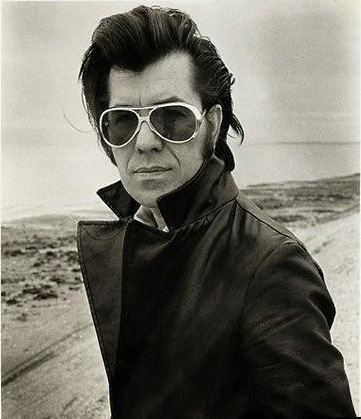
Rock pioneer Link Wray, most famous for "Rumble" was boss in every era.

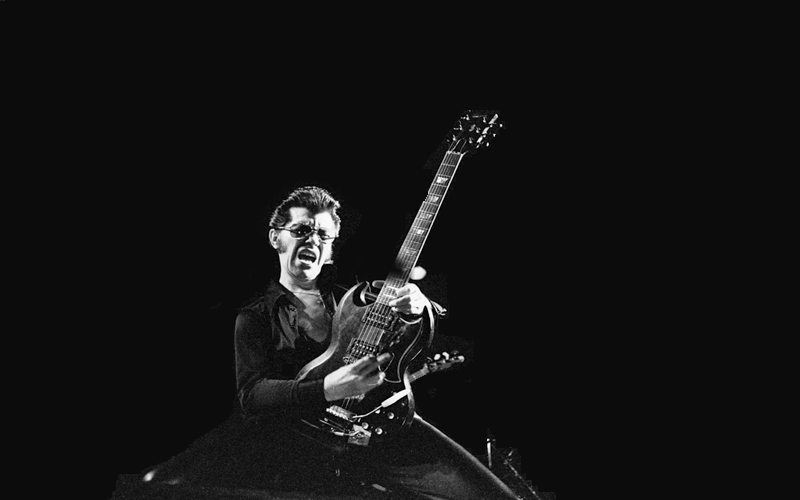
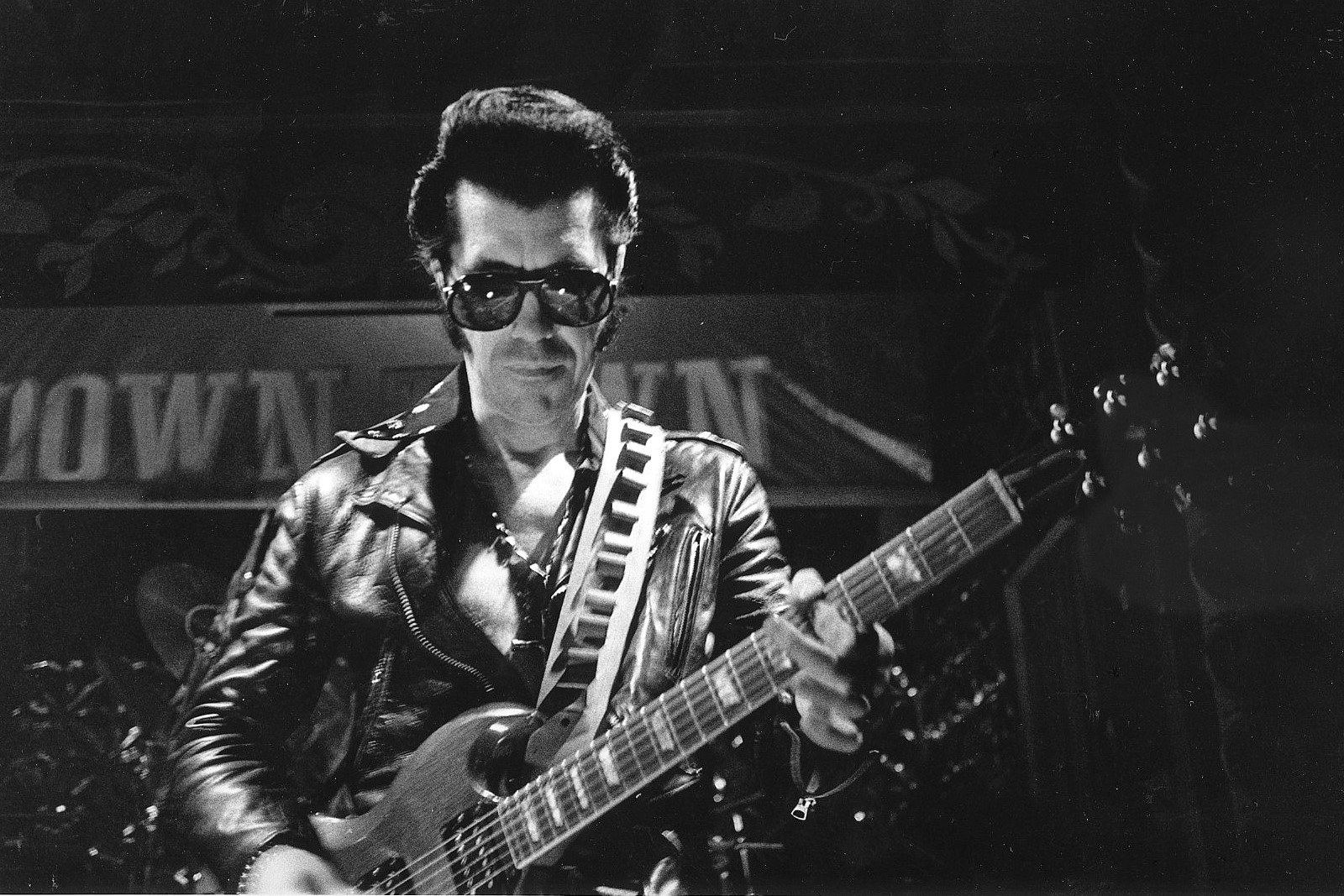
In 2000, at a small club in Portland, Oregon I witnesses this for myself. The half Shawnee shaman, at the age of 71, performed one of the greatest shows I've ever seen in my life. Some time had passed since Quentin Tarantino featured Wray's famed "Rumble" in Pulp Fiction, so the "Rawhide" rocker attracted a smaller crowd this time around. The better for all of us. The crowd consisted of die-hard Rockabillies, a smattering of older people, varied Wray fans, me and my little sister. I stood in the front, hands on stage, and watched one of rock n' roll's most influential guitar Gods work his power — taking all that is raucous and dark and soulful and yes, light, and hypnotizing us. There were no bad vibes in that cramped crowd of potential rowdies. Moving on stage like the half-Shawnee he was, he worked us as if performing some kind of Native American rock and roll rain dance, while still playing down and dirty — music that made us feel alive and real and raw. And then dreamy — a seedy, sexy, soulful, demonic, beatific dream. 

Tumblr_m3ncf7kT051qiosrfo1_1280

And then this wide awake fever dream became so tangibly real — a moment that's remained a highlight of my life: Link Wray handed me his guitar in the middle of "Rumble." Yes, he actually, mid performance, leaned over from the stage, and placed his guitar in my hands. And that devil (an angel in disguise) did so with a grin on his face. I was holding Link Wray's guitar! I didn't scream or cry or crumble into Beatlemania hysterics (I did inside), instead I held it as long as I could and then, in a trance-like state, passed that sacred idol through the crowd. This was to be shared. And Link just took it all in — jovial and delighted as the awed audience passed it along, and with great, religious respect. He trusted us. It was safely returned back to Wray who, in spite of his dark image (Wray was still one of the greatest looking leather clad rockers ever) and menacing sound, smiled broadly. I still have his pick, stashed safely in my jewelry box.

Link Wray

Sadly, Link Wray, born May 2, 1929, passed away in 2005. I wish he was still with us. Wray brought so much to American rock music. Distortion, feedback, the power cord and a raw, dirty, crunchy, heavy sound that everyone from Poison Ivy to Pete Towsend to Jimmy Page to Neil Young credit as most influential. Some even claim him the father of heavy metal. "Ace of Spades," "Jack the Ripper," the brilliant "Rumble" (watch Wray rock the ever-loving hell out of that one here) and one of my favorites "Comanche" are just a few of his classics. And then there's "Rawhide" as seen here on "American Bandstand." 

The way Dick Clark mentions "Rumble" cracks me up. He says: "They've had one very big hit record gone by, a thing [at first I thought he said 'I think'] called 'Rumble.'" Quite a thing, Mr. Clark. And a think! That was a powerful hit. I've always loved that in 1957, "Rumble" was banned from a number of radio stations — banned for its menacing suggestion. There were no lyrics! This is how complicated and primal and mysterious his music could be. And a true testament to his art.

Tumblr_m3irckifO31qiosrfo1_1280

And, as I stated from the outset, Wray rocked in every era. I revere all of his work (I especially love his Dylan covers —  "It's All Over Now Baby Blue" and "Girl from the North Country") and I love his unique singing voice — that cracked voice — a voice I hear in Dylan or Jagger screaming rough or even in Van Morrison — but so distinctly Link Wray. His baritone, just slightly, beautifully broken, crooning through  Elvis' "Love Me Tender" is plaintive and lovely. And his "Girl from the Northern Country," released in 1964, feelss so both ahead of its time and timelessly intimate  – it's so gravelly gorgeous, so different, so… Link. Wray really admired Dylan, but I prefer Wray's strikingly raw and emphatically romantic version:

And I get so damn excited when I hear what he was up to in the 1970s. Not enough '70s Wray is discussed or heard. Wray excelled with his seemingly smaller records in an era of enormous Stones and Zep releases with some gritty LPs that feel ahead of their time then and now. The Black Keys and Jack White would kill to imbibe whatever magical potion Wray was concocting. And as much as I respect White, they'll never achieve the alchemy of Wray. And they would surely agree.   

Link2

I could ramble forever about his '70s records (and I won't even begin to touch the utter ridiculousnes that this man has not been inducted into the Rock and Roll Hall of Fame), but here's one track: Wray’s “I’m So Glad, I’m So Proud” from his 1973 album “Beans and Fatback.” Recorded in 1971 by Link’s brother Vernon, in a chicken shack (Link’s Three Track Studio) on Wray’s Accokeek, Maryland farm, this is the shit. My favorite ’70s Wray is his self titled “Link Wray,” featuring the masterpiece “La De Da” (a song the “Exile”-era Stones had to have heard) but this one, this one is a whole lot of hot damn. And thene there's … good God! "Fire and Brimstone," from 1971. Screw Clapton. Link Wray is God.

And check out Jimmy Page in "It Might Get Loud" here. In the face of "Rumble," he can't contain himself. He’s a kid again! He MUST air guitar to Link Wray!

Sad Men: Days of Wine and Roses

Annex%20-%20Remick,%20Lee%20(Days%20of%20Wine%20and%20Roses)_NRFPT_01

And sad women… From the archives and updated: "Days of Wine and Roses."

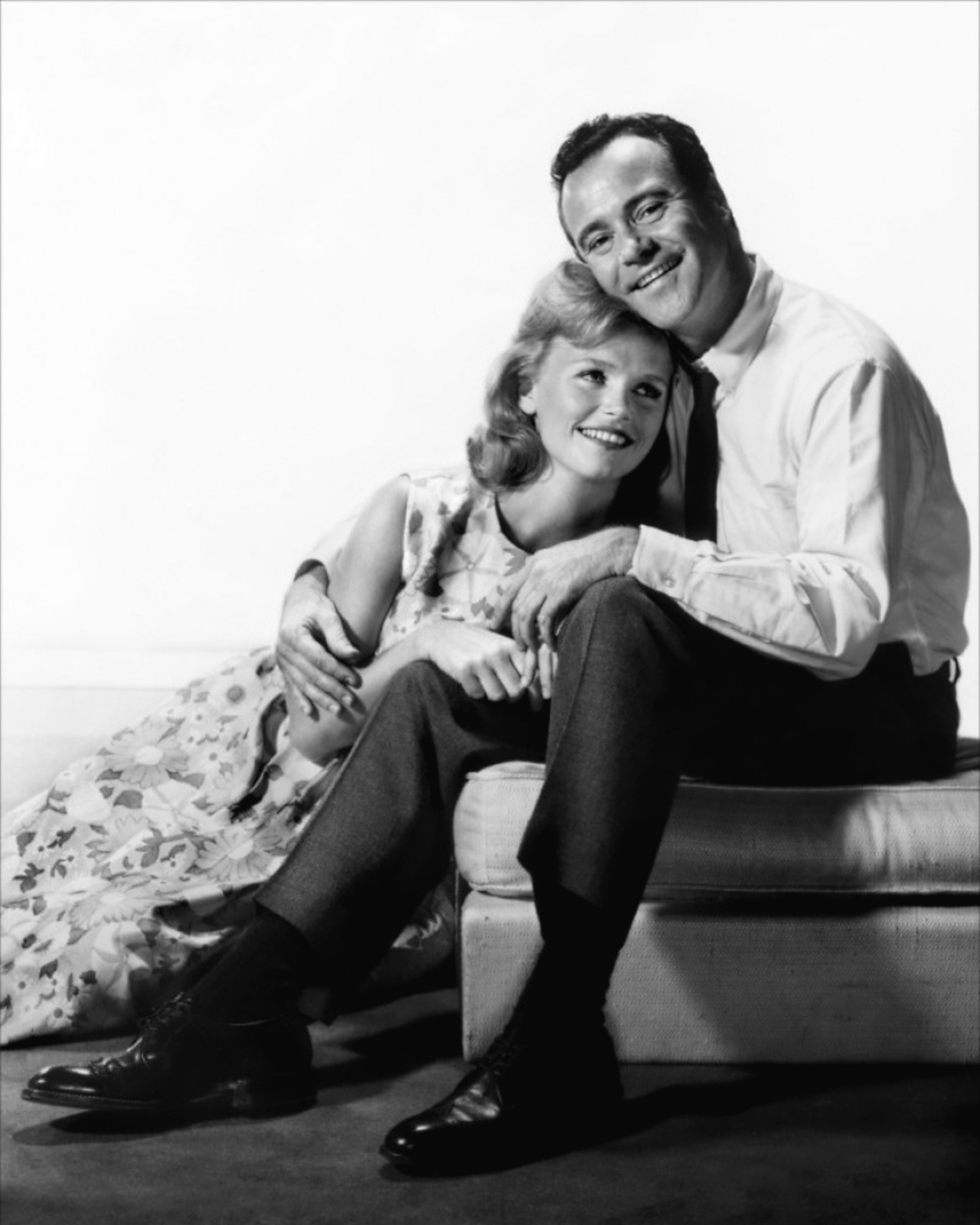
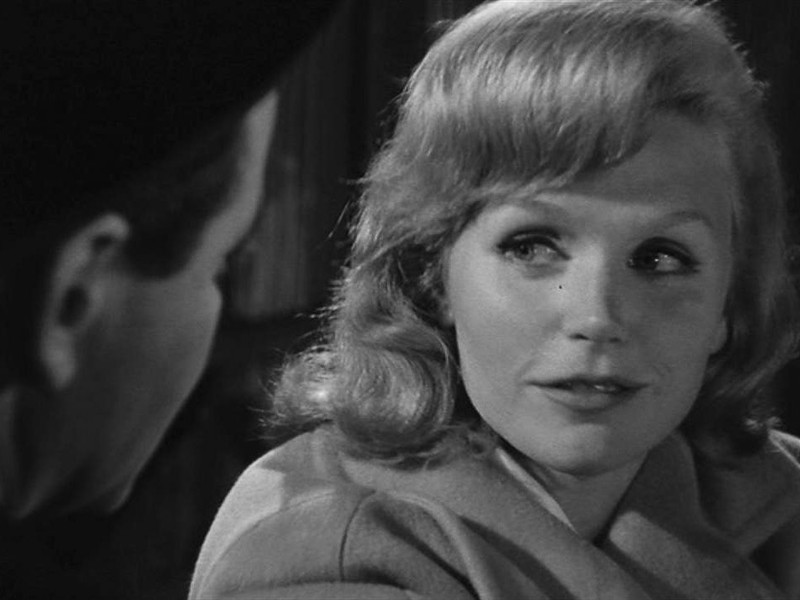
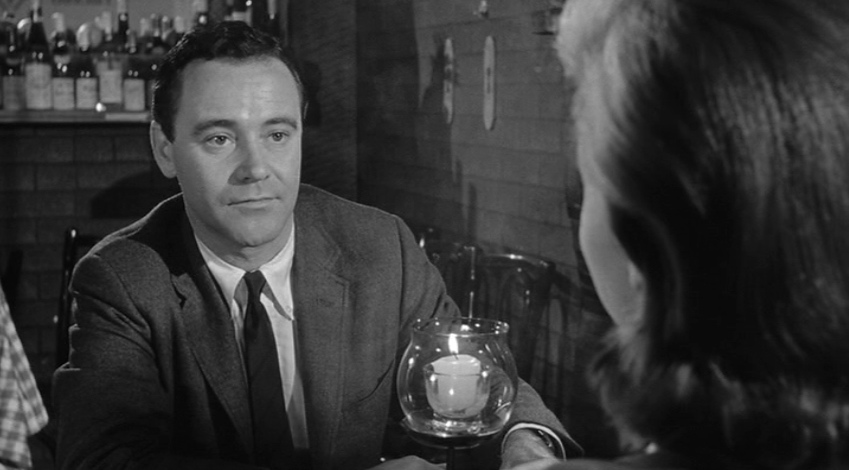
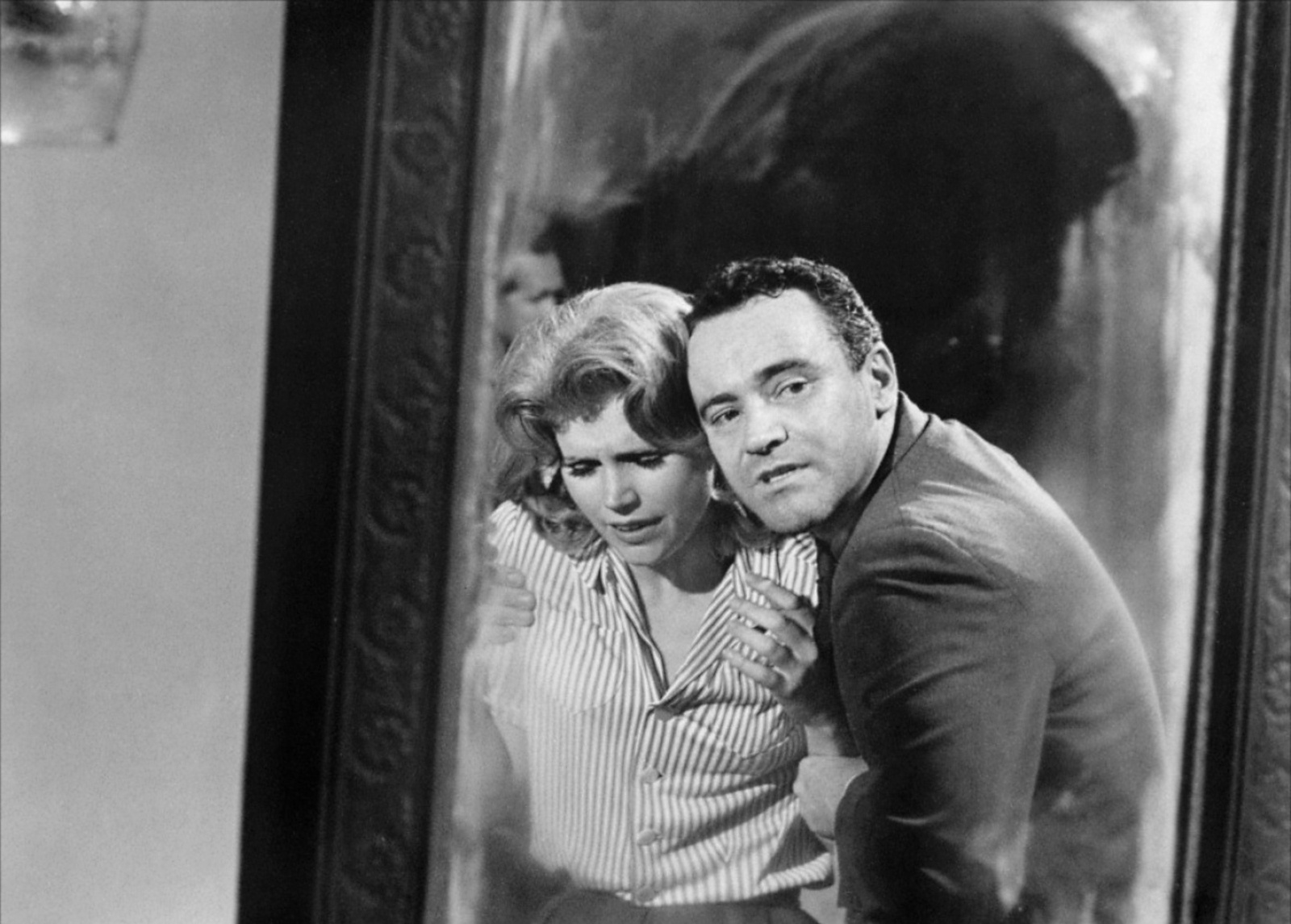
In Blake Edwards' Days of Wine and Roses you can easily see — even if you didn't know the movie was about alcoholism — that Lee Remick is going to fall, hard and bad, for liquor. Beginning the movie as a teetotaler, a woman who's only vice is the love of chocolate; we see her weakness arrive when her date (played by Jack Lemmon) insists she imbibe. Knowing that she'll enjoy it, he orders her a fancy chocolate cocktail and watches her delicately down the concoction with an almost vampiric joy, as if knowing another potential boozer is a sixth sense. It's a sad moment watching poor Remick throw that drink back, her innocent enjoyment and eventual giddiness made all the more tragic by how unaware she is. In the midst of an almost predatory drinker and harboring the right kind of troubled past or brain chemicals or addictive personality, we know this woman will not be able to innocently drink again.

Blake_Edwards_Lee_Remick_Days_of_Wine_and_Roses_1962

First directed in 1958 for the classic television anthology Playhouse 90, Days of Wine and Roses was originally filmed by John Frankenheimer in a searing TV play that starred Cliff Robertson and Piper Laurie. The grittier vision with the arguably darker, more complicated, experimental director at the helm (watch Seconds, The Manchurian Candidate, All Fall Down, The French Connection 2 – this man understood human pain) the original has been considered, by many, superior to the 1962 big screen adaptation and Laurie the better actress. Since I revere Frankenheimer, I can understand the preference. And yet I think Edwards' version (who also understood human suffering and horror — watch the opening of Experiment in Terror) is just as interesting. Chiefly for how "normal" Lemmon and Remick are. 

Days-of-wine-and-roses

It often feels perverse watching Jack Lemmon and Lee Remick squirm — especially Lemmon. All through his career, from The Apartment to Save the Tiger to Glengarry Glen Ross, the high-strung, twinkly-eyed actor was always craving more out of life. But that something more, even when given a happy ending (like The Apartment, which isn't so happy) he will seemingly never satisfy. He'll never quench that thirst. With humor (Some Like It Hot) and devastation (Glengarry Glen Ross), he's desperately hanging by a thread, perpetually frustrated. He may win The Apartment's Fran Kubelik in the end but will he keep her? Or will she become Remick's Kirsten Arnesen Clay?

Days-of-Wine-and-Roses-3

The actors are indeed different in the alternate versions (both written by J.P. Miller) but all bring something specific and true to their performances. That Lemmon and Remick appear the passive, nice, normal, All-American couple, fluffy on the outside or even, obnoxiously "regular," their fall into the abyss is, at times, shocking, and then familiar and then, truly depressing. These are the people who get married, have kids and move to the suburbs, not a flop house next to the closest watering hole. For these two, there's no romance in either scenario.

7days_of_wine_and_roses

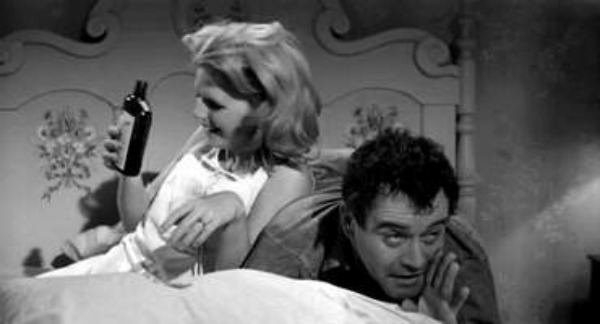
Lemmon begins the movie as a drunk (though he doesn't know it) and much like his legendary character in The Apartment, engages in unseemly activities to move up the sleazy corporate ladder. A gregarious PR executive with less charm than he thinks he has, he goes so far as to supply hookers for his bosses just to keep a job that will prove to be unrewarding. Remick is the pretty, Encyclopedia-reading secretary (whom he mistakes as one of the girls at a party — an awkward, harsh scene) and in a moment of fate for two future sots sharing an addiction they don't even know they have yet, they fall in love, marry, have a child and become desperate drunkards. He loses his job, she can't take care of their neglected child, he tries to dry out, she hits near rock bottom, sleeping with strangers for liquor. And by film's end, we don't know what their future holds.

Annex%20-%20Remick,%20Lee%20(Days%20of%20Wine%20and%20Roses)_NRFPT_02

As acted by a twitchy, sometimes smarmy Lemmon and a wide-eyed, dippy, sweet, eventually bitter Remick, both actors become sympathetic with characters who go from lovable to potentially unlikable to absolutely shattering. You feel for them. When Lemmon digs up and destroys his father-in-law's greenhouse (a wonderfully stoic Charles Bickford) on a selfish, hysterical search for one bottle of booze, his desperation is so embarrassingly human and so pitiful that you're not only shielding your eyes from his destructive digging but for his abasement. And when a strung-out Remick comes home later in the movie to Lemmon fresh from AA, no one needs to further discuss what she's been doing all night, how much she's lowered herself. But then, maybe she had a good time. 

MV5BMTQwNjQyNjU2MF5BMl5BanBnXkFtZTcwOTQ2MzMyNw@@._V1

Though the Alcoholics Anonymous sequences have been considered heavy handed and maybe a bit irritating, this seems to be the point. What a drag, spending the rest of your life being lectured; living whatever de-mystified new life AA expert Jack Klugman is leading. How awful to sit around a bunch of grim one-day-at-a-timers, underscoring how so very not special you are. You are average. And yet, perhaps not-so-average. What kind of people will Lemmon discover at those meetings? Don Birnam? It won't be Don Draper. More like Freddy Rumsen. Even AA-understanding viewers of Mad Men are disturbed by the schlubby normalcy of Freddy. What a buzz kill, taking all the sparkle and swank out of those perfectly clinking cocktails. 

Annex%20-%20Remick,%20Lee%20(Days%20of%20Wine%20and%20Roses)_NRFPT_03

Lemmon and Remick are sexier than Freddy, but those drinks stop looking so good. Who knows what will become of this couple. Unlike the sexy, though suitably addled (those horror movie DTs) Ray Milland as that clever writer — that "don't be ridic" Don Birnam dipsomaniac of the great Lost Weekend, or Susan Hayward's deliciously melodramatic Lillian Roth and all her "crying tomorrow," Lemmon and Remick's most interesting characteristic is, sadly, that they are alcoholics. They can't indulge the brilliant mental gymnastics of Who's Afraid of Virginia Woolf's George and Martha, whose addiction and spitefulness are, in a highly dysfunctional way, disarmingly romantic and strangely heroic. Lee and Jack — they're like a lot of people — just regular old drunks. No wonder they drink.

It’s Alive! Guy Maddin and Spiritismes…

CIN-SPIRITISMES

"Over eighty percent of silent films are lost. I’ve always considered a lost film as a narrative with no known final resting place — doomed to wander the landscape of film history, sad, miserable and unable to project itself to the people who might love it." — Guy Maddin

The spirits will rise…

A project that has long haunted the obsessive and hard working Guy Maddin and one that's haunted our household in nearly every conceivable way (happy, unhappy, insane spirits, or merely the thoughts of those spirits, have a way of infecting our lives, quite personally. And a few smashed objects along the way. I like to think that Erich von Stroheim hurled that plate against the wall…), the reality, or the dream reality; the prenominal, the fantastical… there are so many ways to describe what is happening. In short, the Hauntings have begun. Watch. Live.

Erich von Stroheim 050732

Today begins the first day of Guy Maddin's SPIRITISMES at the Centre Pompidou in Paris (which run until March 12). As the Pompidou writes "Guy Maddin invites daily visitors to the Centre Pompidou to attend the making of a new film. During 'séances'…Maddin and his actors will allow themselves to be possessed by the wandering spirits of the dead, to bring their movies back to life." 

Filmmaking, dead made undead, is happening live at the Centre — lost or unrealized films by directors as diverse as Jean Vigo, Kenji Mizoguchi, Lois Weber, William Wellman, von Stroheim (I will appear in that particular Poto-Poto), Alexandre Dovjenko and more are coming — rising from the dead, in their own unique way. Maddin will be shooting one film a day, starting today, from February 22 to March 12. You can watch live streaming, between 11 AM to 9 PM (6 AM -3 PM ET) all those days. For those of you in the States, get up early or indulge your insomnia. 

Tumblr_lqpb90UP0w1qbr0feo1_500

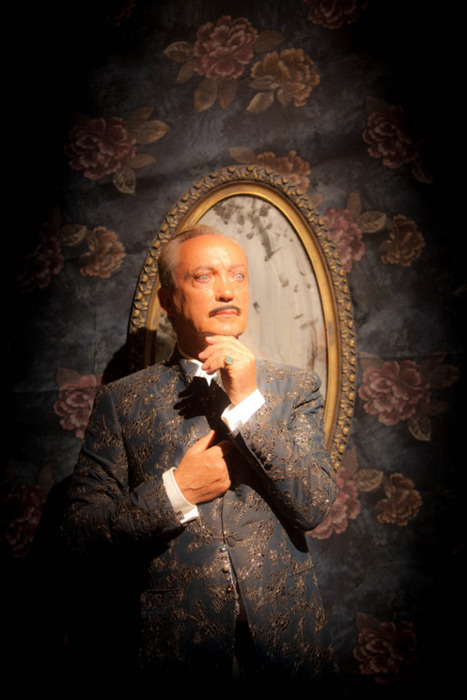
And then there's the impressive array of actors. Udo Kier, Charlotte Rampling, Mathieu Amalric, Slimane Dazi, Rudy Andriamimarinosy, Jacques Bonnaffé, Amira Casar, Géraldine Chaplin, Miguel Cueva, Mathieu Demy, Jeanne de France, Adèle Haenel, Ariane Labed, Elina Löwensohn, Maria de Medeiros, Jacques Nolot, Christophe Paou, Jean-Baptiste Phou, Jean-François Stévenin, Robinson Stévenin and André Wilms will all take part. Please look at the full list of pictures, or seances, at the Centre Pompiodu, here.

Jean Vigo

As Guy said:

"Over eighty percent of silent films are lost. I’ve always considered a lost film as a narrative with no known final resting place — doomed to wander the landscape of film history, sad, miserable, and unable to project itself to the people who might love it. Their friends, their family, their loved ones and the public. 

"This absence haunts me. I need to see these films. It’s eventually occurred to me that the best way to see them would to make contact with their miserable spirits and invite them to possess me. And with actors quite willing to participate in some para-normal cinematic experiments.

TR (1)

"These are not direct re-creations or the imitations of the films themselves.  I would never dare consider myself capable of even the lousiest impersonation and wish to pay respect to all —  Jean Vigo, Ernst Lubitsch, F.W. Murnau, Ed Wood and all. 

"Every day my actors will plunge themselves deep into a trance, and open themselves up to possession by the unhappy spirit of a lost film. And every day my actors will act out the long forgotten choreographies that once lived so luminously on the big screen for thousands, maybe millions of viewers." 

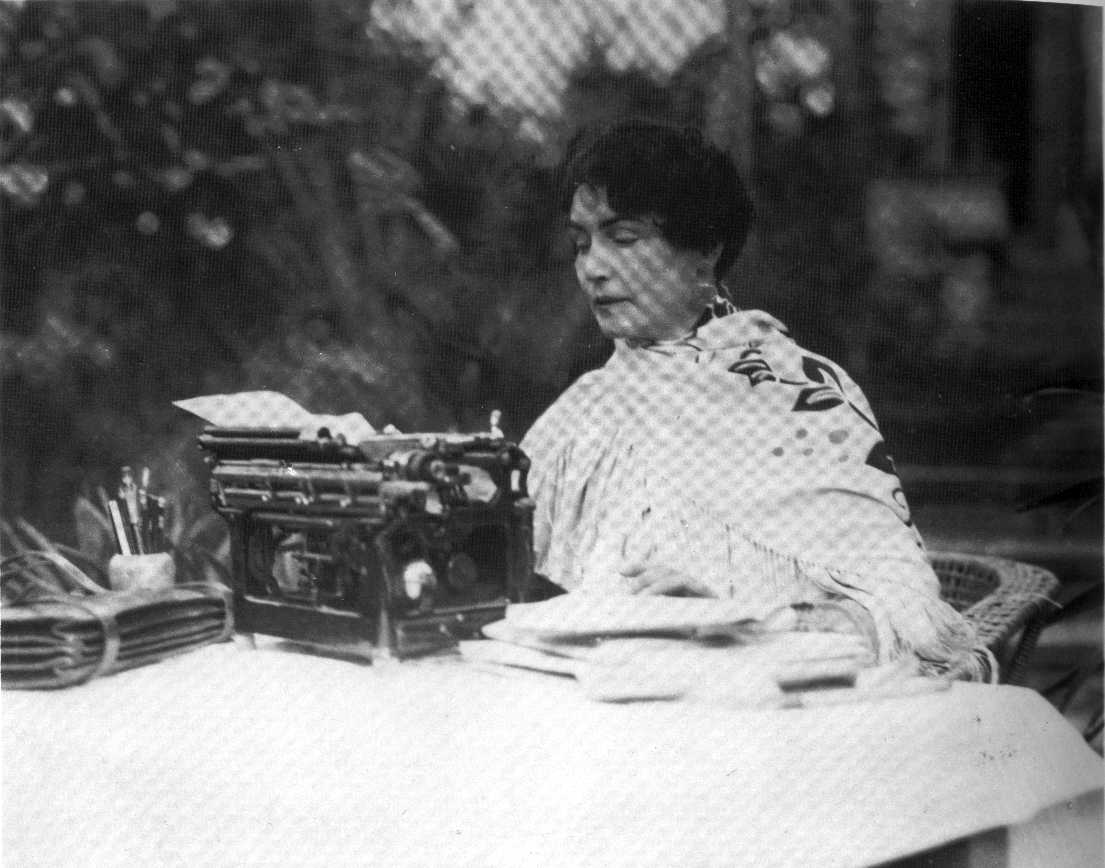
Weber

As Guy told the Pompidou:

"This project made ​​its way into my head for almost twenty years. During all these years, he moved my heart and even my soul, until I myself am possessed! I learned that there are lost films. Beautiful films, made ​​for a very long, generally silent, popular films, glorified, loved, raised to the level of myth by millions of spectators, some obsessively. Films which, however, dying in obscurity. Since I realized this, I literally haunted. Some of these films were destroyed by the studios, simply because they needed shelves, some were thrown into the sea or burned in a bonfire at picnics countryside. Others were reduced to dust because they were poorly preserved, others perished in the flames in an accident of projection. Some of these films have simply disappeared from history.

90626-050-D4033B2A

"These are films that have no abode, films can not be thrown in their public accounts unfortunates condemned to wander forever in the landscape of film history. It is the fact of not being able to see, that haunts me, because they were all made ​​for that! I feel their pain wandering when I go to the movies, particularly in old cinemas. Yes, these films sadden me as much as they intrigue me. I thought that the only way to restore a situation as melancholy was to hold séances to contact these desperate souls and give them the chance to show again a part of themselves, even tiny. I decided to set up a device in which we could all attend these séances and perhaps, if we're lucky, take a look at the past glories of cinema."

Guy will not only shoot, but attempt to make paranormal contact with the spirit of the lost film (not literallly, of course. But you never know what could happen…) working like a spirit photographer, recording what transpires — ectoplasm, trances, twitches and of course, the re-imagined films themselves — dream narratives, shorts that well deserve their title: Hauntings.

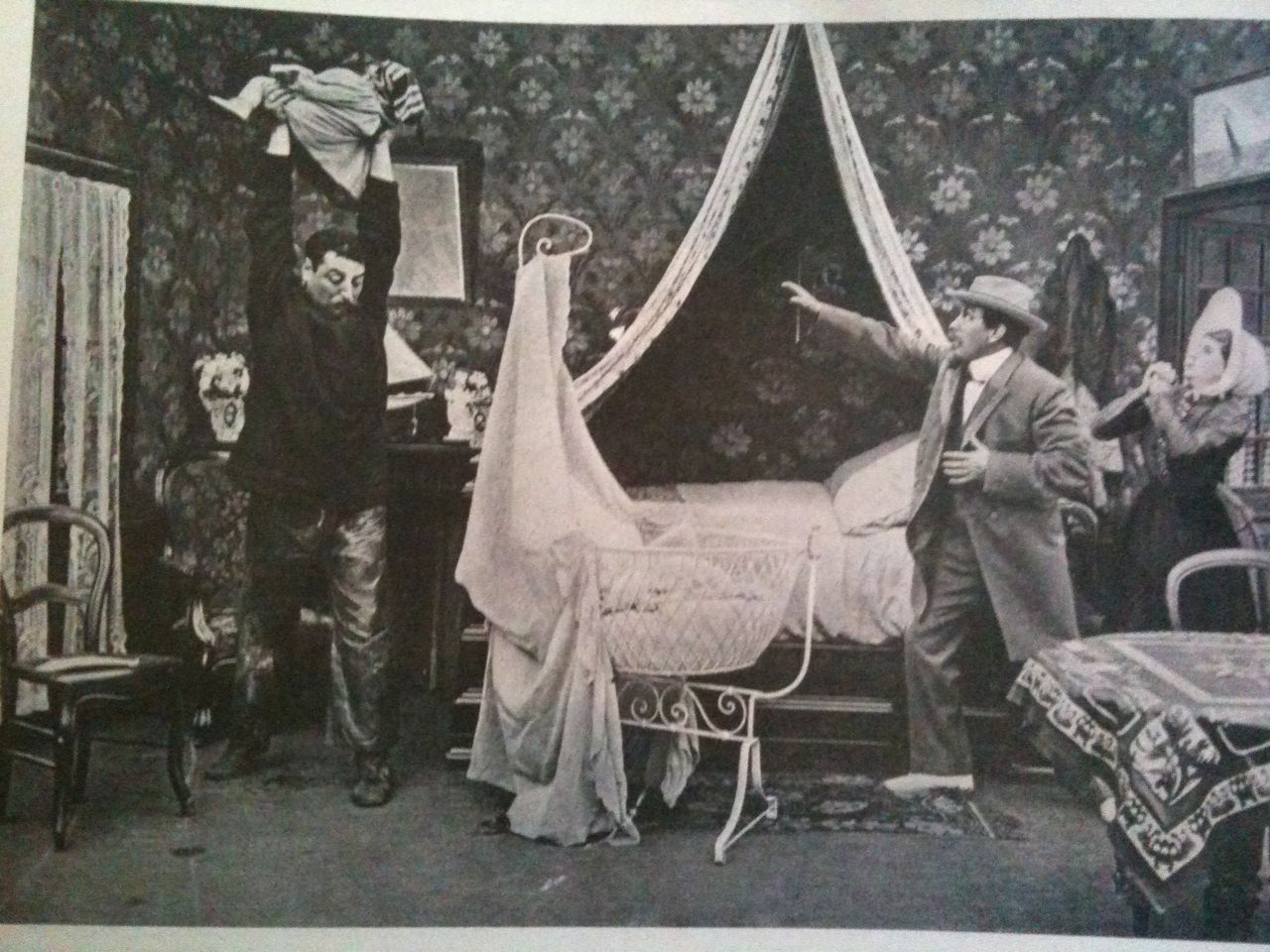
Babysmash

He will eventually edit the pictures, and this ambitious project will be moving on to many places (including MoMA in New York) and with many more actors and films to re-create, and many more ways to view them. Online, in the cinema, live-streaming and directly live in person. If you can't be present, again, you can watch online. And you do not want to miss the chance to watch Udo — Udo's eyes. Udo eyes could awaken the deadest of the dead, those who would never choose to rise again. And so can Guy.

Guy-maddin-2flow

Please watch it all live here. And I will be updating as much as possible. I'm working here, writing some of the scritps and acting in a few of the pictures, so it can be hard to break away — especially when I'm doing such things like, pulling a ribbon of ectoplasm out of Charlotte Rampling's mouth. I never thought I would have done such a thing, but it, strangely, seemed quite natural. (I must be delirious) Of course, she looked beautiful and intense — ribbon fluttering, with those spellbinding eyes and those famous lips, allowing the silky spirit to emerge. 

(Speaking of silky spirits —  I would be remiss to not mention For the Love of Film: The Film Preservation Blogathon to help raise funds for the National Film Preservation Foundation. Contribute! As we are attempting to bring lost films to life, remember all those pictures that should remain alive and well. This project underscores the importance of such matters all the more. The tireless minds and beautiful words at The Self Styled Siren and Ferdy On Films have been on this, and you should be too. But I will write more about that on another post…)

JS1263140

For now, we began with Lines of the Hand. An unrealized film by Jean Vigo starring Vigo's daughter Luce Vigo. Also with that other famous daughter, Geraldine Chaplin and the great Udo Kier.  Today is Marshall Neilan's Bits of Life with Rampling, Kier, Jacques Bonnaffe, Miguel Cueva, Sherpa Macilu and Andre Wilms The set-up has begun. And there are so many more to come. 

You can watch here – live streaming.

These obscure objects of desire. They are alive..

Lynch & Los Angeles: This is the Girl

2001_Mulholland_Dr_136-1

Because today is David Lynch's birthday. And because I adore Los Angeles in all of its sunny/dark schizophrenic glory. It's the one city where I feel like it's OK to feel insane. And that makes me feel sane.   

I'm in Paris for a few months, which is wonderful and will offer many creative adventures (chiefly the project I'm working on). And, of course, it's a place of countless complexities, high and low, deeply historical, cinematic, literary and on and on. And it's one of the most beautiful cities in the world. Still, I'm always happy to return to ugly/gorgeous, happy/sad, winning/desperate, crazy, crazy, crazy Los Angeles.
MV5BMTczOTQwMjc2Ml5BMl5BanBnXkFtZTYwNTkyOTc2

Like James Ellroy wrote regarding his return to L.A. (and in reference to W.H. Auden) Ellroy's beloved L.A. is "The Great Right Place." Sayeth Ellroy: "As L.A. bids pundits to spin epigrams. W.H. Auden called L.A. 'The Great Wrong Place.' I'll ascribe intent. Auden saw L.A. as a lodestone for opportunists and psychically maimed misfits. I sense this because I fall into both categories. Auden couched L.A. in a film-noir construction. Losers migrated here to start over and become someone else. L.A. was a magnet for lives in desperate duress. The sheer indifference of the place consumed the migrants and drove them mad. They succumbed to madness in a sexy locale. The place itself provided solace and recompense. They had the comfort of other arriviste losers. They entered the L.A. spiritus mundi. They handed out their head shots. They joined that unique L.A. casting call."

Rena-Riffel-Mulholland-Dr_4-1024x550

He could have been describing Lynch's ultimate L.A. movie: Mulholland Dr.

So, with that, a re-post. And again, Happy Birthday Mr. Lynch.

David Lynch gets America. America the beautiful, America the bizarre. We can discuss how "weird" he is, how inscrutable his movies can be, how much he loves oddly conceived babies, oddly shaped humans, oddly pale-faced Robert Blake, oddly obsessed Crispin Glover and his "lunch!", but the man gets what drives our subconscious, our sweet dreams, our nightmares.

muldrphone.jpg picture by BrandoBardot

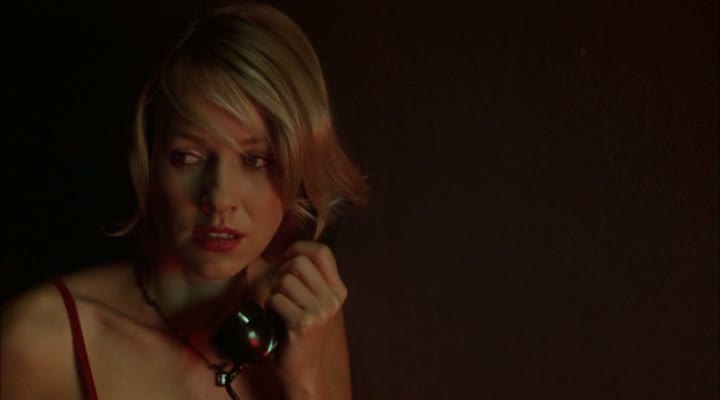
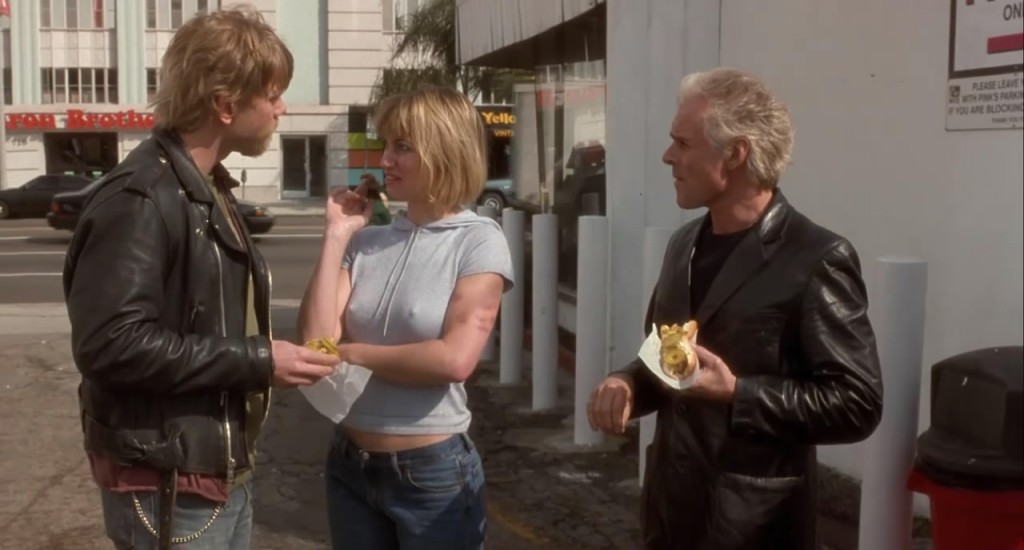
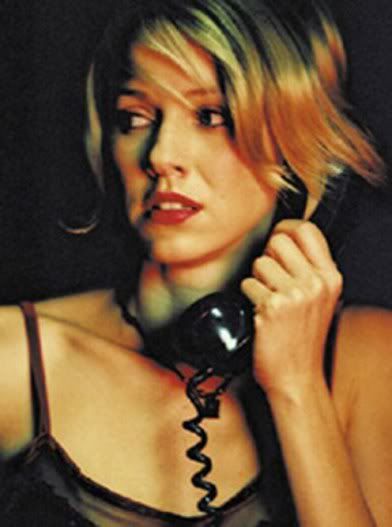
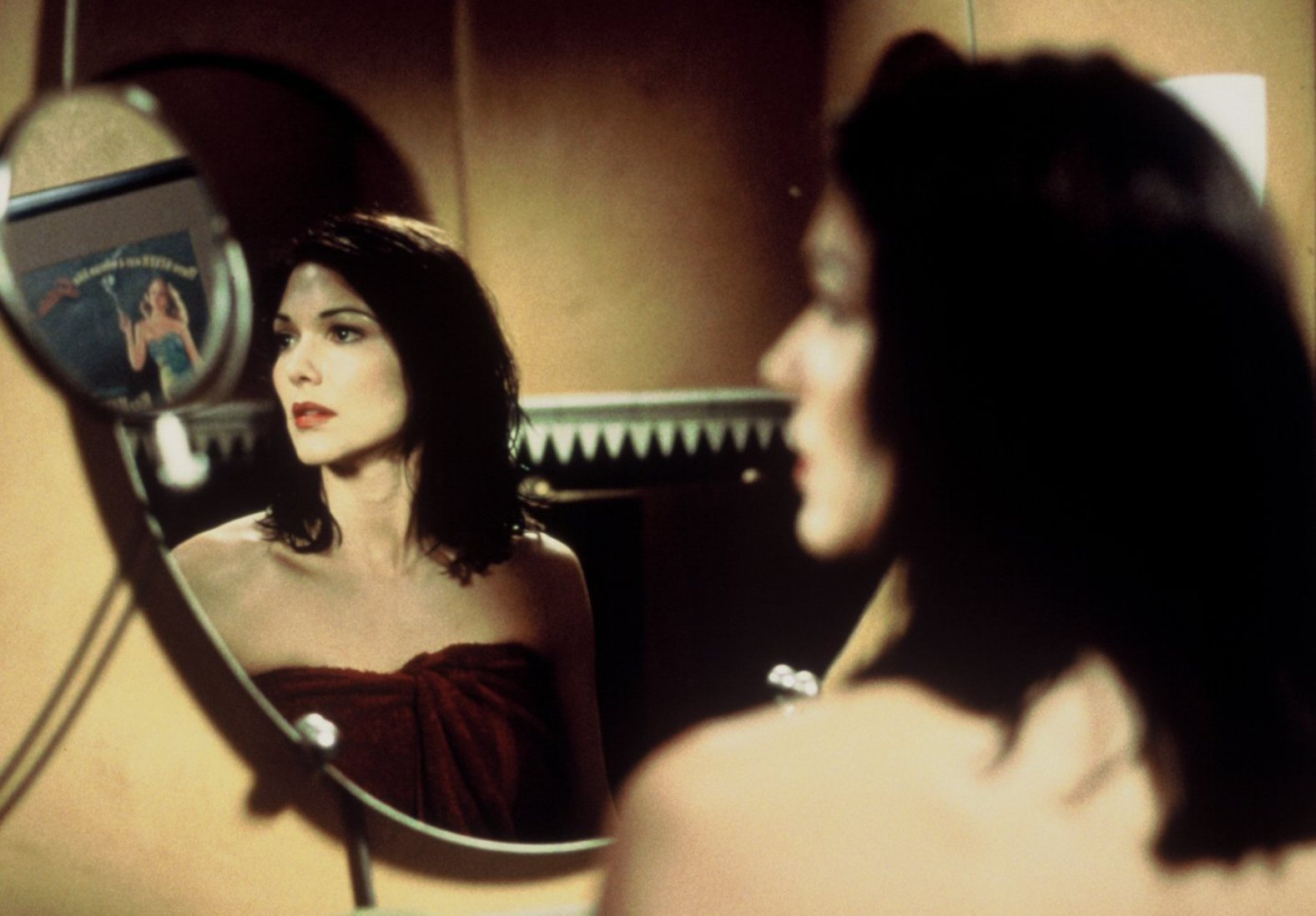
So naturally, Lynch understands one of the oddest cities on earth — Los Angeles. With his brilliant, labyrinthine Mulholland Dr., a movie that started out like a jilted starlet (it was an axed TV pilot) he digs underneath our peculiar Hollywood system — a system that pedals dreams, desire, sex, money, magic — dreams that have the ability to spread like a celluloid sickness all over America (especially during the 2000’s. Did he know how prescient he was going to be?). Through the bright-eyes of innocent Betty (Naomi Watts, in a career defining performance), a starlet seeking fame in La La land, he presents a twisted, romantic, funny, terrifying and deeply emotional mystery involving a gorgeous amnesiac, a monster behind a diner, a persona altering box, a pair of elderly folks who slither under doors, and a director who answers to a dwarf, a mobster and a cowboy. And let’s not forget Coco.

Mulholland_drive_movie-207802

Hauntingly beautiful, poignant, funny, subversive, dark, meditative, sexual (Lynch is one of the few American directors who can actually create inspired, erotic and yet intensely emotional sex scenes) and more, Mulholland Dr. poses many questions, but offers few answers, reflecting life in all of its enigmatic complexities. And if you think it’s weird that a box might be responsible for transforming a promising young actress into a suicidal starlet, rubbing herself in a tragic masturbatorial rage, then you need to spend a little more time in Los Angeles. Or on reality television. Or in your girlfriend’s living room after you ditch her. Or in a director’s chair. Or simply walking up and down Hollywood Blvd. between Western and Normandie.

Muldrreflections.jpg picture by BrandoBardot

Speaking personally, I can say that living in this city long enough, Mulholland Dr. does not seem that out of the ordinary. And this realization came to me quickly. Directly upon moving here, the very first apartment I looked at, (recommended to me at the noodle joint across from Jumbo’s Clown Room at 2 AM by a weathered, drunk L.A. native waxing nostalgic about seeing Patty Duke perform her mournful "Don't Just Stand There" on Shindig!) was, unbeknownst to me, that very same apartment Ms. Watts inhabited as sad, suicidal Diane. I’ll never forget the creepy familiarity while walking through the grounds, searching for a landlord and knocking on a stranger’s door only to be answered by a stern faced woman who treated me like a suspicious intruder. A lovely place, but, when it hit me just where I was standing, I resisted a possible rental application. I realize it’s only a movie but, no. Living there seemed tantamount to beginning my new life in Roman Polanski’s digs from The Tenant.

muldrivebettyrita.jpg picture by BrandoBardot

That’s how powerful the picture is – it just gets under your skin and into your bones and bubbles with your blood. It may be notoriously tough to decipher, but truly, Lynch captures the city, its vibe, its ragged romanticism, its cruelty, its impenetrable dysfunction and its absurdity (Billy Ray Cyrus is the pool cleaner. And that makes perfect sense) with his distinct brand of warped clarity. Our country’s often freakish, surreal desperation to emulate or ponder the “glamour” of Hollywood is just as weird and just as affecting and just as relatable as…Winkie’s dream. Mulholland Dr. is a masterpiece. “This is the girl” indeed.