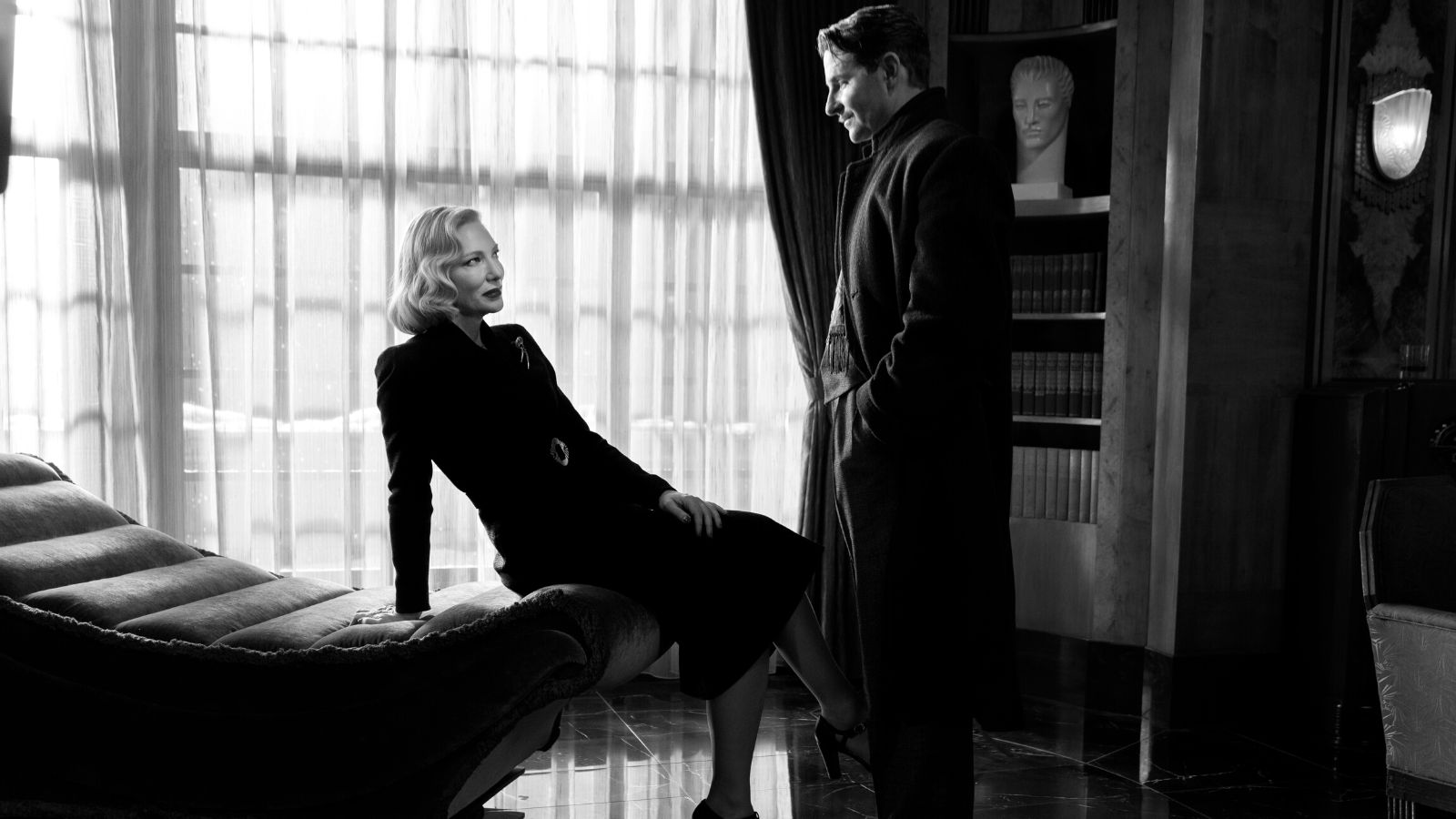
Too Late Blues

Too-Late-Blues-7-1

From Ray Carney’s “Cassavetes on Cassavetes”: “I loved Frank Capra when I was a kid. I saw Mr. Smith Goes to Washington and I believed in it. I believed in the people in our country and our society. I believed that the rich were not that bad and that the poor had a gripe, but that people could come together and that made America a better place for me to live in and be proud of. And every Capra film I’ve ever seen showed the gentleness of people. There were corrupt people within that framework, sure. The poor people were always oppressed, but they were oppressed with such dignity and loveliness that they were really stronger than the rich; the rich had to be educated. I grew up with that idea. I grew up on guys that were bigger than life. Greenstreet, Bogart, Cagney, Wallace Beery. Those were my favorite guys. I’d think, God, what a wonderful life they had – to have an opportunity to stand up there in front of people, in front of a camera, to express yourself and be paid for it, and say things and have it mean something to the audience.”

“I am trying to show the inability of people to recognize that society is ridiculous. Hardly anyone obeys the mores, but they respect them. If they are exposed breaking the mores their lives can collapse. Our hero is not a coward, but in covering up this failure he destroys everything else that is important to him. A silly search for mores reduces the great, wonderful hero of the story into a cheap individual with no morals and ethics and no place to go.” – John Cassavetes on Too Late Blues

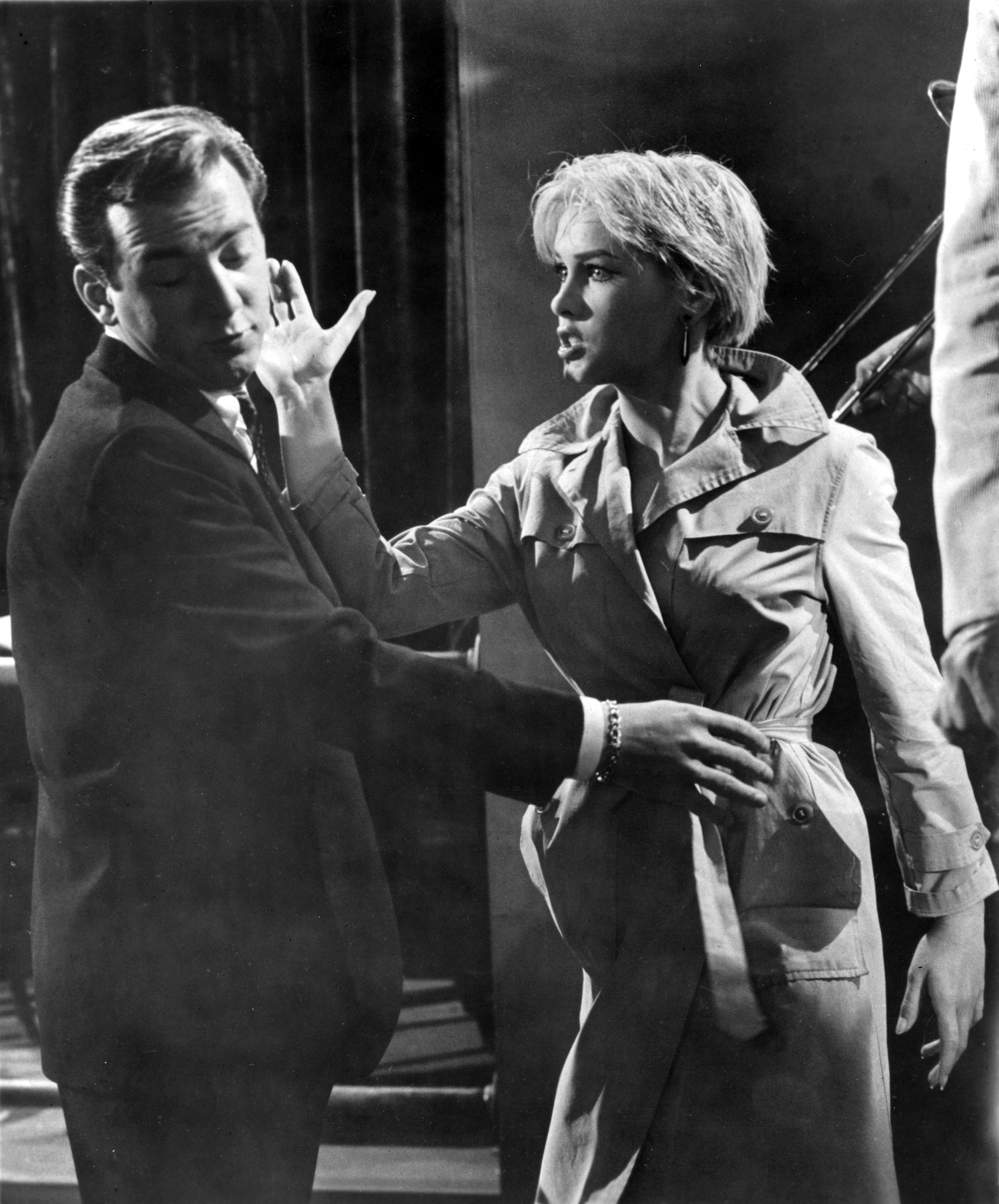
Everyone in Too Late Blues is miserable. And I mean miserable. That is in no way a condemnation of the picture, not at all, as this is a beautifully realized collection of melancholic musicians (also an agent, B-girls, a couple of bartenders and a touchy tough guy) who are depicted as humanely, compellingly and explicably miserable in a way that only John Cassavetes (who co-wrote, with Richard Carr, and produced and directed the picture) grooves on with his particular kind of dignity for the defeated. Some don’t know how miserable they are, they’re even laughing and exuberant at times, but we can feel it throughout the picture – it just hangs over these characters with their respected musical purity and perilous futures in a world that manages to grind down your purity and grind down your debasement (and yes, the world can grind down your sullying even more than you thought). Though none of these individuals are really trying to maintain a bright outlook since they know how life goes, they’ve been around. They’re also not ready to chuck away their dreams even when they go “commercial” (for a time). That should be a positive. It is. In an easier world. And so they walk from room to room, bar to bar, gig to gig, haunted. It’s no wonder the lead character’s name is jazz cat Ghost (Bobby Darin) – his ego might ruin him to that fate – a potential phantom, a guy people talk about from the past, leaving stale smoke and circles on bars behind him while maybe, just maybe his real music will be playing somewhere, a memory. Or maybe he’ll make it his way. Cassavetes did (but by 1961, while he was directing this picture, he hadn’t yet), and one can’t help but see the anxious, questioning parallels between Ghost and Cassavetes.
10KEHR-superJumbo
Darin’s Ghost Wakefield yearns to keep his artistic integrity, no matter if his band complains about playing in parks to birds and trees, living off nothing, is portrayed with the drive of a guy with lots of talent, lots of charm, but a hell of a lot more insecurity than he’s letting on. Darin in real life was a singer with loads of talent and though he was popular, he always seemed a bit off-center, not quite as cool as he would have liked, but not as square either. In Too Late Blues Darin entirely gets the anger and ego of a guy with talent to burn playing dumps, fighting during recording sessions and dealing with scummy agents while trying to do what he loves. He’s seen this world before. You can tell. And he’s both poignant and completely unlikable all at once.

 You can also tell that Stella Stevens (who plays Jess) the beleaguered B-girl and singer, has seen some sleazy situations in her time. She floats into the picture a petrified beautiful bird, nervously scatting with a seasoned jazz pro and ends it a suicidal wet-haired feral cat, once again singing in her wordless, almost disturbing near incantations. She’s heartbreaking – a broken young woman who has been so used, she can slip from quiet, contemplative junkie (without ever shooting up – her character just oozes opiate addiction and trauma) to drunk and boisterous to runny-eye-makeup, furious good time girl. She’s acting a part when she’s out hooking sliding right into the role men want her to be, but when she’s faced with actually loving someone (in this case, Ghost) she’s an emotional wreck. She’s also so vulnerable that one contemptuous moment from Ghost and she’s gone. She sleeps with his musician friend who is, as she says, bigger than him. She repeats this with emphasis so you get that she doesn’t just mean taller.

And yet, the film never judges her. Cassavetes is so understanding of this kind of woman that the picture feels downright radical in that regard. She’s not just a whore – she’s not even sure what she is – and that’s sad, not ugly. And Ghost (who will become kept himself by a rich woman playing music just for the scratch) well, what right does he have to judge? Ghost may represent the movie’s mixed idealism and egoism of holding onto your vision, but Stevens is its vulnerable center. She’s spinning from one place to another, even a baseball field, with all of these men swirling around her either telling her she’s worth something or distracting her from the purity of not just music (for she can sing) but of her own self. She is so down and depressed that her later, very physical meltdown in a bathroom is so shattering it almost takes you by surprise. We knew she was despondent and yet, she’s so brilliant in this moment, we are genuinely taken aback by just how despondent she really is. As Cassavetes reflected:  “I see women in bars, crazy girls who don’t want to be themselves and who don’t want to admit what they are. They’re difficult people. They’re hard to talk to. But to me they’re like a mother; awkward, pretty young girls.” He’d known these women. And, again, Stevens must have, too. She’d likely known these men.

And Cassavetes knew about the struggle of working for dough. This was Cassavetes’ second picture after directing his groundbreaking, independent Shadows and starring in his “commercial” TV show, Johnny Staccato, and his first time directing under a studio (Paramount). He was allowed neither his casting choices with the leads (he wanted Montgomery Clift and his wife, Gena Rowlands) nor his preferred location (he wanted New York City, the film was shot and set in Los Angeles), but, according to Ray Carney’s ‘Cassavetes on Cassavetes,’ he felt some optimism bringing most of his trusted friends and crew along: Shadows cast members Seymour Cassel, Cliff Carnell, Rupert Crosse and Marilyn Clark; Johnny Staccato actors Val Avery and Everett Chambers; American Academy of Dramatic Arts alums like Bill Stafford, James Joyce and Vince Edwards. Both his co-scripter and his cameraman (Lionel Lindon, a veteran who also shot for John Frankenheimer, including The Young SavagesAll Fall Down and The Manchurian Candidate) worked on Johnny Staccato. He was given freedom in spite of some stipulations, and he worked beautifully with his cast and musicians (Shelly Manne, Red Mitchell, Jimmy Rowles, Benny Carter, Uan Rasey, Milt Bernhart a score by David Raskin, and Slim Gaillard shows up in the film as well).

6a00d83451cb7469e20263e86012f4200d-800wi
The picture is also gorgeously shot, the black and white cinematography giving us a life where men and women live, play, fight and drink by night, only to look strangely awkward in the daylight (Ghost remarks how beautiful Jess looks in the sunlight partly because she’s never in the sunlight). Though it has less the ragged experimentalism of Shadows, the composition and interiors and the lack of an actual street life (it’s just a lot of darkness out there, or a depressing pool lighting up the outside of Jess’ pad) powerfully conveys the claustrophobia of club life. One second it’s fun and dancing, the next it’s Vince Edwards punching and screaming about needles in pockets, hollering about dope fiends. Everything feels entombed and perilous all at once. Never mind how anyone breaks through this life, how does anyone break through this room? The picture is something near a masterpiece.

But, never mind all that. Like Ghost compromising his 100 percent artistic vision, Cassavetes wasn’t happy with the end result. He didn’t get the edit he wanted (and that edit would have been interesting, likely greater than this one). The movie didn’t do well and some of those ready to attack him for going commercial jumped on him. He wound up making another picture for Paramount that proved even more upsetting (A Child Is Waiting) and would eventually make one of his finest films, Faces.

As Cassavetes said about working with the studio: “All I care about is making a movie I believe in. Everyone else in the room with me, they’re concerned with figures rather than people and emotions. They only care about money. There are no artists in the room with me, only bankers. I’m all alone.”

Making art just for money? Compromise? Thankfully, Cassavetes created his own kind of career so he wouldn’t have to. But, Too Late Blues’ Ghost? He might get the group back together and go places. Other than that, he’s miserable. Miserable in a magnificent movie.


Previously published at The New Beverly 

6a00d83451cb7469e20263e944934e200b-800wi
Rest in Peace Robert Benton. 


From my 2019 essay on Benton's The Late Show published at the New Beverly 

“Back in the 40s this town was crawling with dollies like you. Good looking cokeheads trying their damndest to act tough as hell. I got news for you: they did it better back then. This town doesn’t change. The just push the names around.”

“Jeez, Charles, he doesn’t look so hot to me.” So says Lily Tomlin’s new agey Margo when she first spies Art Carney’s retired private investigator, Ira Wells. She’s scoping him out at a place many young people think guys his age are about to set one foot in – a cemetery. A seemingly anonymous old looking guy in a rumpled suit paying his respects to a dead person and the dead person’s loved ones, Ira walks past crypts on one of those sunny, deceptively cheery Los Angeles days that would feel strangely depressing even if he wasn’t in a cemetery. It feels a little impersonal too, all out in the open with those rows of crypts, and especially as Margo is sizing him up for hire. The camera follows Ira and you can hear a plane passing overhead. It’s an interesting way to introduce Tomlin’s character as she’s introduced to Ira – just her voice and her first impression observation – and then her sleazy-slick pal Charlie (Bill Macy) reassuring her: “Let me tell you kiddo, Ira Wells used to be one of the greats.”

Used to be. We’re still not so sure even after we’ve been introduced to Ira in the opening scene of Robert Benton’s 1977 picture, The Late Show. When we first see Ira, he’s sitting in his little room – not in an apartment we don’t think at first – but what looks like a room in a boarding house. An old movie plays on his TV. This is a lived-in space and it’s nice that the movie takes the time to show us his surroundings: there’s books stacked around and taped up photos of the old days, socks hanging to dry, a messy bed. We’ve noticed from the start that he’s working on a memoir, the title reads: “Naked Girls and Machine Guns: Memoirs of a Real Private Detective.” Well, that’s quite something. Who is this guy? If we had no idea what this movie was about before watching, we’d wonder how much of that title is an exaggeration. Or, is he writing a detective novel? But, right away, we think, this man – this man in this humble, rather touching room – thinks of his life as something to remember (as he certainly should. As anyone should.) And he also thinks that his life is something others should remember, hence, a memoir, or writing based on himself. And he’d like to grab people right away with the pulpy title: “Naked Girls and Machine Guns” (kind of ridiculous and “immature,” as Margo might say, but, hey, it grabbed me too). Obviously, Ira sees glamour in his old, sexy dangerous days, and maybe at this point of the movie, he’s content to drown himself in times past. The present? Watch another old movie and go to the race track.


As he sits in this somewhat sad, sagging room, we see some glamour in a framed photo of a beautiful young woman. An ex-wife? An old sweetheart? Probably not, as the woman is actress Martha Vickers, so memorable in Howard Hawks’ The Big Sleep. A noir-soaked nod on part of the filmmakers, a fan photo for Ira and, at first glance, a possible old flame of Ira’s. An old flame is not likely but … you never know. Ira may have had an even more exciting past than we will ever know. This is a room of memories. Not cool or flashy or dingy in a hardboiled, black & white, neon-sign-flashing-in-the-window kind of way, but the room of an old man. The room of someone’s grandfather. But. We suspect that this guy doesn’t have any grandkids. Or any kids for that matter. Or, any grandkids or kids that he’s ever kept in contact with, anyway.

His peaceful night of old movies and writing is interrupted when his old partner, Harry (Howard Duff – Duff played Dashiell Hammett’s private eye Sam Spade on the radio, and appeared in Brute ForceThe Naked CityPrivate Hell 36 and While the City Sleeps – he was also married to Ida Lupino for a time) pays him a bloody visit. And then promptly dies in his room. He’s been shot. Ira is both pissed off and heartbroken. Now we see the tough guy Ira once was and still is: “God damn you, Harry! Letting someone walk up and drill you like that. Point blank. Nobody can palm a .45. Jesus Christ. You never had the brains god gave a common dog!” And then we see how heartfelt Ira is too: “Sorry you’re going off, pal. You were real good company.”

Ira starts tearing up.

Harry is the dead man Ira is seeing off at the cemetery, so it makes sense he’s so grumpy from the intrusion of Margo and Charlie. Let the man mourn his friend and partner for chrissakes. And worse, the case seems two-bit to him. You see, Margo wants to hire Ira to find … her cat. (We can’t help but think of Carney’s recent starring role in Paul Mazursky’s Harry and Tonto, though Ira does not give a toss about Margo’s cat). Margo owes a guy 500 bucks and, to settle the score, the guy has stolen her cat – he’s threatening to kill the animal if she doesn’t pay him. “So pay him!” Ira barks at her. Angry at Charlie he walks away muttering about how younger people should respect their elders. He’s sick of this shit, and he’s got other things to do. Like get on the bus. Go to the races. Sleep. Something. But soon enough, Ira knows there’s more going on here if Charlie is involved. In a terrific exchange, while Ira and Charlie are seated for a shoe shine (Charlie, wearing his flashy brown leather jacket, polyester shirt, orange pants and yellow socks, is reading The Hollywood Reporter – there’s ragged reminders of supposedly glitzy Hollywood all over this picture), Ira asks him what the hell is going on here with this “dolly” and the cat. Ira breaks it down: “Somebody puts the freeze on Harry Regan. Next thing I know you show up at Harry’s funeral with some dolly and a song and a dance about a stolen cat and all that hot comedy. What’s it all got to do with Harry?”

KuM3UzI8ScoVMEVNFUHvRP64CoY-1200-1200-675-675-crop-000000

Well, something has got to do with Harry in this mess with the cat and “all that hot comedy,” and so Ira is on the case, discussing details with Margo in an amusing scene in her apartment, a space very different than Ira’s living quarters. Cat pictures, lots of plants, tapestries, bright colors, rock posters, there’s a meditation recording playing (she wisely turns it off), Ira shifts uncomfortably in his chair, while listening to her brief life story (wanted to be an actress, gave it up because she couldn’t play the Hollywood game, is now designing clothes, used to deliver items for some guy – probably hot – and split the money with the cat kidnapper. Only, one time she didn’t – here’s where Harry gets involved…). A woman of the 1970s, one who openly talks about her period and her therapist and astrological signs, Margo is a woman who’s seemingly trying anything in Hollywood, not just out of desperation, but out of, what she says, to “go with the flow.” I thought of the scene in Robert Altman’s The Long Goodbye (Altman produced The Late Show) when Elliott Gould’s Marlowe tells bumbling Harry (David Arkin) what his scantily clad neighbors do for a living – they dip candles and sell them in a shop on Hollywood Blvd.  Harry exclaims: “I remember when people just had jobs.”

Tomlin makes Margo lovable and smart – not just kooky and stereotypical hippy dippy – and a little mysterious too. For how much younger she is, and all of her more youthful of-the-time speak, does she have any friends, really? Other than the singer she manages? And are they even friends? Surely, she has a whole other life, but as presented here, it seems Charlie is her only friend. You start to understand that Margo, like Ira, is actually lonely. And that Los Angeles can be an alienating town whether you were a once aspiring actress, or you’re a retired private eye. You feel like people don’t care about you anymore. You’re don’t have that “it” factor. You feel disposable. It’s this observation of the fringes of Los Angeles, the “real” people (who may have had extraordinary lives if you bother to ask them about it), that makes The Late Show so intriguing and moving. It’s showing the sleazier side of the city; one in which people are still hanging on – some, by their fingernails. But they’re not all down-and-out, not yet, though one day they might be.

As the complicated mystery unfolds, Ira and Margo grow closer, and his crankiness softens. He seems amused by her, even likes her. And, in one scene at a bar, she tells him that she confessed to her shrink that she thinks he’s cute. He’s not sure what to make of that but the old guy must be flattered. She is thrilled after a high-speed chase in her van and she delights at the idea of them partnering up – a P.I. team. You feel for Margo as she suggests Ira move in to the apartment next door because, well, not only is she thinking of her new venture past designing clothes and managing talent, but she’d like to have this guy closer to her. She likes his company. He tells her he’s a loner. But the movie never turns this into a typical May-December romance – their attraction works as friends, as potential partners, as two different generations who have found something within each other that works, even if they drive each other crazy. And the movie never makes fun of them either. Margo may be a little zany, even annoying at times, but she’s got a heart, she’s got substance. And Ira may be cantankerous, walking around with his bum leg and aching gut, but he’s not always cranky, he’s witty, he finds joy in some things. And he’s got a good soul. Also – he’s still a good shot. In a remarkable scene, Ira aims fire at a car, but before he shoots, he pulls out his hearing aid. Somehow this is not funny, it’s just badass.

Benton (who earlier had co-written Bonnie and Clyde) wrote and directed this picture, his second directorial effort after Bad Company, and before his next picture, the Oscar-laden Kramer vs. KramerThe Late Show, mostly acclaimed upon release, but underseen, is one of his best, if not his very best (I also like his later work with Paul Newman, Nobody’s Fool and Twilight). This is a gentle character study about the seamier side of Los Angeles that’s also violent, funny and melancholic – not super striking cinematically-speaking, certainly not showy, but deeply felt and nuanced. And the actors are all splendid here including Eugene Roche as fence Ronnie Birdwell, John Considine as the creepy/stupid gold chain-wearing henchman, Lamar, Ruth Nelson as Ira’s sweet landlady Mrs. Schmidt, and a terrific Macy who is both fantastically oily and entirely human.

Carney, famous for his comedic (though touching) role as Ed Norton on the television show The Honeymooners was enjoying a resurgence in the 70s on the big screen (he hadn’t been in many motion pictures before), winning an Oscar for Harry and Tonto and co-starring in Martin Brest’s Going in Style (among other pictures). His performance here is beautiful. He’s rough and gruff and no-nonsense, spitting out hard-boiled dialogue naturally (he’s never forced, he never plays cute, he never fills his character with easy bathos), but he’s also poignant and real. There’s an inner life going on with this guy, one of regrets, surely, one of sorrows, but also one of past excitement. He doesn’t just play this simply as an aging tough guy gumshoe, as Mr. Cool, and that makes his performance even cooler. There’s a wonderful moment where Ira is trudging down the street, dragging his laundry along in a sack (he doesn’t have a car) and Charlie and Margo drive by, asking him where he’s headed. He’s snaps back, “I’m on my way to the Brown Derby to meet Louis B. Mayer! Where does it look like I’m headed?” The humbleness of the laundry, and the idea that he both does and does not give a f*** about what it looks like, his quick-witted delivery –  it’s both charming and moving.

And the ending of the picture is charming and moving, circling back to the beginning of Ira and Margo and where they met – at a cemetery. Another friend is buried, and the two walk along to the bus stop. They sit on a bench that’s advertising the Hollywood Wax Museum: “Mingle with the Stars,” it proclaims. There’s nothing much star-studded going on as they sit on the bench, on a typical smog-choked Los Angeles street, wondering what to do next. But it appears hopeful. Maybe they’ll even partner up. After all, he’s still great at his job – age is experience, in spite of Hollywood’s endless quest for new stars, for youth – and he’s got a connection with Margo. And they’re in Los Angeles, a town, that Ira thinks, even as he grows older, never really changes: “The just push the names around.”