My Favorite Demme: Something Wild

6a00d83451cb7469e201b7c8f20f79970b-800wi
Jonathan Demme has passed away. To honor his life and his musical, deeply humanistic films, in love with the odd and the beautiful, and the oddly beautiful, the art of everyday people who aren't so everyday, and the depth and complications of love —  I'm posting my New Beverly piece on one of the great films of the 1980's — Something Wild. Rest in peace, Jonathan Demme.

“I’m glad to see you finally made it to the suburbs, bitch!”

Love can be traumatizing. It’s also exciting, unsure, bizarre, freeing and imprisoning (at times, somehow, simultaneously), and when it starts – that delicate, vulnerable starting point – there are messy shifts in mood that mirror a kind of mental illness. It might even be a mental illness, an abnormal interruption of serotonin levels causing mania, anxiety, depression and obsessive compulsive behavior. Of course that sounds more troublingly clinical than romantic, and people really don’t like viewing themselves as mentally unstable lunatics while in the throes of lovesickness (this is the socially acceptable sickness, one tells oneself), but if you read British clinical psychologist Frank Tallis (who wrote an entire book about it), you might be convinced of its psychopathology: “Love seems to have the power to destabilize people emotionally. Particularly in vulnerable individuals, it can be very difficult to cope… Some people are referred to me because of an admission to depression or anxiety disorder, but in fact, once we’d explored issues around their problems, it was clear they were just in love.”
6a00d83451cb7469e201b7c8f20f06970b-800wi

With that kind of dysfunctional amore in mind (isn’t it always at least a bit dysfunctional?), Jonathan Demme’s moody, transgressive, genre-bending, weirdly romantic (and unromantic) Something Wild isn’t such a strange hybrid. For a love story, it mirrors what often happens when people do fall for another – it’s destabilizing and terrifying. A movie that upsets some viewers with its stark shift in tone – from winsome, sexy, romantic comedy to violent, obsessive thriller – it stares directly in the faces of its male protagonists – one, a dorky stuffed shirt type, the other, a charming, murderous criminal, and wonders if they are at all so very different. And in an especially powerful scene utilizing the Demme close-up, it wonders if anyone is at all so very different.

Something-wild-1-1

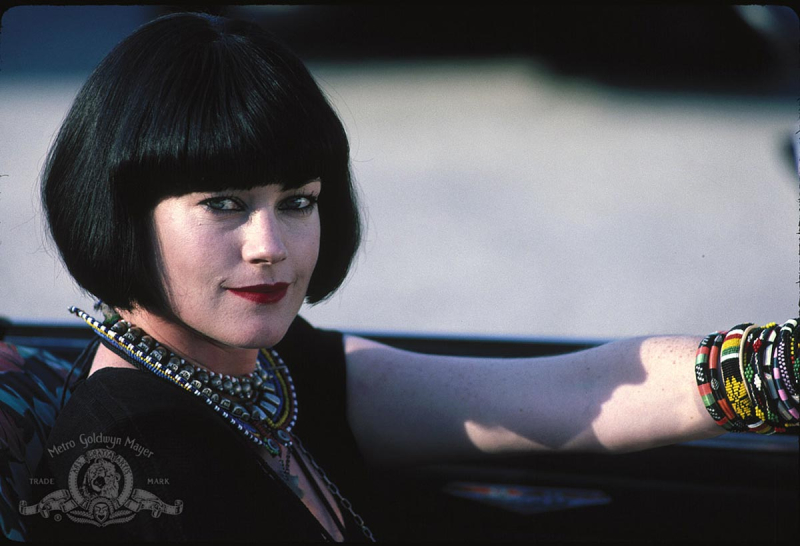
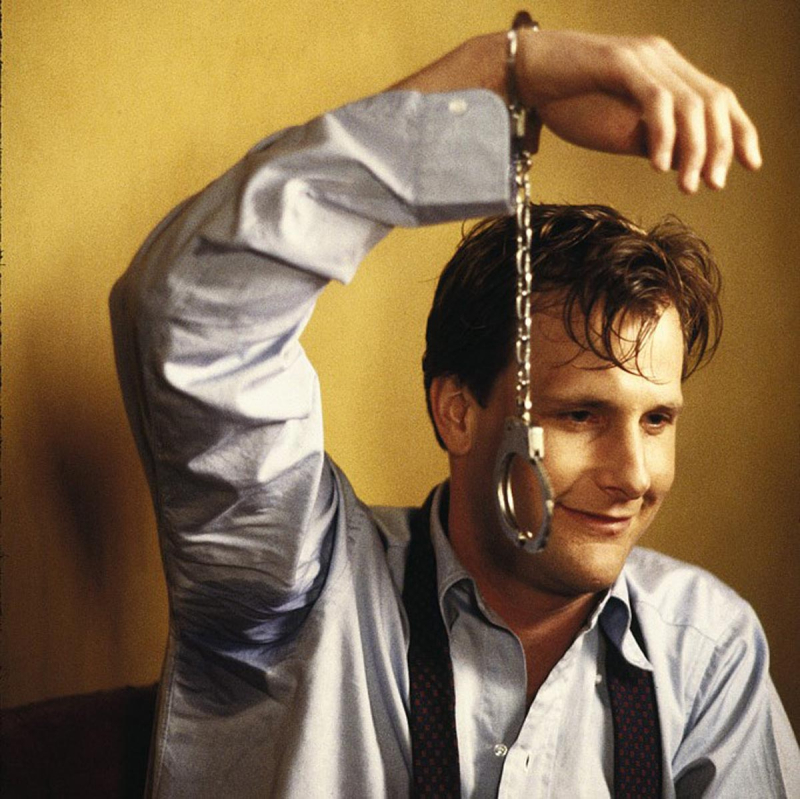
This question, through shifts of persona and the crazy act of falling in and reclaiming love, makes the character’s desire to embark on a quest, whether it be a journey through the past (to quote Neil Young), a new identity or the liberating adventure of a road trip, all the more poignant and unsettling. And relatable. It begins when the buttoned-up, newly appointed vice president of a Wall Street firm, Charles Driggs (Jeff Daniels) commits a sneaky criminal act for his own personal thrill – he pockets a check in a Manhattan diner and walks out without paying. Spying him is the pretty Pandora’s Box of a woman, appropriately named Lulu (Melanie Griffith) sporting a Louise-Brooks-bobbed wig and African jewelry – this is not the type typically drawn to Charles. The dark-haired stranger follows him outside and confronts his “closet” rebelliousness of which he protests – he made a mistake! He’s already lying. Once he learns that she doesn’t work there and that she doesn’t actually care that he lifted his lunch (she’s, in fact, turned on by it), she offers to drive him to work. Work doesn’t happen. Instead she takes him to a seedy motel room in Jersey where they have handcuffed sex to the tune of Fabulous Five’s “Ooh! Waah!” Natural to all uptight men confronted with the free-spirited, screwy dame going after what she wants (in movies), he’s reticent at first, but succumbs, which isn’t that tough.  After all, sex is involved and Demme does not shy away from showing the eroticism of this encounter, allowing Lulu to enjoy herself and take control. You also sense something more problematic going on with this woman. Maybe she has a drinking problem? What is she evading?
6a00d83451cb7469e201bb09952d06970d-800wi

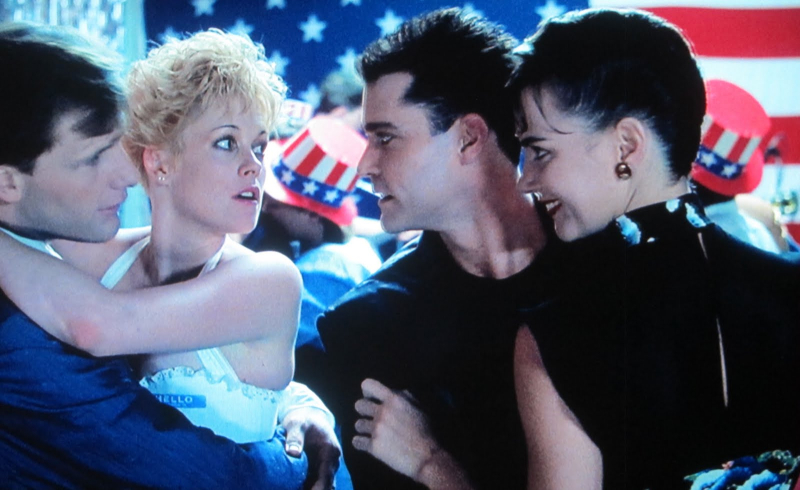
She has other aims too – thinking Charlie (he’s now anointed Charlie) is a square (but rebellious enough to ditch a check), and a decent-looking, upstanding fellow, she convinces him to join her on a road trip to her Pennsylvanian hometown. It’s her ten-year high school reunion and she needs a fake husband to tag along. She also needs to show him off to her sweet mother, Peaches, who, in a charmingly affectionate scene, tells Charlie she knows Lulu (now going by her real name, Audrey) is pretending. She says nothing to Audrey about it; Peaches accepts her daughter’s impersonation of a “normal life” likely touched by the need to please her mama. This is the first tonal shift in the picture and another alteration  (or doubling) of what men desire – going from the fantasy of the erotic, madcap siren to the toned-down, sweet, high school vision – the lovely woman, the kind Charlie could take home to his mother.  From the so-called whore to the proverbial Madonna, she cleans up well. But why on earth this woman cares about her high school reunion shifts her to a place decidedly more squaresville than the viewer originally imagined. She saunters into the ballooned, name-tag wearing event as nearly an all-American girl, albeit the wild one – the blonde hair, the pretty white dress, the white shoes.  But even before the dark force of romance past shows up, there’s an edge to this presentation, enough where, you can almost hear the song Demme used so powerfully in a film he hadn’t made yet, The Silence of the Lambs – Tom Petty’s wistful, mysteriously spectral “American Girl.” Here it’s The Feelies (fantastic) singing the mournful, menacing “Loveless Love,” and the guy remembering that girl thinking, “there was a little more to life somewhere else,” turns out to be Ray Liotta.

Something-wild-3

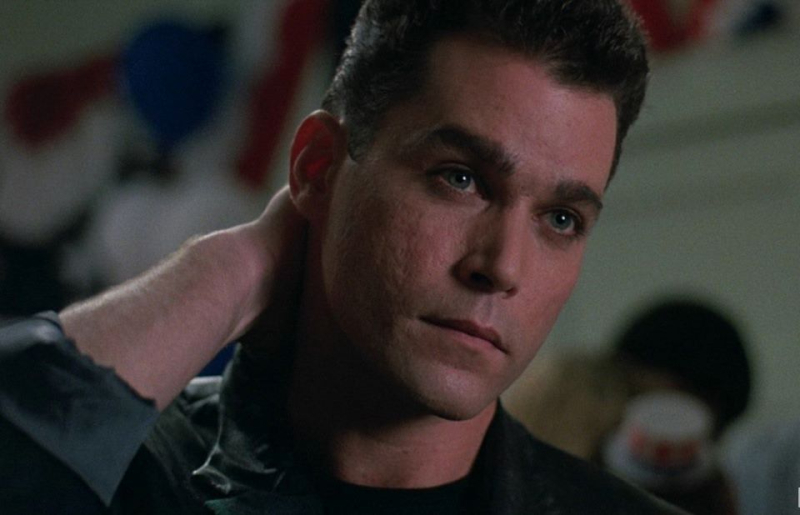
This is when the movie is akin to Bringing Up Baby as interrupted by Born to Kill, with an obsessed, jealous Lawrence Tierney pistol-whipping Cary Grant and kidnapping Katharine Hepburn. Can you imagine that? Demme did. The kooky, sexy girl isn’t so much charmingly incorrigible any more, and she instead brings with her menacing, abusive baggage. There’s now a reason why she’s drinking so much. And being the estranged wife of a criminal, she might even be complicit with this psycho (what did they do together in the good old days?). And yet, Liotta’s Ray, all blue-eyed and charming with his rough trade handsomeness, freshly sprung from prison, isn’t immediately a threat to Charlie. Charlie likes him, in fact. Charlie’s so stupidly loved-up at this moment, he’s both naïve and not paying attention; he’s not even paying attention to Audrey’s nervousness, so self-absorbed he is while indulging this new love-struck feeling. He’s also caught up in the masculine energy of Ray.

Through Demme’s direction (and his brilliant cinematographer, Tak Fujimoto), Ray’s entrance is something to behold – the camera moving in on Liotta’s smiling, ominous face, we know this guy is chaos. We’re also positively struck by Liotta’s charisma – it hits the viewer so much that they feel a dark thrill, even a kind of love at first sight. Liotta is scarily sexy in this movie and Demme knows it, aptly understanding that being drawn in by Ray is going to become something more complicated than merely rooting against a stock villain. We even feel for Ray at times, in spite of how inexcusable his actions are. After all, he’s in love too. Even worse, he’s still in love, and she doesn’t love him anymore. Thinking back to love as mental illness, that might make you crazy. Add prison time to unrequited emotions, and you’ll be even more incurably “romantic.”
6a00d83451cb7469e201b7c8f20f90970b-800wi

Intelligently allowing Ray to partially take over the picture, Demme (and screenwriter E. Max Frye) raise the stakes, making us question how we feel about this smiling jailbird. He’s so fit and so focused and so fucking damaged. And yet, he’s appealing. When Demme has Ray turn so shockingly violent (it’s not cute) he becomes some kind of nightmare delirium of jealousy and fear – namely Charlie’s. As if, when a woman talks about her most recent ex, the bad boy ex, and her new boyfriend wonders, worried, what their relationship was like. How will he measure up? In this movie, that guy appears, not only taking her away, but also taking her away with charm, brutality and mockery. Ray tests Charlie’s masculinity so much, but with such a powerful combination of desperation and violent angst, that the viewer, and perhaps Ray, questions what being typically masculine means in the first place (a question Demme studies in other films, and directly after this one with Matthew Modine’s heroic, but quirky straight arrow F.B.I. agent in Married to the Mob).
6a00d83451cb7469e201bb09952da1970d-800wi

And yet, Charlie takes to him. You understand why. He feels stimulated being around the animal magnetism of Ray. At first. And then, again, the story shifts, the mood gets darker, and boy meets girl becomes boy meets boy, transforming into two boys pursuing one girl, albeit with different means. Or are they so different? They’re both, in a fashion, and in their own kind of feverish love, chasing/casing Lulu. Charlie is, of course, saving her, and from obvious threat, but what is he releasing her from, really? And does she have much choice in the matter? Does she even really love Charlie?

Lulu WScreen Something Wild

Perhaps it wouldn’t have gone so terribly awry had Audrey done something she shouldn’t have to do and simply told Ray she still loved him – as in, lied – but he seems like the one person she can’t lie to. Charlie’s fibbing about his wife and kids (revealed via Ray) and that lie pisses off Audrey enough that she resigns herself to Ray’s entrapment. The kinky S&M she brought to Charlie is no longer role-playing, it’s real, and the veneer of Charlie’s normalcy and of Lulu’s uninhibited allure is fully lifted (when rewatching the picture, we’re observed it slowly revealing itself from the beginning, however). How we present ourselves when falling in love, what we want that other person to see (and notsee) and often, what we choose to ignore, undergoes a transformation here, with Charlie and Lulu gazing at each other in the exposing bare light bulb glow of Ray. Gee, is this movie any fun? Yes, it is.

What’s so wonderful about the picture (among other things) is that while skating on the edge of a potentially joyless thriller, it never becomes one, even as it upsets you.  It’s still fun and, importantly, it’s still moving. In Demme’s view of this particular corner of America, there’s life and joy bursting out of every frame. With the picture’s music (49 songs) providing such a singular, superb soundtrack to these lives, people serve not just as scenery but as distinct individuals, sometimes poignant, sometimes musical. Among many stand-out, small performances, there’s a group of rappers outside of a gas station market, an inquisitive girl checking in on Charlie as he sits in his car, and a lovely moment in which Charlie engages with a clerk named Nelson (Steve Scales) who helps him pick out attire from the tacky tourist gear. It’s delightful, how long Demme allows this scene to go on and how much he, Daniels and Scales underplay what could have been a rote “wacky” incident. Charlie is changing in the store (appropriately in a “Virginia Is For Lovers” tee shirt) and Nelson is not at all perturbed by this, instead he’s encouraging, even casually life affirming. When Charlie asks Nelson if he should buy new glasses (he’s wearing Lulu’s colorful kiddie-looking specs) Nelson says, “Nah, keep ’em. You’re beautiful.” The world is not such a shitty place after all.

Within that strange, disarming world, cameos like John Sayles as a motorcycle cop, Demme favorite Charles Napier as an angry cook and John Waters as a used car salesmen fit right into the environment without any kind of showy strain. I especially love a small moment when, after Charlie has rescued Audrey from Ray, Ray sits angrily by a diner window trying to figure out what to do. An extra passes by outside, saluting him with a little wave.  Just a little wave. It’s a humorous and endearing punctuation mark. Soon after, in that same window, a young woman Ray’s already flirted with at a gift shop, cheerily taps on the glass, and seeing his way out, Ray exclaims “Oh, thank you lord!’” He kisses the window and then manically laughs to himself. You kind of love Ray at that moment – just for being so damn charming and resourceful. And amused. It’s infectious.

6a00d83451cb7469e201bb09952dca970d-800wi

Which is why Ray’s final moments wind up so strangely touching. He’s not without his own vulnerabilities; we’re not hoping he dies. We’re not sure what we’re hoping for. As mentioned earlier, Demme employs his now famous close-up shot; the character’s eyes full of sadness and regret, staring at each other, and we look directly at them. In some ways the two men merge at this moment, provoking complex feelings of identification, fear and empathy. This is not a happy ending. Charlie will never be the same. But who was he in the first place? And who is Lulu? Not long before this moment, Lulu/Audrey asks Charlie: “What are you gonna do now that you’ve seen how the other half lives?” He says, “The other half?” She answers: “The other half of you.” Good question.


Kill Or Be Killed: Murder By Contract

6a00d83451cb7469e201b8d27bf9a0970c-800wi
"The risk is high but so is the profit. I wasn’t born this way. I trained myself. I eliminate personal feeling. I feel hot. I feel cold. I get sleepy and I get hungry.” — Claude (Vince Edwards)

My next piece for Ed Brubaker's issue 8 of "Kill Or Be Killed" with art by the great Sean Phillips: Irving Lerner's spare masterpiece, Murder By Contract starring Vince Edwards. Order a copy!

Out April 26, order here.


April Sight & Sound: Anna Biller

6a00d83451cb7469e201b8d278756f970c-800wi

The April Sight & Sound is out — I interview the brilliant Anna Biller — discussing her varied influences (Dreyer, Demy, Losey, Fassbinder, Hitchcock, John Stahl's Leave Her to Heaven and John Brahm's The Locket) as well as Biller's unique style and complex, intriguing ideas about … many things. See The Love Witch. And pick up this issue. Here's a small excerpt:

Kim Morgan: Writers often apply easy labels to female characters, particularly in noir with ‘femme fatale’, when many women [in noir] are actually rebelling – much like your character, they’re rebelling against the patriarchy or the pressures that society places on them.

Anna Biller: Yes, that’s exactly right. It’s very similar to a noir film or a film like Leave Her to Heaven – a woman who is locked in the patriarchy, doing the best she can. A lot of people think that’s old-fashioned, that I’m creating a character that is out of time, but I feel it’s very relevant to today. Many women respond to it because it feels so relevant to their own lives. A lot of men actually can’t see that, which is why a lot of them are calling it ‘sexploitation’ or ‘pastiche’. They can’t see what I’m doing. They think it’s a joke about other types of movies from the past, when it comes from personal trauma, actually.

KM: That makes me think of John Brahm’s The Locket, a great, underseen picture.

AB: It’s such a masterpiece. It really did inform The Love Witch. Laraine Day in The Locket is kind of a Stepford Wife, right? She’s perfect on the outside, but completely wacko on the inside. She’s been destroyed somehow by childhood trauma. But you’re sympathetic towards her because you see the trauma. John Brahm also made Guest in the House [1944], another fascinating movie about a crazy woman. He was such an interesting director, picking stories about female psychology. It’s very unusual for men to be like that now, whereas before there were [several] male directors and writers who did so. Like Hitchcock – his female characters are brilliant.

KM: Which brings me to parallels with The Birds [1963]. When Tippi Hedren drives into town, it’s like she starts Armageddon by her very different female presence; she’s disturbed the universe somehow. It’s the same with Elaine in The Love Witch.

6a00d83451cb7469e201b7c8ee1571970b-800wi

AB: Female sexual power destroys an entire town. I don’t think Hitchcock is judging her either. He’s just saying, “This is what happens.” Melanie’s aggressive. She’s pursuing a man. She goes to his apartment and then drives out of town and she sneaks up on him in a boat. As she’s rowing towards him, she gets the attack from the gull and it’s brilliant because you’re almost fearful for her because she’s so sexually aggressive for that time! I think the movie is on her side. It’s about women who socially transgress, so it’s similar to The Love Witch. It’s like when Elaine is attacked in the bar. In bringing out this mythos of the feminine, you don’t have to have a negative or positive judgment about it, you just have to be aware of it. [Some critics] don’t acknowledge the mythos of the feminine as being a serious thing to explore in films, so they call it parody. Men feel they’ve effectively tamed us so they don’t have to deal with the mythos of the feminine any more, and they’re relieved. They sure as hell don’t want it coming back… so they just call it what they want and then reduce it down to something that it isn’t; this compact little parody thing. The reality of watching the movie is different – it’s powerful. But whatever they say afterwards, that’s still the experience of watching it. They’re experiencing it, whether they like it or not.

KM: There's personality and art in the artifice and the masks that women wear through makeup in cinema – think of Joan Crawford, Bette Davis… So when Elaine is taking off her wiglet and looking in the mirror and you hear the critical voices, I thought of when women remove the mask and how women do think of these things when gazing in the mirror.


AB:
Yes. You see her putting on her mask and taking off her mask. That was really important to me. The mask is something outside of herself, and also that Trish [Elaine’s outwardly prim landlady and friend, played by Laura Waddell] could put on the mask. That was meaningful because you think of Elaine as this kind of woman and you think of Trish as that kind of woman, but actually they’re both just women. They’ve made different choices about self presentation, but either could switch at any time. I’m trying to undo some of those stereotypes and to show that this is a choice to make, to become this woman, to become feminine. A lot of people find the feminine so ridiculous now, they find a movie like this campy or silly because the feminine to people is campy or silly. I’m trying to change that, hopefully, by keep making movies like this so people take feminine women more seriously.

Read the entire interview by ordering or picking up the magazine, here:

6a00d83451cb7469e201b8d2787580970c-800wi

Perry & Didion: Play It As It Lays

6a00d83451cb7469e201bb098e91cd970d-800wi

"I wrote stories from the time I was a little girl, but I didn’t want to be a writer. I wanted to be an actress. I didn’t realize then that it’s the same impulse. It’s make-believe. It’s performance. The only difference being that a writer can do it all alone. I was struck a few years ago when a friend of ours – an actress – was having dinner here with us and a couple of other writers. It suddenly occurred to me that she was the only person in the room who couldn’t plan what she was going to do. She had to wait for someone to ask her, which is a strange way to live." – Joan Didion

All of us live in our own movie. (Don’t we?) But how do we control our narrative? Well, of course we can’t. With all of those around us – family, friends, lovers, husbands, wives, one-night stands or just a single conversation at a desert rest stop with a stranger, our self-perception is passed on to another person, translated by other eyes and ears creating their own movies – movies either on replay or nearly forgotten, a flickering memory of that one person in that one place at that one time. Unless it is told to us, or, in the case of those writing about or filming us (or both), we can’t know. And we can’t control the sometimes warped perception of “the truth” (whatever that is), their truth, not ours. (Which doesn’t necessarily mean it’s untrue either.) There is so much that others can pour into us, or live through us, particularly lovers and friends, and if we are depressed or troubled especially, the end result may be banishment or beauty or, if embittered, a mythologized distress, an exaggerated fantasia of spite. In many cases, muses are born from this kind of heightened narrative. And drained. Magnetic lightning rods like Edie Sedgwick and Neal Cassady, artists themselves, were alluring and inspiring. And troubled. And in the end, weary, depressed and drug-addled. They sparked genius, but Sedgwick (a gifted model and actress) and Cassady (a brilliant writer), both of whom everyone wanted to fuck (and fuck and fuck, sometimes they probably didn’t want to fuck) found themselves, by the end of it, lost. And nothing brings out the vipers and the leeches like a vulnerable person, traveling along to the next adventure towards oblivion.

MPW-47433

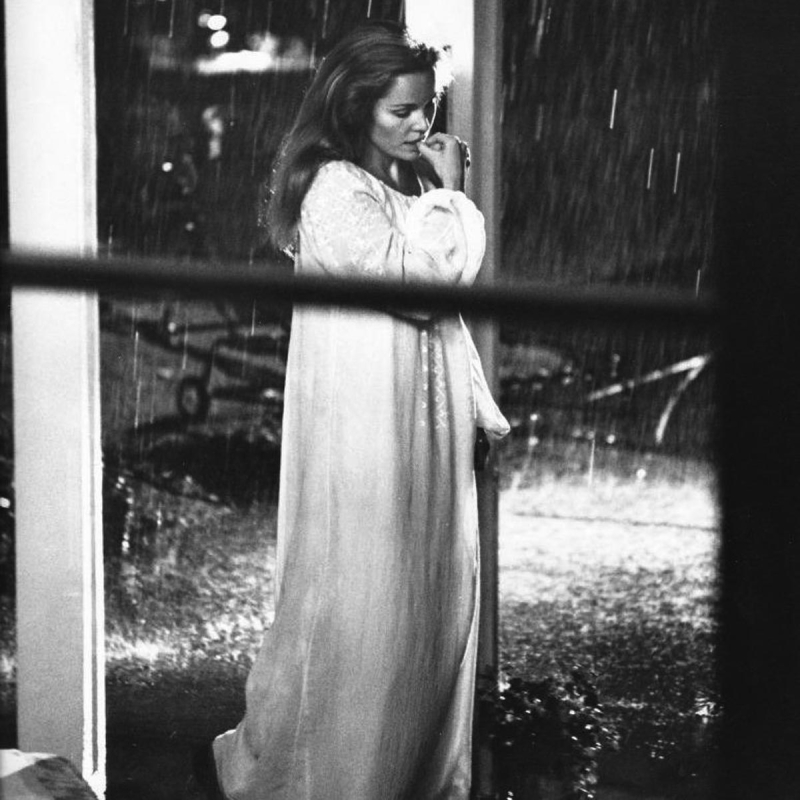
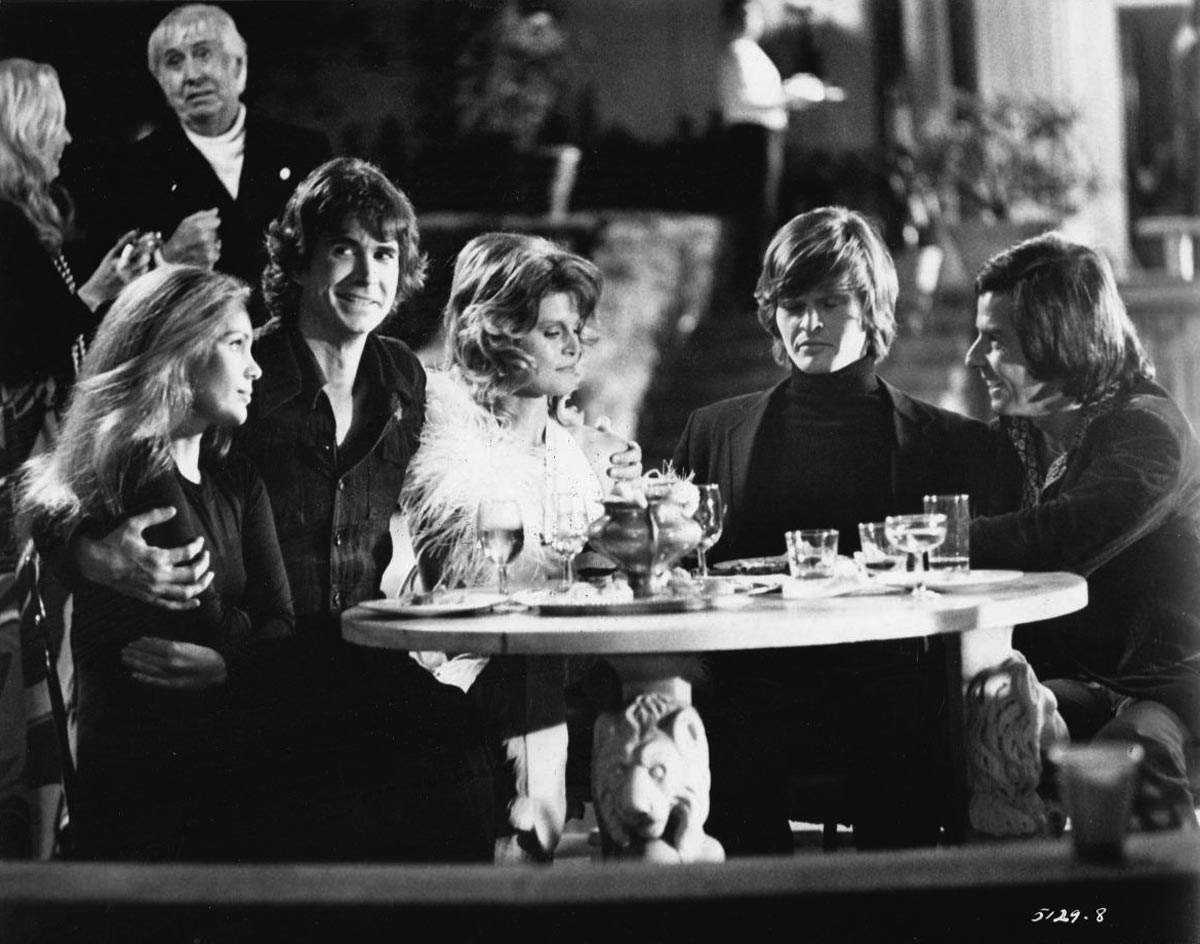
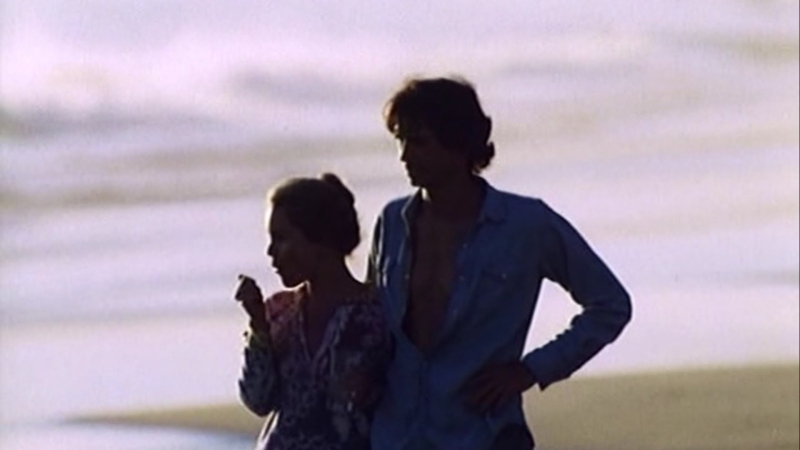
In Frank Perry’s Play It as It Lays (adapted from Joan Didion’s novel by Didion herself with her husband, John Gregory Dunne), Hollywood, already filled with vipers and leeches and artists and muses, is the perfect backdrop for this type of dramatic discernment, as model and actress Maria (Tuesday Weld, very much a Sedgwick/Cassady mold breaker), wanders through the spread-out city with all of its surrounding areas and high desert lonesome in a state of depressive detachment and grim determination of … something. She’s not sure. Geographically, Los Angeles provides ample space for this kind of physically roaming narrative as Maria drives the labyrinthine freeways, stopping off in small desert towns, drinking cold cokes or engaging in little dramas (or big ones), whether with another human or talking on a roadside payphone. She has her own story and she’s trying to weave together her own narrative connection – to be her own film editor. Fragmented trips to hotels, Malibu dinner parties, Beverly Hills shindigs, movie shoots, apartments and swimming pools propel her to her who-knows-what future. And so, like many an emptied Angeleno, she’s “not too crazy about people.” There are friends and lovers, she’s always one step away from a party or a conversation, good, bad, banal or momentarily exciting, as she talks or listens to others talking, but she sometimes says nothing at all. She wonders what others close to her are thinking. She’s decided to not give a fuck. In the novel Maria observes:

"If Carter and Helene want to think it happened because I was insane, I say let them. They have to lay it off on someone. Carter and Helene still believe in cause-effect. Carter and Helene also believe that people are either sane or insane. Just once, the week after the desert, when Helene came to see me in Neuropsychiatric, I tried to explain how wrong she had been when she screamed that last night about my carelessness, my selfishness, my insanity, as if it had somehow slipped my attention what BZ was doing. I told her: there was no carelessness involved. Helene, I said: I knew precisely what BZ was doing. But Helene only screamed again. Fuck it, I said to Helene. Fuck it, I said to them all, a radical surgeon of my own life. Never discuss. Cut. In that way I resemble the only man in Los Angeles County who does clean work."

6a00d83451cb7469e201bb098f69a4970d-800wi

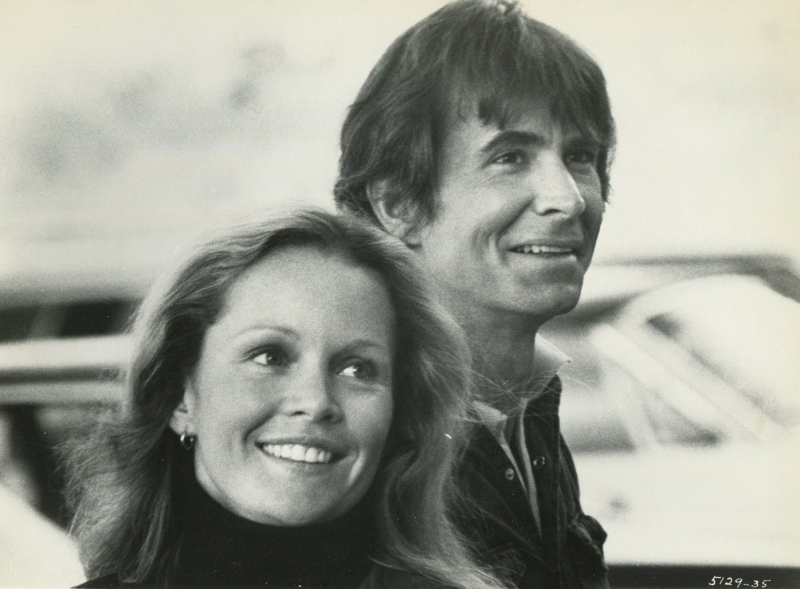
Carter ( a terrific, perfectly cast Adam Roarke) is her husband, a director on the rise, a guy quite different than the producer he works with who happens to be Maria’s only true friend who sees her – the nihilistic, sometimes sharply funny, sensitive and smart B.Z. (Anthony Perkins), who is gay but in a marriage of convenience. Maria and Carter are heading towards divorce,  their marriage is troubled, and she talks with B.Z. and his languorous, sharp-tongued wife, Helene (Tammy Grimes), about her various predicaments. She doesn’t seem to like Helene much, but she’s almost terrifyingly close to clever, haunted B.Z. – her only confidant. B.Z. gets her like no one else does and he wants her to fall into his philosophy of … nothingness.  There’s a lot of cold comfort in their acidic conversations and beach strolls and like their characters in Pretty Poison, they’re beautiful oddballs (Perkins is strangely beautiful) and in this film, two Hollywood animals who seem a skip or two away from the norm, and five steps ahead of everyone else. Of course that’s not easy for them.

6a00d83451cb7469e201b7c8eb6ecf970b-800wi

Carter’s second picture, in which Maria appears (in the novel, she’s gang-raped in the film, not for real), was a hippie biker movie (kind of like the movies actor Roarke actually starred in), and his first picture, named Maria, is a cinéma vérité work starring… Maria. Carter followed Maria around with his camera while she, in the only scenes in which she appears momentarily happy (this was a while back), talks about her own life. She laughs and smiles discussing her parents from a dusty one horse desert town (Silver Wells, Nevada), her western mythology, she seems proud of, sad (her parents are both dead, and died tragically) but it defines her. He prods her on camera, asking about who her father was balling and if she was jealous of this, assuming she wanted to ball her own father, clearly intending to provoke a reaction the way Chuck Wein did to Edie Sedgwick in Andy Warhol’s Beauty No. 2. Carter likes showing this movie, and she hates watching it when he does. One night she sees him on TV discussing Maria with a panel of cinema intellectuals recalling how Maria’s personality was so her – as he addresses her in his view through his camera, now framed though his discussion. His most artistic success is Maria’s own life and presence, filmed and edited by him, which must annoy her. As their marriage is disintegrating, Maria listens to Carter and the moderators, a bit pretentiously, dig into performance and real life:

6a00d83451cb7469e201b7c8eb6e80970b-800wi

Carter: “I was experimenting. I was trying to see how far I could go before breaking down the barrier between film and real. And yet the personality constantly shattered the conventional camera, subject relationship.

First moderator: That personality being your wife’s.

Carter: Well, she wasn’t my wife, yet. No.

Second moderator: You didn’t just hire her, Carter. You couldn’t have gotten that kind of performance.

Carter: Well, that’s the whole point of the film. It wasn’t a performance.

Third moderator: You mean, existentially it wasn’t a performance.

Carter: It wasn’t a performance. It was not a performance.

First moderator: This was her life, as it were.

6a00d83451cb7469e201bb09dd4cfe970d-800wi
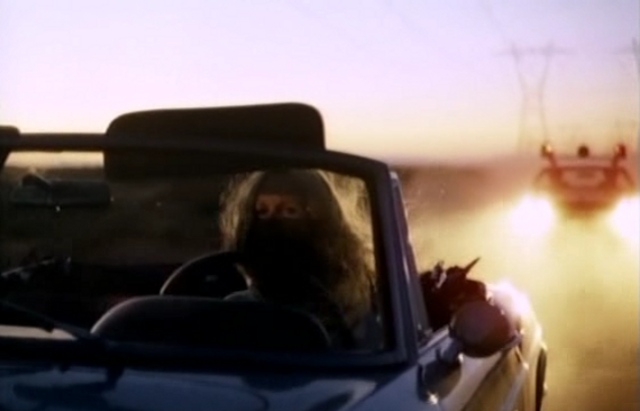
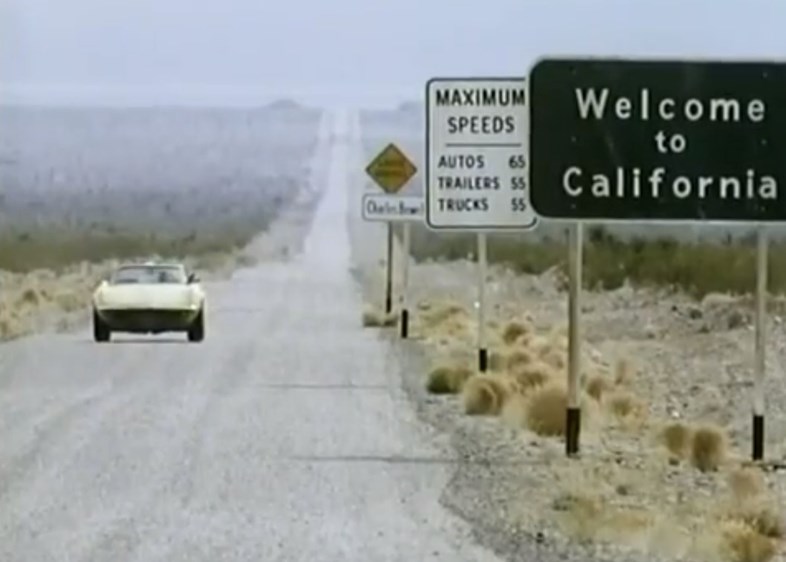
“As it were.” And with that Maria turns off the TV. In another scene on a film set directing his newest picture, Carter talks existential while being interviewed by an on-set reporter, and Maria is once again irritated. Later that day when Carter seeks her out to talk, she’s buying lunch. She snaps back at him: “Existentially, I’m getting a hamburger.” It’s a funny line (not in the novel) and you get the feeling Carter knows she’s probably smarter than he is. This runs through Didion’s book and reminds me of Didion’s idea about performance and writing – if only Maria could write her own story, not rely on acting in someone else’s story, perhaps she could help herself and not spend so much time waiting. As she wheels around in her yellow Corvette just to drive, cracking hard boiled eggs on the steering wheel, the wind blowing through her long blonde hair, she is attempting escape and a certain kind of organization through the Los Angeles freeways, as one pieces together the various routes and towns snaking around the city. You’ll always end up somewhere, sometimes even proud of finding your destination (Barstow, Oxnard, Palmdale) which Perry observes, beautifully, in shooting desert towns, those places that, even just a couple of hours outside of Los Angeles, feel like another universe. Carter’s making a movie in the desert, likely inspired by Maria’s background, and she’s more at home there than anyone else on set it seems, talking to a waitress in a diner without any condescension or awkwardness. These scenes are lovely – Perry casting desert denizens as those who couldn't care less about Hollywood, but not the wiser for it necessarily (and people out there tend to not give two fucks about Hollywood). Maria remarks that the waitress sweeping up the same desert dust – it’s only going to return seconds later with the wind – but the woman ignores her. She just keeps sweeping. Everyone has their rituals.

6a00d83451cb7469e201b8d275ce48970c-800wi

Maria and Carter have a disabled daughter who is shuttered away in a sanitarium, which distresses Maria to no end. Though she visits her, Maria’s constant hope is to take the little girl away and raise her alone – canning fruit and jams, she thinks, in a strangely banal fantasy that becomes startlingly dramatic for the way Weld pronounces “apricot preserves, sweet Indian relish, pickled peaches,” comforting a despairing and dying B.Z.  In one of their many almost blackly humorous arguments, Carter threatens that Maria will never see their child again if she doesn’t get an abortion (she’s pregnant from an affair) and he throws the doctor’s number on Maria as she sits up in bed. This is an abortion she’s not sure about getting (“He does clean work”) but Carter doesn’t want his career in jeopardy should his wife wind up in the gossip pages. The abortion does not help Maria’s mental health and she goes alone – save for the abortionist’s assistant, wearing all white and smacking gum, who accompanies her. This makes for one of the greatest sequences of the movie – a grim distillation of Maria’s need to roam mixed with this terrifying invasion into literally, her most private places.

6a00d83451cb7469e201b8d275ce1e970c-800wi

With cinematographer Jordan Cronenweth and editor Sidney Katz, Perry shoots this trip to the abortionist beginning with Maria trying to find where in hell she’s to meet the abortionist’s assistant who rides with her to the doctor. She picks him up under a big red “T” (“What big red T?” she asks, discussing directions over the phone. He answers exasperated, “The Thrifty Mart. The Thrifty Mart, Maria.”) After picking him up in a gorgeously composed shot (it looks like a William Eggleston photograph) under the looming “T,” a beacon of “T” to the abortionist, they then share a perfectly normal conversation that stars out with: “Don’t take offense if I ask you something…” You suspect the “offense” will have something to do with the prospective abortion, but instead, it’s about her Corvette: “What kind of mileage you get on this?” He then discusses his thoughts of getting out of leasing cars and buying himself a Camaro. They pull into the abortionist’s office, and in a series of swift cuts (the movie is filled with intense, razor-like cuts that could almost slice your hand and bleed), we see in quick succession, a bloody object dumped in a garbage can, gloved doctor’s hands washed in a sink and the loud droning drain as Maria drearily asks, “What do you do with the baby?” When finished, Maria walks back out to the assistant who is watching a western on a small black and white TV. She sits down and an Earl Scheib advertisement starts playing. The assistant, not understanding the absurdity of the statement  (or perhaps he does) says to the woman who just received an abortion: “You missed a pretty fair movie, Maria.”

6a00d83451cb7469e201b7c8eb6e9b970b-800wi

The picture floats and swerves and cuts with observations and weirdly timed statements like this throughout, brilliantly matching the fragmented time fame and switching POV of Didion’s novel, while wandering from place to place and person to person with Maria’s depressed but succinct sensitivities. It’s often genius, so that the film was poorly to adequately received at the time (though Roger Ebert loved it) seems unduly unjust to me. Many critics thought it very pretty, and Weld and Perkins fantastic (they are), but very empty (it’s not, and it is, precisely the point). Or that Perry was all wrong for Didion (he’s not). Didion’s novel has sometimes single-paragraph sentences, terse observations met with deadpan responses and Perry visualizes her manner stunningly. And he does so as a Perry film, not just a Didion film – this is what happens when another is helming your own work, even if you write the screenplay – you cannot control your narrative once it’s in the eyes of the other beholder. No surprise Didion has expressed admiration for film editors. Those who construct.

6a00d83451cb7469e201bb098e91a8970d-800wi

Weld and Perkins float through the picture almost as phantoms haunting their own story, and Perry’s sharp scene shifts, from loud planes flying overhead to Weld’s wild gun shots from her car, hair mussed all over the place, to an entrancing opening and closing of Weld walking the perfectly manicured tree-lined grounds of her institution (in real life, it’s the famed Greystone Mansion, where oil tycoon William Doheny’s son Ned was found dead in a murder/suicide with his assistant/rumored lover, Hugh Plunkett) accords and intersects Weld’s (and Perkins’) thoughts, spoken outright and interiorly felt. Perry’s style is as graceful and as jarringly angular as Perkins’ thin frame, cuddled in Tuesday Weld’s lap, overdosing on Seconal. The picture is loadedwith style (which some unfairly hold against it), a necessary surface beauty, critiquing that very surface beauty while reveling in it, showing spurts of intense film work to be met with many more lazy, debauched days dragging into nights in which bored rich people discuss fresh lemon or lemon reconstituted, how they eat breakfast (Carter’s breakfast discussion is amusingly dull) or the jolt of poppers that a vacuous actor inhales before shagging Maria. The actor must also watch himself on TV before getting aroused, another comically caustic moment via Didion and Perry.

Play-it-8

Weld, Perkins and Perry are a divine threesome – all three serious but grimly funny, attractively understated with bursts of psychodrama and shock, weird but never too crazy. And sad. (Also why Carrie Snodgress, Richard Benjamin and Frank Langella are perfect in Perry’s bleakly amusing and disturbing Diary of a Mad Housewife.) Perry has an offbeat, singular talent for dissecting despair and upper class ennui that’s entirely recognizable yet ambiguous, allegorical and often chilling. His wife Eleanor who had been his screenwriter up until Diary of a Mad Housewife, and an excellent artistic partner, was gone by the time this film was made (they divorced), but working with another married couple, Didion and Dunne, was a successful match for Perry. I’ve heard that at one point, Sam Peckinpah was attached, which would have been fascinating (Maria has a restless outlaw in her as well, her Corvette the horse she rides through the desert), but Perry is mightily in sync with Didion’s words and universe. A movie about a troubled woman, marriage, movies; about trying, sometimes in vain, to tell your own story, and a movie about Los Angeles – this was something Perry and Didion understood dry desert air bone deep. In “The White Album,” Didion wrote:

6a00d83451cb7469e201b7c8eb6eb2970b-800wi

“We tell ourselves stories in order to live … We live entirely, especially if we are writers, by the imposition of a narrative line upon disparate images, by the ‘ideas’ with which we have learned to freeze the shifting phantasmagoria which is our actual experience … Or at least we do for a while.”

6a00d83451cb7469e201b8d275ce5d970c-800wi

Maria is doing this for a while too. At the end of the picture, she walks the spectral grounds of her mental institution, again, filmed at Doheny-haunted Greystone (ghosts communing with ghosts) and narrates: “I know something Carter never knew or Helene or, maybe, you. I know what nothing means and keep on playing.” The off-camera voice asks, “Why?” and she looks directly at the camera, breaking the fourth wall and answers, “Why not?” It’s simultaneously nihilistic and Zen, letting go like Sterling Hayden at the end of The Killing or Warren Oates reinforcing William Holden in The Wild Bunch (“Let’s go!” “Why not?”); it also continues her endeavor to define her own story, even if she’s seemingly given up, this time controlling through nothing. Perry wants us to know that this is a movie by film end and now, Maria, her own muse, will play it however she likes, or at least, “for a while.”