Briefly, on Cul-de-sac. 50 years ago.
Roman Polanski emerged from the womb understanding the art of filmmaking. Or, perhaps, understanding the art of wombs — diseased, depraved, disordered and of course, provocative wombs. Cruelty, violence, twisted sexuality, madness, absurdity — many of Polanski's hallmark obsessions — are almost always confined to one space. The director loves nothing more than trapping his characters in devil-worshiping apartment buildings, phallic, knife-wielding boat trips, sadomasochistic cruises and unhappy, unsound houses. And water frequently surrounds them.
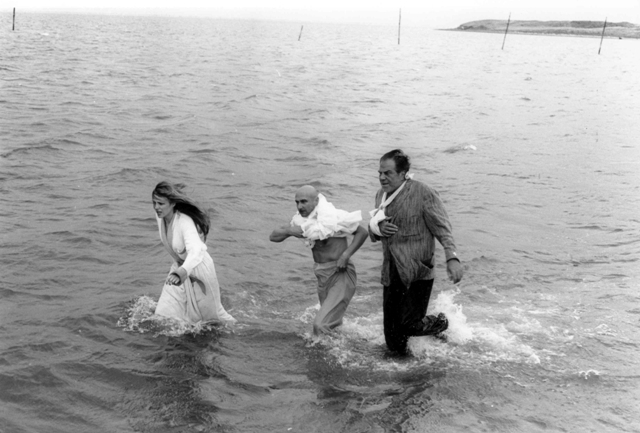
Cul-de-sac (1966) is a batshit crazy precursor to themes he would continually study: tortured relationships, bizarre, often charming alarming blonde women, infidelity, cross-dressing, even a bit of film noir, aided by the stalwart, gravel-voiced Lionel Stander, Cul-de-sac is stunningly, at times, brilliantly unhinged with a Pinteresque touch while remaining pure Polanski.
Donald Pleasence is the odd fellow living with a gorgeous, beguiling wife (the ever poignant Francoise Dorléac; sister to Catherine Deneuve, and an actress who left the world too soon), whom he keeps in an enormous, isolated house on a tiny island off the northeast coast of Britain. Playing like an especially kinky Desperate Hours, the couple will be forced to host two escaped criminals (Stander and Jack MacGowran) after the thugs land at their nutty abode. And then things get…really interesting. But it's not just crime and entrapment that make the story compelling, it's all of the Polanski touches, particularly when he observes the idle activities of Dorléac.
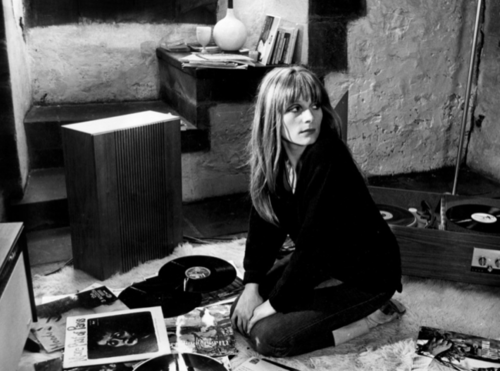
I love her character. Her feral nature mixed with mischief and intelligence and some other quality that might be deemed a bit crazy but, no, she's not crazy. She fascinating. A wonderfully weird, mysterious woman. Some may dismiss her as merely childish, but this is a woman — a woman who can revert to a girl (and what man hasn't reverted to bratty boy?) and a woman who is cheating on her cross-dressing husband. (Somehow, the cross-dressing isn't such a big deal, just curious and kinky, and not in the doubling, terrifying way Roman's tortured Tenant Trelkowski is). There's power dynamics going on in this relationship, but they are so muddy, that they seem more heightened versions of just how human we all are (but many of us keep hidden). We're all a blend of man, woman, cheater, sadist, masochist… makeup.

We're also often bored, no matter how crazy our relationship is. And Dorléac is expert at showing how perpetually bored she is, stuck in the house like a more spirited, extra primal Virgin Suicide sister, she engages in childlike activities to amuse herself. It's unhealthy for women to be stuck in the house all the time in Polanski pictures (Repulsion, Rosemary's Baby) and Dorléac knows it. She tears around the house barefoot, applies exaggerated eyeliner (or helps her husband with his), messes with rifles and, the best, and most hilarious, lights a sleeping Stander's feet on fire with burning pieces of newspaper between his toes ("It's called a bicycle" she taunts). Oh…you just don't do that to Lionel Stander. Or perhaps, you do. Between these two mismatched misfits, it's disarmingly sexy. Stander with a belt. She bolts. Polanski so expertly builds up to it, taking his time for us to observe, listen, laugh and flinch. And laugh again. And then feel a little sexually unnerved (in a good or bad way — or both) while laughing. Polanski's good at that.

These characters don't establish things like "safe" words nor do they understand the concept of such a thing, so the perversity, stark beauty, the isolation, the bleakness, the menacing sexuality and the insanity make the whole experience oppressive and ominous, yes, but also a black-humored good/bad time.
And, yes, you can have a good/bad time, especially with Francoise Dorléac.
If you haven't already, go get yourself a beautiful copy of Cul-de-sac from Criterion.
 Sunset Gun